

Global and regional causes of maternal deaths 2009–20: a WHO systematic analysis
Open accessThe DOI matches its Crossref record; 16 of the 16 references it cites were found in a registry or an index.
Abstract
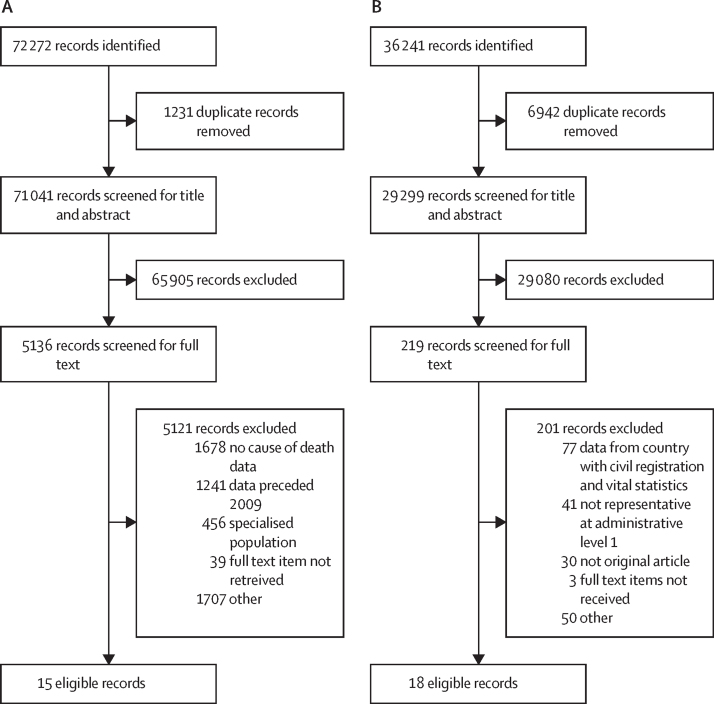
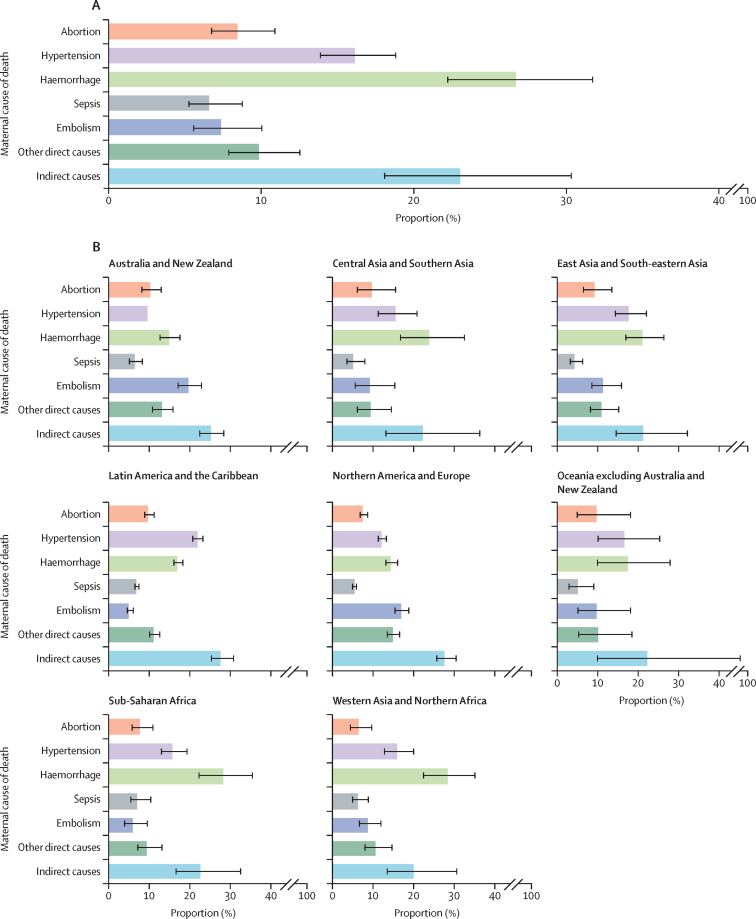
BACKGROUND: Maternal mortality is not on track to meet Sustainable Development Goal (SDG) target 3.1 of a global maternal mortality ratio below 70 per 100 000 livebirths by 2030. Updated evidence on causes of death is needed to accelerate progress. METHODS: We conducted a multi-strategy systematic review to identify causes of maternal deaths occurring in 2009-20. Data sources included civil registration and vital statistics systems data from the WHO Mortality Database, reports published by Member States, and national and subnational journal articles identified via bibliographic databases. We used a Bayesian hierarchical model to estimate the maternal cause of death distribution by SDG regions and worldwide. Given the paucity of data on maternal suicide and late maternal deaths occurring beyond 42 days postpartum, additional analyses were conducted to estimate the proportion of maternal deaths from suicide and the ratio of maternal to late maternal deaths (all cause). FINDINGS: Globally, the most common cause of maternal death was haemorrhage (27%; 80% uncertainty interval 22-32), followed by indirect obstetric deaths (23%, 18-30), and hypertensive disorders (16%, 14-19). The proportion of haemorrhage deaths varied substantially by region and was highest in sub-Saharan Africa and Western Asia and Northern Africa. The proportion of maternal deaths from hypertensive disorders was highest in Latin America and the Caribbean. Most maternal deaths from haemorrhage and sepsis occurred during the postpartum period. Only 12 countries recorded one or more maternal suicides; of those countries, the proportion of deaths from suicide ranged from below 1% to 26% of maternal deaths. For countries reporting at least one late maternal death (ie, deaths that occur more than 42 days but less than 1 year after the termination of pregnancy), the ratio of late maternal deaths to maternal deaths up to 42 days ranged from <0·01 to 0·07. INTERPRETATION: Haemorrhage remains the leading cause of death, despite the existence of effective clinical interventions, emphasising the need for improved access to quality health care. The timing of most deaths in the postpartum period demands renewed commitment to improving the provision of postpartum care in addition to intrapartum care. Indirect causes of death require health system approaches to integrate obstetric and non-obstetric care. FUNDING: USAID; US Fund for UNICEF via the Bill & Melinda Gates Foundation; and UNDP-UNFPA-UNICEF-WHO-World Bank Special Programme of Research, Development, and Research Training in Human Reproduction (HRP).
Overview
The claims and statistics of this paper haven’t been checked yet.
Free: it reads the open-access text and checks the first 5 claims that cite a source we can check. Create a free account to check every claim.
Integrity signals
Registry
Cites
Statistics
Figures
Verification
Claims the paper makes
The claims and statistics of this paper haven’t been checked yet.
Free: it reads the open-access text and checks the first 5 claims that cite a source we can check. Create a free account to check every claim.
Self-check
Percentages, sums and reported differences re-computed from the paper’s own numbers.
The self-check needs the paper’s full text.
Citations
Cites
Global causes of maternal death: a WHO systematic analysis
Say, L., Chou, D., Gemmill, A., Tunçalp, Ö., Moller, A.-B., Daniels, J., Gülmezoglu, A. M., Temmerman, M., & Alkema, L. (2014) · The Lancet Global Health · doi:10.1016/s2214-109x(14)70227-x · Cited by 6,582
Self-citationWHO analysis of causes of maternal death: a systematic review
Khan, K. S., Wojdyla, D., Say, L., Gülmezoglu, A. M., & Van Look, P. F. (2006) · The Lancet · doi:10.1016/s0140-6736(06)68397-9 · Cited by 3,978
Self-citationBennett, J. E., Stevens, G. A., Mathers, C. D., Bonita, R., Rehm, J., Kruk, M. E., Riley, L. M., Dain, K., Kengne, A. P., Chalkidou, K., et al. (2018) · The Lancet · doi:10.1016/s0140-6736(18)31992-5 · Cited by 1,336
Souza, J. P., Gülmezoglu, A. M., Vogel, J., Carroli, G., Lumbiganon, P., Qureshi, Z., Costa, M. J., Fawole, B., Mugerwa, Y., Nafiou, I., et al. (2013) · The Lancet · doi:10.1016/s0140-6736(13)60686-8 · Cited by 757
Self-citationBoerma, T., Requejo, J., Victora, C. G., Amouzou, A., George, A., Agyepong, I., Barroso, C., Barros, A. J. D., Bhutta, Z. A., Black, R. E., et al. (2018) · The Lancet · doi:10.1016/s0140-6736(18)30104-1 · Cited by 517
Self-citationA global analysis of the determinants of maternal health and transitions in maternal mortality
Souza, J. P., Day, L. T., Rezende-Gomes, A. C., Zhang, J., Mori, R., Baguiya, A., Jayaratne, K., Osoti, A., Vogel, J. P., Campbell, O., et al. (2024) · The Lancet Global Health · doi:10.1016/s2214-109x(23)00468-0 · Cited by 398
Self-citationThe scale, scope, coverage, and capability of childbirth care
Campbell, O. M. R., Calvert, C., Testa, A., Strehlow, M., Benova, L., Keyes, E., Donnay, F., Macleod, D., Gabrysch, S., Rong, L., et al. (2016) · The Lancet · doi:10.1016/s0140-6736(16)31528-8 · Cited by 307
Vogel, J. P., Jung, J., Lavin, T., Simpson, G., Kluwgant, D., Abalos, E. J., Díaz, V., Downe, S. M., Filippi, V., Gallos, I. D., et al. (2023) · The Lancet Global Health · doi:10.1016/s2214-109x(23)00454-0 · Cited by 161
A framework for healthcare interventions to address maternal morbidity
Firoz, T., McCaw‐Binns, A., Filippi, V., Magee, L. A., Costa, M. L., Cecatti, J. G., Barreix, M., Adanu, R., Chou, D., Say, L., et al. (2018) · International Journal of Gynecology & Obstetrics · doi:10.1002/ijgo.12469 · Cited by 127
Self-citationLate maternal deaths: a neglected responsibility
Sliwa, K. S., & Anthony, J. (2016) · The Lancet · doi:10.1016/s0140-6736(16)30391-9 · Cited by 67
Research works printed but not linked: 2
- Alexander M Chong MYC Pejcinovska M Estimating causes of maternal death in data-sparse contexts http://arxiv.org/abs/2101.05240 2021 39189680 · arXiv
- WHO WHO recommendations on maternal and newborn care for a positive postnatal experience https://www.who.int/publications/i/item/9789240045989 March 30, 2022 35467813
Cited by
Items 301–400 of 401
Han, B. R., Oh, J., Yoon, S., Seo, J. D., Min, H. S., Ahn, K. H., & Choe, S. (2026) · Journal of Korean Medical Science · doi:10.3346/jkms.2026.41.e267
Mandal, S., Dhillon, P., & Das, J. (2026) · BMC Health Services Research · doi:10.1186/s12913-026-14916-1 · Cited by 1
“Ensuring everyone has access to good maternal and reproductive healthcare is still a major, ongoing public health challenge, particularly across low and middle-income regions [1, 2].”
Pabón, S., Guida, J. P. D. S., Charles, C. M., Ortiz-Rojas, H. J., Muñoz, C. G., Cecatti, J. G., & Costa, M. L. (2026) · International Journal of Gynecology & Obstetrics · doi:10.1002/ijgo.71211
Callbo, P. N., Junus, K., Lindberger, E., Lindström, L., Poromaa, I. S., Bergman, L., Lager, S., & Wikström, A. (2026) · Scientific Reports · doi:10.1038/s41598-026-61084-7
Chen, Y., Zhan, Z., Wan, S., Wang, Y., Chai, M., Gu, S., Lin, C., Hua, X., & Peng, J. (2026) · BMC Pregnancy and Childbirth · doi:10.1186/s12884-026-09597-x
“Postpartum hemorrhage (PPH) remains a leading cause of severe maternal morbidity and mortality, with cesarean delivery being a major setting for life-threatening bleeding [1].”
Nakayama, C. M. A., Weschenfelder, L. B. W., Lemos, M. J., Molisani, J. T., Sandre, M. A. M., Queiroz, L. F., & Ruano, R. (2026) · European Journal of Obstetrics & Gynecology and Reproductive Biology · doi:10.1016/j.ejogrb.2026.115291
Cenário brasileiro sobre mortes maternas decorrentes das síndromes hipertensivas da gravidez
Prado, J. E. D. O. [., Peraçoli, J. C., Moterani, V. C., & Rizzi, S. K. L. D. A. (2026) · Research Society and Development · doi:10.33448/rsd-v15i7.51356
Does Low-dose Aspirin prevent preeclampsia or merely delay it?
Kavi, A. J., Goudar, S. S., Metgud, M. C., Somannavar, M. S., Mallapur, A. A., Ramadurg, U. Y., Moore, J., McClure, E. M., Derman, R. J., & Hoffman, M. (2026) · Seminars in Perinatology · doi:10.1016/j.semperi.2026.152279
Preeclampsia: problems and possibilities of early diagnosis
Varlamova, K. A., Nikolaeva, A. E., & Bezhenar, V. F. (2026) · Journal of obstetrics and women s diseases · doi:10.17816/jowd707416
Mapping structural topology of OECD health dynamics: A network analysis of mortality changes
Bulut, T. (2026) · Türkiye Halk Sağlığı Dergisi · doi:10.20518/tjph.1830849
Sharpe, E. E. (2026) · International Journal of Obstetric Anesthesia · doi:10.1016/j.ijoa.2026.105251
Commonest causes of maternal mortality in Nigeria: a situational report requiring an urgent action
Okolie, C. D., Alexander, A., & Kelley, M. (2026) · Reproduction and Fertility · doi:10.1530/raf-25-0144
Bitewa, M. D., Getachew, M. S., Kassie, T. D., Getnet, M., & Lakew, A. M. (2026) · BMJ Open · doi:10.1136/bmjopen-2025-111915
Chen, R., Li, X., Wu, G., & Gong, H. (2026) · Frontiers in Global Women s Health · doi:10.3389/fgwh.2026.1864385
Nagahama, G., Torloni, M. R., Korkes, H. A., & Sass, N. (2026) · International Journal of Gynecology & Obstetrics · doi:10.1002/ijgo.71235
Emergency blood delivery for women in blood deserts: Closing the gap in postpartum haemorrhage care
Tripathi, I., Kumar, N., Weeks, A. D., Wesonga, C., & Raykar, N. P. (2026) · Considerations in Medicine · doi:10.1136/conmed-2026-000071
Uzim, J., Odezugo, G., Abiodun, G. O., Anyanwu, C. E., Bowofola, O. M., Kolawole, O. T., Edungbola, A. A., & Ochianwunma8, A.-I. (2026) · Research Square · doi:10.21203/rs.3.rs-10433811/v1
Chen, Y., Chen, D., & He, F. (2026) · The Innovation Medicine · doi:10.59717/j.xinn-med.2026.100218
Nair, M. A., Chandel, K., Shreevarsha, S., Premraj, S., Nithya, U., & Gayathri, M. (2026) · Frontiers in Immunology · doi:10.3389/fimmu.2026.1906541
“Globally, PE remains a leading cause of maternal and neonatal mortality, particularly in low and middle-income countries (7).”
Duong, D. T. T., Pham, N. T. Q., Collins, T. E., Duc Duong, M., Hermiston, M. L., Tuan, N. T., & Le, L. T. K. (2026) · PLOS Global Public Health · doi:10.1371/journal.pgph.0005683
“Nearly 75% of maternal deaths are attributed to post-natal hemorrhage, postnatal infections, hypertension during pregnancy (pre-eclampsia and eclampsia), childbirth complications, and unsafe abortion [2].”
Zbiri, S., & Milcent, C. (2026) · Frontiers in Global Women s Health · doi:10.3389/fgwh.2026.1803491
Barriers to healthcare access and associated factors among pregnant women in Tanzania
Mtoro, M. J., Stephano, E. E., Lumbe, A. G., Yoyo, G., Materu, P. A., & Mwalingo, T. P. (2026) · Discover Public Health · doi:10.1186/s12982-026-02690-8
“Pregnant women face substantial barriers, such as financial constraints, a shortage of skilled healthcare personnel, transportation difficulties, and cultural concerns, which may limit timely health care access [2].”
Tada, K., Miyagi, Y., Yasuhi, I., Tsumura, K., Emoto, I., Sagawa, M., Tanaka, N., Yamaguchi, K., Maeda, K., & Kawakami, K. (2026) · BMC Pregnancy and Childbirth · doi:10.1186/s12884-026-09762-2 · Cited by 1
“Postpartum hemorrhage (PPH) remains the leading cause of maternal morbidity and mortality worldwide, even in high-income countries, causing 15% of maternal deaths [1].”
Lichtenberger, P., Fantin, R. L., Vorhofer, H., & Oji-Zurmeyer, J. (2026) · Journal of Obstetric Anaesthesia and Critical Care · doi:10.4103/joacc.joacc_81_25
Zavala-Martínez, L. M., Hurtado-Salgado, E. M., Baltazar-Reyes, M. C., Ortíz, E. G., & Cupul‐Uicab, L. A. (2026) · Hypertension Research · doi:10.1038/s41440-026-02750-1 · Cited by 1
“[2, 3], whereas preeclampsia is the most frequent pregnancy complication with a worldwide prevalence ranging from 2% to 8% [4].”
Kim, M., Son, J. H., Seol, H., Oh, M., Cho, G. J., & Kim, Y. H. (2026) · BJOG An International Journal of Obstetrics & Gynaecology · doi:10.1111/1471-0528.70308
The ‘error room’: an innovative approach to safety education for midwives in Morocco
Mochhoury, L., Goundali, K. E., Masnaoui, L. A. K., Msatfa, N., & Chebabe, M. (2026) · British Journal of Midwifery · doi:10.12968/bjom.2025.0154
Hypertensive disorders of pregnancy: A review and updates for the emergency physician
Martin, L., Callahan, M., & Wang, J. (2026) · The American Journal of Emergency Medicine · doi:10.1016/j.ajem.2026.07.066
Maternal mortality from obstetric hemorrhage in Brazil: a 10-year analysis (2015 to 2024)
Knobel, R., Costa, G., Garrafa, J. L., Surita, F. G., & Andreucci, C. B. (2026) · The Journal of Maternal-Fetal & Neonatal Medicine · doi:10.1080/14767058.2026.2712112
CHENG, L. J., Abel, L., Ratushnyak, S., Rivero‐Arias, O., McManus, R. J., Chappell, L. C., & Campbell, H. (2026) · Value in Health · doi:10.1016/j.jval.2026.06.025
Alamrew, A., Mulugeta, C., Yetwale, A., Emagneneh, T., Ayele, M., Lake, E. S., & Mislu, E. K. (2026) · Women s Health Reports · doi:10.1177/26884844261475865
“…- 4.71) East Asia 85.6 (56.98, 117.07) 8.01 (5.66, 11.13) - 7.31 ( - 7.87, - 6.75) Southeast Asia 40.02 (32.29, 48.19) 20.65 (16.85, 25.36) 2009 – 20, a WHO systematic analysis 22,23 the possible justi fi cation can be explained as our study uses GBD data, and also due to a long time discrepancy.”
InfluentialJuan, J., Liu, Y. F., Yang, C., He, G., Shu, X., & Yang, H. (2026) · Chinese Medical Journal · doi:10.1097/cm9.0000000000004213
“[26] Indirect maternal deaths were the leading cause of death and it surpassed maternal hemorrhage in 2015 to become the second leading cause of DALYs in 2015 and 2023.”
Djokoto, R. M. K., Bandoh, I., Sam-Awortwi, W. K. J., Boateng, N. A., Addison, W. E., Siaw-Frimpong, M., Agana, E. A., Nduroh, K. A., Arthur‐Komeh, J., Adarkwa, O., et al. (2026) · Journal of Clinical Medicine · doi:10.3390/jcm15218228
Postpartum Follow-Up for Cardiovascular Disease Provoked by Pregnancy
Reiger, S., Buber, J., & Albright, C. M. (2026) · Obstetrics and Gynecology Clinics of North America · doi:10.1016/j.ogc.2026.07.006
Guayasamín, L. G. S., Rodríguez, N. A. M., Salazar, J. N. R., Guallichico, A. S. S., & Oleas, M. E. M. (2026) · Arandu-UTIC. · doi:10.69639/arandu.v13i3.2401
Cunha, M. D. S. K., Barbosa, L., Miranda, R. L., Costa, J. R. G., da Silva, A. K. B., Ferreira, C. H. D. O., Gonçalves, M. B. D. M. B., Sobral, M. V. S., Erzinger, G., do Nascimento, L. R., et al. (2026) · Current anesthesiology reports · doi:10.1007/s40140-026-00722-2
Vala, A., Bera, O. P., Aggarwal, P., Joshi, K., & Kadri, A. M. (2026) · Frontiers in Public Health · doi:10.3389/fpubh.2026.1858500
“Gujarat’s progress in reducing maternal mortality has been described as “slow and largely unmeasured or undocumented” (29, 31).”
Osafo, K. S., Mustapha-Sahabi, S. A., Amoh, D. O., & Sun, P. (2026) · Frontiers in Global Women s Health · doi:10.3389/fgwh.2026.1812634
“A significant contributor to this mortality is unsafe abortion (1, 3), which the World Health Organisation (WHO) defines as a pregnancy termination performed by individuals lacking necessary skills or in substandard environments (4).”
InfluentialMurashko, M. A. (2026) · The BRICS Health Journal · doi:10.47093/3034-4700.2026.3.1.19-30 · Cited by 1
Angelo, S., Sheikh, F., Neupane, M., Pant, S., Puccio, E. A., Schumacher, C., Lee, A., Jasti, S., Mair, C., Cooper, D., et al. (2026) · Critical Care Explorations · doi:10.1097/cce.0000000000001462 · Cited by 1
Kotecha, S. J., Potter, C., Hope-Bell, J., Riddell, N. S., Munnery, K., Onyimadu, O., Liberty, C., Taylor, H., Dop, C., de Lloyd, L., et al. (2026) · BMJ Open · doi:10.1136/bmjopen-2026-118723
Moving Toward Standardization of Prophylactic Oxytocin Dosing in the Third Stage of Labor
Son, M. (2026) · Obstetrics and Gynecology · doi:10.1097/aog.0000000000006390
Pregnancy-associated extracorporeal life support: insights from a nationwide dual-cohort analysis
Chang, F., Cheng, Y., Hsieh, M., Lin, C., Chen, C., Hsiao, F., Chang, C., Chan, Y., Wu, V. C., & Chen, S. (2026) · British Journal of Anaesthesia · doi:10.1016/j.bja.2026.07.015
Zheng, Y., Wang, Y., Zhu, Y., Ruan, F., Liu, Y., Xiong, Y., Zhao, H., Li, X., & Zhou, Q. (2026) · Ecotoxicology and Environmental Safety · doi:10.1016/j.ecoenv.2026.120694 · Cited by 1
Abdi, B. M., Ali, S. M., Ali, S. A., Hussein, M. A., Adow, A. I., & Bashir, S. (2026) · Frontiers in Public Health · doi:10.3389/fpubh.2026.1908521
Pérez, M. G., Fuertes, A. B., Intriago-Pazmiño, M., Falconi, L. G., & Benavides, J. S. (2026) · Machine Learning and Knowledge Extraction · doi:10.3390/make8090259
Hypertension in pregnancy: effects on maternal and fetal health and long-term outcomes
Gupte, S., Deulkar, M. G., Chatla, D., Arora, P. S., & Shah, S. D. (2026) · International Journal of Reproduction Contraception Obstetrics and Gynecology · doi:10.18203/2320-1770.ijrcog20263077
Walker, M. C., Murphy, M. S. Q., Souza, S. C. S., Koi-Larbi, K., Costa, M. L., Hyett, J. A., von Dadelszen, P., Magee, L. A., Muteti, A., Tsigas, E. Z., et al. (2026) · The Lancet · doi:10.1016/s0140-6736(26)01071-8 · Cited by 1
Vera-Ponce, V. J., Ballena-Caicedo, J., Delgado-Toro, H. E., Zuzunaga-Montoya, F. E., & Zuta, J. C. B. (2026) · Pregnancy Hypertension · doi:10.1016/j.preghy.2026.101504
Musumba¹, G. À. D. M., Kapiri, M. M., Tosalisana, M. K., Muyisa, R. M., Musubao, J. V., Malemo, L. K., & Sabuni, L. P. (2026) · Discover Public Health · doi:10.1186/s12982-026-02820-2
“However, they are essential for understanding and preventing PPH-related deaths in the most affected settings [2, 4–9].”
InfluentialToros, S., Ruiz, R., da Silva, S. A. G., Álvarez, P., Chacón, M. G., Garcia, K. K. S., Barreto, M. L., Cooper, P. J., Craig, P., Romero, N., et al. (2026) · SSM - Population Health · doi:10.1016/j.ssmph.2026.101963
Sridharan, M. R. (2026) · The Hematologist · doi:10.1182/hem.v23.5.202653
Shen, H., Agorinya, I. A., Ayanore, M. A., Brede, M., Chapman, A., & Head, M. (2026) · medRxiv · doi:10.64898/2026.08.27.26361538
Nakamura, E., Matsunaga, S., Kikuchi, A., & Takai, Y. (2026) · Journal of obstetrics and gynaecology research · doi:10.1111/jog.70482
Bimantara, I. G. N. T. B., Buditjahjanto, I. G. P. A., Anifah, L., & Suhartini, R. (2026) · Journal of Nursing and Midwifery Sciences · doi:10.5812/jnms-171345
Abortion access in South Asia: counting cost and impact beyond maternal morbidity and mortality
Banerjee, S. K., & Gandhi, M. (2026) · The Lancet Regional Health - Southeast Asia · doi:10.1016/j.lansea.2026.100838
Okoli, U., Obafemi, S., Okpe, C., Njoku, K., Mobisson, N., Uzoama, C., Omoera, V., Ugwa, E., & Hill, K. (2026) · PLoS ONE · doi:10.1371/journal.pone.0356879
Han, H., PHOMMACHANH, K., & Kim, S. H. (2026) · Tropical Medicine and Health · doi:10.1186/s41182-026-01066-7
Queiroz, J. W. D. N., & de Souza, W. L. (2026) · Scientia Generalis · doi:10.22289/sg.v7n2a34
Swarray‐Deen, A., McDougall, A. R. A., Chemway, R. N., Craik, R., Jayaratnam, S., Joseph, N. T., Mahar, R. K., Koye, D. N., Nguyen, L., Simpson, J. A., et al. (2026) · BMJ Open · doi:10.1136/bmjopen-2026-118330
Azithromycin for Cesarean Delivery—From Trial to Practice
Tita, A., Szychowski, J. M., & Boggess, K. A. (2026) · JAMA · doi:10.1001/jama.2026.16532
Recognizing obstetric emergencies: Beyond the labor and delivery unit
Zabielski, S., & Oparaji, D. C. (2026) · Case Reports in Women s Health · doi:10.1016/j.crwh.2026.e00857
Pregnancy outcome documentation in low-resource settings: a multi-country study
Hucko, A., Prauseová, J., Parker, E. P. K., Ford, R. P. K., Nkereuwem, O., Madubueze, U. C., Bhattarai, S., Kajungu, D., Msoka, A. C., Hossain, M. M., et al. (2026) · AJOG Global Reports · doi:10.1016/j.xagr.2026.100696
Revisiting Maternal Perinatal Depression: The Critical Role of Cultural ContextPreprint
Uriko, K. (2026) · Research Square · doi:10.21203/rs.3.rs-10751481/v1
Shared mental models in postpartum hemorrhage management: a dual center multidisciplinary survey
Hoayek, J., Habli, Y., Amro, F. H., O'Brien, A., & Samost, A. (2026) · International Journal of Obstetric Anesthesia · doi:10.1016/j.ijoa.2026.105286
Incidence and risk factors for postpartum infections: A Norwegian cohort study, 2012–2020
Røe, K., Sørbye, I. K., Torkildsen, C. F., Engeland, A., Engjom, H. M., Nilsen, R. M., & Klungsøyr, K. (2026) · Acta Obstetricia Et Gynecologica Scandinavica · doi:10.1111/aogs.70355
Nurvitriana, N. C., Arista, D. M., Saputri, R. R. M., Putri, A. A. A., Astuti, A. W., Kusumawardani, P. A., & Indriyani, R. (2026) · BIO Web of Conferences · doi:10.1051/bioconf/202625502005
Taadi, P. K., & Abiodun, P. O. (2026) · Research Square · doi:10.21203/rs.3.rs-10570131/v1
Guo, Y., Li, A., Payne, J., Steinberg, E., Buchan, J., Olson, A., Suryadevara, A., Swarray‐Deen, A., Sefogah, P. E., & Thiyagarajan, D. K. (2026) · The Journal of Maternal-Fetal & Neonatal Medicine · doi:10.1080/14767058.2026.2734654
Alptekin, İ., Serdaroğlu, B., Erkan, E., Çelikkan, F. T., Hendem, D. U., Dastourı, M., Akyol, M., Şahın, D., & Can, A. (2026) · Placenta · doi:10.1016/j.placenta.2026.09.023
Lee, H. L., Sivarasa, Y., Wang, R. W., Ranganath, A., Gorman, B. D. A., Wang, C. A., Birchenall, K., & Pennell, C. E. (2026) · BMJ Open · doi:10.1136/bmjopen-2026-116774
“6 PPH and other obstetric haemorrhage types remain the leading cause of maternal death, especially in low and middle income countries (LMICs 7 ).”
Yüzkat, N. (2026) · Anadolu Kliniği Tıp Bilimleri Dergisi · doi:10.21673/anadoluklin.2011817
Federspiel, J. J., Berkowitz, C. M., & Lim, G. (2026) · Journal of Thrombosis and Haemostasis · doi:10.1016/j.jtha.2026.07.025
Tondello, G. C., Ramos, J. S. C., Shigeoka, E. C., dos Santos, B. E., Pereira, A. C. G. J., Guida, J. P. D. S., & Costa, M. L. (2026) · Revista Brasileira Ginecologia e Obstetrícia · doi:10.61622/rbgo/2026rbgo50
“(3,4,8) Delivery of the feto-placental unit and deciding on the timing of childbirth represents one of the greatest challenges in obstetric practice, especially in cases of early-onset PE.”
Ganancial, F. S., & Hsieh, V. C. (2026) · Journal of Global Health · doi:10.7189/jogh.16.04324
“In contrast, large-scale studies often focus on descriptive trends or projections of MMR and maternal disease burden [ 12 , 16 , 17 , 26 ] with less emphasis on directly quantifying the relationship between MHS coverage and MMR.”
Placental cis-eQTL analysis identifies preeclampsia-dependent genetic regulation at promotersPreprint
Gamze, Y., Leinonen, J. T., Ezer, S., Kajantie, E., Kivinen, K., Heinonen, S. T., Pouta, A., FINNPEC Group, Laivuori, H. M., Wedenoja, S., et al. (2026) · bioRxiv (Cold Spring Harbor Laboratory) · doi:10.64898/2026.10.05.756656
Erkman, F. T., İğde, E. N., & Dinçer, B. (2026) · American Journal of Forensic Medicine & Pathology · doi:10.1097/paf.0000000000001182
Pereira, N. A. P. G., Durval, S. D. F., de Souza, A. S., Teston, É. F., Marcon, S. S., de Souza, M. D. L., & Giacon-Arruda, B. C. C. (2026) · Revista Latino-Americana de Enfermagem · doi:10.1590/1518-8345.7898.4947
Pereira, N. A. P. G., Durval, S. D. F., de Souza, A. S., Teston, É. F., Marcon, S. S., de Souza, M. D. L., & Giacon-Arruda, B. C. C. (2026) · Revista Latino-Americana de Enfermagem · doi:10.1590/1518-8345.7898.4950
Maternal death surveillance and Primary Health Care nurses’ performance in a Brazilian capital city
Pereira, N. A. P. G., Durval, S. D. F., de Souza, A. S., Teston, É. F., Marcon, S. S., de Souza, M. D. L., & Giacon-Arruda, B. C. C. (2026) · Revista Latino-Americana de Enfermagem · doi:10.1590/1518-8345.7898.4948
Cardiovascular complications of pregnancy (Russian Translation)
Yang, Y. J., Lewey, J., & Arany, Z. (2026) · Juvenis scientia · doi:10.32415/jscientia_2026_12_3_54-80
Gilmore, S., & Moffett, L. (2026) · International Journal of Gynecology & Obstetrics · doi:10.1002/ijgo.71404
Li, D., Sun, L., Bo, Y., Chen, Y., Chang, H., Gong, Y., Hou, M., Yan, S., Su, G., Liu, Y., et al. (2026) · Environmental Pollution · doi:10.1016/j.envpol.2026.129331
Maternal deaths on arrival: A 5-year retrospective study in a health district in South Africa
Basu, J. K., Stewart, A., & Chauke, L. (2026) · PLoS ONE · doi:10.1371/journal.pone.0358988
“The World Health Organisation systematic review including 12 years of studies on causes of maternal deaths, identified an existing gap in the reporting maternal deaths occurring outside the healthcare facilities and deaths on arrival at the facilities [5].”
Hébert, V., Muraca, G. M., Dimanlig-Cruz, S., & Darling, E. (2026) · Women and Birth · doi:10.1016/j.wombi.2026.102422
Editorial: The impact of non-communicable diseases on maternal health and pregnancy outcomes
Windsperger, K., Alexopoulos, J., Taumberger, N., & Göbl, C. S. (2026) · Frontiers in Global Women s Health · doi:10.3389/fgwh.2026.1975383
Respectful Maternity Care Measurement: Two Indices
Chakrabartty, S. N. (2026) · doi:10.46889/jwhr.2026.1203
“But, mare presence of a skilled attendant may fail to capture women’s access to good -quality care, especially when complications arise and may inflate proportion of maternal deaths [10].”
Elshaikh, R. E., Elawad, T. M. A., AlShami, Z., Altigani, H. M. O., & Ahmed, A. (2026) · Cureus · doi:10.7759/cureus.118268
Chandra, R., & Kumari, S. (2026) · International Journal of Gynecology & Obstetrics · doi:10.1002/ijgo.71415
Zhao, X., Zhang, X., & Liu, L. (2026) · Frontiers in Public Health · doi:10.3389/fpubh.2026.1961647
“Postpartum hemorrhage, puerperal infection, hypertensive disorders, venous thromboembolism, and postpartum mental health disorders may continue to threaten maternal safety and quality of life (1, 3, 4).”
Boonyaporn, T., Limruangrong, P., Ratinthorn, A., & Tankumpuan, T. (2026) · PLoS ONE · doi:10.1371/journal.pone.0361195
“Hypertensive disorders of pregnancy, including PE, accounted for an estimated 16% of maternal deaths worldwide during 2009– 2020 [2].”
Empowering Birth: An Analysis of Birth Preparedness and Complication Readiness Among Pregnant Women
Das, A., Das, S., Das, S. N., Sharma, V., Kumari, S., Dawar, S., & Sarkar, A. (2026) · Cureus · doi:10.7759/cureus.118290
Turigye, B., Macharia, P. M., Mulogo, E. M., Ngonzi, J. N. J., Kanyesigye, M., & Beňova, L. (2026) · BMJ Public Health · doi:10.1136/bmjph-2026-005103
Szczepaniak‐Chicheł, L., Lipski, D., Uruski, P., & Tykarski, A. (2026) · Journal of Clinical Medicine · doi:10.3390/jcm15218247
Moradi, A., Norouzi, M., Tavassoli, F., Asl, T. K., & Mosafarkhani, E. (2026) · Research Square · doi:10.21203/rs.3.rs-11240619/v1
Auditing Data Leakage and Rule-Proxy Bias in Pregnancy Risk ML Models via Feature Ablation
Kaan, A. R. I. K., AĞDAŞ, M. T., Irmak, H., & Koç, D. (2026) · International Artificial Intelligence and Data Processing Symposium (IDAP) · doi:10.1109/idap71869.2026.11728189
“Recent global evidence shows that preventable or treatable pregnancy-and childbirth-related conditions continue to account for substantial maternal mortality [1], while antenatal care provides opportunities for screening, diagnosis, prevention, and health promotion [2].”
Into women’s hands? A transnational cartography of misoprostol in Burkina Faso and Senegal
Suh, S., Ndoye, T., & Sawadogo, N. (2026) · Culture Health & Sexuality · doi:10.1080/13691058.2026.2745617
Cozzo, D., Gassmann, N., Teso, A. D., Ponte, B., & Socrates, T. (2026) · Frontiers in Cardiovascular Medicine · doi:10.3389/fcvm.2026.1953409
Vaghasia, N. P., Ganasva, M. T., & Tekani, D. (2026) · International Journal of Reproduction Contraception Obstetrics and Gynecology · doi:10.18203/2320-1770.ijrcog20264004
Risk of Hypertension in Subsequent Pregnancies
Pérez, M. P. (2026) · Updates in hypertension and cardiovascular protection · doi:10.1007/978-3-032-32879-3_17
Metadata
- Authors
- Cresswell, J. A., Alexander, M., Chong, M. Y. C., Link, H. M., Pejchinovska, M., Gazeley, U., Ahmed, S. M. A., Chou, D., Moller, A.-B., Simpson, D., Alkema, L., Villanueva, G., Sguassero, Y., Tunçalp, Ö., Long, Q., Xiao, S., & Say, L.
- Affiliations
- World Health Organization (CH)
- University of Toronto (CA)
- London School of Hygiene & Tropical Medicine (GB)
- Monash University (AU)
- University of Massachusetts Amherst (US)
- Cochrane (GB)
- Duke Kunshan University (CN)
- Peking University (CN)
- Corresponding author
- Cresswell, Jenny A
- ORCID
- Venue
- The Lancet Global Health
- Publisher
- Elsevier BV
- Published
- 2025-04
- Volume
- 13
- Issue
- 4
- Pages
- e626-e634
- ISSN
- 2214-109X (ISSN-L)
- PMC
- PMC11946934
- OpenAlex
- W4408249334
- Semantic Scholar
- 3f0e3f4e6e8808ce4bba9d36a912981a01ea9c36
- Cited by
- 401
- References
- 16
- Citations by year
- 2026: 266 · 2025: 134
- FWCI
- 605.67
- Type
- journal article
- Language
- en
- Open access
- gold
- doi.org
- Licence
- cc-by
- www.elsevier.com/tdm/userlicense/1.0/ (tdm)
- www.elsevier.com/legal/tdmrep-license (tdm)
- creativecommons.org/licenses/by/3.0/igo/ (vor)
- Locations
- The Lancet Global Health (publishedVersion, cc-by)
- Europe PMC (PubMed Central) (publishedVersion, cc-by)
- PubMed Central (publishedVersion, cc-by)
- PubMed (publishedVersion)
- Funders
- USAID
- Topics
- Health Sciences › Medicine › Pediatrics, Perinatology and Child Health › Global Maternal and Child Health
- Health Sciences › Medicine › Pediatrics, Perinatology and Child Health › Maternal and fetal healthcare
- Health Sciences › Medicine › Pediatrics, Perinatology and Child Health › Maternal and Neonatal Healthcare
- Keywords
- maternal mortality, causes of maternal death, hemorrhage, hypertensive disorders of pregnancy, sepsis, postpartum period, maternal suicide, postpartum care, Sustainable Development Goal 3.1, maternal health policy, sub-Saharan Africa, West Asia
- MeSH terms
- Bayes Theorem, Cause of Death, Female, Humans, Maternal Mortality, Pregnancy, Global Health, World Health Organization, Maternal Death
About these checks
Registry, retraction, Cites and statistics results are computed, not judged, with one exception: a printed reference that no index lists is read once by a model before it counts as a citation error. Claims are extracted by a model and kept only when their quote appears verbatim in the text; each cited source is then checked, with a model’s help, for whether it says what the claim relies on. Those verdicts can be wrong — read the claim’s quote and the cited source before relying on one.
Statistics and arithmetic are recomputed, not judged.
Confidence bands are shown only for fields calibrated on our annotated test set. None is calibrated yet, so no band is shown.
What counts as a claim ›How we measure confidence ›How we check this ›
Are you an author, or do you see a problem with this page? Request a review
Data sources
Bibliographic data: Semantic Scholar, OpenAlex, Crossref.
Contains information from the Semantic Scholar Academic Graph Datasets, made available under the ODC Attribution License (ODC-BY 1.0).
Semantic Scholar’s data is described in: Kinney, R., et al. (2023). The Semantic Scholar Open Data Platform. arXiv:2301.10140.
