

Global and regional causes of maternal deaths 2009–20: a WHO systematic analysis
Open accessThe DOI matches its Crossref record; 16 of the 16 references it cites were found in a registry or an index.
Abstract
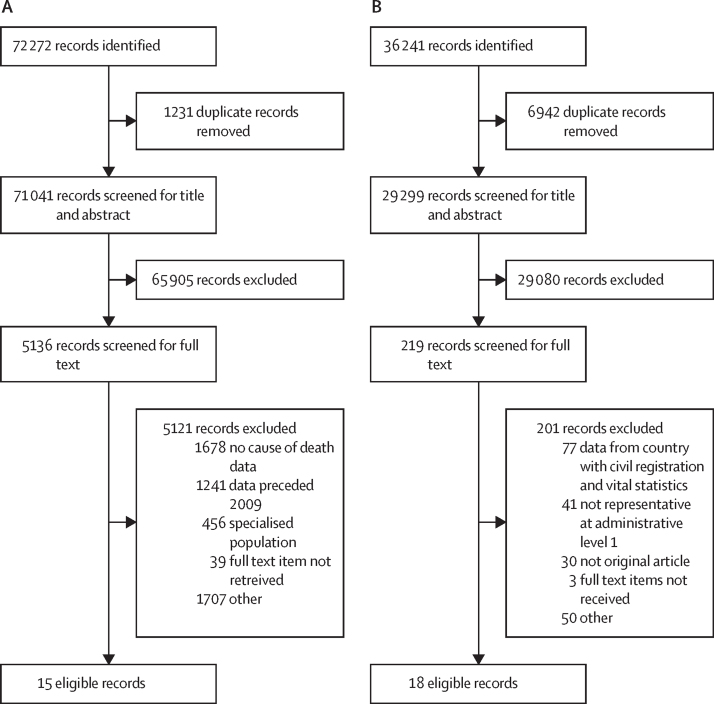
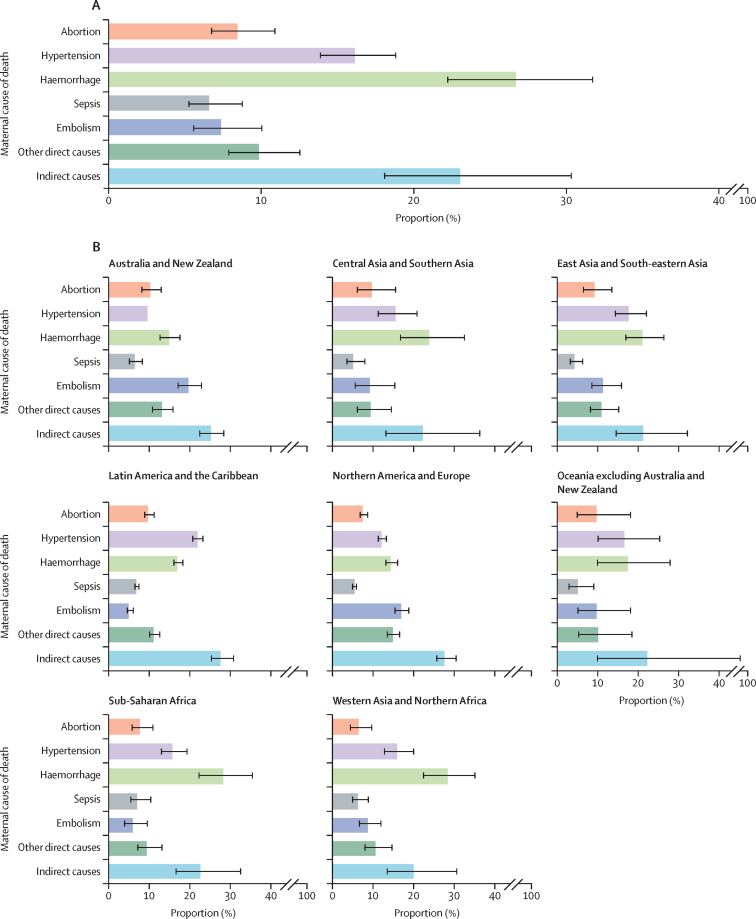
BACKGROUND: Maternal mortality is not on track to meet Sustainable Development Goal (SDG) target 3.1 of a global maternal mortality ratio below 70 per 100 000 livebirths by 2030. Updated evidence on causes of death is needed to accelerate progress. METHODS: We conducted a multi-strategy systematic review to identify causes of maternal deaths occurring in 2009-20. Data sources included civil registration and vital statistics systems data from the WHO Mortality Database, reports published by Member States, and national and subnational journal articles identified via bibliographic databases. We used a Bayesian hierarchical model to estimate the maternal cause of death distribution by SDG regions and worldwide. Given the paucity of data on maternal suicide and late maternal deaths occurring beyond 42 days postpartum, additional analyses were conducted to estimate the proportion of maternal deaths from suicide and the ratio of maternal to late maternal deaths (all cause). FINDINGS: Globally, the most common cause of maternal death was haemorrhage (27%; 80% uncertainty interval 22-32), followed by indirect obstetric deaths (23%, 18-30), and hypertensive disorders (16%, 14-19). The proportion of haemorrhage deaths varied substantially by region and was highest in sub-Saharan Africa and Western Asia and Northern Africa. The proportion of maternal deaths from hypertensive disorders was highest in Latin America and the Caribbean. Most maternal deaths from haemorrhage and sepsis occurred during the postpartum period. Only 12 countries recorded one or more maternal suicides; of those countries, the proportion of deaths from suicide ranged from below 1% to 26% of maternal deaths. For countries reporting at least one late maternal death (ie, deaths that occur more than 42 days but less than 1 year after the termination of pregnancy), the ratio of late maternal deaths to maternal deaths up to 42 days ranged from <0·01 to 0·07. INTERPRETATION: Haemorrhage remains the leading cause of death, despite the existence of effective clinical interventions, emphasising the need for improved access to quality health care. The timing of most deaths in the postpartum period demands renewed commitment to improving the provision of postpartum care in addition to intrapartum care. Indirect causes of death require health system approaches to integrate obstetric and non-obstetric care. FUNDING: USAID; US Fund for UNICEF via the Bill & Melinda Gates Foundation; and UNDP-UNFPA-UNICEF-WHO-World Bank Special Programme of Research, Development, and Research Training in Human Reproduction (HRP).
Overview
The claims and statistics of this paper haven’t been checked yet.
Free: it reads the open-access text and checks the first 5 claims that cite a source we can check. Create a free account to check every claim.
Integrity signals
Registry
Cites
Statistics
Figures
Verification
Claims the paper makes
The claims and statistics of this paper haven’t been checked yet.
Free: it reads the open-access text and checks the first 5 claims that cite a source we can check. Create a free account to check every claim.
Self-check
Percentages, sums and reported differences re-computed from the paper’s own numbers.
The self-check needs the paper’s full text.
Citations
Cites
Global causes of maternal death: a WHO systematic analysis
Say, L., Chou, D., Gemmill, A., Tunçalp, Ö., Moller, A.-B., Daniels, J., Gülmezoglu, A. M., Temmerman, M., & Alkema, L. (2014) · The Lancet Global Health · doi:10.1016/s2214-109x(14)70227-x · Cited by 6,582
Self-citationWHO analysis of causes of maternal death: a systematic review
Khan, K. S., Wojdyla, D., Say, L., Gülmezoglu, A. M., & Van Look, P. F. (2006) · The Lancet · doi:10.1016/s0140-6736(06)68397-9 · Cited by 3,978
Self-citationBennett, J. E., Stevens, G. A., Mathers, C. D., Bonita, R., Rehm, J., Kruk, M. E., Riley, L. M., Dain, K., Kengne, A. P., Chalkidou, K., et al. (2018) · The Lancet · doi:10.1016/s0140-6736(18)31992-5 · Cited by 1,336
Souza, J. P., Gülmezoglu, A. M., Vogel, J., Carroli, G., Lumbiganon, P., Qureshi, Z., Costa, M. J., Fawole, B., Mugerwa, Y., Nafiou, I., et al. (2013) · The Lancet · doi:10.1016/s0140-6736(13)60686-8 · Cited by 757
Self-citationBoerma, T., Requejo, J., Victora, C. G., Amouzou, A., George, A., Agyepong, I., Barroso, C., Barros, A. J. D., Bhutta, Z. A., Black, R. E., et al. (2018) · The Lancet · doi:10.1016/s0140-6736(18)30104-1 · Cited by 517
Self-citationA global analysis of the determinants of maternal health and transitions in maternal mortality
Souza, J. P., Day, L. T., Rezende-Gomes, A. C., Zhang, J., Mori, R., Baguiya, A., Jayaratne, K., Osoti, A., Vogel, J. P., Campbell, O., et al. (2024) · The Lancet Global Health · doi:10.1016/s2214-109x(23)00468-0 · Cited by 398
Self-citationThe scale, scope, coverage, and capability of childbirth care
Campbell, O. M. R., Calvert, C., Testa, A., Strehlow, M., Benova, L., Keyes, E., Donnay, F., Macleod, D., Gabrysch, S., Rong, L., et al. (2016) · The Lancet · doi:10.1016/s0140-6736(16)31528-8 · Cited by 307
Vogel, J. P., Jung, J., Lavin, T., Simpson, G., Kluwgant, D., Abalos, E. J., Díaz, V., Downe, S. M., Filippi, V., Gallos, I. D., et al. (2023) · The Lancet Global Health · doi:10.1016/s2214-109x(23)00454-0 · Cited by 161
A framework for healthcare interventions to address maternal morbidity
Firoz, T., McCaw‐Binns, A., Filippi, V., Magee, L. A., Costa, M. L., Cecatti, J. G., Barreix, M., Adanu, R., Chou, D., Say, L., et al. (2018) · International Journal of Gynecology & Obstetrics · doi:10.1002/ijgo.12469 · Cited by 127
Self-citationLate maternal deaths: a neglected responsibility
Sliwa, K. S., & Anthony, J. (2016) · The Lancet · doi:10.1016/s0140-6736(16)30391-9 · Cited by 67
Research works printed but not linked: 2
- Alexander M Chong MYC Pejcinovska M Estimating causes of maternal death in data-sparse contexts http://arxiv.org/abs/2101.05240 2021 39189680 · arXiv
- WHO WHO recommendations on maternal and newborn care for a positive postnatal experience https://www.who.int/publications/i/item/9789240045989 March 30, 2022 35467813
Cited by
Items 201–300 of 401
Adam, G. A., AlHabardi, N., & Adam, I. (2026) · International Journal of Women s Health · doi:10.2147/ijwh.s567668
Hasky, N. (2026) · Biology Open · doi:10.1242/bio.062284
“Placental complications are a leading cause of maternal and neonatal morbidity and mortality worldwide (Cresswell et al., 2025; Lawn et al., 2023), yet the underlying mechanisms remain elusive.”
Николаевна, П. В., Корнеева, Ю. М., & Fofonova, I. Y. (2025) · Вестник Смоленской государственной медицинской академии · doi:10.37903/vsgma.2025.3.34
Portillo-Gallo, J. H., Sánchez-González, J. M., Saldaña-Cruz, A. M., Hernández-Preciado, M. R., Silvas, L. A. C., Ledesma-Martínez, V. M., Gómez-Rodríguez, H. A., Cárdenas-Bedoya, J., Dávalos‐Rodríguez, I. P., Santillán, R. F., et al. (2026) · Current Issues in Molecular Biology · doi:10.3390/cimb48020168
Parada cardiorrespiratoria perioperatoria en la paciente obstétrica
Martín Astete, B., Lacassie, H. J., & Gálvez, A. (2026) · Revista Española de Anestesiología y Reanimación · doi:10.1016/j.redar.2026.502037
Tøsdal, M. B., Lunde, T. H. F., Hervig, T. A., Sun, C., Sandberg, S., Hellum, M., Henriksson, C. E., & Kristoffersen, A. H. (2026) · Thrombosis and Haemostasis · doi:10.1055/a-2791-6450
Dodoo, N. D., Akinyemi, A. I., Akilimali, P., Sangala, W., Ogunoye, O. R., Agossou, B. U., Bankole, A., Bekele, D., Guiella, G., Methazia, J., et al. (2025) · Sexual and Reproductive Health Matters · doi:10.1080/26410397.2026.2622222
Mery, E., Hajjar, J. M., Sudade, S. S., Vasam, G., Benton, S. J., Gaudet, L., Demellawy, D. E., Grynspan, D., & Bainbridge, S. A. (2026) · Placenta · doi:10.1016/j.placenta.2026.01.016 · Cited by 1
Afolabi, B. B., Makwe, C. C., Oluwole, E. O., Obi‐Jeff, C., Mitchell, E. J., Banke-Thomas, A. O., Adeyemo, T. A., Abioye, A. I., Eboreime, E., Saidu, A., et al. (2026) · BMJ Open · doi:10.1136/bmjopen-2025-110719
Yu, Z., Wang, Y., Chen, X., Yu, X., Zhu, Y., Li, X., Zhang, S., & Zhou, Q. (2026) · BMC Pregnancy and Childbirth · doi:10.1186/s12884-026-08782-2
“It complicates an estimated 5% to 8% of pregnancies worldwide and, alongside other hypertensive disorders, is a leading direct cause of maternal mortality, accounting for approximately 16% of global maternal deaths [3, 4].”
Fathurrahman, F. A., Santoso, K. H., & Fitriati, M. (2026) · International Journal of Surgery Case Reports · doi:10.1097/rc9.0000000000000204
“PPH remains one of the leading causes of maternal morbidity and mortality worldwide, particularly in low-and middle-income countries, contributing to nearly one-quarter of maternal deaths [ 1 , 7 ] .”
Alreshidi, N. M., Alrimali, A. M., Alshammari, W. D., Alreshidi, M. M. A., Tabungar, D., Alshammari, E. H., Lacbao, M. B., Alenezi, A. Q., & Thomas, J. M. (2026) · The Journal of Continuing Education in Nursing · doi:10.3928/00220124-20251118-02
Swarray‐Deen, A., McDougall, A. R. A., Chemway, R. N., Craik, R., Jayaratnam, S., Joseph, N. T., Mahar, R. K., Koye, D. N., Nguyen, L., Simpson, J. A., et al. (2026) · medRxiv · doi:10.64898/2026.02.12.26346216
Ihekoronye, M. R., Ola-Olorun, O. J., Okafor, U. G., Aladenola, F. B., Eze, S. O. A. P. O., & Eze, P. O. (2026) · IntechOpen eBooks · doi:10.5772/intechopen.1014514
Turé, R., Damasceno, A., & Lunet, N. (2026) · International Journal of Gynecology & Obstetrics · doi:10.1002/ijgo.70850
Larsson, L.-L. F., Hailemeskel, S., Lindgren, H., Byrskog, U., Wells, M. B., Blomgren, J., Cheptum, J. J., Ceesay, K., & Erlandsson, K. (2026) · African Journal of Primary Health Care & Family Medicine · doi:10.4102/phcfm.v18i1.5238
Oluwole, E. O., Afolabi, B. B., Cleeve, A., Abioye, A. I., Chieme, C. F., Badmus, M. O., Hanson, C., & Beňova, L. (2026) · doi:10.12688/verixiv.2880.1
Zhao, X., Xu, P., Du, P., Cui, X., Xu, Z., Wang, Y., Zhang, J., Cui, X., & Tang, J. (2026) · Cardiovascular Innovations and Applications · doi:10.15212/cvia.2025.0037
Ye, W., Li, Y., Li, B., Zhu, H., Wu, Y., Guo, D., Yu, M., Xu, J., & LinDan, J. I. (2026) · The Journal of Maternal-Fetal & Neonatal Medicine · doi:10.1080/14767058.2026.2633047
Valenzuela, M. T., Poblete, J. A., Milena Zamboni, T., Astudillo, R., Carvajal, C., Moreno, N., Sarmiento, L. A. D., Jaramillo, S. X., Franco, L. C., Ayala-Aguilera, F., et al. (2026) · Medical Teacher · doi:10.1080/0142159x.2026.2630982
McDougall, A. R. A., Guneratne, T., Mills, K., Makama, M., Gülmezoglu, A. M., Ammerdorffer, A., Keir, L. S., Ventola, C., Scott, J., Fernández-Suárez, M., et al. (2026) · PLOS Global Public Health · doi:10.1371/journal.pgph.0005766 · Cited by 1
“Hypertensive disorders of pregnancy are the second-leading cause of maternal deaths globally, the majority these are due to pre-eclampsia or eclampsia [3].”
Sitefane, G. G., Munguambe, K., Axemo, P., Belachew, J., Essén, B., & Mariano, E. C. (2025) · Sexual and Reproductive Health Matters · doi:10.1080/26410397.2026.2637328
Maternal Mortality in Nepal: Identifying High-Risk Groups Through Census Data
Kurvinen, M., Sharma, S., & Deuba, K. (2026) · Journal of Community Health · doi:10.1007/s10900-026-01562-1
“According to the 2021 Nepal Maternal Mortality Report, nearly one-third of postpartum deaths were attributed to obstetric hemorrhage [3], a leading cause of maternal mortality worldwide [12], while hypertensive disorders were the second most common direct cause [3 ].”
Obi‐Jeff, C., Umar, L., Oguntimehin, F., Abdulganiyu, A. O., Adejumo, A., Elemuwa, C. O., Dodo, A. M., Haruna, Z., Okoro, U. A., & Eboreime, E. (2026) · Research Square · doi:10.21203/rs.3.rs-8701959/v1
Mills, K., Guneratne, T., Makama, M., Ventola, C., Keir, L. S., Ammerdorffer, A., Scott, J., Gülmezoglu, A. M., Vogel, J. P., & McDougall, A. R. A. (2026) · The Lancet Obstetrics Gynaecology & Women s Health · doi:10.1016/s3050-5038(25)00165-7 · Cited by 1
Vrbica, K., Štingl, J., Vaníčková, K., Hrdý, O., Štěpánová, R., Janků, P., Hruban, L., & Gál, R. (2026) · BMC Pregnancy and Childbirth · doi:10.1186/s12884-026-08941-5
“Despite advancements in obstetric care, severe haemorrhage remains the leading cause of maternal mortality world-wide [2].”
PostMom: An AI-Driven and Culturally-Tailored Persuasive Application for Postnatal Care in Nigeria
Ogbonnaya-Okafor, C., Ataguba, G., Chan, G., & Orji, R. (2026) · Lecture notes in computer science · doi:10.1007/978-3-032-19687-3_17
Modern opportunities for early prediction of preeclampsia (literature review)
Malakhouskaya, A. A., & Kiseleva, N. I. (2025) · Vestnik of Vitebsk State Medical University · doi:10.22263/2312-4156.2025.6.9
Perioperative cardiac arrest in obstetric patients
Martín Astete, B., Lacassie, H. J., & Gálvez, A. (2026) · Revista Española de Anestesiología y Reanimación (English Edition) · doi:10.1016/j.redare.2026.502037
Ravi, K., Panwar, R., Shekhawat, R. S., & Khera, S. (2026) · Forensic Science Medicine and Pathology · doi:10.1007/s12024-026-01216-7
“Infections contribute to nearly 10.7% of these deaths [ 7], and although varicella is uncommon in pregnancy, it can occasionally result in severe and fatal complications, as illustrated in the present case.”
InfluentialDotse‐Gborgbortsi, W., Yankey, O., Utazi, C. E., Tejedor‐Garavito, N., Banke-Thomas, A. O., Chaudhuri, S., Bonnie, A., Chamberlain, H. R., Wariri, O., Dwomoh, D., et al. (2026) · doi:10.12688/verixiv.3028.1
Pharmacotherapeutic strategies in high-risk pregnancy: Balancing maternal and foetal safety
Saroha, G., Das, R., & Mehta, D. K. (2026) · Scripta Medica · doi:10.5937/scriptamed57-58977
Audit of maternal mortality in a large agricultural region of south Siberia
Molchanova, I. V., Kolyado, O. V., Ремнева, О. В., Yaroshenko, I. D., & Volodina, A. A. (2026) · Fundamental and Clinical Medicine · doi:10.23946/2500-0764-2026-11-1-82-91
Huang, Q., Peng, A., Cui, Z., Huang, Z., Duan, D., Cao, X., Cui, Y., & Huang, L. (2026) · Frontiers in Public Health · doi:10.3389/fpubh.2026.1733799 · Cited by 5
“%) remained the leading causes of the estimated 287,000 annual maternal deaths world-wide, with the majority of complications occurring during the critical postpartum period (18).”
Trends in Maternal Mortality in Bhutan: A National Review, 1985 to 2024
Dorjey, Y., Chhetri, D. K., Dorji, T., & Gyamtsho, S. (2026) · Reproductive Female and Child Health · doi:10.1002/rfc2.70068
Luabeya, S. M., Mubelo, M., Irung, O. I., Beia, A., Mikobi, T. M., Nkuba, A., Betukumeso, D. M., Myphie, G. M., Kazadi, O., & Nkanga, M. N. (2026) · BMC Pregnancy and Childbirth · doi:10.1186/s12884-026-09003-6
“According to the World Health Organization (WHO), PE is the third leading cause of maternal mortality, accounting for 16% of global maternal deaths, and approximately 5 to 8% of pregnant women developed PE in 2023 [2].”
Wang, Y., Wu, P., Wang, Y., Ye, Y., Lai, Y., Chen, J., Li, Y., Zhang, J., Wang, J., Yu, H., et al. (2026) · Chinese Medical Journal · doi:10.1097/cm9.0000000000004024
“[1] Gestational hypertension (GH) and preeclampsia (PE) are the most common subtypes of HDP; moreover, approximately one quarter of women with GH progress to PE.”
Pregnancy and Female Reproductive Disorders
Esterhuizen, M., & Pheiffer, Y. (2026) · Springer eBooks · doi:10.1007/978-3-031-90919-1_42-1 · Cited by 1
Cardiac Arrest and Extracorporeal Membrane Oxygenation in the Peripartum Period
Thomas, A. T., Ortoleva, J. P., & Naoum, E. E. (2026) · Anesthesiology Clinics · doi:10.1016/j.anclin.2026.02.019
Habib, A., Khan, H. T. A., Lafarge, C., & Bezad, R. (2026) · BMC Public Health · doi:10.1186/s12889-026-26774-x
“Haemorrhage, indirect obstetric deaths and hypertensive disorders (eclampsia) were the most life-threatening conditions and were responsible for over half of maternal deaths in the world [6–8].”
Rakale, G., Ntuli, S. T., Ramarumo, T., & Seeletse, S. M. (2026) · South African Family Practice · doi:10.4102/safp.v68i1.6259
Low-Dose Aspirin is Not Associated with Increased Risk of Postpartum Hemorrhage
Ali, M., Higginbotham, A., Sabri, E., Moretti, F. M., Walker, M. C., & Werlang, A. (2026) · Journal of Obstetrics and Gynaecology Canada · doi:10.1016/j.jogc.2026.103363
Identifying pregnancies in routinely collected health data: a scoping review of methods
Mazzone, P., Higgins, R., O’Connor, S., Myers, J., van Staa, T. P., & Palin, V. (2026) · BMC Medical Informatics and Decision Making · doi:10.1186/s12911-026-03423-2 · Cited by 1
“Adverse maternal outcomes such as hypertensive disorders, preterm birth, stillbirth, severe maternal morbidity and maternal mortality remain major public health concerns across high, middle and low-income settings [1–3].”
Mugisha, J., Turanzomwe, S., Mugyenyi, G. R., Musiimenta, A., Kanyesigye, M., Ochola, H., Atuhumuza, E., & Atukunda, E. C. (2026) · Cureus · doi:10.7759/cureus.107426
Hemoglobin Trajectory During Pregnancy and Postpartum Hemorrhage: A Retrospective Cohort Study
Mu, G., Li, H., Du, J., Jian, Y., Shen, X., & Su, Y. (2026) · International Journal of Women s Health · doi:10.2147/ijwh.s601942
Identifying the ‘real cause of death’: the complexities of maternal death reviews in Tanzania
Almdal, K., Saidi, A., Moland, K. M., & Melberg, A. (2026) · Health Policy and Planning · doi:10.1093/heapol/czag053
“In SSA, the most common clinical causes of death are obstetric haemorrhage, indirect obstetric causes, such as worsening of non-communicable diseases during pregnancy, hypertensive disorders, and abortion complications (Cresswell et al. 2025).”
Case-control study of risk determination for obstetric postpartum venous thromboembolism
Bamezai, S., Vejalla, A., Mansour, A. I., Brown, C., & Obi, A. T. (2026) · Vascular Medicine · doi:10.1177/1358863x261430636
Hypertensive Disorders in Pregnancy
Grillo, E. O., Akadri, A. A., Abaya, J., Elisha, Y., Owolabi, S., & Ani, J. S. A. F. (2026) · Obstetrics and gynecology. · doi:10.5772/intechopen.1014137
Blood Product Use for Hemorrhage during Cesarean Delivery
Pacheco, L., Weiner, S. J., Saade, G. R., Clifton, R. G., Parry, S. I., Thorp, J. M., Longo, M., Salazar, A. E., Tita, A., Gyamfi‐Bannerman, C., et al. (2026) · American Journal of Perinatology · doi:10.1055/a-2859-5641
Mensah, B. O., Adjei, A. S., Dugbatey, M. K., & Anim, E. O. (2026) · BioMed Research International · doi:10.1155/bmri/8646264
Next-Generation Nanotoxoid Platforms for Protection against Toxin-Mediated Bacterial Infections
Jeong, U., Kim, M., Kim, L., & Noh, I. (2026) · Microbiology and Biotechnology Letters · doi:10.48022/mbl.2603.03010
Verma, A., Sivasankary, R., Bansal, S., Soibam, N., Kumar, A., Sihag, N., & Meshram, R. (2026) · Cureus · doi:10.7759/cureus.108077 · Cited by 1
“They also observed that the proportion of deaths due to hemorrhage varied considerably by region and was highest in sub-Saharan Africa, Western Asia, and Northern Africa [19].”
Universal health coverage and maternal mortality in Morocco: An ARDL bounds analysis
RADAH, A., Elhia, M., & Chokri, K. (2026) · International Social Security Review · doi:10.1111/issr.70022
Samuels, L., Mukape, M., Kuhrt, K., Oliveira, L. G., Shennan, A. H., Chappell, L. C., & Hurrell, A. (2026) · The Lancet Obstetrics Gynaecology & Women s Health · doi:10.1016/s3050-5038(26)00057-9
Baxi, S. M., Igbinosa, I. I., Main, E. K., Ansari, J. R., Oluwatola, S. O., & Landis, R. K. (2026) · AJOG Global Reports · doi:10.1016/j.xagr.2026.100651
Exploring recognition of obstetric danger signs among postnatal mothers in Oyo State Nigeria
Olajide, A. O., Omowumi, A., Oyedeji, Y. O., Ogunmodede, E. O., Ajala, D. E., Famutimi, E. O., OPE-BABADELE, O. O., & Esan, D. T. (2026) · Discover Public Health · doi:10.1186/s12982-026-01984-1
Zhong, X., Wang, Z., Hu, S., Lu, C., Huang, Y., Zhang, J., & Ding, X. (2026) · Frontiers in Reproductive Health · doi:10.3389/frph.2026.1775712
Predictors of Pregnant Women’s Delayed Initiation of Antenatal Care in Central Thailand
Rattasumpun, S., & Sirabarameesith, N. (2026) · Iranian Journal of Nursing and Midwifery Research · doi:10.4103/ijnmr.ijnmr_191_25
“[2] Delayed antenatal care is defined as initiating care after 12 weeks of gestation.”
Naruse, S., Akinaga, C., Mazda, Y., & Nakajima, Y. (2026) · Journal of Anesthesia · doi:10.1007/s00540-026-03761-5
Matsukawa, T., Mizutani, S., Mizutani, H., Matsumoto, K., Kato, Y., Masuo, Y., Mizutani, E., Osuka, S., Kotani, T., & Kajiyama, H. (2026) · IntechOpen eBooks · doi:10.5772/intechopen.1015314
Bekele, Y. A., Ngoma, R. L., Abeje, G., Erbas, B., & Batra, M. (2026) · Women s Health · doi:10.1177/17455057261446938 · Cited by 1
Diagnostic significance of placental growth factor in women with unspecified preeclampsia
Александровна, С. М., Solovyeva, A. V., Mamchich, D. S., & Борисовна, Р. Д. (2026) · Meditsinskiy sovet = Medical Council · doi:10.21518/ms2026-150
Cardiac Implications of Preeclampsia: A Review
Forst, B. J., Chambliss, L. R., & Majdalany, D. S. (2026) · Journal of Personalized Medicine · doi:10.3390/jpm16050265 · Cited by 1
“It impacts 2% to 8% of pregnancies worldwide and is a leading cause of morbidity and mortality for pregnant women in the developed world [1].”
Neto, G. M. S., Surita, F. G., Guida, J. P. D. S., Corat, V. B., Cavalli, R. D. C., Barbosa, P. O., Galão, A. O., Martins-Costa, S., Korkes, H. A., Peraçoli, J. C., et al. (2026) · BMC Pregnancy and Childbirth · doi:10.1186/s12884-026-09066-5
“Among hypertensive disorders, preeclampsia is particularly relevant, as it remains one of the leading causes of maternal and perinatal morbidity and mortality worldwide [9, 10].”
Modri, S., Nagpal, M., Brace, M. M., Reddick, Y., Weimer, J. E., Sehdev, H. M., & Trout, K. K. (2026) · Obstetrics and Gynecology International · doi:10.1155/ogi/9576600
Daghmouri, M., Repplinger, S., Weiss, E., Bonnet, M., Guen, M. L., Dahmani, S., Bouthors, A. S. D., Mebazaa, A., Gayat, É., & Deniau, B. (2026) · Obstetric Anesthesia Digest · doi:10.1097/01.aoa.0001192272.04738.bb
Medical Opinion on Abortion and Abortion Law in Antigua and Barbuda: A Cross-Sectional SurveyPreprint
Frame, T., Nunes, F., Abbott, D., Delph, Y., Elliston, S., Zhang, G., & Yakubu, Y. (2026) · Research Square · doi:10.21203/rs.3.rs-9488129/v1
Saffron and Pregnancy: Cultural Practices, Beliefs, and Safety Evidence: An Integrative Review
Alshdefat, A., Ayed, A., Aqtam, I. F., Ibitoye, O. F., Vincent, S. C., & Furqani, A. A. (2026) · Journal of Evidence-Based Integrative Medicine · doi:10.1177/2515690x261455162 · Cited by 1
“6,7 Maternal healthcare demands reduced labor duration and pain severity.”
Menkhorst, E. M., Yang, G., Yu, Y., Santos, L. L., Zhou, W., Syngelaki, A., Varshney, S., Williamson, N. A., Koga, K., Rolnik, D. L., et al. (2026) · MedComm · doi:10.1002/mco2.70784 · Cited by 1
“Preeclampsia leads to the deaths of 46,000 women and 500,000 babies each year [ 5 ] and increases long-term chronic disease risk in both mothers and children [ 4, 6 ].”
Afulani, P. A., Okiring, J., Ongeri, L., Aborigo, R., Ogolla, B. A., Moro, A., Kinyua, J., Oluoch, M., Ayibasiyah, D., Odiase, O. J., et al. (2026) · The Lancet Regional Health - Africa · doi:10.1016/j.lanafr.2026.100074
Miltenburg, A. S., Uwamahoro, N. S., Mwanga, J. R., Lindskog, B. V., Misje, R., Kihunrwa, A., Pembe, A. B., Gilmore, B., & Mukumbang, F. C. (2026) · BMJ Open · doi:10.1136/bmjopen-2026-116839
Association Between Third‐Stage Duration and Postpartum Hemorrhage in Women With Retained Placenta
Shimizu, F., Arakaki, T., Takita, H., Yamashita, Y., Kaneko, M., Matsuoka, R., & Sekizawa, A. (2026) · Journal of obstetrics and gynaecology research · doi:10.1111/jog.70337
Pregnancy outcomes in an international cohort of autoimmune hepatitis
Chung, Y., Garriga, M., Ergenç, İ., Tana, M. M.-S., Irani, R. A., Sarkar, M. A., & Heneghan, M. (2026) · JHEP Reports · doi:10.1016/j.jhepr.2026.101905
“23 Preeclampsia and ICP are known risk factors for preterm birth, which was also evident in our study.”
Yang, T., Dong, T., Huang, Q., Ming, X., Wang, Y., Hao, Y., Teng, Z., Cheng, J., Zhou, W., & Yin, P. (2026) · Environmental Research · doi:10.1016/j.envres.2026.124919
Giorgio, M., Juma, K. O., Wado, Y. D., Owolabi, O., Rich, C., Akuku, I., Mutuku, E., Giuffrida, M. M., Athero, S. A., & Mueke, S. W. (2026) · BMJ Global Health · doi:10.1136/bmjgh-2025-021890
Minckas, N., Al‐beity, F. M. A., Antartani, R., Baba, H. M., Banda, A., Cárdenas-Trujillo, Y. C., Vidarte, M. F. E., Galadanci, H. S., Garba, Z., Goudar, S. S., et al. (2026) · The Lancet Obstetrics Gynaecology & Women s Health · doi:10.1016/s3050-5038(26)00115-9
Ayele, M., Duko, B., Tiruye, T. Y., Ward, P., Mwanri, L., Pereira, G. F., Kitaw, T. A., Abate, B. B., Lake, E. S., Alamrew, A., et al. (2026) · BMJ Open · doi:10.1136/bmjopen-2025-111638
Njogu, R. N., Tappis, H., Orji, B., Kapoma, S., Adepoju, V. A., Ndhlovu, M., Roman, E., Muthamia, M. M., Lathrop, E., & Evans, C. L. (2026) · International Journal of Gynecology & Obstetrics · doi:10.1002/ijgo.71048
Roman, E. (2026) · International Journal of Gynecology & Obstetrics · doi:10.1002/ijgo.71043
Tappis, H., Doi, N., Bhola, C., Bamba, Y., & Lathrop, E. (2026) · International Journal of Gynecology & Obstetrics · doi:10.1002/ijgo.71046 · Cited by 1
From roadmaps to results: Seizing the moment for postpartum hemorrhage
Evans, C. L., Beyeza‐Kashesya, J., & Moran, A. C. (2026) · International Journal of Gynecology & Obstetrics · doi:10.1002/ijgo.71042
Sotiriadis, A., Tsakiri, I., Papapanou, M., Toulaki, M., Bourou, M. Z., & Siristatidis, C. S. (2026) · Cochrane Database of Systematic Reviews · doi:10.1002/14651858.cd016355
Makukhina, T. B., & Makukhina, T. B. (2026) · Ultrasound & Functional Diagnostics · doi:10.24835/1607-0771-351
Acar, S., Gungor, M., Eskiyurt, B., Karakulak, O., TİRYAKİOĞLU, P., Şengül, M., Karadaş, B., & Temiz, T. K. (2026) · Research Square · doi:10.21203/rs.3.rs-9505322/v1
Frick, M., Bergman, L., Carlsson, Y., Imberg, H., Lindgren, P., Conner, P., Hansson, S. R., Kublickas, M., Larsson, A., Hellström, S., et al. (2026) · Acta Obstetricia Et Gynecologica Scandinavica · doi:10.1111/aogs.70286
Riddell, N. S., Barrett, L., Curry, N., Mutch, N. J., Collis, R. E., Collins, P. W., Bell, S. F., & de Lloyd, L. (2026) · British Journal of Anaesthesia · doi:10.1016/j.bja.2026.05.006
Guevara, J. R. Z., Santana, R. E. V., Sarango, M. L. V., & Copo, M. S. (2026) · Atlas Research Journal · doi:10.65305/arj.v4n1.2026.70
Mensah, E. A., Afriyie, E. K., Ankomah, S. E., Kumah, E., Nsiah, N. P., Adekore, P. W., Otchere, G., Agyei, S. K., & Fusheini, A. (2026) · Frontiers in Global Women s Health · doi:10.3389/fgwh.2026.1795305
Xiong, Z., Huang, Y. N., Xu, Z., Mahai, G., Wu, C., Xu, M., Zheng, T., Liu, H., Xia, W., Xu, S., et al. (2026) · Ecotoxicology and Environmental Safety · doi:10.1016/j.ecoenv.2026.120392 · Cited by 1
Yang, J. (2026) · International Journal of Gynecology & Obstetrics · doi:10.1002/ijgo.71143
Mabie, A., Cleave, A. V., Foley, O. A., Walters, R., Gray, C. J., Beste, J., Schmalz, N. A., & Jiménez, M. (2026) · Frontiers in Global Women s Health · doi:10.3389/fgwh.2026.1816133 · Cited by 1
Riley, K., Yan, L. D., Deschamps, M., Ogyu, A., Alexandre, W., Malha, L. P., Sinkey, R. G., Pape, J. W., Rouzier, V., & McNairy, M. L. (2026) · Frontiers in Global Women s Health · doi:10.3389/fgwh.2026.1848249
“Hypertensive disorders of pregnancy (HDP) are a leading cause of preventable maternal morbidity and mortality and include gestational hypertension, preeclampsia, eclampsia, and chronic hypertension (3, 4).”
Bodunde, E., Khashan, A. S., McCarthy, F. P., O’Connor, K., & Matvienko‐Sikar, K. (2026) · Women and Birth · doi:10.1016/j.wombi.2026.102234
Neuroanesthesia for pregnant patients in resource-limited countries
Mariñez, G. M. L., de Mejía, M. C. N., & Cohen, D. (2026) · Elsevier eBooks · doi:10.1016/b978-0-443-44155-4.00013-x
Global landscape of maternal hemorrhage mortality: a 40-year analysis based on GBD 2021 study
Guo, L., Hu, J., Wang, S., Wang, H., Liu, L., & Wang, Y. (2026) · Archives of Gynecology and Obstetrics · doi:10.1007/s00404-026-08506-z
“Global initiatives, such as Sustainable Development Goal (SDG) 3.1 aimed at reducing the global maternal mortality (including MH), have also provided a framework for countries to invest in maternal healthcare [4, 36].”
InfluentialA trajectory analysis of blood pressure development during pregnancy. An inception cohort study
Frank, E., Vinnars, M., Thorell, E., Tyrén, A., Pingel, R., & Kristiansson, P. (2026) · Pregnancy Hypertension · doi:10.1016/j.preghy.2026.101490
“Globally, HDP constitute a major public health concern, affecting 5 to 10% of pregnancies and is ranked as the second most prevalent obstetric cause of maternal mortality [4].”
Torloni, M. R., Cormick, G., & Atallah, Á. N. (2026) · Reproductive Health · doi:10.1186/s12978-026-02395-w
“Hypertensive disorders of pregnancy remain an important cause of maternal and perinatal morbidity and mortality in the 21st century, especially in low and middle-income countries (LMIC) [1, 2].”
Parisi, F., Cassardo, O., Viscioni, L., Parodi, V., Tondo, M., Gallicola, B., Lubrano, C., Carbone, I. F., Taricco, E., Iurlaro, E., et al. (2026) · Journal of Nutrition and Metabolism · doi:10.1155/jnme/6251114 · Cited by 1
Ahn, K. H., Choi, Y., & Lee, K. (2026) · Transfusion Medicine · doi:10.1111/tme.70097
Metadata
- Authors
- Cresswell, J. A., Alexander, M., Chong, M. Y. C., Link, H. M., Pejchinovska, M., Gazeley, U., Ahmed, S. M. A., Chou, D., Moller, A.-B., Simpson, D., Alkema, L., Villanueva, G., Sguassero, Y., Tunçalp, Ö., Long, Q., Xiao, S., & Say, L.
- Affiliations
- World Health Organization (CH)
- University of Toronto (CA)
- London School of Hygiene & Tropical Medicine (GB)
- Monash University (AU)
- University of Massachusetts Amherst (US)
- Cochrane (GB)
- Duke Kunshan University (CN)
- Peking University (CN)
- Corresponding author
- Cresswell, Jenny A
- ORCID
- Venue
- The Lancet Global Health
- Publisher
- Elsevier BV
- Published
- 2025-04
- Volume
- 13
- Issue
- 4
- Pages
- e626-e634
- ISSN
- 2214-109X (ISSN-L)
- PMC
- PMC11946934
- OpenAlex
- W4408249334
- Semantic Scholar
- 3f0e3f4e6e8808ce4bba9d36a912981a01ea9c36
- Cited by
- 401
- References
- 16
- Citations by year
- 2026: 266 · 2025: 134
- FWCI
- 605.67
- Type
- journal article
- Language
- en
- Open access
- gold
- doi.org
- Licence
- cc-by
- www.elsevier.com/tdm/userlicense/1.0/ (tdm)
- www.elsevier.com/legal/tdmrep-license (tdm)
- creativecommons.org/licenses/by/3.0/igo/ (vor)
- Locations
- The Lancet Global Health (publishedVersion, cc-by)
- Europe PMC (PubMed Central) (publishedVersion, cc-by)
- PubMed Central (publishedVersion, cc-by)
- PubMed (publishedVersion)
- Funders
- USAID
- Topics
- Health Sciences › Medicine › Pediatrics, Perinatology and Child Health › Global Maternal and Child Health
- Health Sciences › Medicine › Pediatrics, Perinatology and Child Health › Maternal and fetal healthcare
- Health Sciences › Medicine › Pediatrics, Perinatology and Child Health › Maternal and Neonatal Healthcare
- Keywords
- maternal mortality, causes of maternal death, hemorrhage, hypertensive disorders of pregnancy, sepsis, postpartum period, maternal suicide, postpartum care, Sustainable Development Goal 3.1, maternal health policy, sub-Saharan Africa, West Asia
- MeSH terms
- Bayes Theorem, Cause of Death, Female, Humans, Maternal Mortality, Pregnancy, Global Health, World Health Organization, Maternal Death
About these checks
Registry, retraction, Cites and statistics results are computed, not judged, with one exception: a printed reference that no index lists is read once by a model before it counts as a citation error. Claims are extracted by a model and kept only when their quote appears verbatim in the text; each cited source is then checked, with a model’s help, for whether it says what the claim relies on. Those verdicts can be wrong — read the claim’s quote and the cited source before relying on one.
Statistics and arithmetic are recomputed, not judged.
Confidence bands are shown only for fields calibrated on our annotated test set. None is calibrated yet, so no band is shown.
What counts as a claim ›How we measure confidence ›How we check this ›
Are you an author, or do you see a problem with this page? Request a review
Data sources
Bibliographic data: Semantic Scholar, OpenAlex, Crossref.
Contains information from the Semantic Scholar Academic Graph Datasets, made available under the ODC Attribution License (ODC-BY 1.0).
Semantic Scholar’s data is described in: Kinney, R., et al. (2023). The Semantic Scholar Open Data Platform. arXiv:2301.10140.
