

Semaglutide 2· 4 mg once weekly in patients with non-alcoholic steatohepatitis-related cirrhosis: a randomised, placebo-controlled phase 2 trial
Open accessThe DOI matches its Crossref record; 32 of the 32 references it cites were found in a registry or an index.
Abstract
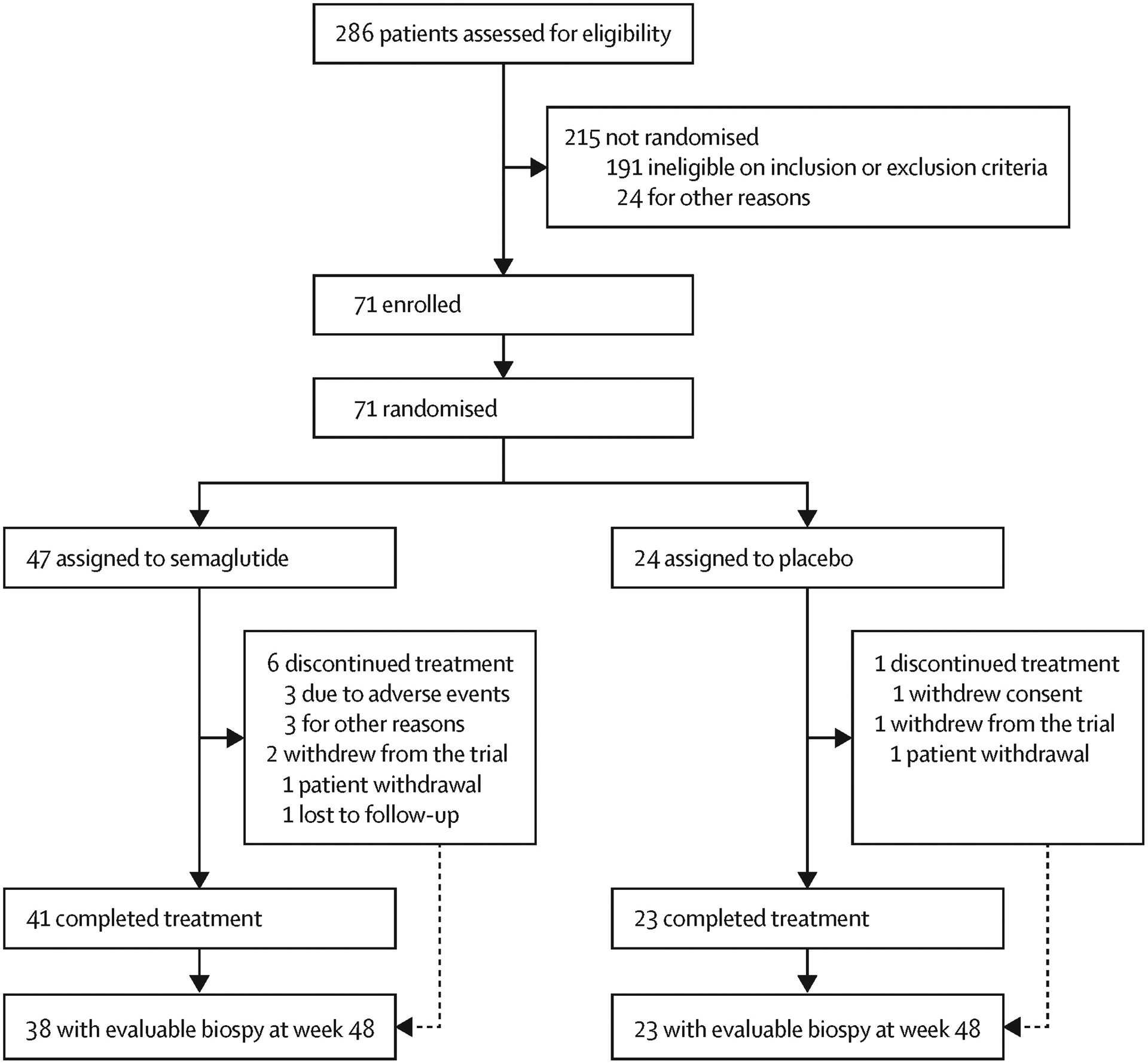
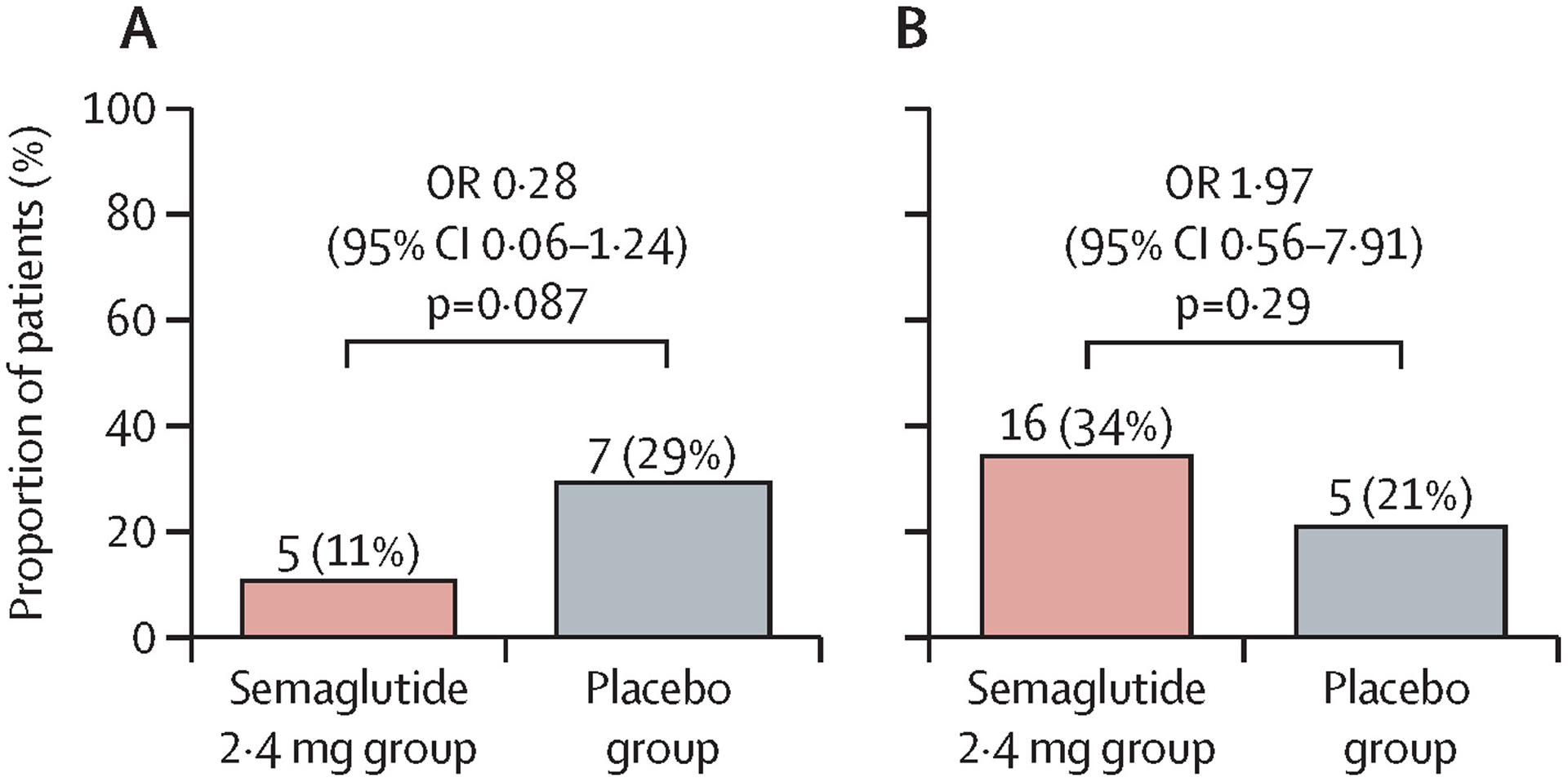
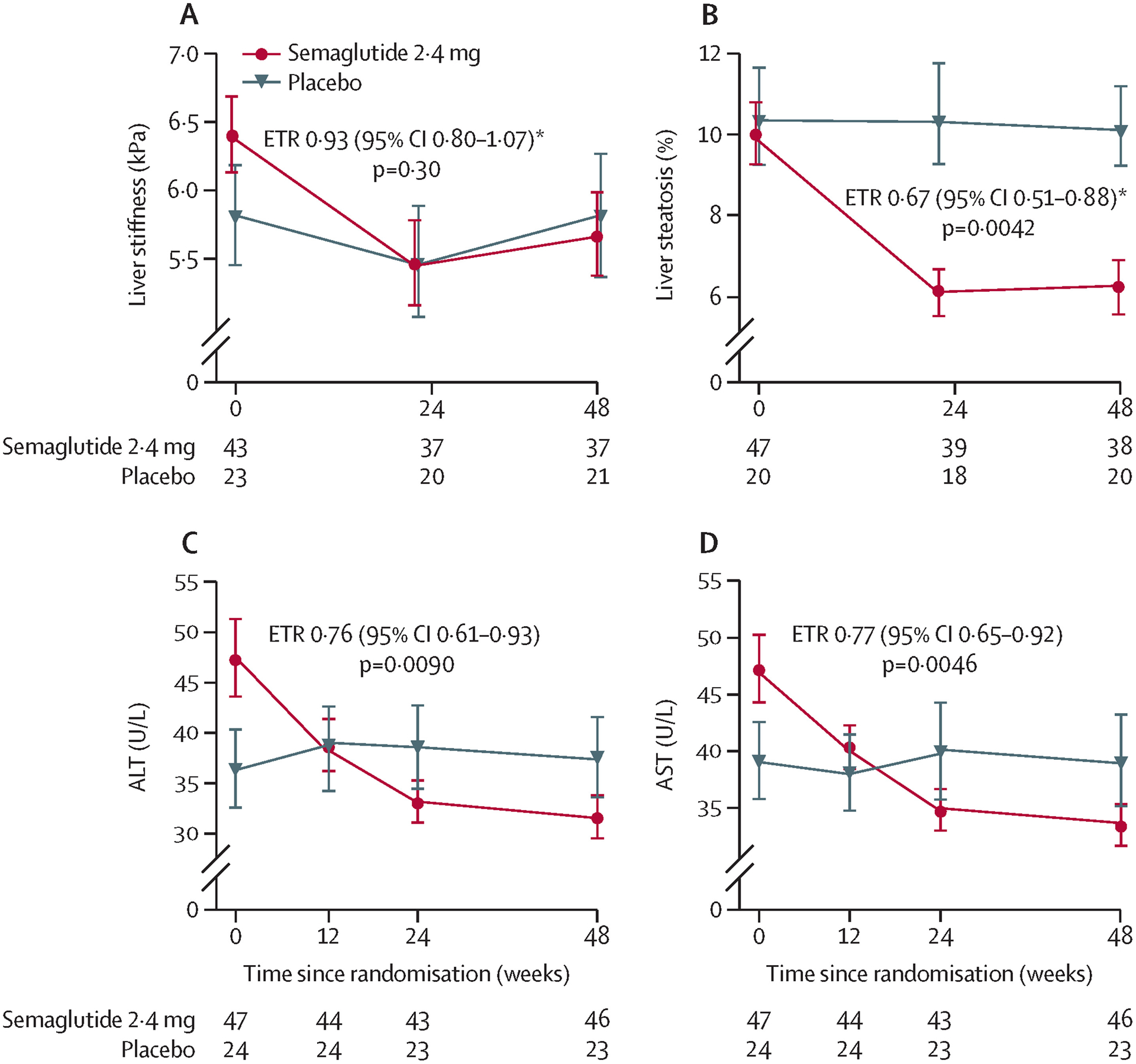
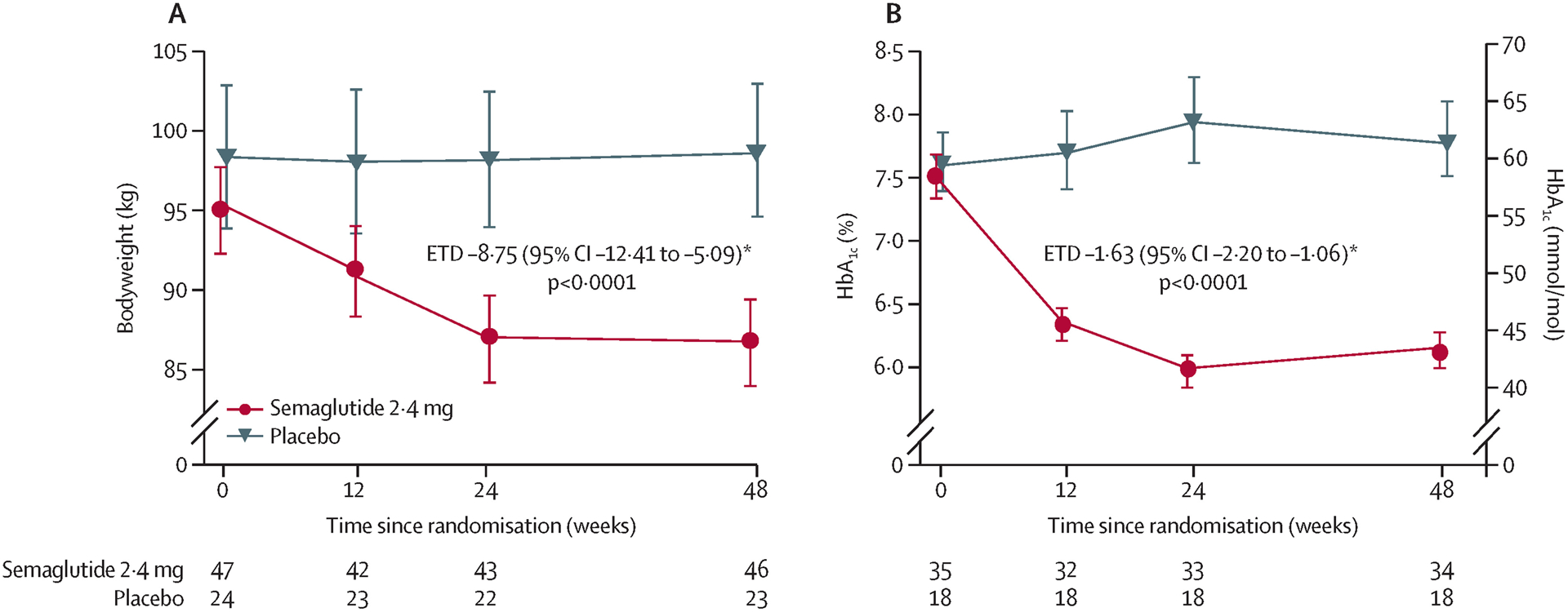
BACKGROUND: Patients with non-alcoholic steatohepatitis (NASH)-related cirrhosis are at high risk of liver-related and all-cause morbidity and mortality. We investigated the efficacy and safety of the glucagon-like peptide-1 analogue semaglutide in patients with NASH and compensated cirrhosis. METHODS: or more were randomly assigned (2:1) to receive either once-weekly subcutaneous semaglutide 2·4 mg or visually matching placebo. Patients were randomly allocated via an interactive web response system, stratified by presence or absence of type 2 diabetes. Patients, investigators, and those assessing outcomes were masked to treatment assignment. The primary endpoint was the proportion of patients with an improvement in liver fibrosis of one stage or more without worsening of NASH after 48 weeks, assessed by biopsy in the intention-to-treat population. Safety was assessed in all patients who received at least one dose of study drug. The trial is closed and completed, and registered with ClinicalTrials.gov, number NCT03987451. FINDINGS: (SD 5·9); 53 (75%) patients had diabetes. 47 patients were randomly assigned to the semaglutide group and 24 to the placebo group. After 48 weeks, there was no statistically significant difference between the two groups in the proportion of patients with an improvement in liver fibrosis of one stage or more without worsening of NASH (five [11%] of 47 patients in the semaglutide group vs seven [29%] of 24 in the placebo group; odds ratio 0·28 [95% CI 0·06-1·24; p=0·087). There was also no significant difference between groups in the proportion of patients who achieved NASH resolution (p=0·29). Similar proportions of patients in each group reported adverse events (42 [89%] patients in the semaglutide group vs 19 [79%] in the placebo group) and serious adverse events (six [13%] vs two [8%]). The most common adverse events were nausea (21 [45%] vs four [17%]), diarrhoea (nine [19%] vs two [8%]), and vomiting (eight [17%] vs none). Hepatic and renal function remained stable. There were no decompensating events or deaths. INTERPRETATION: In patients with NASH and compensated cirrhosis, semaglutide did not significantly improve fibrosis or achievement of NASH resolution versus placebo. No new safety concerns were raised. FUNDING: Novo Nordisk A/S.
Overview
The claims and statistics of this paper haven’t been checked yet.
Free: it reads the open-access text and checks the first 5 claims that cite a source we can check. Create a free account to check every claim.
Integrity signals
Registry
Cites
Statistics
Figures
Verification
Claims the paper makes
The claims and statistics of this paper haven’t been checked yet.
Free: it reads the open-access text and checks the first 5 claims that cite a source we can check. Create a free account to check every claim.
Claims other papers make about this one
Each is checked against this paper’s own text: does it say what the citing paper says it does?
The cited source doesn’t support the claim as written.
In the citing paper
“However, some studies were designed for other purposes17,18,30,41–44—for example, prevention of CVD or T2D.”
From A systematic review and meta-analysis of the efficacy and safety of pharmacological treatments for obesity in adults (2025) · cites this paper as [42]
Checked by a reasoning model — may be wrong.
Experimental — accuracy not yet measuredThe source backs part of the claim, not all of it — or backs it for a different population, condition or comparison.
In the citing paper
“However, in people with MASLD-cirrhosis, it failed to improve fibrosis, but was safe and well tolerated and conveyed significant metabolic improvements (weight reduction, improved glucose control, and lipid profiles).17”
From Randomised trial comparing weight loss through lifestyle and GLP-1 receptor agonist therapy in people with MASLD (2025) · cites this paper as [17]
Experimental — accuracy not yet measuredThe cited source says what the claim attributes to it.
In the citing paper
“OW semaglutide 2.4 mg has been recently proven safe and effective in reducing BW, HbA1c and lipids in patients with MASH-related compensated cirrhosis, yet failed to improve fibrosis or induce MASH resolution vs. placebo at 48 weeks94.”
From Incretin-based therapies for the treatment of obesity-related diseases (2024) · cites this paper as [94]
The cited source says what the claim attributes to it.
In the citing paper
“In people with compensated cirrhosis with and without type 2 diabetes, semaglutide failed to achieve both greater rates of fibrosis regression and MASH resolution compared to placebo after 48 weeks of treatment despite a weight loss of 8.8 %; of note, liver lipid content was markedly reduced [110].”
From Obesity and MASLD: Is weight loss the (only) key to treat metabolic liver disease? (2024) · cites this paper as [110]
6 more claims about this paper
Create a free account to see every claim other papers make about this one.
Self-check
Percentages, sums and reported differences re-computed from the paper’s own numbers.
The self-check needs the paper’s full text.
Citations
Cites
Design and validation of a histological scoring system for nonalcoholic fatty liver disease†
Kleiner, D. E., Brunt, E. M., Van Natta, M., Behling, C., Contos, M. J., Cummings, O. W., Ferrell, L. D., Liu, Y., Torbenson, M. S., Unalp‐Arida, A., et al. (2005) · Hepatology · doi:10.1002/hep.20701 · Cited by 10,791
Self-citationChalasani, N., Younossi, Z., Lavine, J. E., Charlton, M., Cusi, K., Rinella, M., Harrison, S. A., Brunt, E. M., & Sanyal, A. J. (2018) · Hepatology · doi:10.1002/hep.29367 · Cited by 7,239 · cited 3×
“10,11 Unfortunately, due to obesity and metabolic and cardiovascular comorbidities, many patients may not be listed for liver transplantation.”
Self-citationSemaglutide and Cardiovascular Outcomes in Patients with Type 2 Diabetes
Marso, S. P., Bain, S. C., Consoli, A., Eliaschewitz, F. G., Jódar, E., Leiter, L. A., Lingvay, I., Rosenstock, J., Seufert, J., Warren, M. L., et al. (2016) · New England Journal of Medicine · doi:10.1056/nejmoa1607141 · Cited by 6,900 · cited 2×
“14 15–18 It has been suggested that GLP-1RAs may have hepatoprotective effects.”
Once-Weekly Semaglutide in Adults with Overweight or Obesity
Wilding, J. P. H., Batterham, R. L., Calanna, S., Davies, M., Van Gaal, L. F., Lingvay, I., McGowan, B. M., Rosenstock, J., Tran, M. T. D., Wadden, T. A., et al. (2021) · New England Journal of Medicine · doi:10.1056/nejmoa2032183 · Cited by 5,205
EASL–EASD–EASO Clinical Practice Guidelines for the management of non-alcoholic fatty liver disease
(2016) · Journal of Hepatology · doi:10.1016/j.jhep.2015.11.004 · Cited by 4,836
Expanding consensus in portal hypertension
de Franchis, R. (2015) · Journal of Hepatology · doi:10.1016/j.jhep.2015.05.022 · Cited by 3,078
Estes, C., Razavi, H., Loomba, R., Younossi, Z., & Sanyal, A. J. (2018) · Hepatology · doi:10.1002/hep.29466 · Cited by 2,399
Self-citationArmstrong, M. J., Gaunt, P., Aithal, G. P., Barton, D., Hull, D., Parker, R., Hazlehurst, J. M., Guo, K., Abouda, G., Aldersley, M. A., et al. (2016) · The Lancet · doi:10.1016/s0140-6736(15)00803-x · Cited by 2,203
Self-citationA Placebo-controlled trial of subcutaneous semaglutide in nonalcoholic steatohepatitis
Newsome, P. N., Buchholtz, K., Cusi, K., Linder, M., Okanoue, T., Ratziu, V., Sanyal, A. J., Sejling, A.-S., & Harrison, S. A. (2021) · New England Journal of Medicine · doi:10.1056/nejmoa2028395 · Cited by 2,039 · cited 5×
“The high rate of fibrosis improvement in the placebo group was similar to that seen in the trial of semaglutide in NASH F1–3, 20 and may be related to sampling variability as well as the inherent inconsistency between conventional pathology assessments of treatment response in patients with…”
InfluentialSelf-citationMechanisms and disease consequences of nonalcoholic fatty liver disease
Loomba, R., Friedman, S. L., & Shulman, G. I. (2021) · Cell · doi:10.1016/j.cell.2021.04.015 · Cited by 2,002 · cited 1×
“7,8 Patients with NASH-related cirrhosis have a high unmet need for effective pharmacotherapies to improve the natural history of this disease, including the associated increased risk for cardiovascular morbidity and mortality, yet there are currently no approved pharmacotherapies for the treatment…”
Self-citation
Cited by
Tacke, F., Horn, P., Wai-Sun Wong, V., Ratziu, V., Bugianesi, E., Francque, S., Zelber-Sagi, S., Valenti, L., Roden, M., Schick, F., et al. (2024) · Journal of Hepatology · doi:10.1016/j.jhep.2024.04.031 · Cited by 2,210
Self-citationPhase 3 Trial of Semaglutide in Metabolic Dysfunction–Associated Steatohepatitis
Sanyal, A. J., Newsome, P. N., Kliers, I., Østergaard, L. H., Long, M. T., Kjær, M. S., Cali, A. M. G., Bugianesi, E., Rinella, M. E., Roden, M., et al. (2025) · New England Journal of Medicine · doi:10.1056/nejmoa2413258 · Cited by 1,115
Self-citationType 2 diabetes mellitus in adults: pathogenesis, prevention and therapy
Lu, X., Xie, Q., Pan, X., Zhang, R., Zhang, X., Peng, G., Zhang, Y., Shen, S., & Tong, N. (2024) · Signal Transduction and Targeted Therapy · doi:10.1038/s41392-024-01951-9 · Cited by 665
European Association for the Study of the Liver (EASL), European Association for the Study of Diabetes (EASD), & European Association for the Study of Obesity (EASO) (2024) · Obesity Facts · doi:10.1159/000539371 · Cited by 471
Stefan, N., Yki-Järvinen, H., & Neuschwander-Tetri, B. A. (2025) · The Lancet Diabetes & Endocrinology · doi:10.1016/s2213-8587(24)00318-8 · Cited by 392
Verrastro, O., Panunzi, S., Castagneto-Gissey, L., De Gaetano, A., Lembo, E., Capristo, E., Guidone, C., Angelini, G., Pennestrì, F., Sessa, L., et al. (2023) · The Lancet · doi:10.1016/s0140-6736(23)00634-7 · Cited by 362
Israelsen, M., Francque, S., Tsochatzis, E. A., & Krag, A. (2024) · The Lancet · doi:10.1016/s0140-6736(24)01811-7 · Cited by 348
Cusi, K., Abdelmalek, M. F., Apovian, C. M., Balapattabi, K., Bannuru, R. R., Barb, D., Bardsley, J. K., Beverly, E. A., Corbin, K. D., ElSayed, N. A., et al. (2025) · Diabetes Care · doi:10.2337/dci24-0094 · Cited by 332
Self-citationMetabolic Dysfunction–Associated Steatotic Liver Disease
Targher, G., Valenti, L., & Byrne, C. D. (2025) · New England Journal of Medicine · doi:10.1056/nejmra2412865 · Cited by 325
Metabolic dysfunction-associated steatotic liver disease in adults
Huang, D. Q., Wong, V. W. S., Rinella, M. E., Boursier, J., Lazarus, J. V., Yki-Järvinen, H., & Loomba, R. (2025) · Nature Reviews Disease Primers · doi:10.1038/s41572-025-00599-1 · Cited by 293
Self-citationDiabetes mellitus—Progress and opportunities in the evolving epidemic
Abel, E. D., Gloyn, A. L., Evans-Molina, C., Joseph, J. J., Misra, S., Pajvani, U. B., Simcox, J., Susztak, K., & Drucker, D. J. (2024) · Cell · doi:10.1016/j.cell.2024.06.029 · Cited by 292
ElSayed, N. A., Aleppo, G., Bannuru, R. R., Bruemmer, D., Collins, B. S., Cusi, K. J., Ekhlaspour, L., Fleming, T. K., Hilliard, M. E., Johnson, E. L., et al. (2023) · Diabetes Care · doi:10.2337/dc24-s004 · Cited by 258
The expanding incretin universe: from basic biology to clinical translation
Drucker, D. J., & Holst, J. J. (2023) · Diabetologia · doi:10.1007/s00125-023-05906-7 · Cited by 243
ElSayed, N. A., Aleppo, G., Aroda, V. R., Bannuru, R. R., Brown, F. M., Bruemmer, D., Collins, B. S., Cusi, K., Hilliard, M. E., Isaacs, D., et al. (2023) · Diabetes Care · doi:10.2337/dc23-s004 · Cited by 222
Incretins (GLP-1 receptor agonists and dual/triple agonists) and the liver
Newsome, P. N., & Ambery, P. (2023) · Journal of Hepatology · doi:10.1016/j.jhep.2023.07.033 · Cited by 211
Self-citationAmerican Diabetes Association Professional Practice Committee, ElSayed, N. A., McCoy, R. G., Aleppo, G., Bajaj, M., Balapattabi, K., Beverly, E. A., Briggs Early, K., Bruemmer, D., Cusi, K., et al. (2025) · Diabetes Care · doi:10.2337/dc25-s004 · Cited by 205
Lee, B. P., Dodge, J. L., & Terrault, N. A. (2024) · Hepatology · doi:10.1097/hep.0000000000000604 · Cited by 203
“…but steatosis can become absent with advanced disease and has not been an absolute criterion for the diagnosis [4] of NAFLD and for inclusion in recent NAFLD clinical trials [5] (ie, thresholds by NAFLD activity score can be met with no steatosis), which had typically relied on histopathology.”
BackgroundFeng, G., Valenti, L., Wong, V. W.-S., Fouad, Y. M., Yilmaz, Y., Kim, W., Sebastiani, G., Younossi, Z. M., Hernandez-Gea, V., & Zheng, M.-H. (2024) · Nature Reviews Gastroenterology & Hepatology · doi:10.1038/s41575-023-00846-4 · Cited by 198
“In a randomized controlled trial in 71 patients with NASH cirrhosis and overweight, semaglutide 2.4 mg per week was associated with improvement in metabolic control, liver enzymes and hepatic fat, but this did not translate into an increased rate of fibrosis reversal 46 .”
InfluentialKloock, S., Ziegler, C. G., & Dischinger, U. (2023) · Pharmacology & Therapeutics · doi:10.1016/j.pharmthera.2023.108549 · Cited by 200
Bansal, M. B., Patton, H. M., Morgan, T. R. M., Carr, R. M., Dranoff, J. A., & Allen, A. M. (2025) · Hepatology · doi:10.1097/hep.0000000000001608 · Cited by 197
Huang, D. Q., Noureddin, N., Ajmera, V., Amangurbanova, M., Bettencourt, R., Truong, E., Gidener, T., Siddiqi, H., Majzoub, A. M., Nayfeh, T., et al. (2023) · The Lancet Gastroenterology & Hepatology · doi:10.1016/s2468-1253(23)00157-7 · Cited by 184
Self-citationBlüher, M. (2025) · Diabetes, Obesity and Metabolism · doi:10.1111/dom.16263 · Cited by 175
Eslam, M., Fan, J.-G., Yu, M.-L., Wong, V. W.-S., Cua, I. H., Liu, C.-J., Tanwandee, T., Gani, R., Seto, W.-K., Alam, S., et al. (2025) · Hepatology International · doi:10.1007/s12072-024-10774-3 · Cited by 170
“In a subsequent study in patients with compensated MASH-related cirrhosis, semaglutide at a dose of 2.4 mg weekly failed to increase the rate of either MASH resolution or fibrosis improvement [242].”
InfluentialObesity and MASLD: Is weight loss the (only) key to treat metabolic liver disease?
Huttasch, M., Roden, M., & Kahl, S. (2024) · Metabolism · doi:10.1016/j.metabol.2024.155937 · Cited by 169
Therapeutic landscape of metabolic dysfunction-associated steatohepatitis (MASH)
Do, A., Zahrawi, F., & Mehal, W. Z. (2025) · Nature Reviews Drug Discovery · doi:10.1038/s41573-024-01084-2 · Cited by 169
“Additionally, in the cirrhosis trial, weight loss in response to semaglutide was lower in the population with MASH than in the population with obesity but without MASH 110 .”
Efruxifermin in Compensated Liver Cirrhosis Caused by MASH
Noureddin, M., Rinella, M. E., Chalasani, N., Neff, G. W., Lucas, K. J., Rodriguez, M. E., Rudraraju, M., Patil, R., Behling, C. A., Burch, M., et al. (2025) · New England Journal of Medicine · doi:10.1056/nejmoa2502242 · Cited by 163
Ndumele, C. E., Rodríguez, F., Dixon, D. L., Khan, S. S., Mukherjee, D., Bajaj, M. S., Bangalore, S., Bozkurt, B., Breathett, K. K., Clarke, S. L., et al. (2026) · Circulation · doi:10.1161/cir.0000000000001453 · Cited by 161
Fan, J., Xu, X., Yang, R.-X., Nan, Y., Wei, L., Jia, J., Zhuang, H., Shi, J., Li, X., Cm, S., et al. (2024) · Journal of Clinical and Translational Hepatology · doi:10.14218/jcth.2024.00311 · Cited by 153
Newsome, P. N., Sanyal, A. J., Engebretsen, K. A., Kliers, I., Østergaard, L., Vanni, D., Bugianesi, E., Rinella, M. E., Roden, M., & Ratziu, V. (2024) · Alimentary Pharmacology & Therapeutics · doi:10.1111/apt.18331 · Cited by 145
Self-citationHabibullah, M., Jemmieh, K., Ouda, A., Haider, M. Z., Malki, M. I., & Elzouki, A.-N. Y. (2024) · Frontiers in Medicine · doi:10.3389/fmed.2024.1291501 · Cited by 138
Byrne, C. D., Armandi, A., Pellegrinelli, V., Vidal‐Puig, A., & Bugianesi, E. (2025) · Nature Reviews Gastroenterology & Hepatology · doi:10.1038/s41575-025-01045-z · Cited by 136
Bajaj, M. S., McCoy, R. G., Balapattabi, K., Bannuru, R. R., Bellini, N. J., Bennett, A. K., Beverly, E. A., Early, K. B., ChallaSivaKanaka, S., Echouffo-Tcheugui, J. B., et al. (2025) · Diabetes Care · doi:10.2337/dc26-s004 · Cited by 139
Self-citationQi, X., Li, J., Caussy, C., Teng, G., & Loomba, R. (2026) · Hepatology · doi:10.1097/hep.0000000000000913 · Cited by 133
Self-citationWang, L., Berger, N. A., Kaelber, D. C., & Xu, R. (2024) · Gastroenterology · doi:10.1053/j.gastro.2024.04.029 · Cited by 130
New and emerging treatments for metabolic dysfunction-associated steatohepatitis
Tincopa, M. A., Anstee, Q. M., & Loomba, R. (2024) · Cell Metabolism · doi:10.1016/j.cmet.2024.03.011 · Cited by 126
Self-citationLoomba, R. S., Bédossa, P., Grimmer, K., Kemble, G. W., Martins, E. B., McCulloch, W. F., O’Farrell, M., Tsai, W.-W., Cobiella, J., Lawitz, E., et al. (2024) · The Lancet. Gastroenterology & hepatology · doi:10.1016/s2468-1253(24)00246-2 · Cited by 126
Self-citationHarrison, S. A., Frías, J. P., Lucas, K. J., Reiss, G. M., Neff, G. W., Bollepalli, S., Su, Y., Chan, D. C., Tillman, E. J., Moulton, A. W., et al. (2024) · Clinical Gastroenterology and Hepatology · doi:10.1016/j.cgh.2024.02.022 · Cited by 127
Ciardullo, S., Muraca, E., Vergani, M., Invernizzi, P., & Perseghin, G. (2023) · Gastroenterology report · doi:10.1093/gastro/goae029 · Cited by 122
Glucagon-Like Peptide 1 Receptor Agonists and Mental Health: A Systematic Review and Meta-Analysis
Pierret, A. C. S., Mizuno, Y., Saunders, P., Lim, E., De Giorgi, R., Howes, O. D., McCutcheon, R. A., McGowan, B., Sen Gupta, P., Smith, D., et al. (2025) · JAMA Psychiatry · doi:10.1001/jamapsychiatry.2025.0679 · Cited by 116
Antiinflammatory actions of glucagon-like peptide-1–based therapies beyond metabolic benefits
Wong, C. K., & Drucker, D. J. (2025) · Journal of Clinical Investigation · doi:10.1172/jci194751 · Cited by 112
“of GLP-1 medicines may contribute to or be independently associated with their benefits in OSA.”
Chiang, C.-H., Jaroenlapnopparat, A., Colak, S. C., Yu, C.-C., Xanthavanij, N., Wang, T.-H., See, X. Y., Lo, S.-W., Ko, A., Chang, Y.-C., et al. (2025) · Gastroenterology · doi:10.1053/j.gastro.2025.06.003 · Cited by 105
McGowan, B., Ciudin, A., Baker, J. L., Busetto, L., Dicker, D., Frühbeck, G., Goossens, G. H., Monami, M., Sbraccia, P., Martinez-Tellez, B., et al. (2025) · Nature Medicine · doi:10.1038/s41591-025-03978-z · Cited by 100
(2025) · doi:10.21203/rs.3.rs-6449183/v1 · Cited by 100
Rinella, M. E., Lieu, H. D., Kowdley, K. V., Goodman, Z. D., Alkhouri, N., Lawitz, E., Ratziu, V., Abdelmalek, M. F., Wong, V. W.-S., Younes, Z. H., et al. (2024) · Hepatology · doi:10.1097/hep.0000000000000607 · Cited by 94
Self-citationAbushamat, L. A., Shah, P. A., Eckel, R. H., Harrison, S. A., & Barb, D. (2024) · Clinical Gastroenterology and Hepatology · doi:10.1016/j.cgh.2024.01.032 · Cited by 92
Wester, A., Shang, Y., Grip, E. T., Matthews, A., & Hagström, H. (2024) · Gut · doi:10.1136/gutjnl-2023-330962 · Cited by 91
Ndumele, C. E., Rodriguez, F., Dixon, D. L., Khan, S. S., Mukherjee, D., Bajaj, M., Bangalore, S., Bozkurt, B., Breathett, K., Clarke, S. L., et al. (2026) · JACC · doi:10.1016/j.jacc.2026.03.056 · Cited by 90
Therapeutic horizons in metabolic dysfunction–associated steatohepatitis
Newsome, P. N., & Loomba, R. (2025) · Journal of Clinical Investigation · doi:10.1172/jci186425 · Cited by 90
Self-citationMünte, E., & Hartmann, P. (2025) · Biomolecules · doi:10.3390/biom15040469 · Cited by 89
Semaglutide and cancer: A systematic review and meta-analysis
Nagendra, L., BG, H., Sharma, M., & Dutta, D. (2023) · Diabetes & Metabolic Syndrome: Clinical Research & Reviews · doi:10.1016/j.dsx.2023.102834 · Cited by 86
Díaz, L. A., Arab, J. P., Idalsoaga, F. J., Perelli, J., Vega, J. A., Dirchwolf, M., Carreño, J., Samith, B., Valério, C. M., Moreira, R. O., et al. (2025) · Annals of Hepatology · doi:10.1016/j.aohep.2025.101903 · Cited by 87
Marjot, T., Tomlinson, J. W., Hodson, L., & Ray, D. W. (2023) · Gut · doi:10.1136/gutjnl-2023-329998 · Cited by 83
Immunopathogenic mechanisms and immunoregulatory therapies in MASLD
He, Y., Chen, Y., Qian, S., van Der Merwe, S., Dhar, D., Brenner, D. A., & Tacke, F. (2025) · Cellular & Molecular Immunology · doi:10.1038/s41423-025-01307-5 · Cited by 81
NASH drug treatment development: challenges and lessons
Tilg, H., Byrne, C. D., & Targher, G. (2023) · The Lancet Gastroenterology & Hepatology · doi:10.1016/s2468-1253(23)00159-0 · Cited by 81
Elsaid, M. I., Li, N., Firkins, S. A., Rustgi, V. K., Paskett, E. D., Acharya, C., Reddy, K. R., Chiang, C. W., & Mumtaz, K. (2024) · Alimentary Pharmacology & Therapeutics · doi:10.1111/apt.17925 · Cited by 77
Pharmacological Approaches to Nonalcoholic Fatty Liver Disease: Current and Future Therapies
Genua, I., & Cusi, K. J. (2024) · Diabetes Spectrum · doi:10.2337/dsi23-0012 · Cited by 77
Safwan, M., Bourgleh, M. S., Alotaibi, S. A., Alotaibi, E. A., Al-Ruqi, A., & Raeya, F. E. (2025) · Annals of Saudi Medicine · doi:10.5144/0256-4947.2025.129 · Cited by 78
Steatotic Liver Disease: Pathophysiology and Emerging Pharmacotherapies
Kokkorakis, M., Muzurović, E., Volčanšek, Š., Chakhtoura, M., Hill, M. A., Mikhailidis, D. P., & Mantzoros, C. S. (2024) · Pharmacological Reviews · doi:10.1124/pharmrev.123.001087 · Cited by 76
Epidemiology of liver diseases: global disease burden and forecasted research trends
Xiao, J., Wang, F., Yuan, Y., Gao, J., Lu, X., Chao, Y., Guo, F., Zhong, J., Che, Z., Li, W., et al. (2024) · Science China Life Sciences · doi:10.1007/s11427-024-2722-2 · Cited by 74
Lin, R., Sun, Q., Xin, X., Ng, C. H., Valenti, L. V. C., Hu, Y., Zheng, M., & Feng, Q. (2024) · Metabolism · doi:10.1016/j.metabol.2024.156043 · Cited by 73
Current status and future perspectives of FGF21 analogues in clinical trials
Chui, Z. S. W., Shen, Q., & Xu, A. (2024) · Trends in Endocrinology and Metabolism · doi:10.1016/j.tem.2024.02.001 · Cited by 73
Antifibrotic therapies for metabolic dysfunction-associated steatotic liver disease
Schwabe, R. F., Tacke, F., Sugimoto, A., & Friedman, S. L. (2025) · JHEP Reports · doi:10.1016/j.jhepr.2025.101421 · Cited by 70
Armandi, A., & Bugianesi, E. (2024) · European Journal of Internal Medicine · doi:10.1016/j.ejim.2024.01.005 · Cited by 70
Noureddin, M., Harrison, S. A., Loomba, R. S., Alkhouri, N., Chalasani, N., Sheikh, M. Y., Tomah, S., Gutierrez, J. A., Urbina, S., Suschak, J. J., et al. (2025) · The Lancet · doi:10.1016/s0140-6736(25)02114-2 · Cited by 68
Self-citationLawitz, E., Fraessdorf, M., Neff, G. W., Schattenberg, J. M., Noureddin, M., Alkhouri, N., Schmid, B., Andrews, C. P., Takács, I., Hussain, S. A., et al. (2024) · Journal of Hepatology · doi:10.1016/j.jhep.2024.06.003 · Cited by 66
Self-citationComorbidity of patients with noncommunicable diseases in general practice. Eurasian guidelines
Drapkina, O. M., Васильевна, К. А., Калинина, А. М., Avdeev, S. N., Викторович, А. М., Алексеева, Л. И., Almazova, I. I., Andreenko, Е. Y., Antipushina, D. N., Balanova, Y. А., et al. (2024) · CARDIOVASCULAR THERAPY AND PREVENTION · doi:10.15829/1728-8800-2024-3996 · Cited by 65
Diabetes as a risk factor for MASH progression
Gancheva, S., Roden, M., & Castéra, L. (2024) · Diabetes Research and Clinical Practice · doi:10.1016/j.diabres.2024.111846 · Cited by 65
Wang, Y., Zhou, Y., Wang, Z., Ni, Y., Prud’homme, G. J., & WANG, Q. (2025) · The Journal of Clinical Endocrinology & Metabolism · doi:10.1210/clinem/dgaf336 · Cited by 65
Bandyopadhyay, S., Das, S., Samajdar, S. S., & Joshi, S. R. (2023) · Diabetes & Metabolic Syndrome: Clinical Research & Reviews · doi:10.1016/j.dsx.2023.102849 · Cited by 64
Efficacy and safety of semaglutide in non-alcoholic fatty liver disease
Zhu, K., Kakkar, R., Chahal, D., Yoshida, E. M., & Hussaini, T. (2023) · World Journal of Gastroenterology · doi:10.3748/wjg.v29.i37.5327 · Cited by 62
Mantovani, A., Morandin, R., Fiorio, V., Lando, M. G., Stefan, N., Tilg, H., Byrne, C. D., & Targher, G. (2025) · Liver International · doi:10.1111/liv.70256 · Cited by 61
Hu, Y., Sun, C., Chen, Y., Liu, Y., & Fan, J. (2024) · Journal of Clinical and Translational Hepatology · doi:10.14218/jcth.2024.00123 · Cited by 61
Feier, C., Vonica, R., Faur, A., Streinu, D., & Muntean, C. (2024) · International Journal of Molecular Sciences · doi:10.3390/ijms25084346 · Cited by 60
“Similarly, trials such as Davies M et al. [36], Loomba R et al. [37], and Weghuber D et al. [41] did not center on diabetes or obesity as primary conditions, thereby not meeting the inclusion criteria, which focused on these specific chronic diseases.”
ResultDecreases in cT1 and liver fat content reflect treatment-induced histological improvements in MASH
Alkhouri, N., Beyer, C., Shumbayawonda, E., Andersson, A., Yale, K., Rolph, T., Chung, R. T., Vuppalanchi, R., Cusi, K. J., Loomba, R. S., et al. (2024) · Journal of Hepatology · doi:10.1016/j.jhep.2024.08.031 · Cited by 60
Self-citationPediatric MASLD: current understanding and practical approach
Stroes, A.-S. R., Vos, M. B., Benninga, M. A., & Koot, B. G. P. (2024) · European Journal of Pediatrics · doi:10.1007/s00431-024-05848-1 · Cited by 59
Human iPSC-liver organoid transplantation reduces fibrosis through immunomodulation
Tadokoro, T., Murata, S., Kato, M., Ueno, Y., Tsuchida, T., Okumura, A., Kuse, Y., Konno, T., Uchida, Y., Yamakawa, Y., et al. (2024) · Science Translational Medicine · doi:10.1126/scitranslmed.adg0338 · Cited by 58
MASLD development: From molecular pathogenesis toward therapeutic strategies
Yang, Z., Zhao, J., Xie, K., Tang, C., Gan, C., & Gao, J. (2025) · Chinese Medical Journal · doi:10.1097/cm9.0000000000003629 · Cited by 59
Current and emerging therapeutic landscape for metabolic dysfunction-associated steatohepatitis
Li, W., Alazawi, W., & Loomba, R. S. (2025) · The Lancet. Gastroenterology & hepatology · doi:10.1016/s2468-1253(25)00260-2 · Cited by 57
Self-citationSemaglutide as a GLP-1 Agonist: A Breakthrough in Obesity Treatment
Salvador, R., Moutinho, C. M. S. G., Sousa, C., Vinha, A. F., Carvalho, M. C., & Matos, C. M. (2025) · Pharmaceuticals · doi:10.3390/ph18030399 · Cited by 56
Aminian, A., Aljabri, A., Wang, S. Z., Bena, J., Allende, D. S., Rosen, H., Arnold, E., Wilson, R. L., Milinovich, A., Loomba, R. S., et al. (2025) · Nature Medicine · doi:10.1038/s41591-024-03480-y · Cited by 56
Self-citationMASLD treatment—a shift in the paradigm is imminent
Machado, M. V. (2023) · Frontiers in Medicine · doi:10.3389/fmed.2023.1316284 · Cited by 51
Soto‐Catalán, M., Opazo-Ríos, L., Quiceno, H., Lázaro, I., Moreno, J. A., Gómez‐Guerrero, C., Egido, J., & Mas, S. (2024) · International Journal of Molecular Sciences · doi:10.3390/ijms25052961 · Cited by 52
Incretin-based therapies for the treatment of obesity-related diseases
Caruso, I., Cignarelli, A., Sorice, G. P., Perrini, S., & Giorgino, F. (2024) · npj Metabolic Health and Disease · doi:10.1038/s44324-024-00030-5 · Cited by 48
“Moreover, OW semaglu-tide 2.4 mg has been recently proven safe and effective in reducing BW, HbA1candlipidsinpatientswithMASH-relatedcompensatedcirrhosis,yet failedtoimprove fi brosis or induce MASH resolution vs. placebo at 48 weeks 94 .”
InfluentialLee, H. A., & Kim, H. Y. (2023) · International Journal of Molecular Sciences · doi:10.3390/ijms24119324 · Cited by 48
MASH clinical trials and drugs pipeline: An impending tsunami
Noureddin, M. (2025) · Hepatology · doi:10.1097/hep.0000000000000860 · Cited by 48
Targher, G., Mantovani, A., Byrne, C. D., & Tilg, H. (2025) · Gut · doi:10.1136/gutjnl-2024-334023 · Cited by 48
Zafer, M., Tavaglione, F., Romero‐Gómez, M., & Loomba, R. (2025) · Alimentary Pharmacology & Therapeutics · doi:10.1111/apt.70196 · Cited by 47
“Although there was no statistically significant difference between the two groups in the proportion of patients who achieved the primary endpoint or MASH resolution, no safety concerns were raised in this population [100].”
Self-citationKanwal, F., Bril, F., Wong, V. W., Adams, L. A., Pfotenhauer, K. M., SKOLNIK, N., Wright, E. E., Eckel, R. H., Noureddin, M., Loomba, R. S., et al. (2026) · Gastroenterology · doi:10.1053/j.gastro.2026.01.047 · Cited by 47
Self-citationWestermeier, F., & Fisman, E. Z. (2025) · Cardiovascular Diabetology · doi:10.1186/s12933-025-02608-9 · Cited by 46
Wang, S., Yin, J., Liu, Z., Liu, X., Tian, G., Xin, X., Qin, Y., & Feng, X. (2024) · Life Sciences · doi:10.1016/j.lfs.2024.123211 · Cited by 46
Effects of Semaglutide on Muscle Structure and Function in the SLIM LIVER Study
Ditzenberger, G. L., Lake, J. E., Kitch, D. W., Kantor, A., Muthupillai, R., Moser, C., Belaunzaran-Zamudio, P. F., Brown, T. T., Corey, K., Landay, A. L., et al. (2025) · Clinical Infectious Diseases · doi:10.1093/cid/ciae384 · Cited by 44
The future of incretins in the treatment of obesity and non-alcoholic fatty liver disease
Andreasen, C. R., Andersen, A., & Vilsbøll, T. (2023) · Diabetologia · doi:10.1007/s00125-023-05966-9 · Cited by 44
Kuo, C., Chuang, M., Li, C., Tsai, Y., Huang, P., Kuo, H., & Lai, C. (2025) · Alimentary Pharmacology & Therapeutics · doi:10.1111/apt.18502 · Cited by 44
Rochoń, J., Kalinowski, P., Szymanek-Majchrzak, K., & Grąt, M. (2024) · World Journal of Gastroenterology · doi:10.3748/wjg.v30.i23.2964 · Cited by 45
Hansen, H. H., Pors, S. E., Andersen, M. W., Vyberg, M., Nøhr-Meldgaard, J., Nielsen, M. H., Oró, D., Madsen, M. R., Lewińska, M., Møllerhøj, M. B., et al. (2023) · Scientific Reports · doi:10.1038/s41598-023-50328-5 · Cited by 42
Ocular Adverse Events With Semaglutide: A Systematic Review and Meta-Analysis
Natividade, G. R., Spiazzi, B. F., Baumgarten, M. W., Bassotto, C., Pereira, A. A., Fraga, B. L., Scalco, B. G., Mattes, N. R., Lavinsky, D., Kramer, C. K., et al. (2025) · JAMA Ophthalmology · doi:10.1001/jamaophthalmol.2025.2489 · Cited by 41
Petrovic, A., Igrec, D., Rozac, K., Bojanic, K., Kuna, L., Kolaric, T. O., Mihaljevic, V., Sikora, R., Smolic, R., Glasnovic, M., et al. (2023) · Current Issues in Molecular Biology · doi:10.3390/cimb45060288 · Cited by 41
“Semaglutide did, however, improve cardiometabolic risk parameters (weight loss, glycemic, and lipids homeostasis) [90].”
BackgroundA roadmap for clinical trials in MASH-related compensated cirrhosis
Pericàs, J. M., Anstee, Q. M., Augustín, S., Bataller, R. A., Berzigotti, A., Ciudin, A., Francque, S., Abraldeṣ, J. G., Hernández–Gea, V., Pons, M., et al. (2024) · Nature Reviews Gastroenterology & Hepatology · doi:10.1038/s41575-024-00955-8 · Cited by 41
Incretin-based investigational therapies for the treatment of MASLD/MASH
Brouwers, B., Rao, G., Tang, Y., Rodríguez, Á., Glass, L. C., & Hartman, M. L. (2024) · Diabetes Research and Clinical Practice · doi:10.1016/j.diabres.2024.111675 · Cited by 40
Jeon, E., Lee, K. Y., & Kim, K.-K. (2023) · Journal of Obesity & Metabolic Syndrome · doi:10.7570/jomes23032 · Cited by 39
Metadata
- Authors
- Loomba, R., Abdelmalek, M. F., Armstrong, M. J., Jara, M., Kjær, M. S., Krarup, N., Lawitz, E., Ratziu, V., Sanyal, A. J., Schattenberg, J. M., & Newsome, P. N.
- Affiliations
- University of California San Diego (US)
- Mayo Clinic (US)
- University Hospitals Birmingham NHS Foundation Trust (GB)
- Novo Nordisk (Denmark) (DK)
- The University of Texas at San Antonio Health Science Center (US)
- Sorbonne Université (FR)
- Virginia Commonwealth University (US)
- University Medical Center of the Johannes Gutenberg University Mainz (DE)
- ORCID
- Venue
- The Lancet Gastroenterology & Hepatology
- Publisher
- Elsevier BV
- Published
- 2023-06
- Volume
- 8
- Issue
- 6
- Pages
- 511-522
- ISSN
- 2468-1156 (ISSN-L)
- 2468-1253
- PMC
- PMC10792518
- OpenAlex
- W4327558235
- Semantic Scholar
- 258cce318483d10f7b7b95c31443019ebc48153b
- Cited by
- 533
- References
- 32
- Citations by year
- 2026: 141 · 2025: 185 · 2024: 146 · 2023: 60
- FWCI
- 105.75
- Type
- journal article
- Language
- en
- Open access
- hybrid
- doi.org
- Licence
- cc-by-nc-nd
- www.elsevier.com/tdm/userlicense/1.0/ (tdm)
- www.elsevier.com/legal/tdmrep-license (tdm)
- creativecommons.org/licenses/by-nc-nd/4.0/ (vor)
- Locations
- The Lancet. Gastroenterology & hepatology (publishedVersion, cc-by-nc-nd)
- PubMed (publishedVersion)
- University of Birmingham Research Portal (University of Birmingham) (publishedVersion, cc-by-nc-nd)
- PubMed Central (acceptedVersion, cc-by-nc-nd)
- eScholarship (California Digital Library) (submittedVersion, cc-by-nc-nd)
- Funders
- National Institute of Diabetes and Digestive and Kidney Diseases (P30DK120515, R01DK106419, R01DK121378, R01DK124318, U01DK061734, U01DK130190)
- National Center for Advancing Translational Sciences (5UL1TR001442)
- National Institute for Health and Care Research
- Novo Nordisk
- Birmingham Biomedical Research Centre
- National Heart, Lung, and Blood Institute (P01HL147835)
- National Institute on Alcohol Abuse and Alcoholism (U01AA029019)
- Topics
- Health Sciences › Medicine › Hepatology › Liver Disease Diagnosis and Treatment
- Health Sciences › Medicine › Hepatology › Liver Disease and Transplantation
- Health Sciences › Medicine › Hepatology › Liver physiology and pathology
- Keywords
- semaglutide, GLP-1 receptor agonists, nonalcoholic steatohepatitis, compensated cirrhosis, liver fibrosis, NASH resolution, type 2 diabetes, adverse events, nausea, drug safety, liver disease treatment, GLP-1 receptor antagonists
- MeSH terms
- Semaglutide, Adult, Diabetes Mellitus, Type 2, Female, Humans, Liver Cirrhosis, Male, Middle Aged, Glucagon-Like Peptide 1, Non-alcoholic Fatty Liver Disease
About these checks
Registry, retraction, Cites and statistics results are computed, not judged, with one exception: a printed reference that no index lists is read once by a model before it counts as a citation error. Claims are extracted by a model and kept only when their quote appears verbatim in the text; each cited source is then checked, with a model’s help, for whether it says what the claim relies on. Those verdicts can be wrong — read the claim’s quote and the cited source before relying on one.
Statistics and arithmetic are recomputed, not judged.
Confidence bands are shown only for fields calibrated on our annotated test set. None is calibrated yet, so no band is shown.
What counts as a claim ›How we measure confidence ›How we check this ›
Are you an author, or do you see a problem with this page? Request a review
Data sources
Bibliographic data: Semantic Scholar, OpenAlex, Crossref.
Contains information from the Semantic Scholar Academic Graph Datasets, made available under the ODC Attribution License (ODC-BY 1.0).
Semantic Scholar’s data is described in: Kinney, R., et al. (2023). The Semantic Scholar Open Data Platform. arXiv:2301.10140.
