

The effect of baseline cognition and delirium on long-term cognitive impairment and mortality: a prospective population-based study
Open accessThe DOI matches its Crossref record; 30 of the 30 references it cites were found in a registry or an index.
Abstract
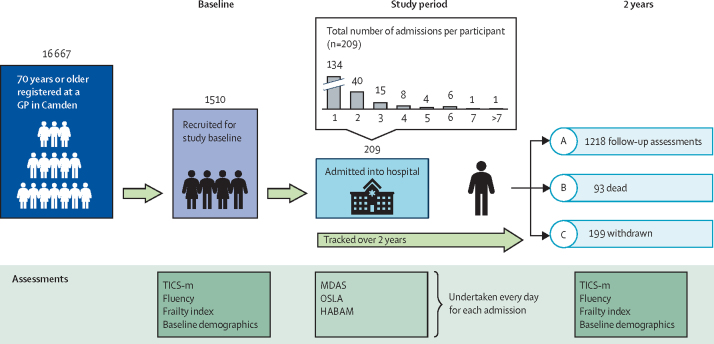
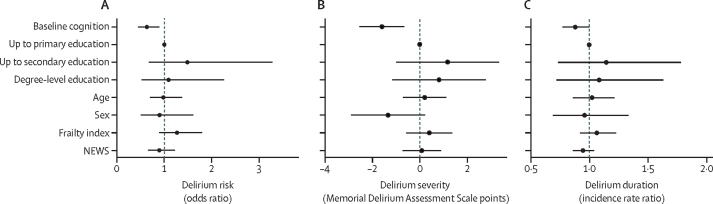
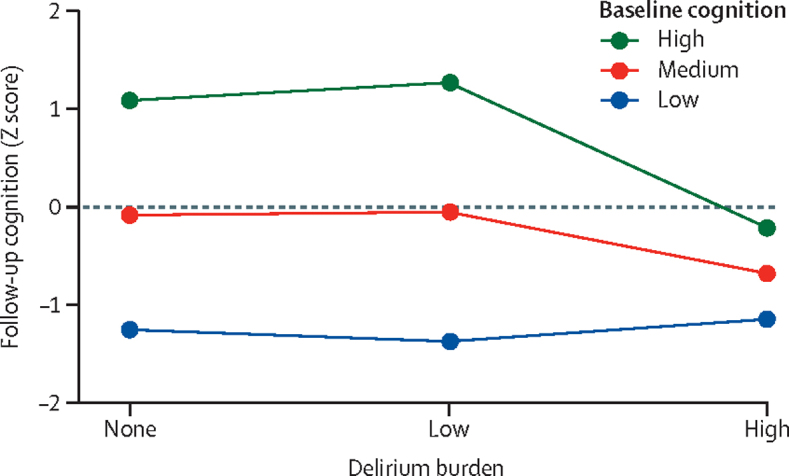
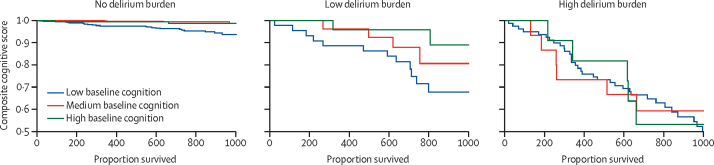
Background: There is an unmet public health need to understand better the relationship between baseline cognitive function, the occurrence and severity of delirium, and subsequent cognitive decline. Our aim was to quantify the relationship between baseline cognition and delirium and follow-up cognitive impairment. Methods: We did a prospective longitudinal study in a stable representative community sample of adults aged 70 years or older who were registered with a Camden-based general practitioner in the London Borough of Camden (London, UK). Participants were recruited by invitation letters from general practice lists or by direct recruitment of patients from memory clinics or patients recently discharged from secondary care. We quantified baseline cognitive function with the modified Telephone Interview for Cognitive Status. In patients who were admitted to hospital, we undertook daily assessments of delirium using the Memorial Delirium Assessment Scale (MDAS). We estimated the association of pre-admission baseline cognitive function with delirium prevalence, severity, and duration. We assessed subsequent cognitive function 2 years after baseline recruitment using the Telephone Interview for Cognitive Status. Regression models were adjusted by age, sex, education, illness severity, and frailty. Findings: We recruited 1510 participants (median age 77 [IQR 73-82], 57% women) between March, 2017, and October, 2018. 209 participants were admitted to hospital across 371 episodes (1999 person-days of assessment). Better baseline cognition was associated with a lower risk of delirium (odds ratio 0·63, 95% CI 0·45 to 0·89) and with less severe delirium (-1·6 MDAS point, 95% CI -2·6 to -0·7). Individuals with high baseline cognition (baseline Z score +2·0 SD) had demonstrable decline even without delirium (follow-up Z score +1·2 SD). However, those with a high delirium burden had an even larger absolute decline of 2·2 SD in Z score (follow-up Z score -0·2). Once individuals had more than 2 days of moderate delirium, the rates of death over 2 years were similar regardless of baseline cognition; a better baseline cognition no longer conferred any mortality benefit. Interpretation: A higher baseline cognitive function is associated with a good prognosis with regard to likelihood and severity of delirium. However, those with a high baseline cognition and with delirium had the highest degree of cognitive decline, a change similar to the decline observed in individuals with a high amyloid burden in other cohorts. Older people with a healthy baseline cognitive function who develop delirium stand to lose the most after delirium. This group could benefit from targeted cognitive rehabilitation interventions after delirium.
Overview
The claims and statistics of this paper haven’t been checked yet.
Free: it reads the open-access text and checks the first 5 claims that cite a source we can check. Create a free account to check every claim.
Integrity signals
Registry
Cites
Statistics
Figures
Verification
Claims the paper makes
The claims and statistics of this paper haven’t been checked yet.
Free: it reads the open-access text and checks the first 5 claims that cite a source we can check. Create a free account to check every claim.
Self-check
Percentages, sums and reported differences re-computed from the paper’s own numbers.
The self-check needs the paper’s full text.
Citations
Cites
A standard procedure for creating a frailty index
Searle, S. D., Mitnitski, A., Gahbauer, E. A., Gill, T. M., & Rockwood, K. (2008) · BMC Geriatrics · doi:10.1186/1471-2318-8-24 · Cited by 3,568
Self-citationLong-term cognitive impairment after critical illness
Pandharipande, P. P., Girard, T. D., Jackson, J. C., Morandi, A., Thompson, J. L., Pun, B. T., Brummel, N. E., Hughes, C. G., Vasilevskis, E. E., Shintani, A. K., et al. (2013) · New England Journal of Medicine · doi:10.1056/nejmoa1301372 · Cited by 2,842
Self-citationCognitive Trajectories after Postoperative Delirium
Saczynski, J. S., Marcantonio, E. R., Quach, L., Fong, T. G., Gross, A., Inouye, S. K., & Jones, R. N. (2012) · New England Journal of Medicine · doi:10.1056/nejmoa1112923 · Cited by 1,188
Smith, G. B., Prytherch, D. R., Meredith, P., Schmidt, P. E., & Featherstone, P. I. (2013) · Resuscitation · doi:10.1016/j.resuscitation.2012.12.016 · Cited by 1,077
Hsieh, S., Schubert, S., Hoon, C., Mioshi, E., & Hodges, J. R. (2013) · Dementia and Geriatric Cognitive Disorders · doi:10.1159/000351671 · Cited by 973
The memorial delirium assessment scale
Breitbart, W., Rosenfeld, B., Roth, A., Smith, M. J., Cohen, K., & Passik, S. (1997) · Journal of Pain and Symptom Management · doi:10.1016/s0885-3924(96)00316-8 · Cited by 846
Association of Delirium With Long-term Cognitive Decline: A Meta-analysis
Goldberg, T. E., Chen, C., Wang, Y., Jung, E., Swanson, A., Ing, C., Garcia, P. S., Whittington, R. A., & Moitra, V. (2020) · JAMA Neurology · doi:10.1001/jamaneurol.2020.2273 · Cited by 606
Delirium is a strong risk factor for dementia in the oldest-old: a population-based cohort study
Davis, D. H. J., Muniz Terrera, G., Keage, H., Rahkonen, T., Oinas, M., Matthews, F. E., Cunningham, C., Polvikoski, T., Sulkava, R., MacLullich, A. M. J., et al. (2012) · Brain · doi:10.1093/brain/aws190 · Cited by 558
Self-citationHigh Risk of Cognitive and Functional Decline after Postoperative Delirium
Bickel, H., Gradinger, R., Kochs, E., & Förstl, H. (2008) · Dementia and Geriatric Cognitive Disorders · doi:10.1159/000140804 · Cited by 318
Wallace, L. M. K., Theou, O., Godin, J., Andrew, M. K., Bennett, D. A., & Rockwood, K. (2019) · The Lancet Neurology · doi:10.1016/s1474-4422(18)30371-5 · Cited by 310
Self-citation
Cited by
Dementia prevention, intervention, and care: 2024 report of the Lancet standing Commission
Livingston, G., Huntley, J., Liu, K. Y., Costafreda, S. G., Selbæk, G., Alladi, S., Ames, D., Banerjee, S., Burns, A., Brayne, C., et al. (2024) · The Lancet · doi:10.1016/s0140-6736(24)01296-0 · Cited by 3,860
Self-citationMone, P., Varzideh, F., Jankauskas, S. S., Pansini, A., Lombardi, A., Frullone, S., & Santulli, G. (2022) · Hypertension · doi:10.1161/hypertensionaha.122.19586 · Cited by 219
Delirium and frailty in older adults: Clinical overlap and biological underpinnings
Bellelli, G., Triolo, F., Ferrara, M. C., Deiner, S. G., Morandi, A., Cesari, M., Davis, D. H. J., Marengoni, A., Inzitari, M., Watne, L. O., et al. (2024) · Journal of Internal Medicine · doi:10.1111/joim.20014 · Cited by 72
“Even so, individuals with higher baseline cognition who experienced severe and prolonged delirium experienced the highest degree of cognitive decline, at levels similar to those with a high amyloid burden in other cohorts [122, 124, 125].”
Self-citationWatne, L. O., Pollmann, C. T., Neerland, B. E., Quist‐Paulsen, E., Halaas, N. B., Idland, A., Hassel, B., Henjum, K., Knapskog, A., Frihagen, F., et al. (2023) · Journal of Clinical Investigation · doi:10.1172/jci163472 · Cited by 60
“As CSF-QA concentrations in excess of 100 nmol/L may cause cell death in the hippocampus, striatum, and cortex (22), our study proposes neurotoxic QA concentrations as a potential mechanism linking delirium and neuronal damage to subsequent cognitive decline and increased risk of dementia (36, 37).”
Circadian Rest–Activity Rhythms, Delirium Risk, and Progression to Dementia
Gao, L., Li, P., Gaykova, N., Zheng, X., Gao, C., Lane, J. M., Saxena, R., Scheer, F. A. J. L., Rutter, M. K., Akeju, O., et al. (2023) · Annals of Neurology · doi:10.1002/ana.26617 · Cited by 60
“A more recent study that followed 115 delirium subjects over 2 years did not report incident dementia but confirmed that higher baseline cognition was protective against delirium; surprisingly, they also found that older adults with high baseline cognitive function and delirium showed the most significant cognitive de…”
BackgroundKrogseth, M., Davis, D. H. J., Jackson, T., Zetterberg, H., Watne, L. O., Lindberg, M., Chitalu, P., Tsui, A., Selbæk, G., & Wyller, T. B. (2023) · The Lancet Healthy Longevity · doi:10.1016/s2666-7568(23)00098-3 · Cited by 63
“6 In DELPHIC, however, cognitive follow-ups were conducted via telephone interviews rather than in person, which was done in DECIDE.”
Self-citationDanquah, M. O., Yan, E., Lee, J. W., Philip, K., Saripella, A., Alhamdah, Y., He, D., Englesakis, M. F., & Chung, F. F. (2024) · Journal of Clinical Anesthesia · doi:10.1016/j.jclinane.2024.111551 · Cited by 42
Life-space, frailty, and health-related quality of life
Chitalu, P., Tsui, A., Searle, S. D., & Davis, D. H. J. (2022) · BMC Geriatrics · doi:10.1186/s12877-022-03355-2 · Cited by 40
Self-citationThe frail patient undergoing cardiac surgery: lessons learned and future perspectives
Pozzi, M., Mariani, S., Scanziani, M., Passolunghi, D., Bruni, A. A., Finazzi, A., Lettino, M., Foti, G., Bellelli, G., & Marchetto, G. (2023) · Frontiers in Cardiovascular Medicine · doi:10.3389/fcvm.2023.1295108 · Cited by 48
Healy, D., Murray, C., McAdams, C., Power, R. W., Hollier, P.-L., Lambe, J., Tortorelli, L. S., López-Rodríguez, A. B., & Cunningham, C. M. (2024) · Communications Biology · doi:10.1038/s42003-023-05662-9 · Cited by 27
“It remains unclear whether episodes of delirium may have worse consequences for those with a low baseline brain integrity (more vulnerable to delirium) or those with more intact brains (wherein an episode of delirium may require a larger perturbation and therefore may produce a larger injury) 77 .”
Self-citationMacLullich, A. M. J., Hosie, A., Tieges, Z., & Davis, D. H. J. (2022) · Age and Ageing · doi:10.1093/ageing/afac271 · Cited by 24
Self-citationPersistent delirium in older hospital patients: an updated systematic review and meta-analysis
Whitby, J., Nitchingham, A., Caplan, G. A., Davis, D. H. J., & Tsui, A. (2022) · Delirium · doi:10.56392/001c.36822 · Cited by 30
Self-citationDitzel, F. L., Hut, S. C. A., Dijkstra‐Kersten, S. M. A., Numan, T., Leijten, F. S. S., van den Boogaard, M., & Slooter, A. J. C. (2022) · Psychiatry and Clinical Neurosciences · doi:10.1111/pcn.13478 · Cited by 24
Extremes of baseline cognitive function determine the severity of delirium: a population study
Tsui, A., Yeo, N., Searle, S. D., Bowden, H., Hoffmann, K., Hornby, J., Goslett, A., Weston-Clarke, M., Lanham, D., Hogan, P., et al. (2023) · Brain · doi:10.1093/brain/awad062 · Cited by 22
“The novel observation that patients with higher baseline cognition tended to have more severe delirium could also prompt enhanced management given the relatively worse long-term cognitive outcomes for these patients.(7) Abnormal arousal, commonly present in severe delirium, may also lead to more patient safety issues:…”
BackgroundSelf-citationPendlebury, S. T., Luengo-Fernández, R., Seeley, A., Downer, M. B., McColl, A. J., Rothwell, P. M., & Study, O. V. (2024) · The Lancet Healthy Longevity · doi:10.1016/s2666-7568(23)00266-0 · Cited by 27
“…with unimpaired baseline cognition, consistent with findings from population-based cohorts in which individuals with the highest pre-morbid cognitive function experienced the largest cognitive decrement after delirium, 2,37 suggesting that delirium might even initiate neuropathological change.”
Prophylactic Minocycline for Delirium in Critically Ill Patients
Dal‐Pizzol, F., Coelho, A., Simon, C. S., Michels, M., Córneo, E. D. S., Jeremias, A., Damasio, D. D. C., & Ritter, C. (2023) · CHEST Journal · doi:10.1016/j.chest.2023.11.041 · Cited by 17
Recognition of cognitive dysfunction in hospitalised older patients: a flash mob study
Visser, F. C., van Eersel, M. E. A., Hempenius, L., Verwey, N. A., Band, C., van der Bol, J. M., Boudestein, K., van Dijk, S. C., Gobbens, R. J. J., van der Hooft, C. S., et al. (2024) · BMC Geriatrics · doi:10.1186/s12877-023-04588-5 · Cited by 18
“Also, cognitive dysfunction may be of new onset during admission, as a result of acute illness, medication (such as opioids), or the manifestation of delirium [7–9].”
BackgroundRössler, J., Abramczyk, E., Paredes, S., Anusic, N., Pu, X., Maheshwari, K. K., Turan, A., & Ruetzler, K. (2024) · Anesthesia & Analgesia · doi:10.1213/ane.0000000000006939 · Cited by 18
Li, S., He, X., Wu, L. L., Tang, X., Ouyang, Y., Jing, W., Yang, Y., Yang, J., Che, K., Pan, C., et al. (2024) · Frontiers in Aging Neuroscience · doi:10.3389/fnagi.2024.1419235 · Cited by 21
The relative impact of socioeconomic position and frailty varies by population setting
Goodyer, E., Mah, J. C., Rangan, A., Chitalu, P., Andrew, M. K., Searle, S. D., Davis, D. H. J., & Tsui, A. (2022) · Aging Medicine · doi:10.1002/agm2.12200 · Cited by 15
Self-citationSystemic Inflammation and Metabolic Changes After Cardiac Surgery and Postoperative Delirium Risk
Wiredu, K., Qu, J. Z., Turco, I., McKay, T. B., & Akeju, O. (2025) · Journal of Clinical Medicine · doi:10.3390/jcm14134600 · Cited by 16
“Also, individuals with lower cognitive performance prior to surgery were more likely to develop POD, consistent with the concept that a reduced cognitive reserve limits resilience to perioperative stressors [49,50].”
Validation of the German Montreal-Cognitive-Assessment-H for hearing-impaired
Völter, C., Fricke, H., Faour, S., Lueg, G., Nasreddine, Z. S., Götze, L., & Dawes, P. (2023) · Frontiers in Aging Neuroscience · doi:10.3389/fnagi.2023.1209385 · Cited by 16
“, 2013), delirium (Tsui et al., 2022) and mortality (Diwell et al.”
BackgroundVIZZACCHI, B. A., Dettino, A. L. A., Besen, B. A. M. P., Caruso, P., & Nassar, A. P. (2023) · Critical Care Medicine · doi:10.1097/ccm.0000000000006070 · Cited by 13
“…on the change of treatment must have been due to other long-term consequences of de-lirium, such as cognitive decline (27), or conditions which predispose patients to delirium for which we did not have data, such as frailty (28), baseline cognitive function (29), and psychiatric illness (30).”
BackgroundDitzel, F. L., Hut, S. C. A., van den Boogaard, M., Boonstra, M., Leijten, F. S. S., Wils, E., van Nesselrooij, T., Kromkamp, M., Rood, P. J. T., Röder, C. H., et al. (2023) · American Journal of Geriatric Psychiatry · doi:10.1016/j.jagp.2023.12.005 · Cited by 16
Artificial intelligence in drug development for delirium and Alzheimer’s disease
Ai, R., Xiao, X., Deng, S., Yang, N., Xing, X., Watne, L. O., Selbæk, G., Wedatilake, Y., Xie, C., Rubinsztein, D. C., et al. (2025) · Acta Pharmaceutica Sinica B · doi:10.1016/j.apsb.2025.04.026 · Cited by 13
“Only recently have studies emerged that incorporate both high-quality baseline dementia assessments and robust delirium data from bedside evaluations 277,278 .”
Sohn, M., Park, Y. H., & Lim, S. K. (2024) · Diabetes Obesity and Metabolism · doi:10.1111/dom.16131 · Cited by 8
“6 Currently, most interventions focus on risk factor modification and lifestyle management.”
Postoperative delirium in oral and maxillofacial surgery: a scoping review
Alhammadi, E., Kuhlmann, J. M., Rana, M., Frohnhofen, H., & Möllmann, H. L. (2024) · Head & Face Medicine · doi:10.1186/s13005-024-00439-9 · Cited by 8
“In the DELPHIC study, superior baseline cognitive function was associated with a reduced risk of delirium (RR: 0.63, 95% CI: 0.45–0.89), and when delirium occurred, it was generally less severe and of shorter duration [96].”
BackgroundInfluentialPersistent delirium is associated with cerebrospinal fluid markers of neuronal injury
Tsui, A., Johnstone, B., Heslegrave, A., Zetterberg, H., Watne, L. O., Neerland, B. E., Krogseth, M., Cunningham, C. M., MacLullich, A. M. J., Terrera, G. M., et al. (2024) · Brain Communications · doi:10.1093/braincomms/fcae319 · Cited by 8
Self-citationSchumann, S., Schön, G., Hüners, I., Biermann, D., Siebel, L. C., Jess, F., Gottschalk, U., Gleitze-Nolting, C., Denecke, J., Drescher, J., et al. (2025) · Scientific Reports · doi:10.1038/s41598-025-04927-z · Cited by 9
Penfold, R., MacRae, C., Sampson, E. L., Davis, D. H. J., Anand, A., Ely, E. W., Guthrie, B., & MacLullich, A. M. J. (2026) · The Lancet Healthy Longevity · doi:10.1016/j.lanhl.2026.100832 · Cited by 7
Self-citationIdentifying the relationship between delirium and falls
Leah, V., & Ngwu, L. (2023) · Nursing Older People · doi:10.7748/nop.2023.e1418 · Cited by 5
Xiang, X., Feng, Z., Wang, L., Wang, D., Li, T., Yang, J., Wang, S., Xiao, F., & Zhang, W. (2025) · International Immunopharmacology · doi:10.1016/j.intimp.2025.114628 · Cited by 7
Umoh, M. E., Sharma, A., Leoutsakos, J., Lyketsos, C. G., Inouye, S. K., Marcantonio, E. R., Rosenberg, P. B., Neufeld, K. J., Sieber, F. E., & Oh, E. S. (2025) · American Journal of Geriatric Psychiatry · doi:10.1016/j.jagp.2025.10.002 · Cited by 9
Frequent in dementia, deadliest without it: delirium and mortality in hospitalised older adults
Umoh, M. E., Avelino‐Silva, T. J., Aliberti, M. J. R., Garcez, F. B., Lee, S. J., Smith, A. K., & Oh, E. (2026) · Age and Ageing · doi:10.1093/ageing/afag081 · Cited by 7
Delirium is associated with failure to rescue after cardiac surgery
Young, A. M., Strobel, R. J., Kaplan, E. F., Norman, A. V., Raza, A., Kern, J. A., Yarboro, L. T., Yount, K. W., Hulse, M., & Teman, N. R. (2023) · JTCVS Open · doi:10.1016/j.xjon.2023.08.020 · Cited by 5
“Even those with higher baseline cognitive function are in danger from delirium because they tend to lose more of their function than those with lower baseline function.(30) This may lead to issues adapting to life outside of the hospital and worse recognition of early problems.”
BackgroundDynamics of neutrophilia at the neurovascular unit arising from repeated pulmonary inflammation
Chiang, W., Li, H., Le, L., David‐Bercholz, J., Caceres, A. I., Ahmad, D., Squire, E., Stecyk, K. S., Marrero, M., Pereira, A., et al. (2026) · Journal of Neuroinflammation · doi:10.1186/s12974-026-03771-w · Cited by 6
“As these individuals age, their altered neuropathology due to ALI-associated neuroinflammation primes them for future neurologic complications with worse prognosis, including mortality [12].”
Cognitive decline and dementia: does delirium matter?
Selbæk, G., & Neerland, B. E. (2022) · The Lancet Healthy Longevity · doi:10.1016/s2666-7568(22)00056-3 · Cited by 4
The importance of a comprehensive geriatric assessment for older people admitted onto a virtual ward
Goggins, S. (2023) · British Journal of Nursing · doi:10.12968/bjon.2023.32.18.882 · Cited by 5
(23277852), D. Y. L., Ditzel, F. L., Hut, S. C. A., van Dellen, E., Otte, W. M., & Slooter, A. J. C. (2024) · Clinical Neurophysiology · doi:10.1016/j.clinph.2024.01.009 · Cited by 6
Bauernfreund, Y., Launders, N., Favarato, G., Hayes, J., Osborn, D., & Sampson, E. L. (2024) · Psychological Medicine · doi:10.1017/s0033291724002484 · Cited by 4
“Dementia is a long-established key pre-disposing factor Psychological Medicine for delirium (Inouye, 1999), and recent evidence demonstrates that this relationship is bi-directional, and delirium is a risk factor for dementia (Richardson et al., 2020; Tsui et al., 2022).”
Self-citationThe Delirium Interview as a new reference standard in studies on delirium assessment tools
Ditzel, F. L., Slooter, A. J. C., van den Boogaard, M., Boonstra, M., van Nesselrooij, T., Kromkamp, M., Pop‐Purceleanu, M., Rood, P. J. T., Osse, R. J., Chan, C. K., et al. (2023) · Journal of the American Geriatrics Society · doi:10.1111/jgs.18263 · Cited by 5
Self-citationMechanisms underlying neurocognitive dysfunction following critical illness: a systematic review
Andonovic, M., Morrison, H., Allingham, W., Adam, R., Shaw, M., Quasim, T., McPeake, J. M., & Quinn, T. J. (2024) · Anaesthesia · doi:10.1111/anae.16494 · Cited by 4
“In addition, there is a well-recognised link between the development of delirium and subsequent long-term cognitive impairment [12, 13].”
Golubovic, J., Baker, F. A., Simpson, M. R., & Neerland, B. E. (2023) · Nordic Journal of Music Therapy · doi:10.1080/08098131.2023.2192759 · Cited by 4
“…according to the Diagnostic and Statistical Manual for Mental Disorders (DSM-5) criteria (American Psychiatric Association, 2013) and using a diagnostic algorithm applied in several other trials (Table 1) (Neerland et al., 2015; Richardson, Davis, Stephan, et al., 2017; Tsui et al., 2022).”
MethodIncreased cell-free DNA in CSF and serum of hip fracture patients with delirium
Bratseth, V., Watne, L. O., Neerland, B. E., Halaas, N. B., Pollmann, C. T., Karabeg, A., Ødegaard, O. T., Sydnes, K., Zetterberg, H., Seljeflot, I., et al. (2024) · Brain Communications · doi:10.1093/braincomms/fcae452 · Cited by 2
“54”
The association between spirometry measurement quality, cognitive function, and mortality
Quispe-Haro, C., Court, T., Kozela, M., Tamošiūnas, A., Čapková, N., Pikhart, H., & Bobák, M. (2025) · Archives of Public Health · doi:10.1186/s13690-025-01660-x · Cited by 2
Casting light on the links between delirium, infection, and dementia risk
Dunne, C. P., & Dunne, S. S. (2024) · The Lancet Healthy Longevity · doi:10.1016/s2666-7568(24)00003-5 · Cited by 3
Prew, T., & Tahir, T. A. (2024) · Medicine · doi:10.1016/j.mpmed.2024.07.002 · Cited by 3
APOEε4, in-hospital delirium and long-term cognitive impairment: A longitudinal memory clinic study
Kim, C., Lee, H. J., Kim, H. S., Lee, J. H., & Kim, C. H. (2023) · Archives of Gerontology and Geriatrics · doi:10.1016/j.archger.2023.105204 · Cited by 3
González-Prieto, C., Groenewald, E., Yates, S., Oulaghan, B., Rodriguez, C. R., Wilson, D., Dobbie, G., & Cullum, S. J. (2024) · Delirium · doi:10.56392/001c.92215 · Cited by 1
Witter, E., Allen, C., Teodorczuk, A., & Macharouthu, A. (2025) · Delirium · doi:10.56392/001c.137532 · Cited by 1
Searle, S. D., Tsui, A., Yeo, N., Chitalu, P., Ellis, H. L., Rawle, M. J., Seeley, A., Rockwood, K. J., & Davis, D. H. J. (2025) · Aging Clinical and Experimental Research · doi:10.1007/s40520-025-03178-2 · Cited by 1
Self-citationBoucher, E. L., Smith, S. C. L., Singh, S., Shepperd, S., & Pendlebury, S. T. (2025) · EClinicalMedicine · doi:10.1016/j.eclinm.2025.103641 · Cited by 1
Xu, J., Jin, J., Zou, S., Zheng, S.-H., Zhou, Q.-S., & Deng, J.-T. (2025) · PLoS ONE · doi:10.1371/journal.pone.0339390 · Cited by 1
Saiyed, N., Pandya, V. K., Pan, X., Čuperlović‐Culf, M., Ashrafi, N., Kant, S., Migaud, M. E., Dhuguru, J., Zetterberg, H., McGuinness, B., et al. (2026) · npj Aging · doi:10.1038/s41514-025-00324-y · Cited by 1
Biomarkers of Alzheimer's disease pathophysiology and delirium
Henjum, K., Neerland, B. E., Blennow, K., Zetterberg, H., Pollmann, C. T., Olsen, R. B., Solberg, L. B., Myrstad, M., Ødegaard, O. T., Karabeg, A., et al. (2026) · EBioMedicine · doi:10.1016/j.ebiom.2026.106252 · Cited by 1
Seeley, A., Brettell, R., Wang, A., Barnes, R., Pendlebury, S. T., & Hayward, G. (2026) · Age and Ageing · doi:10.1093/ageing/afag126 · Cited by 1
“…may not be feasible or necessary for all those who do not require admission, those without pre-existing cognitive impairment, and who are relatively younger and more robust, potentially have the greatest amount to lose [2, 9, 34], and may constitute a group where targeted follow-up is warranted.”
Delirium: more than a marker of baseline vulnerability
Penfold, R., & MacLullich, A. M. J. (2026) · Age and Ageing · doi:10.1093/ageing/afag139 · Cited by 1
“In the DELPHIC population-based cohort, Tsui et al. showed that higher baseline cognition was associated with lower delirium risk , but if delirium occurred, it was often more severe and associated with greater future cognitive decline [4].”
Self-citationLi, C., Zhang, T., Chen, H., Wang, S., Wang, L., Huan, Y., Liu, J., & Liu, L. (2026) · Frontiers in Neurology · doi:10.3389/fneur.2026.1848730 · Cited by 1
Contribution of Different Brain Disorders and Multimorbidity to Delirium Superimposed Dementia (DSD)
Wetterling, T., & Junghanns, K. (2023) · Geriatrics · doi:10.3390/geriatrics8030064 · Cited by 1
Delirium hos eldre i og utenfor sykehus
Hella, M. N. P., Evensen, S., Rudi, E., Norum, H. M., Wøien, H., Wyller, T. B., & Neerland, B. E. (2024) · Tidsskrift for Den norske legeforening · doi:10.4045/tidsskr.24.0299 · Cited by 2
Delirium in the ICU: Pathophysiology, Diagnosis and Management
Glassford, N. J., Olver, R., & Shehabi, Y. (2025) · Springer eBooks · doi:10.1007/978-3-031-77335-8_19 · Cited by 1
Position Statement: Delirium Among Orthopedic or Rehabilitative Patients
Yager, M., Clark, B. R., Gulley, N., & Denny, D. L. (2023) · Rehabilitation Nursing · doi:10.1097/rnj.0000000000000413 · Cited by 1
Yager, M., Clark, B. R., Gulley, N., & Denny, D. L. (2023) · Orthopaedic Nursing · doi:10.1097/nor.0000000000000940 · Cited by 1
Bellelli, G., Ferrara, M. C., & Morandi, A. (2024) · Springer eBooks · doi:10.1007/978-3-031-57361-3_49
Postoperative Delirium is Associated with Accelerated Brain AgingPreprint
van Dellen, E., Julia Van der, A., Apotikar, A., Westland, D. L., Kant, I. M. J., de Bresser, J., van Montfort, S. J. T., Spies, C., Hendrikse, J., Slooter, A. J. C., et al. (2025) · SSRN Electronic Journal · doi:10.2139/ssrn.5140920
Tsui, A., Hogan, P. C. P., Cheston, H., Dunne, O., Gardner, D., McWhirter, A., Allan, L. M., Richardson, S. J., Nachev, P., & Davis, D. H. J. (2025) · SSRN Electronic Journal · doi:10.2139/ssrn.5263143
Self-citationPenfold, R., MacRae, C., Sampson, E. L., Davis, D. H. J., Anand, A., Ely, E. W., Guthrie, B., & MacLullich, A. M. J. (2025) · medRxiv · doi:10.1101/2025.10.06.25337244
Self-citationCao, S., Zeng, Y., Chen, M., Ouyang, W., & Ding, Z. (2025) · Anesthesiology and Perioperative Science · doi:10.1007/s44254-025-00133-2
“Although delirium is strongly associated with non-modifiable factors such as age, baseline cognitive status and comorbidities [50], smoking represents a modifiable risk factor.”
Additional file 4 of Postoperative delirium in oral and maxillofacial surgery: a scoping review
Alhammadi, E., Kuhlmann, J. M., Rana, M., Frohnhofen, H., & Moellmann, H. L. (2024) · Figshare · doi:10.6084/m9.figshare.26752831
Additional file 2 of Postoperative delirium in oral and maxillofacial surgery: a scoping review
Alhammadi, E., Kuhlmann, J. M., Rana, M., Frohnhofen, H., & Moellmann, H. L. (2024) · Figshare · doi:10.6084/m9.figshare.26752825
Additional file 1 of Postoperative delirium in oral and maxillofacial surgery: a scoping review
Alhammadi, E., Kuhlmann, J. M., Rana, M., Frohnhofen, H., & Moellmann, H. L. (2024) · Figshare · doi:10.6084/m9.figshare.26752822
Additional file 3 of Postoperative delirium in oral and maxillofacial surgery: a scoping review
Alhammadi, E., Kuhlmann, J. M., Rana, M., Frohnhofen, H., & Moellmann, H. L. (2024) · Figshare · doi:10.6084/m9.figshare.26752828
Additional file 5 of Postoperative delirium in oral and maxillofacial surgery: a scoping review
Alhammadi, E., Kuhlmann, J. M., Rana, M., Frohnhofen, H., & Moellmann, H. L. (2024) · Figshare · doi:10.6084/m9.figshare.26752834
Trzpis, M., Giil, L. M., Hov, J. R., Pollmann, C. T., Idland, A., Myrstad, M., McCann, A., Omdahl, T., Laman, J. D., Gans, R. O. B., et al. (2026) · Brain Behavior and Immunity · doi:10.1016/j.bbi.2026.106590
Zhong, J.-L., Cai, Y., Li, S.-H., Zhao, W., Su, X.-T., & Jin, C.-H. (2026) · World Journal of Psychiatry · doi:10.5498/wjp.v16.i6.116925
Rahemi, Z., & Omidi, M. (2026) · Journal of Interdisciplinary Research Applied to Medicine · doi:10.3390/jdream6020009
“Prior evidence on post-index cognitive risk remains inconsistent, largely because baseline cognition and pre-existing disease burdens are often incompletely characterized [21–23].”
Julia Van der, A., (23277852), D. Y. L., van Dellen, E., Tendolkar, I., Emmelot‐Vonk, M. H., Schutter, D. J. L. G., de Haan, W., van den Boogaard, M., Ottens, T. H., & Slooter, A. J. C. (2026) · Neurotherapeutics · doi:10.1016/j.neurot.2026.e01037
“Non-delivery attributable to agitation or clinical instability was infrequent (active 5/89 [6%]; sham 3/58 [5”
Population-based incidence rate of in-hospital delirium in older adults in Norway—a HUNT study
Frich, W., Verlo, K. R., Borda, M. G., Jackson, T., Livingston, G., Myrstad, C., Rockwood, K. J., Selbæk, G., Skjellegrind, H. K., Strand, B. H., et al. (2026) · Age and Ageing · doi:10.1093/ageing/afag297
“In the DELPHIC study, prospective daily assessments during hospital admissions identified in-hospital delirium in 8% of participants over a median follow-up of 2.5 years [ 12].”
InfluentialSelf-citation
Metadata
- Authors
- Tsui, A., Searle, S. D., Bowden, H., Hoffmann, K., Hornby, J., Goslett, A., Weston-Clarke, M., Hamill Howes, L., Street, R., Perera, R., Taee, K., Kustermann, C., Chitalu, P., Razavi, B., Magni, F., Das, D., Kim, S., Chaturvedi, N., Sampson, E. L., Rockwood, K., Cunningham, C., Ely, E. W., Richardson, S. J., Brayne, C., Muniz Terrera, G., Tieges, Z., MacLullich, A., & Davis, D.
- Affiliations
- MRC Unit for Lifelong Health and Ageing (GB)
- Trinity College Dublin (IE)
- VA Tennessee Valley Healthcare System (US)
- Newcastle University (GB)
- University of Cambridge (GB)
- University of Edinburgh (GB)
- Corresponding author
- Davis, Daniel
- ORCID
- Venue
- The Lancet Healthy Longevity
- Publisher
- Elsevier BV
- Published
- 2022-04
- Volume
- 3
- Issue
- 4
- Pages
- e232-e241
- ISSN
- 2666-7568 (ISSN-L)
- PMC
- PMC7612581
- OpenAlex
- W4220887257
- Semantic Scholar
- ca2c6419f4cdf4007971b4e462792ad7f7b63d36
- Cited by
- 73
- References
- 30
- Citations by year
- 2026: 13 · 2025: 15 · 2024: 20 · 2023: 17 · 2022: 8
- FWCI
- 12.98
- Type
- journal article
- Language
- en
- Open access
- gold
- doi.org
- Licence
- cc-by
- www.elsevier.com/tdm/userlicense/1.0/ (tdm)
- www.elsevier.com/legal/tdmrep-license (tdm)
- creativecommons.org/licenses/by/4.0/ (vor)
- Locations
- The Lancet Healthy Longevity (publishedVersion, cc-by)
- PubMed Central (publishedVersion, cc-by)
- PubMed (publishedVersion)
- ResearchOnline (Glasgow Caledonian University) (acceptedVersion, cc-by)
- Edinburgh Research Explorer (University of Edinburgh) (submittedVersion, cc-by)
- UCL Discovery (University College London) (submittedVersion)
- Apollo (University of Cambridge) (submittedVersion, cc-by)
- Funders
- Roche
- Medical Research Council (MC_UU_00019/1)
- Dalhousie Medical Research Foundation
- Wellcome Trust (WT107467)
- Canadian Institutes of Health Research
- Alzheimer Society
- Nova Scotia Health Research Foundation
- Topics
- Health Sciences › Medicine › Critical Care and Intensive Care Medicine › Intensive Care Unit Cognitive Disorders
- Health Sciences › Medicine › Psychiatry and Mental health › Dementia and Cognitive Impairment Research
- Health Sciences › Medicine › Oncology › Cancer-related cognitive impairment studies
- Keywords
- delirium, baseline cognitive function, cognitive decline, long-term cognitive impairment, mortality, older adults, delirium severity, delirium duration, frailty, hospitalization, prognostic factors, community-dwelling older adults, memory clinics, general practice population, Telephone Interview for Cognitive Status, Memorial Delirium Assessment Scale, cognitive reserve, dementia risk
- MeSH terms
- Adult, Aged, Cognition, Delirium, Female, Humans, Longitudinal Studies, Male, Prospective Studies, Cognitive Dysfunction
About these checks
Registry, retraction, Cites and statistics results are computed, not judged, with one exception: a printed reference that no index lists is read once by a model before it counts as a citation error. Claims are extracted by a model and kept only when their quote appears verbatim in the text; each cited source is then checked, with a model’s help, for whether it says what the claim relies on. Those verdicts can be wrong — read the claim’s quote and the cited source before relying on one.
Statistics and arithmetic are recomputed, not judged.
Confidence bands are shown only for fields calibrated on our annotated test set. None is calibrated yet, so no band is shown.
What counts as a claim ›How we measure confidence ›How we check this ›
Are you an author, or do you see a problem with this page? Request a review
Data sources
Bibliographic data: Semantic Scholar, OpenAlex, Crossref.
Contains information from the Semantic Scholar Academic Graph Datasets, made available under the ODC Attribution License (ODC-BY 1.0).
Semantic Scholar’s data is described in: Kinney, R., et al. (2023). The Semantic Scholar Open Data Platform. arXiv:2301.10140.
