

Lunch at school and children’s cognitive functioning in the early afternoon: results from the Cognition Intervention Study Dortmund Continued (CoCo)
Open accessThe DOI matches its Crossref record; 27 of the 27 references it cites were found in a registry or an index; 1 of the 22 sources its claims cite were checked for support.
Abstract
Studies about effects of school lunch on children's cognition are rare; two previous studies (CogniDo, CogniDo PLUS) generally found no negative effects of lunch on children's cognitive performance at the end of lunch break (i.e. 45 min after finishing lunch), but suggested potential beneficial effects for single parameters. Therefore, the present study investigated the hypothesis of potential positive effects of school lunch on cognitive performance at early afternoon (90 min after finishing lunch). A randomised, cross-over intervention trial was conducted at a comprehensive school with fifth and sixth grade students. Participants were randomised into two groups: On day 1, group 1 did not eat lunch, whereas group 2 received lunch ad libitum. On day 2 (1 week later), group 2 did not eat lunch and group 1 received lunch ad libitum. The cognitive parameters task switching, working memory updating and alertness were tested using a computerised test battery 90 min after finishing the meal. Of the 204 recruited children, fifty were excluded because of deviations from the study protocol or absence on one of the 2 test days, which resulted in 154 participants. Data showed no significant effects of lunch on task switching, working memory updating and alertness (P values between 0·07 and 0·79). The present study suggests that school lunch does not seem to have beneficial effects on children's cognitive functions regarding the conducted tests at early afternoon. Together with our previous studies, we conclude that school lunch in general has no negative effects on cognitive performance in children. However, beneficial effects seem to be restricted to a relatively short time period after eating lunch.
Overview
CoChat Summary
## TL;DR
In this randomized crossover study of 154 schoolchildren, lunch at school did not significantly affect task switching, working memory updating, or alertness when cognitive testing occurred about 90 minutes after lunch. The authors conclude that school lunch does not seem to benefit cognition at this later early-afternoon time point, although earlier studies from the same group had found small effects closer to lunch.
## Key findings
- Of 204 recruited children, 154 had complete data; 19 were excluded because of a 30-minute lunch delay on the second test day and 31 were absent on one of the two test days.
- No significant lunch effects were found for the main cognitive outcomes: task switching, working memory updating, and alertness, with reported P values between 0.12 and 0.79.
- The only near-effect was a trend toward slower visual search of letters after lunch in the task-switching task (P = 0.07), but this disappeared in the per-protocol analysis.
- Linear regression showed a significant negative association between lunch size and change in visual search of letters in the task-switching task (β = -9.3, adjusted P = 0.03).
## Methods
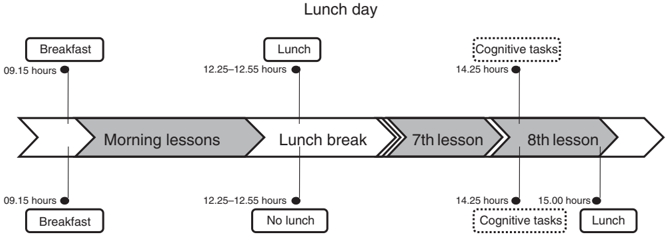
- Randomized, open-label, 2 × 2 crossover intervention trial at one all-day comprehensive school in Gelsenkirchen, Germany; 12 classes from fifth and sixth grades participated.
- Students were assigned to lunch vs no-lunch on day 1, then crossed over 1 week later; cognitive testing occurred about 90 minutes after lunch.
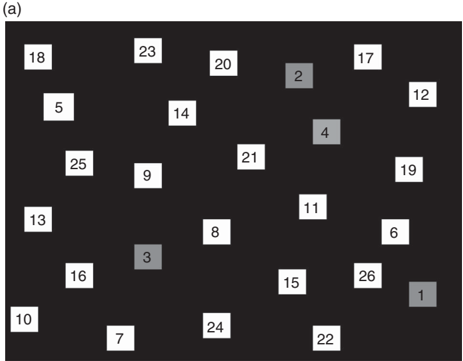
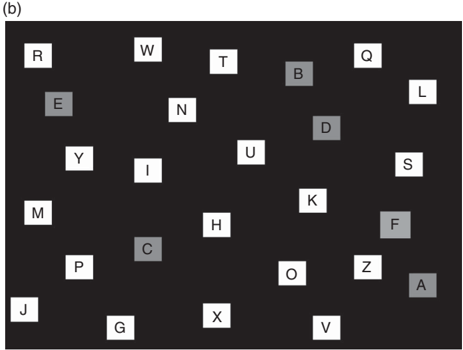
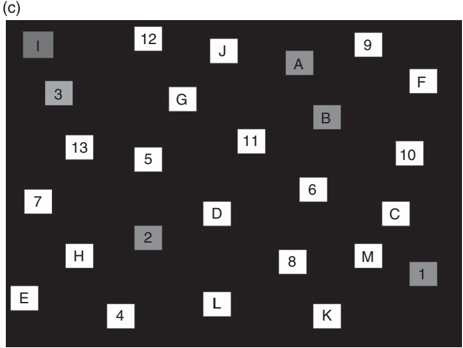
- Cognitive outcomes were assessed with a computerized battery measuring task switching, working memory updating (two-back), and tonic alertness; analyses included crossover comparisons and linear regression of lunch weight on change in performance.
## Limitations
- The paper states it was not possible to use a double-blind design with a placebo condition, leaving open subject and experimenter bias.
- The study did not include a pre-lunch performance measurement, so only after-lunch effects were assessed.
- The text makes evident that the study was conducted in real-life classroom conditions and that environmental disturbances, hidden snacking, and prior familiarity with some tasks could have affected results; it also notes that this may have reduced compliance and that 67 participants did not completely follow the protocol.
Model-written summary. Check it against the paper before relying on it.
Integrity signals
Registry
Cites
Statistics
Figures

Verification
Claims the paper makes
1 Valid · 0 Not valid · 13 Not checked · 45 Own results and interpretations
A result the paper reports from its own data — it cites no other source for it, so there is none to check. The quote shows it is in the paper.
In the paper
“Visual search of letters* | 3635 · 7 | - 9 · 344 | 0 · 029”
plainstates an association- Asserted: passes — The authors put it forward as true.
- Checkable: passes — It can be checked against evidence.
- Load-bearing: unclear — It is unclear whether the paper’s conclusions depend on it.
- Based: passes — The paper gives a reason why it holds.
A result the paper reports from its own data — it cites no other source for it, so there is none to check. The quote shows it is in the paper.
In the paper
“| | Reaction time | 4 · 3 | 0 · 004 | 0 · 947”
plain- Asserted: passes — The authors put it forward as true.
- Checkable: passes — It can be checked against evidence.
- Load-bearing: unclear — It is unclear whether the paper’s conclusions depend on it.
- Based: passes — The paper gives a reason why it holds.
A result the paper reports from its own data — it cites no other source for it, so there is none to check. The quote shows it is in the paper.
In the paper
“Data showed no signi fi cant effects of lunch on task switching, working memory updating and alertness ( P values between 0 · 07 and 0 · 79).”
plainn = 154- Asserted: passes — The authors put it forward as true.
- Checkable: passes — It can be checked against evidence.
- Load-bearing: passes — The paper’s conclusions depend on it.
- Based: passes — The paper gives a reason why it holds.
A result the paper reports from its own data — it cites no other source for it, so there is none to check. The quote shows it is in the paper.
In the paper
“The linear regression analysis revealed a signi fi cant negative association between the lunch size and the change in visual search of letters ( β = -9 · 3, P = 0 · 03 adjusted) in the task-switching task.”
plainstates an association- Asserted: passes — The authors put it forward as true.
- Checkable: passes — It can be checked against evidence.
- Load-bearing: unclear — It is unclear whether the paper’s conclusions depend on it.
- Based: passes — The paper gives a reason why it holds.
A result the paper reports from its own data — it cites no other source for it, so there is none to check. The quote shows it is in the paper.
In the paper
“Switch | Switch costs | - 6754 · 0 | 10 · 966 | 0 · 226”
plain- Asserted: passes — The authors put it forward as true.
- Checkable: passes — It can be checked against evidence.
- Load-bearing: unclear — It is unclear whether the paper’s conclusions depend on it.
- Based: passes — The paper gives a reason why it holds.
16 more claims
Create a free account to see all 59 claims and to verify the 10 references still open.
- Probably not a substantial claim. 35
- It may state two separate claims as one. 15
Citations
Cites
David, F. N., & Tukey, J. W. (1977) · Biometrics · doi:10.2307/2529486 · Cited by 12,708
The Two-Period Change-Over Design and Its Use in Clinical Trials
Grizzle, J. E. (1965) · Biometrics · doi:10.2307/2528104 · Cited by 784
Hoyland, A., Dye, L., & Lawton, C. L. (2009) · Nutrition Research Reviews · doi:10.1017/s0954422409990175 · Cited by 510 · cited 1×
“However, other studies showed that poorly nourished children benefit more than well-nourished children((7)).”
The effects of breakfast on behavior and academic performance in children and adolescents
Adolphus, K., Lawton, C. L., & Dye, L. (2013) · Frontiers in Human Neuroscience · doi:10.3389/fnhum.2013.00425 · Cited by 350
Effects of diet on behaviour and cognition in children
Bellisle, F. (2004) · British Journal of Nutrition · doi:10.1079/bjn20041171 · Cited by 301 · cited 1×
“tive conclusions can be drawn about short-term benefits of breakfast for cognitive performance in children in general, there is at least a noticeable indication for a beneficial influence((8,6,9)).”
The irrelevant-speech effect and children: theoretical implications of developmental change
Elliott, E. M. (2002) · Memory & Cognition · doi:10.3758/bf03194948 · Cited by 162
The post-lunch dip in performance
Monk, T. H. (2005) · Clinics in Sports Medicine · doi:10.1016/j.csm.2004.12.002 · Cited by 153 · cited 1×
“Studies in adults have shown that this dip is worsened by lunch((5,1)).”
Pollitt, E., Cueto, S., & Jacoby, E. (1998) · The American Journal of Clinical Nutrition · doi:10.1093/ajcn/67.4.779s · Cited by 153
Cognitive functioning is susceptible to the level of blood glucose
Donohoe, R. T., & Benton, D. (1999) · Psychopharmacology · doi:10.1007/s002130051071 · Cited by 148
Beaman, C. P. (2005) · Applied Cognitive Psychology · doi:10.1002/acp.1134 · Cited by 147 · cited 1×
“Especially auditory distraction can have detrimental effects (24,25) on the cognitive performance in children.”
Cited by
The effects of acute wild blueberry supplementation on the cognition of 7–10-year-old schoolchildren
Barfoot, K. L., May, G., Lamport, D. J., Ricketts, J., RIDDELL, P. M., & Williams, C. M. (2018) · European Journal of Nutrition · doi:10.1007/s00394-018-1843-6 · Cited by 80
Drozdowska, A., Falkenstein, M., Jendrusch, G., Platen, P., Luecke, T., Kersting, M., & Jansen, K. (2020) · Nutrients · doi:10.3390/nu12051297 · Cited by 72
Self-citationExecutive function and dietary intake in youth: A systematic review of the literature
Egbert, A. H., Creber, C., Loren, D. M., & Bohnert, A. M. (2019) · Appetite · doi:10.1016/j.appet.2019.04.013 · Cited by 40
Jansen, K., Tempes, J., Drozdowska, A., Gutmann, M., Falkenstein, M., Buyken, A. E., Libuda, L., Rudolf, H., Lücke, T., & Kersting, M. (2020) · European Journal of Clinical Nutrition · doi:10.1038/s41430-020-0600-0 · Cited by 20
Self-citationDrozdowska, A., Sinningen, K., Falkenstein, M., Rudolf, H., Libuda, L., Buyken, A. E., Lücke, T., & Kersting, M. (2021) · European Journal of Nutrition · doi:10.1007/s00394-021-02766-y · Cited by 9
“The CogniDO GI II study was designed as a randomized, single blind 2 × 2 crossover intervention study in accordance with previous CogniDo studies that investigated the impact of lunch per se on cognitive performance as well as the impact of lunch with different dietary GI after 45 min [12, 13, 18, 19].”
MethodResultSelf-citationOber, P., Poulain, T., Meigen, C., Spielau, U., Sobek, C., Kiess, W., Igel, U., Lipek, T., & Vogel, M. (2024) · BMC Public Health · doi:10.1186/s12889-024-19059-8 · Cited by 6
“School lunch and cognition studies are rare and have shown no effects on attention [49].”
BackgroundGonzález‐Garrido, A. A., Brofman-Epelbaum, J. J., Gómez-Velázquez, F. R., Balart-Sánchez, S. A., & Ramos‐Loyo, J. (2018) · Journal of Psychophysiology · doi:10.1027/0269-8803/a000214 · Cited by 10
Kognition: Einflüsse von Essen, Trinken und Bewegung
Kalhoff, H., Sinningen, K., Drozdowska, A., Berrang, J., Kersting, M., & Lücke, T. (2022) · Monatsschrift Kinderheilkunde · doi:10.1007/s00112-022-01539-z · Cited by 5
Self-citationPrasetyo, R. A. B., Nurwanti, R., & Alhad, M. A. (2024) · Jurnal Teknik Industri · doi:10.9744/jti.26.1.25-36 · Cited by 7
Drozdowska, A., Jendrusch, G., Platen, P., Lücke, T., Kersting, M., & Sinningen, K. (2022) · Mind Brain and Education · doi:10.1111/mbe.12321 · Cited by 2
Self-citationMeal-specific dietary patterns relate to memory functioning
Kossowska-Wywiał, M., Kublanova, O., Zając, A., Orłowski, J., Front, G., Kulisz, P., Maciejewski, P., Bylina, W., & Brzezicka, A. (2026) · Frontiers in Nutrition · doi:10.3389/fnut.2026.1760033 · Cited by 2
“In contrast, research on lunch and cognition is limited, with some studies addressing meal composition (5) and others comparing lunch consumption to omission (6).”
Das neue FKE lebt – Kinderernährung und Pädiatrie gehören zusammen
Kersting, M., Kalhoff, H., & Lücke, T. (2017) · Ernährung & Medizin · doi:10.1055/s-0043-103649
Self-citationEinfluss von Ernährung auf die Kognition
Kalhoff, H., Kersting, M., Jansen, K., Hanusch, B., & Lücke, T. (2019) · Pädiatrie · doi:10.1007/s15014-019-1743-0
Self-citationDijkstra, C., van der Haar, S., van Bergen, G., van Kleef, E., & Vingerhoeds, M. H. (2020) · doi:10.18174/519945
“…research group performed three intervention studies: the Cognition Intervention Study Dortmund (CogniDo; Müller et al., 2013), the Cognition Intervention Study Dortmund PLUS (CogniDo PLUS; Schröder et al., 2015) and the Cognition Intervention Study Dortmund Continued (CoCo; Schröder et al., 2016).”
BackgroundMethodResultInfluentialFrederiksen, M. R., Støy, K., & Matarić, M. J. (2026) · Frontiers in Robotics and AI · doi:10.3389/frobt.2026.1810778 · Cited by 1
“The first half of the children’s school day was selected as a time of highest levels of alertness and cognitive engagement compared to the post-lunch period Latino et al. (2025), Schröder et al. (2016).”
Metadata
- Authors
- Schröder, M., Müller, K., Falkenstein, M., Stehle, P., Kersting, M., & Libuda, L.
- Affiliations
- University of Bonn (DE)
- Deutsche Hochschule für Prävention und Gesundheitsmanagement (DE)
- Marien Hospital Wesel (DE)
- Corresponding author
- Schröder, Maike
- Venue
- British Journal of Nutrition
- Publisher
- Cambridge University Press (CUP)
- Published
- 2016-09-09
- Volume
- 116
- Issue
- 7
- Pages
- 1298-1305
- ISSN
- 0007-1145 (ISSN-L)
- 1475-2662
- OpenAlex
- W2516782688
- Semantic Scholar
- ea3a834d3b5353e3ef339d858571635551c41499
- Cited by
- 17
- References
- 25
- Citations by year
- 2026: 2 · 2024: 2 · 2023: 1 · 2022: 2 · 2021: 1 · 2020: 3 · 2019: 2 · 2018: 2 · 2017: 2
- FWCI
- 1.77
- Type
- journal article
- Language
- en
- Open access
- bronze
- doi.org
- Locations
- British Journal Of Nutrition (publishedVersion)
- PubMed (publishedVersion)
- Funders
- Uniscientia Foundation
- Topics
- Health Sciences › Nursing › Nutrition and Dietetics › Nutrition, Health and Food Behavior
- Health Sciences › Medicine › Public Health, Environmental and Occupational Health › Nutritional Studies and Diet
- Health Sciences › Medicine › Physiology (medical) › Dietary Effects on Health
- Keywords
- school meals, children's cognitive performance, task switching, working memory updating, alertness, ad libitum feeding, elementary school students
- MeSH terms
- Child, Cognition, Female, Food Services, Germany, Humans, Male, Memory, Schools, Time Factors, Cross-Over Studies, Lunch
About these checks
Registry, retraction, Cites and statistics results are computed, not judged, with one exception: a printed reference that no index lists is read once by a model before it counts as a citation error. Claims are extracted by a model and kept only when their quote appears verbatim in the text; each cited source is then checked, with a model’s help, for whether it says what the claim relies on. Those verdicts can be wrong — read the claim’s quote and the cited source before relying on one.
The claim verdicts this report counts are experimental: their accuracy is not yet measured.
A language model drew the claims from the paper on 2026-10-10, under version 3 of the claim definition (model deepseek-v4.1-flash, prompt extract-v3).
A second model labelled each claim on 2026-10-10 (model jev-1.13-20260917, definition revision gold-guideline-v0.2).
Statistics and arithmetic are recomputed, not judged.
Confidence bands are shown only for fields calibrated on our annotated test set. None is calibrated yet, so no band is shown.
What counts as a claim ›How we measure confidence ›How we check this ›
Are you an author, or do you see a problem with this page? Request a review
Data sources
Bibliographic data: Semantic Scholar, OpenAlex, Crossref.
Contains information from the Semantic Scholar Academic Graph Datasets, made available under the ODC Attribution License (ODC-BY 1.0).
Semantic Scholar’s data is described in: Kinney, R., et al. (2023). The Semantic Scholar Open Data Platform. arXiv:2301.10140.
