

Psychological treatments for early psychosis can be beneficial or harmful, depending on the therapeutic alliance: an instrumental variable analysis
Open accessThe DOI matches its Crossref record; 45 of the 46 references it cites were found in a registry or an index.
Abstract
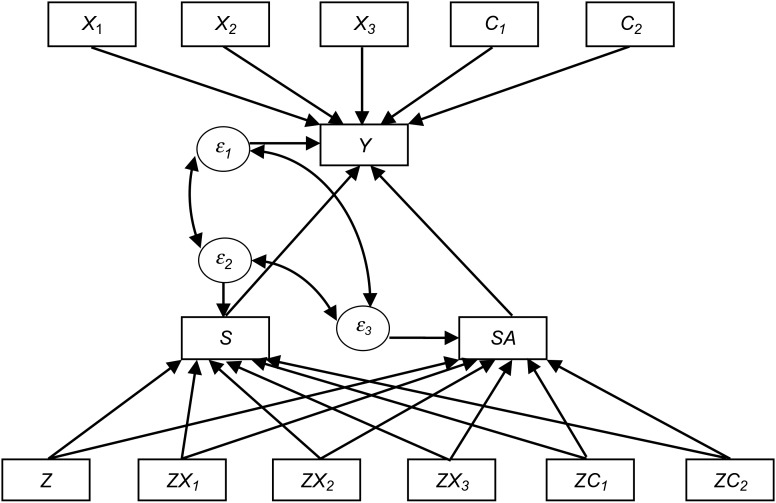
Background: The quality of the therapeutic alliance (TA) has been invoked to explain the equal effectiveness of different psychotherapies, but prior research is correlational, and does not address the possibility that individuals who form good alliances may have good outcomes without therapy. Method: We evaluated the causal effect of TA using instrumental variable (structural equation) modelling on data from a three-arm, randomized controlled trial of 308 people in an acute first or second episode of a non-affective psychosis. The trial compared cognitive behavioural therapy (CBT) over 6 weeks plus routine care (RC) v. supportive counselling (SC) plus RC v. RC alone. We examined the effect of TA, as measured by the client-rated CALPAS, on the primary trial 18-month outcome of symptom severity (PANSS), which was assessed blind to treatment allocation. Results: Both adjunctive CBT and SC improved 18-month outcomes, compared to RC. We showed that, for both psychological treatments, improving TA improves symptomatic outcome. With a good TA, attending more sessions causes a significantly better outcome on PANSS total score [effect size −2.91, 95% confidence interval (CI) −0.90 to −4.91]. With a poor TA, attending more sessions is detrimental (effect size +7.74, 95% CI +1.03 to +14.45). Conclusions: This is the first ever demonstration that TA has a causal effect on symptomatic outcome of a psychological treatment, and that poor TA is actively detrimental. These effects may extend to other therapeutic modalities and disorders.
Overview
The claims and statistics of this paper haven’t been checked yet.
Free: it reads the open-access text and checks the first 5 claims that cite a source we can check. Create a free account to check every claim.
Integrity signals
Registry
Cites
Statistics
Figures
Verification
Claims the paper makes
The claims and statistics of this paper haven’t been checked yet.
Free: it reads the open-access text and checks the first 5 claims that cite a source we can check. Create a free account to check every claim.
Claims other papers make about this one
Each is checked against this paper’s own text: does it say what the citing paper says it does?
The source backs part of the claim, not all of it — or backs it for a different population, condition or comparison.
In the citing paper
“It also reiterates that the rapport and trust developed between a therapist and client during regular faceto-face contacts (e.g.weekly 1-hour sessions) can adequately facilitate the exploration of psychiatric disturbances among this population in a community mental health setting (Goldsmith et al. 2015).”
From Effect of community mental health care programs in Australia: A systematic review (2020) · cites this paper as Goldsmith et al. 2015
Experimental — accuracy not yet measuredIn the citing paper
“Some research also supports the notion of a causal relationship between therapeutic alliance and outcomes in serious mental illnesses, for example, increasing the number of sessions attended was only beneficial in the presence of a strong therapeutic alliance for individuals experiencing psychosis [45].”
From The therapeutic alliance in digital mental health interventions for serious mental illnesses: narrative review (2020) · cites this paper as [45]
Self-check
Percentages, sums and reported differences re-computed from the paper’s own numbers.
The self-check needs the paper’s full text.
Citations
Cites
The Positive and Negative Syndrome Scale (PANSS) for schizophrenia.
Kay, S. R., Fiszbein, A., & Opler, L. A. (1987) · Schizophrenia Bulletin · doi:10.1093/schbul/13.2.261 · Cited by 21,378
The necessary and sufficient conditions of therapeutic personality change.
Rogers, C. R. (1957) · Journal of Consulting Psychology · doi:10.1037/h0045357 · Cited by 5,599
Enders, C., & Bandalos, D. (2001) · Structural Equation Modeling: A Multidisciplinary Journal · doi:10.1207/s15328007sem0803_5 · Cited by 4,978 · cited 1×
“2012; Enders & Bandalos, 2001).”
Relation of the therapeutic alliance with outcome and other variables: a meta-analytic review
Martin, D. J., Garske, J. P., & Davis, M. K. (2000) · Journal of Consulting and Clinical Psychology · doi:10.1037//0022-006x.68.3.438 · Cited by 3,355
Relation between working alliance and outcome in psychotherapy: A meta-analysis
Horvath, A. O., & Symonds, B. D. (1991) · Journal of Counseling Psychology · doi:10.1037/0022-0167.38.2.139 · Cited by 2,673 · cited 5×
“The CALPAS was used in this research as self-report measures correlate more strongly with outcome than therapist-rated measures (Horvath & Symonds, 2001).”
BackgroundMethodResultInfluentialThe Great Psychotherapy Debate: Models Methods and Findings
Horvath, A. O. (2002) · Psychotherapy Research · doi:10.1093/ptr/12.1.108 · Cited by 1,705
Psychotherapy for depression in adults: A meta-analysis of comparative outcome studies.
Cuijpers, P., van Straten, A., Andersson, G., & van Oppen, P. (2008) · Journal of Consulting and Clinical Psychology · doi:10.1037/a0013075 · Cited by 1,050 · cited 1×
“For example, in an in fl uential meta-analysis of seven common psychological treatments for mild to moderate depression, Cuijpers et al. (2008) found no difference in the ef fi cacy of CBT, behavioural activation treatment, psycho-dynamic treatment, problem-solving therapy or social-skills training.”
Wykes, T., Steel, C., Everitt, B., & Tarrier, N. (2007) · Schizophrenia Bulletin · doi:10.1093/schbul/sbm114 · Cited by 1,029
Causes and Explanations: A Structural-Model Approach. Part I: Causes
Halpern, J. Y., & Pearl, J. (2005) · The British Journal for the Philosophy of Science · doi:10.1093/bjps/axi147 · Cited by 779 · cited 1×
“This limitation is addressed here by using instrumental variables in a structural equation model, which allows causal interpretations (Pearl, 1998; Halpern & Pearl, 2005).”
MethodSensky, T., Turkington, D., Kingdon, D., Scott, J. L., Scott, J., Siddle, R., O'Carroll, M., & Barnes, T. R. E. (2000) · Archives of General Psychiatry · doi:10.1001/archpsyc.57.2.165 · Cited by 693 · cited 1×
“However, these trials often report positive results for non-speci fi c psychological therapies (counselling, befriending) used as controls, which also turn out to be better than RC alone (Sensky et al. 2000; Tarrier et al. 2000).”
Background
Research works printed but not linked: 1
- StataCorp (2013). Stata Statistical Software: Release 13. StataCorp LP: College Station, TX.
Cited by
Items 101–175 of 175
Hyde, B., Thomas, M., Gullifer, J., & Dark, F. L. (2019) · Journal of Psychosocial Rehabilitation and Mental Health · doi:10.1007/s40737-019-00152-w · Cited by 6
Huggett, C., Gooding, P. A., Haddock, G., & Pratt, D. (2021) · International Journal of Environmental Research and Public Health · doi:10.3390/ijerph182010706 · Cited by 7
“However, if clients perceived the therapeutic alliance as poorer, and also attended a higher number of sessions, this was related to increased symptoms of psychosis [36].”
BackgroundResultInfluentialTetzlaff, M., Bruins, J., & Castelein, S. (2025) · Clinical Psychology Review · doi:10.1016/j.cpr.2025.102656 · Cited by 5
van Langen, M. J. M., van Hulst, B. M., & Durston, S. (2023) · European Child & Adolescent Psychiatry · doi:10.1007/s00787-023-02290-w · Cited by 4
Broadbridge, E., ROTER, D. L., Persky, S., & Erby, L. H. (2024) · Journal of Genetic Counseling · doi:10.1002/jgc4.1844 · Cited by 7
“Further, a poor client– provider relationship can actively worsen psychological symptoms (Goldsmith et al., 2015 ).”
Rohenkohl, A. C., Sowada, P., Lambert, M., Gallinat, J., Karow, A., Lüdecke, D., Rühl, F., & Schöttle, D. (2023) · Frontiers in Psychology · doi:10.3389/fpsyg.2023.1285575 · Cited by 8
Sivec, H. J., Montesano, V. L., Skubby, D., Knepp, K. A., & Munetz, M. R. (2015) · Community Mental Health Journal · doi:10.1007/s10597-015-9930-0 · Cited by 7
Jones, N., Rosen, C., Helm, S., O'Neill, S. J., Davidson, L., & Shattell, M. M. (2018) · American Journal of Orthopsychiatry · doi:10.1037/ort0000341 · Cited by 7
But What Does Change Even Mean…? Men’s Desistance Narratives in Batterer Intervention Programs
Marco, M. H. D., Ribera, A. J., Brizuela, M., & Cabrera, W. D. (2025) · Journal of Family Violence · doi:10.1007/s10896-025-00997-9 · Cited by 3
Pilot study of a group worry intervention for recent onset psychosis
Mackintosh, T., Lean, M., & Hardy, K. V. (2021) · The Cognitive Behaviour Therapist · doi:10.1017/s1754470x21000106 · Cited by 3
“Goldsmith et al. (2015) indicated a strong relationship between therapeutic alliance and the effectiveness of therapy for early psychosis.”
BackgroundThe Effect of Psychological Mirroring in Telecommunicative Dialogue
Vartanov, A., Izbasarova, S. A., Neroznikova, Y. M., Михайлович, А. И., Artamonova, Y. N., & Vartanova, I. I. (2022) · Cognitive Systems Research · doi:10.1016/j.cogsys.2023.02.008 · Cited by 7
Duxbury, P. J., Taylor, P. J., Palmier‐Claus, J. E., Boardman, B., Pratt, D., Parker, S., & Lobban, F. A. (2024) · Psychology and Psychotherapy Theory Research and Practice · doi:10.1111/papt.12547 · Cited by 4
The Myth of the Well-Known Client
Lakeman, R. (2018) · Issues in Mental Health Nursing · doi:10.1080/01612840.2018.1455119 · Cited by 3
de Jong, S., Hasson‐Ohayon, I., Lavi‐Rotenberg, A., Carter, S. A., Castelein, S., & Lysaker, P. H. (2021) · Psychology and Psychotherapy Theory Research and Practice · doi:10.1111/papt.12346 · Cited by 5
“…and psychosocial interventions, in terms of symptomatology and subjective recovery in groups with and without psychosis (Fisher, Atzil-Slonim, Bar-Kalifa, Rafaeli, & Peri, 2016; Frank & Gunderson, 1990; Goldsmith, Lewis, Dunn, & Bentall, 2015; Lysaker, Davis, Buck, Outcalt, & Ringer, 2011).”
Read, J. (2024) · Psychology and Psychotherapy Theory Research and Practice · doi:10.1111/papt.12551 · Cited by 3
Transactional Experiences of Existential Anxiety as a Barrier to Effective Humanistic Intervention
Hunter, N., & Barsky, T. V. (2016) · Journal of Humanistic Psychology · doi:10.1177/0022167816646671 · Cited by 3
Is cognitive behavioural therapy effective for individuals experiencing thought disorder?
Shryane, N. M., Drake, R., Morrison, A. P., & Palmier‐Claus, J. E. (2020) · Psychiatry Research · doi:10.1016/j.psychres.2020.112806 · Cited by 5
Causal Inference: Efficacy and Mechanism Evaluation
Landau, S., & Emsley, R. (2020) · Springer eBooks · doi:10.1007/978-3-319-52677-5_137-1 · Cited by 3
Predictors of subjective well-being among individuals with severe psychiatric conditions
Caballero, R., Valiente, C., & Espinosa, R. (2021) · Comprehensive Psychiatry · doi:10.1016/j.comppsych.2021.152266 · Cited by 4
THE IMPACT OF EMOTIONAL LABOR ON BURNOUT OVER TIME: HOW EMOTIONAL WORK IMPACTS WELL-BEING AT WORK
Watkins, M. A. (2019) · Purdue e-Pubs (Purdue University System) · doi:10.25394/pgs.7991951 · Cited by 3
Onderzoek naar de therapeutische relatie: golden oldie of toekomstmuziek?
Bruins, J., van der Velde, J., Tolsma, M., Delespaul, P., & Castelein, S. (2018) · GZ - Psychologie · doi:10.1007/s41480-018-0013-z · Cited by 2
Belanger, E. A., Leonhardt, B. L., George, S. E., Firmin, R. L., & Lysaker, P. H. (2018) · Journal of Psychotherapy Integration · doi:10.1037/int0000107 · Cited by 4
Towards an understanding of the experience of psychosis: the legacies of Rogers and Gendlin
Crisp, R. (2019) · Person-Centered & Experiential Psychotherapies · doi:10.1080/14779757.2019.1618368 · Cited by 4
Exploring Counselor‐Client Agreement on Clients’ Work Capacity in Established and Consultative Dyads
Millner, U. C., Brandt, D. E., Chan, L. E., Jette, A. M., Marfeo, E. E., Ni, P., Rasch, E. K., & Rogers, E. S. (2020) · Journal of Employment Counseling · doi:10.1002/joec.12148 · Cited by 2
Daneault, J.-G., & Shah, J. L. (2020) · Schizophrenia Research · doi:10.1016/j.schres.2020.07.002 · Cited by 2
Sweeney, A., Kelly, K., Kennedy, A., Clement, S., Ion, M., Kothari, G., & Gillard, S. (2020) · Qualitative Research in Psychology · doi:10.1080/14780887.2020.1808748 · Cited by 2
“More recently, a novel study by Goldsmith et al. (2015) found a causal link between therapeutic alliance in psychological therapy and symptomatic outcome, with poor therapeutic alliance having a detrimental effect on outcome. An earlier systematic review of clients’ experiences of psychological assessments, undertaken…”
BackgroundInfluentialStiles, B. J., Halverson, T. F., Stone, A. A., Still, C., Gleeson, J., Álvarez‐Jiménez, M., Perkins, D. O., & Penn, D. L. (2024) · Psychology and Psychotherapy Theory Research and Practice · doi:10.1111/papt.12522 · Cited by 2
Future developments and challenges for the current CAT model
Kerr, I. B., & Beard, H. (2024) · Oxford University Press eBooks · doi:10.1093/oxfordhb/9780198866572.013.53 · Cited by 1
Stiles, B. J., Orleans-Pobee, M., Bullard, K., Halverson, T. F., Meyer-Kalos, P., Perkins, D. O., Penn, D. L., & Browne, J. (2024) · Psychosis · doi:10.1080/17522439.2024.2385832 · Cited by 1
“…(McCabe et al., 2012) or therapy session attendance (Huddy et al., 2012), and other outcomes including global functioning (Berry et al., 2016), vocational rehabilitation (Catty et al., 2008), psychotic symptom severity (Goldsmith et al., 2015) and self-reported recovery (Moran et al., 2014).”
Broadbridge, E., ROTER, D. L., Persky, S., & Erby, L. H. (2025) · Journal of Genetic Counseling · doi:10.1002/jgc4.2013 · Cited by 3
“Moreover, a poor client-counselor relationship can actively worsen psychological symptoms (Goldsmith et al., 2015 ).”
Rutter-Eley, E. L., Craig, T., Garety, P. A., Rus‐Calafell, M., Ball, H., Clancy, M., McDonnell, J., Gumley, A. I., Haddock, G., Bucci, S., et al. (2026) · JMIR Mental Health · doi:10.2196/77566 · Cited by 1
“Strong TA was established for all, including those who dropped out, underscoring its central role in therapy experience, engagement, and outcomes, consistent with other psychosis interventions [54-56].”
Working Towards A UK Randomized Controlled Trial of Psychodynamic Therapy for Psychosis
Summers, A. (2015) · British Journal of Psychotherapy · doi:10.1111/bjp.12175 · Cited by 1
Η θεραπευτική συμμαχία: ορισμοί, αναστοχασμοί και θεραπευτικές προεκτάσεις
Apostopoulou, A., & Giovazolias, T. (2021) · Psychology the Journal of the Hellenic Psychological Society · doi:10.12681/psy_hps.26870 · Cited by 1
Pelletier, L., Grignon, S., & Zemmour, K. (2021) · Santé mentale au Québec · doi:10.7202/1088191ar · Cited by 2
Paddock, J. R. (2023) · Psychoanalytic Inquiry · doi:10.1080/07351690.2023.2193541 · Cited by 1
“…relationship and evolving narrative to facilitate therapeutic change, a position first articulated by Ferenczi (1932) and subsequently supported by a lot of empirical psychotherapy research (Duncan, 2010; Duncan et al., 2010; Elkins, 2016; Goldsmith et al., 2015; Horvath et al., 2011; Yalom, 1980).”
BackgroundOsborn, L. A. (2015) · ScholarWorks@BGSU (Bowling Green State University) · Cited by 1
Cavelti, M., Tschuemperlin, R. M., Hubl, D., Kupper, Z., Caspar, F., & Westermann, S. (2018) · Psychosis · doi:10.1080/17522439.2018.1449885 · Cited by 3
Reducing Symptoms of Social Anxiety in a Young Adult: A Case Study on ReAttach
MAAT, R. T. (2018) · Journal for ReAttach Therapy and Developmental Diversities · doi:10.26407/2018jrtdd.1.4 · Cited by 2
Shenderovich, Y. (2018) · Apollo (University of Cambridge) · doi:10.17863/cam.26471 · Cited by 1
Monahan, M. F. (2018) · Digital Commons - University of South Florida (University of South Florida) · Cited by 1
Olalde-Mathieu, V. E., Sassi, F., Reyes-Aguilar, A., Mercadillo, R. E., Alcauter, S., & Barrios, F. A. (2020) · bioRxiv (Cold Spring Harbor Laboratory) · doi:10.1101/2020.07.01.182998 · Cited by 1
“This is especially true in health care environments, where the relationship between healthcare professionals and patients, has a crucial role in determining therapy success (Goldsmith et al., 2015; Watson et al., 2014).”
BackgroundUndervalued & unexplored: underpinning and guiding nursing care in activities of daily living
Cremer, S. (2024) · Research Publications (Maastricht University) · doi:10.26481/dis.20240411sc · Cited by 6
Dekker-Biesheuvel, C. (2017) · TVZ - Verpleegkunde in praktijk en wetenschap · doi:10.1007/s41184-017-0059-1
Schemagerichte therapie bij psychotische kwetsbaarheid?
Brink, J., Pijnenborg, G. H. M., Horsselenberg, E. M. A., Wolters, H. A., & Sportel, E. T. (2017) · GZ - Psychologie · doi:10.1007/s41480-017-0053-9
Francoeur, A., Hache‐Labelle, C., Samson, C., Vézina, M., & Lecomte, T. (2018) · Santé mentale au Québec · doi:10.7202/1048895ar
Assessing the effectiveness of CBTp across time : a systematic review and meta-analysis
Sitko, K. (2019) · White Rose eTheses Online (University of Leeds, The University of Sheffield, University of York)
Domínguez-Arriola, M. E., Olalde-Mathieu, V. E., Garza-Villareal, E. A., & Barrios, F. (2021) · bioRxiv · doi:10.1101/2021.01.02.425096
“Alliance is defined to be the kind of bonds and synchrony between user and psychotherapist that is achieved through empathic efforts and commitment to the therapeutic process (Horvath 2001; Koole & Tschacher 2016) and which has been consistently associated with therapeutic success (Goldsmith et al. 2015; Klein et al.…”
BackgroundTettamanti, M., Bessero, S., & Curtis, L. (2021) · Annales Médico-psychologiques revue psychiatrique · doi:10.1016/j.amp.2021.09.020
A Review on Schizophrenia Diagnosis and Management Approach
Khormi, S. M. O., Qahtani, M. A. M., Khormi, B. H., Kulaybi, K. M. Q., Kariri, R. M. Y., Hadi, I. H., Almesned, F. S. A., Altuwayjiri, K. M., & Saeed, H. M. (2021) · World Journal of Environmental Biosciences · doi:10.51847/al9oalvtxp
“One possibility is that the effectiveness of CBT depends upon non-specific factors such as the relationship quality between the therapist and the patient (therapeutic alliance), and there is evidence to support this regarding schizophrenia (Goldsmith et al ., 2015; Alshammari, 2021).”
Ryle, A., & Kerr, I. B. (2020) · Wiley eBooks · doi:10.1002/9781119375210.refs
Causal Inference: Efficacy and Mechanism Evaluation
Landau, S., & Emsley, R. (2022) · Springer eBooks · doi:10.1007/978-3-319-52636-2_137
‘I Just Feel Like There’s Just Lots of People in My Head!’
Luce, A., & Barclay, N. L. (2022) · doi:10.1093/oso/9780192898388.003.0022
Schizophrenia and schizoaffective disorder and the therapeutic relationship: Client perspectives
McInnes, K., & Hudson-Craufurd, A. (2019) · Counselling Psychology Review · doi:10.53841/bpscpr.2019.34.1.41
Sheffield, J. M., Brinen, A. P., Feola, B., Heckers, S., & Corlett, P. R. (2023) · doi:10.31234/osf.io/2ab8m
Categorically Complex: How do we conceptualize and understand the psychiatric classification ADHD?
van Langen, M. J. M. (2023) · Utrecht University Repository (Utrecht University) · doi:10.33540/1965
Worsley, J. D., Young, D., Harrison, P., & Corcoran, R. (2024) · International Journal of Environmental Research and Public Health · doi:10.3390/ijerph21010103
“This is an important consideration, especially as links have been made between the creation of strong alliances and successful therapeutic outcomes [16,17].”
BackgroundCognitive behavioral therapy for psychosis to divert delusions in schizoaffective depressive type
Takdir, A. M., & Yuniardi, M. S. (2024) · Procedia Studi Kasus dan Intervensi Psikologi · doi:10.22219/procedia.v12i1.29912 · Cited by 1
Non-pharmacological Interventions for Mental Disorders
Pinho, L. G. D., Fonseca, C., Lopes, M., Schneider, B., & Gawęda, Ł. (2024) · Frontiers research topics · doi:10.3389/978-2-8325-4708-3
Earnshaw, P. G. (2020) · Sheffield Hallam University · doi:10.7190/shu-thesis-00594 · Cited by 1
The Oedipal dynamic of ‘The Sorcerer's Apprentice’ (from Fantasia, 1940) – Psychiatry in film
Simon, F. A. J. (2024) · The British Journal of Psychiatry · doi:10.1192/bjp.2024.10
Asociación Mexicana de Neuropsicología. 25 años de práctica clínica e investigación
Hernández-Galván, A., Téllez-Alanís, B., & Rodríguez, M. (2023) · Universidad Autónoma del Estado de Morelos eBooks · doi:10.30973/2023/amn25 · Cited by 1
Zemmour, K., Pelletier, L., Rousseau, S., Tracy, S., Lejeune, C., Berry, A., Audry, S., Whittingstall, K., Grignon, S., & Gauthier, P.-A. (2024) · Santé mentale au Québec · doi:10.7202/1112531ar
Gill, C. S., Dailey, S. F., Karl, S. L., & Minton, C. A. B. (2025) · Wiley eBooks · doi:10.1002/9781394346684.part4a
Ten misconceptions about CBT for psychosis
Newman‐Taylor, K., Isham, L., & Brabban, A. (2025) · The Cognitive Behaviour Therapist · doi:10.1017/s1754470x25100275
“Furthermore, in a secondary analysis of a CBTp trial, Goldsmith et al .”
Improving Patient Involvement: It Is Now Mandatory!
Wykes, T. (2025) · Psychotherapy and Psychosomatics · doi:10.1159/000549700 · Cited by 1
“…also, the primary outcome itself may not capture the required benefit as it may ask solely about a symptom, misses process measures that may moderate or mediate the outcome (e.g., therapeutic alliance in CBT studies [17]) or misses a specific measure that would help with treatment personalisation.”
Bossy, M. R., Müller, D. R., Cecere, G., Vetter, S., Homan, P., Seifritz, E., & Egger, S. (2025) · Psychiatry Research · doi:10.1016/j.psychres.2025.116881
Leavesley, M. R., Williams, C., Dobel‐Ober, D., & Carson, A. (2025) · Health Expectations · doi:10.1111/hex.70517
“Recent evaluations have also further supported this hypothesis, with more severe mental health problems, suggesting that it is the therapeutic relationship between patient and therapist that produces lasting change and psychological improvement [39].”
Renehan, N. (2026) · Journal of Interpersonal Violence · doi:10.1177/08862605261419487 · Cited by 1
de Jong, S., Hoenders, R. H. J., Bruins, J., Steinebach, J. T. M., & Castelein, S. K. (2021) · Bohn Stafleu van Loghum eBooks · doi:10.1007/978-90-368-2586-3_19
Persuasive Systems Design Features of Smartphone Apps for Psychosis: Systematic Review
Taylor, T., Peat, J., Kell, D., Daryan, S., & Jacobsen, P. C. (2026) · JMIR Human Factors · doi:10.2196/81101
“Furthermore, in human-to-human psychosis interventions, the quality of the therapeutic alliance has been found to be associated with treatment outcome; thus, the quality of this client group’s interaction with the therapeutic agent (app) may be paramount to the intervention’s success [18].”
Hasson‐Ohayon, I., Igra, L., Lavi‐Rotenberg, A., & Atzil–Slonim, D. (2026) · Psychotherapy Research · doi:10.1080/10503307.2026.2691884
Cognitive Behavior Therapy for Psychosis in People with Intellectual Disability—A Scoping Review
Vogels, S. R., Staring, A. B. P., & de Jager, J. (2026) · Schizophrenia Bulletin · doi:10.1093/schbul/sbag115
Seierstad, A., Bull, H. C., Brevik, P., Bryn, K., Yasmin, H., Løvgren, A., Røssberg, J. I., & Lystad, J. U. (2026) · Frontiers in Virtual Reality · doi:10.3389/frvir.2026.1898848
Wittkamp, M. F., Frantz, I., Bracker, J., Ludwig, L., Bahlinger, K., Jung, E., Wiesjahn, M., Grund, S., & Lincoln, T. M. (2026) · Cognitive Therapy and Research · doi:10.1007/s10608-026-10794-3
Metadata
- Authors
- Goldsmith, L. P., Lewis, S. W., Dunn, G., & Bentall, R. P.
- Affiliations
- University of Manchester (GB)
- University of Liverpool (GB)
- Corresponding author
- Bentall, R. P.
- Venue
- Psychological Medicine
- Publisher
- Cambridge University Press (CUP)
- Published
- 2015-03-25
- Volume
- 45
- Issue
- 11
- Pages
- 2365-2373
- ISSN
- 0033-2917 (ISSN-L)
- 1469-8978
- PMC
- PMC4501302
- OpenAlex
- W2143286814
- Cited by
- 174
- References
- 46
- Citations by year
- 2026: 7 · 2025: 10 · 2024: 20 · 2023: 10 · 2022: 11 · 2021: 18 · 2020: 18 · 2019: 14 · 2018: 26 · 2017: 17 · 2016: 13 · 2015: 10
- FWCI
- 27.28
- Type
- journal article
- Language
- en
- Open access
- hybrid
- doi.org
- Locations
- Psychological Medicine (publishedVersion, cc-by)
- PubMed Central (publishedVersion, cc-by)
- PubMed (publishedVersion)
- Research Explorer (The University of Manchester) (publishedVersion)
- St George's Online Research Archive (St George's University of London) (acceptedVersion)
- City Research Online (City University London) (acceptedVersion)
- University of Huddersfield Repository (University of Huddersfield) (submittedVersion)
- UCL Discovery (University College London) (submittedVersion)
- Funders
- National Institute for Health and Care Research (NF-SI-0611-10193)
- University of Cambridge
- Topics
- Social Sciences › Psychology › Clinical Psychology › Psychotherapy Techniques and Applications
- Health Sciences › Medicine › Psychiatry and Mental health › Schizophrenia research and treatment
- Social Sciences › Psychology › Clinical Psychology › Psychoanalysis and Psychopathology Research
- Keywords
- therapeutic relationship, early psychosis, first-episode psychosis, cognitive behavioral therapy, supportive counseling, symptom severity, medication adherence, non-affective psychosis, adjunctive psychotherapy
- MeSH terms
- Adolescent, Adult, Aged, Counseling, Female, Humans, Male, Middle Aged, Psychotic Disorders, Schizophrenia, Cognitive Behavioral Therapy, Cluster Analysis, Young Adult
About these checks
Registry, retraction, Cites and statistics results are computed, not judged, with one exception: a printed reference that no index lists is read once by a model before it counts as a citation error. Claims are extracted by a model and kept only when their quote appears verbatim in the text; each cited source is then checked, with a model’s help, for whether it says what the claim relies on. Those verdicts can be wrong — read the claim’s quote and the cited source before relying on one.
Statistics and arithmetic are recomputed, not judged.
Confidence bands are shown only for fields calibrated on our annotated test set. None is calibrated yet, so no band is shown.
What counts as a claim ›How we measure confidence ›How we check this ›
Are you an author, or do you see a problem with this page? Request a review
Data sources
Bibliographic data: Semantic Scholar, OpenAlex, Crossref.
Contains information from the Semantic Scholar Academic Graph Datasets, made available under the ODC Attribution License (ODC-BY 1.0).
Semantic Scholar’s data is described in: Kinney, R., et al. (2023). The Semantic Scholar Open Data Platform. arXiv:2301.10140.
