

Psychological treatments for early psychosis can be beneficial or harmful, depending on the therapeutic alliance: an instrumental variable analysis
Open accessThe DOI matches its Crossref record; 45 of the 46 references it cites were found in a registry or an index.
Abstract
Background: The quality of the therapeutic alliance (TA) has been invoked to explain the equal effectiveness of different psychotherapies, but prior research is correlational, and does not address the possibility that individuals who form good alliances may have good outcomes without therapy. Method: We evaluated the causal effect of TA using instrumental variable (structural equation) modelling on data from a three-arm, randomized controlled trial of 308 people in an acute first or second episode of a non-affective psychosis. The trial compared cognitive behavioural therapy (CBT) over 6 weeks plus routine care (RC) v. supportive counselling (SC) plus RC v. RC alone. We examined the effect of TA, as measured by the client-rated CALPAS, on the primary trial 18-month outcome of symptom severity (PANSS), which was assessed blind to treatment allocation. Results: Both adjunctive CBT and SC improved 18-month outcomes, compared to RC. We showed that, for both psychological treatments, improving TA improves symptomatic outcome. With a good TA, attending more sessions causes a significantly better outcome on PANSS total score [effect size −2.91, 95% confidence interval (CI) −0.90 to −4.91]. With a poor TA, attending more sessions is detrimental (effect size +7.74, 95% CI +1.03 to +14.45). Conclusions: This is the first ever demonstration that TA has a causal effect on symptomatic outcome of a psychological treatment, and that poor TA is actively detrimental. These effects may extend to other therapeutic modalities and disorders.
Overview
The claims and statistics of this paper haven’t been checked yet.
Free: it reads the open-access text and checks the first 5 claims that cite a source we can check. Create a free account to check every claim.
Integrity signals
Registry
Cites
Statistics
Figures
Verification
Claims the paper makes
The claims and statistics of this paper haven’t been checked yet.
Free: it reads the open-access text and checks the first 5 claims that cite a source we can check. Create a free account to check every claim.
Claims other papers make about this one
Each is checked against this paper’s own text: does it say what the citing paper says it does?
The source backs part of the claim, not all of it — or backs it for a different population, condition or comparison.
In the citing paper
“It also reiterates that the rapport and trust developed between a therapist and client during regular faceto-face contacts (e.g.weekly 1-hour sessions) can adequately facilitate the exploration of psychiatric disturbances among this population in a community mental health setting (Goldsmith et al. 2015).”
From Effect of community mental health care programs in Australia: A systematic review (2020) · cites this paper as Goldsmith et al. 2015
Experimental — accuracy not yet measuredIn the citing paper
“Some research also supports the notion of a causal relationship between therapeutic alliance and outcomes in serious mental illnesses, for example, increasing the number of sessions attended was only beneficial in the presence of a strong therapeutic alliance for individuals experiencing psychosis [45].”
From The therapeutic alliance in digital mental health interventions for serious mental illnesses: narrative review (2020) · cites this paper as [45]
Self-check
Percentages, sums and reported differences re-computed from the paper’s own numbers.
The self-check needs the paper’s full text.
Citations
Cites
The Positive and Negative Syndrome Scale (PANSS) for schizophrenia.
Kay, S. R., Fiszbein, A., & Opler, L. A. (1987) · Schizophrenia Bulletin · doi:10.1093/schbul/13.2.261 · Cited by 21,378
The necessary and sufficient conditions of therapeutic personality change.
Rogers, C. R. (1957) · Journal of Consulting Psychology · doi:10.1037/h0045357 · Cited by 5,599
Enders, C., & Bandalos, D. (2001) · Structural Equation Modeling: A Multidisciplinary Journal · doi:10.1207/s15328007sem0803_5 · Cited by 4,978 · cited 1×
“2012; Enders & Bandalos, 2001).”
Relation of the therapeutic alliance with outcome and other variables: a meta-analytic review
Martin, D. J., Garske, J. P., & Davis, M. K. (2000) · Journal of Consulting and Clinical Psychology · doi:10.1037//0022-006x.68.3.438 · Cited by 3,355
Relation between working alliance and outcome in psychotherapy: A meta-analysis
Horvath, A. O., & Symonds, B. D. (1991) · Journal of Counseling Psychology · doi:10.1037/0022-0167.38.2.139 · Cited by 2,673 · cited 5×
“The CALPAS was used in this research as self-report measures correlate more strongly with outcome than therapist-rated measures (Horvath & Symonds, 2001).”
BackgroundMethodResultInfluentialThe Great Psychotherapy Debate: Models Methods and Findings
Horvath, A. O. (2002) · Psychotherapy Research · doi:10.1093/ptr/12.1.108 · Cited by 1,705
Psychotherapy for depression in adults: A meta-analysis of comparative outcome studies.
Cuijpers, P., van Straten, A., Andersson, G., & van Oppen, P. (2008) · Journal of Consulting and Clinical Psychology · doi:10.1037/a0013075 · Cited by 1,050 · cited 1×
“For example, in an in fl uential meta-analysis of seven common psychological treatments for mild to moderate depression, Cuijpers et al. (2008) found no difference in the ef fi cacy of CBT, behavioural activation treatment, psycho-dynamic treatment, problem-solving therapy or social-skills training.”
Wykes, T., Steel, C., Everitt, B., & Tarrier, N. (2007) · Schizophrenia Bulletin · doi:10.1093/schbul/sbm114 · Cited by 1,029
Causes and Explanations: A Structural-Model Approach. Part I: Causes
Halpern, J. Y., & Pearl, J. (2005) · The British Journal for the Philosophy of Science · doi:10.1093/bjps/axi147 · Cited by 779 · cited 1×
“This limitation is addressed here by using instrumental variables in a structural equation model, which allows causal interpretations (Pearl, 1998; Halpern & Pearl, 2005).”
MethodSensky, T., Turkington, D., Kingdon, D., Scott, J. L., Scott, J., Siddle, R., O'Carroll, M., & Barnes, T. R. E. (2000) · Archives of General Psychiatry · doi:10.1001/archpsyc.57.2.165 · Cited by 693 · cited 1×
“However, these trials often report positive results for non-speci fi c psychological therapies (counselling, befriending) used as controls, which also turn out to be better than RC alone (Sensky et al. 2000; Tarrier et al. 2000).”
BackgroundKrupnick, J. L., Sotsky, S. M., Simmens, S., Moyer, J., Elkin, I., Watkins, J., & Pilkonis, P. A. (1996) · Journal of Consulting and Clinical Psychology · doi:10.1037/0022-006x.64.3.532 · Cited by 605
Frank, A. F. (1990) · Archives of General Psychiatry · doi:10.1001/archpsyc.1990.01810150028006 · Cited by 552 · cited 1×
“TA was measured using two measures: a therapist-rated measure [the psychotherapy status report (PSR; Frank & Gunderson, 1990), and the self-report version of the California Therapeutic Alliance Scales (CALPAS; Marmar et al. 1989)].”
MethodJauhar, S., McKenna, P. J., Radua, J., Fung, E., Salvador, R., & Laws, K. R. (2014) · British Journal of Psychiatry · doi:10.1192/bjp.bp.112.116285 · Cited by 517 · cited 1×
“The statistical methodology used in this paper extends our understanding,showingthat for psychologicaltherapies, the relationship is not just correlational, but causal.”
MethodLewis, S., Tarrier, N., Haddock, G., Bentall, R., Kinderman, P., Kingdon, D., Siddle, R., Drake, R., Everitt, J., Leadley, K., et al. (2002) · British Journal of Psychiatry · doi:10.1192/bjp.181.43.s91 · Cited by 373
Self-citationZimmermann, G., Favrod, J., Trieu, V. H., & Pomini, V. (2005) · Schizophrenia Research · doi:10.1016/j.schres.2005.02.018 · Cited by 371 · cited 1×
“Since then, meta-analyses of the many randomized controlled trials have indicated that cognitive behavioural therapy (CBT) delivered in addition to routine care (RC) is more effective in improving symptoms than RC alone (Tarrier & Wykes, 2004; Zimmermann et al. 2005; Wykes et al. 2008).”
BackgroundDay, J. C., Bentall, R. P., Roberts, C., Randall, F., Rogers, A., Cattell, D., Healy, D., Rae, P., & Power, C. (2005) · Archives of General Psychiatry · doi:10.1001/archpsyc.62.7.717 · Cited by 360 · cited 2×
“Previous studies have reported theTA to be a predictor of other important outcomes in severe mental illness, for example attitudes to medication (Day et al. 2005), adherence to antipsychotic medication (McCabe et al.”
BackgroundSelf-citationPsychological interventions for psychosis: A meta-analysis of comparative outcome studies
Turner, D. T., van der Gaag, M., Karyotaki, E., & Cuijpers, P. (2014) · American Journal of Psychiatry · doi:10.1176/appi.ajp.2013.13081159 · Cited by 350
Graphs, Causality, and Structural Equation Models
PEARL, J. (1998) · Sociological Methods & Research · doi:10.1177/0049124198027002004 · Cited by 341 · cited 2×
“This limitation is addressed here by using instrumental variables in a structural equation model, which allows causal interpretations (Pearl, 1998; Halpern & Pearl, 2005).”
BackgroundMethodEffects of Psychotherapy in Schizophrenia: II. Comparative Outcome of Two Forms of Treatment
Gunderson, J. G., Frank, A. F., Katz, H. M., Vannicelli, M. L., Frosch, J. P., & Knapp, P. H. (1984) · Schizophrenia Bulletin · doi:10.1093/schbul/10.4.564 · Cited by 304
Tarrier, N., & Wykes, T. (2004) · Behaviour Research and Therapy · doi:10.1016/j.brat.2004.06.020 · Cited by 304 · cited 1×
“Since then, meta-analyses of the many randomized controlled trials have indicated that cognitive behavioural therapy (CBT) delivered in addition to routine care (RC) is more effective in improving symptoms than RC alone (Tarrier & Wykes, 2004; Zimmermann et al. 2005; Wykes et al. 2008).”
BackgroundRelation of the alliance with outcomes in youth psychotherapy: a meta-analysis
McLeod, B. D. (2011) · Clinical Psychology Review · doi:10.1016/j.cpr.2011.02.001 · Cited by 301 · cited 2×
“…research with mostly non-psychotic patients, across a range of therapies and diagnoses, consistently claim a good alliance predicts positive outcome across different therapy modalities and different conditions, with moderate effect sizes (Martin et al. 2000; Horvath & Symonds, 2001; McLeod, 2011).”
BackgroundCape, J., Whittington, C., Buszewicz, M., Wallace, P., & Underwood, L. (2010) · BMC Medicine · doi:10.1186/1741-7015-8-38 · Cited by 283 · cited 1×
“Similarly, in a meta-analysis and meta-regression of brief CBT, counselling or problem-solving therapy for depression or anxiety in primary care, Cape et al. (2010) found that, when diagnosis was controlled for, there was no difference in the effectiveness of the three types of therapy.”
ResultTarrier, N., Lewis, S., Haddock, G., Bentall, R., Drake, R., Kinderman, P., Kingdon, D., Siddle, R., Everitt, J., Leadley, K., et al. (2004) · British Journal of Psychiatry · doi:10.1192/bjp.184.3.231 · Cited by 269 · cited 9×
“The main trial results are reported elsewhere (Lewis et al. 2002; Tarrier et al. 2004); this paper reports a secondary analysis.”
BackgroundMethodResultInfluentialSelf-citationHowgego, I. M., Yellowlees, P., Owen, C., Meldrum, L., & Dark, F. (2003) · Australian & New Zealand Journal of Psychiatry · doi:10.1046/j.1440-1614.2003.01131.x · Cited by 252 · cited 2×
“…(Day et al. 2005), adherence to antipsychotic medication (McCabe et al. 2012), the effectiveness of community mental health case management (Howgego et al. 2003), maintenance of contact with services (Johansson & Eklund, 2006) and supported workplace performance (Davis & Lysaker, 2007),…”
BackgroundToward the validation of the California Therapeutic Alliance Rating System.
Marmar, C. R., Weiss, D. S., & Gaston, L. (1989) · Psychological Assessment · doi:10.1037//1040-3590.1.1.46 · Cited by 195
The Great Psychotherapy Debate
Wampold, B. E., & Wampold, B. E. (2013) · Routledge eBooks · doi:10.4324/9780203893340 · Cited by 183 · cited 9×
“If this fi nding proves generalizable to other therapies and conditions, it may tend to support for the Dodo bird conjecture that all therapies are (usually) equally effective (Wampold, 2001) and help to explain why this is the case.”
BackgroundResultInfluentialCognitive Behavior Therapy Versus Other Psychosocial Treatments for Schizophrenia
Jones, C., Hacker, D., Cormac, I., Meaden, A., & Irving, C. B. (2012) · Schizophrenia Bulletin · doi:10.1093/schbul/sbs090 · Cited by 172
The necessary and sufficient conditions of therapeutic personality change
(2004) · Communication, Relationships and Care · doi:10.4324/9780203494325-51 · Cited by 169
Haddock, G., Devane, S., Bradshaw, T., McGovern, J., Tarrier, N., Kinderman, P., Baguley, I., Lancashire, S., & Harris, N. (2001) · Behavioural and Cognitive Psychotherapy · doi:10.1017/s1352465801002089 · Cited by 143 · cited 2×
“Socratic questioning style, completion of homework) was independently rated from taped sessions using the psychosis version of the Cognitive Therapy Scale (Haddock et al. 2001) and was assessed as high for the CBT arm and low for the SC arm, indicating highquality therapy.”
MethodTarrier, N., Kinney, C., McCarthy, E., Humphreys, L., Wittkowski, A., & Morris, J. (2000) · Journal of Consulting and Clinical Psychology · doi:10.1037//0022-006x.68.5.917 · Cited by 137 · cited 1×
“However, these trials often report positive results for non-speci fi c psychological therapies (counselling, befriending) used as controls, which also turn out to be better than RC alone (Sensky et al. 2000; Tarrier et al. 2000).”
BackgroundThe Therapeutic Relationship and Adherence to Antipsychotic Medication in Schizophrenia
McCabe, R., Bullenkamp, J., Hansson, L., Lauber, C., Martinez-Leal, R., Rössler, W., Salize, H. J., Svensson, B., Torres-Gonzalez, F., van den Brink, R., et al. (2012) · PLoS ONE · doi:10.1371/journal.pone.0036080 · Cited by 136 · cited 2×
“…of other important outcomes in severe mental illness, for example attitudes to medication (Day et al. 2005), adherence to antipsychotic medication (McCabe et al. 2012), the effectiveness of community mental health case management (Howgego et al. 2003), maintenance of contact with services…”
BackgroundJohansson, H., & Eklund, M. (2005) · Social Psychiatry and Psychiatric Epidemiology · doi:10.1007/s00127-005-0009-z · Cited by 121 · cited 1×
“…(McCabe et al. 2012), the effectiveness of community mental health case management (Howgego et al. 2003), maintenance of contact with services (Johansson & Eklund, 2006) and supported workplace performance (Davis & Lysaker, 2007), indicating the importance of the quality of therapeutic…”
BackgroundDunn, G., & Bentall, R. (2007) · Statistics in Medicine · doi:10.1002/sim.2891 · Cited by 118 · cited 2×
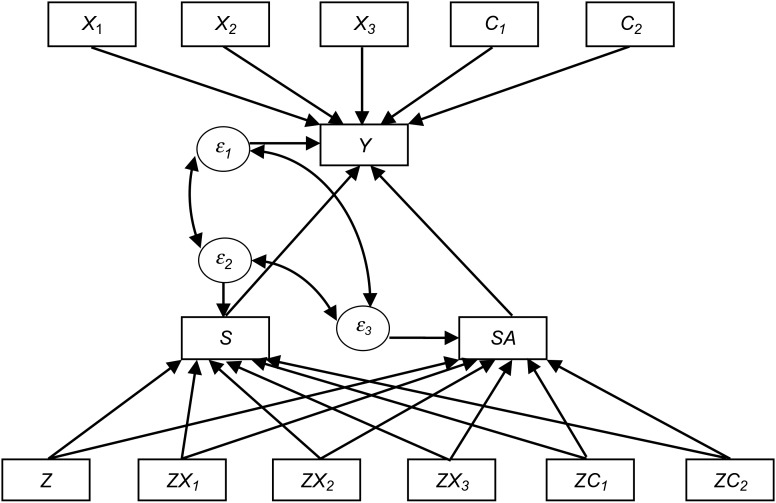
“Using instrumental variable methods, as proposed and explained in detail in a methodological paper by Dunn & Bentall (2007), we aimed to evaluate the causal effect of the TA as a modi fi er of the dose-effect of number of sessions attended on the effect of treatment and, subsequently, (1) evaluate…”
MethodSelf-citationSvensson, B., & Hansson, L. (1999) · Acta Psychiatrica Scandinavica · doi:10.1111/j.1600-0447.1999.tb07226.x · Cited by 112
ML Versus MI for Missing Data With Violation of Distribution Conditions
Yuan, K.-H., Yang-Wallentin, F., & Bentler, P. M. (2012) · Sociological Methods & Research · doi:10.1177/0049124112460373 · Cited by 103
Cognitive behaviour therapy versus other psychosocial treatments for schizophrenia
Jones, C., Hacker, D., Meaden, A., Cormac, I., & Irving, C. B. (2011) · Cochrane Database of Systematic Reviews · doi:10.1002/14651858.cd000524.pub3 · Cited by 97
Cognitive behavioural therapy versus other psychosocial treatments for schizophrenia
Jones, C., Hacker, D., Cormac, I., Meaden, A., & Irving, C. B. (2012) · Cochrane Database of Systematic Reviews · doi:10.1002/14651858.cd008712.pub2 · Cited by 91 · cited 1×
“In meta-analyses comparing CBT to other psychosocial treatments for schizophrenia, Jones et al. (2012) found no signi fi cant differences between psychosocial interventions on positive or negative symptoms, relapse, re-hospitalization, or global mental state measures.”
MethodGreenfield, S. A. (2002) · The British Journal of Psychiatry · doi:10.1017/s0007125000161768 · Cited by 80
Effects of psychotherapy in schizophrenia
Sjöström, R. (1985) · Acta Psychiatrica Scandinavica · doi:10.1111/j.1600-0447.1985.tb05065.x · Cited by 76
Dunn, H., Morrison, A. P., & Bentall, R. P. (2006) · Clinical Psychology & Psychotherapy · doi:10.1002/cpp.481 · Cited by 70 · cited 2×
“…of the SL approach, emphasized the quality of the therapeutic relationship as a necessary and suf fi cient condition for successful therapy whereas CBT therapists tend to see the alliance as more instrumental in ensuring the patient ’ s adherence to the treatment protocol (e.g. Dunn et al. 2006).”
MethodResultSelf-citationDunn, G., Fowler, D., Rollinson, R., Freeman, D., Kuipers, E., Smith, B., Steel, C., Onwumere, J., Jolley, S., Garety, P., et al. (2012) · Psychological Medicine · doi:10.1017/s0033291711001954 · Cited by 65 · cited 1×
“Dunn et al. (2012) in an analysis of the Psychological Prevention of Relapse in Psychosis (PRP) trial, found that, although receipt of full therapy including speci fi c cognitive and behavioural techniques improved clinical outcomes, delivery of partial therapy involving engagement and assessment…”
MethodSelf-citationCommunication and psychosis: It's good to talk, but how?
McCabe, R., & Priebe, S. (2008) · British Journal of Psychiatry · doi:10.1192/bjp.bp.107.048678 · Cited by 60 · cited 1×
“…important and perhaps an echo of traditional attitudes about treat-ment for schizophrenia, which dictated that any discussion of the details of the psychosis or delusional ideas should be avoided, as it would exacerbate the psychosis or constitute ‘ inadvertent collusion ’ (McCabe & Priebe, 2008).”
BackgroundTherapeutic Alliance and Improvements in Work Performance Over Time in Patients With Schizophrenia
Davis, L. W., & Lysaker, P. H. (2007) · Journal of Nervous & Mental Disease · doi:10.1097/01.nmd.0000261954.36030.a1 · Cited by 43 · cited 1×
“…mental health case management (Howgego et al. 2003), maintenance of contact with services (Johansson & Eklund, 2006) and supported workplace performance (Davis & Lysaker, 2007), indicating the importance of the quality of therapeutic relationships in many aspects of recovery from psychosis.”
BackgroundSELECTIVE MEMORY BIAS IN WOMEN WITH BULIMIA NERVOSA AND WOMEN WITH DEPRESSION
Hunt, J., & Cooper, M. (2001) · Behavioural and Cognitive Psychotherapy · doi:10.1017/s1352465801001102 · Cited by 34
Using intervention trials in developmental psychiatry to illuminate basic science
Green, J., & Dunn, G. (2008) · British Journal of Psychiatry · doi:10.1192/bjp.bp.107.046284 · Cited by 31 · cited 1×
“This type of research has important implications for the development of more effective interventions, for clinical practice, and for the theoretical understanding of the process underlying therapeutic change (Green & Dunn, 2008).”
BackgroundSelf-citationSzymańska, K., & Palmer, S. E. (2015) · SAGE Publications Ltd eBooks · doi:10.4135/9781473918061.n10 · Cited by 3 · cited 4×
“The SoCRATES randomized controlled trial of CBT for acutely ill first and second episode patients (Lewis et al. 2002; Tarrier et al. 2004) was chosen for the present study as (i) measures of the TA were taken, and (ii) it is of high quality; having been independently assessed as the highest quality of 18 trials of CBT…”
BackgroundMethodResultInfluential
Research works printed but not linked: 1
- StataCorp (2013). Stata Statistical Software: Release 13. StataCorp LP: College Station, TX.
Cited by
Owen, M. J., Sawa, A., & Mortensen, P. B. (2016) · The Lancet · doi:10.1016/s0140-6736(15)01121-6 · Cited by 1,870
The Lancet Psychiatry Commission on psychological treatments research in tomorrow's science
Holmes, E. A., Ghaderi, A., Harmer, C. J., Ramchandani, P. G., Cuijpers, P., Morrison, A. P., Roiser, J. P., Bockting, C. L. H., O'Connor, R. C., Shafran, R., et al. (2018) · The Lancet Psychiatry · doi:10.1016/s2215-0366(17)30513-8 · Cited by 624
Loneliness in Psychosis: A Meta-analytical Review
Michalska da Rocha, B., Rhodes, S., Vasilopoulou, E., & Hutton, P. (2018) · Schizophrenia Bulletin · doi:10.1093/schbul/sbx036 · Cited by 282
Reeves, B. C., Wells, G. A., & Waddington, H. (2017) · Journal of Clinical Epidemiology · doi:10.1016/j.jclinepi.2017.02.016 · Cited by 199
“Instrumental variable estimation using data from a randomized controlled trial to estimate the effect of treatment in the treated, when there is substantial non-adherence to the allocated intervention, is a particular instance of this approach [32,33].”
MethodTremain, H., McEnery, C., Fletcher, K., & Murray, G. (2020) · JMIR Mental Health · doi:10.2196/17204 · Cited by 193
“Some research also supports the notion of a causal relationship between therapeutic alliance and outcomes in serious mental illnesses, for example, increasing the number of sessions attended was only beneficial in the presence of a strong therapeutic alliance for individuals experiencing psychosis [45].”
Result
Metadata
- Authors
- Goldsmith, L. P., Lewis, S. W., Dunn, G., & Bentall, R. P.
- Affiliations
- University of Manchester (GB)
- University of Liverpool (GB)
- Corresponding author
- Bentall, R. P.
- Venue
- Psychological Medicine
- Publisher
- Cambridge University Press (CUP)
- Published
- 2015-03-25
- Volume
- 45
- Issue
- 11
- Pages
- 2365-2373
- ISSN
- 0033-2917 (ISSN-L)
- 1469-8978
- PMC
- PMC4501302
- OpenAlex
- W2143286814
- Cited by
- 174
- References
- 46
- Citations by year
- 2026: 7 · 2025: 10 · 2024: 20 · 2023: 10 · 2022: 11 · 2021: 18 · 2020: 18 · 2019: 14 · 2018: 26 · 2017: 17 · 2016: 13 · 2015: 10
- FWCI
- 27.28
- Type
- journal article
- Language
- en
- Open access
- hybrid
- doi.org
- Locations
- Psychological Medicine (publishedVersion, cc-by)
- PubMed Central (publishedVersion, cc-by)
- PubMed (publishedVersion)
- Research Explorer (The University of Manchester) (publishedVersion)
- St George's Online Research Archive (St George's University of London) (acceptedVersion)
- City Research Online (City University London) (acceptedVersion)
- University of Huddersfield Repository (University of Huddersfield) (submittedVersion)
- UCL Discovery (University College London) (submittedVersion)
- Funders
- National Institute for Health and Care Research (NF-SI-0611-10193)
- University of Cambridge
- Topics
- Social Sciences › Psychology › Clinical Psychology › Psychotherapy Techniques and Applications
- Health Sciences › Medicine › Psychiatry and Mental health › Schizophrenia research and treatment
- Social Sciences › Psychology › Clinical Psychology › Psychoanalysis and Psychopathology Research
- Keywords
- therapeutic relationship, early psychosis, first-episode psychosis, cognitive behavioral therapy, supportive counseling, symptom severity, medication adherence, non-affective psychosis, adjunctive psychotherapy
- MeSH terms
- Adolescent, Adult, Aged, Counseling, Female, Humans, Male, Middle Aged, Psychotic Disorders, Schizophrenia, Cognitive Behavioral Therapy, Cluster Analysis, Young Adult
About these checks
Registry, retraction, Cites and statistics results are computed, not judged, with one exception: a printed reference that no index lists is read once by a model before it counts as a citation error. Claims are extracted by a model and kept only when their quote appears verbatim in the text; each cited source is then checked, with a model’s help, for whether it says what the claim relies on. Those verdicts can be wrong — read the claim’s quote and the cited source before relying on one.
Statistics and arithmetic are recomputed, not judged.
Confidence bands are shown only for fields calibrated on our annotated test set. None is calibrated yet, so no band is shown.
What counts as a claim ›How we measure confidence ›How we check this ›
Are you an author, or do you see a problem with this page? Request a review
Data sources
Bibliographic data: Semantic Scholar, OpenAlex, Crossref.
Contains information from the Semantic Scholar Academic Graph Datasets, made available under the ODC Attribution License (ODC-BY 1.0).
Semantic Scholar’s data is described in: Kinney, R., et al. (2023). The Semantic Scholar Open Data Platform. arXiv:2301.10140.
