

Psychological treatments for early psychosis can be beneficial or harmful, depending on the therapeutic alliance: an instrumental variable analysis
Open accessThe DOI matches its Crossref record; 45 of the 46 references it cites were found in a registry or an index.
Abstract
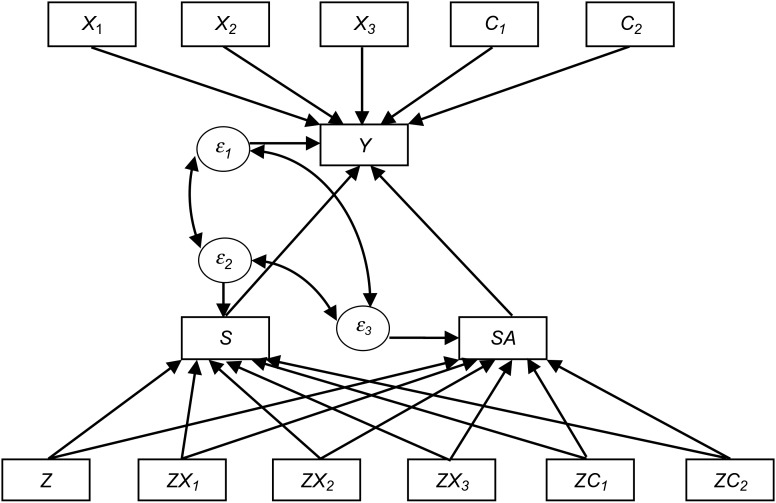
Background: The quality of the therapeutic alliance (TA) has been invoked to explain the equal effectiveness of different psychotherapies, but prior research is correlational, and does not address the possibility that individuals who form good alliances may have good outcomes without therapy. Method: We evaluated the causal effect of TA using instrumental variable (structural equation) modelling on data from a three-arm, randomized controlled trial of 308 people in an acute first or second episode of a non-affective psychosis. The trial compared cognitive behavioural therapy (CBT) over 6 weeks plus routine care (RC) v. supportive counselling (SC) plus RC v. RC alone. We examined the effect of TA, as measured by the client-rated CALPAS, on the primary trial 18-month outcome of symptom severity (PANSS), which was assessed blind to treatment allocation. Results: Both adjunctive CBT and SC improved 18-month outcomes, compared to RC. We showed that, for both psychological treatments, improving TA improves symptomatic outcome. With a good TA, attending more sessions causes a significantly better outcome on PANSS total score [effect size −2.91, 95% confidence interval (CI) −0.90 to −4.91]. With a poor TA, attending more sessions is detrimental (effect size +7.74, 95% CI +1.03 to +14.45). Conclusions: This is the first ever demonstration that TA has a causal effect on symptomatic outcome of a psychological treatment, and that poor TA is actively detrimental. These effects may extend to other therapeutic modalities and disorders.
Overview
The claims and statistics of this paper haven’t been checked yet.
Free: it reads the open-access text and checks the first 5 claims that cite a source we can check. Create a free account to check every claim.
Integrity signals
Registry
Cites
Statistics
Figures
Verification
Claims the paper makes
The claims and statistics of this paper haven’t been checked yet.
Free: it reads the open-access text and checks the first 5 claims that cite a source we can check. Create a free account to check every claim.
Claims other papers make about this one
Each is checked against this paper’s own text: does it say what the citing paper says it does?
The source backs part of the claim, not all of it — or backs it for a different population, condition or comparison.
In the citing paper
“It also reiterates that the rapport and trust developed between a therapist and client during regular faceto-face contacts (e.g.weekly 1-hour sessions) can adequately facilitate the exploration of psychiatric disturbances among this population in a community mental health setting (Goldsmith et al. 2015).”
From Effect of community mental health care programs in Australia: A systematic review (2020) · cites this paper as Goldsmith et al. 2015
Experimental — accuracy not yet measuredIn the citing paper
“Some research also supports the notion of a causal relationship between therapeutic alliance and outcomes in serious mental illnesses, for example, increasing the number of sessions attended was only beneficial in the presence of a strong therapeutic alliance for individuals experiencing psychosis [45].”
From The therapeutic alliance in digital mental health interventions for serious mental illnesses: narrative review (2020) · cites this paper as [45]
Self-check
Percentages, sums and reported differences re-computed from the paper’s own numbers.
The self-check needs the paper’s full text.
Citations
Cites
The Positive and Negative Syndrome Scale (PANSS) for schizophrenia.
Kay, S. R., Fiszbein, A., & Opler, L. A. (1987) · Schizophrenia Bulletin · doi:10.1093/schbul/13.2.261 · Cited by 21,378
The necessary and sufficient conditions of therapeutic personality change.
Rogers, C. R. (1957) · Journal of Consulting Psychology · doi:10.1037/h0045357 · Cited by 5,599
Enders, C., & Bandalos, D. (2001) · Structural Equation Modeling: A Multidisciplinary Journal · doi:10.1207/s15328007sem0803_5 · Cited by 4,978 · cited 1×
“2012; Enders & Bandalos, 2001).”
Relation of the therapeutic alliance with outcome and other variables: a meta-analytic review
Martin, D. J., Garske, J. P., & Davis, M. K. (2000) · Journal of Consulting and Clinical Psychology · doi:10.1037//0022-006x.68.3.438 · Cited by 3,355
Relation between working alliance and outcome in psychotherapy: A meta-analysis
Horvath, A. O., & Symonds, B. D. (1991) · Journal of Counseling Psychology · doi:10.1037/0022-0167.38.2.139 · Cited by 2,673 · cited 5×
“The CALPAS was used in this research as self-report measures correlate more strongly with outcome than therapist-rated measures (Horvath & Symonds, 2001).”
BackgroundMethodResultInfluentialThe Great Psychotherapy Debate: Models Methods and Findings
Horvath, A. O. (2002) · Psychotherapy Research · doi:10.1093/ptr/12.1.108 · Cited by 1,705
Psychotherapy for depression in adults: A meta-analysis of comparative outcome studies.
Cuijpers, P., van Straten, A., Andersson, G., & van Oppen, P. (2008) · Journal of Consulting and Clinical Psychology · doi:10.1037/a0013075 · Cited by 1,050 · cited 1×
“For example, in an in fl uential meta-analysis of seven common psychological treatments for mild to moderate depression, Cuijpers et al. (2008) found no difference in the ef fi cacy of CBT, behavioural activation treatment, psycho-dynamic treatment, problem-solving therapy or social-skills training.”
Wykes, T., Steel, C., Everitt, B., & Tarrier, N. (2007) · Schizophrenia Bulletin · doi:10.1093/schbul/sbm114 · Cited by 1,029
Causes and Explanations: A Structural-Model Approach. Part I: Causes
Halpern, J. Y., & Pearl, J. (2005) · The British Journal for the Philosophy of Science · doi:10.1093/bjps/axi147 · Cited by 779 · cited 1×
“This limitation is addressed here by using instrumental variables in a structural equation model, which allows causal interpretations (Pearl, 1998; Halpern & Pearl, 2005).”
MethodSensky, T., Turkington, D., Kingdon, D., Scott, J. L., Scott, J., Siddle, R., O'Carroll, M., & Barnes, T. R. E. (2000) · Archives of General Psychiatry · doi:10.1001/archpsyc.57.2.165 · Cited by 693 · cited 1×
“However, these trials often report positive results for non-speci fi c psychological therapies (counselling, befriending) used as controls, which also turn out to be better than RC alone (Sensky et al. 2000; Tarrier et al. 2000).”
Background
Research works printed but not linked: 1
- StataCorp (2013). Stata Statistical Software: Release 13. StataCorp LP: College Station, TX.
Cited by
Owen, M. J., Sawa, A., & Mortensen, P. B. (2016) · The Lancet · doi:10.1016/s0140-6736(15)01121-6 · Cited by 1,870
The Lancet Psychiatry Commission on psychological treatments research in tomorrow's science
Holmes, E. A., Ghaderi, A., Harmer, C. J., Ramchandani, P. G., Cuijpers, P., Morrison, A. P., Roiser, J. P., Bockting, C. L. H., O'Connor, R. C., Shafran, R., et al. (2018) · The Lancet Psychiatry · doi:10.1016/s2215-0366(17)30513-8 · Cited by 624
Loneliness in Psychosis: A Meta-analytical Review
Michalska da Rocha, B., Rhodes, S., Vasilopoulou, E., & Hutton, P. (2018) · Schizophrenia Bulletin · doi:10.1093/schbul/sbx036 · Cited by 282
Reeves, B. C., Wells, G. A., & Waddington, H. (2017) · Journal of Clinical Epidemiology · doi:10.1016/j.jclinepi.2017.02.016 · Cited by 199
“Instrumental variable estimation using data from a randomized controlled trial to estimate the effect of treatment in the treated, when there is substantial non-adherence to the allocated intervention, is a particular instance of this approach [32,33].”
MethodTremain, H., McEnery, C., Fletcher, K., & Murray, G. (2020) · JMIR Mental Health · doi:10.2196/17204 · Cited by 193
“Some research also supports the notion of a causal relationship between therapeutic alliance and outcomes in serious mental illnesses, for example, increasing the number of sessions attended was only beneficial in the presence of a strong therapeutic alliance for individuals experiencing psychosis [45].”
ResultShattock, L., Berry, K., Degnan, A., & Edge, D. (2018) · Clinical Psychology & Psychotherapy · doi:10.1002/cpp.2135 · Cited by 137
“Goldsmith et al. (2015) used structural equation modelling (SEM) and controlled for randomisation and baseline covariates in a sample of first or second episode psychosis patients who received either cognitive behavioural therapy (CBT) or supportive counselling.”
BackgroundMethodInfluentialArshad, U., Farhat‐ul‐Ain, Gauntlett, J., Husain, N., Chaudhry, N., & Taylor, P. J. (2020) · Suicide and Life-Threatening Behavior · doi:10.1111/sltb.12583 · Cited by 104
Vass, V., Morrison, A. P., Law, H., Dudley, J., Taylor, P. J., Bennett, K. M., & Bentall, R. P. (2015) · Psychiatry Research · doi:10.1016/j.psychres.2015.09.042 · Cited by 111
“While we feel this is unlikely, in the absence of an experimental manipulation of stigma, it is extremely difficult to eliminate these kinds of effects, although new instrumental variable methods that are being applied to analyse mediators in trial data may have promise in this regard (Goldsmith et al., 2015).”
Self-citationHasson‐Ohayon, I., Kravetz, S., & Lysaker, P. H. (2017) · Clinical Psychology & Psychotherapy · doi:10.1002/cpp.2012 · Cited by 85
Morrison, A. P., Law, H., Carter, L., Sellers, R., Emsley, R., Pyle, M., French, P., Shiers, D., Yung, A. R., Murphy, E. K., et al. (2018) · The Lancet Psychiatry · doi:10.1016/s2215-0366(18)30096-8 · Cited by 84
Ljungberg, A., Denhov, A., & Topor, A. (2015) · Journal of Mental Health · doi:10.3109/09638237.2015.1101427 · Cited by 109
“Negative relationships with professionals have been pointed out as connected to negative outcome in psychological treatments (Goldsmith et al., 2015), and nonhelpful professionals have been identified by persons with SMI as barriers to their recovery process (Schön et al., 2009) .”
BackgroundHardy, A., Wojdecka, A., West, J., Matthews, E., Golby, C., Ward, T., Lopez, N. D., Freeman, D., Waller, H., Kuipers, E., et al. (2018) · JMIR Mental Health · doi:10.2196/11222 · Cited by 71
“Some people are not motivated to try therapy and those that do may struggle to understand it and to apply new insights to everyday situations [9-11].”
BackgroundSelf-citationCella, M., & Wykes, T. (2019) · Schizophrenia Research · doi:10.1016/j.schres.2017.09.012 · Cited by 68
“A recent study found that the quality of therapeutic alliance significantly influence the outcomes of Cognitive Behavioural Therapy for psychosis (CBTp) (Goldsmith et al., 2015).”
BackgroundCorbière, M., Lecomte, T., Reinharz, D., Kirsh, B., Goering, P., Menear, M., Berbiche, D., Genest, K., & Goldner, E. M. (2017) · Journal of Nervous & Mental Disease · doi:10.1097/nmd.0000000000000612 · Cited by 67
Thomas, S., Höfler, M., Schäfer, I., & Trautmann, S. (2019) · Acta Psychiatrica Scandinavica · doi:10.1111/acps.13077 · Cited by 64
Browne, J., Nagendra, A., Kurtz, M., Berry, K., & Penn, D. L. (2019) · Clinical Psychology Review · doi:10.1016/j.cpr.2019.05.002 · Cited by 60
Bourke, E., Barker, C., & Fornells‐Ambrojo, M. (2021) · Psychology and Psychotherapy Theory Research and Practice · doi:10.1111/papt.12330 · Cited by 87
Trotta, A., Murray, R. M., David, A. S., Kolliakou, A., O’Connor, J. A., Forti, M. D., Dazzan, P., Mondelli, V., Morgan, C., & Fisher, H. L. (2015) · Schizophrenia Bulletin · doi:10.1093/schbul/sbv131 · Cited by 63
Browne, J., Wright, A. C., Berry, K., Mueser, K. T., Cather, C., Penn, D. L., & Kurtz, M. M. (2021) · Schizophrenia Research · doi:10.1016/j.schres.2021.04.002 · Cited by 67
Interpersonal processes in paranoia: a systematic review
Meisel, S. F., Garety, P. A., Stahl, D., & Valmaggia, L. R. (2018) · Psychological Medicine · doi:10.1017/s0033291718000491 · Cited by 52
“This may be of importance since there is now evidence to suggest that the therapeutic relationship is a crucial factor in the success of therapeutic intervention for psychosis (Goldsmith et al. 2015).”
BackgroundHarris, B. A., & Panozzo, G. L. (2018) · Archives of Psychiatric Nursing · doi:10.1016/j.apnu.2018.08.003 · Cited by 76
Brabban, A., Byrne, R., Longden, E., & Morrison, A. P. (2017) · Psychosis · doi:10.1080/17522439.2016.1259648 · Cited by 49
Charles, J. L. K., & Dattalo, P. (2018) · Journal of Social Service Research · doi:10.1080/01488376.2018.1479335 · Cited by 62
“Consequently, treatment outcomes are threatened (Goldsmith et al., 2015) making accurate assessment of these potentially stigmatizing provider attitudes and beliefs all the more critical.”
BackgroundCavelti, M., Homan, P., & Vauth, R. (2016) · Psychiatry Research · doi:10.1016/j.psychres.2016.02.070 · Cited by 55
“(Farrelly et al., 2014; Goldsmith et al., 2015; Priebe et al., 2011) and is align with the broader field of psychotherapy research which emphasizes the value of the therapeutic relationship across various types of psychological problems and mental disorders (Orlinsky et al.”
BackgroundResultde Sousa, P., Sellwood, W., Griffiths, M., & Bentall, R. P. (2018) · The British Journal of Psychiatry · doi:10.1192/bjp.2018.160 · Cited by 54
Self-citationLiu, Y., Li, I., & Hsiao, F. (2021) · Journal of Advanced Nursing · doi:10.1111/jan.14750 · Cited by 41
2, O. B. O. G. W. P., Pate, A., Candlish, J., Sperrin, M., & van Staa, T. P. (2016) · BMC Medical Research Methodology · doi:10.1186/s12874-016-0208-1 · Cited by 44
“IV deals with refusal and non-compliance in RCTs to some extent [27, 40] and has been adopted in practice [41–43].”
MethodWykes, T., Bowie, C. R., & Cella, M. (2024) · Schizophrenia Bulletin · doi:10.1093/schbul/sbae075 · Cited by 48
“59 For cognitive remediation, specific contributions could include encouraging the development of strategic thinking, and the nonspecific elements could be positive feedback and engagement in activities.”
BackgroundEliacin, J., Coffing, J., Matthias, M. S., Burgess, D. J., Bair, M. J., & Rollins, A. L. (2016) · Administration and Policy in Mental Health and Mental Health Services Research · doi:10.1007/s10488-016-0779-5 · Cited by 47
de Jong, S., Hasson‐Ohayon, I., van Donkersgoed, R., Aleman, A., & Pijnenborg, G. H. M. (2020) · Psychology and Psychotherapy: Theory, Research and Practice · doi:10.1111/papt.12212 · Cited by 36
Gerke, L., Meyrose, A.-K., Ladwig, I., Rief, W., & Nestoriuc, Y. (2020) · Frontiers in Psychology · doi:10.3389/fpsyg.2020.02144 · Cited by 33
“A few studies indicated that prior experience with psychotherapy constitutes a risk factor for experiencing NEP (Ladwig et al., 2014; Grüneberger et al., 2017).”
BackgroundResultInfluentialCognitive behavioural therapy for psychosis: The end of the line or time for a new approach?
Newman‐Taylor, K., & Bentall, R. P. (2023) · Psychology and Psychotherapy Theory Research and Practice · doi:10.1111/papt.12498 · Cited by 40
Self-citationBrowne, J., Mueser, K. T., Meyer-Kalos, P., Gottlieb, J. D., Estroff, S. E., & Penn, D. L. (2019) · Journal of Consulting and Clinical Psychology · doi:10.1037/ccp0000418 · Cited by 38
“In addition, Goldsmith and colleagues (2015) found that the benefits of receiving more CBT or supportive counseling sessions depended on the quality of the alliance, with more sessions associated with greater improvement in symptoms when the alliance was positive, but a worsening of symptoms when the client-rated alli…”
BackgroundResultInfluentialBerry, C., & Greenwood, K. (2015) · Schizophrenia Research · doi:10.1016/j.schres.2015.07.032 · Cited by 40
“, 2011), and symptoms at leastmay themselves be influenced by a positive therapeutic relationship, perhaps both directly and through medication adherence (Goldsmith et al., 2015; McCabe et al., 2012; Melau et al., 2015).”
BackgroundVolavka, J., Dorn, R. A. V., Citrome, L., Kahn, R. S., Fleischhacker, W. W., & Czobor, P. (2016) · European Psychiatry · doi:10.1016/j.eurpsy.2015.10.003 · Cited by 38
“or harmful, depending on therapeutic alliance [14].”
Heynen, E., Roest, J., Willemars, G., & van Hooren, S. (2017) · The Arts in Psychotherapy · doi:10.1016/j.aip.2017.05.006 · Cited by 28
Lecomte, T., Leclerc, C., & Wykes, T. (2017) · Psychology and Psychotherapy Theory Research and Practice · doi:10.1111/papt.12139 · Cited by 31
Lawlor, C., Sharma, B., Khondoker, M. R., PETERS, E. R., Kuipers, E., & Johns, L. (2016) · British Journal of Clinical Psychology · doi:10.1111/bjc.12122 · Cited by 34
Cognitive Analytic Therapy for psychosis: A case series
Taylor, P. J., Perry, A., Hutton, P., Tan, R., Fisher, N. R., Focone, C., Griffiths, D., & Seddon, C. (2018) · Psychology and Psychotherapy Theory Research and Practice · doi:10.1111/papt.12183 · Cited by 31
Greenwood, K., Gurnani, M., Ward, T., Vogel, E., Vella, C., McGourty, A., Robertson, S., Sacadura, C., Hardy, A., Rus‐Calafell, M., et al. (2022) · Psychology and Psychotherapy Theory Research and Practice · doi:10.1111/papt.12393 · Cited by 25
Self-citationCharles, J. L. K., & Bentley, K. J. (2017) · Community Mental Health Journal · doi:10.1007/s10597-017-0137-4 · Cited by 32
Cognitive–behavioural therapy for clozapine-resistant schizophrenia: the FOCUS RCT
Morrison, A. P., Pyle, M., Gumley, A. I., Schwannauer, M., Turkington, D., MacLennan, G., Norrie, J. D., Hudson, J., Bowe, S. E., French, P., et al. (2019) · Health Technology Assessment · doi:10.3310/hta23070 · Cited by 27
Morrison, A. P. (2018) · Schizophrenia Research · doi:10.1016/j.schres.2018.03.010 · Cited by 31
Culture and therapist self-disclosure
Phiri, P., Rathod, S., Gobbi, M., Carr, H., & Kingdon, D. (2019) · The Cognitive Behaviour Therapist · doi:10.1017/s1754470x19000102 · Cited by 26
The role of social isolation and social cognition in thought disorder
de Sousa, P., Sellwood, W., Eldridge, A., & Bentall, R. P. (2018) · Psychiatry Research · doi:10.1016/j.psychres.2018.08.048 · Cited by 30
“, 2016) a core process in effective cognitive behavioral therapy for psychosis (CBTp; Goldsmith et al., 2015).”
BackgroundSelf-citationCrits-Christoph, P. F., Gallop, R., Gaines, A. N., Rieger, A., & Gibbons, M. B. C. (2018) · Psychotherapy Research · doi:10.1080/10503307.2018.1544724 · Cited by 26
Altimir, C., Capella, C., Núñez, L., Abarzúa, M., & Krause, M. (2017) · Journal of Clinical Psychology · doi:10.1002/jclp.22525 · Cited by 31
Formica, M., Phillips, L., Hartmann, J., Yung, A. R., Wood, S. J., Lin, A. P., Amminger, G. P., McGorry, P. D., & Nelson, B. (2020) · Schizophrenia Research · doi:10.1016/j.schres.2020.04.028 · Cited by 24
Developing psychological treatments for psychosis
Freeman, D. (2024) · The British Journal of Psychiatry · doi:10.1192/bjp.2024.5 · Cited by 22
Hammond, S. P., Cooper, N. J., & Jordan, P. (2021) · Cambridge Journal of Education · doi:10.1080/0305764x.2021.1919057 · Cited by 27
Hartmann, J., McGorry, P. D., Schmidt, S. J., Amminger, G. P., Yuen, H. P., Markulev, C., Berger, G. E., Chen, E. Y. H., de Haan, L., Hickie, I. B., et al. (2017) · Psychotherapy and Psychosomatics · doi:10.1159/000477551 · Cited by 22
Gianfrancesco, O., Bubb, V. J., & Quinn, J. P. (2019) · Frontiers in Psychiatry · doi:10.3389/fpsyt.2019.00009 · Cited by 29
Effect of community mental health care programs in Australia: A systematic review
O'Donnell, R., Savaglio, M., Vicary, D., & Skouteris, H. (2020) · Australian Journal of Primary Health · doi:10.1071/py20147 · Cited by 19
Garety, P. A., Ward, T., Emsley, R., Greenwood, K., Freeman, D. H., Fowler, D. G., Kuipers, E., Bebbington, P., Dunn, G., & Hardy, A. (2021) · Efficacy and Mechanism Evaluation · doi:10.3310/eme08110 · Cited by 25
Self-citationPsychological interventions for psychosis in adolescents
Datta, S. S., Daruvala, R., & Kumar, A. (2020) · Cochrane Database of Systematic Reviews · doi:10.1002/14651858.cd009533.pub2 · Cited by 27
Cognitive therapy of psychosis: Research and implementation
Kingdon, D., & Turkington, D. (2017) · Schizophrenia Research · doi:10.1016/j.schres.2017.09.023 · Cited by 22
Cognitive Behavioural Therapy for Psychosis: A Health Technology Assessment.
(2018) · Europe PMC (PubMed Central) · Cited by 37
Taylor, P. J., Fien, K., Mulholland, H., Duarte, R. V., Dickson, J. M., & Kullu, C. (2020) · Psychology and Psychotherapy Theory Research and Practice · doi:10.1111/papt.12277 · Cited by 18
“Working alliance appears to be an important factor in determining the outcome of therapy (Blake et al., 2019; Goldsmith et al., 2015) but there is less research evaluating the importance of alliance in determining the outcomeof brief therapies.”
Backgroundvon Greiff, N., Skogens, L., & Topor, A. (2018) · Nordic Social Work Research · doi:10.1080/2156857x.2018.1520739 · Cited by 23
“…used in the field of psychotherapy (Wampold 2001; Lambert and Barley 2001; Martin, Garske, and Davis 2000) but has emerged as an important common factor for treatment in several other fields, such as treatment for AOD problems (Babor and Del Boca 2003) and mental health (Goldsmith et al. 2015).”
MethodUnderstanding Cognitive Behavioral Therapy for Psychosis Through the Predictive Coding Framework
Sheffield, J. M., Brinen, A. P., Feola, B., Heckers, S., & Corlett, P. R. (2024) · Biological Psychiatry Global Open Science · doi:10.1016/j.bpsgos.2024.100333 · Cited by 25
Process analysis of trauma‐focused cognitive behavioural therapy for individuals with schizophrenia
O’Driscoll, C., Mason, O. J., Brady, F., Smith, B., & Steel, C. (2015) · Psychology and Psychotherapy Theory Research and Practice · doi:10.1111/papt.12072 · Cited by 17
Predictors of adherence to low support, computerised, cognitive remediation training in psychosis
Hargreaves, A., Dillon, R., Castorina, M., Furey, E., Walsh, J., Fitzmaurice, B., Hallahan, B., Corvin, A., Robertson, I., & Donohoe, G. (2018) · Psychosis · doi:10.1080/17522439.2018.1522542 · Cited by 14
Cognitive behavioural therapy for thought disorder in psychosis
Palmier-Claus, J., Griffiths, R., Murphy, E., Parker, S., Longden, E., Bowe, S., Steele, A., French, P., Morrison, A., & Tai, S. (2017) · Psychosis · doi:10.1080/17522439.2017.1363276 · Cited by 14
Psychiatrists' emotional reactions: Useful for precise diagnosis in adolescence?
Knaus, S., Grassl, R., Seidman, C., Seitz, T., Karwautz, A. F. K., & Löffler‐Stastka, H. (2016) · Bulletin of the Menninger Clinic · doi:10.1521/bumc.2016.80.4.316 · Cited by 16
Prouteau, A., Roux, S., Destaillats, J.-M., & Bergua, V. (2017) · Journal of Cognitive Education and Psychology · doi:10.1891/1945-8959.16.1.64 · Cited by 17
Client factors that predict the therapeutic alliance in a chronic, complex trauma sample.
Reynolds, C., Simms, J., Webb, K. J., Corry, M., McDermott, B., Ryan, M., Shannon, M., & Dyer, K. F. W. (2017) · Traumatology An International Journal · doi:10.1037/trm0000114 · Cited by 20
Gee, B., Notley, C. J., Byrne, R. E., Clarke, T., Hodgekins, J., French, P., & Fowler, D. G. (2016) · Early Intervention in Psychiatry · doi:10.1111/eip.12381 · Cited by 13
“There is an increasing focus in psychotherapy research on acknowledging the possible adverse effects of therapy.(18,19) Qualitative studies of CBT have identified a range of possible negative effects, usually described by study participants as short-term, acceptable consequences of addressing difficult issues.”
BackgroundMenon, M., Andersen, D., Quilty, L. C., & Woodward, T. S. (2015) · Frontiers in Psychology · doi:10.3389/fpsyg.2015.01563 · Cited by 14
“Goldsmith et al. (2015) found that the duration of therapy was associated with symptomatic improvement in those with good treatment alliance, but was actually detrimental for those clients with poor treatment alliance.”
BackgroundHasson‐Ohayon, I., de Jong, S., Igra, L., Carter, S., Faith, L. A., & Lysaker, P. H. (2021) · Clinical Psychology & Psychotherapy · doi:10.1002/cpp.2572 · Cited by 15
Lost in explanation: internal conflicts in the discourse of ADHD psychoeducation
van Langen, M. J. M., Szőke, R., Rijkelijkhuizen, D. N. J., Durston, S., & van Hulst, B. M. (2022) · BMC Psychiatry · doi:10.1186/s12888-022-04327-x · Cited by 14
Dudley, R. E. J., Dodgson, G., Common, S., Ogundimu, E. O., Liley, J., O'Grady, L., Watson, F., Gibbs, C., Arnott, B., Fernyhough, C., et al. (2024) · Journal of Psychiatric Research · doi:10.1016/j.jpsychires.2024.04.031 · Cited by 11
Domínguez-Arriola, M. E., Olalde-Mathieu, V. E., Garza‐Villarreal, E. A., & Barrios, F. A. (2022) · Brain Topography · doi:10.1007/s10548-022-00910-3 · Cited by 16
Hurley, J., Koenning, M., & Bray, A. (2018) · Psychotherapy and Counselling Journal of Australia · doi:10.59158/001c.71192 · Cited by 13
Dose–response modeling in mental health using stein‐like estimators with instrumental variables
Ginestet, C. E., Emsley, R., & Landau, S. (2017) · Statistics in Medicine · doi:10.1002/sim.7265 · Cited by 11
Hasson‐Ohayon, I., Mashiach‐Eizenberg, M., Lavi‐Rotenberg, A., & Roe, D. (2019) · Frontiers in Psychiatry · doi:10.3389/fpsyt.2019.00364 · Cited by 11
Cognitive behavioural therapy added to standard care for first-episode and recent-onset psychosis
Mayer, S. F., Corcoran, C., Kennedy, L., Leucht, S., & Bighelli, I. (2024) · Cochrane Database of Systematic Reviews · doi:10.1002/14651858.cd015331.pub2 · Cited by 16
Longden, E., Branitsky, A., Jones, W., & Peters, S. (2021) · Psychology and Psychotherapy Theory Research and Practice · doi:10.1111/papt.12373 · Cited by 13
Berry, C., & Greenwood, K. (2016) · European Psychiatry · doi:10.1016/j.eurpsy.2016.01.002 · Cited by 12
“are thought to influence patient outcomes [4,5].”
BackgroundServing the Co-Morbid Mental Health and Substance Use Needs of People with HIV
Conway, F. N., Rountree, M., & Jones, K. V. (2021) · Community Mental Health Journal · doi:10.1007/s10597-020-00756-8 · Cited by 12
Design for mental health: can design promote human-centred diagnostics?
Veldmeijer, L., Terlouw, G., Veer, J. V. ‘., van Os, J., & Boonstra, N. (2023) · Design for Health · doi:10.1080/24735132.2023.2171223 · Cited by 13
Browne, J., Bass, E., Mueser, K. T., Meyer-Kalos, P., Gottlieb, J. D., Estroff, S. E., & Penn, D. L. (2018) · Schizophrenia Research · doi:10.1016/j.schres.2018.07.035 · Cited by 14
Zainal, N. H., Benjet, C. L., Albor, Y., Núñez-Delgado, M. J., Cruz, R. Z., Contreras‐Ibáñez, C. C., Cudris–Torres, L., de la Peña, F. R., González, N., Guerrero-López, B., et al. (2025) · International Journal of Methods in Psychiatric Research · doi:10.1002/mpr.70005 · Cited by 9
da Costa, H., Martin, B., & Franck, N. (2020) · The Journal of Nervous and Mental Disease · doi:10.1097/nmd.0000000000001125 · Cited by 12
“, 2000), including for people with psychotic disorders (Frank and Gunderson, 1990; Goldsmith et al., 2015; Priebe et al., 2011).”
BackgroundWard, T., Hardy, A., Holm, R. L., Collett, N., Rus‐Calafell, M., Sacadura, C., McGourty, A., Vella, C., East, A., Rea, M., et al. (2022) · Psychology and Psychotherapy Theory Research and Practice · doi:10.1111/papt.12377 · Cited by 9
Examining service user experiences of a Cognitive Therapy intervention for self-stigma in psychosis
Wood, L., Burke, E. M., Byrne, R., & Morrison, A. (2016) · Psychosis · doi:10.1080/17522439.2015.1135184 · Cited by 9
“The significance of the therapeutic relationship has been identified in previous service-user informed psychosis research (Goldsmith et al., 2015; Wood, Burke, & Morrison, 2013).”
BackgroundImproving Community Mental Health Services: The Need for a Paradigm Shif.
Longden, E., Read, J., & Dillon, J. (2016) · PubMed · Cited by 20
For Better or Worse? Improving the Response to Domestic Abuse Offenders on Probation
Renehan, N., & Gadd, D. (2024) · The British Journal of Criminology · doi:10.1093/bjc/azae003 · Cited by 14
Taylor, R., Cella, M., & Wykes, T. (2025) · Behavior Modification · doi:10.1177/01454455251343303 · Cited by 15
“CBTp manuals emphasize engagement and collaborative working as necessary first steps (Fowler et al., 1995) and we know that more CBTp sessions and a poor therapeutic alliance can be detrimental (Goldsmith et al., 2015).”
Sivec, H. J., Kreider, V. A. L., Buzzelli, C., Hrouda, D. R., & Hricovec, M. M. (2020) · Community Mental Health Journal · doi:10.1007/s10597-020-00611-w · Cited by 10
Read, J. (2022) · Journal of Mental Health · doi:10.1080/09638237.2022.2069708 · Cited by 11
“In psychotherapy research, the therapeutic alliance is well established as a predictor of a positive outcome (Ardito & Rabellino, 2011), including in cognitive therapy for psychosis (Goldsmith et al., 2015).”
Tsapekos, D., Strawbridge, R., Wykes, T., Young, A. H., & Cella, M. (2022) · Journal of Psychiatric Research · doi:10.1016/j.jpsychires.2022.06.021 · Cited by 9
“…receiving cognitive behavioural therapy for psychosis, therapeutic alliance can affect the relationship between session attendance and treatment outcomes, with more sessions being beneficial for those having good alliance and detrimental for those with poor alliance (Goldsmith et al., 2015).”
BackgroundMethodFusar‐Poli, L., Panariello, F., Berry, K., Rocchetti, M., Casiraghi, L., Malvezzi, M., Starace, F., Zamparini, M., Zarbo, C., & de Girolamo, G. (2023) · British Journal of Clinical Psychology · doi:10.1111/bjc.12450 · Cited by 8
Olalde-Mathieu, V. E., Sassi, F., Reyes-Aguilar, A., Mercadillo, R. E., Alcauter, S., & Barrios, F. A. (2022) · Neuroscience · doi:10.1016/j.neuroscience.2022.04.001 · Cited by 10
Intent to Understand the Meaning of Psychotic Symptoms During Patient-Psychiatrist Interactions
Ridenour, J. M., & Garrett, M. (2022) · American Journal of Psychotherapy · doi:10.1176/appi.psychotherapy.20220034 · Cited by 8
Cognitive Behavioural Therapies for Psychosis
Johns, L., Isham, L., & Manser, R. (2019) · Elsevier eBooks · doi:10.1016/b978-0-12-815012-2.00015-8 · Cited by 11
Southall, D. J. L., & Combes, H. A. (2020) · Sexual & Relationship Therapy · doi:10.1080/14681994.2020.1749255 · Cited by 5
“Evidence for the effectiveness of dominant psychological treatments for psychosis is mixed (Goldsmith et al., 2015; Jauhar et al., 2014; Pinquart et al., 2016; Taylor & Perera, 2015).”
BackgroundTherapeutic stance towards persons with psychosis: a Grounded Theory study
Galbusera, L., Endres, R. J., Scholz, T. M. L., Jirku, E., & Thoma, S. (2024) · International Journal of Qualitative Studies on Health and Well-Being · doi:10.1080/17482631.2024.2333064 · Cited by 9
“One central aspect that has emerged in the literature on psychotherapy for psychosis so far, is the positive link between the quality of the therapeutic alliance and treatment outcomes (Frank & Gunderson, 1990; Goldsmith et al., 2015; Shattock et al., 2018).”
BackgroundResultHillier, L. (2018) · Lancaster University · doi:10.17635/lancaster/thesis/406 · Cited by 5
White, S. J., Bhattacharya, R., Bremner, S. A., Faulkner, A., Foster, R., Gibson, S., Goldsmith, L. P., Harnett, D., Lucock, M. P., Patel, A., et al. (2023) · International Journal of Social Psychiatry · doi:10.1177/00207640221148090 · Cited by 7
“This echoes a wider mental health literature indicating how strength of therapeutic relationship is predictive of the effectiveness of many mental health therapies and interventions (Goldsmith et al., 2015; Priebe & Mccabe, 2008).”
BackgroundSelf-citationVisual hallucinations in psychosis: What do people actually see?
Aynsworth, C., Waite, F., Sargeant, S., Humpston, C. S., & Dudley, R. E. J. (2024) · Psychology and Psychotherapy Theory Research and Practice · doi:10.1111/papt.12553 · Cited by 6
“…more comprehensive information about visions, it could support the delivery of core therapeutic principles in clinical care, such as normalising and empathy to reduce internalised stigma (Aynsworth et al., in prep; Renouf et al., 2018) and enhance therapeutic alliance (Goldsmith et al., 2015).”
Metadata
- Authors
- Goldsmith, L. P., Lewis, S. W., Dunn, G., & Bentall, R. P.
- Affiliations
- University of Manchester (GB)
- University of Liverpool (GB)
- Corresponding author
- Bentall, R. P.
- Venue
- Psychological Medicine
- Publisher
- Cambridge University Press (CUP)
- Published
- 2015-03-25
- Volume
- 45
- Issue
- 11
- Pages
- 2365-2373
- ISSN
- 0033-2917 (ISSN-L)
- 1469-8978
- PMC
- PMC4501302
- OpenAlex
- W2143286814
- Cited by
- 174
- References
- 46
- Citations by year
- 2026: 7 · 2025: 10 · 2024: 20 · 2023: 10 · 2022: 11 · 2021: 18 · 2020: 18 · 2019: 14 · 2018: 26 · 2017: 17 · 2016: 13 · 2015: 10
- FWCI
- 27.28
- Type
- journal article
- Language
- en
- Open access
- hybrid
- doi.org
- Locations
- Psychological Medicine (publishedVersion, cc-by)
- PubMed Central (publishedVersion, cc-by)
- PubMed (publishedVersion)
- Research Explorer (The University of Manchester) (publishedVersion)
- St George's Online Research Archive (St George's University of London) (acceptedVersion)
- City Research Online (City University London) (acceptedVersion)
- University of Huddersfield Repository (University of Huddersfield) (submittedVersion)
- UCL Discovery (University College London) (submittedVersion)
- Funders
- National Institute for Health and Care Research (NF-SI-0611-10193)
- University of Cambridge
- Topics
- Social Sciences › Psychology › Clinical Psychology › Psychotherapy Techniques and Applications
- Health Sciences › Medicine › Psychiatry and Mental health › Schizophrenia research and treatment
- Social Sciences › Psychology › Clinical Psychology › Psychoanalysis and Psychopathology Research
- Keywords
- therapeutic relationship, early psychosis, first-episode psychosis, cognitive behavioral therapy, supportive counseling, symptom severity, medication adherence, non-affective psychosis, adjunctive psychotherapy
- MeSH terms
- Adolescent, Adult, Aged, Counseling, Female, Humans, Male, Middle Aged, Psychotic Disorders, Schizophrenia, Cognitive Behavioral Therapy, Cluster Analysis, Young Adult
About these checks
Registry, retraction, Cites and statistics results are computed, not judged, with one exception: a printed reference that no index lists is read once by a model before it counts as a citation error. Claims are extracted by a model and kept only when their quote appears verbatim in the text; each cited source is then checked, with a model’s help, for whether it says what the claim relies on. Those verdicts can be wrong — read the claim’s quote and the cited source before relying on one.
Statistics and arithmetic are recomputed, not judged.
Confidence bands are shown only for fields calibrated on our annotated test set. None is calibrated yet, so no band is shown.
What counts as a claim ›How we measure confidence ›How we check this ›
Are you an author, or do you see a problem with this page? Request a review
Data sources
Bibliographic data: Semantic Scholar, OpenAlex, Crossref.
Contains information from the Semantic Scholar Academic Graph Datasets, made available under the ODC Attribution License (ODC-BY 1.0).
Semantic Scholar’s data is described in: Kinney, R., et al. (2023). The Semantic Scholar Open Data Platform. arXiv:2301.10140.
