

Longitudinal alterations in motivational salience processing in ultra-high-risk subjects for psychosis
Open accessThe DOI matches its Crossref record; 55 of the 56 references it cites were found in a registry or an index.
Abstract
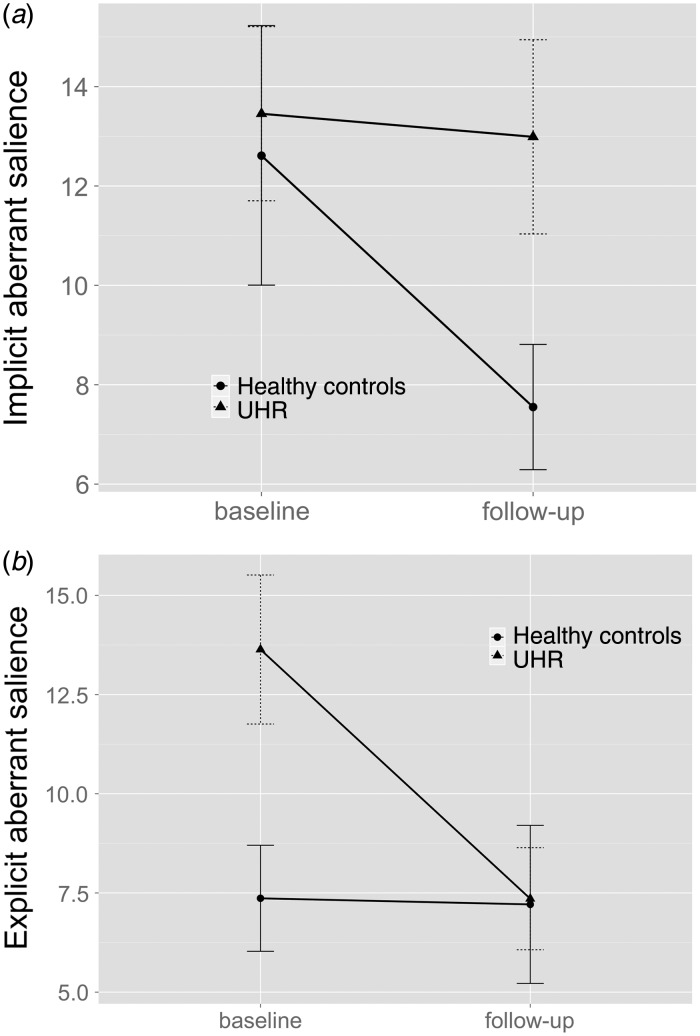
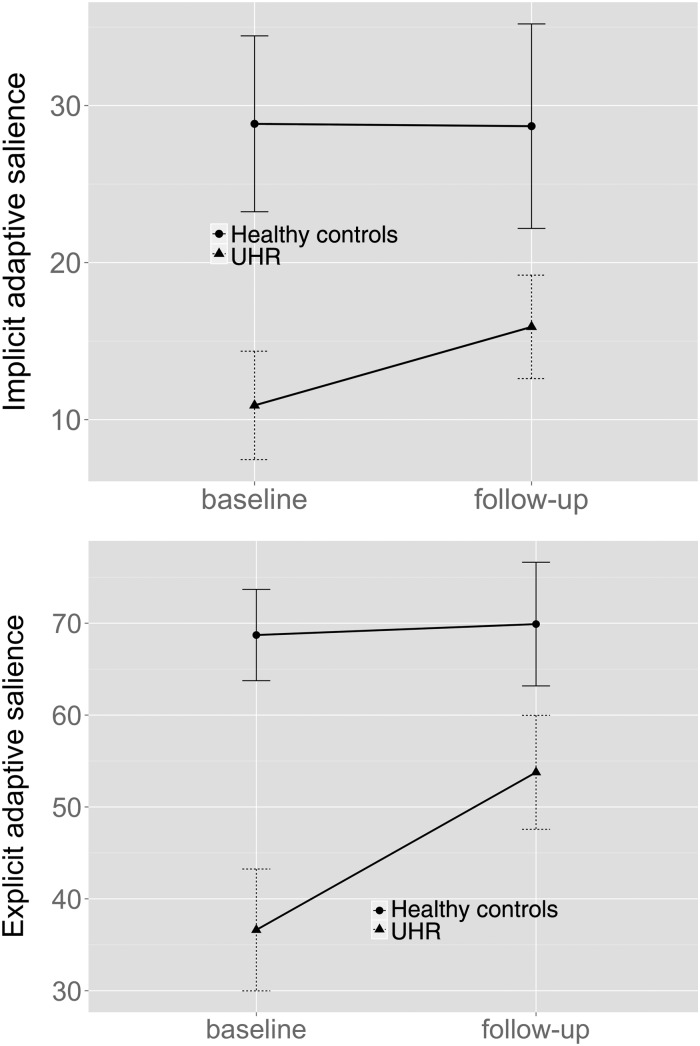
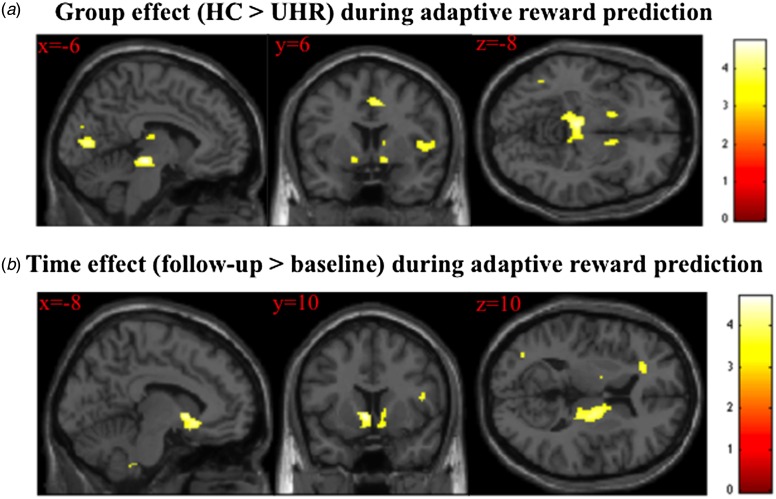
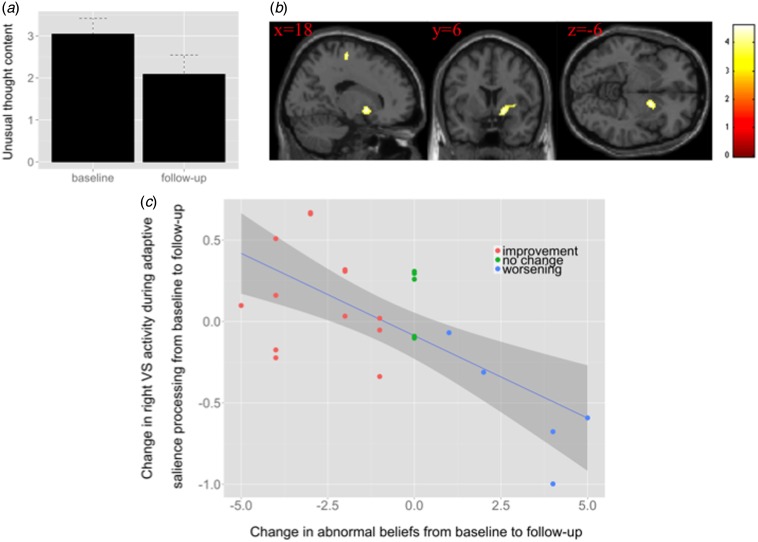
BACKGROUND: Impairments in the attribution of salience are thought to be fundamental to the development of psychotic symptoms and the onset of psychotic disorders. The aim of the present study was to explore longitudinal alterations in salience processing in ultra-high-risk subjects for psychosis. METHOD: A total of 23 ultra-high-risk subjects and 13 healthy controls underwent functional magnetic resonance imaging at two time points (mean interval of 17 months) while performing the Salience Attribution Test to assess neural responses to task-relevant (adaptive salience) and task-irrelevant (aberrant salience) stimulus features. RESULTS: At presentation, high-risk subjects were less likely than controls to attribute salience to relevant features, and more likely to attribute salience to irrelevant stimulus features. These behavioural differences were no longer evident at follow-up. When attributing salience to relevant cue features, ultra-high-risk subjects showed less activation than controls in the ventral striatum at both baseline and follow-up. Within the high-risk sample, amelioration of abnormal beliefs over the follow-up period was correlated with an increase in right ventral striatum activation during the attribution of salience to relevant cue features. CONCLUSIONS: These findings confirm that salience processing is perturbed in ultra-high-risk subjects for psychosis, that this is linked to alterations in ventral striatum function, and that clinical outcomes are related to longitudinal changes in ventral striatum function during salience processing.
Overview
The claims and statistics of this paper haven’t been checked yet.
Free: it reads the open-access text and checks the first 5 claims that cite a source we can check. Create a free account to check every claim.
Integrity signals
Registry
Cites
Statistics
Figures
Verification
Claims the paper makes
The claims and statistics of this paper haven’t been checked yet.
Free: it reads the open-access text and checks the first 5 claims that cite a source we can check. Create a free account to check every claim.
Claims other papers make about this one
Each is checked against this paper’s own text: does it say what the citing paper says it does?
The source backs part of the claim, not all of it — or backs it for a different population, condition or comparison.
In the citing paper
“Overall, the tendency is for CHR to show increased explicit (but not implicit, such as that measured with reaction time) aberrant salience compared to controls (80, 82).”
From Aberrant Salience, Information Processing, and Dopaminergic Signaling in People at Clinical High Risk for Psychosis (2020) · cites this paper as [80]
Experimental — accuracy not yet measuredThe source backs part of the claim, not all of it — or backs it for a different population, condition or comparison.
In the citing paper
“CHR subjects rate irrelevant cues as more relevant than HC do (80, 82),”
From Aberrant Salience, Information Processing, and Dopaminergic Signaling in People at Clinical High Risk for Psychosis (2020) · cites this paper as [80]
Experimental — accuracy not yet measuredThe cited source says what the claim attributes to it.
In the citing paper
“Taken together, this evidence indicates altered salience processing (80-83), reward anticipation (7577) and PE-signalling (78, 79) in CHR relative to HC.”
From Aberrant Salience, Information Processing, and Dopaminergic Signaling in People at Clinical High Risk for Psychosis (2020) · cites this paper as [80]
The cited source says what the claim attributes to it.
In the citing paper
“and VS activation to adaptive salience is decreased in CHR compared to HC (80).”
From Aberrant Salience, Information Processing, and Dopaminergic Signaling in People at Clinical High Risk for Psychosis (2020) · cites this paper as [80]
The cited source says what the claim attributes to it.
In the citing paper
“and at follow-up increased VS activation during adaptive salience correlates with a reduction of abnormal beliefs (80).”
From Aberrant Salience, Information Processing, and Dopaminergic Signaling in People at Clinical High Risk for Psychosis (2020) · cites this paper as [80]
2 more claims about this paper
Create a free account to see every claim other papers make about this one.
Self-check
Percentages, sums and reported differences re-computed from the paper’s own numbers.
The self-check needs the paper’s full text.
Citations
Cites
(1998) · The Journal of Clinical Psychiatry · Cited by 19,139
(1998) · PubMed · Cited by 10,216
A neural substrate of prediction and reward
Schultz, W., Dayan, P., & Montague, P. R. (1997) · Science · doi:10.1126/science.275.5306.1593 · Cited by 9,388 · cited 1×
“Experiments in animals suggest that stimuli become motivationally salient when the release of dopamine in the striatum coincides with their perception (Schultz et al. 1997; Kapur, 2003).”
BackgroundDissociable intrinsic connectivity networks for salience processing and executive control
Seeley, W. W., Menon, V., Schatzberg, A. F., Keller, J., Glover, G. H., Kenna, H., Reiss, A. L., & Greicius, M. D. (2007) · The Journal of Neuroscience · doi:10.1523/jneurosci.5587-06.2007 · Cited by 7,426 · cited 2×
“Together with the striatum, integration of these regions is important to sustain emotion and cognition, especially during the detection and processing of salient information (Seeley et al. 2007; Menon & Uddin, 2010).”
BackgroundSaliency, switching, attention and control: a network model of insula function
Menon, V., & Uddin, L. Q. (2010) · Brain Structure and Function · doi:10.1007/s00429-010-0262-0 · Cited by 5,592 · cited 2×
“Relationship between longitudinal changes in clinical features and brain activation”
BackgroundKapur, S. (2003) · American Journal of Psychiatry · doi:10.1176/appi.ajp.160.1.13 · Cited by 2,813 · cited 7×
“Furthermore, in accordance with the aberrant salience model (Kapur, 2003), the SAT has been designed to measure abnormal motivational (reward) salience processing in psychosis and its relation to dopamine dysregulation in the VS.”
BackgroundInfluentialThe Dopamine Hypothesis of Schizophrenia: Version III--The Final Common Pathway
Howes, O. D., & Kapur, S. (2009) · Schizophrenia Bulletin · doi:10.1093/schbul/sbp006 · Cited by 2,693 · cited 2×
“…schizophrenia (Reith et al. 1994; Laruelle et al. 1996; Breier et al. 1997; Laruelle et al. 1999; Abi-Dargham et al. 2000; Kumakura et al. 2007; Howes & Kapur, 2009; Howes et al. 2012) and UHR subjects (Howes et al. 2009b, 2011a, b; Egerton et al. 2013; Mizrahi et al. 2014) and the aberrant…”
BackgroundSelf-citationMapping the Onset of Psychosis: The Comprehensive Assessment of At-Risk Mental States
Yung, A. R., Yung, A. R., Pan Yuen, H., Mcgorry, P. D., Phillips, L. J., Kelly, D., Dell'olio, M., Francey, S. M., Cosgrave, E. M., Killackey, E., et al. (2005) · Australian & New Zealand Journal of Psychiatry · doi:10.1080/j.1440-1614.2005.01714.x · Cited by 2,196
The Psychosis High-Risk State: A Comprehensive State-of-the-Art Review
Fusar-Poli, P., Borgwardt, S., Bechdolf, A., Addington, J., Riecher-Rössler, A., Schultze-Lutter, F., Keshavan, M., Wood, S., Ruhrmann, S., Seidman, L. J., et al. (2013) · JAMA Psychiatry · doi:10.1001/jamapsychiatry.2013.269 · Cited by 1,483
Self-citationThe primate basal ganglia: Parallel and integrative networks
Haber, S. N. (2003) · Journal of Chemical Neuroanatomy · doi:10.1016/j.jchemneu.2003.10.003 · Cited by 1,479 · cited 2×
“…be that hyperactive inputs from the hippocampus to the VS in psychosis may have an impact on dopaminergic neurons that project to more dorsal (associative) striatal areas and thereby affect dorsal striatum-related salience processing (Haber, 2003; Lodge & Grace, 2011, 2012; Modinos et al. 2015).”
BackgroundLaruelle, M., Abi-Dargham, A., van Dyck, C. H., Gil, R., D'Souza, C. D., Erdos, J., McCance, E., Rosenblatt, W., Fingado, C., Zoghbi, S. S., et al. (1996) · Proceedings of the National Academy of Sciences · doi:10.1073/pnas.93.17.9235 · Cited by 1,291 · cited 1×
“Dopamine function in the striatum is abnormally elevated in both schizophrenia (Reith et al. 1994; Laruelle et al. 1996; Breier et al. 1997; Laruelle et al. 1999; Abi-Dargham et al. 2000; Kumakura et al. 2007; Howes & Kapur, 2009; Howes et al. 2012) and UHR subjects (Howes et al. 2009b, 2011a, b;…”
BackgroundCluster-extent based thresholding in fMRI analyses: Pitfalls and recommendations
Woo, C.-W., Krishnan, A., & Wager, T. D. (2014) · NeuroImage · doi:10.1016/j.neuroimage.2013.12.058 · Cited by 1,253 · cited 2×
“001 (Petersson et al. 1999; Woo et al. 2014) with an extent threshold of 20 voxels.”
BackgroundMethodInfluentialBreier, A., Su, T.-P., Saunders, R., Carson, R. E., Kolachana, B. S., de Bartolomeis, A., Weinberger, D. R., Weisenfeld, N., Malhotra, A. K., Eckelman, W. C., et al. (1997) · Proceedings of the National Academy of Sciences · doi:10.1073/pnas.94.6.2569 · Cited by 1,154 · cited 1×
“Dopamine function in the striatum is abnormally elevated in both schizophrenia (Reith et al. 1994; Laruelle et al. 1996; Breier et al. 1997; Laruelle et al. 1999; Abi-Dargham et al. 2000; Kumakura et al. 2007; Howes & Kapur, 2009; Howes et al. 2012) and UHR subjects (Howes et al. 2009b, 2011a, b;…”
BackgroundIncreased baseline occupancy of D 2 receptors by dopamine in schizophrenia
Abi-Dargham, A., Rodenhiser, J., Printz, D., Zea-Ponce, Y., Gil, R., Kegeles, L. S., Weiss, R., Cooper, T. B., Mann, J. J., Van Heertum, R. L., et al. (2000) · Proceedings of the National Academy of Sciences · doi:10.1073/pnas.97.14.8104 · Cited by 1,020
Howes, O. D., Kambeitz, J., Kim, E., Stahl, D., Slifstein, M., Abi-Dargham, A., & Kapur, S. (2012) · Archives of General Psychiatry · doi:10.1001/archgenpsychiatry.2012.169 · Cited by 967 · cited 2×
“Dopamine function in the striatum is abnormally elevated in both schizophrenia (Reith et al. 1994; Laruelle et al. 1996; Breier et al. 1997; Laruelle et al. 1999; Abi-Dargham et al. 2000; Kumakura et al. 2007; Howes & Kapur, 2009; Howes et al. 2012) and UHR subjects (Howes et al.”
BackgroundSelf-citationSchizophrenia: an integrated sociodevelopmental-cognitive model
Howes, O. D., & Murray, R. M. (2014) · The Lancet · doi:10.1016/s0140-6736(13)62036-x · Cited by 864 · cited 3×
“It has been proposed that the link between aberrant salience and symptoms is moderated by cognitive biases (Howes & Murray, 2014), which may account for the lack of direct relationship between aberrant salience and symptom change in our data.”
Self-citationElevated Striatal Dopamine Function Linked to Prodromal Signs of Schizophrenia
Howes, O. D., Montgomery, A. J., Asselin, M.-C., Murray, R. M., Valli, I., Tabraham, P., Bramon-Bosch, E., Valmaggia, L., Johns, L., Broome, M., et al. (2009) · Archives of General Psychiatry · doi:10.1001/archgenpsychiatry.2008.514 · Cited by 744 · cited 2×
“Winton-Brown et al. 2014) the normal phasic dopaminergic response to relevant stimuli may become relatively diminished due to the high level of noise in the system (Heinz, 2002; Kapur, 2003; Howes et al. 2009a).”
BackgroundSelf-citationIncreased dopamine transmission in schizophrenia: relationship to illness phases
Laruelle, M., Abi-Dargham, A., Gil, R., Kegeles, L., & Innis, R. (1999) · Biological Psychiatry · doi:10.1016/s0006-3223(99)00067-0 · Cited by 715 · cited 2×
“Dopamine function in the striatum is abnormally elevated in both schizophrenia (Reith et al. 1994; Laruelle et al. 1996; Breier et al. 1997; Laruelle et al. 1999; Abi-Dargham et al. 2000; Kumakura et al. 2007; Howes & Kapur, 2009; Howes et al. 2012) and UHR subjects (Howes et al.”
BackgroundCognitive Functioning in Prodromal Psychosis: A Meta-analysis
Fusar-Poli, P., Deste, G., Smieskova, R., Barlati, S., Yung, A. R., Howes, O., Stieglitz, R.-D., Vita, A., McGuire, P., & Borgwardt, S. (2012) · Archives of General Psychiatry · doi:10.1001/archgenpsychiatry.2011.1592 · Cited by 691
Self-citationDopaminergic modulation of limbic and cortical drive of nucleus accumbens in goal-directed behavior
Goto, Y., & Grace, A. A. (2005) · Nature Neuroscience · doi:10.1038/nn1471 · Cited by 576 · cited 2×
“Longitudinal alterations in motivational salience processing in ultra-high-risk subjects for psychosis”
BackgroundPalaniyappan, L., & Liddle, P. F. (2012) · Journal of Psychiatry and Neuroscience · doi:10.1503/jpn.100176 · Cited by 548 · cited 1×
“Dysfunction of this network and abnormal network switching when dealing with a relevant task at hand has been proposed to underlie the formation of psychotic symptoms (Palaniyappan & Liddle, 2012;Palaniyappan et al.2013; Schmidt et al.2016).”
BackgroundSubstantia nigra/ventral tegmental reward prediction error disruption in psychosis
Murray, G. K., Corlett, P. R., Clark, L., Pessiglione, M., Blackwell, A. D., Honey, G., Jones, P. B., Bullmore, E. T., Robbins, T. W., & Fletcher, P. C. (2008) · Molecular Psychiatry · doi:10.1038/sj.mp.4002058 · Cited by 532
Expected value and prediction error abnormalities in depression and schizophrenia
Gradin, V. B., Kumar, P., Waiter, G., Ahearn, T., Stickle, C., Milders, M., Reid, I., Hall, J., & Steele, J. D. (2011) · Brain · doi:10.1093/brain/awr059 · Cited by 485
Dopaminergic dysfunction in schizophrenia: Salience attribution revisited
Heinz, A., & Schlagenhauf, F. (2010) · Schizophrenia Bulletin · doi:10.1093/schbul/sbq031 · Cited by 412 · cited 1×
“…Howes & Kapur, 2009; Howes et al. 2012) and UHR subjects (Howes et al. 2009b, 2011a, b; Egerton et al. 2013; Mizrahi et al. 2014) and the aberrant salience hypothesis proposes that this causes attribution of salience to irrelevant stimuli (Heinz & Schlagenhauf, 2010; Winton-Brown et al. 2014).”
BackgroundHippocampal dysregulation of dopamine system function and the pathophysiology of schizophrenia
Lodge, D. J., & Grace, A. A. (2011) · Trends in Pharmacological Sciences · doi:10.1016/j.tips.2011.05.001 · Cited by 349 · cited 2×
“…be that hyperactive inputs from the hippocampus to the VS in psychosis may have an impact on dopaminergic neurons that project to more dorsal (associative) striatal areas and thereby affect dorsal striatum-related salience processing (Haber, 2003; Lodge & Grace, 2011, 2012; Modinos et al. 2015).”
BackgroundDopamine Synthesis Capacity Before Onset of Psychosis: A Prospective [ 18 F]-DOPA PET Imaging Study
Howes, O. D., Bose, S. K., Turkheimer, F., Valli, I., Egerton, A., Valmaggia, L. R., Murray, R. M., & McGuire, P. (2011) · American Journal of Psychiatry · doi:10.1176/appi.ajp.2011.11010160 · Cited by 343
Self-citationElevated dopa decarboxylase activity in living brain of patients with psychosis
Reith, J., Benkelfat, C., Sherwin, A., Yasuhara, Y., Kuwabara, H., Andermann, F., Bachneff, S., Cumming, P., Diksic, M., & Dyve, S. E. (1994) · Proceedings of the National Academy of Sciences · doi:10.1073/pnas.91.24.11651 · Cited by 342
Ventral Striatal Activation During Reward Processing in Psychosis: A Neurofunctional Meta-Analysis
Radua, J., Schmidt, A., Borgwardt, S., Heinz, A., Schlagenhauf, F., McGuire, P., & Fusar-Poli, P. (2015) · JAMA Psychiatry · doi:10.1001/jamapsychiatry.2015.2196 · Cited by 342 · cited 5×
“…suggested that reduced VS responses occur in patients with schizophrenia spectrum disorders relative to controls during the processing of contextually relevant information and that left VS hypoactivation was more severe in patients with high scores of negative symptoms (Radua et al. 2015).”
BackgroundResultInfluentialNeural Primacy of the Salience Processing System in Schizophrenia
Palaniyappan, L., Simmonite, M., White, T. P., Liddle, E. B., & Liddle, P. F. (2013) · Neuron · doi:10.1016/j.neuron.2013.06.027 · Cited by 297
Howes, O., Bose, S., Turkheimer, F., Valli, I., Egerton, A., Stahl, D., Valmaggia, L., Allen, P., Murray, R., & McGuire, P. (2011) · Molecular Psychiatry · doi:10.1038/mp.2011.20 · Cited by 292 · cited 3×
“Taken with longitudinal positron emission tomography imaging findings that changes in dopamine synthesis capacity in the dorsal (associative) striatum are associated with change in clinical state (Howes et al. 2011a), our findings suggest that alterations in both the VS and dorsal striatum are linked to symptom change.”
BackgroundResultSelf-citationHeinz, A. (2002) · European Psychiatry · doi:10.1016/s0924-9338(02)00628-4 · Cited by 270 · cited 5×
“Winton-Brown et al. 2014) the normal phasic dopaminergic response to relevant stimuli may become relatively diminished due to the high level of noise in the system (Heinz, 2002; Kapur, 2003; Howes et al. 2009a).”
BackgroundInfluentialDo patients with schizophrenia exhibit aberrant salience?
Roiser, J. P., Stephan, K. E., den Ouden, H. E. M., Barnes, T. R. E., Friston, K. J., & Joyce, E. M. (2009) · Psychological Medicine · doi:10.1017/s0033291708003863 · Cited by 262 · cited 4×
“2016), and that patients with prominent delusions rate irrelevant stimuli as more potentially rewarding than patients without delusions (Roiser et al. 2009).”
BackgroundMethodInfluentialEgerton, A., Chaddock, C. A., Winton-Brown, T. T., Bloomfield, M. A. P., Bhattacharyya, S., Allen, P., McGuire, P. K., & Howes, O. D. (2013) · Biological Psychiatry · doi:10.1016/j.biopsych.2012.11.017 · Cited by 253 · cited 1×
“…et al. 1999; Abi-Dargham et al. 2000; Kumakura et al. 2007; Howes & Kapur, 2009; Howes et al. 2012) and UHR subjects (Howes et al. 2009b, 2011a, b; Egerton et al. 2013; Mizrahi et al. 2014) and the aberrant salience hypothesis proposes that this causes attribution of salience to irrelevant…”
BackgroundSelf-citationHowes, O., Egerton, A., Allan, V., McGuire, P., Stokes, P., & Kapur, S. (2009) · Current Pharmaceutical Design · doi:10.2174/138161209788957528 · Cited by 239
Dopaminergic basis of salience dysregulation in psychosis
Winton-Brown, T. T., Fusar-Poli, P., Ungless, M. A., & Howes, O. D. (2014) · Trends in Neurosciences · doi:10.1016/j.tins.2013.11.003 · Cited by 231
Self-citationNeural correlates of reward processing in schizophrenia — Relationship to apathy and depression
Simon, J. J., Biller, A., Walther, S., Roesch-Ely, D., Stippich, C., Weisbrod, M., & Kaiser, S. (2010) · Schizophrenia Research · doi:10.1016/j.schres.2009.11.007 · Cited by 221 · cited 2×
“…between VS activation during reward prediction and positive symptoms requires further investigation because only six studies were available (Simon et al. 2010; Esslinger et al. 2012; Nielsen et al. 2012a; Roiser et al. 2013; Wotruba et al. 2014; de Leeuw et al. 2015) and there was residual…”
BackgroundAlterations of the Brain Reward System in Antipsychotic Naïve Schizophrenia Patients
Nielsen, M. Ø., Rostrup, E., Wulff, S., Bak, N., Lublin, H., Kapur, S., & Glenthøj, B. (2012) · Biological Psychiatry · doi:10.1016/j.biopsych.2012.02.007 · Cited by 210 · cited 3×
“Interestingly, individual treatment with antipsychotics was associated with a normalization of VS activation during reward prediction, and this improvement was associated with the improvement of positive symptoms (Nielsen et al. 2012b).”
BackgroundNeural and Behavioral Correlates of Aberrant Salience in Individuals at Risk for Psychosis
Roiser, J. P., Howes, O. D., Chaddock, C. A., Joyce, E. M., & McGuire, P. (2013) · Schizophrenia Bulletin · doi:10.1093/schbul/sbs147 · Cited by 205 · cited 14×
“The VS region of interest was defined using coordinates taken from a previous SAT fMRI study in an independent UHR cohort (Roiser et al. 2013): right (x = 12; y = 12; z =−3) and left (x =−12; y = 9; z =−3).”
BackgroundMethodResultInfluentialSelf-citationFusar-Poli, P., Byrne, M., Badger, S., Valmaggia, L. R., & McGuire, P. K. (2013) · European Psychiatry · doi:10.1016/j.eurpsy.2012.08.002 · Cited by 197 · cited 1×
“However, the SAT is a complex task that also involves sustained attention, maintaining stimulus information in memory, decision-making and response selection (Roiser et al. 2013), and the UHR state is associated with a broad range of cognitive impairments (Fusar-Poli et al. 2012).”
BackgroundStatistical limitations in functional neuroimaging II. Signal detection and statistical inference
Petersson, K. M., Nichols, T. E., Poline, J.-B., & Holmes, A. P. (1999) · Philosophical Transactions of the Royal Society of London. Series B: Biological Sciences · doi:10.1098/rstb.1999.0478 · Cited by 186 · cited 1×
“Significance was assessed at a cluster-level threshold of p < 0.05 family-wise error (FWE) corrected across the whole brain, using an uncorrected cluster-forming threshold of p < 0.001 (Petersson et al. 1999; Woo et al. 2014) with an extent threshold of 20 voxels.”
MethodInfluentialTranslating the MAM model of psychosis to humans
Modinos, G., Allen, P., Grace, A. A., & McGuire, P. (2015) · Trends in Neurosciences · doi:10.1016/j.tins.2014.12.005 · Cited by 165 · cited 2×
“…be that hyperactive inputs from the hippocampus to the VS in psychosis may have an impact on dopaminergic neurons that project to more dorsal (associative) striatal areas and thereby affect dorsal striatum-related salience processing (Haber, 2003; Lodge & Grace, 2011, 2012; Modinos et al. 2015).”
BackgroundSelf-citationKumakura, Y., Cumming, P., Vernaleken, I., Buchholz, H.-G., Siessmeier, T., Heinz, A., Kienast, T., Bartenstein, P., & Gründer, G. (2007) · The Journal of Neuroscience · doi:10.1523/jneurosci.0805-07.2007 · Cited by 159 · cited 1×
“…elevated in both schizophrenia (Reith et al. 1994; Laruelle et al. 1996; Breier et al. 1997; Laruelle et al. 1999; Abi-Dargham et al. 2000; Kumakura et al. 2007; Howes & Kapur, 2009; Howes et al. 2012) and UHR subjects (Howes et al. 2009b, 2011a, b; Egerton et al. 2013; Mizrahi et al.…”
BackgroundImprovement of Brain Reward Abnormalities by Antipsychotic Monotherapy in Schizophrenia
Nielsen, M. O., Rostrup, E., Wulff, S., Bak, N., Broberg, B. V., Lublin, H., Kapur, S., & Glenthoj, B. (2012) · Archives of General Psychiatry · doi:10.1001/archgenpsychiatry.2012.847 · Cited by 151
Esslinger, C., Englisch, S., Inta, D., Rausch, F., Schirmbeck, F. N., Mier, D. U., Kirsch, P., Meyer‐Lindenberg, A., & Zink, M. (2012) · Schizophrenia Research · doi:10.1016/j.schres.2012.06.025 · Cited by 120
Mizrahi, R., Kenk, M., Suridjan, I., Boileau, I., George, T. P., McKenzie, K., Wilson, A. A., Houle, S., & Rusjan, P. (2014) · Neuropsychopharmacology · doi:10.1038/npp.2013.347 · Cited by 101
Aberrant Salience Is Related to Dysfunctional Self-Referential Processing in Psychosis
Pankow, A., Katthagen, T., Diner, S., Deserno, L., Boehme, R., Kathmann, N., Gleich, T., Gaebler, M., Walter, H., Heinz, A., et al. (2015) · Schizophrenia Bulletin · doi:10.1093/schbul/sbv098 · Cited by 86
de Leeuw, M., Kahn, R. S., & Vink, M. (2015) · Schizophrenia Bulletin · doi:10.1093/schbul/sbu153 · Cited by 83
Fusar-Poli, P., Frascarelli, M., Valmaggia, L., Byrne, M., Stahl, D., Rocchetti, M., Codjoe, L., Weinberg, L., Tognin, S., Xenaki, L., et al. (2015) · Psychological Medicine · doi:10.1017/s003329171400244x · Cited by 73 · cited 1×
“The specific treatments offered by OASIS have been detailed elsewhere (Fusar-Poli et al. 2015).”
BackgroundSelf-citationWotruba, D., Heekeren, K., Michels, L., Buechler, R., Simon, J. J., Theodoridou, A., Kollias, S., Rössler, W., & Kaiser, S. (2014) · Frontiers in Behavioral Neuroscience · doi:10.3389/fnbeh.2014.00382 · Cited by 61
Modulation of motivational salience processing during the early stages of psychosis
Smieskova, R., Roiser, J. P., Chaddock, C. A., Schmidt, A., Harrisberger, F., Bendfeldt, K., Simon, A., Walter, A., Fusar-Poli, P., McGuire, P. K., et al. (2015) · Schizophrenia Research · doi:10.1016/j.schres.2015.04.036 · Cited by 56 · cited 4×
“…with this interpretation, a recent study found that adaptive salience processing was numerically (though not significantly) impaired in first-episode psychosis patients, but this impairment was if anything less marked in antipsychotic-treated than untreated patients (Smieskova et al. 2015).”
BackgroundInfluentialSelf-citationLodge, D. J., & Grace, A. A. (2012) · The International Journal of Neuropsychopharmacology · doi:10.1017/s1461145711000113 · Cited by 53 · cited 1×
“…be that hyperactive inputs from the hippocampus to the VS in psychosis may have an impact on dopaminergic neurons that project to more dorsal (associative) striatal areas and thereby affect dorsal striatum-related salience processing (Haber, 2003; Lodge & Grace, 2011, 2012; Modinos et al. 2015).”
BackgroundBoehme, R., Deserno, L., Gleich, T., Katthagen, T., Pankow, A., Behr, J., Buchert, R., Roiser, J. P., Heinz, A., & Schlagenhauf, F. (2015) · Journal of Neuroscience · doi:10.1523/jneurosci.0805-15.2015 · Cited by 52 · cited 1×
“In healthy individuals, aberrant salience measures are positively associated with ventral striatal (VS) presynaptic dopamine levels (Boehme et al., 2015).”
BackgroundAdaptive and aberrant reward prediction signals in the human brain
Roiser, J. P., Stephan, K. E., den Ouden, H. E. M., Friston, K. J., & Joyce, E. M. (2010) · NeuroImage · doi:10.1016/j.neuroimage.2009.11.075 · Cited by 52 · cited 1×
“Dysfunction of this network and abnormal network switching when dealing with a relevant task at hand has been proposed to underlie the formation of psychotic symptoms (Palaniyappan & Liddle, 2012;Palaniyappan et al.2013; Schmidt et al.2016).”
BackgroundDysfunctional insular connectivity during reward prediction in patients with first-episode psychosis
Schmidt, A., Palaniyappan, L. K., Smieskova, R., Simon, A. E., Riecher‐Rössler, A., Lang, U. E., Fusar‐Poli, P., McGuire, P. K., & Borgwardt, S. (2016) · Journal of Psychiatry and Neuroscience · doi:10.1503/jpn.150234 · Cited by 44 · cited 1×
“Dysfunction of this network and abnormal network switching when dealing with a relevant task at hand has been proposed to underlie the formation of psychotic symptoms (Palaniyappan & Liddle, 2012;Palaniyappan et al.2013; Schmidt et al.2016).”
BackgroundCeaser, A. E., & Barch, D. M. (2016) · Frontiers in Human Neuroscience · doi:10.3389/fnhum.2015.00687 · Cited by 30 · cited 1×
“With respect to contextually irrelevant information, it has been shown that striatal activation during incorrect distracter trials was positively correlated with aberrant salience symptoms in schizophrenia patients (Ceaser & Barch, 2015).”
Background
Research works printed but not linked: 1
- American Psychiatric Association (2013). Diagnostic and Statistical Manual of Mental Disorders: DSM-5. American Psychiatric Association: Washington, DC.
Cited by
Howes, O. D., Hird, E. J., Adams, R. A., Corlett, P. R., & McGuire, P. (2020) · Biological Psychiatry · doi:10.1016/j.biopsych.2020.03.012 · Cited by 110
“7 (but not implicit, such as that measured with react ion time) aberrant salience compared to controls (80, 82).”
BackgroundResultInfluentialACEs and mental health outcomes
Sheffler, J., Stanley, I. H., & Sachs‐Ericsson, N. (2020) · Elsevier eBooks · doi:10.1016/b978-0-12-816065-7.00004-5 · Cited by 165
Fabro, L. D., Schmidt, A., Fortea, L., Delvecchio, G., D’Agostino, A., Raduà, J., Borgwardt, S., & Brambilla, P. (2021) · Neuroscience & Biobehavioral Reviews · doi:10.1016/j.neubiorev.2021.06.020 · Cited by 86
Wilson, R., Bossong, M. G., Appiah-Kusi, E., Petros, N., Brammer, M., Perez, J., Allen, P., McGuire, P., & Bhattacharyya, S. (2019) · Translational Psychiatry · doi:10.1038/s41398-019-0534-2 · Cited by 63
Gawęda, Ł., Göritz, A. S., & Moritz, S. (2019) · Schizophrenia Research · doi:10.1016/j.schres.2018.11.034 · Cited by 52
Metadata
- Authors
- Schmidt, A., Antoniades, M., Allen, P., Egerton, A., Chaddock, C. A., Borgwardt, S., Fusar-Poli, P., Roiser, J. P., Howes, O., & McGuire, P.
- Affiliations
- King's College London (GB)
- University College London (GB)
- Corresponding author
- Schmidt, A.
- Venue
- Psychological Medicine
- Publisher
- Cambridge University Press (CUP)
- Published
- 2016-10-04
- Volume
- 47
- Issue
- 2
- Pages
- 243-254
- ISSN
- 0033-2917 (ISSN-L)
- 1469-8978
- PMC
- PMC5216461
- OpenAlex
- W2529411077
- Cited by
- 38
- References
- 56
- Citations by year
- 2025: 3 · 2024: 4 · 2023: 2 · 2022: 5 · 2021: 4 · 2020: 9 · 2019: 6 · 2018: 5
- FWCI
- 3.26
- Type
- journal article
- Language
- en
- Open access
- hybrid
- doi.org
- Locations
- Psychological Medicine (publishedVersion, cc-by)
- Europe PMC (PubMed Central) (publishedVersion, cc-by)
- PubMed Central (publishedVersion, cc-by)
- PubMed (publishedVersion)
- edoc (University of Basel) (acceptedVersion, other-oa)
- UCL Discovery (University College London) (submittedVersion)
- Research Portal (King's College London) (submittedVersion, cc-by)
- edoc (University of Basel)
- Funders
- National Science Foundation
- Eli Lilly and Company
- Sunovion
- Schweizerischer Nationalfonds zur Förderung der Wissenschaftlichen Forschung
- Servier
- H. Lundbeck A/S
- Medical Research Council (G0700995)
- Topics
- Health Sciences › Medicine › Psychiatry and Mental health › Schizophrenia research and treatment
- Life Sciences › Neuroscience › Cognitive Neuroscience › Neural and Behavioral Psychology Studies
- Social Sciences › Psychology › Clinical Psychology › Psychopathy, Forensic Psychiatry, Sexual Offending
- Keywords
- clinical high risk for psychosis, motivational salience, salience attribution, ventral striatum, aberrant salience, longitudinal change, transition to psychosis
- MeSH terms
- Adolescent, Adult, Female, Follow-Up Studies, Humans, Magnetic Resonance Imaging, Male, Motivation, Psychomotor Performance, Psychotic Disorders, Reward, Risk, Visual Perception, Young Adult, Ventral Striatum
About these checks
Registry, retraction, Cites and statistics results are computed, not judged, with one exception: a printed reference that no index lists is read once by a model before it counts as a citation error. Claims are extracted by a model and kept only when their quote appears verbatim in the text; each cited source is then checked, with a model’s help, for whether it says what the claim relies on. Those verdicts can be wrong — read the claim’s quote and the cited source before relying on one.
Statistics and arithmetic are recomputed, not judged.
Confidence bands are shown only for fields calibrated on our annotated test set. None is calibrated yet, so no band is shown.
What counts as a claim ›How we measure confidence ›How we check this ›
Are you an author, or do you see a problem with this page? Request a review
Data sources
Bibliographic data: Semantic Scholar, OpenAlex, Crossref.
Contains information from the Semantic Scholar Academic Graph Datasets, made available under the ODC Attribution License (ODC-BY 1.0).
Semantic Scholar’s data is described in: Kinney, R., et al. (2023). The Semantic Scholar Open Data Platform. arXiv:2301.10140.
