

The DOI matches its Crossref record; 104 of the 104 references it cites were found in a registry or an index.
What is mood? A computational perspective
Open accessAbstract
The neurobiological understanding of mood, and by extension mood disorders, remains elusive despite decades of research implicating several neuromodulator systems. This review considers a new approach based on existing theories of functional brain organisation. The free energy principle (a.k.a. active inference), and its instantiation in the Bayesian brain, offers a complete and simple formulation of mood. It has been proposed that emotions reflect the precision of - or certainty about - the predicted sensorimotor/interoceptive consequences of action. By extending this reasoning, in a hierarchical setting, we suggest mood states act as (hyper) priors over uncertainty (i.e. emotions). Here, we consider the same computational pathology in the proprioceptive and interoceptive (behavioural and autonomic) domain in order to furnish an explanation for mood disorders. This formulation reconciles several strands of research at multiple levels of enquiry.
Overview
The claims and statistics of this paper haven’t been checked yet.
Run the check — free, no account needed. It reads the open-access text and checks the sources it cites.
Integrity signals
Registry
Cites
Statistics
Figures
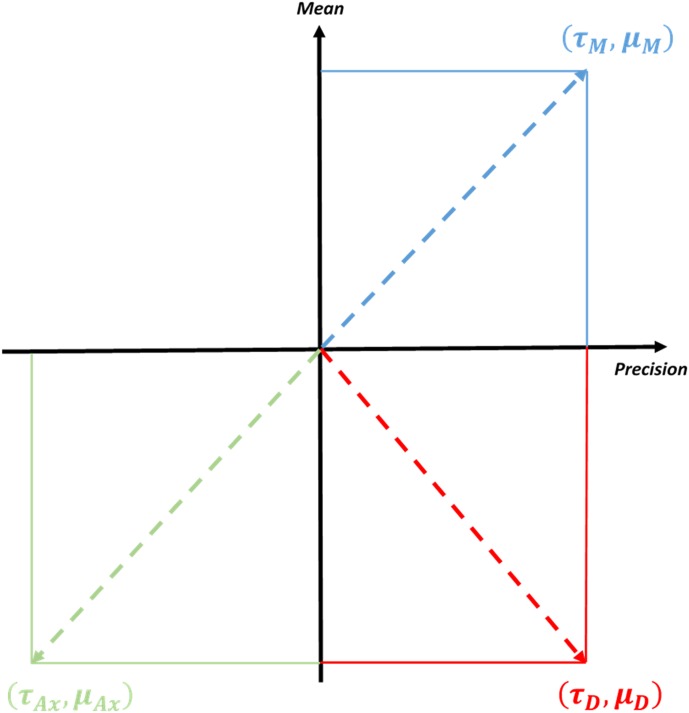
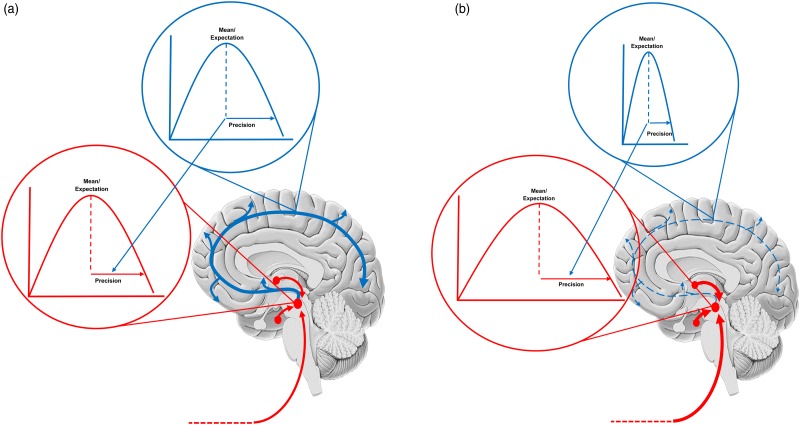
Verification
Claims the paper makes
The claims and statistics of this paper haven’t been checked yet.
Run the check — free, no account needed. It reads the open-access text and checks the sources it cites.
Claims other papers make about this one
Each is checked against this paper’s own text: does it say what the citing paper says it does?
The cited source says what the claim attributes to it.
In the citing paper
“High-level priors constraining more domain-general affective states such as mood (Clark et al. 2018) would also be relaxed under the REBUS model.”
From Consciousness in active inference: Deep self-models, other minds, and the challenge of psychedelic-induced ego-dissolution (2021) · cites this paper as Clark et al. 2018
Self-check
Percentages, sums and reported differences re-computed from the paper’s own numbers.
The self-check needs the paper’s full text.
Citations
Cites
Molecular Mechanisms of Depression: Perspectives on New Treatment Strategies
Lang, U. E., & Borgwardt, S. (2013) · Cellular Physiology and Biochemistry · doi:10.1159/000350094 · Cited by 8,525
The free-energy principle: a unified brain theory?
Friston, K. (2010) · Nature Reviews Neuroscience · doi:10.1038/nrn2787 · Cited by 8,120 · cited 2×
“However, modern accounts of brain function reject the classical notion of the brain as a passive organ in favour of theories of embodiment and self-organisation (Friston, 2010; Seth, 2013; Corlett & Fletcher, 2014).”
BackgroundHelplessness: On Depression, Development, and Death
Seligman, M. E. P. (1975) · CERN Document Server (European Organization for Nuclear Research) · Cited by 6,181
Epigenetic programming by maternal behavior
Weaver, I. C. G., Cervoni, N., Champagne, F. A., D'Alessio, A. C., Sharma, S., Seckl, J. R., Dymov, S., Szyf, M., & Meaney, M. J. (2004) · Nature Neuroscience · doi:10.1038/nn1276 · Cited by 6,177 · cited 2×
“However, they also showed that methylation rates rapidly declined in rodents who were maternally groomed and nurtured while rates remained elevated in neglected pups (Weaver et al. 2004).”
BackgroundResultStress, adaptation, and disease. Allostasis and allostatic load
McEWEN, B. S. (1998) · Annals of the New York Academy of Sciences · doi:10.1111/j.1749-6632.1998.tb09546.x · Cited by 5,092 · cited 1×
“This hierarchical minimisation of prediction errors allows allostatic control over homoeostatic reflexes (Sterling & Eyer, 1988; McEwen, 1998; Ramsay & Woods, 2014).”
BackgroundA Meta-Analysis of Cytokines in Major Depression
Dowlati, Y., Herrmann, N., Swardfager, W., Liu, H., Sham, L., Reim, E. K., & Lanctôt, K. L. (2010) · Biological Psychiatry · doi:10.1016/j.biopsych.2009.09.033 · Cited by 4,729 · cited 1×
“Mood disorders are heterogeneous and complex and depend upon the interplay of several neuromodulator systems and genetic and epigenetic factors (Hirschfeld, 2000; Holsboer, 2000; Nestler & Carlezon, 2006; Nutt et al. 2007; Dowlati et al. 2010; Möhler, 2012).”
BackgroundFriston, K. J., Harrison, L., & Penny, W. (2003) · NeuroImage · doi:10.1016/s1053-8119(03)00202-7 · Cited by 4,583
Requirement of hippocampal neurogenesis for the behavioral effects of antidepressants
Santarelli, L., Saxe, M., Gross, C., Surget, A., Battaglia, F., Dulawa, S., Weisstaub, N., Lee, J., Duman, R., Arancio, O., et al. (2003) · Science · doi:10.1126/science.1083328 · Cited by 4,321 · cited 1×
“Similarly, it has been argued that pharmacotherapy may work via its effects on neurogenesis and synaptic plasticity (Santarelli et al. 2003; Anacker et al. 2011; Castrén & Hen, 2013) and that stressors may leave an indelible scar on key neurobiological systems that disrupts their structure and/or…”
BackgroundHeim, C., & Nemeroff, C. B. (2001) · Biological Psychiatry · doi:10.1016/s0006-3223(01)01157-x · Cited by 2,791 · cited 1×
“In this regard, active inference may explain the established finding that childhood trauma poses a risk for various psychopathologies (Bernet & Stein, 1999; Heim & Nemeroff, 2001; Heim et al. 2008).”
BackgroundCanonical Microcircuits for Predictive Coding
Bastos, A. M., Usrey, W. M., Adams, R. A., Mangun, G. R., Fries, P., & Friston, K. J. (2012) · Neuron · doi:10.1016/j.neuron.2012.10.038 · Cited by 2,421 · cited 2×
“In current predictive coding formulations of the Bayesian brain, expectation and prediction error units are thought to occupy deep and superficial pyramidal layers of cortex, respectively (Friston & Kiebel, 2009; Bastos et al. 2012; Shipp et al. 2013); such that predictions generated, from expectations, at one level o…”
Background
Cited by
Sorted by citations
Items 101–200 of 204
Piloting the Update: The Use of Therapeutic Relationship for Change – A Free Energy Account
Hauke, G., & Lohr, C. (2022) · Frontiers in Psychology · doi:10.3389/fpsyg.2022.842488 · Cited by 9
Mood and implicit confidence independently fluctuate at different time scales
da Fonseca, M., Maffei, G., Moreno‐Bote, R., & Hyafil, A. (2022) · Cognitive Affective & Behavioral Neuroscience · doi:10.3758/s13415-022-01038-4 · Cited by 11
“Modern, holistic approaches have even demolished the frontiers between emotions and cognition by suggesting that affects form an integral part of the brain’s decision-making system (Barrett & Bliss-Moreau, 2009; Clark et al., 2018; Moors et al., 2021).”
BackgroundSpaeth, A. M., Koenig, S., Everaert, J., Glombiewski, J. A., & Κube, T. (2024) · Frontiers in Psychology · doi:10.3389/fpsyg.2024.1253045 · Cited by 8
Κube, T., & Rauch, L. (2024) · Behaviour Research and Therapy · doi:10.1016/j.brat.2024.104665 · Cited by 8
Cerveau bayésien : peut-on modéliser l’émotion ?
Bottemanne, H. (2020) · L Encéphale · doi:10.1016/j.encep.2020.04.022 · Cited by 8
Augmenting Human Selves Through Artificial Agents – Lessons From the Brain
Northoff, G., Fraser, M., Griffiths, J. D., Pinotsis, D. A., Panangaden, P., Moran, R., & Friston, K. J. (2022) · Frontiers in Computational Neuroscience · doi:10.3389/fncom.2022.892354 · Cited by 9
“In fact, the free energy principle has already been used as a powerful formalism for modeling and understanding diverse mental features, including consciousness and affect/emotion (Gu et al., 2013; Seth and Friston, 2016; Clark et al., 2018; Smith et al., 2019a,b).”
MethodDeane, G. (2022) · Artificial Life · doi:10.1162/artl_a_00368 · Cited by 9
“The most invariant affective responses like mood (Clark et al., 2018) drive behaviour on more abstract and temporally extended scales (like moving city or changing job), as well as act as a prior or constraint over behaviour, connecting the idea of “mood as momentum” (Eldar et al., 2016).”
BackgroundHow mood shapes belief updating bias in depression
Bottemanne, H., Frileux, S., Sévoz‐Couche, C., Pelloux, Y., Colle, R., & Corruble, E. (2025) · Cognitive Affective & Behavioral Neuroscience · doi:10.3758/s13415-025-01297-x · Cited by 8
“…extends beyond them by addressing how both positive and negative information is integrated into maladaptive priors—rigid and overly negative expectations—which influence not only the processing of reward but also the amplification of aversive stimuli (Clark et al., 2018; Hesp et al., 2020).”
InfluentialResilience phenotypes derived from an active inference account of allostasis
Harrison, L., Gracias, A. J., Friston, K. J., & Buckwalter, J. G. (2025) · Frontiers in Behavioral Neuroscience · doi:10.3389/fnbeh.2025.1524722 · Cited by 11
“Regarding sensory awareness, assigning high precision to prior beliefs reduces the impact of incoming sensory prediction error signals, and vice versa (Clark et al., 2018).”
The body intervenes: How active inference explains depression’s clinical presentation
Davey, C. G. (2025) · Neuroscience & Biobehavioral Reviews · doi:10.1016/j.neubiorev.2025.106229 · Cited by 12
“…of interoceptive predictions, incorporating the brain’s predictions for the body (and the expected precision of the predictions) into the future (Clark et al., 2018). r o When there is a change in model confidence our precision estimates are re-weighted, and our patterns of interoceptive…”
InfluentialPlayfulness and the meaningful life: an active inference perspective
Kiverstein, J. D., & Miller, M. M. (2023) · Neuroscience of Consciousness · doi:10.1093/nc/niad024 · Cited by 8
“They are certain of their own uncertainty about how to act in the world, which produces feelings of lack of control or helplessness (see Clark et al. 2018, Kiverstein et al. 2020).”
Lazarov, A., Liberman, N., & Dar, R. (2023) · Current Neuropharmacology · doi:10.2174/1570159x21666230920165403 · Cited by 6
“Predictive coding/active inference theories of the mind [111] and their application to psychopathology [112] have advanced a related view, according to which the AIC is the interface between interoceptive, bottom-up information, and top-down predictions of these states from high-order cortical…”
BackgroundZahn, R. (2025) · Journal of Affective Disorders · doi:10.1016/j.jad.2025.119423 · Cited by 8
Bottemanne, H., Chevance, A., & Joly, L. (2021) · L Encéphale · doi:10.1016/j.encep.2021.05.006 · Cited by 6
To be or not to be: The active inference of suicide
Krupnik, V., & Danilova, N. (2024) · Neuroscience & Biobehavioral Reviews · doi:10.1016/j.neubiorev.2023.105531 · Cited by 6
Nenadalová, J., & Řezníček, D. (2024) · Religion Brain & Behavior · doi:10.1080/2153599x.2024.2305460 · Cited by 7
“…measured directly, we operationalized uncertainty via its expected correlates: psychological (self-scaling) and physiological (changes in electrodermal activity, further EDA; for more about relation between emotions, interoception, and internal uncertainty see Clark et al., 2018; Gu et al., 2013).”
Yuk, K., Lim, J., & Moon, H. Y. (2024) · Mental health and physical activity · doi:10.1016/j.mhpa.2024.100626 · Cited by 5
Ivanova, M., Germanova, K., Petelin, D. S., Ragimova, A. A., Kopytin, G., Volel, B. A., Nikulin, V. V., & Ruiz, M. H. (2025) · Translational Psychiatry · doi:10.1038/s41398-025-03225-6 · Cited by 7
“See details in next section.”
Performance safety: conceptualising psychological safety when errors have consequences
Taylor, J. A., Gretton, T. W., & Sweeney, L. (2025) · Journal of Applied Sport Psychology · doi:10.1080/10413200.2025.2521261 · Cited by 7
“How we feel depends on the predicted consequences of error (Clark et al., 2018).”
Patel, S. D., Esteves, C. V., So, M. M., Dalgleish, T., & Hitchcock, C. (2022) · Cognition & Emotion · doi:10.1080/02699931.2022.2155622 · Cited by 5
Mourelatos, E. (2023) · Journal of Behavioral and Experimental Economics · doi:10.1016/j.socec.2023.102069 · Cited by 6
Mental Gravity: Depression as Spacetime Curvature of the Self, Mind, and Brain
Kent, L. (2023) · Entropy · doi:10.3390/e25091275 · Cited by 5
Neville, V., Mendl, M., Paul, E. S., Seriès, P., & Dayan, P. (2023) · Cognitive Affective & Behavioral Neuroscience · doi:10.3758/s13415-023-01137-w · Cited by 5
Understanding and explaining depression: From Karl Jaspers to Karl Friston
Davey, C. G. (2023) · Australian & New Zealand Journal of Psychiatry · doi:10.1177/00048674231219178 · Cited by 5
“Depression is said to arise when lower-level models reflect an increase in uncertainty, and higher-level models encode a certainty about that uncertainty (Clark et al., 2018).”
BackgroundA formal theory of mood instabilityPreprint
Zavlis, O., Bentall, R. P., Fonagy, P., & Rigoli, F. (2024) · OSF Preprints (OSF Preprints) · doi:10.31219/osf.io/rgv5m · Cited by 6
Harris, H. W. (2025) · Frontiers in Psychiatry · doi:10.3389/fpsyt.2025.1630858 · Cited by 8
“This state may serve an adaptive function — minimizing energy expenditure in anticipation of social futility, akin to a metabolic “ hibernation ” (46).”
Precision dynamics of predictive coding in functional neurological disorder
Lyndon, S. (2026) · Brain · doi:10.1093/brain/awag101 · Cited by 5
You are How You Eat: Foraging Behavior as a Potential Novel Marker of Rat Affective State
Neville, V., Finnegan, E. M., Paul, E. S., Davidson, M., Dayan, P., & Mendl, M. (2024) · Affective Science · doi:10.1007/s42761-024-00242-4 · Cited by 4
“…levels of uncertainty about the state of the environment or a reduced valuation of rewards, which have equally been associated with poorer moods (Clark et al., 2018; American Psychiatric Association, 2013), could lead to a reduction in how willing an individual is to persist in foraging at one…”
BackgroundYANAGISAWA, H., & Honda, S. (2025) · Frontiers in Psychology · doi:10.3389/fpsyg.2025.1438080 · Cited by 8
“Previous studies have proposed that decreasing and increasing free energy (or expected free energy) correspond to positive and negative valence, respectively (Clark et al., 2018; Hesp et al., 2021; Joffily and Coricelli, 2013; Seth and Friston, 2016; Wager et al., 2015; Yanagisawa et al., 2023), and…”
Smith, R. S., Alkozei, A., & Killgore, W. D. S. (2019) · Frontiers in Psychology · doi:10.3389/fpsyg.2019.00848 · Cited by 4
“…specifically represent two such precision estimates, reflecting the reliability of predictions about sensory input based on chosen actions and beliefs about the past/future, respectively (for discussion of mood biases as reflecting different types of precision estimates, see Clark et al., 2018).”
BackgroundAnalyzing the Effects of Memory Biases and Mood Disorders on Social Performance
Sreenivas, N. K., & Rao, S. (2020) · Adaptive Agents and Multi-Agents Systems · doi:10.1038/s41598-020-77715-6 · Cited by 4
Théorie multidimensionnelle et computationnelle de l’humeur
Bottemanne, H., Barberousse, A., & Fossati, P. (2022) · L Encéphale · doi:10.1016/j.encep.2022.02.002 · Cited by 9
Laurin, A., Bottemanne, H., Bulteau, S., Haj, M. E., Sauvaget, A., & Deschamps, T. (2026) · Neuroscience & Biobehavioral Reviews · doi:10.1016/j.neubiorev.2026.106546 · Cited by 8
Brain rhythms of depression: A predictive processing perspective
Strube, A., & Pizzagalli, D. A. (2026) · Trends in Neurosciences · doi:10.1016/j.tins.2026.06.006 · Cited by 3
Mehta, M., Paulus, M. P., & Smith, R. S. (2025) · Current topics in behavioral neurosciences · doi:10.1007/7854_2024_572 · Cited by 3
Bayes meets Hegel: the dialectics of belief space and the active inference of suffering
Krupnik, V. (2025) · Synthese · doi:10.1007/s11229-025-04944-5 · Cited by 3
“…as having hypoprecise phenotype-congru-ent priors about the world, perceiving it as an unmanageable hostile environment (for humans, mostly the social aspect of it), thus overweighting prediction errors signaling threat to the organism (Badcock et al., 2017; Clark et al., 2018; Fabry, 2019).”
Neuroscience of Enduring Change and Psychotherapy
Lane, R. D., Smith, R., & Nadel, L. (2020) · Oxford University Press eBooks · doi:10.1093/oso/9780190881511.003.0016 · Cited by 4
Atmospheres and extended feelings
Velasco, P. F. (2025) · Phenomenology and the Cognitive Sciences · doi:10.1007/s11097-025-10097-0 · Cited by 3
Davey, C. G., & Badcock, P. B. (2025) · Entropy · doi:10.3390/e27090970 · Cited by 3
“A depressed mood instan-tiates hyperpriors that encode the expected long-term average of short-term fluctuations in precision by determining new set-points for neuromodulatory mechanisms that govern the sensitivity of our responses to prediction errors [95].”
A constructionist predictive processing account of anxiety
Bae, S. Y. (2025) · Synthese · doi:10.1007/s11229-025-05330-x · Cited by 2
“Clark et al. (2018), for example, describe mood as a hyperprior over affective preci - sion, a background expectation about how predictable affective outcomes are.”
Mood modulations of emotional word processing: A predictive perspective view of EEG data
Kopaeva, E., Blomberg, J., & Roll, M. (2026) · Cognitive Affective & Behavioral Neuroscience · doi:10.3758/s13415-025-01394-x · Cited by 2
“Clark et al. (2018) define mood as a hyperprior that shapes expectations about uncertainty, determining the strength of prior beliefs and the model’s sensitivity to error.”
Influentialde Reizábal, M. L. (2023) · Epistemus Revista de Estudios en Música Cognición y Cultura · doi:10.24215/18530494e053 · Cited by 2
The separation distress hypothesis: The ultimate theory of depression?
Badcock, P. B., & Friston, K. J. (2023) · Neuropsychoanalysis · doi:10.1080/15294145.2023.2262471 · Cited by 2
“…fl uctuations in emotional state entail revisions in the precision of various beliefs in cortical and subcortical hierarchies, while persistent low mood and chronic anxiety re fl ects an impoverished revision of beliefs about the precision of precision (Clark et al., 2018; Peters et al., 2017).”
Decision-making balance in suicide: an active inference account
Krupnik, V. (2025) · Cognitive Neuropsychiatry · doi:10.1080/13546805.2025.2504604 · Cited by 2
“More importantly, in the context of this paper, homeostatic parameters are always in flux, and so are affective states averaging out as mood over a longer timescale (Clark et al., 2018).”
Subjective Experience and Its Neural Basis
Smith, R. S. (2020) · Springer eBooks · doi:10.1007/978-3-030-47645-8_9 · Cited by 2
Anticipation and depression: research overview
Borovikov, A. V. (2025) · Психология и Психотехника · doi:10.7256/2454-0722.2025.3.71829 · Cited by 1
A Formal Theory of Mood Instability
Zavlis, O., Bentall, R. P., Fonagy, P., & Rigoli, F. (2025) · Clinical Psychological Science · doi:10.1177/21677026251363862 · Cited by 2
“In this sense, the reference point determines affective valence: Low and high reference points typically yield positive and negative emotions, respectively (e.g., Clark et al., 2018).”
InfluentialSauer, K. S., Pohl, A., den Bergh, O. V., & Witthöft, M. (2025) · Psychosomatic Medicine · doi:10.1097/psy.0000000000001437 · Cited by 1
Shakeri, S., & Pirkalani, R. K. (2026) · Acta Psychologica · doi:10.1016/j.actpsy.2026.106470 · Cited by 1
Uncertainty reduction as a candidate primary reinforcer: an evolutionary and neural account
Lincoln, A. (2026) · Academia Neuroscience and Brain Research · doi:10.20935/acadneurosci8451 · Cited by 1
Κube, T., & Jakobs, S. (2023) · Verhaltenstherapie · doi:10.1159/000531150 · Cited by 1
“…Vorgehen ist im Einklang mit aktuellen Bayesianischen Depressi-onsmodellen, wonach es wichtig ist, positive Erwartun-gen bezüglich der Wahrnehmung angenehmer emotio-naler Zustände zu fördern, um diese tatsächlich wahrneh-men zu können [Barrett et al., 2016; Clark et al., 2018; Kube et al., 2020].”
BackgroundFoster, S. D., & Teahan, P. (2025) · Journal of Affective Disorders · doi:10.1016/j.jad.2025.02.111 · Cited by 1
Perez, T. M., Adhia, D. B., Glue, P., Zeng, J., Dillingham, P. W., Navid, M. S., Niazi, I. K., Young, C. K., Smith, M. L., & Ridder, D. J. M. K. D. (2025) · Cognitive Affective & Behavioral Neuroscience · doi:10.3758/s13415-025-01279-z · Cited by 2
“Within the framework of the Bayesian brain theory, mood is a state of mind that functions as a hyperprior that influences uncertainty and emotional states (Clark et al., 2018).”
Concepts and Dysfunctions of Emotion in Neuropsychiatric Research
Şen, Z. D., Čolić, L., Kasties, V., & Walter, M. (2019) · Advances in experimental medicine and biology · doi:10.1007/978-981-32-9721-0_22 · Cited by 1
Depression in Chronically ill Patients of Railway General Hospital, Pakistan
Rana, A. H., & Babar, O. (2020) · Cureus · doi:10.7759/cureus.11030 · Cited by 1
“Mood is a predisposition characterized by chronic chemical changes in the brain that influence neuronal growth and may be simply referred to as a chronic emotional state [2].”
BackgroundMental Gravity: A novel theory of self, brain, mind and depressionPreprint
Kent, L. (2022) · PsyArXiv (OSF Preprints) · doi:10.31234/osf.io/76xmk · Cited by 1
A computational lens on the transdiagnostic nature of intolerance of uncertaintyPreprint
Sandhu, T., Xiao, B., & Lawson, R. P. (2022) · doi:10.31234/osf.io/eug64
Learning Uncertainty: The Free Energy Principle in Anxiety FormationPreprint
McGovern, H. T., Foe, A. D., Leptourgos, P., Corlett, P. R., Bandara, K. H., Biddell, H., & Hutchinson, B. T. (2021) · doi:10.31234/osf.io/8zsv3
Research on the Emotions of Uninfected People during the COVID-19 Epidemic in ChinaPreprint
Chen, G., & Yue, J.-J. (2022) · medRxiv · doi:10.1101/2022.03.22.22272730
The anticipatory concept of neurosis and cognitive behavioral model: prospects for integration
Granitsa, A. S. (2022) · Neurology Bulletin · doi:10.17816/nb108865
THE UNDERLYING BIOMECHANICS OF OUR BRAIN
Young, J. H. (2023) · Wiley eBooks · doi:10.1002/9781119767398.ch1
MINDING THE PORTFOLIO OF BELIEFS II
Young, J. H. (2023) · Wiley eBooks · doi:10.1002/9781119767398.ch10
Young, J. H. (2023) · Wiley eBooks · doi:10.1002/9781119767398.ch6
INTRODUCTION TO THE MBSAT PROGRAM: ESSENTIAL FOUNDATIONS TO MAKE YOUR MBSAT TRAINING EFFECTIVE
Young, J. H. (2023) · Wiley eBooks · doi:10.1002/9781119767398.ch4
MINDING BETA IV ‐ ACTION IMPULSES
Young, J. H. (2023) · Wiley eBooks · doi:10.1002/9781119767398.ch8
Young, J. H. (2023) · Wiley eBooks · doi:10.1002/9781119767398.ch7
Young, J. H. (2023) · Wiley eBooks · doi:10.1002/9781119767398.ref
MINDING THE PORTFOLIO OF BELIEFS III
Young, J. H. (2023) · Wiley eBooks · doi:10.1002/9781119767398.ch11
THE MBSAT PROGRAM AND ITS DISTINCTIVE FEATURES
Young, J. H. (2023) · Wiley eBooks · doi:10.1002/9781119767398.ch3
FREE ENERGY, ACTIVE INFERENCE AND THE PREDICTIVE BETA MIND IN MBSAT
Young, J. H. (2023) · Wiley eBooks · doi:10.1002/9781119767398.ch2
Pullinen, V., Phillips, L. H., Bach, P., Newlands, A., & Jackson, M. C. (2023) · doi:10.31234/osf.io/f75cv
Harris, D., Arthur, T., Wilson, M., Gallais, B. L., Parsons, T. D., Dill, A., & Vine, S. J. (2023) · doi:10.31234/osf.io/654h3
Andersen, M. H., & Arenfeldt, S. K. (2023) · PsyArXiv (OSF Preprints) · doi:10.31234/osf.io/hyp87
Mathematical Modeling of KANSEI Dynamics for Anxiety Based on Allergy Model
Ohno, K., & Shoji, H. (2023) · Conference proceedings/Conference proceedings - IEEE International Conference on Systems, Man, and Cybernetics · doi:10.1109/smc53992.2023.10394431
“Moreover, probabilistic models for the minimization problem of the free-energy principle, which represents the relationship between perception and action in the brain system, have been applied frequently [3]–[7].”
BackgroundMethodFrom falling keys to dreams—Dynamic reorganization
Northoff, G. (2024) · Elsevier eBooks · doi:10.1016/b978-0-12-821935-5.00009-0
From Salvador Dali to dreams—topographic reorganization model of dreams
Northoff, G. (2024) · Elsevier eBooks · doi:10.1016/b978-0-12-821935-5.00019-3
TANIYAMA, K., Shibue, H., & YANAGISAWA, H. (2024) · SSRN Electronic Journal · doi:10.2139/ssrn.4819891
Chentsova-Dutton, Y. E., & Ryder, A. G. (2024) · PsyArXiv (OSF Preprints) · doi:10.31234/osf.io/49bxs
Groeneveld, M., & Harper, T. (2024) · PsyArXiv (OSF Preprints) · doi:10.31234/osf.io/aps5g_v1
Groeneveld, M., & Harper, T. (2025) · PsyArXiv (OSF Preprints) · doi:10.31234/osf.io/aps5g_v3
Cultural bodybuilding: The embodied influence of culture on perception and action
Albarracin, M. (2025) · The Psychology of learning and motivation/The psychology of learning and motivation · doi:10.1016/bs.plm.2025.02.002 · Cited by 1
The Human AffectomePreprint
Schiller, D., Yu, A. N. C., Alia‐Klein, N., Becker, S., Cromwell, H. C., Dolcos, F., Eslinger, P. J., Frewen, P., Kemp, A. H., Pace-Schott, E. F., et al. (2022) · PsyArXiv (OSF Preprints) · doi:10.31234/osf.io/9nu32_v1
Walsh, G. S., Holland, J., Burrows, D., & Rai, P. (2025) · Neuroscience · doi:10.1016/j.neuroscience.2025.07.021
“…greater prediction uncertainty and may establish an instability hypothesis, as opposed to predicting stability, leading to sensory signals indicative of a loss of stability not being treated as error signals, ultimately compounding a decrease in stability (Clark et al., 2018; Harris et al., 2023).”
Groeneveld, M., & Harper, T. (2025) · PsyArXiv (OSF Preprints) · doi:10.31234/osf.io/aps5g_v4
Psychosocial Problems: The Spectrum Model
Richter, D. (2025) · Springer eBooks · doi:10.1007/978-3-031-98635-2_6
Redefining cognitive neurodynamics through transdisciplinary innovation
Villa, A. E. P. (2025) · Cognitive Neurodynamics · doi:10.1007/s11571-025-10332-z · Cited by 1
“These systems act across molecular, cellular, and network scales and exhibit context-dependent effects, making them diffi - cult to model in real time (Dayan 2012; Tritsch et al. 2012; Boureau and Dayan 2010; Friston et al. 2013; Clark et al. 2018; Marder 2012).”
Sensing the darkness: Dark therapy, authority, and spiritual experience
Nenadalová, J. (2025) · Archive for the Psychology of Religion · doi:10.1177/00846724251379906
Expression ambiguity leads to greater influence of predictive context during face emotion perception
Pullinen, V., Phillips, L. H., Bach, P., Golubickis, M., Newlands, A., & Jackson, M. C. (2026) · Cognition & Emotion · doi:10.1080/02699931.2026.2656729 · Cited by 2
Prediction of Students’ Growth Mindsets on Their Moods
Yalçın, S. B., & Yılmaz, E. (2025) · Participatory Educational Research · doi:10.17275/per.26.10.13.1
Pallavicini, C., Llobenes, L., Cavanna, F., de la Fuente, L. A., Müller, S., Costa, M. I., Gumiy, N., Bruno, N. M., D’Amelio, T. A., Basran, J. K., et al. (2025) · bioRxiv (Cold Spring Harbor Laboratory) · doi:10.64898/2025.12.17.694940
Yang, S., Dane, G. Z., & Arentze, T. (2026) · Journal of Research in Personality · doi:10.1016/j.jrp.2026.104703
Wagner, B., Knauth, K., & Peters, J. (2026) · Springer eBooks · doi:10.1007/978-3-032-02925-6_14
Spaeth, A. M., Koenig, S., Everaert, J., Glombiewski, J. A., & Κube, T. (2026) · Behaviour Research and Therapy · doi:10.1016/j.brat.2026.104985
Emotion and allostatic control: An active inference account of emotion regulation
Carìa, A., & Pezzulo, G. (2026) · Neuroscience & Biobehavioral Reviews · doi:10.1016/j.neubiorev.2026.106639 · Cited by 1
Duda, J. M., Cannon, T. D., Paskewitz, S., Palmer, W. C., Suthaharan, P., Kenney, J. G., Corlett, P. R., & Joormann, J. (2026) · Biological Psychiatry Global Open Science · doi:10.1016/j.bpsgos.2026.100736 · Cited by 1
Depression as a disorder of abductive agency: an active inference account
Sun, J., & Jin, L. (2026) · Synthese · doi:10.1007/s11229-026-05669-9
“Several active-inference-based models have proposed that depression can be characterized by aberrant precision weighting, maladaptive hyper - priors, and a consequent restriction of the hypothesis space (Clark et al., 2018 ; Bad - cock et al., 2017; Barrett et al., 2016; Stephan et al., 2016).”
Consciousness and psychiatric disorders
Northoff, G., Lechner, S., & Arantes-Gonçalves, F. (2026) · Elsevier eBooks · doi:10.1016/b978-0-443-29258-3.00041-0
Longitudinal neural and psychological changes following psilocybin under compassion imagery priming
Pallavicini, C., Llobenes, L., Cavanna, F., de la Fuente, L. A., Muller, S. L., Costa, M., Gumiy, N., Bruno, N. M., D’Amelio, T. A., Basran, J. K., et al. (2026) · Frontiers in Human Neuroscience · doi:10.3389/fnhum.2026.1874178
“Grounded in the Bayesian predictive processing framework (Clark et al., 2018; Friston, 2010), REBUS proposes that psychedelics relax the precision-weighting of high-level priors (how strongly the brain relies on its top-down beliefs when interpreting reality), reducing the rigidity of maladaptive…”
Manninen, M., Wender, C. L. A., McManus, L., & O’Connor, P. J. (2026) · International Review of Sport and Exercise Psychology · doi:10.1080/1750984x.2026.2706622
Czekalla, N., Schröder, A., Mayer, A. V., Stierand, J., Stolz, D. S., Κube, T., Korn, C. W., Wilhelm, I., Klein, J. P., Paulus, F. M., et al. (2026) · Translational Psychiatry · doi:10.1038/s41398-026-04341-7 · Cited by 3
“More recently, mental disorders have been conceptualized as an interplay of maladaptive prior internal models with a maladaptive response to prediction errors [5, 10], which is the mismatch between the expectation of any future event and the actual outcome.”
Metadata
- Authors
- Clark, J. E., Watson, S., & Friston, K. J.
- Affiliations
- Newcastle University (GB)
- Cumbria Northumberland Tyne and Wear NHS Foundation Trust (GB)
- University College London (GB)
- Corresponding author
- Clark, James E
- Venue
- Psychological Medicine
- Publisher
- Cambridge University Press (CUP)
- Published
- 2018-02-26
- Volume
- 48
- Issue
- 14
- Pages
- 2277-2284
- ISSN
- 0033-2917 (ISSN-L)
- 1469-8978
- PMC
- PMC6340107
- OpenAlex
- W2789154098
- Cited by
- 204
- References
- 104
- Citations by year
- 2026: 21 · 2025: 28 · 2024: 21 · 2023: 36 · 2022: 34 · 2021: 21 · 2020: 23 · 2019: 17 · 2018: 3
- FWCI
- 2.14
- Type
- journal article
- Language
- en
- Open access
- hybrid
- doi.org
- Locations
- Psychological Medicine (publishedVersion, cc-by)
- Europe PMC (PubMed Central) (publishedVersion, cc-by)
- PubMed Central (publishedVersion, cc-by)
- PubMed (publishedVersion)
- UCL Discovery (University College London) (submittedVersion)
- Newcastle University ePrints (Newcastle Univesity) (cc-by)
- Funders
- Wellcome Trust (088130, 088130/Z/09/Z)
- National Institute for Health and Care Research
- Newcastle University
- Topics
- Life Sciences › Neuroscience › Cognitive Neuroscience › Embodied and Extended Cognition
- Life Sciences › Neuroscience › Cognitive Neuroscience › Neural and Behavioral Psychology Studies
- Social Sciences › Psychology › Experimental and Cognitive Psychology › Anxiety, Depression, Psychometrics, Treatment, Cognitive Processes
- Keywords
- mood, mood disorders, free energy principle, active inference, Bayesian brain, emotions, interoception, proprioception, uncertainty, hyperprior, computational psychiatry
- MeSH terms
- Affect, Brain, Humans, Models, Theoretical, Mood Disorders
About these checks
Registry, retraction, Cites and statistics results are computed, not judged, with one exception: a printed reference that no index lists is read once by a model before it counts as a citation error. Claims are extracted by a model and kept only when their quote appears verbatim in the text; each cited source is then checked, with a model’s help, for whether it says what the claim relies on. Those verdicts can be wrong — read the claim’s quote and the cited source before relying on one.
Statistics and arithmetic are recomputed, not judged.
Confidence bands are shown only for fields calibrated on our annotated test set. None is calibrated yet, so no band is shown.
What counts as a claim ›How we measure confidence ›How we check this ›
Are you an author, or do you see a problem with this page? Request a review
