

Mamma Mia – A randomized controlled trial of an internet-based intervention for perinatal depression
Open accessThe DOI matches its Crossref record; 57 of the 57 references it cites were found in a registry or an index.
Abstract
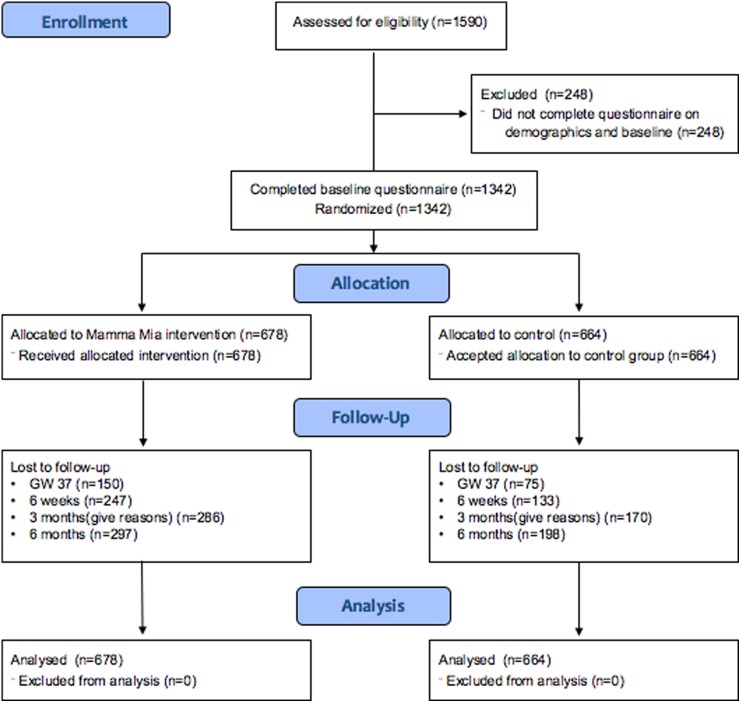
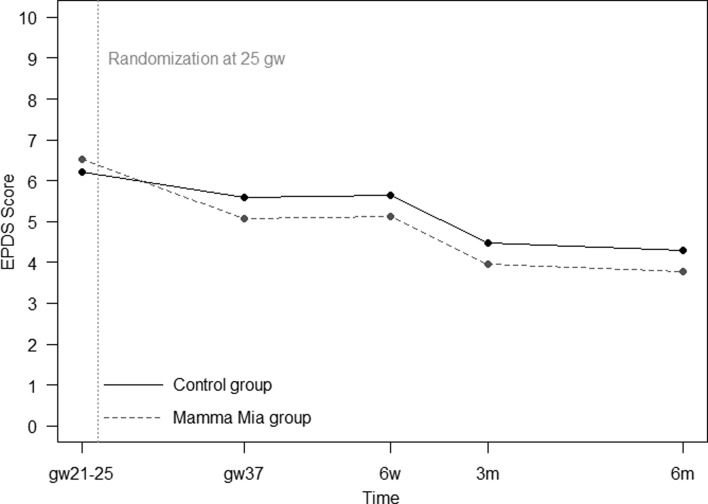
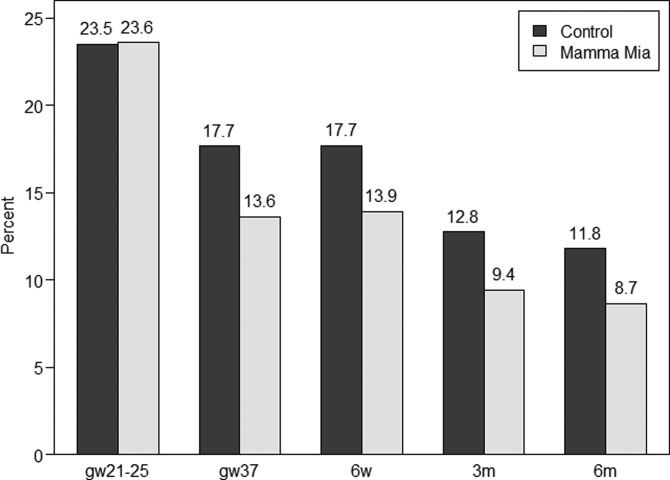
Background: Studies suggest that 10–15% of perinatal women experience depressive symptoms. Due to the risks, problems with detection, and barriers to treatment, effective universal preventive interventions are needed. The aim of this study was to assess the effectiveness of an automated internet intervention (‘Mamma Mia’) on perinatal depressive symptoms. Mamma Mia is tailored specifically to the perinatal phase and targets risk and protective factors for perinatal depressive symptoms. Methods: A total of 1342 pregnant women were randomized to an intervention (‘Mamma Mia’) and control group. Data were collected at gestational week (gw) 21–25, gw37, 6 weeks after birth, and 3 and 6 months after birth. We investigated whether (1) the intervention group displayed lower levels of depressive symptoms compared with the control group, (2) the effect of Mamma Mia changed over time, (3) the effect on depressive symptoms was moderated by baseline depressive symptoms, previous depression, and parity, and (4) this moderation changed by time. Finally, we examined if the prevalence of mothers with possible depression [i.e. Edinburgh Postnatal Depression Scale (EPDS)-score ⩾10] differed between the intervention and control group. Results: Participants in the Mamma Mia group displayed less depressive symptoms than participants in the control group during follow-up [ F (1) = 7.03, p = 0.008]. There were indications that the effect of Mamma Mia was moderated by EPDS score at baseline. The prevalence of women with EPDS-score ⩾10 was lower in the Mamma Mia group at all follow-up measurements. Conclusions: The study demonstrated the effects of the automated web-based universal intervention Mamma Mia on perinatal depressive symptoms.
Overview
The claims and statistics of this paper haven’t been checked yet.
Free: it reads the open-access text and checks the first 5 claims that cite a source we can check. Create a free account to check every claim.
Integrity signals
Registry
Cites
Statistics
Figures
Verification
Claims the paper makes
The claims and statistics of this paper haven’t been checked yet.
Free: it reads the open-access text and checks the first 5 claims that cite a source we can check. Create a free account to check every claim.
Claims other papers make about this one
Each is checked against this paper’s own text: does it say what the citing paper says it does?
The source backs part of the claim, not all of it — or backs it for a different population, condition or comparison.
In the citing paper
“This extensive intervention consisted of 44 online 10-min sessions and incorporated a mix of elements of cognitive-behavioural therapy, mindfulness, psychoeducation, meta-cognitive therapy, acceptance and commitment therapy, and positive psychology.”
From Effectiveness of a psycho-educational intervention for expecting parents to prevent postpartum parenting stress, depression and anxiety: A randomized controlled trial. (2020) · cites this paper as [102]
Experimental — accuracy not yet measuredThe cited source says what the claim attributes to it.
In the citing paper
“while studies on universal prevention of peripartum depression have produced both no effects and significant effects (Barrera et al., 2015; Haga et al., 2019; Nishi et al., 2022).”
From PandaMom – Feasibility and acceptability of an internet- and mobile-based intervention to enhance peripartum mental well-being and to prevent postpartum depression (2024) · cites this paper as Haga et al., 2019
The cited source says what the claim attributes to it.
In the citing paper
“When compared to PandaMom, prevention studies offering intervention content during pregnancy from the second trimester onwards reported a higher number of provided and completed modules (Duffecy et al., 2019; Haga et al., 2019).”
From PandaMom – Feasibility and acceptability of an internet- and mobile-based intervention to enhance peripartum mental well-being and to prevent postpartum depression (2024) · cites this paper as Haga et al., 2019
The cited source says what the claim attributes to it.
In the citing paper
“Differences between pre- and post-treatment effects were not considered as evidence for the success of the telemedicine intervention because several studies showed that the participants in control groups also improved over time [20, 35–41], especially with regard to postnatal depression.”
From Mental health-related telemedicine interventions for pregnant women and new mothers: a systematic literature review (2023) · cites this paper as [37]
The cited source says what the claim attributes to it.
In the citing paper
“The feasibility of the intervention was deemed good by n = 16 articles [37, 39, 41, 42, 46, 49, 52, 54, 55, 59, 61, 63, 65, 68, 70, 71].”
From Mental health-related telemedicine interventions for pregnant women and new mothers: a systematic literature review (2023) · cites this paper as [37]
2 more claims about this paper
Create a free account to see every claim other papers make about this one.
Self-check
Percentages, sums and reported differences re-computed from the paper’s own numbers.
The self-check needs the paper’s full text.
Citations
Cites
Detection of Postnatal Depression: Development of the 10-item Edinburgh Postnatal Depression Scale
Cox, J. L., Holden, J. M., & Sagovsky, R. (1987) · British Journal of Psychiatry · doi:10.1192/bjp.150.6.782 · Cited by 14,183 · cited 3×
“Our main hypothesis was that the Mamma Mia group would display lower levels of depressive symptoms compared with the control group as measured by the Edinburgh Postnatal Depression Scale (EPDS) (Cox et al., 1987).”
BackgroundMethodThe ASA Statement on p -Values: Context, Process, and Purpose
Wasserstein, R. L., & Lazar, N. A. (2016) · The American Statistician · doi:10.1080/00031305.2016.1154108 · Cited by 6,306
Perinatal Depression: A Systematic Review of Prevalence and Incidence
Gavin, N. I., Gaynes, B. N., Lohr, K. N., Meltzer-Brody, S., Gartlehner, G., & Swinson, T. (2005) · Obstetrics & Gynecology · doi:10.1097/01.aog.0000183597.31630.db · Cited by 3,282 · cited 1×
“The perinatal period represents a time signified bymuch emotional turmoil for women, and studies suggest that 10–15% ofwomen experiencemoderate to high levels of depressive symptoms during this period (O’Hara and Swain, 1996; Eberhard-Gran et al., 2004; Gavin et al., 2005).”
BackgroundRates and risk of postpartum depression – a meta-analysis
O'hara, M. W., & Swain, A. M. (1996) · International Review of Psychiatry · doi:10.3109/09540269609037816 · Cited by 3,116
Maternal depression and parenting behavior
Lovejoy, M. C., Graczyk, P. A., O'Hare, E., & Neuman, G. (2000) · Clinical Psychology Review · doi:10.1016/s0272-7358(98)00100-7 · Cited by 2,667 · cited 1×
“Perinatal depression carries a high personal cost for both thewoman and her family (Lovestone and Kumar, 1993; Lovejoy et al., 2000; Goodman et al., 2011) while all too often escaping detection and treatment (Bågedahl-Strindlund and Monsen Børjesson, 1998).”
BackgroundMaternal Depression and Child Psychopathology: A Meta-Analytic Review
Goodman, S. H., Rouse, M. H., Connell, A. M., Broth, M. R., Hall, C. M., & Heyward, D. (2011) · Clinical Child and Family Psychology Review · doi:10.1007/s10567-010-0080-1 · Cited by 2,621 · cited 1×
“Perinatal depression carries a high personal cost for both thewoman and her family (Lovestone and Kumar, 1993; Lovejoy et al., 2000; Goodman et al., 2011) while all too often escaping detection and treatment (Bågedahl-Strindlund and Monsen Børjesson, 1998).”
BackgroundPredictors of Postpartum Depression: An Update
Beck, C. T. (2001) · Nursing Research · doi:10.1097/00006199-200109000-00004 · Cited by 1,915
Antenatal risk factors for postpartum depression: a synthesis of recent literature
Robertson, E., Grace, S., Wallington, T., & Stewart, D. E. (2004) · General Hospital Psychiatry · doi:10.1016/j.genhosppsych.2004.02.006 · Cited by 1,886
Postpartum depression: current status and future directions
O'Hara, M. W., & McCabe, J. E. (2013) · Annual Review of Clinical Psychology · doi:10.1146/annurev-clinpsy-050212-185612 · Cited by 1,750
Treatment gap in mental health care.
Abramowitz, M. Z., Greenberg, D., & Levav, I. (2008) · PubMed · Cited by 1,484
Research works printed but not linked: 4
- 55. Rose G (2008) Rose's Strategy of Preventive Medicine. Oxford University Press, Oxford.
- 3. Silje Marie Haga et al. https://doi.org/10.1017/S0033291718002544 Published online by Cambridge University Press
- 31. Green JM (2005) What is the EPDS measuring and how should we use it in research? In Henshaw C and Elliott S (eds), Screening for Perinatal Depression. London: Jessica Kingsley Publishers, pp. 141-147.
- 1. American Psychiatric Association (2013) Diagnostic and Statistical Manual of Mental Disorders, 5th Edn. Arlington, VA: American Psychiatric Publishing.
Cited by
Wu, Y., Zhang, C., Liu, H., Duan, C., Li, C., Fan, J., Li, H., Chen, L., Xu, H., Li, X., et al. (2020) · American Journal of Obstetrics and Gynecology · doi:10.1016/j.ajog.2020.05.009 · Cited by 674
Fonseca, A., Alves, S., Monteiro, F., Gorayeb, R., & Canavarro, M. C. (2020) · Behavior Therapy · doi:10.1016/j.beth.2019.09.007 · Cited by 82
Lewkowitz, A. K., Whelan, A. R., Ayala, N. K., Hardi, A., Stoll, C., Battle, C. L., Tuuli, M. G., Ranney, M. L., & Miller, E. S. (2024) · American Journal of Obstetrics and Gynecology · doi:10.1016/j.ajog.2023.06.028 · Cited by 84
Heller, H. M., Hoogendoorn, A. W., Honig, A., Broekman, B. F. P., & van Straten, A. (2020) · Journal of Medical Internet Research · doi:10.2196/15172 · Cited by 82
“They had less severe depressive symptoms than those in the studies on Web-based interventions that showed greater effects [26,27].”
BackgroundSin, J., Galeazzi, G., McGregor, E., Collom, J., Taylor, A., Barrett, B., Lawrence, V., & Henderson, C. (2020) · Journal of Medical Internet Research · doi:10.2196/20581 · Cited by 79
“Outcomes with validated measures Comparisons (n), gender distributionc (%F/M/other), and age Intervention approach (n)b, gender distri- butionc (%F/M/other), and age Targeted CMDaReference; country AHSQe, PHQ-9f, GHSQg, AQoL-4Dh No tailored feedback, just generic advice (n=1431, US) Web-based assessment with tailored…”
BackgroundMethodInfluentialMissler, M., van Straten, A., Denissen, J., Donker, T., & Beijers, R. (2020) · BMC Pregnancy and Childbirth · doi:10.1186/s12884-020-03341-9 · Cited by 66
Yasuma, N., Narita, Z., Sasaki, N., Obikane, E., Sekiya, J., Inagawa, T., Nakajima, A., Yamada, Y., Yamazaki, R., Matsunaga, A., et al. (2020) · Journal of Affective Disorders · doi:10.1016/j.jad.2020.04.063 · Cited by 57
Inkster, B., Kadaba, M., & Subramanian, V. (2023) · Frontiers in Global Women's Health · doi:10.3389/fgwh.2023.1084302 · Cited by 53
Stentzel, U., Grabe, H. J., Schmidt, S., Tomczyk, S., van den Berg, N., & Beyer, A. (2023) · BMC Psychiatry · doi:10.1186/s12888-023-04790-0 · Cited by 52
“Internet intervention: website (n = 17) 9 (53%) [20, 37, 39, 52, 58, 60, 63, 65, 75]”
BackgroundResultInfluentialSilang, K. A., Sohal, P. R., Bright, K. S., Leason, J., Roos, L., Lebel, C., Giesbrecht, G. F., & Tomfohr-Madsen, L. M. (2022) · JMIR Mental Health · doi:10.2196/31116 · Cited by 50
“Interventions used to treat or prevent depression included cognitive behavioral therapy (CBT; 3/17, 18%) [54,56,65], psychoeducation (4/17, 24%) [52,55,59,62], mindfulness (3/17, 18%) [53,63,64], and attention bias modification training (1/17, 6%) [58].”
BackgroundMethodInfluentialNishi, D., Imamura, K., Watanabe, K., Obikane, E., Sasaki, N., Yasuma, N., Sekiya, Y., Matsuyama, Y., & Kawakami, N. (2022) · Psychiatry and Clinical Neurosciences · doi:10.1111/pcn.13458 · Cited by 45
“To date, only two randomized controlled trials (RCTs) have been conducted to investigate the effect of iCBT on perinatal depressive symptoms as universal prevention.(15,16) One study showed a significant effect and another study failed to show a statistically significant effect, and no previous studies have assessed t…”
BackgroundMissler, M., Donker, T., Beijers, R., Ciharova, M., Moyse, C., de Vries, R., Denissen, J., & van Straten, A. (2021) · BMC Pregnancy and Childbirth · doi:10.1186/s12884-021-03752-2 · Cited by 40
“This was also true for the number of participants (n = 1342) in the Haga et al. (2019) study [48], which was considerably higher than in the other studies (mean number of participants of the other studies was 110).”
ResultChae, J., & Kim, H. K. (2021) · Children and Youth Services Review · doi:10.1016/j.childyouth.2021.106079 · Cited by 41
Miura, Y., Ogawa, Y., Shibata, A., Kamijo, K., Joko, K., & Aoki, T. (2023) · BMC Pregnancy and Childbirth · doi:10.1186/s12884-023-05749-5 · Cited by 49
“There were three studies assessed the onset of post-partum depression as an outcome [27, 30, 32].”
BackgroundMethodInfluentialWu, J. J. Y., Ahmad, N., Samuel, M., Logan, S. J. S., & Mattar, C. N. Z. (2021) · Journal of Medical Internet Research · doi:10.2196/26786 · Cited by 51
“RCTs using similar platforms, not limited to adolescent mothers, yield similar results, with postpartum mothers with depressive symptoms describing significantly improved parenting competence and decreased depression severity following social media interventions compared to unexposed mothers [48-51].”
ResultNeo, H. S., Tan, J. H., Ang, W. H. D., & Lau, Y. (2022) · Journal of Psychosomatic Research · doi:10.1016/j.jpsychores.2022.110790 · Cited by 32
Leng, L. L., Yin, M. X. C., Chan, C., & Ng, S. M. (2023) · Journal of Affective Disorders · doi:10.1016/j.jad.2023.04.133 · Cited by 38
Nishi, D., Imamura, K., Watanabe, K., Obikane, E., Sasaki, N., Yasuma, N., Sekiya, Y., Matsuyama, Y., & Kawakami, N. (2020) · BMJ Open · doi:10.1136/bmjopen-2019-036482 · Cited by 31
Depresión perinatal en tiempos del COVID-19: rol de las redes sociales en Internet
Bermejo-Sánchez, F. R., Ayudante, W. R. P., & Espinoza-Portilla, E. (2020) · ACTA MEDICA PERUANA · doi:10.35663/amp.2020.371.913 · Cited by 46
Wan Mohd Yunus, W. M. A., Matinolli, H.-M., Waris, O., Upadhyaya, S., Vuori, M., Korpilahti-Leino, T., Ristkari, T., Koffert, T., & Sourander, A. (2022) · Journal of Medical Internet Research · doi:10.2196/33337 · Cited by 26
“However, the EPDS outcome cut-off scores used for probable depression differed: 4 studies used >9 points [47,50,51,53], and 2 studies used >12 points [49,52].”
BackgroundMethodResultInfluentialThe Baby Steps Web Program for the Well-Being of New Parents: Randomized Controlled Trial
Kavanagh, D. J., Connolly, J., Fisher, J., Halford, W. K., Hamilton, K., Hides, L. M., Milgrom, J., Rowe, H. J., Scuffham, P., White, K. M., et al. (2021) · Journal of Medical Internet Research · doi:10.2196/23659 · Cited by 27
“The positive effects of coaching on maintained program engagement [17] could be simulated by digital coaches who might offer some features that approximated human interaction (eg, greeting and praising completion of tasks) [37], even if the individualization of these responses was limited.”
Khan, Z. A., Kidholm, K., Pedersen, S. A., Haga, S. M., Drozd, F., Sundrehagen, T., Olavesen, E. S., & Halsteinli, V. (2024) · PharmacoEconomics · doi:10.1007/s40273-024-01366-y · Cited by 31
“The program comprises 44 interactive weekly sessions, which start mid-pregnancy and last 6 months postpartum [51].”
Self-citationNguyen, N. T., & Pengpid, S. (2025) · Frontiers in Global Women's Health · doi:10.3389/fgwh.2025.1497740 · Cited by 24
“Digital education interventions, such as the Mamma Mia Web-Based Program (60) and the Online Maternal Mental Health Consultation Program (48), allowed for self-paced learning and interactive engagement, though some digital-only interventions without interactive support showed inconsistent results…”
Gómez, C. M., Moreno-Peral, P., Bellón, J. Á., Cerón, S. C., Campos-Paíno, H., Gómez‐Gómez, I., Rigabert, A., Benítez, I., & Motrico, E. (2022) · Psychological Medicine · doi:10.1017/s0033291722000071 · Cited by 30
Mefrouche, M. L., Siegmann, E.-M., Böhme, S., Berking, M., & Kornhuber, J. (2023) · European Journal of Investigation in Health Psychology and Education · doi:10.3390/ejihpe13090122 · Cited by 36
Haga, S. M., Kinser, P. A., Wentzel‐Larsen, T., Lisøy, C., Garthus‐Niegel, S., Slinning, K., & Drozd, F. (2020) · The Journal of Positive Psychology · doi:10.1080/17439760.2020.1738535 · Cited by 23
“…health, there are recent studies on internet interventions that demonstrate their usability (Danaher et al., 2012; Haga et al., 2013; Salonen et al., 2014) and effectiveness in reducing perinatal depressive symptoms (Ashford et al., 2016; Haga et al., 2018; Lau et al., 2017; Lee et al., 2016).”
BackgroundSelf-citationMancinelli, E., Bassi, G., Gabrielli, S., & Salcuni, S. (2022) · International Journal of Environmental Research and Public Health · doi:10.3390/ijerph19159549 · Cited by 21
“Information on the previous pregnancies was reported by only n = 3 studies [65,67,70].”
BackgroundInfluentialDuffecy, J., Grekin, R., Long, J. D., Mills, J. A., & O'Hara, M. (2022) · Journal of Affective Disorders · doi:10.1016/j.jad.2022.05.123 · Cited by 19
Sasaki, N., Yasuma, N., Obikane, E., Narita, Z. C., Sekiya, J., Inagawa, T., Nakajima, A., Yamada, Y., Yamazaki, R., Matsunaga, A., et al. (2020) · Neuropsychopharmacology Reports · doi:10.1002/npr2.12155 · Cited by 19
“As a universal prevention strategy during pregnancy, psychosocial interventions have much to recommend them because they can be delivered at low cost and with minimal invasiveness [42].”
BackgroundAnyanwu, I. S., & Jenkins, J. (2024) · Oxford Open Digital Health · doi:10.1093/oodh/oqae026 · Cited by 30
“…84, 87, 95, 101, 102, 107–109], instant messaging [65, 70, 89, 92, 97, 98], phone calls [64, 66, 72, 92], web-apps [71, 100], social media [67, 111], short messaging services (SMS) [65, 105], and emails [74, 92]; with websites, mobile-apps, and video conferencing being the top-three platforms (Fig.”
InfluentialMobile well-being in pregnancy: suggestions from a quasi-experimental controlled study
Carissoli, C., Gasparri, D., Riva, G., & Villani, D. (2021) · Behaviour and Information Technology · doi:10.1080/0144929x.2021.1894484 · Cited by 21
“of antenatal anxiety and distress (Haga et al. 2019) and to investigate whether a longer intervention or a more interactive content could enhance the effectiveness of”
BackgroundDuan, C.-C., Zhang, C., Xu, H.-L., Tao, J., Yu, J.-L., Zhang, D., Wu, S., Xiu, Z., Zeng, W.-T., Zhang, Z.-Y., et al. (2025) · Journal of Medical Internet Research · doi:10.2196/67386 · Cited by 21
“Although individuals with antenatal depressive symptoms are more likely to develop PPD, most studies evaluating the efficacy of prenatal ICBT for preventing PPD have been designed to recruit general pregnant individuals rather than high-risk groups [15-18].”
Effect of eHealth interventions on perinatal depression: A meta-analysis
Xie, H., Cong, S., Wang, R., Sun, X., Han, J., Ni, S., & Zhang, A. (2024) · Journal of Affective Disorders · doi:10.1016/j.jad.2024.03.027 · Cited by 19
Depression in Children's Lives
Crnic, K. A., & Lin, B. (2021) · Cambridge University Press eBooks · doi:10.1017/9781108887144 · Cited by 13
Ansaari, N., Rajan, S. K., & Kuruveettissery, S. (2024) · Journal of Reproductive and Infant Psychology · doi:10.1080/02646838.2024.2303470 · Cited by 17
“The meta-analysis encompassed studies (Chan et al., 2019; Haga et al., 2019, Lowndes et al., 2019; Missler et al., 2020; Schwartz et al., 2023) Moreover, the comparison of digital and in-person interventions should be contextua-lised within the larger framework of mental health treatment.”
An evaluation of digital intervention for perinatal depression and anxiety: A systematic review
Arifin, S. R. M., Kamaruddin, A., Muhammad, N. A., Nurumal, M. S., Mohadis, H. M., Hussain, N. H. N., & Wardaningsih, S. (2024) · AIMS Public Health · doi:10.3934/publichealth.2024025 · Cited by 23
“The remaining studies conducted assessments twice [26,29,33,34], four times [28], and up to five times [23,25] between the baseline and the end of the study period.”
BackgroundSmith, R. D., Dang, W., Shen, S., Hung, S. C., Ip, H. L., Kwok, J. Y. Y., Choi, E. P. H., Fong, D., Ali, S., Wilson, C. A., et al. (2024) · Asian Journal of Psychiatry · doi:10.1016/j.ajp.2024.104316 · Cited by 15
Developing a Guided Web App for Postpartum Depression Symptoms: User-Centered Design Approach
Franco, P., Olhaberry, M., Muzard, A., Harismendy, Á., & Kelders, S. M. (2024) · JMIR Formative Research · doi:10.2196/56319 · Cited by 11
Brocklehurst, S. P., Morse, A. R., Cruwys, T., Batterham, P. J., Leach, L., Robertson, A. M., Sahib, A., Burke, C. T., Nguyen, J., & Calear, A. L. (2024) · Journal of Medical Internet Research · doi:10.2196/53236 · Cited by 22
“This decrease was significant in 50% (9/18) of the studies when compared to the control groups, with their effect sizes ranging from Cohen d =–0.10 [41] to Cohen d =–0.91 [45] (median –0.55).”
InfluentialMotrico, E., Cerón, S. C., Gómez, C. M., Gómez‐Gómez, I., Fonseca, A. C., & Moreno-Peral, P. (2021) · Internet Interventions · doi:10.1016/j.invent.2021.100471 · Cited by 10
Beerli, J., Ehlert, U., & Castro, R. T. A. (2022) · BMC Family Practice · doi:10.1186/s12875-022-01779-8 · Cited by 11
Vogel, L., Henning, C., Wolstein, J. R., Versele, V., van Poppel, M. N. M., Steppan, K., Schlossbach, T., Opitz, A., Lux, U., Löchner, J., et al. (2024) · Mental Health Science · doi:10.1002/mhs2.58 · Cited by 11
“…for health behavior change, such as cognitive behavioral therapy (CBT) strategies (i.e., emotion regulation strategies, cognitive restructuring, relaxation techniques; Haga et al., 2019; Jannati et al., 2020; Rhodes et al., 2020) or behavior change techniques (BCTs; e.g., Michie et al., 2013).”
Xie, J., Tang, S., Huang, C., Chen, J., Owusua, T., Hu, S., Lu, J., Sun, M., Peng, H., & Qin, C. (2022) · Annals of Palliative Medicine · doi:10.21037/apm-21-2415 · Cited by 17
A Systematic Review and Taxonomy of Neuroticism Interventions for the General PublicPreprint
Wright, A. J., Haehner, P., Hopwood, C. J., & Bleidorn, W. (2024) · PsyArXiv (OSF Preprints) · doi:10.31234/osf.io/jy3eb · Cited by 17
Schmidt-Hantke, J., Vollert, B., Nacke, B., Hagner, F., Brüderl, H., & Jacobi, C. (2024) · Internet Interventions · doi:10.1016/j.invent.2024.100765 · Cited by 7
“In contrast to other studies employing a sequential approach, it was not necessary to complete one module to access another (Barrera et al., 2015; Haga et al., 2019).”
BackgroundResultInfluentialGonzalez, C., Ramirez, M., Diaz, A., Duran, M., & Areán, P. (2021) · Women s Health Issues · doi:10.1016/j.whi.2020.10.005 · Cited by 7
Murthy, R. S. (2018) · Asian Journal of Psychiatry · doi:10.1016/j.ajp.2018.11.007 · Cited by 9
Kinser, P. A., Jallo, N., Huberty, J., Jones, E. G., Thacker, L. R., Moyer, S. W., Laird, B., Rider, A., Lanni, S. M., Drozd, F., et al. (2020) · Research in Nursing & Health · doi:10.1002/nur.22092 · Cited by 10
Self-citationCarissoli, C., Corno, G., Montanelli, S., & Villani, D. (2019) · Lecture notes of the Institute for Computer Sciences, Social Informatics and Telecommunications Engineering · doi:10.1007/978-3-030-25872-6_21 · Cited by 7
A Systematic Review and Taxonomy of Neuroticism Interventions for the General Public
Wright, A. J., Haehner, P., Hopwood, C. J., & Bleidorn, W. (2026) · Personality Science · doi:10.1177/27000710261421531 · Cited by 9
Savoia, A., Scaini, S., Rossi, F., Calcinati, M., & Oppo, A. (2025) · Archives of Women s Mental Health · doi:10.1007/s00737-025-01575-0 · Cited by 12
“The study by Barrera et al. (2015) and the study by Haga et al. (2019) do not report the gestational period during which participants could participate (Table 2).”
Valla, L., Haga, S. M., Garthus‐Niegel, S., & Drozd, F. (2023) · JMIR Pediatrics and Parenting · doi:10.2196/46982 · Cited by 8
“Participants were recruited through the Mamma Mia randomized controlled trial [20,35], where pregnant women in Norway were invited to participate between December 2013 and February 2015.”
MethodSelf-citationSchmidt-Hantke, J., & Jacobi, C. (2023) · PLOS Digital Health · doi:10.1371/journal.pdig.0000326 · Cited by 4
Nombela, E., Marchena, C., Duque, A., & Chaves, C. (2025) · General Hospital Psychiatry · doi:10.1016/j.genhosppsych.2025.01.006 · Cited by 6
Internet-Based Interventions for Preventing Premature Birth Among Pregnant Women: Systematic Review
Kim, S. H., Park, J., Jung, S. Y., & Gagne, J. C. D. (2024) · JMIR Pediatrics and Parenting · doi:10.2196/54788 · Cited by 4
“In addition, 1 study each was conducted in Australia [46], Canada [47], Iran [48], Ireland [49], the Netherlands [50], Norway [51], Spain [52], Sweden [53], and Thailand [54].”
BackgroundInfluentialBreivik, K., Eng, H., Kaiser, S., Karjalainen, P., Kurki, M., Kyrrestad, H., Laajasalo, T., Martinussen, M., Merikukka, M., Peltonen, K., et al. (2021) · Nordic Council of Ministers eBooks · doi:10.6027/nord2021-037 · Cited by 12
The effect of digital health intervention on perinatal negative emotions: A meta-analysis
Wang, Y., Hu, S., Song, D., Pu, C., He, J., Yang, Y., Ding, Y., & Shan, C. (2025) · Journal of Affective Disorders · doi:10.1016/j.jad.2025.120003 · Cited by 5
Davis, J. A., Ohan, J. L., Bear, N., Gibson, L. Y., Silva, D. T., Prescott, S. L., & Finlay‐jones, A. L. (2024) · BMC Pregnancy and Childbirth · doi:10.1186/s12884-024-07002-z · Cited by 5
Emotional Experience and Psychological Intervention of Depression Patients Based on SOM
Zou, Y. (2022) · Computational Intelligence and Neuroscience · doi:10.1155/2022/5064615 · Cited by 2
“Literature [24] has built an intermediary model, which shows that depression factors in families are influenced by family identity factors and insomnia factors.”
BackgroundArifin, S. R. B. M., Kamaruddin, A., Muhammad, N. A., Nurumal, M. S., Mohadis, H. M., Hussain, N. H. N., & Wardaningsih, S. (2025) · International Journal of Nursing Sciences · doi:10.1016/j.ijnss.2025.04.014 · Cited by 4
Nombela, E., Duque, A., Salgado, G., & Chaves, C. (2026) · Clinical Psychology & Psychotherapy · doi:10.1002/cpp.70281 · Cited by 2
Franco, P., Olhaberry, M., Muzard, A., Lara, M. A., & Cuijpers, P. J. (2022) · Depression and personality · doi:10.1007/978-3-031-13029-8_8 · Cited by 2
Kinser, P. A., Moyer, S. W., Jones, H. A., Jallo, N., Popoola, A., Thacker, L. R., Russell, S., Olavesen, E. S., Sundrehagen, T., Hare, M. M., et al. (2025) · PLOS mental health. · doi:10.1371/journal.pmen.0000138 · Cited by 3
“It served as a “timeout” in the women’s busy lives and was appreciated for its accessibility, relevant information, increased awareness, normalization, and bonding with their baby [21], with 51% of women completing over 80% of the intervention in a randomized trial [22].”
Self-citationMiranda, G. P., Pinilla, D. O., Mancera, D. A. N., Salcedo, L. H. G., & Granados, K. V. B. (2021) · Revista Médicas UIS · doi:10.18273/revmed.v34n1-2021008 · Cited by 9
Group cognitive-behavioral therapy for perinatal anxiety: predictors of completion and response
Kinsman, L., Bilevicius, E., Shamblaw, A. L., Alcolado, G. M., & Furer, P. (2023) · Current Psychology · doi:10.1007/s12144-023-04723-w · Cited by 1
“…and greater social support are associated with lower rates of attrition and greater number of completed CBT sessions in the general population (Edmonds et al., 2018 ; Hadjistavropoulos et al., 2016) and in perinatal women seeking treatment for depression (Bowen et al., 2012 ; Haga et al., 2019 ).”
Haßdenteufel, K., Müller, M., Abele, H., Brucker, S. Y., Graf, J., Zipfel, S., Bauer, A., Jakubowski, P., Pauluschke‐Fröhlich, J., Wallwiener, M., et al. (2024) · Journal of Medical Internet Research · doi:10.2196/56230 · Cited by 1
“Comparable outcomes in diminishing maternal distress have been highlighted in previous research as well [15].”
Dessy, T., Montreuil, T. C., St‐André, M., Herba, C. M., MacKinnon, A., Clément, M., Boucoiran, I., Dinello-Goupil, C., Béland, J., Samson, V., et al. (2026) · BMJ Open · doi:10.1136/bmjopen-2025-100835 · Cited by 4
Santy, T., Mamman Joseph, C., & Bhat, L. D. (2023) · Women s Reproductive Health · doi:10.1080/23293691.2023.2202652 · Cited by 2
Family Support; International Trends
Latva, R., & Furmark, C. (2019) · Elsevier eBooks · doi:10.1016/b978-0-12-809324-5.21817-8 · Cited by 1
Intervensi Digital Untuk Pencegahan Depresi Prenatal Pada Masa Pandemi Covid-19
Pinem, L. H., Yulianti, Y., Lastro, L. S., Risdhana, S., Komala, S., & Nurlaela, S. (2022) · Journal of Health Educational Science and Technology · doi:10.25139/htc.v5i1.4515
Fadlalmola, H. A., Osman, A. M., Ebrahim, R. A. M., Abdelgader, A. A. M., Bashir, W. A. H., Eshag, G. S., Ali, M. A., Eltaher, N. S. Y., Hamid, H. I., Alhajeri, S. T., et al. (2023) · Italian Journal of Gynaecology and Obstetrics · doi:10.36129/jog.2023.103
Valla, L., Haga, S. M., Garthus‐Niegel, S., & Drozd, F. (2023) · doi:10.2196/preprints.46982
Self-citationSuhairom, N. B., Saipudin, N. A., Shukor, N. A., Kosnin, A. M., Ashari, Z. M., & Zalbahar, N. (2022) · Journal of Social Science and Humanities · doi:10.26666/rmp.jssh.2022.3.2
Haßdenteufel, K., Müller, M., Abele, H., Brucker, S. Y., Graf, J., Zipfel, S., Bauer, A., Jakubowski, P., Pauluschke‐Fröhlich, J., Wallwiener, M., et al. (2024) · doi:10.2196/preprints.56230
Miura, Y., Ogawa, Y., Shibata, A., Kamijo, K., Joko, K., & Aoki, T. (2023) · Figshare · doi:10.6084/m9.figshare.23520095
Miura, Y., Ogawa, Y., Shibata, A., Kamijo, K., Joko, K., & Aoki, T. (2023) · Figshare · doi:10.6084/m9.figshare.23520092
Positive psychology interventions during pregnancy: A systematic review
Ganesan, T. M. S., Beevi, Z., Gow, A. J., & Ke, G. N. (2026) · Applied Psychology Health and Well-Being · doi:10.1111/aphw.70206
“Mamma Mia investigated well-being outcomes inclusive of the postpartum period (Haga et al., 2018, 2020).”
InfluentialSeiferth, C., Henning, C., Vogel, L., Opitz, A., Schoemann, N., Löchner, J., Deliens, T., & Wolstein, J. (2025) · doi:10.2196/preprints.77632
Bigini, E. G., Mitchell, A., Ruiz, M., Berge, S. D., Baltzell, K., Gjerde, P. B., Jacobsen, F. F., & Blair, A. (2025) · Research Square · doi:10.21203/rs.3.rs-7907843/v1
Olavesen, E. S., Haga, S. M., Garthus‐Niegel, S., & Drozd, F. (2025) · BMC Family Practice · doi:10.1186/s12875-025-03074-8
“However, women with elevated depressive symptoms and low socioeconomic status had higher dropout rates [16].”
Self-citationMissler, M. A., Donker, T., Beijers, R., Čihařová, M., Moyse, C., de Vries, R., Denissen, J. J. A., & van Straten, A. (2021) · Figshare · doi:10.6084/m9.figshare.14361999
Stentzel, U., Grabe, H. J., Schmidt, S., Tomczyk, S., van den Berg, N., & Beyer, A. (2023) · Figshare · doi:10.6084/m9.figshare.22721507
Stentzel, U., Grabe, H. J., Schmidt, S., Tomczyk, S., van den Berg, N., & Beyer, A. (2023) · Figshare · doi:10.6084/m9.figshare.22721498
Stentzel, U., Grabe, H. J., Schmidt, S., Tomczyk, S., van den Berg, N., & Beyer, A. (2023) · Figshare · doi:10.6084/m9.figshare.22721495
Stentzel, U., Grabe, H. J., Schmidt, S., Tomczyk, S., van den Berg, N., & Beyer, A. (2023) · Figshare · doi:10.6084/m9.figshare.22721501
Stentzel, U., Grabe, H. J., Schmidt, S., Tomczyk, S., van den Berg, N., & Beyer, A. (2023) · Figshare · doi:10.6084/m9.figshare.22721504
Antepartum and Postpartum Mental Health Issues
Camoni, L., Bernardini, C., Gigantesco, A., & Mirabella, F. (2026) · Springer eBooks · doi:10.1007/978-3-032-08980-9_20
Haga, S. M., WENTZEL-LArsen, T. J. T. N., Kinser, P. A., & Drozd, F. (2026) · Journal of Affective Disorders Reports · doi:10.1016/j.jadr.2026.101036 · Cited by 1
Self-citationHaßdenteufel, K., Müller, M., Multmeier, J., Abele, H., Brucker, S. Y., Zipfel, S., Graf, J., Bauer, A., Jakubowski, P., Pauluschke‐Fröhlich, J., et al. (2026) · doi:10.2196/preprints.93811
Olavesen, E. S., Helseth, S., Haga, S. M., Sundrehagen, T., & Drozd, F. (2026) · PLOS Digital Health · doi:10.1371/journal.pdig.0001348
Self-citationBai, X., Song, J., & Zhang, X. (2026) · BMC Public Health · doi:10.1186/s12889-026-27571-2
“Online antenatal education has the potential to influence these outcomes by equipping women with comprehensive knowledge about the birthing process, pain management strategies, and postpartum recovery [15, 16].”
Haßdenteufel, K., Müller, M., Multmeier, J., Abele, H., Brucker, S. Y., Zipfel, S., Graf, J., Bauer, A., Jakubowski, P., Pauluschke‐Fröhlich, J., et al. (2026) · Journal of Medical Internet Research · doi:10.2196/93811
“Such approaches may involve telephone-based coaching [14], online interventions [15,16], and cognitive therapy with personal coaching [17,18].”
Xie, Y., Duan, S., Liu, Y., Shams, M., Yang, J., & Kan, B. (2026) · Journal of Reproductive and Infant Psychology · doi:10.1080/02646838.2026.2689402
Lu, Y. M., Zhang, S. W., Wang, H. J., Zhang, Y., & Zhang, G. Z. (2026) · CIN Computers Informatics Nursing · doi:10.1097/cin.0000000000001547
Well-Being in the Perinatal Stage and Its Influence on Child Development
Chaves, C., Duque, A., Nombela, E., Salgado, G., Giménez‐Dasí, M., & RABASA, A. (2026) · Springer eBooks · doi:10.1007/978-3-032-20072-3_8
Wan, Z., Liu, Y., Su, Z., Bai, C., Liu, X., Li, X., Zhao, X., Li, P., Song, L., & Rao, J. (2026) · Frontiers in Psychiatry · doi:10.3389/fpsyt.2026.1896124
Haga, S. M., Landgraff, M. L., Wentzel‐Larsen, T., Kinser, P. A., & Drozd, F. (2026) · Marriage & Family Review · doi:10.1080/01494929.2026.2716191
Self-citationLöf, M., Ekelöf, K., Nyström, C. D., Lönnberg, G., Ljótsson, B., Almquist‐Tangen, G., Lilliecreutz, C., & Thomas, K. (2026) · BMC Public Health · doi:10.1186/s12889-026-26804-8
“There is research on digital mental health interventions among pregnant women; however, most interventions target mental health problems, such as depressive symptoms, rather than aiming to promote mental health through e.g., resilience [36, 37].”
Nombela, E., Duque, A., Salgado, G., & Chaves, C. (2026) · Journal of Happiness Studies · doi:10.1007/s10902-026-01114-3
“First, initial research has focused primarily on preventive interventions (e.g., Haga et al., 2019), leaving the effects on clinically depressed postpartum women still unclear.”
Metadata
- Authors
- Haga, S. M., Drozd, F., Lisøy, C., Wentzel-Larsen, T., & Slinning, K.
- Affiliations
- Center for Child and Adolescent Mental Health, Eastern and Southern Norway (NO)
- University of Oslo (NO)
- Corresponding author
- Haga, Silje Marie
- Venue
- Psychological Medicine
- Publisher
- Cambridge University Press (CUP)
- Published
- 2018-09-07
- Volume
- 49
- Issue
- 11
- Pages
- 1850-1858
- ISSN
- 0033-2917 (ISSN-L)
- 1469-8978
- PMC
- PMC6650775
- OpenAlex
- W2891989723
- Cited by
- 99
- References
- 57
- Citations by year
- 2026: 17 · 2025: 10 · 2024: 15 · 2023: 19 · 2022: 11 · 2021: 12 · 2020: 10 · 2019: 4 · 2018: 1
- FWCI
- 6.44
- Type
- journal article
- Language
- en
- Open access
- hybrid
- doi.org
- Locations
- Psychological Medicine (publishedVersion, cc-by)
- Europe PMC (PubMed Central) (publishedVersion, cc-by)
- PubMed Central (publishedVersion, cc-by)
- PubMed (publishedVersion)
- NORA - Norwegian Open Research Archives (submittedVersion, other-oa)
- Funders
- Norges Forskningsråd (213737)
- Norske Kvinners Sanitetsforening
- Topics
- Health Sciences › Medicine › Public Health, Environmental and Occupational Health › Maternal Mental Health During Pregnancy and Postpartum
- Social Sciences › Psychology › Applied Psychology › Digital Mental Health Interventions
- Social Sciences › Psychology › Clinical Psychology › Personality Disorders and Psychopathology
- Keywords
- perinatal depression, online intervention, universal prevention, pregnant women, postpartum depression, Edinburgh Postnatal Depression Scale, risk and protective factors, parity, Mamma Mia!
- MeSH terms
- Internet-Based Intervention, Adult, Depressive Disorder, Female, Follow-Up Studies, Humans, Pregnancy, Pregnancy Complications, Psychotherapy, Outcome Assessment, Health Care
About these checks
Registry, retraction, Cites and statistics results are computed, not judged, with one exception: a printed reference that no index lists is read once by a model before it counts as a citation error. Claims are extracted by a model and kept only when their quote appears verbatim in the text; each cited source is then checked, with a model’s help, for whether it says what the claim relies on. Those verdicts can be wrong — read the claim’s quote and the cited source before relying on one.
Statistics and arithmetic are recomputed, not judged.
Confidence bands are shown only for fields calibrated on our annotated test set. None is calibrated yet, so no band is shown.
What counts as a claim ›How we measure confidence ›How we check this ›
Are you an author, or do you see a problem with this page? Request a review
Data sources
Bibliographic data: Semantic Scholar, OpenAlex, Crossref.
Contains information from the Semantic Scholar Academic Graph Datasets, made available under the ODC Attribution License (ODC-BY 1.0).
Semantic Scholar’s data is described in: Kinney, R., et al. (2023). The Semantic Scholar Open Data Platform. arXiv:2301.10140.
