

A randomized controlled trial of Kundalini yoga in mild cognitive impairment
Open accessThe DOI matches its Crossref record; 45 of the 46 references it cites were found in a registry or an index.
Abstract
BACKGROUND: Global population aging will result in increasing rates of cognitive decline and dementia. Thus, effective, low-cost, and low side-effect interventions for the treatment and prevention of cognitive decline are urgently needed. Our study is the first to investigate the effects of Kundalini yoga (KY) training on mild cognitive impairment (MCI). METHODS: Older participants (≥55 years of age) with MCI were randomized to either a 12-week KY intervention or memory enhancement training (MET; gold-standard, active control). Cognitive (i.e. memory and executive functioning) and mood (i.e. depression, apathy, and resilience) assessments were administered at baseline, 12 weeks and 24 weeks. RESULTS: At baseline, 81 participants had no significant baseline group differences in clinical or demographic characteristics. At 12 weeks and 24 weeks, both KY and MET groups showed significant improvement in memory; however, only KY showed significant improvement in executive functioning. Only the KY group showed significant improvement in depressive symptoms and resilience at week 12. CONCLUSION: KY group showed short- and long-term improvements in executive functioning as compared to MET, and broader effects on depressed mood and resilience. This observation should be confirmed in future clinical trials of yoga intervention for treatment and prevention of cognitive decline (NCT01983930).
Overview
The claims and statistics of this paper haven’t been checked yet.
Free: it reads the open-access text and checks the first 5 claims that cite a source we can check. Create a free account to check every claim.
Integrity signals
Registry
Cites
Statistics
Figures
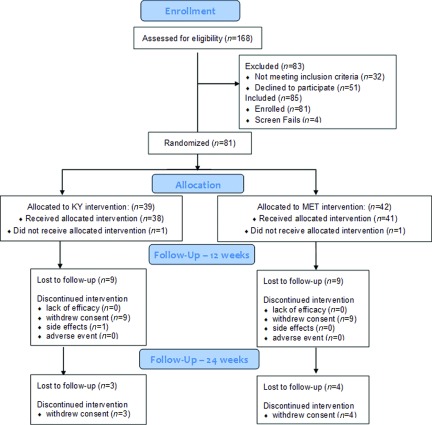
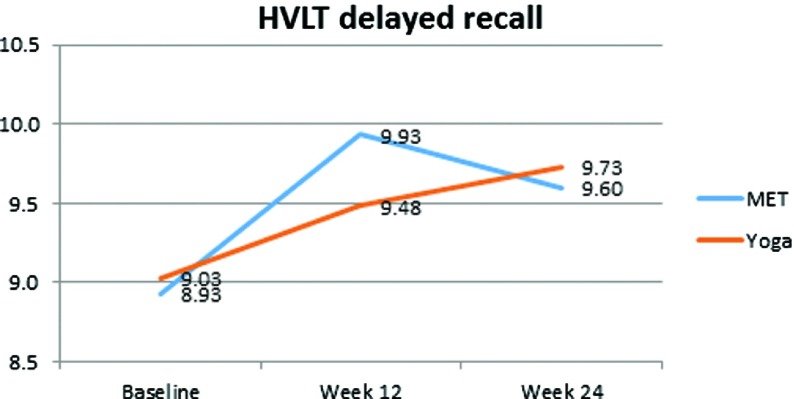
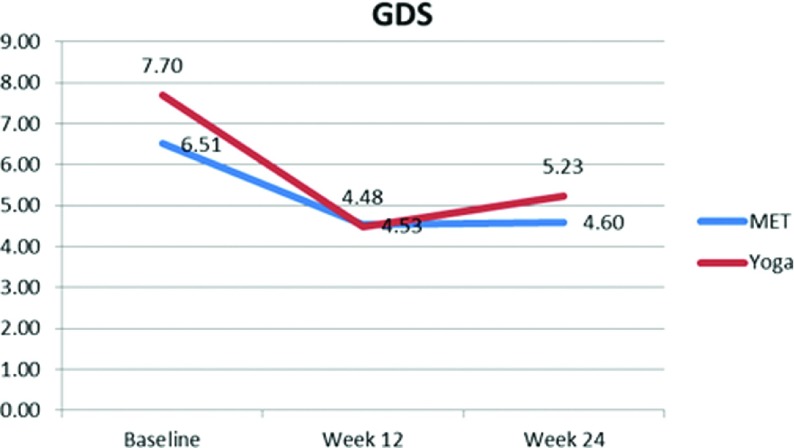
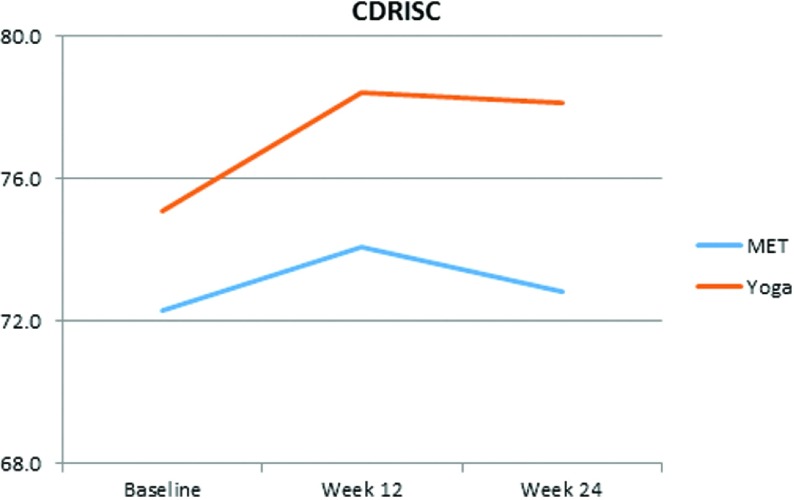
Verification
Claims the paper makes
The claims and statistics of this paper haven’t been checked yet.
Free: it reads the open-access text and checks the first 5 claims that cite a source we can check. Create a free account to check every claim.
Claims other papers make about this one
Each is checked against this paper’s own text: does it say what the citing paper says it does?
In the citing paper
“Intervention research suggests that MBTs (including yoga299,330,331, MBSR332, tai chi333,334, qigong302, and meditation335,336) have potential for improving HPA axis regulation299 and depressive symptoms in older adults with depression283,300–302 as well as in non-depressed older adults330–332,334–336.”
From Psychobiological factors of resilience and depression in late life (2019) · cites this paper as [331]
Self-check
Percentages, sums and reported differences re-computed from the paper’s own numbers.
The self-check needs the paper’s full text.
Citations
Cites
Folstein, M. F., Folstein, S. E., & McHugh, P. R. (1975) · Journal of Psychiatric Research · doi:10.1016/0022-3956(75)90026-6 · Cited by 88,282 · cited 2×
“…visual or hearing impairment); (3) insufficient English proficiency; (4) a diagnosis of dementia per the DSM-5; (5) Mini Mental Health Examination (Folstein et al., 1975) score of 24 or below; (6) use of psychoactive medications; (7) participation in a psychotherapy that involves cognitive…”
BackgroundHirono, N., Mori, E., Ikejiri, Y., Imamura, T., Shimomura, T., Hashimoto, M., Yamashita, H., & Ikeda, M. (1997) · Brain and nerve · Cited by 21,030
Kok, J. S., Berg, I. J., & Scherder, E. J. A. (2013) · Dementia and Geriatric Cognitive Disorders Extra · doi:10.1159/000353441 · Cited by 20,589
Older Adults' Reasons for Using Technology while Aging in Place
Peek, S. T. M., Luijkx, K. G., Rijnaard, M. D., Nieboer, M. E., van der Voort, C. S., Aarts, S., van Hoof, J., Vrijhoef, H. J. M., & Wouters, E. J. M. (2016) · Gerontology · doi:10.1159/000430949 · Cited by 19,690
Sensitivity and False Alarm Rate of a Fall Sensor in Long-Term Fall Detection in the Elderly
Kangas, M., Korpelainen, R., Vikman, I., Nyberg, L., & Jämsä, T. (2015) · Gerontology · doi:10.1159/000362720 · Cited by 18,909
Development and validation of a geriatric depression screening scale: a preliminary report
Yesavage, J. A., Brink, T. L., Rose, T. L., Lum, O., Huang, V., Adey, M., & Leirer, V. O. (1982) · Journal of Psychiatric Research · doi:10.1016/0022-3956(82)90033-4 · Cited by 15,025 · cited 2×
“All participants underwent IRB-approved informed consent procedures prior to enrolling in the study.”
BackgroundMethodDevelopment of a new resilience scale: The Connor-Davidson Resilience Scale (CD-RISC)
Connor, K. M., & Davidson, J. R. T. (2003) · Depression and Anxiety · doi:10.1002/da.10113 · Cited by 11,793 · cited 1×
“Psychological resilience to stress as a target for the mind–body interventions was measured by using the Connor-Davidson Resilience scale (Connor and Davidson, 2003).”
MethodValidity of the Trail Making Test as an Indicator of Organic Brain Damage
Reitan, R. M. (1958) · Perceptual and Motor Skills · doi:10.2466/pms.1958.8.3.271 · Cited by 7,928 · cited 2×
“Individual executive functions were assessed using (1) the Trail Making Test part B (Reitan, 1958) to measure cognitive flexibility, (2) the Stroop Word-Color Test (Golden, 1975) to assess response inhibition and the Animal Naming Test (Sager et al.”
MethodMild cognitive impairment as a diagnostic entity
Petersen, R. C. (2004) · Journal of Internal Medicine · doi:10.1111/j.1365-2796.2004.01388.x · Cited by 7,864 · cited 2×
“Current data suggest that mild cognitive impairment (MCI) ranges between 10% and 20% in samples of older adults (Petersen, 2004).”
BackgroundA New Clinical Scale for the Staging of Dementia
Hughes, C. P., Berg, L., Danziger, W., Coben, L. A., & Martin, R. L. (1982) · British Journal of Psychiatry · doi:10.1192/bjp.140.6.566 · Cited by 7,056 · cited 2×
“5 (Hughes et al., 1982); (4) sufficient English proficiency at the 8th grade level or higher as determined by the word reading subtest of the Wide Range Achievement Test-4 (Wilkinson, 2006) to participate in MET; (5) capacity to provide informed consent.”
MethodInfluential
Research works printed but not linked: 1
- 8. First M. B., Spitzer R. L., Gibbon M. and Williams J. B. W. (2002). Structured Clinical Interview for DSM-IV-TR Axis I Disorders, Research Version, Patient Edition. (SCID-I/P) New York State Psychiatric Institute, NY: Biometrics Research.
Cited by
Items 101–157 of 157
Liu, Z., Lemus, J., Smirnova, I. V., & Liu, W. (2023) · Exploration of Neuroprotective Therapy · doi:10.37349/ent.2023.00049 · Cited by 3
Musich, M. L., Shenker, J. I., & Beversdorf, D. Q. (2026) · Journal of dementia and Alzheimer's disease · doi:10.3390/jdad3010004 · Cited by 2
Tiwari, P., Gupta, A., Kaushik, M., Dwivedi, R., Tripathi, M., & Dada, R. (2026) · Journal of Alzheimer s Disease · doi:10.1177/13872877261415612 · Cited by 2
“15 Emerging evidence also suggests that yoga may bene fi cially modulate gut microbial composition and reduce dysbiosis-related in fl ammation, thereby in fl uencing the gut – brain axis.”
Das, D., & Deb, N. (2026) · Neural Computing and Applications · doi:10.1007/s00521-026-12026-x · Cited by 2
Reyes, Y. Y. R., & Valbuena, L. P. A. (2023) · Revista Colombiana de Psiquiatría (English ed ) · doi:10.1016/j.rcpeng.2023.11.001 · Cited by 2
Moncer, R., Hajji, H., Naija, S., Amor, S. B., Jemni, S., & Saad, H. B. (2025) · La Tunisie Médicale · doi:10.62438/tunismed.v103i1.5341 · Cited by 2
“Classical Yoga, originating thousands of years ago in India, includes eight pillars: physical postures (asanas), breathing exercises (pranayama), and meditation practice [19, 21, 25-27].”
InfluentialPeriasamy, P., Suganthi, V., Kamath, M. G., Gunasekaran, S., Vaithilingam, K., & Princy, F. (2025) · Journal of Pharmacy And Bioallied Sciences · doi:10.4103/jpbs.jpbs_571_25 · Cited by 2
“[5] The mechanisms underlying these effects may involve the activation of the parasympathetic nervous system through the relaxation response elicited by yoga practices, which counteracts the stress‑induced activation of the HPA axis.”
An Interpretation and Application of the ‘Four Paths of Yoga' for a Positive Well-Being
Roy, G., & Suriya, P. (2020) · Advances in psychology, mental health, and behavioral studies (APMHBS) book series · doi:10.4018/978-1-7998-1185-5.ch003 · Cited by 2
Chandler, M. J., Graff-Radford, M. R., Lucas, P. H., Locke, D. E. C., Crook, J. E., Ball, C. T., Caselli, M., Lunde, A. M., Phatak, V. S., & Smith, G. E. (2021) · OBM Geriatrics · doi:10.21926/obm.geriatr.2101147 · Cited by 2
Yoga as A Complementary Therapeutic Modality for People with Alzheimer’s Disease: A Review
Ghaffari, M. (2019) · Journal of Yoga and Physiotherapy · doi:10.19080/jyp.2019.08.555740 · Cited by 2
Yoga and Rasayana for Mental Health in Age-related Cognitive Decline - A Controlled Trial
Division of Yoga and Life Sciences, S. V. Y. A. S., Chobe, S. V., Chobe, M. P., Metri, K., & Raghuram, N. (2022) · Indian Journal of Science and Technology · doi:10.17485/ijst/v15i9.2243 · Cited by 2
Martins, T. B., Parizotto, P., Fleig, R., Santos, G. M., & do Nascimento, I. B. (2024) · Journal of Bodywork and Movement Therapies · doi:10.1016/j.jbmt.2024.10.010 · Cited by 1
Liu, C., Liang, J., Nie, Y., Ma, W., Tan, W., Zhong, J., Xia, Z., Fan, Z., & Qin, Q. (2026) · BMC Psychology · doi:10.1186/s40359-026-04940-5 · Cited by 1
“The pre-post method was applied only when: (a) all arms consisted of active exercise interventions with no non-exer-cise comparator [23, 24],or (b) the comparator was an active control condition rather than standard care or no treatment [25].”
Laird, K. T., & Lavretsky, H. (2019) · JAMA Network Open · doi:10.1001/jamanetworkopen.2019.3047 · Cited by 1
Self-citationSimple Asana: Yoga and the Elderly
Sy, P., & Vigneswaran, W. T. (2021) · Physical Medicine and Rehabilitation - International · doi:10.26420/physmedrehabilint.2021.1180 · Cited by 1
“Both Hatha Yoga and Kundalini yoga have been shown to improve cognition in the elderly [23].”
BackgroundKaligal, C., Kanthi, A., Mahadevappa, V., & Singh, D. (2023) · Integrative and Complementary Therapies · doi:10.1089/ict.2023.29061.cka · Cited by 4
“Two studies 20,23 had a PEDro score of 9, indicative of excellent quality, eight studies 17,19,21,22,24–27 had scores in the range of 6 to 8, indicative of good quality, and two 18,28 were of fair quality with scores ranging from 4 to 5.”
Cognitive Benefits of Physical Activity in the Elderly: A Narrative Review
Ghosh, A., Jagtap, T., & Issac, T. G. (2023) · Journal of Psychiatry Spectrum · doi:10.4103/jopsys.jopsys_40_23 · Cited by 4
Hancock, L., & Ossmy, O. (2024) · PsyArXiv (OSF Preprints) · doi:10.31234/osf.io/xq4v7 · Cited by 1
Yoga for Seniors: Mechanisms of Response to Yoga Therapy in Older Adults
Paholpak, P., Obler, L., & Lavretsky, H. (2017) · Advances in medical diagnosis, treatment, and care (AMDTC) book series · doi:10.4018/978-1-5225-2788-6.ch009
Self-citationThe future of sensory processing sensitivity on planet Earth and beyond
Acevedo, B. P. (2020) · Elsevier eBooks · doi:10.1016/b978-0-12-818251-2.00008-4
Self-citationScientific Autobiography of a Spiritual Seeker in the Year of Hindsight's 20/20
Lavretsky, H. (2020) · American Journal of Geriatric Psychiatry · doi:10.1016/j.jagp.2020.08.002
Self-citationSport ist Mord? Nein! Was Bewegung bewirkt
Kessler, J. (2020) · Springer eBooks · doi:10.1007/978-3-662-60606-3_11
The Impact of Yoga on the Well-being of Alexandra’s Youth
de Jong, E. J. (2020) · Utrecht University Repository (Utrecht University)
Wpływ aktywności fizycznej na sprawność poznawczą osób starszych
Pietsch, J., & Piskunowicz, M. (2018) · Rozprawy Naukowe Akademii Wychowania Fizycznego we Wrocławiu
The impact of physical activity on the cognitive fitness of the elderly – a review
Marszałek, A., Kasperczyk, T., Walaszek, R., & Burdacka, K. (2022) · European Journal of Clinical and Experimental Medicine · doi:10.15584/ejcem.2022.4.13
Yoga for Dementia Care: A Review
Acharyya, A. (2024) · Preventive Medicine Research & Reviews · doi:10.4103/pmrr.pmrr_47_24
Yoga Clinical Trials for Major Neurological Disorders Including Headache: Trends and Advances
Mallina, K., Jasti, N., & Bhargav, H. (2024) · Springer eBooks · doi:10.1007/978-981-97-2855-8_2
Neuroscience of Yoga for Mood and Cognitive Disorders of Aging
Nguyen, S. A., & Lavretsky, H. (2024) · Springer eBooks · doi:10.1007/978-981-97-2855-8_3
Self-citationIntroduction to Neuropsychological Assessment and Intervention
Samuel, A. R., Reynolds, G., Willment, K., & Gale, S. A. (2024) · Elsevier eBooks · doi:10.1016/b978-0-443-12642-0.00016-5
Reddy, M. Y., Nguyen, S. A., & Lavretsky, H. (2025) · Oxford University Press eBooks · doi:10.1093/med/9780198874799.003.0026
Self-citationHancock, L., & Ossmy, O. (2024) · PsyArXiv (OSF Preprints) · doi:10.31234/osf.io/xq4v7_v1
The Analysis Study of Yoga and Cognitive in Older Adults: A Systematic Review and Metaanalysis
Prameswari, P., Nugroho, Y. H., & Juliana, M. (2025) · The Indonesian Journal of General Medicine · doi:10.70070/ej9z7f37
Promoting Aging in Place Through A Wellness Program: Comparing In-Person and Online Delivery
Waldman‐Levi, A., Stancanelli, J., Laghezza, A., Hirsch, R., Kwok, J., Cancel, B., Ridolfo, M., Rivera, B. K., Rodriguez, M., Romo, C., et al. (2025) · Physical & Occupational Therapy In Geriatrics · doi:10.1080/02703181.2025.2530994
“13 Mindfulness meditations are effective at improving psychological functioning such as emotional regulation and wellbeing.”
Pengaruh Chair Yoga terhadap Kesehatan Mental pada Lansia: Suatu Tinjauan Sistematis
Khairina, N. S., & Arifin, S. (2025) · Jurnal Dunia Pendidikan · doi:10.55081/jurdip.v6i1.3984
Effect of Body Scanning and Walking Mindfulness on the Spatial Memory of Persons with Dementia
Acharige, R., Hettigoda, K., & Karunarathne, G. (2025) · Revista de Gestão Social e Ambiental · doi:10.24857/rgsa.v19n8-023
Introduction: The Mind-Body Connection
Genç, H., & Tanık, N. (2025) · Nutritional neurosciences · doi:10.1007/978-981-95-1414-4_1
Tarrant, J., Viczko, J., & Mendoza, G. (2026) · Mindfulness · doi:10.1007/s12671-026-02942-3
Karamacoska, D., Tan, T., Mathersul, D. C., Sabag, A., de Manincor, M., Chang, D., & Steiner-Lim, G. Z. (2023) · Figshare · doi:10.6084/m9.figshare.22599262
Johnson, T. (2018) · TUScholarShare (Temple University) · doi:10.34944/dspace/3054
Tang, L., Zhang, L., Liu, Y., Li, Y., Yang, L., Zou, M., Yang, H., Zhu, L., Du, R., Shen, Y., et al. (2024) · Figshare · doi:10.6084/m9.figshare.26730808
Self-citationKaramacoska, D., Tan, T., Mathersul, D. C., Sabag, A., de Manincor, M., Chang, D., & Steiner-Lim, G. Z. (2023) · Figshare · doi:10.6084/m9.figshare.22599268
Efecto agudo del yoga en la memoria a corto plazo de personas de 60 años y más, físicamente activas
Sánchez, M. M., Montero Herrera, B., & Carpio‐Rivera, E. (2023) · Dialnet (Universidad de la Rioja) · Cited by 2
Miller, K. (2020) · FedUni ResearchOnline (Federation University Australia)
Trauma-informed yoga for positive mental health: A mixed-methods evaluation study
Mulvihill, T. (2023) · Cross Connect (Southern Cross University) · doi:10.25918/thesis.544
Sadowski, I., Vilvaratnam, K., Bordeleau, M., Gagnon-Mailhot, M., Meilleur-Bédard, M., Rej, S., & Khoury, B. (2026) · Aging & Mental Health · doi:10.1080/13607863.2026.2616407
“…decrease depression, anxiety, stress, and improve QoL, well-being, relaxation, resilience, and mindful awareness in older adults with MCI or dementia (Berk et al., 2019; Churcher Clarke et al., 2017; Dong et al., 2024; Eyre et al., 2017; Ladawan et al., 2017; Wells et al., 2019; Wu et al., 2023).”
Das, M., Pundeer, M., Acharya, K., Mishra, A., Nayak, P., & Patra, S. K. (2026) · Archives of Gerontology and Geriatrics Plus · doi:10.1016/j.aggp.2026.100276
Tóth, E. E. (2026) · Eötvös Loránd Tudományegyetem · doi:10.15476/elte.2025.423
Clinical evidence on yoga and the risk of dementia or cognitive decline: A narrative review
Kuo, C.-H., & Chang, K. (2026) · 童綜合醫學雜誌 · doi:10.4103/etmj.etmj-d-25-00030
Kumar, D. R., Raj, A., & Shiromani, T. (2026) · International Journal for Neurology and Neuroscience · doi:10.66715/ijnn/2026.v2.i1.106117
Hancock, L., Begum, K., & Ossmy, O. (2026) · Ageing International · doi:10.1007/s12126-026-09673-9
“Mindful activities also posi - tively impact mood—a suggested moderator of cognitive skills (Eyre et al., 2017)— more than other types of exercise.”
Xu, L., Wei, L., Ruimin, L., & Hu, Y. (2026) · Journal of Alzheimer s Disease · doi:10.1177/13872877261485578
Rizzuti, M., Berretta, E., Gosti, V., Baglioni, C., Serra, L., & Gelfo, F. (2026) · Brain Sciences · doi:10.3390/brainsci16101031
Małkowska, P., Sochacka, M., Proia, P., & Sawczuk, M. (2026) · International Journal of Molecular Sciences · doi:10.3390/ijms27198677
P, K. A. (2026) · Journal of chemical health risks
Dong, N., Zeng, B., Wang, Q., & Xie, J. (2026) · Geriatrics and gerontology international/Geriatrics & gerontology international · doi:10.1111/ggi.70863
Metadata
- Authors
- Eyre, H. A., Siddarth, P., Acevedo, B., Van Dyk, K., Paholpak, P., Ercoli, L., St. Cyr, N., Yang, H., Khalsa, D. S., & Lavretsky, H.
- Affiliations
- Deakin University (AU)
- University of California, Los Angeles (US)
- Alzheimer's Research and Prevention Foundation (US)
- Corresponding author
- Eyre, Harris A.
- ORCID
- Venue
- International Psychogeriatrics
- Publisher
- Elsevier BV
- Published
- 2017-04
- Volume
- 29
- Issue
- 4
- Pages
- 557-567
- ISSN
- 1041-6102 (ISSN-L)
- PMC
- PMC5540331
- OpenAlex
- W2579377982
- Cited by
- 142
- References
- 46
- Citations by year
- 2026: 13 · 2025: 11 · 2024: 15 · 2023: 22 · 2022: 11 · 2021: 21 · 2020: 23 · 2019: 12 · 2018: 10 · 2017: 4
- FWCI
- 11.01
- Type
- journal article
- Language
- en
- Open access
- gold
- doi.org
- Licence
- cc-by
- www.elsevier.com/tdm/userlicense/1.0/ (tdm)
- www.elsevier.com/legal/tdmrep-license (tdm)
- creativecommons.org/licenses/by-nc-sa/4.0 (vor)
- Locations
- International Psychogeriatrics (publishedVersion, cc-by)
- PubMed Central (publishedVersion, cc-by-nc-sa)
- PubMed (publishedVersion)
- Minerva Access (University of Melbourne) (submittedVersion, cc-by-nc-sa)
- Adelaide Research & Scholarship (AR&S) (University of Adelaide) (submittedVersion, cc-by)
- Deakin Research Online (Deakin University) (submittedVersion)
- eScholarship (California Digital Library) (submittedVersion)
- Figshare (submittedVersion, cc-by-nc-sa)
- Funders
- Forest Research Institute
- Alzheimer's Research and Prevention Foundation
- National Institutes of Health (MH077650, MH086481, AT009198, AT008383)
- Topics
- Health Sciences › Medicine › Psychiatry and Mental health › Dementia and Cognitive Impairment Research
- Social Sciences › Psychology › Clinical Psychology › Mindfulness and Compassion Interventions
- Social Sciences › Psychology › Experimental and Cognitive Psychology › Cognitive Functions and Memory
- Keywords
- Kundalini yoga, mild cognitive impairment, cognitive decline, executive function, memory, depression, resilience, apathy, older adults, yoga intervention, dementia prevention
- MeSH terms
- Affect, Aged, California, Female, Humans, Learning, Male, Middle Aged, Psychiatric Status Rating Scales, Severity of Illness Index, Yoga, Resilience, Psychological, Executive Function, Cognitive Dysfunction
About these checks
Registry, retraction, Cites and statistics results are computed, not judged, with one exception: a printed reference that no index lists is read once by a model before it counts as a citation error. Claims are extracted by a model and kept only when their quote appears verbatim in the text; each cited source is then checked, with a model’s help, for whether it says what the claim relies on. Those verdicts can be wrong — read the claim’s quote and the cited source before relying on one.
Statistics and arithmetic are recomputed, not judged.
Confidence bands are shown only for fields calibrated on our annotated test set. None is calibrated yet, so no band is shown.
What counts as a claim ›How we measure confidence ›How we check this ›
Are you an author, or do you see a problem with this page? Request a review
Data sources
Bibliographic data: Semantic Scholar, OpenAlex, Crossref.
Contains information from the Semantic Scholar Academic Graph Datasets, made available under the ODC Attribution License (ODC-BY 1.0).
Semantic Scholar’s data is described in: Kinney, R., et al. (2023). The Semantic Scholar Open Data Platform. arXiv:2301.10140.
