

A randomized controlled trial of Kundalini yoga in mild cognitive impairment
Open accessThe DOI matches its Crossref record; 45 of the 46 references it cites were found in a registry or an index.
Abstract
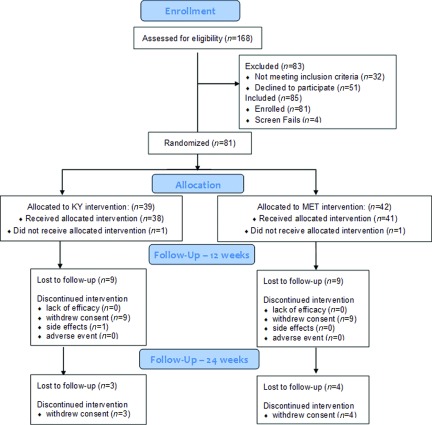
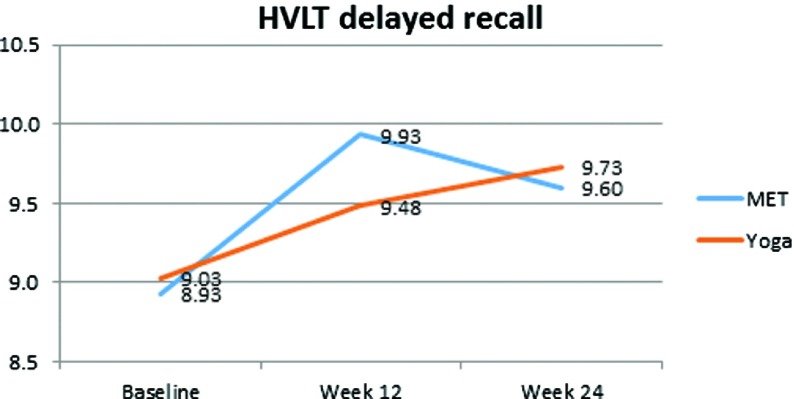
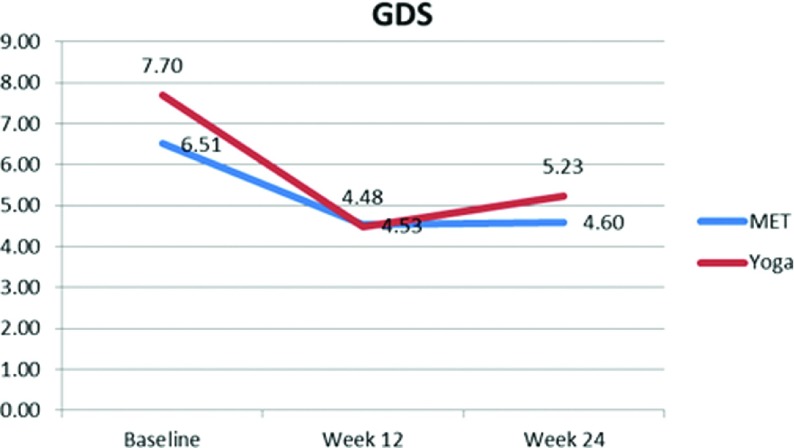
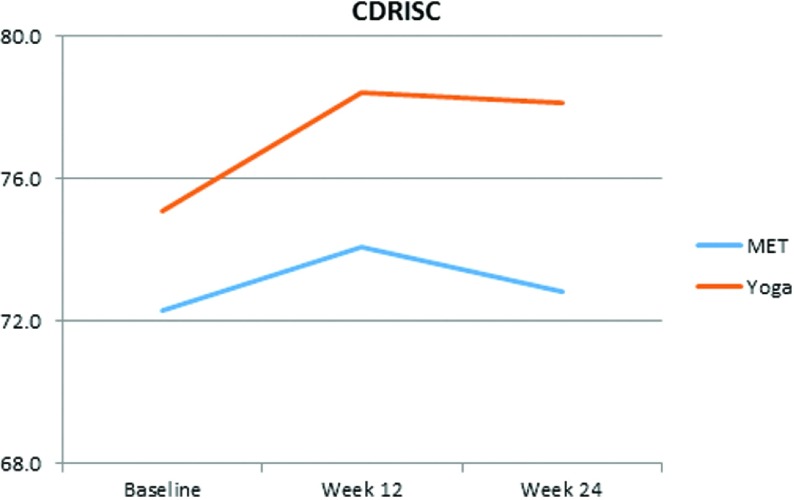
BACKGROUND: Global population aging will result in increasing rates of cognitive decline and dementia. Thus, effective, low-cost, and low side-effect interventions for the treatment and prevention of cognitive decline are urgently needed. Our study is the first to investigate the effects of Kundalini yoga (KY) training on mild cognitive impairment (MCI). METHODS: Older participants (≥55 years of age) with MCI were randomized to either a 12-week KY intervention or memory enhancement training (MET; gold-standard, active control). Cognitive (i.e. memory and executive functioning) and mood (i.e. depression, apathy, and resilience) assessments were administered at baseline, 12 weeks and 24 weeks. RESULTS: At baseline, 81 participants had no significant baseline group differences in clinical or demographic characteristics. At 12 weeks and 24 weeks, both KY and MET groups showed significant improvement in memory; however, only KY showed significant improvement in executive functioning. Only the KY group showed significant improvement in depressive symptoms and resilience at week 12. CONCLUSION: KY group showed short- and long-term improvements in executive functioning as compared to MET, and broader effects on depressed mood and resilience. This observation should be confirmed in future clinical trials of yoga intervention for treatment and prevention of cognitive decline (NCT01983930).
Overview
The claims and statistics of this paper haven’t been checked yet.
Free: it reads the open-access text and checks the first 5 claims that cite a source we can check. Create a free account to check every claim.
Integrity signals
Registry
Cites
Statistics
Figures
Verification
Claims the paper makes
The claims and statistics of this paper haven’t been checked yet.
Free: it reads the open-access text and checks the first 5 claims that cite a source we can check. Create a free account to check every claim.
Claims other papers make about this one
Each is checked against this paper’s own text: does it say what the citing paper says it does?
In the citing paper
“Intervention research suggests that MBTs (including yoga299,330,331, MBSR332, tai chi333,334, qigong302, and meditation335,336) have potential for improving HPA axis regulation299 and depressive symptoms in older adults with depression283,300–302 as well as in non-depressed older adults330–332,334–336.”
From Psychobiological factors of resilience and depression in late life (2019) · cites this paper as [331]
Self-check
Percentages, sums and reported differences re-computed from the paper’s own numbers.
The self-check needs the paper’s full text.
Citations
Cites
Folstein, M. F., Folstein, S. E., & McHugh, P. R. (1975) · Journal of Psychiatric Research · doi:10.1016/0022-3956(75)90026-6 · Cited by 88,282 · cited 2×
“…visual or hearing impairment); (3) insufficient English proficiency; (4) a diagnosis of dementia per the DSM-5; (5) Mini Mental Health Examination (Folstein et al., 1975) score of 24 or below; (6) use of psychoactive medications; (7) participation in a psychotherapy that involves cognitive…”
BackgroundHirono, N., Mori, E., Ikejiri, Y., Imamura, T., Shimomura, T., Hashimoto, M., Yamashita, H., & Ikeda, M. (1997) · Brain and nerve · Cited by 21,039
Kok, J. S., Berg, I. J., & Scherder, E. J. A. (2013) · Dementia and Geriatric Cognitive Disorders Extra · doi:10.1159/000353441 · Cited by 20,589
Older Adults' Reasons for Using Technology while Aging in Place
Peek, S. T. M., Luijkx, K. G., Rijnaard, M. D., Nieboer, M. E., van der Voort, C. S., Aarts, S., van Hoof, J., Vrijhoef, H. J. M., & Wouters, E. J. M. (2016) · Gerontology · doi:10.1159/000430949 · Cited by 19,690
Sensitivity and False Alarm Rate of a Fall Sensor in Long-Term Fall Detection in the Elderly
Kangas, M., Korpelainen, R., Vikman, I., Nyberg, L., & Jämsä, T. (2015) · Gerontology · doi:10.1159/000362720 · Cited by 18,909
Development and validation of a geriatric depression screening scale: a preliminary report
Yesavage, J. A., Brink, T. L., Rose, T. L., Lum, O., Huang, V., Adey, M., & Leirer, V. O. (1982) · Journal of Psychiatric Research · doi:10.1016/0022-3956(82)90033-4 · Cited by 15,025 · cited 2×
“All participants underwent IRB-approved informed consent procedures prior to enrolling in the study.”
BackgroundMethodDevelopment of a new resilience scale: The Connor-Davidson Resilience Scale (CD-RISC)
Connor, K. M., & Davidson, J. R. T. (2003) · Depression and Anxiety · doi:10.1002/da.10113 · Cited by 11,793 · cited 1×
“Psychological resilience to stress as a target for the mind–body interventions was measured by using the Connor-Davidson Resilience scale (Connor and Davidson, 2003).”
MethodValidity of the Trail Making Test as an Indicator of Organic Brain Damage
Reitan, R. M. (1958) · Perceptual and Motor Skills · doi:10.2466/pms.1958.8.3.271 · Cited by 7,928 · cited 2×
“Individual executive functions were assessed using (1) the Trail Making Test part B (Reitan, 1958) to measure cognitive flexibility, (2) the Stroop Word-Color Test (Golden, 1975) to assess response inhibition and the Animal Naming Test (Sager et al.”
MethodMild cognitive impairment as a diagnostic entity
Petersen, R. C. (2004) · Journal of Internal Medicine · doi:10.1111/j.1365-2796.2004.01388.x · Cited by 7,864 · cited 2×
“Current data suggest that mild cognitive impairment (MCI) ranges between 10% and 20% in samples of older adults (Petersen, 2004).”
BackgroundA New Clinical Scale for the Staging of Dementia
Hughes, C. P., Berg, L., Danziger, W., Coben, L. A., & Martin, R. L. (1982) · British Journal of Psychiatry · doi:10.1192/bjp.140.6.566 · Cited by 7,056 · cited 2×
“5 (Hughes et al., 1982); (4) sufficient English proficiency at the 8th grade level or higher as determined by the word reading subtest of the Wide Range Achievement Test-4 (Wilkinson, 2006) to participate in MET; (5) capacity to provide informed consent.”
MethodInfluentialCognitive Stimulation in Patients with Dementia: Randomized Controlled Trial
Mapelli, D., Di Rosa, E., Nocita, R., & Sava, D. (2013) · Dementia and Geriatric Cognitive Disorders Extra · doi:10.1159/000353457 · Cited by 3,453
Recent developments in Parkinson's disease
Fahn, S., Elton, R., MARSDEN, C. D., Calne, D. B., & Goldstein, M. (1986) · Raven Press eBooks · Cited by 2,306
Miller, M. D., Paradis, C. F., Houck, P. R., Mazumdar, S., Stack, J. A., Rifai, A. H., Mulsant, B., & Reynolds, C. F. (1992) · Psychiatry Research · doi:10.1016/0165-1781(92)90005-n · Cited by 1,990 · cited 1×
“All participants underwent IRB-approved informed consent procedures prior to enrolling in the study.”
MethodRecent Developments in Parkinson's Disease
Hurtig, H. I. (1987) · Neurology · doi:10.1212/wnl.37.5.893 · Cited by 1,920
(1993) · PubMed · Cited by 1,900
Reliability and validity of the apathy evaluation scale
Marin, R. S., Biedrzycki, R. C., & Firinciogullari, S. (1991) · Psychiatry Research · doi:10.1016/0165-1781(91)90040-v · Cited by 1,805 · cited 3×
“We also measured commonly present symptoms of apathy or amotivation by using the Apathy Evaluation Scale (AES) (Marin et al., 1991).”
MethodInfluentialLingjærde, O., Ahlfors, U. G., Bech, P., Dencker, S. J., & Elgen, K. (1987) · Acta Psychiatrica Scandinavica · doi:10.1111/j.1600-0447.1987.tb10566.x · Cited by 1,705 · cited 1×
“Side effects were monitored at each visit using the UKU Side Effect Rating Scale (Lingjaerde et al., 1987).”
MethodImproving memory performance in the aged through mnemonic training: a meta-analytic study.
Verhaeghen, P., Marcoen, A., & Goossens, L. (1992) · Psychology and Aging · doi:10.1037/0882-7974.7.2.242 · Cited by 601
Oken, B., Zajdel, D. P., Kishiyama, S. S., Flegal, K. E., Dehen, C., Haas, M., Kraemer, D. F., Lawrence, J., & Leyva, J. (2006) · PubMed · Cited by 589
Clinical and empirical applications of the Rey–Osterrieth Complex Figure Test
Shin, M.-S., Park, S.-Y., Park, S.-R., Seol, S.-H., & Kwon, J. S. (2006) · Nature Protocols · doi:10.1038/nprot.2006.115 · Cited by 575 · cited 1×
“Visualspatial skills and visual memory were assessed using the Rey Osterrieth (Rey-O) test 3- (immediate) and 30-minute (delayed) recall (Shin et al., 2006).”
MethodConstruct and Concurrent Validity of the Hopkins Verbal Learning Test – Revised
Shapiro, A. M., Benedict, R. H. B., Schretlen, D., & Brandt, J. (1999) · The Clinical Neuropsychologist · doi:10.1076/clin.13.3.348.1749 · Cited by 515 · cited 1×
“Verbal memory was measured with the following: (1) the Hopkins Verbal Learning Test (HVLT) (total and delayed recall scores) (Shapiro et al., 1999), (2) the Wechsler Memory Scale (WMS-IV).”
MethodYoga for depression: the research evidence
Pilkington, K., Kirkwood, G., Rampes, H., & Richardson, J. (2005) · Journal of Affective Disorders · doi:10.1016/j.jad.2005.08.013 · Cited by 495 · cited 2×
“Prior review of published RCTs of yoga for depression in adults revealed that while all trials found benefit trial methodologies have generally been weak with lack of blinding, short duration of the intervention, variable outcome measures, limited information about participants, randomization procedures, compliance, a…”
BackgroundJanakiramaiah, N., Gangadhar, B. N., Naga Venkatesha Murthy, P. J., Harish, M. G., Subbakrishna, D. K., & Vedamurthachar, A. (2000) · Journal of Affective Disorders · doi:10.1016/s0165-0327(99)00079-8 · Cited by 384 · cited 1×
“Comparative studies of yoga have likewise been limited, with one trial demonstrating that yoga may provide benefit as an augmentation strategy for antidepressant treatment (Janakiramaiah et al., 2000).”
BackgroundJean, L., Bergeron, M.-È., Thivierge, S., & Simard, M. (2010) · The American Journal of Geriatric Psychiatry · doi:10.1097/jgp.0b013e3181c37ce9 · Cited by 337 · cited 1×
“There is evidence suggesting that MET promotes significant improvements in cognitive performance, memory, and quality of life in studies with healthy, older, and individuals with cognitive issues (Jean et al., 2010; Simon et al., 2012).”
BackgroundLavretsky, H., Epel, E. S., Siddarth, P., Nazarian, N., Cyr, N. S., Khalsa, D. S., Lin, J., Blackburn, E., & Irwin, M. R. (2013) · International Journal of Geriatric Psychiatry · doi:10.1002/gps.3790 · Cited by 298 · cited 2×
“…physiological measures, suggest that engagement in mind–body practices (including Mindfulness Based Stress Reduction, Vipassana, Kundalini yoga (KY), and Tai Chi) result in improved cognitive function, as well as mood and stress (Lavretsky, 2009; Shahidi et al., 2011; Abbott and Lavretsky, 2013).”
BackgroundSelf-citationBlack, D. S., Cole, S. W., Irwin, M. R., Breen, E., St. Cyr, N. M., Nazarian, N., Khalsa, D. S., & Lavretsky, H. (2013) · Psychoneuroendocrinology · doi:10.1016/j.psyneuen.2012.06.011 · Cited by 249 · cited 2×
“One type of meditation from a standard KY practice, Kirtan Kriya (KK), has been studied previously in older adults and caregivers (Black et al., 2013; Lavretsky et al., 2013; Khalsa, 2015; Innes et al., 2016a; 2016b).”
BackgroundMethodSelf-citationCognitive intervention in amnestic Mild Cognitive Impairment: A systematic review
Simon, S. S., Yokomizo, J. E., & Bottino, C. M. C. (2012) · Neuroscience & Biobehavioral Reviews · doi:10.1016/j.neubiorev.2012.01.007 · Cited by 244
Shahidi, M., Mojtahed, A., Modabbernia, A., Mojtahed, M., Shafiabady, A., Delavar, A., & Honari, H. (2011) · International Journal of Geriatric Psychiatry · doi:10.1002/gps.2545 · Cited by 200 · cited 1×
“Key words: Kundalini yoga, Kirtan Kriya, memory enhancement training, cognition, mild cognitive impairment, mood, resilience”
BackgroundNewberg, A. B., Wintering, N., Khalsa, D. S., Roggenkamp, H., & Waldman, M. R. (2010) · Journal of Alzheimer's Disease · doi:10.3233/jad-2010-1391 · Cited by 179 · cited 1×
“Interesting, a previous pilot study on KK meditation demonstrated activation of the brain areas associated with attention and exclusive functions (frontal area, cingulate cortex), which takes places during the meditation (Newberg et al., 2010).”
Self-citationFuld, P. A., Masur, D. M., Blau, A. D., Crystal, H., & Aronson, M. K. (1990) · Journal of Clinical and Experimental Neuropsychology · doi:10.1080/01688639008400998 · Cited by 167 · cited 3×
“At baseline, participants underwent a screen including the following: (1) an interview by a trained study staff to identify physical and cognitive symptoms; (2) a standard battery of hematologic studies; (3) neurological examination (i.e. the Unified Parkinsons Disease Rating Scale (Fahn, 1987); (4) select memory test…”
BackgroundMethodTai Chi and Qigong for the Treatment and Prevention of Mental Disorders
Abbott, R., & Lavretsky, H. (2013) · Psychiatric Clinics of North America · doi:10.1016/j.psc.2013.01.011 · Cited by 167 · cited 2×
“…physiological measures, suggest that engagement in mind–body practices (including Mindfulness Based Stress Reduction, Vipassana, Kundalini yoga (KY), and Tai Chi) result in improved cognitive function, as well as mood and stress (Lavretsky, 2009; Shahidi et al., 2011; Abbott and Lavretsky, 2013).”
BackgroundSelf-citationThe effects of an 8-week Hatha yoga intervention on executive function in older adults
Gothe, N. P., Kramer, A. F., & McAuley, E. (2014) · The Journals of Gerontology Series A · doi:10.1093/gerona/glu095 · Cited by 149 · cited 2×
“This observation should be confirmed in future clinical trials of yoga intervention for treatment and prevention of cognitive decline (NCT01983930).”
MethodEffect of meditation on cognitive functions in context of aging and neurodegenerative diseases.
Marciniak, R., Sheardova, K., Čermáková, P., Hudeček, D., Šumec, R., & Hort, J. (2014) · Frontiers in Behavioral Neuroscience · doi:10.3389/fnbeh.2014.00017 · Cited by 142 · cited 2×
“There is a relative dearth of studies examining yoga and its effects on memory enhancement (Marciniak et al., 2014).”
BackgroundResultStress, Meditation, and Alzheimer’s Disease Prevention: Where The Evidence Stands
Khalsa, D. S. (2015) · Journal of Alzheimer’s Disease · doi:10.3233/jad-142766 · Cited by 137 · cited 1×
“One type of meditation from a standard KY practice, Kirtan Kriya (KK), has been studied previously in older adults and caregivers (Black et al., 2013; Lavretsky et al., 2013; Khalsa, 2015; Innes et al., 2016a; 2016b).”
MethodSelf-citationEyre, H. A., Acevedo, B., Yang, H., Siddarth, P., Van Dyk, K., Ercoli, L., Leaver, A. M., Cyr, N. S., Narr, K., Baune, B. T., et al. (2016) · Journal of Alzheimer's Disease · doi:10.3233/jad-150653 · Cited by 134 · cited 1×
“Key words: Kundalini yoga, Kirtan Kriya, memory enhancement training, cognition, mild cognitive impairment, mood, resilience”
BackgroundSelf-citationInnes, K. E., Selfe, T. K., Khalsa, D. S., & Kandati, S. (2016) · Journal of Alzheimer’s Disease · doi:10.3233/jad-151106 · Cited by 109 · cited 1×
“One type of meditation from a standard KY practice, Kirtan Kriya (KK), has been studied previously in older adults and caregivers (Black et al., 2013; Lavretsky et al., 2013; Khalsa, 2015; Innes et al., 2016a; 2016b).”
MethodSelf-citationKrishnamurthy, M. N., & Telles, S. (2007) · Journal of Gerontological Nursing · doi:10.3928/00989134-20070201-05 · Cited by 107 · cited 1×
“Data on use of yoga for anxiety and depression in older adults are more limited; however, one significant study of 69 older adults in India did compare the impact of yoga to Ayurveda or a wait-list control condition on sleep and depressive symptoms (Krishnamurthy and Telles, 2007).”
BackgroundInvestigation of a visual imagery mnemonic device for acquiring face-name associations.
McCarty, D. L. (1980) · Journal of Experimental Psychology: Human Learning & Memory · doi:10.1037//0278-7393.6.2.145 · Cited by 93 · cited 2×
“Specific techniques taught include the following: visual associative strategies for learning faces and names (adapted from McCarty (1980)); verbal associative techniques (such as the use of stories) to remember lists; organizational strategies (categorizing items on a grocery list); learning memory…”
BackgroundThe Measurement of Creativity by the Stroop Color and Word Test
Golden, C. J. (1975) · Journal of Personality Assessment · doi:10.1207/s15327752jpa3905_9 · Cited by 91 · cited 2×
“Individual executive functions were assessed using (1) the Trail Making Test part B (Reitan, 1958) to measure cognitive flexibility, (2) the Stroop Word-Color Test (Golden, 1975) to assess response inhibition and the Animal Naming Test (Sager et al.”
MethodMemory training and strategy use in older adults: Results from the ACTIVE study.
Gross, A. L., & Rebok, G. W. (2011) · Psychology and Aging · doi:10.1037/a0022687 · Cited by 86 · cited 2×
“The standard detailed protocol for the MET program is based on evidence-based techniques that use verbal and visual association strategies and practical strategies for memory (Verhaeghen et al., 1992; Gross and Rebok, 2011).”
MethodTruelsen, T., Lindenstrøm, E., & Boysen, G. (1994) · Stroke · doi:10.1161/01.str.25.4.802 · Cited by 74
Lavretsky, H. (2009) · Aging Health · doi:10.2217/1745509x.5.1.61 · Cited by 68 · cited 3×
“…physiological measures, suggest that engagement in mind–body practices (including Mindfulness Based Stress Reduction, Vipassana, Kundalini yoga (KY), and Tai Chi) result in improved cognitive function, as well as mood and stress (Lavretsky, 2009; Shahidi et al., 2011; Abbott and Lavretsky, 2013).”
BackgroundSelf-citationScreening for dementia in community-based memory clinics.
Sager, M. A., Bp, H., Rue, A. L., & Woodard, J. L. (2006) · PubMed · Cited by 60
Innes, K. E., Selfe, T. K., Khalsa, D. S., & Kandati, S. (2016) · Complementary Therapies in Medicine · doi:10.1016/j.ctim.2016.03.002 · Cited by 54 · cited 1×
“One type of meditation from a standard KY practice, Kirtan Kriya (KK), has been studied previously in older adults and caregivers (Black et al., 2013; Lavretsky et al., 2013; Khalsa, 2015; Innes et al., 2016a; 2016b).”
MethodSelf-citationFlak, M. M., Hernes, S. S., Skranes, J., & Løhaugen, G. C. (2014) · Trials · doi:10.1186/1745-6215-15-156 · Cited by 37 · cited 1×
“The goal of MET is to optimize cognitive functioning to support individuals with life functioning and quality of life (Flak et al., 2014).”
Background
Research works printed but not linked: 1
- 8. First M. B., Spitzer R. L., Gibbon M. and Williams J. B. W. (2002). Structured Clinical Interview for DSM-IV-TR Axis I Disorders, Research Version, Patient Edition. (SCID-I/P) New York State Psychiatric Institute, NY: Biometrics Research.
Cited by
Psychobiological factors of resilience and depression in late life
Laird, K. T., Krause, B., Funes, C., & Lavretsky, H. (2019) · Translational Psychiatry · doi:10.1038/s41398-019-0424-7 · Cited by 229
Self-citationChen, Y., Liang, N., Li, X., Yang, S.-H., Wang, Y., & Shi, N. (2021) · Frontiers in Neurology · doi:10.3389/fneur.2021.719849 · Cited by 185
Zou, L., Loprinzi, P. D., Yeung, A. S., Zeng, N., & Huang, T. (2019) · Archives of Physical Medicine and Rehabilitation · doi:10.1016/j.apmr.2019.03.009 · Cited by 157
Zhang, Y., Li, C., Zou, L., Liu, X., & Song, W. (2018) · International Journal of Environmental Research and Public Health · doi:10.3390/ijerph15122791 · Cited by 149
“As for delayed recall, the synthesized result from eight trials [25,29,30,32,35,41] suggested that the mind-body exercise was more effective than the control intervention and the effect was close to moderate (Hedges’g = 0.”
BackgroundMethodInfluentialEffects of Mind‐Body Exercises on Cognitive Function in Older Adults: A Meta‐Analysis
Wu, C., Yi, Q., Zheng, X., Cui, S., Chen, B., Lu, L., & Tang, C. (2019) · Journal of the American Geriatrics Society · doi:10.1111/jgs.15714 · Cited by 123
Metadata
- Authors
- Eyre, H. A., Siddarth, P., Acevedo, B., Van Dyk, K., Paholpak, P., Ercoli, L., St. Cyr, N., Yang, H., Khalsa, D. S., & Lavretsky, H.
- Affiliations
- Deakin University (AU)
- University of California, Los Angeles (US)
- Alzheimer's Research and Prevention Foundation (US)
- Corresponding author
- Eyre, Harris A.
- ORCID
- Venue
- International Psychogeriatrics
- Publisher
- Elsevier BV
- Published
- 2017-04
- Volume
- 29
- Issue
- 4
- Pages
- 557-567
- ISSN
- 1041-6102 (ISSN-L)
- PMC
- PMC5540331
- OpenAlex
- W2579377982
- Cited by
- 142
- References
- 46
- Citations by year
- 2026: 13 · 2025: 11 · 2024: 15 · 2023: 22 · 2022: 11 · 2021: 21 · 2020: 23 · 2019: 12 · 2018: 10 · 2017: 4
- FWCI
- 11.01
- Type
- journal article
- Language
- en
- Open access
- gold
- doi.org
- Licence
- cc-by
- www.elsevier.com/tdm/userlicense/1.0/ (tdm)
- www.elsevier.com/legal/tdmrep-license (tdm)
- creativecommons.org/licenses/by-nc-sa/4.0 (vor)
- Locations
- International Psychogeriatrics (publishedVersion, cc-by)
- PubMed Central (publishedVersion, cc-by-nc-sa)
- PubMed (publishedVersion)
- Minerva Access (University of Melbourne) (submittedVersion, cc-by-nc-sa)
- Adelaide Research & Scholarship (AR&S) (University of Adelaide) (submittedVersion, cc-by)
- Deakin Research Online (Deakin University) (submittedVersion)
- eScholarship (California Digital Library) (submittedVersion)
- Figshare (submittedVersion, cc-by-nc-sa)
- Funders
- Forest Research Institute
- Alzheimer's Research and Prevention Foundation
- National Institutes of Health (MH077650, MH086481, AT009198, AT008383)
- Topics
- Health Sciences › Medicine › Psychiatry and Mental health › Dementia and Cognitive Impairment Research
- Social Sciences › Psychology › Clinical Psychology › Mindfulness and Compassion Interventions
- Social Sciences › Psychology › Experimental and Cognitive Psychology › Cognitive Functions and Memory
- Keywords
- Kundalini yoga, mild cognitive impairment, cognitive decline, executive function, memory, depression, resilience, apathy, older adults, yoga intervention, dementia prevention
- MeSH terms
- Affect, Aged, California, Female, Humans, Learning, Male, Middle Aged, Psychiatric Status Rating Scales, Severity of Illness Index, Yoga, Resilience, Psychological, Executive Function, Cognitive Dysfunction
About these checks
Registry, retraction, Cites and statistics results are computed, not judged, with one exception: a printed reference that no index lists is read once by a model before it counts as a citation error. Claims are extracted by a model and kept only when their quote appears verbatim in the text; each cited source is then checked, with a model’s help, for whether it says what the claim relies on. Those verdicts can be wrong — read the claim’s quote and the cited source before relying on one.
Statistics and arithmetic are recomputed, not judged.
Confidence bands are shown only for fields calibrated on our annotated test set. None is calibrated yet, so no band is shown.
What counts as a claim ›How we measure confidence ›How we check this ›
Are you an author, or do you see a problem with this page? Request a review
Data sources
Bibliographic data: Semantic Scholar, OpenAlex, Crossref.
Contains information from the Semantic Scholar Academic Graph Datasets, made available under the ODC Attribution License (ODC-BY 1.0).
Semantic Scholar’s data is described in: Kinney, R., et al. (2023). The Semantic Scholar Open Data Platform. arXiv:2301.10140.
