

Assessment in Work Productivity and the Relationship with Cognitive Symptoms (AtWoRC): primary analysis from a Canadian open-label study of vortioxetine in patients with major depressive disorder (MDD)
Open accessThe DOI matches its Crossref record; 59 of the 59 references it cites were found in a registry or an index.
Abstract
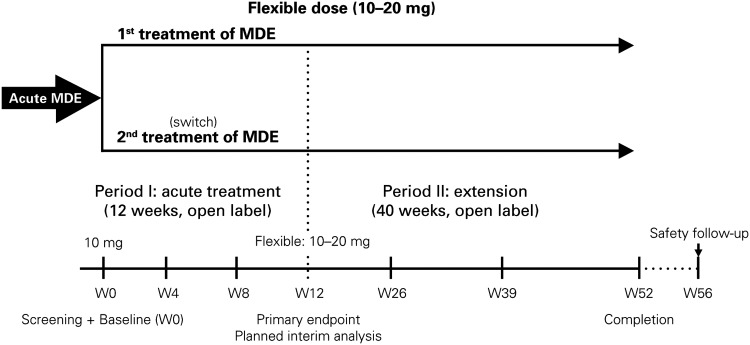
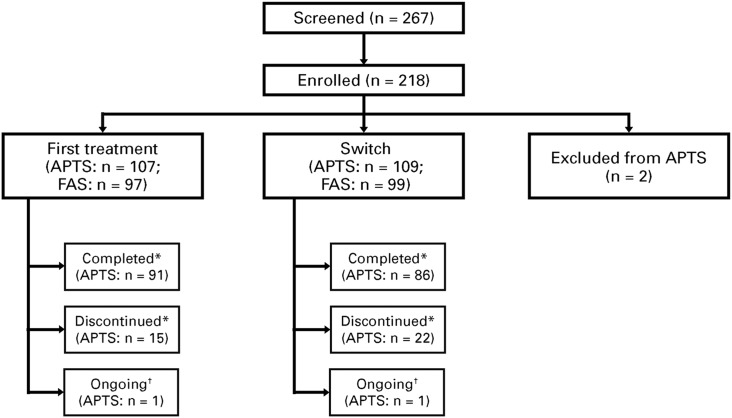
Objective: The Assessment in Work Productivity and the Relationship with Cognitive Symptoms (AtWoRC) study aimed to assess the association between cognitive symptoms and work productivity in gainfully employed patients receiving vortioxetine for a major depressive episode (MDE). Methods: Patients diagnosed with major depressive disorder (MDD) and treated with vortioxetine independently of study enrollment were assessed over 52 weeks at visits that emulated a real-life setting. Patients were classified as those receiving vortioxetine as the first treatment for their current MDE (first treatment) or having shown inadequate response to a previous antidepressant (switch). The primary endpoint was the correlation between changes in patient-reported cognitive symptoms (20-item Perceived Deficits Questionnaire [PDQ-D-20]) and changes in work productivity loss (Work Limitations Questionnaire [WLQ]) at week 12. Additional assessments included changes in symptom and disease severity, cognitive performance, functioning, work loss, and safety. Results: In the week 12 primary analysis, 196 eligible patients at 26 Canadian sites were enrolled, received at least one treatment dose, and attended at least one postbaseline study visit. This analysis demonstrated a significant, strong correlation between PDQ-D-20 and WLQ productivity loss scores (r=0.634; p<0.001), and this correlation was significant in both first treatment and switch patients (p<0.001). A weaker correlation between Digit Symbol Substitution Test and WLQ scores was found (r=−0.244; p=0.003). Conclusion: At 12 weeks, improvements in cognitive dysfunction were significantly associated with improvements in workplace productivity in patients with MDD, suggesting a role for vortioxetine in functional recovery in MDD.
Overview
The claims and statistics of this paper haven’t been checked yet.
Free: it reads the open-access text and checks the first 5 claims that cite a source we can check. Create a free account to check every claim.
Integrity signals
Registry
Cites
Statistics
Figures
Verification
Claims the paper makes
The claims and statistics of this paper haven’t been checked yet.
Free: it reads the open-access text and checks the first 5 claims that cite a source we can check. Create a free account to check every claim.
Claims other papers make about this one
Each is checked against this paper’s own text: does it say what the citing paper says it does?
The source backs part of the claim, not all of it — or backs it for a different population, condition or comparison.
In the citing paper
“It has been demonstrated that treatment with vortioxetine can lead to improvement in overall functioning and health-related quality of life, both in the short and long term (Chokka et al., 2019;Christensen et al., 2018b;Florea et al., 2015;Florea et al., 2017;Jacobson et al., 2020).”
From Effectiveness of Vortioxetine on Emotional Blunting in Patients with Major Depressive Disorder with inadequate response to SSRI/SNRI treatment (2021) · cites this paper as Chokka et al., 2019
Experimental — accuracy not yet measured
Self-check
Percentages, sums and reported differences re-computed from the paper’s own numbers.
The self-check needs the paper’s full text.
Citations
Cites
(1976) · Medical Entomology and Zoology · Cited by 8,899
Scoville, W. B. (1949) · Journal of neurosurgery · doi:10.3171/jns.1949.6.1.0065 · Cited by 7,381
Löwe, B., Decker, O., Müller, S., Brähler, E., Schellberg, D., Herzog, W., & Herzberg, P. Y. (2008) · Medical Care · doi:10.1097/mlr.0b013e318160d093 · Cited by 4,527
Rush, A. J., Trivedi, M. H., Ibrahim, H. M., Carmody, T. J., Arnow, B., Klein, D. N., Markowitz, J. C., Ninan, P. T., Kornstein, S., Manber, R., et al. (2003) · Biological Psychiatry · doi:10.1016/s0006-3223(02)01866-8 · Cited by 3,829
The Validity and Reproducibility of a Work Productivity and Activity Impairment Instrument
Reilly, M. C., Zbrozek, A. S., & Dukes, E. M. (1993) · PharmacoEconomics · doi:10.2165/00019053-199304050-00006 · Cited by 3,071
Developing the World Health Organization Disability Assessment Schedule 2.0
Üstün, T. B., Chatterji, S., Kostanjsek, N., Rehm, J., Kennedy, C., Epping-Jordan, J., Saxena, S., von Korff, M., & Pull, C. (2010) · Bulletin of the World Health Organization · doi:10.2471/blt.09.067231 · Cited by 1,851
The Economic Burden of Adults With Major Depressive Disorder in the United States (2005 and 2010)
Greenberg, P. E., Fournier, A.-A., Sisitsky, T., Pike, C. T., & Kessler, R. C. (2015) · The Journal of Clinical Psychiatry · doi:10.4088/jcp.14m09298 · Cited by 1,779
Kennedy, S. H., Lam, R. W., McIntyre, R. S., Tourjman, S. V., Bhat, V., Blier, P., Hasnain, M., Jollant, F., Levitt, A. J., MacQueen, G. M., et al. (2016) · The Canadian Journal of Psychiatry · doi:10.1177/0706743716659417 · Cited by 1,181
The role of the hippocampus in the pathophysiology of major depression
Campbell, S., & MacQueen, G. (2004) · Journal of Psychiatry and Neuroscience · doi:10.1139/jpn.0441 · Cited by 880
Kessler, R. C., Akiskal, H. S., Ames, M., Birnbaum, H., Greenberg, P., .A, R. M., Jin, R., Merikangas, K. R., Simon, G. E., & Wang, P. S. (2006) · American Journal of Psychiatry · doi:10.1176/ajp.2006.163.9.1561 · Cited by 868
Research works printed but not linked: 1
- Southerland G, Stonebridge C. Healthy Brains at Work: Estimating the Impact of Workplace Mental Health Benefits and Programs. Ottawa: The Conference Board of Canada; 2016.
Cited by
Fagiolini, A., Florea, I., Loft, H., & Christensen, M. C. (2021) · Journal of Affective Disorders · doi:10.1016/j.jad.2020.11.106 · Cited by 127
Vortioxetine: a novel antidepressant for the treatment of major depressive disorder
Gonda, X., Sharma, S. R., & Tarazi, F. I. (2019) · Expert Opinion on Drug Discovery · doi:10.1080/17460441.2019.1546691 · Cited by 123
De Diego-Adeliño, J., Crespo, J. M., Mora, F., Neyra, A., Iborra, P., Gutiérrez-Rojas, L., & Salonia, S. F. (2022) · Expert Opinion on Drug Safety · doi:10.1080/14740338.2022.2019705 · Cited by 67
“tive and function in a large sample of gainfully employed patients with acute MDD [55,56].”
BackgroundChokka, P., Bougie, J., Proulx, J., Tvistholm, A. H., & Ettrup, A. (2019) · CNS Spectrums · doi:10.1017/s1092852919000786 · Cited by 56
Self-citationHuang, I.-C., Chang, T.-S., Chen, C., & Sung, J.-Y. (2022) · International Journal of Neuropsychopharmacology · doi:10.1093/ijnp/pyac054 · Cited by 41
Levada, O. A., & Troyan, A. S. (2019) · Journal of Affective Disorders · doi:10.1016/j.jad.2019.03.040 · Cited by 37
Adamo, D., Pecoraro, G., Aria, M., Favia, G., & Mignogna, M. D. (2019) · Pain Medicine · doi:10.1093/pm/pnz120 · Cited by 36
Vortioxetine – pharmacological properties and use in mood disorders. The current state of knowledge
Krupa, A. J., Wojtasik-Bakalarz, K., & Siwek, M. (2023) · Psychiatria Polska · doi:10.12740/pp/onlinefirst/151570 · Cited by 32
“The improve - ment of general cognitive functioning was significantly associated with an increase in work productivity [24].”
Haro, J. M., Hammer-Helmich, L., Saragoussi, D., Ettrup, A., & Larsen, K. G. (2019) · Neuropsychiatric Disease and Treatment · doi:10.2147/ndt.s206825 · Cited by 30
“overlap and correlation between the two approaches are limited.(50,51,56) In this study, cognitive symptoms were assessed using the PDQ-5.”
MethodBaune, B. T., Florea, I., Ebert, B., Touya, M., Ettrup, A., Hadi, M., & Ren, H. (2021) · Neuropsychiatric Disease and Treatment · doi:10.2147/ndt.s325954 · Cited by 26
Chokka, P. R., Tvistholm, A. H., Bougie, J. K., Clerzius, G., & Ettrup, A. (2020) · Journal of Occupational and Environmental Medicine · doi:10.1097/jom.0000000000001805 · Cited by 21
“The Assessment in Work productivity and the Relationship with Cognitive symptoms (AtWoRC) study was an interventional, openlabel, real-world, Canadian study undertaken to examine the association between patient-reported cognitive symptoms and workplace productivity in working patients with MDD treated with vortioxetin…”
MethodResultSelf-citationWang, G., Tan, K. H. X., Ren, H., & Hammer-Helmich, L. (2020) · Neuropsychiatric Disease and Treatment · doi:10.2147/ndt.s230403 · Cited by 18
Yang, Y. K., Chen, C., Tsai, C.-F., Chang, C., Lai, T.-J., Lee, C.-T., Lin, C., Lan, T., & Herr, K. J. (2021) · Current Medical Research and Opinion · doi:10.1080/03007995.2021.1980869 · Cited by 19
Papalexi, E., Galanopoulos, A., Kontis, D., Markopoulou, M., Balta, G., Karavelas, E., Panagiotidis, P., Vlachos, T., & Ettrup, A. (2022) · BMC Psychiatry · doi:10.1186/s12888-022-04109-5 · Cited by 16
“In the open-label AtWoRC study [34], the mean ± standard deviation (SD) change (improvement) in SDS total score after 3 months of vortioxetine treatment was approximately 10.”
BackgroundContributors of Functional Impairment in Major Depressive Disorder: a Biopsychosocial Approach
Chow, T. K., Bowie, C. R., Morton, M., Lalovic, A., McInerney, S. J., & Rizvi, S. J. (2022) · Current Behavioral Neuroscience Reports · doi:10.1007/s40473-022-00247-y · Cited by 17
Cuomo, A., Aguglia, A., Berardis, D. D., Ventriglio, A., Gesi, C., & Fagiolini, A. M. (2024) · Annals of General Psychiatry · doi:10.1186/s12991-024-00505-1 · Cited by 13
“These effects are particularly pronounced in working patients, highlighting vortioxetine’s role in improving work productivity and quality of life [34, 35, 48].”
BackgroundRelationship between objective cognitive functioning and work performance among Japanese workers
Shibaoka, M., Masuda, M., Iwasawa, S., Ikezawa, S., Eguchi, H., & Nakagome, K. (2023) · Journal of Occupational Health · doi:10.1002/1348-9585.12385 · Cited by 18
Practical pathway for the management of depression in the workplace: a Canadian perspective
Chokka, P. R., Bender, A., Brennan, S., Ahmed, G., Corbière, M., Dozois, D. J. A., Habert, J., Harrison, J., Katzman, M. A., McIntyre, R. S., et al. (2023) · Frontiers in Psychiatry · doi:10.3389/fpsyt.2023.1207653 · Cited by 16
“In addition, improvements in cognitive symptoms are highly significantly correlated with improvements in workplace productivity (58).”
BackgroundSelf-citationSick leave duration as a potential marker of functionality and disease severity in depression
Volz, H., Bartečků, E., Bartova, L., Bessa, J. M., Berardis, D. D., Dragašek, J., Kozhuharov, H., Ladea, M., Lazáry, J., Roca, M., et al. (2022) · International Journal of Psychiatry in Clinical Practice · doi:10.1080/13651501.2022.2054350 · Cited by 13
“The Assessment in Work Productivity and the Relationship with Cognitive Symptoms (AtWoRC) study investigated the association between patient-reported cognitive symptoms (assessed using the 20-item Perceived Deficits Questionnaire [PDQ-D-20]) and work productivity (assessed using the Work Limitations Questionnaire [WLQ…”
BackgroundMethodInfluentialLachaîne, J., Beauchemin, C., Bibeau, J., Patenaude, J., Chokka, P. R., Proulx, J., & Bougie, J. K. (2019) · CNS Spectrums · doi:10.1017/s1092852919000853 · Cited by 11
Self-citationChokka, P. R., Ge, H., Bougie, J. K., Ettrup, A., & Clerzius, G. (2021) · Therapeutic Advances in Psychopharmacology · doi:10.1177/20451253211013148 · Cited by 9
Self-citationAlmeida, S. S., Christensen, M. C., Simonsen, K., & Adair, M. (2022) · Journal of Psychopharmacology · doi:10.1177/02698811221132468 · Cited by 7
“…demonstrated efficacy in treating patients with MDD and high levels of anxiety, reducing symptoms of depression and anxiety, as well as delivering long-term improvements in cognitive symptoms and patient function (including work productivity) (Baldwin et al., 2016; Chokka et al., 2019b, 2021).”
BackgroundHori, H., & Yamato, K. (2019) · Neuropsychiatric Disease and Treatment · doi:10.2147/ndt.s217098 · Cited by 6
The PBC Model: Supporting Positive Behaviours in Smart Environments
Adewoyin, O., Wesson, J. L., & Vogts, D. (2022) · Sensors · doi:10.3390/s22249626 · Cited by 8
“The current study will incorporate the user model presented in [32] in modelling human behaviour for the adequate interpretation of behaviour.”
MethodInfluentialMoon, S. W., Kim, J. W., Kim, D. H., Adair, M., Åström, D. O., Reines, E. H., Lee, M., & Kim, G. (2024) · Neuropsychiatric Disease and Treatment · doi:10.2147/ndt.s478804 · Cited by 4
“11 12–15 In addition to being associated with non-response to antidepressants and cognitive dysfunction, 13,14 anhedonia has also been reported to have a potential mediator effect on different functional domains, including work/school, amongst MDD patients.”
InfluentialMcInerney, S. J., Chakrabarty, T., Maciukiewicz, M., Frey, B. N., MacQUEEN, G. M., Milev, R. V., Ravindran, A. V., Rotzinger, S., Kennedy, S. H., Lam, R. W. M., et al. (2020) · The Canadian Journal of Psychiatry · doi:10.1177/0706743720974823 · Cited by 5
Weiss, F., Pacciardi, B., D’Alessandro, G., Caruso, V., Maremmani, I., Pini, S., & Perugi, G. (2024) · Journal of Clinical Medicine · doi:10.3390/jcm13020531 · Cited by 4
Navarra‐Ventura, G., Fernández‐Gonzalo, S., Serra-Blasco, M., Vicent-Gil, M., Palao, D. J., & Cardoner, N. (2019) · The European Journal of Psychiatry · doi:10.1016/j.ejpsy.2019.04.001 · Cited by 5
Hochstrasser, B., Hasler, G., Baumann, A., Bose, R., Reines, E. H., Kammerer, M. H., & Sousek, A. (2025) · CNS Drugs · doi:10.1007/s40263-025-01207-2 · Cited by 3
“After approximately 8 weeks of treat-ment, improvements in everyday functioning were observed, which were similar in the two formulation groups, and consistent with the results from previous controlled trials and real-world studies of vortioxetine tablets [35–38, 40, 45, 46].”
Cognitive Dysfunction in the Workplace: Focus on Depression
Lam, R. W. M., & Persad, C. C. (2019) · Integrating psychiatry and primary care · doi:10.1007/978-3-030-04266-0_7 · Cited by 4
Luo, S., Lai, S., Chu, L., Wang, Y., Chen, P., Ye, X., Zhuo, J., Abula, M., Liang, Y., Wei, D., et al. (2025) · Journal of Affective Disorders · doi:10.1016/j.jad.2025.03.161 · Cited by 2
Chokka, P. R., Hammer-Helmich, L., Schmidt, S. N., Hubert, M., Reines, E. H., & Grande, I. (2025) · Current Medical Research and Opinion · doi:10.1080/03007995.2025.2503976 · Cited by 2
“The Assessment in Work Productivity and the Relationship with Cognitive Symptoms (AtWoRC) study assessed the association between cognitive symptoms and work productivity in 192 gainfully employed patients receiving vortioxetine for a major depressive episode in Canada 47,93 .”
InfluentialSelf-citationAhern, E., Whiston, A., Kakar, A., Moloney, C., & Slattery, E. J. (2026) · Clinical Psychology Review · doi:10.1016/j.cpr.2026.102744 · Cited by 3
McKeown, M. L., & Crizzle, A. M. (2026) · Workplace Health & Safety · doi:10.1177/21650799261454291 · Cited by 2
“These cognitive domains, which are essential for LHTD to perform their job safely and efficiently, are assessed using a variety of cognitive tests (e.g., Trail Making Test A and B; Montreal Cognitive Assessment; Clock Draw Test; Useful Field of View; Chokka et al., 2019; Evans et al., 2014; Lohaus & Habermann, 2019; M…”
Cuomo, A., Barillà, G., Cattolico, M., Pardossi, S., Mariantoni, E., Koukouna, D., Carmellini, P., & Fagiolini, A. M. (2024) · Expert Review of Neurotherapeutics · doi:10.1080/14737175.2024.2333394 · Cited by 3
“Beyond isolated short-term RCTs, the cognitive-improving properties of vortioxetine have been validated in three meta-analyses [7,58,59] and one open-label study [60] in which cognitive function was reported as the primary outcome variable.”
BackgroundWatanabe, K., Marumoto, T., Ge, H., Moriguchi, Y., Fujikawa, K., & Fernandez, J. L. (2022) · Journal of Psychiatric Research · doi:10.1016/j.jpsychires.2022.07.036 · Cited by 3
Murthy, N. V., Xu, R., Zhong, W., & Harvey, P. D. (2019) · Journal of Affective Disorders · doi:10.1016/j.jad.2019.09.025 · Cited by 2
Greer, T. L., & Joseph, J. K. (2019) · Elsevier eBooks · doi:10.1016/b978-0-323-58131-8.00010-0 · Cited by 2
Chokka, P. R., Bougie, J. K., Proulx, J., Tvistholm, A. H., & Ettrup, A. (2019) · European Neuropsychopharmacology · doi:10.1016/j.euroneuro.2018.11.1026
Self-citationKontis, D., Roukas, D., Panagiotidis, P., Kalogera, E., Anagnostara, C., Karavelas, E., Papalexi, E., & Galanopoulos, A. (2020) · European Neuropsychopharmacology · doi:10.1016/j.euroneuro.2020.09.252
Chokka, P. R., Tvistholm, A. H., Bougie, J. K., Clerzius, G., & Ettrup, A. (2019) · European Neuropsychopharmacology · doi:10.1016/j.euroneuro.2019.09.115
Self-citationC.03.03 Does good work equal good health in working patients with MDD?
Chokka, P. R. (2019) · European Neuropsychopharmacology · doi:10.1016/j.euroneuro.2019.09.060
Self-citationTroian, O., & Levada, O. A. (2019) · European Neuropsychopharmacology · doi:10.1016/j.euroneuro.2019.09.084
Ko, D., Ridner, S. H., & Gifford, K. A. (2023) · Transplant International · doi:10.3389/ti.2023.10863
DIDŽIOSIOS DEPRESIJOS SUKELIAMOS SUDĖTINGOS BŪKLĖS
Žalkauskaitė, K., Varžaitė, S., & Musneckis, A. (2023) · Health Sciences · doi:10.35988/sm-hs.2023.123 · Cited by 1
Post-marketing safety surveillance of vortioxetine: a real-world study using the FAERS databasePreprint
Dai, L., Yang, Y., Chen, Y., Yaoqi, W., Beichen, F., Shang, D., & Yu-guan, W. (2024) · doi:10.22541/au.173312476.63511985/v1
Furusawa, R., Mafune, K., Hino, A., Inoue, A., & Eguchi, H. (2025) · Journal of UOEH · doi:10.7888/juoeh.47.55
Papalexi, E., Galanopoulos, A., Kontis, D., Markopoulou, M., Balta, G., Karavelas, E., Panagiotidis, P., Vlachos, T., & Ettrup, A. (2022) · Figshare · doi:10.6084/m9.figshare.20484658
Kammerer, M. H., Hasler, G., Hochstrasser, B., Baumann, A., & Sousek, A. (2026) · Clinical Drug Investigation · doi:10.1007/s40261-026-01537-z
“…domains of everyday functioning — cognition, professional activities, family, social and leisure activities, physical well-being and quality of life — were observed, which is consistent with findings from previous clinical trials and real-world studies for vortioxetine [14, 16, 17, 35, 38, 39, 57].”
Metadata
- Authors
- Chokka, P., Bougie, J., Rampakakis, E., & Proulx, J.
- Affiliations
- Grey Nuns Community Hospital (CA)
- Lundbeck Canada (Canada) (CA)
- Corresponding author
- Chokka, Pratap
- Venue
- CNS Spectrums
- Publisher
- Cambridge University Press (CUP)
- Published
- 2018-05-24
- Volume
- 24
- Issue
- 3
- Pages
- 338-347
- ISSN
- 1092-8529 (ISSN-L)
- 2165-6509
- PMC
- PMC6676443
- OpenAlex
- W2803911854
- Cited by
- 48
- References
- 59
- Citations by year
- 2026: 3 · 2025: 4 · 2024: 4 · 2023: 4 · 2022: 9 · 2021: 4 · 2020: 5 · 2019: 14 · 2018: 1
- FWCI
- 3.87
- Type
- journal article
- Language
- en
- Open access
- hybrid
- doi.org
- Locations
- CNS Spectrums (publishedVersion, cc-by)
- Europe PMC (PubMed Central) (publishedVersion, cc-by)
- PubMed Central (publishedVersion, cc-by)
- PubMed (publishedVersion)
- Funders
- H. Lundbeck A/S
- Lundbeck Canada
- Topics
- Health Sciences › Medicine › Pharmacology (medical) › Treatment of Major Depression
- Health Sciences › Medicine › Public Health, Environmental and Occupational Health › Workplace Health and Well-being
- Social Sciences › Economics, Econometrics and Finance › Economics and Econometrics › Health Systems, Economic Evaluations, Quality of Life
- Keywords
- vortioxetine, major depressive disorder, labor productivity, cognitive symptoms, cognitive impairment, work limitations, Work Limitations Questionnaire, Digit Symbol Substitution Test, antidepressant treatment, functional recovery, employed patients
- MeSH terms
- Work Performance, Vortioxetine, Adult, Antidepressive Agents, Cognition, Major Depressive Disorder, Female, Humans, Male, Middle Aged
About these checks
Registry, retraction, Cites and statistics results are computed, not judged, with one exception: a printed reference that no index lists is read once by a model before it counts as a citation error. Claims are extracted by a model and kept only when their quote appears verbatim in the text; each cited source is then checked, with a model’s help, for whether it says what the claim relies on. Those verdicts can be wrong — read the claim’s quote and the cited source before relying on one.
Statistics and arithmetic are recomputed, not judged.
Confidence bands are shown only for fields calibrated on our annotated test set. None is calibrated yet, so no band is shown.
What counts as a claim ›How we measure confidence ›How we check this ›
Are you an author, or do you see a problem with this page? Request a review
Data sources
Bibliographic data: Semantic Scholar, OpenAlex, Crossref.
Contains information from the Semantic Scholar Academic Graph Datasets, made available under the ODC Attribution License (ODC-BY 1.0).
Semantic Scholar’s data is described in: Kinney, R., et al. (2023). The Semantic Scholar Open Data Platform. arXiv:2301.10140.
