

Assessment in Work Productivity and the Relationship with Cognitive Symptoms (AtWoRC): primary analysis from a Canadian open-label study of vortioxetine in patients with major depressive disorder (MDD)
Open accessThe DOI matches its Crossref record; 59 of the 59 references it cites were found in a registry or an index.
Abstract
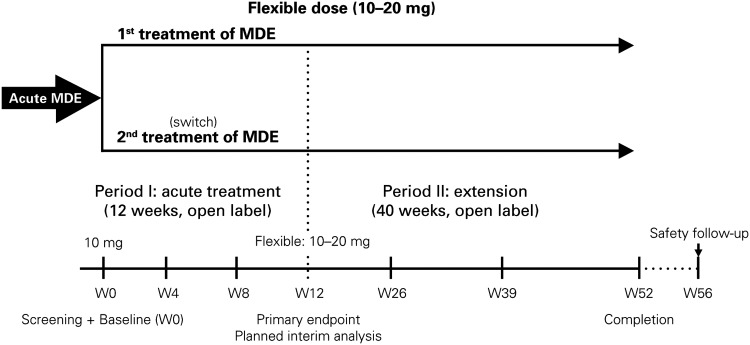
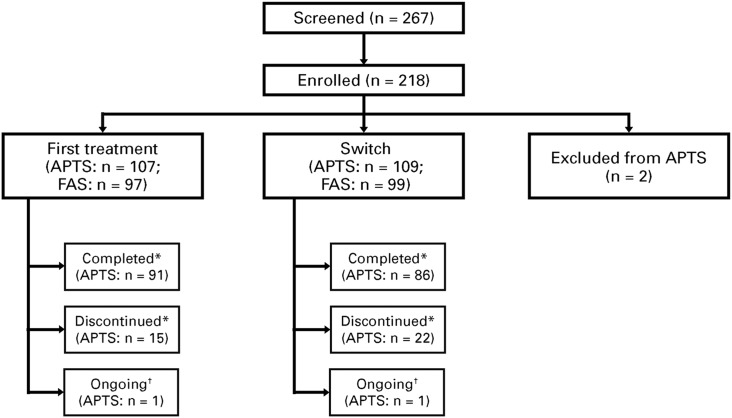
Objective: The Assessment in Work Productivity and the Relationship with Cognitive Symptoms (AtWoRC) study aimed to assess the association between cognitive symptoms and work productivity in gainfully employed patients receiving vortioxetine for a major depressive episode (MDE). Methods: Patients diagnosed with major depressive disorder (MDD) and treated with vortioxetine independently of study enrollment were assessed over 52 weeks at visits that emulated a real-life setting. Patients were classified as those receiving vortioxetine as the first treatment for their current MDE (first treatment) or having shown inadequate response to a previous antidepressant (switch). The primary endpoint was the correlation between changes in patient-reported cognitive symptoms (20-item Perceived Deficits Questionnaire [PDQ-D-20]) and changes in work productivity loss (Work Limitations Questionnaire [WLQ]) at week 12. Additional assessments included changes in symptom and disease severity, cognitive performance, functioning, work loss, and safety. Results: In the week 12 primary analysis, 196 eligible patients at 26 Canadian sites were enrolled, received at least one treatment dose, and attended at least one postbaseline study visit. This analysis demonstrated a significant, strong correlation between PDQ-D-20 and WLQ productivity loss scores (r=0.634; p<0.001), and this correlation was significant in both first treatment and switch patients (p<0.001). A weaker correlation between Digit Symbol Substitution Test and WLQ scores was found (r=−0.244; p=0.003). Conclusion: At 12 weeks, improvements in cognitive dysfunction were significantly associated with improvements in workplace productivity in patients with MDD, suggesting a role for vortioxetine in functional recovery in MDD.
Overview
The claims and statistics of this paper haven’t been checked yet.
Free: it reads the open-access text and checks the first 5 claims that cite a source we can check. Create a free account to check every claim.
Integrity signals
Registry
Cites
Statistics
Figures
Verification
Claims the paper makes
The claims and statistics of this paper haven’t been checked yet.
Free: it reads the open-access text and checks the first 5 claims that cite a source we can check. Create a free account to check every claim.
Claims other papers make about this one
Each is checked against this paper’s own text: does it say what the citing paper says it does?
The source backs part of the claim, not all of it — or backs it for a different population, condition or comparison.
In the citing paper
“It has been demonstrated that treatment with vortioxetine can lead to improvement in overall functioning and health-related quality of life, both in the short and long term (Chokka et al., 2019;Christensen et al., 2018b;Florea et al., 2015;Florea et al., 2017;Jacobson et al., 2020).”
From Effectiveness of Vortioxetine on Emotional Blunting in Patients with Major Depressive Disorder with inadequate response to SSRI/SNRI treatment (2021) · cites this paper as Chokka et al., 2019
Experimental — accuracy not yet measured
Self-check
Percentages, sums and reported differences re-computed from the paper’s own numbers.
The self-check needs the paper’s full text.
Citations
Cites
(1976) · Medical Entomology and Zoology · Cited by 8,899
Scoville, W. B. (1949) · Journal of neurosurgery · doi:10.3171/jns.1949.6.1.0065 · Cited by 7,381
Löwe, B., Decker, O., Müller, S., Brähler, E., Schellberg, D., Herzog, W., & Herzberg, P. Y. (2008) · Medical Care · doi:10.1097/mlr.0b013e318160d093 · Cited by 4,527
Rush, A. J., Trivedi, M. H., Ibrahim, H. M., Carmody, T. J., Arnow, B., Klein, D. N., Markowitz, J. C., Ninan, P. T., Kornstein, S., Manber, R., et al. (2003) · Biological Psychiatry · doi:10.1016/s0006-3223(02)01866-8 · Cited by 3,829
The Validity and Reproducibility of a Work Productivity and Activity Impairment Instrument
Reilly, M. C., Zbrozek, A. S., & Dukes, E. M. (1993) · PharmacoEconomics · doi:10.2165/00019053-199304050-00006 · Cited by 3,071
Developing the World Health Organization Disability Assessment Schedule 2.0
Üstün, T. B., Chatterji, S., Kostanjsek, N., Rehm, J., Kennedy, C., Epping-Jordan, J., Saxena, S., von Korff, M., & Pull, C. (2010) · Bulletin of the World Health Organization · doi:10.2471/blt.09.067231 · Cited by 1,851
The Economic Burden of Adults With Major Depressive Disorder in the United States (2005 and 2010)
Greenberg, P. E., Fournier, A.-A., Sisitsky, T., Pike, C. T., & Kessler, R. C. (2015) · The Journal of Clinical Psychiatry · doi:10.4088/jcp.14m09298 · Cited by 1,779
Kennedy, S. H., Lam, R. W., McIntyre, R. S., Tourjman, S. V., Bhat, V., Blier, P., Hasnain, M., Jollant, F., Levitt, A. J., MacQueen, G. M., et al. (2016) · The Canadian Journal of Psychiatry · doi:10.1177/0706743716659417 · Cited by 1,181
The role of the hippocampus in the pathophysiology of major depression
Campbell, S., & MacQueen, G. (2004) · Journal of Psychiatry and Neuroscience · doi:10.1139/jpn.0441 · Cited by 880
Kessler, R. C., Akiskal, H. S., Ames, M., Birnbaum, H., Greenberg, P., .A, R. M., Jin, R., Merikangas, K. R., Simon, G. E., & Wang, P. S. (2006) · American Journal of Psychiatry · doi:10.1176/ajp.2006.163.9.1561 · Cited by 868
Kessler, R. C., Akiskal, H. S., Ames, M., Birnbaum, H., Greenberg, P., .A, R. M., Jin, R., Merikangas, K. R., Simon, G. E., & Wang, P. S. (2006) · American Journal of Psychiatry · doi:10.1176/appi.ajp.163.9.1561 · Cited by 868 · cited 1×
“Major depressive disorder (MDD) is a highly prevalent, burdensome condition that affects more than 350 million people worldwide.(1,2) In Canada, the prevalence of MDD was found to be 3.”
BackgroundMcIntyre, R. S., Cha, D. S., Soczynska, J. K., Woldeyohannes, H. O., Gallaugher, L. A., Kudlow, P., Alsuwaidan, M., & Baskaran, A. (2013) · Depression and Anxiety · doi:10.1002/da.22063 · Cited by 765
A meta-analysis of cognitive deficits in first-episode Major Depressive Disorder
Lee, R. S. C., Hermens, D. F., Porter, M. A., & Redoblado-Hodge, M. A. (2012) · Journal of Affective Disorders · doi:10.1016/j.jad.2011.10.023 · Cited by 737
Kennedy, S. H., Lam, R. W., Parikh, S. V., Patten, S. B., & Ravindran, A. V. (2009) · Journal of Affective Disorders · doi:10.1016/j.jad.2009.06.043 · Cited by 525
A preliminary profile of neuropsychological deficits associated with major depression
Veiel, H. O. F. (1997) · Journal of Clinical and Experimental Neuropsychology · doi:10.1080/01688639708403745 · Cited by 502
Neurocognitive deficits and disability in major depressive disorder
Jaeger, J., Berns, S., Uzelac, S., & Davis-Conway, S. (2006) · Psychiatry Research · doi:10.1016/j.psychres.2005.11.011 · Cited by 484
Katona, C., Hansen, T., & Olsen, C. K. (2012) · International Clinical Psychopharmacology · doi:10.1097/yic.0b013e3283542457 · Cited by 445 · cited 6×
“©Cambridge University Press 2018 First published online 24 May 2018 and the absentee rates range from 23% to 53% across Canadian provinces.10 In Canada, depression costs more than US$9 billion due to lost productivity (i.e., absence from work and attending work while unwell), and depression-related presenteeism (i.e.,…”
ResultInfluentialMcIntyre, R. S., Lophaven, S., & Olsen, C. K. (2014) · The International Journal of Neuropsychopharmacology · doi:10.1017/s1461145714000546 · Cited by 433 · cited 2×
“The FOCUS study also showed similar improvement in DSST scores in patients treated with vortioxetine.(34) Moreover, the post hoc analysis from the FOCUS study demonstrated that greater improvement in the measures of cognitive functioning was observed in the working versus total population treated with vortioxetine.”
ResultThe Impact of Individual Depressive Symptoms on Impairment of Psychosocial Functioning
Fried, E. I., & Nesse, R. M. (2014) · PLoS ONE · doi:10.1371/journal.pone.0090311 · Cited by 424 · cited 1×
“Previously, the landmark STAR*D study, which highlighted the impact of individual depressive symptoms on functional impairment, identified sad mood, concentration, and fatigue as the top three symptoms that have a high relative impact on functional change.(27) Cognition has been reported to mediate a quarter of the im…”
BackgroundCognitive impairment in the remitted state of unipolar depressive disorder: A systematic review
Hasselbalch, B. J., Knorr, U., & Kessing, L. V. (2011) · Journal of Affective Disorders · doi:10.1016/j.jad.2010.11.011 · Cited by 406
Evans-Lacko, S., & Knapp, M. (2016) · Social Psychiatry and Psychiatric Epidemiology · doi:10.1007/s00127-016-1278-4 · Cited by 390
Rosenblat, J. D., Kakar, R., & McIntyre, R. S. (2016) · International Journal of Neuropsychopharmacology · doi:10.1093/ijnp/pyv082 · Cited by 315 · cited 1×
“Major depressive disorder (MDD) is a highly prevalent, burdensome condition that affects more than 350 million people worldwide.(1,2) In Canada, the prevalence of MDD was found to be 3.”
BackgroundMahableshwarkar, A. R., Zajecka, J., Jacobson, W., Chen, Y., & Keefe, R. S. (2015) · Neuropsychopharmacology · doi:10.1038/npp.2015.52 · Cited by 307 · cited 2×
“The improvement in objective cognitive performance as assessed by the DSST and perceived cognitive dysfunction as assessed by the PDQ-D-20 were consistent with previous studies with vortioxetine.(31,32,34,36) Moreover, results from the AtWoRC study demonstrated the efficacy of vortioxetine in working patients, which s…”
BackgroundResultCognitive dysfunction in depression: Neurocircuitry and new therapeutic strategies
Murrough, J. W., Iacoviello, B., Neumeister, A., Charney, D. S., & Iosifescu, D. V. (2011) · Neurobiology of Learning and Memory · doi:10.1016/j.nlm.2011.06.006 · Cited by 307
Lam, R. W., McIntosh, D., Wang, J., Enns, M. W., Kolivakis, T., Michalak, E. E., Sareen, J., Song, W.-Y., Kennedy, S. H., MacQueen, G. M., et al. (2016) · The Canadian Journal of Psychiatry · doi:10.1177/0706743716659416 · Cited by 288
The heterogeneity of the depressive syndrome: when numbers get serious
Østergaard, S. D., Jensen, S. O. W., & Bech, P. (2011) · Acta Psychiatrica Scandinavica · doi:10.1111/j.1600-0447.2011.01744.x · Cited by 287 · cited 1×
“(DSM-V), indicating that MDD is a very heterogeneous disease.(5) Cognitive dysfunction is a core feature of depression, which is ultimately associated with functional impairment and work limitations.”
BackgroundRosano, C., Newman, A. B., Katz, R., Hirsch, C. H., & Kuller, L. H. (2008) · Journal of the American Geriatrics Society · doi:10.1111/j.1532-5415.2008.01856.x · Cited by 280
Lerner, D., Adler, D. A., Chang, H., Berndt, E. R., Irish, J. T., Lapitsky, L., Hood, M. Y., Reed, J., & Rogers, W. H. (2004) · Journal of Occupational & Environmental Medicine · doi:10.1097/01.jom.0000126684.82825.0a · Cited by 202
Descriptive Epidemiology of Major Depressive Disorder in Canada in 2012
Patten, S. B., Williams, J. V. A., Lavorato, D. H., Wang, J. L., McDonald, K., & Bulloch, A. G. M. (2015) · The Canadian Journal of Psychiatry · doi:10.1177/070674371506000106 · Cited by 190
Evans, V. C., Iverson, G. L., Yatham, L. N., & Lam, R. W. (2014) · The Journal of Clinical Psychiatry · doi:10.4088/jcp.13r08939 · Cited by 185
McIntyre, R. S., Soczynska, J. K., Woldeyohannes, H. O., Alsuwaidan, M. T., Cha, D. S., Carvalho, A. F., Jerrell, J. M., Dale, R. M., Gallaugher, L. A., Muzina, D. J., et al. (2014) · Comprehensive Psychiatry · doi:10.1016/j.comppsych.2014.08.051 · Cited by 177 · cited 1×
“Cognition has been reported to mediate a quarter of the impact of a major depressive episode (MDE) on work loss,(18) and cognitive symptoms have been associated with greater workplace impairment than depression severity.(8) Previous studies have reported that greater functional disability and impairment in daily activ…”
BackgroundBoulenger, J.-P., Loft, H., & Olsen, C. K. (2014) · International Clinical Psychopharmacology · doi:10.1097/yic.0000000000000018 · Cited by 176 · cited 1×
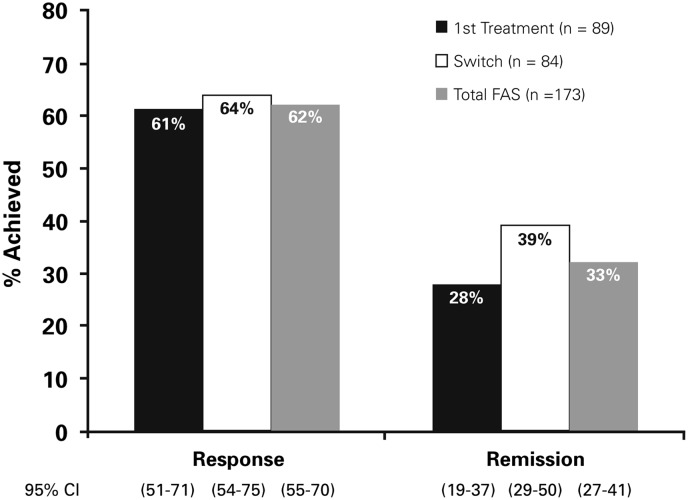
“Comparing with previous studies with vortioxetine, the response and remission rates were high, which were consistent with previous studies with vortioxetine.(30,38,39) In the past, very few studies have explored the association between the change in perceived cognitive symptoms and change in workplace productivity.”
ResultThase, M. E., Mahableshwarkar, A. R., Dragheim, M., Loft, H., & Vieta, E. (2016) · European Neuropsychopharmacology · doi:10.1016/j.euroneuro.2016.03.007 · Cited by 162 · cited 6×
“©Cambridge University Press 2018 First published online 24 May 2018 and the absentee rates range from 23% to 53% across Canadian provinces.10 In Canada, depression costs more than US$9 billion due to lost productivity (i.e., absence from work and attending work while unwell), and depression-related presenteeism (i.e.,…”
ResultInfluentialThe psychometric validation of the Sheehan Disability Scale (SDS) in patients with bipolar disorder
Arbuckle, R. A., Frye, M. A., Brecher, M., Paulsson, B., Rajagopalan, K., Palmer, S., & Innocenti, A. D. (2008) · Psychiatry Research · doi:10.1016/j.psychres.2007.11.018 · Cited by 161
Henigsberg, N., Mahableshwarkar, A. R., Jacobsen, P., Chen, Y., & Thase, M. E. (2012) · The Journal of Clinical Psychiatry · doi:10.4088/jcp.11m07470 · Cited by 150 · cited 1×
“Comparing with previous studies with vortioxetine, the response and remission rates were high, which were consistent with previous studies with vortioxetine.(30,38,39) In the past, very few studies have explored the association between the change in perceived cognitive symptoms and change in workplace productivity.”
ResultTang, K., Beaton, D., Boonen, A. E. R. C. H., Gignac, M. A. M., & Bombardier, C. (2011) · Arthritis Care & Research · doi:10.1002/acr.20633 · Cited by 143
Sustained attention deficit in bipolar disorder is not a working memory impairment in disguise
Harmer, C. J., Clark, L., Grayson, L., & Goodwin, G. M. (2002) · Neuropsychologia · doi:10.1016/s0028-3932(02)00019-2 · Cited by 135
Mediators of the association between depression and role functioning
Buist‐Bouwman, M. A., Ormel, J., De Graaf, R., De Jonge, P., Van Sonderen, E., Alonso, J., Bruffaerts, R., Vollebergh, W. A. M., & the ESEMeD/MHEDEA 2000 investigators (2008) · Acta Psychiatrica Scandinavica · doi:10.1111/j.1600-0447.2008.01285.x · Cited by 127
Depression and Cognitive Impairment in Older Adults
Weisenbach, S. L., Boore, L. A., & Kales, H. C. (2012) · Current Psychiatry Reports · doi:10.1007/s11920-012-0278-7 · Cited by 122
Trivedi, M. H., Morris, D. W., Wisniewski, S. R., Lesser, I., Nierenberg, A. A., Daly, E., Kurian, B. T., Gaynes, B. N., Balasubramani, G. K., & Rush, A. J. (2013) · American Journal of Psychiatry · doi:10.1176/appi.ajp.2012.12020250 · Cited by 121
Discrepancy between objective and subjective cognition in adults with major depressive disorder
Srisurapanont, M., Suttajit, S., Eurviriyanukul, K., & Varnado, P. (2017) · Scientific Reports · doi:10.1038/s41598-017-04353-w · Cited by 121 · cited 1×
“, discrepancy was found between subjective and objective measures of cognition in patients with MDD, and the authors concluded that age and depression severity might predict the discrepancy between the two sets of measures.(41) When Lam et al.”
ResultThe relation between mood, cognition and psychosocial functioning in psychiatric disorders
Iosifescu, D. V. (2012) · European Neuropsychopharmacology · doi:10.1016/j.euroneuro.2012.08.002 · Cited by 113
Swan, G. E., Carmelli, D., & LaRue, A. (1995) · American Journal of Epidemiology · doi:10.1093/oxfordjournals.aje.a117342 · Cited by 105
Lam, R., Lamy, F.-X., Danchenko, N., Yarlas, A., White, M. K., Rive, B., & Saragoussi, D. (2018) · Neuropsychiatric Disease and Treatment · doi:10.2147/ndt.s175188 · Cited by 101
Efficacy of Vortioxetine on Cognitive Functioning in Working Patients With Major Depressive Disorder
McIntyre, R. S., Florea, I., Tonnoir, B., Loft, H., Lam, R. W., & Christensen, M. C. (2017) · The Journal of Clinical Psychiatry · doi:10.4088/jcp.16m10744 · Cited by 100 · cited 2×
“The analysis also showed that vortioxetine had a greater effect in working patients when compared with the total study population; a similar pattern was observed for the PDQ and Montgomery–Åsberg Depression Rating Scale scores.(35) In addition, in the CONNECT study, vortioxetine was superior to placebo in the improvem…”
MethodResultCognitive impairment in major depression and the mGlu2 receptor as a therapeutic target
Goeldner, C., Ballard, T. M., Knoflach, F., Wichmann, J., Gatti, S., & Umbricht, D. (2013) · Neuropharmacology · doi:10.1016/j.neuropharm.2012.08.001 · Cited by 96
Treating to target in major depressive disorder: response to remission to functional recovery
McIntyre, R. S., Lee, Y., & Mansur, R. B. (2015) · CNS Spectrums · doi:10.1017/s1092852915000826 · Cited by 84
Kim, J. M., Chalem, Y., di Nicola, S., Hong, J. P., Won, S. H., & Milea, D. (2016) · Psychiatry Research · doi:10.1016/j.psychres.2016.01.022 · Cited by 83 · cited 1×
“Previous studies have reported that greater functional disability and impairment in daily activities were associated with more severe depression and greater perceived cognitive dysfunction, while patients with more severe perceived cognitive dysfunction reported worse work-related productivity outcomes.(28) Therefore,…”
BackgroundDepression and employment status in primary and tertiary care settings
Rizvi, S. J., Cyriac, A., Grima, E., Tan, M., Lin, P., Gallaugher, L. A., McIntyre, R. S., & Kennedy, S. H. (2015) · The Canadian Journal of Psychiatry · doi:10.1177/070674371506000105 · Cited by 80 · cited 1×
“and the absentee rates range from 23% to 53% across Canadian provinces.(10) In Canada, depression costs more than US$9 billion due to lost productivity (i.”
BackgroundCha, D. S., Carmona, N. E., Subramaniapillai, M., Mansur, R. B., Lee, Y. L., Lee, J. H., Lee, J., Rosenblat, J. D., Shekotikhina, M., Park, C., et al. (2017) · Journal of Affective Disorders · doi:10.1016/j.jad.2017.06.036 · Cited by 64 · cited 1×
“In another study, subjective and objective measures of cognition were also reported not to be associated with each other.(43) Subjective cognitive impairment, but not objective cognitive impairment, was found to be significantly associated with psychosocial impairment; this difference might be attributed to difference…”
BackgroundWhich cognitive domains are improved by treatment with vortioxetine?
Harrison, J. E., Lophaven, S., & Olsen, C. K. (2016) · International Journal of Neuropsychopharmacology · doi:10.1093/ijnp/pyw054 · Cited by 59 · cited 1×
“For example, post hoc analyses of a randomized trial in adult patients withMDD who were treated with vortioxetine demonstrated an improvement in the Digital Symbol Substitution Test (DSST), which is an objective cognitive measure of attention/speed of processing, executive functioning, and memory.(33) The FOCUS study…”
ResultJha, M. K., Minhajuddin, A., Greer, T. L., Carmody, T., Rush, A. J., & Trivedi, M. H. (2016) · American Journal of Psychiatry · doi:10.1176/appi.ajp.2016.16020176 · Cited by 53 · cited 2×
“A previous report from the Combined Medications to Enhance Depression Outcomes (CO-MED) trial demonstrated this association by assessing perceived cognitive symptoms with QIDS–Clinician Rated and QIDS-SR, and work productivity with WPAI and the Massachusetts General Hospital Cognitive and Physical Functioning Question…”
MethodVortioxetine: A Review of Its Use in Major Depressive Disorder
Garnock-Jones, K. P. (2014) · CNS Drugs · doi:10.1007/s40263-014-0195-x · Cited by 52 · cited 2×
“Comparing with previous studies with vortioxetine, the response and remission rates were high, which were consistent with previous studies with vortioxetine.(30,38,39) In the past, very few studies have explored the association between the change in perceived cognitive symptoms and change in workplace productivity.”
BackgroundResultLam, R. W. M., Saragoussi, D., Danchenko, N., Rive, B., Lamy, F.-X., & Brevig, T. (2013) · Value in Health · doi:10.1016/j.jval.2013.08.046 · Cited by 49
Duloxetine in the treatment of major depressive disorder: an open-label study
Hudson, J. I., Perahia, D. G., Gilaberte, I., Wang, F., Watkin, J. G., & Detke, M. J. (2007) · BMC Psychiatry · doi:10.1186/1471-244x-7-43 · Cited by 35
Lawrence, C., Roy, A., Harikrishnan, V., Yu, S., & Dabbous, O. (2013) · The Primary Care Companion For CNS Disorders · doi:10.4088/pcc.12m01469 · Cited by 34
Lam, R. W. M., Iverson, G. L., Evans, V. C., Yatham, L. N., Stewart, K., Tam, E. M., Axler, A., & Woo, C. (2016) · Journal of Affective Disorders · doi:10.1016/j.jad.2016.05.074 · Cited by 28 · cited 1×
“examined the effect of desvenlafaxine on neurocognitive and work functioning in working patients with MDD, they showed similar findings, in that there were no significant correlations between changes in objective cognitive function and changes in measures of work functioning.(42) In another study, subjective and objec…”
ResultWohlreich, M. M., Martinez, J. M., Mallinckrodt, C. H., Prakash, A., Watkin, J. G., & Fava, M. (2005) · Journal of Clinical Psychopharmacology · doi:10.1097/01.jcp.0000185429.10053.c8 · Cited by 25
the role of antidepressant treatments on cognitive deficits: a review of recent literature
Francomano, A., Fucà, L., Placa, M. L., LA BARBERA, D., & Bonanno, B. (2011) · Nova Science Publishers (Nova Science Publishers, Inc.) · Cited by 6
Research works printed but not linked: 1
- Southerland G, Stonebridge C. Healthy Brains at Work: Estimating the Impact of Workplace Mental Health Benefits and Programs. Ottawa: The Conference Board of Canada; 2016.
Cited by
Fagiolini, A., Florea, I., Loft, H., & Christensen, M. C. (2021) · Journal of Affective Disorders · doi:10.1016/j.jad.2020.11.106 · Cited by 127
Vortioxetine: a novel antidepressant for the treatment of major depressive disorder
Gonda, X., Sharma, S. R., & Tarazi, F. I. (2019) · Expert Opinion on Drug Discovery · doi:10.1080/17460441.2019.1546691 · Cited by 123
De Diego-Adeliño, J., Crespo, J. M., Mora, F., Neyra, A., Iborra, P., Gutiérrez-Rojas, L., & Salonia, S. F. (2022) · Expert Opinion on Drug Safety · doi:10.1080/14740338.2022.2019705 · Cited by 67
“tive and function in a large sample of gainfully employed patients with acute MDD [55,56].”
BackgroundChokka, P., Bougie, J., Proulx, J., Tvistholm, A. H., & Ettrup, A. (2019) · CNS Spectrums · doi:10.1017/s1092852919000786 · Cited by 56
Self-citationHuang, I.-C., Chang, T.-S., Chen, C., & Sung, J.-Y. (2022) · International Journal of Neuropsychopharmacology · doi:10.1093/ijnp/pyac054 · Cited by 41
Metadata
- Authors
- Chokka, P., Bougie, J., Rampakakis, E., & Proulx, J.
- Affiliations
- Grey Nuns Community Hospital (CA)
- Lundbeck Canada (Canada) (CA)
- Corresponding author
- Chokka, Pratap
- Venue
- CNS Spectrums
- Publisher
- Cambridge University Press (CUP)
- Published
- 2018-05-24
- Volume
- 24
- Issue
- 3
- Pages
- 338-347
- ISSN
- 1092-8529 (ISSN-L)
- 2165-6509
- PMC
- PMC6676443
- OpenAlex
- W2803911854
- Cited by
- 48
- References
- 59
- Citations by year
- 2026: 3 · 2025: 4 · 2024: 4 · 2023: 4 · 2022: 9 · 2021: 4 · 2020: 5 · 2019: 14 · 2018: 1
- FWCI
- 3.87
- Type
- journal article
- Language
- en
- Open access
- hybrid
- doi.org
- Locations
- CNS Spectrums (publishedVersion, cc-by)
- Europe PMC (PubMed Central) (publishedVersion, cc-by)
- PubMed Central (publishedVersion, cc-by)
- PubMed (publishedVersion)
- Funders
- H. Lundbeck A/S
- Lundbeck Canada
- Topics
- Health Sciences › Medicine › Pharmacology (medical) › Treatment of Major Depression
- Health Sciences › Medicine › Public Health, Environmental and Occupational Health › Workplace Health and Well-being
- Social Sciences › Economics, Econometrics and Finance › Economics and Econometrics › Health Systems, Economic Evaluations, Quality of Life
- Keywords
- vortioxetine, major depressive disorder, labor productivity, cognitive symptoms, cognitive impairment, work limitations, Work Limitations Questionnaire, Digit Symbol Substitution Test, antidepressant treatment, functional recovery, employed patients
- MeSH terms
- Work Performance, Vortioxetine, Adult, Antidepressive Agents, Cognition, Major Depressive Disorder, Female, Humans, Male, Middle Aged
About these checks
Registry, retraction, Cites and statistics results are computed, not judged, with one exception: a printed reference that no index lists is read once by a model before it counts as a citation error. Claims are extracted by a model and kept only when their quote appears verbatim in the text; each cited source is then checked, with a model’s help, for whether it says what the claim relies on. Those verdicts can be wrong — read the claim’s quote and the cited source before relying on one.
Statistics and arithmetic are recomputed, not judged.
Confidence bands are shown only for fields calibrated on our annotated test set. None is calibrated yet, so no band is shown.
What counts as a claim ›How we measure confidence ›How we check this ›
Are you an author, or do you see a problem with this page? Request a review
Data sources
Bibliographic data: Semantic Scholar, OpenAlex, Crossref.
Contains information from the Semantic Scholar Academic Graph Datasets, made available under the ODC Attribution License (ODC-BY 1.0).
Semantic Scholar’s data is described in: Kinney, R., et al. (2023). The Semantic Scholar Open Data Platform. arXiv:2301.10140.
