

Vortioxetine restores reversal learning impaired by 5-HT depletion or chronic intermittent cold stress in rats
Open accessThe DOI matches its Crossref record; 59 of the 61 references it cites were found in a registry or an index, and 1 are not checked yet; none of the 84 sources its claims cite is checked for support yet.
Abstract
Current treatments for depression, including serotonin-specific reuptake inhibitors (SSRIs), are only partially effective, with a high incidence of residual symptoms, relapse, and treatment resistance. Loss of cognitive flexibility, a component of depression, is associated with dysregulation of the prefrontal cortex. Reversal learning, a form of cognitive flexibility, is impaired by chronic stress, a risk factor for depression, and the stress-induced impairment in reversal learning is sensitive to chronic SSRI treatment, and is mimicked by serotonin (5-HT) depletion. Vortioxetine, a novel, multimodal-acting antidepressant, is a 5-HT3, 5-HT7 and 5-HT1D receptor antagonist, a 5-HT1B receptor partial agonist, a 5-HT1A receptor agonist, and inhibits the 5-HT transporter. Using adult male rats, we first investigated the direct effects of vortioxetine, acting at post-synaptic 5-HT receptors, on reversal learning that was compromised by 5-HT depletion using 4-chloro-DL-phenylalanine methyl ester hydrochloride (PCPA), effectively eliminating any contribution of 5-HT reuptake blockade. PCPA induced a reversal learning impairment that was alleviated by acute or sub-chronic vortioxetine administration, suggesting that post-synaptic 5-HT receptor activation contributes to the effects of vortioxetine. We then investigated the effects of chronic dietary administration of vortioxetine on reversal learning that had been compromised in intact animals exposed to chronic intermittent cold (CIC) stress, to assess vortioxetine's total pharmacological effect. CIC stress impaired reversal learning, and chronic vortioxetine administration prevented the reversal-learning deficit. Together, these results suggest that the direct effect of vortioxetine at 5-HT receptors may contribute to positive effects on cognitive flexibility deficits, and may enhance the effect of 5-HT reuptake blockade.
Checked 2026-10-06 · 1 reference not checked yet
Overview
CoChat Summary
TL;DR
Vortioxetine restored reversal-learning deficits in adult male rats caused either by 5-HT depletion with PCPA or by chronic intermittent cold stress. The results suggest direct post-synaptic 5-HT receptor actions contribute to vortioxetine’s effects on cognitive flexibility, in addition to 5-HT reuptake inhibition.
Key findings
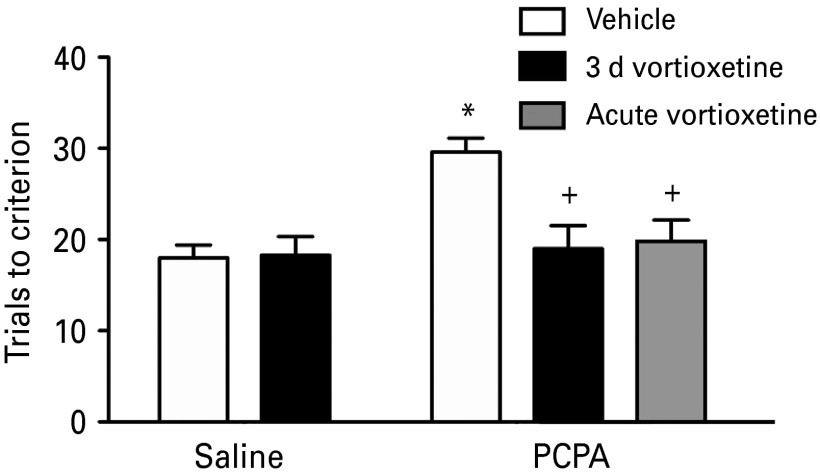
- PCPA reduced orbitofrontal cortex 5-HT by 91.4 ± 1.2% (from 15.70 ± 2.80 to 1.47 ± 0.21 pg/mg; t35 = 6.16, p < 0.0001) and impaired reversal learning (F1,26 = 9.70, p < 0.01).
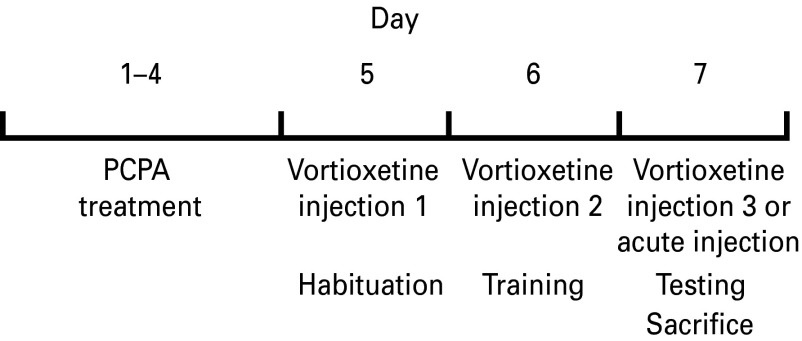
- Sub-chronic vortioxetine (10 mg/kg, i.p., once daily for 3 days) improved reversal learning in PCPA-treated rats (p < 0.001) but had no effect in controls (p = 0.919); a single acute injection also improved reversal learning in PCPA-treated rats (t13 = 2.80, p < 0.02).
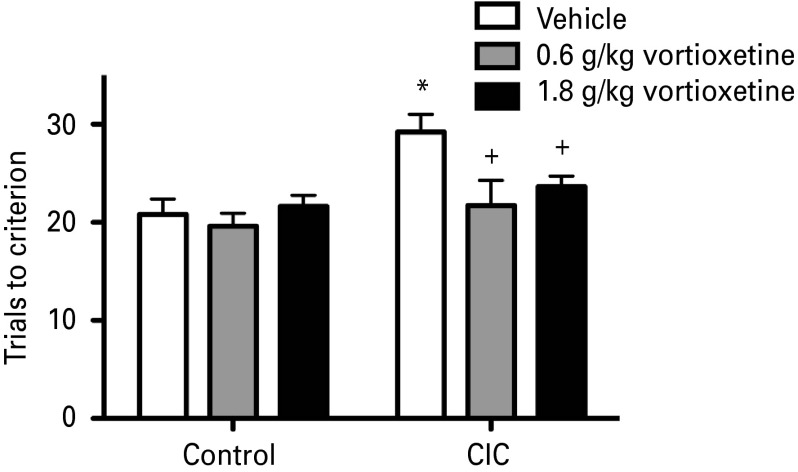
- Chronic intermittent cold stress impaired reversal learning (F1,48 = 8.32, p < 0.01), and chronic dietary vortioxetine at both low and high doses attenuated the deficit (p < 0.01 and p < 0.05, respectively).
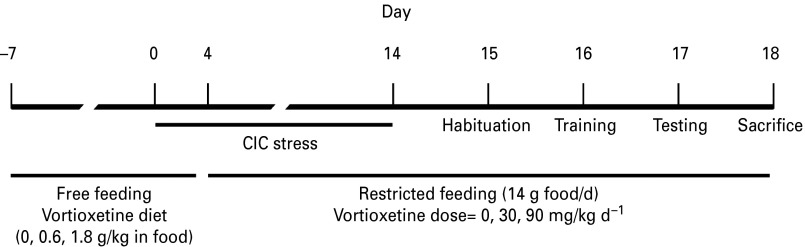
- Under food restriction, the low vortioxetine diet produced approximately 50% 5-HT transporter occupancy and 20–30% 5-HT1B receptor occupancy; the high diet produced full 5-HT transporter occupancy and 5-HT1B occupancy ranging from about 35% in stressed rats to 70% in controls.
Methods
- A total of 113 adult male Sprague Dawley rats were used. Cognitive flexibility was measured with an abbreviated attentional set-shifting test through the first reversal task, with trials to criterion as the dependent measure.
- Experiment 1: 38 rats received vehicle or PCPA (200 mg/kg, i.p.) for 4 days; vortioxetine (10 mg/kg, i.p.) was given acutely or sub-chronically on test days. Orbitofrontal cortex 5-HT was measured by LC/MS/MS.
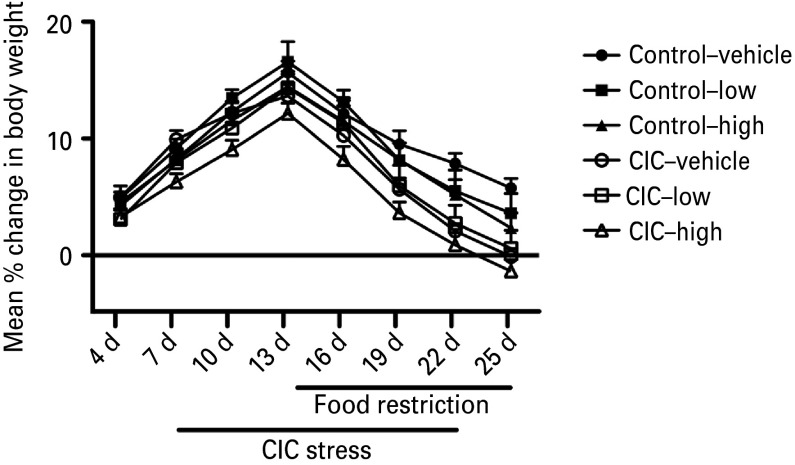
- Experiment 2: 54 rats were fed control chow or chow containing 0.6 or 1.8 g/kg vortioxetine for 25 days and exposed to CIC stress (4°C for 6 h/day for 14 days) or control conditions. Ex vivo autoradiography estimated 5-HT transporter and 5-HT1B receptor occupancies; reversal learning was analyzed by two-way MANOVA/ANOVA with post-hoc tests.
Limitations
- Stated in the paper: additional clinical studies are required to investigate whether vortioxetine’s multimodal properties improve cognitive deficits in depression.
- Evident from the text: only adult male rats were studied, so sex differences are not addressed; PCPA produces global 5-HT depletion rather than region-specific manipulation; and the receptor occupancy estimates rely on selected brain regions assumed to represent whole-brain fractional occupancy.
- Evident from the text: in Experiment 2, the vortioxetine × CIC stress interaction on reversal learning approached but did not reach significance (F2,48 = 2.28, p = 0.11), and 5-HT1B receptor occupancy was lower in CIC-stressed rats than controls during food restriction.
Model-written summary. Check it against the paper before relying on it.
Integrity signals
Registry
Cites
Statistics
Figures
Verification
Claims the paper makes
0 Valid · 1 Not valid · 51 Not checked · 57 Own results and interpretations
A result the paper reports from its own data — it cites no other source for it, so there is none to check. The quote shows it is in the paper.
In the paper
“Chronic treatment with either dose of vortioxetine in the diet significantly attenuated the reversal learning impairment induced by CIC stress (p < 0.01 and p < 0.05, respectively, for low- and high-dose vortioxetine compared to control diet in CIC-stressed rats; Fig. 4).”
§ Vortioxetine restores reversal learning impaired by 5-HT depletion or chronic intermittent cold stress in rats > Results > Experiment 2: effects of chronic dietary administration of vortioxetine on reversal learning compromised by chronic intermittent cold (CIC) stress
plainstates a cause- Asserted: passes — The authors put it forward as true.
- Checkable: passes — It can be checked against evidence.
- Load-bearing: passes — The paper’s conclusions depend on it.
- Based: passes — The paper gives a reason why it holds.
A result the paper reports from its own data — it cites no other source for it, so there is none to check. The quote shows it is in the paper.
In the paper
“After sub-chronic treatment, there was a significant main effect of vortioxetine on reversal learning (F1,26 = 6.80, p < 0.02), and a significant PCPA × vortioxetine interaction (F1,26 = 7.58, p < 0.01).”
§ Vortioxetine restores reversal learning impaired by 5-HT depletion or chronic intermittent cold stress in rats > Results > Experiment 1: effects of acute and sub-chronic vortioxetine treatment on reversal learning impairment induced by 5-HT depletion
plainstates a cause- Asserted: passes — The authors put it forward as true.
- Checkable: passes — It can be checked against evidence.
- Load-bearing: passes — The paper’s conclusions depend on it.
- Based: passes — The paper gives a reason why it holds.
A result the paper reports from its own data — it cites no other source for it, so there is none to check. The quote shows it is in the paper.
In the paper
“Under conditions of food restriction (14 g/d), for which the estimated daily drug dose was calculated, a significant main effect of vortioxetine in the diet was observed on occupancy at the 5-HT transporter (F2,31 = 58.5, p < 0.0001) and the 5-HT1B receptor (F2,31 = 19.34, p < 0.0001).”
§ Vortioxetine restores reversal learning impaired by 5-HT depletion or chronic intermittent cold stress in rats > Results > Experiment 2: effects of chronic dietary administration of vortioxetine on reversal learning compromised by chronic intermittent cold (CIC) stress
plainstates a cause- Asserted: passes — The authors put it forward as true.
- Checkable: passes — It can be checked against evidence.
- Load-bearing: unclear — It is unclear whether the paper’s conclusions depend on it.
- Based: passes — The paper gives a reason why it holds.
A result the paper reports from its own data — it cites no other source for it, so there is none to check. The quote shows it is in the paper.
In the paper
“However, there was no significant stress × vortioxetine interaction at either target (5-HT transporter: F2,31 = 0.5, p = 0.608; 5-HT1B receptor: F2,31 = 2.2, p = 0.125).”
§ Vortioxetine restores reversal learning impaired by 5-HT depletion or chronic intermittent cold stress in rats > Results > Experiment 2: effects of chronic dietary administration of vortioxetine on reversal learning compromised by chronic intermittent cold (CIC) stress
plain- Asserted: passes — The authors put it forward as true.
- Checkable: passes — It can be checked against evidence.
- Load-bearing: unclear — It is unclear whether the paper’s conclusions depend on it.
- Based: passes — The paper gives a reason why it holds.
A result the paper reports from its own data — it cites no other source for it, so there is none to check. The quote shows it is in the paper.
In the paper
“Similarly, single acute injection of vortioxetine immediately before testing also improved reversal learning in PCPA-treated rats (t13 = 2.80, p < 0.02 compared to vehicle injections, Fig. 3).”
§ Vortioxetine restores reversal learning impaired by 5-HT depletion or chronic intermittent cold stress in rats > Results > Experiment 1: effects of acute and sub-chronic vortioxetine treatment on reversal learning impairment induced by 5-HT depletion
plainstates a cause- Asserted: passes — The authors put it forward as true.
- Checkable: passes — It can be checked against evidence.
- Load-bearing: passes — The paper’s conclusions depend on it.
- Based: passes — The paper gives a reason why it holds.
37 more claims
Create a free account to see all 109 claims and to verify the 84 references still open.
- It may state two separate claims as one. 41
- Probably not a substantial claim. 42
Claims other papers make about this one
Each is checked against this paper’s own text: does it say what the citing paper says it does?
The cited source says what the claim attributes to it.
In the citing paper
“vortioxetine is effective in ameliorating reversal learning deficits produced by chronic cold stress (Wallace et al 2014)”
From Prefrontal cortex executive processes affected by stress in health and disease (2018) · cites this paper as Wallace et al 2014
In the citing paper
“The effects of vortioxetine are not due solely to its ability to inhibit serotonin reuptake, since the drug was effective in correcting reversal learning deficits induced by serotonin depletion with PCPA (Wallace et al 2014).”
From Prefrontal cortex executive processes affected by stress in health and disease (2018) · cites this paper as Wallace et al 2014
Citations
Cites
The Rat Brain in Stereotaxic Coordinates
(1982) · Elsevier eBooks · doi:10.1016/c2009-0-63235-9 · Cited by 51,963 · cited 1×
“Coronal brain sections were cut at 20 μm, beginning approximately 1.2mm anterior to bregma (Paxinos and Watson, 1998).”
Influence of life stress on depression: moderation by a polymorphism in the 5-HTT gene
Caspi, A., Sugden, K., Moffitt, T. E., Taylor, A., Craig, I. W., Harrington, H., McClay, J., Mill, J., Martin, J., Braithwaite, A., et al. (2003) · Science · doi:10.1126/science.1083968 · Cited by 8,120 · cited 3×
“Chronic stress is a risk factor for developing depression (Kessler, 1997; Kendler et al., 1999; Caspi et al., 2003).”
Background(1975) · Medical Entomology and Zoology · Cited by 7,245
Causal Relationship Between Stressful Life Events and the Onset of Major Depression
Kendler, K. S., Karkowski, L. M., & Prescott, C. A. (1999) · American Journal of Psychiatry · doi:10.1176/ajp.156.6.837 · Cited by 2,566 · cited 2×
“Chronic stress is a risk factor for developing depression (Kessler, 1997; Kendler et al., 1999; Caspi et al., 2003).”
BackgroundTHE EFFECTS OF STRESSFUL LIFE EVENTS ON DEPRESSION
Kessler, R. C. (1997) · Annual Review of Psychology · doi:10.1146/annurev.psych.48.1.191 · Cited by 2,111 · cited 2×
“Chronic stress is a risk factor for developing depression (Kessler, 1997; Kendler et al., 1999; Caspi et al., 2003).”
BackgroundPazos, A., & Palacios, J. M. (1985) · Brain Research · doi:10.1016/0006-8993(85)90856-x · Cited by 1,855 · cited 2×
“…studies have shown a high density of 5-HT1A and 5-HT1B receptors located on post-synaptic neurons in limbic forebrain areas such as the hippocampus, lateral septum and prefrontal cortex, where they may influence cognitive and emotional processes (Pazos and Palacios, 1985; Lucki et al., 1994).”
BackgroundMedial Frontal Cortex Mediates Perceptual Attentional Set Shifting in the Rat
Birrell, J. M., & Brown, V. J. (2000) · The Journal of Neuroscience · doi:10.1523/jneurosci.20-11-04320.2000 · Cited by 1,421 · cited 2×
“In previous studies using the attentional set-shifting test (AST) to measure cognitive flexibility in rats (Birrell and Brown, 2000), we have shown that serotonergic neurotransmission in the orbitofrontal cortex (OFC) modulates reversal learning, one form of cognitive flexibility measured by the AST (Lapiz-Bluhm et al.”
MethodCognitive deficits in depression: Possible implications for functional neuropathology
Austin, M.-P., Mitchell, P., & Goodwin, G. M. (2001) · British Journal of Psychiatry · doi:10.1192/bjp.178.3.200 · Cited by 1,154 · cited 2×
“…rats, we first investigated the direct effects of vortioxetine, acting at post-synaptic 5-HT receptors, on reversal learning that was compromised by 5-HT depletion using 4-chloro-DL-phenylalanine methyl ester hydrochloride (PCPA), effectively eliminating any contribution of 5-HT reuptake blockade.”
BackgroundMethodCryan, J. F., Valentino, R. J., & Lucki, I. (2005) · Neuroscience & Biobehavioral Reviews · doi:10.1016/j.neubiorev.2005.03.008 · Cited by 1,119 · cited 2×
“Activation of 5-HT1A receptors decreased immobility on the rat forced swim test (FST) and this was blocked by pretreatment with 5-HT1A-receptor antagonists (Detke et al., 1995; Cryan et al., 2005).”
BackgroundAmat, J., Baratta, M. V., Paul, E., Bland, S. T., Watkins, L. R., & Maier, S. F. (2005) · Nature Neuroscience · doi:10.1038/nn1399 · Cited by 931 · cited 1×
“Both the OFC and mPFC receive serotonergic innervation from the dorsal raphe nucleus (DRN), and a reciprocal projection from the PFC to the DRN provides a neural substrate for top-down control of activity in forebrain-projecting serotonergic pathways (Amat et al., 2005).”
Background
Research works printed but not linked: 1
- Westrich L, Pehrson A, Zhong H, Nielsen SM, Frederiksen K, Stensbøl TB, Boyle N, Hentzer M, Sánchez C (2012) In vitro and in vivo effects of the multimodal antidepressant vortioxetine (Lu AA21004) at human and rat targets. Int J Psychiatr Clin Pract 16 (Suppl. 1): 47
Cited by
The neural basis of reversal learning: An updated perspective
Izquierdo, A., Brigman, J. L., Radke, A. K., Rudebeck, P. H., & Holmes, A. (2017) · Neuroscience · doi:10.1016/j.neuroscience.2016.03.021 · Cited by 670
“, 2015), (2) serotonin receptor blockade (Boulougouris and Robbins, 2010), (3) treatment with serotonin reuptake inhibitors (Brigman et al., 2010b; Brown et al., 2012; Furr et al., 2012a; Wallace et al., 2014), to (4) phenotyping gene deletions and polymorphisms (Homberg et al.”
BackgroundSanchez, C., Asin, K. E., & Artigas, F. (2015) · Pharmacology & Therapeutics · doi:10.1016/j.pharmthera.2014.07.001 · Cited by 547
“Similarly, chronic dietary administration of vortioxetine at doses corresponding to 50–90% SERT occupancy prevented reversal learning deficits in rats exposed to chronic intermittent cold stress (Wallace et al., 2014).”
BackgroundSelf-citationCognitive impairment in depression: recent advances and novel treatments
Perini, G., Cotta Ramusino, M., Sinforiani, E., Bernini, S., Petrachi, R., & Costa, A. (2019) · Neuropsychiatric Disease and Treatment · doi:10.2147/ndt.s199746 · Cited by 384
Mahableshwarkar, A. R., Zajecka, J., Jacobson, W., Chen, Y., & Keefe, R. S. (2015) · Neuropsychopharmacology · doi:10.1038/npp.2015.52 · Cited by 307
“…noradrenergic, dopaminergic, cholinergic, histaminergic, and glutamatergic neurotransmission, affecting the levels of neurotransmitters involved in cognitive processes (Bang-Andersen et al, 2011; Mork et al, 2012, 2013; Pehrson et al, 2013; Pehrson and Sanchez, 2014; Wallace et al, 2014).”
BackgroundMcIntyre, R., Harrison, J., Loft, H., Jacobson, W., & Olsen, C. (2016) · International Journal of Neuropsychopharmacology · doi:10.1093/ijnp/pyw055 · Cited by 185
“The novel multimodal antidepressant vortioxetine has shown evidence of cognitive benefit in animal models, where it improved measures of memory (e.g. reversal learning; Wallace et al., 2014; Sanchez et al., 2015), as well as in patients with MDD (Katona et al.”
BackgroundPrefrontal cortex executive processes affected by stress in health and disease
Girotti, M., Adler, S. M., Bulin, S. E., Fucich, E. A., Paredes, D., & Morilak, D. A. (2018) · Progress in Neuro-Psychopharmacology and Biological Psychiatry · doi:10.1016/j.pnpbp.2017.07.004 · Cited by 176
Self-citationEffects of chronic stress on cognitive function – From neurobiology to intervention
Girotti, M., Bulin, S. E., & Carreno, F. R. (2024) · Neurobiology of Stress · doi:10.1016/j.ynstr.2024.100670 · Cited by 212
“Chronic intermittent cold stress in adult rats results in robust deficits in olfactory reversal learning task (Danet et al., 2010; Donegan et al., 2014; Furr et al., 2012; Lapiz-Bluhm et al., 2009; Patton et al., 2017; Wallace et al., 2014).”
Baune, B. T., Brignone, M., & Larsen, K. G. (2018) · International Journal of Neuropsychopharmacology · doi:10.1093/ijnp/pyx070 · Cited by 140
“Vortioxetine, a novel antidepressant with multimodal activity, has shown evidence of cognitive benefit in animal models (Wallace et al., 2014; Sanchez et al., 2015) as well as in patients with MDD (Katona et al., 2012; McIntyre et al., 2014; Mahableshwarkar et al., 2015).”
BackgroundVortioxetine: a novel antidepressant for the treatment of major depressive disorder
Gonda, X., Sharma, S. R., & Tarazi, F. I. (2019) · Expert Opinion on Drug Discovery · doi:10.1080/17460441.2019.1546691 · Cited by 123
Leiser, S. C., Li, Y., Pehrson, A. L., Dale, E., Smagin, G., & Sanchez, C. (2015) · ACS Chemical Neuroscience · doi:10.1021/cn500340j · Cited by 110
Self-citationPehrson, A. L., Leiser, S. C., Gulinello, M., Dale, E., Li, Y., Waller, J. A., & Sanchez, C. (2015) · European Journal of Pharmacology · doi:10.1016/j.ejphar.2014.07.044 · Cited by 91
Self-citationArtigas, F., Bortolozzi, A. A., & Celada, P. (2017) · European Neuropsychopharmacology · doi:10.1016/j.euroneuro.2017.10.032 · Cited by 102
Acute psilocybin enhances cognitive flexibility in rats
Torrado Pacheco, A., Olson, R. J., Garza, G., & Moghaddam, B. (2023) · Neuropsychopharmacology · doi:10.1038/s41386-023-01545-z · Cited by 87
Riga, M. S., Sánchez, C., Celada, P., & Artigas, F. (2016) · Neuropharmacology · doi:10.1016/j.neuropharm.2016.04.023 · Cited by 88
“This is an open access article u (B etry et al., 2015; Sanchez et al., 2015; Wallace et al., 2014) and its administration to rodents increases very markedly the extracellular concentration of monoamines in forebrain (Pehrson et al., 2013) to an extent greater than that produced by selective…”
InfluentialSelf-citationVortioxetine: a New Treatment for Major Depressive Disorder
Connolly, K. R., & Thase, M. E. (2016) · Expert Opinion on Pharmacotherapy · doi:10.1517/14656566.2016.1133588 · Cited by 92
Serotonin, neural markers, and memory
Meneses, A. (2015) · Frontiers in Pharmacology · doi:10.3389/fphar.2015.00143 · Cited by 90
du Jardin, K. G., Liebenberg, N., Müller, H. K., Elfving, B., Sánchez, C., & Wegener, G. (2016) · Psychopharmacology · doi:10.1007/s00213-016-4327-5 · Cited by 93
“The finding that a pCPA dose of 86 mg/kg/day for 3 consecutive days resulted in a 94% reduction in brain homogenate 5HT concentrations of FSL control rats is comparable to previous reports using similar dosing regimens in other rat strains (Cryan et al. 2000; Prinssen et al. 2002; Lapiz-Bluhm et al. 2009; Wallace et a…”
Self-citationEffects of stress on behavioral flexibility in rodents
Hurtubise, J. L., & Howland, J. G. (2016) · Neuroscience · doi:10.1016/j.neuroscience.2016.04.007 · Cited by 93
Vortioxetine: A review of the pharmacology and clinical profile of the novel antidepressant
Sowa-Kućma, M., Pańczyszyn-Trzewik, P., Misztak, P., Jaeschke, R. R., Sendek, K., Styczeń, K., Datka, W., & Koperny, M. (2017) · Pharmacological Reports · doi:10.1016/j.pharep.2017.01.030 · Cited by 86
Li, Y., Abdourahman, A., Tamm, J. A., Pehrson, A. L., Sánchez, C., & Gulinello, M. (2015) · Pharmacology Biochemistry and Behavior · doi:10.1016/j.pbb.2015.05.013 · Cited by 79
“Both selective serotonin reuptake inhibitors (SSRIs) and vortioxetine (1-[2-(2,4-dimethylphenylsulfanyl)-phenyl]piperazine) are antidepressants that may improve cognitive function (Biringer et al., 2009; Egashira et al., 2006; ElBeltagy et al., 2010; Mork et al., 2013; Wallace et al., 2014) and increase stem cell prol…”
Self-citationBaker, P. M., Oh, S., Kidder, K. S., & Mizumori, S. J. Y. (2015) · Frontiers in Behavioral Neuroscience · doi:10.3389/fnbeh.2015.00295 · Cited by 78
“…cytoarchitecture and circuitry appears similar between mice and rats (Geisler et al., 2003; Goncalves et al., 2012; Wagner et al., 2014; Quina et al., 2015) although some differences between rodents and primates have been observed (Parent et al., 1981; Araki et al., 1984; Hong and Hikosaka, 2008).”
BackgroundInfluentialVortioxetine for cognitive enhancement in major depression: From animal models to clinical research
Bennabi, D., Haffen, E., & Van Waes, V. (2019) · Frontiers in Psychiatry · doi:10.3389/fpsyt.2019.00771 · Cited by 75
“, 2014 (16) Male Sprague–Dawley rats with 5-HT depletion exposed to chronic intermittent cold stress Acute injections of vehicle or vortioxetine at 10 mg/kg immediately prior to behavioral test (i.”
BackgroundMethodLiu, S.-C., Hu, W., Zhang, W.-Y., Yang, L., Li, Y., Xiao, Z., Zhang, M., & He, Z. (2019) · Psychopharmacology · doi:10.1007/s00213-019-05257-5 · Cited by 73
Roberts, C., Sahakian, B. J., & Robbins, T. W. (2020) · Neuroscience & Biobehavioral Reviews · doi:10.1016/j.neubiorev.2020.09.001 · Cited by 67
Al-Sukhni, M., Maruschak, N. A., & McIntyre, R. S. (2015) · Expert Opinion on Drug Safety · doi:10.1517/14740338.2015.1046836 · Cited by 58
“also showed reversal of induced cognitive impairment in rats using the attentional set-shifting test as a measure of reversal learning [35].”
MethodEskelund, A., Li, Y., Budac, D. P., Müller, H. K., Gulinello, M., Sanchez, C., & Wegener, G. (2017) · Journal of Neurochemistry · doi:10.1111/jnc.14043 · Cited by 52
Self-citationMagaraggia, I., Kuiperes, Z., & Schreiber, R. (2021) · Neurobiology of Learning and Memory · doi:10.1016/j.nlm.2021.107467 · Cited by 49
“Relevant in this regard is also that chronic administration of vortioxetine reversed stress-induced cognitive deficits, such as impaired reversal learning and fear memory and extinction, in rodents (Wallace et al., 2014; Hatherall et al., 2017).”
Backgrounddu Jardin, K. G., Liebenberg, N., Cajina, M., Müller, H. K., Elfving, B., Sanchez, C., & Wegener, G. (2018) · Frontiers in Pharmacology · doi:10.3389/fphar.2017.00978 · Cited by 47
“This reduction is comparable to previous reports using the same formulation in similar dosing regimens (Cryan et al., 2000; Prinssen et al., 2002; Lapiz-Bluhm et al., 2009; Jensen et al., 2014; Wallace et al., 2014).”
ResultSelf-citation5HT3 receptors: Target for new antidepressant drugs
Gupta, D., Prabhakar, V., & Radhakrishnan, M. (2016) · Neuroscience & Biobehavioral Reviews · doi:10.1016/j.neubiorev.2016.03.001 · Cited by 51
Vortioxetina: una nueva alternativa en el trastorno depresivo mayor
Salagre, E., Grande, I., Solé, B., Sánchez‐Moreno, J., & Vieta, E. (2017) · Revista de Psiquiatría y Salud Mental · doi:10.1016/j.rpsm.2017.06.006 · Cited by 45
The Role of Serotonin in Orbitofrontal Function and Obsessive-Compulsive Disorder
Maia, T. V., & Cano-Colino, M. (2015) · Clinical Psychological Science · doi:10.1177/2167702614566809 · Cited by 42
Huang, I.-C., Chang, T.-S., Chen, C., & Sung, J.-Y. (2022) · International Journal of Neuropsychopharmacology · doi:10.1093/ijnp/pyac054 · Cited by 41
“Vortioxetine has provided evidence of improved cognitive function (Jensen et al., 2014; Wallace et al., 2014; Al-Sukhni et al., 2015; McQuaid, 2019).”
BackgroundAdams, W. K., Barkus, C., Ferland, J. N., Sharp, T., & Winstanley, C. A. (2017) · Psychopharmacology · doi:10.1007/s00213-017-4696-4 · Cited by 45
Pehrson, A. L., Jeyarajah, T., & Sanchez, C. (2016) · CNS Spectrums · doi:10.1017/s1092852915000486 · Cited by 36
Self-citationStahl, S. M. (2015) · CNS Spectrums · doi:10.1017/s1092852915000346 · Cited by 40
Impact of specific serotonin receptor modulation on behavioral flexibility
Alvarez, B. D., Morales, C. A., & Amodeo, D. A. (2021) · Pharmacology Biochemistry and Behavior · doi:10.1016/j.pbb.2021.173243 · Cited by 39
“Several studies have demonstrated how overall serotonin depletion can have a negative impact on behavioral flexibility (Wallace et al., 2014; Lapiz-Bluhm et al., 2009), although Thirkettle et al.”
BackgroundBrivio, P., Corsini, G., Riva, M. A., & Calabrese, F. (2019) · Pharmacological Research · doi:10.1016/j.phrs.2019.02.006 · Cited by 39
Vortioxetine as a new frontier in the treatment of chronic neuropathic pain: a review and update
Adamo, D., Calabria, E., Coppola, N., Pecoraro, G., & Mignogna, M. D. (2021) · Therapeutic Advances in Psychopharmacology · doi:10.1177/20451253211034320 · Cited by 39
Concepts, Frames and Cascades in Semantics, Cognition and Ontology
Löbner, S., Gamerschlag, T., Kalenscher, T., Schrenk, M., & Zeevat, H. (2021) · Language, cognition and mind · doi:10.1007/978-3-030-50200-3 · Cited by 36
Alsiö, J., Lehmann, O., McKenzie, C., Theobald, D. E. H., Searle, L. R., Xia, J., Dalley, J. W., & Robbins, T. W. (2020) · Cerebral Cortex · doi:10.1093/cercor/bhaa277 · Cited by 31
“2010) and PCPA injections selectively impair the reversal-learning stage in bowl-digging tasks (Lapiz-Bluhm et al. 2009; Wallace et al. 2014).”
BackgroundAlboni, S., Benatti, C., Colliva, C., Radighieri, G., Blom, J. M. C., Brunello, N., & Tascedda, F. (2021) · Frontiers in Pharmacology · doi:10.3389/fphar.2020.603979 · Cited by 32
“VTX exhibits neuroprotective effects and prevents cognitive impairments in different animal models of depression (du Jardin et al., 2014; Jensen et al., 2014; Wallace et al., 2014; Smith et al., 2018; Torrisi et al., 2019; Jiang et al., 2020).”
BackgroundRiga, M. S., Teruel‐Martí, V., Sánchez, C., Celada, P., & Artigas, F. (2016) · Neuropharmacology · doi:10.1016/j.neuropharm.2016.09.024 · Cited by 32
Self-citationPehrson, A. L., Pedersen, C. S., Tølbøl, K. S., & Sánchez, C. (2018) · Frontiers in Pharmacology · doi:10.3389/fphar.2018.00162 · Cited by 31
“8 g vortioxetine/kg of food weight, which covers the entire clinically relevant dose range (Wallace et al., 2014; Waller et al., 2017), blocked subPCP-induced impairments in both the ED and EDR discrimination.”
BackgroundMethodResultInfluentialSelf-citationSantana, N., & Artigas, F. (2016) · Cerebral Cortex · doi:10.1093/cercor/bhw148 · Cited by 34
“…2016 at U nited A rab E m irates U niversity on A ugust 31, 2016 http://cercor.oxfordjournals.org/ D blockade may improve cognitive function (du Jardin et al. 2014; Wallace et al. 2014) and is involved in the therapeutic properties of the newantidepressant drug vortioxetine (Sanchez et al. 2015).”
BackgroundVortioxetine: A new alternative for the treatment of major depressive disorder
Salagre, E., Grande, I., Solé, B., Sánchez‐Moreno, J., & Vieta, E. (2018) · Revista de Psiquiatría y Salud Mental (English Edition) · doi:10.1016/j.rpsmen.2018.02.005 · Cited by 31
Leiser, S. C., Iglesias-Bregna, D., Westrich, L., Pehrson, A. L., & Sánchez, C. (2015) · Journal of Psychopharmacology · doi:10.1177/0269881115592347 · Cited by 28
“6 g/kg of food led to 85–90% occupancy of the 5-HT transporter, and 55– 60% occupancy of the 5-HT1B receptor (Wallace et al., 2014).”
BackgroundMethodInfluentialSelf-citationZhukovsky, P., Alsiö, J., Jupp, B., Xia, J., Guiliano, C., Jenner, L., Griffiths, J., Riley, E., Ali, S., Roberts, A., et al. (2017) · Psychopharmacology · doi:10.1007/s00213-017-4569-x · Cited by 27
“(2016), elevated post synaptic 5-HT activity facilitates reversal learning (Bari et al. 2010; Barlow et al. 2015; Danet et al. 2010; Wallace et al. 2014)”
BackgroundPehrson, A. L., Hillhouse, T. M., Haddjeri, N., Rovera, R., Porter, J. H., Mørk, A., Smagin, G. N., Song, D., Budac, D. P., Cajina, M., et al. (2016) · Journal of Pharmacology and Experimental Therapeutics · doi:10.1124/jpet.116.233924 · Cited by 27
“Ex vivo occupancy experiments were performed, as described previously (du Jardin et al., 2014; Wallace et al., 2014).”
BackgroundMethodSelf-citationMerchán, A., Navarro, S., Klein, A. B., Aznar, S., Campa, L., Sunol, C. E., Moreno, M., & Flores, P. (2017) · Psychopharmacology · doi:10.1007/s00213-017-4561-5 · Cited by 26
“…five-choice serial reaction time task (Winstanley et al. 2004), impairment of behavioural flexibility measured through the reversal learning task (Bari et al. 2010; Lapiz-Bluhm et al. 2009; Wallace et al. 2014) and an increment of compulsive cocaine seeking under punishment (Pelloux et al. 2012).”
BackgroundVortioxetine for the treatment of major depressive disorder
Tritschler, L., Felice, D., Colle, R., Guilloux, J., Corruble, E., Gardier, A. M., & David, D. J. P. (2014) · Expert Review of Clinical Pharmacology · doi:10.1586/17512433.2014.950655 · Cited by 24
“A recent study showed that an acute and subchronic administration of vortioxetine was able to improve the reversal learning impairment induced by 4-chloro-DL-phenylalanine methyl ester hydrochloride in rats [31].”
BackgroundVortioxetine administration attenuates cognitive and synaptic deficits in 5×FAD mice
Jiang, L., Huang, G.-D., Feng, S., Wang, H., Zhang, C., & Yu, X. (2020) · Psychopharmacology · doi:10.1007/s00213-020-05452-9 · Cited by 24
Liu, X., Sun, Y., Zhang, C., Zhang, X., Zhang, Y., Wang, T., Ma, Y., Wang, H., Su, Y., Li, J., et al. (2021) · Neuropharmacology · doi:10.1016/j.neuropharm.2021.108468 · Cited by 22
“, 2018), and chronic intermittent cold stress (Wallace et al., 2014).”
BackgroundHatherall, L. C., Sánchez, C., & Morilak, D. A. (2016) · The International Journal of Neuropsychopharmacology · doi:10.1093/ijnp/pyw105 · Cited by 21
“We have previously shown that vortioxetine reversed a deficit in cognitive flexibility in rats that have been exposed to chronic stress, which models cognitive symptoms related to prefrontal cortical dysfunction in depression (Wallace et al., 2014).”
BackgroundMethodSelf-citationWitt, N. A., Lee, B., Ghent, K., Zhang, W. Q., Pehrson, A., Sánchez, C., & Gould, G. (2019) · ACS Chemical Neuroscience · doi:10.1021/acschemneuro.9b00386 · Cited by 19
Self-citationEmam, A. M., Saad, M. A., Ahmed, N. A., & Zaki, H. F. (2021) · Life Sciences · doi:10.1016/j.lfs.2021.119865 · Cited by 21
Influence of Pharmacotherapy on Cognitive Functions in Depression: A Review of the Literature
Orzechowska, A., Filip, M., & Gałecki, P. (2015) · Medical Science Monitor · doi:10.12659/msm.895156 · Cited by 29
“Recent research into the effects of antidepressants containing the active substance vortioxetine on cognitive ability showed an improvement of attention, memory, and flexibility of the thinking process [61,62].”
BackgroundWaller, J. A., Tamm, J. A., Abdourahman, A., Pehrson, A. L., Li, Y., Cajina, M., & Sánchez, C. (2017) · European Neuropsychopharmacology · doi:10.1016/j.euroneuro.2016.11.014 · Cited by 21
Self-citationAstroglial Serotonin Receptors as the Central Target of Classic Antidepressants
Verkhratsky, A., Parpura, V., Scuderi, C., & Li, B. (2021) · Advances in Neurobiology · doi:10.1007/978-3-030-77375-5_13 · Cited by 19
“Vortioxetine demonstrated antidepressive effects in rodent models of depression (Guilloux et al. 2013; Mork et al. 2012; Wallace et al. 2014).”
BackgroundCognitive flexibility in humans and other laboratory animals
Highgate, Q., & Schenk, S. (2020) · Journal of the Royal Society of New Zealand · doi:10.1080/03036758.2020.1784240 · Cited by 23
Frameworking memory and serotonergic markers
Meneses, A. (2017) · Reviews in the Neurosciences · doi:10.1515/revneuro-2016-0079 · Cited by 20
McDougall, S. A., Rios, J. W., Apodaca, M. G., Park, G. I., Montejano, N. R., Taylor, J. A., Moran, A. E., Robinson, J. A. M., Baum, T. J., Teran, A., et al. (2019) · Behavioural Brain Research · doi:10.1016/j.bbr.2019.112302 · Cited by 20
“PCPA is especially prone to causing weight loss because it is often administered over a three- or four-day span and at doses of 200–500 mg/kg [38,66,68,75,118].”
BackgroundEffect of psilocybin on decision-making and motivation in the healthy rat
Roberts, B. F., Zylko, A. L., Waters, C. E., Crowder, J. D., Gibbons, W. J., Sen, A. K., Jones, J. A., & McMurray, M. S. (2022) · Behavioural Brain Research · doi:10.1016/j.bbr.2022.114262 · Cited by 14
Riga, M. S., Sánchez, C., Celada, P., & Artigas, F. (2020) · Neuropharmacology · doi:10.1016/j.neuropharm.2020.108238 · Cited by 16
Self-citationBriones-Aranda, A., Durán, D. M. F., Romero‐Nava, R., Corzo-Gómez, J. C., Cruz-Trujillo, R., Toalá-Sepúlveda, F., Del-Rio-Navarro, B. E., & Huang, F. (2025) · Biomolecules · doi:10.3390/biom15060762 · Cited by 12
“Similar studies have also reported depressive behaviors and cognitive impairment, both of which were reversed after the administration of 5-HT 1A R agonists [100,101].”
Sequential reversal learning: a new touchscreen schedule for assessing cognitive flexibility in mice
Odland, A. U., Sandahl, R., & Andreasen, J. T. (2020) · Psychopharmacology · doi:10.1007/s00213-020-05687-6 · Cited by 12
Vortioxetine Improves Context Discrimination in Mice Through a Neurogenesis Independent Mechanism
Felice, D., Guilloux, J., Pehrson, A. L., Li, Y., Mendez‐David, I., Gardier, A. M., Sánchez, C., & David, D. J. P. (2018) · Frontiers in Pharmacology · doi:10.3389/fphar.2018.00204 · Cited by 12
“Similarly, VORT treatment restored reversal learning impaired by 5-HT depletion in rats as assessed by the attentional setshifting test, a paradigm that measures cognitive flexibility (Wallace et al., 2014; Popik and Nikiforuk, 2015).”
MethodResultSelf-citationSharp, A. M., Lertphinyowong, S., Yee, S. S., Paredes, D., Gelfond, J., Johnson‐Pais, T. L., Leach, R. J., Liss, M. A., Risinger, A. L., Sullivan, A. C., et al. (2019) · Psychopharmacology · doi:10.1007/s00213-019-05274-4 · Cited by 12
Self-citationNeuroplasticity pathways and protein-interaction networks are modulated by vortioxetine in rodents
Waller, J. A., Nygaard, S. H., Li, Y., du Jardin, K. G., Tamm, J. A., Abdourahman, A., Elfving, B., Pehrson, A. L., Sánchez, C., & Wernersson, R. (2017) · BMC Neuroscience · doi:10.1186/s12868-017-0376-x · Cited by 11
Self-citationSolomon, M. B., Yegla, B., Newcorn, J. H., Maletic, V., Rubin, J. S., & Robbins, T. W. (2025) · Clinical Drug Investigation · doi:10.1007/s40261-025-01473-4 · Cited by 11
“Nota-bly, vortioxetine, a serotonergic targeting compound that enhances 5-HT neurotransmission in the mPFC, prevented these deficits in reversal learning [219–221].”
Chronic corticosterone improves perseverative behavior in mice during sequential reversal learning
Odland, A. U., Sandahl, R., & Andreasen, J. T. (2023) · Behavioural Brain Research · doi:10.1016/j.bbr.2023.114479 · Cited by 10
“Other types of stressors have been shown in rodents to affect reversal learning after cessation of the stressor [27,30,31, 34].”
BackgroundUse of vortioxetine in different neurological fields: a systematic review and future perspectives
Verrienti, G., Colonna, I., & Raccagni, C. (2025) · Neurological Sciences · doi:10.1007/s10072-025-07987-1 · Cited by 9
“…J.B. [64 ] 2014 USA VTX restores 5-HT depletion impaired memory performance in rats through one or more of its receptor activities Wallace, A. [65 ] 2014 USA VTX may contribute to positive effects on cognitive flexibility deficits in male rats with a pharmacologically induced deficit of…”
Vortioxetine in the treatment of major depressive disorder
Baldwin, D. S., & Hanumanthaiah, V. B. (2015) · Future Neurology · doi:10.2217/fnl.14.69 · Cited by 9
Effect of a 5-HT7 Receptor Antagonist on Reversal Learning in the Rat Attentional Set-Shifting Test
Hrnjadovic, A., Friedmann, J., Barhebreus, S., Allen, P. J., & Kocsis, B. (2020) · ACS Chemical Neuroscience · doi:10.1021/acschemneuro.0c00554 · Cited by 10
Martis, L., Højgaard, K., Holmes, M. C., Elfving, B., & Wiborg, O. (2021) · Scientific Reports · doi:10.1038/s41598-021-88462-7 · Cited by 9
Ebrahimzadeh, M. A., Mansari, M. E., & Blier, P. (2017) · Neuropharmacology · doi:10.1016/j.neuropharm.2017.10.036 · Cited by 11
“This chow diet was chosen in order to reach 5-HTT occupancy (Wallace et al., 2014) comparable to that achieved with therapeutic doses of SSRIs (Meyer, 2007).”
BackgroundMethodResultInfluentialPropriétés pharmacologiques de la vortioxetine et leurs conséquences pré-cliniques
David, D. J. P., Tritschler, L., Guilloux, J., Gardier, A. M., Sánchez, C., & Gaillard, R. (2016) · L Encéphale · doi:10.1016/s0013-7006(16)30015-x · Cited by 10
Self-citationThe rat hippocampal gliovascular system following one week vortioxetine and fluoxetine
Chen, F., Danladi, J., Ardalan, M., Nyengaard, J. R., Sánchez, C., & Wegener, G. (2020) · European Neuropsychopharmacology · doi:10.1016/j.euroneuro.2020.11.008 · Cited by 7
Self-citationHillhouse, T. M., Merritt, C. R., Smith, D. A., Cajina, M., Sánchez, C., Porter, J. H., & Pehrson, A. L. (2018) · Frontiers in Pharmacology · doi:10.3389/fphar.2018.01024 · Cited by 7
Self-citationSerotonin and cognitive flexibility
Nilsson, S. R. O., Phillips, B. U., Axelsson, S. F. A., & Alsiö, J. (2019) · Elsevier eBooks · doi:10.1016/b978-0-12-813323-1.00008-6 · Cited by 7
Fisken, R., & Ward, R. D. (2019) · Behavioural Processes · doi:10.1016/j.beproc.2019.103936 · Cited by 7
Alonso, L., Peeva, P., Alquicira, T. F.-D. V., Erdelyi, N., Nolskog, Á. G., Bäder, M., Winter, Y., Alenina, N. V., & Rivalan, M. (2024) · International Journal of Molecular Sciences · doi:10.3390/ijms25095003 · Cited by 7
“We used ANOVA with permutations (package lmPerm) (Wheeler and Torchiano, 2016) which are suited for small groups and non-parametric data to compare the multiple groups and decision maker groups (dm-group) over several time points (probability, encounter) with animal as error factor.”
MethodLaursen, B., Bundgaard, C. H., Graversen, C., Grupe, M., Sánchez, C., Leiser, S. C., Sørensen, H. B. D., Drewes, A. M., & Bastlund, J. F. (2017) · Brain Research · doi:10.1016/j.brainres.2017.03.024 · Cited by 6
Self-citationHjorth, S., Waters, N., Waters, N., Tedroff, J., Svensson, P., Fagerberg, A., Edling, M., Svanberg, B., Ljung, E., Gunnergren, J., et al. (2020) · Journal of Pharmacology and Experimental Therapeutics · doi:10.1124/jpet.120.000037 · Cited by 6
Clement, A., Pedersen, M. M., Stensballe, A., Wiborg, O., & Asuni, A. A. (2021) · Genes Brain & Behavior · doi:10.1111/gbb.12766 · Cited by 6
Vaiana, A. M., Chen, Y., Gelfond, J., Johnson‐Pais, T. L., Leach, R. J., Ramamurthy, C., Thompson, I. M., & Morilak, D. A. (2023) · Translational Psychiatry · doi:10.1038/s41398-023-02600-5 · Cited by 5
“This method of chronic vortioxetine administration has been well established by our group and others [14, 19, 21], and produces stable drug plasma levels within the range of therapeutic efficacy, with 60–95% occupancy at relevant drug targets in the brain [21].”
BackgroundSelf-citationThe efficacy of vortioxetine for the treatment of major depressive disorder
Dhir, A., & Sarvaiya, J. (2014) · Expert Review of Neurotherapeutics · doi:10.1586/14737175.2014.987131 · Cited by 4
“The exact mechanism of action exerted by vortioxetine in improvement of cognitive function is not yet elucidated fully, but the investigators are hypothesizing the involvement of multireceptor targeting of vortioxetine in its effect [51,54].”
BackgroundBang‐Andersen, B., Olsen, C. K., & Sánchez, C. (2016) · Wiley eBooks · doi:10.1002/9783527800315.ch9 · Cited by 4
Self-citationVaiana, A. M., Asher, A. M., Tapia, K., & Morilak, D. A. (2023) · Neuroendocrinology · doi:10.1159/000535365 · Cited by 3
“This dose regimen has been shown to be fully effective at restoring reversal learning compromised by serotonin depletion or chronic cold stress [21] and to produce fractional occupancy of relevant targets in the brain (e.g., 5-HT1B receptor, serotonin transporter, 5-HT3 receptor) of approximately…”
BackgroundMethodInfluentialSelf-citationCaraci, F., & Sciascio, G. D. (2015) · Cited by 2
Estrada-Reyes, Y., Cervantes-Alfaro, J. M., López‐Vázquez, M. A., & Olvera‐Cortés, M. E. (2024) · Frontiers in Pharmacology · doi:10.3389/fphar.2024.1501896 · Cited by 1
Escitalopram Restores Reversal Learning Impairments in Rats with Lesions of Orbital Frontal Cortex
Tait, D. S., Bowman, E. E., Miller, S., Dovlatyan, M., Sánchez, C., & Brown, V. J. (2021) · Language, cognition and mind · doi:10.1007/978-3-030-50200-3_18 · Cited by 3
Self-citationRescuing behavioral flexibility in a mouse model for OCD by enhancing reward-cue saliencePreprint
van den Boom, B. J. G., Carlo, S. D., van Klaveren, J., Denys, D. A. J. P., & Willuhn, I. (2024) · bioRxiv (Cold Spring Harbor Laboratory) · doi:10.1101/2024.07.25.604103 · Cited by 1
Brouillard, C. (2015) · theses.fr (ABES) · doi:10.70675/c167b41fz6b52z423azaed1zb41a1fef1a26 · Cited by 1
New Trends in Antidepressant Drug Research
Bang‐Andersen, B., Bøgesø, K. P., Kehler, J., & Sánchez, C. (2017) · Methods and principles in medicinal chemistry · doi:10.1002/9783527679430.ch2 · Cited by 1
Self-citationA Role for the Lateral Habenula in a Delay Based Decision Making Test
Rao, Y. (2019) · ResearchWorks at the University of Washington (University of Washington)
Faculty Opinions recommendation of The neural basis of reversal learning: An updated perspective.
Hayden, B. Y. (2019) · Faculty Opinions – Post-Publication Peer Review of the Biomedical Literature · doi:10.3410/f.726221441.793565477
The Analgezic Effect of Vortioxetine on somatic and visceral Pain using the mouse models
Fotache, P. A., Pelin, A.-M., Georgescu, C., Bucă, B. R., & Mititelu-Tarțău, L. (2022) · Journal of Pharmaceutical Negative Results · doi:10.47750/pnr.2022.13.s04.168
“Experimental research shows that chronic VRT administration improved memory disorders induced by exposure of rats to various types of chronic stress, suggesting that it has beneficial effects in ameliorating cognitive impairments induced by stress associated with prefrontal cortex disorders [3,8,9,10].”
BackgroundYang, S.-T., An, Q., Cao, C.-F., Kuang, J.-Q., Li, M., & Ji, L.-L. (2023) · Research Square · doi:10.21203/rs.3.rs-3029489/v1
Korkmaz, E. (2023) · Dspace Repository (Marmara Üniversitesi)
Metadata
- Authors
- Wallace, A., Pehrson, A. L., Sánchez, C., & Morilak, D. A.
- Affiliations
- The University of Texas at San Antonio Health Science Center (US)
- Lundbeck (United States) (US)
- Corresponding author
- Morilak, David A.
- Venue
- The International Journal of Neuropsychopharmacology
- Publisher
- Oxford University Press (OUP)
- Published
- 2014-05-23
- Volume
- 17
- Issue
- 10
- Pages
- 1695-1706
- ISSN
- 1461-1457 (ISSN-L)
- 1469-5111
- PMC
- PMC4162520
- OpenAlex
- W2133342592
- Semantic Scholar
- a216692a2a1f8875a4037b09f024b99c0a70ed49
- Cited by
- 97
- References
- 61
- Citations by year
- 2025: 3 · 2024: 4 · 2023: 5 · 2022: 3 · 2021: 11 · 2020: 9 · 2019: 10 · 2018: 6 · 2017: 16 · 2016: 12 · 2015: 14 · 2014: 4
- FWCI
- 11.18
- Type
- journal article
- Language
- en
- Open access
- bronze
- doi.org
- Locations
- The International Journal of Neuropsychopharmacology (publishedVersion)
- Europe PMC (PubMed Central) (publishedVersion, cc-by)
- PubMed Central (publishedVersion, cc-by)
- PubMed (publishedVersion)
- Funders
- National Institutes of Health (UL1TR001120)
- National Institute of Dental and Craniofacial Research (T32DE014318)
- National Center for Advancing Translational Sciences
- Topics
- Health Sciences › Medicine › Pharmacology (medical) › Treatment of Major Depression
- Life Sciences › Neuroscience › Cellular and Molecular Neuroscience › Neurotransmitter Receptor Influence on Behavior
- Life Sciences › Neuroscience › Biological Psychiatry › Tryptophan and brain disorders
- Keywords
- vortioxetine, reversal learning, cognitive flexibility, serotonin depletion, p-chlorophenylalanine, chronic stress, depression, serotonin receptors, antidepressant effects, prefrontal cortex
- MeSH terms
- Vortioxetine, Analysis of Variance, Animals, Attention, Autoradiography, Body Weight, Cold Temperature, Disease Models, Animal, Dose-Response Relationship, Drug, Enzyme Inhibitors, Learning Disabilities, Male, Phenylalanine, Piperazines, Reversal Learning, Serotonin, Stress, Psychological, Sulfides, Anti-Anxiety Agents, Rats, Sprague-Dawley, Rats
About these checks
Registry, retraction, Cites and statistics results are computed, not judged, with one exception: a printed reference that no index lists is read once by a model before it counts as a citation error. Claims are extracted by a model and kept only when their quote appears verbatim in the text; each cited source is then checked, with a model’s help, for whether it says what the claim relies on. Those verdicts can be wrong — read the claim’s quote and the cited source before relying on one.
A language model drew the claims from the paper on 2026-10-06, under version 3 of the claim definition (model deepseek-v4.1-flash, prompt extract-v3).
A second model labelled each claim on 2026-10-06 (model jev-1.13-20260917, definition revision gold-guideline-v0.2).
Statistics and arithmetic are recomputed, not judged.
Confidence bands are shown only for fields calibrated on our annotated test set. None is calibrated yet, so no band is shown.
What counts as a claim ›How we measure confidence ›How we check this ›
Are you an author, or do you see a problem with this page? Request a review
Data sources
Bibliographic data: Semantic Scholar, OpenAlex, Crossref.
Contains information from the Semantic Scholar Academic Graph Datasets, made available under the ODC Attribution License (ODC-BY 1.0).
Semantic Scholar’s data is described in: Kinney, R., et al. (2023). The Semantic Scholar Open Data Platform. arXiv:2301.10140.
