

Vortioxetine restores reversal learning impaired by 5-HT depletion or chronic intermittent cold stress in rats
Open accessThe DOI matches its Crossref record; 59 of the 61 references it cites were found in a registry or an index, and 1 are not checked yet; none of the 84 sources its claims cite is checked for support yet.
Abstract
Current treatments for depression, including serotonin-specific reuptake inhibitors (SSRIs), are only partially effective, with a high incidence of residual symptoms, relapse, and treatment resistance. Loss of cognitive flexibility, a component of depression, is associated with dysregulation of the prefrontal cortex. Reversal learning, a form of cognitive flexibility, is impaired by chronic stress, a risk factor for depression, and the stress-induced impairment in reversal learning is sensitive to chronic SSRI treatment, and is mimicked by serotonin (5-HT) depletion. Vortioxetine, a novel, multimodal-acting antidepressant, is a 5-HT3, 5-HT7 and 5-HT1D receptor antagonist, a 5-HT1B receptor partial agonist, a 5-HT1A receptor agonist, and inhibits the 5-HT transporter. Using adult male rats, we first investigated the direct effects of vortioxetine, acting at post-synaptic 5-HT receptors, on reversal learning that was compromised by 5-HT depletion using 4-chloro-DL-phenylalanine methyl ester hydrochloride (PCPA), effectively eliminating any contribution of 5-HT reuptake blockade. PCPA induced a reversal learning impairment that was alleviated by acute or sub-chronic vortioxetine administration, suggesting that post-synaptic 5-HT receptor activation contributes to the effects of vortioxetine. We then investigated the effects of chronic dietary administration of vortioxetine on reversal learning that had been compromised in intact animals exposed to chronic intermittent cold (CIC) stress, to assess vortioxetine's total pharmacological effect. CIC stress impaired reversal learning, and chronic vortioxetine administration prevented the reversal-learning deficit. Together, these results suggest that the direct effect of vortioxetine at 5-HT receptors may contribute to positive effects on cognitive flexibility deficits, and may enhance the effect of 5-HT reuptake blockade.
Checked 2026-10-06 · 1 reference not checked yet
Overview
CoChat Summary
TL;DR
Vortioxetine restored reversal-learning deficits in adult male rats caused either by 5-HT depletion with PCPA or by chronic intermittent cold stress. The results suggest direct post-synaptic 5-HT receptor actions contribute to vortioxetine’s effects on cognitive flexibility, in addition to 5-HT reuptake inhibition.
Key findings
- PCPA reduced orbitofrontal cortex 5-HT by 91.4 ± 1.2% (from 15.70 ± 2.80 to 1.47 ± 0.21 pg/mg; t35 = 6.16, p < 0.0001) and impaired reversal learning (F1,26 = 9.70, p < 0.01).
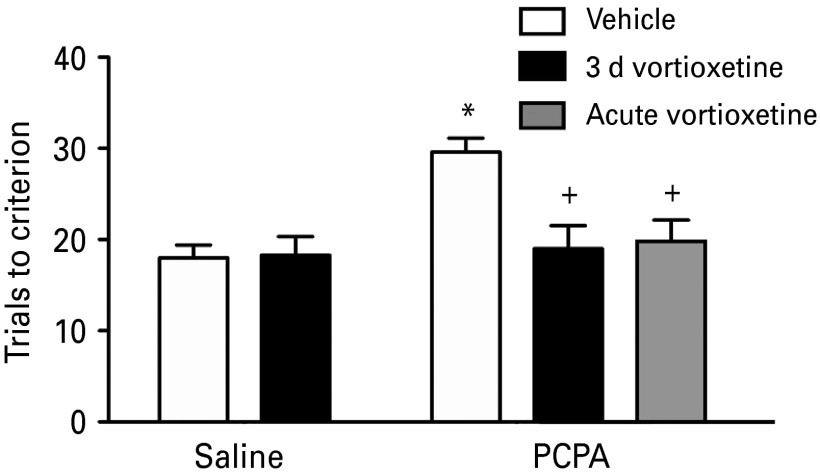
- Sub-chronic vortioxetine (10 mg/kg, i.p., once daily for 3 days) improved reversal learning in PCPA-treated rats (p < 0.001) but had no effect in controls (p = 0.919); a single acute injection also improved reversal learning in PCPA-treated rats (t13 = 2.80, p < 0.02).
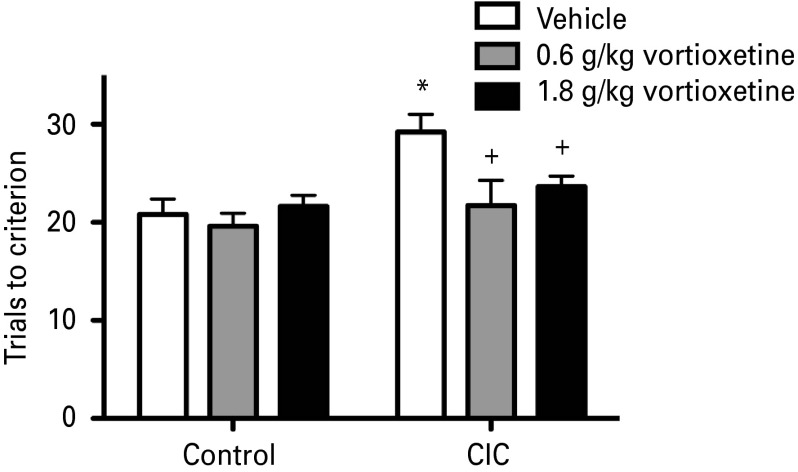
- Chronic intermittent cold stress impaired reversal learning (F1,48 = 8.32, p < 0.01), and chronic dietary vortioxetine at both low and high doses attenuated the deficit (p < 0.01 and p < 0.05, respectively).
- Under food restriction, the low vortioxetine diet produced approximately 50% 5-HT transporter occupancy and 20–30% 5-HT1B receptor occupancy; the high diet produced full 5-HT transporter occupancy and 5-HT1B occupancy ranging from about 35% in stressed rats to 70% in controls.
Methods
- A total of 113 adult male Sprague Dawley rats were used. Cognitive flexibility was measured with an abbreviated attentional set-shifting test through the first reversal task, with trials to criterion as the dependent measure.
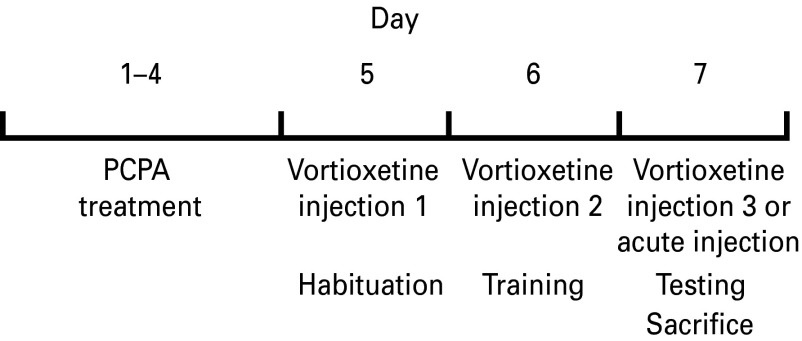
- Experiment 1: 38 rats received vehicle or PCPA (200 mg/kg, i.p.) for 4 days; vortioxetine (10 mg/kg, i.p.) was given acutely or sub-chronically on test days. Orbitofrontal cortex 5-HT was measured by LC/MS/MS.
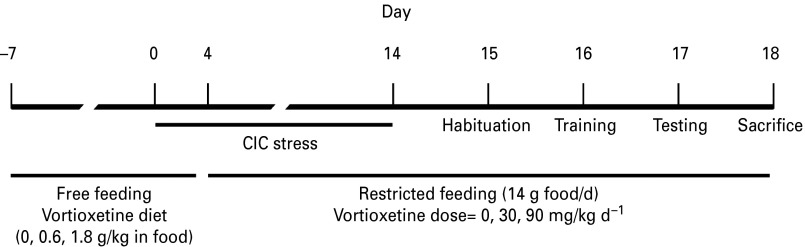
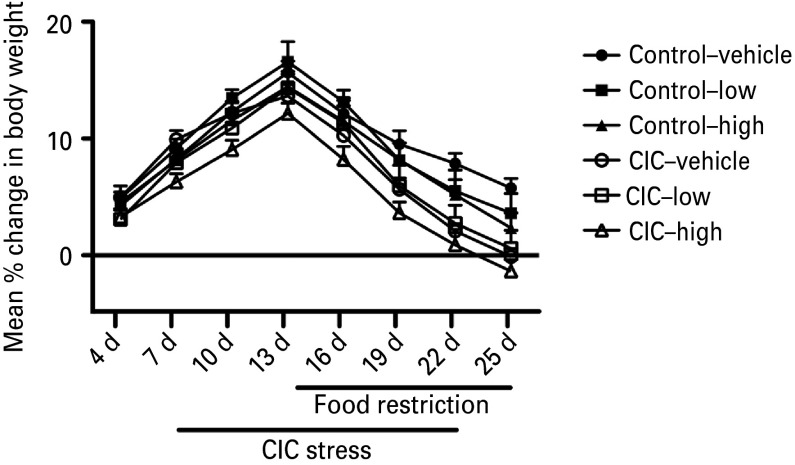
- Experiment 2: 54 rats were fed control chow or chow containing 0.6 or 1.8 g/kg vortioxetine for 25 days and exposed to CIC stress (4°C for 6 h/day for 14 days) or control conditions. Ex vivo autoradiography estimated 5-HT transporter and 5-HT1B receptor occupancies; reversal learning was analyzed by two-way MANOVA/ANOVA with post-hoc tests.
Limitations
- Stated in the paper: additional clinical studies are required to investigate whether vortioxetine’s multimodal properties improve cognitive deficits in depression.
- Evident from the text: only adult male rats were studied, so sex differences are not addressed; PCPA produces global 5-HT depletion rather than region-specific manipulation; and the receptor occupancy estimates rely on selected brain regions assumed to represent whole-brain fractional occupancy.
- Evident from the text: in Experiment 2, the vortioxetine × CIC stress interaction on reversal learning approached but did not reach significance (F2,48 = 2.28, p = 0.11), and 5-HT1B receptor occupancy was lower in CIC-stressed rats than controls during food restriction.
Model-written summary. Check it against the paper before relying on it.
Integrity signals
Registry
Cites
Statistics
Figures
Verification
Claims the paper makes
0 Valid · 1 Not valid · 51 Not checked · 57 Own results and interpretations
A result the paper reports from its own data — it cites no other source for it, so there is none to check. The quote shows it is in the paper.
In the paper
“Chronic treatment with either dose of vortioxetine in the diet significantly attenuated the reversal learning impairment induced by CIC stress (p < 0.01 and p < 0.05, respectively, for low- and high-dose vortioxetine compared to control diet in CIC-stressed rats; Fig. 4).”
§ Vortioxetine restores reversal learning impaired by 5-HT depletion or chronic intermittent cold stress in rats > Results > Experiment 2: effects of chronic dietary administration of vortioxetine on reversal learning compromised by chronic intermittent cold (CIC) stress
plainstates a cause- Asserted: passes — The authors put it forward as true.
- Checkable: passes — It can be checked against evidence.
- Load-bearing: passes — The paper’s conclusions depend on it.
- Based: passes — The paper gives a reason why it holds.
A result the paper reports from its own data — it cites no other source for it, so there is none to check. The quote shows it is in the paper.
In the paper
“After sub-chronic treatment, there was a significant main effect of vortioxetine on reversal learning (F1,26 = 6.80, p < 0.02), and a significant PCPA × vortioxetine interaction (F1,26 = 7.58, p < 0.01).”
§ Vortioxetine restores reversal learning impaired by 5-HT depletion or chronic intermittent cold stress in rats > Results > Experiment 1: effects of acute and sub-chronic vortioxetine treatment on reversal learning impairment induced by 5-HT depletion
plainstates a cause- Asserted: passes — The authors put it forward as true.
- Checkable: passes — It can be checked against evidence.
- Load-bearing: passes — The paper’s conclusions depend on it.
- Based: passes — The paper gives a reason why it holds.
A result the paper reports from its own data — it cites no other source for it, so there is none to check. The quote shows it is in the paper.
In the paper
“Under conditions of food restriction (14 g/d), for which the estimated daily drug dose was calculated, a significant main effect of vortioxetine in the diet was observed on occupancy at the 5-HT transporter (F2,31 = 58.5, p < 0.0001) and the 5-HT1B receptor (F2,31 = 19.34, p < 0.0001).”
§ Vortioxetine restores reversal learning impaired by 5-HT depletion or chronic intermittent cold stress in rats > Results > Experiment 2: effects of chronic dietary administration of vortioxetine on reversal learning compromised by chronic intermittent cold (CIC) stress
plainstates a cause- Asserted: passes — The authors put it forward as true.
- Checkable: passes — It can be checked against evidence.
- Load-bearing: unclear — It is unclear whether the paper’s conclusions depend on it.
- Based: passes — The paper gives a reason why it holds.
A result the paper reports from its own data — it cites no other source for it, so there is none to check. The quote shows it is in the paper.
In the paper
“However, there was no significant stress × vortioxetine interaction at either target (5-HT transporter: F2,31 = 0.5, p = 0.608; 5-HT1B receptor: F2,31 = 2.2, p = 0.125).”
§ Vortioxetine restores reversal learning impaired by 5-HT depletion or chronic intermittent cold stress in rats > Results > Experiment 2: effects of chronic dietary administration of vortioxetine on reversal learning compromised by chronic intermittent cold (CIC) stress
plain- Asserted: passes — The authors put it forward as true.
- Checkable: passes — It can be checked against evidence.
- Load-bearing: unclear — It is unclear whether the paper’s conclusions depend on it.
- Based: passes — The paper gives a reason why it holds.
A result the paper reports from its own data — it cites no other source for it, so there is none to check. The quote shows it is in the paper.
In the paper
“Similarly, single acute injection of vortioxetine immediately before testing also improved reversal learning in PCPA-treated rats (t13 = 2.80, p < 0.02 compared to vehicle injections, Fig. 3).”
§ Vortioxetine restores reversal learning impaired by 5-HT depletion or chronic intermittent cold stress in rats > Results > Experiment 1: effects of acute and sub-chronic vortioxetine treatment on reversal learning impairment induced by 5-HT depletion
plainstates a cause- Asserted: passes — The authors put it forward as true.
- Checkable: passes — It can be checked against evidence.
- Load-bearing: passes — The paper’s conclusions depend on it.
- Based: passes — The paper gives a reason why it holds.
37 more claims
Create a free account to see all 109 claims and to verify the 84 references still open.
- It may state two separate claims as one. 41
- Probably not a substantial claim. 42
Claims other papers make about this one
Each is checked against this paper’s own text: does it say what the citing paper says it does?
The cited source says what the claim attributes to it.
In the citing paper
“vortioxetine is effective in ameliorating reversal learning deficits produced by chronic cold stress (Wallace et al 2014)”
From Prefrontal cortex executive processes affected by stress in health and disease (2018) · cites this paper as Wallace et al 2014
In the citing paper
“The effects of vortioxetine are not due solely to its ability to inhibit serotonin reuptake, since the drug was effective in correcting reversal learning deficits induced by serotonin depletion with PCPA (Wallace et al 2014).”
From Prefrontal cortex executive processes affected by stress in health and disease (2018) · cites this paper as Wallace et al 2014
Citations
Cites
The Rat Brain in Stereotaxic Coordinates
(1982) · Elsevier eBooks · doi:10.1016/c2009-0-63235-9 · Cited by 51,963 · cited 1×
“Coronal brain sections were cut at 20 μm, beginning approximately 1.2mm anterior to bregma (Paxinos and Watson, 1998).”
Influence of life stress on depression: moderation by a polymorphism in the 5-HTT gene
Caspi, A., Sugden, K., Moffitt, T. E., Taylor, A., Craig, I. W., Harrington, H., McClay, J., Mill, J., Martin, J., Braithwaite, A., et al. (2003) · Science · doi:10.1126/science.1083968 · Cited by 8,120 · cited 3×
“Chronic stress is a risk factor for developing depression (Kessler, 1997; Kendler et al., 1999; Caspi et al., 2003).”
Background(1975) · Medical Entomology and Zoology · Cited by 7,245
Causal Relationship Between Stressful Life Events and the Onset of Major Depression
Kendler, K. S., Karkowski, L. M., & Prescott, C. A. (1999) · American Journal of Psychiatry · doi:10.1176/ajp.156.6.837 · Cited by 2,566 · cited 2×
“Chronic stress is a risk factor for developing depression (Kessler, 1997; Kendler et al., 1999; Caspi et al., 2003).”
BackgroundTHE EFFECTS OF STRESSFUL LIFE EVENTS ON DEPRESSION
Kessler, R. C. (1997) · Annual Review of Psychology · doi:10.1146/annurev.psych.48.1.191 · Cited by 2,111 · cited 2×
“Chronic stress is a risk factor for developing depression (Kessler, 1997; Kendler et al., 1999; Caspi et al., 2003).”
BackgroundPazos, A., & Palacios, J. M. (1985) · Brain Research · doi:10.1016/0006-8993(85)90856-x · Cited by 1,855 · cited 2×
“…studies have shown a high density of 5-HT1A and 5-HT1B receptors located on post-synaptic neurons in limbic forebrain areas such as the hippocampus, lateral septum and prefrontal cortex, where they may influence cognitive and emotional processes (Pazos and Palacios, 1985; Lucki et al., 1994).”
BackgroundMedial Frontal Cortex Mediates Perceptual Attentional Set Shifting in the Rat
Birrell, J. M., & Brown, V. J. (2000) · The Journal of Neuroscience · doi:10.1523/jneurosci.20-11-04320.2000 · Cited by 1,421 · cited 2×
“In previous studies using the attentional set-shifting test (AST) to measure cognitive flexibility in rats (Birrell and Brown, 2000), we have shown that serotonergic neurotransmission in the orbitofrontal cortex (OFC) modulates reversal learning, one form of cognitive flexibility measured by the AST (Lapiz-Bluhm et al.”
MethodCognitive deficits in depression: Possible implications for functional neuropathology
Austin, M.-P., Mitchell, P., & Goodwin, G. M. (2001) · British Journal of Psychiatry · doi:10.1192/bjp.178.3.200 · Cited by 1,154 · cited 2×
“…rats, we first investigated the direct effects of vortioxetine, acting at post-synaptic 5-HT receptors, on reversal learning that was compromised by 5-HT depletion using 4-chloro-DL-phenylalanine methyl ester hydrochloride (PCPA), effectively eliminating any contribution of 5-HT reuptake blockade.”
BackgroundMethodCryan, J. F., Valentino, R. J., & Lucki, I. (2005) · Neuroscience & Biobehavioral Reviews · doi:10.1016/j.neubiorev.2005.03.008 · Cited by 1,119 · cited 2×
“Activation of 5-HT1A receptors decreased immobility on the rat forced swim test (FST) and this was blocked by pretreatment with 5-HT1A-receptor antagonists (Detke et al., 1995; Cryan et al., 2005).”
BackgroundAmat, J., Baratta, M. V., Paul, E., Bland, S. T., Watkins, L. R., & Maier, S. F. (2005) · Nature Neuroscience · doi:10.1038/nn1399 · Cited by 931 · cited 1×
“Both the OFC and mPFC receive serotonergic innervation from the dorsal raphe nucleus (DRN), and a reciprocal projection from the PFC to the DRN provides a neural substrate for top-down control of activity in forebrain-projecting serotonergic pathways (Amat et al., 2005).”
BackgroundA cognitive model of selective processing in anxiety
Mathews, A., & Mackintosh, B. (1998) · Cognitive Therapy and Research · doi:10.1023/a:1018738019346 · Cited by 756 · cited 2×
“In humans, cognitive flexibility deficits may contribute to perseverative emotional biases involved in the development and maintenance of depressive symptoms (Beck, 1976; Mathews and Mackintosh, 1998; Coles and Heimberg, 2002).”
BackgroundGaynes, B. N., Warden, D., Trivedi, M. H., Wisniewski, S. R., Fava, M., & Rush, A. J. (2009) · Psychiatric Services · doi:10.1176/ps.2009.60.11.1439 · Cited by 661 · cited 1×
“Clinical research suggests that only half of depressed patients respond to initial treatment with an SSRI, and only one-third eventually achieve remission (Gaynes et al., 2009).”
BackgroundEmotional bias and inhibitory control processes in mania and depression
MURPHY, F. C., SAHAKIAN, B. J., RUBINSZTEIN, J. S., MICHAEL, A., ROGERS, R. D., ROBBINS, T. W., & PAYKEL, E. S. (1999) · Psychological Medicine · doi:10.1017/s0033291799001233 · Cited by 659 · cited 2×
“Depressed patients exhibit cognitive biases for emotionally meaningful material, particularly related to stressful life events (Beck, 1976), a narrowing of attention to depression-relevant thoughts, and difficulty shifting cognitive set, all consistent with the perseverative focus on themes of loss and worthlessness,…”
BackgroundFellows, L. K. (2003) · Brain · doi:10.1093/brain/awg180 · Cited by 631 · cited 1×
“Studies of performance deficits in patients with focal cortical lesions, and neuroimaging studies in healthy volunteers have confirmed an important role for the OFC in reversal learning in humans (Fellows and Farah, 2003; Hampshire and Owen, 2006; Hampshire et al., 2012).”
BackgroundOrbital prefrontal cortex mediates reversal learning and not attentional set shifting in the rat
McAlonan, K., & Brown, V. J. (2003) · Behavioural Brain Research · doi:10.1016/j.bbr.2003.09.019 · Cited by 618 · cited 1×
“The OFC is critical to this process, as lesions of the OFC result in perseveration and an inability to suppress previously reinforced responses in a reversal task in rodents and primates (Dias et al., 1996; McAlonan and Brown, 2003; Boulougouris et al., 2007).”
BackgroundBang-Andersen, B., Ruhland, T., Jørgensen, M., Smith, G., Frederiksen, K., Jensen, K. G., Zhong, H., Nielsen, S. M., Hogg, S., Mørk, A., et al. (2011) · Journal of Medicinal Chemistry · doi:10.1021/jm101459g · Cited by 606 · cited 4×
“In addition to blocking the serotonin (5-HT) transporter, vortioxetine is an antagonist at 5-HT3A, 5-HT7 and 5-HT1D receptors, a partial agonist at 5-HT1B receptors, and a full agonist at 5-HT1A receptors (Bang-Anderson et al., 2011; Westrich et al., 2012).”
BackgroundInfluentialAutoregulation of Serotonin Neurons: Role in Antidepressant Drug Action
Piñeyro, G., & Blier, P. (1999) · Pharmacological Reviews · doi:10.1016/s0031-6997(24)01417-0 · Cited by 537 · cited 2×
“Stimulation of pre-synaptic 5-HT1A and 5-HT1B autoreceptors inhibits 5-HT neuronal firing, synthesis and terminal release, and it has been proposed that autoreceptor desensitization may be responsible for the delay between initiating antidepressant treatment and reduction of depressive symptoms (Piñeyro and Blier, 199…”
BackgroundNeurocognitive deficits and disability in major depressive disorder
Jaeger, J., Berns, S., Uzelac, S., & Davis-Conway, S. (2006) · Psychiatry Research · doi:10.1016/j.psychres.2005.11.011 · Cited by 484 · cited 3×
“Executive functions involving the prefrontal cortex (PFC) are disrupted in patients with depression (Merriam et al., 1999; Jaeger et al., 2006; Herrera-Guzmán et al., 2010).”
BackgroundDias, R., Robbins, T. W., & Roberts, A. C. (1996) · Behavioral Neuroscience · doi:10.1037/0735-7044.110.5.872 · Cited by 476 · cited 1×
“The OFC is critical to this process, as lesions of the OFC result in perseveration and an inability to suppress previously reinforced responses in a reversal task in rodents and primates (Dias et al., 1996; McAlonan and Brown, 2003; Boulougouris et al., 2007).”
BackgroundKatona, C., Hansen, T., & Olsen, C. K. (2012) · International Clinical Psychopharmacology · doi:10.1097/yic.0b013e3283542457 · Cited by 445 · cited 1×
“Preclinical and clinical studies have demonstrated antidepressant properties of vortioxetine (Alvarez et al., 2012; Katona et al., 2012; Mørk et al., 2012), yet little is known about the relative contributions of 5-HT reuptake inhibition and direct receptor mechanisms to the beneficial behavioral…”
BackgroundBlier, P., & De Montigny, C. (1987) · Synapse · doi:10.1002/syn.890010511 · Cited by 426
Learning and cognitive flexibility: frontostriatal function and monoaminergic modulation
Kehagia, A. A., Murray, G. K., & Robbins, T. W. (2010) · Current Opinion in Neurobiology · doi:10.1016/j.conb.2010.01.007 · Cited by 398 · cited 1×
“One such executive process is cognitive flexibility, the ability to modify previously learned associations and behavioral patterns in response to a changing environment (Kehagia et al., 2010).”
BackgroundClarke, H., Walker, S., Dalley, J., Robbins, T., & Roberts, A. (2006) · Cerebral Cortex · doi:10.1093/cercor/bhj120 · Cited by 351
Functional, molecular and pharmacological advances in 5-HT receptor research
HEDLUND, P., & SUTCLIFFE, J. (2004) · Trends in Pharmacological Sciences · doi:10.1016/j.tips.2004.07.002 · Cited by 350 · cited 1×
“Another possible antagonist target of vortioxetine is the 5-HT7 receptor, expressed mainly in the thalamus, hypothalamus, hippocampus and cortex (Hedlund and Sutcliffe, 2004).”
BackgroundFractionating Attentional Control Using Event-Related fMRI
Hampshire, A., & Owen, A. M. (2005) · Cerebral Cortex · doi:10.1093/cercor/bhj116 · Cited by 329 · cited 1×
“Studies of performance deficits in patients with focal cortical lesions, and neuroimaging studies in healthy volunteers have confirmed an important role for the OFC in reversal learning in humans (Fellows and Farah, 2003; Hampshire and Owen, 2006; Hampshire et al., 2012).”
BackgroundLapiz, M. D. S., & Morilak, D. A. (2006) · Neuroscience · doi:10.1016/j.neuroscience.2005.09.031 · Cited by 325
Self-citationMemory biases in the anxiety disorders
Coles, M. E., & Heimberg, R. G. (2002) · Clinical Psychology Review · doi:10.1016/s0272-7358(01)00113-1 · Cited by 319 · cited 2×
“In humans, cognitive flexibility deficits may contribute to perseverative emotional biases involved in the development and maintenance of depressive symptoms (Beck, 1976; Mathews and Mackintosh, 1998; Coles and Heimberg, 2002).”
BackgroundCognitive patterns in symptomatic and remitted unipolar major depression.
Eaves, G., & Rush, A. J. (1984) · Journal of Abnormal Psychology · doi:10.1037//0021-843x.93.1.31 · Cited by 298 · cited 1×
“Cognitive deficits and compromised executive function often persist as residual symptoms after antidepressant treatment, and may limit the extent of recovery and predispose patients to relapse (Eaves and Rush, 1984; Jaeger et al., 2006; Herrera-Guzmán et al., 2010).”
BackgroundBoulougouris, V., Dalley, J. W., & Robbins, T. W. (2007) · Behavioural Brain Research · doi:10.1016/j.bbr.2007.02.005 · Cited by 297 · cited 1×
“The OFC is critical to this process, as lesions of the OFC result in perseveration and an inability to suppress previously reinforced responses in a reversal task in rodents and primates (Dias et al., 1996; McAlonan and Brown, 2003; Boulougouris et al., 2007).”
BackgroundPrefrontal Cortical Dysfunction in Depression Determined by Wisconsin Card Sorting Test Performance
Merriam, E. P., Thase, M. E., Haas, G. L., Keshavan, M. S., & Sweeney, J. A. (1999) · American Journal of Psychiatry · doi:10.1176/ajp.156.5.780 · Cited by 278 · cited 3×
“Depressed patients exhibit cognitive biases for emotionally meaningful material, particularly related to stressful life events (Beck, 1976), a narrowing of attention to depression-relevant thoughts, and difficulty shifting cognitive set, all consistent with the perseverative focus on themes of loss and worthlessness,…”
BackgroundMeyer, J. H. (2007) · Journal of Psychiatry and Neuroscience · doi:10.1139/jpn.0709 · Cited by 272 · cited 1×
“SSRIs generally require higher levels of 5-HT transporter occupancy to be active in both preclinical and clinical contexts (Meyer, 2007; Kreilgaard et al., 2008).”
BackgroundMørk, A., Pehrson, A., Brennum, L. T., Nielsen, S. M., Zhong, H., Lassen, A. B., Miller, S., Westrich, L., Boyle, N. J., Sánchez, C., et al. (2012) · The Journal of Pharmacology and Experimental Therapeutics · doi:10.1124/jpet.111.189068 · Cited by 271 · cited 3×
“Blockade of this receptor potentiates the increase in extracellular 5-HT produced by citalopram (Mørk et al., 2012) and augments the effects of sub-threshold doses of SSRIs in the mouse FST (Ramamoorthy et al., 2008).”
BackgroundSelf-citationExecutive functioning and verbal memory in young patients with unipolar depression and schizophrenia
Fossati, P., Amar, G., Raoux, N., Ergis, A. M., & Allilaire, J. F. (1999) · Psychiatry Research · doi:10.1016/s0165-1781(99)00110-9 · Cited by 238 · cited 2×
“Depressed patients exhibit cognitive biases for emotionally meaningful material, particularly related to stressful life events (Beck, 1976), a narrowing of attention to depression-relevant thoughts, and difficulty shifting cognitive set, all consistent with the perseverative focus on themes of loss and worthlessness,…”
BackgroundAlvarez, E., Perez, V., Dragheim, M., Loft, H., & Artigas, F. (2012) · The International Journal of Neuropsychopharmacology · doi:10.1017/s1461145711001027 · Cited by 225 · cited 2×
“Preclinical and clinical studies have demonstrated antidepressant properties of vortioxetine (Alvarez et al., 2012; Katona et al., 2012; Mørk et al., 2012), yet little is known about the relative contributions of 5-HT reuptake inhibition and direct receptor mechanisms to the beneficial behavioral…”
BackgroundHow does pindolol improve antidepressant action?
Artigas, F., Celada, P., Laruelle, M., & Adell, A. (2001) · Trends in Pharmacological Sciences · doi:10.1016/s0165-6147(00)01682-5 · Cited by 174 · cited 2×
“Stimulation of pre-synaptic 5-HT1A and 5-HT1B autoreceptors inhibits 5-HT neuronal firing, synthesis and terminal release, and it has been proposed that autoreceptor desensitization may be responsible for the delay between initiating antidepressant treatment and reduction of depressive symptoms (Piñeyro and Blier, 199…”
BackgroundBonaventure, P., Kelly, L., Aluisio, L., Shelton, J., Lord, B., Galici, R., Miller, K., Atack, J., Lovenberg, T. W., & Dugovic, C. (2007) · The Journal of Pharmacology and Experimental Therapeutics · doi:10.1124/jpet.107.119404 · Cited by 169 · cited 2×
“Blockade of 5-HT7 receptors has antidepressant-like effects in the mouse FST and tail suspension tests (Sarkisyan et al., 2010), and a synergistic interaction was seen between sub-effective doses of 5-HT7 receptor antagonists and SSRIs on the same tests (Bonaventure et al., 2007).”
BackgroundLapiz-Bluhm, M. D. S., Soto-Piña, A. E., Hensler, J. G., & Morilak, D. A. (2009) · Psychopharmacology · doi:10.1007/s00213-008-1224-6 · Cited by 163 · cited 10×
“An abbreviated AST was conducted according to published procedures (Lapiz-Bluhm and Morilak, 2010), but only through completion of the first reversal task, which we have shown previously to be compromised selectively by both 5-HT depletion and CIC stress (Lapiz-Bluhm et al., 2009).”
BackgroundMethodSelf-citationAntidepressant-like behavioral effects of serotonin receptor agonists
Lucki, I., Singh, A., & Kreiss, D. S. (1994) · Neuroscience & Biobehavioral Reviews · doi:10.1016/0149-7634(94)90039-6 · Cited by 158 · cited 3×
“When serotonergic neurons were selectively destroyed or 5-HT synthesis inhibited, 5-HT1A receptor agonists still produced antidepressant-like effects in the FST, suggesting that these effects were due to direct activation of postsynaptic 5-HT1A receptors (Lucki et al., 1994).”
BackgroundPehrson, A. L., Cremers, T., Bétry, C., van der Hart, M. G. C., Jørgensen, L., Madsen, M., Haddjeri, N., Ebert, B., & Sanchez, C. (2013) · European Neuropsychopharmacology · doi:10.1016/j.euroneuro.2012.04.006 · Cited by 155 · cited 3×
“Vortioxetine was shown to increase 5-HT to an even greater extent than escitalopram (Pehrson et al., 2013), indicating that when the 5-HT receptor actions of vortioxetine are exerted in combination with reuptake inhibition, a greater elevation in extracellular 5-HT levels is attainable than with…”
BackgroundMethodSelf-citationIn Vivo Excitation of GABA Interneurons in the Medial Prefrontal Cortex through 5-HT3 Receptors
Puig, M. V. (2004) · Cerebral Cortex · doi:10.1093/cercor/bhh097 · Cited by 152 · cited 1×
“The 5-HT3 receptor is found primarily on cortical and hippocampal GABAergic interneurons (Morales et al., 1996; Puig et al., 2004).”
BackgroundNaismith, S. L., Longley, W. A., Scott, E. M., & Hickie, I. B. (2007) · BMC Psychiatry · doi:10.1186/1471-244x-7-32 · Cited by 146 · cited 1×
“More effective management of cognitive impairment, specifically of cognitive inflexibility, may be important for more effective treatment of depression (Naismith et al., 2007).”
BackgroundMorales, M., Battenberg, E., de Lecea, L., & Bloom, F. E. (1996) · Brain Research · doi:10.1016/0006-8993(96)00557-4 · Cited by 145 · cited 1×
“The 5-HT3 receptor is found primarily on cortical and hippocampal GABAergic interneurons (Morales et al., 1996; Puig et al., 2004).”
BackgroundDetke, M. J., Wieland, S., & Lucki, I. (1995) · Psychopharmacology · doi:10.1007/bf02246053 · Cited by 139 · cited 2×
“Activation of 5-HT1A receptors decreased immobility on the rat forced swim test (FST) and this was blocked by pretreatment with 5-HT1A-receptor antagonists (Detke et al., 1995; Cryan et al., 2005).”
BackgroundRygula, R., Walker, S. C., Clarke, H. F., Robbins, T. W., & Roberts, A. C. (2010) · The Journal of Neuroscience · doi:10.1523/jneurosci.2631-10.2010 · Cited by 136 · cited 1×
“Reversal learning is a form of cognitive flexibility, an executive process that allows the adaptive modification of behavior in response to changes in internal state or environmental circumstance (Rygula et al., 2010).”
Backgrounddu Jardin, K. G., Jensen, J. B., Sanchez, C., & Pehrson, A. L. (2014) · European Neuropsychopharmacology · doi:10.1016/j.euroneuro.2013.07.001 · Cited by 133 · cited 2×
“…study, acute administration of 10mg/kg vortioxetine to PCPA-treated rats lead to functionally relevant occupancies of 5-HT1A and 5-HT1B receptors (43 and 89%, respectively), and recovery of memory impairment in the object recognition and spontaneous alternation tests (du Jardin et al., 2014).”
BackgroundResultSelf-citationRamamoorthy, R., Radhakrishnan, M., & Borah, M. (2008) · Behavioural Pharmacology · doi:10.1097/fbp.0b013e3282f3cfd4 · Cited by 130 · cited 6×
“Similarly, the 5-HT1B-receptor agonists, anpirtoline and CP94253, also produced antidepressant-like effects in the FST in mice (Tatarczynska et al., 2005; Chenu et al., 2008).”
BackgroundInfluentialThe 5-HT7 receptor as a mediator and modulator of antidepressant-like behavior
Sarkisyan, G., Roberts, A. J., & Hedlund, P. B. (2010) · Behavioural Brain Research · doi:10.1016/j.bbr.2010.01.022 · Cited by 114 · cited 1×
“Blockade of 5-HT7 receptors has antidepressant-like effects in the mouse FST and tail suspension tests (Sarkisyan et al., 2010), and a synergistic interaction was seen between sub-effective doses of 5-HT7 receptor antagonists and SSRIs on the same tests (Bonaventure et al., 2007).”
BackgroundHerrera-Guzmán, I., Gudayol-Ferré, E., Herrera-Abarca, J. E., Herrera-Guzmán, D., Montelongo-Pedraza, P., Padrós Blázquez, F., Peró-Cebollero, M., & Guàrdia-Olmos, J. (2010) · Journal of Affective Disorders · doi:10.1016/j.jad.2009.10.009 · Cited by 94 · cited 2×
“Executive functions involving the prefrontal cortex (PFC) are disrupted in patients with depression (Merriam et al., 1999; Jaeger et al., 2006; Herrera-Guzmán et al., 2010).”
BackgroundStenkrona, P., Halldin, C., & Lundberg, J. (2013) · European Neuropsychopharmacology · doi:10.1016/j.euroneuro.2013.01.002 · Cited by 78 · cited 1×
“Occupancy of the 5-HT transporter at clinically approved doses of vortioxetine is approximately 50% at 5mg, 65% at 10mg, and >80% at 20mg (Areberg et al., 2012; Stenkrona et al., 2013).”
BackgroundHampshire, A., Chaudhry, A. M., Owen, A. M., & Roberts, A. C. (2012) · NeuroImage · doi:10.1016/j.neuroimage.2011.10.072 · Cited by 78 · cited 1×
“Studies of performance deficits in patients with focal cortical lesions, and neuroimaging studies in healthy volunteers have confirmed an important role for the OFC in reversal learning in humans (Fellows and Farah, 2003; Hampshire and Owen, 2006; Hampshire et al., 2012).”
BackgroundSuzuki, M., Matsuda, T., Asano, S., Somboonthum, P., Takuma, K., & Baba, A. (1995) · British Journal of Pharmacology · doi:10.1111/j.1476-5381.1995.tb14990.x · Cited by 76 · cited 1×
“In other microdialysis experiments, elevated NE levels were observed in the cortex, hippocampus and hypothalamus after systemic administration of 5-HT1A receptor agonists (Suzuki et al., 1995; Suwabe et al., 2000).”
BackgroundFurr, A., Lapiz-Bluhm, M. D., & Morilak, D. A. (2012) · The International Journal of Neuropsychopharmacology · doi:10.1017/s1461145711001441 · Cited by 74
Self-citationAreberg, J., Luntang‐Jensen, M., Søgaard, B., & Nilausen, D. Ø. (2012) · Basic & Clinical Pharmacology & Toxicology · doi:10.1111/j.1742-7843.2011.00810.x · Cited by 68 · cited 1×
“Occupancy of the 5-HT transporter at clinically approved doses of vortioxetine is approximately 50% at 5mg, 65% at 10mg, and >80% at 20mg (Areberg et al., 2012; Stenkrona et al., 2013).”
BackgroundDanet, M., Lapiz-Bluhm, S., & Morilak, D. A. (2010) · The International Journal of Neuropsychopharmacology · doi:10.1017/s1461145710000039 · Cited by 63 · cited 11×
“An abbreviated AST was conducted according to published procedures (Lapiz-Bluhm and Morilak, 2010), but only through completion of the first reversal task, which we have shown previously to be compromised selectively by both 5-HT depletion and CIC stress (Lapiz-Bluhm et al., 2009).”
BackgroundMethodResultSelf-citationBétry, C., Pehrson, A. L., Etiévant, A., Ebert, B., Sánchez, C., & Haddjeri, N. (2013) · International Journal of Neuropsychopharmacology · doi:10.1017/s1461145712001058 · Cited by 62 · cited 1×
“Rapid desensitization of somatodendritic 5-HT1A receptors has been reported after 1–3 d of vortioxetine treatment, whereas 14 d of treatment with fluoxetine were required to achieve this same effect (Bétry et al., 2013).”
BackgroundSelf-citationChenu, F., David, D. J. P., Leroux-Nicollet, I., Le Maïtre, E., Gardier, A. M., & Bourin, M. (2008) · Journal of Psychiatry and Neuroscience · doi:10.1139/jpn.0852 · Cited by 56 · cited 8×
“Similarly, the 5-HT1B-receptor agonists, anpirtoline and CP94253, also produced antidepressant-like effects in the FST in mice (Tatarczynska et al., 2005; Chenu et al., 2008).”
BackgroundInfluentialTatarczynska, E., Antkiewicz‐Michaluk, L., Kłodzińska, A., Stachowicz, K., & Chojnacka-Wójcik, E. (2005) · European Journal of Pharmacology · doi:10.1016/j.ejphar.2005.04.025 · Cited by 52 · cited 1×
“Similarly, the 5-HT1B-receptor agonists, anpirtoline and CP94253, also produced antidepressant-like effects in the FST in mice (Tatarczynska et al., 2005; Chenu et al., 2008).”
BackgroundKreilgaard, M., Smith, D. G., Brennum, L. T., & Sánchez, C. (2008) · British Journal of Pharmacology · doi:10.1038/bjp.2008.243 · Cited by 49 · cited 1×
“SSRIs generally require higher levels of 5-HT transporter occupancy to be active in both preclinical and clinical contexts (Meyer, 2007; Kreilgaard et al., 2008).”
BackgroundSelf-citationPharmacological approaches to the treatment of residual symptoms
Fava, M. (2006) · Journal of Psychopharmacology · doi:10.1177/1359786806064325 · Cited by 48 · cited 1×
“Indeed, current treatments for depression, including serotonin-specific reuptake inhibitors (SSRIs), are only partially effective, with a high incidence of residual symptoms, relapse, and treatment resistance (Fava, 2006; Jaeger et al., 2006).”
BackgroundNikiforuk, A. (2011) · Behavioural Brain Research · doi:10.1016/j.bbr.2011.09.006 · Cited by 47 · cited 1×
“Further, selective 5-HT7 receptor antagonism facilitated extradimensional set-shifting in chronically-stressed and unstressed control rats and promoted cognitive flexibility given in combination with a sub-effective dose of escitalopram in naïve rats (Nikiforuk, 2012).”
BackgroundSuwabe, A., Kubota, M., Niwa, M., Kobayashi, K., & Kanba, S. (2000) · Brain Research · doi:10.1016/s0006-8993(00)01941-7 · Cited by 29 · cited 1×
“In other microdialysis experiments, elevated NE levels were observed in the cortex, hippocampus and hypothalamus after systemic administration of 5-HT1A receptor agonists (Suzuki et al., 1995; Suwabe et al., 2000).”
Research works printed but not linked: 1
- Westrich L, Pehrson A, Zhong H, Nielsen SM, Frederiksen K, Stensbøl TB, Boyle N, Hentzer M, Sánchez C (2012) In vitro and in vivo effects of the multimodal antidepressant vortioxetine (Lu AA21004) at human and rat targets. Int J Psychiatr Clin Pract 16 (Suppl. 1): 47
Cited by
The neural basis of reversal learning: An updated perspective
Izquierdo, A., Brigman, J. L., Radke, A. K., Rudebeck, P. H., & Holmes, A. (2017) · Neuroscience · doi:10.1016/j.neuroscience.2016.03.021 · Cited by 670
“, 2015), (2) serotonin receptor blockade (Boulougouris and Robbins, 2010), (3) treatment with serotonin reuptake inhibitors (Brigman et al., 2010b; Brown et al., 2012; Furr et al., 2012a; Wallace et al., 2014), to (4) phenotyping gene deletions and polymorphisms (Homberg et al.”
BackgroundSanchez, C., Asin, K. E., & Artigas, F. (2015) · Pharmacology & Therapeutics · doi:10.1016/j.pharmthera.2014.07.001 · Cited by 547
“Similarly, chronic dietary administration of vortioxetine at doses corresponding to 50–90% SERT occupancy prevented reversal learning deficits in rats exposed to chronic intermittent cold stress (Wallace et al., 2014).”
BackgroundSelf-citationCognitive impairment in depression: recent advances and novel treatments
Perini, G., Cotta Ramusino, M., Sinforiani, E., Bernini, S., Petrachi, R., & Costa, A. (2019) · Neuropsychiatric Disease and Treatment · doi:10.2147/ndt.s199746 · Cited by 384
Mahableshwarkar, A. R., Zajecka, J., Jacobson, W., Chen, Y., & Keefe, R. S. (2015) · Neuropsychopharmacology · doi:10.1038/npp.2015.52 · Cited by 307
“…noradrenergic, dopaminergic, cholinergic, histaminergic, and glutamatergic neurotransmission, affecting the levels of neurotransmitters involved in cognitive processes (Bang-Andersen et al, 2011; Mork et al, 2012, 2013; Pehrson et al, 2013; Pehrson and Sanchez, 2014; Wallace et al, 2014).”
BackgroundMcIntyre, R., Harrison, J., Loft, H., Jacobson, W., & Olsen, C. (2016) · International Journal of Neuropsychopharmacology · doi:10.1093/ijnp/pyw055 · Cited by 185
“The novel multimodal antidepressant vortioxetine has shown evidence of cognitive benefit in animal models, where it improved measures of memory (e.g. reversal learning; Wallace et al., 2014; Sanchez et al., 2015), as well as in patients with MDD (Katona et al.”
Background
Metadata
- Authors
- Wallace, A., Pehrson, A. L., Sánchez, C., & Morilak, D. A.
- Affiliations
- The University of Texas at San Antonio Health Science Center (US)
- Lundbeck (United States) (US)
- Corresponding author
- Morilak, David A.
- Venue
- The International Journal of Neuropsychopharmacology
- Publisher
- Oxford University Press (OUP)
- Published
- 2014-05-23
- Volume
- 17
- Issue
- 10
- Pages
- 1695-1706
- ISSN
- 1461-1457 (ISSN-L)
- 1469-5111
- PMC
- PMC4162520
- OpenAlex
- W2133342592
- Semantic Scholar
- a216692a2a1f8875a4037b09f024b99c0a70ed49
- Cited by
- 97
- References
- 61
- Citations by year
- 2025: 3 · 2024: 4 · 2023: 5 · 2022: 3 · 2021: 11 · 2020: 9 · 2019: 10 · 2018: 6 · 2017: 16 · 2016: 12 · 2015: 14 · 2014: 4
- FWCI
- 11.18
- Type
- journal article
- Language
- en
- Open access
- bronze
- doi.org
- Locations
- The International Journal of Neuropsychopharmacology (publishedVersion)
- Europe PMC (PubMed Central) (publishedVersion, cc-by)
- PubMed Central (publishedVersion, cc-by)
- PubMed (publishedVersion)
- Funders
- National Institutes of Health (UL1TR001120)
- National Institute of Dental and Craniofacial Research (T32DE014318)
- National Center for Advancing Translational Sciences
- Topics
- Health Sciences › Medicine › Pharmacology (medical) › Treatment of Major Depression
- Life Sciences › Neuroscience › Cellular and Molecular Neuroscience › Neurotransmitter Receptor Influence on Behavior
- Life Sciences › Neuroscience › Biological Psychiatry › Tryptophan and brain disorders
- Keywords
- vortioxetine, reversal learning, cognitive flexibility, serotonin depletion, p-chlorophenylalanine, chronic stress, depression, serotonin receptors, antidepressant effects, prefrontal cortex
- MeSH terms
- Vortioxetine, Analysis of Variance, Animals, Attention, Autoradiography, Body Weight, Cold Temperature, Disease Models, Animal, Dose-Response Relationship, Drug, Enzyme Inhibitors, Learning Disabilities, Male, Phenylalanine, Piperazines, Reversal Learning, Serotonin, Stress, Psychological, Sulfides, Anti-Anxiety Agents, Rats, Sprague-Dawley, Rats
About these checks
Registry, retraction, Cites and statistics results are computed, not judged, with one exception: a printed reference that no index lists is read once by a model before it counts as a citation error. Claims are extracted by a model and kept only when their quote appears verbatim in the text; each cited source is then checked, with a model’s help, for whether it says what the claim relies on. Those verdicts can be wrong — read the claim’s quote and the cited source before relying on one.
A language model drew the claims from the paper on 2026-10-06, under version 3 of the claim definition (model deepseek-v4.1-flash, prompt extract-v3).
A second model labelled each claim on 2026-10-06 (model jev-1.13-20260917, definition revision gold-guideline-v0.2).
Statistics and arithmetic are recomputed, not judged.
Confidence bands are shown only for fields calibrated on our annotated test set. None is calibrated yet, so no band is shown.
What counts as a claim ›How we measure confidence ›How we check this ›
Are you an author, or do you see a problem with this page? Request a review
Data sources
Bibliographic data: Semantic Scholar, OpenAlex, Crossref.
Contains information from the Semantic Scholar Academic Graph Datasets, made available under the ODC Attribution License (ODC-BY 1.0).
Semantic Scholar’s data is described in: Kinney, R., et al. (2023). The Semantic Scholar Open Data Platform. arXiv:2301.10140.
