

Implementing dementia risk reduction in primary care: a preliminary conceptual model based on a scoping review of practitioners’ views
Open accessThe DOI matches its Crossref record; 43 of the 47 references it cites were found in a registry or an index.
Abstract
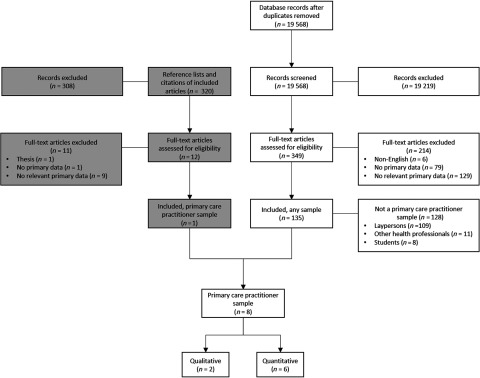
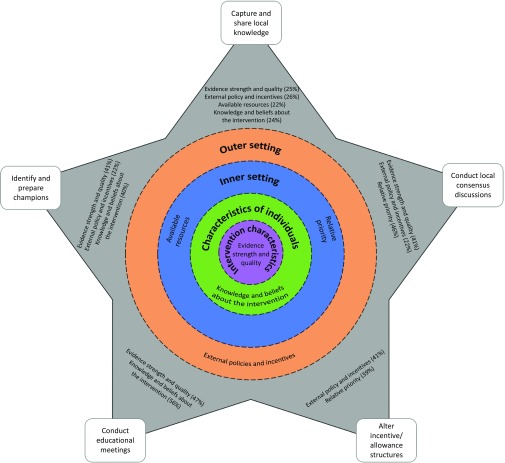
Primary care practitioners (PCPs) do not routinely promote dementia risk reduction. The purpose of this study was to map the published literature on the views of PCPs about dementia risk reduction, in order to identify implementation constructs and strategies crucial to the development of an implementation intervention to support dementia risk reduction in primary care. We undertook a scoping review of the PCPs’ views about promoting brain health for reducing dementia risk. We searched MEDLINE, PsycINFO, CINAHL, and Embase for English-language articles published between 1995 and December 2017. We then applied the Consolidated Framework for Implementation Research (CFIR) and matched Expert Recommendations for Implementing Change to the scoping review findings in order to develop a preliminary implementation model. Eight articles reported views of PCPs about dementia prevention. Study findings were mapped to 5 of the 39 CFIR constructs: (i) knowledge and beliefs about dementia risk reduction, (ii) evidence strength and quality, (iii) relative priority, (iv) available resources, and (v) external policy and incentives. The findings suggest implementation strategies to consider in our preliminary model include (i) educational meetings, (ii) identifying and preparing champions, (iii) conducting local consensus discussions, (iv) altering incentive structures, and (v) capturing and sharing local knowledge. There have been few studies about the views of PCPs about dementia risk reduction. Implementation in the primary care setting is fundamental to early identification of risk and supporting preventive practices, but it needs to focus on more than just education for PCPs. We need more up-to-date and in-depth data on the views of PCPs about dementia risk reduction and context-specific analyses of implementation needs. Further research into effective primary care interventions to reduce dementia risk is expected to support implementation efforts.
Overview
The claims and statistics of this paper haven’t been checked yet.
Free: it reads the open-access text and checks the first 5 claims that cite a source we can check. Create a free account to check every claim.
Integrity signals
Registry
Cites
Statistics
Figures
Verification
Claims the paper makes
The claims and statistics of this paper haven’t been checked yet.
Free: it reads the open-access text and checks the first 5 claims that cite a source we can check. Create a free account to check every claim.
Claims other papers make about this one
Each is checked against this paper’s own text: does it say what the citing paper says it does?
The source backs part of the claim, not all of it — or backs it for a different population, condition or comparison.
In the citing paper
“This could explain the alarming finding that although healthcare professionals believe they should play an important role in identifying individuals at risk for dementia, they only sporadically provide advice on dementia risk reduction to their patients.17,34”
From Awareness of dementia risk reduction among current and future healthcare professionals: A survey study (2021) · cites this paper as [17]
Experimental — accuracy not yet measuredThe cited source says what the claim attributes to it.
In the citing paper
“Nevertheless, previous studies have shown that general practitioners (GPs) only sporadically provide advice on preventive strategies for dementia, which could be explained by the concerns about their knowledge regarding this topic.15-17”
From Awareness of dementia risk reduction among current and future healthcare professionals: A survey study (2021) · cites this paper as [17]
The cited source says what the claim attributes to it.
In the citing paper
“Limited time and resources being the major ones, that may force PCPs to neglect efforts towards prevention, despite their intentions, as it is usually less of priority or urgent [45, 46].”
From Multidomain Dementia Risk Reduction in Primary Care is Feasible: A Proof-of-concept study (2024) · cites this paper as [46]
In the citing paper
“Nurses and allied health workers were more aware of lifestyle risk factors than physicians, which is contrary to the findings of other studies (11–14).”
From Awareness of dementia risk factors among healthcare professionals at Hamad Medical Corporation, Qatar: a cross-sectional survey (2024) · cites this paper as [11]
Self-check
Percentages, sums and reported differences re-computed from the paper’s own numbers.
The self-check needs the paper’s full text.
Citations
Cites
PRISMA Extension for Scoping Reviews (PRISMA-ScR): Checklist and Explanation
Tricco, A. C., Lillie, E., Zarin, W., O'Brien, K. K., Colquhoun, H., Levac, D., Moher, D., Peters, M. D. J., Horsley, T., Weeks, L., et al. (2018) · Annals of Internal Medicine · doi:10.7326/m18-0850 · Cited by 43,565 · cited 2×
“The review is reported in accordance with the PRISMA Extension for Scoping Reviews (PRISMA-ScR) Checklist (Tricco et al ., 2018).”
Damschroder, L. J., Aron, D. C., Keith, R. E., Kirsh, S. R., Alexander, J. A., & Lowery, J. C. (2009) · Implementation Science · doi:10.1186/1748-5908-4-50 · Cited by 14,496 · cited 1×
“We applied the CFIR (Damschroder et al., 2009) to the findings of the scoping review.”
Guidance for conducting systematic scoping reviews
Peters, M. D. J., Godfrey, C. M., Khalil, H., McInerney, P., Parker, D., & Soares, C. B. (2015) · International Journal of Evidence-Based Healthcare · doi:10.1097/xeb.0000000000000050 · Cited by 7,472 · cited 3×
“Scoping reviews are useful for answering broad questions such as ‘What is known about a concept?’ and for examining emerging evidence when it is still unclear what other, more specific questions can be posed and valuably addressed by other research methods (Peters et al., 2015; Tricco et al., 2016).”
Diffusion of Innovations in Service Organizations: Systematic Review and Recommendations
GREENHALGH, T., ROBERT, G., MACFARLANE, F., BATE, P., & KYRIAKIDOU, O. (2004) · The Milbank Quarterly · doi:10.1111/j.0887-378x.2004.00325.x · Cited by 7,448 · cited 1×
“The CFIR is one of the most commonly used determinant frameworks (Birken et al ., 2017) and is based on theories identified in Greenhalgh et al. ’ s (2004) widely cited systematic review.”
Why Don't Physicians Follow Clinical Practice Guidelines?: A Framework for Improvement
Cabana, M. D., Rand, C. S., Powe, N. R., Wu, A. W., Wilson, M. H., Abboud, P.-A. C., & Rubin, H. R. (1999) · JAMA · doi:10.1001/jama.282.15.1458 · Cited by 6,677 · cited 1×
“Simply providing PCPs with guidelines for dementia risk reduction will not be enough to change their professional behaviour (Cabana et al., 1999).”
Dementia prevention, intervention, and care
Livingston, G., Sommerlad, A., Orgeta, V., Costafreda, S. G., Huntley, J., Ames, D., Ballard, C., Banerjee, S., Burns, A., Cohen-Mansfield, J., et al. (2017) · The Lancet · doi:10.1016/s0140-6736(17)31363-6 · Cited by 6,072 · cited 2×
“Epidemiological evidence suggests that up to one-third of all dementia cases are attributable to modifiable risk factors such as obesity, hypertension, diabetes, physical inactivity, and smoking (Livingston et al ., 2017).”
Powell, B. J., Waltz, T. J., Chinman, M. J., Damschroder, L. J., Smith, J. L., Matthieu, M. M., Proctor, E. K., & Kirchner, J. E. (2015) · Implementation Science · doi:10.1186/s13012-015-0209-1 · Cited by 4,963
Making sense of implementation theories, models and frameworks
Nilsen, P. (2015) · Implementation Science · doi:10.1186/s13012-015-0242-0 · Cited by 4,447 · cited 2×
“Implementation science is a relatively new area of health research that focusses on bridging such gaps in practice, with implementation models used to describe the process of changing routine practice (Nilsen, 2015).”
U.S. Department of Health and Human Services
(2006) · Encyclopedia of Sexual Behavior and the Law · doi:10.4135/9781452240107.n226 · Cited by 3,170
(2015) · HAL · Cited by 2,238
Forsetlund, L., Bjørndal, A., Rashidian, A., Jamtvedt, G., O'Brien, M. A., Wolf, F. M., Davis, D., Odgaard-Jensen, J., & Oxman, A. D. (2009) · Cochrane Database of Systematic Reviews · doi:10.1002/14651858.cd003030.pub2 · Cited by 1,849 · cited 1×
“An implementation intervention that focusses on education and training alone is unlikely to be maximally effective in supporting the promotion of brain health in primary care (Forsetlund et al., 2009).”
The Quality Implementation Framework: A Synthesis of Critical Steps in the Implementation Process
Meyers, D. C., Durlak, J. A., & Wandersman, A. (2012) · American Journal of Community Psychology · doi:10.1007/s10464-012-9522-x · Cited by 1,102 · cited 2×
“likely involve working with PCPs and patients in individual primary care organisations to prioritise and adapt strategies according to their specific needs and resources (Meyers et al., 2012).”
Birken, S. A., Powell, B. J., Shea, C. M., Haines, E. R., Alexis Kirk, M., Leeman, J., Rohweder, C., Damschroder, L., & Presseau, J. (2017) · Implementation Science · doi:10.1186/s13012-017-0656-y · Cited by 471 · cited 1×
“The CFIR is one of the most commonly used determinant frameworks (Birken et al., 2017) and is based on theories identified in Greenhalgh et al.”
Patients and staff as codesigners of healthcare services
Robert, G., Cornwell, J., Locock, L., Purushotham, A., Sturmey, G., & Gager, M. (2015) · BMJ · doi:10.1136/bmj.g7714 · Cited by 427 · cited 1×
“Following principles of patient and public involvement (Robert et al., 2015), we also aim to bring together groups of PCPs and patients working within the same general practice to share their experiences of brain health promotion, identify their shared priorities for implementation, and then work on the identified pri…”
Prevalence of uncontrolled risk factors for cardiovascular disease: United States, 1999-2010.
Fryar, C. D., Chen, T., & Li, X. (2012) · PubMed · Cited by 356
Lau, R., Stevenson, F., Ong, B. N., Dziedzic, K., Treweek, S., Eldridge, S., Everitt, H., Kennedy, A., Qureshi, N., Rogers, A., et al. (2015) · BMJ Open · doi:10.1136/bmjopen-2015-009993 · Cited by 254 · cited 1×
“In their systematic review of reviews on achieving change in primary care, Lau et al. (2015) found that multifaceted interventions were not necessarily more effective than single strategies alone.”
Rubio-Valera, M., Pons-Vigués, M., Martínez-Andrés, M., Moreno-Peral, P., Berenguera, A., & Fernández, A. (2014) · PLoS ONE · doi:10.1371/journal.pone.0089554 · Cited by 226 · cited 1×
“, 2018), or reducing lifestyle risk factors in more general terms (Stead et al., 2009; Eisner et al., 2011; Taylor et al., 2011; Rubio-Valera et al., 2014) have highlighted common challenges.”
Inequalities in dementia care across Europe: key findings of the Facing Dementia Survey
Bond, J., Stave, C., Sganga, A., Vincenzino, O., O'connell, B., & Stanley, R. L. (2005) · International Journal of Clinical Practice · doi:10.1111/j.1368-504x.2005.00480.x · Cited by 185 · cited 1×
“‡ The aim is inferred from Bond (2005), to which Wilkinson et al .”
HUNG, D. Y., RUNDALL, T. G., TALLIA, A. F., COHEN, D. J., HALPIN, H. A., & CRABTREE, B. F. (2007) · The Milbank Quarterly · doi:10.1111/j.1468-0009.2007.00477.x · Cited by 147 · cited 1×
“In fact, PCPs only occasionally deliver any preventive advice and support (Rafferty, 1998; McDonnell et al., 2001; Hung et al., 2007; Joyce and Piterman 2011; Britt et al., 2016a), let alone advice and support specific to reducing dementia risk.”
Tricco, A. C., Ashoor, H. M., Cardoso, R., MacDonald, H., Cogo, E., Kastner, M., Perrier, L., McKibbon, A., Grimshaw, J. M., & Straus, S. E. (2015) · Implementation Science · doi:10.1186/s13012-016-0421-7 · Cited by 139 · cited 1×
“Scoping reviews are useful for answering broad questions such as ‘What is known about a concept?’ and for examining emerging evidence when it is still unclear what other, more specific questions can be posed and valuably addressed by other research methods (Peters et al., 2015; Tricco et al., 2016).”
Checkland, K., Harrison, S., & Marshall, M. (2007) · Journal of Health Services Research & Policy · doi:10.1258/135581907780279657 · Cited by 133 · cited 4×
“Evaluation of the codesigned implementation process, incorporating both observation and explanatory narratives offered by participants (Checkland et al ., 2007), will be used to further refine the implementation model.”
InfluentialFactors influencing European GPs' engagement in smoking cessation: a multi-country literature review
Stead, M., Angus, K., Holme, I., Cohen, D., Tait, G., & the PESCE European Research Team (2009) · British Journal of General Practice · doi:10.3399/bjgp09x454007 · Cited by 120 · cited 1×
“…of diabetes (Messina et al ., 2017), prevention of any cardiometabolic disease (Wändell et al ., 2018), or reducing lifestyle risk factors in more general terms (Stead et al ., 2009; Eisner et al ., 2011; Taylor et al ., 2011; Rubio-Valera et al ., 2014) have highlighted common challenges.”
Wändell, P. E., de Waard, A.-K. M., Holzmann, M. J., Gornitzki, C., Lionis, C., de Wit, N., Søndergaard, J., Sønderlund, A. L., Kral, N., Seifert, B., et al. (2018) · Family Practice · doi:10.1093/fampra/cmx137 · Cited by 120 · cited 2×
“, 2017), prevention of any cardiometabolic disease (Wändell et al., 2018), or reducing lifestyle risk factors in more general terms (Stead et al.”
Kane, M. D., Butler, P. D., & Fink, M. D. (2017) · doi:10.23970/ahrqepccer188 · Cited by 95 · cited 1×
“There is not yet strong evidence for specific interventions that can reduce dementia risk (Kane et al ., 2017), although multi-domain lifestyle interventions are currently being trialled in the USA, Europe, Singapore, and Australia (Kivipelto, 2018).”
A narrative systematic review of factors affecting diabetes prevention in primary care settings
Messina, J., Campbell, S., Morris, R., Eyles, E., & Sanders, C. (2017) · PLOS ONE · doi:10.1371/journal.pone.0177699 · Cited by 78 · cited 2×
“Diabetes prevention activities in primary care have likewise been impacted by PCPs’ workload, time constraints, resources, and self-efficacy, and their perception of patient motivations towards change (Messina et al., 2017).”
(2013) · Journal of Alzheimer’s Disease · doi:10.3233/jad-132372 · Cited by 72
Holtrop, J. S., Rabin, B. A., & Glasgow, R. E. (2018) · The Journal of the American Board of Family Medicine · doi:10.3122/jabfm.2018.03.170259 · Cited by 66 · cited 2×
“Critically, implementation models in primary care are multi-level, focussing not just on the PCP but also on the organisation and broader health system (Holtrop et al., 2018).”
The work of nurses in Australian general practice: A national survey
Joyce, C., & Piterman, L. (2010) · International Journal of Nursing Studies · doi:10.1016/j.ijnurstu.2010.05.018 · Cited by 59 · cited 2×
“In fact, PCPs only occasionally deliver any preventive advice and support (Rafferty, 1998; McDonnell et al., 2001; Hung et al., 2007; Joyce and Piterman 2011; Britt et al., 2016a), let alone advice and support specific to reducing dementia risk.”
Taylor, C. A., Shaw, R. L., Dale, J., & French, D. P. (2011) · Patient Education and Counseling · doi:10.1016/j.pec.2010.10.001 · Cited by 51 · cited 1×
“, 2018), or reducing lifestyle risk factors in more general terms (Stead et al., 2009; Eisner et al., 2011; Taylor et al., 2011; Rubio-Valera et al., 2014) have highlighted common challenges.”
Implications of the Facing Dementia Survey for health care professionals across Europe
Wilkinson, D., Sganga, A., Stave, C., & O'Connell, B. (2005) · International Journal of Clinical Practice · doi:10.1111/j.1368-504x.2005.00484.x · Cited by 49 · cited 2×
“Two studies included specialists in the sample (Chase et al., 2002; Wilkinson et al., 2005).”
Dementia: opportunities for risk reduction and early detection in general practice
Millard, F. B., Kennedy, R. L., & Baune, B. T. (2011) · Australian Journal of Primary Health · doi:10.1071/py10037 · Cited by 43 · cited 2×
“In Australia and the UK, only 15% of 621 patients surveyed said they had heard about dementia from their general practitioner (Millard et al., 2011).”
Attitudes to diagnosis and management in dementia care: views of future general practitioners
Tang, E. Y. H., Birdi, R., & Robinson, L. A. (2016) · International Psychogeriatrics · doi:10.1017/s1041610216001204 · Cited by 34 · cited 4×
“Over 90% of GP trainees agreed that primary care had a key role to play in identifying those at high risk of dementia (Tang et al., 2016).”
InfluentialPrevention services in primary care: taking time, setting priorities.
Rafferty, M. P. (1998) · Europe PMC (PubMed Central) · Cited by 32
Familiarity, knowledge, and preferences of family physicians regarding mild cognitive impairment
Werner, P., Heinik, J., & Kitai, E. (2013) · International Psychogeriatrics · doi:10.1017/s1041610212002384 · Cited by 29
Friedman, D. B., Rose, I. D., Anderson, L. A., Hunter, R., Bryant, L. L., Wu, B., Deokar, A. J., & Tseng, W. (2013) · Preventing Chronic Disease · doi:10.5888/pcd10.120249 · Cited by 29
Physicians' propensity to offer genetic testing for Alzheimer's disease: Results from a survey
Chase, G. A., Geller, G., Havstad, S. L., Holtzman, N. A., & Bassett, S. S. (2002) · Genetics in Medicine · doi:10.1097/00125817-200207000-00008 · Cited by 28 · cited 1×
“Two studies included specialists in the sample (Chase et al., 2002; Wilkinson et al., 2005).”
Travers, C., Martin‐Khan, M., & Lie, D. (2009) · Australian Journal on Ageing · doi:10.1111/j.1741-6612.2009.00359.x · Cited by 25 · cited 2×
“Primary care could be a suitable setting for the provision of this advice and support (RACGP, 2006; Travers et al., 2009).”
Screening and prevention in Swiss primary care: a systematic review
Tandjung, R., Eisner, Zoller, Rosemann, T., Huber, Tandjung, R., & Badertscher, N. (2011) · International Journal of General Medicine · doi:10.2147/ijgm.s26562 · Cited by 22 · cited 1×
“, 2018), or reducing lifestyle risk factors in more general terms (Stead et al., 2009; Eisner et al., 2011; Taylor et al., 2011; Rubio-Valera et al., 2014) have highlighted common challenges.”
Warren‐Findlow, J., Price, A. E., Hochhalter, A. K., & Laditka, J. N. (2010) · Health Promotion International · doi:10.1093/heapro/daq043 · Cited by 22 · cited 1×
“In the qualitative study, some PCPs expressed concern that current cognitive health research is inconclusive (Warren-Findlow et al., 2010), whereas others felt there was no harm in making recommendations based on weak evidence (Hochhalter et al.”
The future of dementia risk reduction research: barriers and solutions
Mitchell, S., Ridley, S. H., Sancho, R. M., & Norton, M. (2016) · Journal of Public Health · doi:10.1093/pubmed/fdw103 · Cited by 22 · cited 1×
“However, providing advice and support to reduce dementia risk factors also carries unique salient concerns, given the lack of evidence for specific interventions that reduce dementia risk, the stigma associated with dementia, and its typical onset in later life (Mitchell et al., 2017).”
Prevention of Cognitive Impairment: Physician Perceptions and Practices
Day, K. L., Friedman, D. B., Laditka, J. N., Anderson, L. A., Hunter, R., Laditka, S. B., Wu, B., McGuire, L. C., & Coy, M. C. (2011) · Journal of Applied Gerontology · doi:10.1177/0733464811401354 · Cited by 20 · cited 6×
“6% of the PCPs felt patients’ more immediate health issues were the biggest barriers to discussing dementia prevention with patients (Day et al., 2012).”
InfluentialHochhalter, A. K., Bryant, L. L., Hunter, R., Liu, R., Friedman, D. B., Price, A. E., Sharkey, J. R., Reddy, S., Caprio, A. J., & McCrystle, S. W. (2012) · Preventing Chronic Disease · doi:10.5888/pcd9.120050 · Cited by 10
McDonnell, A., Davies, S., Brown, J., & Shewan, J. (2001) · Primary Health Care Research & Development · doi:10.1191/146342301678227851 · Cited by 2 · cited 1×
“In fact, PCPs only occasionally deliver any preventive advice and support (Rafferty, 1998; McDonnell et al., 2001; Hung et al., 2007; Joyce and Piterman 2011; Britt et al., 2016a), let alone advice and support specific to reducing dementia risk.”
Research works printed but not linked: 9
- Britt H, Miller GC, Henderson J, Bayram C, Harrison C, Valenti L, Pan Y, Charles J, Pollack AJ, Wong C and Gordon J (2016b) General practice activity in Australia 2015-16 BEACH Bettering the Evaluation and Care of Health. Sydney: Sydney University Press.
- Britt H, Miller GC, Bayram C, Henderson J, Valenti L, Harrison C, Pan Y, Charles J, Pollack AJ, Chambers T, Gordon J and Wong C (2016a) A decade of Australian general practice activity 2006–07 to 2015–16 BEACH Bettering the evaluation and care of health, Sydney: Sydney University Press.
- RACGP (2016) Guidelines for preventive activities in general practice. East Melbourne, Victoria: The Royal Australian College of General Practice.
- NICE (2015) Dementia, disability and frailty in later life—mid-life approaches to delay or prevent onset. London: National Institute for Health and Care Excellence.
- RCGP (2007) Healthy People: promoting health and preventing disease. London: Royal College of General Practitioners.
- National Academies of Sciences (2017) Preventing cognitive decline and dementia: a way forward. Washington (DC): National Academies Press. 28650595
- Peters MDJ, Godfrey C, McInerney P, Baldini Soares C, Khalil H and Parker D (2017) Scoping reviews In Aromataris E and Munn Z, editors, Joanna Briggs Institute Reviewer’s Manual. The Joanna Briggs Institute Retrieved May 2018 from https://reviewersmanual.joannabriggs.org/
- Bassil N and Grossberg GT (2009) Evidence-based approaches to preventing Alzheimer’s disease: part 1. Primary Psychiatry 16, 29– 37.
- British Medical Association (2017) Media Brief: General Practice in the UK – Background Briefing. Retreived May 2018 from https://www.bma.org.uk/-/media/files/pdfs/news%20views%20analysis/press%20briefings/general-practice.pdf?la=en
Cited by
Van Asbroeck, S., van Boxtel, M. P. J., Steyaert, J., Köhler, S., Heger, I., de Vugt, M., Verhey, F., & Deckers, K. (2021) · Preventive Medicine · doi:10.1016/j.ypmed.2021.106522 · Cited by 102
Atri, A., Dickerson, B. C., Clevenger, C. K., Karlawish, J. H., Knopman, D. S., Lin, P., Norman, M., Onyike, C. U., Sano, M., Scanland, S., et al. (2024) · Alzheimer s & Dementia · doi:10.1002/alz.14333 · Cited by 111
“49 An evidence-based consensus 50 recommended that clinicians perform individualized risk assessment and counseling, focusing on the American Heart Asso-ciationLife’sSimple7.”
Curran, E. M., Chong, T. W. H., Godbee, K., Abraham, C., Lautenschlager, N. T., & Palmer, V. J. (2021) · PLoS ONE · doi:10.1371/journal.pone.0257540 · Cited by 73
Self-citationKulmala, J., Rosenberg, A., Ngandu, T., Hemiö, K., Tenkula, T., Hyytiä, A., Vienola, M., Huhtamäki-Kuoppala, M., Saarinen, A., Korkki, S., et al. (2021) · European Journal of Public Health · doi:10.1093/eurpub/ckab087 · Cited by 47
Parial, L. L., Lam, S. C., Ho, J. Y. S., Suen, L. K. P., & Leung, A. Y. M. (2021) · Aging & Mental Health · doi:10.1080/13607863.2020.1786801 · Cited by 43
Metadata
- Authors
- Godbee, K., Gunn, J., Lautenschlager, N. T., Curran, E., & Palmer, V. J.
- Affiliations
- The University of Melbourne (AU)
- Corresponding author
- Godbee, Kali
- Venue
- Primary Health Care Research & Development
- Publisher
- Cambridge University Press (CUP)
- Published
- 2019
- Volume
- 20
- Pages
- e140-e140
- ISSN
- 1463-4236 (ISSN-L)
- 1477-1128
- PMC
- PMC6842648
- OpenAlex
- W2982054841
- Cited by
- 33
- References
- 47
- Citations by year
- 2026: 3 · 2025: 2 · 2024: 11 · 2023: 2 · 2022: 4 · 2021: 7 · 2020: 4
- FWCI
- 0.69
- Type
- journal article
- Language
- en
- Open access
- gold
- doi.org
- Locations
- Primary Health Care Research & Development (publishedVersion, cc-by)
- Europe PMC (PubMed Central) (publishedVersion, cc-by)
- PubMed Central (publishedVersion, cc-by)
- PubMed (publishedVersion)
- Minerva Access (University of Melbourne) (submittedVersion, cc-by)
- Funders
- National Heart Foundation of Australia
- NSW Ministry of Health
- New South Wales Government
- Cancer Council NSW
- Topics
- Health Sciences › Health Professions › General Health Professions › Health Policy Implementation Science
- Health Sciences › Medicine › Psychiatry and Mental health › Dementia and Cognitive Impairment Research
- Health Sciences › Health Professions › General Health Professions › Health Sciences Research and Education
- Keywords
- dementia risk reduction, dementia prevention, primary care physicians, practitioner views, implementation model, implementation strategies, Consolidated Framework for Implementation Research, change agents, incentive structures
- MeSH terms
- Dementia, Humans, Health Knowledge, Attitudes, Practice, Primary Health Care, Risk Reduction Behavior
About these checks
Registry, retraction, Cites and statistics results are computed, not judged, with one exception: a printed reference that no index lists is read once by a model before it counts as a citation error. Claims are extracted by a model and kept only when their quote appears verbatim in the text; each cited source is then checked, with a model’s help, for whether it says what the claim relies on. Those verdicts can be wrong — read the claim’s quote and the cited source before relying on one.
Statistics and arithmetic are recomputed, not judged.
Confidence bands are shown only for fields calibrated on our annotated test set. None is calibrated yet, so no band is shown.
What counts as a claim ›How we measure confidence ›How we check this ›
Are you an author, or do you see a problem with this page? Request a review
Data sources
Bibliographic data: Semantic Scholar, OpenAlex, Crossref.
Contains information from the Semantic Scholar Academic Graph Datasets, made available under the ODC Attribution License (ODC-BY 1.0).
Semantic Scholar’s data is described in: Kinney, R., et al. (2023). The Semantic Scholar Open Data Platform. arXiv:2301.10140.
