

Wechsler intelligence scale for adults - fourth edition profiles of adults with autism spectrum disorder
Open accessThe DOI matches its Crossref record; 57 of the 58 references it cites were found in a registry or an index.
Abstract
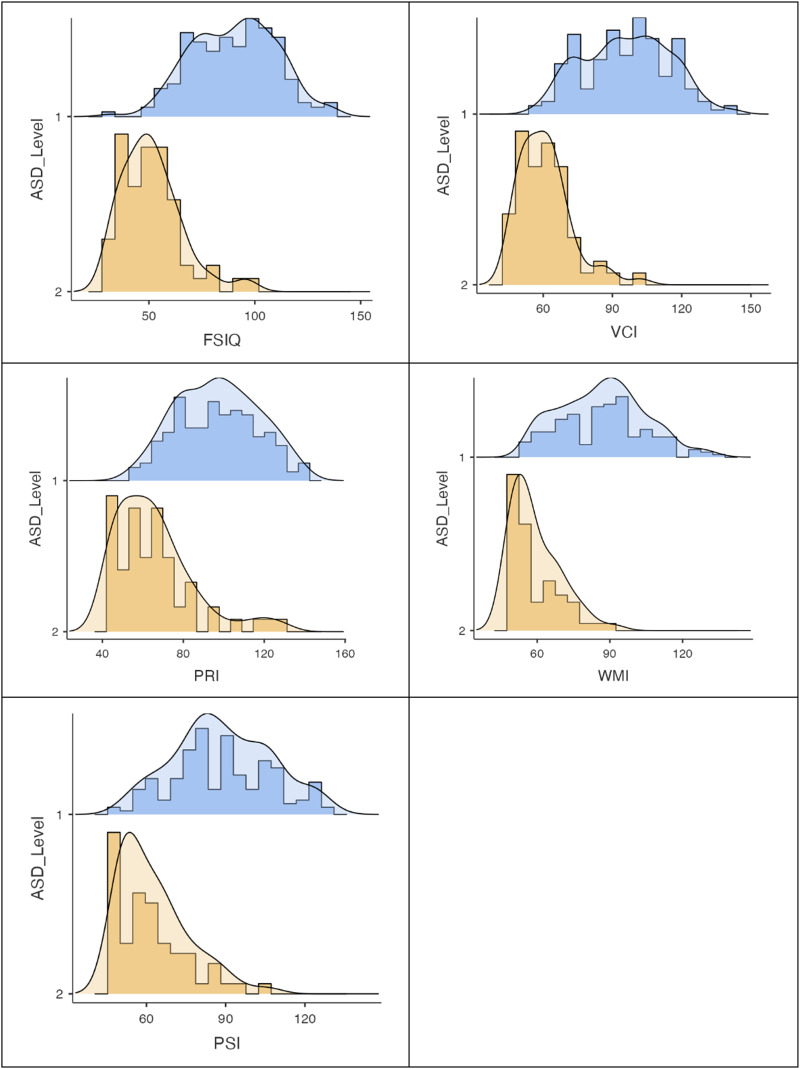
Aim: In this study, we have compared 229 Wechsler Adults Intelligence Scale – Fourth Edition (WAIS-IV) cognitive profiles of different severity adults with autism spectrum disorder to verify the impact of several variables including sex, age, level of education and autism severity level in an Italian sample. Moreover, we wanted to find out the optimal cut points for the major intelligence quotients in order to discriminate autism severity levels. Methods: Participants were recruited from two National Health System Center in two different Italian regions and were assessed with gold-standard instruments as a part of their clinical evaluation. According to DSM-5, cognitive domains were also measured with multi-componential tests. We used the Italian adaptation of WAIS-IV. We checked our hypotheses using linear regression models and receiver operating characteristics (ROC) curves. Results: Our results showed that age and level of education have a strong impact on Verbal Comprehension (VCI) and Working Memory Indexes (WMI). Gender differences are relevant when considering the VCI and Processing Speed index (PSI) in which women obtained the best performance. These differences are still relevant when considering cut points of ROC because 69 resulted to be the optimal cut point for women, 65 for men. Conclusions: Few conclusions can be assumed only examining Full Scale Intelligence Quotient (FSIQ) scores as it includes many different information about broader cognitive abilities. Looking deeper at main indexes and their subtests findings are consistent with previous research on the disorder (moderate correlations of FSIQ, Perceptual Reasoning index, WMI and PSI with the participants’ age), while other results are unforeseen (no effect of sex found on FSIQ score) or novel (significant effect of education on VCI and WMI). Using an algorithm predicting optimal cut point for discriminating through autism severity levels can help clinicians to better label and quantify the required help a person may need, a test cannot replace diagnostic and clinical evaluation by experienced clinicians.
Overview
The claims and statistics of this paper haven’t been checked yet.
Free: it reads the open-access text and checks the first 5 claims that cite a source we can check. Create a free account to check every claim.
Integrity signals
Registry
Cites
Statistics
Figures
Verification
Claims the paper makes
The claims and statistics of this paper haven’t been checked yet.
Free: it reads the open-access text and checks the first 5 claims that cite a source we can check. Create a free account to check every claim.
Claims other papers make about this one
Each is checked against this paper’s own text: does it say what the citing paper says it does?
The source backs part of the claim, not all of it — or backs it for a different population, condition or comparison.
In the citing paper
“Only one study (Cicinelli et al., 2022) included a significant proportion of individuals meeting criteria for intellectual disability.”
From Cognitive Profile in Autism and ADHD: A Meta-Analysis of Performance on the WAIS-IV and WISC-V (2024) · cites this paper as Cicinelli et al., 2022
Experimental — accuracy not yet measured
Self-check
Percentages, sums and reported differences re-computed from the paper’s own numbers.
The self-check needs the paper’s full text.
Citations
Cites
1 retracted
Christensen, D. L., Baio, J., Braun, K. V. N., Bilder, D., Charles, J., Constantino, J. N., Daniels, J., Durkin, M. S., Fitzgerald, R. T., Kurzius-Spencer, M., et al. (2016) · MMWR. Surveillance Summaries · doi:10.15585/mmwr.ss6503a1 · Cited by 1,964
RetractedReceiver-operating characteristic (ROC) plots: a fundamental evaluation tool in clinical medicine
Zweig, M. H., & Campbell, G. (1993) · Clinical Chemistry · doi:10.1093/clinchem/39.4.561 · Cited by 6,569 · cited 7×
“These differences are still relevant when considering cut points of ROC because 69 resulted to be the optimal cut point for women, 65 for men.”
MethodInfluentialBasic principles of ROC analysis
Metz, C. E. (1978) · Seminars in Nuclear Medicine · doi:10.1016/s0001-2998(78)80014-2 · Cited by 6,026 · cited 7×
“These differences are still relevant when considering cut points of ROC because 69 resulted to be the optimal cut point for women, 65 for men.”
MethodInfluentialMaenner, M. J., Shaw, K. A., Baio, J., EdS1, Washington, A., Patrick, M., DiRienzo, M., Christensen, D. L., Wiggins, L. D., Pettygrove, S., et al. (2020) · MMWR. Surveillance Summaries · doi:10.15585/mmwr.ss6904a1 · Cited by 3,780 · cited 2×
“In total, 270 adults with ASD (Mage = 26.3 S.D. = 9.35) were evaluated in the Regional Center for Autism Spectrum Disorder in Turin and the Regional Centre for Autism in L’Aquila (Italy).”
BackgroundInfluentialWhat Is the Male-to-Female Ratio in Autism Spectrum Disorder? A Systematic Review and Meta-Analysis
Loomes, R., Hull, L., & Mandy, W. P. L. (2017) · Journal of the American Academy of Child & Adolescent Psychiatry · doi:10.1016/j.jaac.2017.03.013 · Cited by 2,804 · cited 1×
“Alongside with this factor, another relevant element to be considered is the gender ratio across autistic people (Loomes et al., 2017) which is still debate and evidence mixed results.”
BackgroundThe extreme male brain theory of autism
Baron-Cohen, S. (2002) · Trends in Cognitive Sciences · doi:10.1016/s1364-6613(02)01904-6 · Cited by 2,007 · cited 1×
“The absence of effects of sex on this index in our autistic sample could be interpreted in light of extreme male brain theory (Baron-Cohen, 2002) whereby autism can be considered as an extreme of the normal male profile.”
BackgroundEpidemiology of Pervasive Developmental Disorders
Fombonne, E. (2009) · Pediatric Research · doi:10.1203/pdr.0b013e31819e7203 · Cited by 1,971 · cited 1×
“…al., 2012; Baxter et al., 2015; Zablotsky et al., 2015; Keller et al., 2020) although this ratio may depend upon intellectual abilities and it appears as low as 2 : 1 when ASD is associated with intellectual disability, and as high as 6–8 : 1 in high-functioning autism (HFA; Fombonne, 2005, 2009).”
BackgroundAutism Diagnostic Interview-Revised
Rutter, M., LeCouteur, A., & Lord, C. (2016) · PsycTESTS Dataset · doi:10.1037/t18128-000 · Cited by 1,627
The epidemiology and global burden of autism spectrum disorders
Baxter, A. J., Brugha, T. S., Erskine, H. E., Scheurer, R. W., Vos, T., & Scott, J. G. (2015) · Psychological Medicine · doi:10.1017/s003329171400172x · Cited by 1,224 · cited 2×
“…revealed a 2–3 : 1 male-predominance compared to the widely cited 4–5 : 1 ratio from earlier studies (Mattila et al., 2011; Idring et al., 2012; Baxter et al., 2015; Zablotsky et al., 2015; Keller et al., 2020) although this ratio may depend upon intellectual abilities and it appears as low…”
BackgroundThe Screening and Diagnosis of Autistic Spectrum Disorders
Filipek, P. A., Accardo, P. J., Baranek, G. T., Cook, E. H., Dawson, G., Gordon, B., Gravel, J. S., Johnson, C. P., Kallen, R. J., Levy, S. E., et al. (1999) · Journal of Autism and Developmental Disorders · doi:10.1023/a:1021943802493 · Cited by 1,003
Ceci, S. J. (1991) · Developmental Psychology · doi:10.1037/0012-1649.27.5.703 · Cited by 837 · cited 2×
“Ceci (1991) suggests that the more years of education the better cognitive skills.”
Background(2005) · PubMed · Cited by 775
Mandy, W., Chilvers, R., Chowdhury, U., Salter, G., Seigal, A., & Skuse, D. (2012) · Journal of Autism and Developmental Disorders · doi:10.1007/s10803-011-1356-0 · Cited by 715 · cited 1×
“, 2013) and different ASD phenotypes (Mandy et al., 2012; Van Wijngaarden-Cremers et al., 2014; Howe et al., 2015).”
Zablotsky, B., Black, L. I., Maenner, M. J., Schieve, L. A., & Blumberg, S. J. (2015) · PubMed · Cited by 696
A behavioral comparison of male and female adults with high functioning autism spectrum conditions
Lai, M.-C., Lombardo, M. V., Pasco, G., Ruigrok, A. N. V., Wheelwright, S. J., Sadek, S. A., Chakrabarti, B., MRC AIMS Consortium, & Baron-Cohen, S. (2011) · PLoS ONE · doi:10.1371/journal.pone.0020835 · Cited by 650 · cited 2×
“…females’ abilities to mask their social difficulties, to cultural factors, a smaller number of studies on ASD in female population (Attwood, 2007; Lai et al., 2011; Kirkovski et al., 2013) and different ASD phenotypes (Mandy et al., 2012; Van Wijngaarden-Cremers et al., 2014; Howe et al., 2015).”
BackgroundIQ in children with autism spectrum disorders: Data from the special needs and autism project (SNAP)
Charman, T., Pickles, A., Simonoff, E., Chandler, S., Loucas, T., & Baird, G. (2011) · Psychological Medicine · doi:10.1017/s0033291710000991 · Cited by 599 · cited 1×
“Nonetheless there are no distinctive IQ profiles of individuals with ASD (Siegel et al., 1996; Ghaziuddin and Mountain-Kimchi, 2004; Goldstein et al., 2008; Williams et al., 2008; Charman et al., 2011).”
BackgroundLeiter International Performance Scale
McCloskey, G. (1987) · Digital Commons - PCOM (Philadelphia College of Osteopathic Medicine) · Cited by 575
The level and nature of autistic intelligence
Dawson, M., Soulières, I., Ann Gernsbacher, M., & Mottron, L. (2007) · Psychological Science · doi:10.1111/j.1467-9280.2007.01954.x · Cited by 549 · cited 4×
“Indeed, as pointed out by Dawson et al. (2007) the Wechsler scales may underestimate the intelligence of individuals with ASD mainly because of its emphasis on verbal instruction and tasks.”
BackgroundMethodResultInfluentialVan Wijngaarden-Cremers, P. J. M., van Eeten, E., Groen, W. B., Van Deurzen, P. A., Oosterling, I. J., & Van der Gaag, R. J. (2014) · Journal of Autism and Developmental Disorders · doi:10.1007/s10803-013-1913-9 · Cited by 547
Autism Diagnostic Observation Schedule
Carr, T. (2013) · Encyclopedia of Autism Spectrum Disorders · doi:10.1007/978-1-4419-1698-3_896 · Cited by 446
Schooling, intelligence, and income.
Ceci, S. J., & Williams, W. M. (1997) · American Psychologist · doi:10.1037//0003-066x.52.10.1051 · Cited by 407 · cited 1×
“Educational level (Ceci and Williams, 1997; Gustafsson, 2001) and age also contribute to the understanding of differences in IQ outcomes.”
BackgroundA Review of the Role of Female Gender in Autism Spectrum Disorders
Kirkovski, M., Enticott, P. G., & Fitzgerald, P. B. (2013) · Journal of Autism and Developmental Disorders · doi:10.1007/s10803-013-1811-1 · Cited by 389 · cited 2×
“…females’ abilities to mask their social difficulties, to cultural factors, a smaller number of studies on ASD in female population (Attwood, 2007; Lai et al., 2011; Kirkovski et al., 2013) and different ASD phenotypes (Mandy et al., 2012; Van Wijngaarden-Cremers et al., 2014; Howe et al., 2015).”
BackgroundDSM-5 and autism spectrum disorders (ASDs): an opportunity for identifying ASD subtypes
Grzadzinski, R., Huerta, M., & Lord, C. (2013) · Molecular Autism · doi:10.1186/2040-2392-4-12 · Cited by 378 · cited 2×
“Therefore, ASD subtypes change according to different cognitive abilities’ patterns (Grzadzinski et al., 2013).”
BackgroundMattila, M.-L., Kielinen, M., Linna, S.-L., Jussila, K., Ebeling, H., Bloigu, R., Joseph, R. M., & Moilanen, I. (2011) · Journal of the American Academy of Child & Adolescent Psychiatry · doi:10.1016/j.jaac.2011.04.001 · Cited by 373 · cited 2×
“Recent epidemiological studies revealed a 2–3 : 1 male-predominance compared to the widely cited 4–5 : 1 ratio from earlier studies (Mattila et al., 2011; Idring et al., 2012; Baxter et al., 2015; Zablotsky et al., 2015; Keller et al., 2020) although this ratio may depend upon intellectual…”
BackgroundRitvo, R. A., Ritvo, E. R., Guthrie, D., Ritvo, M. J., Hufnagel, D. H., McMahon, W., Tonge, B., Mataix-Cols, D., Jassi, A., Attwood, T., et al. (2011) · Journal of Autism and Developmental Disorders · doi:10.1007/s10803-010-1133-5 · Cited by 344 · cited 2×
“All the diagnoses were made according to Diagnostic and Statistical Manual of Mental Disorders, Fifth Edition (DSM-5) (APA, 2013) criteria considering clinical anamnesis, clinical interview, cognitive assessment with WAIS-IV (Orsini and Pezzuti, 2013), diagnostic evaluation with ADI-r (Rutter et al., 2003) and ADOS mo…”
BackgroundThe Smarter Sex: A Critical Review of Sex Differences in Intelligence
Halpern, D. F., & LaMay, M. L. (2000) · Educational Psychology Review · doi:10.1023/a:1009027516424 · Cited by 321 · cited 1×
“Indeed, Halpern and LaMay (2000) found no significant sex difference for the g-factor whereas sex differences play a role regarding achievements on subtests and indexes level using the Wechsler Intelligence Scale for Adults – 4th Edition (WAIS-IV; Wechsler, 2013).”
MethodWechsler IQ profiles in diagnosis of high-functioning autism
Siegel, D. J., Minshew, N. J., & Goldstein, G. (1996) · Journal of Autism and Developmental Disorders · doi:10.1007/bf02172825 · Cited by 303 · cited 1×
“Nonetheless there are no distinctive IQ profiles of individuals with ASD (Siegel et al., 1996; Ghaziuddin and Mountain-Kimchi, 2004; Goldstein et al., 2008; Williams et al., 2008; Charman et al., 2011).”
BackgroundThe Complete Guide to Asperger's Syndrome
Powis, S. (2008) · Tizard Learning Disability Review · doi:10.1108/13595474200800006 · Cited by 289 · cited 2×
“social difficulties, to cultural factors, a smaller number of studies on ASD in female population (Attwood, 2007; Lai et al., 2011; Kirkovski et al., 2013) and different ASD phenotypes (Mandy et al.”
BackgroundAutism Spectrum Disorders in the Stockholm Youth Cohort: Design, Prevalence and Validity
Idring, S., Rai, D., Dal, H., Dalman, C., Sturm, H., Zander, E., Lee, B. K., Serlachius, E., & Magnusson, C. (2012) · PLoS ONE · doi:10.1371/journal.pone.0041280 · Cited by 275 · cited 2×
“…epidemiological studies revealed a 2–3 : 1 male-predominance compared to the widely cited 4–5 : 1 ratio from earlier studies (Mattila et al., 2011; Idring et al., 2012; Baxter et al., 2015; Zablotsky et al., 2015; Keller et al., 2020) although this ratio may depend upon intellectual abilities…”
BackgroundMottron, L. (2004) · Journal of Autism and Developmental Disorders · doi:10.1023/b:jadd.0000018070.88380.83 · Cited by 204 · cited 1×
“The use of Wechsler scales has been supported by several studies (Filipek et al., 1999; Mottron, 2004).”
MethodDefining the Intellectual Profile of Asperger Syndrome: Comparison with High-Functioning Autism
Ghaziuddin, M., & Mountain-Kimchi, K. (2004) · Journal of Autism and Developmental Disorders · doi:10.1023/b:jadd.0000029550.19098.77 · Cited by 199 · cited 1×
“Nonetheless there are no distinctive IQ profiles of individuals with ASD (Siegel et al., 1996; Ghaziuddin and Mountain-Kimchi, 2004; Goldstein et al., 2008; Williams et al., 2008; Charman et al., 2011).”
BackgroundSuperior fluid intelligence in children with Asperger’s disorder
Hayashi, M., Kato, M., Igarashi, K., & Kashima, H. (2008) · Brain and Cognition · doi:10.1016/j.bandc.2007.09.008 · Cited by 164 · cited 3×
“, 1998) could be more adequate for describing the cognitive profile of people with ASD (Dawson et al., 2007; Hayashi et al., 2008; Soulières et al., 2011).”
BackgroundMethodResultHappé, F. G., Mansour, H., Barrett, P., Brown, T., Abbott, P., & Charlton, R. A. (2016) · Journal of Autism and Developmental Disorders · doi:10.1007/s10803-016-2886-2 · Cited by 145 · cited 1×
“So the profile of intelligence level is one of the relevant factors to be considered when diagnosing people with ASD, alongside with other cognitive, neuropsychological, socio-demographic and core-symptoms measures (Happé et al., 2016).”
BackgroundDoes sex influence the diagnostic evaluation of autism spectrum disorder in adults?
Wilson, C. E., Murphy, C. M., McAlonan, G., Robertson, D. M., Spain, D., Hayward, H., Woodhouse, E., Deeley, P. Q., Gillan, N., Ohlsen, J. C., et al. (2016) · Autism · doi:10.1177/1362361315611381 · Cited by 129 · cited 2×
“A recent study by Wilson et al. (2016) involving 1244 adults (935 males and 309 females) referred for ASD assessment reported sex differences in clinical outcome.”
BackgroundThe Seattle Longitudinal Study of Adult Cognitive Development.
Schaie, K. W., & Willis, S. L. (2010) · PubMed · Cited by 125
Robert, C., Borella, E., Fagot, D., Lecerf, T., & Ribaupierre, A. D. (2009) · Memory & Cognition · doi:10.3758/mc.37.3.336 · Cited by 112
Brief Report: The Level and Nature of Autistic Intelligence Revisited
Bölte, S., Dziobek, I., & Poustka, F. (2009) · Journal of Autism and Developmental Disorders · doi:10.1007/s10803-008-0667-2 · Cited by 110 · cited 2×
“However, this phenomenon seems to better apply to ASD people with cognitive impairment and not to AS (Bölte et al., 2009; Holdnack et al., 2011) or average cognitive abilities.”
BackgroundResultSex differences in fluid intelligence among high school graduates
Colom, R., & García, Ó. (2002) · Personality and Individual Differences · doi:10.1016/s0191-8869(01)00040-x · Cited by 103 · cited 1×
“A factor analysis study from Colom and Garcia-Lopez (2002) outlined that there are no sex differences in general ability (g) on the Spanish standardisation of the WAIS-III.”
MethodThe Level and Nature of Autistic Intelligence II: What about Asperger Syndrome?
Soulières, I., Dawson, M., Gernsbacher, M. A., & Mottron, L. (2011) · PLoS ONE · doi:10.1371/journal.pone.0025372 · Cited by 100 · cited 3×
“, 1998) could be more adequate for describing the cognitive profile of people with ASD (Dawson et al., 2007; Hayashi et al., 2008; Soulières et al., 2011).”
BackgroundMethodResultSex differences on the Dutch WAIS-III
van der Sluis, S., Posthuma, D., Dolan, C. V., de Geus, E. J. C., Colom, R., & Boomsma, D. I. (2005) · Intelligence · doi:10.1016/j.intell.2005.08.002 · Cited by 97 · cited 2×
“Likewise, results obtained by Van der Sluis et al. (2006) using Dutch WAIS-III indicate differences between men and women in performance regarding specific cognitive abilities, but not in general intelligence (g).”
ResultWilliams, D. L., Goldstein, G., Kojkowski, N. M., & Minshew, N. J. (2007) · Research in Autism · doi:10.1016/j.rasd.2007.08.005 · Cited by 92 · cited 1×
“Nonetheless there are no distinctive IQ profiles of individuals with ASD (Siegel et al., 1996; Ghaziuddin and Mountain-Kimchi, 2004; Goldstein et al., 2008; Williams et al., 2008; Charman et al., 2011).”
BackgroundStanford-Binet Intelligence Scales
(2018) · Sage eBooks · doi:10.4135/9781506326139.n664 · Cited by 91
Sex differences in cognitive abilities: Analyses for the German WAIS-IV
Daseking, M., Petermann, F., & Waldmann, H.-C. (2017) · Personality and Individual Differences · doi:10.1016/j.paid.2017.04.003 · Cited by 80 · cited 5×
“This latter result is not surprising since even TD female adults outperformed male in processing speed tasks (Daseking et al., 2017).”
BackgroundMethodResultInfluentialSchooling and intelligence: Effects of track of study on level and profile of cognitive abilities
Gustafsson, J. (2001) · Cited by 74
Holdnack, J., Goldstein, G., & Drozdick, L. (2011) · Assessment · doi:10.1177/1073191110394771 · Cited by 69 · cited 3×
“Holdnack et al. (2011) compared performances between control group, HFA and Asperger disorder (AS) in the WAIS-IV subtests.”
BackgroundThe structure of intelligence in children and adults with high functioning autism.
Goldstein, G., Allen, D. N., Minshew, N. J., Williams, D. L., Volkmar, F., Klin, A., & Schultz, R. T. (2008) · Neuropsychology · doi:10.1037/0894-4105.22.3.301 · Cited by 67
Sex differences in g: An analysis of the US standardization sample of the WAIS-III
Irwing, P. (2011) · Personality and Individual Differences · doi:10.1016/j.paid.2011.05.001 · Cited by 65 · cited 6×
“Studies on typical developmental (TD) population examining the gender differences using subtests and derived indices from WAIS-IV highlighted better performances of men in IQ, Verbal Comprehension (VC), Perceptual Reasoning (PR) and Working Memory (WM) indices (Longman et al., 2007; Irwing, 2012; Daseking et al., 2017…”
BackgroundMethodResultInfluentialFemale Autism Phenotypes Investigated at Different Levels of Language and Developmental Abilities
Howe, Y. J., O’Rourke, J. A., Yatchmink, Y., Viscidi, E. W., Jones, R. N., & Morrow, E. M. (2015) · Journal of Autism and Developmental Disorders · doi:10.1007/s10803-015-2501-y · Cited by 62 · cited 2×
“…females’ abilities to mask their social difficulties, to cultural factors, a smaller number of studies on ASD in female population (Attwood, 2007; Lai et al., 2011; Kirkovski et al., 2013) and different ASD phenotypes (Mandy et al., 2012; Van Wijngaarden-Cremers et al., 2014; Howe et al., 2015).”
BackgroundDolan, C. V., Colom, R., Abad, F. J., Wicherts, J. M., Hessen, D. J., & van de Sluis, S. (2006) · Intelligence · doi:10.1016/j.intell.2005.09.003 · Cited by 56 · cited 4×
“Likewise, results obtained by Van der Sluis et al. (2006) using Dutch WAIS-III indicate differences between men and women in performance regarding specific cognitive abilities, but not in general intelligence (g).”
ResultInfluentialKeller, R., Chieregato, S., Bari, S., Castaldo, R., Rutto, F., Chiocchetti, A., & Dianzani, U. (2020) · Brain Sciences · doi:10.3390/brainsci10070416 · Cited by 54 · cited 4×
“…clinical interview, cognitive assessment with WAIS-IV (Orsini and Pezzuti, 2013), diagnostic evaluation with ADI-r (Rutter et al., 2003) and ADOS module 4 (Lord et al., 2002) or RAADS (Ritvo et al., 2011), following structured diagnostic pathway (multistep network model, Keller et al., 2020).”
BackgroundMethodInfluentialSelf-citationWAIS-III Percentile Scores by Education and Sex for U.S. and Canadian Populations
Longman, R. S., Saklofske, D. H., & Fung, T. S. (2007) · Assessment · doi:10.1177/1073191107304114 · Cited by 44 · cited 3×
“Superiority of male with TD in PRI composite score (Longman et al., 2007; Irwing, 2012; Daseking et al., 2017) was not confirmed in our autistic sample, indicating that subtests of PRI are more sensitive to ASD severity level in our sample.”
BackgroundMethodResultBodner, K. E., Williams, D. L., Engelhardt, C. R., & Minshew, N. J. (2014) · Research in Autism · doi:10.1016/j.rasd.2014.07.015 · Cited by 26 · cited 2×
“To our knowledge, the majority of authors focused on cognitive and social performances of children or adolescent with ASD (Bodner et al., 2014).”
BackgroundAbad, F. J., Sorrel, M. A., Román, F. J., & Colom, R. (2016) · Psychological Assessment · doi:10.1037/pas0000228 · Cited by 24 · cited 1×
“The literature supports these findings, showing that the level of education is a predictor of greater verbal competence (Abad et al., 2015).”
BackgroundPezzuti, L., Tommasi, M., Saggino, A., Dawe, J., & Lauriola, M. (2020) · Intelligence · doi:10.1016/j.intell.2020.101436 · Cited by 23 · cited 4×
“In contrast, for the US-standardisation sample of the WAIS-III, Irwing (2012) reported sex differences not only regarding specific abilities, but also in g. Men outperformed women in general intelligence [Full Scale Intelligence Quotient (FSIQ)] and on subtests like Information, Arithmetics and Symbol-Search, whereas…”
ResultInfluentialBorella, E., Pezzuti, L., Béni, R. D., & Cornoldi, C. (2019) · Psychological Research · doi:10.1007/s00426-019-01173-7 · Cited by 18 · cited 1×
“More specifically, it is supposed that level of education has a significant impact on cognitive skills measured by WAIS-IV indexes (Ceci, 1991; Baltes et al., 1998; Schaie and Willis, 2010; Pezzuti et al., 2019; Borella et al., 2020).”
BackgroundPezzuti, L., Lauriola, M., Borella, E., Béni, R. D., & Cornoldi, C. (2018) · Personality and Individual Differences · doi:10.1016/j.paid.2018.10.016 · Cited by 16 · cited 1×
“More specifically, it is supposed that level of education has a significant impact on cognitive skills measured by WAIS-IV indexes (Ceci, 1991; Baltes et al., 1998; Schaie and Willis, 2010; Pezzuti et al., 2019; Borella et al., 2020).”
BackgroundGender differences in latent cognitive abilities and education links with g in Italian elders
Tommasi, M., Watkins, M. W., Orsini, A., Pezzuti, L., Cianci, L., & Saggino, A. (2014) · Learning and Individual Differences · doi:10.1016/j.lindif.2014.10.020 · Cited by 9 · cited 3×
“Results from an Italian study (Tommasi et al., 2015) showed that the WAIS-R detects individual differences in intelligence properly measured by IQ scores at different educational levels.”
BackgroundResultInfluential
Research works printed but not linked: 7
- R Studio Team (2020) RStudio: Integrated Development for R. RStudio. Boston, MA: PBC.
- Wechsler D (2013) Wechsler Adult Intelligence Scale – 4a Ed. (WAIS-IV), Italian Adaptation. Florence: Giunti O.S.
- Baltes PB, Lindenberger U and Staudinger UM (1998) Life span theory in developmental psychology. In Damon W and Lerner RM (eds), Handbook of Child Psychology: Vol. 1. Theoretical Models of Human Development, 5th Edn. Hoboken, NJ: Wiley, pp. 1029– 1143.
- American Psychiatric Association (2013) Diagnostic and Statistical Manual of Mental Disorders, 5th Edn. Arlington, VA: Author.
- Craik FIM and Salthouse TA (2008) Handbook of Cognitive Aging, 3rd Edn. New York: Psychology Press.
- Raven J, Raven JC and Court JH (1998) Raven Manual: Section 4, Advanced Progressive Matrices, 1998 Edition. Oxford, UK: Oxford Psychologists Press Ltd.
- Orsini A and Pezzuti L (2013) WAIS-IV. Contributo alla taratura italiana (16–69) (WAIS-IV, Contribution to the Italian Standardization, Ages 16–69). Firenze: Giunti OS.
Cited by
Cognitive Profile in Autism and ADHD: A Meta-Analysis of Performance on the WAIS-IV and WISC-V
Wilson, A. C. (2024) · Archives of Clinical Neuropsychology · doi:10.1093/arclin/acad073 · Cited by 58
“Only one study (Cicinelli et al., 2022) included a significant proportion of individuals meeting criteria for intellectual disability.”
BackgroundZhang, Y., Gao, Y.-Q., Zhang, N., Xu, K., & Zhao, S. (2024) · BMC Psychiatry · doi:10.1186/s12888-024-06289-8 · Cited by 19
Giofrè, D., Lievore, R., Allen, K. N., Tonizzi, I., Mammarella, I. C., & Toffalini, E. (2024) · Research in Developmental Disabilities · doi:10.1016/j.ridd.2024.104854 · Cited by 11
Cognitive Change Associated with Anesthesia and Surgery: An Introduction to POCD for Neuroscientists
Li, Y., Peng, Q., Lu, J. G., Hu, L., & Zhou, H. (2025) · Journal of Integrative Neuroscience · doi:10.31083/jin36785 · Cited by 9
“The Wech-sler Intelligence Scale is a widely used tool for assessing intelligence, which includes various aspects such as verbal skills and can reflect a person’s cognitive ability more comprehensively but the test items are time-consuming and affected by the level of education [154].”
Merlini, A., Gabbatore, I., Marini, A., & Bosco, F. M. (2025) · Experimental Aging Research · doi:10.1080/0361073x.2025.2586970 · Cited by 7
Metadata
- Authors
- Cicinelli, G., Nobile, E., Brighenti, S., Bari, S., Tonella, E., Aresi, A., Attanasio, M., Mazza, M., Valenti, M., & Keller, R.
- Affiliations
- University of L'Aquila (IT)
- University of Turin (IT)
- Corresponding author
- Keller, R.
- Venue
- Epidemiology and Psychiatric Sciences
- Publisher
- Cambridge University Press (CUP)
- Published
- 2022
- Volume
- 31
- Pages
- e67-e67
- ISSN
- 2045-7960 (ISSN-L)
- 2045-7979
- PMC
- PMC9531589
- OpenAlex
- W4296793632
- Cited by
- 12
- References
- 58
- Citations by year
- 2026: 5 · 2025: 3 · 2024: 3 · 2023: 1
- FWCI
- 0.90
- Type
- journal article
- Language
- en
- Open access
- gold
- doi.org
- Locations
- Epidemiology and Psychiatric Sciences (publishedVersion, cc-by)
- PubMed Central (publishedVersion, cc-by)
- PubMed (publishedVersion)
- Archivio Istituzionale della Ricerca - Università degli Studi dell Aquila (submittedVersion, cc-by)
- Topics
- Life Sciences › Neuroscience › Cognitive Neuroscience › Autism Spectrum Disorder Research
- Social Sciences › Psychology › Neuropsychology and Physiological Psychology › Developmental and Educational Neuropsychology
- Social Sciences › Psychology › Experimental and Cognitive Psychology › Cognitive Abilities and Testing
- Keywords
- autism spectrum disorder, autistic adults, cognitive profile, WAIS-IV, intelligence quotient, verbal comprehension, working memory, processing speed, sex differences, educational attainment, age effects, cut points, Italian adaptation
- MeSH terms
- Autism Spectrum Disorder, Adult, Cognition, Female, Humans, Intelligence Tests, Male, Memory, Short-Term, Wechsler Scales
About these checks
Registry, retraction, Cites and statistics results are computed, not judged, with one exception: a printed reference that no index lists is read once by a model before it counts as a citation error. Claims are extracted by a model and kept only when their quote appears verbatim in the text; each cited source is then checked, with a model’s help, for whether it says what the claim relies on. Those verdicts can be wrong — read the claim’s quote and the cited source before relying on one.
Statistics and arithmetic are recomputed, not judged.
Confidence bands are shown only for fields calibrated on our annotated test set. None is calibrated yet, so no band is shown.
What counts as a claim ›How we measure confidence ›How we check this ›
Are you an author, or do you see a problem with this page? Request a review
Data sources
Bibliographic data: Semantic Scholar, OpenAlex, Crossref.
Contains information from the Semantic Scholar Academic Graph Datasets, made available under the ODC Attribution License (ODC-BY 1.0).
Semantic Scholar’s data is described in: Kinney, R., et al. (2023). The Semantic Scholar Open Data Platform. arXiv:2301.10140.
