

Small-Molecule Trk Agonists: Where Do We Go from Here?
Open accessThe DOI matches its Crossref record; 166 of the 166 references it cites were found in a registry or an index.
Abstract
About two decades ago, there were no validated, agonistic small-molecule modulators of Trk (tropomyosin receptor kinase). High-throughput screening of commercial libraries seemed an attractive way to identify starting structures when the research community became aware of their potential for treatment of neurodegeneration and traumatic injuries (e.g., stroke) because this strategy avoids high-level chemical expertise for molecular design and synthesis. Cost and effort constraints arising from library acquisition and assays imposed limitations on numbers of compounds tested, so filtering to reduce library sizes before screening was routine. One of the criteria was to prioritize existing pharmaceuticals because these had known toxicity profiles and side effects, at least in some delivery and dosing regimens, and many cases had proven blood brain barrier (BBB) permeabilities. This review gives our perspective on how these efforts transpired, lessons learned, and constraints which hold back development in this area at the present time.
Overview
The claims and statistics of this paper haven’t been checked yet.
Free: it reads the open-access text and checks the first 5 claims that cite a source we can check. Create a free account to check every claim.
Integrity signals
Registry
Cites
Statistics
Figures


Verification
Claims the paper makes
The claims and statistics of this paper haven’t been checked yet.
Free: it reads the open-access text and checks the first 5 claims that cite a source we can check. Create a free account to check every claim.
Self-check
Percentages, sums and reported differences re-computed from the paper’s own numbers.
The self-check needs the paper’s full text.
Citations
Cites
Impact of high-throughput screening in biomedical research
Macarron, R., Banks, M. N., Bojanic, D., Burns, D. J., Cirovic, D. A., Garyantes, T., Green, D. V. S., Hertzberg, R. P., Janzen, W. P., Paslay, J. W., et al. (2011) · Nature Reviews Drug Discovery · doi:10.1038/nrd3368 · Cited by 1,364
EGF Activates Its Receptor by Removing Interactions that Autoinhibit Ectodomain Dimerization
Ferguson, K. M., Berger, M. B., Mendrola, J. M., Cho, H.-S., Leahy, D. J., & Lemmon, M. A. (2003) · Molecular Cell · doi:10.1016/s1097-2765(03)00047-9 · Cited by 801
Death of oligodendrocytes mediated by the interaction of nerve growth factor with its receptor p75
Casaccia-Bonnefil, P., Carter, B. D., Dobrowsky, R. T., & Chao, M. V. (1996) · Nature · doi:10.1038/383716a0 · Cited by 764
Postsynaptic BDNF‐TrkB signaling in synapse maturation, plasticity, and disease
Yoshii, A., & Constantine‐Paton, M. (2010) · Developmental Neurobiology · doi:10.1002/dneu.20765 · Cited by 744 · cited 1×
“172 Alterations in synaptic plasticity has long been linked to psychiatric disorders, including PTSD, major depressive disorder (MDD), and substance abuse, among others.”
Induction of cell death by endogenous nerve growth factor through its p75 receptor
María Frade, J., Rodríguez-Tébar, A., & Barde, Y.-A. (1996) · Nature · doi:10.1038/383166a0 · Cited by 743
Pelay‐Gimeno, M., Glas, A., Koch, O., & Grossmann, T. N. (2015) · Angewandte Chemie International Edition · doi:10.1002/anie.201412070 · Cited by 717
A selective TrkB agonist with potent neurotrophic activities by 7,8-dihydroxyflavone
Jang, S.-W., Liu, X., Yepes, M., Shepherd, K. R., Miller, G. W., Liu, Y., Wilson, W. D., Xiao, G., Blanchi, B., Sun, Y. E., et al. (2010) · Proceedings of the National Academy of Sciences · doi:10.1073/pnas.0913572107 · Cited by 686 · cited 3×
“56 Small-molecule Trk modulators discovered by other groups include DMAQ-B1 and deprenyl.”
InfluentialAntidepressant drugs act by directly binding to TRKB neurotrophin receptors
Casarotto, P. C., Girych, M., Fred, S. M., Kovaleva, V., Moliner, R., Enkavi, G., Biojone, C., Cannarozzo, C., Sahu, M. P., Kaurinkoski, K., et al. (2021) · Cell · doi:10.1016/j.cell.2021.01.034 · Cited by 663
Selective Activation of NF-κB by Nerve Growth Factor Through the Neurotrophin Receptor p75
Carter, B. D., Kaltschmidt, C., Kaltschmidt, B., Offenhäuser, N., Böhm-Matthaei, R., Baeuerle, P. A., & Barde, Y.-A. (1996) · Science · doi:10.1126/science.272.5261.542 · Cited by 658
Erythropoietin Receptor Activation by a Ligand-Induced Conformation Change
Remy, I., Wilson, I. A., & Michnick, S. W. (1999) · Science · doi:10.1126/science.283.5404.990 · Cited by 634 · cited 1×
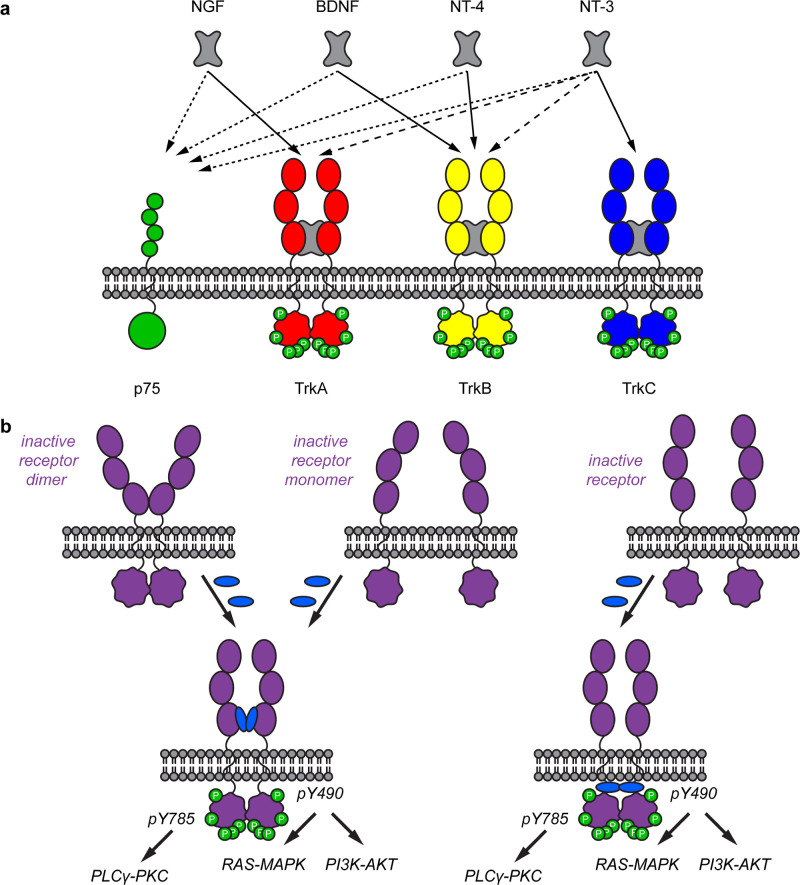
“37 Epidermal growth factor (EGF) is unlike the NTs insofar as two EGF molecules bind outside EGFR dimers giving receptor activation; 38 furthermore, binding triggers a conformational shift in the extracellular region, allowing the monomeric receptor to dimerize and activate (1b, center).”
Crystallographic Evidence for Preformed Dimers of Erythropoietin Receptor Before Ligand Activation
Livnah, O., Stura, E. A., Middleton, S. A., Johnson, D. L., Jolliffe, L. K., & Wilson, I. A. (1999) · Science · doi:10.1126/science.283.5404.987 · Cited by 599
Possible molecular mechanisms involved in the toxicity of angiogenesis inhibition
Verheul, H. M. W., & Pinedo, H. M. (2007) · Nature Reviews Cancer · doi:10.1038/nrc2152 · Cited by 503 · cited 1×
“81 This is important because pharmacological angiogenesis inhibition has led to hypertension, thromboembolism, arrhythmia, heart failure, 82 hypothyroidism, skin toxicity, 83 and neurological 84 issues.”
Psychedelics promote plasticity by directly binding to BDNF receptor TrkB
Moliner, R., Girych, M., Brunello, C. A., Kovaleva, V., Biojone, C., Enkavi, G., Antenucci, L., Kot, E. F., Goncharuk, S. A., Kaurinkoski, K., et al. (2023) · Nature Neuroscience · doi:10.1038/s41593-023-01316-5 · Cited by 478
Discovery of a Small Molecule Insulin Mimetic with Antidiabetic Activity in Mice
Zhang, B., Salituro, G., Szalkowski, D., Li, Z., Zhang, Y., Royo, I., Vilella, D., Dı́ez, M. T., Pelaez, F., Ruby, C., et al. (1999) · Science · doi:10.1126/science.284.5416.974 · Cited by 456
Wiesmann, C., Ultsch, M. H., Bass, S. H., & de Vos, A. M. (1999) · Nature · doi:10.1038/43705 · Cited by 415
Small molecule BDNF mimetics activate TrkB signaling and prevent neuronal degeneration in rodents
Massa, S. M., Yang, T., Xie, Y., Shi, J., Bilgen, M., Joyce, J. N., Nehama, D., Rajadas, J., & Longo, F. M. (2010) · Journal of Clinical Investigation · doi:10.1172/jci41356 · Cited by 406
Angiogenesis, neurogenesis and brain recovery of function following injury.
Xiong, Y., Mahmood, A., & Chopp, M. (2010) · PubMed · Cited by 361
Koenig, G., & Seneff, S. (2015) · Disease Markers · doi:10.1155/2015/818570 · Cited by 331
Wehrman, T., He, X., Raab, B., Dukipatti, A., Blau, H., & Garcia, K. C. (2007) · Neuron · doi:10.1016/j.neuron.2006.09.034 · Cited by 314
Tropomyosin receptor kinase (TRK) biology and the role of NTRK gene fusions in cancer
Amatu, A., Sartore-Bianchi, A., Bencardino, K., Pizzutilo, E. G., Tosi, F., & Siena, S. (2019) · Annals of Oncology · doi:10.1093/annonc/mdz383 · Cited by 309
Longo, F. M., & Massa, S. M. (2013) · Nature Reviews Drug Discovery · doi:10.1038/nrd4024 · Cited by 298
TRK inhibitors in TRK fusion-positive cancers
Drilon, A. (2019) · Annals of Oncology · doi:10.1093/annonc/mdz282 · Cited by 291
Loss of adaptive myelination contributes to methotrexate chemotherapy-related cognitive impairment
Geraghty, A. C., Gibson, E. M., Ghanem, R. A., Greene, J. J., Ocampo, A., Goldstein, A. K., Ni, L., Yang, T., Marton, R. M., Paşca, S. P., et al. (2019) · Neuron · doi:10.1016/j.neuron.2019.04.032 · Cited by 288
Neurotrophic factors in the human cornea.
You, L., Kruse, F. E., & Völcker, H. E. (2000) · PubMed · Cited by 256
Van Booven, D., Marsh, S., McLeod, H., Carrillo, M. W., Sangkuhl, K., Klein, T. E., & Altman, R. B. (2010) · Pharmacogenetics and Genomics · doi:10.1097/fpc.0b013e3283349e84 · Cited by 241
Synaptic plasticity and mental health: methods, challenges and opportunities
Appelbaum, L. G., Shenasa, M. A., Stolz, L., & Daskalakis, Z. (2023) · Neuropsychopharmacology · doi:10.1038/s41386-022-01370-w · Cited by 240
Druggable protein–protein interactions – from hot spots to hot segments
London, N., Raveh, B., & Schueler-Furman, O. (2013) · Current Opinion in Chemical Biology · doi:10.1016/j.cbpa.2013.10.011 · Cited by 223
MarÍa Frade, J., & Barde, Y.-A. (1999) · Development · doi:10.1242/dev.126.4.683 · Cited by 215
N -acetylserotonin activates TrkB receptor in a circadian rhythm
Jang, S.-W., Liu, X., Pradoldej, S., Tosini, G., Chang, Q., Iuvone, P. M., & Ye, K. (2010) · Proceedings of the National Academy of Sciences · doi:10.1073/pnas.0912531107 · Cited by 214 · cited 13×
“54 Induced phosphorylation was diminished with concurrent treatment of neurons with NAS (or BDNF control) and kinase inhibitor K252a, indicative of a TrkB-dependent mechanism.”
InfluentialNeurotrophins Live or Let Die: Does p75NTR Decide?
Carter, B. D., & Lewin, G. R. (1997) · Neuron · doi:10.1016/s0896-6273(00)80259-7 · Cited by 209
Liu, X., Chan, C.-B., Jang, S.-W., Pradoldej, S., Huang, J., He, K., Phun, L. H., France, S., Xiao, G., Jia, Y., et al. (2010) · Journal of Medicinal Chemistry · doi:10.1021/jm101206p · Cited by 208
Nerve growth factor: structure and function
Wiesmann, C., & de Vos, A. M. (2001) · Cellular and Molecular Life Sciences · doi:10.1007/pl00000898 · Cited by 199
Comprehensive analysis of loops at protein-protein interfaces for macrocycle design
Gavenonis, J., Sheneman, B. A., Siegert, T. R., Eshelman, M. R., & Kritzer, J. A. (2014) · Nature Chemical Biology · doi:10.1038/nchembio.1580 · Cited by 198
Receptor signaling: When dimerization is not enough
Jiang, G., & Hunter, T. (1999) · Current Biology · doi:10.1016/s0960-9822(99)80357-1 · Cited by 181 · cited 1×
“34 For instance, the leptin receptor (OB-R) exists as preformed, inactive, dimers that are conformationally perturbed by leptin giving downstream signaling.”
Therapeutic Use of LSD in Psychiatry: A Systematic Review of Randomized-Controlled Clinical Trials
Fuentes, J. J., Fonseca, F., Elices, M., Farré, M., & Torrens, M. (2020) · Frontiers in Psychiatry · doi:10.3389/fpsyt.2019.00943 · Cited by 177
Belliveau, D. J., Krivko, I., Kohn, J., Lachance, C., Pozniak, C., Rusakov, D., Kaplan, D., & Miller, F. D. (1997) · The Journal of Cell Biology · doi:10.1083/jcb.136.2.375 · Cited by 176
Small, Nonpeptide p75NTRLigands Induce Survival Signaling and Inhibit proNGF-Induced Death
Massa, S. M., Xie, Y., Yang, T., Harrington, A. W., Kim, M. L., Yoon, S. O., Kraemer, R., Moore, L. A., Hempstead, B. L., & Longo, F. M. (2006) · The Journal of Neuroscience · doi:10.1523/jneurosci.3547-05.2006 · Cited by 169
Strohmaier, C., Carter, B. D., Urfer, R., Barde, Y., & Dechant, G. (1996) · The EMBO Journal · doi:10.1002/j.1460-2075.1996.tb00698.x · Cited by 167
Emerging themes in structural biology of neurotrophic factors
Ibáñez, C. F. (1998) · Trends in Neurosciences · doi:10.1016/s0166-2236(98)01266-1 · Cited by 163
Chen, J., Chua, K., Chua, C. C., Yu, H., Pei, A., Chua, B. H. L., Hamdy, R. C., Xu, X., & Liu, C.-F. (2011) · Neuroscience Letters · doi:10.1016/j.neulet.2011.05.054 · Cited by 162
Jang, S.-W., Okada, M., Sayeed, I., Xiao, G., Stein, D., Jin, P., & Ye, K. (2007) · Proceedings of the National Academy of Sciences · doi:10.1073/pnas.0706662104 · Cited by 158 · cited 2×
“52 2 .2.”
Schmid, D. A., Yang, T., Ogier, M., Adams, I., Mirakhur, Y., Wang, Q., Massa, S. M., Longo, F. M., & Katz, D. M. (2012) · The Journal of Neuroscience · doi:10.1523/jneurosci.0865-11.2012 · Cited by 152 · cited 1×
“It facilitated recovery after a hypoxic − ischemic stroke in mice 124 and in mouse models of Rett syndrome, 125 − 127 Huntington’s disease, 128 optic neuropathy, 129 and myelin sheathe repair.”
TrkB/BDNF signaling pathway and its small molecular agonists in CNS injury
Wang, Y., Liang, J., Xu, B., Yang, J., Wu, Z., & Cheng, L. (2024) · Life Sciences · doi:10.1016/j.lfs.2023.122282 · Cited by 152 · cited 2×
“Recent reviews of NGF and BDNF mimetics discuss many 7,8-DHF studies in more detail, 46,49,51,58 and its activity as a TrkB agonist is seemingly well-characterized.”
Jang, S.-W., Liu, X., Chan, C.-B., Weinshenker, D., Hall, R. A., Xiao, G., & Ye, K. (2009) · Chemistry & Biology · doi:10.1016/j.chembiol.2009.05.010 · Cited by 144 · cited 3×
“Compounds found to exhibit neurotrophic activity in this manner include gambogic amide 52 (TrkA agonist), amitripty-line 53 (A and B agonist), and the B agonists N -acetyl serotonin 54 (NAS), deoxygedunin, 55 and 7,8-dihydroxyflavone (7,8-DHF).”
Simmons, D. A., Belichenko, N. P., Yang, T., Condon, C., Monbureau, M., Shamloo, M., Jing, D., Massa, S. M., & Longo, F. M. (2013) · The Journal of Neuroscience · doi:10.1523/jneurosci.1310-13.2013 · Cited by 144
Small Molecules for Active Targeting in Cancer
Kue, C. S., Kamkaew, A., Burgess, K., Kiew, L. V., Chung, L. Y., & Lee, H. B. (2016) · Medicinal Research Reviews · doi:10.1002/med.21387 · Cited by 141
Self-citationSchlessinger, J. (2003) · Science · doi:10.1126/science.1082024 · Cited by 139
Couturier, C., & Jockers, R. (2003) · Journal of Biological Chemistry · doi:10.1074/jbc.m302002200 · Cited by 132
Neuroprotective actions of selegiline
Ebadi, M., Sharma, S., Shavali, S., & El Refaey, H. (2002) · Journal of Neuroscience Research · doi:10.1002/jnr.10148 · Cited by 132
Yang, T., Knowles, J. K., Lu, Q., Zhang, H., Arancio, O., Moore, L. A., Chang, T., Wang, Q., Andreasson, K., Rajadas, J., et al. (2008) · PLoS ONE · doi:10.1371/journal.pone.0003604 · Cited by 130
Biochemical Mechanisms Underlying Psychedelic-Induced Neuroplasticity
Olson, D. E. (2022) · Biochemistry · doi:10.1021/acs.biochem.1c00812 · Cited by 129
Lazaridis, I., Charalampopoulos, I., Alexaki, V.-I., Avlonitis, N., Pediaditakis, I., Efstathopoulos, P., Calogeropoulou, T., Castanas, E., & Gravanis, A. (2011) · PLoS Biology · doi:10.1371/journal.pbio.1001051 · Cited by 128
The p75 neurotrophin receptor influences NT-3 responsiveness of sympathetic neurons in vivo
Brennan, C., Rivas-Plata, K., & Landis, S. C. (1999) · Nature Neuroscience · doi:10.1038/11158 · Cited by 127
Knowles, J. K., Simmons, D. A., Nguyen, T.-V. V., Vander Griend, L., Xie, Y., Zhang, H., Yang, T., Pollak, J., Chang, T., Arancio, O., et al. (2013) · Neurobiology of Aging · doi:10.1016/j.neurobiolaging.2013.02.015 · Cited by 119
Solid-Phase Syntheses of β-Turn Analogues To Mimic or Disrupt Protein−Protein Interactions
Burgess, K. (2001) · Accounts of Chemical Research · doi:10.1021/ar9901523 · Cited by 115
Self-citationBai, Y., Dergham, P., Nedev, H., Xu, J., Galan, A., Rivera, J. C., ZhiHua, S., Mehta, H. M., Woo, S. B., Sarunic, M. V., et al. (2010) · Journal of Biological Chemistry · doi:10.1074/jbc.m110.147801 · Cited by 115
Numakawa, T., & Odaka, H. (2021) · International Journal of Molecular Sciences · doi:10.3390/ijms22115719 · Cited by 112
Psychedelics and psychotherapy: Cognitive-behavioral approaches as default
Yaden, D. B., Earp, D., Graziosi, M., Friedman-Wheeler, D., Luoma, J. B., & Johnson, M. W. (2022) · Frontiers in Psychology · doi:10.3389/fpsyg.2022.873279 · Cited by 110
Cholesterol-Recognition Motifs in Membrane Proteins
Fantini, J., Epand, R. M., & Barrantes, F. J. (2019) · Advances in Experimental Medicine and Biology · doi:10.1007/978-3-030-14265-0_1 · Cited by 103
Deoxygedunin, a Natural Product with Potent Neurotrophic Activity in Mice
Jang, S.-W., Liu, X., Chan, C. B., France, S. A., Sayeed, I., Tang, W., Lin, X., Xiao, G., Andero, R., Chang, Q., et al. (2010) · PLoS ONE · doi:10.1371/journal.pone.0011528 · Cited by 101 · cited 1×
“Compounds found to exhibit neurotrophic activity in this manner include gambogic amide 52 (TrkA agonist), amitripty-line 53 (A and B agonist), and the B agonists N -acetyl serotonin 54 (NAS), deoxygedunin, 55 and 7,8-dihydroxyflavone (7,8-DHF).”
Nakaso, K., Nakamura, C., Sato, H., Imamura, K., Takeshima, T., & Nakashima, K. (2005) · Biochemical and Biophysical Research Communications · doi:10.1016/j.bbrc.2005.11.095 · Cited by 101
Cardiotoxic effects of angiogenesis inhibitors
Dobbin, S. J. H., Petrie, M. C., Myles, R. C., Touyz, R. M., & Lang, N. N. (2021) · Clinical Science · doi:10.1042/cs20200305 · Cited by 100 · cited 1×
“81 This is important because pharmacological angiogenesis inhibition has led to hypertension, thromboembolism, arrhythmia, heart failure, 82 hypothyroidism, skin toxicity, 83 and neurological 84 issues.”
Maliartchouk, S., & Saragovi, H. U. (1997) · The Journal of Neuroscience · doi:10.1523/jneurosci.17-16-06031.1997 · Cited by 97
Prenylated caged xanthones: Chemistry and biology
Anantachoke, N., Tuchinda, P., Kuhakarn, C., Pohmakotr, M., & Reutrakul, V. (2011) · Pharmaceutical Biology · doi:10.3109/13880209.2011.636176 · Cited by 95
Multiplex quantitative assays indicate a need for reevaluating reported small-molecule TrkB agonists
Boltaev, U., Meyer, Y., Tolibzoda, F., Jacques, T., Gassaway, M., Xu, Q., Wagner, F., Zhang, Y.-L., Palmer, M., Holson, E., et al. (2017) · Science Signaling · doi:10.1126/scisignal.aal1670 · Cited by 94
A Monoclonal Antibody TrkB Receptor Agonist as a Potential Therapeutic for Huntington’s Disease
Todd, D., Gowers, I., Dowler, S. J., Wall, M. D., McAllister, G., Fischer, D. F., Dijkstra, S., Fratantoni, S. A., van de Bospoort, R., Veenman-Koepke, J., et al. (2014) · PLoS ONE · doi:10.1371/journal.pone.0087923 · Cited by 93
The Extracellular Domain of p75NTR Is Necessary to Inhibit Neurotrophin-3 Signaling through TrkA
Mischel, P. S., Smith, S. G., Vining, E. R., Valletta, J. S., Mobley, W. C., & Reichardt, L. F. (2001) · Journal of Biological Chemistry · doi:10.1074/jbc.m005132200 · Cited by 93
Small-molecule trkB agonists promote axon regeneration in cut peripheral nerves
English, A. W., Liu, K., Nicolini, J. M., Mulligan, A. M., & Ye, K. (2013) · Proceedings of the National Academy of Sciences · doi:10.1073/pnas.1303646110 · Cited by 91
Structure–function relationships in the neurotrophin family
Ibáñez, C. F. (1994) · Journal of Neurobiology · doi:10.1002/neu.480251104 · Cited by 83
Molecular Basis of Neurotrophin−Receptor Interactions
Pattarawarapan, M., & Burgess, K. (2003) · Journal of Medicinal Chemistry · doi:10.1021/jm030221q · Cited by 83
Self-citationJames, S. E., Burden, H. W., Burgess, R. E., Xie, Y., Yang, T., Massa, S. M., Longo, F. M., & Lu, Q. (2008) · NeuroToxicology · doi:10.1016/j.neuro.2008.04.008 · Cited by 82
Siegert, T. R., Bird, M. J., Makwana, K. M., & Kritzer, J. A. (2016) · Journal of the American Chemical Society · doi:10.1021/jacs.6b05656 · Cited by 79
Classics in Chemical Neuroscience: Amitriptyline
McClure, E. W., & Daniels, R. N. (2021) · ACS Chemical Neuroscience · doi:10.1021/acschemneuro.0c00467 · Cited by 78
Mamidipudi, V., Li, X., & Wooten, M. W. (2002) · Journal of Biological Chemistry · doi:10.1074/jbc.m109730200 · Cited by 77
Shanks, H. R. C., Chen, K., Reiman, E. M., Blennow, K., Cummings, J. L., Massa, S. M., Longo, F. M., Börjesson‐Hanson, A., Windisch, M., & Schmitz, T. W. (2024) · Nature Medicine · doi:10.1038/s41591-024-02977-w · Cited by 74
Nie, S., Yan, X., Chen, G., Ma, K., Han, C., Guo, Z., Zhang, Z., Ye, K., & Cao, X. (2015) · Neuropharmacology · doi:10.1016/j.neuropharm.2015.08.016 · Cited by 69
Han, J., Pollak, J., Yang, T., Siddiqui, M. R., Doyle, K. P., Taravosh-Lahn, K., Cekanaviciute, E., Han, A., Goodman, J. Z., Jones, B., et al. (2012) · Stroke · doi:10.1161/strokeaha.111.641878 · Cited by 69
Low molecular weight, non-peptidic agonists of TrkA receptor with NGF-mimetic activity
Scarpi, D., Cirelli, D., Matrone, C., Castronovo, G., Rosini, P., Occhiato, E. G., Romano, F., Bartali, L., Clemente, A. M., Bottegoni, G., et al. (2012) · Cell Death & Disease · doi:10.1038/cddis.2012.80 · Cited by 67
Neurotrophins and Other Growth Factors in the Pathogenesis of Alzheimer’s Disease
Numakawa, T., & Kajihara, R. (2023) · Life · doi:10.3390/life13030647 · Cited by 66
Estèbe, J.-P., & Myers, R. R. (2004) · Anesthesiology · doi:10.1097/00000542-200406000-00026 · Cited by 65 · cited 1×
“73 For these reasons, its clinical use is controversial.”
A novel mutation within the extracellular domain of TrkA causes constitutive receptor activation
Arévalo, J. C., Conde, B., Hempstead, B. L., Chao, M. V., Martín-Zanca, D., & Pérez, P. (2001) · Oncogene · doi:10.1038/sj.onc.1204215 · Cited by 65
Pehar, M., Cassina, P., Vargas, M. R., Xie, Y., Beckman, J. S., Massa, S. M., Longo, F. M., & Barbeito, L. (2006) · European Journal of Neuroscience · doi:10.1111/j.1460-9568.2006.05040.x · Cited by 63
Гудашева, Т. А., Povarnina, P. Y., Тарасюк, А. В., & Середенин, С. Б. (2020) · Medicinal Research Reviews · doi:10.1002/med.21721 · Cited by 62
Li, W., Bellot-Saez, A., Phillips, M. L., Yang, T., Longo, F. M., & Pozzo-Miller, L. (2017) · Disease Models & Mechanisms · doi:10.1242/dmm.029959 · Cited by 60
Kron, M., Lang, M., Adams, I. T., Sceniak, M., Longo, F., & Katz, D. M. (2014) · Disease Models & Mechanisms · doi:10.1242/dmm.016030 · Cited by 59
Novel Dehydroepiandrosterone Derivatives with Antiapoptotic, Neuroprotective Activity
Calogeropoulou, T., Avlonitis, N., Minas, V., Alexi, X., Pantzou, A., Charalampopoulos, I., Zervou, M., Vergou, V., Katsanou, E. S., Lazaridis, I., et al. (2009) · Journal of Medicinal Chemistry · doi:10.1021/jm900468p · Cited by 56
Neurotrophin receptor agonists and antagonists as therapeutic agents: An evolving paradigm
Josephy-Hernandez, S., Jmaeff, S., Pirvulescu, I., Aboulkassim, T., & Saragovi, H. U. (2017) · Neurobiology of Disease · doi:10.1016/j.nbd.2016.08.004 · Cited by 54
N -acetyl serotonin derivatives as potent neuroprotectants for retinas
Shen, J., Ghai, K., Sompol, P., Liu, X., Cao, X., Iuvone, P. M., & Ye, K. (2012) · Proceedings of the National Academy of Sciences · doi:10.1073/pnas.1119201109 · Cited by 51
Farinose alpine Primula species: Phytochemical and morphological investigations
Colombo, P. S., Flamini, G., Christodoulou, M. S., Rodondi, G., Vitalini, S., Passarella, D., & Fico, G. (2013) · Phytochemistry · doi:10.1016/j.phytochem.2013.11.018 · Cited by 51
The non‐peptidyl fungal metabolite L‐783,281 activates TRK neurotrophin receptors
Wilkie, N., Wingrove, P. B., Bilsland, J. G., Young, L., Harper, S. J., Hefti, F., Ellis, S., & Pollack, S. J. (2001) · Journal of Neurochemistry · doi:10.1046/j.1471-4159.2001.00504.x · Cited by 49
Neurotrophin signalling in the human nervous system
Ateaque, S., Merkouris, S., & Barde, Y. (2023) · Frontiers in Molecular Neuroscience · doi:10.3389/fnmol.2023.1225373 · Cited by 49
Streaker, E. D., Gupta, A., & Beckett, D. (2002) · Biochemistry · doi:10.1021/bi0203839 · Cited by 47
Yang, T., Massa, S. M., Tran, K. C., Simmons, D. A., Rajadas, J., Zeng, A. Y., Jang, T., Carsanaro, S., & Longo, F. M. (2016) · Neuropharmacology · doi:10.1016/j.neuropharm.2016.06.015 · Cited by 47
Neuroprotective effects of methyl 3,4 dihydroxybenzoate in a mouse model of retinitis pigmentosa
Zhang, J., Xu, D., Ouyang, H., Hu, S., Li, A., Luo, H., & Xu, Y. (2017) · Experimental Eye Research · doi:10.1016/j.exer.2017.07.004 · Cited by 47
Macrocyclic Modalities Combining Peptide Epitopes and Natural Product Fragments
Guéret, S. M., Thavam, S., Carbajo, R. J., Potowski, M., Larsson, N., Dahl, G., Dellsén, A., Grossmann, T. N., Plowright, A. T., Valeur, E., et al. (2020) · Journal of the American Chemical Society · doi:10.1021/jacs.0c00269 · Cited by 47
Pediaditakis, I., Efstathopoulos, P., Prousis, K. C., Zervoú, M., Arévalo, J. C., Alexaki, V. I., Nikoletopoulou, V., Karagianni, E., Potamitis, C., Tavernarakis, N., et al. (2016) · Neuropharmacology · doi:10.1016/j.neuropharm.2016.09.007 · Cited by 46
Choi, J.-Y., Kang, J. T., Park, S.-J., Kim, S.-J., Moon, J., Saadeldin, I. M., Jang, G., & Lee, B.-C. (2013) · Journal of Reproduction and Development · doi:10.1262/jrd.2012-134 · Cited by 45
Alzheimer’s therapeutics: Neurotrophin small molecule mimetics
Massa, S. M., Xie, Y., & Longo, F. M. (2002) · Journal of Molecular Neuroscience · doi:10.1007/s12031-002-0019-1 · Cited by 43 · cited 1×
“The LM11A series 107,110,111 were designed in the following way.”
Neurotrophin small-molecule mimetics
Me, Y., & Longo, F. M. (2000) · Progress in brain research · doi:10.1016/s0079-6123(00)28030-8 · Cited by 42
Pankiewicz, P., Szybiński, M., Kisielewska, K., Gołębiowski, F., Krzemiński, P., Rutkowska-Włodarczyk, I., Moszczyński-Pętkowski, R., Gurba-Bryśkiewicz, L., Delis, M., Mulewski, K., et al. (2021) · Pharmaceuticals · doi:10.3390/ph14080704 · Cited by 42
Alzheimer's Therapeutics: Neurotrophin Domain Small Molecule Mimetics
Massa, S. M., Xie, Y., & Longo, F. M. (2003) · Journal of Molecular Neuroscience · doi:10.1385/jmn:20:3:323 · Cited by 41
Chen, C., Ahn, E. H., Liu, X., Wang, Z.-H., Luo, S., Liao, J., & Ye, K. (2021) · ACS Chemical Neuroscience · doi:10.1021/acschemneuro.1c00181 · Cited by 41
Ivanov, I., Shang, W., Toledo, L., Masgrau, L., Svergun, D. I., Stehling, S., Gómez, H., Venere, A. D., Mei, G., Lluch, J. M., et al. (2011) · Proteins Structure Function and Bioinformatics · doi:10.1002/prot.23227 · Cited by 40
Small Molecule Modulation of p75 Neurotrophin Receptor Functions
Longo, F., Longo, F., Massa, S., & Massa, S. (2008) · CNS & Neurological Disorders - Drug Targets · doi:10.2174/187152708783885093 · Cited by 39
Tigaret, C. M., Lin, T. E., Morrell, E., Sykes, L., Moon, A. L., O’Donovan, M. C., Owen, M. J., Wilkinson, L. S., Jones, M. W., Thomas, K. L., et al. (2021) · Molecular Psychiatry · doi:10.1038/s41380-020-01001-0 · Cited by 39
Machine learning-driven identification of drugs inhibiting cytochrome P450 2C9
Goldwaser, E., Laurent, C., Lagarde, N., Fabrega, S., Nay, L., Villoutreix, B. O., Jelsch, C., Nicot, A. B., Loriot, M., & Miteva, M. A. (2022) · PLoS Computational Biology · doi:10.1371/journal.pcbi.1009820 · Cited by 39
Kajiya, M., Takeshita, K., Kittaka, M., Matsuda, S., Ouhara, K., Takeda, K., Takata, T., Kitagawa, M., Fujita, T., Shiba, H., et al. (2014) · International Immunopharmacology · doi:10.1016/j.intimp.2014.01.028 · Cited by 38
Nguyen, H. T. H., Wood, R. J., Prawdiuk, A. R., Furness, S. G. B., Xiao, J., Murray, S. S., & Fletcher, J. L. (2019) · Frontiers in Molecular Neuroscience · doi:10.3389/fnmol.2019.00205 · Cited by 38
Hong, Z., Yu, S., Wang, Z., & Zhu, Y. Z. (2015) · International Journal of Molecular Sciences · doi:10.3390/ijms160818544 · Cited by 36
Chakravarty, S., Maitra, S., Reddy, R. G., Das, T., Jhelum, P., Kootar, S., Rajan, W. D., Samanta, A., Samineni, R., Pabbaraja, S., et al. (2015) · Scientific Reports · doi:10.1038/srep14134 · Cited by 36
Pediaditakis, I., Kourgiantaki, A., Prousis, K. C., Potamitis, C., Xanthopoulos, K. P., Zervoú, M., Calogeropoulou, T., Charalampopoulos, I., & Gravanis, A. (2016) · Frontiers in Pharmacology · doi:10.3389/fphar.2016.00512 · Cited by 36
Meeker, R. B., Poulton, W., Feng, W.-H., Hudson, L., & Longo, F. M. (2012) · Journal of Neuroimmune Pharmacology · doi:10.1007/s11481-011-9325-0 · Cited by 35
Saragovi, H. U., & Burgess, K. (1999) · Expert Opinion on Therapeutic Patents · doi:10.1517/13543776.9.6.737 · Cited by 35
Self-citationMoosavi, F., Hosseini, R., Rajaian, H., Silva, T., Silva, D., Saso, L., Edraki, N., Miri, R., Borges, F., & Firuzi, O. (2017) · Bioorganic & Medicinal Chemistry · doi:10.1016/j.bmc.2017.04.026 · Cited by 33
Haddad, Y., Adam, V., & Heger, Z. (2017) · Frontiers in Molecular Neuroscience · doi:10.3389/fnmol.2017.00130 · Cited by 31
Growth factors and their peptide mimetics for treatment of traumatic brain injury
Atkinson, E. A., & Dickman, R. (2023) · Bioorganic & Medicinal Chemistry · doi:10.1016/j.bmc.2023.117368 · Cited by 31 · cited 1×
“50 Finally, one recent review asks if any kind of small molecules are even the right tool to explore the therapeutic potential BDNF, high-lighting the potential of Abs as TrkB agonists, which they suggest are superior to small molecule agonists.”
Rethinking the role of TRKB in the action of antidepressants and psychedelics
Brunello, C. A., Cannarozzo, C., & Castrén, E. (2024) · Trends in Neurosciences · doi:10.1016/j.tins.2024.08.011 · Cited by 31
Гудашева, Т. А., Povarnina, P. Y., Тарасюк, А. В., & Середенин, С. Б. (2019) · Current Pharmaceutical Design · doi:10.2174/1381612825666190329122852 · Cited by 30 · cited 1×
“Recent reviews of NGF and BDNF mimetics discuss many 7,8-DHF studies in more detail, 46,49,51,58 and its activity as a TrkB agonist is seemingly well-characterized.”
Gonzalez, S., McHugh, T. L. M., Yang, T., Syriani, W., Massa, S. M., Longo, F. M., & Simmons, D. A. (2021) · Neurobiology of Disease · doi:10.1016/j.nbd.2021.105563 · Cited by 30
Zagrebelsky, M., & Körte, M. (2023) · Neural Regeneration Research · doi:10.4103/1673-5374.374138 · Cited by 30 · cited 3×
“51 At 10 μ M, 7,8-DHF caused detrimental effects on porcine oocytes and embryos, including increased intracellular reactive oxygen species (ROS) and lower developmental competence of porcine parthenogenetic embryos.”
Saragovi, H. U., & Zaccaro, M. C. (2002) · Current Pharmaceutical Design · doi:10.2174/1381612023393215 · Cited by 29
Neuroprotection by Small Molecule Activators of the Nerve Growth Factor Receptor
Lin, B., Pirrung, M. C., Deng, L., Li, Z., Liu, Y., & Webster, N. J. G. (2007) · Journal of Pharmacology and Experimental Therapeutics · doi:10.1124/jpet.106.118034 · Cited by 29
Botsakis, K., Mourtzi, T., Panagiotakopoulou, V., Vreka, M., Stathopoulos, G. T., Pediaditakis, I., Charalampopoulos, I., Gravanis, A., Delis, F., Antoniou, K., et al. (2017) · Neuropharmacology · doi:10.1016/j.neuropharm.2017.04.043 · Cited by 28
Mehta, G., Samineni, R., Pabbaraja, S., Reddy, R. G., & Chakravarty, S. (2012) · Organic & Biomolecular Chemistry · doi:10.1039/c2ob26107c · Cited by 27
Goh, E. T. H., Lin, Z., Ahn, B. Y., Lopes-Rodrigues, V., Dang, N. H., Salim, S., Berger, B. W., Dymock, B. W., Senger, D. L., & Ibáñez, C. F. (2018) · Cell chemical biology · doi:10.1016/j.chembiol.2018.09.007 · Cited by 26
Liu, Y., Johe, K. K., Sun, J., Hao, X., Wang, Y., Bi, X., & Baudry, M. (2018) · Neuropharmacology · doi:10.1016/j.neuropharm.2018.10.038 · Cited by 25
Boeshore, K. L., Luckey, C. N., Zigmond, R. E., & Large, T. H. (1999) · The Journal of Neuroscience · doi:10.1523/jneurosci.19-12-04739.1999 · Cited by 24 · cited 1×
“32,33 These truncated isoforms are differentially expressed in different neuron populations, which could be one mechanism through which responsiveness to select neurotrophins over others is modulated.”
Parrado‐Fernández, C., Juric, S., Backlund, M., Dahlström, M., Madjid, N., Lidell, V., Rasti, A., Sandin, J., Nordvall, G., & Forsell, P. K. A. L. (2023) · International Journal of Molecular Sciences · doi:10.3390/ijms241311159 · Cited by 21
Adams, I. T., Yang, T., Longo, F. M., & Katz, D. M. (2020) · Disease Models & Mechanisms · doi:10.1242/dmm.044685 · Cited by 20
Rossano, F., Caiazza, C., Sobrino, A., Solini, N., Vellucci, A., Zotti, N., Fornaro, M., Gillman, P. K., Cattaneo, C. I., den Eynde, V. V., et al. (2023) · European Neuropsychopharmacology · doi:10.1016/j.euroneuro.2023.03.012 · Cited by 20
Fukuda, M., Takatori, A., Nakamura, Y., Suganami, A., Hoshino, T., Tamura, Y., & Nakagawara, A. (2016) · Neurochemistry International · doi:10.1016/j.neuint.2016.04.017 · Cited by 19
The biophysical basis of receptor tyrosine kinase ligand functional selectivity: Trk-B case study
Ahmed, F., Paul, M. D., & Hristova, K. A. (2020) · Biochemical Journal · doi:10.1042/bcj20200671 · Cited by 19
Sharma, P., Wu, G. G., Kumaraswamy, D., Burchat, N., Ye, H., Gong, Y., Zhao, L., Lam, Y. Y., & Sampath, H. (2021) · Nutrients · doi:10.3390/nu13020637 · Cited by 19
Madjid, N., Lidell, V., Nordvall, G., Lindskog, M., Ögren, S.-O., Forsell, P., & Sandin, J. (2023) · Psychopharmacology · doi:10.1007/s00213-023-06410-x · Cited by 19
Effect of selegiline on neural stem cells differentiation: a possible role for neurotrophic factors.
Hassanzadeh, K., Nikzaban, M., Moloudi, M. R., & Izadpanah, E. (2015) · PubMed Central · Cited by 19
Koskimäki, J., Ritala, J., Lyne, S. B., Sajanti, A., & Girard, R. (2021) · Neural Regeneration Research · doi:10.4103/1673-5374.314291 · Cited by 18
Johnstone, M. R., Sun, M., Taylor, C. J., Brady, R. D., Grills, B. L., Church, J. E., Shultz, S. R., & McDonald, S. J. (2017) · Brain Injury · doi:10.1080/02699052.2017.1394492 · Cited by 17
Shariati, A., Kumar, V., Yang, T., Chakraborty, C., Barres, B. A., Longo, F. M., & Liao, Y. J. (2018) · Current Eye Research · doi:10.1080/02713683.2018.1508726 · Cited by 15
The TrkA agonist gambogic amide augments skeletal adaptation to mechanical loading
Fioravanti, G., Hua, P. Q., & Tomlinson, R. E. (2021) · Bone · doi:10.1016/j.bone.2021.115908 · Cited by 15
Shoemark, D. K., Williams, C., Fahey, M. S., Watson, J. J., Tyler, S. J., Scoltock, S. J., Ellis, R. Z., Wickenden, E., Burton, A. J., Hemmings, J. L., et al. (2014) · Journal of Medicinal Chemistry · doi:10.1021/jm501307e · Cited by 14
Gambogic amide selectively upregulates TrkA expression and triggers its activation
Shen, J., & Yu, Q. (2014) · Pharmacological Reports · doi:10.1016/j.pharep.2014.09.002 · Cited by 14
Cui, Z., Liao, K., Li, S., Gu, J., Wang, Y., Ding, C., Guo, Y., Chan, H. F., Ma, J. H., Tang, S., et al. (2022) · Acta Biomaterialia · doi:10.1016/j.actbio.2022.05.010 · Cited by 14
Latif‐Hernandez, A., Yang, T., Butler, R. R., Losada, P. M., Minhas, P. S., White, H., Tran, K. C., Liu, H., Simmons, D. A., Langness, V. F., et al. (2024) · Alzheimer s & Dementia · doi:10.1002/alz.13857 · Cited by 14
Positive Allosteric Modulators of Trk Receptors for the Treatment of Alzheimer’s Disease
Forsell, P., Parrado Fernández, C., Nilsson, B., Sandin, J., Nordvall, G., & Segerdahl, M. (2024) · Pharmaceuticals · doi:10.3390/ph17080997 · Cited by 14
(2013) · Methods in molecular biology · doi:10.1007/978-1-62703-562-0 · Cited by 13
Antonijevic, M., Charou, D., Ramos, I., Valcárcel, M., Gravanis, A., Villacé, P., Callizot, N., Since, M., Dallemagne, P., Charalampopoulos, I., et al. (2023) · European Journal of Medicinal Chemistry · doi:10.1016/j.ejmech.2023.115111 · Cited by 13
Yılmaz, C., Rogdakis, T., Latorrata, A., Thanou, E., Karadima, E., Papadimitriou, E., Siapi, E., Li, K. W., Κάτσιλα, Θ., Calogeropoulou, T., et al. (2022) · Biomolecules · doi:10.3390/biom12030424 · Cited by 12
Simmons, D. A., Belichenko, N. P., & Longo, F. M. (2023) · Journal of Huntington s Disease · doi:10.3233/jhd-230589 · Cited by 11
Identifying Loop-Mediated Protein–Protein Interactions Using LoopFinder
Siegert, T. R., Bird, M. J., & Kritzer, J. A. (2017) · Methods in molecular biology · doi:10.1007/978-1-4939-6798-8_15 · Cited by 10
Sui, T., Qiu, B., Qu, J., Wang, Y., Ran, K., Han, W., & Peng, X. (2021) · Pharmaceutical Biology · doi:10.1080/13880209.2021.1998140 · Cited by 10
do Amaral, L., Caldas, G. R., dos Santos, N. A. G., Parreira, R. L. T., Bastos, J. K., & dos Santos, A. C. (2022) · Naunyn-Schmiedeberg s Archives of Pharmacology · doi:10.1007/s00210-022-02224-4 · Cited by 10
Nilsson, B., Bylund, J., Halldin, M. M., Rother, M., Rein‐Hedin, E., Önnestam, K., & Segerdahl, M. (2024) · European Journal of Clinical Pharmacology · doi:10.1007/s00228-024-03645-1 · Cited by 9
Dai, Y., Wang, S., Li, C., Chang, S., Lu, H., Huang, Z., Zhang, F., Yang, H., Shen, Y., Chen, Z., et al. (2017) · European Journal of Pharmacology · doi:10.1016/j.ejphar.2017.01.029 · Cited by 8
Gu, F., Parada, I., Yang, T., Longo, F. M., & Prince, D. A. (2019) · Cerebral Cortex · doi:10.1093/cercor/bhz254 · Cited by 8
Kargbo, R. B. (2019) · ACS Medicinal Chemistry Letters · doi:10.1021/acsmedchemlett.9b00506 · Cited by 7
Gibon, J., Kang, M. S., Aliaga, A., Sharif, B., Rosa‐Neto, P., Séguéla, P., Barker, P. A., & Kostikov, A. P. (2016) · Bioorganic & Medicinal Chemistry · doi:10.1016/j.bmc.2016.08.020 · Cited by 6
Zaitoun, I. S., Song, Y., Suscha, A., Ragaby, M. E., Sorenson, C. M., & Sheibani, N. (2021) · PLoS ONE · doi:10.1371/journal.pone.0260793 · Cited by 6
Tomioka, T., Moriyama, Y., Hiramatsu, N., Kosasa, T., Kondo, K., & Wakita, H. (2021) · Alzheimer s & Dementia · doi:10.1002/alz.051985 · Cited by 6
Narducci, D., Charou, D., Rogdakis, T., Zota, I., Bafiti, V., Zervoú, M., Κάτσιλα, Θ., Gravanis, A., Prousis, K. C., Charalampopoulos, I., et al. (2023) · Frontiers in Molecular Neuroscience · doi:10.3389/fnmol.2023.1244133 · Cited by 5
Amitriptyline Induced Alterations in Liver and Kidney Functions and Structures in Male Rats
Atta, F. A. M., Tousson, E., Dabour, N. A., Massoud, A. A., & Hasan, A. F. (2019) · Asian Journal of Research in Medical and Pharmaceutical Sciences · doi:10.9734/ajrimps/2019/v7i430128 · Cited by 3
Dhakal, S., He, L., Lyuboslavsky, P. N., Sidhu, C. S., Chrenek, M. A., Sellers, J. T., Boatright, J. H., Geisert, E. E., Setterholm, N. A., McDonald, F. E., et al. (2021) · Journal of Neurotrauma · doi:10.1089/neu.2020.7392 · Cited by 3
Fu, X.-L., Feng, L.-P., Yu, H.-R., Du, L., Song, Y.-P., & Chen, H.-L. (2022) · Melanoma Research · doi:10.1097/cmr.0000000000000812 · Cited by 3
Chemical Probe Development Versus Drug Development
Jackson, M. R. (2013) · Methods in molecular biology · doi:10.1007/978-1-62703-562-0_1 · Cited by 3
Practical Strategies for Small-Molecule Probe Development in Chemical Biology
Hempel, J. E., & Hong, C. C. (2014) · Methods in molecular biology · doi:10.1007/978-1-4939-2269-7_17 · Cited by 2
Dose-dependent neurotoxicity of amitriptyline in vitro
Haller, I., Klimaschewski, L. P., Gerner, P., & Lirk, P. B. (2005) · European Journal of Anaesthesiology · doi:10.1097/00003643-200505001-00454 · Cited by 1
Shaping animal body plans in development and evolution by modulation of Hox expression patterns
(1998) · doi:10.1002/(sici)1521-1878(199802)20:2
Research works printed but not linked: 4
- Frade, 1998, Nerve growth factor: two receptors, multiple functions, BioEssays, 20, 137, 10.1002/(SICI)1521-1878(199802)20:2<137::AID-BIES6>3.0.CO;2-Q · doi:10.1002/(sici)1521-1878(199802)20:2<137::aid-bies6>3.0.co;2-q
- Ibáñez, 1994, Structure–function relationships in the neurotrophin family, J. NeuroBiol., 25, 1349, 10.1002/neu.480251104 · DOI · Paper page
- von Zastrow, 2024, Drug Receptors & Pharmacodynamics
- Pattarawarapan, 2003, Molecular Basis of Neurotrophin–Receptor Interactions, J. Med. Chem., 46, 5277, 10.1021/jm030221q · DOI · Paper page
Cited by
Peripheral nerve repair: innovations and future directions
Aldali, F., 唐莉, Yang, Y., Huang, Y., Li, Y., Deng, C., & Chen, H. (2026) · Journal of Translational Medicine · doi:10.1186/s12967-025-07567-z · Cited by 9
“These small molecules offer key pharmacokinetic and practical advantages over recombinant proteins, including improved tissue penetration, oral bio-availability, and reduced cost, while avoiding the intrinsic limitations of GFs such as short half-life and manufacturing complexity [102–106].”
Khzem, A. H. A., & Gomaa, M. S. (2026) · Drug Design Development and Therapy · doi:10.2147/dddt.s597087 · Cited by 5
Pandi, A. V., Malakar, V. K., Jeyabalan, J. B., Sanjai, M., Shevate, K. S., Rajagopal, K., Kumar, B. R. J., & Justin, A. (2026) · Frontiers in Bioinformatics · doi:10.3389/fbinf.2026.1779769 · Cited by 3
“Additionally, small molecules can be optimized for specific pharmacokinetic and pharmacodynamic properties through medicinal chemistry approaches, allowing for enhanced target specificity and reduced off-target effects (Skaper, 2008; Skaper, 2011; Haller et al., 2007; Malakar et al., 2025).”
Li, H., Zhang, K., Liu, C., Tian, X., Zhou, G., Liu, W., Li, Y., Zhao, L., Wang, L., & Yang, P. (2025) · FASEB BioAdvances · doi:10.1096/fba.2025-00201 · Cited by 2
“…occurs indirectly via TrkA receptor stimulation, leading to tyrosine phosphorylation and downstream ERK/MAPK signaling [43], it has been shown to reduce infarct volume in neurodegeneration models, supporting its utility in validating pathway reactivation despite potential off-target effects [44].”
Sanjai, M., Jeyabalan, J. B., Pandi, A. V., Saravanan, S. L., Clement, J. P., & Justin, A. (2026) · Experimental Brain Research · doi:10.1007/s00221-026-07327-5 · Cited by 2
“Collectively, these advances aim to maximize neuroprotective efficacy while minimizing systemic toxicity, addressing critical hurdles in translating neurotrophin biology into safe and effective therapies for neurodegenerative disorders (Ahlawat et al. 2020; Thompson et al. 2025 ).”
Metadata
- Authors
- Thompson, T. S., Sefiani, A., & Burgess, K.
- Affiliations
- Texas A&M University (US)
- Texas A&M Health Science Center (US)
- Corresponding author
- Burgess, Kevin
- Venue
- Journal of Medicinal Chemistry
- Publisher
- American Chemical Society (ACS)
- Published
- 2025-07-18
- Volume
- 68
- Issue
- 15
- Pages
- 15233-15259
- ISSN
- 0022-2623 (ISSN-L)
- 1520-4804
- PMC
- PMC12362621
- OpenAlex
- W4412491351
- Cited by
- 13
- References
- 162
- Citations by year
- 2026: 11 · 2025: 2
- FWCI
- 1.57
- Type
- journal article
- Language
- en
- Open access
- hybrid
- doi.org
- Licence
- Locations
- Journal of Medicinal Chemistry (publishedVersion, cc-by)
- PubMed Central (publishedVersion, cc-by)
- PubMed (publishedVersion)
- Funders
- National Institute of Neurological Disorders and Stroke (1R21NS13834-01A1, R21NS130471)
- Welch Foundation (AU-2182-20240404)
- National Eye Institute (R01EY029645)
- Texas A and M University (246292-00000)
- Topics
- Life Sciences › Neuroscience › Cellular and Molecular Neuroscience › Nerve injury and regeneration
- Life Sciences › Pharmacology, Toxicology and Pharmaceutics › Drug Discovery › Computational Drug Discovery Methods
- Life Sciences › Neuroscience › Cellular and Molecular Neuroscience › Alzheimer's disease research and treatments
- Keywords
- small molecule modulators, Trk receptors, high-throughput screening, blood-brain barrier permeability, neurodegeneration, stroke
- MeSH terms
- Animals, Blood-Brain Barrier, Humans, Receptor, trkA, Small Molecule Libraries
About these checks
Registry, retraction, Cites and statistics results are computed, not judged, with one exception: a printed reference that no index lists is read once by a model before it counts as a citation error. Claims are extracted by a model and kept only when their quote appears verbatim in the text; each cited source is then checked, with a model’s help, for whether it says what the claim relies on. Those verdicts can be wrong — read the claim’s quote and the cited source before relying on one.
Statistics and arithmetic are recomputed, not judged.
Confidence bands are shown only for fields calibrated on our annotated test set. None is calibrated yet, so no band is shown.
What counts as a claim ›How we measure confidence ›How we check this ›
Are you an author, or do you see a problem with this page? Request a review
Data sources
Bibliographic data: Semantic Scholar, OpenAlex, Crossref.
Contains information from the Semantic Scholar Academic Graph Datasets, made available under the ODC Attribution License (ODC-BY 1.0).
Semantic Scholar’s data is described in: Kinney, R., et al. (2023). The Semantic Scholar Open Data Platform. arXiv:2301.10140.
