

The DOI matches its Crossref record; 69 of the 70 references it cites were found in a registry or an index.
NPClassifier: A Deep Neural Network-Based Structural Classification Tool for Natural Products
Open accessPublished version of a preprint
Abstract
Computational approaches such as genome and metabolome mining are becoming essential to natural products (NPs) research. Consequently, a need exists for an automated structure-type classification system to handle the massive amounts of data appearing for NP structures. An ideal semantic ontology for the classification of NPs should go beyond the simple presence/absence of chemical substructures, but also include the taxonomy of the producing organism, the nature of the biosynthetic pathway, and/or their biological properties. Thus, a holistic and automatic NP classification framework could have considerable value to comprehensively navigate the relatedness of NPs, and especially so when analyzing large numbers of NPs. Here, we introduce NPClassifier, a deep-learning tool for the automated structural classification of NPs from their counted Morgan fingerprints. NPClassifier is expected to accelerate and enhance NP discovery by linking NP structures to their underlying properties.
Overview
The claims and statistics of this paper haven’t been checked yet.
Run the check — free, no account needed. It reads the open-access text and checks the sources it cites.
Integrity signals
Registry
Cites
Statistics
Figures
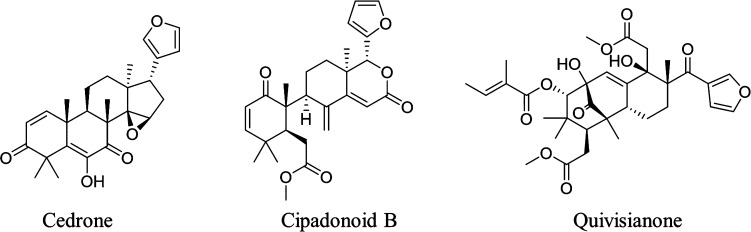
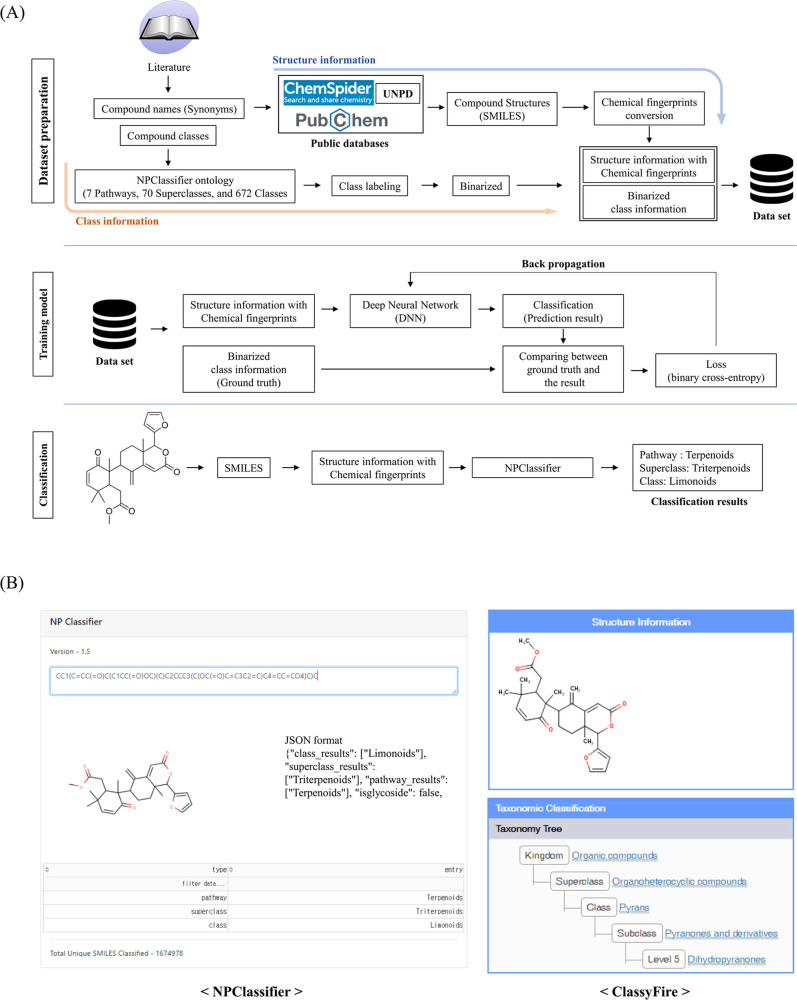
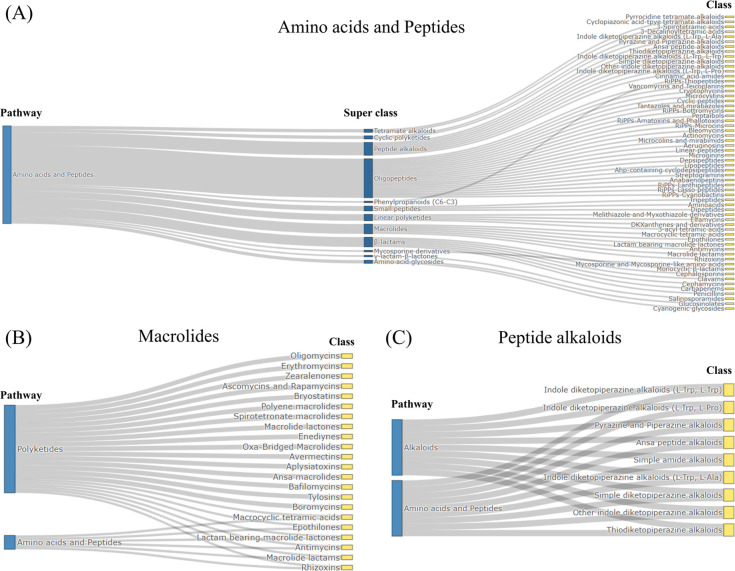
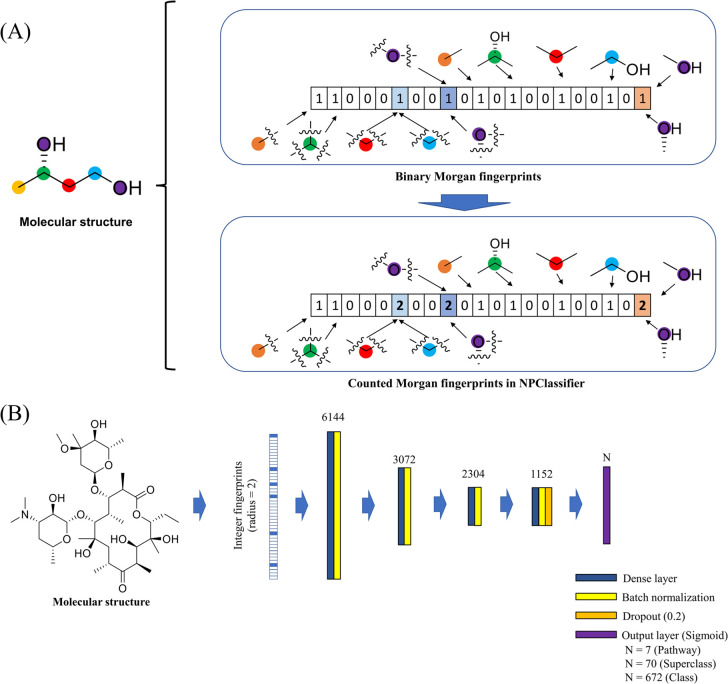
Verification
Claims the paper makes
The claims and statistics of this paper haven’t been checked yet.
Run the check — free, no account needed. It reads the open-access text and checks the sources it cites.
Claims other papers make about this one
Each is checked against this paper’s own text: does it say what the citing paper says it does?
The cited source says what the claim attributes to it.
In the citing paper
“CANOPUS166 utilizes these predicted fingerprints, which are esoteric to chemists, to predict the natural product class167 of the unknown natural product.”
From Connecting metabolome and phenotype: recent advances in functional metabolomics tools for the identification of bioactive natural products (2024) · cites this paper as [167]
Self-check
Percentages, sums and reported differences re-computed from the paper’s own numbers.
The self-check needs the paper’s full text.
Citations
Cites
LeCun, Y., Bengio, Y., & Hinton, G. (2015) · Nature · doi:10.1038/nature14539 · Cited by 84,126
Extended-Connectivity Fingerprints
Rogers, D. O. W., & Hahn, M. (2010) · Journal of Chemical Information and Modeling · doi:10.1021/ci100050t · Cited by 7,925
PubChem Substance and Compound databases
Kim, S., Thiessen, P. A., Bolton, E. E., Chen, J., Fu, G., Gindulyte, A., Han, L., He, J., He, S., Shoemaker, B. A., et al. (2016) · Nucleic Acids Research · doi:10.1093/nar/gkv951 · Cited by 5,436
A Deep Learning Approach to Antibiotic Discovery
Stokes, J. M., Yang, K., Swanson, K., Jin, W., Cubillos-Ruiz, A., Donghia, N. M., MacNair, C. R., French, S., Carfrae, L. A., Bloom-Ackermann, Z., et al. (2020) · Cell · doi:10.1016/j.cell.2020.01.021 · Cited by 2,463
Update of the LIPID MAPS comprehensive classification system for lipids
Fahy, E., Subramaniam, S., Murphy, R. C., Nishijima, M., Raetz, C. R. H., Shimizu, T., Spener, F., van Meer, G., Wakelam, M. J. O., & Dennis, E. A. (2009) · Journal of Lipid Research · doi:10.1194/jlr.r800095-jlr200 · Cited by 1,628
ClassyFire: automated chemical classification with a comprehensive, computable taxonomy
Djoumbou-Feunang, Y., Eisner, R., Knox, C., Chepelev, L. L., Hastings, J., Owen, G., Fahy, E., Steinbeck, C., Subramanian, S., Bolton, E., et al. (2016) · Journal of Cheminformatics · doi:10.1186/s13321-016-0174-y · Cited by 1,543
Dewick, P. M. (2009) · Wiley eBooks · doi:10.1002/9780470742761 · Cited by 1,364
ChemSpider: An Online Chemical Information Resource
Pence, H. E., & Williams, A. J. (2010) · Journal of Chemical Education · doi:10.1021/ed100697w · Cited by 1,258
ChEBI in 2016: Improved services and an expanding collection of metabolites
Hastings, J., Owen, G., Dekker, A., Ennis, M., Kale, N., Muthukrishnan, V., Turner, S., Swainston, N., Mendes, P., & Steinbeck, C. (2016) · Nucleic Acids Research · doi:10.1093/nar/gkv1031 · Cited by 1,083
Systematic classification of unknown metabolites using high-resolution fragmentation mass spectra
Dührkop, K., Nothias, L.-F., Fleischauer, M., Reher, R., Ludwig, M., Hoffmann, M. A., Petras, D., Gerwick, W. H., Rousu, J., Dorrestein, P. C., et al. (2021) · Nature Biotechnology · doi:10.1038/s41587-020-0740-8 · Cited by 860
Self-citation
Research works printed but not linked: 5
- Rogers F. B., 1963, Bull. Med. Libr. Assoc., 51, 114
- Rutz A., 2021, bioRxiv
- Hoffmann M. A., 2021, bioRxiv
- Landrum G., 2019, Abstr. Pap. Am. Chem. Soc., 258
- Shaffer J. P., 2021, bioRxiv
Cited by
Sorted by citations
COCONUT online: Collection of Open Natural Products database
Sorokina, M., Merseburger, P., Rajan, K., Yirik, M. A., & Steinbeck, C. (2021) · Journal of Cheminformatics · doi:10.1186/s13321-020-00478-9 · Cited by 726
Artificial intelligence for natural product drug discovery
Mullowney, M. W., Duncan, K., Elsayed, S. S., Garg, N., van der Hooft, J. J. J., Martin, N. I., Meijer, D., Terlouw, B. R., Biermann, F., Blin, K., et al. (2023) · Nature Reviews Drug Discovery · doi:10.1038/s41573-023-00774-7 · Cited by 551
Self-citationThe LOTUS initiative for open knowledge management in natural products research
Rutz, A., Sorokina, M., Galgonek, J., Mietchen, D., Willighagen, E., Gaudry, A., Graham, J. G., Stephan, R., Page, R., Vondrášek, J., et al. (2022) · eLife · doi:10.7554/elife.70780 · Cited by 480
IMPPAT 2.0: An Enhanced and Expanded Phytochemical Atlas of Indian Medicinal Plants
Vivek-Ananth, R. P., Mohanraj, K., Sahoo, A. K., & Samal, A. (2023) · ACS Omega · doi:10.1021/acsomega.3c00156 · Cited by 423
High-confidence structural annotation of metabolites absent from spectral libraries
Hoffmann, M. A., Nothias, L.-F., Ludwig, M., Fleischauer, M., Gentry, E. C., Witting, M., Dorrestein, P. C., Dührkop, K., & Böcker, S. (2022) · Nature Biotechnology · doi:10.1038/s41587-021-01045-9 · Cited by 388
Self-citationThe Natural Products Atlas 2.0: a database of microbially-derived natural products
van Santen, J. A., Poynton, E. F., Iskakova, D., McMann, E., Alsup, T. A., Clark, T. N., Fergusson, C. H., Fewer, D. P., Hughes, A. H., McCadden, C. A., et al. (2021) · Nucleic Acids Research · doi:10.1093/nar/gkab941 · Cited by 317
New software tools, databases, and resources in metabolomics: updates from 2020
Misra, B. B. (2021) · Metabolomics · doi:10.1007/s11306-021-01796-1 · Cited by 227
Standardized multi-omics of Earth’s microbiomes reveals microbial and metabolite diversity
Shaffer, J. P., Nothias-Scaglia, L.-F., Thompson, L., Sanders, J. G., Salido, R. A., Couvillion, S., Brejnrod, A., Lejzerowicz, F., Haiminen, N., Huang, S. W., et al. (2022) · Nature Microbiology · doi:10.1038/s41564-022-01266-x · Cited by 231
Self-citationMS2DeepScore: a novel deep learning similarity measure to compare tandem mass spectra
Huber, F., van der Burg, S., van der Hooft, J. J. J., & Ridder, L. (2021) · Journal of Cheminformatics · doi:10.1186/s13321-021-00558-4 · Cited by 219
Gaudêncio, S. P., Bayram, E., Bilela, L. L., Cueto, M., Díaz‐Marrero, A. R., HAZNEDAROĞLU, B. Z., Jiménez, C., Mandalakis, M., Pereira, F., Reyes, F., et al. (2023) · Marine Drugs · doi:10.3390/md21050308 · Cited by 209
Carroll, A. R., Copp, B. R., Grkovic, T., Keyzers, R. A., & Prinsep, M. R. (2024) · Natural Product Reports · doi:10.1039/d3np00061c · Cited by 183
Beniddir, M. A., Kang, K. B., Genta‐Jouve, G., Huber, F., Rogers, S., & van der Hooft, J. J. J. (2021) · Natural Product Reports · doi:10.1039/d1np00023c · Cited by 172
Self-citationGangwal, A., & Lavecchia, A. (2025) · Journal of Medicinal Chemistry · doi:10.1021/acs.jmedchem.4c01257 · Cited by 167
RetractedRevisiting natural deep eutectic solvents (NADES) as extraction media and ready-to-use purposes
Bragagnolo, F. S., Strieder, M. M., Pizani, R. S., Mesquita, L. M. D. S., González‐Miquel, M., & Rostagno, M. A. (2024) · TrAC Trends in Analytical Chemistry · doi:10.1016/j.trac.2024.117726 · Cited by 121
Domingo‐Fernándéz, D., Gadiya, Y., Preto, A. J., Krettler, C. A., Mubeen, S., Allen, A., Healey, D., & Colluru, V. (2024) · Journal of Natural Products · doi:10.1021/acs.jnatprod.4c00581 · Cited by 114
Integrative omics approaches for biosynthetic pathway discovery in plants
Singh, K. S., van der Hooft, J. J. J., Wees, S. C. M. V., & Medema, M. H. (2022) · Natural Product Reports · doi:10.1039/d2np00032f · Cited by 106
Shah, A. K. P. M., Walter, A., Ottosson, F. A., Russo, F., Navarro-Díaz, M., Boldt, J., Kalinski, J. J., Kontou, E. E., Elofson, J., Polyzois, A., et al. (2024) · Nature Protocols · doi:10.1038/s41596-024-01046-3 · Cited by 102
Self-citationAnnotating metabolite mass spectra with domain-inspired chemical formula transformers
Goldman, S., Wohlwend, J., Stražar, M., Haroush, G., Xavier, R. J., & Coley, C. W. (2023) · Nature Machine Intelligence · doi:10.1038/s42256-023-00708-3 · Cited by 87
Artificial intelligence in microbial natural product drug discovery: current and emerging role
Sahayasheela, V. J., Lankadasari, M. B., Dan, V. M., Dastager, S. G., Pandian, G. N., & Sugiyama, H. (2022) · Natural Product Reports · doi:10.1039/d2np00035k · Cited by 85
Petrén, H., Köllner, T. G., & Junker, R. R. (2022) · New Phytologist · doi:10.1111/nph.18685 · Cited by 81
Coverage bias in small molecule machine learning
Kretschmer, F., Seipp, J., Ludwig, M., Klau, G. W., & Böcker, S. (2025) · Nature Communications · doi:10.1038/s41467-024-55462-w · Cited by 86
Recent advances in mass spectrometry-based computational metabolomics
Ebbels, T. M. D., van der Hooft, J. J. J., Chatelaine, H., Broeckling, C. D., Zamboni, N., Hassoun, S., & Mathé, E. A. (2023) · Current Opinion in Chemical Biology · doi:10.1016/j.cbpa.2023.102288 · Cited by 74
Ancajas, C. M. F., Oyedele, A. S., Butt, C. M., & Walker, A. S. (2024) · Natural Product Reports · doi:10.1039/d4np00009a · Cited by 75
Vitale, G. A., Geibel, C., Minda, V., Wang, M., Aron, A. T., & Petras, D. (2024) · Natural Product Reports · doi:10.1039/d3np00050h · Cited by 66
Self-citationThe year 2020 in natural product bioinformatics: an overview of the latest tools and databases
Medema, M. H. (2021) · Natural Product Reports · doi:10.1039/d0np00090f · Cited by 64
Drug discovery inspired by bioactive small molecules from nature
Kim, S., Lim, S.-W., & Choi, J. (2022) · Animal Cells and Systems · doi:10.1080/19768354.2022.2157480 · Cited by 54
Machine learning-assisted structure annotation of natural products based on MS and NMR data
Hu, G., & Qiu, M. (2023) · Natural Product Reports · doi:10.1039/d3np00025g · Cited by 55
Molecular similarity: Theory, applications, and perspectives
López-Pérez, K., Avellaneda-Tamayo, J. F., Chen, L., López‐López, E., Juárez‐Mercado, K. E., Medina‐Franco, J. L., & Miranda‐Quintana, R. A. (2024) · Artificial Intelligence Chemistry · doi:10.1016/j.aichem.2024.100077 · Cited by 54
Chemotaxonomic investigation of plant terpenoids with an established database (TeroMOL)
Zeng, T., Chen, Y., Jian, Y., Zhang, F., & Wu, R. (2022) · New Phytologist · doi:10.1111/nph.18133 · Cited by 53
Synthetic biology advances towards a bio-based society in the era of artificial intelligence
Iram, A., Dong, Y., & Ignea, C. (2024) · Current Opinion in Biotechnology · doi:10.1016/j.copbio.2024.103143 · Cited by 53
67 million natural product-like compound database generated via molecular language processing
Tay, D. W. P., Yeo, N. Z. X., Adaikkappan, K., Lim, Y. H., & Ang, S. J. (2023) · Scientific Data · doi:10.1038/s41597-023-02207-x · Cited by 49
Natural product databases for drug discovery: Features and applications
Zeng, T., Li, J., & Wu, R. (2024) · Pharmaceutical Science Advances · doi:10.1016/j.pscia.2024.100050 · Cited by 51
Novák, V., Andeer, P. F., Bowen, B. P., Ding, Y., Zhalnina, K., Hofmockel, K., Tomaka, C., Harwood, T. V., van Winden, M. C. M., Golini, A. N., et al. (2024) · Science Advances · doi:10.1126/sciadv.adg7888 · Cited by 45
Plant and microbial sciences as key drivers in the development of metabolomics research
Aharoni, A., Goodacre, R., & Fernie, A. R. (2023) · Proceedings of the National Academy of Sciences · doi:10.1073/pnas.2217383120 · Cited by 46
Cheminformatics and artificial intelligence for accelerating agrochemical discovery
Djoumbou-Feunang, Y., Wilmot, J. T., Kinney, J., Chanda, P., Yu, P., Sader, C. A., Sharifi, M., Smith, S., Ou, J., Hu, J. K., et al. (2023) · Frontiers in Chemistry · doi:10.3389/fchem.2023.1292027 · Cited by 47
The LOTUS Initiative for Open Natural Products Research: Knowledge Management through WikidataPreprint
Rutz, A., Sorokina, M., Galgonek, J., Mietchen, D., Willighagen, E., Gaudry, A., Graham, J. G., Stephan, R., Page, R., Vondrášek, J., et al. (2021) · bioRxiv (Cold Spring Harbor Laboratory) · doi:10.1101/2021.02.28.433265 · Cited by 43
Taşdemir, D., Scarpato, S., Utermann-Thüsing, C., Jensen, T., Blümel, M., Wenzel‐Storjohann, A., Welsch, C., & Echelmeyer, V. A. (2023) · The Science of The Total Environment · doi:10.1016/j.scitotenv.2023.168422 · Cited by 40
Capecchi, A., & Reymond, J. (2021) · Journal of Cheminformatics · doi:10.1186/s13321-021-00559-3 · Cited by 39
A Catalog of Natural Products Occurring in Watermelon—Citrullus lanatus
Sorokina, M., McCaffrey, K. S., Deaton, E. E., Ma, G., Ordovás, J. M., Perkins-Veazie, P. M., Steinbeck, C., Levi, A., & Parnell, L. D. (2021) · Frontiers in Nutrition · doi:10.3389/fnut.2021.729822 · Cited by 39
PeruNPDB: the Peruvian Natural Products Database for in silico drug screening
Barazorda-Ccahuana, H. L., Ranilla, L. G., Candia-Puma, M. A., Rodriguez, E. G. C., Centeno-Lopez, A. E., Dávila-Del-Carpio, G., Medina‐Franco, J. L., & Chávez‐Fumagalli, M. Á. (2023) · Scientific Reports · doi:10.1038/s41598-023-34729-0 · Cited by 38
DFT_ANPD: A dual-feature two-sided attention network for anticancer natural products detection
Norouzi, R., Norouzi, R., Abbasi, K., Norouzi, R., & Razzaghi, P. (2025) · Computers in Biology and Medicine · doi:10.1016/j.compbiomed.2025.110442 · Cited by 37
Silva, S. G., Paula, P., Silva, J. P. D., Mil‐Homens, D., Teixeira, M. C., Fialho, A. M., Costa, R., & Keller‐Costa, T. (2022) · Marine Drugs · doi:10.3390/md20070423 · Cited by 38
Metabolomics-Guided Elucidation of Plant Abiotic Stress Responses in the 4IR Era: An Overview
Tinte, M. M., Chele, K. H., van der Hooft, J. J. J., & Tugizimana, F. (2021) · Metabolites · doi:10.3390/metabo11070445 · Cited by 37
A simple, cost-effective and optimized protocol for collecting root exudates from soil grown plants
Döll, S., Koller, H., & van Dam, N. M. (2024) · Rhizosphere · doi:10.1016/j.rhisph.2024.100899 · Cited by 39
Vu, A. H., Kang, M., Wurlitzer, J., Heinicke, S., Li, C., Wood, J. C., Grabe, V., Buell, C. R., Caputi, L., & O'Connor, S. E. (2024) · Journal of the American Chemical Society · doi:10.1021/jacs.4c06336 · Cited by 39
Ghosh, S., Basu, S., Kayal, T., Ashok, G., Ramaiah, S., & Anbarasu, A. (2025) · Discover Applied Sciences · doi:10.1007/s42452-025-06772-1 · Cited by 37
A Sample-Centric and Knowledge-Driven Computational Framework for Natural Products Drug Discovery
Gaudry, A., Pagni, M., Mehl, F., Moretti, S., Quirós-Guerrero, L.-M., Cappelletti, L., Rutz, A., Kaiser, M., Marcourt, L., Queiroz, E. F., et al. (2024) · ACS Central Science · doi:10.1021/acscentsci.3c00800 · Cited by 38
Carroll, A. R., Copp, B. R., Grkovic, T., Keyzers, R. A., & Prinsep, M. R. (2026) · Natural Product Reports · doi:10.1039/d5np00080g · Cited by 35
IMN4NPD: An Integrated Molecular Networking Workflow for Natural Product Dereplication
Sheng, Y., Wang, J., Liu, S., & Jiang, Y. (2024) · Analytical Chemistry · doi:10.1021/acs.analchem.3c04746 · Cited by 33
Leão, T., Wang, M., Silva, R., Gurevich, A. A., Bauermeister, A., Gomes, P. W. P., Brejnrod, A., Glukhov, E., Aron, A. T., Louwen, J. J. R., et al. (2022) · PNAS Nexus · doi:10.1093/pnasnexus/pgac257 · Cited by 36
Self-citationLouwen, J. J. R., Medema, M. H., & van der Hooft, J. J. J. (2023) · Microbiome · doi:10.1186/s40168-022-01444-3 · Cited by 35
Meroterpenoids? A historical and critical review of this biogenetic determinant
Goyer, E., Lavaud, C., & Massiot, G. (2023) · Natural Product Reports · doi:10.1039/d3np00004d · Cited by 34
Abderrezag, N., Bragagnolo, F. S., Louaer, O., Méniai, A.-H., Cifuentes, A., Ibáñez, E., & Mendiola, J. A. (2024) · The Journal of Supercritical Fluids · doi:10.1016/j.supflu.2024.106211 · Cited by 32
Salido, R. A., Zhao, H. N., McDonald, D. T., Mannochio-Russo, H., Zuffa, S., Oles, R. E., Aron, A. T., Abiead, Y. E., Farmer, S., González, A., et al. (2025) · Cell · doi:10.1016/j.cell.2025.01.039 · Cited by 34
Self-citationZeng, J., & Jia, X. (2025) · Journal of Pharmaceutical Analysis · doi:10.1016/j.jpha.2025.101342 · Cited by 32
Hastings, J., Glauer, M., Memariani, A., Neuhaus, F., & Mossakowski, T. (2021) · Journal of Cheminformatics · doi:10.1186/s13321-021-00500-8 · Cited by 32
Allard, P., Gaudry, A., Quirós-Guerrero, L.-M., Rutz, A., Kubo, M., Walker, T. W. N., Défossez, E., Long, C., Grondin, A., David, B., et al. (2022) · GigaScience · doi:10.1093/gigascience/giac124 · Cited by 31
Graph Neural Networks as a Potential Tool in Improving Virtual Screening Programs
Alves, L. A., Ferreira, N. C. D. S., Maricato, V., Alberto, A. V. P., Dias, E. A., & Coelho, N. J. A. (2022) · Frontiers in Chemistry · doi:10.3389/fchem.2021.787194 · Cited by 31
Phytochemical diversity impacts herbivory in a tropical rainforest tree community
Wang, X., He, Y., Sedio, B. E., Jin, L., Ge, X., Glomglieng, S., Cao, M., Yang, J., Swenson, N. G., & Yang, J. (2023) · Ecology Letters · doi:10.1111/ele.14308 · Cited by 30
Domingo‐Fernándéz, D., Gadiya, Y., Mubeen, S., Healey, D., Norman, B. H., & Colluru, V. (2023) · Journal of Cheminformatics · doi:10.1186/s13321-023-00778-w · Cited by 30
FragHub: A Mass Spectral Library Data Integration Workflow
Dablanc, A., Hennechart, S., Perez, A., Cabanac, G., Guitton, Y., Paulhe, N., Lyan, B., Jamin, E. L., Giacomoni, F., & Marti, G. (2024) · Analytical Chemistry · doi:10.1021/acs.analchem.4c02219 · Cited by 32
Nesane, T., Madala, N. E., Kabanda, M. M., Murulana, L. C., & Bahadur, I. (2023) · Colloids and Surfaces A Physicochemical and Engineering Aspects · doi:10.1016/j.colsurfa.2023.131405 · Cited by 29
OSADHI – An online structural and analytics based database for herbs of India
Kiewhuo, K., Gogoi, D., Mahanta, H. J., Rawal, R. K., Das, D., Vaikundamani, S., Jamir, E., & Sastry, G. N. (2022) · Computational Biology and Chemistry · doi:10.1016/j.compbiolchem.2022.107799 · Cited by 28
Effective data visualization strategies in untargeted metabolomics
Mildau, K., Ehlers, H., Meisenburg, M., Pup, E. D., Koetsier, R. A., Ortega, L. R. T., Jonge, N. D., Singh, K. S., Ferreira, D., Othibeng, K., et al. (2024) · Natural Product Reports · doi:10.1039/d4np00039k · Cited by 30
Wang, D., Wang, C., Hu, J.-Q., Wang, J., Liu, W.-C., Zhang, W.-J., Du, X., Wang, H., Zhu, L.-L., Sui, H., et al. (2023) · Analytical Chemistry · doi:10.1021/acs.analchem.2c05145 · Cited by 26
Goßner, M. M., Perret‐Gentil, A., Britt, E., Queloz, V., Glauser, G., Ladd, T. R., Roe, A. D., Cleary, M., Liziniewicz, M., Nielsen, L. R., et al. (2023) · New Phytologist · doi:10.1111/nph.19068 · Cited by 28
Pilon, A. C., Grande, M. D., Silvério, M. R. S., Silva, R., Albernaz, L. C., Vieira, P. C., Lopes, J. L. C., Espíndola, L. S., & Lopes, N. P. (2022) · Molecules · doi:10.3390/molecules27051588 · Cited by 26
Louwen, J. J. R., & van der Hooft, J. J. J. (2021) · mSystems · doi:10.1128/msystems.00726-21 · Cited by 25
Prediction of plant secondary metabolic pathways using deep transfer learning
Bao, H., Zhao, J., Zhao, X., Zhao, C., Lu, X., & Xu, G. (2023) · BMC Bioinformatics · doi:10.1186/s12859-023-05485-9 · Cited by 24
Kim, J.-A., Choi, S.-S., Lim, J. K., & Kim, E. (2025) · Natural Product Reports · doi:10.1039/d5np00013k · Cited by 26
Beltrán-Noboa, A., Jordan-Álvarez, A., Guevara-Terán, M., Gallo, B., Berrueta, L. Á., Giampieri, F., Battino, M. A., Álvarez-Suárez, J. M., & Tejera, E. (2023) · ACS Omega · doi:10.1021/acsomega.3c00043 · Cited by 24
Elser, D., Pflieger, D., Villette, C., Moegle, B., Miesch, L., & Gaquerel, E. (2023) · Science Advances · doi:10.1126/sciadv.ade8984 · Cited by 25
Spatially and temporally resolved metabolome of the human oral cavity
Ciurli, A., Mohammed, Y., Ammon, C., Derks, R. J. E., Olivier‐Jimenez, D., Ducarmon, Q. R., Slingerland, M., Neefjes, J., & Giera, M. A. (2024) · iScience · doi:10.1016/j.isci.2024.108884 · Cited by 23
Multidrug efflux pumps of Pseudomonas aeruginosa show selectivity for their natural substrates
Mazza, L., Bory, A. J., Lüscher, A., Kloehn, J., Wolfender, J., van Delden, C., & Köhler, T. (2025) · Frontiers in Microbiology · doi:10.3389/fmicb.2024.1512472 · Cited by 23
Lianza, M., Leroy, R., Rodrigues, C. M., Borie, N., Sayagh, C., Rémy, S., Kühn, S., Renault, J., & Nuzillard, J. (2021) · Molecules · doi:10.3390/molecules26030637 · Cited by 23
Danquah, C. A., Minkah, P. A. B., Agana, T. A., Moyo, P., Ofori, M., Doe, P., Rali, S., Duah, I. O., Amankwah, K. B., Somuah, S. O., et al. (2022) · Molecules · doi:10.3390/molecules27144475 · Cited by 23
Kang, K. B., Jeong, E., Son, S., Lee, E., Lee, S., Choi, S. Y., Kim, H. W., Yang, H., & Shim, S. H. (2022) · Scientific Data · doi:10.1038/s41597-022-01662-2 · Cited by 23
Self-citationMachine Learning-Based Bioactivity Classification of Natural Products Using LC-MS/MS Metabolomics
Brittin, N. J., Anderson, J. M., Braun, D. R., Rajski, S. R., Currie, C. R., & Bugni, T. S. (2025) · Journal of Natural Products · doi:10.1021/acs.jnatprod.4c01123 · Cited by 22
Inventa: A computational tool to discover structural novelty in natural extracts libraries
Quirós-Guerrero, L.-M., Nothias-Scaglia, L.-F., Gaudry, A., Marcourt, L., Allard, P., Rutz, A., David, B., Queiroz, E. F., & Wolfender, J. (2022) · Frontiers in Molecular Biosciences · doi:10.3389/fmolb.2022.1028334 · Cited by 26
Gómez‐García, A., Jiménez, D. A. A., Zamora, W. J., Barazorda-Ccahuana, H. L., Chávez‐Fumagalli, M. Á., Valli, M., Andricopulo, A. D., Bolzani, V. D. S., Olmedo, D. A., Solís, P. N., et al. (2023) · Pharmaceuticals · doi:10.3390/ph16101388 · Cited by 25
Cordell, G. A. (2024) · Natural Products and Bioprospecting · doi:10.1007/s13659-024-00431-5 · Cited by 22
NIMO: A Natural Product-Inspired Molecular Generative Model Based on Conditional Transformer
Shen, X., Zeng, T., Chen, N., Li, J., & Wu, R. (2024) · Molecules · doi:10.3390/molecules29081867 · Cited by 22
Biosynthetic Origin of the Methoxy Group in Quinine and Related Alkaloids
Lombe, B. K., Zhou, T., Caputi, L., Ploss, K., & O'Connor, S. E. (2024) · Angewandte Chemie International Edition · doi:10.1002/anie.202418306 · Cited by 21
Molecular networking: An efficient tool for discovering and identifying natural products
Wang, Y., Wang, Y., Zhang, Z., Xu, K., Fang, Q., Wu, X., & Ma, S. (2025) · Journal of Pharmaceutical and Biomedical Analysis · doi:10.1016/j.jpba.2025.116741 · Cited by 24
Data considerations for predictive modeling applied to the discovery of bioactive natural products
Xue, H. T., Stanley-Baker, M., Kong, A. W., Li, H., & Goh, W. W. B. (2022) · Drug Discovery Today · doi:10.1016/j.drudis.2022.05.009 · Cited by 22
Problems, principles and progress in computational annotation of NMR metabolomics data
Judge, M. T., & Ebbels, T. M. D. (2022) · Metabolomics · doi:10.1007/s11306-022-01962-z · Cited by 21
Latin American Natural Product Database (LANaPDB): An Update
Gómez‐García, A., Jiménez, D. A. A., Zamora, W. J., Barazorda-Ccahuana, H. L., Chávez‐Fumagalli, M. Á., Valli, M., Andricopulo, A. D., Bolzani, V. D. S., Olmedo, D. A., Solís, P. N., et al. (2024) · Journal of Chemical Information and Modeling · doi:10.1021/acs.jcim.4c01560 · Cited by 20
Houriet, J., Manwill, P. K., Magaña, A. A., Anderson, V. M., Beniddir, M. A., Bertrand, S., Choi, J., Clark, T. N., Foster, L. J., Halabalaki, M., et al. (2025) · Analytical Chemistry · doi:10.1021/acs.analchem.4c05577 · Cited by 21
Hell, T., Rutz, A., Dürr, L., Dobrzyński, M., Reinhardt, J. K., Lehner, T., Keller, M., John, A., Gupta, M. P., Pertz, O. C., et al. (2022) · Journal of Natural Products · doi:10.1021/acs.jnatprod.2c00146 · Cited by 22
Metabotyping of Andean pseudocereals and characterization of emerging mycotoxins
Vásquez-Ocmín, P. G., Marti, G., Gadéa, A., Cabanac, G., Vásquez-Briones, J. A., Casavilca-Zambrano, S. A., Ponts, N., Jargeat, P., Haddad, M., & Bertani, S. (2022) · Food Chemistry · doi:10.1016/j.foodchem.2022.135134 · Cited by 20
Compendium of Metabolomic and Genomic Datasets for Cyanobacteria: Mined the Gap
Ferrinho, S., Connaris, H., Mouncey, N. J., & Goss, R. J. M. (2024) · Water Research · doi:10.1016/j.watres.2024.121492 · Cited by 19
Chen, W., Yu, Z., Leng, L., Sun, D., Liu, H., Gong, R., Cong, Z., Xiao, W., Zhang, G., Liu, Y., et al. (2025) · The Innovation · doi:10.1016/j.xinn.2025.101011 · Cited by 19
Turf algae redefine the chemical landscape of temperate reefs, limiting kelp forest recovery
Farrell, S., Petras, D., Stincone, P., Yiu, D. S., Burns, J. A., Shah, A. K. P. M., Hartmann, A. C., Brady, D. C., & Rasher, D. B. (2025) · Science · doi:10.1126/science.adt6788 · Cited by 19
Kumar, D. M., & Talwar, P. (2025) · Frontiers in Pharmacology · doi:10.3389/fphar.2025.1616144 · Cited by 20
Bazzano, C. F., de Felício, R., Alves, L. F. G., Costa, J. H., Ortega, R., Vieira, B. D., Morais‐Urano, R. P., Furtado, L. C., Ferreira, É. L. F., Gubiani, J. R., et al. (2024) · Analytical Chemistry · doi:10.1021/acs.analchem.3c05829 · Cited by 18
Guzmán, V. A. A., Montoya-Alfaro, M. E., Negrón, L. P., & Calero, C. S. (2024) · Pharmaceuticals · doi:10.3390/ph17060750 · Cited by 18
Analysis of plant metabolomics data using identification‐free approaches
Yuan, X., Smith, N. S. S., & Moghe, G. D. (2025) · Applications in Plant Sciences · doi:10.1002/aps3.70001 · Cited by 17
NMRMind: A Transformer-Based Model Enabling the Elucidation from Multidimensional NMR to Structures
Xue, X., Sun, H., Sun, J., Patiny, L., Liu, X., Chen, K., Yan, J., Liangning, L., Liu, X., Xu, S., et al. (2025) · Analytical Chemistry · doi:10.1021/acs.analchem.5c03783 · Cited by 20
Shin, S. H., Hur, G., Kim, N. R., Park, J. H. Y., Lee, K. W., & Yang, H. Y. (2023) · Food & Function · doi:10.1039/d2fo03466b · Cited by 17
A powerful two-dimensional chromatography method for the non-target analysis of depolymerised lignin
Tammekivi, E., Batteau, M., Laurenti, D., Lilti, H., & Faure, K. (2023) · Analytica Chimica Acta · doi:10.1016/j.aca.2023.342157 · Cited by 20
Metadata
- Authors
- Kim, H. W., Wang, M., Leber, C. A., Nothias, L.-F., Reher, R., Kang, K. B., van der Hooft, J. J. J., Dorrestein, P. C., Gerwick, W. H., & Cottrell, G. W.
- Affiliations
- Scripps Institution of Oceanography (US)
- University of California San Diego (US)
- Skaggs School of Pharmacy and Pharmaceutical Sciences, University of California San Diego, La Jolla, California 92093, United States
- Sookmyung Women's University (KR)
- Bioinformatics Group, Wageningen University, Wageningen 6700, The Netherlands
- Corresponding author
- Gerwick, William H.
- Cottrell, Garrison W.
- ORCID
- Venue
- Journal of Natural Products
- Publisher
- American Chemical Society (ACS)
- Published
- 2021-10-18
- Volume
- 84
- Issue
- 11
- Pages
- 2795-2807
- ISSN
- 0163-3864 (ISSN-L)
- 1520-6025
- PMC
- PMC8631337
- OpenAlex
- W3206742358
- Cited by
- 551
- References
- 70
- Citations by year
- 2026: 140 · 2025: 165 · 2024: 115 · 2023: 83 · 2022: 30 · 2021: 18
- FWCI
- 32.17
- Type
- journal article
- Language
- en
- Open access
- hybrid
- doi.org
- Licence
- Locations
- Journal of Natural Products (publishedVersion, cc-by-nc-nd)
- ChemRxiv (acceptedVersion, cc-by-nc-nd)
- PubMed Central (publishedVersion, cc-by-nc-nd)
- PubMed (publishedVersion)
- Socio-Environmental Systems Modeling (acceptedVersion, cc-by-nc-nd)
- eScholarship (California Digital Library) (submittedVersion, cc-by-nc-nd)
- Figshare (submittedVersion)
- Zenodo (CERN European Organization for Nuclear Research) (submittedVersion, cc-by)
- Data Archiving and Networked Services (DANS) (submittedVersion, cc-by-nc-nd)
- Funders
- Gordon and Betty Moore Foundation (GBMF7622)
- National Research Foundation of Korea (NRF-2020R1C1C1004046)
- Netherlands eScience Center (ASDI.2017.030)
- National Institute of General Medical Sciences (R01 GM107550)
- Topics
- Life Sciences › Pharmacology, Toxicology and Pharmaceutics › Drug Discovery › Computational Drug Discovery Methods
- Life Sciences › Immunology and Microbiology › Applied Microbiology and Biotechnology › Microbial Natural Products and Biosynthesis
- Physical Sciences › Materials Science › Materials Chemistry › Machine Learning in Materials Science
- Keywords
- natural products, structural classification, Morgan fingerprints, deep neural network, natural product discovery, biosynthetic pathway, chemical substructures
- MeSH terms
- Biological Products, Neural Networks, Computer, Biosynthetic Pathways
About these checks
Registry, retraction, Cites and statistics results are computed, not judged, with one exception: a printed reference that no index lists is read once by a model before it counts as a citation error. Claims are extracted by a model and kept only when their quote appears verbatim in the text; each cited source is then checked, with a model’s help, for whether it says what the claim relies on. Those verdicts can be wrong — read the claim’s quote and the cited source before relying on one.
Statistics and arithmetic are recomputed, not judged.
Confidence bands are shown only for fields calibrated on our annotated test set. None is calibrated yet, so no band is shown.
What counts as a claim ›How we measure confidence ›How we check this ›
Are you an author, or do you see a problem with this page? Request a review
