

LMDZ6A: The Atmospheric Component of the IPSL Climate Model With Improved and Better Tuned Physics
Open accessThe DOI matches its Crossref record; 90 of the 90 references it cites were found in a registry or an index.
Abstract
This study presents the version of the LMDZ global atmospheric model used as the atmospheric component of the Institut Pierre Simon Laplace coupled model (IPSL‐CM6A‐LR) to contribute to the 6th phase of the international Coupled Model Intercomparison Project (CMIP6). This LMDZ6A version includes original convective parameterizations that define the LMDZ “New Physics”: a mass flux parameterization of the organized structures of the convective boundary layer, the “thermal plume model,” and a parameterization of the cold pools created by reevaporation of convective rainfall. The vertical velocity associated with thermal plumes and gust fronts of cold pools are used to control the triggering and intensity of deep convection. Because of several shortcomings, the early version 5B of this New Physics was worse than the previous “Standard Physics” version 5A regarding several classical climate metrics. To overcome these deficiencies, version 6A includes new developments: a stochastic triggering of deep convection, a modification of the thermal plume model that allows the representation of stratocumulus and cumulus clouds in a unified framework, an improved parameterization of very stable boundary layers, and the modification of the gravity waves scheme targeting the quasi‐biennal oscillation in the stratosphere. These improvements to the physical content and a more well‐defined tuning strategy led to major improvements in the LMDZ6A version model climatology. Beyond the presentation of this particular model version and documentation of its climatology, the present paper underlines possible methodological pathways toward model improvement that can be shared across modeling groups.
Overview
The claims and statistics of this paper haven’t been checked yet.
Free: it reads the open-access text and checks the first 5 claims that cite a source we can check. Create a free account to check every claim.
Integrity signals
Registry
Cites
Statistics
Figures









Verification
Claims the paper makes
The claims and statistics of this paper haven’t been checked yet.
Free: it reads the open-access text and checks the first 5 claims that cite a source we can check. Create a free account to check every claim.
Claims other papers make about this one
Each is checked against this paper’s own text: does it say what the citing paper says it does?
The source backs part of the claim, not all of it — or backs it for a different population, condition or comparison.
In the citing paper
“This success of the automated procedure benefited from the expertise gained in the team from decades of practice of by-hand tuning of the IPSL model (14, 17, 18, 37).”
From Toward machine-assisted tuning avoiding the underestimation of uncertainty in climate change projections (2023) · cites this paper as [37]
Experimental — accuracy not yet measuredThe cited source says what the claim attributes to it.
In the citing paper
“Although this number may seem large, it is in fact much smaller than the number of years simulated for the by-hand tuning of the IPSL-CM6 configuration (36, 37), not to mention the tremendous gain in human time.”
From Toward machine-assisted tuning avoiding the underestimation of uncertainty in climate change projections (2023) · cites this paper as [37]
Self-check
Percentages, sums and reported differences re-computed from the paper’s own numbers.
The self-check needs the paper’s full text.
Citations
Cites
The ERA‐Interim reanalysis: configuration and performance of the data assimilation system
Dee, D. P., Uppala, S. M., Simmons, A. J., Berrisford, P., Poli, P., Kobayashi, S., Andrae, U., Balmaseda, M. A., Balsamo, G., Bauer, P., et al. (2011) · Quarterly Journal of the Royal Meteorological Society · doi:10.1002/qj.828 · Cited by 24,480 · cited 1×
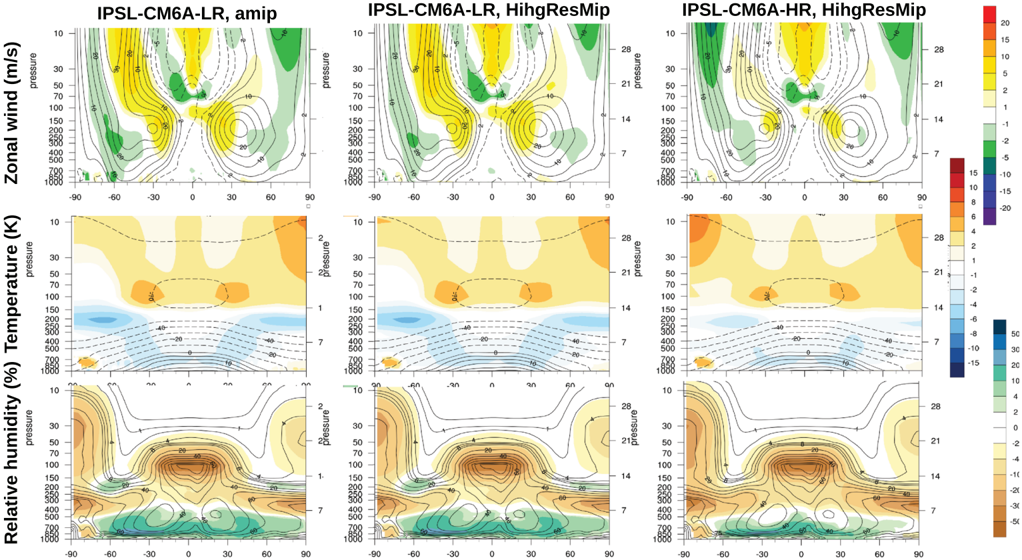
“Contours correspond to the raw fields and the color shades show the difference with ERA Interim analyses (Dee et al., 2011).”
BackgroundAn Overview of CMIP5 and the Experiment Design
Taylor, K. E., Stouffer, R. J., & Meehl, G. A. (2012) · Bulletin of the American Meteorological Society · doi:10.1175/bams-d-11-00094.1 · Cited by 14,052 · cited 1×
“…from the observations for the global mean temperature is typically the maximum value encountered in simulations of the present-day climate available from the Coupled Model Intercomparison Project (CMIP, Taylor et al., 2012), meaning that all CMIP class models are tuned in one way or another.”
MethodMlawer, E. J., Taubman, S. J., Brown, P. D., Iacono, M. J., & Clough, S. A. (1997) · Journal of Geophysical Research: Atmospheres · doi:10.1029/97jd00237 · Cited by 8,419 · cited 1×
“Compared to versions 5A and 5B, the broadband flux emissivity method used in the thermal infrared (Morcrette, 1991) was replaced by the RRTM code (Mlawer et al., 1997) based on a k-correlated scheme with 16 spectral bands.”
MethodRegions of Strong Coupling Between Soil Moisture and Precipitation
Koster, R. D., Dirmeyer, P. A., Guo, Z., Bonan, G., Chan, E., Cox, P., Gordon, C. T., Kanae, S., Kowalczyk, E., Lawrence, D., et al. (2004) · Science · doi:10.1126/science.1100217 · Cited by 2,872 · cited 1×
“The stochastic triggering scheme has been specifically developed and tested over West Africa with the goal of better representing the observed day-to-day variability of rainfall very specific to these semiarid “transition regions” (Koster et al., 2004) in which the subtle coupling between the soil and the atmosphere i…”
MethodA parametric model of vertical eddy fluxes in the atmosphere
Louis, J.-F. (1979) · Boundary-Layer Meteorology · doi:10.1007/bf00117978 · Cited by 2,392 · cited 1×
“The surface boundary layer is treated according to (Louis, 1979).”
BackgroundClimate change projections using the IPSL-CM5 Earth System Model: from CMIP3 to CMIP5
Dufresne, J.-L., Foujols, M.-A., Denvil, S., Caubel, A., Marti, O., Aumont, O., Balkanski, Y., Bekki, S., Bellenger, H., Benshila, R., et al. (2013) · Climate Dynamics · doi:10.1007/s00382-012-1636-1 · Cited by 1,755 · cited 2×
“, 2013) was used to perform a subset of the simulations for CMIP5 (Dufresne et al., 2013).”
MethodSelf-citationPresentation and Evaluation of the IPSL‐CM6A‐LR Climate Model
Boucher, O., Servonnat, J., Albright, A. L., Aumont, O., Balkanski, Y., Bastrikov, V., Bekki, S., Bonnet, R., Bony, S., Bopp, L., et al. (2020) · Journal of Advances in Modeling Earth Systems · doi:10.1029/2019ms002010 · Cited by 1,694 · cited 7×
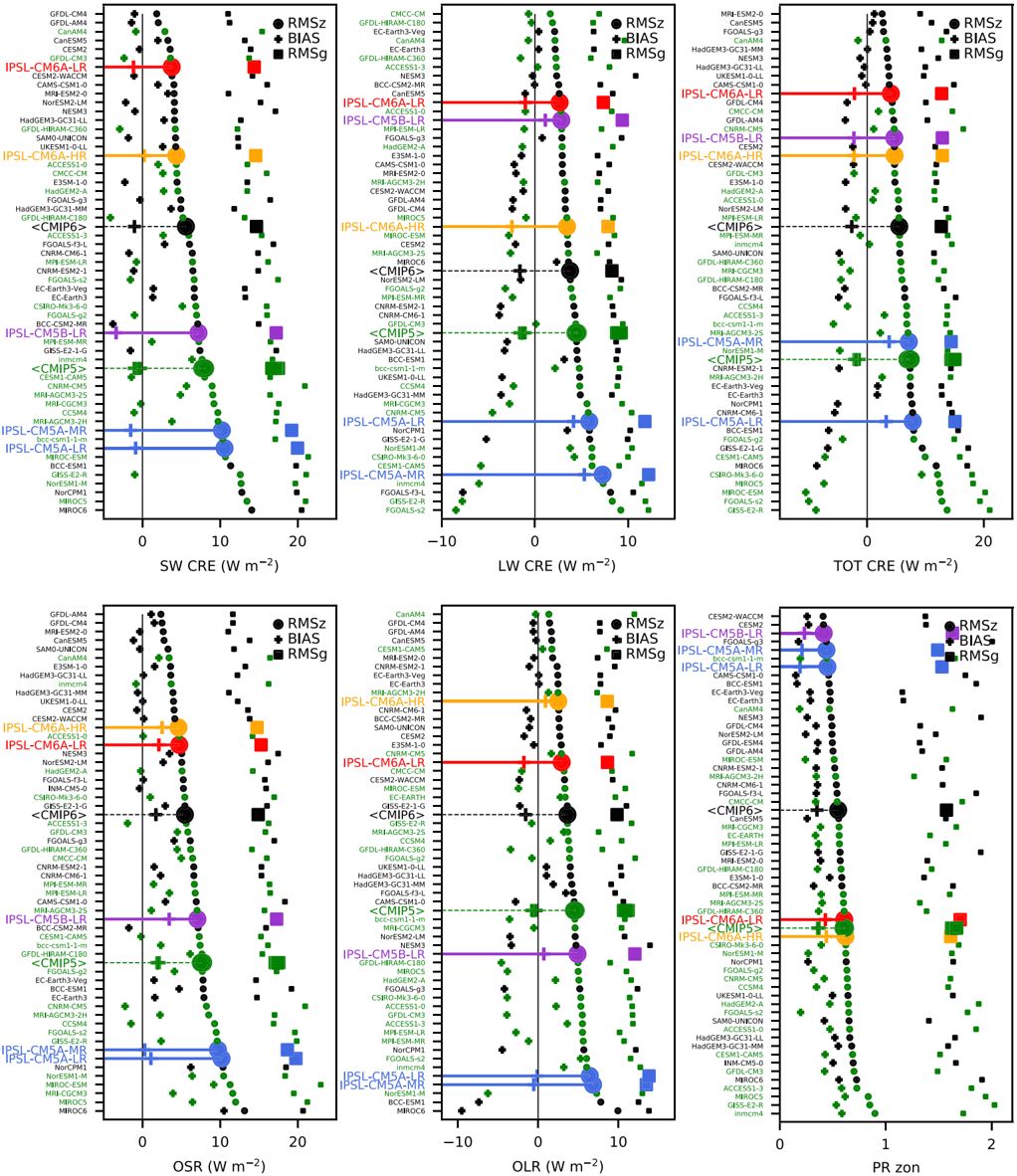
“24 of 37 concerning clouds, radiation, and SST have been improved compared to the previous 5A and 5B versions, and are globally satisfactorily reproduced when compared to the CMIP6 ensemble (Boucher et al., 2020).”
BackgroundMethodSelf-citationA Scheme for Representing Cumulus Convection in Large-Scale Models
Emanuel, K. A. (1991) · Journal of the Atmospheric Sciences · doi:10.1175/1520-0469(1991)048<2313:asfrcc>2.0.co;2 · Cited by 1,067 · cited 2×
“Deep convection is parameterized using the “episodic mixing and buoyancy sorting” Emanuel scheme (Emanuel, 1991) which assumes quasi-equilibrium between the large-scale forcing of convection and convective instability.”
MethodNEMO Ocean Engine Reference Manual
Madec, G., Bell, M. J., Benshila, R., Blaker, A., Boudrallé-Badie, R., Bricaud, C., Bruciaferri, D., Carneiro, D., Castrillo, M., Calvert, D., et al. (2013) · Archivio istituzionale della ricerca (Alma Mater Studiorum Università di Bologna) · doi:10.5281/zenodo.1464816 · Cited by 1,007
An update on Earth's energy balance in light of the latest global observations
Stephens, G. L., Li, J., Wild, M., Clayson, C. A., Loeb, N., Kato, S., L'Ecuyer, T., Stackhouse, P. W., Lebsock, M., & Andrews, T. (2012) · Nature Geoscience · doi:10.1038/ngeo1580 · Cited by 1,004 · cited 2×
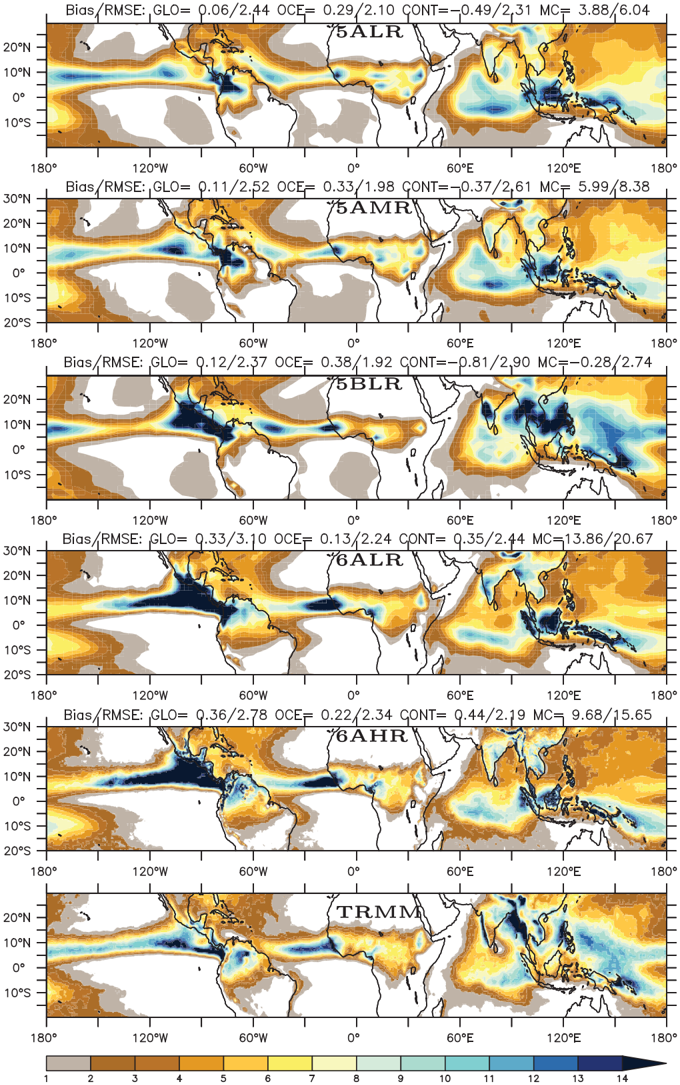
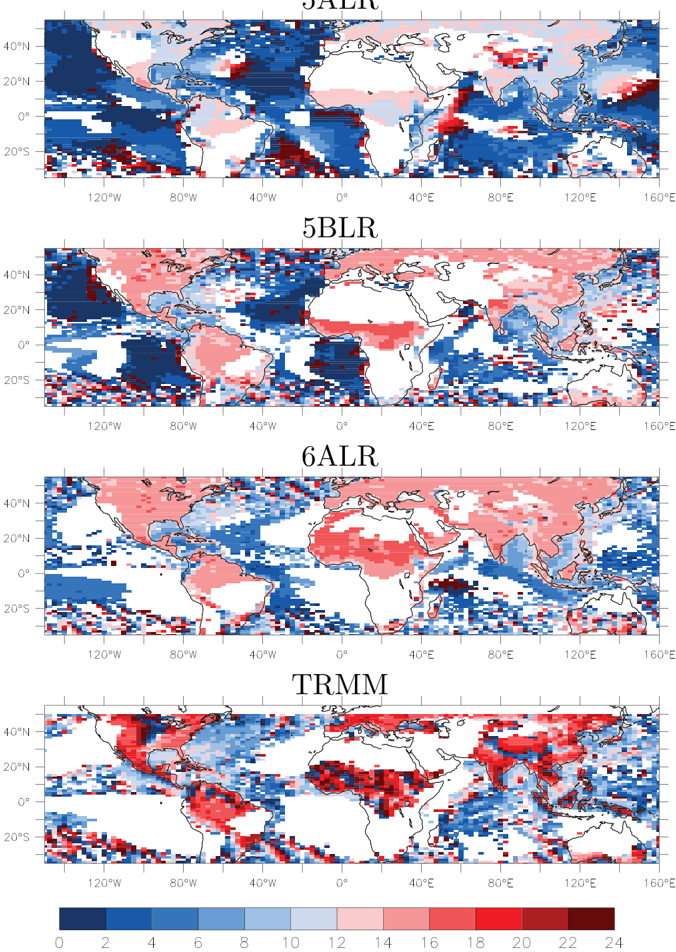
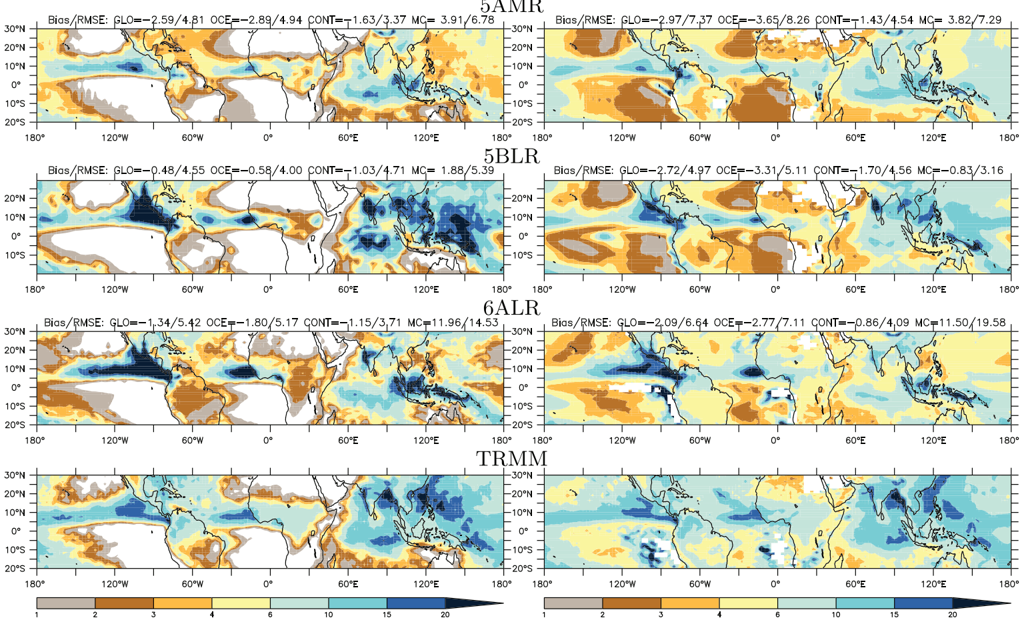
“…et al., 2011), the overestimation of total precipitation in the model may be partly due to an underestimation of observed precipitation due to an underestimation of light rain that may reach 10% (Stephens et al., 2012) in particular over the Indian Ocean, the SPCZ and ITCZ (Berg et al., 2010).”
Background
Research works printed but not linked: 19
- 10.1175/jas‐d‐12‐0330.1 · DOI · Paper page
- Bazile, E., Couvreux, F., Le Moigne, P., Genthon, C., Holtslag, A. A. M., & Svensson, G. (2014). GABLS4: An intercomparison case to study the stable boundary layer over the Antarctic plateau. GEWEX News, 24, 4.
- 10.1175/1525-7541(2001)002 · doi:10.1175/1525-7541(2001)002
- 10.1175/1520-0469(1986)043 · doi:10.1175/1520-0469(1986)043
- 10.1175/bams‐d‐11‐00187.1 · DOI · Paper page
- 10.1175/bams‐d‐15‐00135.1 · DOI · Paper page
- Huffman, G. J., Adler, R. F., Morrissey, M. M., Bolvin, D. T., Curtis, S., Joyce, R., & Susskind, J. (2001). Global precipitation at one-degree daily resolution from multisatellite observations. Journal of Hydrometeorology, 2, 36-50. https://doi.org/10.1175/ 1525-7541(2001)002<0036:GPAODD>2.0.CO;2 10.1029/2019MS001892 · DOI · Paper page
- 10.1175/1525-7541(2001)002 · doi:10.1175/1525-7541(2001)002
- 10.1175/1520-0469(2000)057 · doi:10.1175/1520-0469(2000)057
- Jam, A. (2012). Paramétrisation de la couche limite: Du modèle des thermiques au modèle statistique de nuage (PhD thesis), advized by Hourdin, Frédéric, Sciences de l'environnement, Paris 6 2012, 2012PA066672. https://www.theses.fr/2012PA066672
- L'Hévéder, B., Codron, F., & Ghil, M. (2015). Impact of anomalous northward oceanic heat transport on global climate in a slab ocean setting. Journal Climate, 28(7), 2650-2664. https://doi.org/10.1175/JCLI-D-14-00377. · doi:10.1175/jcli-d-14-00377
- 10.1175/1520-0493(1999)127 · doi:10.1175/1520-0493(1999)127
- Louis, J. F., Tiedtke, M., & Geleyn, J. F. (1982). A short history of the operational pbl parametrization at ECMWF. Paper presented at the ECMWF workshop on boundary layer parametrization, ECMWF, Reading.
- 10.1175/jas‐d‐13‐0233.1 · DOI · Paper page
- 10.1175/jas‐d‐12‐0336.1 · DOI · Paper page
- 10.1175/jas‐d‐12‐0337.1 · DOI · Paper page
- Sadourny, R., & Laval, K. (1984). January and July performance of the LMD general circulation model. In A. Berger & C. Nicolis (Eds.), New perspectives in Climate Modeling (pp. 173-197). Amsterdam: Elsevier.
- 10.1175/bams‐d‐11‐00094.1 · DOI · Paper page
- Vignon, E. (2017). The extreme atmospheric boundary layer over the Antarctic Plateau and its representation in climate models (Unpublished doctoral dissertation), Université Grenoble-Alpes, (Grenoble, France), 275 pp.
Cited by
Items 301–301 of 301
Investigating Cloud–Radiation Error Compensations Stemming From Climate Model Calibration
Coulon-Decorzens, M., Hourdin, F., & Villefranque, N. (2026) · Journal of Advances in Modeling Earth Systems · doi:10.1029/2025ms005579
“LMDZ‐6A (Hourdin et al., 2020) is the atmospheric component of the IPSL‐6A GCM, which participated in the sixth phase of the Coupled Model Intercomparison Project.”
Self-citation
Metadata
- Authors
- Hourdin, F., Rio, C., Grandpeix, J., Madeleine, J., Cheruy, F., Rochetin, N., Jam, A., Musat, I., Idelkadi, A., Fairhead, L., Foujols, M., Mellul, L., Traore, A., Dufresne, J., Boucher, O., Lefebvre, M., Millour, E., Vignon, E., Jouhaud, J., Diallo, F. B., Lott, F., Gastineau, G., Caubel, A., Meurdesoif, Y., & Ghattas, J.
- Affiliations
- Centre National de la Recherche Scientifique (FR)
- Institut Pierre Simon Laplace, IPSL/SU Paris France
- Environmental Remote Sensing Laboratory (LTE) École Polytechnique Fédérale de Lausanne (EPFL) Lausanne Switzerland
- Laboratoire de Météorologie Dynamique/IPSL/Sorbone Universités/CNRS, UMR 8539 Paris France
- CNRM, Université deToulouse, Météo‐France, CNRS Toulouse France
- Corresponding author
- Hourdin, Frédéric
- ORCID
- Hourdin, Frédéric
- Rio, Catherine
- Madeleine, Jean‐Baptiste
- Cheruy, Frédérique
- Rochetin, Nicolas
- Musat, Ionela
- Fairhead, Laurent
- Foujols, Marie‐Alice
- Dufresne, Jean‐Louis
- Boucher, Olivier
- Lefebvre, Marie‐Pierre
- Millour, Ehouarn
- Vignon, Etienne
- Jouhaud, Jean
- Diallo, F. Bint
- Lott, François
- Gastineau, Guillaume
- Ghattas, Josefine
- Venue
- Journal of Advances in Modeling Earth Systems
- Publisher
- American Geophysical Union (AGU)
- Published
- 2020-07
- Volume
- 12
- Issue
- 7
- Pages
- e2019MS001892
- ISSN
- 1942-2466 (ISSN-L)
- OpenAlex
- W3014962122
- Cited by
- 268
- References
- 90
- Citations by year
- 2026: 32 · 2025: 28 · 2024: 29 · 2023: 57 · 2022: 59 · 2021: 47 · 2020: 16
- FWCI
- 14.67
- Type
- journal article
- Language
- en
- Open access
- gold
- doi.org
- Licence
- Locations
- Journal of Advances in Modeling Earth Systems (publishedVersion, cc-by)
- Infoscience (Ecole Polytechnique Fédérale de Lausanne) (submittedVersion, cc-by-nc-nd)
- HAL (submittedVersion, other-oa)
- DOAJ (DOAJ: Directory of Open Access Journals) (submittedVersion, cc-by-sa)
- Funders
- Agence Nationale de la Recherche (ANR-16-CE01-0010, ANR-13-MONU-0008)
- Grand Équipement National De Calcul Intensif
- Topics
- Physical Sciences › Earth and Planetary Sciences › Atmospheric Science › Meteorological Phenomena and Simulations
- Physical Sciences › Environmental Science › Global and Planetary Change › Climate variability and models
- Physical Sciences › Environmental Science › Global and Planetary Change › Atmospheric aerosols and clouds
- Keywords
- atmospheric models, IPSL-CM6A-LR, convection parameterization, cold pools, stable boundary layer, gravity wave parameterization, quasi-biennial oscillation, model calibration, CMIP6
About these checks
Registry, retraction, Cites and statistics results are computed, not judged, with one exception: a printed reference that no index lists is read once by a model before it counts as a citation error. Claims are extracted by a model and kept only when their quote appears verbatim in the text; each cited source is then checked, with a model’s help, for whether it says what the claim relies on. Those verdicts can be wrong — read the claim’s quote and the cited source before relying on one.
Statistics and arithmetic are recomputed, not judged.
Confidence bands are shown only for fields calibrated on our annotated test set. None is calibrated yet, so no band is shown.
What counts as a claim ›How we measure confidence ›How we check this ›
Are you an author, or do you see a problem with this page? Request a review
Data sources
Bibliographic data: Semantic Scholar, OpenAlex, Crossref.
Contains information from the Semantic Scholar Academic Graph Datasets, made available under the ODC Attribution License (ODC-BY 1.0).
Semantic Scholar’s data is described in: Kinney, R., et al. (2023). The Semantic Scholar Open Data Platform. arXiv:2301.10140.
