

LMDZ6A: The Atmospheric Component of the IPSL Climate Model With Improved and Better Tuned Physics
Open accessThe DOI matches its Crossref record; 90 of the 90 references it cites were found in a registry or an index.
Abstract
This study presents the version of the LMDZ global atmospheric model used as the atmospheric component of the Institut Pierre Simon Laplace coupled model (IPSL‐CM6A‐LR) to contribute to the 6th phase of the international Coupled Model Intercomparison Project (CMIP6). This LMDZ6A version includes original convective parameterizations that define the LMDZ “New Physics”: a mass flux parameterization of the organized structures of the convective boundary layer, the “thermal plume model,” and a parameterization of the cold pools created by reevaporation of convective rainfall. The vertical velocity associated with thermal plumes and gust fronts of cold pools are used to control the triggering and intensity of deep convection. Because of several shortcomings, the early version 5B of this New Physics was worse than the previous “Standard Physics” version 5A regarding several classical climate metrics. To overcome these deficiencies, version 6A includes new developments: a stochastic triggering of deep convection, a modification of the thermal plume model that allows the representation of stratocumulus and cumulus clouds in a unified framework, an improved parameterization of very stable boundary layers, and the modification of the gravity waves scheme targeting the quasi‐biennal oscillation in the stratosphere. These improvements to the physical content and a more well‐defined tuning strategy led to major improvements in the LMDZ6A version model climatology. Beyond the presentation of this particular model version and documentation of its climatology, the present paper underlines possible methodological pathways toward model improvement that can be shared across modeling groups.
Overview
The claims and statistics of this paper haven’t been checked yet.
Free: it reads the open-access text and checks the first 5 claims that cite a source we can check. Create a free account to check every claim.
Integrity signals
Registry
Cites
Statistics
Figures









Verification
Claims the paper makes
The claims and statistics of this paper haven’t been checked yet.
Free: it reads the open-access text and checks the first 5 claims that cite a source we can check. Create a free account to check every claim.
Claims other papers make about this one
Each is checked against this paper’s own text: does it say what the citing paper says it does?
The source backs part of the claim, not all of it — or backs it for a different population, condition or comparison.
In the citing paper
“This success of the automated procedure benefited from the expertise gained in the team from decades of practice of by-hand tuning of the IPSL model (14, 17, 18, 37).”
From Toward machine-assisted tuning avoiding the underestimation of uncertainty in climate change projections (2023) · cites this paper as [37]
Experimental — accuracy not yet measuredThe cited source says what the claim attributes to it.
In the citing paper
“Although this number may seem large, it is in fact much smaller than the number of years simulated for the by-hand tuning of the IPSL-CM6 configuration (36, 37), not to mention the tremendous gain in human time.”
From Toward machine-assisted tuning avoiding the underestimation of uncertainty in climate change projections (2023) · cites this paper as [37]
Self-check
Percentages, sums and reported differences re-computed from the paper’s own numbers.
The self-check needs the paper’s full text.
Citations
Cites
The ERA‐Interim reanalysis: configuration and performance of the data assimilation system
Dee, D. P., Uppala, S. M., Simmons, A. J., Berrisford, P., Poli, P., Kobayashi, S., Andrae, U., Balmaseda, M. A., Balsamo, G., Bauer, P., et al. (2011) · Quarterly Journal of the Royal Meteorological Society · doi:10.1002/qj.828 · Cited by 24,480 · cited 1×
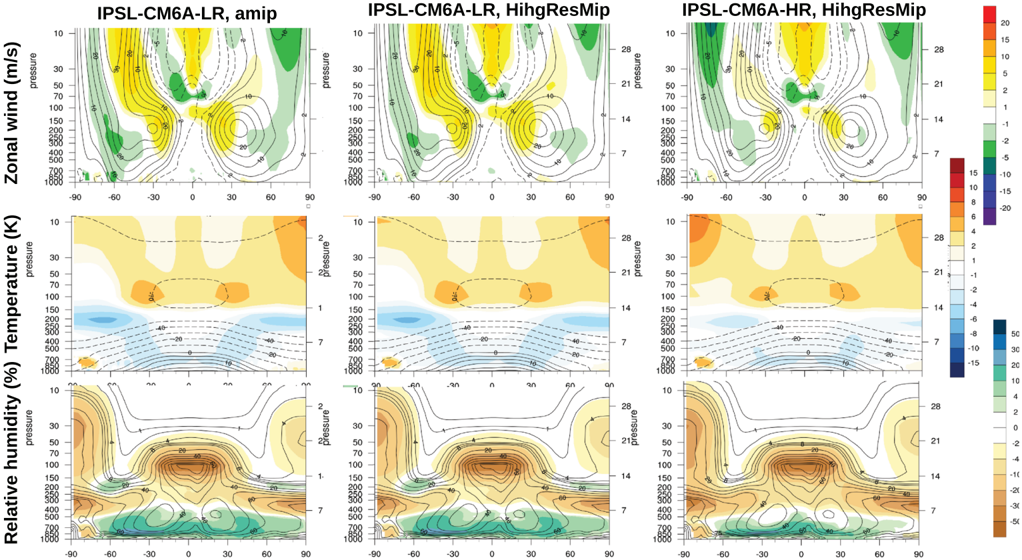
“Contours correspond to the raw fields and the color shades show the difference with ERA Interim analyses (Dee et al., 2011).”
BackgroundAn Overview of CMIP5 and the Experiment Design
Taylor, K. E., Stouffer, R. J., & Meehl, G. A. (2012) · Bulletin of the American Meteorological Society · doi:10.1175/bams-d-11-00094.1 · Cited by 14,052 · cited 1×
“…from the observations for the global mean temperature is typically the maximum value encountered in simulations of the present-day climate available from the Coupled Model Intercomparison Project (CMIP, Taylor et al., 2012), meaning that all CMIP class models are tuned in one way or another.”
MethodMlawer, E. J., Taubman, S. J., Brown, P. D., Iacono, M. J., & Clough, S. A. (1997) · Journal of Geophysical Research: Atmospheres · doi:10.1029/97jd00237 · Cited by 8,419 · cited 1×
“Compared to versions 5A and 5B, the broadband flux emissivity method used in the thermal infrared (Morcrette, 1991) was replaced by the RRTM code (Mlawer et al., 1997) based on a k-correlated scheme with 16 spectral bands.”
MethodRegions of Strong Coupling Between Soil Moisture and Precipitation
Koster, R. D., Dirmeyer, P. A., Guo, Z., Bonan, G., Chan, E., Cox, P., Gordon, C. T., Kanae, S., Kowalczyk, E., Lawrence, D., et al. (2004) · Science · doi:10.1126/science.1100217 · Cited by 2,872 · cited 1×
“The stochastic triggering scheme has been specifically developed and tested over West Africa with the goal of better representing the observed day-to-day variability of rainfall very specific to these semiarid “transition regions” (Koster et al., 2004) in which the subtle coupling between the soil and the atmosphere i…”
MethodA parametric model of vertical eddy fluxes in the atmosphere
Louis, J.-F. (1979) · Boundary-Layer Meteorology · doi:10.1007/bf00117978 · Cited by 2,392 · cited 1×
“The surface boundary layer is treated according to (Louis, 1979).”
BackgroundClimate change projections using the IPSL-CM5 Earth System Model: from CMIP3 to CMIP5
Dufresne, J.-L., Foujols, M.-A., Denvil, S., Caubel, A., Marti, O., Aumont, O., Balkanski, Y., Bekki, S., Bellenger, H., Benshila, R., et al. (2013) · Climate Dynamics · doi:10.1007/s00382-012-1636-1 · Cited by 1,755 · cited 2×
“, 2013) was used to perform a subset of the simulations for CMIP5 (Dufresne et al., 2013).”
MethodSelf-citationPresentation and Evaluation of the IPSL‐CM6A‐LR Climate Model
Boucher, O., Servonnat, J., Albright, A. L., Aumont, O., Balkanski, Y., Bastrikov, V., Bekki, S., Bonnet, R., Bony, S., Bopp, L., et al. (2020) · Journal of Advances in Modeling Earth Systems · doi:10.1029/2019ms002010 · Cited by 1,694 · cited 7×
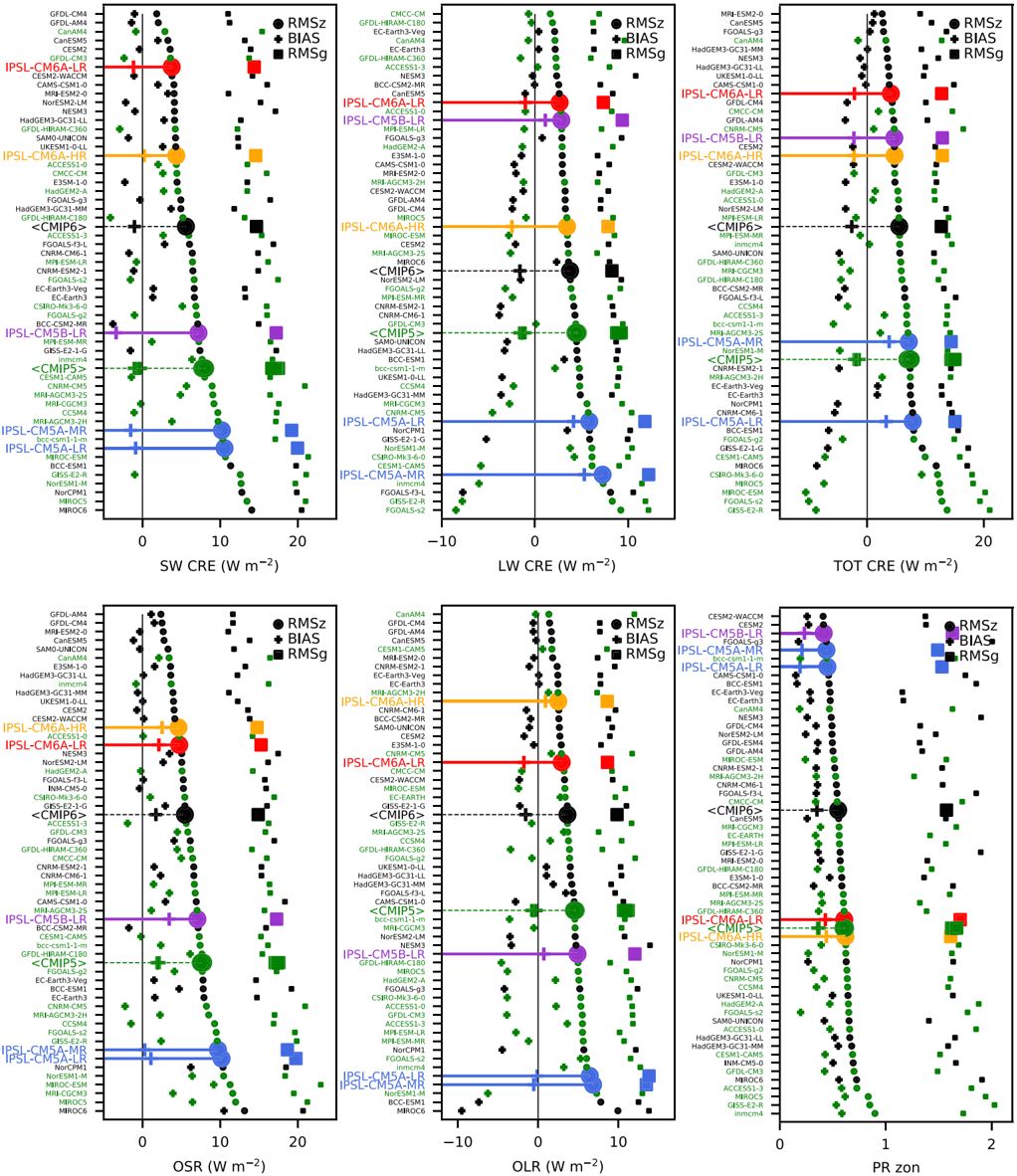
“24 of 37 concerning clouds, radiation, and SST have been improved compared to the previous 5A and 5B versions, and are globally satisfactorily reproduced when compared to the CMIP6 ensemble (Boucher et al., 2020).”
BackgroundMethodSelf-citationA Scheme for Representing Cumulus Convection in Large-Scale Models
Emanuel, K. A. (1991) · Journal of the Atmospheric Sciences · doi:10.1175/1520-0469(1991)048<2313:asfrcc>2.0.co;2 · Cited by 1,067 · cited 2×
“Deep convection is parameterized using the “episodic mixing and buoyancy sorting” Emanuel scheme (Emanuel, 1991) which assumes quasi-equilibrium between the large-scale forcing of convection and convective instability.”
MethodNEMO Ocean Engine Reference Manual
Madec, G., Bell, M. J., Benshila, R., Blaker, A., Boudrallé-Badie, R., Bricaud, C., Bruciaferri, D., Carneiro, D., Castrillo, M., Calvert, D., et al. (2013) · Archivio istituzionale della ricerca (Alma Mater Studiorum Università di Bologna) · doi:10.5281/zenodo.1464816 · Cited by 1,007
An update on Earth's energy balance in light of the latest global observations
Stephens, G. L., Li, J., Wild, M., Clayson, C. A., Loeb, N., Kato, S., L'Ecuyer, T., Stackhouse, P. W., Lebsock, M., & Andrews, T. (2012) · Nature Geoscience · doi:10.1038/ngeo1580 · Cited by 1,004 · cited 2×
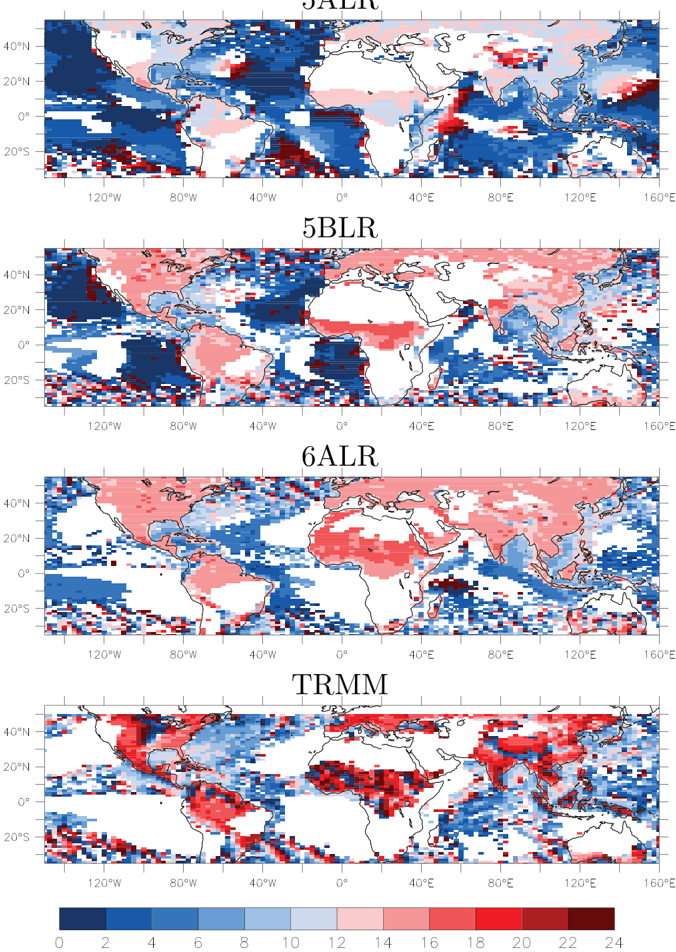
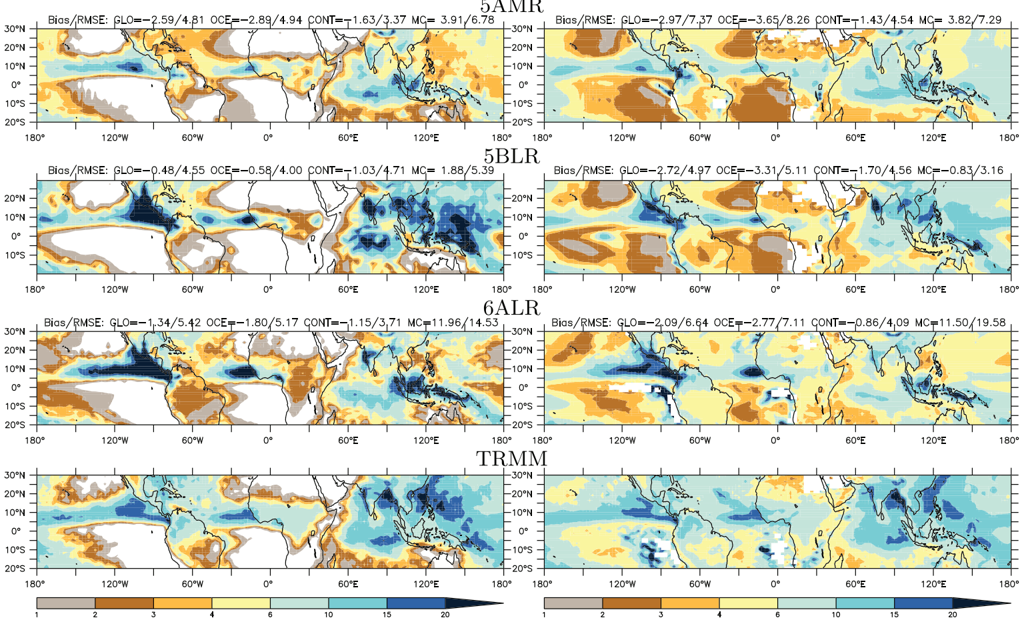
“…et al., 2011), the overestimation of total precipitation in the model may be partly due to an underestimation of observed precipitation due to an underestimation of light rain that may reach 10% (Stephens et al., 2012) in particular over the Indian Ocean, the SPCZ and ITCZ (Berg et al., 2010).”
BackgroundToward Optimal Closure of the Earth's Top-of-Atmosphere Radiation Budget
Loeb, N. G., Wielicki, B. A., Doelling, D. R., Smith, G. L., Keyes, D. F., Kato, S., Manalo-Smith, N., & Wong, T. (2009) · Journal of Climate · doi:10.1175/2008jcli2637.1 · Cited by 960 · cited 1×
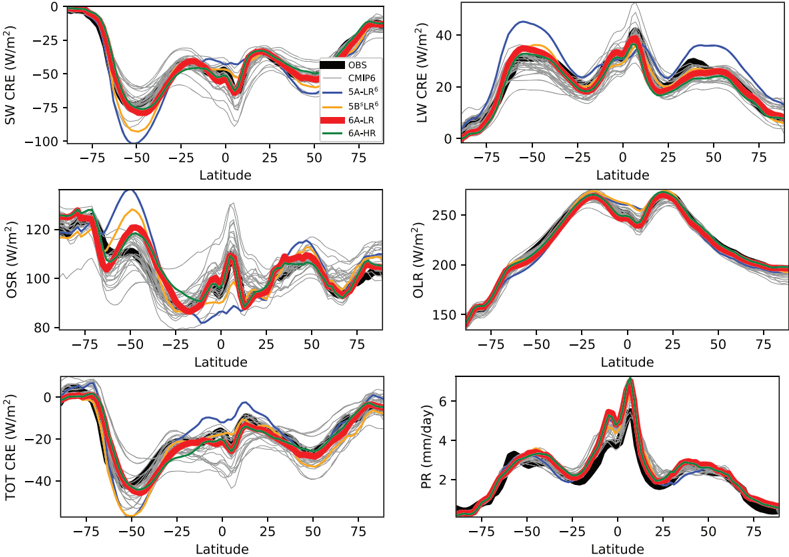
“The black curve corresponds to the second edition of the CERES-EBAF L3b product used as a reference for radiative fluxes for model evaluation and tuning (Loeb et al., 2009).”
MethodHourdin, F., Musat, I., Bony, S., Braconnot, P., Codron, F., Dufresne, J.-L., Fairhead, L., Filiberti, M.-A., Friedlingstein, P., Grandpeix, J.-Y., et al. (2006) · Climate Dynamics · doi:10.1007/s00382-006-0158-0 · Cited by 844 · cited 2×
“In previous LMDZ versions, it was shown to be partly due to an overestimated specific humidity leading to an overestimated radiative cooling to space (Hourdin et al., 2006).”
BackgroundMethodSelf-citationThe Meso-NH Atmospheric Simulation System. Part I: adiabatic formulation and control simulations
Lafore, J. P., Stein, J., Asencio, N., Bougeault, P., Ducrocq, V., Duron, J., Fischer, C., Héreil, P., Mascart, P., Masson, V., et al. (1998) · Annales Geophysicae · doi:10.1007/s00585-997-0090-6 · Cited by 818 · cited 1×
“For the ARM and RICO cases, LES are performed with the Meso-NH nonhydrostatic model (Lafore et al., 1998; Lac et al., 2018).”
MethodBreaking the Cloud Parameterization Deadlock
Randall, D., Khairoutdinov, M., Arakawa, A., & Grabowski, W. (2003) · Bulletin of the American Meteorological Society · doi:10.1175/bams-84-11-1547 · Cited by 771
The Art and Science of Climate Model Tuning
Hourdin, F., Mauritsen, T., Gettelman, A., Golaz, J.-C., Balaji, V., Duan, Q., Folini, D., Ji, D., Klocke, D., Qian, Y., et al. (2017) · Bulletin of the American Meteorological Society · doi:10.1175/bams-d-15-00135.1 · Cited by 611
Self-citationMorcrette, J. (1991) · Journal of Geophysical Research: Atmospheres · doi:10.1029/89jd01597 · Cited by 539 · cited 3×
“Compared to versions 5A and 5B, the broadband flux emissivity method used in the thermal infrared (Morcrette, 1991) was replaced by the RRTM code (Mlawer et al., 1997) based on a k-correlated scheme with 16 spectral bands.”
MethodStable Atmospheric Boundary Layers and Diurnal Cycles: Challenges for Weather and Climate Models
Holtslag, A. A. M., Svensson, G., Baas, P., Basu, S., Beare, B., Beljaars, A. C. M., Bosveld, F. C., Cuxart, J., Lindvall, J., Steeneveld, G. J., et al. (2013) · Bulletin of the American Meteorological Society · doi:10.1175/bams-d-11-00187.1 · Cited by 502 · cited 1×
“Following the recommendations of, for example, Holtslag et al. (2013) and Sandu et al. (2013), particular attention was paid to the representation of very stable boundary layers that occur, for instance, over the HOURDIN ET AL.”
MethodCould Machine Learning Break the Convection Parameterization Deadlock?
Gentine, P., Pritchard, M., Rasp, S., Reinaudi, G., & Yacalis, G. (2018) · Geophysical Research Letters · doi:10.1029/2018gl078202 · Cited by 497 · cited 9×
“Because of this, alternative approaches to parameterizations have been developed such as embedding reduced “large eddy” resolving models in each column of a global model (Khairoutdinov et al., 2005; Kooperman et al., 2016; Li et al., 2012; Stan et al., 2010) or training deep learning algorithm against large eddy simul…”
BackgroundInfluentialThe sulfate-CCN-cloud albedo effect: A sensitivity study with two general circulation models
Boucher, O., & Lohmann, U. (1995) · Tellus B: Chemical and Physical Meteorology · doi:10.3402/tellusb.v47i3.16048 · Cited by 432 · cited 1×
“The cloud droplet number concentration (CDNC) is computed from the sum of accumulation mode soluble aerosols with a modified empirical law following (Boucher & Lohmann, 1995).”
MethodSelf-citationKhairoutdinov, M., Randall, D., & DeMott, C. (2005) · Journal of the Atmospheric Sciences · doi:10.1175/jas3453.1 · Cited by 415 · cited 2×
“Because of this, alternative approaches to parameterizations have been developed such as embedding reduced “large eddy” resolving models in each column of a global model (Khairoutdinov et al., 2005; Kooperman et al., 2016; Li et al., 2012; Stan et al., 2010) or training deep learning algorithm against large eddy simul…”
MethodValidation and Sensitivities of Frontal Clouds Simulated by the ECMWF Model
Klein, S. A., & Jakob, C. (1999) · Monthly Weather Review · doi:10.1175/1520-0493(1999)127<2514:vasofc>2.0.co;2 · Cited by 408
Self-citationOverview of the Meso-NH model version 5.4 and its applications
Lac, C., Chaboureau, J.-P., Masson, V., Pinty, J.-P., Tulet, P., Escobar, J., Leriche, M., Barthe, C., Aouizerats, B., Augros, C., et al. (2018) · Geoscientific Model Development · doi:10.5194/gmd-11-1929-2018 · Cited by 403 · cited 1×
“For the ARM and RICO cases, LES are performed with the Meso-NH nonhydrostatic model (Lafore et al., 1998; Lac et al., 2018).”
MethodHines, C. O. (1997) · Journal of Atmospheric and Solar-Terrestrial Physics · doi:10.1016/s1364-6826(96)00080-6 · Cited by 363 · cited 1×
“At that time, the parameterization used did not identify the gravity waves source and was also based on a fully spectral approach due to Hines (1997).”
MethodImplementation of the CMIP6 Forcing Data in the IPSL‐CM6A‐LR Model
Lurton, T., Balkanski, Y., Bastrikov, V., Bekki, S., Bopp, L., Braconnot, P., Brockmann, P., Cadule, P., Contoux, C., Cozic, A., et al. (2020) · Journal of Advances in Modeling Earth Systems · doi:10.1029/2019ms001940 · Cited by 350 · cited 4×
“The climatology varies monthly and annually and is regridded to the model resolution (in latitude and altitude) with values below the diagnosed model tropopause being masked (Lurton et al., 2020).”
BackgroundMethodSelf-citationLarge‐eddy simulation of the diurnal cycle of shallow cumulus convection over land
Brown, A. R., Cederwall, R. T., Chlond, A., Duynkerke, P. G., Golaz, J. ‐., Khairoutdinov, M., Lewellen, D. C., Lock, A. P., MacVean, M. K., Moeng, C. ‐., et al. (2002) · Quarterly Journal of the Royal Meteorological Society · doi:10.1256/003590002320373210 · Cited by 347 · cited 2×
“Also note that the diurnal cycle is generally in phase with observations over the oceans (it was peaking earlier in the 5A version) with rainfall generally peaking between midnight and sunrise in the tropics and near noon offshore of the East Coast of USA and China.”
MethodCMIP5 Scientific Gaps and Recommendations for CMIP6
Stouffer, R. J., Eyring, V., Meehl, G. A., Bony, S., Senior, C., Stevens, B., & Taylor, K. E. (2017) · Bulletin of the American Meteorological Society · doi:10.1175/bams-d-15-00013.1 · Cited by 328 · cited 1×
“…balance and in particular the surface downward SW radiation due to better representation of clouds makes it possible to reduce several temperature biases, some of which were shared by many models that participated in the CMIP5 exercise (e.g., summer bias at midlatitude, Stouffer et al., 2017).”
BackgroundA global space-based stratospheric aerosol climatology: 1979–2016
Thomason, L. W., Ernest, N., Millán, L., Rieger, L., Bourassa, A., Vernier, J.-P., Manney, G., Luo, B., Arfeuille, F., & Peter, T. (2018) · Earth System Science Data · doi:10.5194/essd-10-469-2018 · Cited by 315 · cited 1×
“Stratospheric aerosols were provided by CMIP6 as a two-dimensional (latitude-height) climatology of the aerosol extinction coefficient, single-scattering albedo, and asymmetry parameter (Thomason et al., 2018) averaged over each of the wavebands of the model radiative code.”
MethodBoone, A. A., & Etchevers, P. (2001) · Journal of Hydrometeorology · doi:10.1175/1525-7541(2001)002<0228:tiodsp>2.0.co;2 · Cited by 311
Hourdin, F., Foujols, M.-A., Codron, F., Guemas, V., Dufresne, J.-L., Bony, S., Denvil, S., Guez, L., Lott, F., Ghattas, J., et al. (2013) · Climate Dynamics · doi:10.1007/s00382-012-1411-3 · Cited by 302 · cited 8×
“This classical bias of climate models was already shown to be reduced when increasing the horizontal resolution in the 5A version (Hourdin et al., 2013).”
BackgroundMethodSelf-citationHourdin, F., Grandpeix, J.-Y., Rio, C., Bony, S., Jam, A., Cheruy, F., Rochetin, N., Fairhead, L., Idelkadi, A., Musat, I., et al. (2013) · Climate Dynamics · doi:10.1007/s00382-012-1343-y · Cited by 299
Self-citationKato, S., Rose, F. G., Sun-Mack, S., Miller, W. F., Chen, Y., Rutan, D. A., Stephens, G. L., Loeb, N. G., Minnis, P., Wielicki, B. A., et al. (2011) · Journal of Geophysical Research · doi:10.1029/2011jd016050 · Cited by 297 · cited 2×
“16 of 37 has been shown to be inconsistent with observed radiative fluxes (Kato et al., 2011), the overestimation of total precipitation in the model may be partly due to an underestimation of observed precipitation due to an underestimation of light rain that may reach 10% (Stephens et al., 2012)…”
BackgroundThe Counter-Gradient Heat Flux in the Lower Atmosphere and in the Laboratory
Deardorff, J. W. (1966) · Journal of the Atmospheric Sciences · doi:10.1175/1520-0469(1966)023<0778:acl>2.0.co;2 · Cited by 289
Sandu, I., Beljaars, A., Bechtold, P., Mauritsen, T., & Balsamo, G. (2013) · Journal of Advances in Modeling Earth Systems · doi:10.1002/jame.20013 · Cited by 276 · cited 1×
“Following the recommendations of, for example, Holtslag et al. (2013) and Sandu et al. (2013), particular attention was paid to the representation of very stable boundary layers that occur, for instance, over the HOURDIN ET AL.”
MethodDeciphering the desiccation trend of the South Asian monsoon hydroclimate in a warming world
Krishnan, R., Sabin, T. P., Vellore, R., Mujumdar, M., Sanjay, J., Goswami, B. N., Hourdin, F., Dufresne, J.-L., & Terray, P. (2016) · Climate Dynamics · doi:10.1007/s00382-015-2886-5 · Cited by 269
Self-citationBony, S., & Emanuel, K. A. (2001) · Journal of the Atmospheric Sciences · doi:10.1175/1520-0469(2001)058<3158:apotca>2.0.co;2 · Cited by 231 · cited 2×
“In this case, a log-normal PDF is computed following Bony and Emanuel (2001) so as to match the in-cloud condensed water predicted by the convective scheme.”
MethodA Unified Representation of Deep Moist Convection in Numerical Modeling of the Atmosphere. Part I
Arakawa, A., & Wu, C.-M. (2013) · Journal of the Atmospheric Sciences · doi:10.1175/jas-d-12-0330.1 · Cited by 216 · cited 1×
“While many authors advocate the development of unified parameterizations for convection (e.g., Arakawa & Wu, 2013; Park, 2014), the deliberate choice was made to use distinct parameterizations for the following: • small scale turbulence; • boundary layer convection (unified between dry and cloudy);…”
BackgroundModeling climate diversity, tidal dynamics and the fate of volatiles on TRAPPIST-1 planets
Turbet, M., Bolmont, E., Leconte, J., Forget, F., Selsis, F., Tobie, G., Caldas, A., Naar, J., & Gillon, M. (2018) · Astronomy & Astrophysics · doi:10.1051/0004-6361/201731620 · Cited by 200 · cited 2×
“, 2012) or Pluto (Bertrand & Forget, 2016), and for extrasolar planets (Turbet et al., 2018).”
BackgroundOn the Factors Modulating the Stratocumulus to Cumulus Transitions
Sandu, I., & Stevens, B. (2011) · Journal of the Atmospheric Sciences · doi:10.1175/2011jas3614.1 · Cited by 196
Williamson, D., Goldstein, M., Allison, L., Blaker, A., Challenor, P., Jackson, L., & Yamazaki, K. (2013) · Climate Dynamics · doi:10.1007/s00382-013-1896-4 · Cited by 195 · cited 2×
“We recently started to use the history matching approach (Williamson et al., 2013) in which the range of acceptable parameters is iteratively reduced to match some predefined metrics.”
BackgroundMethodTitan global climate model: A new 3-dimensional version of the IPSL Titan GCM
Lebonnois, S., Burgalat, J., Rannou, P., & Charnay, B. (2012) · Icarus · doi:10.1016/j.icarus.2011.11.032 · Cited by 191 · cited 1×
“3 of 37 atmospheres of the solar system like Mars (Wang et al., 2018), Venus (Navarro et al., 2018), Titan (Lebonnois et al., 2012) or Pluto (Bertrand & Forget, 2016), and for extrasolar planets (Turbet et al., 2018).”
BackgroundSimulations of Nocturnal Drainage Flows by aq2lTurbulence Closure Model
Yamada, T. (1983) · Journal of the Atmospheric Sciences · doi:10.1175/1520-0469(1983)040<0091:sondfb>2.0.co;2 · Cited by 184 · cited 4×
“The reduction of the lower-bound values for Sm,h set in Yamada (1983) also helped reduce mixing in very stable conditions (Vignon et al., 2017).”
BackgroundMethodInfluentialShifting the diurnal cycle of parameterized deep convection over land
Rio, C., Hourdin, F., Grandpeix, J. ‐., & Lafore, J. ‐. (2009) · Geophysical Research Letters · doi:10.1029/2008gl036779 · Cited by 177 · cited 5×
“, 2013) over tropical oceans in particular, and a shift by several hours of the maximum rainfall over tropical continents, in better agreement with observations (Rio et al., 2009), solving one of the major problems underlined by Randall et al.”
BackgroundSelf-citationSensitivity of the West African hydrological cycle in ORCHIDEE to infiltration processes
d'Orgeval, T., Polcher, J., & de Rosnay, P. (2008) · Hydrology and Earth System Sciences · doi:10.5194/hess-12-1387-2008 · Cited by 169 · cited 1×
“…within LMDZ source files Codron, 2012; L'Hévéder et al., 2015), coupled to an external model of the continental surface (Orchidee model in general D'Orgeval et al., 2008) or coupled to an idealized bucket version or a version with imposed ratio of evaporation to potential evaporation (Coindreau…”
de Rosnay, P., Polcher, J., Bruen, M., & Laval, K. (2002) · Journal of Geophysical Research: Atmospheres · doi:10.1029/2001jd000634 · Cited by 165 · cited 1×
“The new multilayer hydrology scheme of the Orchidee land surface model (De Rosnay et al., 2002) that substitutes the 1.5-layer scheme used for CMIP5 gives a representation of the surface soil moisture in better agreement with available observations.”
MethodInfluentialPractice and philosophy of climate model tuning across six US modeling centers
Schmidt, G. A., Bader, D., Donner, L. J., Elsaesser, G. S., Golaz, J.-C., Hannay, C., Molod, A., Neale, R. B., & Saha, S. (2017) · Geoscientific Model Development · doi:10.5194/gmd-10-3207-2017 · Cited by 163 · cited 2×
“Thus, compromises have to be made between robustness and complexity, between time resolution and accuracy; (3) whatever their complexity and accuracy, parameterizations are an idealized and approximate representation of processes that depend on “free parameters,” which are often not observable per se and require adjus…”
BackgroundA Unified Convection Scheme (UNICON). Part I: Formulation
Park, S. (2014) · Journal of the Atmospheric Sciences · doi:10.1175/jas-d-13-0233.1 · Cited by 161 · cited 2×
“While many authors advocate the development of unified parameterizations for convection (e.g., Arakawa & Wu, 2013; Park, 2014), the deliberate choice was made to use distinct parameterizations for the following: • small scale turbulence; • boundary layer convection (unified between dry and cloudy);…”
BackgroundA Density Current Parameterization Coupled with Emanuel’s Convection Scheme. Part I: The Models
Grandpeix, J.-Y., & Lafore, J.-P. (2010) · Journal of the Atmospheric Sciences · doi:10.1175/2009jas3044.1 · Cited by 159
Self-citationEvaluation of an improved intermediate complexity snow scheme in the ORCHIDEE land surface model
Wang, T., Ottlé, C., Boone, A. A., Ciais, P., Brun, E., Morin, S., Krinner, G., Piao, S. L., & Peng, S. (2013) · Journal of Geophysical Research Atmospheres · doi:10.1002/jgrd.50395 · Cited by 136 · cited 2×
“As a result of the snow scheme of intermediate complexity (Boone & Etchevers, 2001) implemented in the land-surface model (Wang et al., 2013), the surface albedo has been improved in most snow-covered region in winter and the strong underestimation of the snow cover over boreal regions has been significantly reduced.”
BackgroundIce Particles Observed in a Cirriform Cloud at −83°C and Implications for Polar Stratospheric Clouds
Heymsfield, A. J. (1986) · Journal of the Atmospheric Sciences · doi:10.1175/1520-0469(1986)043<0851:ipoiac>2.0.co;2 · Cited by 136 · cited 1×
“The effective size of ice crystals is imposed directly as a function of the ambient temperature using a formula proposed by Iacobellis and Somerville (2000) with an asymptotical value of 3.5 μm at T −81.4 ◦C added to be consistent with observations by Heymsfield (1986).”
MethodInfluentialHourdin, F., Couvreux, F., & Menut, L. (2002) · Journal of the Atmospheric Sciences · doi:10.1175/1520-0469(2002)059<1105:potdcb>2.0.co;2 · Cited by 123 · cited 2×
“The “thermal plume model” developed for LMDZ was the first EDMF scheme ever tested in a climate model (Hourdin et al., 2002).”
MethodSelf-citationAn ocean‐atmosphere climate simulation with an embedded cloud resolving model
Stan, C., Khairoutdinov, M., DeMott, C. A., Krishnamurthy, V., Straus, D. M., Randall, D. A., Kinter, J. L., & Shukla, J. (2010) · Geophysical Research Letters · doi:10.1029/2009gl040822 · Cited by 118 · cited 2×
“Because of this, alternative approaches to parameterizations have been developed such as embedding reduced “large eddy” resolving models in each column of a global model (Khairoutdinov et al., 2005; Kooperman et al., 2016; Li et al., 2012; Stan et al., 2010) or training deep learning algorithm against large eddy simul…”
BackgroundMethodThe Distribution of Rainfall over Oceans from Spaceborne Radars
Berg, W., L’Ecuyer, T., & Haynes, J. M. (2010) · Journal of Applied Meteorology and Climatology · doi:10.1175/2009jamc2330.1 · Cited by 108 · cited 7×
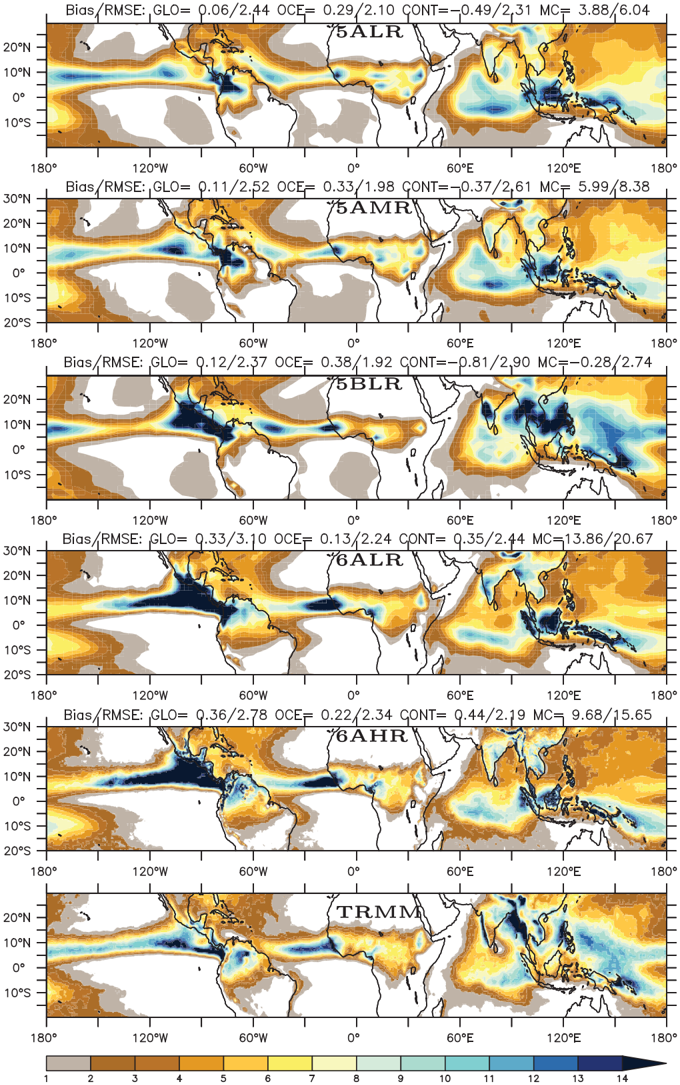
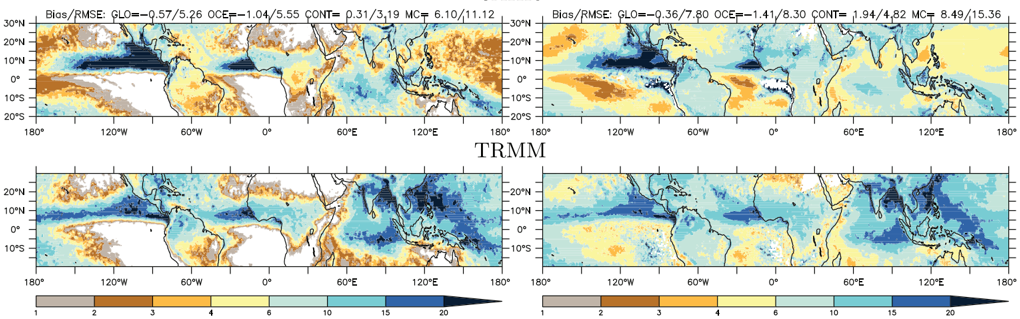
“This bias is particularly strong on the East part of the Pacific ITCZ and was not as strong in the previous versions.”
BackgroundInfluentialLott, F., & Guez, L. (2013) · Journal of Geophysical Research Atmospheres · doi:10.1002/jgrd.50705 · Cited by 107 · cited 1×
“Since then, we have replaced this parameterization by two distinct parameterizations that account for gravity waves from convection (Lott & Guez, 2013) and fronts (de la Cámara & Lott, 2015).”
MethodSelf-citationOngoing Breakthroughs in Convective Parameterization
Rio, C., C, A. D. D. G., & Hourdin, F. (2019) · Current Climate Change Reports · doi:10.1007/s40641-019-00127-w · Cited by 107 · cited 1×
“In the meantime several limitations of traditional convection schemes have been overcome by developments of new concepts and ideas for the parameterization of convection and clouds (Rio et al., 2019) that are starting to find their way into climate models.”
BackgroundSelf-citationObserved glacier and volatile distribution on Pluto from atmosphere–topography processes
Bertrand, T., & Forget, F. (2016) · Nature · doi:10.1038/nature19337 · Cited by 105 · cited 1×
“3 of 37 atmospheres of the solar system like Mars (Wang et al., 2018), Venus (Navarro et al., 2018), Titan (Lebonnois et al., 2012) or Pluto (Bertrand & Forget, 2016), and for extrasolar planets (Turbet et al., 2018).”
BackgroundA Parameterization of Mesoscale Enhancement of Surface Fluxes for Large-Scale Models
Redelsperger, J.-L., Guichard, F., & Mondon, S. (2000) · Journal of Climate · doi:10.1175/1520-0442(2000)013<0402:apomeo>2.0.co;2 · Cited by 104 · cited 1×
“The gustiness is computed directly as a combination of the ALE with coefficients that were adjusted to reproduce results similar to the analysis of the Toga-Coare campaign by Guichard and Mongon (2000).”
MethodSensitivity of modelled Antarctic climate to surface and boundary-layer flux parametrizations
King, J., Connolley, W. M., & Derbyshire, S. H. (2001) · Quarterly Journal of the Royal Meteorological Society · doi:10.1002/qj.49712757304 · Cited by 91 · cited 1×
“…in the boundary layer to allow strong decoupling in stable atmospheres, the so-called “long-tail” stability functions from Louis et al. (1982) that artificially enhance the surface turbulent fluxes in stable conditions were replaced by more realistic “short-tail” functions from King et al. (2001).”
BackgroundRio, C., Grandpeix, J., Hourdin, F., Guichard, F., Couvreux, F., Lafore, J., Fridlind, A. M., Mrowiec, A. A., Roehrig, R., Rochetin, N., et al. (2012) · Climate Dynamics · doi:10.1007/s00382-012-1506-x · Cited by 84 · cited 1×
“In the 5B version, this closure was entirely revisited (Rio et al., 2013).”
BackgroundSelf-citationVignon, E., Hourdin, F., Genthon, C., Van de Wiel, B. J. H., Gallée, H., Madeleine, J., & Beaumet, J. (2018) · Journal of Advances in Modeling Earth Systems · doi:10.1002/2017ms001184 · Cited by 75 · cited 6×
“The improvement due to the change of infrared radiative code can reach 10 W m−2 for longwave radiation, as illustrated, for instance, in Figure 3 of Vignon et al. (2018) over the Antarctic Plateau.”
BackgroundMethodSelf-citationA parameterization of gravity waves emitted by fronts and jets
de la Cámara, Á., & Lott, F. (2015) · Geophysical Research Letters · doi:10.1002/2015gl063298 · Cited by 71 · cited 1×
“Since then, we have replaced this parameterization by two distinct parameterizations that account for gravity waves from convection (Lott & Guez, 2013) and fronts (de la Cámara & Lott, 2015).”
MethodSelf-citationAir moisture control on ocean surface temperature, hidden key to the warm bias enigma
Hourdin, F., Găinusă‐Bogdan, A., Braconnot, P., Dufresne, J., Traore, A., & Rio, C. (2015) · Geophysical Research Letters · doi:10.1002/2015gl066764 · Cited by 68 · cited 3×
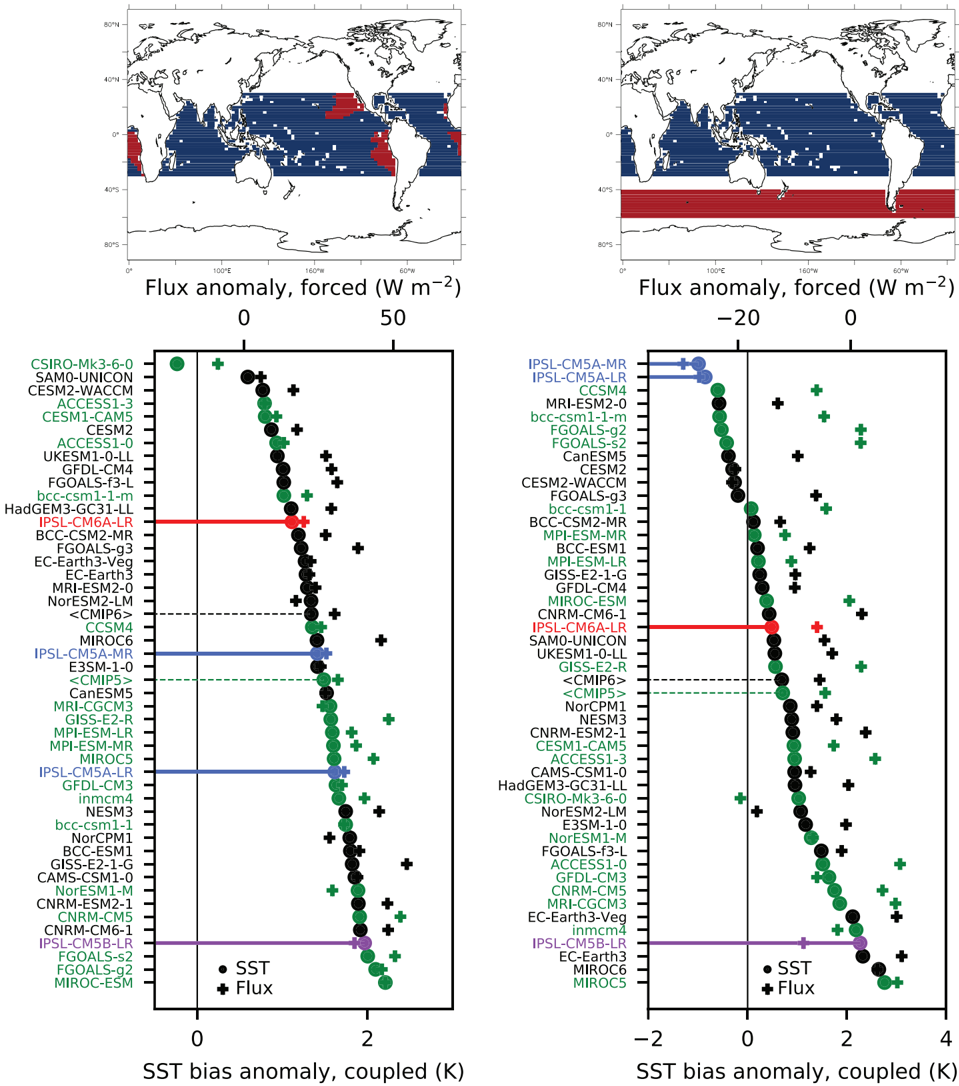
“Following Hourdin et al. (2015), specific metrics were applied to the surface fluxes in the stand-alone atmospheric simulations forced by observed SSTs in order to correct major SST biases in coupled simulations: the Eastern Tropical Ocean (ETO) warm bias, present in all CMIP5 models but one, and…”
BackgroundMethodSelf-citation“Super‐parameterization”: A better way to simulate regional extreme precipitation?
Li, F., Rosa, D., Collins, W. D., & Wehner, M. F. (2012) · Journal of Advances in Modeling Earth Systems · doi:10.1029/2011ms000106 · Cited by 67 · cited 2×
“Because of this, alternative approaches to parameterizations have been developed such as embedding reduced “large eddy” resolving models in each column of a global model (Khairoutdinov et al., 2005; Kooperman et al., 2016; Li et al., 2012; Stan et al., 2010) or training deep learning algorithm against large eddy simul…”
BackgroundMethodCoindreau, O., Hourdin, F., Haeffelin, M., Mathieu, A., & Rio, C. (2007) · Monthly Weather Review · doi:10.1175/mwr3338.1 · Cited by 64 · cited 2×
“…source files Codron, 2012; L'Hévéder et al., 2015), coupled to an external model of the continental surface (Orchidee model in general D'Orgeval et al., 2008) or coupled to an idealized bucket version or a version with imposed ratio of evaporation to potential evaporation (Coindreau et al., 2007).”
BackgroundSelf-citationWei, N., Zhou, L., & Dai, Y. (2016) · Climate Dynamics · doi:10.1007/s00382-016-3323-0 · Cited by 63
A Density Current Parameterization Coupled with Emanuel’s Convection Scheme. Part II: 1D Simulations
Grandpeix, J.-Y., Lafore, J.-P., & Cheruy, F. (2010) · Journal of the Atmospheric Sciences · doi:10.1175/2009jas3045.1 · Cited by 61 · cited 1×
“The 5B version also includes for the first time a parameterization of the cold pools (density currents or wakes) created below cumulonimbus by evaporation of convective rainfall (Grandpeix & Lafore, 2010; Grandpeix et al., 2010).”
BackgroundSelf-citationImproved mixing representation in Emanuel's convection scheme
Grandpeix, J. ‐., Phillips, V., & Tailleux, R. (2004) · Quarterly Journal of the Royal Meteorological Society · doi:10.1256/qj.03.144 · Cited by 60 · cited 2×
“This increased variability was partly due to an improvement of the representation of the sensitivity of deep convection to tropospheric humidity via entrainment (Grandpeix et al., 2004).”
BackgroundMethodSelf-citationToward a Dynamical Foundation for Organized Convection Parameterization in GCMs
Moncrieff, M. W. (2019) · Geophysical Research Letters · doi:10.1029/2019gl085316 · Cited by 58 · cited 2×
“Some important physical processes are probably still misrepresented in the model, such as high-level clouds associated with deep convection, heat, and momentum transport associated with mesoscale circulations – shown to impact large-scale patterns of precipitation (Moncrieff, 2019)—or the impact of land-sea breezes on…”
BackgroundLott, F., Fairhead, L., Hourdin, F., & Levan, P. (2005) · Climate Dynamics · doi:10.1007/s00382-005-0064-x · Cited by 56 · cited 1×
“In LMDZ, nonorographic gravity waves parameterizations were introduced more than 10 years ago when the model was extended upward to the middle atmosphere (Lott et al., 2005).”
MethodSelf-citationWang, C., Forget, F., Bertrand, T., Spiga, A., Millour, E., & Navarro, T. (2018) · Journal of Geophysical Research Planets · doi:10.1002/2017je005255 · Cited by 56 · cited 2×
“atmospheres of the solar system like Mars (Wang et al., 2018), Venus (Navarro et al.”
BackgroundSelf-citationAtmospheric mountain wave generation on Venus and its influence on the solid planet’s rotation rate
Navarro, T., Schubert, G., & Lebonnois, S. (2018) · Nature Geoscience · doi:10.1038/s41561-018-0157-x · Cited by 56 · cited 2×
“3 of 37 atmospheres of the solar system like Mars (Wang et al., 2018), Venus (Navarro et al., 2018), Titan (Lebonnois et al., 2012) or Pluto (Bertrand & Forget, 2016), and for extrasolar planets (Turbet et al., 2018).”
BackgroundRochetin, N., Grandpeix, J.-Y., Rio, C., & Couvreux, F. (2014) · Journal of the Atmospheric Sciences · doi:10.1175/jas-d-12-0337.1 · Cited by 52 · cited 4×
“…of a stochastic triggering designed to make the frequency of occurrence of new convective systems within a grid cell aware of the grid cell size (Rochetin et al., 2014a, 2014b); • a modification of the shallow convection scheme, the so-called “thermal plume model,” to account for…”
BackgroundMethodSelf-citationRochetin, N., Couvreux, F., Grandpeix, J.-Y., & Rio, C. (2014) · Journal of the Atmospheric Sciences · doi:10.1175/jas-d-12-0336.1 · Cited by 49 · cited 4×
“…of a stochastic triggering designed to make the frequency of occurrence of new convective systems within a grid cell aware of the grid cell size (Rochetin et al., 2014a, 2014b); • a modification of the shallow convection scheme, the so-called “thermal plume model,” to account for…”
BackgroundMethodSelf-citationShort‐term time step convergence in a climate model
Wan, H., Rasch, P. J., Taylor, M. A., & Jablonowski, C. (2015) · Journal of Advances in Modeling Earth Systems · doi:10.1002/2014ms000368 · Cited by 46 · cited 1×
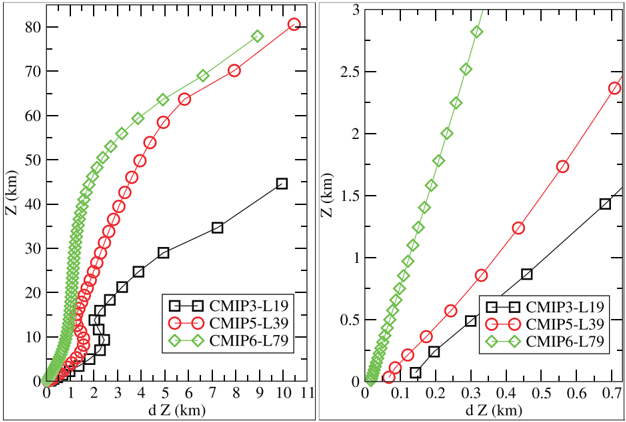
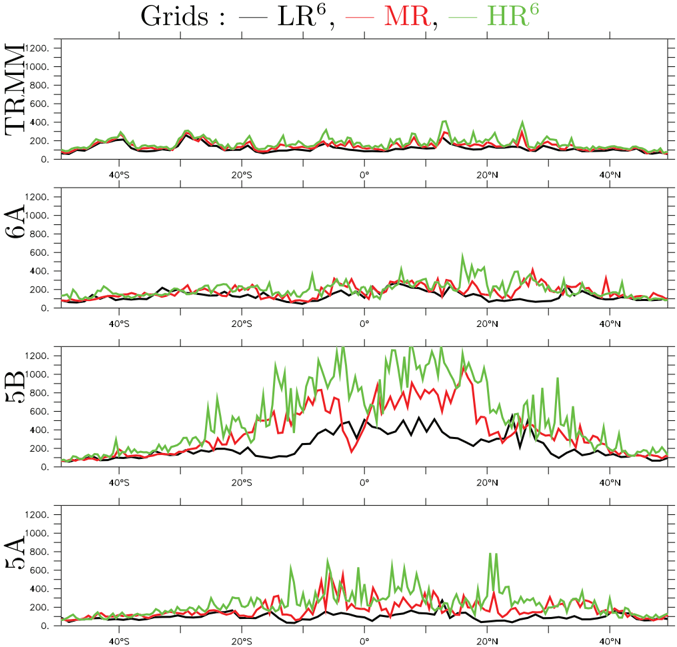
“In order to save computer resources, time steps are often chosen at the limit of numerical stability rather than close to numerical convergence for decreasing time steps as should be the case (Wan et al., 2015).”
BackgroundA two‐stream model of the vertical transport of trace species in the convective boundary layer
Chatfield, R. B., & Brost, R. A. (1987) · Journal of Geophysical Research: Atmospheres · doi:10.1029/jd092id11p13263 · Cited by 46 · cited 1×
“…a mass flux scheme for boundary layer convection with an eddy diffusion parameterization to represent vertical transport in the convective boundary layer traces back to a proposition by Chatfield and Brost (1987) and is since, often referred to as the Eddy Diffusion Mass Flux (EDMF) approach.”
BackgroundHourdin, F., Jam, A., Rio, C., Couvreux, F., Sandu, I., Lefebvre, M., Brient, F., & Idelkadi, A. (2019) · Journal of Advances in Modeling Earth Systems · doi:10.1029/2019ms001666 · Cited by 45 · cited 13×
“This is a consequence of the improvements in cloud representation (Hourdin et al., 2019) and better tuning.”
BackgroundSelf-citationJam, A., Hourdin, F., Rio, C., & Couvreux, F. (2012) · Boundary-Layer Meteorology · doi:10.1007/s10546-012-9789-3 · Cited by 44 · cited 4×
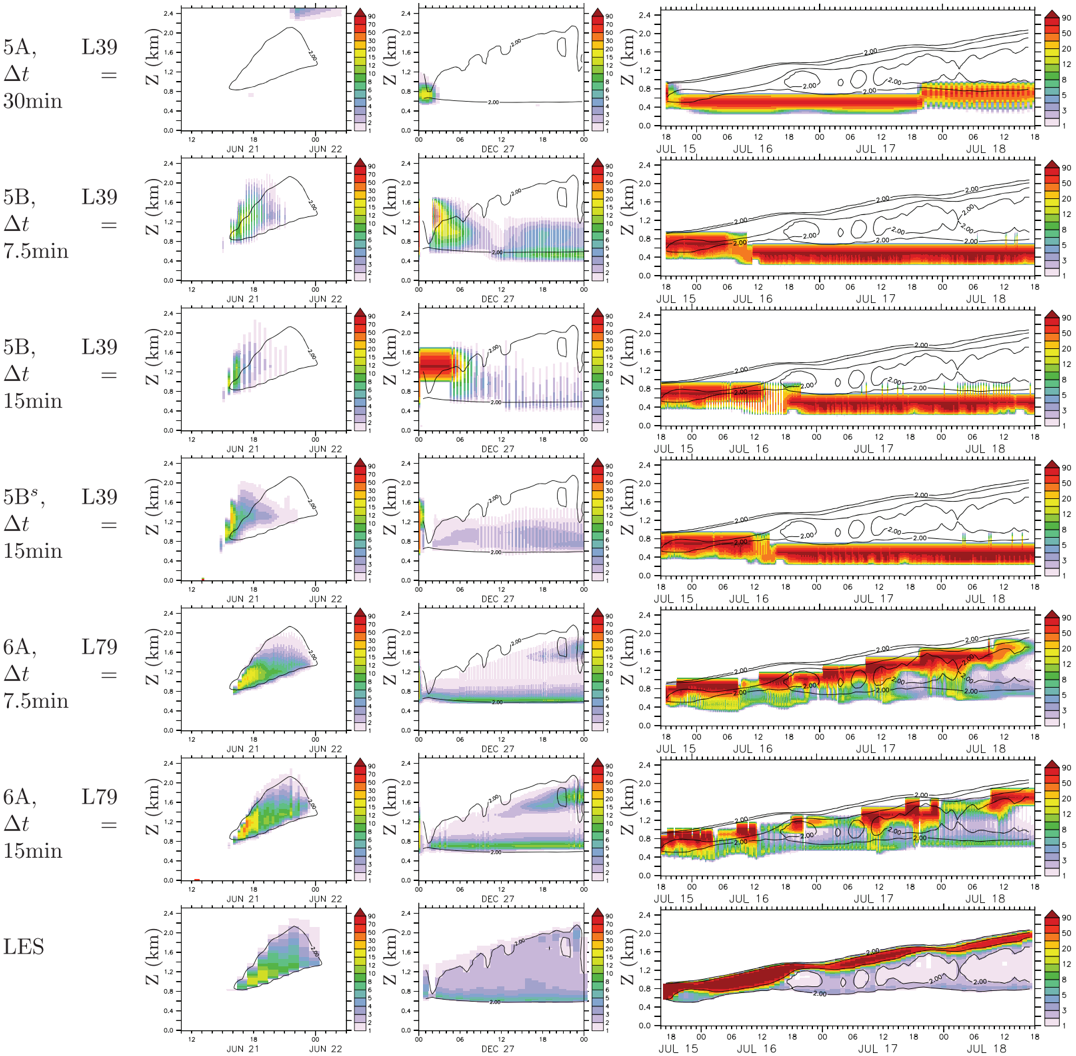
“The subsequent activation of the deep convection parameterization was in part canceling the improvement on low cloud fraction coming from the introduction of the thermal plume and bimodal statistical cloud scheme, which were calibrated for such cases (Jam et al., 2013).”
BackgroundMethodResultSelf-citationSéférian, R., Baek, S., Boucher, O., Dufresne, J., Decharme, B., Saint‐Martin, D., & Roehrig, R. (2018) · Geoscientific model development · doi:10.5194/gmd-11-321-2018 · Cited by 43 · cited 1×
“Albedo for the open surface ocean is computed at every time step and for each waveband as a function of solar zenith angle and surface wind speed following Séférian et al. (2018), which brings a significant improvement in the parametrization used in the LMDZ5 model.”
MethodSelf-citationVignon, E., Hourdin, F., Genthon, C., Gallée, H., Bazile, E., Lefebvre, M., Madeleine, J., & Van de Wiel, B. J. H. (2017) · Journal of Geophysical Research: Atmospheres · doi:10.1002/2017jd026802 · Cited by 42 · cited 2×
“…icy surface type) surface scheme and the turbulence parametrization of LMDZ were tuned according to several criteria among which the amplitude of the temperature diurnal cycle, the height, and strength of the nocturnal jet and the values of the surface turbulent fluxes (Vignon et al., 2017).”
BackgroundMethodSelf-citationLand surface processes in a simplified general circulation model
Laval, K., Sadourny, R., & Serafini, Y. (1981) · Geophysical & Astrophysical Fluid Dynamics · doi:10.1080/03091928108243677 · Cited by 39 · cited 2×
“Turbulent transport in the planetary boundary layer is treated as a vertical diffusion with an eddy diffusivity Kz depending on the local Richardson number according to Laval et al. (1981).”
MethodComputational Aspects of Numerical Models for Weather Prediction and Climate Simulation
Kasahara, A. (1977) · Methods in computational physics · doi:10.1016/b978-0-12-460817-7.50006-9 · Cited by 39 · cited 1×
“The dynamical core is based on a finite difference discretization of the primitive equations of meteorology on an Arakawa C grid (Kasahara, 1977), favoring the conservation of enstrophy rather than that of energy following ideas from Sadourny (1975).”
Ekman heat transport for slab oceans
Codron, F. (2011) · Climate Dynamics · doi:10.1007/s00382-011-1031-3 · Cited by 38
Kooperman, G. J., Pritchard, M. S., Burt, M. A., Branson, M. D., & Randall, D. A. (2016) · Journal of Advances in Modeling Earth Systems · doi:10.1002/2016ms000715 · Cited by 37 · cited 2×
“Because of this, alternative approaches to parameterizations have been developed such as embedding reduced “large eddy” resolving models in each column of a global model (Khairoutdinov et al., 2005; Kooperman et al., 2016; Li et al., 2012; Stan et al., 2010) or training deep learning algorithm against large eddy simul…”
BackgroundMethodDiallo, F. B., Hourdin, F., Rio, C., Traore, A. K., Mellul, L., Guichard, F., & Kergoat, L. (2017) · Journal of Advances in Modeling Earth Systems · doi:10.1002/2017ms001081 · Cited by 29 · cited 1×
“It can also be used in aquaplanet (with imposed SST that depends on latitude only) or terraplanet (like a global desert) mode, or be nudged by reanalyzed fields to force the model to follow the observed day-to-day synoptic situation (see, e. g., Diallo et al., 2017).”
Self-citationde la Cámara, Á., Lott, F., & Ábalos, M. (2016) · Journal of Advances in Modeling Earth Systems · doi:10.1002/2016ms000753 · Cited by 28 · cited 1×
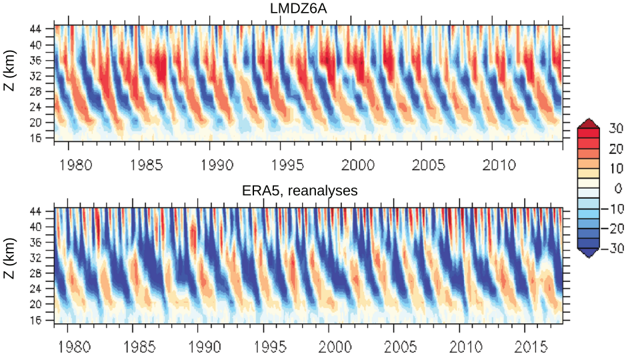
“This intermittency proved out to be extremely beneficial for the model climate in the middle atmosphere and in the simulation presented here the nonorographic gravity waves setup is close to that documented in de la Cámara et al. (2016).”
ResultSelf-citationImplications of Microphysics for Cloud-Radiation Parameterizations: Lessons from TOGA COARE
Iacobellis, S. F., & Somerville, R. C. J. (2000) · Journal of the Atmospheric Sciences · doi:10.1175/1520-0469(2000)057<0161:iomfcr>2.0.co;2 · Cited by 24 · cited 1×
“The effective size of ice crystals is imposed directly as a function of the ambient temperature using a formula proposed by Iacobellis and Somerville (2000) with an asymptotical value of 3.5 μm at T −81.4 ◦C added to be consistent with observations by Heymsfield (1986).”
MethodInfluentialConvective Boundary Layer Control of the Sea Surface Temperature in the Tropics
Hourdin, F., Rio, C., Jam, A., Traore, A., & Musat, I. (2020) · Journal of Advances in Modeling Earth Systems · doi:10.1029/2019ms001988 · Cited by 24
Self-citationImpact of Anomalous Northward Oceanic Heat Transport on Global Climate in a Slab Ocean Setting
L’Hévéder, B., Codron, F., & Ghil, M. (2015) · Journal of Climate · doi:10.1175/jcli-d-14-00377.1 · Cited by 23 · cited 2×
“, 2017) or to a slab ocean (available within LMDZ source files Codron, 2012; L'Hévéder et al., 2015), coupled to an external model of the continental surface (Orchidee model in general D'Orgeval et al.”
BackgroundAccounting for Vertical Subgrid‐Scale Heterogeneity in Low‐Level Cloud Fraction Parameterizations
Jouhaud, J., Dufresne, J., Madeleine, J., Hourdin, F., Couvreux, F., Villefranque, N., & Jam, A. (2018) · Journal of Advances in Modeling Earth Systems · doi:10.1029/2018ms001379 · Cited by 14 · cited 1×
“A first attempt was also made to introduce a subgrid-scale distribution to account for vertical heterogeneities of clouds within a layer, based on a preliminary version of the work by Jouhaud et al. (2018).”
BackgroundSelf-citationCMIP5 Scientific Gaps and Recommendations for CMIP6
Stouffer, R. J., Eyring, V., Meehl, G. A., et al. (2016) · elib (German Aerospace Center) · doi:10.1175/bams-d-15-00013 · Cited by 5
Held (1975) · doi:10.1175/1520-0469(1975)032
Research works printed but not linked: 19
- 10.1175/jas‐d‐12‐0330.1 · DOI · Paper page
- Bazile, E., Couvreux, F., Le Moigne, P., Genthon, C., Holtslag, A. A. M., & Svensson, G. (2014). GABLS4: An intercomparison case to study the stable boundary layer over the Antarctic plateau. GEWEX News, 24, 4.
- 10.1175/1525-7541(2001)002 · doi:10.1175/1525-7541(2001)002
- 10.1175/1520-0469(1986)043 · doi:10.1175/1520-0469(1986)043
- 10.1175/bams‐d‐11‐00187.1 · DOI · Paper page
- 10.1175/bams‐d‐15‐00135.1 · DOI · Paper page
- Huffman, G. J., Adler, R. F., Morrissey, M. M., Bolvin, D. T., Curtis, S., Joyce, R., & Susskind, J. (2001). Global precipitation at one-degree daily resolution from multisatellite observations. Journal of Hydrometeorology, 2, 36-50. https://doi.org/10.1175/ 1525-7541(2001)002<0036:GPAODD>2.0.CO;2 10.1029/2019MS001892 · DOI · Paper page
- 10.1175/1525-7541(2001)002 · doi:10.1175/1525-7541(2001)002
- 10.1175/1520-0469(2000)057 · doi:10.1175/1520-0469(2000)057
- Jam, A. (2012). Paramétrisation de la couche limite: Du modèle des thermiques au modèle statistique de nuage (PhD thesis), advized by Hourdin, Frédéric, Sciences de l'environnement, Paris 6 2012, 2012PA066672. https://www.theses.fr/2012PA066672
- L'Hévéder, B., Codron, F., & Ghil, M. (2015). Impact of anomalous northward oceanic heat transport on global climate in a slab ocean setting. Journal Climate, 28(7), 2650-2664. https://doi.org/10.1175/JCLI-D-14-00377. · doi:10.1175/jcli-d-14-00377
- 10.1175/1520-0493(1999)127 · doi:10.1175/1520-0493(1999)127
- Louis, J. F., Tiedtke, M., & Geleyn, J. F. (1982). A short history of the operational pbl parametrization at ECMWF. Paper presented at the ECMWF workshop on boundary layer parametrization, ECMWF, Reading.
- 10.1175/jas‐d‐13‐0233.1 · DOI · Paper page
- 10.1175/jas‐d‐12‐0336.1 · DOI · Paper page
- 10.1175/jas‐d‐12‐0337.1 · DOI · Paper page
- Sadourny, R., & Laval, K. (1984). January and July performance of the LMD general circulation model. In A. Berger & C. Nicolis (Eds.), New perspectives in Climate Modeling (pp. 173-197). Amsterdam: Elsevier.
- 10.1175/bams‐d‐11‐00094.1 · DOI · Paper page
- Vignon, E. (2017). The extreme atmospheric boundary layer over the Antarctic Plateau and its representation in climate models (Unpublished doctoral dissertation), Université Grenoble-Alpes, (Grenoble, France), 275 pp.
Cited by
Presentation and Evaluation of the IPSL‐CM6A‐LR Climate Model
Boucher, O., Servonnat, J., Albright, A. L., Aumont, O., Balkanski, Y., Bastrikov, V., Bekki, S., Bonnet, R., Bony, S., Bopp, L., et al. (2020) · Journal of Advances in Modeling Earth Systems · doi:10.1029/2019ms002010 · Cited by 1,694
“Arctic sea ice was one of the targets considered during the tuning process (Hourdin et al., 2020a).”
BackgroundMethodInfluentialSelf-citationClimate model projections from the Scenario Model Intercomparison Project (ScenarioMIP) of CMIP6
Tebaldi, C., Debeire, K., Eyring, V., Fischer, E., Fyfe, J., Friedlingstein, P., Knutti, R., Lowe, J., O'Neill, B., Sanderson, B., et al. (2021) · Earth System Dynamics · doi:10.5194/esd-12-253-2021 · Cited by 843
“…ssp126, ssp245, ssp585 Institut Pierre-Simon Laplace (France) IPSL-CM6A-LR Boucher et al. (2020), Hourdin et al. (2020), Lurton et al. (2020) https://doi.org/10.22033/ESGF/CMIP6.1532 historical, ssp119, ssp126, ssp245, ssp370*, ssp434, ssp460,…”
InfluentialSelf-citationArora, V. K., Katavouta, A., Williams, R. G., Jones, C. D., Brovkin, V., Friedlingstein, P., Schwinger, J., Bopp, L., Boucher, O., Cadule, P., et al. (2020) · Biogeosciences · doi:10.5194/bg-17-4173-2020 · Cited by 712
Self-citationImplementation of the CMIP6 Forcing Data in the IPSL‐CM6A‐LR Model
Lurton, T., Balkanski, Y., Bastrikov, V., Bekki, S., Bopp, L., Braconnot, P., Brockmann, P., Cadule, P., Contoux, C., Cozic, A., et al. (2020) · Journal of Advances in Modeling Earth Systems · doi:10.1029/2019ms001940 · Cited by 350
“The model components and the coupled model itself (known as IPSL-CM6A-LR) are described in companion papers (Boucher et al., 2020; Hourdin et al., 2020).”
MethodSelf-citationA multi-model assessment of the Global Warming Potential of hydrogen
Sand, M., Skeie, R. B., Sandstad, M., Krishnan, S., Myhre, G., Bryant, H., Derwent, R., Hauglustaine, D., Paulot, F., Prather, M., et al. (2023) · Communications Earth & Environment · doi:10.1038/s43247-023-00857-8 · Cited by 250
Metadata
- Authors
- Hourdin, F., Rio, C., Grandpeix, J., Madeleine, J., Cheruy, F., Rochetin, N., Jam, A., Musat, I., Idelkadi, A., Fairhead, L., Foujols, M., Mellul, L., Traore, A., Dufresne, J., Boucher, O., Lefebvre, M., Millour, E., Vignon, E., Jouhaud, J., Diallo, F. B., Lott, F., Gastineau, G., Caubel, A., Meurdesoif, Y., & Ghattas, J.
- Affiliations
- Centre National de la Recherche Scientifique (FR)
- Institut Pierre Simon Laplace, IPSL/SU Paris France
- Environmental Remote Sensing Laboratory (LTE) École Polytechnique Fédérale de Lausanne (EPFL) Lausanne Switzerland
- Laboratoire de Météorologie Dynamique/IPSL/Sorbone Universités/CNRS, UMR 8539 Paris France
- CNRM, Université deToulouse, Météo‐France, CNRS Toulouse France
- Corresponding author
- Hourdin, Frédéric
- ORCID
- Hourdin, Frédéric
- Rio, Catherine
- Madeleine, Jean‐Baptiste
- Cheruy, Frédérique
- Rochetin, Nicolas
- Musat, Ionela
- Fairhead, Laurent
- Foujols, Marie‐Alice
- Dufresne, Jean‐Louis
- Boucher, Olivier
- Lefebvre, Marie‐Pierre
- Millour, Ehouarn
- Vignon, Etienne
- Jouhaud, Jean
- Diallo, F. Bint
- Lott, François
- Gastineau, Guillaume
- Ghattas, Josefine
- Venue
- Journal of Advances in Modeling Earth Systems
- Publisher
- American Geophysical Union (AGU)
- Published
- 2020-07
- Volume
- 12
- Issue
- 7
- Pages
- e2019MS001892
- ISSN
- 1942-2466 (ISSN-L)
- OpenAlex
- W3014962122
- Cited by
- 268
- References
- 90
- Citations by year
- 2026: 32 · 2025: 28 · 2024: 29 · 2023: 57 · 2022: 59 · 2021: 47 · 2020: 16
- FWCI
- 14.67
- Type
- journal article
- Language
- en
- Open access
- gold
- doi.org
- Licence
- Locations
- Journal of Advances in Modeling Earth Systems (publishedVersion, cc-by)
- Infoscience (Ecole Polytechnique Fédérale de Lausanne) (submittedVersion, cc-by-nc-nd)
- HAL (submittedVersion, other-oa)
- DOAJ (DOAJ: Directory of Open Access Journals) (submittedVersion, cc-by-sa)
- Funders
- Agence Nationale de la Recherche (ANR-16-CE01-0010, ANR-13-MONU-0008)
- Grand Équipement National De Calcul Intensif
- Topics
- Physical Sciences › Earth and Planetary Sciences › Atmospheric Science › Meteorological Phenomena and Simulations
- Physical Sciences › Environmental Science › Global and Planetary Change › Climate variability and models
- Physical Sciences › Environmental Science › Global and Planetary Change › Atmospheric aerosols and clouds
- Keywords
- atmospheric models, IPSL-CM6A-LR, convection parameterization, cold pools, stable boundary layer, gravity wave parameterization, quasi-biennial oscillation, model calibration, CMIP6
About these checks
Registry, retraction, Cites and statistics results are computed, not judged, with one exception: a printed reference that no index lists is read once by a model before it counts as a citation error. Claims are extracted by a model and kept only when their quote appears verbatim in the text; each cited source is then checked, with a model’s help, for whether it says what the claim relies on. Those verdicts can be wrong — read the claim’s quote and the cited source before relying on one.
Statistics and arithmetic are recomputed, not judged.
Confidence bands are shown only for fields calibrated on our annotated test set. None is calibrated yet, so no band is shown.
What counts as a claim ›How we measure confidence ›How we check this ›
Are you an author, or do you see a problem with this page? Request a review
Data sources
Bibliographic data: Semantic Scholar, OpenAlex, Crossref.
Contains information from the Semantic Scholar Academic Graph Datasets, made available under the ODC Attribution License (ODC-BY 1.0).
Semantic Scholar’s data is described in: Kinney, R., et al. (2023). The Semantic Scholar Open Data Platform. arXiv:2301.10140.
