

The DOI matches its Crossref record; 58 of the 58 references it cites were found in a registry or an index.
Nrf2 suppresses macrophage inflammatory response by blocking proinflammatory cytokine transcription
Open accessAbstract
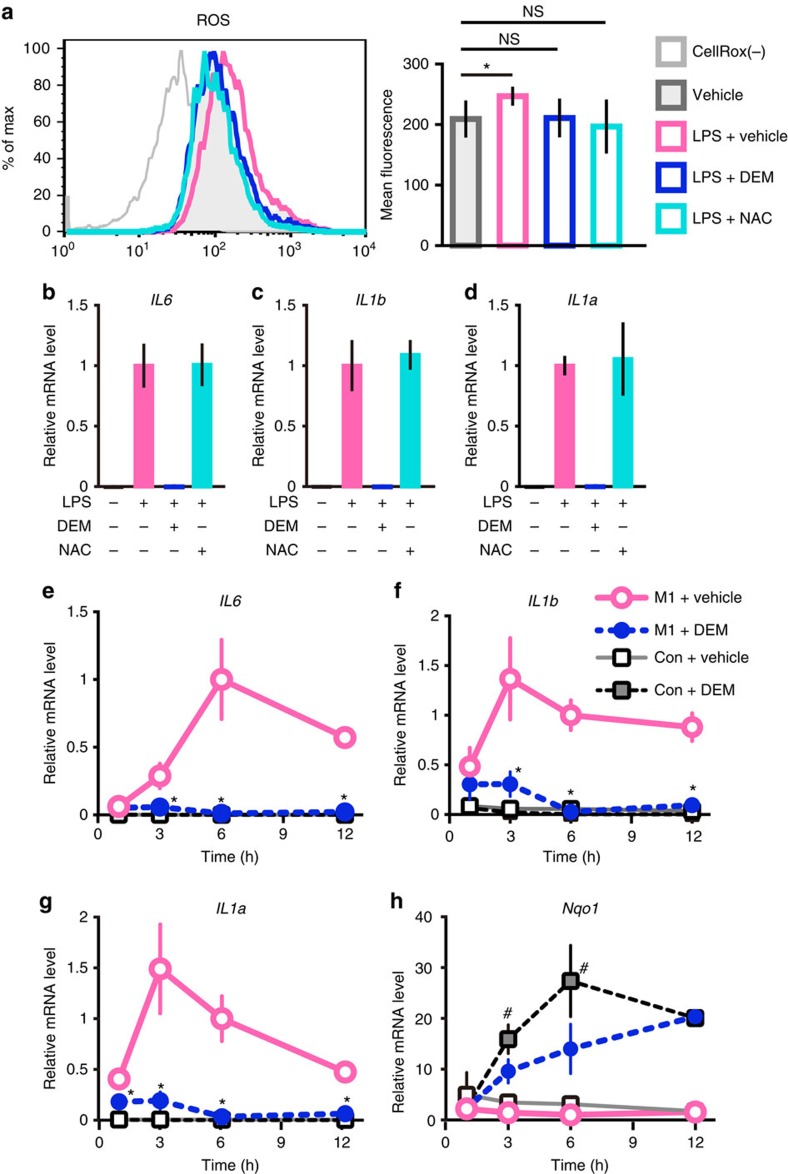
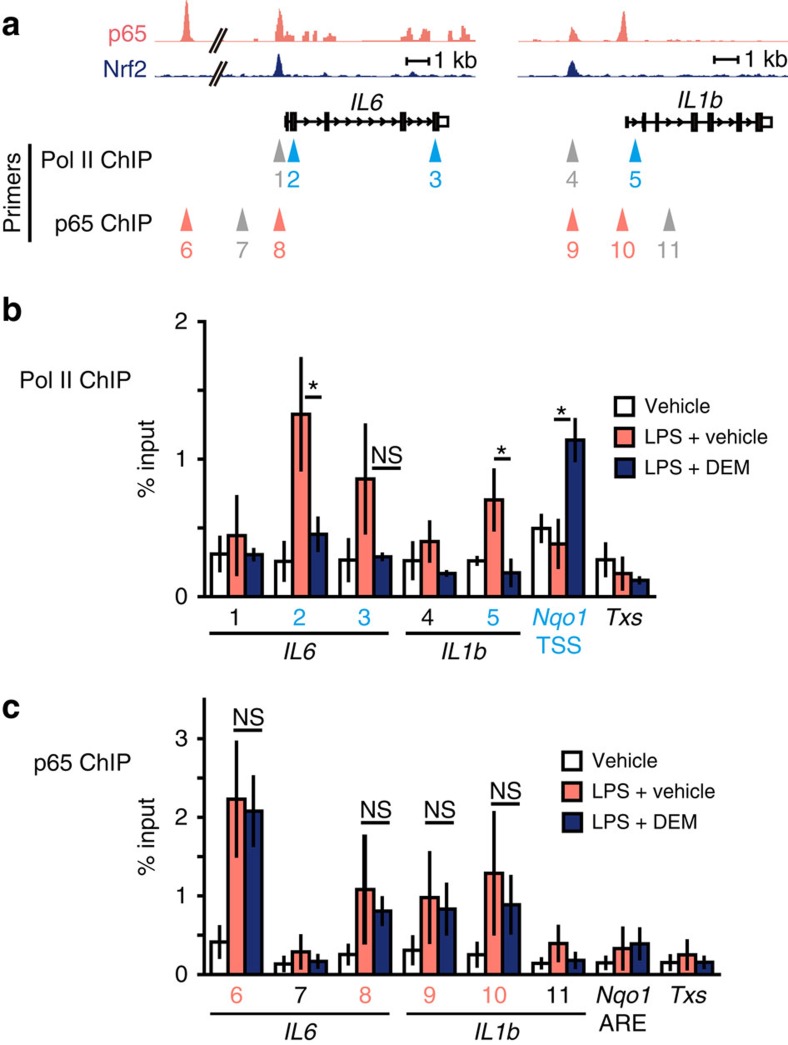
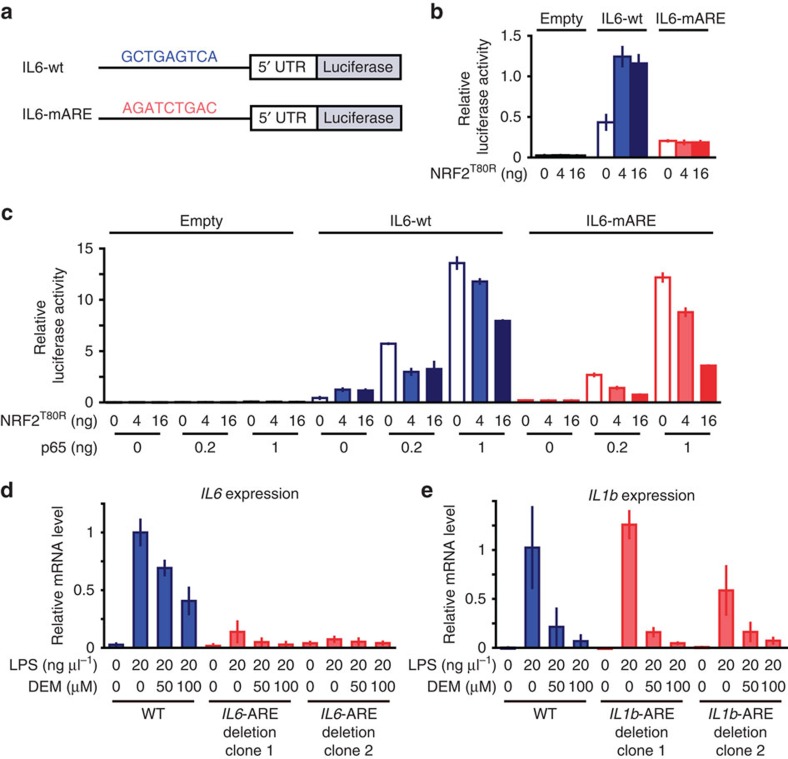
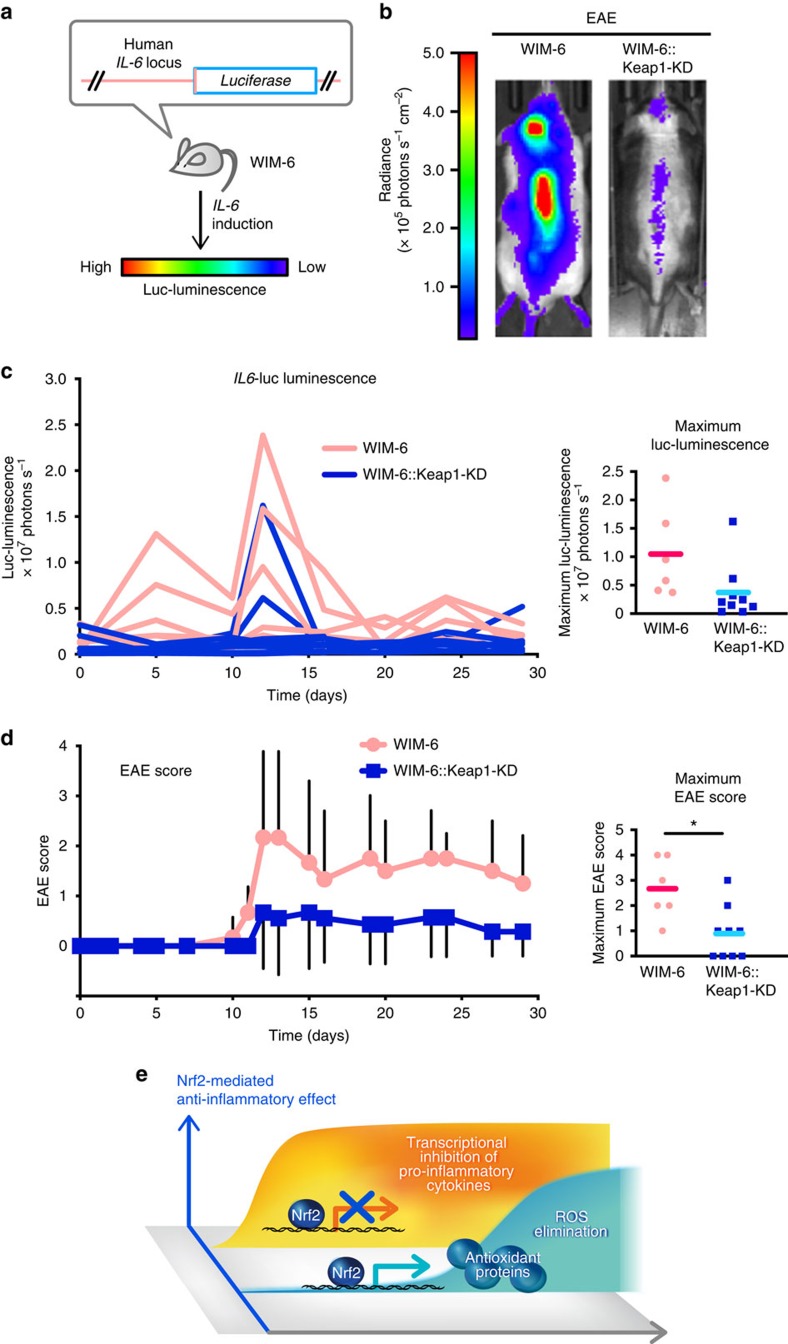
Nrf2 (NF-E2-related factor-2) transcription factor regulates oxidative/xenobiotic stress response and also represses inflammation. However, the mechanisms how Nrf2 alleviates inflammation are still unclear. Here, we demonstrate that Nrf2 interferes with lipopolysaccharide-induced transcriptional upregulation of proinflammatory cytokines, including IL-6 and IL-1β. Chromatin immunoprecipitation (ChIP)-seq and ChIP-qPCR analyses revealed that Nrf2 binds to the proximity of these genes in macrophages and inhibits RNA Pol II recruitment. Further, we found that Nrf2-mediated inhibition is independent of the Nrf2-binding motif and reactive oxygen species level. Murine inflammatory models further demonstrated that Nrf2 interferes with IL6 induction and inflammatory phenotypes in vivo . Thus, contrary to the widely accepted view that Nrf2 suppresses inflammation through redox control, we demonstrate here that Nrf2 opposes transcriptional upregulation of proinflammatory cytokine genes. This study identifies Nrf2 as the upstream regulator of cytokine production and establishes a molecular basis for an Nrf2-mediated anti-inflammation approach.
Overview
The claims and statistics of this paper haven’t been checked yet.
Run the check — free, no account needed. It reads the open-access text and checks the sources it cites.
Integrity signals
Registry
Cites
Statistics
Figures
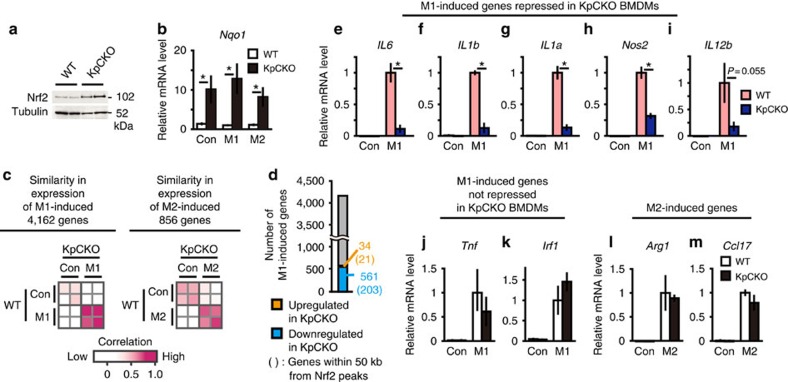
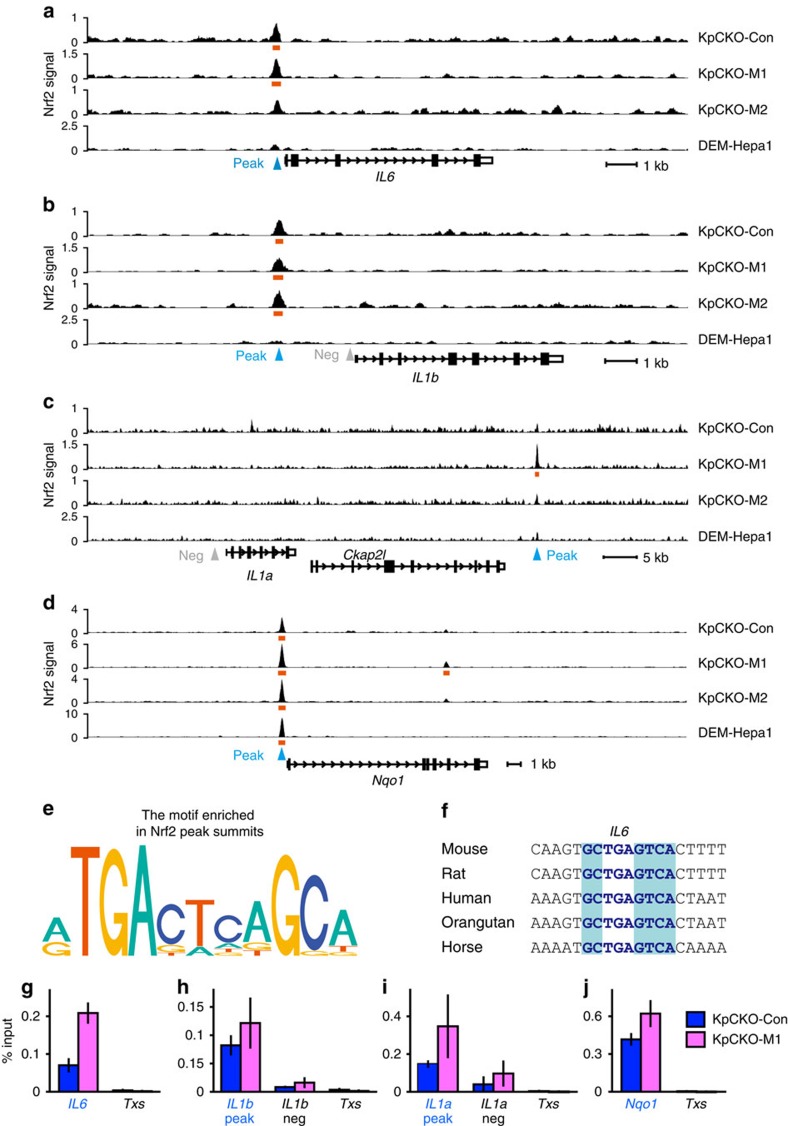
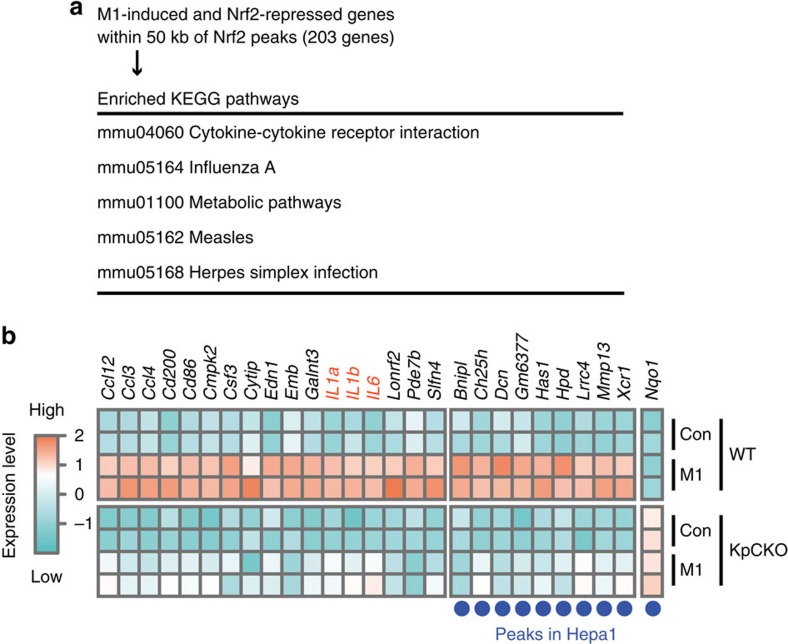
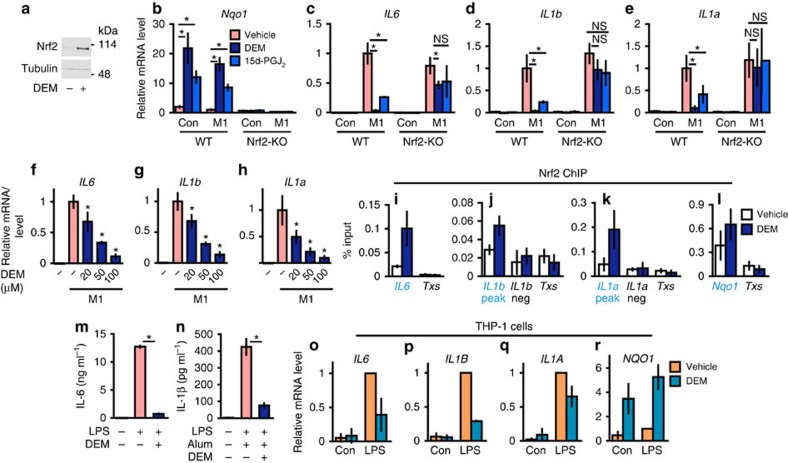
Verification
Claims the paper makes
The claims and statistics of this paper haven’t been checked yet.
Run the check — free, no account needed. It reads the open-access text and checks the sources it cites.
Claims other papers make about this one
Each is checked against this paper’s own text: does it say what the citing paper says it does?
In the citing paper
“suggesting that Nrf2’s role in inflammation is not limited to just oxidative stress control [198].”
From Nrf2 and Oxidative Stress: A General Overview of Mechanisms and Implications in Human Disease (2022) · cites this paper as [198]
In the citing paper
“Nrf2 has also been found to block the transcriptional upregulation of pro-inflammatory cytokine genes including interleukin 6 (IL-6) and interleukin 1 beta (IL-1β) in an ARE-independent manner through direct binding to the proximity of pro-inflammatory genes to inhibit RNA polymerase II recruitment”
From Nrf2 and Oxidative Stress: A General Overview of Mechanisms and Implications in Human Disease (2022) · cites this paper as [198]
In the citing paper
“the expression of pro-inflammatory cytokine genes in M1 macrophages is inhibited by Nrf2-ARE binding [198]”
From Nrf2 and Oxidative Stress: A General Overview of Mechanisms and Implications in Human Disease (2022) · cites this paper as [198]
In the citing paper
“it also appears to play a major role in embryo implantation in the womb, a process thought to require immunosuppression70–72.”
From Coupling Krebs cycle metabolites to signalling in immunity and cancer (2018) · cites this paper as [72]
Self-check
Percentages, sums and reported differences re-computed from the paper’s own numbers.
The self-check needs the paper’s full text.
Citations
Cites
The Sequence Alignment/Map format and SAMtools
Li, H., Handsaker, B., Wysoker, A., Fennell, T., Ruan, J., Homer, N., Marth, G., Abecasis, G., Durbin, R., & 1000 Genome Project Data Processing Subgroup (2009) · Bioinformatics · doi:10.1093/bioinformatics/btp352 · Cited by 62,041
Fast and accurate short read alignment with Burrows-Wheeler transform
Li, H., & Durbin, R. (2009) · Bioinformatics · doi:10.1093/bioinformatics/btp324 · Cited by 58,607
BEDTools: a flexible suite of utilities for comparing genomic features
Quinlan, A. R., & Hall, I. M. (2010) · Bioinformatics · doi:10.1093/bioinformatics/btq033 · Cited by 27,437
Model-based Analysis of ChIP-Seq (MACS)
Zhang, Y., Liu, T., Meyer, C. A., Eeckhoute, J., Johnson, D. S., Bernstein, B. E., Nusbaum, C., Myers, R. M., Brown, M., Li, W., et al. (2008) · Genome Biology · doi:10.1186/gb-2008-9-9-r137 · Cited by 18,386
Multiplex Genome Engineering Using CRISPR/Cas Systems
Cong, L., Ran, F. A., Cox, D., Lin, S., Barretto, R., Habib, N., Hsu, P. D., Wu, X., Jiang, W., Marraffini, L. A., et al. (2013) · Science · doi:10.1126/science.1231143 · Cited by 15,339
Itoh, K., Chiba, T., Takahashi, S., Ishii, T., Igarashi, K., Katoh, Y., Oyake, T., Hayashi, N., Satoh, K., Hatayama, I., et al. (1997) · Biochemical and Biophysical Research Communications · doi:10.1006/bbrc.1997.6943 · Cited by 3,999 · cited 1×
“The binding of Pol II was upregulated in LPS-treated cells at the TSS of IL6 (2), the gene body of IL6 (3) and the TSS of the IL1b gene (5), similar to the TSS of the Nqo1 gene in LPSþDEM-treated cells used as a positive control (Nqo1 TSS).”
BackgroundItoh, K., Wakabayashi, N., Katoh, Y., Ishii, T., Igarashi, K., Engel, J. D., & Yamamoto, M. (1999) · Genes & Development · doi:10.1101/gad.13.1.76 · Cited by 3,634
Self-citationTargeting the KEAP1-NRF2 system to prevent kidney disease progression
Nezu, M., Suzuki, N., & Yamamoto, M. (2017) · American Journal of Nephrology · doi:10.1159/000475890 · Cited by 3,447
Self-citationData, information, knowledge and principle: back to metabolism in KEGG
Kanehisa, M. I., Goto, S., Sato, Y., Kawashima, M., Furumichi, M., & Tanabe, M. (2013) · Nucleic Acids Research · doi:10.1093/nar/gkt1076 · Cited by 3,103
Transcriptional regulation of macrophage polarization: enabling diversity with identity
Lawrence, T., & Natoli, G. (2011) · Nature Reviews Immunology · doi:10.1038/nri3088 · Cited by 2,284
Cited by
Sorted by citations
Targeting oxidative stress in disease: Promise and limitations of antioxidant therapy
Forman, H. J., & Zhang, H. (2021) · Nature Reviews Drug Discovery · doi:10.1038/s41573-021-00233-1 · Cited by 2,900
Hayes, J. D., Dinkova-Kostova, A. T., & Tew, K. D. (2020) · Cancer Cell · doi:10.1016/j.ccell.2020.06.001 · Cited by 2,654
“It is not clear whether NRF2 can repress prooxidant genes, but it has been reported to downregulate NOX4 and, through its ability to repress the expression of genes encoding interleukin-1β (IL-1β) and IL-6, along with induction of the gene encoding peroxisome proliferator-activated receptor gamma (PPARγ), NRF2 dampens…”
BackgroundTranscriptional Regulation by Nrf2
Tonelli, C., Chio, I. I. C., & Tuveson, D. A. (2017) · Antioxidants and Redox Signaling · doi:10.1089/ars.2017.7342 · Cited by 2,280
“Together with the ‘‘default Nrf2 program,’’ Nrf2 selectively activates other genes that are specific to the cell type and the nature of the inducing agent (2, 13, 82, 89, 107, 164, 182, 188).”
BackgroundThe metabolic signature of macrophage responses
Viola, A., Munari, F., Sánchez-Rodríguez, R., Scolaro, T., & Castegna, A. (2019) · Frontiers in Immunology · doi:10.3389/fimmu.2019.01462 · Cited by 2,021
“Finally, M2d macrophages, also known as tumor-associated macrophages (TAMs), are induced by TLR ligands and A2 adenosine receptor (A2R) agonists, or by IL-6; they secrete high levels of IL-10, TGF-β, and VEGF and low IL12, TNF-α, and IL-1β, and contribute to tumor angiogenesis, growth and metastasis (25).”
BackgroundInfluentialThe KEAP1-NRF2 system: a thiol-based sensor-effector apparatus for maintaining redox homeostasis
Yamamoto, M., Kensler, T. W., & Motohashi, H. (2018) · Physiological Reviews · doi:10.1152/physrev.00023.2017 · Cited by 1,968
Self-citation
Metadata
- Authors
- Kobayashi, E. H., Suzuki, T., Funayama, R., Nagashima, T., Hayashi, M., Sekine, H., Tanaka, N., Moriguchi, T., Motohashi, H., Nakayama, K., & Yamamoto, M.
- Affiliations
- Tohoku University (JP)
- Miyagi Prefectural Hospital Organization (JP)
- Institute of Development, Aging and Cancer, Tohoku University (JP)
- Corresponding author
- Kobayashi, Eri H.
- Yamamoto, Masayuki
- ORCID
- Venue
- Nature Communications
- Published
- 2016-05-23
- Volume
- 7
- Issue
- 1
- Pages
- 11624-11624
- ISSN
- 2041-1723 (ISSN-L)
- PMC
- PMC4879264
- OpenAlex
- W2400239628
- Cited by
- 1,878
- References
- 58
- Citations by year
- 2026: 188 · 2025: 244 · 2024: 245 · 2023: 214 · 2022: 243 · 2021: 209 · 2020: 236 · 2019: 115 · 2018: 109 · 2017: 61 · 2016: 13
- FWCI
- 51.61
- Type
- journal article
- Language
- en
- Open access
- gold
- doi.org
- Locations
- Nature Communications (publishedVersion, cc-by)
- Europe PMC (PubMed Central) (publishedVersion, cc-by)
- PubMed Central (publishedVersion, cc-by)
- PubMed (publishedVersion)
- RePEc: Research Papers in Economics (submittedVersion)
- DOAJ (DOAJ: Directory of Open Access Journals) (submittedVersion, cc-by-sa)
- The Japanese Biochemical Society
- Funders
- Japan Agency for Medical Research and Development (CREST)
- Ministry of Education, Culture, Sports, Science and Technology (23116002, 22118002, 24249015, CREST)
- Japan Society for the Promotion of Science (15K14414, 15H04692, 16H05147, 26111002, 24249015, 25840001, CREST, 15K08257, 16K15228)
- Core Research for Evolutional Science and Technology
- Topics
- Life Sciences › Biochemistry, Genetics and Molecular Biology › Molecular Biology › Genomics, phytochemicals, and oxidative stress
- Life Sciences › Biochemistry, Genetics and Molecular Biology › Cancer Research › NF-κB Signaling Pathways
- Life Sciences › Biochemistry, Genetics and Molecular Biology › Molecular Biology › Nuclear Receptors and Signaling
- Keywords
- Nrf2, macrophages, inflammation, inflammatory cytokines, interleukin-6, IL-1β, transcriptional repression, RNA polymerase II recruitment, lipopolysaccharide, anti-inflammatory mechanism, oxidative stress response
- MeSH terms
- Animals, Gene Expression Regulation, Inflammation, Macrophages, Mice, Inbred C57BL, Mice, Inbred ICR, RNA Polymerase II, Cytokines, Mice, Knockout, Oxidative Stress, NF-E2-Related Factor 2
About these checks
Registry, retraction, Cites and statistics results are computed, not judged, with one exception: a printed reference that no index lists is read once by a model before it counts as a citation error. Claims are extracted by a model and kept only when their quote appears verbatim in the text; each cited source is then checked, with a model’s help, for whether it says what the claim relies on. Those verdicts can be wrong — read the claim’s quote and the cited source before relying on one.
Statistics and arithmetic are recomputed, not judged.
Confidence bands are shown only for fields calibrated on our annotated test set. None is calibrated yet, so no band is shown.
What counts as a claim ›How we measure confidence ›How we check this ›
Are you an author, or do you see a problem with this page? Request a review
