

Microglia and monocytes synergistically promote the transition from acute to chronic pain after nerve injury
Open accessThe DOI matches its Crossref record; 54 of the 54 references it cites were found in a registry or an index.
Abstract
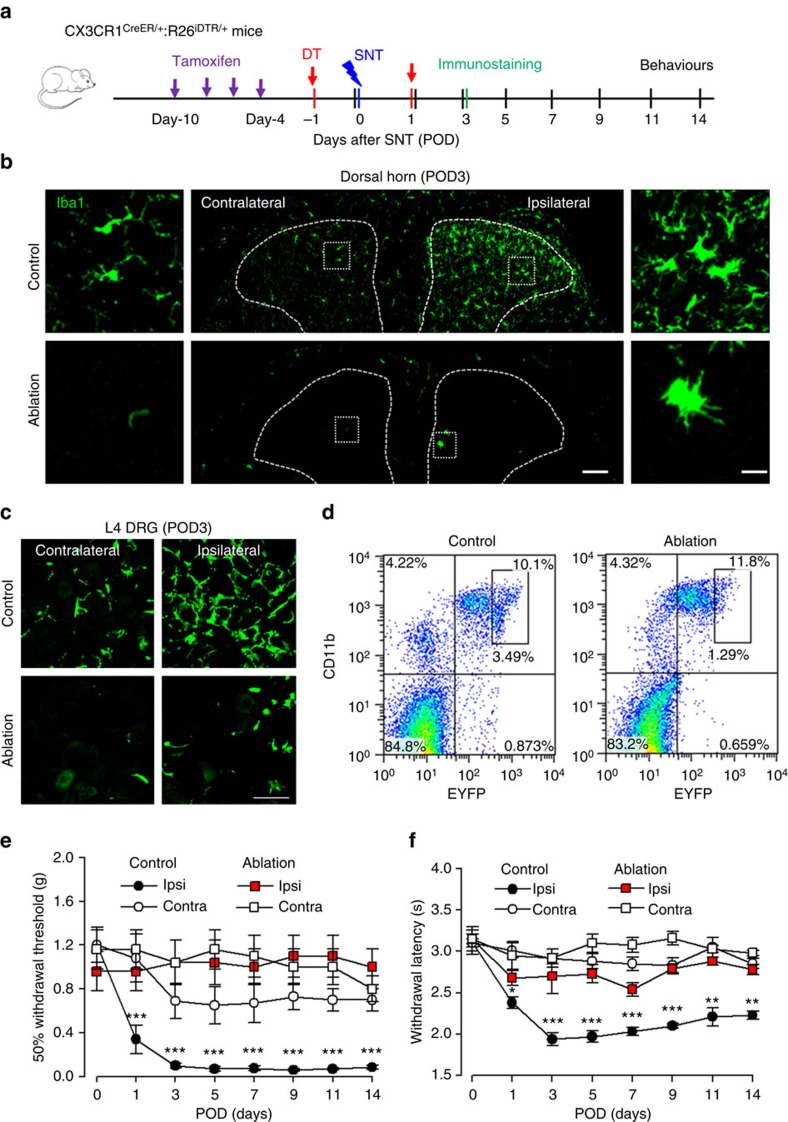
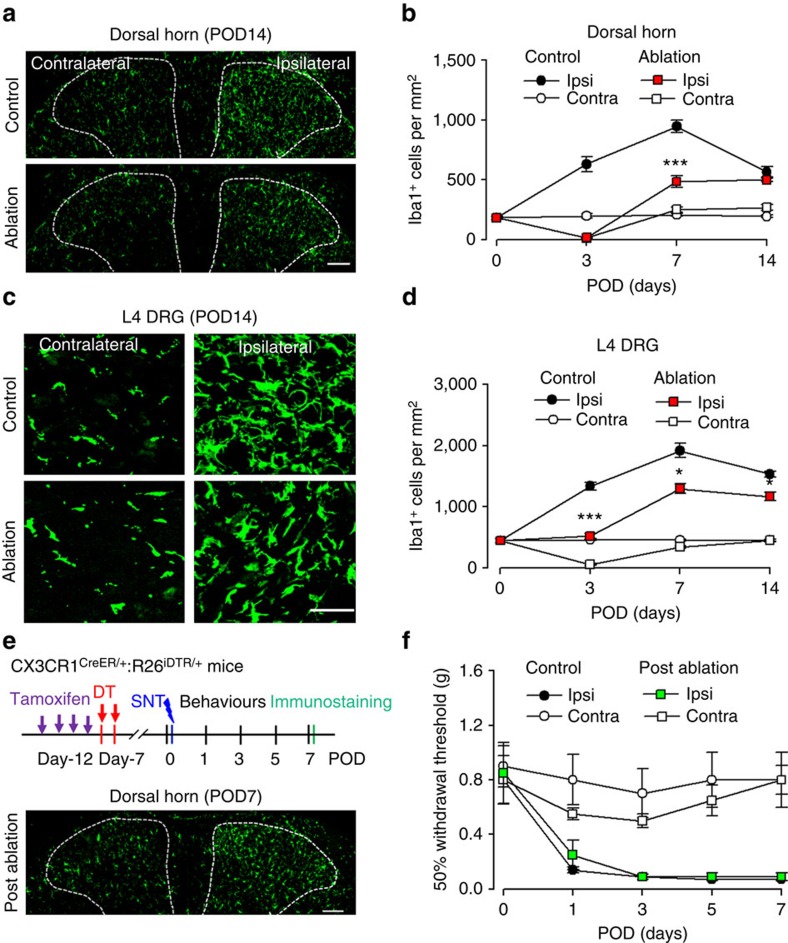
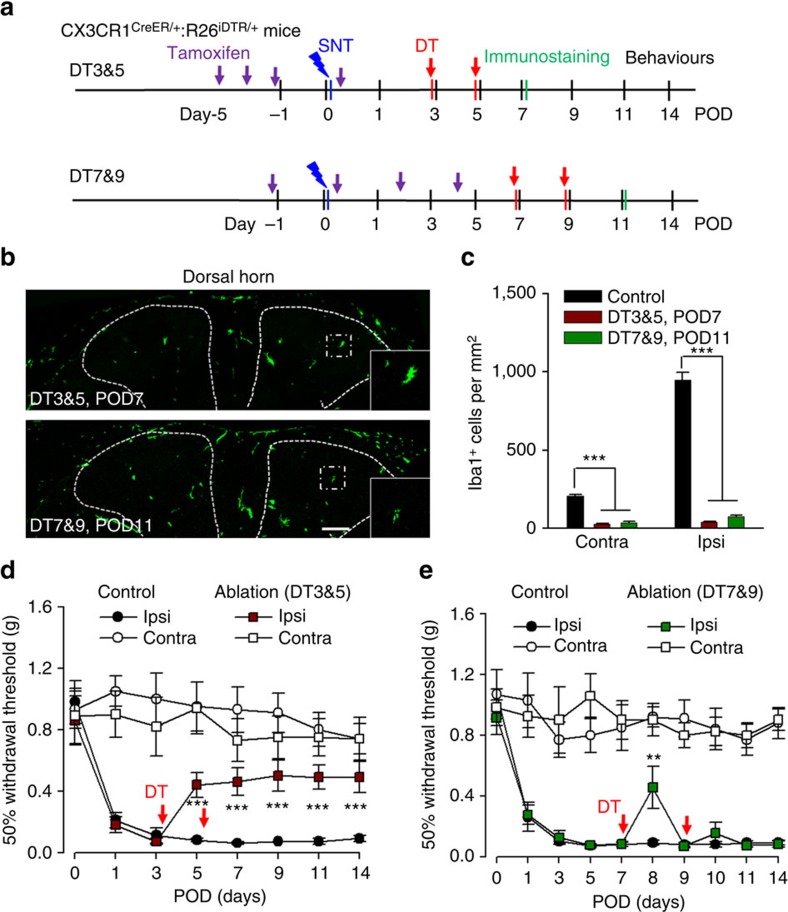
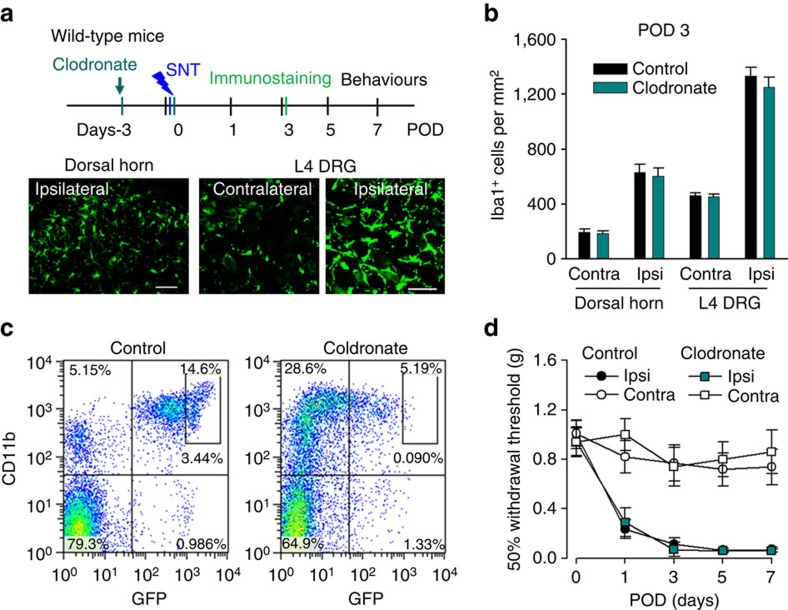
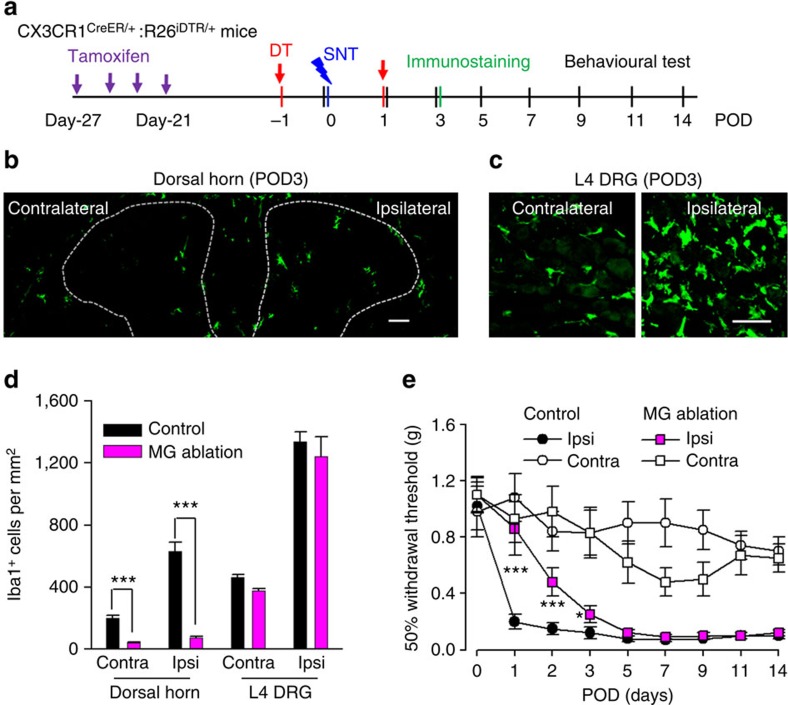
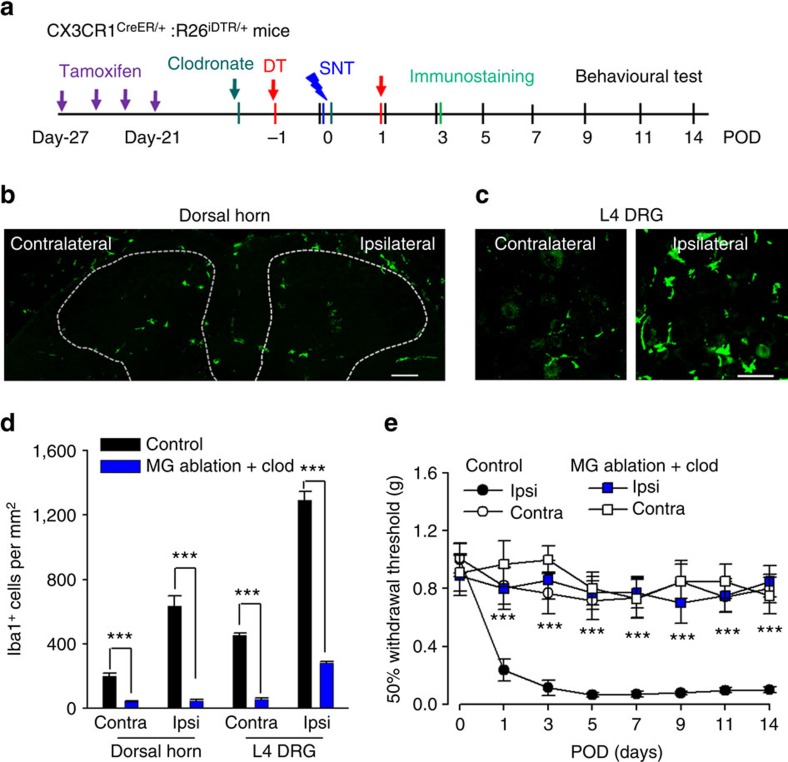
Microglia and peripheral monocytes contribute to hypersensitivity in rodent models of neuropathic pain. However, the precise respective function of microglia and peripheral monocytes has not been investigated in these models. To address this question, here we combined transgenic mice and pharmacological tools to specifically and temporally control the depletion of microglia and monocytes in a mouse model of spinal nerve transection (SNT). We found that although microglia and monocytes are required during the initiation of mechanical allodynia or thermal hyperalgesia, these cells may not be as important for the maintenance of hypersensitivity. Moreover, we demonstrated that either resident microglia or peripheral monocytes are sufficient in gating neuropathic pain after SNT. We propose that resident microglia and peripheral monocytes act synergistically to initiate hypersensitivity and promote the transition from acute to chronic pain after peripheral nerve injury.
Overview
The claims and statistics of this paper haven’t been checked yet.
Free: it reads the open-access text and checks the first 5 claims that cite a source we can check. Create a free account to check every claim.
Integrity signals
Registry
Cites
Statistics
Figures
Verification
Claims the paper makes
The claims and statistics of this paper haven’t been checked yet.
Free: it reads the open-access text and checks the first 5 claims that cite a source we can check. Create a free account to check every claim.
Claims other papers make about this one
Each is checked against this paper’s own text: does it say what the citing paper says it does?
The source backs part of the claim, not all of it — or backs it for a different population, condition or comparison.
In the citing paper
“Intrathecal injection of minocycline (microglia inhibitor) significantly attenuated the neuropathic pain (Peng et al., 2016).”
From Picroside Ⅱ attenuates neuropathic pain by regulating inflammation and spinal excitatory synaptic transmission (2024) · cites this paper as Peng et al., 2016
Experimental — accuracy not yet measuredIn the citing paper
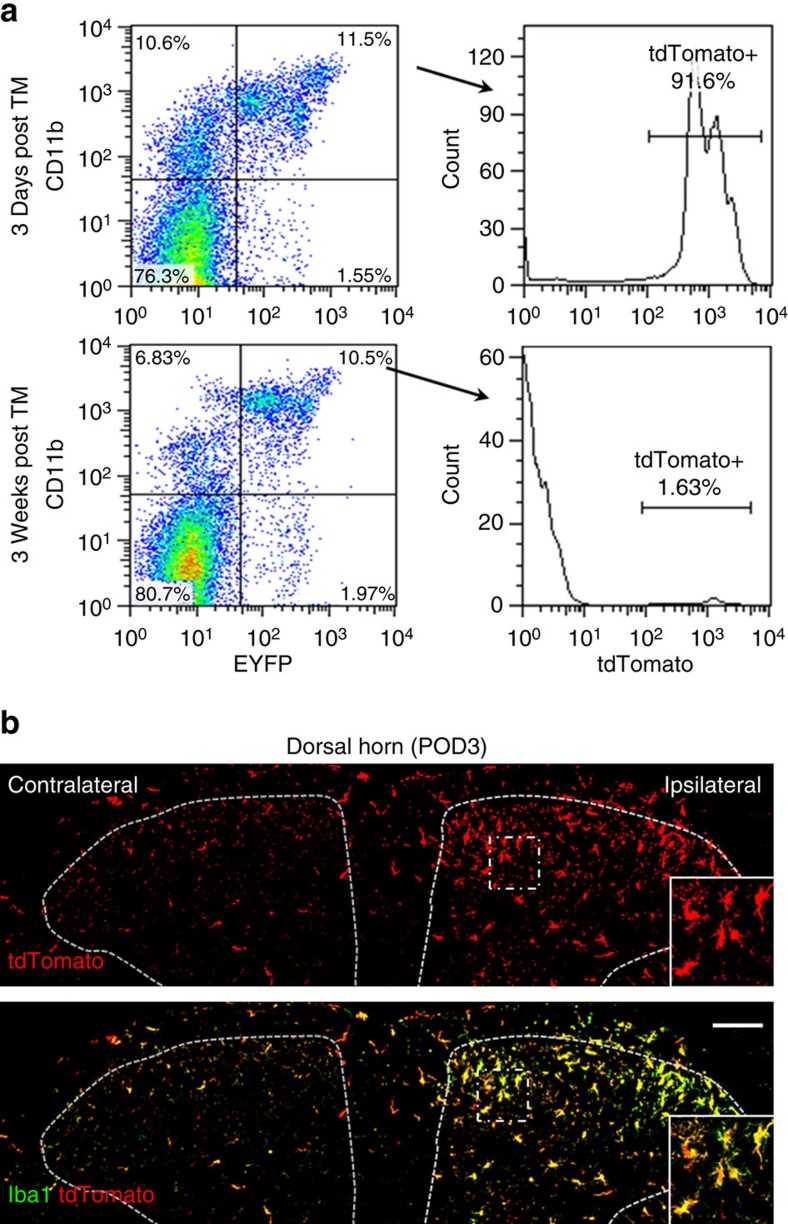
“Although most studies using Cx3cr1Cre/ERT2 lines to target microglia suggest that a 3-week washout period will result in microglia specificity (Bedolla et al., 2023; Costa et al., 2021; Peng et al., 2016; Mo et al., 2019; Hohsfield et al., 2021; Y. Yang et al., 2023), evidence confirming the clearance of peripheral cells with Cre-mediated recombination at this time point is lacking.”
From Novel floxed cannabinoid receptor 2 mouse line combines knockout capability with dual fluorescent reporters (2025) · cites this paper as Peng et al., 2016
Self-check
Percentages, sums and reported differences re-computed from the paper’s own numbers.
The self-check needs the paper’s full text.
Citations
Cites
Quantitative assessment of tactile allodynia in the rat paw
Chaplan, S. R., Bach, F. W., Pogrel, J. W., Chung, J. M., & Yaksh, T. L. (1994) · Journal of Neuroscience Methods · doi:10.1016/0165-0270(94)90144-9 · Cited by 7,697
Resting microglial cells are highly dynamic surveillants of brain parenchyma in vivo
Nimmerjahn, A., Kirchhoff, F., & Helmchen, F. (2005) · Science · doi:10.1126/science.1110647 · Cited by 5,827
ATP mediates rapid microglial response to local brain injury in vivo
Davalos, D., Grutzendler, J., Yang, G., Kim, J. V., Zuo, Y., Jung, S., Littman, D. R., Dustin, M. L., & Gan, W.-B. (2005) · Nature Neuroscience · doi:10.1038/nn1472 · Cited by 3,913
Self-citationSex, gender, and pain: a review of recent clinical and experimental findings
Fillingim, R. B., King, C. D., Ribeiro-Dasilva, M. C., Rahim-Williams, B., & Riley, J. L. (2009) · The Journal of Pain · doi:10.1016/j.jpain.2008.12.001 · Cited by 2,766
Treede (2008) · doi:10.1212/01.wnl.0000282763.29778.59 · Cited by 2,746
Jung, S., Aliberti, J., Graemmel, P., Sunshine, M. J., Kreutzberg, G. W., Sher, A., & Littman, D. R. (2000) · Molecular and Cellular Biology · doi:10.1128/mcb.20.11.4106-4114.2000 · Cited by 2,632
Microglia promote learning-dependent synapse formation through brain-derived neurotrophic factor
Parkhurst, C. N., Yang, G., Ninan, I., Savas, J. N., Yates, J. R., Lafaille, J. J., Hempstead, B. L., Littman, D. R., & Gan, W.-B. (2013) · Cell · doi:10.1016/j.cell.2013.11.030 · Cited by 2,599
Self-citationElmore, M. R. P., Najafi, A. R., Koike, M. A., Dagher, N. N., Spangenberg, E. E., Rice, R. A., Kitazawa, M., Matusow, B., Nguyen, H., West, B. L., et al. (2014) · Neuron · doi:10.1016/j.neuron.2014.02.040 · Cited by 1,968
The neuropathic pain triad: neurons, immune cells and glia
Scholz, J., & Woolf, C. J. (2007) · Nature Neuroscience · doi:10.1038/nn1992 · Cited by 1,732
Local self-renewal can sustain CNS microglia maintenance and function throughout adult life
Ajami, B., Bennett, J. L., Krieger, C., Tetzlaff, W., & Rossi, F. M. V. (2007) · Nature Neuroscience · doi:10.1038/nn2014 · Cited by 1,643
Cited by
Items 101–200 of 308
Asano, S., Hayashi, Y., Iwata, K., Okada‐Ogawa, A., Hitomi, S., Shibuta, I., Imamura, Y., & Shinoda, M. (2020) · International Journal of Molecular Sciences · doi:10.3390/ijms21186834 · Cited by 50
A Comparative Biology of Microglia Across Species
Sharma, K. P., Bisht, K., & Eyo, U. B. (2021) · Frontiers in Cell and Developmental Biology · doi:10.3389/fcell.2021.652748 · Cited by 49
Khomula, E. V., Ferrari, L. F., Araldi, D., & Levine, J. D. (2017) · Journal of Neuroscience · doi:10.1523/jneurosci.2911-16.2017 · Cited by 48
“…et al., 2013c; Bali and Kuner, 2014), supporting the view that acute painful conditions can transition to persistent neuronal sensitization or exacerbated pain to stimulation, even well after acute tissue insults resolve (Bérubé et al., 2016; Peng et al., 2016; Walk and Poliak-Tunis, 2016).”
BackgroundKung, C.-C., Dai, S.-P., Chiang, H., Huang, H., & Sun, W. (2020) · Molecular Biology Reports · doi:10.1007/s11033-020-05422-6 · Cited by 51
CCR2+ monocytes replenish border-associated macrophages in the diseased mouse brain
Wang, L., Zheng, J., Zhao, S., Wan, Y., Wang, M., Bosco, D. B., Kuan, C.-Y., Richardson, J. R., & Wu, L. (2024) · Cell Reports · doi:10.1016/j.celrep.2024.114120 · Cited by 45
“18–22 We then fed mice PLX3397 chow for 5 weeks to deplete BAMs, followed by normal chow for 3 weeks to let BAMs repopulate (Figure 1E).”
Self-citationBRD4 Inhibition Attenuates Inflammatory Pain by Ameliorating NLRP3 Inflammasome-Induced Pyroptosis
Hua, T., Wang, H., Fan, X., An, N., Li, J., Song, H., Kong, E., Li, Y., & Yuan, H. (2022) · Frontiers in Immunology · doi:10.3389/fimmu.2022.837977 · Cited by 48
“Microglia are the main immune cells in the spinal cord that promote the onset of chronic pain (29).”
BackgroundThe Role of Neuro-Immune Interactions in Chronic Pain: Implications for Clinical Practice
Su, P. P., Zhang, L., He, L., Zhao, N., & Guan, Z. (2022) · Journal of Pain Research · doi:10.2147/jpr.s246883 · Cited by 48
mTOR–neuropeptide Y signaling sensitizes nociceptors to drive neuropathic pain
Chen, L., Hu, Y., Wang, S., Cao, K., Mai, W., Sha, W., Ma, H., Zeng, L., Xu, Z., Gao, Y., et al. (2022) · JCI Insight · doi:10.1172/jci.insight.159247 · Cited by 45
“Consistent with previous studies (6, 7, 29, 30), a large number of the upregulated genes, including those associated with injury (activating transcription factor 3 [Atf3] and small proline-rich protein 1A [Sprr1a]), GPCRs (including Gpr151 and Gpr119), neuropeptides (Npy, Gal, and Nts), cytokines (colony stimulating f…”
P2Y receptors in neuropathic pain
Zhang, X., & Li, G. (2019) · Pharmacology Biochemistry and Behavior · doi:10.1016/j.pbb.2019.172788 · Cited by 45
The Emerging Role of Microglia in Neuromyelitis Optica
Chen, T., Bosco, D. B., Ying, Y., Tian, D., & Wu, L. (2021) · Frontiers in Immunology · doi:10.3389/fimmu.2021.616301 · Cited by 47
Self-citationThe NOD2 signaling in peripheral macrophages contributes to neuropathic pain development
Santa-Cecília, F. V., Ferreira, D. W., Guimarães, R. M., Cecílio, N. T., Fonseca, M. M., Lopes, A. H., Davoli-Ferreira, M., Kusuda, R., de Souza, G. R., Nachbur, U., et al. (2018) · Pain · doi:10.1097/j.pain.0000000000001383 · Cited by 43
Gao, Y., Mei, C., Chen, P., & Chen, X. (2022) · International Immunopharmacology · doi:10.1016/j.intimp.2022.108700 · Cited by 43
Peng, J., Yi, M., Jeong, H., McEwan, S. A., Zheng, J., Wu, G., Ganatra, S., Ren, Y., Richardson, J. R., Oh, S. B., et al. (2021) · Molecular Brain · doi:10.1186/s13041-021-00812-8 · Cited by 43
“Our previous study found that microglia ablation before SNT could delay neuropathic pain, while microglia ablation at day 7 after SNT had very limited effects [64], consistent with several pharmacological studies with minocycline [66].”
BackgroundResultSelf-citationOrofacial Neuropathic Pain-Basic Research and Their Clinical Relevancies
Shinoda, M., Imamura, Y., Hayashi, Y., Noma, N., Okada‐Ogawa, A., Hitomi, S., & Iwata, K. (2021) · Frontiers in Molecular Neuroscience · doi:10.3389/fnmol.2021.691396 · Cited by 43
VEGFR2 promotes central endothelial activation and the spread of pain in inflammatory arthritis
Beazley‐Long, N., Hodge, D., Ashby, W. R., Bestall, S. M., Almahasneh, F. A., Durrant, A. M., Benest, A. V., Blackley, Z., Ballmer‐Hofer, K., Hirashima, M., et al. (2018) · Brain Behavior and Immunity · doi:10.1016/j.bbi.2018.03.012 · Cited by 45
A Novel Sex-Dependent Target for the Treatment of Postoperative Pain: The NLRP3 Inflammasome
Cowie, A. M., Dittel, B. N., & Stucky, C. L. (2019) · Frontiers in Neurology · doi:10.3389/fneur.2019.00622 · Cited by 41
SETD7 mediates spinal microgliosis and neuropathic pain in a rat model of peripheral nerve injury
Shen, Y., Ding, Z., Ma, S., Ding, Z., Zhang, Y., Zou, Y., Xu, F., Yang, X., Schäfer, M. K. E., Guo, Q., et al. (2019) · Brain Behavior and Immunity · doi:10.1016/j.bbi.2019.09.007 · Cited by 40
Hiraga, S.-I., Itokazu, T., Hoshiko, M., Takaya, H., Nishibe, M., & Yamashita, T. (2020) · JCI Insight · doi:10.1172/jci.insight.131801 · Cited by 40
Pathogenic mechanisms of lipid mediator lysophosphatidic acid in chronic pain
Ueda, H. (2020) · Progress in Lipid Research · doi:10.1016/j.plipres.2020.101079 · Cited by 40
Spinal microglia contribute to sustained inflammatory pain via amplifying neuronal activity
Gu, N., Yi, M., Murugan, M., Xie, M., Parusel, S., Peng, J., Eyo, U. B., Hunt, C., Dong, H., & Wu, L. (2022) · Molecular Brain · doi:10.1186/s13041-022-00970-3 · Cited by 38
Self-citationTonello, R., Xie, W., Lee, S. H., Wang, M., Liu, X., Strong, J. A., Zhang, J., & Berta, T. (2020) · Anesthesiology · doi:10.1097/aln.0000000000003241 · Cited by 38
Béchade, C., D’Andrea, I., Etienne, F., Verdonk, F., Moutkine, I., Banas, S. M., Kolodziejczak, M., Diaz, S. L., Parkhurst, C. N., Gan, W., et al. (2020) · Glia · doi:10.1002/glia.23918 · Cited by 39
“Injection of LPS to induce the sickness response was performed at least 1 month and a half after tamoxifen treatment, to allow the full renewal of peripheral Cx3cr1+ cells (Goldmann et al., 2013; Parkhurst et al., 2013; Peng et al., 2016; Wolf, Yona, Kim, & Jung, 2013; Yona et al., 2013).”
BackgroundResultInfluentialSelf-citationKey role of CCR2-expressing macrophages in a mouse model of low back pain and radiculopathy
Zhang, L., Xie, W., Zhang, J., Shanahan, H., Tonello, R., Lee, S. H., Strong, J. A., Berta, T., & Zhang, J. (2020) · Brain Behavior and Immunity · doi:10.1016/j.bbi.2020.11.015 · Cited by 42
“The liposomeencapsulated cytotoxin clodronate is taken up by MØ, a method commonly used to deplete circulating monocytes that has varying effects on resident macrophages (Van Rooijen and Sanders, 1994) but does not deplete spinal cord microglia (Peng et al., 2016).”
MethodAlbertini, G., D’Andrea, I., Druart, M., Béchade, C., Nieves-Rivera, N., Etienne, F., Magueresse, C. L., Rebsam, A., Heck, N., Maroteaux, L., et al. (2023) · Molecular Psychiatry · doi:10.1038/s41380-023-02048-5 · Cited by 39
Pirt Together with TRPV1 Is Involved in the Regulation of Neuropathic Pain
Wang, C., Gu, L., Ruan, Y., Gegen, T., Yu, L., Zhu, C., Yang, Y., Zhou, Y., Yu, G., & Tang, Z. (2018) · Neural Plasticity · doi:10.1155/2018/4861491 · Cited by 40
Iwai, H., Ataka, K., Suzuki, H., Dhar, A., Kuramoto, E., Yamanaka, A., & Goto, T. (2021) · Journal of Neuroinflammation · doi:10.1186/s12974-021-02283-z · Cited by 37
Neuropathic pain: Spotlighting anatomy, experimental models, mechanisms, and therapeutic aspects
Kankowski, S., Grothe, C., & Haastert‐Talini, K. (2021) · European Journal of Neuroscience · doi:10.1111/ejn.15266 · Cited by 39
Yang, M., Xu, W., Wang, Y., Jiang, X., Li, Y., Yang, Y., & Yuan, H. (2018) · Molecular Pain · doi:10.1177/1744806918808150 · Cited by 38
“Monocytes-induced inflammation and microglial-induced microgliosis were elegantly shown to be quite important for pain after peripheral nerve injury.(41,42) Thus, the proper production of inflammatory and anti-inflammatory cytokine needs the cooperation of various signal pathways.”
BackgroundMicroglia: sculptors of neuropathic pain?
Ward, H. L., & West, S. J. (2020) · Royal Society Open Science · doi:10.1098/rsos.200260 · Cited by 38
“The inflammatory phenotype is thought to be mediated in part by CX3CR1 activity which drives the production of inflammatory cytokines interleukin-1β (IL-1β) and tumour necrosis factor (TNF-α) [34], whereas the release of brain-derived neurotrophic factor (BDNF) from microglia is driven by purinergic receptors P2X4 whi…”
BackgroundResultInfluentialAcute and chronic pain in orofacial trauma patients
Khan, J., Zusman, T., Wang, Q., & Eliav, E. (2019) · Dental Traumatology · doi:10.1111/edt.12493 · Cited by 37
Stevens, A., Liu, L., Bertovich, D., Janjic, J. M., & Pollock, J. A. (2019) · International Journal of Molecular Sciences · doi:10.3390/ijms20215269 · Cited by 35
“By one week post-nerve injury, macrophages repopulated with no pain behavior evident [14].”
BackgroundInfluentialLi, L., Bai, L., Yang, K., Zhang, J., Gao, Y., Jiang, M., Yang, Y., Zhang, X., Wang, L., Wang, X., et al. (2021) · Brain Behavior and Immunity · doi:10.1016/j.bbi.2021.08.231 · Cited by 34
Murugan, M., Ravula, A. R., Gandhi, A., Vegunta, G., Mukkamalla, S., Mujib, W., & Chandra, N. (2020) · Brain Behavior and Immunity · doi:10.1016/j.bbi.2020.03.029 · Cited by 35
Self-citationGreen‐Fulgham, S. M., Ball, J. B., Kwilasz, A. J., Harland, M. E., Frank, M. G., Dragavon, J. M., Grace, P. M., & Watkins, L. R. (2023) · Brain Behavior and Immunity · doi:10.1016/j.bbi.2023.10.004 · Cited by 34
Segelcke, D., Fischer, H. K., Hütte, M., Dennerlein, S., Benseler, F., Brose, N., Pogatzki-Zahn, E. M., & Schmidt, M. (2021) · Cell Reports · doi:10.1016/j.celrep.2021.110152 · Cited by 36
“Even more complex, Peng and colleagues (Peng et al., 2016) described sexual dimorphism in tactile hypersensitivity only in the maintenance but not the initiation phase after nerve injury (in a spinal nerve transection model), whereas heat hypersensitivity was sex-independent.”
InfluentialDai, S.-P., Hsieh, W.-S., Chen, C.-H., Lu, Y.-H., Huang, H., Chang, D.-M., Huang, S., & Sun, W. (2020) · Journal of Neuroinflammation · doi:10.1186/s12974-020-01851-z · Cited by 35
Lü, X., Chen, L., Jiang, C., Cao, K., Gao, Z., & Wang, Y. (2022) · Pain · doi:10.1097/j.pain.0000000000002708 · Cited by 34
Sun, R., Liu, Y., Hou, B., Lei, Y., Bo, J., Zhang, W., Sun, Y., Zhang, Y., Zhang, Z., Liu, Z., et al. (2019) · Brain Behavior and Immunity · doi:10.1016/j.bbi.2019.02.017 · Cited by 31
Yan, X., Maixner, D. W., Li, F., & Weng, H. (2017) · Journal of Neurochemistry · doi:10.1111/jnc.13952 · Cited by 31
“Depletion of microglia and macrophages in the CNS and dorsal root ganglion abolishes the development of mechanical and thermal hypersensitivity induced by spinal nerve transection in both male and female mice (Peng et al. 2016).”
Cortical remodeling after electroacupuncture therapy in peripheral nerve repairing model
Wu, J., Lu, Y.-C., Hua, X., Ma, S., Shan, C., & Xu, J. (2018) · Brain Research · doi:10.1016/j.brainres.2018.04.009 · Cited by 30
Activation of β2-Adrenergic Receptors in Microglia Alleviates Neuropathic Hypersensitivity in Mice
Damo, E., Agarwal, A., & Simonetti, M. (2023) · Cells · doi:10.3390/cells12020284 · Cited by 29
“Nevertheless, numerous studies report no evident sexual dimorphism in the analgesic effect of microglial inhibitors, genetic knockout of microglial-selective molecules, or ablation of microglia in various nerve injury models [56-60].”
BackgroundTao, X., Luo, X., Zhang, T. C., Hershey, B., Esteller, R., & Ji, R. (2021) · Frontiers in Physiology · doi:10.3389/fphys.2021.687046 · Cited by 28
Zhou, X., Tao, L., Zhao, M., Wu, S., Obeng, E., Wang, D., & Zhang, W. (2020) · Molecular Pain · doi:10.1177/1744806920922100 · Cited by 27
“Our study reveals that Wnt/b-catenin signaling regulates BDNF release from spinal microglia to mediate HNP. Briefly, i.t. gp120 activates the Wnt/b-catenin signaling pathway to regulate the expression and release of microglial BDNF, which may lead to NP after binding to TrkB or p75NTR recep- tors.”
BackgroundInfluentialLessons Learned about Neurodegeneration from Microglia and Monocyte Depletion Studies
Lund, H., Pieber, M., & Harris, R. A. (2017) · Frontiers in Aging Neuroscience · doi:10.3389/fnagi.2017.00234 · Cited by 28
“…CX3CR1CreERR26DTR mice pre-injury Depletion of microglia delayed but did not reverse neuropathic hypersensitivity after peripheral nerve injury Peng et al. (2016) Repetitive concussive traumatic brain injury Valganciclovir i.c.v in CD11b-HSVTK mice pre-TBI Microglial depletion did not affect…”
BackgroundAdamek, P., Heles, M., Bhattacharyya, A., Pontearso, M., Slepicka, J., & Paleček, J. (2022) · Journal of Neuroscience · doi:10.1523/jneurosci.1324-21.2021 · Cited by 27
Chen, K., Hu, Q., Xie, Z., & Yang, G. (2022) · Advanced Science · doi:10.1002/advs.202104106 · Cited by 34
Han, S., Jiang, B., Ren, J., Gao, F., Wen, J., Zhou, T., Wang, L., & Wei, X. (2023) · Anesthesiology · doi:10.1097/aln.0000000000004756 · Cited by 26
Liu, Q., Liu, Y., Bian, J., Li, Q., & Zhang, Y. (2019) · Molecular Pain · doi:10.1177/1744806919866529 · Cited by 27
“As mentioned in the previous literature, the proinflammatory cytokines, which works as the mediators in the progress of “crosstalk” with nociceptive neurons, finally promote pain processing and maintenance.(32) This study demonstrated that the expression of microglial marker Iba1 was dramatically increased in L4-5 of…”
BackgroundShayea, A. M. F., Mousa, A. M. A., Renno, W. M., Nadar, M. S., Qabazard, B., & Yousif, M. H. M. (2020) · Journal of Neuropathology & Experimental Neurology · doi:10.1093/jnen/nlaa127 · Cited by 27
HK2 in microglia and macrophages contribute to the development of neuropathic pain
Wang, S., Jiang, C., Cao, K., Li, R., Gao, Z., & Wang, Y. (2023) · Glia · doi:10.1002/glia.24482 · Cited by 26
“…with our observation, removal of microglia only alleviated mechanical allodynia in the early 3-day period following nerve injury, whereas removal of both microglia and peripheral monocytes/macrophages prevented the development of neuropathic pain in both male and female mice (Peng et al., 2016).”
BackgroundSex-Related Differences in Chronic Pain: A Narrative Review by a Multidisciplinary Task Force
Marchesini, M., Fornasari, D., Natoli, S., Vegni, E. A. M., & Cuomo, A. (2025) · Medicina · doi:10.3390/medicina61071172 · Cited by 29
“For instance, genetic manipulation of microglia has been shown to reverse pain hypersensitivity even in female rodents [75–77].”
Zhou, Y., Xu, Y., Yang, J., Yu, Z., Wang, W., Yuan, M., Wang, Y., Bai, Q., & Li, Z. (2023) · Frontiers in Molecular Neuroscience · doi:10.3389/fnmol.2023.1061220 · Cited by 27
“It is well known that microglia play a key role in the initiation of mechanical and thermal hyperalgesia and cooperate with peripheral monocytes to facilitate the transition from acute to chronic pain following peripheral nerve damage in NP rodent models (Peng et al., 2016).”
BackgroundAllodynia Lowering Induced by Cannabinoids and Endocannabinoids (ALICE)
Luongo, L., Starowicz, K., Maione, S., & Marzo, V. D. (2017) · Pharmacological Research · doi:10.1016/j.phrs.2017.02.019 · Cited by 37
“[63] Peng J, Gu N, Zhou L, B Eyo U, Murugan M, Gan WB, Wu LJ.”
BackgroundRepopulated spinal cord microglia exhibit a unique transcriptome and contribute to pain resolution
Donovan, L. J., Bridges, C. M., Nippert, A. R., Wang, M., Wu, S., Forman, T. E., Haight, E. S., Huck, N. A., Bond, S. F., Jordan, C. E., et al. (2024) · Cell Reports · doi:10.1016/j.celrep.2024.113683 · Cited by 26
“In contrast, Peng et al. 11 demonstrated that early depletion of microglia delayed the development of allodynia, while late depletion of microglia only transiently improved allodynia.”
BackgroundResultInfluentialZhou, M., Pang, F., Liao, D.-M., Yang, Y., Wang, Y., Yang, Z.-X., He, X., & Tang, C. (2024) · Molecular Pain · doi:10.1177/17448069241258113 · Cited by 27
“7,35 The alterations in microglia are necessary for developing of central sensitization and chronic pain via interacting with neurons.”
BackgroundYang, G., Chen, L., Gao, Z., & Wang, Y. (2018) · Molecular Pain · doi:10.1177/1744806918811238 · Cited by 23
“Microglia has been extensively studied in the neuropathic or inflammatory pain models, and microglia activation is regarded as a key step in the pathogenesis of chronic pain.(42) To date, however, the role of microglia in back pain remains less studied.”
BackgroundAcute and Chronic Pain in Orofacial Trauma Patients
Khan, J., Zusman, T., Wang, Q., & Eliav, E. (2019) · Journal of Endodontics · doi:10.1016/j.joen.2019.05.010 · Cited by 23
Bogacka, J., Popiołek-Barczyk, K., Pawlik, K., Ciechanowska, A., Makuch, W., Rojewska, E., Dobrogowski, J., Przeklasa-Muszyńska, A., & Mika, J. (2020) · European Journal of Pharmacology · doi:10.1016/j.ejphar.2020.173166 · Cited by 23
NAAA-regulated lipid signaling in monocytes controls the induction of hyperalgesic priming in mice
Fotio, Y., Tagne, A. M., Squire, E., Lee, H.-L., Phillips, C. M., Chang, K., Ahmed, F., Greenberg, A. S., Villalta, S. A., Scarfone, V. M., et al. (2024) · Nature Communications · doi:10.1038/s41467-024-46139-5 · Cited by 21
“Because monocytes and macrophages have been implicated in the progression to pain chronicity 12,13 , we examined whether NAAA-regulated lipid signaling in this cell population might contribute to HP.”
BackgroundMethodSilva, Á. J. C., & de Lavor, M. S. L. (2025) · International Journal of Molecular Sciences · doi:10.3390/ijms26052050 · Cited by 22
Zhao, P., Wang, C., & Li, W. (2019) · Biochemical and Biophysical Research Communications · doi:10.1016/j.bbrc.2019.04.086 · Cited by 21
Microglial voltage-gated proton channel Hv1 in spinal cord injury
Wu, L., Zheng, J., Murugan, M., & Wang, L. (2021) · Neural Regeneration Research · doi:10.4103/1673-5374.327325 · Cited by 20
“Recent studies have demonstrated the critical role of microglia in chronic pain (Zhuo et al., 2011, 2019; Gu et al., 2016; Peng et al., 2016; Inoue and Tsuda, 2018; Yi et al., 2021a).”
ResultSelf-citationNeuro-Immunity and Gut Dysbiosis Drive Parkinson’s Disease-Induced Pain
Roversi, K., Callai-Silva, N., Roversi, K., Griffith, M., Boutopoulos, C., Prediger, R. D., & Talbot, S. (2021) · Frontiers in Immunology · doi:10.3389/fimmu.2021.759679 · Cited by 20
“However, when used separately, monocyte depletion using clodronate liposomes or CX3CR1 microglia ablation failed to impact the course of the disease (31).”
MethodSalberg, S., Yamakawa, G. R., Griep, Y., Bain, J., Beveridge, J. K., Sun, M., McDonald, S. J., Shultz, S. R., Brady, R. D., Wright, D. K., et al. (2021) · Cerebral Cortex Communications · doi:10.1093/texcom/tgab014 · Cited by 20
Kwankaew, N., Okuda, H., Aye‐Mon, A., Ishikawa, T., Hori, K., Sonthi, P., Kozakai, Y., & Ozaki, N. (2021) · European Journal of Pain · doi:10.1002/ejp.1790 · Cited by 21
“Similarly, genetic ablation of microglia prevents NeP development in the early stage (3– 5 days after surgery) but not the late stage (7– 9 days after surgery) (Peng et al., 2016).”
BackgroundWu, J., Lu, Y.-C., Hua, X., Ma, S., & Xu, J. (2018) · World Neurosurgery · doi:10.1016/j.wneu.2018.02.173 · Cited by 19
Neuron–microglia interactions modulating neuropathic pain
Kohno, K., & Tsuda, M. (2025) · International Immunology · doi:10.1093/intimm/dxaf022 · Cited by 19
Tadokoro, T., Bravo‐Hernández, M., Agashkov, K., Kobayashi, Y., Platoshyn, O., Navarro, M. R., Marsala, S., Miyanohara, A., Yoshizumi, T., Shigyo, M., et al. (2022) · Molecular Therapy · doi:10.1016/j.ymthe.2022.04.023 · Cited by 18
Maidana, D. E., González-Buendía, L., Pastor-Puente, S., Naqvi, A. R., Paschalis, E. I., Kazlauskas, A., Miller, J. W., & Vavvas, D. G. (2023) · Cell Death and Disease · doi:10.1038/s41419-023-06350-6 · Cited by 18
“Moreover, Peng et al. have shown that this approach does not deplete microglia in the retina [24] or central nervous system [25].”
BackgroundThe role of microglia in chronic pain and depression: innocent bystander or culprit?
Yin, N., Yan, E., Duan, W., Mao, C., Qin, F., Yang, C., Hu, Y., & Xu, X. (2021) · Psychopharmacology · doi:10.1007/s00213-021-05780-4 · Cited by 18
Gheorghe, R. O., Grosu, A. V., Bica-Popi, M., & Ristoiu, V. (2022) · International Journal of Molecular Sciences · doi:10.3390/ijms232012389 · Cited by 18
Wang, W., Liu, W., Wang, Z., Duan, D.-X., Wang, X.-Y., Liu, S.-J., Wang, Z., Xing, G., & Xing, Y. (2021) · Brain Behavior and Immunity · doi:10.1016/j.bbi.2021.11.010 · Cited by 17
“In fact, several studies have reported a strong correlation between peripheral inflammation and anxiety-like behavior after CSDS in male mice (Elkhatib et al., 2020), and peripheral monocytes are sufficient in gating neuropathic pain (Peng, 2016).”
BackgroundInfluentialHa, J.-W., You, M., Park, H., Kim, J. W., & Kwon, M. (2019) · Archives of Pharmacal Research · doi:10.1007/s12272-019-01137-w · Cited by 17
Dehdashtian, A., Timek, J. H., Svientek, S. R., Risch, M. J., Bratley, J. V., Riegger, A. E., Kung, T. A., Cederna, P. S., & Kemp, S. W. P. (2023) · Neurosurgery · doi:10.1227/neu.0000000000002548 · Cited by 16
“10,61”
BackgroundSpinal astrocyte-derived interleukin-17A promotes pain hypersensitivity in bone cancer mice
Liu, H., Lv, X., Zhao, X., Yi, L., Lü, N., Xu, W., & Zhang, Y. (2024) · Acta Pharmaceutica Sinica B · doi:10.1016/j.apsb.2024.09.016 · Cited by 17
“The gender differences in mechanical allodynia (but not thermal hyperalgesia) only occurred in the pain maintenance phase, suggesting that microglia equally participated in the mechanical pain development in male and female 53 .”
Reactive astrocytes in pain neural circuit pathogenesis
Tang, S. (2022) · Current Opinion in Neurobiology · doi:10.1016/j.conb.2022.102584 · Cited by 19
Ni, W., Li, J., Xu, Q., Wang, N., & Wang, Y. (2023) · Journal of Integrative Neuroscience · doi:10.31083/j.jin2203067 · Cited by 21
“It is likely that intervention on neuroinflammation may prevent the buildup of long-term central sensitization [19,32].”
BackgroundDiscovery of a CCR2-targeting pepducin therapy for chronic pain
Midavaine, É., Brouillette, R. L., Théberge, É., Mona, C. E., Kashem, S. W., Côté, J., Zeugin, V., Besserer‐Offroy, É., Longpré, J., Marsault, É., et al. (2024) · Pharmacological Research · doi:10.1016/j.phrs.2024.107242 · Cited by 15
“However, some reports have recently questioned the involvement of spinal cord-infiltrated T cells to the development of neuropathic pain [49,50].”
Ho, M. F. S., Farkas, O., Faria, A. V., Plemel, J. R., & Kerr, B. J. (2025) · Brain Behavior and Immunity · doi:10.1016/j.bbi.2025.05.004 · Cited by 15
“…of CX3CR1 cells, which include microglia and other myeloid cells (Epelman et al., 2014) like tissue resident macrophages in the dorsal root ganglia (DRG), abolished mechanical and thermal hypersensitivities following spinal nerve transection in both male and female mice (Peng et al., 2016).”
Salberg, S., Sgro, M., Brady, R. D., Noel, M. E., & Mychasiuk, R. (2020) · Developmental Neuroscience · doi:10.1159/000508663 · Cited by 17
Ding, Y., Luo, H., & Qi, J. (2020) · Journal of Neuroinflammation · doi:10.1186/s12974-019-1684-0 · Cited by 15
Kimura, Y., Hayashi, Y., Hitomi, S., Ikutame, D., Urata, K., Shibuta, I., Sakai, A., Ni, J., Iwata, K., Tonogi, M., et al. (2021) · Brain Behavior and Immunity · doi:10.1016/j.bbi.2021.10.013 · Cited by 17
Macrophage: A key player in neuropathic pain
Ye, Y., Cheng, H., Wang, Y., Sun, Y., Zhang, L., & Tang, J. (2024) · International Reviews of Immunology · doi:10.1080/08830185.2024.2344170 · Cited by 14
“…pain, when nerve integrity is compromised, immune/glial cells (which may reside or accumulate in the injured tissue and distal to sensory ganglia and the spinal cord) are activated and release inflammatory mediators that strongly alter neuronal function and ultimately alter nociception [36,37].”
Diversity of microglial transcriptional responses during opioid exposure and neuropathic pain
Sypek, E. I., Tassou, A., Collins, H. Y., Huang, K., McCallum, W. M., Bourdillon, A. T., Barres, B. A., Bohlen, C. J., & Scherrer, G. (2024) · Pain · doi:10.1097/j.pain.0000000000003275 · Cited by 14
“55,57 However, the minimal transcriptional changes detected at later time points may also be important, given that we detected divergence between injury types at 7 dpi, with a strong inflammatory immune response after only CCI.”
Zou, Y., Ho, I. H. T., Jiang, Y., Li, Z., Luo, Q., Ng, L. H. L., Jin, T., Li, Q., Qin, F., Tan, L., et al. (2025) · Science Translational Medicine · doi:10.1126/scitranslmed.adk8096 · Cited by 14
Mortensen, D., Thoefner, M. S., Agerholm, J. S., Slumstrup, L., Jensen, T. S., Bjerrum, O. J., Berendt, M., & Nyengaard, J. R. (2022) · Pain · doi:10.1097/j.pain.0000000000002630 · Cited by 15
Peripheral and central neuroplasticity in a mouse model of endometriosis
Castro, J., Maddern, J., Erickson, A., Harrington, A. M., & Brierley, S. M. (2023) · Journal of Neurochemistry · doi:10.1111/jnc.15843 · Cited by 15
“The contribution of central glial cells to the pathogenesis of pain induction and maintenance has been identified in diverse chronic pelvic pain disorders (Peng et al., 2016 ; Taves et al., 2013 ; Tsuda, 2016 ).”
Liu, H., Yi, L., Li, G., Wang, K., Wang, H., Zhang, Y., & Liu, B. (2025) · Neuroscience Bulletin · doi:10.1007/s12264-025-01533-x · Cited by 14
Yoshiyama, Y., Sugiyama, Y., Ishida, K., Fuseya, S., Tanaka, S., & Kawamata, M. (2021) · Life Sciences · doi:10.1016/j.lfs.2021.119389 · Cited by 13
Hayashi, Y., Kato, H., Nonaka, K., & Nakanishi, H. (2021) · Scientific Reports · doi:10.1038/s41598-021-99585-2 · Cited by 13
Huck, N. A., Donovan, L. J., Shen, H., Jordan, C. E., Muwanga, G. P. B., Bridges, C. M., Forman, T. E., Cordonnier, S. A., Haight, E. S., Dale-Huang, F., et al. (2022) · Neurobiology of Pain · doi:10.1016/j.ynpai.2022.100106 · Cited by 14
Ono, T., Yamashita, T., Kano, R., Inoue, M., Okada, S., Kano, K., Koizumi, S., Iwabuchi, K., Hirabayashi, Y., Matsuo, I., et al. (2023) · Brain Behavior and Immunity · doi:10.1016/j.bbi.2023.03.008 · Cited by 13
Guimarães, R. M., Davoli-Ferreira, M., Fonseca, M. M., Damasceno, L. E. A., Santa-Cecília, F. V., Kusuda, R., Menezes, G. B., Cunha, F. Q., Alves-Filho, J. C., & Cunha, T. M. (2019) · Journal of Leukocyte Biology · doi:10.1002/jlb.hi1118-458r · Cited by 13
Biological and behavioral markers of pain following nerve injury in humans
Holmes, S. A., Barakat, N., Bhasin, M., Lopez, N., Lebel, A., Zurakowski, D., Thomas, B. J., Bhasin, S. S., Silva, K. E., Borra, R., et al. (2019) · Neurobiology of Pain · doi:10.1016/j.ynpai.2019.100038 · Cited by 17
Role of DLC2 and RhoA/ROCK pathway in formalin induced inflammatory pain in mice
Wong, S. S. C., Lee, U. M., Wang, X., Chung, S. K., & Cheung, C. W. (2019) · Neuroscience Letters · doi:10.1016/j.neulet.2019.134379 · Cited by 13
Peng, J., Zou, Q., Chen, M., Ma, C., & Li, B. (2022) · Nature Communications · doi:10.1038/s41467-022-31562-3 · Cited by 13
Self-citationThe Emerging Role of Microglial Hv1 as a Target for Immunomodulation in Myelin Repair
Tang, Y., Wu, X., Li, J., Li, Y., Xu, X., Li, G., Zhang, P., Qin, C., Wu, L., Tang, Z., et al. (2023) · Aging and Disease · doi:10.14336/ad.2023.1107 · Cited by 12
Self-citationLPAR6 Participates in Neuropathic Pain by Mediating Astrocyte Cells via ROCK2/NF-κB Signal Pathway
Fan, X., Chu, R., Jiang, X., Ma, P., Chu, Y., Tong, H., Yang, M., Ding, R., Li, J., Xiang, Z., et al. (2024) · Molecular Neurobiology · doi:10.1007/s12035-024-04108-5 · Cited by 14
“Previous studies have shown that NF-κB activation increases the release of complement C3 by AS cells [29–31], which is a biomarker of A1-type AS.”
Staikopoulos, V., Qiao, S., Liu, J., Song, X., Yang, X., Luo, Q., Hutchinson, M. R., & Zhang, Z. (2020) · Brain Behavior and Immunity · doi:10.1016/j.bbi.2020.11.018 · Cited by 13
Long Noncoding RNA Expression Profile in BV2 Microglial Cells Exposed to Lipopolysaccharide
Li, Y., Li, Q., Wang, C., Li, S., & Yu, L. (2019) · BioMed Research International · doi:10.1155/2019/5387407 · Cited by 13
Metadata
- Authors
- Peng, J., Gu, N., Zhou, L., B Eyo, U., Murugan, M., Gan, W.-B., & Wu, L.-J.
- Affiliations
- Rutgers, The State University of New Jersey (US)
- New York University (US)
- Corresponding author
- Wu, Long-Jun
- Venue
- Nature Communications
- Published
- 2016-06-28
- Volume
- 7
- Issue
- 1
- Pages
- 12029-12029
- ISSN
- 2041-1723 (ISSN-L)
- PMC
- PMC4931235
- OpenAlex
- W2469773095
- Cited by
- 300
- References
- 54
- Citations by year
- 2026: 17 · 2025: 22 · 2024: 27 · 2023: 31 · 2022: 32 · 2021: 48 · 2020: 40 · 2019: 29 · 2018: 28 · 2017: 21 · 2016: 5
- FWCI
- 22.28
- Type
- journal article
- Language
- en
- Open access
- gold
- doi.org
- Licence
- cc-by
- creativecommons.org/licenses/by/4.0 (tdm)
- creativecommons.org/licenses/by/4.0 (vor)
- Locations
- Nature Communications (publishedVersion, cc-by)
- Europe PMC (PubMed Central) (publishedVersion, cc-by)
- PubMed Central (publishedVersion, cc-by)
- PubMed (publishedVersion)
- RePEc: Research Papers in Economics (submittedVersion)
- DOAJ (DOAJ: Directory of Open Access Journals) (submittedVersion, cc-by-sa)
- Funders
- Alzheimer's Association
- New Jersey Commission on Spinal Cord Research (CSCR15ERG015)
- McKnight Foundation
- National Institute of Neurological Disorders and Stroke (R01NS088627, R01NS087198)
- National Institute of Environmental Health Sciences (T32ES007148)
- National Institute of Dental and Craniofacial Research (R21DE025689)
- Topics
- Health Sciences › Medicine › Physiology (medical) › Pain Mechanisms and Treatments
- Life Sciences › Neuroscience › Neurology › Neuroinflammation and Neurodegeneration Mechanisms
- Health Sciences › Medicine › Anesthesiology and Pain Medicine › Pain Management and Treatment
- Keywords
- microglia, peripheral blood monocytes, neuropathic pain, chronic pain, acute to chronic pain transition, spinal nerve transection, mechanical allodynia, thermal hyperalgesia, hyperalgesia, microglial depletion, monocyte depletion, peripheral nerve injury
- MeSH terms
- CX3C Chemokine Receptor 1, Animals, Female, Male, Mice, Transgenic, Monocytes, Spinal Nerves, Microglia, Mice, Peripheral Nerve Injuries, Chronic Pain
About these checks
Registry, retraction, Cites and statistics results are computed, not judged, with one exception: a printed reference that no index lists is read once by a model before it counts as a citation error. Claims are extracted by a model and kept only when their quote appears verbatim in the text; each cited source is then checked, with a model’s help, for whether it says what the claim relies on. Those verdicts can be wrong — read the claim’s quote and the cited source before relying on one.
Statistics and arithmetic are recomputed, not judged.
Confidence bands are shown only for fields calibrated on our annotated test set. None is calibrated yet, so no band is shown.
What counts as a claim ›How we measure confidence ›How we check this ›
Are you an author, or do you see a problem with this page? Request a review
Data sources
Bibliographic data: Semantic Scholar, OpenAlex, Crossref.
Contains information from the Semantic Scholar Academic Graph Datasets, made available under the ODC Attribution License (ODC-BY 1.0).
Semantic Scholar’s data is described in: Kinney, R., et al. (2023). The Semantic Scholar Open Data Platform. arXiv:2301.10140.
