

PW1/Peg3 expression regulates key properties that determine mesoangioblast stem cell competence
Open accessThe DOI matches its Crossref record; 33 of the 33 references it cites were found in a registry or an index.
Abstract
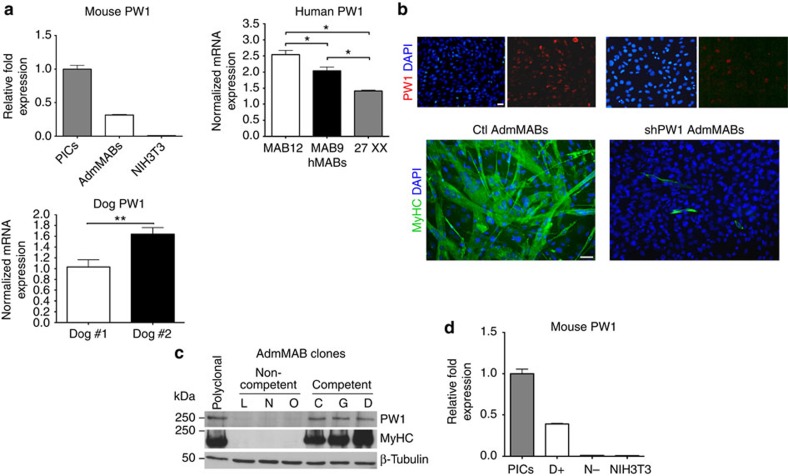
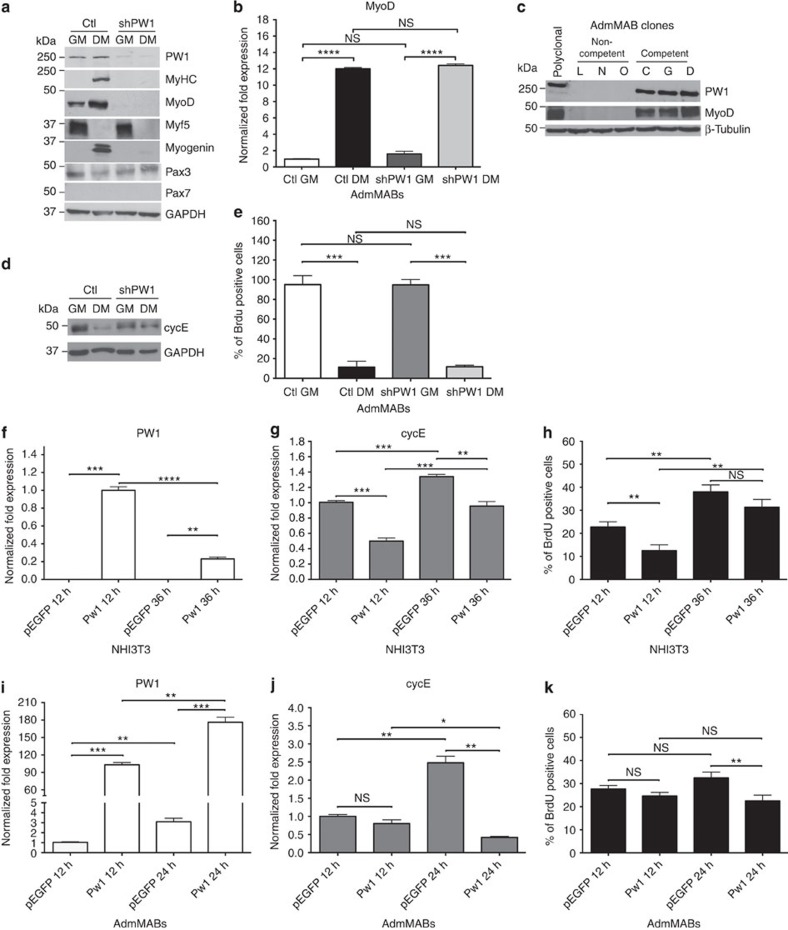
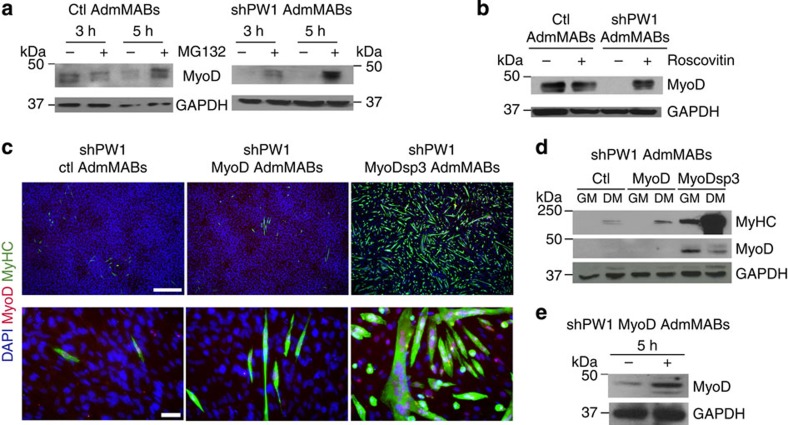
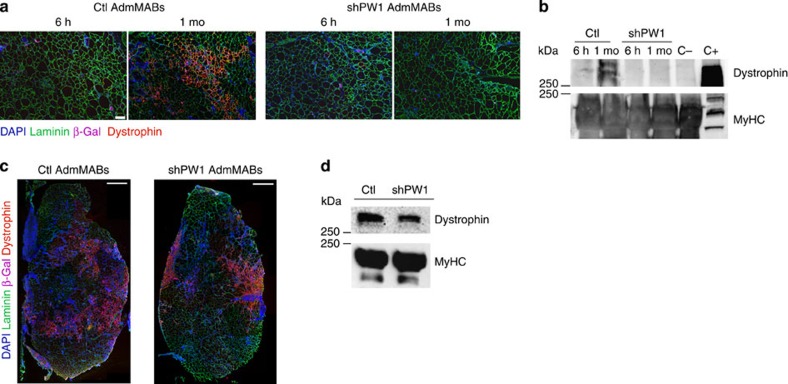
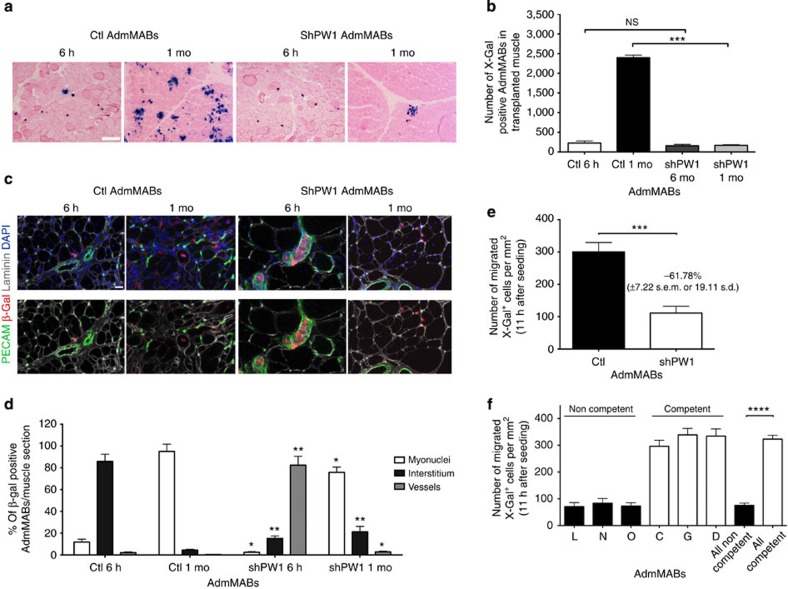
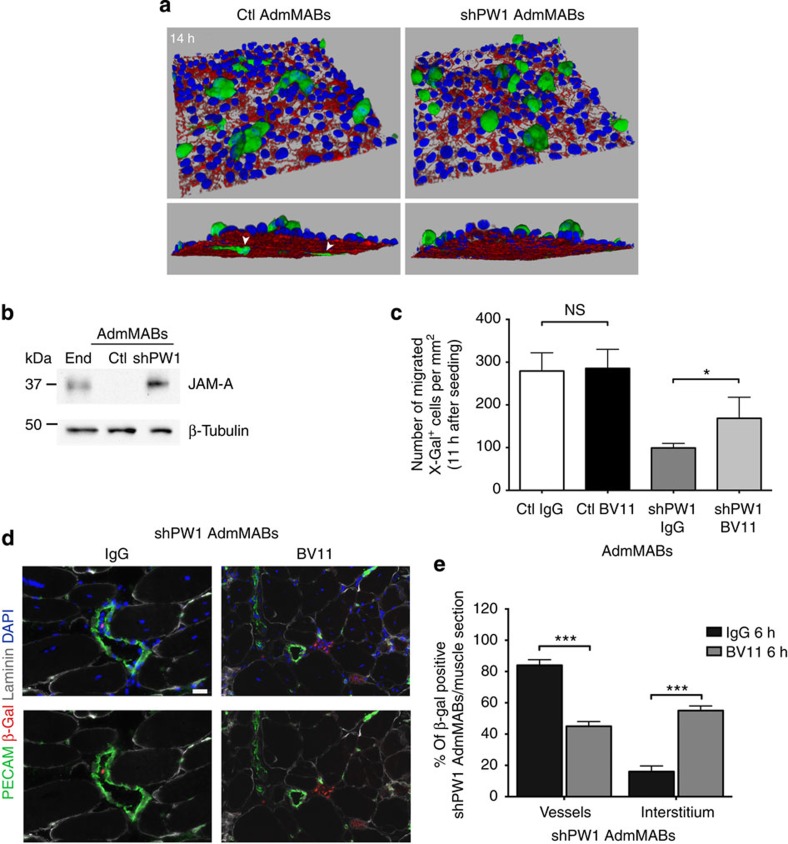
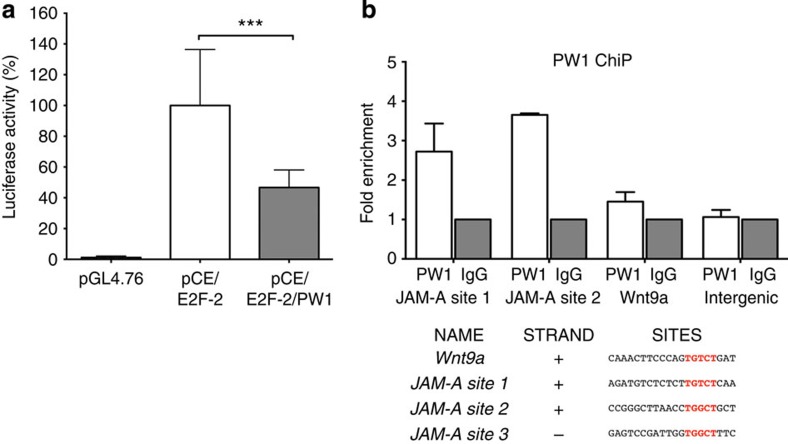
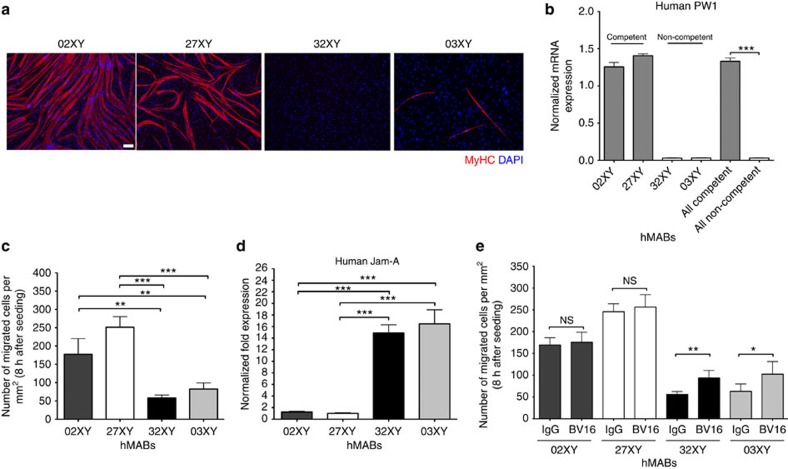
Mesoangioblasts are vessel-associated progenitor cells that show therapeutic promise for the treatment of muscular dystrophy. Mesoangioblasts have the ability to undergo skeletal muscle differentiation and cross the blood vessel wall regardless of the developmental stage at which they are isolated. Here we show that PW1/Peg3 is expressed at high levels in mesoangioblasts obtained from mouse, dog and human tissues and its level of expression correlates with their myogenic competence. Silencing PW1/Peg3 markedly inhibits myogenic potential of mesoangioblasts in vitro through MyoD degradation. Moreover, lack of PW1/Peg3 abrogates mesoangioblast ability to cross the vessel wall and to engraft into damaged myofibres through the modulation of the junctional adhesion molecule-A. We conclude that PW1/Peg3 function is essential for conferring proper mesoangioblast competence and that the determination of PW1/Peg3 levels in human mesoangioblasts may serve as a biomarker to identify the best donor populations for therapeutic application in muscular dystrophies.
Overview
The claims and statistics of this paper haven’t been checked yet.
Free: it reads the open-access text and checks the first 5 claims that cite a source we can check. Create a free account to check every claim.
Integrity signals
Registry
Cites
Statistics
Figures
Verification
Claims the paper makes
The claims and statistics of this paper haven’t been checked yet.
Free: it reads the open-access text and checks the first 5 claims that cite a source we can check. Create a free account to check every claim.
Claims other papers make about this one
Each is checked against this paper’s own text: does it say what the citing paper says it does?
In the citing paper
“These factors can derive from the circulation or neighboring cell types such as FAPs, fibroblasts and immune cells, as discussed herein, and other cell types which also play important roles, including adipocytes, endothelial cells, mesoangioblasts, PW1+ interstitial cells and myofibroblasts109–111.”
From The central role of muscle stem cells in regenerative failure with aging (2015) · cites this paper as [111]
Self-check
Percentages, sums and reported differences re-computed from the paper’s own numbers.
The self-check needs the paper’s full text.
Citations
Cites
Martìn-Padura, I., Lostaglio, S., Schneemann, M., Williams, L., Romano, M., Fruscella, P., Panzeri, C., Stoppacciaro, A., Ruco, L., Villa, A., et al. (1998) · The Journal of Cell Biology · doi:10.1083/jcb.142.1.117 · Cited by 1,388
Self-citationPericytes of human skeletal muscle are myogenic precursors distinct from satellite cells
Dellavalle, A., Sampaolesi, M., Tonlorenzi, R., Tagliafico, E., Sacchetti, B., Perani, L., Innocenzi, A., Galvez, B. G., Messina, G., Morosetti, R., et al. (2007) · Nature Cell Biology · doi:10.1038/ncb1542 · Cited by 1,001 · cited 5×
“From these arrays, PW1 was found to be expressed in MABs regardless of species and age 9,10 .”
InfluentialSelf-citationMesoangioblast stem cells ameliorate muscle function in dystrophic dogs
Sampaolesi, M., Blot, S., D’Antona, G., Granger, N., Tonlorenzi, R., Innocenzi, A., Mognol, P., Thibaud, J.-L., Galvez, B. G., Barthélémy, I., et al. (2006) · Nature · doi:10.1038/nature05282 · Cited by 769 · cited 4×
“…of muscular dystrophies in different pre-clinical animal models: the a -sarcoglican-null mouse, which models the limb-girdle muscular dystrophy, the AJ mouse model of dysferlinopathy, the mdx mouse for Duchenne muscular dystrophy (DMD) 2–5 and the golden retriever muscular dystrophy dog 6 .”
InfluentialSelf-citationRepairing skeletal muscle: regenerative potential of skeletal muscle stem cells
Tedesco, F. S., Dellavalle, A., Diaz-Manera, J., Messina, G., & Cossu, G. (2010) · Journal of Clinical Investigation · doi:10.1172/jci40373 · Cited by 677 · cited 1×
“The ability of MABs to cross the vessel wall confers an advantage as therapeutic donor stem cells as compared with satellite cells and myoblasts that need to be delivered directly into the muscle tissue to properly engraft 7,8 .”
Self-citationSampaolesi, M., Torrente, Y., Innocenzi, A., Tonlorenzi, R., D'Antona, G., Pellegrino, M. A., Barresi, R., Bresolin, N., De Angelis, M. G. C., Campbell, K. P., et al. (2003) · Science · doi:10.1126/science.1082254 · Cited by 641
Self-citationMinasi, M. G., Riminucci, M., De Angelis, L., Borello, U., Berarducci, B., Innocenzi, A., Caprioli, A., Sirabella, D., Baiocchi, M., De Maria, R., et al. (2002) · Development · doi:10.1242/dev.129.11.2773 · Cited by 514
Self-citationMitchell, K. J., Pannérec, A., Cadot, B., Parlakian, A., Besson, V., Gomes, E. R., Marazzi, G., & Sassoon, D. A. (2010) · Nature Cell Biology · doi:10.1038/ncb2025 · Cited by 441
Self-citationSkeletal muscle stem cells in developmental versus regenerative myogenesis
Tajbakhsh, S. (2009) · Journal of Internal Medicine · doi:10.1111/j.1365-2796.2009.02158.x · Cited by 332 · cited 1×
“The ability of MABs to cross the vessel wall confers an advantage as therapeutic donor stem cells as compared with satellite cells and myoblasts that need to be delivered directly into the muscle tissue to properly engraft 7,8 .”
Kitzmann, M., Carnac, G., Vandromme, M., Primig, M., Lamb, N. J. C., & Fernandez, A. (1998) · The Journal of Cell Biology · doi:10.1083/jcb.142.6.1447 · Cited by 324
Tedesco, F. S., Gerli, M. F. M., Perani, L., Benedetti, S., Ungaro, F., Cassano, M., Antonini, S., Tagliafico, E., Artusi, V., Longa, E., et al. (2012) · Science Translational Medicine · doi:10.1126/scitranslmed.3003541 · Cited by 301 · cited 1×
“In the last decade, MABs have been isolated from different species (mouse, dog and human) at different developmental stages (from mouse embryo to adult humans, including also iPS cells) 1,4,6,9,30 .”
Self-citation
Cited by
Integrin-mediated mechanotransduction
Sun, Z., Guo, S. S., & Fässler, R. (2016) · Journal of Cell Biology · doi:10.1083/jcb.201609037 · Cited by 1,079
The central role of muscle stem cells in regenerative failure with aging
Blau, H. M., Cosgrove, B. D., & Ho, A. T. V. (2015) · Nature Medicine · doi:10.1038/nm.3918 · Cited by 437
The extracellular matrix in development
Walma, D. A. C., & Yamada, K. M. (2020) · Development · doi:10.1242/dev.175596 · Cited by 397
Proteoglycan Chemical Diversity Drives Multifunctional Cell Regulation and Therapeutics
Karamanos, N. K., Piperigkou, Z., Theocharis, A. D., Watanabe, H., Franchi, M., Baud, S., Brézillon, S., Götte, M., Passi, A., Vigetti, D., et al. (2018) · Chemical Reviews · doi:10.1021/acs.chemrev.8b00354 · Cited by 367
Fibrous nonlinear elasticity enables positive mechanical feedback between cells and ECMs
Hall, M. S., Alisafaei, F., Ban, E., Feng, X., Hui, C.-Y., Shenoy, V. B., & Wu, M. (2016) · Proceedings of the National Academy of Sciences · doi:10.1073/pnas.1613058113 · Cited by 360
Hydrogel microenvironments for cancer spheroid growth and drug screening
Li, Y., & Kumacheva, E. (2018) · Science Advances · doi:10.1126/sciadv.aas8998 · Cited by 351
Strain-enhanced stress relaxation impacts nonlinear elasticity in collagen gels
Nam, S., Hu, K. H., Butte, M. J., & Chaudhuri, O. (2016) · Proceedings of the National Academy of Sciences · doi:10.1073/pnas.1523906113 · Cited by 336
Duchenne Muscular Dystrophy: From Diagnosis to Therapy
Falzarano, M., Scotton, C., Passarelli, C., & Ferlini, A. (2015) · Molecules · doi:10.3390/molecules201018168 · Cited by 292
Matching material and cellular timescales maximizes cell spreading on viscoelastic substrates
Gong, Z., Szczesny, S. E., Caliari, S. R., Charrier, E. E., Chaudhuri, O., Cao, X., Lin, Y., Mauck, R. L., Janmey, P. A., Burdick, J. A., et al. (2018) · Proceedings of the National Academy of Sciences · doi:10.1073/pnas.1716620115 · Cited by 281
Nam, S., Gupta, V. K., Lee, H.-P., Lee, J. Y., Wisdom, K. M., Varma, S., Flaum, E. M., Davis, C., West, R. B., & Chaudhuri, O. (2019) · Science Advances · doi:10.1126/sciadv.aaw6171 · Cited by 193
Molecular clutch drives cell response to surface viscosity
Bennett, M., Cantini, M., Reboud, J., Cooper, J. M., Roca-Cusachs, P., & Salmeron-Sanchez, M. (2018) · Proceedings of the National Academy of Sciences · doi:10.1073/pnas.1710653115 · Cited by 170
Contreras, O., Rossi, F. M. V., & Théret, M. (2021) · Skeletal Muscle · doi:10.1186/s13395-021-00265-6 · Cited by 175
Decorin as a multivalent therapeutic agent against cancer
Neill, T., Schaefer, L., & Iozzo, R. V. (2015) · Advanced Drug Delivery Reviews · doi:10.1016/j.addr.2015.10.016 · Cited by 149
Skeletal muscle stem cells in comfort and stress
Evano, B., & Tajbakhsh, S. (2018) · npj Regenerative Medicine · doi:10.1038/s41536-018-0062-3 · Cited by 131
“Interestingly, mesoangioblasts isolated from mouse, dog and human express high levels of Pw1, where this gene was shown to confer the myogenic potential of mesoangioblasts, and their ability to cross the vessel wall.(18) Recently, an interstitial cell type that is marked by the basic-Helix-loop-Helix transcription fac…”
Mekhdjian, A. H., Kai, F., Rubashkin, M. G., Prahl, L. S., Przybyla, L., McGregor, A., Bell, E. S., Barnes, J. M., DuFort, C. C., Ou, G., et al. (2017) · Molecular Biology of the Cell · doi:10.1091/mbc.e16-09-0654 · Cited by 149
Lamellipodium is a myosin-independent mechanosensor
Oakes, P. W., Bidone, T. C., Beckham, Y., Skeeters, A. V., Juan, G. R. R.-S., Winter, S. P., Voth, G. A., & Gardel, M. L. (2018) · Proceedings of the National Academy of Sciences · doi:10.1073/pnas.1715869115 · Cited by 139
Cao, X. D., Ban, E., Baker, B. M., Lin, Y., Burdick, J. A., Chen, C. S., & Shenoy, V. B. (2017) · Proceedings of the National Academy of Sciences · doi:10.1073/pnas.1620486114 · Cited by 124
Contessotto, P., Orbanić, D., Costa, M. D., Jin, C., Owens, P., Chantepie, S., Chinello, C., Newell, J., Magni, F., Papy-García, D., et al. (2021) · Science Translational Medicine · doi:10.1126/scitranslmed.aaz5380 · Cited by 115
Striated muscle function, regeneration, and repair
Shadrin, I. Y., Khodabukus, A., & Bursac, N. (2016) · Cellular and Molecular Life Sciences · doi:10.1007/s00018-016-2285-z · Cited by 127
“For systemic delivery of myogenic cells it will be also important to promote their passing through capillary walls, which could be achieved by use of gene editing techniques (e.g. CRISPR/Cas9) to safely and stably express proteins such as Pw1/Peg3 [128].”
InfluentialRazafiarison, T., Holenstein, C. N., Stauber, T., Jovic, M., Vertudes, E., Loparić, M., Kawecki, M., Bernard, L., Silván, U., & Snedeker, J. G. (2018) · Proceedings of the National Academy of Sciences · doi:10.1073/pnas.1704543115 · Cited by 95
Folding artificial mucosa with cell-laden hydrogels guided by mechanics models
Chan, H. F., Zhao, R. R., Parada, G. A., Meng, H., Leong, K. W., Griffith, L. G., & Zhao, X. (2018) · Proceedings of the National Academy of Sciences · doi:10.1073/pnas.1802361115 · Cited by 85
Mechanical Characterization of a Dynamic and Tunable Methacrylated Hyaluronic Acid Hydrogel
Ondeck, M. G., & Engler, A. J. (2016) · Journal of Biomechanical Engineering · doi:10.1115/1.4032429 · Cited by 76
Abnormalities in Skeletal Muscle Myogenesis, Growth, and Regeneration in Myotonic Dystrophy
André, L. M., Ausems, C. R. M., Wansink, D. G., & Wieringa, B. (2018) · Frontiers in Neurology · doi:10.3389/fneur.2018.00368 · Cited by 74
“PCs with skeletal myogenic potential can be distinguished by expression of ALP (200, 300) and new biomarkers for therapeutic potency, like PW1/Peg3, a regulator of myogenic ability and migration capacity in PCs, MABs and satellite cells, have recently been identified (301).”
Viscoelastic extracellular matrix enhances epigenetic remodeling and cellular plasticity
Wu, Y., Song, Y., Soto, J., Hoffman, T., Lin, X. Y., Zhang, A., Chen, S., Massad, R. N., Han, X., Qi, D., et al. (2025) · Nature Communications · doi:10.1038/s41467-025-59190-7 · Cited by 77
Choi, S., Ferrari, G., & Tedesco, F. S. (2020) · EMBO Molecular Medicine · doi:10.15252/emmm.202012357 · Cited by 62
Self-citationČamernik, K., Barlič, A., Drobnič, M., Marc, J., Jeras, M., & Zupan, J. (2018) · Stem Cell Reviews and Reports · doi:10.1007/s12015-018-9800-6 · Cited by 65
The effect of type 2 diabetes mellitus and obesity on muscle progenitor cell function
Teng, S., & Huang, P. (2019) · Stem Cell Research & Therapy · doi:10.1186/s13287-019-1186-0 · Cited by 59
Review: Bioengineering strategies to probe T cell mechanobiology
de la Zerda, A., Kratochvil, M. J., Suhar, N. A., & Heilshorn, S. C. (2018) · APL Bioengineering · doi:10.1063/1.5006599 · Cited by 57
Fischer, T., Wilharm, N., Hayn, A., & Mierke, C. T. (2017) · Convergent Science Physical Oncology · doi:10.1088/2057-1739/aa8bbb · Cited by 63
Muscle Interstitial Cells: A Brief Field Guide to Non-satellite Cell Populations in Skeletal Muscle
Tedesco, F. S., Moyle, L. A., & Perdiguero, E. (2017) · Methods in molecular biology · doi:10.1007/978-1-4939-6771-1_7 · Cited by 60
Self-citationWalker, M., Pringle, E. W., Ciccone, G., Oliver‐Cervelló, L., Tassieri, M., Gourdon, D., & Cantini, M. (2023) · Advanced Healthcare Materials · doi:10.1002/adhm.202302571 · Cited by 52
Dierick, F., Héry, T., Hoareau‐Coudert, B., Mougenot, N., Monceau, V., Claude, C., Crisan, M., Besson, V., Dorfmüller, P., Marodon, G., et al. (2016) · Circulation Research · doi:10.1161/circresaha.115.307035 · Cited by 57
“PW1+ progenitor cells have been isolated in several organs in mouse, human, dog, and pigs and share common characteristics with pulmonary PW1+ progenitor cells: (1) they are able to differentiate into α-SMA+ cells, and (2) they are characterized by the expression of CD34, c-kit, and PDGFR-α.14,15,20,22 These markers h…”
InfluentialSelf-citationThe mesenchymoangioblast, mesodermal precursor for mesenchymal and endothelial cells
Slukvin, I. I., & Kumar, A. (2018) · Cellular and Molecular Life Sciences · doi:10.1007/s00018-018-2871-3 · Cited by 49
Wang, C., Xu, X., Chen, J., Kang, Y., Guo, J., Duscher, D., Yang, X., Guo, G., Ren, S., Xiong, H., et al. (2020) · Frontiers in Bioengineering and Biotechnology · doi:10.3389/fbioe.2020.00490 · Cited by 42
“83 in SCs of diabetic groups (Bonfanti et al., 2015) (Supplementary Tables S2–S4, P-value < 0.”
“Viscotaxis”- directed migration of mesenchymal stem cells in response to loss modulus gradient
Shirke, P. U., Goswami, H., Kumar, V., Shah, D., Beri, S., Das, S. K., Bellare, J., Mayor, S., Venkatesh, K. V., Seth, J. R., et al. (2021) · Acta Biomaterialia · doi:10.1016/j.actbio.2021.08.039 · Cited by 39
Role of the zinc finger and SCAN domain-containing transcription factors in cancer.
Huang, M., Chen, Y., Han, D. H., Lei, Z., & Chu, X. (2019) · PubMed Central · Cited by 40
Functionalized Bead Assay to Measure Three-dimensional Traction Forces during T-cell Activation
Aramesh, M., Mergenthal, S., Issler, M., Plochberger, B., Weber, F., Qin, X., Liska, R., Duda, G. N., Huppa, J. B., Ries, J., et al. (2020) · Nano Letters · doi:10.1021/acs.nanolett.0c03964 · Cited by 39
Shafiee, A., Patel, J., Hutmacher, D. W., Fisk, N. M., & Khosrotehrani, K. (2018) · Stem Cell Reports · doi:10.1016/j.stemcr.2018.01.011 · Cited by 37
“The existence of mesoangioblasts in postnatal life has also been suggested through isolation from muscle pericytes (Bonfanti et al., 2015).”
Benedetti, S., Uno, N., Hoshiya, H., Ragazzi, M., Ferrari, G., Kazuki, Y., Moyle, L. A., Tonlorenzi, R., Lombardo, A., Chaouch, S., et al. (2017) · EMBO Molecular Medicine · doi:10.15252/emmm.201607284 · Cited by 35
“To assess preservation of this property, riDMD(DYS-HAC2) mesoangioblasts were subjected to an in vitro transmigration assay (Giannotta et al, 2014; Bonfanti et al, 2015).”
Self-citationIyer, P. S., Mavoungou, L. O., Ronzoni, F., Zemła, J., Schmid‐Siegert, E., Antonini, S., Neff, L. A., Dorchies, O. M., Jaconi, M. E., Lekka, M., et al. (2018) · Molecular Therapy · doi:10.1016/j.ymthe.2018.01.021 · Cited by 33
Self-citationPeg3/PW1 Is a Marker of a Subset of Vessel Associated Endothelial Progenitors
Malinverno, M., Corada, M., Ferrarini, L., Formicola, L., Marazzi, G., Sassoon, D. A., & Dejana, E. (2017) · Stem Cells · doi:10.1002/stem.2566 · Cited by 28
Self-citationA functional outside-in signaling network of proteoglycans and matrix molecules regulating autophagy
Neill, T., Kapoor, A., Xie, C., Buraschi, S., & Iozzo, R. V. (2021) · Matrix Biology · doi:10.1016/j.matbio.2021.04.001 · Cited by 29
A Novel Mutant Allele of Pw1/Peg3 Does Not Affect Maternal Behavior or Nursing Behavior
Denizot, A.-L., Besson, V., Correra, R. M., Mazzola, A., Lopes, I., Courbard, J.-R., Marazzi, G., & Sassoon, D. A. (2016) · PLoS Genetics · doi:10.1371/journal.pgen.1006053 · Cited by 31
“More recently, it has been demonstrated that PW1/PEG3 is required for stem cell competence in mesoangioblasts [23].”
Self-citationPierantozzi, E., Vezzani, B., Badin, M., Curina, C., Severi, F. M., Petraglia, F., Randazzo, D., Rossi, D., & Sorrentino, V. (2016) · Stem Cells and Development · doi:10.1089/scd.2015.0336 · Cited by 30
“It has been recently shown that stem cell competence of adult sk-hPCs, and in particular their skeletal myogenic potential, is positively regulated by the expression of PW1/Peg3 [37].”
A viscoelastic–stochastic model of the effects of cytoskeleton remodelling on cell adhesion
Li, L., Zhang, W., & Wang, J. (2016) · Royal Society Open Science · doi:10.1098/rsos.160539 · Cited by 26
Correra, R. M., Ollitrault, D., Valente, M., Mazzola, A., Aðalsteinsson, B. Þ., Ferguson‐Smith, A. C., Marazzi, G., & Sassoon, D. A. (2018) · Scientific Reports · doi:10.1038/s41598-018-32941-x · Cited by 27
Self-citationAusems, C. R. M., van Engelen, B. G. M., van Bokhoven, H., & Wansink, D. G. (2020) · Stem Cell Reviews and Reports · doi:10.1007/s12015-020-10100-y · Cited by 27
Charbonier, F. W., Zhu, J., Slyman, R., Allan, C., & Chaudhuri, O. (2025) · Proceedings of the National Academy of Sciences · doi:10.1073/pnas.2417290122 · Cited by 21
Mesoangioblasts at 20: From the embryonic aorta to the patient bed
Cossu, G., Tonlorenzi, R., Brunelli, S., Sampaolesi, M., Messina, G., Azzoni, E., Benedetti, S., Biressi, S., Bonfanti, C., Bragg, L., et al. (2023) · Frontiers in Genetics · doi:10.3389/fgene.2022.1056114 · Cited by 19
“In 2015, a cross-analysis of independent microarrays performed on different human and murine MAB populations revealed that PW1 is expressed in MABs regardless of species origin and age of isolation (Tagliafico et al., 2004; Bonfanti et al., 2015).”
Self-citationChoi, S., Ferrari, G., Moyle, L. A., Mackinlay, K. M., Naouar, N., Jalal, S., Benedetti, S., Wells, C. A., Muntoni, F., & Tedesco, F. S. (2022) · EMBO Molecular Medicine · doi:10.15252/emmm.202114526 · Cited by 14
Self-citationZeb2 Regulates Myogenic Differentiation in Pluripotent Stem Cells
Filippo, E. S. D., Costamagna, D., Giacomazzi, G., Cortés-Calabuig, Á., Stryjewska, A., Huylebroeck, D., Fulle, S., & Sampaolesi, M. (2020) · International Journal of Molecular Sciences · doi:10.3390/ijms21072525 · Cited by 15
“More recently, the presence of PW1 zinc-finger protein was reported in interstitial myogenic progenitors, and it is also required for migration ability of murine and human mesoangioblasts [18,19].”
Ritso, M., Tung, L. W., & Rossi, F. M. V. (2021) · Experimental Cell Research · doi:10.1016/j.yexcr.2021.112947 · Cited by 17
Contributions of Muscle-Resident Progenitor Cells to Homeostasis and Disease
Dey, D., Goldhamer, D. J., & Yu, P. B. (2015) · Current Molecular Biology Reports · doi:10.1007/s40610-015-0025-z · Cited by 15
Do porcine Sertoli cells represent an opportunity for Duchenne muscular dystrophy?
Chiappalupi, S., Salvadori, L., Luca, G., Riuzzi, F., Calafiore, R., Donato, R., & Sorci, G. (2019) · Cell Proliferation · doi:10.1111/cpr.12599 · Cited by 16
Paternally expressed gene 3 (Pw1/Peg3) promotes sexual dimorphism in metabolism and behavior
Tanaka, K., Besson, V., Rivagorda, M., Oury, F., Marazzi, G., & Sassoon, D. A. (2022) · PLoS Genetics · doi:10.1371/journal.pgen.1010003 · Cited by 14
Self-citationBesson, V., Kyryachenko, S., Janich, P., Benitah, S. A., Marazzi, G., & Sassoon, D. A. (2016) · Stem Cells · doi:10.1002/stem.2540 · Cited by 15
Self-citationPericytes in Muscular Dystrophies
Moyle, L. A., Tedesco, F. S., & Benedetti, S. (2019) · Advances in experimental medicine and biology · doi:10.1007/978-3-030-16908-4_15 · Cited by 20
“These reports show active contribution of pericytes to muscle regeneration in dystrophic animal models, (Berry et al., 2007; Bonfanti et al., 2015; Dellavalle et al., 2007; Diaz-Manera et al., 2010; Domi et al., 2015; Galvez et al., 2006; Iyer et al., 2018; Minasi et al., 2002; Morosetti et al.,…”
Self-citationFujita, K., Feng, Z., Sato, D., KOSAWADA, T., Nakamura, T., Shiraishi, Y., & Umezu, M. (2018) · AIMS Materials Science · doi:10.3934/matersci.2018.1.54 · Cited by 13
The zinc finger transcription factor PW1/PEG3 restrains murine beta cell cycling
Sojoodi, M., Stradiot, L., Tanaka, K., Heremans, Y., Leuckx, G., Besson, V., Staels, W., de Casteele, M. V., Marazzi, G., Sassoon, D. A., et al. (2016) · Diabetologia · doi:10.1007/s00125-016-3954-z · Cited by 18
“Nevertheless, since PDX1 is not only necessary for pancreas specification but also essential for adult beta cells [27] and since PW1 controls the cycling of other cell types [10, 28],”
Self-citationSubstrate Resistance to Traction Forces Controls Fibroblast Polarization
Missirlis, D., Haraszti, T., Heckmann, L., & Spatz, J. P. (2020) · Biophysical Journal · doi:10.1016/j.bpj.2020.10.043 · Cited by 12
Cell Therapy Strategies on Duchenne Muscular Dystrophy: A Systematic Review of Clinical Applications
Akat, A., & Karaöz, E. (2023) · Stem Cell Reviews and Reports · doi:10.1007/s12015-023-10653-8 · Cited by 15
“Another advantageous characteristic is their capacity to traverse blood vessel walls in order to access muscles, which presents the possibility for systemic use [92].”
Isolation and Characterization of Vessel-Associated Stem/Progenitor Cells from Skeletal Muscle
Tonlorenzi, R., Rossi, G., & Messina, G. (2017) · Methods in molecular biology · doi:10.1007/978-1-4939-6771-1_8 · Cited by 10
“Additionally, in light of the recent identification of PW1/ Peg3 as a key marker essential in regulating MAB competence [27], a paragraph will be dedicated to the description of the methods developed to detect PW1/Peg3 in mouse and human MABs (see Subheading 3.”
InfluentialSelf-citationGautam, J., & Yao, Y. (2019) · Advances in experimental medicine and biology · doi:10.1007/978-3-030-11093-2_4 · Cited by 11
The importance of mechanical forces in chronic respiratory diseases
Burgess, J. K., Nawroth, J. C., Ibáñez‐Fonseca, A., & Gavara, N. (2026) · European Respiratory Review · doi:10.1183/16000617.0155-2025 · Cited by 10
Smeriglio, P., Alonso‐Martín, S., Masciarelli, S., Madaro, L., Iosue, I., Marrocco, V., Relaix, F., Fazi, F., Marazzi, G., Sassoon, D. A., et al. (2015) · The FASEB Journal · doi:10.1096/fj.15-275420 · Cited by 9
“Of note, it has been recently shown that the PW1 level of expression correlates with the myogenic competence of mesoangioblasts, a vessel-associated progenitor cell population, and with their ability to cross the vessel wall and toengraft intodamagedmyofibers (61).”
Self-citationIsolation of Mammalian Mesoangioblasts: A Subset of Pericytes with Myogenic Potential
Giacomazzi, G., Giovannelli, G., Rotini, A., Costamagna, D., Quattrocelli, M., & Sampaolesi, M. (2021) · Methods in molecular biology · doi:10.1007/978-1-0716-1056-5_11 · Cited by 6
Targeting YAP mechanosignaling to ameliorate stiffness-induced Schlemm’s canal cell pathobiologyPreprint
Li, H., Kuhn, M. N., Kelly, R. A., Singh, A., Palanivel, K. K., Salama, I., Ieso, M. L. D., Stamer, W. D., Ganapathy, P. S., & Herberg, S. (2023) · bioRxiv (Cold Spring Harbor Laboratory) · doi:10.1101/2023.09.08.556840 · Cited by 5
Cell response to extracellular matrix energy dissipation outweighs rigidity sensingPreprint
Huerta-López, C., Clemente-Manteca, A., Velázquez-Carreras, D., Espinosa, F. M., Sanchez, J. G., Sáez, P., Martínez‐del‐Pozo, Á., García-García, M., Martín-Colomo, S., Rodríguez-Blanco, A., et al. (2022) · bioRxiv (Cold Spring Harbor Laboratory) · doi:10.1101/2022.11.16.516826 · Cited by 4
Degradability tunes ECM stress relaxation and cellular mechanicsPreprint
Narasimhan, B. N., & Fraley, S. I. (2024) · bioRxiv (Cold Spring Harbor Laboratory) · doi:10.1101/2024.07.28.605514 · Cited by 4
[A retrospective analysis of 6 children with Duchenne muscular dystrophy].
Yin, Y., Huang, Y.-P., Lü, C., Sun, X.-P., Niu, F., Jin, R., & Zhou, G. (2017) · PubMed Central · doi:10.7499/j.issn.1008-8830.2017.04.009 · Cited by 3
Teng, K., Luan, X., An, Q., Zhao, Y., Hu, X., Zhang, S., Zhuang, J., Li, X., Lu, L., & Zhang, Y. (2020) · ChemistrySelect · doi:10.1002/slct.202000620 · Cited by 3
Sharma, V., Adebowale, K., Gong, Z., Chaudhuri, O., & Shenoy, V. B. (2025) · bioRxiv (Cold Spring Harbor Laboratory) · doi:10.1101/2025.03.11.642113 · Cited by 2
Sharma, A., Steger, R. F., Li, J. M., Baude, J. A., Heom, K. A., Dey, S. S., & Stowers, R. S. (2025) · bioRxiv · doi:10.1101/2025.03.18.643983 · Cited by 3
Aunan‐Diop, J. S., Friismose, A. I., Yin, Z., Hojo, E., Petersen, J. K., Grønhøj, M. H., Pedersen, C. B., Mussmann, B. R., Halle, B., & Poulsen, F. R. (2026) · medRxiv · doi:10.64898/2026.03.04.26347674 · Cited by 2
Mavoungou, L. O., Neuenschwander, S., Pham, U., Iyer, P. S., & Mermod, N. (2019) · Stem Cell Research · doi:10.1016/j.scr.2019.101619 · Cited by 4
Hassan, A.-R., Biel, T., & Kim, T. (2018) · bioRxiv (Cold Spring Harbor Laboratory) · doi:10.1101/460170 · Cited by 1
Whitehead, J., Griffin, K. H., Vorwald, C. E., Gionet‐Gonzales, M., Cinque, S. E., & Leach, J. K. (2020) · bioRxiv (Cold Spring Harbor Laboratory) · doi:10.1101/2020.03.10.986315 · Cited by 1
Smith, A. M., Pardi, B. M., de Sousa, I. D. P., Gopinath, A., & Eguiluz, R. C. A. (2026) · bioRxiv (Cold Spring Harbor Laboratory) · doi:10.64898/2026.02.04.703912 · Cited by 1
Muscle progenitor cells in skeletal muscle
Bajek, S., Nikolić, M., Šoić-Vranić, T., Bajek, M., & Marić, I. (2015) · Medicina Fluminensis
Stem Cell Therapy in Muscle Degeneration
Duelen, R., Costamagna, D., & Sampaolesi, M. (2017) · Springer eBooks · doi:10.1007/978-981-10-3292-9_3
DLL4 and PDGF-BB regulate migration of human iPSC-derived skeletal myogenic progenitorsPreprint
Ferrari, G., Choi, S., Moyle, L. A., Mackinlay, K. M., Naouar, N., Wells, C. A., Francesco Muntoni, A., & Tedesco, F. S. (2021) · bioRxiv (Cold Spring Harbor Laboratory) · doi:10.1101/2021.02.28.431778
Self-citationThe force loading rate drives cell mechanosensing through both reinforcement and fluidizationPreprint
Andreu, I., Falcones, B., Hurst, S., Chahare, N. R., Quiroga, X., Roux, A. L., Kechagia, Z., Beedle, A. E. M., Elósegui-Artola, A., Trepat, X., et al. (2021) · bioRxiv (Cold Spring Harbor Laboratory) · doi:10.1101/2021.03.08.434428 · Cited by 1
Role of molecular and metabolic defects in impaired performance of dystrophic skeletal muscles
Bhullar, S. K., Nusier, M. K., Shah, A. K., & Dhalla, N. S. (2021) · Journal of Molecular and Clinical Medicine · doi:10.31083/j.jmcm0402005 · Cited by 1
“cells; thus stem cells based therapies have been suggested for the treatment of diverse muscular disorders [301, 302].”
Dhabalia, S., Malpani, S. N., & Shrivastav, S. (2023) · Medical Science · doi:10.54905/disssi/v27i132/e86ms2822
State of the Art Procedures for the Isolation and Characterization of Mesoangioblasts
Giarratana, N., Conti, F., Rinvenuti, L., Ronzoni, F., & Sampaolesi, M. (2023) · Methods in molecular biology · doi:10.1007/978-1-0716-3036-5_8
Clinical features and search for genetic determinants of postprandial hypoglycaemia
Ren, Q., Han, X., Gong, S., Zhang, S., Ba, T., Zhao, Y., Li, Y., Wang, Y., Zhou, X., Li, Y., et al. (2024) · Endocrine Connections · doi:10.1530/ec-24-0409
“PEG3 has dual characteristics of imprinted genes and transcription factors (29, 30), with higher expression in men than in women (31).”
Li, X., Wang, X., Dong, X., Li, Z., Lu, Y., Liu, L., Yang, G., Hong, J., Yang, Y., Zhang, C., et al. (2025) · Journal of Pain Research · doi:10.2147/jpr.s543556
Interpretable AI-driven materiomics to decode microenvironmental cues for stem cell immunomodulation
Pan, C., He, Y., Duan, Y., Chen, K., Wang, X., Wang, X., Zhang, Y., An, C., & Wang, H. (2026) · Bioactive Materials · doi:10.1016/j.bioactmat.2026.07.006 · Cited by 1
Lorant, J. (2016) · theses.fr (ABES) · doi:10.70675/87808109zf52cz4402z9da6z81f59cf2d98e · Cited by 1
Identifying the role of the imprinted gene Pw1/Peg3 in the central nervous system
Denizot, A.-L. (2015) · theses.fr (ABES) · doi:10.70675/ece83dffz29dcz4f9aza81cz87e1367928fd
PW1/Peg3+ cells respond to hypoxia in the adult heart
Sayed, A. (2019) · theses.fr (ABES) · doi:10.70675/722787a3z5efbz4ed9zadfaz56c6f7fc4045
Regulatory roots of cranial muscle diversity : developmental origins of muscular resilience
Grimaldi, A. (2020) · theses.fr (ABES) · doi:10.70675/d30bcd75z2b3dz47b1za355zb03cfbe26c48
Kihel, Y. E., Amrani, A. Z., & Ducq, Y. (2021) · HAL · doi:10.70675/3993a0d5zfa35z43f4z8ecez48f07a5b1580
Creisméas, A. (2022) · theses.fr (ABES) · doi:10.70675/7e452f5az22a1z433az83a8z1fe23089846a
Sarıca, S., & Öztürk, E. (2026) · Biomaterials Science · doi:10.1039/d6bm01195k
Reassessing the role of progenitor cells in muscle wasting in cancer cachexia
Miller, S. G., Udeme, A.-A., Funk, E., Alfaro-Quinde, C., Subramanian, S., Berto, S., Ouyang, J., Wang, J., Ostrowski, M. C., Zimmers, T. A., et al. (2026) · American Journal of Physiology-Cell Physiology · doi:10.1152/ajpcell.00144.2026
Metadata
- Authors
- Bonfanti, C., Rossi, G., Tedesco, F. S., Giannotta, M., Benedetti, S., Tonlorenzi, R., Antonini, S., Marazzi, G., Dejana, E., Sassoon, D., Cossu, G., & Messina, G.
- Affiliations
- University of Milan (IT)
- University College London (GB)
- IFOM (IT)
- IRCCS Ospedale San Raffaele (IT)
- Inserm (FR)
- Corresponding author
- Messina, Graziella
- ORCID
- Venue
- Nature Communications
- Published
- 2015-03-09
- Volume
- 6
- Issue
- 1
- Pages
- 6364-6364
- ISSN
- 2041-1723 (ISSN-L)
- PMC
- PMC4366533
- OpenAlex
- W2137181555
- Cited by
- 101
- References
- 33
- Citations by year
- 2026: 7 · 2025: 5 · 2024: 2 · 2023: 6 · 2022: 4 · 2021: 10 · 2020: 10 · 2019: 8 · 2018: 19 · 2017: 10 · 2016: 12 · 2015: 8
- FWCI
- 7.09
- Type
- journal article
- Language
- en
- Open access
- gold
- doi.org
- Licence
- cc-by
- creativecommons.org/licenses/by/4.0 (tdm)
- creativecommons.org/licenses/by/4.0 (vor)
- Locations
- Nature Communications (publishedVersion, cc-by)
- Europe PMC (PubMed Central) (publishedVersion, cc-by)
- PubMed Central (publishedVersion, cc-by)
- PubMed (publishedVersion)
- HAL (submittedVersion, cc-by)
- Archivio Istituzionale della Ricerca (Universita Degli Studi Di Milano) (submittedVersion, cc-by)
- RePEc: Research Papers in Economics (submittedVersion)
- UCL Discovery (University College London) (submittedVersion)
- Research Explorer (The University of Manchester) (submittedVersion)
- Funders
- European Commission (262948, 241440)
- Agence Nationale de la Recherche (ANR-10-LABX73, ANR-10, ANR-10-LABX, ANR-10-LABX-0073, 10-LABX-73)
- Ministero dell’Istruzione, dell’Università e della Ricerca (MIUR-Futuro in Ricerca 2010)
- Medical Research Council (MR/J006785/1, 602423)
- FP7 Ideas: European Research Council (268870, 280611)
- Topics
- Life Sciences › Biochemistry, Genetics and Molecular Biology › Molecular Biology › Muscle Physiology and Disorders
- Life Sciences › Biochemistry, Genetics and Molecular Biology › Cell Biology › Mesenchymal stem cell research
- Health Sciences › Medicine › Genetics (clinical) › Neurogenetic and Muscular Disorders Research
- Keywords
- mesoangioblasts, JAM-A, engraftment, muscular dystrophy, stem cell therapy, biomarkers, skeletal muscle differentiation, angiogenesis
- MeSH terms
- Animals, Blood Vessels, Cells, Cultured, Dogs, Genetic Vectors, Humans, Luciferases, Microscopy, Fluorescence, Muscular Dystrophies, Retroviridae, Stem Cells, Blotting, Western, Biomarkers, MyoD Protein, DNA Primers, Reverse Transcriptase Polymerase Chain Reaction, Gene Silencing, Muscle Development, Chromatin Immunoprecipitation, Mice, Kruppel-Like Transcription Factors
About these checks
Registry, retraction, Cites and statistics results are computed, not judged, with one exception: a printed reference that no index lists is read once by a model before it counts as a citation error. Claims are extracted by a model and kept only when their quote appears verbatim in the text; each cited source is then checked, with a model’s help, for whether it says what the claim relies on. Those verdicts can be wrong — read the claim’s quote and the cited source before relying on one.
Statistics and arithmetic are recomputed, not judged.
Confidence bands are shown only for fields calibrated on our annotated test set. None is calibrated yet, so no band is shown.
What counts as a claim ›How we measure confidence ›How we check this ›
Are you an author, or do you see a problem with this page? Request a review
Data sources
Bibliographic data: Semantic Scholar, OpenAlex, Crossref.
Contains information from the Semantic Scholar Academic Graph Datasets, made available under the ODC Attribution License (ODC-BY 1.0).
Semantic Scholar’s data is described in: Kinney, R., et al. (2023). The Semantic Scholar Open Data Platform. arXiv:2301.10140.
