

The DOI matches its Crossref record; 47 of the 47 references it cites were found in a registry or an index.
Enteric bacterial protein AvrA promotes colonic tumorigenesis and activates colonic beta-catenin signaling pathway
Open accessAbstract
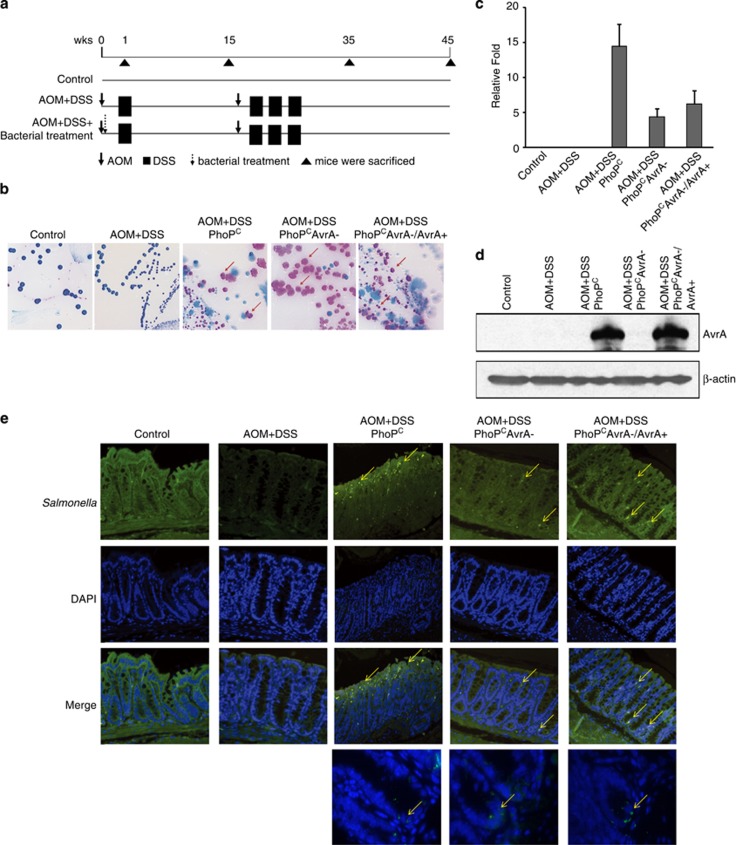
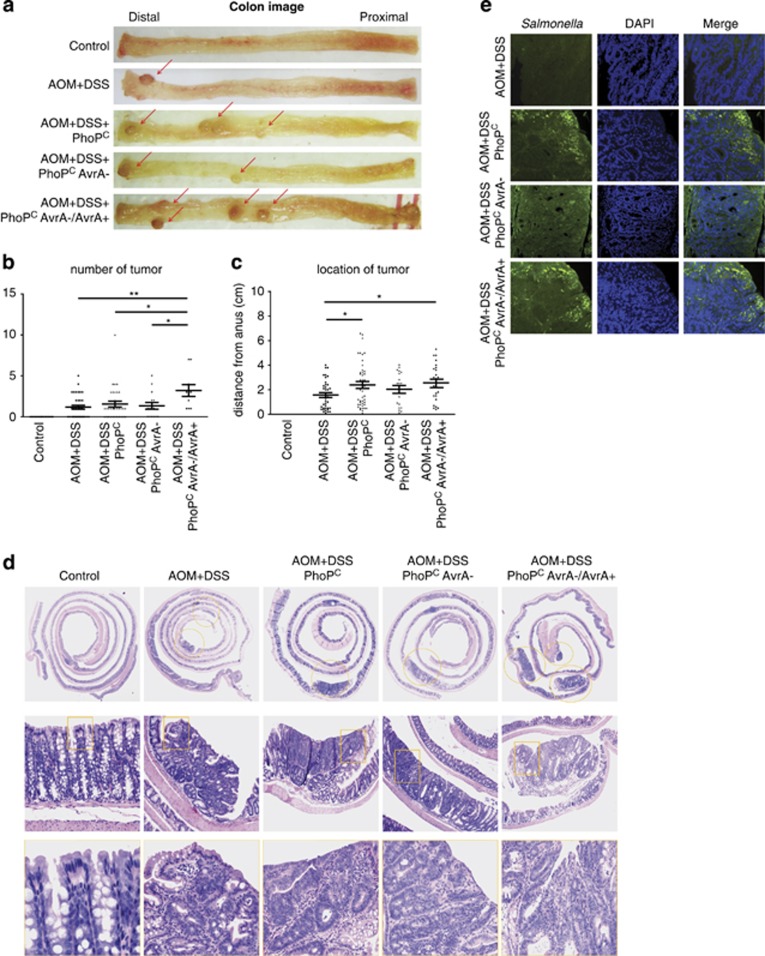
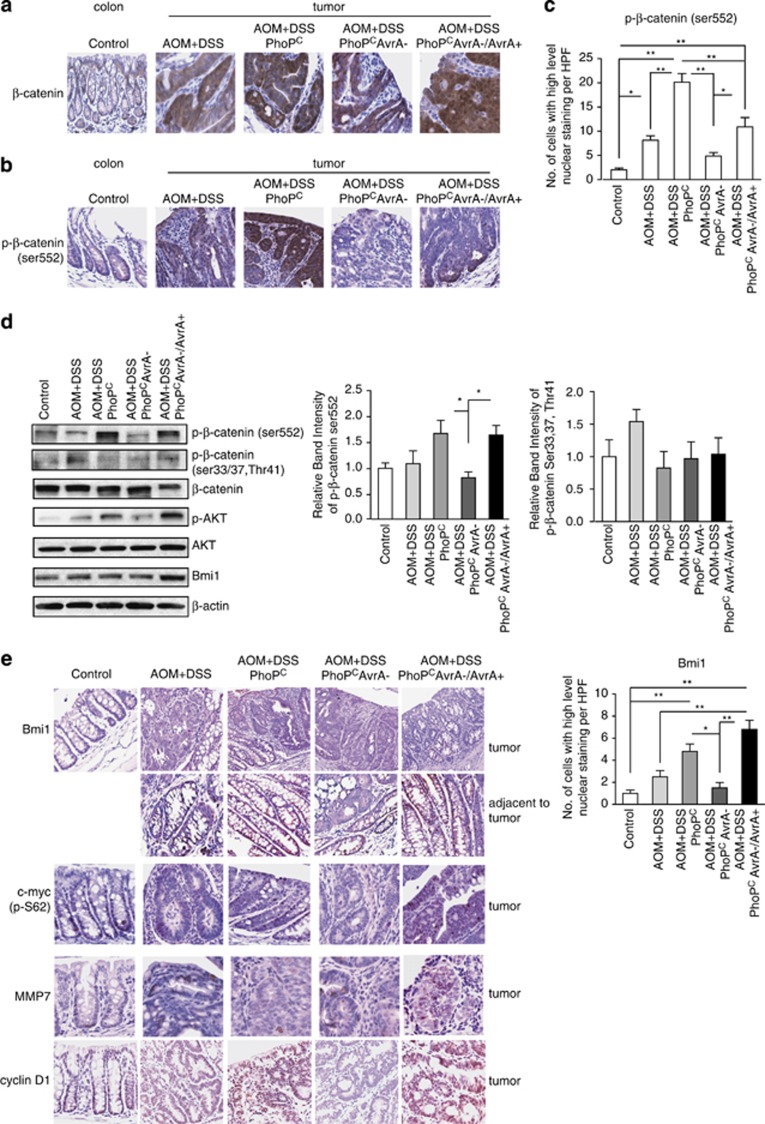
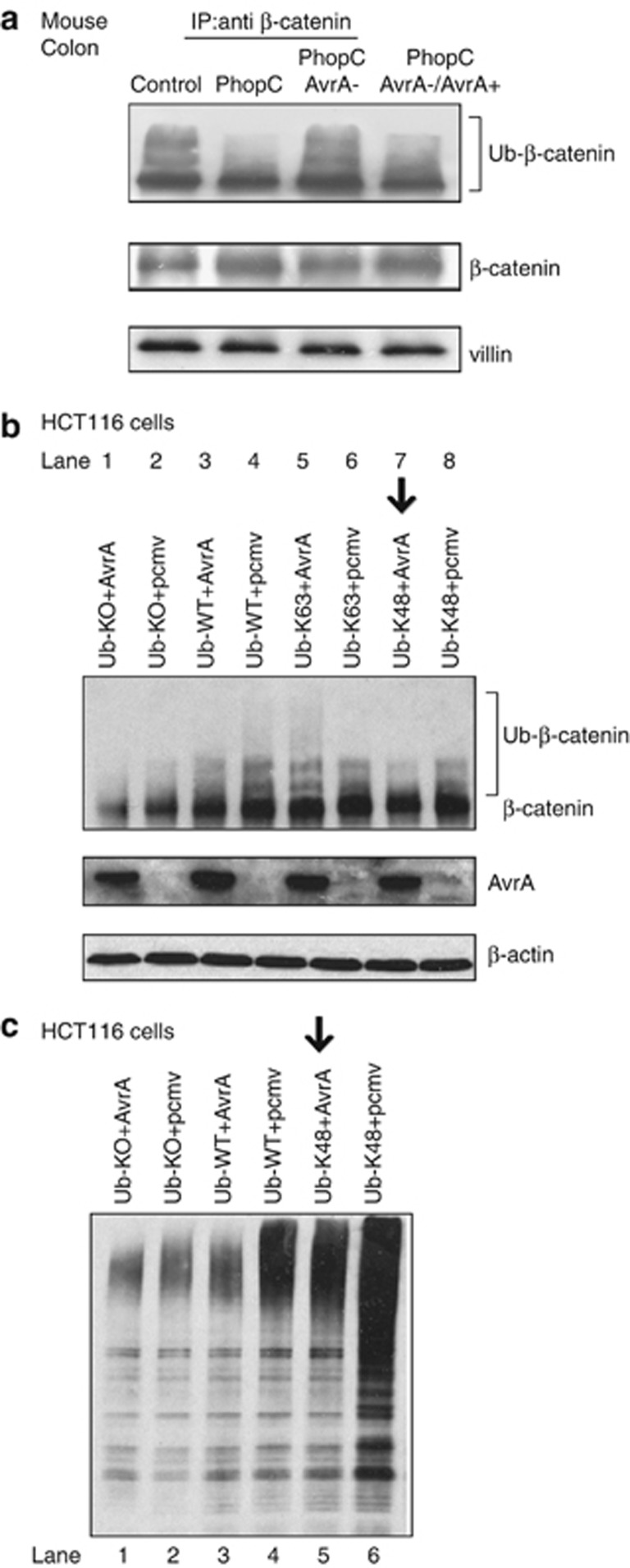
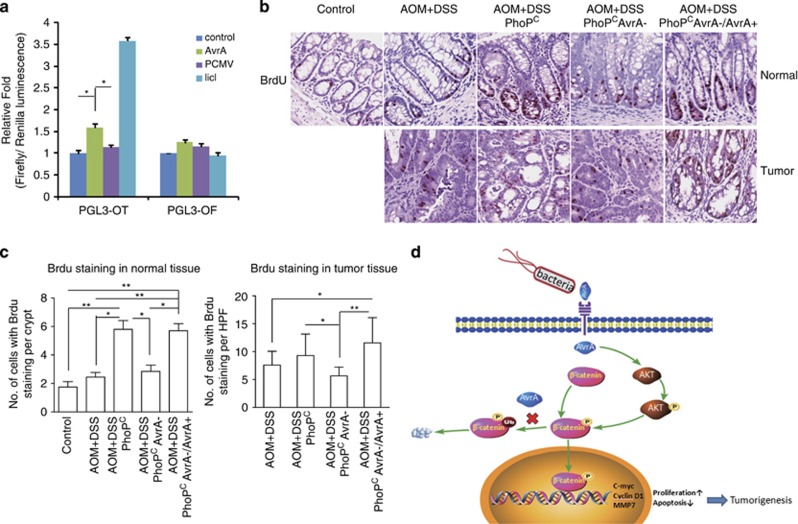
Salmonella infections can become chronic and increase the risk of cancer. The mechanisms by which specific Salmonella organisms contribute to cancer, however, are still unknown. Live and attenuated Salmonella are used as vectors to target cancer cells, but there have been no systematic studies of the oncogenic potential of chronic Salmonella infections in cancer models. AvrA, a pathogenic product of Salmonella, is inserted into host cells during infection and influences eukaryotic cell pathways. In the current study, we colonized mice with Salmonella AvrA-sufficient or AvrA-deficient Salmonella typhimirium strains and induced inflammation-associated colon cancer by azoxymethane/dextran sulfate sodium (AOM/DSS). We confirmed Salmonella persisted in the colon for up to 45 weeks. Salmonella was identified not only in epithelial cells on the colonic luminal surface and base of the crypts but also in invading tumors. Tumor incidence in the AvrA+infected group was 100% compared with 51.4% in the AOM/DSS group without bacterial gavage and 56.3% in mice infected with the AvrA- strain. Infection with AvrA+ strain also altered tumor distribution from the distal to proximal colon that might reflect changes in the microbiome. AvrA-expressing bacteria also upregulated beta-catenin signaling as assessed by decreased beta-catenin ubiquitination, increased nuclear beta-catenin and increased phosphorylated-beta-catenin (Ser552), a marker of proliferating stem-progenitor cells. Other β-catenin targets increased by AvrA included Bmi1, a cancer stem cell marker, matrix metalloproteinase-7, and cyclin D1. In summary, AvrA-expressing Salmonella infection activates β-catenin signals and enhances colonic tumorigenesis. Our findings provide important new mechanistic insights into how a bacterial protein targets proliferating stem-progenitor cells and contributes to cancer development. Our observations also raise a note of caution regarding the use of mutant Salmonella organisms as vectors for anti-cancer therapy. Finally, these studies could suggest biomarkers (such as AvrA level in gut) to assess cancer risk in susceptible individuals and infection-related dysregulation of β-catenin signaling in cancer.
Overview
The claims and statistics of this paper haven’t been checked yet.
Run the check — free, no account needed. It reads the open-access text and checks the sources it cites.
Integrity signals
Registry
Cites
Statistics
Figures
Verification
Claims the paper makes
The claims and statistics of this paper haven’t been checked yet.
Run the check — free, no account needed. It reads the open-access text and checks the sources it cites.
Claims other papers make about this one
Each is checked against this paper’s own text: does it say what the citing paper says it does?
In the citing paper
“AvrA, a pathogenic product of Salmonella, has been shown to activate β-catenin signals and enhance colonic tumorigenesis.99”
From The gut microbiota and host health: a new clinical frontier (2016) · cites this paper as [99]
In the citing paper
“In the same direction, the Salmonella enterica effector avirulence protein A (AvrA) is able to translocate into host’s cells and activate β-catenin via its intrinsic de-ubiquitinase activity [70].”
From Gut Microbiota and Cancer: From Pathogenesis to Therapy (2019) · cites this paper as [70]
Self-check
Percentages, sums and reported differences re-computed from the paper’s own numbers.
The self-check needs the paper’s full text.
Citations
Cites
Coussens, L. M., & Werb, Z. (2002) · Nature · doi:10.1038/nature01322 · Cited by 15,111
Longitudinal Data Analysis for Discrete and Continuous Outcomes
Zeger, S. L., & Liang, K. (1986) · Biometrics · doi:10.2307/2531248 · Cited by 7,781
Intestinal inflammation targets cancer-inducing activity of the microbiota
Arthur, J. C., Perez-Chanona, E., Mühlbauer, M., Tomkovich, S., Uronis, J. M., Fan, T.-J., Campbell, B. J., Abujamel, T., Dogan, B., Rogers, A. B., et al. (2012) · Science · doi:10.1126/science.1224820 · Cited by 2,263
The cyclin D1 gene is a target of the β-catenin/LEF-1 pathway
Shtutman, M., Zhurinsky, J., Simcha, I., Albanese, C., D’Amico, M., Pestell, R., & Ben-Ze’ev, A. (1999) · Proceedings of the National Academy of Sciences · doi:10.1073/pnas.96.10.5522 · Cited by 2,230
Wu, S., Rhee, K.-J., Albesiano, E., Rabizadeh, S., Wu, X., Yen, H.-R., Huso, D. L., Brancati, F. L., Wick, E., McAllister, F., et al. (2009) · Nature Medicine · doi:10.1038/nm.2015 · Cited by 1,812
Self-citationSellon, R. K., Tonkonogy, S., Schultz, M., Dieleman, L. A., Grenther, W., Balish, E., Rennick, D. M., & Sartor, R. B. (1998) · Infection and Immunity · doi:10.1128/iai.66.11.5224-5231.1998 · Cited by 1,483
Bmi1 is expressed in vivo in intestinal stem cells
Sangiorgi, E., & Capecchi, M. R. (2008) · Nature Genetics · doi:10.1038/ng.165 · Cited by 1,243
Gastric Cancer Originating from Bone Marrow-Derived Cells
Houghton, J., Stoicov, C., Nomura, S., Rogers, A. B., Carlson, J. E., Li, H., Cai, X., Fox, J. G., Goldenring, J. R., & Wang, T. C. (2004) · Science · doi:10.1126/science.1099513 · Cited by 1,174
Dieleman, L. A., Palmen, M. J. H. J., Akol, H., Bloemena, E., Peña, A. S., Meuwissen, S. G. M., & van Rees, E. P. (1998) · Clinical & Experimental Immunology · doi:10.1046/j.1365-2249.1998.00728.x · Cited by 1,167
Mantovani, A. (2008) · Nature · doi:10.1038/457036b · Cited by 657
Cited by
Sorted by citations
Items 201–205 of 205
Lu, J., Xuan, M., Yu, L., Xie, Z., Chu, Q., Wei, S., Wang, T., Xue, C., & Li, L. (2026) · MedComm · doi:10.1002/mco2.70994
Self-citationMicrobiome-based diagnostics and biomarkers: The search for mechanistic connections
Kumari, N., Allani, S. K., Knapinska, A., & Bommareddy, A. (2026) · Elsevier eBooks · doi:10.1016/b978-0-443-33206-7.00004-2
Intratumoral microbiota: bidirectional modulation of tumor radiosensitivity
Zhu, F., Han, S., Jia, W., Cao, Y., & Zhu, H. (2026) · Frontiers in Immunology · doi:10.3389/fimmu.2026.1945760
Zhang, Y., & Sun, J. (2026) · Methods in molecular biology · doi:10.1007/978-1-0716-5559-7_8
Self-citationProbiotics and oncology: Unlocking their potential for cancer treatment
Rana, R., Malothra, A., Kattel, K., Lalhlenmawia, H., Azizov, S., & Kumar, D. (2026) · Elsevier eBooks · doi:10.1016/b978-0-443-45154-6.00002-7
Metadata
- Authors
- Lu, R., Wu, S., Zhang, Y.-G., Xia, Y., Liu, X., Zheng, Y., Chen, H., Schaefer, K. L., Zhou, Z., Bissonnette, M., Li, L., & Sun, J.
- Affiliations
- Rush University (US)
- University of Rochester (US)
- University of Rochester Medicine (US)
- University of Chicago (US)
- Stowers Institute for Medical Research (US)
- Corresponding author
- Sun, J
- Venue
- Oncogenesis
- Published
- 2014-06-09
- Volume
- 3
- Issue
- 6
- Pages
- e105-e105
- ISSN
- 2157-9024 (ISSN-L)
- PMC
- PMC4150214
- OpenAlex
- W1968540478
- Cited by
- 206
- References
- 47
- Citations by year
- 2026: 18 · 2025: 22 · 2024: 21 · 2023: 27 · 2022: 16 · 2021: 26 · 2020: 18 · 2019: 9 · 2018: 11 · 2017: 13 · 2016: 10 · 2015: 13 · 2014: 2
- FWCI
- 10.74
- Type
- journal article
- Language
- en
- Open access
- gold
- doi.org
- Licence
- Locations
- Oncogenesis (publishedVersion, cc-by-nc-sa)
- Europe PMC (PubMed Central) (publishedVersion, cc-by-nc-sa)
- PubMed Central (publishedVersion, cc-by-nc-sa)
- PubMed (publishedVersion)
- Funders
- American Cancer Society
- National Cancer Institute (R01CA164124)
- National Institute of Diabetes and Digestive and Kidney Diseases (K01DK075386, DK075386, KO1-DK-075386)
- Topics
- Life Sciences › Biochemistry, Genetics and Molecular Biology › Biotechnology › Bacterial Cancer Therapy
- Life Sciences › Biochemistry, Genetics and Molecular Biology › Molecular Biology › Wnt/β-catenin signaling in development and cancer
- Life Sciences › Agricultural and Biological Sciences › Food Science › Salmonella and Campylobacter epidemiology
- Keywords
- avrA, Salmonella typhimurium, colon carcinogenesis, β-catenin signaling, chronic bacterial infection, cancer stem cells, BMI1, matrix metalloproteinase-7, cyclin D1, stem/progenitor cells, gut microbiota
About these checks
Registry, retraction, Cites and statistics results are computed, not judged, with one exception: a printed reference that no index lists is read once by a model before it counts as a citation error. Claims are extracted by a model and kept only when their quote appears verbatim in the text; each cited source is then checked, with a model’s help, for whether it says what the claim relies on. Those verdicts can be wrong — read the claim’s quote and the cited source before relying on one.
Statistics and arithmetic are recomputed, not judged.
Confidence bands are shown only for fields calibrated on our annotated test set. None is calibrated yet, so no band is shown.
What counts as a claim ›How we measure confidence ›How we check this ›
Are you an author, or do you see a problem with this page? Request a review
