

The DOI matches its Crossref record; 47 of the 47 references it cites were found in a registry or an index.
Enteric bacterial protein AvrA promotes colonic tumorigenesis and activates colonic beta-catenin signaling pathway
Open accessAbstract
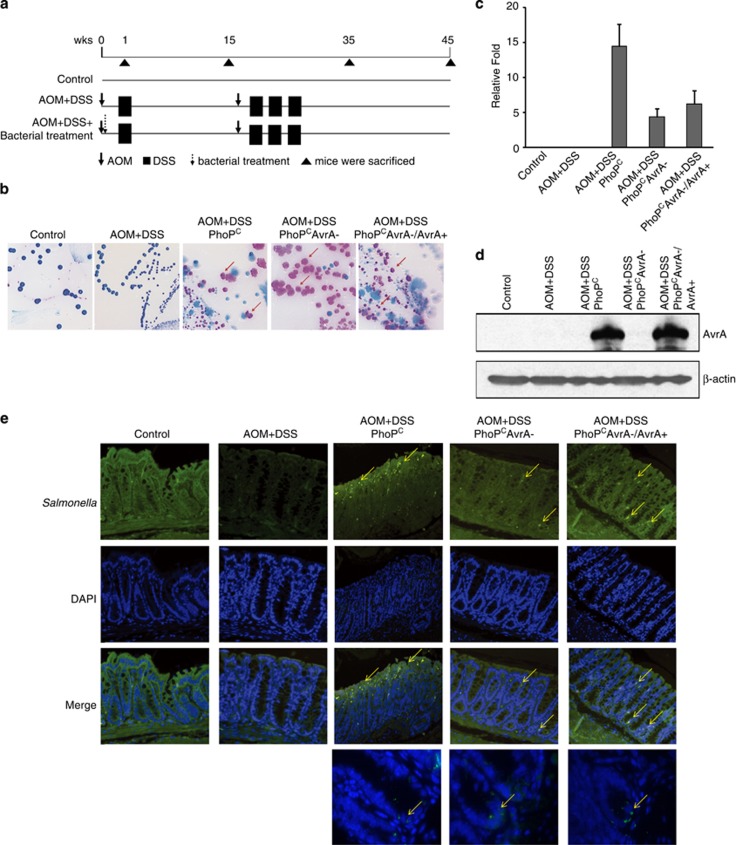
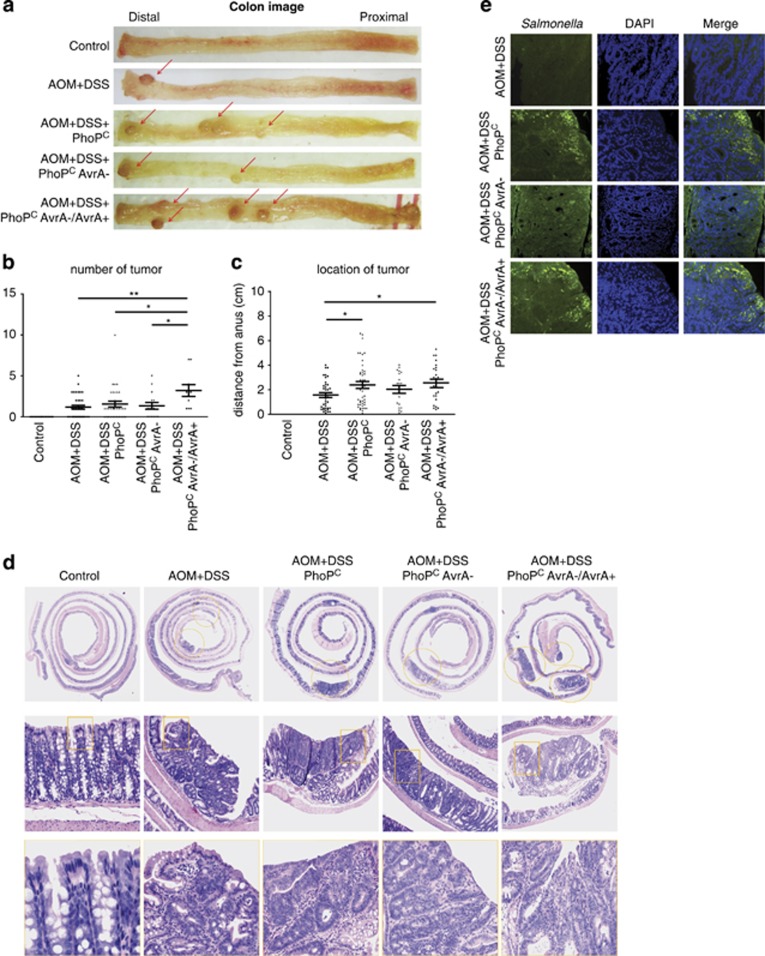
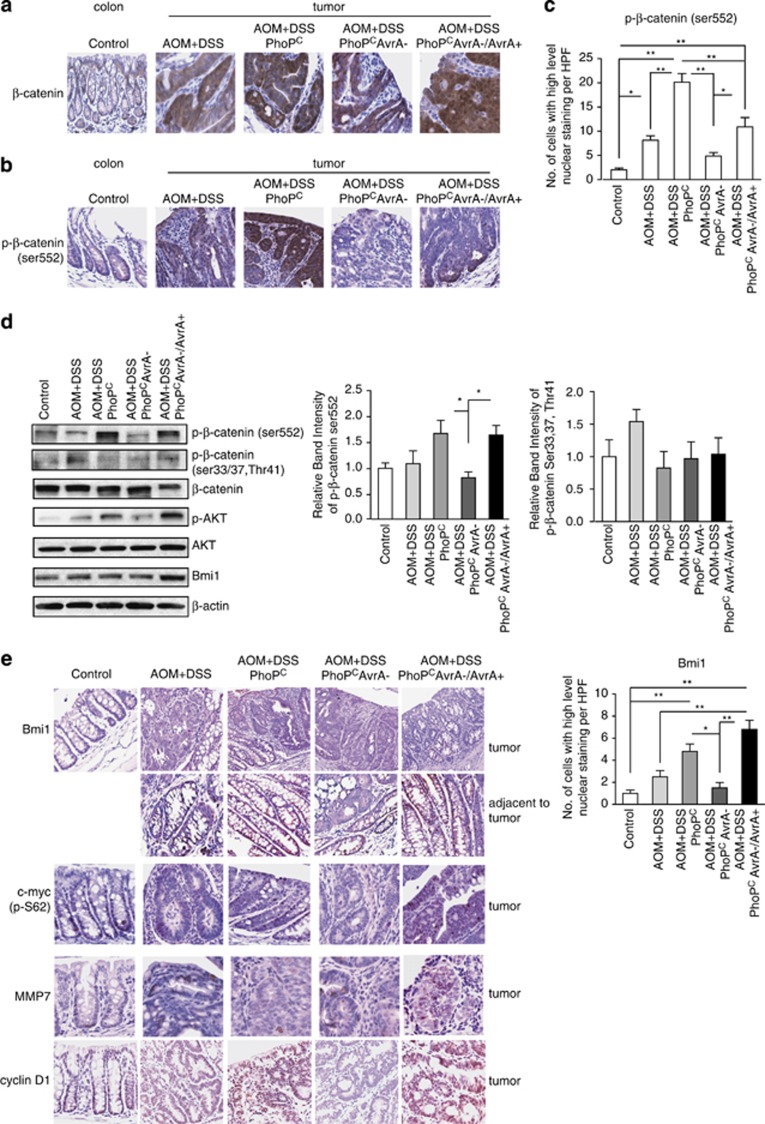
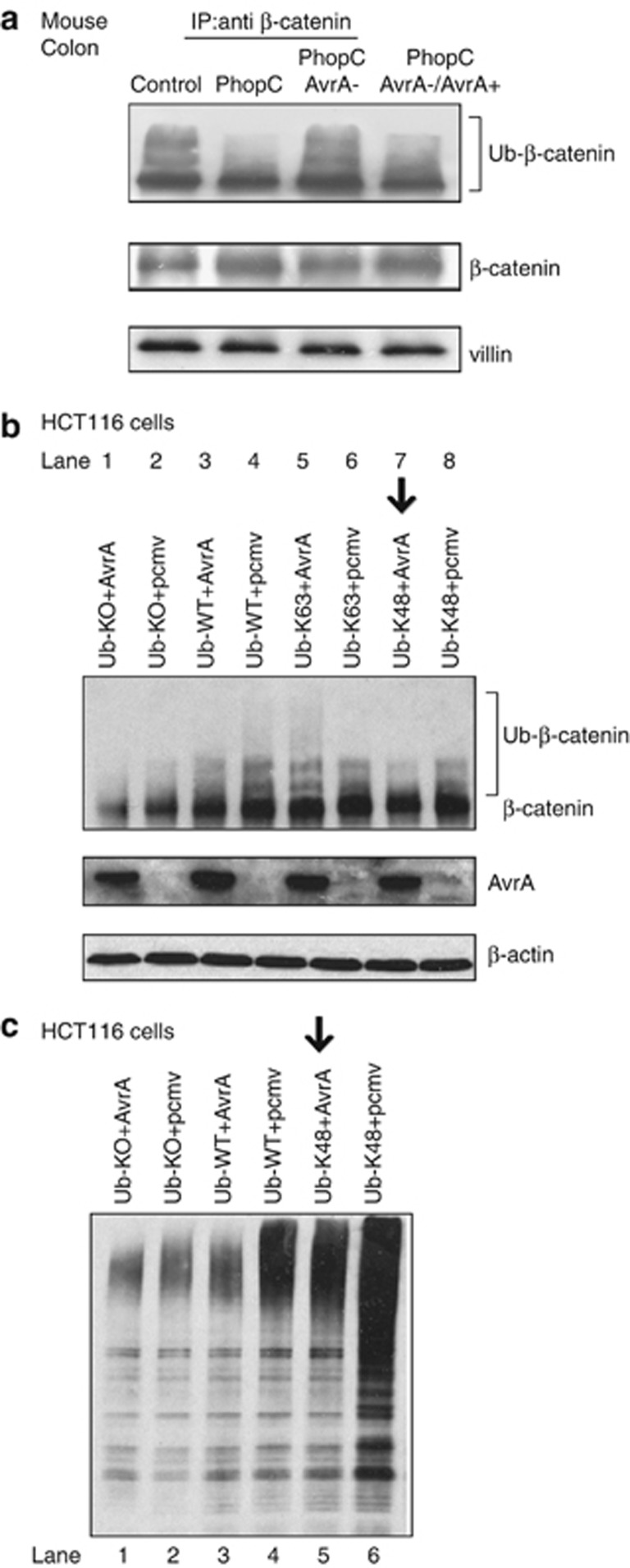
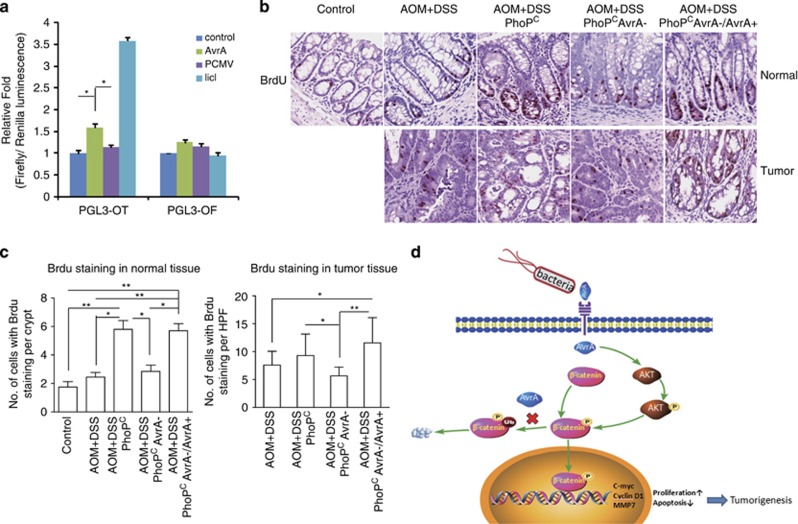
Salmonella infections can become chronic and increase the risk of cancer. The mechanisms by which specific Salmonella organisms contribute to cancer, however, are still unknown. Live and attenuated Salmonella are used as vectors to target cancer cells, but there have been no systematic studies of the oncogenic potential of chronic Salmonella infections in cancer models. AvrA, a pathogenic product of Salmonella, is inserted into host cells during infection and influences eukaryotic cell pathways. In the current study, we colonized mice with Salmonella AvrA-sufficient or AvrA-deficient Salmonella typhimirium strains and induced inflammation-associated colon cancer by azoxymethane/dextran sulfate sodium (AOM/DSS). We confirmed Salmonella persisted in the colon for up to 45 weeks. Salmonella was identified not only in epithelial cells on the colonic luminal surface and base of the crypts but also in invading tumors. Tumor incidence in the AvrA+infected group was 100% compared with 51.4% in the AOM/DSS group without bacterial gavage and 56.3% in mice infected with the AvrA- strain. Infection with AvrA+ strain also altered tumor distribution from the distal to proximal colon that might reflect changes in the microbiome. AvrA-expressing bacteria also upregulated beta-catenin signaling as assessed by decreased beta-catenin ubiquitination, increased nuclear beta-catenin and increased phosphorylated-beta-catenin (Ser552), a marker of proliferating stem-progenitor cells. Other β-catenin targets increased by AvrA included Bmi1, a cancer stem cell marker, matrix metalloproteinase-7, and cyclin D1. In summary, AvrA-expressing Salmonella infection activates β-catenin signals and enhances colonic tumorigenesis. Our findings provide important new mechanistic insights into how a bacterial protein targets proliferating stem-progenitor cells and contributes to cancer development. Our observations also raise a note of caution regarding the use of mutant Salmonella organisms as vectors for anti-cancer therapy. Finally, these studies could suggest biomarkers (such as AvrA level in gut) to assess cancer risk in susceptible individuals and infection-related dysregulation of β-catenin signaling in cancer.
Overview
The claims and statistics of this paper haven’t been checked yet.
Run the check — free, no account needed. It reads the open-access text and checks the sources it cites.
Integrity signals
Registry
Cites
Statistics
Figures
Verification
Claims the paper makes
The claims and statistics of this paper haven’t been checked yet.
Run the check — free, no account needed. It reads the open-access text and checks the sources it cites.
Claims other papers make about this one
Each is checked against this paper’s own text: does it say what the citing paper says it does?
In the citing paper
“AvrA, a pathogenic product of Salmonella, has been shown to activate β-catenin signals and enhance colonic tumorigenesis.99”
From The gut microbiota and host health: a new clinical frontier (2016) · cites this paper as [99]
In the citing paper
“In the same direction, the Salmonella enterica effector avirulence protein A (AvrA) is able to translocate into host’s cells and activate β-catenin via its intrinsic de-ubiquitinase activity [70].”
From Gut Microbiota and Cancer: From Pathogenesis to Therapy (2019) · cites this paper as [70]
Self-check
Percentages, sums and reported differences re-computed from the paper’s own numbers.
The self-check needs the paper’s full text.
Citations
Cites
Coussens, L. M., & Werb, Z. (2002) · Nature · doi:10.1038/nature01322 · Cited by 15,111
Longitudinal Data Analysis for Discrete and Continuous Outcomes
Zeger, S. L., & Liang, K. (1986) · Biometrics · doi:10.2307/2531248 · Cited by 7,781
Intestinal inflammation targets cancer-inducing activity of the microbiota
Arthur, J. C., Perez-Chanona, E., Mühlbauer, M., Tomkovich, S., Uronis, J. M., Fan, T.-J., Campbell, B. J., Abujamel, T., Dogan, B., Rogers, A. B., et al. (2012) · Science · doi:10.1126/science.1224820 · Cited by 2,263
The cyclin D1 gene is a target of the β-catenin/LEF-1 pathway
Shtutman, M., Zhurinsky, J., Simcha, I., Albanese, C., D’Amico, M., Pestell, R., & Ben-Ze’ev, A. (1999) · Proceedings of the National Academy of Sciences · doi:10.1073/pnas.96.10.5522 · Cited by 2,230
Wu, S., Rhee, K.-J., Albesiano, E., Rabizadeh, S., Wu, X., Yen, H.-R., Huso, D. L., Brancati, F. L., Wick, E., McAllister, F., et al. (2009) · Nature Medicine · doi:10.1038/nm.2015 · Cited by 1,812
Self-citationSellon, R. K., Tonkonogy, S., Schultz, M., Dieleman, L. A., Grenther, W., Balish, E., Rennick, D. M., & Sartor, R. B. (1998) · Infection and Immunity · doi:10.1128/iai.66.11.5224-5231.1998 · Cited by 1,483
Bmi1 is expressed in vivo in intestinal stem cells
Sangiorgi, E., & Capecchi, M. R. (2008) · Nature Genetics · doi:10.1038/ng.165 · Cited by 1,243
Gastric Cancer Originating from Bone Marrow-Derived Cells
Houghton, J., Stoicov, C., Nomura, S., Rogers, A. B., Carlson, J. E., Li, H., Cai, X., Fox, J. G., Goldenring, J. R., & Wang, T. C. (2004) · Science · doi:10.1126/science.1099513 · Cited by 1,174
Dieleman, L. A., Palmen, M. J. H. J., Akol, H., Bloemena, E., Peña, A. S., Meuwissen, S. G. M., & van Rees, E. P. (1998) · Clinical & Experimental Immunology · doi:10.1046/j.1365-2249.1998.00728.x · Cited by 1,167
Mantovani, A. (2008) · Nature · doi:10.1038/457036b · Cited by 657
Cited by
Sorted by citations
The gut microbiota and host health: a new clinical frontier
Marchesi, J. R., Adams, D. H., Fava, F., Hermes, G. D. A., Hirschfield, G. M., Hold, G., Quraishi, M. N., Kinross, J., Smidt, H., Tuohy, K. M., et al. (2016) · Gut · doi:10.1136/gutjnl-2015-309990 · Cited by 2,302
Garrett, W. S. (2015) · Science · doi:10.1126/science.aaa4972 · Cited by 1,404
The role of the microbiome in cancer development and therapy
Bhatt, A. P., Redinbo, M. R., & Bultman, S. J. (2017) · CA A Cancer Journal for Clinicians · doi:10.3322/caac.21398 · Cited by 653
Gut Microbiota and Cancer: From Pathogenesis to Therapy
Vivarelli, S., Salemi, R., Candido, S., Falzone, L., Santagati, M., Stefani, S., Torino, F., Banna, G. L., Tonini, G., & Libra, M. (2019) · Cancers · doi:10.3390/cancers11010038 · Cited by 586
The Intestinal Microbiota and Colorectal Cancer
Cheng, Y., Ling, Z., & Li, L. (2020) · Frontiers in Immunology · doi:10.3389/fimmu.2020.615056 · Cited by 609
Self-citation(2023) · doi:10.1038/s41392-022-01304-4 · Cited by 460
Self-citationMicrobiome, inflammation and colorectal cancer
Chen, J., Pitmon, E., & Wang, K. (2017) · Seminars in Immunology · doi:10.1016/j.smim.2017.09.006 · Cited by 274
Potential Role of the Gut Microbiome In Colorectal Cancer Progression
Kim, J.-H., & Lee, H. K. (2022) · Frontiers in Immunology · doi:10.3389/fimmu.2021.807648 · Cited by 288
Gut microbiota, inflammation and colorectal cancer
Sun, J., & Kato, I. (2016) · Genes & Diseases · doi:10.1016/j.gendis.2016.03.004 · Cited by 257
“Uninfected mice treated with AOM/DSS developed tumors in the distal colon.(150) In contrast, in mice infected with AvrAexpressing bacteria, tumors were found more in the proximal colon.”
BackgroundSelf-citationBacterial infections and cancer
van Elsland, D. M., & Neefjes, J. (2018) · EMBO Reports · doi:10.15252/embr.201846632 · Cited by 221
Yin, C., Noratto, G. D., Fan, X., Chen, Z., Yao, F., Shi, D., & Gao, H. (2020) · Carbohydrate Polymers · doi:10.1016/j.carbpol.2020.116942 · Cited by 217
The gastrointestinal microbiota and colorectal cancer
Keku, T. O., Dulal, S., Deveaux, A. E., Jovov, B., & Han, X. (2014) · American Journal of Physiology-Gastrointestinal and Liver Physiology · doi:10.1152/ajpgi.00360.2012 · Cited by 207
Microbiota’s role in health and diseases
El-Sayed, A., Aleya, L., & Kamel, M. S. (2021) · Environmental Science and Pollution Research · doi:10.1007/s11356-021-14593-z · Cited by 212
Collateral damage: Insights into bacterial mechanisms that predispose host cells to cancer
Gagnaire, A., Nadel, B., Raoult, D., Neefjes, J., & Gorvel, J.-P. (2017) · Nature Reviews Microbiology · doi:10.1038/nrmicro.2016.171 · Cited by 189
The microbiome and the hallmarks of cancer
Fulbright, L. E., Ellermann, M., & Arthur, J. C. (2017) · PLOS Pathogens · doi:10.1371/journal.ppat.1006480 · Cited by 164
Epidemiology and risk factors of colorectal cancer in China
Yang, Y., Han, Z., Li, X., Huang, A., Shi, J., & Gu, J. (2020) · Chinese Journal of Cancer Research · doi:10.21147/j.issn.1000-9604.2020.06.06 · Cited by 138
Increased colon cancer risk after severe Salmonella infection
Mughini-Gras, L., Schaapveld, M., Kramers, J., Mooij, S., Neefjes-Borst, E. A., Pelt, W. V., & Neefjes, J. (2018) · PLoS ONE · doi:10.1371/journal.pone.0189721 · Cited by 133
Intestinal bacteria and colorectal cancer: etiology and treatment
Dougherty, M. W., & Jobin, C. (2023) · Gut Microbes · doi:10.1080/19490976.2023.2185028 · Cited by 144
Microbiome in cancer: Role in carcinogenesis and impact in therapeutic strategies
Rahman, M. M., Islam, M. R., Shohag, S., Ahasan, M. T., Sarkar, N., Khan, H., Hasan, A. M., Cavalu, S. D., & Rauf, A. (2022) · Biomedicine & Pharmacotherapy · doi:10.1016/j.biopha.2022.112898 · Cited by 133
YopJ Family Effectors Promote Bacterial Infection through a Unique Acetyltransferase Activity
Ma, K., & Ma, W. (2016) · Microbiology and Molecular Biology Reviews · doi:10.1128/mmbr.00032-16 · Cited by 122
Salmonella Infection in Chronic Inflammation and Gastrointestinal Cancer
Zha, L., Garrett, S., & Sun, J. (2019) · Diseases · doi:10.3390/diseases7010028 · Cited by 118
Self-citationZhang, H., Jiang, F., Zhang, J., Wang, W., Li, L., & Yan, J. (2022) · International Journal of Biological Macromolecules · doi:10.1016/j.ijbiomac.2022.01.166 · Cited by 114
Self-citationCirculatory shear flow alters the viability and proliferation of circulating colon cancer cells
Fan, R., Emery, T., Zhang, Y., Xia, Y., Sun, J., & Wan, J. (2016) · Scientific Reports · doi:10.1038/srep27073 · Cited by 103
Self-citationGut microbiota-derived metabolites in CRC progression and causation
Dalal, N., Jalandra, R., Bayal, N., Yadav, A. K., Harshulika, Sharma, M., Makharia, G. K., Kumar, P., Singh, R. K., Solanki, P. R., et al. (2021) · Journal of Cancer Research and Clinical Oncology · doi:10.1007/s00432-021-03729-w · Cited by 103
Xu, H., Cao, C., Ren, Y., Weng, S., Liu, L., Guo, C., Wang, L., Han, X., Ren, J., & Liu, Z. (2022) · Frontiers in Immunology · doi:10.3389/fimmu.2022.949490 · Cited by 110
Salmonella protein AvrA activates the STAT3 signaling pathway in colon cancer
Lu, R., Wu, S., Zhang, Y.-G., Xia, Y., Zhou, Z., Kato, I., Dong, H., Bissonnette, M., & Sun, J. (2016) · Neoplasia · doi:10.1016/j.neo.2016.04.001 · Cited by 99
Self-citationAdapting Cancer Immunotherapy Models for the Real World
Klevorn, L. E., & Teague, R. M. (2016) · Trends in Immunology · doi:10.1016/j.it.2016.03.010 · Cited by 88
Gut Microbiota and Breast Cancer: The Dual Role of Microbes
Álvarez‐Mercado, A. I., Cano, A. D. V., Fernández, M. F., & Fontana, L. (2023) · Cancers · doi:10.3390/cancers15020443 · Cited by 94
STAT3 activation in infection and infection-associated cancer
Lu, R., Zhang, Y., & Sun, J. (2017) · Molecular and Cellular Endocrinology · doi:10.1016/j.mce.2017.02.023 · Cited by 84
Self-citationMicrobiome-driven carcinogenesis in colorectal cancer: Models and mechanisms
Wang, X., Yang, Y., & Huycke, M. M. (2016) · Free Radical Biology and Medicine · doi:10.1016/j.freeradbiomed.2016.10.504 · Cited by 85
Lu, R., Bosland, M., Xia, Y., Zhang, Y.-G., Kato, I., & Sun, J. (2017) · Oncotarget · doi:10.18632/oncotarget.19052 · Cited by 75
Self-citationSpeaking the host language: how Salmonella effector proteins manipulate the host
Pillay, T. D., Hettiarachchi, S. U., Gan, J., Diaz-del-Olmo, I., Yu, X., Muench, J. H., Thurston, T. L. M., & Pearson, J. S. (2023) · Microbiology · doi:10.1099/mic.0.001342 · Cited by 70
Potential Impacts of Prebiotics and Probiotics on Cancer Prevention
Samanta, S. (2020) · Anti-Cancer Agents in Medicinal Chemistry · doi:10.2174/1871520621999201210220442 · Cited by 75
Rezasoltani, S., Yadegar, A., Aghdaei, H. A., & Zali, M. R. (2020) · Cancer Medicine · doi:10.1002/cam4.3694 · Cited by 66
Imbalance of autophagy and apoptosis in intestinal epithelium lacking the vitamin D receptor
Lu, R., Zhang, Y., Xia, Y., & Sun, J. (2019) · The FASEB Journal · doi:10.1096/fj.201900727r · Cited by 67
Self-citationZhu, R., Lang, T., Yan, W., Zhu, X. G., Huang, X. Y., Yin, Q., & Li, Y. (2021) · Advanced Science · doi:10.1002/advs.202003542 · Cited by 65
Zhang, S., Chen, X., Hu, Y., Wu, J., Cao, Q., Chen, S., & Gao, Y. (2015) · Molecular and Cellular Endocrinology · doi:10.1016/j.mce.2015.12.018 · Cited by 64
Noncanonical Activation of β-Catenin by Porphyromonas gingivalis
Zhou, Y., Sztukowska, M. N., Wang, Q., Inaba, H., Potempa, J., Scott, D. A., Wang, H., & Lamont, R. J. (2015) · Infection and Immunity · doi:10.1128/iai.00302-15 · Cited by 65
Schistosoma japonicum–Associated Colorectal Cancer: A Review
Hamid, H. K. S. (2018) · American Journal of Tropical Medicine and Hygiene · doi:10.4269/ajtmh.18-0807 · Cited by 62
Gut Microbiota in Lung Cancer: Where Do We Stand?
Georgiou, K. E., Marinov, B. I., Farooqı, A. A., & Gazouli, M. (2021) · International Journal of Molecular Sciences · doi:10.3390/ijms221910429 · Cited by 61
The effect of the intratumoral microbiome on tumor occurrence, progression, prognosis and treatment
Gao, F., Yu, B., Rao, B., Sun, Y. H., Yu, J., Wang, D., Cui, G., & Ren, Z. (2022) · Frontiers in Immunology · doi:10.3389/fimmu.2022.1051987 · Cited by 63
The intratumoral microbiome: Characterization methods and functional impact
Heymann, C. J. F., Bard, J., Heymann, M., Heymann, D., & Bobin‐Dubigeon, C. (2021) · Cancer Letters · doi:10.1016/j.canlet.2021.09.009 · Cited by 60
Bacterial Manipulation of Wnt Signaling: A Host-Pathogen Tug-of-Wnt
Rogan, M. R., Patterson, L. L., Wang, J. Y., & McBride, J. W. (2019) · Frontiers in Immunology · doi:10.3389/fimmu.2019.02390 · Cited by 58
Bacteria as a double-action sword in cancer
Yaghoubi, A., Khazaei, M., Jalili, S., Hasanian, S. M., Avan, A., Soleimanpour, S., & Cho, W. C. S. (2020) · Biochimica et Biophysica Acta (BBA) - Reviews on Cancer · doi:10.1016/j.bbcan.2020.188388 · Cited by 55
Alcohol Injury Damages Intestinal Stem Cells
Lu, R., Voigt, R. M., Zhang, Y., Kato, I., Xia, Y., Forsyth, C. B., Keshavarzian, A., & Sun, J. (2017) · Alcoholism Clinical and Experimental Research · doi:10.1111/acer.13351 · Cited by 56
Self-citationBacterial‐Mediated Tumor Therapy: Old Treatment in a New Context
Liu, Y., Niu, L., Li, N., Wang, Y., Liu, M., Su, X., Bao, X., Yin, B., & Shen, S. (2023) · Advanced Science · doi:10.1002/advs.202205641 · Cited by 55
The gut dysbiosis-cancer axis: illuminating novel insights and implications for clinical practice
Asseri, A. H., Bakhsh, T., Abuzahrah, S. S., Ali, S., & Rather, I. A. (2023) · Frontiers in Pharmacology · doi:10.3389/fphar.2023.1208044 · Cited by 57
Luo, T., Dunphy, P. S., Lina, T. T., & McBride, J. W. (2015) · Infection and Immunity · doi:10.1128/iai.01289-15 · Cited by 53
Integration of multi-omics approaches in exploring intra-tumoral heterogeneity
Dong, M., Wang, L., Hu, N., Rao, Y., Wang, Z., & Zhang, Y. (2025) · Cancer Cell International · doi:10.1186/s12935-025-03944-2 · Cited by 57
Self-citationFrom DNA Damage to Cancer Progression: Potential Effects of Cytolethal Distending Toxin
Lai, Y.-R., Chang, Y., Ma, J., Chiu, C., Kuo, M., & Lai, C. (2021) · Frontiers in Immunology · doi:10.3389/fimmu.2021.760451 · Cited by 56
The tumor microbiome in cancer progression: mechanisms and therapeutic potential
Zhang, W., Xiang, Y., Ren, H., Liu, Y., Wang, Q., Ran, M., Zhou, W., Lu, T., Zheng, X., Qiao, C., et al. (2025) · Molecular Cancer · doi:10.1186/s12943-025-02403-w · Cited by 55
Profiling the Bladder Microbiota in Patients With Bladder Cancer
Parra-Grande, M., Oré-Arce, M., Martinez-Priego, L., D’Auria, G., Rossello-Mora, R. A., Lillo, M., Sempere, A., Lumbreras, B., & Sánchez, V. (2022) · Frontiers in Microbiology · doi:10.3389/fmicb.2021.718776 · Cited by 51
Deubiquitinases: Novel Therapeutic Targets in Immune Surveillance?
López‐Castejón, G., & Edelmann, M. J. (2016) · Mediators of Inflammation · doi:10.1155/2016/3481371 · Cited by 48
Sphyris, N., Hodder, M. C., & Sansom, O. J. (2021) · Cancers · doi:10.3390/cancers13051000 · Cited by 49
Microbiota in cancer: molecular mechanisms and therapeutic interventions
Chen, Z., Guan, D., Wang, Z., Li, X., Dong, S., Huang, J., & Zhou, W. (2023) · MedComm · doi:10.1002/mco2.417 · Cited by 47
Bacterial protein toxins in human cancers
Rosadi, F., Fiorentini, C., & Fabbri, A. (2015) · Pathogens and Disease · doi:10.1093/femspd/ftv105 · Cited by 46
Novel Regulatory Roles of Wnt1 in Infection-Associated Colorectal Cancer
Wang, J., Lu, R., Fu, X., Dan, Z., Zhang, Y., Chang, X., Liu, Q., Xia, Y., Liu, X., & Sun, J. (2018) · Neoplasia · doi:10.1016/j.neo.2018.03.001 · Cited by 45
Self-citationRole of Inflammation in Pathophysiology of Colonic Disease: An Update
Nasef, N. A., & Mehta, S. Y. (2020) · International Journal of Molecular Sciences · doi:10.3390/ijms21134748 · Cited by 47
The Four Horsemen in Colon Cancer
Hernández-Luna, M. A., López-Briones, S., & Lurı́a-Pérez, R. (2019) · Journal of Oncology · doi:10.1155/2019/5636272 · Cited by 45
Microbe–MUC1 Crosstalk in Cancer-Associated Infections
Bose, M., & Mukherjee, P. (2019) · Trends in Molecular Medicine · doi:10.1016/j.molmed.2019.10.003 · Cited by 44
Bacteriotherapy in gastrointestinal cancer
Soleimanpour, S., Hasanian, S. M., Avan, A., Yaghoubi, A., & Khazaei, M. (2020) · Life Sciences · doi:10.1016/j.lfs.2020.117754 · Cited by 42
Dey, P., & Chaudhuri, S. R. (2022) · Biology · doi:10.3390/biology11050757 · Cited by 44
Unveiling the intratumoral microbiota within cancer landscapes
Che, S., Yan, Z., Feng, Y., & Hai, Z. (2024) · iScience · doi:10.1016/j.isci.2024.109893 · Cited by 40
Digestive disorders and Intestinal microbiota.
Nouvenne, A., Ticinesi, A., Tana, C., Prati, B., Catania, P., Miraglia, C., Angelis, G. L. D., Mario, F. D., & Meschi, T. (2018) · Acta bio-medica dell'Ateneo parmense/Acta biomedica · doi:10.23750/abm.v89i9-s.7912 · Cited by 39
Gut Bacteria and their Metabolites: Which One Is the Defendant for Colorectal Cancer?
Tarashi, S., Siadat, S. D., Badi, S. A., Zali, M. R., Biassoni, R., Ponzoni, M., & Moshiri, A. (2019) · Microorganisms · doi:10.3390/microorganisms7110561 · Cited by 39
Oral and intestinal bacterial exotoxins: Potential linked to carcinogenesis
Silbergleit, M., Vasquez, A. A., Miller, C. J., Sun, J., & Kato, I. (2020) · Progress in molecular biology and translational science · doi:10.1016/bs.pmbts.2020.02.004 · Cited by 40
Self-citationMicrobiota, Epithelium, Inflammation, and TGF-β Signaling: An Intricate Interaction in Oncogenesis
Pang, X., Tang, Y.-J., Ren, X., Chen, Q., Tang, Y., & Liang, X. (2018) · Frontiers in Microbiology · doi:10.3389/fmicb.2018.01353 · Cited by 37
A Prognostic Model Based on the Immune-related Genes in Colon Adenocarcinoma
Sun, Y., Zhang, Y., Guo, Y., Yang, Z.-H., & Xu, Y. (2020) · International Journal of Medical Sciences · doi:10.7150/ijms.45813 · Cited by 36
Self-citationThe intestinal microbiome and surgical disease
Krezalek, M. A., Skowron, K. B., Guyton, K. L., Shakhsheer, B. A., Hyoju, S. K., & Alverdy, J. C. (2016) · Current Problems in Surgery · doi:10.1067/j.cpsurg.2016.06.001 · Cited by 35
The gastrointestinal microbiota in colorectal cancer cell migration and invasion
Henstra, C., van Praagh, J., Olinga, P., & Nagelkerke, A. (2021) · Clinical & Experimental Metastasis · doi:10.1007/s10585-021-10130-x · Cited by 32
Impact of bacterial infection and intestinal microbiome on colorectal cancer development
Sun, J. (2022) · Chinese Medical Journal · doi:10.1097/cm9.0000000000001979 · Cited by 35
Self-citationUbiquitination as an Efficient Molecular Strategy Employed in Salmonella Infection
Narayanan, L. A., & Edelmann, M. J. (2014) · Frontiers in Immunology · doi:10.3389/fimmu.2014.00558 · Cited by 32
Estrada, L. H., Wu, H., Ling, K., Zhang, G., Sumagin, R., Parkos, C. A., Jones, R. M., Champion, J. A., & Neish, A. S. (2017) · ACS Nano · doi:10.1021/acsnano.7b03239 · Cited by 32
Bacterial infection and microbiota in carcinogenesis and tumor development
Li, Q. (2023) · Frontiers in Cellular and Infection Microbiology · doi:10.3389/fcimb.2023.1294082 · Cited by 32
Rastogi, Y. R., Saini, A. K., Thakur, V. K., & Saini, R. V. (2020) · International Journal of Molecular Sciences · doi:10.3390/ijms21093212 · Cited by 32
van Elsland, D. M., Duijster, J. W., Zhang, J., Stévenin, V., Zhang, Y., Zha, L., Xia, Y., Franz, E., Sun, J., Mughini‐Gras, L., et al. (2022) · Cell Reports Medicine · doi:10.1016/j.xcrm.2022.100852 · Cited by 31
Self-citationBacterial translocation and barrier dysfunction enhance colonic tumorigenesis
Zhang, Y., Zhang, J., Xia, Y., & Sun, J. (2022) · Neoplasia · doi:10.1016/j.neo.2022.100847 · Cited by 28
Self-citationZNF281 Promotes Growth and Invasion of Pancreatic Cancer Cells by Activating Wnt/β-Catenin Signaling
Qian, Y., Li, J., & Xia, S. (2017) · Digestive Diseases and Sciences · doi:10.1007/s10620-017-4611-1 · Cited by 27
Microbiome Crosstalk in Immunotherapy and Antiangiogenesis Therapy
Wan, X., Song, M., Wang, A., Zhao, Y., Wei, Z., & Lu, Y. (2021) · Frontiers in Immunology · doi:10.3389/fimmu.2021.747914 · Cited by 26
Chakraborty, P., Aravindhan, V., & Mukherjee, S. (2023) · International Journal of Biological Macromolecules · doi:10.1016/j.ijbiomac.2023.124649 · Cited by 28
The intricate connection between diet, microbiota, and cancer: A jigsaw puzzle
Arkan, M. C. (2017) · Seminars in Immunology · doi:10.1016/j.smim.2017.08.009 · Cited by 25
Suppression of β‐catenin signaling in colon carcinoma cells by a bacterial protein
Nadeem, A., Aung, K. M., Ray, T., Alam, A., Persson, K., Pal, A., Uhlin, B. E., & Wai, S. N. (2021) · International Journal of Cancer · doi:10.1002/ijc.33562 · Cited by 25
Epidemiology and early screening strategies for colorectal cancer in China
Yang, Y., Gao, Z., Huang, A., Shi, J., Sun, Z. Z., Hong, H., & Gu, J. (2023) · Chinese Journal of Cancer Research · doi:10.21147/j.issn.1000-9604.2023.06.05 · Cited by 23
Cancer microbiota: a focus on tumor-resident bacteria
Vella, G., & Rescigno, M. (2025) · EMBO Reports · doi:10.1038/s44319-025-00482-w · Cited by 25
Activation of epigenetic regulator KDM6B by Salmonella Typhimurium enables chronic infections
Rana, S., Maurya, S., Mohapatra, G., Singh, S., Babar, R., Chandrasekhar, H., Chamoli, G., Rathore, D. K., Kshetrapal, P., & Srikanth, C. V. (2021) · Gut Microbes · doi:10.1080/19490976.2021.1986665 · Cited by 21
Gut microbiota in cancer initiation, development and therapy
Zhang, R., Zhang, X., Lau, H. C.-H., & Yu, J. Q. (2024) · Science China Life Sciences · doi:10.1007/s11427-024-2831-x · Cited by 19
Liu, W., Ruan, T., Ji, X., Ran, D., Sun, J. F., Shi, H., Prinz, R. A., Sun, J., Pan, Z., Jiao, X., et al. (2020) · Cellular Microbiology · doi:10.1111/cmi.13211 · Cited by 19
Self-citationLi, J., Zakariah, M., Malik, A., Ola, M. S., Syed, R., Chaudhary, A. A., & Khan, S. (2020) · Infection and Drug Resistance · doi:10.2147/idr.s258037 · Cited by 19
Progress in the Study of Colorectal Cancer Caused by Altered Gut Microbiota After Cholecystectomy
Ma, Y., Qu, R., Zhang, Y., Jiang, C., Zhang, Z., & Fu, W. (2022) · Frontiers in Endocrinology · doi:10.3389/fendo.2022.815999 · Cited by 22
Self-citationXie, Y.-K., Ding, D., Wang, H.-M., & Kang, C.-J. (2015) · Fish & Shellfish Immunology · doi:10.1016/j.fsi.2015.08.030 · Cited by 17
Xu, X., Dai, Y., Feng, L., Zhang, H., Hu, Y., Xu, L., Zhu, X., & Jiang, Y. (2020) · Acta Biochimica et Biophysica Sinica · doi:10.1093/abbs/gmaa021 · Cited by 17
Khan, A. A., & Bano, Y. (2021) · Microbial Pathogenesis · doi:10.1016/j.micpath.2021.105011 · Cited by 17
The Gut Virome: A Neglected Actor in Colon Cancer Pathogenesis
Renuka, R., & Dahiya, D. K. (2017) · Future Microbiology · doi:10.2217/fmb-2017-0159 · Cited by 17
Rogan, M. R., Patterson, L. L., Byerly, C. D., Luo, T., Paessler, S., Veljković, V., Quade, B. R., & McBride, J. W. (2021) · mSphere · doi:10.1128/msphere.00216-21 · Cited by 17
Dysregulation of Bmi1 promotes malignant transformation of hepatic progenitor cells
Zhang, R., Wu, W., Shi, X.-D., Xu, L. B., Zhu, M.-S., Zeng, H., & Liu, C. (2016) · Oncogenesis · doi:10.1038/oncsis.2016.6 · Cited by 17
Intratumoral microbiota: implications for cancer progression and treatment
Xie, Z., Wu, Z., Liu, Y., Gu, Y., Niu, J., & Lv, K. (2025) · Frontiers in Microbiology · doi:10.3389/fmicb.2025.1551515 · Cited by 19
Zhang, L., & Yu, L. (2024) · Medicine · doi:10.1097/md.0000000000038078 · Cited by 16
Path to bacteriotherapy: From bacterial engineering to therapeutic perspectives
Liu, J., He, C., Tan, W., & Zheng, J. H. (2024) · Life Sciences · doi:10.1016/j.lfs.2024.122897 · Cited by 14
TRAF4 promotes the growth and invasion of colon cancer through the Wnt/β-catenin pathway.
Yang, K., Wang, F., & Han, J. (2015) · Europe PMC (PubMed Central) · Cited by 15
Microbiota in digestive cancers: our new partner?
Lopez, A., Hansmannel, F., Kökten, T., Bronowicki, J., Melhem, H., Sokol, H., & Peyrin‐Biroulet, L. (2017) · Carcinogenesis · doi:10.1093/carcin/bgx087 · Cited by 16
Metadata
- Authors
- Lu, R., Wu, S., Zhang, Y.-G., Xia, Y., Liu, X., Zheng, Y., Chen, H., Schaefer, K. L., Zhou, Z., Bissonnette, M., Li, L., & Sun, J.
- Affiliations
- Rush University (US)
- University of Rochester (US)
- University of Rochester Medicine (US)
- University of Chicago (US)
- Stowers Institute for Medical Research (US)
- Corresponding author
- Sun, J
- Venue
- Oncogenesis
- Published
- 2014-06-09
- Volume
- 3
- Issue
- 6
- Pages
- e105-e105
- ISSN
- 2157-9024 (ISSN-L)
- PMC
- PMC4150214
- OpenAlex
- W1968540478
- Cited by
- 206
- References
- 47
- Citations by year
- 2026: 18 · 2025: 22 · 2024: 21 · 2023: 27 · 2022: 16 · 2021: 26 · 2020: 18 · 2019: 9 · 2018: 11 · 2017: 13 · 2016: 10 · 2015: 13 · 2014: 2
- FWCI
- 10.74
- Type
- journal article
- Language
- en
- Open access
- gold
- doi.org
- Licence
- Locations
- Oncogenesis (publishedVersion, cc-by-nc-sa)
- Europe PMC (PubMed Central) (publishedVersion, cc-by-nc-sa)
- PubMed Central (publishedVersion, cc-by-nc-sa)
- PubMed (publishedVersion)
- Funders
- American Cancer Society
- National Cancer Institute (R01CA164124)
- National Institute of Diabetes and Digestive and Kidney Diseases (K01DK075386, DK075386, KO1-DK-075386)
- Topics
- Life Sciences › Biochemistry, Genetics and Molecular Biology › Biotechnology › Bacterial Cancer Therapy
- Life Sciences › Biochemistry, Genetics and Molecular Biology › Molecular Biology › Wnt/β-catenin signaling in development and cancer
- Life Sciences › Agricultural and Biological Sciences › Food Science › Salmonella and Campylobacter epidemiology
- Keywords
- avrA, Salmonella typhimurium, colon carcinogenesis, β-catenin signaling, chronic bacterial infection, cancer stem cells, BMI1, matrix metalloproteinase-7, cyclin D1, stem/progenitor cells, gut microbiota
About these checks
Registry, retraction, Cites and statistics results are computed, not judged, with one exception: a printed reference that no index lists is read once by a model before it counts as a citation error. Claims are extracted by a model and kept only when their quote appears verbatim in the text; each cited source is then checked, with a model’s help, for whether it says what the claim relies on. Those verdicts can be wrong — read the claim’s quote and the cited source before relying on one.
Statistics and arithmetic are recomputed, not judged.
Confidence bands are shown only for fields calibrated on our annotated test set. None is calibrated yet, so no band is shown.
What counts as a claim ›How we measure confidence ›How we check this ›
Are you an author, or do you see a problem with this page? Request a review
