

Disruption of nucleocytoplasmic trafficking as a cellular senescence driver.
Open accessThe DOI matches its Crossref record; 67 of the 67 references it cites were found in a registry or an index.
Abstract
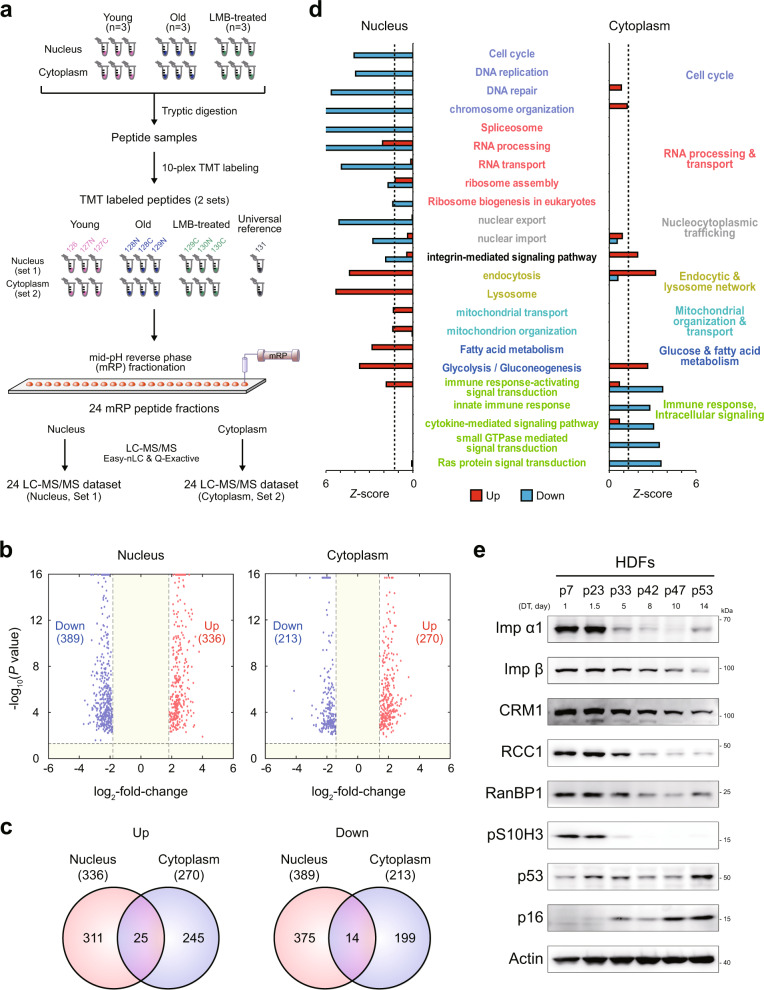
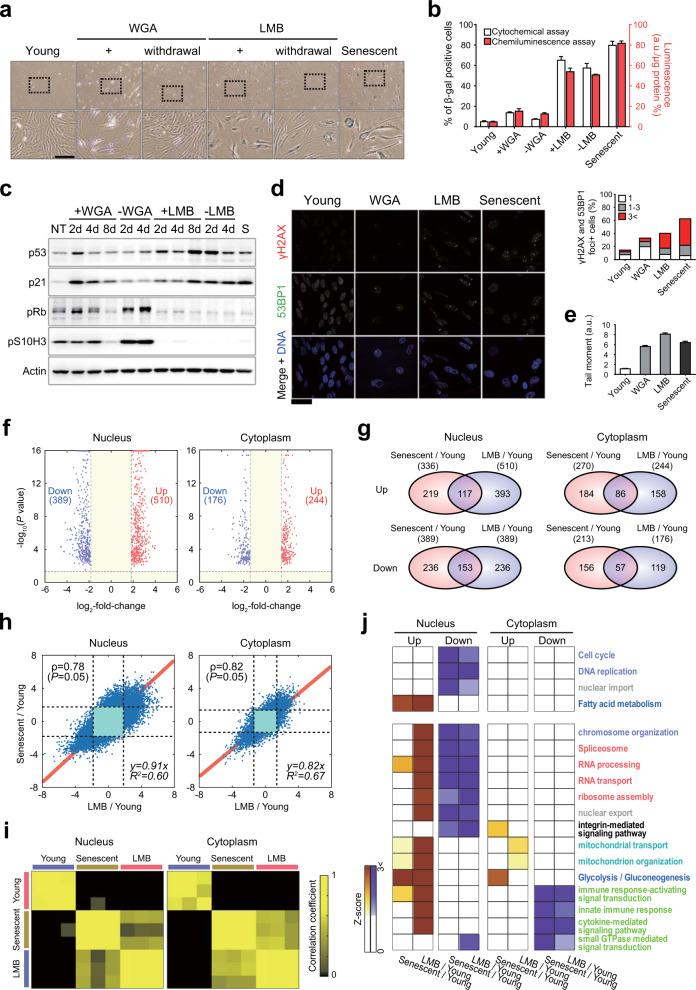
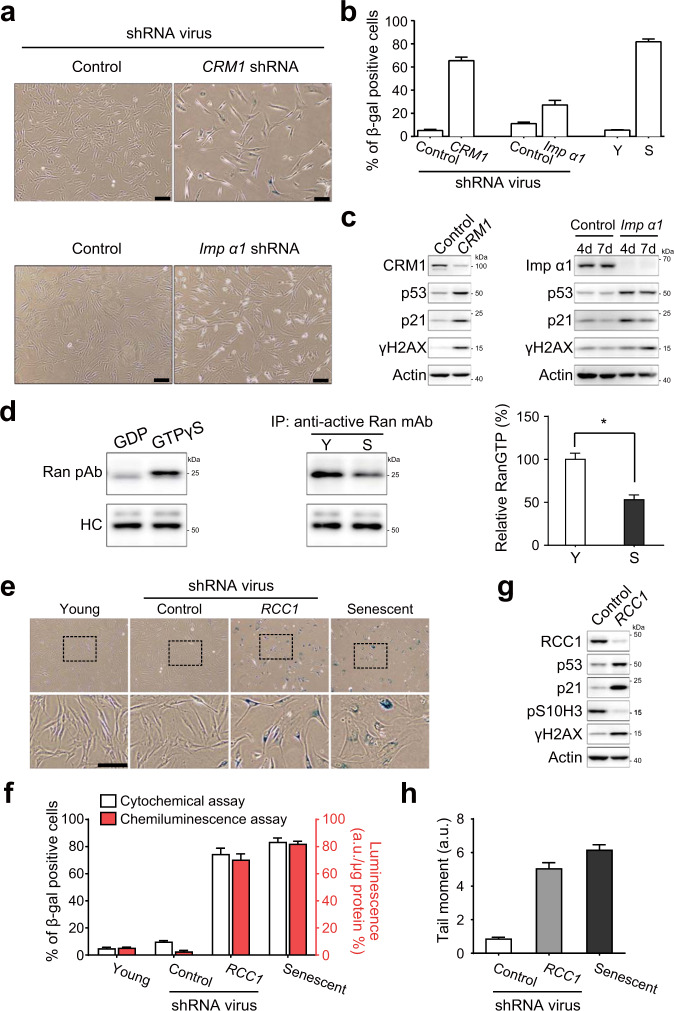
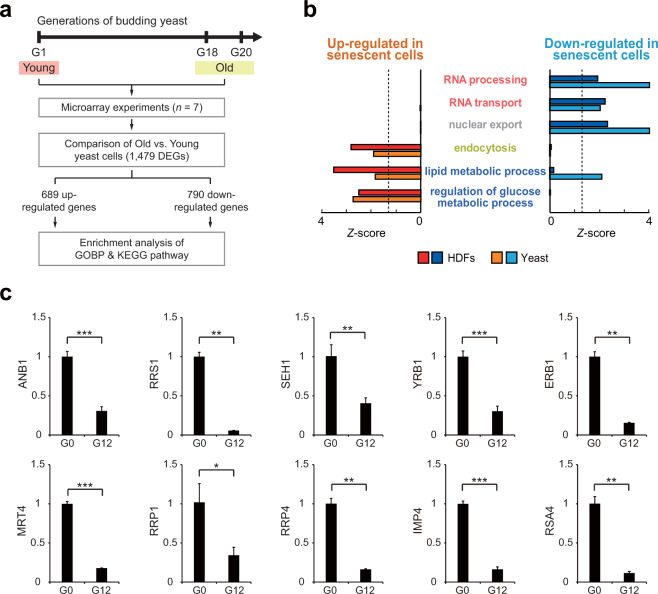
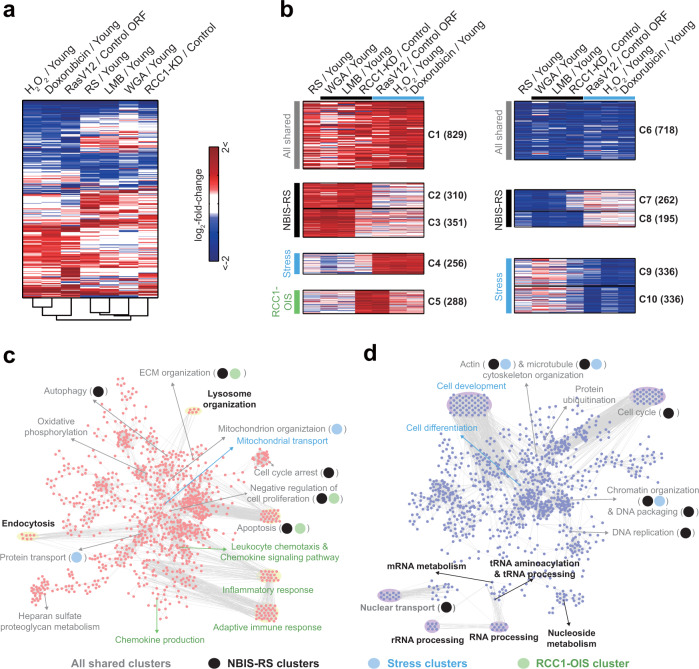
Senescent cells exhibit a reduced response to intrinsic and extrinsic stimuli. This diminished reaction may be explained by the disrupted transmission of nuclear signals. However, this hypothesis requires more evidence before it can be accepted as a mechanism of cellular senescence. A proteomic analysis of the cytoplasmic and nuclear fractions obtained from young and senescent cells revealed disruption of nucleocytoplasmic trafficking (NCT) as an essential feature of replicative senescence (RS) at the global level. Blocking NCT either chemically or genetically induced the acquisition of an RS-like senescence phenotype, named nuclear barrier-induced senescence (NBIS). A transcriptome analysis revealed that, among various types of cellular senescence, NBIS exhibited a gene expression pattern most similar to that of RS. Core proteomic and transcriptomic patterns common to both RS and NBIS included upregulation of the endocytosis-lysosome network and downregulation of NCT in senescent cells, patterns also observed in an aging yeast model. These results imply coordinated aging-dependent reduction in the transmission of extrinsic signals to the nucleus and in the nucleus-to-cytoplasm supply of proteins/RNAs. We further showed that the aging-associated decrease in Sp1 transcription factor expression was critical for the downregulation of NCT. Our results suggest that NBIS is a modality of cellular senescence that may represent the nature of physiological aging in eukaryotes.
Overview
The claims and statistics of this paper haven’t been checked yet.
Free: it reads the open-access text and checks the first 5 claims that cite a source we can check. Create a free account to check every claim.
Integrity signals
Registry
Cites
Statistics
Figures
Verification
Claims the paper makes
The claims and statistics of this paper haven’t been checked yet.
Free: it reads the open-access text and checks the first 5 claims that cite a source we can check. Create a free account to check every claim.
Claims other papers make about this one
Each is checked against this paper’s own text: does it say what the citing paper says it does?
The source backs part of the claim, not all of it — or backs it for a different population, condition or comparison.
In the citing paper
“Cellular senescence is accompanied by substantial reorganization of the nuclear envelope and a breakdown in nucleocytoplasmic trafficking, including altered expression and degradation of Lamin B1, and the formation of cytoplasmic chromatin fragments (CCFs) [38–45].”
From Chemically induced reprogramming to reverse cellular aging (2023) · cites this paper as [38]
Experimental — accuracy not yet measured
Self-check
Percentages, sums and reported differences re-computed from the paper’s own numbers.
The self-check needs the paper’s full text.
Citations
Cites
Cytoscape: A software Environment for integrated models of biomolecular interaction networks
Shannon, P., Markiel, A., Ozier, O., Baliga, N. S., Wang, J. T., Ramage, D., Amin, N., Schwikowski, B., & Ideker, T. (2003) · Genome Research · doi:10.1101/gr.1239303 · Cited by 51,888
Systematic and integrative analysis of large gene lists using DAVID bioinformatics resources
Huang, D. W., Sherman, B. T., & Lempicki, R. A. (2009) · Nature Protocols · doi:10.1038/nprot.2008.211 · Cited by 35,890
López-Otín, C., Blasco, M. A., Partridge, L., Serrano, M., & Kroemer, G. (2013) · Cell · doi:10.1016/j.cell.2013.05.039 · Cited by 14,982
Measures of the Amount of Ecologic Association Between Species
Dice, L. R. (1945) · Ecology · doi:10.2307/1932409 · Cited by 11,874
Statistical significance for genomewide studies
Storey, J. D., & Tibshirani, R. (2003) · Proceedings of the National Academy of Sciences · doi:10.1073/pnas.1530509100 · Cited by 9,692
Bolstad, B. M., Irizarry, R. A., Åstrand, M., & Speed, T. P. (2003) · Bioinformatics · doi:10.1093/bioinformatics/19.2.185 · Cited by 8,266
Cellular senescence: when bad things happen to good cells
Campisi, J., & d'Adda di Fagagna, F. (2007) · Nature Reviews Molecular Cell Biology · doi:10.1038/nrm2233 · Cited by 4,441
Clearance of p16Ink4a-positive senescent cells delays ageing-associated disorders
Baker, D. J., Wijshake, T., Tchkonia, T., LeBrasseur, N. K., Childs, B. G., van de Sluis, B., Kirkland, J. L., & van Deursen, J. M. (2011) · Nature · doi:10.1038/nature10600 · Cited by 3,670
Aging, Cellular Senescence, and Cancer
Campisi, J. (2013) · Annual Review of Physiology · doi:10.1146/annurev-physiol-030212-183653 · Cited by 2,954 · cited 3×
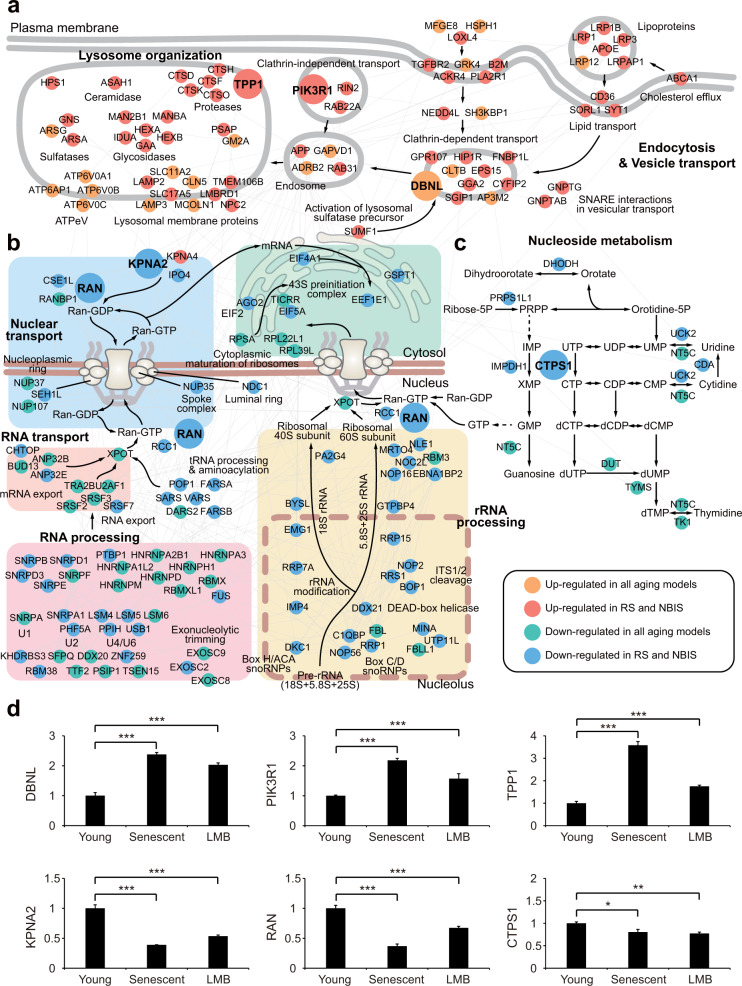
“6d): (1) DBNL, PIK3R1, and TPP1, which are involved in endocytic and lysosomal networks; (2) KPNA2 and RAN, which are involved in NCT; and (3) CTPS1, which is involved in nucleoside metabolism.”
BackgroundMethodFour faces of cellular senescence
Rodier, F., & Campisi, J. (2011) · Journal of Cell Biology · doi:10.1083/jcb.201009094 · Cited by 2,070
Cited by
Cellular senescence and SASP in tumor progression and therapeutic opportunities
Dong, Z., Luo, Y., Yuan, Z., Tian, Y., Jin, T., & Xu, F. (2024) · Molecular Cancer · doi:10.1186/s12943-024-02096-7 · Cited by 259
“Rare forms of senescence that do not depend on DNA damage include sodium butyrate-and nuclear barrier-induced senescence, as well as senescence caused by mitochondrial dysfunction, aberrant epigenetic modifications, protein homeostasis disorders, and paracrine signaling [29].”
BackgroundHan, Y., & Kim, S. Y. (2023) · Experimental & Molecular Medicine · doi:10.1038/s12276-022-00906-w · Cited by 201
Emerging role of senescent microglia in brain aging-related neurodegenerative diseases
Rim, C., You, M., Nahm, M., & Kwon, M. (2024) · Translational Neurodegeneration · doi:10.1186/s40035-024-00402-3 · Cited by 174
“…stressors can lead to cellular senescence, including replicative senescence caused by long-term proliferation, DNA damage-induced senescence, oxidative stress-induced senescence, oncogene-induced senescence, nuclear barrier-induced senescence, and reciprocally induced cellular senescence [11, 12].”
BackgroundChemically induced reprogramming to reverse cellular aging
Yang, J.-H., Petty, C. A., Dixon-McDougall, T., Lopez, M. V., Tyshkovskiy, A., Maybury-Lewis, S., Tian, X., Ibrahim, N., Chen, Z., Griffin, P. T., et al. (2023) · Aging · doi:10.18632/aging.204896 · Cited by 136
Senescent tumor cells: an overlooked adversary in the battle against cancer
Park, S. S., Choi, Y. W., Kim, J., Kim, H. S., & Park, T. J. (2021) · Experimental & Molecular Medicine · doi:10.1038/s12276-021-00717-5 · Cited by 113
“In summary, three major cancer-promoting features of STCs are currently known: (1) increased EMT and increased stemness of the STCs themselves, (2) increased release of cancer-promoting factors affecting the invasiveness of nonsenescent cancer cells, and (3) modulation of the local microenvironment, including the immu…”
BackgroundInfluentialSelf-citationJang, W. E., Park, J. H., Park, G., Bang, G., Na, C. H., Kim, J. Y., Kim, K.-Y., Kim, K. P., Shin, C. Y., An, J., et al. (2022) · Molecular Psychiatry · doi:10.1038/s41380-022-01822-1 · Cited by 62
Self-citationSubcellular structure, heterogeneity, and plasticity of senescent cells
Bitencourt, T. C., Vargas, J. E., Silva, A. O., Fraga, L. R., & Filippi‐Chiela, E. (2024) · Aging Cell · doi:10.1111/acel.14154 · Cited by 46
“However, as for changes in other subcellular compartments, the cause–consequence of nuclear alterations in SnCs still needs to be clarified, since nuclear alterations can also to be a driver to induce senescence (Park et al., 2021).”
BackgroundAdvances in Mass Spectrometry-Based Single Cell Analysis
Lee, S., Vu, H. M., Lee, J., Lim, H., & Kim, M. (2023) · Biology · doi:10.3390/biology12030395 · Cited by 53
Self-citationPark, G., Jang, W. E., Kim, S., Gonzales, E. L., Ji, J., Choi, S., Kim, Y., Park, J. H., Mohammad, H. B., Bang, G., et al. (2023) · Experimental & Molecular Medicine · doi:10.1038/s12276-023-01065-2 · Cited by 42
Self-citationConserved nucleocytoplasmic density homeostasis drives cellular organization across eukaryotes
Biswas, A., Muñoz, O., Kim, K., Hoege, C., Lorton, B. M., Nikolay, R., Kraushar, M. L., Shechter, D., Guck, J. R., Zaburdaev, V., et al. (2025) · Nature Communications · doi:10.1038/s41467-025-62605-0 · Cited by 40
“This data supports the role of ribosomes in cytoplasmic crowding 62 – 64 and further proposes that cytoplasmic dilution is due to perturbed ribosomal subunit biogenesis and export during senescence 65,66 .”
Nuclear-import receptors as gatekeepers of pathological phase transitions in ALS/FTD
Khalil, B., Linsenmeier, M., Smith, C. L., Shorter, J., & Rossoll, W. (2024) · Molecular Neurodegeneration · doi:10.1186/s13024-023-00698-1 · Cited by 36
“This process can result from reduced NCT efficiency, as occurs in aging, which causes an accumulation of deteriorated and misassem-bled NPCs and expression changes in certain factors regulating NCT [133–135].”
BackgroundKim, S. Y., & Cheon, J. (2024) · Ageing Research Reviews · doi:10.1016/j.arr.2024.102446 · Cited by 36
Gupta, I., & Gaykalova, D. A. (2024) · Seminars in Cancer Biology · doi:10.1016/j.semcancer.2024.08.004 · Cited by 35
An Indocyanine Green‐Based Nanoprobe for In Vivo Detection of Cellular Senescence
Baker, A. G., Hartono, M., Ou, H., Bistrović, A., Brown, E. L., Joseph, J., Golinska, M. A., González‐Gualda, E., Macías, D., Ge, J., et al. (2024) · Angewandte Chemie International Edition · doi:10.1002/anie.202404885 · Cited by 33
Adenosine A2A receptor activation reduces chondrocyte senescence
Friedman, B., Larranaga‐Vera, A., Castro, C. M., Corciulo, C., Rabbani, P. S., & Cronstein, B. N. (2023) · The FASEB Journal · doi:10.1096/fj.202201212rr · Cited by 27
Freyter, B. M., Al‐razaq, M. A. A., Isermann, A., Dietz, A., Azimzadeh, O., Hekking, L. H. P., Gomolka, M., & Rübe, C. E. (2022) · Cells · doi:10.3390/cells11020273 · Cited by 24
Nuclear pore dysfunction and disease: a complex opportunity
Fare, C. M., & Rothstein, J. D. (2024) · Nucleus · doi:10.1080/19491034.2024.2314297 · Cited by 27
Reduced UPF1 levels in senescence impair nonsense-mediated mRNA decay
Koh, D., Lee, Y., Kim, K. E., Jeon, H. B., Oh, C., Hwang, S., Lim, M., Lee, K.-P., Park, Y., Yang, Y. R., et al. (2025) · Communications Biology · doi:10.1038/s42003-025-07502-4 · Cited by 15
“A recent study reported that proteins involved in nucleocytoplasmic traf fi cking (NCT), such as importin α -1 (imp α -1) and CRM1, are reduced during cellular senescence 28 .”
Self-citationKim, H. S., Yoon, H.-S., Heo, A. J., Jung, E. J., Ji, C. H., Mun, S. R., Lee, M. J., Kwon, Y. T., & Park, J. (2023) · British Journal of Pharmacology · doi:10.1111/bph.16004 · Cited by 16
“Nuclei fractionation was conducted as previously described (Park et al., 2021), with some modifications.”
MethodSelf-citationA multifactorial lens on risk factors promoting the progression of Alzheimer’s disease
Parker, J., Moris, J. M., Goodman, L. C., Paidisetty, V. K., Vanegas, V., Turner, H. A., Melgar, D., & Koh, Y. (2024) · Brain Research · doi:10.1016/j.brainres.2024.149262 · Cited by 12
Vu, H. M., Mohammad, H. B., Nguyen, T. N. C., Lee, J. H., Do, Y., Sung, J., Lee, S. H., & Kim, M. (2023) · PROTEOMICS - CLINICAL APPLICATIONS · doi:10.1002/prca.202300011 · Cited by 12
Self-citationSystematic transcriptomic analysis and temporal modelling of human fibroblast senescence
Scanlan, R.-L., Pease, L., O’Keefe, H., Guimera, A. M., Rasmussen, L. J., Wordsworth, J., & Shanley, D. P. (2024) · Frontiers in Aging · doi:10.3389/fragi.2024.1448543 · Cited by 11
Characterisation of the trans-membrane nucleoporins GP210 and NDC1 in Arabidopsis thaliana
Collins, P. P., Broad, R. C., Yogeeswaran, K., Varsani, A., Poole, A. M., & Collings, D. A. (2023) · Plant Science · doi:10.1016/j.plantsci.2023.111719 · Cited by 8
Chen, Y., Cao, X., Xie, L., Tang, J., Liu, L., Wang, D., Wu, X. F., Liu, T., Yu, Y., Wang, Y., et al. (2025) · Microbial Biotechnology · doi:10.1111/1751-7915.70045 · Cited by 11
“Indeed, the disruption of nucleocytoplasmic transport can drive cell senescence (Park et al., 2021), whereas mRNA surveillance is essential for the maintenance of normal cell function (Jamar et al., 2018; Wolin & Maquat, 2019).”
Targeting CRM1 for Progeria Syndrome Therapy
Soto‐Ponce, A., Ita, M. D., Castro‐Obregón, S., Cortez, D., Landesman, Y., Magaña, J. J., Gonzalo, S., Zavaleta-Vásquez, T. I., Soberano‐Nieto, A., Unzueta, J., et al. (2025) · Aging Cell · doi:10.1111/acel.14495 · Cited by 9
“…processes, including DNA replication and repair, gene expression, cell cycle, ribosomal biogenesis, as well as pathways associated with aging, such as cellular senescence, telomere stability and mitochondrial function (Kumar and Lapierre 2021; Mor, White, and Fontoura 2014; Park et al. 2021).”
Chen, L., Xu, T., Wang, Z., Wang, C., Fang, L., & Kong, L. (2024) · Journal of Advanced Research · doi:10.1016/j.jare.2024.08.007 · Cited by 8
What matters in aging is signaling for responsiveness
Park, S. C., Lee, Y., Cho, K. A., Kim, S. Y., Lee, Y., Lee, S.-R., & Lim, I. K. (2023) · Pharmacology & Therapeutics · doi:10.1016/j.pharmthera.2023.108560 · Cited by 8
Self-citationKim, Y., Lee, J.-H., Lee, C., & Lawler, S. E. (2022) · Journal of Mathematical Biology · doi:10.1007/s00285-022-01850-z · Cited by 7
“…al. 2007), and genomic instability from the high replication burden of tumor cells (Macheret and Halazonetis 2015), the fundamental mechanism of transformation of cancer cells into STCs, the most common types of senescent cells in TME (Kim and Park 2019), is poorly understood (Park et al. 2021a).”
BackgroundSelf-citationYue, B., Zhang, W., Li, M., & Xu, L. (2024) · Molecular Genetics and Genomics · doi:10.1007/s00438-024-02203-9 · Cited by 6
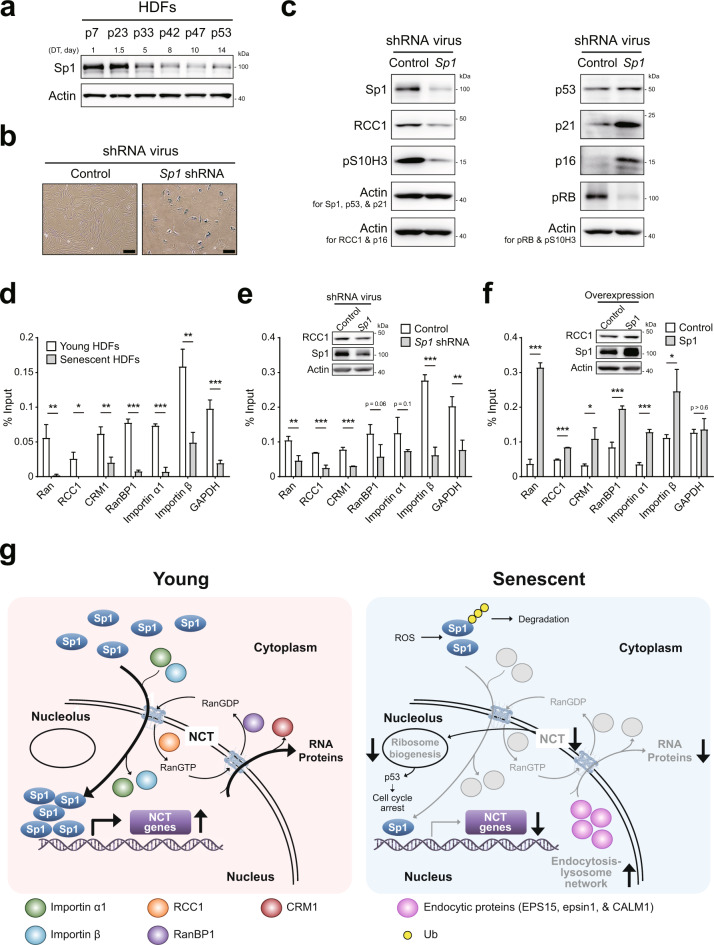
“Park et al. (Park et al. 2021 ) demonstrated that Sp1 knockdown elevated SA-β-gal activity and p21 and p16 expressions.”
Proteostasis of organelles in aging and disease
Nabawi, Y., Doğan, C., Petrovic, D., Perçin, G. I., Koyuncu, S., & Vílchez, D. (2026) · FEBS Journal · doi:10.1111/febs.70439 · Cited by 6
“Proteostasis imbalance due to NPC deterioration results in the accumulation of misfolded and damaged nuclear proteins, accelerating aggregate formation and cellular dysfunction observed in aging and age-related diseases [17,33 – 36].”
Schertzer, M. J., Jullien, L., Santos, A. L. P., Calado, R. T., Revy, P., & Londoño‐Vallejo, A. (2023) · Cells · doi:10.3390/cells12242798 · Cited by 5
RNA imbalance as a hallmark of cellular ageing
Sun, P., Miller, B. A., Sakai, A. P., & Rhine, K. (2026) · Nature Cell Biology · doi:10.1038/s41556-026-01946-4 · Cited by 4
“Artificial NCT blockage can induce replicative senescence, indicating that RNA and protein export is a critical component of ageing-linked phenotypes 50 .”
Nuclear Profilin‐1 for DNA Damage Repair Is Involved in Phagocytic Impairment of Senescent Microglia
Rim, C., Sung, S., Kim, H., Kim, S. H., Nahm, M., & Kwon, M. (2025) · Glia · doi:10.1002/glia.70028 · Cited by 4
“Stressors that contribute to cellular senescence include replicative stress stemming from repetitive cell culture (Linskens et al. 1995), DNA damage accumulation (Rodier et al. 2009), and nuclear barrier-induced senescence (NBIS) (Park et al. 2021).”
Yuan, Y., Xiang, X., Jiang, X., Ying-ju, L., Zhang, M., Lu, L., Zhang, X., Liu, X., Tan, Q., & Zhang, J. (2024) · Antioxidants · doi:10.3390/antiox13091104 · Cited by 4
Intercompartmental communication in senescence
Mazan-Mamczarz, K., Wind, E. J., Leng, J., & Gorospe, M. (2026) · FEBS Open Bio · doi:10.1002/2211-5463.70236 · Cited by 3
“These changes ultimately impair intracellular communication and reduce the cell’s ability to respond to stimuli [120,204,205].”
Chen, L., Xu, T., Wang, J., Wang, Z., Pan, Y., & Kong, L. (2024) · Journal of Ethnopharmacology · doi:10.1016/j.jep.2024.118878 · Cited by 2
An Indocyanine Green‐Based Nanoprobe for In Vivo Detection of Cellular Senescence
Baker, A. G., Hartono, M., Ou, H., Bistrović, A., Brown, E. L., Joseph, J., Golinska, M. A., González‐Gualda, E., Macías, D., Ge, J., et al. (2024) · Angewandte Chemie · doi:10.1002/ange.202404885 · Cited by 2
Lukacheva, A., Gorb, A. I., Мусорина, А. С., Kriger, D. V., Poljanskaya, G. G., & Bobkov, D. E. (2023) · Russian Journal of Bioorganic Chemistry · doi:10.1134/s106816202312018x · Cited by 3
A role for long-lived nuclear envelope proteins in cardiac ageing
Shuen, M., Lamberts, R. R., Coffey, S., & Sheard, P. W. (2025) · Mechanisms of Ageing and Development · doi:10.1016/j.mad.2025.112145 · Cited by 3
Baker, A. G., Ou, H., Hartono, M., Bistrović, A., Brown, E. L., Joseph, J., Golinska, M. A., Sanghera, C., González‐Gualda, E., Macías, D., et al. (2023) · bioRxiv (Cold Spring Harbor Laboratory) · doi:10.1101/2023.07.12.548691
Hartmann, C., Haß, C., Knobloch, M., Barrantes, I., Fumagalli, L., Premereur, J., Markert, F., Peters, M., Koromila, G., Hartmann, A., et al. (2025) · Aging Cell · doi:10.1111/acel.70232 · Cited by 2
“Notably, comparison with human datasets from aged microglia (Galatro et al. 2017; Olah et al. 2018) With increasing age, there is also a downregulation of nuclear transport factors resulting in restricted protein transport between the nucleus and cytoplasm (Park et al. 2021).”
High dietary fructose induces the senescence of granulosa cells by enhancing O-GlcNAcylation
Xu, R., Zheng, L., Li, B. C., Tang, T., Zhang, J., Xu, Y., Qiu, S., Zhang, H., Dong, J., Chen, L., et al. (2026) · Reproduction · doi:10.1093/reprod/xaag005
Quantitative proteomics reveals coordinated changes in the proteome during replicative senescence
Fernandes, N. D. S., Kielisch, F., Fulzele, A., Karunanithi, S., Gräf, J. F., Chen, J., Behl, C., Ulrich, H. D., & Beli, P. (2026) · Nature Communications · doi:10.1038/s41467-026-77686-8 · Cited by 1
Metadata
- Authors
- Park, J.-H., Ryu, S. J., Kim, B. J., Cho, H.-J., Park, C. H., Choi, H. J. C., Jang, E.-J., Yang, E. J., Hwang, J.-A., Woo, S.-H., Lee, J. H., Park, J. H., Choi, K.-M., Kwon, Y.-Y., Lee, C.-K., Park, J. T., Cho, S. C., Lee, Y.-I., Lee, S. B., Han, J. A., Cho, K. A., Kim, M.-S., Hwang, D., Lee, Y.-S., & Park, S. C.
- Affiliations
- Samsung Advanced Institute of Technology (South Korea) (KR)
- Daegu Gyeongbuk Institute of Science and Technology (KR)
- Korea University (KR)
- Incheon National University (KR)
- Kangwon National University (KR)
- Chonnam National University (KR)
- Seoul National University (KR)
- Corresponding author
- Lee, Yun-Il
- Kim, Min-Sik
- Hwang, Daehee
- Lee, Young-Sam
- Park, Sang Chul
- ORCID
- Venue
- Experimental & Molecular Medicine
- Published
- 2021-06
- Volume
- 53
- Issue
- 6
- Pages
- 1092-1108
- ISSN
- 1226-3613 (ISSN-L)
- 2092-6413
- PMC
- PMC8257587
- OpenAlex
- W3175613702
- Cited by
- 44
- References
- 67
- Citations by year
- 2026: 5 · 2025: 7 · 2024: 15 · 2023: 11 · 2022: 5 · 2021: 1
- FWCI
- 5.03
- Type
- journal article
- Language
- en
- Open access
- gold
- doi.org
- Licence
- cc-by
- creativecommons.org/licenses/by/4.0 (tdm)
- creativecommons.org/licenses/by/4.0 (vor, 28 d)
- Locations
- Experimental & Molecular Medicine (publishedVersion, cc-by)
- PubMed Central (publishedVersion, cc-by)
- PubMed (publishedVersion)
- Funders
- National Research Foundation of Korea (NRF-2020R1A2C2009439, NRF-2019R1A4A1024278, NRF-2017M3C7A1027472, NRF-2019R1C1C1006262, NRF-2020M3A9D8038014, NRF-2020R1A2C2013416)
- Institute for Basic Science of the Ministry of Science, ICT and Technology (MSIT) of KOREA
- Topics
- Life Sciences › Biochemistry, Genetics and Molecular Biology › Cell Biology › Telomeres, Telomerase, and Senescence
- Life Sciences › Biochemistry, Genetics and Molecular Biology › Aging › Genetics, Aging, and Longevity in Model Organisms
- Life Sciences › Biochemistry, Genetics and Molecular Biology › Molecular Biology › Nuclear Structure and Function
- Keywords
- cellular senescence, replicative senescence, nucleocytoplasmic trafficking, Sp1, aging, proteomics, transcriptomics
- MeSH terms
- Cell Nucleus, Down-Regulation, Cellular Senescence, Proteomics
About these checks
Registry, retraction, Cites and statistics results are computed, not judged, with one exception: a printed reference that no index lists is read once by a model before it counts as a citation error. Claims are extracted by a model and kept only when their quote appears verbatim in the text; each cited source is then checked, with a model’s help, for whether it says what the claim relies on. Those verdicts can be wrong — read the claim’s quote and the cited source before relying on one.
Statistics and arithmetic are recomputed, not judged.
Confidence bands are shown only for fields calibrated on our annotated test set. None is calibrated yet, so no band is shown.
What counts as a claim ›How we measure confidence ›How we check this ›
Are you an author, or do you see a problem with this page? Request a review
Data sources
Bibliographic data: Semantic Scholar, OpenAlex, Crossref.
Contains information from the Semantic Scholar Academic Graph Datasets, made available under the ODC Attribution License (ODC-BY 1.0).
Semantic Scholar’s data is described in: Kinney, R., et al. (2023). The Semantic Scholar Open Data Platform. arXiv:2301.10140.
