

What is the pipeline for future medications for obesity?
Open accessThe DOI matches its Crossref record; 112 of the 124 references it cites were found in a registry or an index; 80 of the 161 sources its claims cite were checked for support.
Abstract
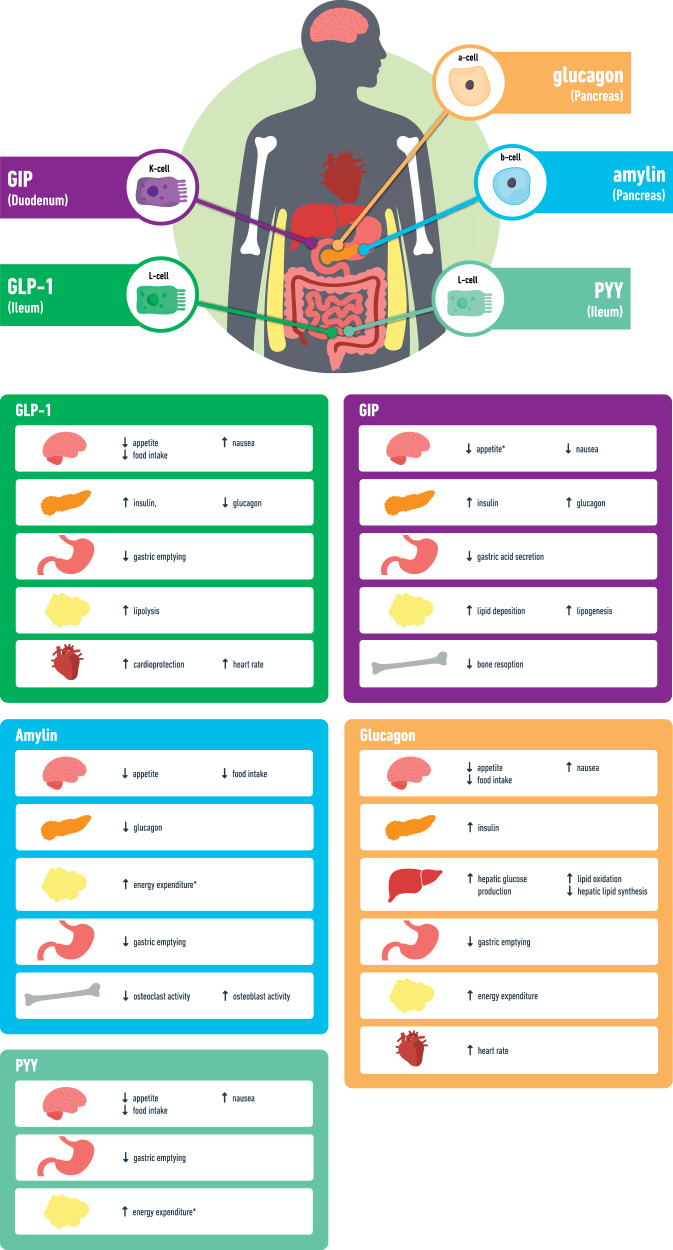
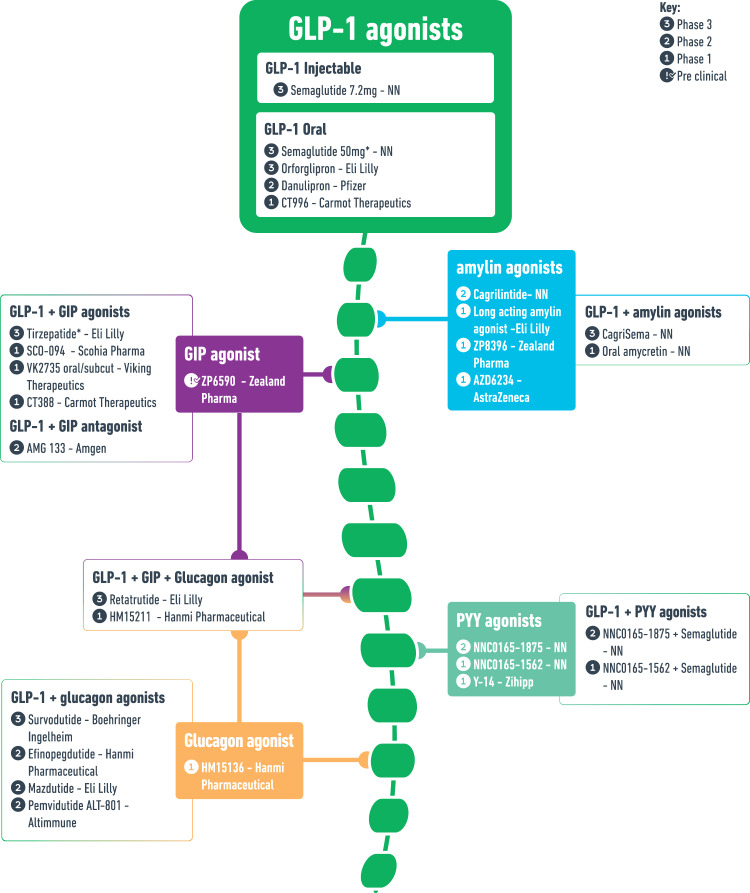
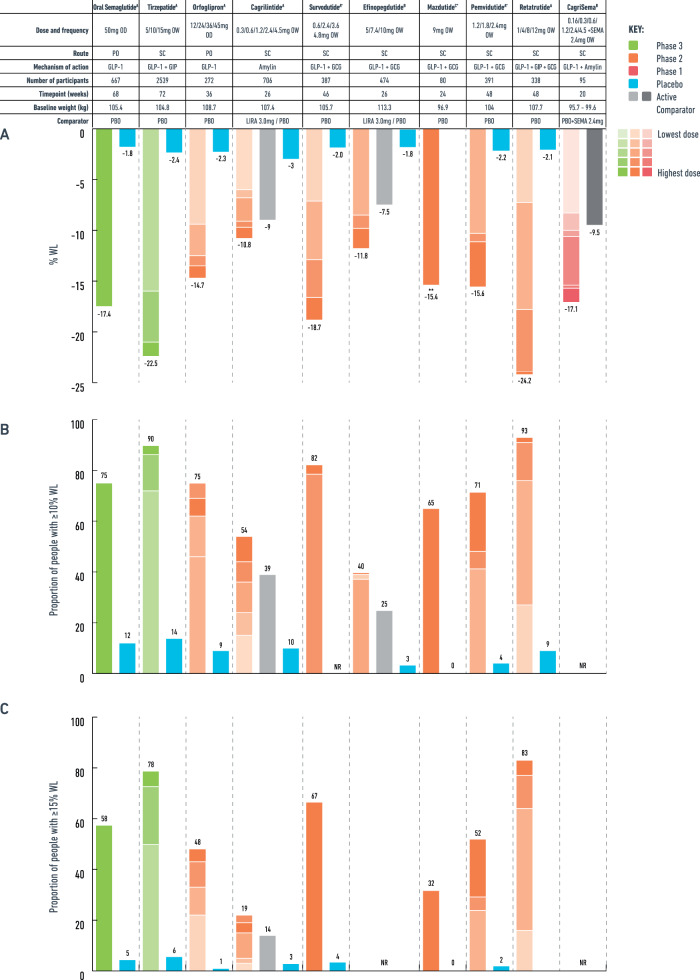
Obesity pipeline review. Semaglutide 2.4mg results in 15-17% weight loss. Tirzepatide leads up to 22.5% WL in phase 3. Retatrutide (GLP-1/GIP/glucagon RA) progressed to phase 3 trials. Early data suggests retatrutide may lead to even greater WL than tirzepatide.
Overview
CoChat Summary
## TL;DR
This review maps the rapidly expanding obesity drug pipeline, emphasizing that combinations of entero-pancreatic hormones are producing weight loss that can approach bariatric surgery. It highlights tirzepatide as the first approved dual agonist for chronic weight management and notes several oral, dual, and triple agonists in late-phase development.
## Key findings
- Semaglutide 2.4 mg once weekly, an approved GLP-1 receptor agonist, produces 15–17% mean weight loss and has evidence of cardioprotection; the SELECT trial reported a 20% reduction in major adverse cardiovascular events (MACE) vs placebo after 39.8 months of follow-up.
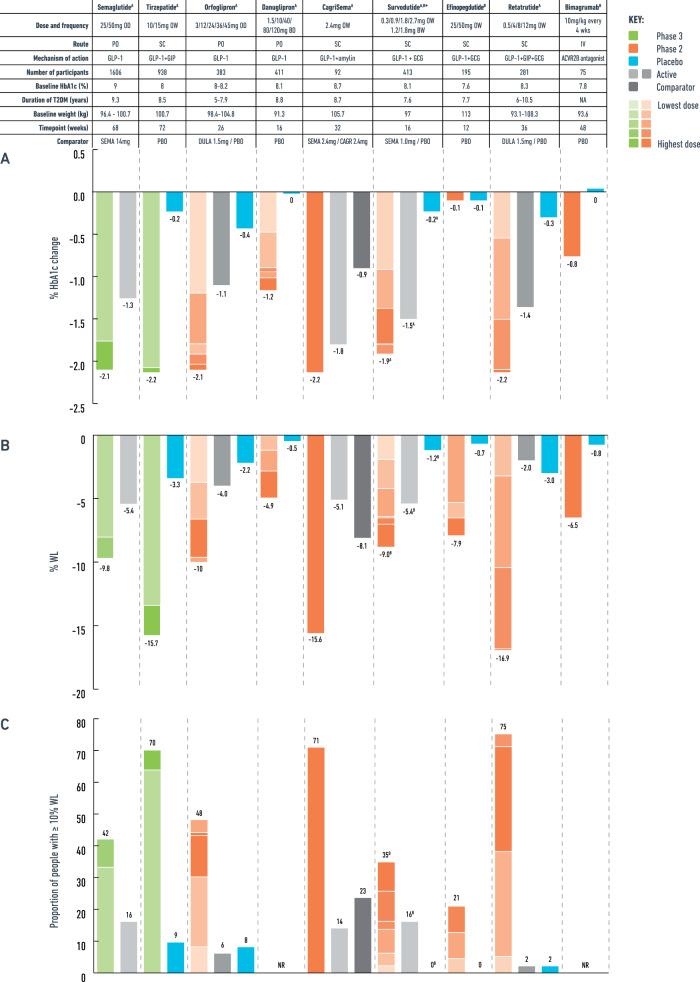
- In obesity without T2D, oral semaglutide 50 mg produced 17.4% weight loss vs 1.8% with placebo at 68 weeks in OASIS-1; in T2D, it produced 9.8% weight loss vs 5.4% with oral semaglutide 14 mg and reduced HbA1c by −2.1% vs −1.3% at 68 weeks.
- Tirzepatide (dual GLP-1/GIP agonist) achieved 16–22.5% mean weight loss at 72 weeks in SURMOUNT-1 and up to 15.7% in SURMOUNT-2; in SURMOUNT-4, participants maintained/continued to lose weight, with 25.9% of placebo vs 84.1% of tirzepatide participants achieving ≥15% weight loss at 88 weeks from baseline.
- Retatrutide (triple GLP-1/GIP/glucagon agonist) produced up to 24.2% weight loss at 48 weeks in a phase 2 obesity study; 36–48% of participants on the 8 mg and 12 mg doses achieved ≥25% weight loss.
## Methods
- Narrative review of the pipeline of obesity pharmacotherapies, with a focus on entero-pancreatic hormone-based molecules and selected non-hormonal agents.
- Synthesizes data from early- and late-phase clinical trials in people with and without T2D, and also considers effects on glycaemia, liver fat content (MASLD/MASH), and cardiovascular outcomes.
- Main analysis is descriptive comparison of efficacy, safety, and development stage across agents; Not stated in the paper as a formal systematic review or meta-analysis.
## Limitations
- The paper states that the full potential benefits and risks of the new obesity pharmacotherapies still need to be better understood, and that robust cost-effectiveness data are lacking.
- It explicitly notes that cardiovascular outcome trials are still needed for several agents, including combinations of GLP-1 with other hormones and oral GLP-1 receptor agonists.
- Evident from the text: much of the pipeline relies on phase 1/2 data, press releases, or abstract data, so some reported efficacy and safety findings are preliminary (say which: evident from the text).
Model-written summary. Check it against the paper before relying on it.
Integrity signals
Registry
Cites
Statistics
Figures
Verification
Claims the paper makes
66 Valid · 1 Not valid · 63 Not checked · 13 Own results and interpretations
The sources with a verdict support this claim; the rest weren’t checked yet, have no full text we could read, or their verdicts aren’t rated yet.
In the paper
“Despite that 5–10% WL is clinically beneficial, greater WL may be required for the individual to improve or achieve remission of some obesity-related complications [7, 8].”
§ What is the pipeline for future medications for obesity? > Introduction
What the sources say
- Supportedcites [7] Timothy Garvey W. New Horizons. A new paradigm for treating to target with second-generation obesity medications. J Clin Endocrinol Metab. 2022;107:E1339–47. 34865050 PMC8947217 source
The “Obesity, Complications, and Adiposity-based Chronic Disease” section says that the weight loss needed for clinical benefit varies by complication: 5%–10% reduces liver steatosis, while more than 10% is required to improve inflammation and fibrosis in nonalcoholic steatohepatitis. The section on using percent weight loss as a biomarker also says treatment targets should be individualized to the complications present in each patient. (LLM, conf=0.94)
- Not checked — no full text of the sourcecites [8] Tahrani AA, Morton J. Benefits of weight loss of 10% or more in patients with overweight or obesity: a review. Obesity. 2022;30:802–40. 35333446 source
hedgedstates a possible cause- Asserted: passes — The authors put it forward as true.
- Checkable: passes — It can be checked against evidence.
- Load-bearing: passes — The paper’s conclusions depend on it.
- Based: passes — The paper gives a reason why it holds.
- Supported
The cited sources support only part of this claim — read each source’s verdict below.
In the paper
“More specifically, orforglipron is a potent partial GLP-1 RA which is biased towards G-protein activation over to β-arrestin recruitment at the GLP-1 receptor [23].”
§ What is the pipeline for future medications for obesity? > Pipeline of obesity pharmacotherapies > Orforglipron
What the sources say
- Partly supportedcites [23] Kawai T, Sun B, Yoshino H, Feng D, Suzuki Y, Fukazawa M, et al. Structural basis for GLP-1 receptor activation by LY3502970, an orally active nonpeptide agonist. Proc Natl Acad Sci USA. 2020;117:29959–67. 33177239 PMC7703558 sourceExperimental — accuracy not yet measured
The Results and Discussion section (In Vitro and In Vivo Activity of LY3502970; page unavailable) describes LY3502970 as a potent partial GLP-1R agonist that stimulates cAMP accumulation without detectable β-arrestin recruitment. Our copy does not name orforglipron or establish that it is LY3502970, so it does not fully support the claim about the named drug. (LLM, conf=0.82)
plain- Asserted: passes — The authors put it forward as true.
- Checkable: passes — It can be checked against evidence.
- Load-bearing: unclear — It is unclear whether the paper’s conclusions depend on it.
- Based: passes — The paper gives a reason why it holds.
- Partly supported
The cited sources support only part of this claim — read each source’s verdict below.
In the paper
“Additionally, oral semaglutide 50 mg reduced the HbA1c by −2.1% at 68 weeks compared to −1.3% with oral semaglutide 14 mg (Fig. 4) [22].”
§ What is the pipeline for future medications for obesity? > Pipeline of obesity pharmacotherapies > Oral semaglutide 50 mg
What the sources say
- Partly supportedcites [22] Aroda VR, Aberle J, Bardtrum L, Christiansen E, Knop FK, Gabery S, et al. Efficacy and safety of once-daily oral semaglutide 25 mg and 50 mg compared with 14 mg in adults with type 2 diabetes (PIONEER PLUS): a multicentre, randomised, phase 3b trial. Lancet. 2023;402:693–704. 37385279 sourceExperimental — accuracy not yet measured
The Findings and Results report greater HbA1c reduction with oral semaglutide 50 mg than with 14 mg: −2.0 versus −1.5 percentage points at week 52. The Discussion says the reductions were largely sustained through week 68, but the passages from our copy do not establish the claimed week-68 values of −2.1% and −1.3%. (LLM, conf=0.85)
plainstates a cause- Asserted: passes — The authors put it forward as true.
- Checkable: passes — It can be checked against evidence.
- Load-bearing: unclear — It is unclear whether the paper’s conclusions depend on it.
- Based: passes — The paper gives a reason why it holds.
- Partly supported
Every source the paper cites for this claim was checked and supports it.
In the paper
“Moreover, preclinical and early phase clinical trials have confirmed the therapeutic potential of entero-pancreatic hormone combinations in obesity and/or metabolic complications such as T2D [33].”
§ What is the pipeline for future medications for obesity? > Other entero-pancreatic hormones and combination of entero-pancreatic hormones in the management of obesity
What the sources say
- Supportedcites [33] Baggio LL, Drucker DJ. Glucagon-like peptide-1 receptor co-agonists for treating metabolic disease. Mol Metab. 2021;46:101090. 32987188 PMC8085566 source
The Introduction says that multiple preclinical studies and emerging clinical data support the therapeutic potential of combinatorial peptide therapy for metabolic disorders. The Tirzepatide section reports early-phase trials showing improvements in weight and glucose measures, including in people with T2D. The paper cautions that clinical development remains limited, but the claim concerns therapeutic potential rather than established treatment efficacy. (LLM, conf=0.91)
boostedstates a cause- Asserted: passes — The authors put it forward as true.
- Checkable: passes — It can be checked against evidence.
- Load-bearing: passes — The paper’s conclusions depend on it.
- Based: passes — The paper gives a reason why it holds.
- Supported
The sources with a verdict support this claim; the rest weren’t checked yet, have no full text we could read, or their verdicts aren’t rated yet.
In the paper
“as the simultaneous activation of GLP-1 and GIP receptors in preclinical models results in greater WL and glucose-lowering efficacy compared to activation of each receptor alone [38–40]”
§ What is the pipeline for future medications for obesity? > GIP agonism
What the sources say
- Supportedcites [38] Gault VA, Kerr BD, Harriott P, Flatt PR. Administration of an acylated GLP-1 and GIP preparation provides added beneficial glucose-lowering and insulinotropic actions over single incretins in mice with Type 2 diabetes and obesity. Clin Sci. 2011;121:107–17. 21332446 source
In the Results section on ob/ob mice (page unavailable), the combined Lira-AcGIP preparation significantly reduced body weight, while either incretin mimetic alone did not. A separate Results section reports significantly better glucose control with the preparation than with either mimetic alone. (LLM, conf=0.92)
- Not checked — no full text of the sourcecites [39] Nørregaard PK, Deryabina MA, Tofteng Shelton P, Fog JU, Daugaard JR, Eriksson PO, et al. A novel GIP analogue, ZP4165, enhances glucagon-like peptide-1-induced body weight loss and improves glycaemic control in rodents. Diabetes Obes Metab. 2018;20:60–8. 28598027 source
- Not checked — no full text of the sourcecites [40] Finan B, Ma T, Ottaway N, Müller TD, Habegger KM, Heppner KM, et al. Unimolecular dual incretins maximize metabolic benefits in rodents, monkeys, and humans. Sci Transl Med. 2013;5:209ra151. 24174327 source
plainstates a cause- Asserted: passes — The authors put it forward as true.
- Checkable: passes — It can be checked against evidence.
- Load-bearing: passes — The paper’s conclusions depend on it.
- Based: passes — The paper gives a reason why it holds.
- Supported
64 more claims · 25 with their cited sources checked
Create a free account to see all 143 claims and to verify the 2 references still open.
- It may state two separate claims as one. 71
- Probably not a substantial claim. 7
Claims other papers make about this one
Each is checked against this paper’s own text: does it say what the citing paper says it does?
The source backs part of the claim, not all of it — or backs it for a different population, condition or comparison.
In the citing paper
“In summary, dual and triple agonists related to GLP-1 represent significant advances in the field of diabetes treatment,167,168 demonstrating the future trend of enhancing therapeutic effects by targeting multiple biomarkers.136,169,170”
From Glucagon-like peptide-1 receptor: mechanisms and advances in therapy (2024) · cites this paper as [169]
Experimental — accuracy not yet measuredThe source backs part of the claim, not all of it — or backs it for a different population, condition or comparison.
In the citing paper
“the Nutrient Stimulated Hormones being targeted have effects on muscle protein synthesis and even energy expensiture [42–44].”
From New drugs for the treatment of obesity: do we need approaches to preserve muscle mass? (2025) · cites this paper as [44]
Experimental — accuracy not yet measuredThe source backs part of the claim, not all of it — or backs it for a different population, condition or comparison.
In the citing paper
“MariTide is a monthly subcutaneous glucose-dependent insulinotropic polypeptide receptor (GIPR) antagonist conjugated to analog peptide of GLP-1.84”
From GLP-1 single, dual, and triple receptor agonists for treating type 2 diabetes and obesity: a narrative review (2024) · cites this paper as [84]
Experimental — accuracy not yet measuredThe source backs part of the claim, not all of it — or backs it for a different population, condition or comparison.
In the citing paper
“GLP-1/glucagon dual agonists promote glucose and body weight reduction via regulation of hunger/appetite and increasing energy expenditure.”
From GLP-1 single, dual, and triple receptor agonists for treating type 2 diabetes and obesity: a narrative review (2024) · cites this paper as [84]
Experimental — accuracy not yet measuredThe source backs part of the claim, not all of it — or backs it for a different population, condition or comparison.
In the citing paper
“In mice models, pemvidutide lowered body weight and liver enzymes while promoting better blood glucose control, improved liver steatosis, inflammation and fibrosis superior to semaglutide.84”
From GLP-1 single, dual, and triple receptor agonists for treating type 2 diabetes and obesity: a narrative review (2024) · cites this paper as [84]
Experimental — accuracy not yet measured
14 more claims about this paper
Create a free account to see every claim other papers make about this one.
Citations
Cites
Pushko, P., Pumpens, P., & Grens, E. (2013) · Intervirology · doi:10.1159/000346773 · Cited by 5,950
Once-Weekly Semaglutide in Adults with Overweight or Obesity
Wilding, J. P. H., Batterham, R. L., Calanna, S., Davies, M., Van Gaal, L. F., Lingvay, I., McGowan, B. M., Rosenstock, J., Tran, M. T. D., Wadden, T. A., et al. (2021) · New England Journal of Medicine · doi:10.1056/nejmoa2032183 · Cited by 5,205 · cited 3×
“Semaglutide 2.4 mg once weekly is the latest approved GLP-1 RA for obesity management (2021) and results in 15 – 17% mean WL through appetite reduction [11, 12].”
InfluentialSelf-citationTirzepatide Once Weekly for the Treatment of Obesity
Jastreboff, A. M., Aronne, L. J., Ahmad, N. N., Wharton, S., Connery, L., Alves, B., Kiyosue, A., Zhang, S., Liu, B., Bunck, M. C., et al. (2022) · New England Journal of Medicine · doi:10.1056/nejmoa2206038 · Cited by 3,838 · cited 2×
“In SURMOUNT-1, 72 weeks of tirzepatide induced mean WL of 16 – 22.5% in people without diabetes compared to 2.4% with placebo, with no sign of the weight plateauing, suggesting that there may be further WL with long-term use [46].”
InfluentialEstruch, R., Ros, E., Salas-Salvadó, J., Covas, M.-I., Corella, D., Arós, F., Gómez-Gracia, E., Ruiz-Gutiérrez, V., Fiol, M., Lapetra, J., et al. (2018) · New England Journal of Medicine · doi:10.1056/nejmoa1800389 · Cited by 3,616 · cited 1×
“…to optimise health outcomes regardless of WL – increased levels of physical activity have multiple health bene fi ts including improvement of body composition, physical function and cardiorespiratory fi tness, and a balanced Mediterranean diet may be associated with cardiovascular bene fi ts [105].”
Semaglutide and Cardiovascular Outcomes in Obesity without Diabetes
Lincoff, A. M., Brown-Frandsen, K., Colhoun, H. M., Deanfield, J., Emerson, S. S., Esbjerg, S., Hardt-Lindberg, S., Hovingh, G. K., Kahn, S. E., Kushner, R. F., et al. (2023) · New England Journal of Medicine · doi:10.1056/nejmoa2307563 · Cited by 3,236 · cited 3×
“The SELECT trial is the fi rst study providing long-term data on the safety and ef fi cacy of semaglutide 2.4 mg [110].”
InfluentialDavies, M. J., Aroda, V. R., Collins, B. S., Gabbay, R. A., Green, J., Maruthur, N. M., Rosas, S. E., Del Prato, S., Mathieu, C., Mingrone, G., et al. (2022) · Diabetes Care · doi:10.2337/dci22-0034 · Cited by 2,104 · cited 1×
“…with T2D and established cardiovascular disease, the international guidelines for T2D recommend the use of GLP-1 RA or sodium glucose co-transporters 2 inhibitors (SGLT-2i) as fi rst-line treatment (independent of HbA1c), based on multiple trials demonstrating their cardio-renal bene fi ts [109].”
Self-citationTirzepatide versus Semaglutide Once Weekly in Patients with Type 2 Diabetes
Frías, J. P., Davies, M. J., Rosenstock, J., Pérez Manghi, F. C., Fernández Landó, L., Bergman, B. K., Liu, B., Cui, X., & Brown, K. (2021) · New England Journal of Medicine · doi:10.1056/nejmoa2107519 · Cited by 2,096 · cited 1×
“…has been approved for T2D management - the mean HbA1c reduction in SURPASS programme ranged between 1.9 and 2.6% across the trials and 40 – 69% of participants achieved ≥ 10% WL with the higher doses (10 and 15 mg), despite that there was no additional support for lifestyle intervention [16, 43].”
InfluentialSelf-citationLean, M. E., Leslie, W. S., Barnes, A. C., Brosnahan, N., Thom, G., McCombie, L., Peters, C., Zhyzhneuskaya, S., Al-Mrabeh, A., Hollingsworth, K. G., et al. (2018) · The Lancet · doi:10.1016/s0140-6736(17)33102-1 · Cited by 2,095 · cited 1×
“…and behavioural changes) are the cornerstone of obesity management with diverse bene fi ts, but even the most intensive lifestyle interventions result in up to 10% mean weight loss (WL) and weight maintenance remains a challenge, as 80% of WL is expected to be regained over the next 5 years [4, 5].”
Glucagon-like peptide-1 7–36: a physiological incretin in man
Kreymann, B., Ghatei, M. A., Williams, G., & Bloom, S. R. (1987) · The Lancet · doi:10.1016/s0140-6736(87)91194-9 · Cited by 1,928 · cited 1×
“1) [17, 18].”
(2019) · Nature Communications · doi:10.1038/41467.2041-1723 · Cited by 1,914
Research works printed but not linked: 2
- Pfizer announces topline phase 2b results of oral GLP-1R agonist, danuglipron, in adults with obesity | Pfizer. 2023. https://www.pfizer.com/news/press-release/press-release-detail/pfizer-announces-topline-phase-2b-results-oral-glp-1r
- Pfizer Provides Update on GLP-1-RA clinical development program for adults with obesity and type 2 diabetes mellitus | Pfizer. 2023. https://www.pfizer.com/news/press-release/press-release-detail/pfizer-provides-update-glp-1-ra-clinical-development
Cited by
Ng, M., Gakidou, E., Lo, J., Abate, Y. H., Abbafati, C., Abbas, N., Abbasian, M., Abd ElHafeez, S., Abdel-Rahman, W. M., Abd-Elsalam, S., et al. (2025) · The Lancet · doi:10.1016/s0140-6736(25)00355-1 · Cited by 1,151
“92 The use of anti-obesity medications for weight control is nothing new.”
Glucagon-like peptide-1 receptor: mechanisms and advances in therapy
Zheng, Z., Zong, Y., Ma, Y., Tian, Y., Pang, Y., Zhang, C., & Gao, J. (2024) · Signal Transduction and Targeted Therapy · doi:10.1038/s41392-024-01931-z · Cited by 1,036
Efficacy and Safety of GLP-1 Medicines for Type 2 Diabetes and Obesity
Drucker, D. J. (2024) · Diabetes Care · doi:10.2337/dci24-0003 · Cited by 383
Ng, M., Dai, X., Cogen, R. M., Abdelmasseh, M., Abdollahi, A., Abdullahi, A., Aboagye, R. G., Abukhadijah, H. J., Adeyeoluwa, T. E., Afolabi, A. A., et al. (2024) · The Lancet · doi:10.1016/s0140-6736(24)01548-4 · Cited by 344
“109,110 The clinical trial on semaglutide in adolescents with obesity, for instance, has found an average of 16·1% reduction in BMI among treated participants after 68 weeks.”
Medications for Obesity: A Review
Gudzune, K. A., & Kushner, R. F. (2024) · JAMA · doi:10.1001/jama.2024.10816 · Cited by 263
Alfaris, N., Waldrop, S., Johnson, V., Boaventura, B., Kendrick, K., & Stanford, F. C. (2024) · EClinicalMedicine · doi:10.1016/j.eclinm.2024.102782 · Cited by 224
“84 In mice models, pemvi-dutide lowered body weight and liver enzymes while promoting better blood glucose control, improved liver steatosis, in fl ammation and fi brosis superior to semaglutide.”
BackgroundMoiz, A., Filion, K. B., Tsoukas, M. A., Yu, O. H., Peters, T. M., & Eisenberg, M. J. (2025) · The American Journal of Medicine · doi:10.1016/j.amjmed.2025.01.021 · Cited by 241
Is Weight Loss–Induced Muscle Mass Loss Clinically Relevant?
Conte, C., Hall, K. D., & Klein, S. (2024) · JAMA · doi:10.1001/jama.2024.6586 · Cited by 191
West, S., Scragg, J., Aveyard, P., Oke, J. L., Willis, L., Haffner, S. J. P., Knight, H., Wang, D., Morrow, S., Heath, L., et al. (2026) · BMJ · doi:10.1136/bmj-2025-085304 · Cited by 174
“10-12 With the continued development of new incretin mimetic related treatments, 13 the use of WMMs is likely to become more common.”
Orforglipron, an Oral Small-Molecule GLP-1 Receptor Agonist for Obesity Treatment
Wharton, S., Aronne, L. J., Stefanski, A., Alfaris, N. F., Ciudin, A., Yokote, K., Halpern, B., Shukla, A. P., Zhou, C., Macpherson, L., et al. (2025) · New England Journal of Medicine · doi:10.1056/nejmoa2511774 · Cited by 189
Singh, A., Shadangi, S., Gupta, P. K., & Rana, S. (2025) · Comprehensive Physiology · doi:10.1002/cph4.70003 · Cited by 163
Celletti, F., Farrar, J., & De Regil, L. (2026) · JAMA · doi:10.1001/jama.2025.24288 · Cited by 153
Moiz, A., Filion, K. B., Toutounchi, H., Tsoukas, M. A., Yu, O. H. Y., Peters, T. M., & Eisenberg, M. J. (2025) · Annals of Internal Medicine · doi:10.7326/annals-24-01590 · Cited by 149
Moiz, A., Filion, K. B., Tsoukas, M. A., Yu, O. H. Y., Peters, T. M., & Eisenberg, M. J. (2025) · EClinicalMedicine · doi:10.1016/j.eclinm.2025.103363 · Cited by 157
“108 Future studies should also explore optimal sequencing, dosing strategies, and patient selection to maximize clinical benefit.”
Stefanakis, K., Kokkorakis, M., & Mantzoros, C. S. (2024) · Metabolism · doi:10.1016/j.metabol.2024.156057 · Cited by 142
GLP-1 physiology in obesity and development of incretin-based drugs for chronic weight management
Holst, J. J. (2024) · Nature Metabolism · doi:10.1038/s42255-024-01113-9 · Cited by 125
“The pipeline for gut hormone-based obesity pharmacotherapies was reviewed recently, and it was concluded that GLP-1 would be the likely backbone for most future developments 215 .”
Global health 2050: the path to halving premature death by mid-century
Jamison, D. T., Summers, L. H., Chang, A. Y., Karlsson, O., Mao, W., Norheim, O. F., Ogbuoji, O., Schäferhoff, M., Watkins, D., Adeyi, O., et al. (2024) · The Lancet · doi:10.1016/s0140-6736(24)01439-9 · Cited by 125
Gkrinia, E. M. M., & Belančić, A. (2025) · Current Issues in Molecular Biology · doi:10.3390/cimb47050357 · Cited by 177
“Additionally, non-incretin-based therapies are also being explored for their efficacy in obesity management [70,71].”
Emerging pharmacotherapies for obesity: A systematic review
Kokkorakis, M., Chakhtoura, M., Rhayem, C., Al Rifai, J., Ghezzawi, M., Valenzuela-Vallejo, L., & Mantzoros, C. S. (2025) · Pharmacological Reviews · doi:10.1124/pharmrev.123.001045 · Cited by 102
Recent Advances in Endometrial Cancer Prevention, Early Diagnosis and Treatment
Baker-Rand, H. L. A., & Kitson, S. (2024) · Cancers · doi:10.3390/cancers16051028 · Cited by 123
“Glucagon-like peptide 1 (GLP-1) agonists, such as semaglutide and liraglutide, improve insulin sensitivity, delay gastric emptying and decrease a person’s appetite [17].”
BackgroundDe Giorgi, R., Ghenciulescu, A., Dziwisz, O., Taquet, M., Adler, A. I., Koychev, I., Upthegrove, R., Solmi, M., McCutcheon, R., Pillinger, T., et al. (2025) · Nature Mental Health · doi:10.1038/s44220-025-00390-x · Cited by 77
“Despite their thriving role in the treatment of obesity 214 , only seven studies investigated the effects of GLP-1RAs in eating disorders (Table 6), including some on their psychopathology in comorbid obesity 215–217 and others specifically in binge-eating disorder (BED) 217–220 , and we could not…”
Obesity: Recent Advances and Future Perspectives
Janić, M., Janež, A., El‐Tanani, M., & Rizzo, M. (2025) · Biomedicines · doi:10.3390/biomedicines13020368 · Cited by 97
Froldi, G. (2024) · Pharmaceuticals · doi:10.3390/ph17040478 · Cited by 83
GLP-1 receptor agonists in patients with chronic kidney disease and either overweight or obesity
Abasheva, D., Ortíz, A., & Fernández‐Fernández, B. (2024) · Clinical Kidney Journal · doi:10.1093/ckj/sfae296 · Cited by 70
Old, V. J., Davies, M. J., Papamargaritis, D., Choudhary, P., & Watson, E. L. (2025) · Journal of Cachexia, Sarcopenia and Muscle · doi:10.1002/jcsm.13677 · Cited by 55
Self-citationGigliotti, L., Warshaw, H., Evert, A., Dawkins, C., Schwartz, J., Susie, C., Kushner, R., Subramanian, S., Handu, D., & Rozga, M. (2025) · Journal of the Academy of Nutrition and Dietetics · doi:10.1016/j.jand.2024.10.023 · Cited by 53
SGLT2 inhibition and adipose tissue metabolism: current outlook and perspectives
Morciano, C., Gugliandolo, S., Capece, U., Giuseppe, G. D., Mezza, T., Ciccarelli, G., Soldovieri, L., Brunetti, M., Avolio, A., Splendore, A., et al. (2024) · Cardiovascular Diabetology · doi:10.1186/s12933-024-02539-x · Cited by 57
Krüger, N., Schneeweiss, S., Desai, R. J., Sreedhara, S. K., Kehoe, A. R., Fuse, K., Hahn, G., Schunkert, H., & Wang, S. V. (2026) · Nature Medicine · doi:10.1038/s41591-025-04102-x · Cited by 48
“…the question arises of whether the traditional practice of two confirmatory trials for every indication expansion remains justified, especially when database study emulations that benchmark against previously conducted, closely related reference trials have yielded aligned results 33,34 .”
Zafer, M., Tavaglione, F., Romero‐Gómez, M., & Loomba, R. (2025) · Alimentary Pharmacology & Therapeutics · doi:10.1111/apt.70196 · Cited by 47
“Tirzepatide (Zepbound) has received recent FDA approval for chronic weight management alongside GLP-1 receptor agonist liraglutide (Saxenda) and semaglutide (Wegovy), following the demonstration of over 20% mean weight loss achieved in non-diabetic patients with obesity [105–110].”
Sztanek, F., Tóth, L. I., Pető, A., Hernyák, M., Diószegi, Á., & Harangi, M. (2024) · Biomedicines · doi:10.3390/biomedicines12061320 · Cited by 47
“Phase 3 trials with CagriSema combination therapy, part of the REDEFINE program, are evaluating its efficacy in weight loss and cardiovascular safety in patients with T2DM and overweight/obese, non-diabetic individuals [119].”
MethodHuang, Y., Liao, W., Huang, J., Lin, Y., Yang, S., Huang, C., Wang, C., & Su, P. (2024) · Diabetes, Obesity and Metabolism · doi:10.1111/dom.15869 · Cited by 44
Carbone, F., Després, J., Ioannidis, J. P. A., Neeland, I. J., Garruti, G., Busetto, L., Liberale, L., Ministrini, S., Vilahur, G., Schindler, T. H., et al. (2025) · European Journal of Clinical Investigation · doi:10.1111/eci.70059 · Cited by 57
COHEN, R. V., Park, J. Y., Prager, G., Bueter, M., le Roux, C. W., Parmar, C. D., Kermansaravi, M., Salminen, P. T. P., & Miras, A. D. (2024) · British journal of surgery · doi:10.1093/bjs/znae284 · Cited by 50
Tirzepatide for overweight and obesity management
Hamza, M., Papamargaritis, D., & Davies, M. J. (2025) · Expert Opinion on Pharmacotherapy · doi:10.1080/14656566.2024.2436595 · Cited by 43
“Based on these findings, maridebart cafraglutide, a monoclonal antibody that antagonizes the GIP receptor and is conjugated to two modified GLP-1 peptides, which activate the GLP-1 receptor, is also in early-phase clinical trials as obesity treatment [17,29,30].”
InfluentialSelf-citationPark, J. S., Kim, K. S., & Choi, H. J. (2025) · Diabetes & Metabolism Journal · doi:10.4093/dmj.2025.0106 · Cited by 61
“For instance, combinations of GLP-1R agonists with amylin analogues or peptide YY (PYY) analogues are currently undergoing clinical trials [114].”
Urkon, M., Ferencz, E., Szász, J. A., Szabó, M. I. M., Orbán-Kis, K., Szatmári, S., & Nagy, E. E. (2025) · Pharmaceuticals · doi:10.3390/ph18050614 · Cited by 45
“Based on this success, other combinations of simultaneous G protein-coupled incretin receptor activation have been proposed [127–129].”
Ullah, M. I., & Tamanna, S. (2025) · Medicines · doi:10.3390/medicines12030019 · Cited by 38
“It has completed phase IIa studies and is currently in phase IIb development in combination trials [80].”
Arredouani, A. (2025) · Pharmacology & Therapeutics · doi:10.1016/j.pharmthera.2025.108824 · Cited by 36
Amylin: emergent therapeutic opportunities in overweight, obesity and diabetes mellitus
Walker, C. S., Aitken, J. F., Amarsingh, G. V., Zhang, S., & Cooper, G. J. S. (2025) · Nature Reviews Endocrinology · doi:10.1038/s41574-025-01125-9 · Cited by 40
“This clinical candidate seems to be alternatively named DACRA QW II or colulintide 131 .”
New drugs for the treatment of obesity: do we need approaches to preserve muscle mass?
Ryan, D. H. (2025) · Reviews in Endocrine and Metabolic Disorders · doi:10.1007/s11154-025-09967-4 · Cited by 34
“Taken together, the results show [44].”
Novel GLP-1-based Medications for Type 2 Diabetes and Obesity
Son, J. W., le Roux, C. W., Blüher, M., Nauck, M. A., & Lim, S. (2026) · Endocrine Reviews · doi:10.1210/endrev/bnaf036 · Cited by 40
Liu, L., Shi, H., Xie, M., Sun, Y., & Nahata, M. C. (2024) · International Journal of Clinical Pharmacy · doi:10.1007/s11096-024-01779-x · Cited by 43
Gogineni, P., Melson, E., Papamargaritis, D., & Davies, M. (2024) · Expert Opinion on Pharmacotherapy · doi:10.1080/14656566.2024.2356254 · Cited by 32
“…achieve euglycemia together with double digit WL over the next years will provide the opportunity to clinicians to individualize their treatment choice based on patient preference, characteristics and underlying comorbidities, the safety profile of the medication and the treatment response [20].”
BackgroundInfluentialSelf-citationBailey, C. J., Flatt, P. R., & Conlon, J. M. (2025) · Peptides · doi:10.1016/j.peptides.2025.171380 · Cited by 42
“Although several small molecule GLP-1RAs (gliprons) have received preclinical and early clinical assessment, few have proceeded into a phase 3 clinical program and some have been discontinued due to raised liver transaminases and/or insufficient efficacy [127,128].”
Vazquez-Uribe, R., Hedin, K. A., Licht, T. R., Nieuwdorp, M., & Sommer, M. O. A. (2024) · Trends in Endocrinology and Metabolism · doi:10.1016/j.tem.2024.04.021 · Cited by 28
Davies, M. J., Lim, S. K., Slater, T., Goldney, J., Philis‐Tsimikas, A., Franco, D. R., Lamptey, R., Yates, T. E., Tankova, T. I., & Lingvay, I. (2026) · Nature Reviews Disease Primers · doi:10.1038/s41572-026-00687-w · Cited by 64
Self-citationAmylin: From Mode of Action to Future Clinical Potential in Diabetes and Obesity
Volčanšek, Š., Koceva, A., Jensterle, M., Janež, A., & Muzurović, E. M. (2025) · Diabetes Therapy · doi:10.1007/s13300-025-01733-8 · Cited by 35
“As GLP-1 RA and amylin analog-induced weight loss arise from both distinct and overlapping mechanisms, the combination of GLP-1 RA and amylin RA has been shown to produce a synergistic effect [118].”
How ‘miracle’ weight‐loss semaglutide promises to change medicine but can we afford the expense?
Weiskirchen, R., & Lonardo, A. (2025) · British Journal of Pharmacology · doi:10.1111/bph.70003 · Cited by 30
“For example, oral formulations or once-weekly injections may enhance accessibility compared to daily regimens (Melson et al., 2024).”
Pharmacological Treatment of Obesity in Older Adults
Žižka, O., Haluzík, M., & Jude, E. B. (2024) · Drugs & Aging · doi:10.1007/s40266-024-01150-9 · Cited by 23
“A 48-week phase 2 clinical trial led to 20.5% reduction of fat mass (compared with 0.5% in placebo group) and increased lean mass by 3.6% in contrast to − 0.8% with placebo ( p 0.001) [93, 94].”
MethodInfluentialMolecular Mechanisms behind Obesity and Their Potential Exploitation in Current and Future Therapy
Nicze, M., Dec, A., Borówka, M., Krzyżak, D., Bołdys, A., Bułdak, Ł., & Okopień, B. (2024) · International Journal of Molecular Sciences · doi:10.3390/ijms25158202 · Cited by 34
Sharaiha, R. Z., Shukla, A. P., Sen, S., Chan, W. W., Broome, D. T., Anca, D., Abidi, W. M., Marya, N. B., Muniraj, T., Thosani, N. C., et al. (2025) · Gastrointestinal Endoscopy · doi:10.1016/j.gie.2024.10.057 · Cited by 26
“41 Given their short half-lives, holding these once-daily drugs 1 day before a time-sensitive endoscopy is practical.”
Singh, V., Sun, J. M., Cheng, S. C., Kwan, A. C., & Velazquez, A. (2025) · Advances in Therapy · doi:10.1007/s12325-025-03352-y · Cited by 37
“Emerging therapies include triple receptor agonists such as retatrutide, melanocortin-4 receptor agonists, fibroblast growth factor 21 analogs, and oral GLP-1 agonists such as orforglipron [119, 180–183].”
Triple Agonism Based Therapies for Obesity
Goldney, J., Hamza, M., Surti, F., Davies, M. J., & Papamargaritis, D. (2025) · Current Cardiovascular Risk Reports · doi:10.1007/s12170-025-00770-z · Cited by 22
“To approach the efficacy of BS, dual and triple agonists combining GLP-1 with other entero-pancreatic hormones with complementary actions, including glucose-dependent insulinotropic polypeptide (GIP), glucagon (GCG) and amylin are currently under development [15].”
InfluentialSelf-citationThe role of FGF19 in metabolic regulation: insights from preclinical models to clinical trials
de Carvalho, M. B., Jorge, G. M. C. P., Zanardo, L. W., Hamada, L. M., Izabel, L. D. S., Santoro, S., & Magdalon, J. (2024) · American Journal of Physiology-Endocrinology and Metabolism · doi:10.1152/ajpendo.00156.2024 · Cited by 24
Tan, Y. W., Shang, M., Davis, S., & Gananadha, S. (2025) · Langenbeck s Archives of Surgery · doi:10.1007/s00423-025-03831-4 · Cited by 24
“Liraglutide and semaglu-tide have demonstrated 15–17% weight loss, along with car - diometabolic protective properties [6].”
The role of incretin receptor agonists in the treatment of obesity
Forst, T. M., Block, C. E. M. D., Prato, S. D., Armani, S., Frías, J. P., Lautenbach, A., Ludvik, B. H., Marinez, M., Mathieu, C., Müller, T. D., et al. (2024) · Diabetes Obesity and Metabolism · doi:10.1111/dom.15796 · Cited by 22
Saldívar-Cerón, H. I., Vargas-Camacho, J. A., León‐Cabrera, S., Briseño-Díaz, P., Castañeda-Ramírez, A. E., Muciño-Galicia, A. E., & Díaz-Domínguez, M. R. (2025) · Scientia Pharmaceutica · doi:10.3390/scipharm93020026 · Cited by 25
Oxyntomodulin physiology and its therapeutic development in obesity and associated complications
Kueh, M. T. W., Chong, M. C., Miras, A. D., & le Roux, C. W. (2024) · The Journal of Physiology · doi:10.1113/jp287407 · Cited by 24
“In the last decade, pharmacotherapy has been made available for the treatment by harnessing these key hormonal alterations (Melson et al., 2024).”
Recent progress in the pharmacotherapy for obesity
Lu, J., Liu, P., Cai, M., Lv, T., Zhang, M., Yin, K., Cheng, J., & Zhang, G. (2025) · European Journal of Pharmacology · doi:10.1016/j.ejphar.2025.177850 · Cited by 17
Metabolic alliance: pharmacotherapy and exercise management of obesity
Butragueño, J., & Ruiz, J. R. (2024) · Nature Reviews Endocrinology · doi:10.1038/s41574-024-01006-7 · Cited by 18
Mottola, S., Bene, A. D., Mazzarella, V., Cutolo, R., Boccino, I., Merlino, F., Cosconati, S., Maro, S. D., & Messere, A. (2025) · Ultrasonics Sonochemistry · doi:10.1016/j.ultsonch.2025.107257 · Cited by 24
RAMP1-dependent hormonal regulation of CGRP and its receptor in the trigeminal ganglion
Holm, A., Edvinsson, J. C. A., Krause, D. N., & Edvinsson, L. I. (2025) · The Journal of Headache and Pain · doi:10.1186/s10194-025-02071-7 · Cited by 22
Next-generation therapeutics for diabetic kidney disease
Yi, T. W., Sridhar, V. S., Scott, J., Nardone, M., & Cherney, D. Z. I. (2026) · Nature Reviews Nephrology · doi:10.1038/s41581-025-01042-0 · Cited by 29
Dutta, D., Nagendra, L., Harish, B., Sharma, M., Joshi, A. S., Hathur, B., & Kamrul-Hasan, A. B. M. (2024) · Indian Journal of Endocrinology and Metabolism · doi:10.4103/ijem.ijem_45_24 · Cited by 23
Weight Loss Blockbuster Development: A Role for Unimolecular Polypharmacology
Zhou, Q., Li, G., Hang, K., Li, J., Yang, D., & Wang, M. (2024) · The Annual Review of Pharmacology and Toxicology · doi:10.1146/annurev-pharmtox-061324-011832 · Cited by 16
Bombassaro, B., ARAUJO, E. P. D., & Velloso, L. A. (2024) · Archives of Endocrinology and Metabolism · doi:10.20945/2359-4292-2024-0082 · Cited by 23
CagriSema drives weight loss in rats by reducing energy intake and preserving energy expenditure
Jacobsen, J. M., Halling, J. F., Blom, I., Moreno Martinez, J., Hald, B., Pedersen, K., Fels, J. J., Snitker, S., Secher, A., Lundh, S., et al. (2025) · Nature Metabolism · doi:10.1038/s42255-025-01324-8 · Cited by 15
“Historically, centrally acting obesity medications are typically characterized as anorectic agents 1 .”
Scragg, J., Koutoukidis, D. A., Dirksen, C., Heitmann, B. L., & Jebb, S. A. (2025) · Med · doi:10.1016/j.medj.2025.100805 · Cited by 16
Treat to target in weight management with semaglutide: Real‐world evidence from an eHealth clinic
Seier, S., Stamp‐Larsen, K., Jensen, S. B. K., Torekov, S. S., & Gudbergsen, H. (2025) · Diabetes, Obesity and Metabolism · doi:10.1111/dom.70096 · Cited by 15
Mechanisms and treatment of obesity-related hypertension—Part 2: Treatments
Parvanova, A. I., Abbate, M., Reseghetti, E., & Ruggenenti, P. L. (2025) · Clinical Kidney Journal · doi:10.1093/ckj/sfaf035 · Cited by 23
“Furthermore, new molecules featuring innovative mechanisms [188 –190 ] ( Table 5 ) or improved pharmacokinetic and pharmacodynamic [155 , 191 ] could offer greater efficacy with similar AEs as compared to currently available WL medications.”
Re-evaluating the concept of remission in type 2 diabetes: a call for patient-centric approaches
Khunti, K., Papamargaritis, D., Aroda, V. R., Anjana, R. M., & Kashyap, S. R. (2025) · The Lancet Diabetes & Endocrinology · doi:10.1016/s2213-8587(25)00134-2 · Cited by 22
Self-citationHarnessing GLP‐1 Receptor Agonists for Obesity Treatment: Prospects and Obstacles on the Horizon
Abdelrahman, R. M., Musa, T. H., Arbab, I. A., Suliman, M. H., Ahmed, E. O., Mohamed, A. N., Musa, H. H., Jalal, M., & Gasmallah, S. I. (2025) · Journal of Obesity · doi:10.1155/jobe/9919810 · Cited by 24
“Tese therapies are expected to ofer greater efcacy and potentially target multiple metabolic pathways, providing improved outcomes for weight loss and related comorbidities like mazdutide, retatrutide, and survodutide [36, 37].”
The current landscape for diabetes treatment: Preventing diabetes-associated CV risk
Dardano, A., Bianchi, C., Garofolo, M., & Prato, S. D. (2024) · Atherosclerosis · doi:10.1016/j.atherosclerosis.2024.117560 · Cited by 18
Incretin mimetics and acute pancreatitis: enemy or innocent bystander?
Pratley, R. E., Saeed, Z. I., & Casu, A. (2024) · Current Opinion in Gastroenterology · doi:10.1097/mog.0000000000001057 · Cited by 16
“Tirzepatide, the GLP-1/GIP co-agonist, was also recently individuals without diabetes [10].”
Fitch, A., Gigliotti, L., & Bays, H. E. (2025) · Obesity Pillars · doi:10.1016/j.obpill.2025.100205 · Cited by 14
Obesity and its management in primary care setting
Ibrahim, M. A., Ba-Essa, E. M., Alvarez, J. A., Baker, J. C., Bruni, V., Cahn, A., Ceriello, A., Cosentino, F., Davies, M. J., Domenico, F. D., et al. (2025) · Journal of Diabetes and its Complications · doi:10.1016/j.jdiacomp.2025.109045 · Cited by 21
Self-citationThe mixed-meal tolerance test as an appetite assay: methodological and practical considerations
King, J. A., Thackray, A. E., Gibbons, C., Martins, C., Broom, D. R., Stensel, D. J., Papamargaritis, D., Arsenyadis, F., Finlayson, G., Whelehan, G., et al. (2025) · International Journal of Obesity · doi:10.1038/s41366-025-01866-7 · Cited by 19
“…complete list here, relevant common medications include certain anti-depressant and anti-anxiety medications [49], thyroid medications [50], corticosteroids [51] and therapies for obesity [52] (e.g. GLP-1-based medications) and diabetes (e.g. insulin, glitazones, metformin, SGLT2-inhibitors) [53].”
Self-citationObesity‐related glomerulopathy: How it happens and future perspectives
Lee-Boey, J. W. S., Tan, J., Lim, Z., Zaccardi, F., Khunti, K., Ezzati, M., Gregg, E. W., & Lim, L. (2025) · Diabetic Medicine · doi:10.1111/dme.70042 · Cited by 17
Barana, L., De Fano, M., Cavallo, M., Manco, M., Prete, D., Fanelli, C. G., Porcellati, F., & Pippi, R. (2025) · Nutrients · doi:10.3390/nu18010131 · Cited by 13
“A substantial pipeline of incretin-based pharmacotherapies is currently in development, aiming to further enhance efficacy and safety profiles [16].”
Pharmacological therapies for type 2 diabetes: future approaches
Bailey, C. J. (2025) · Diabetologia · doi:10.1007/s00125-025-06581-6 · Cited by 29
Obesity and Asthma: Implementing a Treatable Trait Care Model
Mendes, F. C., García-Larsen, V., & Moreira, A. M. (2024) · Clinical & Experimental Allergy · doi:10.1111/cea.14520 · Cited by 15
“Future medications for obesity primarily focus on enhancing the efficacy of GLP-1RA through combinations with other entero-pancreatic hormones and developing alternative mechanisms of action [146, 147] and are presented in Table 2.”
Boianelli, A., Nordell, P., Earl, J., Naylor, J., Hornigold, D. C., Jansson‐Löfmark, R., & Sundqvist, M. (2024) · Pharmaceutics · doi:10.3390/pharmaceutics16101310 · Cited by 15
“Currently, there is also a significant clinical development focusing on dual and triple agonist molecules that can activate the GLP-1R plus one or more other targets (reviewed in Camilleri and Acosta 2023 [5,6]).”
BackgroundArtificial intelligence in anti-obesity drug discovery: unlocking next-generation therapeutics
Gangwal, A., & Lavecchia, A. (2025) · Drug Discovery Today · doi:10.1016/j.drudis.2025.104333 · Cited by 17
Peptide YY in Type 2 Diabetes: A Complementary Gut Hormone with Therapeutic Potential Beyond GLP-1
Nguyen, N. T. H., & Park, J. (2025) · Nutrients · doi:10.3390/nu17213468 · Cited by 16
“Notably, a Phase 2 clinical trial examining NNC0165-1875, a PYY/GLP-1 polyagonist, demonstrated superior outcomes for both glycemic control and body weight reduction compared to monotherapies, while also showing a reduction in gastrointestinal adverse events [76,77].”
Oral Treatment of Obesity by GLP-1 and Its Analogs
Holler, N., Ruseska, I., Schachner-Nedherer, A.-L., Zimmer, A., & Petschacher, C. (2025) · Pharmaceutics · doi:10.3390/pharmaceutics17121596 · Cited by 13
le Roux, C. W., Steen, O., Lucas, K. J., Startseva, E., Unseld, A., Hussain, S. A., & Hennige, A. M. (2025) · Diabetes Obesity and Metabolism · doi:10.1111/dom.16167 · Cited by 12
Management of Early-Onset Type 2 Diabetes in Adults: Current Evidence and Future Directions
Savage, M. J., Goldney, J., Slater, T., Sarkar, P., Sargeant, J. A., Wilmot, E. G., & Davies, M. J. (2025) · Diabetes & Metabolism Journal · doi:10.4093/dmj.2025.0561 · Cited by 11
“National formulary inclusion, prescribing restrictions, healthcare system infrastructure, and socioeconomic disparities may limit affordability and availability, particularly in un-derserved populations [118].”
Self-citationGLP-1 Receptor Agonists in Breast Cancer: A New Frontier in Obesity and Prognosis Management
Xande, J. G., & del Giglio, A. (2025) · International Journal of Molecular Sciences · doi:10.3390/ijms26167744 · Cited by 14
Concepción‐Zavaleta, M. J., Fuentes‐Mendoza, J. M., Yovera, J. G. G., Ruvalcaba-Barbosa, G. Y., Cura-Rodríguez, L. D., González-Rodríguez, J. S., Urteaga, L. A. C., Pérez-Reyes, A. I., Aldave, J. E. Q., & Paz‐Ibarra, J. (2025) · World Journal of Gastroenterology · doi:10.3748/wjg.v31.i37.111435 · Cited by 18
Kyhl, L. K., Nordestgaard, B. G., Tybjærg‐Hansen, A., & Nielsen, S. F. (2025) · Atherosclerosis · doi:10.1016/j.atherosclerosis.2025.120551 · Cited by 16
Weiskirchen, R., & Lonardo, A. (2025) · Medical Sciences · doi:10.3390/medsci13040265 · Cited by 22
“…non-covalent, high-affinity binding to circulating albumin, effectively turning the plasma protein into a reversible depot and raising the terminal half-life to roughly one week, compatible with once-weekly (OW) dosing in humans, which enhances accessibility compared to daily regimens [38].”
Muscle health in the modern era of incretin‐based therapies
Girolamo, G. D., Sangineto, M., Gioia, G. D., Bianco, R., Ciarnelli, M., & Serviddio, G. (2025) · European Journal of Clinical Investigation · doi:10.1111/eci.70155 · Cited by 16
“%) after 1–1.5 years of therapy, 9 emerging as a cornerstone therapy for the management of obesity and T2D.”
InfluentialKaiser, M., Parikh, M. A., Turitto, G., Frishman, W. H., & Peterson, S. J. (2025) · Cardiology in Review · doi:10.1097/crd.0000000000001113 · Cited by 14
Photochemically-enabled, post-translational production of C-terminal amides
Hymel, D., Wojcik, F., Halskov, K. S., Hogendorf, W. F. J., Wong, S. C., Williams, B. M., Mortensen, A. R., Cox, N., Misquith, A., Holländer, N. B., et al. (2024) · Nature Communications · doi:10.1038/s41467-024-51005-5 · Cited by 10
“As interest and demand for peptide therapeutics continue to grow for serious chronic diseases with large patient populations, such as diabetes and obesity 4 , there is an urgent need for scalable manufacturing processes to meet the high-volume production demands.”
Cazac, G.-D., Lăcătușu, C.-M., Grigorescu, E.-D., Foșălău, A.-B., Onofriescu, A., & Mihai, B. M. (2025) · Journal of Clinical Medicine · doi:10.3390/jcm14041042 · Cited by 10
“However, significant decreases in HbA1c, fasting plasma glucose (FPG), and body weight were observed over 12 weeks [119,120].”
Incretin-Based Therapies and Cancer: What’s New?
Medenica, S., Bogdanović, J. M., Vekić, J., Vojinović, T., Babić, I., Bogdanovic, L. M., Maggio, V., El‐Tanani, M., & Rizzo, M. (2025) · Medicina · doi:10.3390/medicina61040678 · Cited by 13
“Tirzepatide, a novel dual GLP-1 and GIP receptor agonist, has shown promise in managing diabetes and promoting weight loss [6,7].”
Júnior, W. S. D. S. (2025) · Diabetes Technology and Obesity Medicine · doi:10.1089/dtom.2025.0015 · Cited by 13
Type 2 diabetes and accelerated ageing in skeletal muscle
Henson, J. J., Baker, L. A., Watson, E. L., Yates, T. E., & Davies, M. J. (2025) · The Lancet Diabetes & Endocrinology · doi:10.1016/s2213-8587(25)00061-0 · Cited by 12
Self-citationThe Genetic Blueprint of Obesity: From Pathogenesis to Novel Therapies
Tonin, G., Eržen, S., Mlinarič, Z., Jurišić‐Eržen, D., Horvat, S., Kunej, T., & Klen, J. (2025) · Obesity Reviews · doi:10.1111/obr.13978 · Cited by 18
Novel oral agents in anti‐obesity pharmacotherapy: A narrative review
Buch, A., Eldor, R., Brown, R., & Zonszein, J. (2025) · Diabetes Obesity and Metabolism · doi:10.1111/dom.16618 · Cited by 11
Metadata
- Authors
- Melson, E., Ashraf, U., Papamargaritis, D., & Davies, M. J.
- Affiliations
- University of Leicester (GB)
- Corresponding author
- Papamargaritis, Dimitris
- Venue
- International Journal of Obesity
- Published
- 2024-02-01
- Volume
- 49
- Issue
- 3
- Pages
- 433-451
- ISSN
- 0307-0565 (ISSN-L)
- 1476-5497
- PMC
- PMC11971045
- OpenAlex
- W4391440666
- Cited by
- 332
- References
- 124
- Citations by year
- 2026: 100 · 2025: 155 · 2024: 76
- FWCI
- 20.67
- Type
- journal article
- Language
- en
- Open access
- hybrid
- doi.org
- Licence
- cc-by
- creativecommons.org/licenses/by/4.0 (tdm)
- creativecommons.org/licenses/by/4.0 (vor)
- Locations
- International Journal of Obesity (publishedVersion, cc-by)
- Europe PMC (PubMed Central) (publishedVersion, cc-by)
- PubMed Central (publishedVersion, cc-by)
- PubMed (publishedVersion)
- Figshare (submittedVersion, cc-by)
- Funders
- National Institute for Health and Care Research (ACF-2022-11-007)
- NIHR Leicester Biomedical Research Centre
- Topics
- Health Sciences › Medicine › Pharmacology (medical) › Pharmacology and Obesity Treatment
- Life Sciences › Neuroscience › Endocrine and Autonomic Systems › Regulation of Appetite and Obesity
- Health Sciences › Medicine › Endocrinology, Diabetes and Metabolism › Diabetes Treatment and Management
- Keywords
- obesity pharmacotherapy, GLP-1 receptor agonists, semaglutide, tirzepatide, GIP receptor agonist, glucagon, amylin, retatrutide, bimagrumab, weight loss, drug development pipeline, gut-brain axis
- MeSH terms
- Glucagon-Like Peptide-1 Receptor Agonists, Semaglutide, Glucagon-Like Peptides, Humans, Obesity, Anti-Obesity Agents, Glucagon-Like Peptide 1
About these checks
Registry, retraction, Cites and statistics results are computed, not judged, with one exception: a printed reference that no index lists is read once by a model before it counts as a citation error. Claims are extracted by a model and kept only when their quote appears verbatim in the text; each cited source is then checked, with a model’s help, for whether it says what the claim relies on. Those verdicts can be wrong — read the claim’s quote and the cited source before relying on one.
The claim verdicts this report counts are experimental: their accuracy is not yet measured.
A language model drew the claims from the paper on 2026-09-28, under version 3 of the claim definition (model deepseek-v4.1-flash, prompt extract-v3).
A second model labelled each claim on 2026-09-28 (model jev-1.13-20260917, definition revision gold-guideline-v0.2).
Cited sources are checked with a language model’s help (gpt-6-sol).
Statistics and arithmetic are recomputed, not judged.
Confidence bands are shown only for fields calibrated on our annotated test set. None is calibrated yet, so no band is shown.
What counts as a claim ›How we measure confidence ›How we check this ›
Are you an author, or do you see a problem with this page? Request a review
Data sources
Bibliographic data: Semantic Scholar, OpenAlex, Crossref.
Contains information from the Semantic Scholar Academic Graph Datasets, made available under the ODC Attribution License (ODC-BY 1.0).
Semantic Scholar’s data is described in: Kinney, R., et al. (2023). The Semantic Scholar Open Data Platform. arXiv:2301.10140.
