

What is the pipeline for future medications for obesity?
Open accessThe DOI matches its Crossref record; 112 of the 124 references it cites were found in a registry or an index; 80 of the 161 sources its claims cite were checked for support.
Abstract
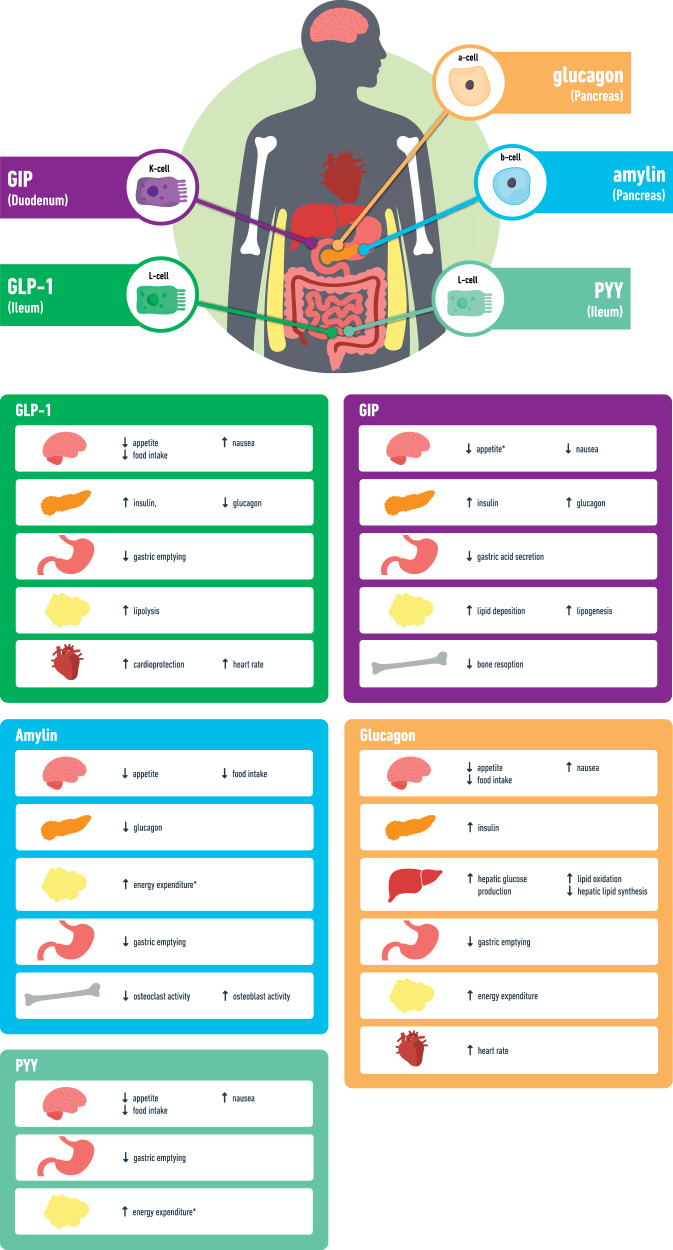
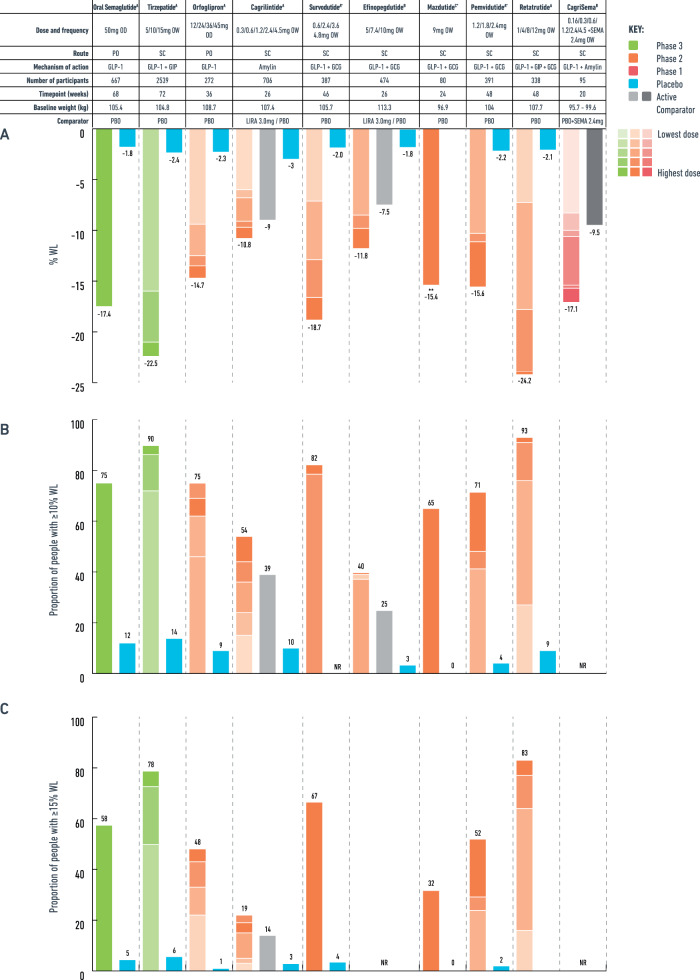
Obesity pipeline review. Semaglutide 2.4mg results in 15-17% weight loss. Tirzepatide leads up to 22.5% WL in phase 3. Retatrutide (GLP-1/GIP/glucagon RA) progressed to phase 3 trials. Early data suggests retatrutide may lead to even greater WL than tirzepatide.
Overview
CoChat Summary
## TL;DR
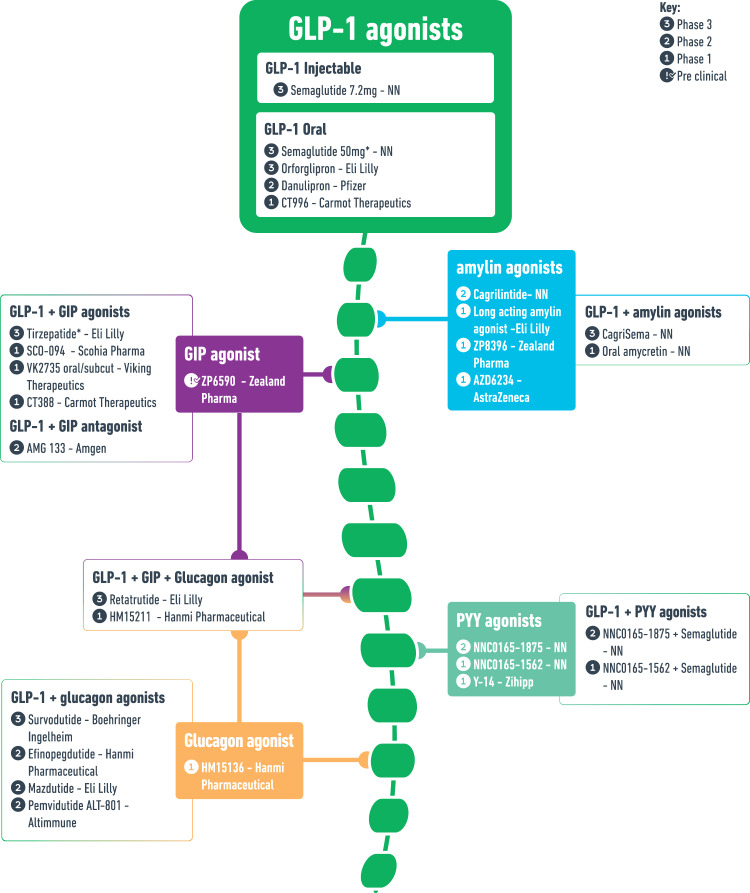
This review maps the rapidly expanding obesity drug pipeline, emphasizing that combinations of entero-pancreatic hormones are producing weight loss that can approach bariatric surgery. It highlights tirzepatide as the first approved dual agonist for chronic weight management and notes several oral, dual, and triple agonists in late-phase development.
## Key findings
- Semaglutide 2.4 mg once weekly, an approved GLP-1 receptor agonist, produces 15–17% mean weight loss and has evidence of cardioprotection; the SELECT trial reported a 20% reduction in major adverse cardiovascular events (MACE) vs placebo after 39.8 months of follow-up.
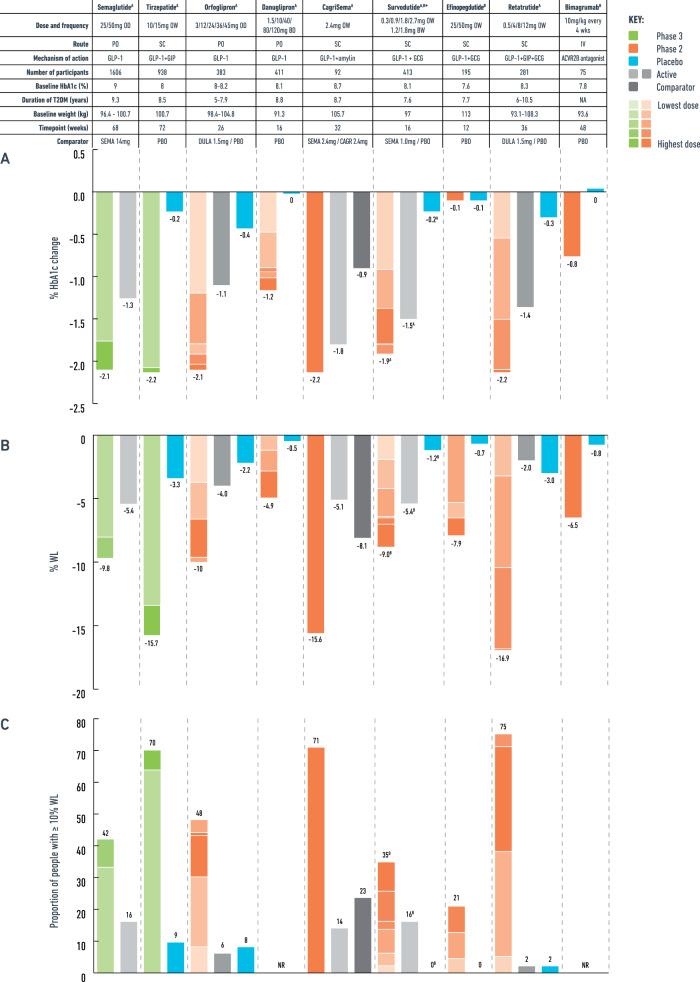
- In obesity without T2D, oral semaglutide 50 mg produced 17.4% weight loss vs 1.8% with placebo at 68 weeks in OASIS-1; in T2D, it produced 9.8% weight loss vs 5.4% with oral semaglutide 14 mg and reduced HbA1c by −2.1% vs −1.3% at 68 weeks.
- Tirzepatide (dual GLP-1/GIP agonist) achieved 16–22.5% mean weight loss at 72 weeks in SURMOUNT-1 and up to 15.7% in SURMOUNT-2; in SURMOUNT-4, participants maintained/continued to lose weight, with 25.9% of placebo vs 84.1% of tirzepatide participants achieving ≥15% weight loss at 88 weeks from baseline.
- Retatrutide (triple GLP-1/GIP/glucagon agonist) produced up to 24.2% weight loss at 48 weeks in a phase 2 obesity study; 36–48% of participants on the 8 mg and 12 mg doses achieved ≥25% weight loss.
## Methods
- Narrative review of the pipeline of obesity pharmacotherapies, with a focus on entero-pancreatic hormone-based molecules and selected non-hormonal agents.
- Synthesizes data from early- and late-phase clinical trials in people with and without T2D, and also considers effects on glycaemia, liver fat content (MASLD/MASH), and cardiovascular outcomes.
- Main analysis is descriptive comparison of efficacy, safety, and development stage across agents; Not stated in the paper as a formal systematic review or meta-analysis.
## Limitations
- The paper states that the full potential benefits and risks of the new obesity pharmacotherapies still need to be better understood, and that robust cost-effectiveness data are lacking.
- It explicitly notes that cardiovascular outcome trials are still needed for several agents, including combinations of GLP-1 with other hormones and oral GLP-1 receptor agonists.
- Evident from the text: much of the pipeline relies on phase 1/2 data, press releases, or abstract data, so some reported efficacy and safety findings are preliminary (say which: evident from the text).
Model-written summary. Check it against the paper before relying on it.
Integrity signals
Registry
Cites
Statistics
Figures
Verification
Claims the paper makes
66 Valid · 1 Not valid · 63 Not checked · 13 Own results and interpretations
The sources with a verdict support this claim; the rest weren’t checked yet, have no full text we could read, or their verdicts aren’t rated yet.
In the paper
“Despite that 5–10% WL is clinically beneficial, greater WL may be required for the individual to improve or achieve remission of some obesity-related complications [7, 8].”
§ What is the pipeline for future medications for obesity? > Introduction
What the sources say
- Supportedcites [7] Timothy Garvey W. New Horizons. A new paradigm for treating to target with second-generation obesity medications. J Clin Endocrinol Metab. 2022;107:E1339–47. 34865050 PMC8947217 source
The “Obesity, Complications, and Adiposity-based Chronic Disease” section says that the weight loss needed for clinical benefit varies by complication: 5%–10% reduces liver steatosis, while more than 10% is required to improve inflammation and fibrosis in nonalcoholic steatohepatitis. The section on using percent weight loss as a biomarker also says treatment targets should be individualized to the complications present in each patient. (LLM, conf=0.94)
- Not checked — no full text of the sourcecites [8] Tahrani AA, Morton J. Benefits of weight loss of 10% or more in patients with overweight or obesity: a review. Obesity. 2022;30:802–40. 35333446 source
hedgedstates a possible cause- Asserted: passes — The authors put it forward as true.
- Checkable: passes — It can be checked against evidence.
- Load-bearing: passes — The paper’s conclusions depend on it.
- Based: passes — The paper gives a reason why it holds.
- Supported
The cited sources support only part of this claim — read each source’s verdict below.
In the paper
“More specifically, orforglipron is a potent partial GLP-1 RA which is biased towards G-protein activation over to β-arrestin recruitment at the GLP-1 receptor [23].”
§ What is the pipeline for future medications for obesity? > Pipeline of obesity pharmacotherapies > Orforglipron
What the sources say
- Partly supportedcites [23] Kawai T, Sun B, Yoshino H, Feng D, Suzuki Y, Fukazawa M, et al. Structural basis for GLP-1 receptor activation by LY3502970, an orally active nonpeptide agonist. Proc Natl Acad Sci USA. 2020;117:29959–67. 33177239 PMC7703558 sourceExperimental — accuracy not yet measured
The Results and Discussion section (In Vitro and In Vivo Activity of LY3502970; page unavailable) describes LY3502970 as a potent partial GLP-1R agonist that stimulates cAMP accumulation without detectable β-arrestin recruitment. Our copy does not name orforglipron or establish that it is LY3502970, so it does not fully support the claim about the named drug. (LLM, conf=0.82)
plain- Asserted: passes — The authors put it forward as true.
- Checkable: passes — It can be checked against evidence.
- Load-bearing: unclear — It is unclear whether the paper’s conclusions depend on it.
- Based: passes — The paper gives a reason why it holds.
- Partly supported
The cited sources support only part of this claim — read each source’s verdict below.
In the paper
“Additionally, oral semaglutide 50 mg reduced the HbA1c by −2.1% at 68 weeks compared to −1.3% with oral semaglutide 14 mg (Fig. 4) [22].”
§ What is the pipeline for future medications for obesity? > Pipeline of obesity pharmacotherapies > Oral semaglutide 50 mg
What the sources say
- Partly supportedcites [22] Aroda VR, Aberle J, Bardtrum L, Christiansen E, Knop FK, Gabery S, et al. Efficacy and safety of once-daily oral semaglutide 25 mg and 50 mg compared with 14 mg in adults with type 2 diabetes (PIONEER PLUS): a multicentre, randomised, phase 3b trial. Lancet. 2023;402:693–704. 37385279 sourceExperimental — accuracy not yet measured
The Findings and Results report greater HbA1c reduction with oral semaglutide 50 mg than with 14 mg: −2.0 versus −1.5 percentage points at week 52. The Discussion says the reductions were largely sustained through week 68, but the passages from our copy do not establish the claimed week-68 values of −2.1% and −1.3%. (LLM, conf=0.85)
plainstates a cause- Asserted: passes — The authors put it forward as true.
- Checkable: passes — It can be checked against evidence.
- Load-bearing: unclear — It is unclear whether the paper’s conclusions depend on it.
- Based: passes — The paper gives a reason why it holds.
- Partly supported
Every source the paper cites for this claim was checked and supports it.
In the paper
“Moreover, preclinical and early phase clinical trials have confirmed the therapeutic potential of entero-pancreatic hormone combinations in obesity and/or metabolic complications such as T2D [33].”
§ What is the pipeline for future medications for obesity? > Other entero-pancreatic hormones and combination of entero-pancreatic hormones in the management of obesity
What the sources say
- Supportedcites [33] Baggio LL, Drucker DJ. Glucagon-like peptide-1 receptor co-agonists for treating metabolic disease. Mol Metab. 2021;46:101090. 32987188 PMC8085566 source
The Introduction says that multiple preclinical studies and emerging clinical data support the therapeutic potential of combinatorial peptide therapy for metabolic disorders. The Tirzepatide section reports early-phase trials showing improvements in weight and glucose measures, including in people with T2D. The paper cautions that clinical development remains limited, but the claim concerns therapeutic potential rather than established treatment efficacy. (LLM, conf=0.91)
boostedstates a cause- Asserted: passes — The authors put it forward as true.
- Checkable: passes — It can be checked against evidence.
- Load-bearing: passes — The paper’s conclusions depend on it.
- Based: passes — The paper gives a reason why it holds.
- Supported
The sources with a verdict support this claim; the rest weren’t checked yet, have no full text we could read, or their verdicts aren’t rated yet.
In the paper
“as the simultaneous activation of GLP-1 and GIP receptors in preclinical models results in greater WL and glucose-lowering efficacy compared to activation of each receptor alone [38–40]”
§ What is the pipeline for future medications for obesity? > GIP agonism
What the sources say
- Supportedcites [38] Gault VA, Kerr BD, Harriott P, Flatt PR. Administration of an acylated GLP-1 and GIP preparation provides added beneficial glucose-lowering and insulinotropic actions over single incretins in mice with Type 2 diabetes and obesity. Clin Sci. 2011;121:107–17. 21332446 source
In the Results section on ob/ob mice (page unavailable), the combined Lira-AcGIP preparation significantly reduced body weight, while either incretin mimetic alone did not. A separate Results section reports significantly better glucose control with the preparation than with either mimetic alone. (LLM, conf=0.92)
- Not checked — no full text of the sourcecites [39] Nørregaard PK, Deryabina MA, Tofteng Shelton P, Fog JU, Daugaard JR, Eriksson PO, et al. A novel GIP analogue, ZP4165, enhances glucagon-like peptide-1-induced body weight loss and improves glycaemic control in rodents. Diabetes Obes Metab. 2018;20:60–8. 28598027 source
- Not checked — no full text of the sourcecites [40] Finan B, Ma T, Ottaway N, Müller TD, Habegger KM, Heppner KM, et al. Unimolecular dual incretins maximize metabolic benefits in rodents, monkeys, and humans. Sci Transl Med. 2013;5:209ra151. 24174327 source
plainstates a cause- Asserted: passes — The authors put it forward as true.
- Checkable: passes — It can be checked against evidence.
- Load-bearing: passes — The paper’s conclusions depend on it.
- Based: passes — The paper gives a reason why it holds.
- Supported
64 more claims · 25 with their cited sources checked
Create a free account to see all 143 claims and to verify the 2 references still open.
- It may state two separate claims as one. 71
- Probably not a substantial claim. 7
Claims other papers make about this one
Each is checked against this paper’s own text: does it say what the citing paper says it does?
The source backs part of the claim, not all of it — or backs it for a different population, condition or comparison.
In the citing paper
“In summary, dual and triple agonists related to GLP-1 represent significant advances in the field of diabetes treatment,167,168 demonstrating the future trend of enhancing therapeutic effects by targeting multiple biomarkers.136,169,170”
From Glucagon-like peptide-1 receptor: mechanisms and advances in therapy (2024) · cites this paper as [169]
Experimental — accuracy not yet measuredThe source backs part of the claim, not all of it — or backs it for a different population, condition or comparison.
In the citing paper
“the Nutrient Stimulated Hormones being targeted have effects on muscle protein synthesis and even energy expensiture [42–44].”
From New drugs for the treatment of obesity: do we need approaches to preserve muscle mass? (2025) · cites this paper as [44]
Experimental — accuracy not yet measuredThe source backs part of the claim, not all of it — or backs it for a different population, condition or comparison.
In the citing paper
“MariTide is a monthly subcutaneous glucose-dependent insulinotropic polypeptide receptor (GIPR) antagonist conjugated to analog peptide of GLP-1.84”
From GLP-1 single, dual, and triple receptor agonists for treating type 2 diabetes and obesity: a narrative review (2024) · cites this paper as [84]
Experimental — accuracy not yet measuredThe source backs part of the claim, not all of it — or backs it for a different population, condition or comparison.
In the citing paper
“GLP-1/glucagon dual agonists promote glucose and body weight reduction via regulation of hunger/appetite and increasing energy expenditure.”
From GLP-1 single, dual, and triple receptor agonists for treating type 2 diabetes and obesity: a narrative review (2024) · cites this paper as [84]
Experimental — accuracy not yet measuredThe source backs part of the claim, not all of it — or backs it for a different population, condition or comparison.
In the citing paper
“In mice models, pemvidutide lowered body weight and liver enzymes while promoting better blood glucose control, improved liver steatosis, inflammation and fibrosis superior to semaglutide.84”
From GLP-1 single, dual, and triple receptor agonists for treating type 2 diabetes and obesity: a narrative review (2024) · cites this paper as [84]
Experimental — accuracy not yet measured
14 more claims about this paper
Create a free account to see every claim other papers make about this one.
Citations
Cites
Pushko, P., Pumpens, P., & Grens, E. (2013) · Intervirology · doi:10.1159/000346773 · Cited by 5,950
Once-Weekly Semaglutide in Adults with Overweight or Obesity
Wilding, J. P. H., Batterham, R. L., Calanna, S., Davies, M., Van Gaal, L. F., Lingvay, I., McGowan, B. M., Rosenstock, J., Tran, M. T. D., Wadden, T. A., et al. (2021) · New England Journal of Medicine · doi:10.1056/nejmoa2032183 · Cited by 5,205 · cited 3×
“Semaglutide 2.4 mg once weekly is the latest approved GLP-1 RA for obesity management (2021) and results in 15 – 17% mean WL through appetite reduction [11, 12].”
InfluentialSelf-citationTirzepatide Once Weekly for the Treatment of Obesity
Jastreboff, A. M., Aronne, L. J., Ahmad, N. N., Wharton, S., Connery, L., Alves, B., Kiyosue, A., Zhang, S., Liu, B., Bunck, M. C., et al. (2022) · New England Journal of Medicine · doi:10.1056/nejmoa2206038 · Cited by 3,838 · cited 2×
“In SURMOUNT-1, 72 weeks of tirzepatide induced mean WL of 16 – 22.5% in people without diabetes compared to 2.4% with placebo, with no sign of the weight plateauing, suggesting that there may be further WL with long-term use [46].”
InfluentialEstruch, R., Ros, E., Salas-Salvadó, J., Covas, M.-I., Corella, D., Arós, F., Gómez-Gracia, E., Ruiz-Gutiérrez, V., Fiol, M., Lapetra, J., et al. (2018) · New England Journal of Medicine · doi:10.1056/nejmoa1800389 · Cited by 3,616 · cited 1×
“…to optimise health outcomes regardless of WL – increased levels of physical activity have multiple health bene fi ts including improvement of body composition, physical function and cardiorespiratory fi tness, and a balanced Mediterranean diet may be associated with cardiovascular bene fi ts [105].”
Semaglutide and Cardiovascular Outcomes in Obesity without Diabetes
Lincoff, A. M., Brown-Frandsen, K., Colhoun, H. M., Deanfield, J., Emerson, S. S., Esbjerg, S., Hardt-Lindberg, S., Hovingh, G. K., Kahn, S. E., Kushner, R. F., et al. (2023) · New England Journal of Medicine · doi:10.1056/nejmoa2307563 · Cited by 3,236 · cited 3×
“The SELECT trial is the fi rst study providing long-term data on the safety and ef fi cacy of semaglutide 2.4 mg [110].”
InfluentialDavies, M. J., Aroda, V. R., Collins, B. S., Gabbay, R. A., Green, J., Maruthur, N. M., Rosas, S. E., Del Prato, S., Mathieu, C., Mingrone, G., et al. (2022) · Diabetes Care · doi:10.2337/dci22-0034 · Cited by 2,104 · cited 1×
“…with T2D and established cardiovascular disease, the international guidelines for T2D recommend the use of GLP-1 RA or sodium glucose co-transporters 2 inhibitors (SGLT-2i) as fi rst-line treatment (independent of HbA1c), based on multiple trials demonstrating their cardio-renal bene fi ts [109].”
Self-citationTirzepatide versus Semaglutide Once Weekly in Patients with Type 2 Diabetes
Frías, J. P., Davies, M. J., Rosenstock, J., Pérez Manghi, F. C., Fernández Landó, L., Bergman, B. K., Liu, B., Cui, X., & Brown, K. (2021) · New England Journal of Medicine · doi:10.1056/nejmoa2107519 · Cited by 2,096 · cited 1×
“…has been approved for T2D management - the mean HbA1c reduction in SURPASS programme ranged between 1.9 and 2.6% across the trials and 40 – 69% of participants achieved ≥ 10% WL with the higher doses (10 and 15 mg), despite that there was no additional support for lifestyle intervention [16, 43].”
InfluentialSelf-citationLean, M. E., Leslie, W. S., Barnes, A. C., Brosnahan, N., Thom, G., McCombie, L., Peters, C., Zhyzhneuskaya, S., Al-Mrabeh, A., Hollingsworth, K. G., et al. (2018) · The Lancet · doi:10.1016/s0140-6736(17)33102-1 · Cited by 2,095 · cited 1×
“…and behavioural changes) are the cornerstone of obesity management with diverse bene fi ts, but even the most intensive lifestyle interventions result in up to 10% mean weight loss (WL) and weight maintenance remains a challenge, as 80% of WL is expected to be regained over the next 5 years [4, 5].”
Glucagon-like peptide-1 7–36: a physiological incretin in man
Kreymann, B., Ghatei, M. A., Williams, G., & Bloom, S. R. (1987) · The Lancet · doi:10.1016/s0140-6736(87)91194-9 · Cited by 1,928 · cited 1×
“1) [17, 18].”
(2019) · Nature Communications · doi:10.1038/41467.2041-1723 · Cited by 1,914
Inhibition of Food Intake in Obese Subjects by Peptide YY 3–36
Batterham, R. L., Cohen, M. A., Ellis, S. M., Le Roux, C. W., Withers, D. J., Frost, G. S., Ghatei, M. A., & Bloom, S. R. (2003) · New England Journal of Medicine · doi:10.1056/nejmoa030204 · Cited by 1,604 · cited 2×
“Studies with PYY agonists administered intravenously have shown reduction in food intake with increased satiety [92, 93], however, a nasal PYY agonist showed minimal ef fi cacy with poor tolerability [94].”
InfluentialObesity in adults: a clinical practice guideline
Wharton, S., Lau, D. C. W., Vallis, M., Sharma, A. M., Biertho, L., Campbell-Scherer, D., Adamo, K., Alberga, A., Bell, R., Boulé, N., et al. (2020) · Canadian Medical Association Journal · doi:10.1503/cmaj.191707 · Cited by 1,506 · cited 1×
“Obesity is a chronic disease characterised by excess adiposity that impairs health and affects about 650 million people worldwide [1, 2].”
Davies, M., Færch, L., Jeppesen, O. K., Pakseresht, A., Pedersen, S. D., Perreault, L., Rosenstock, J., Shimomura, I., Viljoen, A., Wadden, T. A., et al. (2021) · The Lancet · doi:10.1016/s0140-6736(21)00213-0 · Cited by 1,419 · cited 1×
“…who experienced gastrointestinal AE with oral semaglutide 50 mg (Tables 2 and 3) were similar to those observed with subcutaneous semaglutide 2.4 mg (in STEP-1 and STEP-2 trials 6 – 7% discontinued treatment due to AE, 34 – 44% experienced nausea, 21 – 32% diarrhoea and 22 – 25% vomiting) [11, 29].”
InfluentialSelf-citationGlucagon-like peptide 1 promotes satiety and suppresses energy intake in humans.
Flint, A., Raben, A., Astrup, A., & Holst, J. J. (1998) · Journal of Clinical Investigation · doi:10.1172/jci990 · Cited by 1,402 · cited 1×
“1) [17, 18].”
Gloy, V. L., Briel, M., Bhatt, D. L., Kashyap, S. R., Schauer, P. R., Mingrone, G., Bucher, H. C., & Nordmann, A. J. (2013) · BMJ · doi:10.1136/bmj.f5934 · Cited by 1,351 · cited 1×
“Bariatric surgery can result in 25 – 30% mean WL and long-term weight maintenance, however, it is not scalable at the population level and people may be hesitant to this option due to the perceived risk of postoperative complications [9, 10].”
Triple-Hormone-Receptor Agonist Retatrutide for Obesity — A Phase 2 Trial
Jastreboff, A. M., Kaplan, L. M., Frías, J. P., Wu, Q., Du, Y., Gurbuz, S., Coskun, T., Haupt, A., Milicevic, Z., & Hartman, M. L. (2023) · New England Journal of Medicine · doi:10.1056/nejmoa2301972 · Cited by 1,174 · cited 3×
“Indeed, in pre-clinical models, retatrutide, a triple agonist (GLP-1/GIP/ glucagon), resulted in greater WL and improved glucose pro fi le compared to tirzepatide through increased energy expenditure and reduced calorie intake [80, 81].”
InfluentialWadden, T. A., Bailey, T. S., Billings, L. K., Davies, M., Frias, J. P., Koroleva, A., Lingvay, I., O’Neil, P. M., Rubino, D. M., Skovgaard, D., et al. (2021) · JAMA · doi:10.1001/jama.2021.1831 · Cited by 1,114 · cited 1×
“As the new obesity pharmacotherapies will lead up to 15 – 25% mean WL, intensive lifestyle interventions may provide small additional WL bene fi t to these treatments [11, 106].”
Self-citationMaintenance of Lost Weight and Long-Term Management of Obesity
Hall, K. D., & Kahan, S. (2018) · Medical Clinics of North America · doi:10.1016/j.mcna.2017.08.012 · Cited by 876 · cited 1×
“…and behavioural changes) are the cornerstone of obesity management with diverse bene fi ts, but even the most intensive lifestyle interventions result in up to 10% mean weight loss (WL) and weight maintenance remains a challenge, as 80% of WL is expected to be regained over the next 5 years [4, 5].”
Two-year effects of semaglutide in adults with overweight or obesity: the STEP 5 trial
Garvey, W. T., Batterham, R. L., Bhatta, M., Buscemi, S., Christensen, L. N., Frias, J. P., Jódar, E., Kandler, K., Rigas, G., Wadden, T. A., et al. (2022) · Nature Medicine · doi:10.1038/s41591-022-02026-4 · Cited by 868 · cited 2×
“Until recently, the published studies with the new obesity pharmacotherapies have had up to 2 years follow-up [12].”
InfluentialAronne, L. J., Sattar, N., Horn, D. B., Bays, H. E., Wharton, S., Lin, W.-Y., Ahmad, N. N., Zhang, S., Liao, R., Bunck, M. C., et al. (2024) · JAMA · doi:10.1001/jama.2023.24945 · Cited by 860 · cited 2×
“Another two trials from the SURMOUNT programme have recently been published [48, 49].”
InfluentialGarvey, W. T., Frias, J. P., Jastreboff, A. M., le Roux, C. W., Sattar, N., Aizenberg, D., Mao, H., Zhang, S., Ahmad, N. N., Bunck, M. C., et al. (2023) · The Lancet · doi:10.1016/s0140-6736(23)01200-x · Cited by 792 · cited 3×
“In SURMOUNT-2, the mean WL was up to 15.7% with tirzepatide 15 mg compared to 3.3% WL with placebo at 72 weeks for people with obesity and T2D [47].”
InfluentialContemporary medical, device, and surgical therapies for obesity in adults
Perdomo, C. M., Cohen, R. V., Sumithran, P., Clément, K., & Frühbeck, G. (2023) · The Lancet · doi:10.1016/s0140-6736(22)02403-5 · Cited by 738 · cited 2×
“However, as with any WL intervention, there will be heterogeneity in treatment responses, even with the new molecules for obesity treatment [15].”
Unimolecular Dual Incretins Maximize Metabolic Benefits in Rodents, Monkeys, and Humans
Finan, B., Ma, T., Ottaway, N., Müller, T. D., Habegger, K. M., Heppner, K. M., Kirchner, H., Holland, J., Hembree, J., Raver, C., et al. (2013) · Science Translational Medicine · doi:10.1126/scitranslmed.3007218 · Cited by 696
Lifestyle modification approaches for the treatment of obesity in adults.
Wadden, T. A., Tronieri, J. S., & Butryn, M. L. (2020) · American Psychologist · doi:10.1037/amp0000517 · Cited by 661
Tumor-induced anorexia and weight loss are mediated by the TGF-β superfamily cytokine MIC-1
Johnen, H., Lin, S., Kuffner, T., Brown, D. A., Tsai, V. W.-W., Bauskin, A. R., Wu, L., Pankhurst, G., Jiang, L., Junankar, S., et al. (2007) · Nature Medicine · doi:10.1038/nm1677 · Cited by 612 · cited 2×
“In mice, GDF-15 increases satiety and reduces food intake through actions in the central nervous system [99].”
Tirzepatide is an imbalanced and biased dual GIP and GLP-1 receptor agonist
Willard, F. S., Douros, J. D., Gabe, M. B. N., Showalter, A. D., Wainscott, D. B., Suter, T. M., Capozzi, M. E., van der Velden, W. J. C., Stutsman, C., Cardona, G. R., et al. (2020) · JCI Insight · doi:10.1172/jci.insight.140532 · Cited by 541 · cited 1×
“One prevailing theory is that tirzepatide is an imbalanced and biased GLP-1 RA with very low ef fi cacy for recruitment of β -arrestin, whilst is acting as an unbiased GIP agonist with full ef fi cacy for β -arrestin recruitment [51, 52].”
Management of Hyperglycemia in Type 2 Diabetes
SKOLNIK, N., & OLSON, C. (2012) · Family Practice News · doi:10.1016/s0300-7073(12)70593-5 · Cited by 519
Gastaldelli, A., Cusi, K., Fernández Landó, L., Bray, R., Brouwers, B., & Rodríguez, Á. (2022) · The Lancet Diabetes & Endocrinology · doi:10.1016/s2213-8587(22)00070-5 · Cited by 513 · cited 1×
“In a subanalysis of SURPASS-3, tirzepatide 10 and 15 mg resulted also in a relative reduction in liver fat content by 40 – 47% compared to 11% with insulin glargine at 52 weeks [44].”
GDF15 Provides an Endocrine Signal of Nutritional Stress in Mice and Humans
Patel, S., Alvarez-Guaita, A., Melvin, A., Rimmington, D., Dattilo, A., Miedzybrodzka, E. L., Cimino, I., Maurin, A.-C., Roberts, G. P., Meek, C. L., et al. (2019) · Cell Metabolism · doi:10.1016/j.cmet.2018.12.016 · Cited by 509 · cited 1×
“Growth/differentiation factor-15 (GDF-15) Another potential therapeutic pathway for obesity pharma-cotherapies is through the stress-induced cytokine GDF-15, which is expressed in multiple cell types including cardiomyocytes, adipocytes and macrophages [98].”
Daily Oral GLP-1 Receptor Agonist Orforglipron for Adults with Obesity
Wharton, S., Blevins, T., Connery, L., Rosenstock, J., Raha, S., Liu, R., Ma, X., Mather, K. J., Haupt, A., Robins, D., et al. (2023) · New England Journal of Medicine · doi:10.1056/nejmoa2302392 · Cited by 478 · cited 1×
“In people with obesity, 36 weeks of orforglipron (doses ranging from 12 to 45 mg in a phase 2 trial) resulted in a dose-dependent WL up to − 14.7% compared to − 2.3% with placebo, with concomitant improvement in cardiometabolic risk factors (Table 2) [25].”
InfluentialWadden, T. A., Chao, A. M., Machineni, S., Kushner, R., Ard, J., Srivastava, G., Halpern, B., Zhang, S., Chen, J., Bunck, M. C., et al. (2023) · Nature Medicine · doi:10.1038/s41591-023-02597-w · Cited by 442
Knop, F. K., Aroda, V. R., do Vale, R. D., Holst-Hansen, T., Laursen, P. N., Rosenstock, J., Rubino, D. M., & Garvey, W. T. (2023) · The Lancet · doi:10.1016/s0140-6736(23)01185-6 · Cited by 431 · cited 2×
“3), with improvements in multiple cardiometabolic risk factors (Table 2) [21].”
Rosenstock, J., Frias, J., Jastreboff, A. M., Du, Y., Lou, J., Gurbuz, S., Thomas, M. K., Hartman, M. L., Haupt, A., Milicevic, Z., et al. (2023) · The Lancet · doi:10.1016/s0140-6736(23)01053-x · Cited by 423 · cited 4×
“After 36 weeks, retatrutide resulted in HbA1c reduction up to – 2.2% vs. − 1.4% with dulaglutide and − 0.3% with placebo and a bodyweight reduction of up to 16.9% with retatrutide vs. 2% with dulaglutide and 3% with placebo [67].”
InfluentialHow May GIP Enhance the Therapeutic Efficacy of GLP-1?
Samms, R. J., Coghlan, M. P., & Sloop, K. W. (2020) · Trends in Endocrinology & Metabolism · doi:10.1016/j.tem.2020.02.006 · Cited by 419 · cited 1×
“1) [34].”
The metabolic actions of glucagon revisited
Habegger, K. M., Heppner, K. M., Geary, N., Bartness, T. J., DiMarchi, R., & Tschöp, M. H. (2010) · Nature Reviews Endocrinology · doi:10.1038/nrendo.2010.187 · Cited by 406 · cited 2×
“Glucagon is secreted from the pancreatic a-cells and the main physiological site of action is the liver to increase hepatic glucose production [60].”
Amylin: Pharmacology, Physiology, and Clinical Potential
Hay, D. L., Chen, S., Lutz, T. A., Parkes, D. G., & Roth, J. D. (2015) · Pharmacological Reviews · doi:10.1124/pr.115.010629 · Cited by 400 · cited 1×
“Amylin acts on amylin receptors in the brainstem to reduce food intake [83] and improves glucose metabolism by delaying gastric emptying and inhibiting glucagon secretion [84, 85].”
Peptide YY3–36 and Glucagon-Like Peptide-17–36 Inhibit Food Intake Additively
Neary, N. M., Small, C. J., Druce, M. R., Park, A. J., Ellis, S. M., Semjonous, N. M., Dakin, C. L., Filipsson, K., Wang, F., Kent, A. S., et al. (2005) · Endocrinology · doi:10.1210/en.2005-0237 · Cited by 371 · cited 1×
“Y2R receptor is present in the brain and its agonism results in a reduction in food intake and increased satiety [91].”
Heymsfield, S. B., Coleman, L. A., Miller, R., Rooks, D. S., Laurent, D., Petricoul, O., Praestgaard, J., Swan, T., Wade, T., Perry, R. G., et al. (2021) · JAMA Network Open · doi:10.1001/jamanetworkopen.2020.33457 · Cited by 338 · cited 2×
“In a 48-week phase 2 trial in people with T2D and obesity, 10 mg/kg bimagrumab was associated with a marked reduction of fat mass (20.5% vs. 0.5% in placebo) and increased lean mass (3.6% vs. − 0.8% placebo), with total WL of − 6.5% compared to − 0.8% with placebo [97].”
InfluentialFrias, J. P., Deenadayalan, S., Erichsen, L., Knop, F. K., Lingvay, I., Macura, S., Mathieu, C., Pedersen, S. D., & Davies, M. (2023) · The Lancet · doi:10.1016/s0140-6736(23)01163-7 · Cited by 334
Self-citationZhang, Q., Delessa, C. T., Augustin, R., Bakhti, M., Colldén, G., Drucker, D. J., Feuchtinger, A., Caceres, C. G., Grandl, G., Harger, A., et al. (2021) · Cell Metabolism · doi:10.1016/j.cmet.2021.01.015 · Cited by 322 · cited 1×
“Studies in animal models have shown an anorexigenic action of GIP receptor agonism [36] and a recent phase 1 clinical trial with a long-acting GIP RA found that repeated dosing for 4 weeks induced modest WL ( − 1.9 to − 3.1 kg vs. − 0.4 kg with placebo) in people with T2D, without delay in gastric…”
InfluentialEnebo, L. B., Berthelsen, K. K., Kankam, M., Lund, M. T., Rubino, D. M., Satylganova, A., & Lau, D. C. W. (2021) · The Lancet · doi:10.1016/s0140-6736(21)00845-x · Cited by 316 · cited 1×
“In a phase 1b trial, 20 weeks of cagrilintide 2.4 mg once weekly in combination with semaglutide 2.4 mg once weekly (cagrisema) resulted in up to 17.1% WL compared to 9.5% WL with semaglutide 2.4 mg plus placebo in people with obesity [88].”
InfluentialCoskun, T., Urva, S., Roell, W. C., Qu, H., Loghin, C., Moyers, J. S., O’Farrell, L. S., Briere, D. A., Sloop, K. W., Thomas, M. K., et al. (2022) · Cell Metabolism · doi:10.1016/j.cmet.2022.07.013 · Cited by 316 · cited 2×
“Indeed, in pre-clinical models, retatrutide, a triple agonist (GLP-1/GIP/ glucagon), resulted in greater WL and improved glucose pro fi le compared to tirzepatide through increased energy expenditure and reduced calorie intake [80, 81].”
Kinlen, D., Cody, D., & O’Shea, D. (2018) · QJM: An International Journal of Medicine · doi:10.1093/qjmed/hcx152 · Cited by 308
Glucagon-like peptide-1 receptor co-agonists for treating metabolic disease.
Baggio, L. L., & Drucker, D. J. (2021) · Molecular Metabolism · doi:10.1016/j.molmet.2020.101090 · Cited by 299 · cited 1×
“Moreover, preclinical and early phase clinical trials have con fi rmed the therapeutic potential of entero-pancreatic hormone combinations in obesity and/or metabolic complications such as T2D [33].”
Lau, D. C. W., Erichsen, L., Francisco, A. M., Satylganova, A., le Roux, C. W., McGowan, B., Pedersen, S. D., Pietiläinen, K. H., Rubino, D., & Batterham, R. L. (2021) · The Lancet · doi:10.1016/s0140-6736(21)01751-7 · Cited by 278 · cited 2×
“Cagrilintide is a newer long-acting amylin analogue - in a phase 2 trial, once weekly cagrilintide resulted in a dose-dependent WL between 6 and 10.8% compared to 9% with liraglutide 3 mg and 3% with placebo [87].”
InfluentialSemaglutide for the treatment of overweight and obesity: A review
Bergmann, N. C., Davies, M. J., Lingvay, I., & Knop, F. K. (2023) · Diabetes, Obesity and Metabolism · doi:10.1111/dom.14863 · Cited by 265 · cited 1×
“…with bariatric surgery and the currently approved obesity pharmacotherapies and there is heterogeneity in treatment responses with GLP-1 RA (for example people with T2D may achieve less WL compared to those without diabetes in clinical trials, despite similar lifestyle interventions) [13, 14].”
Self-citationTan, T. M., Field, B. C. T., McCullough, K. A., Troke, R. C., Chambers, E. S., Salem, V., Gonzalez Maffe, J., Baynes, K. C. R., De Silva, A., Viardot, A., et al. (2013) · Diabetes · doi:10.2337/db12-0797 · Cited by 258 · cited 1×
“Moreover, the combination of glucagon with GLP-1 actions could improve WL while protecting against the risk of hyperglycaemia [64].”
MANAGEMENT OF ENDOCRINE DISEASE: Are all GLP-1 agonists equal in the treatment of type 2 diabetes?
Nauck, M. A., & Meier, J. J. (2019) · European Journal of Endocrinology · doi:10.1530/eje-19-0566 · Cited by 254
Nicholls, S. J., Bhatt, D. L., Buse, J. B., Prato, S. D., Kahn, S. E., Lincoff, A. M., McGuire, D. K., Nauck, M. A., Nissen, S. E., Sattar, N., et al. (2024) · American Heart Journal · doi:10.1016/j.ahj.2023.09.007 · Cited by 248 · cited 1×
“The SURPASS-CVOT trial (NCT04255433) will assess the cardiovascular safety of tirzepatide compared to dulaglutide in people with T2D and established atherosclerotic disease [111].”
Structural basis for GLP-1 receptor activation by LY3502970, an orally active nonpeptide agonist
Kawai, T., Sun, B., Yoshino, H., Feng, D., Suzuki, Y., Fukazawa, M., Nagao, S., Wainscott, D. B., Showalter, A. D., Droz, B. A., et al. (2020) · Proceedings of the National Academy of Sciences · doi:10.1073/pnas.2014879117 · Cited by 231 · cited 1×
“More speci fi cally, orforglipron is a potent partial GLP-1 RA which is biased towards G-protein activation over to β -arrestin recruitment at the GLP-1 receptor [23].”
Romero-Gómez, M., Lawitz, E., Shankar, R. R., Chaudhri, E., Liu, J., Lam, R. L. H., Kaufman, K. D., Engel, S. S., Bruzone, S. O., Coronel, M. J., et al. (2023) · Journal of Hepatology · doi:10.1016/j.jhep.2023.05.013 · Cited by 220
Tirzepatide Reduces Appetite, Energy Intake, and Fat Mass in People With Type 2 Diabetes
Heise, T., DeVries, J. H., Urva, S., Li, J., Pratt, E. J., Thomas, M. K., Mather, K. J., Karanikas, C. A., Dunn, J., Haupt, A., et al. (2023) · Diabetes Care · doi:10.2337/dc22-1710 · Cited by 208 · cited 1×
“A signi fi cant reduction in appetite and food intake was also observed with tirzepatide compared to placebo in people with T2D [45].”
A Small-Molecule Oral Agonist of the Human Glucagon-like Peptide-1 Receptor
Griffith, D. A., Edmonds, D. J., Fortin, J.-P., Kalgutkar, A. S., Kuzmiski, J. B., Loria, P. M., Saxena, A. R., Bagley, S. W., Buckeridge, C., Curto, J. M., et al. (2022) · Journal of Medicinal Chemistry · doi:10.1021/acs.jmedchem.1c01856 · Cited by 192
Miras, A. D., Pérez-Pevida, B., Aldhwayan, M., Kamocka, A., McGlone, E. R., Al-Najim, W., Chahal, H., Batterham, R. L., McGowan, B., Khan, O., et al. (2019) · The Lancet Diabetes & Endocrinology · doi:10.1016/s2213-8587(19)30157-3 · Cited by 190 · cited 1×
“The ef fi cacy and safety of the new pharmacotherapies after bariatric surgery require further investigation, however the bene fi ts of GLP-1 RA after bariatric surgery on WL and glycaemia have been shown in clinical trials [103, 104].”
Frias, J. P., Hsia, S., Eyde, S., Liu, R., Ma, X., Konig, M., Kazda, C., Mather, K. J., Haupt, A., Pratt, E., et al. (2023) · The Lancet · doi:10.1016/s0140-6736(23)01302-8 · Cited by 184
Mok, J., Adeleke, M. O., Brown, A., Magee, C. G., Firman, C., Makahamadze, C., Jassil, F. C., Marvasti, P., Carnemolla, A., Devalia, K., et al. (2023) · JAMA Surgery · doi:10.1001/jamasurg.2023.2930 · Cited by 178
Smith, S. R., Aronne, L. J., Burns, C. M., Kesty, N. C., Halseth, A. E., & Weyer, C. (2008) · Diabetes Care · doi:10.2337/dc08-0029 · Cited by 172 · cited 1×
“Pramlintide is the fi rst synthetic amylin analogue that approved for diabetes management with WL up to 7.9% [86].”
InfluentialGlucagon increases energy expenditure independently of brown adipose tissue activation in humans
Salem, V., Izzi‐Engbeaya, C., Coello, C., Thomas, D. B., Chambers, E. S., Comninos, A. N., Buckley, A., Win, Z., Al‐Nahhas, A., Rabiner, E. A., et al. (2016) · Diabetes, Obesity and Metabolism · doi:10.1111/dom.12585 · Cited by 167 · cited 1×
“Glucagon agonism reduces also food intake [61] and increases energy expenditure [62], suggesting that it could promote WL (Fig.”
Efficacy and safety of intranasal peptide YY3-36 for weight reduction in obese adults
Gantz, I., Erondu, N., Mallick, M., Musser, B., Krishna, R., Tanaka, W. K., Snyder, K., Stevens, C., Stroh, M. A., Zhu, H., et al. (2007) · The Journal of Clinical Endocrinology & Metabolism · doi:10.1210/jc.2006-1806 · Cited by 163 · cited 1×
“Studies with PYY agonists administered intravenously have shown reduction in food intake with increased satiety [92, 93], however, a nasal PYY agonist showed minimal ef fi cacy with poor tolerability [94].”
Neovius, M., Bruze, G., Jacobson, P., Sjöholm, K., Johansson, K., Granath, F., Sundström, J., Näslund, I., Marcus, C., Ottosson, J., et al. (2018) · The Lancet Diabetes & Endocrinology · doi:10.1016/s2213-8587(17)30437-0 · Cited by 161
Coinfusion of low-dose GLP-1 and glucagon in man results in a reduction in food intake
Cegla, J., Troke, R. C., Jones, B., Tharakan, G., Kenkre, J., McCullough, K. A., Lim, C. T., Parvizi, N., Hussein, M., Chambers, E. S., et al. (2014) · Diabetes · doi:10.2337/db14-0242 · Cited by 159 · cited 1×
“Glucagon agonism reduces also food intake [61] and increases energy expenditure [62], suggesting that it could promote WL (Fig.”
Busetto, L., Bettini, S., Makaronidis, J., Roberts, C. A., Halford, J. C. G., & Batterham, R. L. (2021) · European Journal of Internal Medicine · doi:10.1016/j.ejim.2021.01.002 · Cited by 159 · cited 2×
“The main drivers for weight regain after signi fi cant WL include the persistence of a lower resting metabolic rate and the increased appetite, possibly mediated through long lasting increased orexigenic and decreased anorexigenic signals [2, 6].”
Saxena, A. R., Frias, J. P., Brown, L. S., Gorman, D. N., Vasas, S., Tsamandouras, N., & Birnbaum, M. J. (2023) · JAMA Network Open · doi:10.1001/jamanetworkopen.2023.14493 · Cited by 149
Bergmann, N. C., Lund, A., Gasbjerg, L. S., Meessen, E. C. E., Andersen, M. M., Bergmann, S., Hartmann, B., Holst, J. J., Jessen, L., Christensen, M. B., et al. (2019) · Diabetologia · doi:10.1007/s00125-018-4810-0 · Cited by 142 · cited 1×
“…WL and glucose-lowering ef fi cacy compared to activation of each receptor alone [38 – 40], the interest for the development of unimolecular GLP-1 and GIP RA was increased, despite that this additive effect in food intake and glycaemia was not observed in some acute clinical studies [41, 42].”
Efficacy and Safety of Tirzepatide in Type 2 Diabetes and Obesity Management
Sinha, R., Papamargaritis, D., Sargeant, J. A., & Davies, M. J. (2023) · Journal of Obesity & Metabolic Syndrome · doi:10.7570/jomes22067 · Cited by 138 · cited 3×
“The marked WL achieved with tirzepatide in the SURPASS trials led to the phase 3 SURMOUNT programme, assessing tirzepatide as treat-ment for obesity [16].”
InfluentialSelf-citationVaccination against GIP for the Treatment of Obesity
Fulurija, A., Lutz, T. A., Sladko, K., Osto, M., Wielinga, P. Y., Bachmann, M. F., & Saudan, P. (2008) · PLoS ONE · doi:10.1371/journal.pone.0003163 · Cited by 136
Thethi, T. K., Pratley, R., & Meier, J. J. (2020) · Diabetes, Obesity and Metabolism · doi:10.1111/dom.14054 · Cited by 134 · cited 1×
“Based on the PIONEER programme, oral semaglutide has been licensed for people with T2D and the 14 mg dose, leads to HbA1c improvement up to − 1.4% and WL up to 4.4 kg [20].”
InfluentialAroda, V. R., Aberle, J., Bardtrum, L., Christiansen, E., Knop, F. K., Gabery, S., Pedersen, S. D., & Buse, J. B. (2023) · The Lancet · doi:10.1016/s0140-6736(23)01127-3 · Cited by 126 · cited 1×
“4) [22].”
Gault, V. A., Kerr, B. D., Harriott, P., & Flatt, P. R. (2011) · Clinical Science · doi:10.1042/cs20110006 · Cited by 125 · cited 1×
“…of GLP-1 and GIP receptors in preclinical models results in greater WL and glucose-lowering ef fi cacy compared to activation of each receptor alone [38 – 40], the interest for the development of unimolecular GLP-1 and GIP RA was increased, despite that this additive effect in food intake and…”
Benefits of weight loss of 10% or more in patients with overweight or obesity: A review
Tahrani, A. A., & Morton, J. (2022) · Obesity · doi:10.1002/oby.23371 · Cited by 125 · cited 1×
“Despite that 5 – 10% WL is clinically bene fi cial, greater WL may be required for the individual to improve or achieve remission of some obesity-related complications [7, 8].”
Ji, L., Jiang, H., Cheng, Z., Qiu, W., Liao, L., Zhang, Y., Li, X., Pang, S., Zhang, L., Chen, L., et al. (2023) · Nature Communications · doi:10.1038/s41467-023-44067-4 · Cited by 118 · cited 1×
“A phase 2 trial assessing mazdutide 3, 4.5 and 6 mg in a Chinese population with overweight/obesity demonstrates up to 11.3% WL after 24 weeks of treatment compared to 1% weight gain with placebo [70].”
InfluentialNørregaard, P. K., Deryabina, M. A., Tofteng Shelton, P., Fog, J. U., Daugaard, J. R., Eriksson, P., Larsen, L. F., & Jessen, L. (2018) · Diabetes, Obesity and Metabolism · doi:10.1111/dom.13034 · Cited by 116
Benichou, O., Coskun, T., Gonciarz, M. D., Garhyan, P., Adams, A. C., Du, Y., Dunbar, J. D., Martin, J. A., Mather, K. J., Pickard, R. T., et al. (2023) · Cell Metabolism · doi:10.1016/j.cmet.2022.12.011 · Cited by 115 · cited 1×
“LY3463251 is the fi rst GDF-15 agonist that has completed a phase 1 clinical trial – WL was 3% after a 12-week treatment period [100].”
New horizons. A new paradigm for treating to target with second-generation obesity medications
Garvey, W. T. (2022) · The Journal of Clinical Endocrinology & Metabolism · doi:10.1210/clinem/dgab848 · Cited by 110 · cited 3×
“Despite that 5 – 10% WL is clinically bene fi cial, greater WL may be required for the individual to improve or achieve remission of some obesity-related complications [7, 8].”
Mohammad, S., Patel, R. T., Bruno, J., Panhwar, M. S., Wen, J., & McGraw, T. E. (2014) · Molecular and Cellular Biology · doi:10.1128/mcb.00256-14 · Cited by 104 · cited 1×
“A possible explanation for the similar effects on weight of both GIP agonism and antagonism is the potential desensitisation of GIP receptors by GIP agonists exposure [57].”
Sloth, B., Davidsen, L., Holst, J. J., Flint, A., & Astrup, A. (2007) · American Journal of Physiology-Endocrinology and Metabolism · doi:10.1152/ajpendo.00153.2007 · Cited by 104 · cited 1×
“Studies with PYY agonists administered intravenously have shown reduction in food intake with increased satiety [92, 93], however, a nasal PYY agonist showed minimal ef fi cacy with poor tolerability [94].”
Alba, M., Yee, J., Frustaci, M. E., Samtani, M. N., & Fleck, P. (2021) · Clinical Obesity · doi:10.1111/cob.12432 · Cited by 100
The therapeutic potential of GLP‐1 receptor biased agonism
Jones, B. (2022) · British Journal of Pharmacology · doi:10.1111/bph.15497 · Cited by 98 · cited 1×
“One prevailing theory is that tirzepatide is an imbalanced and biased GLP-1 RA with very low ef fi cacy for recruitment of β -arrestin, whilst is acting as an unbiased GIP agonist with full ef fi cacy for β -arrestin recruitment [51, 52].”
Killion, E. A., Lu, S.-C., Fort, M., Yamada, Y., Véniant, M. M., & Lloyd, D. J. (2020) · Endocrine Reviews · doi:10.1210/endrev/bnz002 · Cited by 94 · cited 1×
“GIP antagonism is also a potential obesity treatment as in preclinical studies improved the metabolic pro fi le and reduced food intake [54 – 56].”
Lu, S.-C., Chen, M., Atangan, L., Killion, E. A., Komorowski, R., Cheng, Y., Netirojjanakul, C., Falsey, J. R., Stolina, M., Dwyer, D., et al. (2021) · Cell Reports Medicine · doi:10.1016/j.xcrm.2021.100263 · Cited by 91 · cited 1×
“AMG133 (subcutaneous, every 4 weeks) is a monoclonal antibody that was designed to antagonise the GIP receptor and is also linked to two modi fi ed GLP-1 peptides that activate the GLP-1 receptor [58].”
Zhang, B., Cheng, Z., Chen, J., Zhang, X., Liu, D., Jiang, H., Ma, G., Wang, X., Gan, S., Sun, J., et al. (2024) · Diabetes Care · doi:10.2337/dc23-1287 · Cited by 91
Weight Outcomes of Sleeve Gastrectomy and Gastric Bypass Compared to Nonsurgical Treatment
Arterburn, D. E., Johnson, E., Coleman, K. J., Herrinton, L. J., Courcoulas, A. P., Fisher, D., Li, R. A., Theis, M. K., Liu, L., Fraser, J. R., et al. (2021) · Annals of Surgery · doi:10.1097/sla.0000000000003826 · Cited by 89 · cited 1×
“Bariatric surgery can result in 25 – 30% mean WL and long-term weight maintenance, however, it is not scalable at the population level and people may be hesitant to this option due to the perceived risk of postoperative complications [9, 10].”
Bimagrumab improves body composition and insulin sensitivity in insulin‐resistant individuals
Garito, T., Roubenoff, R., Hompesch, M., Morrow, L., Gomez, K., Rooks, D., Meyers, C., Buchsbaum, M. S., Neelakantham, S., Swan, T., et al. (2018) · Diabetes, Obesity and Metabolism · doi:10.1111/dom.13042 · Cited by 88 · cited 1×
“Bimagrumab is a human monoclonal antibody that stimulates skeletal muscle by blocking the activin type II receptor (ActRII) and it is administered as a four-weekly intravenous infusion [96].”
Striking the balance: GLP-1/glucagon co-agonism as a treatment strategy for obesity
Hope, D. C. D., Vincent, M. L., & Tan, T. M. M. (2021) · Frontiers in Endocrinology · doi:10.3389/fendo.2021.735019 · Cited by 81 · cited 2×
“Mazdutide (IBI362 or LY3305677) is a once-weekly oxyntomo-dulin analogue which acts both on GLP-1 and glucagon receptors [65].”
Papamargaritis, D., le Roux, C. W., Holst, J. J., & Davies, M. J. (2024) · Cardiovascular Research · doi:10.1093/cvr/cvac176 · Cited by 73 · cited 2×
“Multiple other molecules (including combinations of entero-pancreatic hormones and oral GLP-1 RA) are in late phase clinical trials as potential obesity treatments, leading to WL that approaches the ef fi cacy of bariatric surgery [101].”
Self-citationAmylin as a Future Obesity Treatment
Dehestani, B., Stratford, N. R., & Roux, C. W. L. (2021) · Journal of Obesity & Metabolic Syndrome · doi:10.7570/jomes21071 · Cited by 72 · cited 2×
“Amylin acts on amylin receptors in the brainstem to reduce food intake [83] and improves glucose metabolism by delaying gastric emptying and inhibiting glucagon secretion [84, 85].”
Markovic, T. P., Proietto, J., Dixon, J. B., Rigas, G., Deed, G., Hamdorf, J. M., Bessell, E., Kizirian, N., Andrikopoulos, S., & Colagiuri, S. (2022) · Obesity Research & Clinical Practice · doi:10.1016/j.orcp.2022.08.003 · Cited by 71
Boccia, L., Gamakharia, S., Coester, B., Whiting, L., Lutz, T. A., & Le Foll, C. (2020) · Peptides · doi:10.1016/j.peptides.2020.170366 · Cited by 70 · cited 1×
“Amylin acts on amylin receptors in the brainstem to reduce food intake [83] and improves glucose metabolism by delaying gastric emptying and inhibiting glucagon secretion [84, 85].”
Ahlin, S., Peltonen, M., Sjöholm, K., Anveden, Å., Jacobson, P., Andersson‐Assarsson, J. C., Taube, M., Larsson, I., Lohmander, L. S., Näslund, I., et al. (2020) · Journal of Internal Medicine · doi:10.1111/joim.13020 · Cited by 68 · cited 1×
“…that of bariatric surgery, we will need to assess whether long-term complications observed after bariatric surgery such as increased risk of osteoporosis, fractures, macro-and micronutrient de fi ciencies as well as self-harm behaviours will also be present with pharmacotherapy [112, 113].”
Do Gut Hormones Contribute to Weight Loss and Glycaemic Outcomes after Bariatric Surgery?
Papamargaritis, D., & le Roux, C. W. (2021) · Nutrients · doi:10.3390/nu13030762 · Cited by 68 · cited 1×
“The notion for combining entero-pancreatic hormone-based therapies for obesity treatment is supported by the ef fi cacy of bariatric surgery on WL, an intervention leading to increased postprandial levels of multiple entero-pancreatic hormones [31, 32].”
Self-citationGastric inhibitory polypeptide immunoneutralization attenuates development of obesity in mice
Boylan, M. O., Glazebrook, P. A., Tatalovic, M., & Wolfe, M. M. (2015) · American Journal of Physiology-Endocrinology and Metabolism · doi:10.1152/ajpendo.00345.2015 · Cited by 65 · cited 1×
“GIP antagonism is also a potential obesity treatment as in preclinical studies improved the metabolic pro fi le and reduced food intake [54 – 56].”
Evolving Concepts and Translational Relevance of Enteroendocrine Cell Biology
Drucker, D. J. (2016) · The Journal of Clinical Endocrinology & Metabolism · doi:10.1210/jc.2015-3449 · Cited by 63 · cited 1×
“The notion for combining entero-pancreatic hormone-based therapies for obesity treatment is supported by the ef fi cacy of bariatric surgery on WL, an intervention leading to increased postprandial levels of multiple entero-pancreatic hormones [31, 32].”
Bergmann, N. C., Gasbjerg, L. S., Heimbürger, S. M., Krogh, L. S. L., Dela, F., Hartmann, B., Holst, J. J., Jessen, L., Christensen, M. B., Vilsbøll, T., et al. (2020) · Diabetes Care · doi:10.2337/dc19-0578 · Cited by 62 · cited 1×
“…WL and glucose-lowering ef fi cacy compared to activation of each receptor alone [38 – 40], the interest for the development of unimolecular GLP-1 and GIP RA was increased, despite that this additive effect in food intake and glycaemia was not observed in some acute clinical studies [41, 42].”
Di Prospero, N. A., Yee, J., Frustaci, M. E., Samtani, M. N., Alba, M., & Fleck, P. (2021) · Clinical Obesity · doi:10.1111/cob.12433 · Cited by 60
Melson, E., Miras, A. D., & Papamargaritis, D. (2023) · Clinical Medicine · doi:10.7861/clinmed.2023-0144 · Cited by 46 · cited 6×
“Similar to other chronic diseases, if the treatment for the disease of obesity is stopped, weight regain will likely occur and the health bene fi ts will be diminished [14].”
InfluentialSelf-citationThe clustering of Cardiovascular, Renal, Adipo-Metabolic Eye and Liver disease with type 2 diabetes
Thomas, M. C. (2022) · Metabolism · doi:10.1016/j.metabol.2021.154961 · Cited by 41 · cited 1×
“Ectopic fat deposition in different organs results over time in progressive metabolic dysfunction and the development of organ-speci fi c metabolic complications including T2D, MASLD/ MASH and HFpEF [108].”
Gasbjerg, L. S., Rosenkilde, M. M., Meier, J. J., Holst, J. J., & Knop, F. K. (2023) · Diabetes, Obesity and Metabolism · doi:10.1111/dom.15216 · Cited by 41 · cited 1×
“Nevertheless, a number of other hypotheses have been suggested and both GIP receptor activation and GIP receptor antagonism have been proposed as potential mechanisms to tirzepatide ’ s ef fi cacy [53].”
A revolution in obesity treatment
Lingvay, I., & Agarwal, S. (2023) · Nature Medicine · doi:10.1038/s41591-023-02538-7 · Cited by 37 · cited 1×
“It should be noted that the rate of WL with the novel pharmacotherapies could be individualised, something that is not feasible with bariatric surgery, however the optimal WL rate to optimise the risks for nutritional complications and/or cholelithiasis will need further research [107].”
GIP’s involvement in the pathophysiology of type 2 diabetes
Christensen, M. B., Gasbjerg, L. S., Heimbürger, S. M., Stensen, S., Vilsbøll, T., & Knop, F. K. (2020) · Peptides · doi:10.1016/j.peptides.2019.170178 · Cited by 35 · cited 1×
“In the context of T2D, the ability of GIP to stimulate insulin secretion and to ameliorate glycaemia is impaired [35].”
Tan, T. M. ‐., Minnion, J., Khoo, B., Ball, L., Malviya, R., Day, E., Fiorentino, F., Brindley, C., Bush, J., & Bloom, S. R. (2021) · Diabetes, Obesity and Metabolism · doi:10.1111/dom.14358 · Cited by 34
Hypoaminoacidemia underpins glucagon-mediated energy expenditure and weight loss
Hope, D. C. D., Hinds, C. E., Lopes, T., Vincent, M. L., Shrewsbury, J. V., Yu, A. T. C., Davies, I., Scott, R., Jones, B., Murphy, K. G., et al. (2022) · Cell Reports Medicine · doi:10.1016/j.xcrm.2022.100810 · Cited by 32 · cited 1×
“In vivo studies with long-acting glucagon analogue suggest that hypoaminoacidaemia could be an important contributing mechanism to the observed increase in energy expenditure with glucagon agonism, but it also leads to enhanced lean mass loss [63].”
KNOP, F. K., URVA, S., RETTIGANTI, M., BENSON, C., ROELL, W., MATHER, K. J., HAUPT, A., & PRATT, E. J. (2023) · Diabetes · doi:10.2337/db23-56-or · Cited by 29 · cited 1×
“…anorexigenic action of GIP receptor agonism [36] and a recent phase 1 clinical trial with a long-acting GIP RA found that repeated dosing for 4 weeks induced modest WL ( − 1.9 to − 3.1 kg vs. − 0.4 kg with placebo) in people with T2D, without delay in gastric emptying or nausea and vomiting [37].”
InfluentialA small-molecule oral agonist of the human glucagon-like peptide-1 receptorPreprint
Griffith, D. A., Edmonds, D. J., Fortin, J.-P., et al. (2020) · bioRxiv (Cold Spring Harbor Laboratory) · doi:10.1101/2020.09.29.319483 · Cited by 28 · cited 1×
“Danuglipron is another oral, non-peptide, G-protein biased GLP-1 RA [26].”
LE ROUX, C., STEEN, O., LUCAS, K. J., STARTSEVA, E., UNSELD, A., & HENNIGE, A. M. (2023) · Diabetes · doi:10.2337/db23-51-or · Cited by 24
KLEIN, S., NESTOR, J. J., HARRIS, M. S., SUYUNDIKOV, A., CASPER, R., STEELE, S. M., PAYNE, J. D., KRISHNAN, V., ROBERTS, M. S., & BROWNE, S. K. (2022) · Diabetes · doi:10.2337/db22-334-or · Cited by 21 · cited 1×
“Pemvidutide (ALT-801) is another unimolecular once weekly GLP-1/glucagon agonist undergoing a phase 2 trial as obesity treatment, following a phase 1 trial demonstrating up to 10.3% WL at 12 weeks [73].”
InfluentialHope, D. C. D., & Tan, T. M.-M. (2023) · Peptides · doi:10.1016/j.peptides.2023.170962 · Cited by 16 · cited 2×
“Additionally, clinical trials with long-acting dual or triple agonists targeting the glucagon receptor have demonstrated a marked suppressive effect on circulating amino-acids in both humans and animals [66, 67].”
There is no magic bullet for obesity
Lingvay, I., Sumithran, P., le Roux, C. W., & Cohen, R. V. (2023) · The Lancet Diabetes & Endocrinology · doi:10.1016/s2213-8587(23)00191-2 · Cited by 16 · cited 2×
“Around 10 – 30% of participants (especially people with T2D) achieved 10% WL in clinical trials even with the higher doses of the new pharmacotherapies [101, 102].”
Aronne, L. J., Sattar, N., Horn, D. B., Bays, H. E., Wharton, S., Lin, W.-Y., Ahmad, N. N., Zhang, S., Liao, R., Bunck, M. C., et al. (2024) · Diabetologie und Stoffwechsel · doi:10.1055/s-0044-1785403 · Cited by 13
CHAKRAVARTHY, M., ARGÜELLES-TELLO, F. A., SUN, A. L. A., ELLIOTT, M., ACOSTA, L., RANKIN, J. E., & HANSEN, S. K. (2023) · Diabetes · doi:10.2337/db23-75-lb · Cited by 12 · cited 1×
“1) – CT 388 has shown a placebo-adjusted WL of 8.5% after 4 weeks in a phase 1 trial [50].”
InfluentialStrande, J. L., Kurra, V., Jeswani, R., Oberoi, R., Sharpsten, L., Neutel, J., Véniant, M. M., & Parnes, J. R. (2023) · Metabolism · doi:10.1016/j.metabol.2023.155433 · Cited by 7 · cited 1×
“Results from a phase 1 trial have supported further clinical evaluation with a dose-dependent WL up to 14.5% with AMG133 compared to 1.5% with placebo by day 85 [59].”
InfluentialThe pursuit of optimal semaglutide dosing in type 2 diabetes continues
Sherrill, C. H., & Hwang, A. Y. (2023) · The Lancet · doi:10.1016/s0140-6736(23)01233-3 · Cited by 5 · cited 1×
“To overcome the barriers related to injections, semaglutide has become available in oral form containing an absorption enhancer which facilitates uptake through gastric mucosa [19].”
Semaglutide for managing overweight and obesity
(2023) · PubMed
Research works printed but not linked: 2
- Pfizer announces topline phase 2b results of oral GLP-1R agonist, danuglipron, in adults with obesity | Pfizer. 2023. https://www.pfizer.com/news/press-release/press-release-detail/pfizer-announces-topline-phase-2b-results-oral-glp-1r
- Pfizer Provides Update on GLP-1-RA clinical development program for adults with obesity and type 2 diabetes mellitus | Pfizer. 2023. https://www.pfizer.com/news/press-release/press-release-detail/pfizer-provides-update-glp-1-ra-clinical-development
Cited by
Ng, M., Gakidou, E., Lo, J., Abate, Y. H., Abbafati, C., Abbas, N., Abbasian, M., Abd ElHafeez, S., Abdel-Rahman, W. M., Abd-Elsalam, S., et al. (2025) · The Lancet · doi:10.1016/s0140-6736(25)00355-1 · Cited by 1,151
“92 The use of anti-obesity medications for weight control is nothing new.”
Glucagon-like peptide-1 receptor: mechanisms and advances in therapy
Zheng, Z., Zong, Y., Ma, Y., Tian, Y., Pang, Y., Zhang, C., & Gao, J. (2024) · Signal Transduction and Targeted Therapy · doi:10.1038/s41392-024-01931-z · Cited by 1,036
Efficacy and Safety of GLP-1 Medicines for Type 2 Diabetes and Obesity
Drucker, D. J. (2024) · Diabetes Care · doi:10.2337/dci24-0003 · Cited by 383
Ng, M., Dai, X., Cogen, R. M., Abdelmasseh, M., Abdollahi, A., Abdullahi, A., Aboagye, R. G., Abukhadijah, H. J., Adeyeoluwa, T. E., Afolabi, A. A., et al. (2024) · The Lancet · doi:10.1016/s0140-6736(24)01548-4 · Cited by 344
“109,110 The clinical trial on semaglutide in adolescents with obesity, for instance, has found an average of 16·1% reduction in BMI among treated participants after 68 weeks.”
Medications for Obesity: A Review
Gudzune, K. A., & Kushner, R. F. (2024) · JAMA · doi:10.1001/jama.2024.10816 · Cited by 263
Metadata
- Authors
- Melson, E., Ashraf, U., Papamargaritis, D., & Davies, M. J.
- Affiliations
- University of Leicester (GB)
- Corresponding author
- Papamargaritis, Dimitris
- Venue
- International Journal of Obesity
- Published
- 2024-02-01
- Volume
- 49
- Issue
- 3
- Pages
- 433-451
- ISSN
- 0307-0565 (ISSN-L)
- 1476-5497
- PMC
- PMC11971045
- OpenAlex
- W4391440666
- Cited by
- 332
- References
- 124
- Citations by year
- 2026: 100 · 2025: 155 · 2024: 76
- FWCI
- 20.67
- Type
- journal article
- Language
- en
- Open access
- hybrid
- doi.org
- Licence
- cc-by
- creativecommons.org/licenses/by/4.0 (tdm)
- creativecommons.org/licenses/by/4.0 (vor)
- Locations
- International Journal of Obesity (publishedVersion, cc-by)
- Europe PMC (PubMed Central) (publishedVersion, cc-by)
- PubMed Central (publishedVersion, cc-by)
- PubMed (publishedVersion)
- Figshare (submittedVersion, cc-by)
- Funders
- National Institute for Health and Care Research (ACF-2022-11-007)
- NIHR Leicester Biomedical Research Centre
- Topics
- Health Sciences › Medicine › Pharmacology (medical) › Pharmacology and Obesity Treatment
- Life Sciences › Neuroscience › Endocrine and Autonomic Systems › Regulation of Appetite and Obesity
- Health Sciences › Medicine › Endocrinology, Diabetes and Metabolism › Diabetes Treatment and Management
- Keywords
- obesity pharmacotherapy, GLP-1 receptor agonists, semaglutide, tirzepatide, GIP receptor agonist, glucagon, amylin, retatrutide, bimagrumab, weight loss, drug development pipeline, gut-brain axis
- MeSH terms
- Glucagon-Like Peptide-1 Receptor Agonists, Semaglutide, Glucagon-Like Peptides, Humans, Obesity, Anti-Obesity Agents, Glucagon-Like Peptide 1
About these checks
Registry, retraction, Cites and statistics results are computed, not judged, with one exception: a printed reference that no index lists is read once by a model before it counts as a citation error. Claims are extracted by a model and kept only when their quote appears verbatim in the text; each cited source is then checked, with a model’s help, for whether it says what the claim relies on. Those verdicts can be wrong — read the claim’s quote and the cited source before relying on one.
The claim verdicts this report counts are experimental: their accuracy is not yet measured.
A language model drew the claims from the paper on 2026-09-28, under version 3 of the claim definition (model deepseek-v4.1-flash, prompt extract-v3).
A second model labelled each claim on 2026-09-28 (model jev-1.13-20260917, definition revision gold-guideline-v0.2).
Cited sources are checked with a language model’s help (gpt-6-sol).
Statistics and arithmetic are recomputed, not judged.
Confidence bands are shown only for fields calibrated on our annotated test set. None is calibrated yet, so no band is shown.
What counts as a claim ›How we measure confidence ›How we check this ›
Are you an author, or do you see a problem with this page? Request a review
Data sources
Bibliographic data: Semantic Scholar, OpenAlex, Crossref.
Contains information from the Semantic Scholar Academic Graph Datasets, made available under the ODC Attribution License (ODC-BY 1.0).
Semantic Scholar’s data is described in: Kinney, R., et al. (2023). The Semantic Scholar Open Data Platform. arXiv:2301.10140.
