

What is the pipeline for future medications for obesity?
Open accessThe DOI matches its Crossref record; 112 of the 124 references it cites were found in a registry or an index; 80 of the 161 sources its claims cite were checked for support.
Abstract
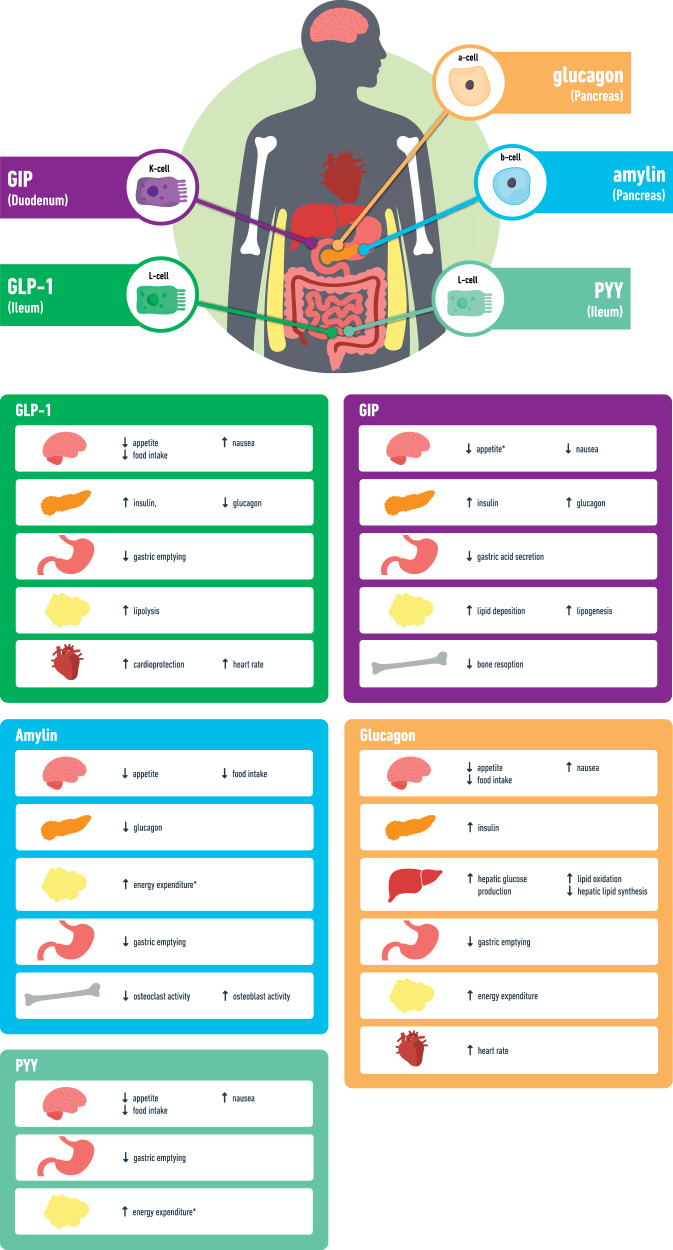
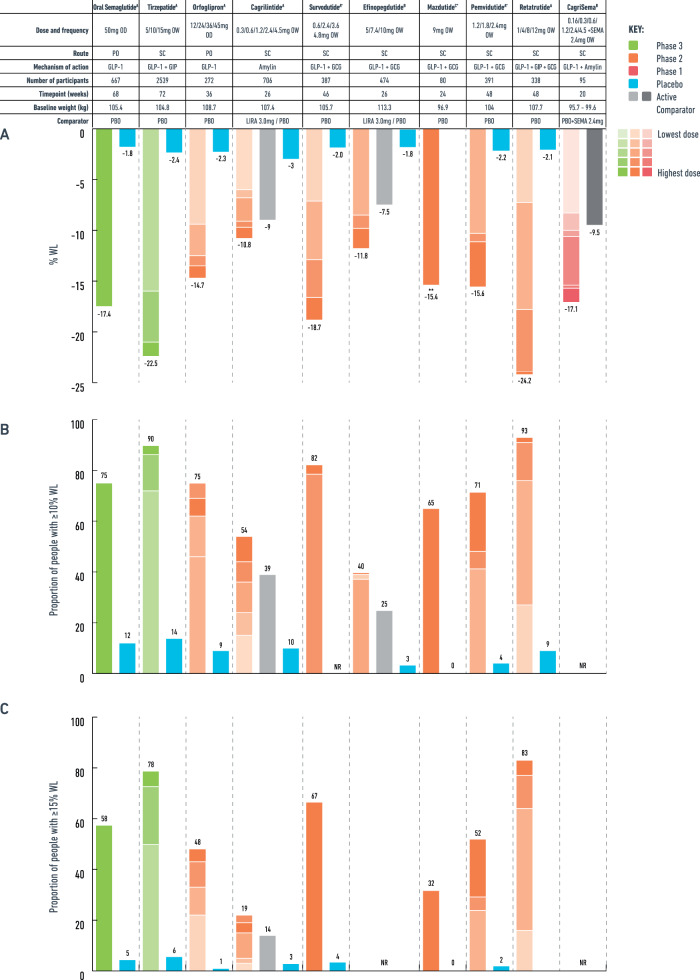
Obesity pipeline review. Semaglutide 2.4mg results in 15-17% weight loss. Tirzepatide leads up to 22.5% WL in phase 3. Retatrutide (GLP-1/GIP/glucagon RA) progressed to phase 3 trials. Early data suggests retatrutide may lead to even greater WL than tirzepatide.
Overview
CoChat Summary
## TL;DR
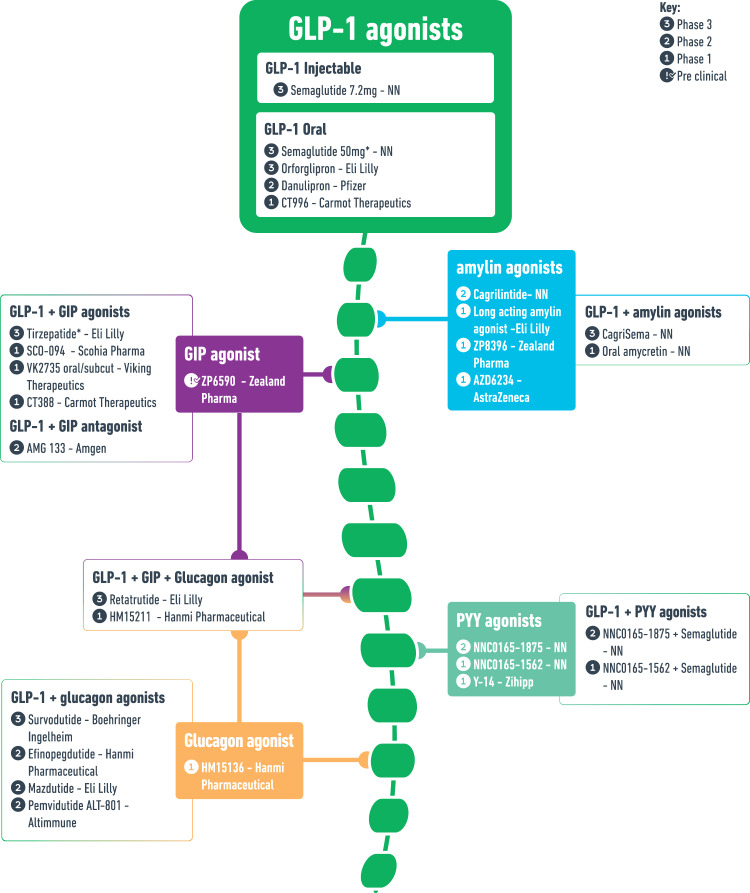
This review maps the rapidly expanding obesity drug pipeline, emphasizing that combinations of entero-pancreatic hormones are producing weight loss that can approach bariatric surgery. It highlights tirzepatide as the first approved dual agonist for chronic weight management and notes several oral, dual, and triple agonists in late-phase development.
## Key findings
- Semaglutide 2.4 mg once weekly, an approved GLP-1 receptor agonist, produces 15–17% mean weight loss and has evidence of cardioprotection; the SELECT trial reported a 20% reduction in major adverse cardiovascular events (MACE) vs placebo after 39.8 months of follow-up.
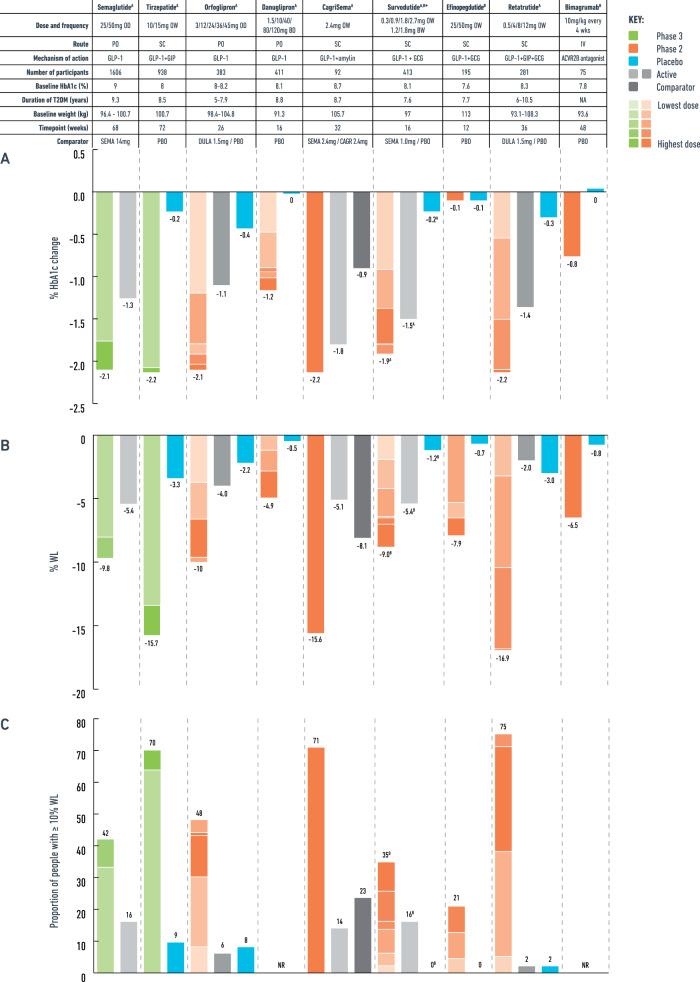
- In obesity without T2D, oral semaglutide 50 mg produced 17.4% weight loss vs 1.8% with placebo at 68 weeks in OASIS-1; in T2D, it produced 9.8% weight loss vs 5.4% with oral semaglutide 14 mg and reduced HbA1c by −2.1% vs −1.3% at 68 weeks.
- Tirzepatide (dual GLP-1/GIP agonist) achieved 16–22.5% mean weight loss at 72 weeks in SURMOUNT-1 and up to 15.7% in SURMOUNT-2; in SURMOUNT-4, participants maintained/continued to lose weight, with 25.9% of placebo vs 84.1% of tirzepatide participants achieving ≥15% weight loss at 88 weeks from baseline.
- Retatrutide (triple GLP-1/GIP/glucagon agonist) produced up to 24.2% weight loss at 48 weeks in a phase 2 obesity study; 36–48% of participants on the 8 mg and 12 mg doses achieved ≥25% weight loss.
## Methods
- Narrative review of the pipeline of obesity pharmacotherapies, with a focus on entero-pancreatic hormone-based molecules and selected non-hormonal agents.
- Synthesizes data from early- and late-phase clinical trials in people with and without T2D, and also considers effects on glycaemia, liver fat content (MASLD/MASH), and cardiovascular outcomes.
- Main analysis is descriptive comparison of efficacy, safety, and development stage across agents; Not stated in the paper as a formal systematic review or meta-analysis.
## Limitations
- The paper states that the full potential benefits and risks of the new obesity pharmacotherapies still need to be better understood, and that robust cost-effectiveness data are lacking.
- It explicitly notes that cardiovascular outcome trials are still needed for several agents, including combinations of GLP-1 with other hormones and oral GLP-1 receptor agonists.
- Evident from the text: much of the pipeline relies on phase 1/2 data, press releases, or abstract data, so some reported efficacy and safety findings are preliminary (say which: evident from the text).
Model-written summary. Check it against the paper before relying on it.
Integrity signals
Registry
Cites
Statistics
Figures
Verification
Claims the paper makes
66 Valid · 1 Not valid · 63 Not checked · 13 Own results and interpretations
The sources with a verdict support this claim; the rest weren’t checked yet, have no full text we could read, or their verdicts aren’t rated yet.
In the paper
“Despite that 5–10% WL is clinically beneficial, greater WL may be required for the individual to improve or achieve remission of some obesity-related complications [7, 8].”
§ What is the pipeline for future medications for obesity? > Introduction
What the sources say
- Supportedcites [7] Timothy Garvey W. New Horizons. A new paradigm for treating to target with second-generation obesity medications. J Clin Endocrinol Metab. 2022;107:E1339–47. 34865050 PMC8947217 source
The “Obesity, Complications, and Adiposity-based Chronic Disease” section says that the weight loss needed for clinical benefit varies by complication: 5%–10% reduces liver steatosis, while more than 10% is required to improve inflammation and fibrosis in nonalcoholic steatohepatitis. The section on using percent weight loss as a biomarker also says treatment targets should be individualized to the complications present in each patient. (LLM, conf=0.94)
- Not checked — no full text of the sourcecites [8] Tahrani AA, Morton J. Benefits of weight loss of 10% or more in patients with overweight or obesity: a review. Obesity. 2022;30:802–40. 35333446 source
hedgedstates a possible cause- Asserted: passes — The authors put it forward as true.
- Checkable: passes — It can be checked against evidence.
- Load-bearing: passes — The paper’s conclusions depend on it.
- Based: passes — The paper gives a reason why it holds.
- Supported
The cited sources support only part of this claim — read each source’s verdict below.
In the paper
“More specifically, orforglipron is a potent partial GLP-1 RA which is biased towards G-protein activation over to β-arrestin recruitment at the GLP-1 receptor [23].”
§ What is the pipeline for future medications for obesity? > Pipeline of obesity pharmacotherapies > Orforglipron
What the sources say
- Partly supportedcites [23] Kawai T, Sun B, Yoshino H, Feng D, Suzuki Y, Fukazawa M, et al. Structural basis for GLP-1 receptor activation by LY3502970, an orally active nonpeptide agonist. Proc Natl Acad Sci USA. 2020;117:29959–67. 33177239 PMC7703558 sourceExperimental — accuracy not yet measured
The Results and Discussion section (In Vitro and In Vivo Activity of LY3502970; page unavailable) describes LY3502970 as a potent partial GLP-1R agonist that stimulates cAMP accumulation without detectable β-arrestin recruitment. Our copy does not name orforglipron or establish that it is LY3502970, so it does not fully support the claim about the named drug. (LLM, conf=0.82)
plain- Asserted: passes — The authors put it forward as true.
- Checkable: passes — It can be checked against evidence.
- Load-bearing: unclear — It is unclear whether the paper’s conclusions depend on it.
- Based: passes — The paper gives a reason why it holds.
- Partly supported
The cited sources support only part of this claim — read each source’s verdict below.
In the paper
“Additionally, oral semaglutide 50 mg reduced the HbA1c by −2.1% at 68 weeks compared to −1.3% with oral semaglutide 14 mg (Fig. 4) [22].”
§ What is the pipeline for future medications for obesity? > Pipeline of obesity pharmacotherapies > Oral semaglutide 50 mg
What the sources say
- Partly supportedcites [22] Aroda VR, Aberle J, Bardtrum L, Christiansen E, Knop FK, Gabery S, et al. Efficacy and safety of once-daily oral semaglutide 25 mg and 50 mg compared with 14 mg in adults with type 2 diabetes (PIONEER PLUS): a multicentre, randomised, phase 3b trial. Lancet. 2023;402:693–704. 37385279 sourceExperimental — accuracy not yet measured
The Findings and Results report greater HbA1c reduction with oral semaglutide 50 mg than with 14 mg: −2.0 versus −1.5 percentage points at week 52. The Discussion says the reductions were largely sustained through week 68, but the passages from our copy do not establish the claimed week-68 values of −2.1% and −1.3%. (LLM, conf=0.85)
plainstates a cause- Asserted: passes — The authors put it forward as true.
- Checkable: passes — It can be checked against evidence.
- Load-bearing: unclear — It is unclear whether the paper’s conclusions depend on it.
- Based: passes — The paper gives a reason why it holds.
- Partly supported
Every source the paper cites for this claim was checked and supports it.
In the paper
“Moreover, preclinical and early phase clinical trials have confirmed the therapeutic potential of entero-pancreatic hormone combinations in obesity and/or metabolic complications such as T2D [33].”
§ What is the pipeline for future medications for obesity? > Other entero-pancreatic hormones and combination of entero-pancreatic hormones in the management of obesity
What the sources say
- Supportedcites [33] Baggio LL, Drucker DJ. Glucagon-like peptide-1 receptor co-agonists for treating metabolic disease. Mol Metab. 2021;46:101090. 32987188 PMC8085566 source
The Introduction says that multiple preclinical studies and emerging clinical data support the therapeutic potential of combinatorial peptide therapy for metabolic disorders. The Tirzepatide section reports early-phase trials showing improvements in weight and glucose measures, including in people with T2D. The paper cautions that clinical development remains limited, but the claim concerns therapeutic potential rather than established treatment efficacy. (LLM, conf=0.91)
boostedstates a cause- Asserted: passes — The authors put it forward as true.
- Checkable: passes — It can be checked against evidence.
- Load-bearing: passes — The paper’s conclusions depend on it.
- Based: passes — The paper gives a reason why it holds.
- Supported
The sources with a verdict support this claim; the rest weren’t checked yet, have no full text we could read, or their verdicts aren’t rated yet.
In the paper
“as the simultaneous activation of GLP-1 and GIP receptors in preclinical models results in greater WL and glucose-lowering efficacy compared to activation of each receptor alone [38–40]”
§ What is the pipeline for future medications for obesity? > GIP agonism
What the sources say
- Supportedcites [38] Gault VA, Kerr BD, Harriott P, Flatt PR. Administration of an acylated GLP-1 and GIP preparation provides added beneficial glucose-lowering and insulinotropic actions over single incretins in mice with Type 2 diabetes and obesity. Clin Sci. 2011;121:107–17. 21332446 source
In the Results section on ob/ob mice (page unavailable), the combined Lira-AcGIP preparation significantly reduced body weight, while either incretin mimetic alone did not. A separate Results section reports significantly better glucose control with the preparation than with either mimetic alone. (LLM, conf=0.92)
- Not checked — no full text of the sourcecites [39] Nørregaard PK, Deryabina MA, Tofteng Shelton P, Fog JU, Daugaard JR, Eriksson PO, et al. A novel GIP analogue, ZP4165, enhances glucagon-like peptide-1-induced body weight loss and improves glycaemic control in rodents. Diabetes Obes Metab. 2018;20:60–8. 28598027 source
- Not checked — no full text of the sourcecites [40] Finan B, Ma T, Ottaway N, Müller TD, Habegger KM, Heppner KM, et al. Unimolecular dual incretins maximize metabolic benefits in rodents, monkeys, and humans. Sci Transl Med. 2013;5:209ra151. 24174327 source
plainstates a cause- Asserted: passes — The authors put it forward as true.
- Checkable: passes — It can be checked against evidence.
- Load-bearing: passes — The paper’s conclusions depend on it.
- Based: passes — The paper gives a reason why it holds.
- Supported
64 more claims · 25 with their cited sources checked
Create a free account to see all 143 claims and to verify the 2 references still open.
- It may state two separate claims as one. 71
- Probably not a substantial claim. 7
Claims other papers make about this one
Each is checked against this paper’s own text: does it say what the citing paper says it does?
The source backs part of the claim, not all of it — or backs it for a different population, condition or comparison.
In the citing paper
“In summary, dual and triple agonists related to GLP-1 represent significant advances in the field of diabetes treatment,167,168 demonstrating the future trend of enhancing therapeutic effects by targeting multiple biomarkers.136,169,170”
From Glucagon-like peptide-1 receptor: mechanisms and advances in therapy (2024) · cites this paper as [169]
Experimental — accuracy not yet measuredThe source backs part of the claim, not all of it — or backs it for a different population, condition or comparison.
In the citing paper
“the Nutrient Stimulated Hormones being targeted have effects on muscle protein synthesis and even energy expensiture [42–44].”
From New drugs for the treatment of obesity: do we need approaches to preserve muscle mass? (2025) · cites this paper as [44]
Experimental — accuracy not yet measuredThe source backs part of the claim, not all of it — or backs it for a different population, condition or comparison.
In the citing paper
“MariTide is a monthly subcutaneous glucose-dependent insulinotropic polypeptide receptor (GIPR) antagonist conjugated to analog peptide of GLP-1.84”
From GLP-1 single, dual, and triple receptor agonists for treating type 2 diabetes and obesity: a narrative review (2024) · cites this paper as [84]
Experimental — accuracy not yet measuredThe source backs part of the claim, not all of it — or backs it for a different population, condition or comparison.
In the citing paper
“GLP-1/glucagon dual agonists promote glucose and body weight reduction via regulation of hunger/appetite and increasing energy expenditure.”
From GLP-1 single, dual, and triple receptor agonists for treating type 2 diabetes and obesity: a narrative review (2024) · cites this paper as [84]
Experimental — accuracy not yet measuredThe source backs part of the claim, not all of it — or backs it for a different population, condition or comparison.
In the citing paper
“In mice models, pemvidutide lowered body weight and liver enzymes while promoting better blood glucose control, improved liver steatosis, inflammation and fibrosis superior to semaglutide.84”
From GLP-1 single, dual, and triple receptor agonists for treating type 2 diabetes and obesity: a narrative review (2024) · cites this paper as [84]
Experimental — accuracy not yet measured
14 more claims about this paper
Create a free account to see every claim other papers make about this one.
Citations
Cites
Pushko, P., Pumpens, P., & Grens, E. (2013) · Intervirology · doi:10.1159/000346773 · Cited by 5,950
Once-Weekly Semaglutide in Adults with Overweight or Obesity
Wilding, J. P. H., Batterham, R. L., Calanna, S., Davies, M., Van Gaal, L. F., Lingvay, I., McGowan, B. M., Rosenstock, J., Tran, M. T. D., Wadden, T. A., et al. (2021) · New England Journal of Medicine · doi:10.1056/nejmoa2032183 · Cited by 5,205 · cited 3×
“Semaglutide 2.4 mg once weekly is the latest approved GLP-1 RA for obesity management (2021) and results in 15 – 17% mean WL through appetite reduction [11, 12].”
InfluentialSelf-citationTirzepatide Once Weekly for the Treatment of Obesity
Jastreboff, A. M., Aronne, L. J., Ahmad, N. N., Wharton, S., Connery, L., Alves, B., Kiyosue, A., Zhang, S., Liu, B., Bunck, M. C., et al. (2022) · New England Journal of Medicine · doi:10.1056/nejmoa2206038 · Cited by 3,838 · cited 2×
“In SURMOUNT-1, 72 weeks of tirzepatide induced mean WL of 16 – 22.5% in people without diabetes compared to 2.4% with placebo, with no sign of the weight plateauing, suggesting that there may be further WL with long-term use [46].”
InfluentialEstruch, R., Ros, E., Salas-Salvadó, J., Covas, M.-I., Corella, D., Arós, F., Gómez-Gracia, E., Ruiz-Gutiérrez, V., Fiol, M., Lapetra, J., et al. (2018) · New England Journal of Medicine · doi:10.1056/nejmoa1800389 · Cited by 3,616 · cited 1×
“…to optimise health outcomes regardless of WL – increased levels of physical activity have multiple health bene fi ts including improvement of body composition, physical function and cardiorespiratory fi tness, and a balanced Mediterranean diet may be associated with cardiovascular bene fi ts [105].”
Semaglutide and Cardiovascular Outcomes in Obesity without Diabetes
Lincoff, A. M., Brown-Frandsen, K., Colhoun, H. M., Deanfield, J., Emerson, S. S., Esbjerg, S., Hardt-Lindberg, S., Hovingh, G. K., Kahn, S. E., Kushner, R. F., et al. (2023) · New England Journal of Medicine · doi:10.1056/nejmoa2307563 · Cited by 3,236 · cited 3×
“The SELECT trial is the fi rst study providing long-term data on the safety and ef fi cacy of semaglutide 2.4 mg [110].”
InfluentialDavies, M. J., Aroda, V. R., Collins, B. S., Gabbay, R. A., Green, J., Maruthur, N. M., Rosas, S. E., Del Prato, S., Mathieu, C., Mingrone, G., et al. (2022) · Diabetes Care · doi:10.2337/dci22-0034 · Cited by 2,104 · cited 1×
“…with T2D and established cardiovascular disease, the international guidelines for T2D recommend the use of GLP-1 RA or sodium glucose co-transporters 2 inhibitors (SGLT-2i) as fi rst-line treatment (independent of HbA1c), based on multiple trials demonstrating their cardio-renal bene fi ts [109].”
Self-citationTirzepatide versus Semaglutide Once Weekly in Patients with Type 2 Diabetes
Frías, J. P., Davies, M. J., Rosenstock, J., Pérez Manghi, F. C., Fernández Landó, L., Bergman, B. K., Liu, B., Cui, X., & Brown, K. (2021) · New England Journal of Medicine · doi:10.1056/nejmoa2107519 · Cited by 2,096 · cited 1×
“…has been approved for T2D management - the mean HbA1c reduction in SURPASS programme ranged between 1.9 and 2.6% across the trials and 40 – 69% of participants achieved ≥ 10% WL with the higher doses (10 and 15 mg), despite that there was no additional support for lifestyle intervention [16, 43].”
InfluentialSelf-citationLean, M. E., Leslie, W. S., Barnes, A. C., Brosnahan, N., Thom, G., McCombie, L., Peters, C., Zhyzhneuskaya, S., Al-Mrabeh, A., Hollingsworth, K. G., et al. (2018) · The Lancet · doi:10.1016/s0140-6736(17)33102-1 · Cited by 2,095 · cited 1×
“…and behavioural changes) are the cornerstone of obesity management with diverse bene fi ts, but even the most intensive lifestyle interventions result in up to 10% mean weight loss (WL) and weight maintenance remains a challenge, as 80% of WL is expected to be regained over the next 5 years [4, 5].”
Glucagon-like peptide-1 7–36: a physiological incretin in man
Kreymann, B., Ghatei, M. A., Williams, G., & Bloom, S. R. (1987) · The Lancet · doi:10.1016/s0140-6736(87)91194-9 · Cited by 1,928 · cited 1×
“1) [17, 18].”
(2019) · Nature Communications · doi:10.1038/41467.2041-1723 · Cited by 1,914
Research works printed but not linked: 2
- Pfizer announces topline phase 2b results of oral GLP-1R agonist, danuglipron, in adults with obesity | Pfizer. 2023. https://www.pfizer.com/news/press-release/press-release-detail/pfizer-announces-topline-phase-2b-results-oral-glp-1r
- Pfizer Provides Update on GLP-1-RA clinical development program for adults with obesity and type 2 diabetes mellitus | Pfizer. 2023. https://www.pfizer.com/news/press-release/press-release-detail/pfizer-provides-update-glp-1-ra-clinical-development
Cited by
Items 201–300 of 327
A New Role for Glucagon: From Secondary Hormone to Key Player
De Fano, M., Malara, M., Rucco, S., Manco, M., Fanelli, C. G., Bolli, G. B., & Porcellati, F. (2025) · Nutrition, Metabolism and Cardiovascular Diseases · doi:10.1016/j.numecd.2025.104233 · Cited by 1
Min, S. H. (2024) · Journal of Korean Diabetes · doi:10.4093/jkd.2024.25.2.82 · Cited by 2
Retatrutide - revolutionary recently developed GLP agonist - literature review
Brzozowska, P., Frańczuk, A., Nowińska, B., Makłowicz, A., Palacz, K. A., & Lenartowicz, I. (2024) · Quality in Sport · doi:10.12775/qs.2024.15.52125 · Cited by 1
Putting metabolism centre stage in health and disease
Montgomery, M. K. (2024) · npj Metabolic Health and Disease · doi:10.1038/s44324-024-00032-3 · Cited by 1
Future Perspectives in the Management of Obesity
Garcha, S. C., & Kalra, S. (2025) · Springer eBooks · doi:10.1007/978-981-96-1651-0_6 · Cited by 2
Teratogenic risks of treated and untreated maternal obesity
Jones, R. E., & Zera, C. (2025) · Seminars in Perinatology · doi:10.1016/j.semperi.2025.152081 · Cited by 2
Glucagon-like peptide-1 receptor analogues and beyond: emerging obesity pharmacotherapies
Abburi, K., Melson, E., Miras, A. D., & Papamargaritis, D. (2025) · Panminerva Medica · doi:10.23736/s0031-0808.25.05339-x · Cited by 1
Self-citationCassano, D., Aguggia, J. P., Giovanini, L., Heredia, F., Francesco, P. N. D., Andreoli, M. F., Schöth, H. B., Habib, A. M., Fernández, G., & Perelló, M. (2025) · Molecular and Cellular Endocrinology · doi:10.1016/j.mce.2025.112627 · Cited by 3
Hepatic Expression of ACBP Is a Prognostic Marker for Weight Loss After Bariatric Surgery
Meyer, M., Gruber, P., Plattner, C., Enrich, B., Zollner, A., Jukic, A., Effenberger, M., Grander, C., Tilg, H., & Grabherr, F. (2025) · Biomolecules · doi:10.3390/biom15081173 · Cited by 1
Tipping the Scales: Strategies to Improve Anti‐Obesity Medication Access and Affordability
Komé, A. M., Boykin, A. R., Johnson-Jennings, A., & Coviello, A. D. (2025) · JACCP JOURNAL OF THE AMERICAN COLLEGE OF CLINICAL PHARMACY · doi:10.1002/jac5.70118 · Cited by 1
EndoCompass project: research roadmap for diabetes, obesity, and metabolism
Mathieu, C., Meireles, M., Pagotto, U., Wabitsch, M., Banerjee, I., Bartolomé, A., Battelino, T., Beck, J., Chiarelli, F., León, D. D. D., et al. (2025) · European Journal of Endocrinology · doi:10.1093/ejendo/lvaf065 · Cited by 5
Bredum, S. K., Jacobsen, J. M., Halling, J. F., Blom, I., Lewis, C. T. A., Ochala, J., Fredholm, M., Lundh, S. H., Schmücker, M., Ozenne, B., et al. (2026) · American Journal of Physiology-Endocrinology and Metabolism · doi:10.1152/ajpendo.00480.2024 · Cited by 2
GLP-1 Is Not Enough: Can Glucagon Fill the Energy Expenditure Gap?
Beji, S., & Caron, A. (2026) · Neuroendocrinology · doi:10.1159/000550812 · Cited by 1
“Several additional GLP1-R/GCGR agonists, including efinopegdutide (JNJ-64565111) [84], pemvidutide (ALT-801) [85, 86], and G3215 [87] and AZD9550 [88], are in early phases of development, with promising preclinical metabolic benefits.”
Incretin-Based Therapies: A Novel Pathway in Addiction Treatment
Rosiejka, D., Joanna, M., Marcickiewicz, J., Bogdańska, A., Błażejewska, W., & Szulińska, M. (2026) · Journal of Clinical Medicine · doi:10.3390/jcm15041613 · Cited by 2
“Ongoing research is focused on the development of novel dual and triple agonists, including agents that additionally target the glucagon receptor, as well as next-generation oral GLP-1 formulations [35].”
Chan, Z. H., Omar, A. S., Gill, K., Volucke, G., Azhar, M. M., Haleem, S. M., Sia, J. E., Rahman, O. U., Ahmad, M., Shahid, N., et al. (2026) · Cardiology in Review · doi:10.1097/crd.0000000000001209 · Cited by 2
A new era in reducing obesity and the risk of cardiovascular disease events in preeclampsia
Malik, A., & Malik, R. A. (2026) · Journal of Hypertension · doi:10.1097/hjh.0000000000004250 · Cited by 1
Patil, R., Dunn, W., Noureddin, M., & Alkhouri, N. (2026) · Drugs · doi:10.1007/s40265-026-02301-5 · Cited by 2
GLP-1-derived therapies and risk of sarcopenia: myth or reality?
Scheen, A. J. (2026) · Expert Opinion on Drug Safety · doi:10.1080/14740338.2026.2640980 · Cited by 5
Merrild, C., Johansen, V. B. I., Clemmensen, C., & Ranea‐Robles, P. (2026) · The Journal of Physiology · doi:10.1113/jp289817 · Cited by 1
Acute Contractile Effects of Glucagon-like-Peptide-1 Receptor Agonists in the Human Heart
Neumann, J., Kirchhefer, U., Hofmann, B., & Gergs, U. (2026) · Pharmaceutics · doi:10.3390/pharmaceutics18040447 · Cited by 1
Lisco, G., Tullio, A. D., Disoteo, O., Dicorato, P., Tortora, A., Geronimo, V. D., & Triggiani, V. (2026) · Reviews in Endocrine and Metabolic Disorders · doi:10.1007/s11154-026-10033-w · Cited by 1
“Pronounced weight loss is associated with an increased risk of substantial FFM loss (approximately − 8 kg) and SMM loss (around − 3 kg), as reported in several post-bariatric surgery trials [54, 55], and among individuals on anti-obesity medications [56].”
Tahlan, S., Singh, S., Dey, H., Kaira, M., & Pandey, K. C. (2026) · Future Medicinal Chemistry · doi:10.1080/17568919.2026.2658007 · Cited by 4
GLP-1 Receptor Agonists: Therapeutic Potential and Emerging Concerns
Nowak, K., Łupina, K., Kalisz, A., Ilkiewicz, Ł., & Janczura, J. (2026) · Current Pharmacology Reports · doi:10.1007/s40495-026-00459-w · Cited by 2
Kang, D., & Choi, D. (2026) · The Korean Journal of Internal Medicine · doi:10.3904/kjim.2025.277 · Cited by 1
Pearson, M. J., Willency, J. A., Lin, Y., Abadi, A., Hartman, M. L., Coşkun, T., Ruotolo, G., Duffin, K. L., Haupt, A., Newgard, C. B., et al. (2026) · The Journal of Clinical Endocrinology & Metabolism · doi:10.1210/clinem/dgag201
Malhotra, A., Gottlieb, D. J., Kundel, V., Woehrle, H., Chakladar, S., GONCALVES, L. F., & Calamai, G. (2026) · Contemporary Clinical Trials Communications · doi:10.1016/j.conctc.2026.101660 · Cited by 3
“…therapies, it has several limitations, including the need for cold chain distribution and storage (which can be challenging in under-resourced areas), risk of injection site reactions, and needle-related discomfort, fear, and stigma, that may limit treatment initiation and adherence [20 – 22].”
Accelerating drug discovery with mass spectrometry-driven bioanalytical innovations and beyond
Mwangi, J. N., Hill, R. C., Runnebohm, A. M., Czerwieniec, G. A., & Berna, M. J. (2026) · Bioanalysis · doi:10.1080/17576180.2026.2687591 · Cited by 1
Medical treatments for obesity: what does the future have in store?
Bassatne, A., & Rizo, I. M. (2026) · The Journal of Clinical Endocrinology & Metabolism · doi:10.1210/clinem/dgag274 · Cited by 1
Discontinuation of glucagon-like peptide-1 receptor agonists among US adults: A national survey
DiStefano, M. J., Zon, J., Olson, E. G., Levy, J. F., Anderson, G. F., & Alexander, G. C. (2026) · Journal of Managed Care & Specialty Pharmacy · doi:10.18553/jmcp.2026.32.8.903 · Cited by 3
Bloomgarden, Z. T. (2024) · Journal of Diabetes · doi:10.1111/1753-0407.13568 · Cited by 1
Thirzepatide. A novelty in the treatment of obesity - literature review
Wiśniewska, K., Gmitrzuk, J., Malinka, Z., Jachymek, A., Opatowska, M., Jakubiec, J., Kucharski, T., & Piotrowska, M. (2024) · Quality in Sport · doi:10.12775/qs.2024.15.52005 · Cited by 1
“In November 2023, tirzepatide, which was previously approved by the US Food and Drug Administration (FDA) and the European Medicines Agency (EMA) as a drug to improve glycemia in patients with type 2 diabetes, joined this group [16], [17].”
BackgroundQian, A., Xiao, G., Li, Z., et al. (2024) · Biochemical Pharmacology · doi:10.1016/j.bcp.2024.116710 · Cited by 1
Can obesity pharmacotherapy be used to manage male infertility?
Morrison, A., Papamargaritis, D., Jayasena, C. N., et al. (2025) · Nature Reviews Endocrinology · doi:10.1038/s41574-025-01151-7 · Cited by 1
“Substantial and sustained weight loss is achievable through bariatric surgery, with 25–30% weight loss achieved in 1 year and ≥20% weight loss maintained at 20 years 6 .”
Self-citationDiabetes mellitus: An overview
Sonia, T. A., & Sharma, C. P. (2025) · Elsevier eBooks · doi:10.1016/b978-0-443-30272-5.00007-x · Cited by 1
German, J., Cordioli, M., Tozzo, V., Urbut, S., Arumäe, K., Smit, R. A. J., Lee, J., Li, J. H., Janucik, A., Ding, Y., et al. (2024) · medRxiv · doi:10.1101/2024.09.11.24313458 · Cited by 1
Drug depots for obesity targeting metabolism, appetite, and inflammation
Fayyaz, M., & Smith, A. M. (2025) · Expert Opinion on Drug Delivery · doi:10.1080/17425247.2025.2554718 · Cited by 2
“In specific cases, invasive interventions ( e.g. , bariatric surgery) are preferred and yield long-term weight loss (25–30% loss for several surgical types) and improved health, but with the risk of complications and high cost [3].”
Guo, J., Bachor, T. P., Takahashi, R., Steffek, M., Fitzgerald, G. A., Huffman, B. J., Braun, D., Han, S. J., Sandmann, T., Ha, C., et al. (2025) · bioRxiv (Cold Spring Harbor Laboratory) · doi:10.1101/2025.10.06.680810 · Cited by 2
江崎, 治. (2011) · 肥満研究 · Cited by 1
Incretins and the metabolic syndrome
Karásek, D. (2024) · Vnitřní lékařství · doi:10.36290/vnl.2024.020 · Cited by 1
Fano, M. D., Porcellati, F., Fanelli, C. G., & Bolli, G. B. (2024) · il Diabete · doi:10.30682/ildia2401a
First, a seat; then, an upgrade
Sathyanarayanan, A. (2024) · Journal of Human Hypertension · doi:10.1038/s41371-024-00933-2
“In addition, there are multiple other obesity treatment agents in phase 3 trials [24].”
Obesity management: A clinician's perspective lečenje gojaznosti iz perspective kliničara
Polovina, S. P., Šumarac-Dumanović, M., & Micić, D. (2024) · Arhiv za farmaciju · doi:10.5937/arhfarm74-50566
Obesity and out-of-hospital cardiac arrest — a fatal duet
Błażejowska, E., & Gąsecka, A. (2024) · Disaster and Emergency Medicine Journal · doi:10.5603/demj.101763
Therapeutic Delivery – Industry Update covering February 2024
SIMPSON, I. A. (2024) · Therapeutic Delivery · doi:10.1080/20415990.2024.2365614
Toxicology profile of a novel GLP-1 receptor biased agonist-SAL0112 in nonhuman primates
Sun, J., Xiao, Y., Hu, X., Chen, S., Huang, J., Ren, Z., Luo, B., Jiang, R., Zhang, H., & Shen, X. (2024) · Toxicology and Applied Pharmacology · doi:10.1016/j.taap.2024.117125
Future directions for quality of life research with second‐generation GLP ‐ 1RAs for obesity
Hsu, R., Kompala, T., & Eiselt, A.-K. (2024) · Diabetes Obesity and Metabolism · doi:10.1111/dom.16036
Metabolic Polygenic Risk Scores for Prediction of Obesity, Type 2 Diabetes, and Related MorbiditiesPreprint
Kim, M., Chen, Q.-L., Sui, Y., Yang, X., Wang, S.-Q., Weng, L.-C., Cho, S. M. J., Koyama, S., Zhu, X., Yu, K., et al. (2024) · medRxiv · doi:10.1101/2024.11.01.24316620 · Cited by 3
The glucagon-like peptide-1 (GLP-1) drugs poised to conquer obesity
Yin, J., Liu, Y., & Jia, W. (2024) · Chinese Science Bulletin (Chinese Version) · doi:10.1360/tb-2024-0417
King, J. A., Aithal, G. P., Herring, L. Y., Willis, S. A., Papamargaritis, D., Hulley, K., & Davies, M. J. (2024) · NIHR Open Research · doi:10.3310/nihropenres.13784.1
Self-citationGLP-1RA based therapies in the young and old
Rigas, G., Alexander, S., & Haywood, C. J. (2024) · Current Opinion in Endocrinology Diabetes and Obesity · doi:10.1097/med.0000000000000900
“With novel dual and tri-agonist incretin combinations in the pipeline, and several other nutrient-stimulated, hormone-based obesity and/or T2D therapeutics under development [40 & ], the”
Ahmad, E., Jarvis, J., & Webb, D. R. (2024) · British Journal of Diabetes · doi:10.15277/bjd.2024.464 · Cited by 2
Medical management of obesity: unlocking the potential
Xiang, A. S., & Sumithran, P. (2025) · Climacteric · doi:10.1080/13697137.2025.2455177 · Cited by 1
“Several have reported early-phase clinical trial data showing unprecedented mean weight losses in excess of 20% within 12 months at the highest doses [41,42].”
Progress in antiobesity medications
Vinton, T. Y. (2025) · Baylor University Medical Center Proceedings · doi:10.1080/08998280.2025.2469990
Park, T. S. (2025) · Diabetes & Metabolism Journal · doi:10.4093/dmj.2025.0047 · Cited by 2
Anti-Obesity Agents on the Horizon
Kim, S. H. (2025) · Korean Journal of Family Practice · doi:10.21215/kjfp.2025.15.1.2
OBE-DB: A Computational Tool and Web Server for the Prediction of Antiobesity DrugsPreprint
García, E. M., Martínez-Cortés, C., Banegas‐Luna, A. J., Morante, J. J. H., & Pérez‐Sánchez, H. (2025) · bioRxiv (Cold Spring Harbor Laboratory) · doi:10.1101/2025.04.10.648110
“…of entero-pancreatic hormones including cagrisema (GLP-1/amylin RA) and the triple agonist retatrutide (GLP-1/GIP/glucagon RA) have also progressed to phase 3 trials as obesity treatments and early data suggests that may lead to even greater weight loss than tirzepatide (Melson et al., 2024).”
D’Ardes, D., Bianconi, V., Dalt, L. D., D’Onofrio, L., Macchi, C., Visco, V., Cappelluti, M. A., Parrotta, I., Greco, C., Bencivenga, L., et al. (2025) · European Atherosclerosis Journal · doi:10.56095/eaj.v4i1.89
SERCA blockade as a treatment strategy for obesity
Naimi, S. A., & Qaisar, R. (2025) · European Journal of Applied Physiology · doi:10.1007/s00421-025-05852-9 · Cited by 1
“Additionally, developing sustained-release formulations or oral delivery methods could improve patient compliance and provide a more convenient route of administration (Melson et al. 2024) making SERCA blockade a practical long-term treatment option for obesity.”
Projected Impact of Glucagon-Like Peptide-1 Adoption on 5-Year Coronary Stent UsePreprint
Rathore, S. S., Epstein, A. J., Zuk, E., & Curtis, J. P. (2025) · SSRN Electronic Journal · doi:10.2139/ssrn.5368895
Adipositas und Herz: neue Medikamente und neue Strategien für Kardiologen
Hollstein, T. (2025) · Aktuelle Kardiologie · doi:10.1055/a-2606-7020
AI-Based Drug Discovery of Multi-Hormone Receptor Agonists for Obesity Treatment
Rangu, J., & Ramdhave, A. S. (2025) · IEEE World AI IoT Congress (AIIoT) · doi:10.1109/aiiot65859.2025.11105373
Treat the Weight, Lower the Pressure
Sattar, N. A., & Delles, C. (2025) · Journal of the American College of Cardiology · doi:10.1016/j.jacc.2025.07.059
Diabesidad: concepto e implicancias
Lahsen, R. (2025) · Revista Médica Clínica Las Condes · doi:10.1016/j.rmclc.2025.08.010
“…y fármacos para el tratamiento de la diabesidad, como son semaglutida (agonista de GLP-1) en dosis altas de hasta 2,4 mg semanales y tirzepatide (agonista de GLP-1 y GIP), los cuales logran una reducción de peso de entre un 15 y un 20% el primero y entre un 20 y un 25% el segundo 52 .”
Agonisti multimodali (doppi e tripli agonisti) nel trattamento della diabesità
Capobianco, E., Pippa, F., Garelli, S., & Pagotto, U. (2025) · L Endocrinologo · doi:10.1007/s40619-025-01687-w
Statutory regulation of obesity pharmacotherapy: analysis of domestic and international approaches
Кабачна, А. В., Шаповал, Т. О., Шматенко, О. П., Solomennyi, А. М., Таrasenko, V. O., Pleshkovа, O. V., & Krasnianska, T. M. (2025) · Ukrainian Journal of Military Medicine · doi:10.46847/ujmm.2025.3(6)-188
Phytochemical Analysis and Anti-obesity Effects of Kalanchoe pinnata Root-Stem Methanol Extract
Ashraf, M., Ashiq, K., Ahsan, M. Z., Shah, S. A., Munir, A., & Ahsan, R. (2025) · Sudan Journal of Medical Sciences · doi:10.18502/sjms.v20i3.18552
“A higher BMI is associated with health problems that reduce one’s quality of life (QoL) [1, 2].”
Verlaan, J. P. L., van Es, N., & Scheres, L. J. J. (2025) · Journal of Thrombosis and Haemostasis · doi:10.1016/j.jtha.2025.07.035
Doppi e tripli agonisti recettoriali nel trattamento del diabete mellito tipo 2
Pizzo, A., Paccagnella, M., Luca, F. D., & Candido, R. (2025) · L Endocrinologo · doi:10.1007/s40619-025-01710-0 · Cited by 1
EndoCompass Project: Research Roadmap for Diabetes, Obesity, and Metabolism
Mathieu, C., Meireles, M., Pagotto, U., Wabitsch, M., Banerjee, I., Bartolomé, A., Battelino, T., Beck, J., Chiarelli, F., León, D. D. D., et al. (2025) · Hormone Research in Paediatrics · doi:10.1159/000549194 · Cited by 1
“…β-cell survival and pancreatic islet cell ad-aptations to stress; GLP-2 receptor agonists, which are currently used to treat intestinal insufficiency, have been combined with GLP-1 receptor agonists in double agonists (dapiglutide) that are currently undergoing phase 2 trials for obesity [65, 66].”
Xu, C., Zhou, Y., & Zhu, Z. (2025) · SSRN Electronic Journal · doi:10.2139/ssrn.5705522
KBN2202 Suppresses Gonadal White Adipose Tissue Expansion in Female Mice Fed a High-Fat Diet
Kim, M., Heo, J.-H., Chang, S. H., Lee, S., Kim, J., Shin, M.-G., Kim, J. S., Choi, M., & Lee, S.-R. (2026) · International Journal of Molecular Sciences · doi:10.3390/ijms27020627 · Cited by 1
“To overcome these limitations, combination therapies based on entero-pancreatic hormones are currently under development [26].”
GLP-1 Receptor Agonists: Emerging Indications, Limitations, and Future Directions
Kaur, S., Hevia, L. C., Lee, D., Mesdaq, H., Wong, J., Diallo, F., Anil, S., Gharibyar, N., & Gharibyar, S. (2026) · Pharmacology & Pharmacy · doi:10.4236/pp.2026.172003
Chabalala, V. N., Olofinsan, K. A., Mohamed, A., Magwaza, S. N., & Islam, M. S. (2026) · South African Journal of Botany · doi:10.1016/j.sajb.2026.02.005
Beyond BMI: why heart failure trials must quantify adiposity, not just obesity
Bayés‐Genís, A., & Schiattarella, G. G. (2026) · European Journal of Heart Failure · doi:10.1093/ejhf/xuag046
Feraco, A., Camajani, E., Muscogiuri, G., Barrea, L., Colao, A., & Caprio, M. (2026) · Current Obesity Reports · doi:10.1007/s13679-026-00695-7 · Cited by 2
“…efficacy has redefined clinical expectations, given their ability to achieve weight reduction similar to those obtained with bariatric surgery, with substantial improvements in cardiovascular outcomes, metabolic control, and obesity-related complications, independently of glycemic status [117].”
Midlife weight gain: challenges and solutions
Hung, S., & Adams, K. E. (2026) · Current Opinion in Obstetrics & Gynecology · doi:10.1097/gco.0000000000001093 · Cited by 1
Medikamentöse Therapie der Adipositas
Malzner, A. (2026) · Journal für Gastroenterologische und Hepatologische Erkrankungen · doi:10.1007/s41971-026-00250-0
Treatment Decision-making and Weight Loss Expectations for Current Obesity Treatment
Paknikar, S. S., & Shah, M. (2026) · Current Obesity Reports · doi:10.1007/s13679-026-00691-x
“Several other agents are being investigated, including use of amylin analogues and peptide YY to target post prandial satiety [48].”
Lifestyle Interventions for the Prevention of Type 2 Diabetes Mellitus
Henson, J. J., Davies, M. J., Greaves, C., Khunti, K., & Yates, T. E. (2026) · Elsevier eBooks · doi:10.1016/b978-0-323-87862-3.00003-3
Self-citationResistant and Refractory Obesity: The Complexity of Anti-Obesity Therapy Failure
Nicze, M., Borówka, M., Dec, A., Bułdak, Ł., Bołdys, A., & Okopień, B. (2026) · International Journal of Molecular Sciences · doi:10.3390/ijms27062539 · Cited by 7
Pan, H.-Y., Liang, J.-X., Chen, W.-W., Sheng, Y.-Y., Zhang, W.-J., Zhu, X.-W., Wang, S.-Y., Yang, G.-H., Xu, B., & Xu, T.-C. (2026) · World Journal of Clinical Cases · doi:10.12998/wjcc.v14.i9.118295
Kartiko, D. C., Rejeki, P. S., Indarto, D., Subagio, I., Hartati, S. C. Y., Orhan, B. E., Nurwati, Y., & Pranoto, A. (2026) · Physical Education Theory and Methodology · doi:10.17309/tmfv.2026.2.16
“Additionally, comparative trials examining exercise training alongside pharmacological interventions for obesity may help to define optimal multimodal treatment strategies (Melson et al., 2025; Jastreboff et al., 2025).”
Ciarloni, A., Salvio, G., Bordoni, M., Giacchetti, G., & Balercia, G. (2026) · Biomedicines · doi:10.3390/biomedicines14040778
“However, many other therapies are expected to become available in the future, considering the number of clinical trials involving weight-lowering drugs [21].”
Mechanism of GLP-1 Receptor Agonists in Weight Loss through Appetite Suppression
姚, 张. (2026) · Advances in Clinical Medicine · doi:10.12677/acm.2026.1641386
Balasubramaniam, S., Bhattacharya, G., Tiwari, A. P., Ashok, D., Scotney, G., Brandt, T. A., Dai, Y., Eisenbeis, S. A., Fowble, K., Hubbell, A. K., et al. (2026) · Organic Process Research & Development · doi:10.1021/acs.oprd.6c00031
Future Directions in the Medical Treatment of Obesity: A Narrative Review
Bassatne, A., & Rizo, I. M. (2026) · Advances in Therapy · doi:10.1007/s12325-026-03576-6 · Cited by 2
“Data derived from references [16–18].”
Latt, T. S., Aye, T. T., Ko, K. O. H., Win, S. S., Chit, T. T., & Myint, K. N. S. (2026) · Cureus · doi:10.7759/cureus.106767
Modulation of metabolic parameters among obese diabetic individuals through a gluten-free diet
Naeem, F., Noreen, S., Sultan, H., & Aja, P. M. (2026) · BMC Nutrition · doi:10.1186/s40795-026-01316-1
“The World Health Organization (WHO) indicated that in 2022, over 1.9 billion individuals were overweight, with more than 650 million classed as obese, a number that has almost tripled since 1975 [3].”
InfluentialThe effect of GLP-1RAs and co-agonists on body composition across obesity and type 2 diabetes
Sun, L. L., Liu, H. F., Zhang, X., Zuo, F., Kong, Y., Feng, J., & Nian, X. (2026) · European journal of medical research · doi:10.1186/s40001-026-04534-2
“Conversely, tirzepatide (GLP-1/GIP dual agonist), mazdutide (GLP-1/GCG dual agonist), and retatrutide (GLP-1/GIP/GCG triple agonist) exemplify the emerging multi-target paradigm [32, 33, 95, 113, 119].”
Cappellari, G. G., Mazzucco, S., & Barazzoni, R. (2026) · Endocrinology · doi:10.1007/978-3-030-71067-5_17-1
Obesity: A Global Systems Disease in Transition – Narrative Review
Rangasamy, S., & Dasari, P. (2025) · Journal of Multidisciplinary Health and Innovative Technology · doi:10.4103/jmhit.jmhit_35_25
Tirzepatide for weight and behavior management in a patient with Smith-Magenis syndrome
Liao, X. C., Huang, T., Hong, D. S., & Luo, L. (2026) · JCEM Case Reports · doi:10.1210/jcemcr/luag152
“Given the severity of weight symptoms and the failure of prior interventions, tirzepatide was initiated with the rationale of utilizing its dual-agonist mechanism for weight loss [14] and its central effects on appetite signaling to ameliorate hyperphagia [8].”
Regulators of appetite in mammals—old and new players
Fernandes, J. H., Silva, J. D., Costa, M. D., & Maciel, P. (2026) · Endocrine Reviews · doi:10.1210/endrev/bnag020 · Cited by 1
Exploring the Potential of Calebin‐A in Targeting Obesity‐Related Genes and Pathways
Mahmoudi, A. A., Saeedi‐Boroujeni, A., Karav, S., Kesharwani, P., & Sahebkar, A. (2026) · Journal of Cellular and Molecular Medicine · doi:10.1111/jcmm.71244
“Long-term maintenance remains elusive, with approximately 80% of lost weight regained within 5 years due to physiological adaptations such as reduced resting metabolic rate and heightened appetite, potentially driven by altered orexigenic and anorexigenic signals [9].”
Peptide Marriages: Modular Assembly of Multi‐Agonist Therapeutics
Kostadinova, K. A., Venne, J. L., Krajčovičová, S., Dodgson, J., Hogendorf, W. F. J., Nielsen, T. E., Hymel, D., Bolt, H. L., Collinson, A., Day, J., et al. (2026) · Chemistry - A European Journal · doi:10.1002/chem.71280
“Neverthe-less, treatment outcomes differ between individuals, with some patients requiring further optimisation to achieve desired results due to biological and tolerability limitations [9].”
Zhang, Y., Zhao, Z., Higgins, V., & Barlow, S. G. (2026) · Current Medical Research and Opinion · doi:10.1080/03007995.2026.2689307
“With the expansion of available therapies for obesity, the individualization of obesity management approaches can be prioritized based on patient preferences, presence of obesity-related complications, and administration details 12 .”
Shil, K. K. (2026) · European journal of medical research · doi:10.1186/s40001-026-04862-3
Hyperuricemia, gout and obesity: should weight management be more of a focus in gout management?
Scilletta, S., Marco, M. D., Bosco, G., Barbagallo, F. D. G., Galeano, F., Tumminia, A., Milluzzo, A., Gaudio, A., Frittitta, L., Scicali, R., et al. (2026) · Nutrition Metabolism and Cardiovascular Diseases · doi:10.1016/j.numecd.2026.104860
A novel unimolecular GLP1 and amylin receptor agonist for glucose and weight control
Chow, E., & Bai, Z. (2026) · The Lancet · doi:10.1016/s0140-6736(26)01487-x
Multisystem Benefits of GLP-1 Microdosing: A Narrative Review
Panlilio, M. A., Piserchio, N., Hennessey, M., Torres, K., Khan, S., & Choy, L. (2026) · Cureus · doi:10.7759/cureus.113635
“These advancements show greater metabolic efficacy, particularly in weight reduction and glycemic control compared to traditional GLP-1 RA monotherapy [36].”
Metadata
- Authors
- Melson, E., Ashraf, U., Papamargaritis, D., & Davies, M. J.
- Affiliations
- University of Leicester (GB)
- Corresponding author
- Papamargaritis, Dimitris
- Venue
- International Journal of Obesity
- Published
- 2024-02-01
- Volume
- 49
- Issue
- 3
- Pages
- 433-451
- ISSN
- 0307-0565 (ISSN-L)
- 1476-5497
- PMC
- PMC11971045
- OpenAlex
- W4391440666
- Cited by
- 332
- References
- 124
- Citations by year
- 2026: 100 · 2025: 155 · 2024: 76
- FWCI
- 20.67
- Type
- journal article
- Language
- en
- Open access
- hybrid
- doi.org
- Licence
- cc-by
- creativecommons.org/licenses/by/4.0 (tdm)
- creativecommons.org/licenses/by/4.0 (vor)
- Locations
- International Journal of Obesity (publishedVersion, cc-by)
- Europe PMC (PubMed Central) (publishedVersion, cc-by)
- PubMed Central (publishedVersion, cc-by)
- PubMed (publishedVersion)
- Figshare (submittedVersion, cc-by)
- Funders
- National Institute for Health and Care Research (ACF-2022-11-007)
- NIHR Leicester Biomedical Research Centre
- Topics
- Health Sciences › Medicine › Pharmacology (medical) › Pharmacology and Obesity Treatment
- Life Sciences › Neuroscience › Endocrine and Autonomic Systems › Regulation of Appetite and Obesity
- Health Sciences › Medicine › Endocrinology, Diabetes and Metabolism › Diabetes Treatment and Management
- Keywords
- obesity pharmacotherapy, GLP-1 receptor agonists, semaglutide, tirzepatide, GIP receptor agonist, glucagon, amylin, retatrutide, bimagrumab, weight loss, drug development pipeline, gut-brain axis
- MeSH terms
- Glucagon-Like Peptide-1 Receptor Agonists, Semaglutide, Glucagon-Like Peptides, Humans, Obesity, Anti-Obesity Agents, Glucagon-Like Peptide 1
About these checks
Registry, retraction, Cites and statistics results are computed, not judged, with one exception: a printed reference that no index lists is read once by a model before it counts as a citation error. Claims are extracted by a model and kept only when their quote appears verbatim in the text; each cited source is then checked, with a model’s help, for whether it says what the claim relies on. Those verdicts can be wrong — read the claim’s quote and the cited source before relying on one.
The claim verdicts this report counts are experimental: their accuracy is not yet measured.
A language model drew the claims from the paper on 2026-09-28, under version 3 of the claim definition (model deepseek-v4.1-flash, prompt extract-v3).
A second model labelled each claim on 2026-09-28 (model jev-1.13-20260917, definition revision gold-guideline-v0.2).
Cited sources are checked with a language model’s help (gpt-6-sol).
Statistics and arithmetic are recomputed, not judged.
Confidence bands are shown only for fields calibrated on our annotated test set. None is calibrated yet, so no band is shown.
What counts as a claim ›How we measure confidence ›How we check this ›
Are you an author, or do you see a problem with this page? Request a review
Data sources
Bibliographic data: Semantic Scholar, OpenAlex, Crossref.
Contains information from the Semantic Scholar Academic Graph Datasets, made available under the ODC Attribution License (ODC-BY 1.0).
Semantic Scholar’s data is described in: Kinney, R., et al. (2023). The Semantic Scholar Open Data Platform. arXiv:2301.10140.
