

Aberrant Wnt signaling in multiple myeloma: molecular mechanisms and targeting options
Open accessThe DOI matches its Crossref record; 113 of the 117 references it cites were found in a registry or an index.
Abstract
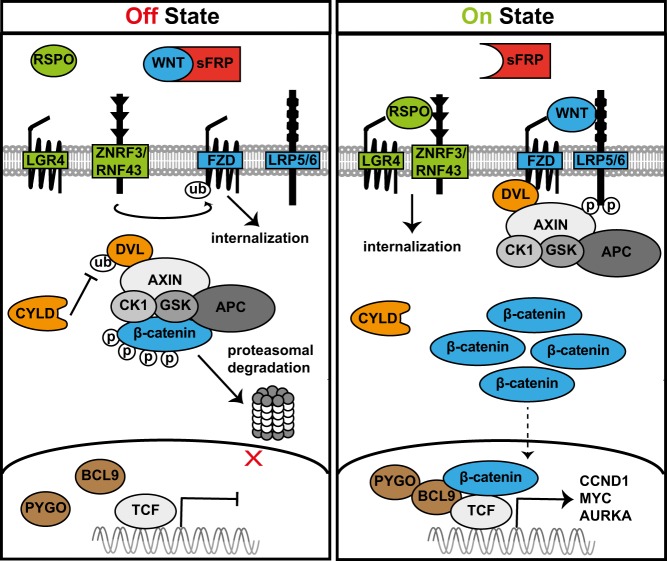
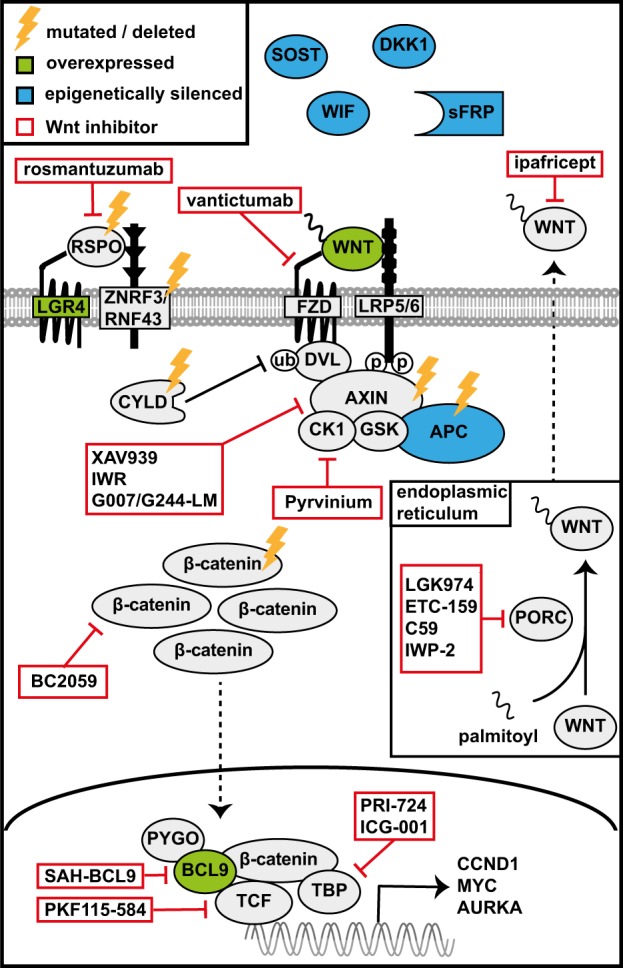
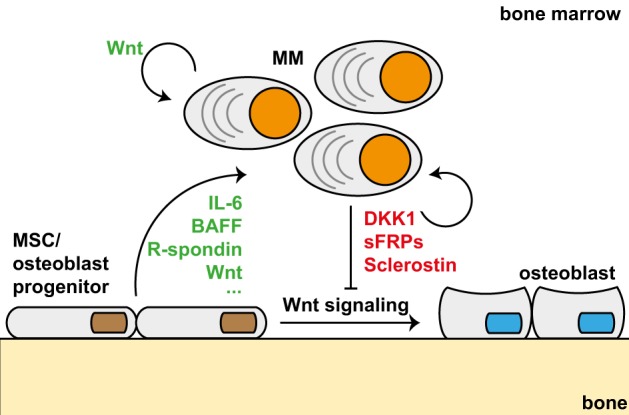
Aberrant activation of Wnt/β-catenin signaling plays a central role in the pathogenesis of a wide variety of malignancies and is typically caused by mutations in core Wnt pathway components driving constitutive, ligand-independent signaling. In multiple myelomas (MMs), however, these pathway intrinsic mutations are rare despite the fact that most tumors display aberrant Wnt pathway activity. Recent studies indicate that this activation is caused by genetic and epigenetic lesions of Wnt regulatory components, sensitizing MM cells to autocrine Wnt ligands and paracrine Wnts emanating from the bone marrow niche. These include deletion of the tumor suppressor CYLD , promotor methylation of the Wnt antagonists WIF1 , DKK1, DKK3 , and sFRP1 , sFRP2 , sFRP4 , sFRP5 , as well as overexpression of the co-transcriptional activator BCL9 and the R-spondin receptor LGR4. Furthermore, Wnt activity in MM is strongly promoted by interaction of both Wnts and R-spondins with syndecan-1 (CD138) on the MM cell-surface. Functionally, aberrant canonical Wnt signaling plays a dual role in the pathogenesis of MM: (I) it mediates proliferation, migration, and drug resistance of MM cells; (II) MM cells secrete Wnt antagonists that contribute to the development of osteolytic lesions by impairing osteoblast differentiation. As discussed in this review, these insights into the causes and consequences of aberrant Wnt signaling in MM will help to guide the development of targeting strategies. Importantly, since Wnt signaling in MM cells is largely ligand dependent, it can be targeted by drugs/antibodies that act upstream in the pathway, interfering with Wnt secretion, sequestering Wnts, or blocking Wnt (co)receptors.
Overview
The claims and statistics of this paper haven’t been checked yet.
Free: it reads the open-access text and checks the first 5 claims that cite a source we can check. Create a free account to check every claim.
Integrity signals
Registry
Cites
Statistics
Figures
Verification
Claims the paper makes
The claims and statistics of this paper haven’t been checked yet.
Free: it reads the open-access text and checks the first 5 claims that cite a source we can check. Create a free account to check every claim.
Claims other papers make about this one
Each is checked against this paper’s own text: does it say what the citing paper says it does?
The source backs part of the claim, not all of it — or backs it for a different population, condition or comparison.
In the citing paper
“The aberrant activation of the Wnt/β-catenin pathway is a key feature in the initiation and progression of MM.”
From Multiple myeloma: signaling pathways and targeted therapy (2024) · cites this paper as [35]
Experimental — accuracy not yet measuredThe source backs part of the claim, not all of it — or backs it for a different population, condition or comparison.
In the citing paper
“In the treatment of MM, the bone marrow microenvironment plays a significant role in activating the Wnt/β-catenin pathway through Wnt ligands secreted by bone marrow stromal cells (BMSCs).”
From Multiple myeloma: signaling pathways and targeted therapy (2024) · cites this paper as [35]
Experimental — accuracy not yet measuredThe cited source says what the claim attributes to it.
In the citing paper
“Targeting proteins that mediate these signaling pathways holds promise as a potential therapeutic approach for MM treatment [32, 35–39].”
From Multiple myeloma: signaling pathways and targeted therapy (2024) · cites this paper as [35]
The cited source says what the claim attributes to it.
In the citing paper
“Aberrant activation of these pathways contributes to the proliferation, survival, migration, and drug resistance of myeloma cells, making them attractive targets for therapeutic intervention.”
From Multiple myeloma: signaling pathways and targeted therapy (2024) · cites this paper as [35]
The cited source says what the claim attributes to it.
In the citing paper
“The dysregulated Wnt signaling in MM has a dual impact, firstly, it promotes the proliferation, migration, and drug resistance of MM cells; secondly, MM cells secrete Wnt antagonists that inhibit osteoblast differentiation, leading to the progression of osteolytic lesions by impeding bone formation [35, 38, 122].”
From Multiple myeloma: signaling pathways and targeted therapy (2024) · cites this paper as [35]
Self-check
Percentages, sums and reported differences re-computed from the paper’s own numbers.
The self-check needs the paper’s full text.
Citations
Cites
Wnt/β-catenin signaling and disease
Clevers, H., & Nusse, R. (2012) · Cell · doi:10.1016/j.cell.2012.05.012 · Cited by 5,554
Identification of c- MYC as a Target of the APC Pathway
He, T.-C., Sparks, A. B., Rago, C., Hermeking, H., Zawel, L., da Costa, L. T., Morin, P. J., Vogelstein, B., & Kinzler, K. W. (1998) · Science · doi:10.1126/science.281.5382.1509 · Cited by 4,566
Wnt/β-Catenin Signaling, Disease, and Emerging Therapeutic Modalities
Nusse, R., & Clevers, H. (2017) · Cell · doi:10.1016/j.cell.2017.05.016 · Cited by 4,342
β-Catenin regulates expression of cyclin D1 in colon carcinoma cells
Tetsu, O., & McCormick, F. (1999) · Nature · doi:10.1038/18884 · Cited by 3,601
Functional interaction of β-catenin with the transcription factor LEF-1
Behrens, J., von Kries, J. P., Kühl, M., Bruhn, L., Wedlich, D., Grosschedl, R., & Birchmeier, W. (1996) · Nature · doi:10.1038/382638a0 · Cited by 2,912
Palumbo, A., & Anderson, K. (2011) · New England Journal of Medicine · doi:10.1056/nejmra1011442 · Cited by 2,326
Wnt proteins are lipid-modified and can act as stem cell growth factors
Willert, K., Brown, J. D., Danenberg, E., Duncan, A. W., Weissman, I. L., Reya, T., Yates, J. R., & Nusse, R. (2003) · Nature · doi:10.1038/nature01611 · Cited by 2,257
Raje, N., & Anderson, K. C. (2000) · Current Treatment Options in Oncology · doi:10.1007/s11864-000-0017-x · Cited by 2,163
A role for Wnt signalling in self-renewal of haematopoietic stem cells
Reya, T., Duncan, A. W., Ailles, L., Domen, J., Scherer, D. C., Willert, K., Hintz, L., Nusse, R., & Weissman, I. L. (2003) · Nature · doi:10.1038/nature01593 · Cited by 2,159
WNT signaling in bone homeostasis and disease: From human mutations to treatments
Baron, R., & Kneissel, M. (2013) · Nature Medicine · doi:10.1038/nm.3074 · Cited by 2,093
Cited by
Items 101–188 of 188
Huyền, N. T. T., Ngoc, N. T., Giang, N. H., Trang, D. T., Hạnh, H. H., Binh, V. D., Giảng, N. V., Canh, N. X., & Xuân, N. T. (2023) · PLoS ONE · doi:10.1371/journal.pone.0283586 · Cited by 12
“Attenuated expression of CYLD is correlated with a poor prognosis in multiple myelomas [13] and leukemia/lymphoma [11,14].”
BackgroundENO1 promotes trophoblast invasion regulated by E2F8 in recurrent miscarriage
Liu, Z., Wang, C., Tang, Y., Zhang, X., Pei, J., Liu, H., Yu, Y., & Gu, W. (2024) · The FASEB Journal · doi:10.1096/fj.202302032rr · Cited by 7
Papatsirou, M., Kontos, C. K., Ntanasis‐Stathopoulos, I., Malandrakis, P., Theodorakakou, F., Liacos, C., Mavrianou‐Koutsoukou, N., Fotiou, D., Migkou, M., Gavriatopoulou, M., et al. (2024) · eJHaem · doi:10.1002/jha2.903 · Cited by 7
Recent Advances in β-catenin/BCL9 protein–protein Interaction Inhibitors
Zhang, H., Bao, Y., Liu, C., Li, J., Zhu, D., & Zhang, Q. (2021) · Future Medicinal Chemistry · doi:10.4155/fmc-2020-0357 · Cited by 8
Distinct miRNA Expression Signatures of Primary and Secondary Central Nervous System Lymphomas
Sebestyén, E., Nagy, Á., Marosvári, D., Rajnai, H., Kajtár, B., Deák, B., Matolcsy, A., Brandner, S., Storhoff, J. J., Chen, N., et al. (2021) · Journal of Molecular Diagnostics · doi:10.1016/j.jmoldx.2021.11.005 · Cited by 8
Senthilathiban, D. P., Kuduvalli, S. S., Biswas, I., Bhavani, K., Kumar, A. B., Thomas, J. M., & Anitha, T. S. (2023) · Fundamental and Clinical Pharmacology · doi:10.1111/fcp.12932 · Cited by 7
Wang, Y., Xu, L., Liu, Y., Hu, Y., Shi, Q., Jin, L., Yang, L., Wang, P., Zhang, K., Huang, X., et al. (2020) · International Journal of Hematology · doi:10.1007/s12185-020-03016-3 · Cited by 7
Xu, J., Wang, Y., Li, P., Chen, C., Jiang, Z., Wang, X., & Liu, P. (2023) · British Journal of Haematology · doi:10.1111/bjh.19088 · Cited by 6
Song, L., Zhang, R., Pan, L., Mi, Q., Yang, Y., Wang, X., Ma, Y., Shen, S., Li, B., Li, Y., et al. (2025) · International Journal of Cancer · doi:10.1002/ijc.35418 · Cited by 6
Zhang, X., Schalke, B. C. G., Kvell, K., Kriegsmann, K., Kriegsmann, M., Graeter, T. P., Preißler, G., Ott, G., Kurz, K. S., Bulut, E. L., et al. (2022) · Frontiers in Oncology · doi:10.3389/fonc.2022.920871 · Cited by 7
Sfrp2 regulates the WNT/β-catenin pathway to slow the development of aldosterone-producing adenoma
Yang, E., Ding, C., Zhu, X., Zhang, J., Zhang, W., Zhao, Y., Zhang, J., & Lin, X. (2023) · Cardiovascular Diagnosis and Therapy · doi:10.21037/cdt-23-105 · Cited by 5
“As an antagonist of the WNT gene, Sfrp2 plays a role in various tumors by inhibiting the signal transduction of the WNT pathway (29,30).”
Zhang, Y., Yao, G., Yang, X., Qiu, T., & Wang, S. (2022) · Journal of Oncology · doi:10.1155/2022/1399697 · Cited by 8
Zhou, R., Yin, L., Zhang, X., & Zhu, K. (2024) · In Vitro Cellular & Developmental Biology - Animal · doi:10.1007/s11626-024-00945-9 · Cited by 5
“SFRP, the first discovered Wnt antagonist, functions as a cancer-inhibiting factor in various human cancers (van Andel et al .”
Bioactive Compounds from Herbal Medicine Targeting Multiple Myeloma
Cotoraci, C. A., Ciceu, A., Sasu, A., Miuţescu, E., & Hermenean, A. O. (2021) · Applied Sciences · doi:10.3390/app11104451 · Cited by 7
Qiu, X., Wu, X. F., & He, W. (2022) · Advances in Clinical and Experimental Medicine · doi:10.17219/acem/147268 · Cited by 6
Li, L., Liu, J., Du, J., Jiang, H., He, H., Lü, J., Qiang, W., Hou, N., Guo, P., Zhuang, Y., et al. (2022) · Oncology Reports · doi:10.3892/or.2022.8410 · Cited by 6
Structure and function of Pygo in organ development dependent and independent Wnt signalling
Shi, Y., Wu, X., Zhu, S., Huang, H., Zhuang, J., Yuan, H., Yuan, W., & Zhu, P. (2020) · Biochemical Society Transactions · doi:10.1042/bst20200393 · Cited by 5
What are the roles of global DNA and APC 2 gene promotor hypermethylation in multiple myeloma?
Pehlıvan, S., Serin, İ., Nursal, A. F., Oyacı, Y., Gündeş, İ., & Pehlıvan, M. (2021) · Molecular Biology Reports · doi:10.1007/s11033-021-06813-z · Cited by 5
Mardani, M., Rashedi, S., Keykhaei, M., Farrokhpour, H., Azadnajafabad, S., Tavolinejad, H., & Rezaei, N. (2021) · Pathology - Research and Practice · doi:10.1016/j.prp.2021.153726 · Cited by 5
The role of epigenetic modifications in hematological cancers
Ilic, J., Bold, A., & Knop, S. T. (2026) · Frontiers in Oncology · doi:10.3389/fonc.2026.1744018 · Cited by 4
Liu, D., Wu, K., Xi-Yan, Z. A. N. G., Lu, J., Liu, M., Li, C., & Gao, L. (2023) · Technology and Health Care · doi:10.3233/thc-230527 · Cited by 4
“The DKK1 is an essential agent in the DKK family [12] and is differently expressed in many malignancies, like non-small cell lung cancer cell [13], colorectal adenoma-carcinoma [14], hepatocellular carcinoma [15], and lymphoma [16].”
Sex-specific dysregulation of exosomal non-coding RNAs drives multiple myeloma progression
Maleknia, S., Benam, S. R., Ahmann, G. J., Fonseca, R., Jelinek, D. F., & Shahbazi, R. (2025) · Blood Cancer Journal · doi:10.1038/s41408-025-01362-1 · Cited by 5
Elucidation of molecular basis of osteolytic bone lesions in advanced multiple myeloma
Shin, D., Kim, M.-J., Chun, S., Kim, D. C., Lee, C., Ahn, K., Jung, E., Kim, D., Lee, B., Hwang, D., et al. (2024) · Haematologica · doi:10.3324/haematol.2023.283784 · Cited by 7
“16 Dysregulation of WNT pathway by DKK1, secreted from MM cells, affects the BM microenvironment, leading to altered bone homeostasis and osteolytic bone disease.”
Dall’Olio, D., Magnani, F., Casadei, F., Matteuzzi, T., Curti, N., Merlotti, A., Simonetti, G., Porta, M. G. D., Remondini, D., Tarozzi, M. E., et al. (2024) · International Journal of Molecular Sciences · doi:10.3390/ijms252413588 · Cited by 6
Downregulation of LEF1 Impairs Myeloma Cell Growth Through Modulating CYLD/NF-κB Signaling
Zhang, G., Miao, F., Liu, K., Wu, J., & Xu, J. (2021) · Technology in Cancer Research & Treatment · doi:10.1177/15330338211034270 · Cited by 5
“As a member of deubiquitinase family, CYLD can modulate various physiological processes, spanning from immune response and inflammation to cell-cycle progression as well as osteoclastogenesis.(24) In agreement with the previous finding in colon cancer cells,(15) we found LEF1 gene silencing dramatically enhanced endog…”
BackgroundGhosal, S., & Banerjee, S. (2022) · Medical Oncology · doi:10.1007/s12032-022-01651-w · Cited by 6
Spaan, I., van Nieuwenhuijzen, N., Kimman, T., Rockx-Brouwer, D., Tieland, R. G., Maurice, M. M., Minnema, M. C., Raymakers, R. A. P., & Peperzak, V. (2023) · Blood Advances · doi:10.1182/bloodadvances.2022008442 · Cited by 4
Potential role for the tumor suppressor CYLD in brain and notochord development
Li, T., Wang, Y., Li, D., Zhou, J., Zhang, B., & He, X. (2021) · Thoracic Cancer · doi:10.1111/1759-7714.13973 · Cited by 4
Sabol, H. M., Anloague, A., Kaur, J., Bustamante-Gomez, C., Khan, S., Paxton, B. C., Nester, M. R., Hackney, J., Diaz‐delCastillo, M., Mann, D. C., et al. (2025) · Experimental Hematology and Oncology · doi:10.1186/s40164-025-00699-4 · Cited by 6
Gordon, B. K., Muhowski, E. M., Singh, J., Ravikrishnan, J., Peris-Cuesta, A., Rohena, D. D., Sanchez, J. R., Thangavadivel, S., Benrashid, S., He, A., et al. (2025) · Blood Cancer Discovery · doi:10.1158/2643-3230.bcd-25-0114 · Cited by 3
Xin, X., Fan, C., Sheng, R., Li, X. C., Zhu, X., Huang, Y., Seraji, H. R., Urazbaeva, D., Atamuratova, Z., & Ubaydullaevna, A. D. (2026) · Clinical and Experimental Medicine · doi:10.1007/s10238-026-02050-5 · Cited by 4
Deciphering epigenetic crosstalk in multiple myeloma pathogenesis and treatment
Alipoor, S. D., Shrestha, M., Liu, A., & Chang, H. (2026) · Clinical Epigenetics · doi:10.1186/s13148-026-02109-w · Cited by 3
Gu, W., Tong, J., Fu, R., Sun, T., Ju, M., Zhao, Y., Wang, D., Gao, J., Liu, J., Gao, Y., et al. (2023) · British Journal of Haematology · doi:10.1111/bjh.18669 · Cited by 2
DNA methylation biomarkers for predicting lymph node metastasis in colorectal cancer
Sun, Y., Kong, D., Zhang, Q., Xiang, R., Lu, S., Feng, L., & Zhang, H. (2024) · Clinical & Translational Oncology · doi:10.1007/s12094-024-03601-6 · Cited by 3
“SFRP1 and SFRP2, antagonists of this pathway [79], have been shown to be hypermethylated in CRC tissues with LNM [52, 65], suggesting that silencing their expression may contribute to LNM by activating WNT signaling.”
Xie, W., Li, X., Chen, H., Chu, J.-L., Zhang, L., Tang, B., Huang, W., Li, L., Lin, J., & Dong, Y. (2024) · Cancer Medicine · doi:10.1002/cam4.70477 · Cited by 3
Adami, G., Montanari, F., Fassio, A., Pollastri, F., Piccinelli, A., Benini, C., Pasetto, E., Tugnolli, M., Gatti, D., Rossini, M., et al. (2025) · Journal of Bone and Mineral Research · doi:10.1093/jbmr/zjaf110 · Cited by 3
“9,10 A contrasting observation is seen with denosumab, an anti-resorptive agent targeting RANKL.”
Ghosal, S., & Banerjee, S. (2022) · Leukemia & lymphoma/Leukemia and lymphoma · doi:10.1080/10428194.2022.2087064 · Cited by 4
“Cellular proliferation, migration, and drug resistance by aberrant activation of Wnt signaling pathway in MM patients have been shown by recent studies [25].”
ResultMiao, H., Li, X., Liang, Y., Tang, H., Song, Z., & Nie, S. (2023) · Frontiers in Cardiovascular Medicine · doi:10.3389/fcvm.2023.1139122 · Cited by 3
Identification of MicroRNAs With In Vivo Efficacy in Multiple Myeloma-related Xenograft Models
Weidle, U. H., & Nopora, A. (2020) · Cancer Genomics & Proteomics · doi:10.21873/cgp.20192 · Cited by 3
Nallur, G. (2022) · Research Square · doi:10.21203/rs.3.rs-1547607/v1 · Cited by 3
Bergiers, I., Köse, M. C., Skerget, S., Malfait, M., Fourneau, N., Ellis, J.-C., Vanhoof, G., Smets, T., Verbist, B. M. P., Maeyer, D. D., et al. (2025) · PLoS Genetics · doi:10.1371/journal.pgen.1011848 · Cited by 8
Zhang, J., & Zhang, R. (2024) · Medicine · doi:10.1097/md.0000000000037624 · Cited by 2
A possible role of WNT5A expression in papulosquamous skin diseases
Elfar, N. N., Mohamed, L., Hasby, E. A., & Kassem, H. (2020) · Indian Journal of Dermatopathology and Diagnostic Dermatology · doi:10.4103/ijdpdd.ijdpdd_59_19 · Cited by 2
Gene Methylation and Silencing of WIF1 Is a Frequent Genetic Abnormality in Mantle Cell Lymphoma
Alshareef, A., Peters, A., Gélébart, P., Chen, W., & Lai, R. L. (2021) · International Journal of Molecular Sciences · doi:10.3390/ijms22020893 · Cited by 2
Challenges and limitations in the studies of glycoproteins: A computational chemist's perspective
Balli, O. I., Uversky, V. N., Durdağı, S., & Coskuner‐Weber, O. (2021) · Proteins Structure Function and Bioinformatics · doi:10.1002/prot.26242 · Cited by 2
“As another example, we can consider multiple myeloma cancer, for which specific studies aimed at the activity of Dickkopf WNT signaling pathway inhibitor 1 (DKK1) glycoprotein, which is secreted from the cancerous tissues and has a positive effect on metastasis, and whose structure can be used in counter therapy.(30)”
BackgroundEnukashvily, N. I., Belik, L. A., Semenova, N. Y., Kostroma, I. I., Motyko, E., Gritsaev, S. V., Бессмельцев, С. С., Sidorkevich, S. V., & Мартынкевич, И. С. (2023) · Genes · doi:10.3390/genes14051097 · Cited by 3
“One of the factors affecting signaling activity may be the level of WNT ligands secreted by the cells of both MM and the tumor microenvironment, including MSCs [43].”
BackgroundBCL9 enhances the development of cervical carcinoma by deactivating CPEB3/EGFR axis
Du, Y., Zhao, F., Zhang, N., Yu, G., Shi, L., & Li, J. (2022) · Tropical Journal of Pharmaceutical Research · doi:10.4314/tjpr.v21i6.2 · Cited by 1
“BCL8 is a vital regulator during embryo development, stem cell growth and tumorigenesis [12-14].”
BackgroundLY6E as a new prognostic biomarker of multiple myeloma-related bone disease
Shi, M., Li, J., Wang, J., Yao, Y., Shen, X., Xia, Y., & Xu, J. (2025) · Scientific Reports · doi:10.1038/s41598-025-91413-1 · Cited by 2
“Furthermore, the outcome of upregulated DEGs in KEGG pathway enrichment was correlated with the Wnt signaling pathway, which played a fundamental role in the growth and differentiation of osteoblasts 18 .”
Gupta, H., Raghubansi, A., Bharat, Sharma, K., Zutshi, K., Panchal, P., Bhattacharya, S., Ranjan, P., Puri, G., & Saini, N. (2025) · BMC Cancer · doi:10.1186/s12885-025-14045-8 · Cited by 1
“1C. APC and CSNK1A1 are important components of the destruction complex and are known to negatively regulate canonical Wnt-signaling by phosphorylating β-catenin in the absence of Wnt ligands, leading to its ubiquitination and ultimate proteasomal destruction [20].”
Guadagno, L., Schütt, J., Brinkert, K., Schenk, T., & Brioli, A. (2025) · Leukemia & lymphoma/Leukemia and lymphoma · doi:10.1080/10428194.2025.2575438 · Cited by 3
“…lipoprotein receptor-related protein 5/6 (lRP5/6) co-receptor in MScs, preventing wnt binding and thus MScs differentiation in osteoblasts [29]. the dual targeting of DKK1 and SOSt in MBD models resulted in better skeletal outcomes when compared to single agents approaches, which were…”
Qin, M., Liu, X., Luo, Q., & Cai, R. (2025) · PLoS ONE · doi:10.1371/journal.pone.0336775 · Cited by 1
Yasin, D., Sami, N., Khalid, S., Zaheer, U., Rasool, Z., Faridi, F., Asmar, M., & Uddin, S. (2026) · Leukemia & lymphoma/Leukemia and lymphoma · doi:10.1080/10428194.2025.2612628 · Cited by 1
Forster, S., Reinhardt, C., Boy, M., Wegmüller, A., Hinrichsen, A., Schürch, C. M., Bruehl, F. K., Fend, F., Tzankov, A., Kronig, M.-N., et al. (2026) · Leukemia · doi:10.1038/s41375-026-02899-1 · Cited by 1
Wnt pathway in bone: knowledge structure and hot spots from 1993 to 2022
Liu, T., Zhao, J., Zhang, X., Wang, Y., Wang, W., & Song, J. (2023) · Frontiers in Physiology · doi:10.3389/fphys.2023.1279423 · Cited by 1
Secreted Frizzled – Related Protein 4 y el cáncer de mama
Ramírez-Tortosa, M. C., Gálvez-Navas, J. M., & Pérez-Ramírez, C. (2021) · Ars Pharmaceutica (Internet) · doi:10.30827/ars.v62i4.21740 · Cited by 1
Prasad, M., Ghosh, M., Kumar, R., Buragohain, L., Kumari, A., & Prasad, G. (2022) · Springer eBooks · doi:10.1007/978-981-15-9411-3_81 · Cited by 1
The Role of 1q21 Gain on the Prognosis of Multiple Myeloma
Xing, D., Wang, J. H., & Zhao, Z. G. (2021) · journal of nutritional oncology · doi:10.34175/jno202102001 · Cited by 1
Aripaka, K. (2019) · DiVA at Umeå University (Umeå University)
Pehlivan, M., & Sercan, H. O. (2021) · Çukurova medical journal (Online)/Çukurova medical journal · doi:10.17826/cumj.795833
Prasad, M., Ghosh, M., Kumar, R., Buragohain, L., Kumari, A., & Prasad, G. (2021) · Springer eBooks · doi:10.1007/978-981-15-4501-6_81-1
Zhang, X., Chen, H., Huang, X., Xu, H., Yuan, H., Yu, J., & Gao, Y. (2022) · SSRN Electronic Journal · doi:10.2139/ssrn.4047882
Expression of the WNT Family Genes in Multiple Myeloma Patients with Different Chemotherapy Response
Enukashvili, N. I., Белик, Л. А., Kostroma, I. I., Семенова, Н. Ю., Балашова, В. А., Барам, Д. В., Грицаев, С. В., Бессмельцев, С. С., Sidorkevich, S. V., & Мартынкевич, И. С. (2024) · Clinical oncohematology · doi:10.21320/2500-2139-2023-16-3-294-302
Lymphangiogenesis and Stem Cells in Hematological Malignancies
Vidal, I., Bernal, M., García‐Caballero, M., Quesada, A. R., Martínez-Poveda, B., & Medina, M. Á. (2024) · Elsevier eBooks · doi:10.1016/b978-0-443-15717-2.00062-7
Downregulated PDIA3P1 lncRNA Impairs Trophoblast Phenotype by Regulating Snail and SFRP1 in PE
Ding, Z., Wu, L., Sun, Y., Zhu, Y., Zuo, Q., Yuan, L., Wang, C., Sun, L., Xu, Y., & Zhang, Y. (2024) · Analytical Cellular Pathology · doi:10.1155/2024/8972022
Gene Expression Profiling to Predict Prognostic Biomarkers for Relapse in Multiple Myeloma
Elahi, S., & Fazal, S. (2024) · Advancements in Life Sciences · doi:10.62940/als.v11i2.1900
Hu, S., Gao, X., Zhu, Y., Shi, F., & Huang, L. (2025) · Cell Biochemistry and Biophysics · doi:10.1007/s12013-025-01674-w
“Numerous studies unveil that the activation of the Wnt/ β -catenin cascade is broadly involved in the tumorigenesis of diverse malignancies, including MM [38, 39].”
Belik, L. A., Enukashvily, N. I., Semenova, N. Y., Ostromyshenskii, D. I., Motyko, E., Kirienko, A., Kustova, D. V., Бессмельцев, С. С., Sidorkevich, S. V., & Мартынкевич, И. С. (2025) · International Journal of Molecular Sciences · doi:10.3390/ijms26136236 · Cited by 1
Nestin in multiple myeloma: emerging insights into a potential therapeutic target
Wu, Y., Luo, J., Zhou, Y., Lin, J., Wu, Y., Zheng, S., Chen, J., Che, F., Wang, Q., & Zhong, L. (2025) · Frontiers in Oncology · doi:10.3389/fonc.2025.1596928 · Cited by 2
EZH2 regulates the invasiveness of gastric cancer probably by activating the Wnt signaling pathway
Ghazvini, H., Forghanifard, M. M., Zarrinpour, V., & Mirkalantari, S. (2025) · Egyptian Journal of Medical Human Genetics · doi:10.1186/s43042-025-00776-7
“This pathway can act as either an autocrine or paracrine cell signaling mechanism [17].”
Li, H., Chen, Y., Gregorová, M., Yang, T., Zhang, X., Yu, X., Wang, Z., Hua, H., Ye, L., Qi, X., et al. (2025) · Neoplasia · doi:10.1016/j.neo.2025.101242
“Among them, ICG-001 showed a strong inhibiting effect in Wnt reporter assays, which reflects the downstream activation of Wnt signaling [17,40].”
Self-citationYang, Q., Zhao, S., Shi, Z., Cao, L., Liu, J., Pan, T., Zhou, D., & Zhang, J. (2021) · Figshare · doi:10.6084/m9.figshare.14379488
Alquraishi, M., Chahed, S. L., Alani, D., Puckett, D. L., Dowker-Key, P. D., Hubbard, K. N., Zhao, Y., Kim, J. Y., Nodit, L., Fatima, H., et al. (2022) · Figshare · doi:10.6084/m9.figshare.19930440
Meng, S., Liu, H., Gu, L., Wang, J., Wang, J., & Zhao, W. (2026) · Annals of Hematology · doi:10.1007/s00277-026-06740-8
CYLD Limits Neutrophil-Driven Psoriatic Inflammation
Fa, Z., Huang, Z., Shang, Y., Yang, Y., Xie, Q., & Yang, R. (2026) · Inflammation · doi:10.1007/s10753-026-02452-3
“Studies across various model systems have revealed that these pro - cesses are mediated through CYLD’s regulation of cellular pathways, including the NF-κB [ 14 ], Wnt [ 15 ], and TGF-β pathways [16].”
Fu, Y., Gu, W., Lin, Y., Cao, Y., Luo, J., Yu, H., Dai, J., Zheng, Z., & Liu, Y. (2026) · Frontiers in Bioscience-Landmark · doi:10.31083/fbl46992
The role of KPNA3 in multiple myeloma: implications for targeting nuclear import
Luo, H., Mi, Z., Huang, J., Wen, J., He, S., Yang, H., Zhang, Y., Li, L., Liu, X., Zhai, X., et al. (2026) · APOPTOSIS · doi:10.1007/s10495-026-02292-4
Genomic profiling enables personalized strategies to overcome drug resistance in multiple myeloma
Zeng, F., & Taki, A. (2026) · Discover Oncology · doi:10.1007/s12672-026-04812-9
“The BMM also plays a critical role in angiogenesis, providing essential nutrients and oxygen, and modulating the immune response, often creating an immunosuppressive environment that further contributes to MM cell escape from both host immunity and immune-targeting therapies [22, 23].”
Lesire, L., Deprez-Poulain, R. F., Bosc, D., Leroux, F., Landry, V., Ourabah, S., Tardy, M., Maillard, C., Gealageas, R., Dumont, J., et al. (2026) · British Journal of Pharmacology · doi:10.1111/bph.70407
“The drug combination also is associated with a down-regulation of the Wnt / β -catenin pathway, a pathway involved in the pathophysiology of MM (Dutta-Simmons et al., 2009; Spaan et al., 2018; van Andel et al., 2019).”
L’hétérogénéité épigénétique intra et inter-patient dans le cas du myélome multiple
Derrien, J. (2020) · theses.fr (ABES) · doi:10.70675/ca772ec8z1a68z4ddazb884z2870e3f967b6
Dissecting the role of long non-coding RNA in multiple myeloma
Zocchi, S. (2024) · theses.fr (ABES) · doi:10.70675/22f35f26z6442z47d6z8cdaz153527b5df6e
Regulatory mechanisms of LGR4 on cancer and cancer stem cell properties
Yang, J., Zhao, J., Liu, H., Luo, S., Hu, J., & Yunhua, P. (2026) · Discover Oncology · doi:10.1007/s12672-026-05249-w
“…of the co-receptor LGR4, the transcriptional co-activator BCL9, heparan sulfate proteoglycans (HSPGs), sumoylation of β-catenin, and mutation or deletion of the negative regulator CYLD promote aberrant activation of the Wnt pathway, mediating proliferation and contributing to drug resistance [103].”
Liu, Y., Geng, Y.-Q., Jiang, L., & Liu, A. (2026) · Cell Cycle · doi:10.1080/15384101.2026.2686804
Non-coding RNAs as predictive factors of oncological outcomes in plasma cell myeloma
Bogdanowicz-Żeleźniak, A., Moniczewska, N., Korpysz, M., Szudy‐Szczyrek, A., & Mlak, R. (2026) · Oncology Reviews · doi:10.3389/or.2026.1868835
“It is worth noting that miR-30b-5p overexpression is strongly associated with a good response and is linked to prolonged TTP in PCM patients (81,82).”
Ceylan, A., Hu, X., Hatipoğlu, T., Nainkwi, F. C., Payzın, B., Özsan, G. H., Demiriz, I. Ş., Şeker, Ö., Kakci, M., Öztürk, O. C., et al. (2026) · International Journal of Molecular Sciences · doi:10.3390/ijms27177648
“MM pathogenesis is driven by a complex interplay of genetic and epigenetic alterations that dysregulate key signaling pathways controlling plasma cell proliferation and survival [4].”
Bhatt, M., Zanwar, S., Kumar, S. K., & Rajkumar, S. V. (2026) · American Journal of Hematology · doi:10.1002/ajh.70487
“The expression of these genes is associated with osteolytic lesions in MM and may explain lower extent of osteolytic disease in pPCL [34, 35].”
A single-cell atlas of multiple myeloma defines malignant archetypes and proliferative states
Zada, M., Kurilovich, A., Shapira, N., Wang, S.-Y., Sharet-Eshed, R., Kfir‐Erenfeld, S., Schlossberg, M., Zorde, E., Asherie, N., Gur, C., et al. (2026) · Nature Genetics · doi:10.1038/s41588-026-02725-5
Diagnostic and prognostic value of bone metabolism biomarkers in newly diagnosed plasma cell myeloma
Korpysz, M., Bogdanowicz-Żeleźniak, A., Kowalska-Kępczyńska, A., Szudy‐Szczyrek, A., Chocholska, S., Morawska, M., Siwiec, J., Hus, M., Giannopoulos, K., & Mlak, R. (2026) · Scientific Reports · doi:10.1038/s41598-026-70071-x
Exploratory Identification of Potential Serum Biomarkers Associated with Relapse in Multiple Myeloma
Chantkran, W., Laoruangroj, C., Roytrakul, S., Nathalang, O., Arnutti, P., Chaisakul, J., & Apipongrat, D. (2026) · Diseases · doi:10.3390/diseases14100380
Metadata
- Authors
- van Andel, H., Kocemba, K. A., Spaargaren, M., & Pals, S. T.
- Affiliations
- Amsterdam UMC Location University of Amsterdam (NL)
- Corresponding author
- Pals, Steven T.
- Venue
- Leukemia
- Published
- 2019-02-15
- Volume
- 33
- Issue
- 5
- Pages
- 1063-1075
- ISSN
- 0887-6924 (ISSN-L)
- 1476-5551
- PMC
- PMC6756057
- OpenAlex
- W2913434193
- Semantic Scholar
- dae5444f35c2d5a06a453e98f9836163ac7a4a81
- Cited by
- 188
- References
- 117
- Citations by year
- 2026: 19 · 2025: 22 · 2024: 21 · 2023: 23 · 2022: 32 · 2021: 41 · 2020: 23 · 2019: 7
- FWCI
- 2.27
- Type
- journal article
- Language
- en
- Open access
- hybrid
- doi.org
- Licence
- cc-by
- creativecommons.org/licenses/by/4.0 (tdm)
- creativecommons.org/licenses/by/4.0 (vor)
- Locations
- Leukemia (publishedVersion, cc-by)
- PubMed Central (publishedVersion, cc-by)
- PubMed (publishedVersion)
- Pure Amsterdam UMC (publishedVersion, other-oa)
- Data Archiving and Networked Services (DANS) (submittedVersion)
- Funders
- KWF Kankerbestrijding
- Topics
- Life Sciences › Biochemistry, Genetics and Molecular Biology › Molecular Biology › Wnt/β-catenin signaling in development and cancer
- Health Sciences › Medicine › Hematology › Multiple Myeloma Research and Treatments
- Life Sciences › Biochemistry, Genetics and Molecular Biology › Molecular Biology › Hedgehog Signaling Pathway Studies
- Keywords
- multiple myeloma, Wnt/β-catenin signaling, Wnt antagonists, WIF1, DKK1, DKK3, secreted frizzled-related proteins, BCL9, LGR4, R-spondin, bone marrow microenvironment, osteolytic lesions, drug resistance, Wnt inhibitors, Wnt secretion
- MeSH terms
- Animals, Antineoplastic Agents, Bone Diseases, Humans, Ligands, Multiple Myeloma, Protein Binding, Protein Processing, Post-Translational, Biomarkers, Gene Expression Regulation, Neoplastic, Gene Deletion, Autocrine Communication, Paracrine Communication, Gene Silencing, Epigenesis, Genetic, Molecular Targeted Therapy, Wnt Signaling Pathway
About these checks
Registry, retraction, Cites and statistics results are computed, not judged, with one exception: a printed reference that no index lists is read once by a model before it counts as a citation error. Claims are extracted by a model and kept only when their quote appears verbatim in the text; each cited source is then checked, with a model’s help, for whether it says what the claim relies on. Those verdicts can be wrong — read the claim’s quote and the cited source before relying on one.
Statistics and arithmetic are recomputed, not judged.
Confidence bands are shown only for fields calibrated on our annotated test set. None is calibrated yet, so no band is shown.
What counts as a claim ›How we measure confidence ›How we check this ›
Are you an author, or do you see a problem with this page? Request a review
Data sources
Bibliographic data: Semantic Scholar, OpenAlex, Crossref.
Contains information from the Semantic Scholar Academic Graph Datasets, made available under the ODC Attribution License (ODC-BY 1.0).
Semantic Scholar’s data is described in: Kinney, R., et al. (2023). The Semantic Scholar Open Data Platform. arXiv:2301.10140.
