

Aberrant Wnt signaling in multiple myeloma: molecular mechanisms and targeting options
Open accessThe DOI matches its Crossref record; 113 of the 117 references it cites were found in a registry or an index.
Abstract
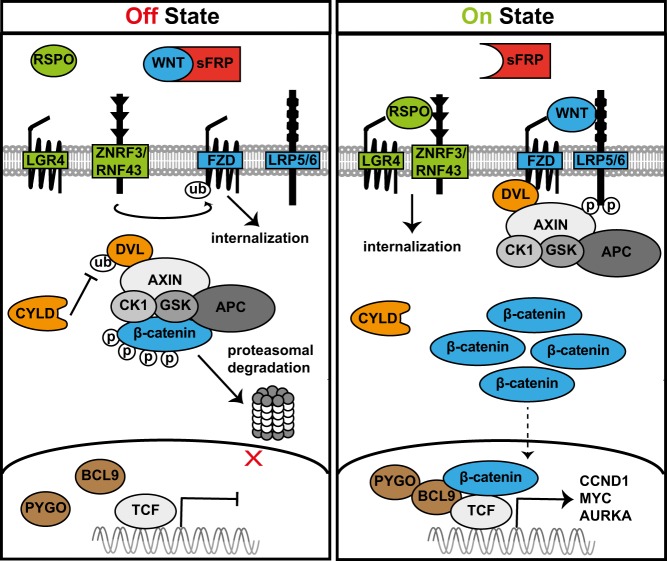
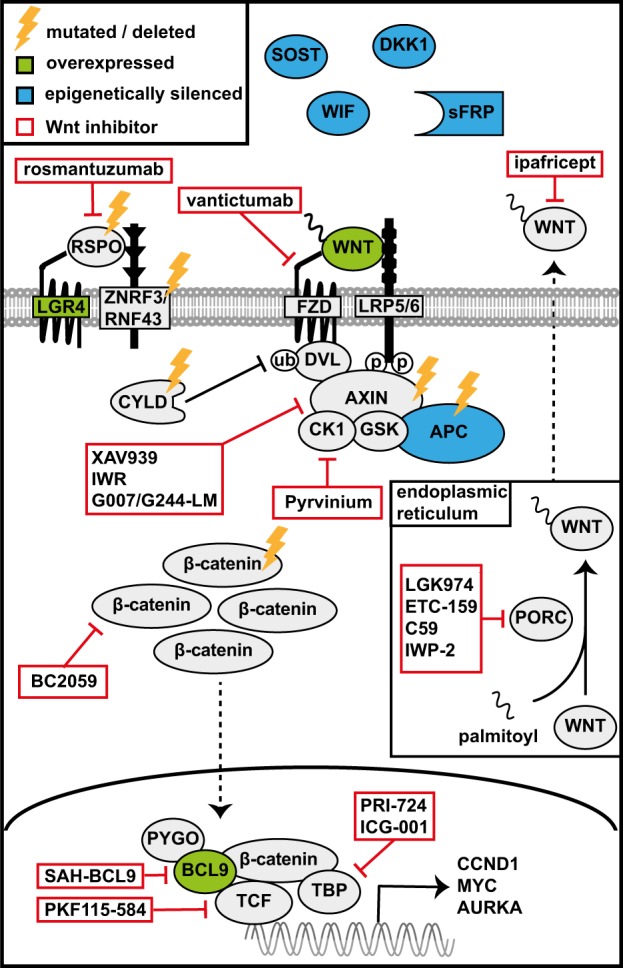
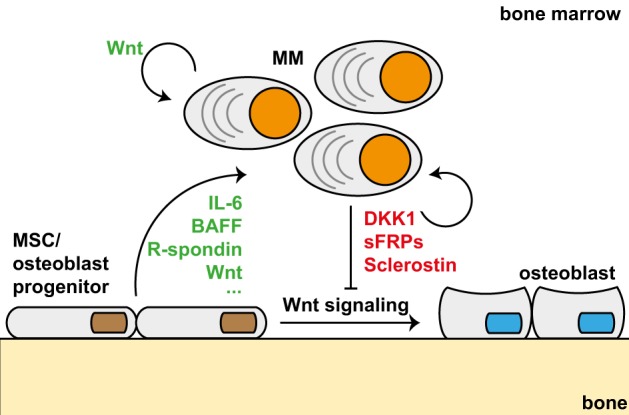
Aberrant activation of Wnt/β-catenin signaling plays a central role in the pathogenesis of a wide variety of malignancies and is typically caused by mutations in core Wnt pathway components driving constitutive, ligand-independent signaling. In multiple myelomas (MMs), however, these pathway intrinsic mutations are rare despite the fact that most tumors display aberrant Wnt pathway activity. Recent studies indicate that this activation is caused by genetic and epigenetic lesions of Wnt regulatory components, sensitizing MM cells to autocrine Wnt ligands and paracrine Wnts emanating from the bone marrow niche. These include deletion of the tumor suppressor CYLD , promotor methylation of the Wnt antagonists WIF1 , DKK1, DKK3 , and sFRP1 , sFRP2 , sFRP4 , sFRP5 , as well as overexpression of the co-transcriptional activator BCL9 and the R-spondin receptor LGR4. Furthermore, Wnt activity in MM is strongly promoted by interaction of both Wnts and R-spondins with syndecan-1 (CD138) on the MM cell-surface. Functionally, aberrant canonical Wnt signaling plays a dual role in the pathogenesis of MM: (I) it mediates proliferation, migration, and drug resistance of MM cells; (II) MM cells secrete Wnt antagonists that contribute to the development of osteolytic lesions by impairing osteoblast differentiation. As discussed in this review, these insights into the causes and consequences of aberrant Wnt signaling in MM will help to guide the development of targeting strategies. Importantly, since Wnt signaling in MM cells is largely ligand dependent, it can be targeted by drugs/antibodies that act upstream in the pathway, interfering with Wnt secretion, sequestering Wnts, or blocking Wnt (co)receptors.
Overview
The claims and statistics of this paper haven’t been checked yet.
Free: it reads the open-access text and checks the first 5 claims that cite a source we can check. Create a free account to check every claim.
Integrity signals
Registry
Cites
Statistics
Figures
Verification
Claims the paper makes
The claims and statistics of this paper haven’t been checked yet.
Free: it reads the open-access text and checks the first 5 claims that cite a source we can check. Create a free account to check every claim.
Claims other papers make about this one
Each is checked against this paper’s own text: does it say what the citing paper says it does?
The source backs part of the claim, not all of it — or backs it for a different population, condition or comparison.
In the citing paper
“The aberrant activation of the Wnt/β-catenin pathway is a key feature in the initiation and progression of MM.”
From Multiple myeloma: signaling pathways and targeted therapy (2024) · cites this paper as [35]
Experimental — accuracy not yet measuredThe source backs part of the claim, not all of it — or backs it for a different population, condition or comparison.
In the citing paper
“In the treatment of MM, the bone marrow microenvironment plays a significant role in activating the Wnt/β-catenin pathway through Wnt ligands secreted by bone marrow stromal cells (BMSCs).”
From Multiple myeloma: signaling pathways and targeted therapy (2024) · cites this paper as [35]
Experimental — accuracy not yet measuredThe cited source says what the claim attributes to it.
In the citing paper
“Targeting proteins that mediate these signaling pathways holds promise as a potential therapeutic approach for MM treatment [32, 35–39].”
From Multiple myeloma: signaling pathways and targeted therapy (2024) · cites this paper as [35]
The cited source says what the claim attributes to it.
In the citing paper
“Aberrant activation of these pathways contributes to the proliferation, survival, migration, and drug resistance of myeloma cells, making them attractive targets for therapeutic intervention.”
From Multiple myeloma: signaling pathways and targeted therapy (2024) · cites this paper as [35]
The cited source says what the claim attributes to it.
In the citing paper
“The dysregulated Wnt signaling in MM has a dual impact, firstly, it promotes the proliferation, migration, and drug resistance of MM cells; secondly, MM cells secrete Wnt antagonists that inhibit osteoblast differentiation, leading to the progression of osteolytic lesions by impeding bone formation [35, 38, 122].”
From Multiple myeloma: signaling pathways and targeted therapy (2024) · cites this paper as [35]
Self-check
Percentages, sums and reported differences re-computed from the paper’s own numbers.
The self-check needs the paper’s full text.
Citations
Cites
Wnt/β-catenin signaling and disease
Clevers, H., & Nusse, R. (2012) · Cell · doi:10.1016/j.cell.2012.05.012 · Cited by 5,554
Identification of c- MYC as a Target of the APC Pathway
He, T.-C., Sparks, A. B., Rago, C., Hermeking, H., Zawel, L., da Costa, L. T., Morin, P. J., Vogelstein, B., & Kinzler, K. W. (1998) · Science · doi:10.1126/science.281.5382.1509 · Cited by 4,566
Wnt/β-Catenin Signaling, Disease, and Emerging Therapeutic Modalities
Nusse, R., & Clevers, H. (2017) · Cell · doi:10.1016/j.cell.2017.05.016 · Cited by 4,342
β-Catenin regulates expression of cyclin D1 in colon carcinoma cells
Tetsu, O., & McCormick, F. (1999) · Nature · doi:10.1038/18884 · Cited by 3,601
Functional interaction of β-catenin with the transcription factor LEF-1
Behrens, J., von Kries, J. P., Kühl, M., Bruhn, L., Wedlich, D., Grosschedl, R., & Birchmeier, W. (1996) · Nature · doi:10.1038/382638a0 · Cited by 2,912
Palumbo, A., & Anderson, K. (2011) · New England Journal of Medicine · doi:10.1056/nejmra1011442 · Cited by 2,326
Wnt proteins are lipid-modified and can act as stem cell growth factors
Willert, K., Brown, J. D., Danenberg, E., Duncan, A. W., Weissman, I. L., Reya, T., Yates, J. R., & Nusse, R. (2003) · Nature · doi:10.1038/nature01611 · Cited by 2,257
Raje, N., & Anderson, K. C. (2000) · Current Treatment Options in Oncology · doi:10.1007/s11864-000-0017-x · Cited by 2,163
A role for Wnt signalling in self-renewal of haematopoietic stem cells
Reya, T., Duncan, A. W., Ailles, L., Domen, J., Scherer, D. C., Willert, K., Hintz, L., Nusse, R., & Weissman, I. L. (2003) · Nature · doi:10.1038/nature01593 · Cited by 2,159
WNT signaling in bone homeostasis and disease: From human mutations to treatments
Baron, R., & Kneissel, M. (2013) · Nature Medicine · doi:10.1038/nm.3074 · Cited by 2,093
Cited by
Clara, J. A., Monge, C., Yang, Y., & Takebe, N. (2020) · Nature Reviews Clinical Oncology · doi:10.1038/s41571-019-0293-2 · Cited by 752
Wnt/β-catenin signaling pathway in carcinogenesis and cancer therapy
Song, P., Gao, Z., Bao, Y., Chen, L., Huang, Y., Liu, Y., Dong, Q., & Wei, X. (2024) · Journal of Hematology & Oncology · doi:10.1186/s13045-024-01563-4 · Cited by 382
“The physiological mechanism associated with DKK1 involves the activation of DKK1 transcription through the Wnt/β-catenin signaling pathway, which then binds to LRP5/6 and blocks the recognition of Wnt ligands, thereby forming a negative feedback loop that inhibits Wnt signaling [352].”
BackgroundWnt/β-catenin signaling components and mechanisms in bone formation, homeostasis, and disease
Hu, L., Chen, W., Qian, A., & Li, Y.-P. (2024) · Bone Research · doi:10.1038/s41413-024-00342-8 · Cited by 359
Wnt signaling pathways in biology and disease: mechanisms and therapeutic advances
Xue, C., Chu, Q., Shi, Q., Zeng, Y., Lu, J., & Li, L. (2025) · Signal Transduction and Targeted Therapy · doi:10.1038/s41392-025-02142-w · Cited by 281
WNT Signaling in Tumors: The Way to Evade Drugs and Immunity
Martin-Orozco, E., Sanchez-Fernandez, A., Ortiz-Parra, I., & Ayala-San Nicolas, M. (2019) · Frontiers in Immunology · doi:10.3389/fimmu.2019.02854 · Cited by 286
The Role of Tumor Microenvironment in Multiple Myeloma Development and Progression
García-Ortiz, A., Rodríguez-García, Y., Encinas, J., Maroto-Martín, E., Castellano, E., Teixidó, J., & Martínez-López, J. (2021) · Cancers · doi:10.3390/cancers13020217 · Cited by 238
Qin, K., Yu, M., Fan, J., Wang, H., Zhao, P., Zhao, G., Zeng, W., Chen, C., Wang, Y., Wang, A., et al. (2024) · Genes & Diseases · doi:10.1016/j.gendis.2023.01.030 · Cited by 217
Yang, Q., Zhao, S., Shi, Z., Cao, L., Liu, J., Pan, T., Zhou, D., & Zhang, J. (2021) · Journal of Experimental & Clinical Cancer Research · doi:10.1186/s13046-021-01901-1 · Cited by 161
Wnt pathway modulators in cancer therapeutics: An update on completed and ongoing clinical trials
Neiheisel, A., Kaur, M., Ma, N., Havard, P., & Shenoy, A. K. (2022) · International Journal of Cancer · doi:10.1002/ijc.33811 · Cited by 96
Multiple myeloma: signaling pathways and targeted therapy
Lu, Q., Yang, D., Li, H., Niu, T., & Tong, A. (2024) · Molecular biomedicine · doi:10.1186/s43556-024-00188-w · Cited by 90
Boiarsky, R. P., Haradhvala, N. J., Alberge, J.-B., Sklavenitis‐Pistofidis, R., Mouhieddine, T. H., Zavidij, O., Shih, M., Firer, D. T., Miller, M. L., El‐Khoury, H., et al. (2022) · Nature Communications · doi:10.1038/s41467-022-33944-z · Cited by 86
Bispecific CS1-BCMA CAR-T cells are clinically active in relapsed or refractory multiple myeloma
Li, C., Xu, J. L., Luo, W., Liao, D., Xie, W., Wei, Q., Zhang, Y., Wang, X., Wu, Z., Kang, Y. J., et al. (2023) · Leukemia · doi:10.1038/s41375-023-02065-x · Cited by 80
Liu, Q., Song, J., Pan, Y., Shi, D., Yang, C., Wang, S., & Xiong, B. (2020) · International Journal of Biological Sciences · doi:10.7150/ijbs.40535 · Cited by 71
“processes through activation of canonical Wnt/βcatenin pathway and non-canonical pathways [9, 10].”
BackgroundSignaling Pathway Mediating Myeloma Cell Growth and Survival
Hideshima, T., & Anderson, K. C. (2021) · Cancers · doi:10.3390/cancers13020216 · Cited by 70
Exosome-mediated delivery of siRNA molecules in cancer therapy: triumphs and challenges
Ubanako, P., Mirza, S., Ruff, P., & Penny, C. (2024) · Frontiers in Molecular Biosciences · doi:10.3389/fmolb.2024.1447953 · Cited by 68
Deciphering spatial genomic heterogeneity at a single cell resolution in multiple myeloma
Merz, M., Merz, A. M. A., Wang, J., Wei, L., Hu, Q., Hutson, N., Rondeau, C., Celotto, K., Belal, A., Alberico, R. A., et al. (2022) · Nature Communications · doi:10.1038/s41467-022-28266-z · Cited by 79
Role of Wnt signaling in synaptic plasticity and memory
Narvaes, R. F., & Furini, C. R. G. (2021) · Neurobiology of Learning and Memory · doi:10.1016/j.nlm.2021.107558 · Cited by 69
Deng, L., Sun, J., Chen, X., Liu, L., & Wu, D. (2019) · Journal of Experimental & Clinical Cancer Research · doi:10.1186/s13046-019-1311-z · Cited by 63
“For example, in multiple myeloma, the inhibition of canonical Wnt signaling suppresses tumor growth and sensitizes cells to anti-tumor drugs [14].”
BackgroundRole of leptin and adiponectin in immune response and inflammation
Liu, C., & Li, X. (2025) · International Immunopharmacology · doi:10.1016/j.intimp.2025.115082 · Cited by 70
Zou, D., Chen, Y., Zhang, L., Yuan, X.-H., Zhang, Y., Inggawati, A., Nguyet, P. T. K., Gao, T., & Jin, C. (2020) · Genes & Diseases · doi:10.1016/j.gendis.2020.06.003 · Cited by 51
Wnt Signaling Inhibitors and Their Promising Role in Tumor Treatment
Pećina‐Šlaus, N., Aničić, S., Bukovac, A., & Kafka, A. (2023) · International Journal of Molecular Sciences · doi:10.3390/ijms24076733 · Cited by 61
WNT Signaling in Hematological Malignancies
Frenquelli, M., & Tonon, G. (2020) · Frontiers in Oncology · doi:10.3389/fonc.2020.615190 · Cited by 55
Chronic endometritis and reproductive failure: Role of syndecan‐1
Xu, Y., Mei, J., Diao, L., Li, Y., & Ding, L. (2020) · American Journal of Reproductive Immunology · doi:10.1111/aji.13255 · Cited by 53
Dickkopf-3: Current Knowledge in Kidney Diseases
Fang, X., Hu, J. R., Chen, Y., Shen, W., & Ke, B. (2020) · Frontiers in Physiology · doi:10.3389/fphys.2020.533344 · Cited by 50
“It has been demonstrated that DKK1, -2, and -4 directly interact with the Wnt/β-catenin pathway by binding Lrp-5/6 coreceptors (van Andel et al., 2019), while DKK3 neither binds Lrp nor Krm coreceptors, a ternary complex that leads to internalization and degradation of Lrp, at the cell surface…”
BackgroundCytokine-Mediated Dysregulation of Signaling Pathways in the Pathogenesis of Multiple Myeloma
Akhtar, S., Ali, T. A., Faiyaz, A., Khan, O. S., Raza, S. S., Kulinski, M., Omri, H. E., Bhat, A. A., & Uddin, S. (2020) · International Journal of Molecular Sciences · doi:10.3390/ijms21145002 · Cited by 44
Role of Sfrps in cardiovascular disease
Huang, A., & Huang, Y. (2020) · Therapeutic Advances in Chronic Disease · doi:10.1177/2040622320901990 · Cited by 47
Wu, X., Liu, Y., Zhang, E., Chen, J., Huang, X., Yan, H., Cao, W., Qu, J., Gu, H., Xu, R., et al. (2020) · Oxidative Medicine and Cellular Longevity · doi:10.1155/2020/6096391 · Cited by 47
“Recent studies have shown that aberrant canonical Wnt signaling mediates the proliferation, migration, and drug resistance of MM cells [20].”
BackgroundRole of 1q21 in Multiple Myeloma: From Pathogenesis to Possible Therapeutic Targets
Burroughs-Garcìa, J., Eufemiese, R. A., Storti, P., Sammarelli, G., Craviotto, L., Todaro, G., Toscani, D., Marchica, V., & Giuliani, N. (2021) · Cells · doi:10.3390/cells10061360 · Cited by 45
Song, S., Gao, F., Li, Q., Su, Q., Zhang, X., Xue, X., Wang, Z., Qian, C., Jin, Z., Li, B.-Z., et al. (2021) · Oncogene · doi:10.1038/s41388-021-01939-7 · Cited by 43
“Aberrant Wnt signaling plays a crucial role in the pathogenesis of MM [26, 27], but the mechanisms underlying aberrant Wnt activation are not fully understood.”
BackgroundPathogenesis and treatment of multiple myeloma
Yang, P., Qu, Y., Wang, M., Chu, B., Chen, W., Zheng, Y., Niu, T., & Qian, Z. (2022) · MedComm · doi:10.1002/mco2.146 · Cited by 54
Tissue-resident macrophages promote early dissemination of multiple myeloma via IL-6 and TNFα
Akhmetzyanova, I., Aaron, T., Galbo, P., Tikhonova, A., Dolgalev, I., Tanaka, M., Aifantis, I., Zheng, D., Zang, X., & Fooksman, D. (2021) · Blood Advances · doi:10.1182/bloodadvances.2021005327 · Cited by 39
“Strikingly, there were severe defects in growth or engraftment of myeloma cells in TNFa2/2 mice (Figure 3G), suggesting a major role for TNFa in the development of MM.”
BackgroundInfluentialLiu, Z., Wang, Y., Yuan, S., Wen, F., Liu, J., Zou, L., & Zhang, J. (2021) · Oncology Letters · doi:10.3892/ol.2021.12665 · Cited by 40
Molecular and immunological mechanisms of clonal evolution in multiple myeloma
Forster, S., Radpour, R., & Ochsenbein, A. F. (2023) · Frontiers in Immunology · doi:10.3389/fimmu.2023.1243997 · Cited by 45
“…signaling pathway that is often over-activated in MM, partially driven by the autocrine release of Wnt ligands and/or by the (over-) expression of distinct molecules such as Syndecan-1 (CD138) or Leucine Rich Repeat Containing G Protein-Coupled Receptor 4 (LGR4) on cancer cells (44 – 46, 115).”
BackgroundBenzene and its effects on cell signaling pathways related to hematopoiesis and leukemia
Lu, P. C. W., Shahbaz, S., & Winn, L. M. (2020) · Journal of Applied Toxicology · doi:10.1002/jat.3961 · Cited by 47
LGR4: A New Receptor Member in Endocrine and Metabolic Diseases
Zhang, N., Yuan, M., & Wang, J. (2023) · Endocrine Reviews · doi:10.1210/endrev/bnad003 · Cited by 47
Decoding the role of miRNAs in multiple myeloma pathogenesis: A focus on signaling pathways
Yehia, A. M., Elsakka, E. G. E., Abulsoud, A. I., Abdelmaksoud, N. M., Elshafei, A., Elkhawaga, S. Y., Ismail, A., Mokhtar, M. M., El‐Mahdy, H. A., Hegazy, M., et al. (2023) · Pathology - Research and Practice · doi:10.1016/j.prp.2023.154715 · Cited by 39
The Landscape of Signaling Pathways and Proteasome Inhibitors Combinations in Multiple Myeloma
Paradžik, T., Bandini, C., Mereu, E., Labrador, M., Taìana, E., Amodio, N., Neri, A., & Piva, R. (2021) · Cancers · doi:10.3390/cancers13061235 · Cited by 39
“The frequent deregulation of the canonical Wnt/β-catenin pathway in MM by genetic and epigenetic means suggested that it could represent a suitable target for therapeutic intervention [224].”
BackgroundMannino, F., Pallio, G., Corsaro, R., Minutoli, L., Altavilla, D., Vermiglio, G., Allegra, A., Eid, A. H., Bitto, A., Squadrito, F., et al. (2021) · Cancers · doi:10.3390/cancers13225741 · Cited by 47
Li, B., Song, X., Guo, W., Hou, Y., Hu, H., Ge, W., Fan, T., Han, Z., Li, Z., Yang, P. B., et al. (2021) · Frontiers in Cardiovascular Medicine · doi:10.3389/fcvm.2021.753711 · Cited by 38
Relationship between SDC1 and cadherin signalling activation in cancer
Liao, S., Liu, C., Zhu, G.-Y., Wang, K., Yang, Y. C., & Wang, C. (2019) · Pathology - Research and Practice · doi:10.1016/j.prp.2019.152756 · Cited by 43
Boughanem, H., Cabrera-Mulero, A., Hernández‐Alonso, P., Clemente‐Postigo, M., Casanueva, F. F., Tinahones, F. J., Morcillo, S., Crujeiras, A. B., & Macías‐González, M. (2020) · Clinical Epigenetics · doi:10.1186/s13148-020-00875-9 · Cited by 32
“Uninterrupted activation of the Wnt pathway is often caused by alterations in any of their components, either by mutational or epigenetic changes and therefore leads to uncontrolled cancer cell proliferation and differentiation [4, 5].”
Delivery of costimulatory blockade to lymph nodes promotes transplant acceptance in mice
Zhao, J., Jung, S., Li, X., Li, L., Kasinath, V., Zhang, H., Naini, S. M., Mardini, A., Sabiu, G., Hwang, Y., et al. (2022) · Journal of Clinical Investigation · doi:10.1172/jci159672 · Cited by 33
Ren, Z., Spaargaren, M., & Pals, S. T. (2021) · Blood · doi:10.1182/blood.2020008188 · Cited by 35
Self-citationZhang, Y., Yu, X., Sun, R., Min, J., Tang, X., Lin, Z., Xie, S., Li, X., Lu, S.-F., Tian, Z., et al. (2022) · Clinical and Translational Medicine · doi:10.1002/ctm2.684 · Cited by 30
Xu, Y., Guo, J. R., Liu, J., Xie, Y., Li, X., Jiang, H., Wang, J., Peng, Z., Wang, J., Wang, S., et al. (2021) · Oncogene · doi:10.1038/s41388-020-01590-8 · Cited by 29
Targeting Protein Kinases in Blood Cancer: Focusing on CK1α and CK2
Spinello, Z., Fregnani, A., Tubi, L. Q., Trentin, L., Piazza, F., & Manni, S. (2021) · International Journal of Molecular Sciences · doi:10.3390/ijms22073716 · Cited by 33
“Importantly, the Wnt ligand is provided in a paracrine manner in the bone marrow microenvironment [72].”
BackgroundAlimohammadi, M., Rahimzadeh, P., Khorrami, R., Bonyadi, M., Daneshi, S., Nabavi, N., Raesi, R., Farani, M. R., Dehkhoda, F., Taheriazam, A., et al. (2024) · Pathology - Research and Practice · doi:10.1016/j.prp.2024.155401 · Cited by 29
Ablation of VLA4 in multiple myeloma cells redirects tumor spread and prolongs survival
Hathi, D., Chanswangphuwana, C., Cho, N., Fontana, F., Maji, D., Ritchey, J., O’Neal, J., Ghai, A., Duncan, K., Akers, W. J., et al. (2022) · Scientific Reports · doi:10.1038/s41598-021-03748-0 · Cited by 30
Multiple Myeloma Bone Disease: Implication of MicroRNAs in Its Molecular Background
Παπανώτα, Α.-Μ., Karousi, P., Kontos, C. K., Ntanasis‐Stathopoulos, I., Scorilas, A., & Terpos, E. (2021) · International Journal of Molecular Sciences · doi:10.3390/ijms22052375 · Cited by 26
“This correlation can be explained by the fact that miR-181a-5p has been shown to promote MM progression, by contributing to the downregulation of cyclin D1 (CCND1) [120], which is also negatively regulated in MMBD due to the deregulation of the WNT signaling pathway [121].”
BackgroundQiao, B., Chen, L., Cheng, Q., Wang, G., Li, Q., Zhang, B., Li, J., Hu, Y., & Sun, C. (2022) · Carcinogenesis · doi:10.1093/carcin/bgac097 · Cited by 24
Rojas, E. A., Corchete, L. A., Mateos, M., García‐Sánz, R., Misiewicz-Krzemińska, I., & Gutierrez, N. C. (2019) · Blood Cancer Journal · doi:10.1038/s41408-019-0253-1 · Cited by 25
Lycorine targets multiple myeloma stem cell‐like cells by inhibition of Wnt/β‐catenin pathway
Wang, H., Gong, Y., Liang, L., Xiao, L., Yi, H. J., Ye, M., Roy, M., Xia, J., Zhou, W. H., Yang, C., et al. (2020) · British Journal of Haematology · doi:10.1111/bjh.16477 · Cited by 22
“…(Behrens et al., 1996; Molenaar et al., 1996). b-catenin is tightly controlled by several highly regulated processes, including ligand-receptor interactions, protein stability, nuclear translocation, and transcriptional activity (Kramps et al., 2002; Yang et al., 2013; van Andel et al., 2019).”
BackgroundAuner, H. W., Gavriatopoulou, M., Delimpasi, S., Simonova, M., Špıčka, I., Pour, L., Dimopoulos, M. A., Kriachok, I., Pylypenko, H., Leleu, X. P., et al. (2021) · American Journal of Hematology · doi:10.1002/ajh.26172 · Cited by 22
Hou, J., Su, H., Kuang, X., Qin, W., Liu, K., Pan, K., Zhang, B., Yang, S., Yang, S., Xiao, P., et al. (2022) · Frontiers in Endocrinology · doi:10.3389/fendo.2022.922070 · Cited by 25
“The figure shows that the top five institutions were the University of Arkansas for Medical Sciences (99), Sichuan University (95), Washington University (90), Harvard University (87), and The University of Tokyo (54).”
BackgroundSilencing RRM2 inhibits multiple myeloma by�targeting the Wnt/β‑catenin signaling pathway
Liu, X., Peng, J., Zhou, Y., Xie, B., & Wang, J. (2019) · Molecular Medicine Reports · doi:10.3892/mmr.2019.10465 · Cited by 33
Hou, J., Qian, J., Li, Z., Gong, A., Zhong, S., Li, Q., Qian, S., Zhang, Y., Dou, R., Li, R., et al. (2020) · OncoTargets and Therapy · doi:10.2147/ott.s235944 · Cited by 27
Podocyte specific deletion of PKM2 ameliorates LPS-induced podocyte injury through beta-catenin
Alquraishi, M. I., Chahed, S. L., Alani, D., Puckett, D. L., Dowker-Key, P. D., Hubbard, K. N., Zhao, Y., Kim, J. Y., Nodit, L. M., Fatima, H., et al. (2022) · Cell Communication and Signaling · doi:10.1186/s12964-022-00884-6 · Cited by 18
“It is worth mentioning that phosphorylation of β-catenin on one of the three glycogen synthase kinase-3 (GSK-3) target sites [serine 33 (S33) and 37 (S37), and threonine 41 (T41)] has been previously demonstrated to promote the polyubiquitination of β-catenin on lysine 19 (K19) and its subsequent proteasomal degradati…”
BackgroundAass, K. R., Nedal, T. M. V., Tryggestad, S. S., Haukås, E., Slørdahl, T. S., Waage, A., Standal, T., & Mjelle, R. (2022) · Scientific Reports · doi:10.1038/s41598-022-16448-0 · Cited by 20
The diagnostic, prognostic role and molecular mechanism of miR-328 in human cancer
Wang, Z., Xie, W., & Guan, H. (2022) · Biomedicine & Pharmacotherapy · doi:10.1016/j.biopha.2022.114031 · Cited by 19
Zhou, H., Mu, Y., Ma, C., Zhang, Z., Tao, C., & Wang, D. (2024) · ACS Nano · doi:10.1021/acsnano.3c09033 · Cited by 16
Zhou, F., Wang, D., Zhou, N., Chen, H., Shi, H., Peng, R., Wei, W., & Wu, L. (2021) · Frontiers in Oncology · doi:10.3389/fonc.2021.648189 · Cited by 17
Expression Profiles of tRNA-Derived Fragments and Their Potential Roles in Multiple Myeloma
Xu, C., & Fu, Y. (2021) · OncoTargets and Therapy · doi:10.2147/ott.s302594 · Cited by 16
Savvidou, I., Khong, T. T., Whish, S., Carmichael, I., Sepehrizadeh, T., Mithraprabhu, S., Horrigan, S. K., de Veer, M., & Spencer, A. G. (2022) · Cancers · doi:10.3390/cancers14030840 · Cited by 18
“The pivotal role of the Wnt canonical pathway in haemopoietic stem cell (HSC) maintenance [24] has raised theoretical concerns in relation to the therapeutic applicability of Wnt pathway inhibitors.”
BackgroundWnt regulation of hematopoietic stem cell development and disease
Carpenter, K. A., Thurlow, K. E., Craig, S. E. L., & Grainger, S. J. (2023) · Current topics in developmental biology/Current Topics in Developmental Biology · doi:10.1016/bs.ctdb.2022.12.001 · Cited by 20
Mechanistic insights into bone destruction in multiple myeloma: Cellular and molecular perspectives
Lungu, O., Toscani, D., & Giuliani, N. (2025) · Journal of bone oncology · doi:10.1016/j.jbo.2025.100668 · Cited by 23
“In MM, this balance is disrupted as malignant PCs and the surrounding BMSCs secrete Wnt inhibitors such as DKK1, sFRPs (secreted Fzd-related proteins), and SOST, leading to reduced OB activity and increased OC-mediated bone resorption [97].”
InfluentialSoma, E., Yamayoshi, A., Toda, Y., Mishima, Y., Hosogi, S., & Ashihara, E. (2022) · Cancers · doi:10.3390/cancers14030566 · Cited by 17
SOX12 promotes the growth of multiple myeloma cells by enhancing Wnt/β-catenin signaling
Gao, Y., Li, L., Hou, L., Niu, B., Ru, X., & Zhang, D. (2020) · Experimental Cell Research · doi:10.1016/j.yexcr.2020.111814 · Cited by 16
Lu, W., Ni, Z., Tong, M., Jiang, S., Zhang, J., Feng, C., Han, C., Yuan, T., Wang, N., Zhao, J., et al. (2020) · Biochemical and Biophysical Research Communications · doi:10.1016/j.bbrc.2019.12.109 · Cited by 15
Zhang, H., Liu, C., Zhu, D., Zhang, Q., & Li, J. (2022) · Journal of Medicinal Chemistry · doi:10.1021/acs.jmedchem.2c01016 · Cited by 16
Breaking Barriers: The Role of the Bone Marrow Microenvironment in Multiple Myeloma Progression
Agafonova, A., Prinzi, C., Salinaro, A. T., Ledda, C., Cosentino, A., Cambria, M. T., Anfuso, C. D., & Lupo, G. (2025) · International Journal of Molecular Sciences · doi:10.3390/ijms26157301 · Cited by 14
“Notably, Wnt signaling upregulates oncogenes such as CCND1 and MYC , while downregulating regulators like Aurora Kinase A ( AURKA ) [75].”
Wani, A. K., Prakash, A., Sena, S., Akhtar, N., Singh, R., Chopra, C., Ariyanti, E. E., Mudiana, D., Yulia, N. D., & Rahayu, F. (2024) · Critical Reviews in Oncology/Hematology · doi:10.1016/j.critrevonc.2024.104291 · Cited by 16
Impact of aging on gene expression response to x-ray irradiation using mouse blood
Broustas, C. G., Duval, A. J., & Amundson, S. A. (2021) · Scientific Reports · doi:10.1038/s41598-021-89682-7 · Cited by 14
Effects of watercress extract fraction on R‐spondin 1‐mediated growth of human hair
Hashimoto, M., Kawai, Y., Masutani, T., Tanaka, K., Ito, K., & Iddamalgoda, A. (2022) · International Journal of Cosmetic Science · doi:10.1111/ics.12764 · Cited by 13
Luo, S., Su, T., Zhou, X., Hu, W., & Hu, J. (2022) · The FASEB Journal · doi:10.1096/fj.202200354 · Cited by 15
Research progress on pharmacological effects and mechanisms of cepharanthine and its derivatives
Shi, L., Wang, S., Zhang, S., Wang, J., Chen, Y., Li, Y., Liu, Z., Zhao, S., Wei, B., & Zhang, L. (2023) · Naunyn-Schmiedeberg s Archives of Pharmacology · doi:10.1007/s00210-023-02537-y · Cited by 15
Jia, L., Shang, S., Yang, Y., Zhang, J., & Lin, X. (2023) · Lipids in Health and Disease · doi:10.1186/s12944-023-01965-2 · Cited by 13
Germline predisposition in multiple myeloma
Rodrigues, F. M., Jasielec, J. K., Perpich, M., Kim, A., Moma, L., Li, Y., Storrs, E. P., Wendl, M. C., Jayasinghe, R. G., Fiala, M. A., et al. (2024) · iScience · doi:10.1016/j.isci.2024.111620 · Cited by 12
“109,110 Mutations in this gene are associated with aberrant Wnt signaling in several cancers, including MM. 105,107,111–114 We also found a 62 year/o male in the familial cohort with both a splice and stop-gain P variants in ATM and CHEK2, respectively (c.444 + 1G>A and p.Q2641*) (Figure 3D).”
Morphogens and growth factor signalling in the myeloma bone-lining niche
Morris, E. V., & Edwards, C. M. (2021) · Cellular and Molecular Life Sciences · doi:10.1007/s00018-021-03767-0 · Cited by 15
“or by either of two ‘non-canonical’ β-catenin-independent signalling cascades, termed the Wnt/PCP and Wnt/Ca2+ signalling pathway [22, 23].”
Background(2021) · PubMed Central · Cited by 11
Myeloma Bone Disease: The Osteoblast in the Spotlight
Andrews, R. E., Brown, J. E., Lawson, M. A., & Chantry, A. (2021) · Journal of Clinical Medicine · doi:10.3390/jcm10173973 · Cited by 11
Karousi, P., Παπανώτα, Α.-Μ., Artemaki, P. I., Liacos, C., Patseas, D., Mavrianou‐Koutsoukou, N., Liosi, A.-A., Kalioraki, M., Ntanasis‐Stathopoulos, I., Gavriatopoulou, M., et al. (2021) · Biomedicines · doi:10.3390/biomedicines9121811 · Cited by 11
“Moreover, MM cells secrete WNT inhibitors, leading to aberrant WNT-mediated signaling, an aspect associated with MM pathogenesis [59].”
BackgroundMithraprabhu, S., Kalff, A., Gartlan, K. H., Savvidou, I., Khong, T. T., Ramachandran, M., Cooke, R. E., Bowen, K. M., Hill, G. R., Reynolds, J., et al. (2020) · British Journal of Haematology · doi:10.1111/bjh.17080 · Cited by 12
Age-dependent transcriptomic profiles of leukocytes in pediatric population
Koutsogiannaki, S., Kim, S., & Yuki, K. (2023) · Clinical Immunology · doi:10.1016/j.clim.2023.109728 · Cited by 11
Zhang, X., Chen, H., Huang, X., Xu, H., Li, Y., Yuan, H., Yu, J. X., & Gao, Y. (2022) · Biomedicine & Pharmacotherapy · doi:10.1016/j.biopha.2022.113182 · Cited by 10
Xu, L., Yao, Y., Lu, T., & Jiang, L. (2022) · PubMed Central · Cited by 10
Cao, Y.-J., Zheng, Y.-H., Li, Q., Zheng, J., Ma, L.-T., Zhao, C.-J., & Li, T. (2022) · Journal of Oncology · doi:10.1155/2022/4705654 · Cited by 10
“For example, inhibition of the Wnt signalling pathway blocks tumour progression while obstructing osteogenesis [22].”
BackgroundDing, T., Deng, R., & Huang, T. (2020) · Oncology Letters · doi:10.3892/ol.2020.12390 · Cited by 10
JMJD2C triggers the growth of multiple myeloma cells via activation of β‑catenin
Lv, M., & Liu, Q. (2021) · Oncology Reports · doi:10.3892/or.2021.7934 · Cited by 10
Li, H., Zhou, Y., Wang, M., Wang, H., Zhang, Y., Peng, R., Zhang, R., Zhang, M., Zhang, M., Qiu, P., et al. (2021) · Cancer Science · doi:10.1111/cas.15120 · Cited by 10
Zhang, C., Chu, M., Fan, Y., Wu, L., Li, Z., Ma, X., & Zhuang, W. (2020) · Journal of Clinical Laboratory Analysis · doi:10.1002/jcla.23400 · Cited by 10
Hu, S., Xu, J., Cui, W., Jin, H.-R., Wang, X., & Maimaitiyiming, Y. (2025) · Biomolecules · doi:10.3390/biom15050702 · Cited by 11
Sutanto, H., Sandra, D. Y., Safira, A., Adytia, G. J., Waitupu, A., & Romadhon, P. Z. (2025) · Medical Oncology · doi:10.1007/s12032-025-02807-0 · Cited by 12
“MM cells often hijack the Wnt/R-spondin/ LGR4 axis, stabilizing Wnt receptors and enhancing their sensitivity to Wnt ligands produced by osteoblasts [57, 58].”
Li, W., Fu, H., Zhu, L., Wang, W., Yang, W., Yang, W., Huang, H., Ding, B., Sun, J., & Tong, H. (2025) · Journal of Hazardous Materials · doi:10.1016/j.jhazmat.2025.139147 · Cited by 11
Malik, S., Sikander, M., Wahid, M., Dhasmana, A., Sarwat, M., Khan, S., Cobos, E., Yallapu, M. M., Jaggi, M., & Chauhan, S. C. (2024) · Cancer and Metastasis Reviews · doi:10.1007/s10555-024-10177-8 · Cited by 12
“Although colorectal malignancies were the first to show mutations in WNT signaling molecules such as β-catenin APC, AXIN, and WNT ligands, but these changes have been discovered in other varieties of solid tumors [123–129] and hematologic cancers, like multiple myeloma and leukemia [130–132].”
WNT11 is a direct target of early growth response protein 1
Kim, J., Jung, E., Ahn, S. S., Yeo, H., Lee, J., Seo, J. K., Lee, Y. H., & Shin, S. Y. (2020) · BMB Reports · doi:10.5483/bmbrep.2020.53.12.052 · Cited by 9
Zhao, P., & Zhao, X. L. (2021) · Journal of Clinical Laboratory Analysis · doi:10.1002/jcla.23924 · Cited by 9
Son, Y., Quan, K. T., Shin, S., Park, S., Na, M., & Oh, S. (2022) · Phytomedicine · doi:10.1016/j.phymed.2022.153971 · Cited by 8
Dysregulation of alternative splicing contributes to multiple myeloma pathogenesis
Song, S., Zhang, W., Li, Q., Wang, Z., Su, Q., Zhang, X., Li, B.-Z., & Zhuang, W. (2023) · British Journal of Cancer · doi:10.1038/s41416-022-02124-7 · Cited by 9
Huang, B., Liu, H., Chan, S., Liu, J., Gu, J., Chen, M., Kuang, L., Li, X., Zhang, X., & Li, J. (2023) · Medical Oncology · doi:10.1007/s12032-023-01960-8 · Cited by 10
Xie, C., Zhong, L., Luo, J., Luo, J., Wu, Y., Zheng, S., Jiang, L., Zhang, J., & Shi, Y. (2023) · Computers in Biology and Medicine · doi:10.1016/j.compbiomed.2023.107224 · Cited by 12
Metadata
- Authors
- van Andel, H., Kocemba, K. A., Spaargaren, M., & Pals, S. T.
- Affiliations
- Amsterdam UMC Location University of Amsterdam (NL)
- Corresponding author
- Pals, Steven T.
- Venue
- Leukemia
- Published
- 2019-02-15
- Volume
- 33
- Issue
- 5
- Pages
- 1063-1075
- ISSN
- 0887-6924 (ISSN-L)
- 1476-5551
- PMC
- PMC6756057
- OpenAlex
- W2913434193
- Semantic Scholar
- dae5444f35c2d5a06a453e98f9836163ac7a4a81
- Cited by
- 188
- References
- 117
- Citations by year
- 2026: 19 · 2025: 22 · 2024: 21 · 2023: 23 · 2022: 32 · 2021: 41 · 2020: 23 · 2019: 7
- FWCI
- 2.27
- Type
- journal article
- Language
- en
- Open access
- hybrid
- doi.org
- Licence
- cc-by
- creativecommons.org/licenses/by/4.0 (tdm)
- creativecommons.org/licenses/by/4.0 (vor)
- Locations
- Leukemia (publishedVersion, cc-by)
- PubMed Central (publishedVersion, cc-by)
- PubMed (publishedVersion)
- Pure Amsterdam UMC (publishedVersion, other-oa)
- Data Archiving and Networked Services (DANS) (submittedVersion)
- Funders
- KWF Kankerbestrijding
- Topics
- Life Sciences › Biochemistry, Genetics and Molecular Biology › Molecular Biology › Wnt/β-catenin signaling in development and cancer
- Health Sciences › Medicine › Hematology › Multiple Myeloma Research and Treatments
- Life Sciences › Biochemistry, Genetics and Molecular Biology › Molecular Biology › Hedgehog Signaling Pathway Studies
- Keywords
- multiple myeloma, Wnt/β-catenin signaling, Wnt antagonists, WIF1, DKK1, DKK3, secreted frizzled-related proteins, BCL9, LGR4, R-spondin, bone marrow microenvironment, osteolytic lesions, drug resistance, Wnt inhibitors, Wnt secretion
- MeSH terms
- Animals, Antineoplastic Agents, Bone Diseases, Humans, Ligands, Multiple Myeloma, Protein Binding, Protein Processing, Post-Translational, Biomarkers, Gene Expression Regulation, Neoplastic, Gene Deletion, Autocrine Communication, Paracrine Communication, Gene Silencing, Epigenesis, Genetic, Molecular Targeted Therapy, Wnt Signaling Pathway
About these checks
Registry, retraction, Cites and statistics results are computed, not judged, with one exception: a printed reference that no index lists is read once by a model before it counts as a citation error. Claims are extracted by a model and kept only when their quote appears verbatim in the text; each cited source is then checked, with a model’s help, for whether it says what the claim relies on. Those verdicts can be wrong — read the claim’s quote and the cited source before relying on one.
Statistics and arithmetic are recomputed, not judged.
Confidence bands are shown only for fields calibrated on our annotated test set. None is calibrated yet, so no band is shown.
What counts as a claim ›How we measure confidence ›How we check this ›
Are you an author, or do you see a problem with this page? Request a review
Data sources
Bibliographic data: Semantic Scholar, OpenAlex, Crossref.
Contains information from the Semantic Scholar Academic Graph Datasets, made available under the ODC Attribution License (ODC-BY 1.0).
Semantic Scholar’s data is described in: Kinney, R., et al. (2023). The Semantic Scholar Open Data Platform. arXiv:2301.10140.
