

Is psychosis a multisystem disorder? A meta-review of central nervous system, immune, cardiometabolic, and endocrine alterations in first-episode psychosis and perspective on potential models
Open accessThe DOI matches its Crossref record; 124 of the 124 references it cites were found in a registry or an index.
Abstract
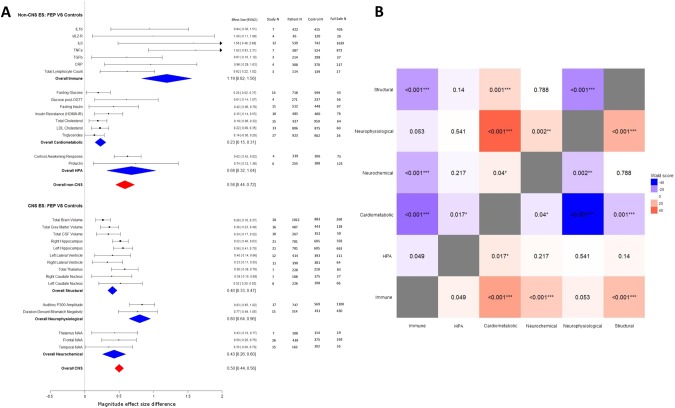
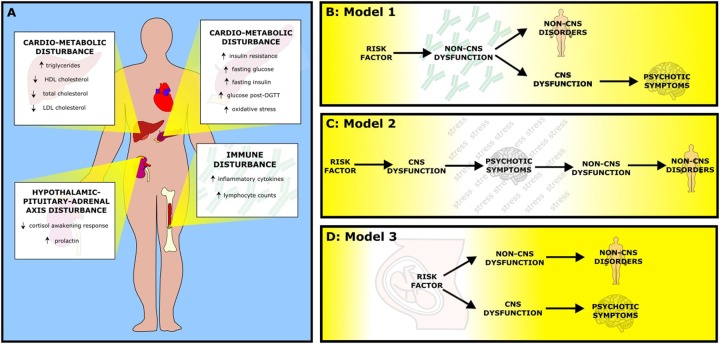
People with psychotic disorders show abnormalities in several organ systems in addition to the central nervous system (CNS); and this contributes to excess mortality. However, it is unclear how strong the evidence is for alterations in non-CNS systems at the onset of psychosis, how the alterations in non-CNS systems compare to those in the CNS, or how they relate to symptoms. Here, we consider these questions, and suggest potential models to account for findings. We conducted a systematic meta-review to summarize effect sizes for both CNS (focusing on brain structural, neurophysiological, and neurochemical parameters) and non-CNS dysfunction (focusing on immune, cardiometabolic, and hypothalamic-pituitary-adrenal (HPA) systems) in first-episode psychosis (FEP). Relevant meta-analyses were identified in a systematic search of Pubmed and the methodological quality of these was assessed using the AMSTAR checklist (A Measurement Tool to Assess Systematic Reviews). Case-control data were extracted from studies included in these meta-analyses. Random effects meta-analyses were re-run and effect size magnitudes for individual parameters were calculated, as were summary effect sizes for each CNS and non-CNS system. We also grouped studies to obtain overall effect sizes for non-CNS and CNS alterations. Robustness of data for non-CNS and CNS parameters was assessed using Rosenthal's fail-safe N. We next statistically compared summary effect size for overall CNSand overall non-CNS alterations, as well as for each organ system separately. We also examined how non-CNS alterations correlate CNS alterations, and with psychopathological symptoms. Case-control data were extracted for 165 studies comprising a total sample size of 13,440. For people with first episode psychosis compared with healthy controls, we observed alterations in immune parameters (summary effect size: g = 1.19), cardiometabolic parameters (g = 0.23); HPA parameters (g = 0.68); brain structure (g = 0.40); neurophysiology (g = 0.80); and neurochemistry (g = 0.43). Grouping non-CNS organ systems together provided an effect size for overall non-CNS alterations in patients compared with controls (g = 0.58), which was not significantly different from the overall CNS alterations effect size (g = 0.50). However, the summary effect size for immune alterations was significantly greater than that for brain structural (P < 0.001) and neurochemical alterations (P < 0.001), while the summary effect size for cardiometabolic alterations was significantly lower than neurochemical (P = 0.04), neurophysiological (P < 0.001), and brain structural alterations (P = 0.001). The summary effect size for HPA alterations was not significantly different from brain structural (P = 0.14), neurophysiological (P = 0.54), or neurochemical alterations (P = 0.22). These outcomes remained similar in antipsychotic naive sensitivity analyses. We found some, but limited and inconsistent, evidence that non-CNS alterations were associated with CNS changes and symptoms in first episode psychosis. Our findings indicate that there are robust alterations in non-CNS systems in psychosis, and that these are broadly similar in magnitude to a range of CNS alterations. We consider models that could account for these findings and discuss implications for future research and treatment.
Overview
The claims and statistics of this paper haven’t been checked yet.
Free: it reads the open-access text and checks the first 5 claims that cite a source we can check. Create a free account to check every claim.
Integrity signals
Registry
Cites
Statistics
Figures
Verification
Claims the paper makes
The claims and statistics of this paper haven’t been checked yet.
Free: it reads the open-access text and checks the first 5 claims that cite a source we can check. Create a free account to check every claim.
Claims other papers make about this one
Each is checked against this paper’s own text: does it say what the citing paper says it does?
The source backs part of the claim, not all of it — or backs it for a different population, condition or comparison.
In the citing paper
“Converging lines of genetic, post-mortem, and pre-clinical evidence suggest immune dysregulation may play a role in the pathogenesis of both schizophrenia 63–67 and depression, 68, 69 and it is hypothesised that immune alterations are seen only in a proportion of these patients (immune/inflammatory subgroups) and are linked to poor treatment response. 67, 70–72”
From Treatment resistance in psychiatry: state of the art and new directions (2022) · cites this paper as [66]
Experimental — accuracy not yet measured
Self-check
Percentages, sums and reported differences re-computed from the paper’s own numbers.
The self-check needs the paper’s full text.
Citations
Cites
Preferred Reporting Items for Systematic Reviews and Meta-Analyses: the PRISMA statement
Moher, D., Liberati, A., Tetzlaff, J., Altman, D. G., & for the PRISMA Group (2009) · BMJ · doi:10.1136/bmj.b2535 · Cited by 83,823
Statistical power analysis for the behavioral sciences
(1990) · Computers, Environment and Urban Systems · doi:10.1016/0198-9715(90)90050-4 · Cited by 65,269
Preferred reporting items for systematic reviews and meta-analyses: the PRISMA Statement.
(2009) · PubMed Central · Cited by 44,859
Toprak, O., Kurt, H., Sarı, Y., Şarkış, C., Us, H., & Kırık, A. (2017) · Kidney and Blood Pressure Research · doi:10.1159/000468530 · Cited by 29,627
Grundy, S. M., Bilheimer, D. W., Chait, A., Clark, L. T., Denke, M. A., Havel, R. J., Hazzard, W. R., Hulley, S. B., Hunninghake, D. B., Kreisberg, R. A., et al. (1993) · JAMA · doi:10.1001/jama.269.23.3015 · Cited by 27,947
Expert Panel on Detection, E. (2001) · JAMA: The Journal of the American Medical Association · doi:10.1001/jama.285.19.2486 · Cited by 26,011
Conducting Meta-Analyses in R with the metafor Package
Viechtbauer, W. (2010) · Journal of Statistical Software · doi:10.18637/jss.v036.i03 · Cited by 20,464 · cited 1×
“ducted using the metafor package [39] in the R statistical programming language.”
Preferred Reporting Items for Systematic Reviews and Meta-Analyses: The PRISMA Statement
Moher, D., Liberati, A., Tetzlaff, J., & Altman, D. G. (2009) · Journal of Clinical Epidemiology · doi:10.1016/j.jclinepi.2009.06.005 · Cited by 19,575
Grundy, S. M., Cleeman, J. I., Daniels, S. R., Donato, K. A., Eckel, R. H., Franklin, B. A., Gordon, D. J., Krauss, R. M., Savage, P. J., Smith, S. C., et al. (2005) · Circulation · doi:10.1161/circulationaha.105.169404 · Cited by 11,961
The metabolic syndrome—a new worldwide definition
Alberti, K. G. M., Zimmet, P., & Shaw, J. (2005) · The Lancet · doi:10.1016/s0140-6736(05)67402-8 · Cited by 9,352
Research works printed but not linked: 1
- Fernandes B Steiner J Bernstein H C-reactive protein is increased in schizophrenia but is not altered by antipsychotics: meta-analysis and implications Mol Psychiatry. 2016 21 554 64 26169974 · DOI · Paper page
Cited by
Items 101–200 of 230
Milanovic, S. M., Dedic, N., Lew, R., Burton, D. D., Koblan, K. S., Camilleri, M., & Hopkins, S. C. (2024) · Diabetes Obesity and Metabolism · doi:10.1111/dom.15569 · Cited by 8
“2,4 It is therefore not surprising that the incidence of MetS, type 2 diabetes and obesity in people with schizophrenia is three to five times higher than in the general population.”
BackgroundCao, Y.-L., -Zhu, L., Zhang, H., Meng, J.-H., Wu, H.-J., Wang, X., Wu, J.-H., Zou, J., Fang, M., An, J., et al. (2022) · Frontiers in Pharmacology · doi:10.3389/fphar.2022.888522 · Cited by 8
Atypical Antipsychotics and the Human Skeletal Muscle Lipidome
Burghardt, K. J., Ward, K. M., Sanders, E., Howlett, B. H., Seyoum, B., & Yi, Z. (2018) · Metabolites · doi:10.3390/metabo8040064 · Cited by 10
“This is especially important with AAPs when considering their large volume of distributions, which may have multisystem implications [22].”
BackgroundNew approach to mental disorders systematics: starting point or point of view?
Незнанов, Н. Г., Rukavishnikov, G. V., Kaysanov, E. D., Zhilyaeva, T. V., & Mazo, G. E. (2020) · V M BEKHTEREV REVIEW OF PSYCHIATRY AND MEDICAL PSYCHOLOGY · doi:10.31363/2313-7053-2020-3-3-10 · Cited by 8
Biological age prediction in schizophrenia using brain MRI, gut microbiome and blood data
Han, R., Wang, W., Liao, J., Peng, R., Liang, L., Li, W., Feng, S., Huang, Y., Fong, L. M., Zhou, J., et al. (2025) · Brain Research Bulletin · doi:10.1016/j.brainresbull.2025.111363 · Cited by 7
“It is becoming increasingly clear that schizophrenia may also be associated with alterations in physiological processes that contribute to the aging of the brain and other organs (Pillinger et al., 2019; Severance et al., 2015; Stachowiak et al., 2017).”
Do antipsychotics work in people with schizophrenia? A review of outcomes and effect sizes
Correll, C. U. (2025) · CNS Spectrums · doi:10.1017/s1092852925100461 · Cited by 10
Schizophrenia and accelerated ageing: systematic review and future research directions
Fernández-Egea, E., García‐Rizo, C., & Kirkpatrick, B. W. (2026) · The British Journal of Psychiatry · doi:10.1192/bjp.2026.10606 · Cited by 10
“…excluded high-quality meta-analyses and cohorts that could have been reframed within this paradigm, such as studies of cardiometabolic comorbidity 181 or decline in dendritic density, 182 meta-analysis of early metabolic disturbances, 183 studies of inflammatory markers in early psychosis 184 or…”
Psychotic Disorders and exosomes: An overview of current evidence and future directions
Desmeules, C., Corbeil, O., Huot‐Lavoie, M., Béchard, L., Brodeur, S., Demers, M., Roy, M., & Deslauriers, J. (2024) · Psychiatry Research · doi:10.1016/j.psychres.2024.116066 · Cited by 8
Flouri, E., Lewis, G., & Francesconi, M. (2020) · Psychoneuroendocrinology · doi:10.1016/j.psyneuen.2020.104723 · Cited by 12
Kelly, J. R., Gounden, P., McLoughlin, A., Legris, Z., O’Carroll, T., McCafferty, R., Marques, L., Haran, M., Farrelly, R., Loughrey, K., et al. (2021) · Irish Journal of Medical Science (1971 -) · doi:10.1007/s11845-021-02576-5 · Cited by 10
Adverse childhood experiences and the development of Down syndrome regression disorder
Wang, S., Patel, L., Sannar, E. M., Khoshnood, M. M., Boyd, N. K., Mendez, L., Spinazzi, N. A., Quinn, E. A., Rafii, M. S., & Santoro, J. D. (2023) · American Journal of Medical Genetics Part A · doi:10.1002/ajmg.a.63199 · Cited by 8
Meng, T., Liu, Z., Liu, J., Zhang, X., Li, C., Li, J., Wang, B., He, Y., Fan, Z., Xin, S., et al. (2024) · Heart & Lung · doi:10.1016/j.hrtlng.2024.04.009 · Cited by 8
Aymerich, C., Pedruzo, B., de Pablo, G. S., Labad, J., McCutcheon, R. A., Pillinger, T., Torres, M. Á. G., Sánchez‐Gistau, V., Oliver, D., Alconada, D. A., et al. (2025) · Brain Behavior and Immunity · doi:10.1016/j.bbi.2025.04.009 · Cited by 11
“Furthermore, evidence indicates that individuals experiencing a first episode of psychosis (FEP) exhibit abnormalities across various organ systems, beyond the central nervous system (CNS), even before the initiation of antipsychotic treatment (Pillinger et al., 2019a).”
Self-citationWu, G., Dong, Z., Li, Z., Zhao, Q., Chen, S., Dong, Q., Huang, L., Zhang, Y., Wang, X., Chen, S., et al. (2025) · Schizophrenia · doi:10.1038/s41537-025-00646-6 · Cited by 9
Correll, C. U. (2025) · CNS Drugs · doi:10.1007/s40263-025-01206-3 · Cited by 10
Binić, I., Petrovic, J., Žikić, O., Tošić-Golubović, S., Djordjevic, V., Stevanovic, M., Krtinić, D., & Apostolovic, M. A. (2025) · Brain Sciences · doi:10.3390/brainsci15090932 · Cited by 7
“The clinical relevance of such biomarkers lies in their potential predictive and diagnostic value, as well as in the possibility of developing immunomodulatory therapeutic strategies in the future [20,21].”
Chen, P., Tsai, S., Chen, P., Pan, C., Su, S., Chen, C.-C., & Kuo, C. (2024) · The British Journal of Psychiatry · doi:10.1192/bjp.2024.85 · Cited by 8
Psychotropic Taxonomies: Constructing a Therapeutic Framework for Psychiatry
McCutcheon, R. A., Cowen, P. J., Nour, M. M., & Pillinger, T. (2024) · Biological Psychiatry · doi:10.1016/j.biopsych.2024.12.004 · Cited by 7
“(29,30) Genome wide association studies have illustrated that the genetic architecture of these disorders is best conceptualised as a spectrum of risk.”
Self-citationГолимбет, В. Е., & Klyushnik, T. P. (2022) · S S Korsakov Journal of Neurology and Psychiatry · doi:10.17116/jnevro202212210166 · Cited by 7
Gallart‐Palau, X., Muntané, G., Martorell, L., Amigó, N., Correig, X., Ribalta, J., Sánchez‐Gistau, V., Labad, J., & Vilella, E. (2023) · Journal of Proteome Research · doi:10.1021/acs.jproteome.2c00847 · Cited by 6
Horská, K., Skrede, S., Kucera, J., Kuzmínová, G., Suchý, P., Micale, V., & Kučerová, J. (2024) · CNS Neuroscience & Therapeutics · doi:10.1111/cns.14565 · Cited by 5
Torres, N. G., Ruíz-Veguilla, M., Mas, J. O., Gangoso, A. R., Canal‐Rivero, M., Juncal‐Ruíz, M., Gómez‐Revuelta, M., Ayesa‐Arriola, R., Crespo‐Facorro, B., & Vázquez-Bourgón, J. (2022) · Revista de Psiquiatría y Salud Mental · doi:10.1016/j.rpsm.2022.05.003 · Cited by 13
Tusconi, M., & Dursun, S. M. (2024) · Frontiers in Psychiatry · doi:10.3389/fpsyt.2024.1349568 · Cited by 6
Schizophrenia and cardiometabolic disorders
Rukavishnikov, G. V., Kasyanov, E. D., Zhilyaeva, T. V., & Mazo, G. E. (2021) · S S Korsakov Journal of Neurology and Psychiatry · doi:10.17116/jnevro2021121061132 · Cited by 6
Wu, X., Chen, X., Liao, K., Yu, R., Chen, Y., Li, K., & Liu, N. (2025) · Frontiers in Neuroscience · doi:10.3389/fnins.2025.1579810 · Cited by 7
Volobuev, A. N., Колсанов, А. В., Romanchuk, N., Romanov, D. V., Davydkin, I. L., & Pyatin, V. F. (2020) · Bulletin of Science and Practice · doi:10.33619/10.33619/2414-2948/60/09 · Cited by 5
Mekori‐Domachevsky, E., Taler, M., Weinberger, R., Guri, Y., Dar, S., Shani, S., Dekel, I., Weizman, A., & Gothelf, D. (2021) · Schizophrenia Research · doi:10.1016/j.schres.2021.03.023 · Cited by 6
Karanikas, E. (2022) · Neuroscience Letters · doi:10.1016/j.neulet.2022.137011 · Cited by 5
Metabolic trajectories in childhood and adolescence: Effects on risk for schizophrenia
Sormunen, E., Saarinen, M. M., Salokangas, R. K. R., Hutri‐Kähönen, N., Viikari, J. S. A., Raitakari, O. T., & Hietala, J. A. (2022) · Schizophrenia · doi:10.1038/s41537-022-00282-4 · Cited by 7
Lee, J., Xue, X., Au, E., McIntyre, W. B., Asgariroozbehani, R., Tseng, G. C., Papoulias, M., Panganiban, K. J., Agarwal, S. M., McCullumsmith, R. E., et al. (2023) · Psychiatry Research · doi:10.1016/j.psychres.2023.115636 · Cited by 8
Trends in mortality in schizophrenia and their implications
Onwordi, E. C., & Howes, O. D. (2018) · Acta Psychiatrica Scandinavica · doi:10.1111/acps.12977 · Cited by 5
“In addition, there is emerging evidence of cardio-metabolic dysfunction early in the disorder, with dysregulated glucose (15) and lipid metabolism (16), as well as inflammatory dysfunction from onset of the disorder (17).”
BackgroundSelf-citationÇORUM, E. N. (2024) · Psikiyatride Guncel Yaklasimlar - Current Approaches in Psychiatry · doi:10.18863/pgy.1535133 · Cited by 6
Schizophrenia: advances in pathophysiology, management, and precision medicine
Sawa, A., Chiappelli, J., Hamrah, O., & Cascella, N. G. (2026) · BMJ · doi:10.1136/bmj-2026-635470 · Cited by 4
“73 Chronic inflammation, although mild in magnitude, may play a key role in the pathophysiology of schizophrenia and related psychotic disorders.”
Clinical studies of blood-borne Extracellular vesicles in psychiatry: A systematic review
Tunset, M. E., Haslene‐Hox, H., Larsen, J. B., Kondziella, D., Nygård, M., Pedersen, S. A., Vaaler, A., & Llorente, A. (2025) · Journal of Psychiatric Research · doi:10.1016/j.jpsychires.2025.01.037 · Cited by 6
Hu, W., Du, X., Wang, X., Zhang, K., Li, J., Gao, Y., An, T., Zhang, H., Zhang, Y., Ren, Z. J., et al. (2025) · Frontiers in Psychiatry · doi:10.3389/fpsyt.2025.1567148 · Cited by 5
Saitoh, K., Lajnef, M., Boukouaci, W., André, M., Andrieu, C., Aouizerate, B., Barau, C., Bouassida, J., Capdevielle, D., Chéreau, I., et al. (2025) · Psychiatry Research · doi:10.1016/j.psychres.2025.116557 · Cited by 4
Karska, J., Skonieczna‐Żydecka, K., Jakubiak, N., Czarnecka, W., & Misiak, B. (2025) · Progress in Neuro-Psychopharmacology and Biological Psychiatry · doi:10.1016/j.pnpbp.2025.111430 · Cited by 4
Allostatic load index across the psychosis spectrum: a systematic review and meta-analysis
Madaria, L., Aymerich, C., Pedruzo, B., de Pablo, G. S., Alconada, D. A., Fusar‐Poli, P., Torres, M. Á. G., & Catalán, A. (2025) · Frontiers in Psychiatry · doi:10.3389/fpsyt.2025.1590547 · Cited by 6
Chen, Y., Chen, P., Pan, C., Chen, P., Su, S., Tsai, S., Chen, C.-C., & Kuo, C. (2024) · Schizophrenia Research · doi:10.1016/j.schres.2024.01.009 · Cited by 5
Dance/movement therapy for improving metabolic parameters in long-term veterans with schizophrenia
Zhou, Z., Guan, H., Xiu, M., & Wu, F. (2024) · Schizophrenia · doi:10.1038/s41537-024-00435-7 · Cited by 6
“It is now accepted that glucose and lipid metabolism is impaired in patients with SCZ at the onset of disorders and before antipsychotic prescription and that some antipsychotics may worsen metabolic homeostasis in an already susceptible patient population within several weeks 17,18 .”
BackgroundWaddington, J. L., Wang, X., & Zhen, X. (2024) · Biomolecules · doi:10.3390/biom14091185 · Cited by 4
“Antipsychotics are almost invariably administered consequently to clinical presentation with first-episode psychosis (FEP), hence the opportunity to assess untreated illness is typically very brief in the developed world [21,22].”
BackgroundInfluentialChen, P., Hsiao, C., Wang, J.-K., Ku, H., Chung, K., & Tsai, S. (2024) · General Hospital Psychiatry · doi:10.1016/j.genhosppsych.2024.12.011 · Cited by 4
Raj, R., Dar, S. A., Wani, Z. A., Khare, V. K., & Haq, I. (2025) · Industrial Psychiatry Journal · doi:10.4103/ipj.ipj_6_25 · Cited by 5
Nijman, H. L. I., Jakobs, A., Waters, M., Osborne, N., Moerbeek, M., Herstel, A., & de Looff, P. C. (2022) · Psychology of Music · doi:10.1177/03057356221111823 · Cited by 5
“, 2021), and it has been reported that the life expectancy for people with schizophrenia is 20 years shorter in comparison with the population, which might also be reflected in the current study (Pillinger et al., 2019).”
BackgroundAdrien, V., Bosc, N., Fumat, H., Tessier, C., Ferreri, F., Mouchabac, S., Tareste, D. C., & Nuss, P. (2023) · Frontiers in Psychiatry · doi:10.3389/fpsyt.2023.1089724 · Cited by 4
“Current research shows that many regulation systems, central or peripheral, are altered in schizophrenia (11, 12).”
BackgroundFrajerman, A., Morin, V., Chaumette, B., Kébir, O., & Krebs, M. (2020) · L Encéphale · doi:10.1016/j.encep.2020.03.007 · Cited by 8
Arnautovska, U., Soole, R., Kwan, W. W. L., Reid, N., Baker, A., Gordon, E. H., Hubbard, R. E., Siskind, D. J., & Warren, N. (2025) · BMC Psychiatry · doi:10.1186/s12888-025-06830-3 · Cited by 3
“Therefore, people living with SMI experience the negative effects of ageing at a younger age than the general population [4].”
The Early Visual System in Schizophrenia
Silverstein, S. M., & Butler, P. D. (2026) · Annual Review of Vision Science · doi:10.1146/annurev-vision-110425-125244 · Cited by 3
O’Mahony, B. W., Burke, T., Hamill, R., Gannon, L., Perry, B. I., Siskind, D. J., Pawełczyk, T., O’Shea, D., & O'Donoghue, B. N. (2026) · Psychological Medicine · doi:10.1017/s0033291726104139 · Cited by 6
“Notably, only one study assessed for insulin resistance (Wu et al., 2008), a factor which has consistently been shown to be elevated at FEP (Perry et al., 2016; Pillinger et al., 2019).”
Zeng, W., Liang, F., Lin, X., Zhang, Y., Zheng, Y., Ali, T., & Dai, H. (2025) · CNS Drugs · doi:10.1007/s40263-025-01220-5 · Cited by 3
“Emerging evidence proposes that schizophrenia may not be a purely psychiatric disorder but rather a systemic disease [29].”
Nicolaisen‐Sobesky, E., Balajoo, S. M., Mahdipour, M., Mihalik, Á., Olfati, M., Hoffstaedter, F., Mourão-Miranda, J., Tahmasian, M., Eickhoff, S. B., & Genon, S. (2025) · PLoS Biology · doi:10.1371/journal.pbio.3003498 · Cited by 4
“In fact, inflammation has been proposed as the cause of comorbidities between non-communicable diseases [86,90], such as depression and cardiovascular or neurodegenerative illnesses [90].”
InfluentialHowes, O. D., Cummings, C., & Heurich, M. (2021) · Biological Psychiatry · doi:10.1016/j.biopsych.2021.08.014 · Cited by 3
Self-citationColizzi, M., Antolini, G., Passarella, L., Rizzo, V., Puttini, E., & Zoccante, L. (2021) · Children · doi:10.3390/children8111030 · Cited by 3
“In fact, it is likely that patients with trisomy 20 presenting with more evident neuropsychiatric distress have a higher percentage of affected cells in the brain as well as systems other than the central nervous system (CNS), such as the immune, cardiometabolic, and hypothalamic–pituitary–adrenal (HPA) systems, which…”
BackgroundThe Gordian knot of the immune-redox systems’ interactions in psychosis
Karanikas, E. (2023) · International Clinical Psychopharmacology · doi:10.1097/yic.0000000000000481 · Cited by 3
“The hypothesis that an immune aberration of the active proinflammatory type could constitute one of the core etiopathogenetic mechanisms in psychosis was replicated by a recent meta-review (Pillinger et al., 2019).”
ResultSchizophrenia and visual perception disturbances
Torales, J. C., Meyer, E. D. D., & Fariña, E. D. (2020) · Revista Virtual de la Sociedad Paraguaya de Medicina Interna · doi:10.18004/rvspmi/2312-3893/2020.07.02.96 · Cited by 4
“Tras varias observaciones, se desarrolló una hipótesis en la que los receptores glutamatérgicos NMDA (ácido N-metil-D-aspártico), específicamente en las proyecciones cortico-encefálicas, podrían ser hipoactivos en la esquizofrenia, resultando una hiperactividad (9-12) dopaminérgica mesolímbica con aparición de sintoma…”
Kopál, J., Kumar, K., Saltoun, K., Modenato, C., Moreau, C. A., Martin‐Brevet, S., Huguet, G., Jean‐Louis, M., Martin, C.-O., Saci, Z., et al. (2022) · bioRxiv (Cold Spring Harbor Laboratory) · doi:10.1101/2022.04.23.489093 · Cited by 3
“Therefore, both for CNVs and brain disorders, the associated bodily alterations may not be mere secondary effects (Pillinger et al., 2019).”
BackgroundEditorial: Machine learning and psychosis: Diagnosis, prognosis and treatment
D’Ambrosio, E., Abrol, A., & Pigoni, A. (2023) · Frontiers in Psychiatry · doi:10.3389/fpsyt.2023.1133072 · Cited by 3
Self-citationNeupane, S. P., Onyeka, I. N., Bull, V. H., & Daray, F. M. (2026) · Neurobiology of Disease · doi:10.1016/j.nbd.2026.107285 · Cited by 3
Allostatic load in psychiatry: a systematic review and meta-analysis
Finlay, S., Marie, R., Rudd, D., McDERMOTT, B. M., Misiak, B., Juster, R., & Sarnyai, Z. (2026) · Stress · doi:10.1080/10253890.2026.2635367 · Cited by 6
Halstead, S., Warren, N., Kisely, S. R., Arnautovska, U., Trott, M., Correll, C. U., Ebdrup, B. H., Heffernan, E., Mohr, G. H., McCutcheon, R. A., et al. (2026) · The Lancet Psychiatry · doi:10.1016/s2215-0366(26)00196-3 · Cited by 3
Self-citationEffects of Antipsychotics on Bone Mineral Density in Schizophrenia
Koricanac, A., Borovčanin, M., & Lucic, A. T. (2019) · EABR. Experimental and Applied Biomedical Research · doi:10.2478/sjecr-2018-0036 · Cited by 3
The role of environmental factors in the etiology of schizophrenia
Brzuszkiewicz, K., Rudziński, G., Łozowski, B., Raczkiewicz, P., Kusak, N., & Soroka, E. (2023) · Journal of Education Health and Sport · doi:10.12775/jehs.2023.23.01.006 · Cited by 5
Gur, S., Weizman, S., Hermesh, H., Matalon, A., Meyerovitch, J., & Krivoy, A. (2023) · Journal of Psychosomatic Research · doi:10.1016/j.jpsychores.2023.111383 · Cited by 2
Current advances in pharmacotherapy for schizophrenia
Kim, S., & Kim, E. (2024) · Journal of Korean Medical Association · doi:10.5124/jkma.2024.67.2.96 · Cited by 3
MentalAId: an improved DenseNet model to assist scalable psychosis assessment
Li, M., Liu, F., Du, F., Hong, G., Hu, Q. C., Ji, Z.-L., & You, P. (2025) · BMC Psychiatry · doi:10.1186/s12888-025-07194-4 · Cited by 3
“Recent studies have demonstrated the dysfunctions in cardiovascular system, immune system, and hypothalamic–pituitary– adrenal system in FEP patients [28].”
Cortisol and cytokines in early psychosis, do they correlate? A scoping review
Karanikas, E. (2019) · Neurology Psychiatry and Brain Research · doi:10.1016/j.npbr.2019.05.002 · Cited by 3
Ustohal, L., Mayerová, M., Horská, K., Obdržálková, M., Crhova, H., Kučerová, H. P., Češková, E., & Kašpárek, T. (2021) · International Journal of Psychiatry in Clinical Practice · doi:10.1080/13651501.2021.1962357 · Cited by 2
“The treatment is of fundamental importance since antipsychotics may contribute to a diffuse fibroinflammatory myocardial process in schizophrenia patients independent of established CVS-risk factors (Pillinger et al. 2019).”
BackgroundAcute Neuropsychiatric Symptoms During COVID-19: Results From Two Independent Cohort Studies
Everaerd, D., Vissers, P., van Helvoort, M., Schellekens, A., van de Maat, J., Hoogerwerf, J. J., & Tendolkar, I. (2023) · The Journal of Nervous and Mental Disease · doi:10.1097/nmd.0000000000001700 · Cited by 2
Genkel, V. V., Domozhirova, E., & Малинина, Е. В. (2024) · Brain Sciences · doi:10.3390/brainsci14070725 · Cited by 4
“Research in this field is extremely limited, but few studies support this hypothesis, demonstrating that the severity of multisystem impairments correlates closely with the magnitude of central nervous system disorders [119,120].”
ResultMood and Psychosis: Limits and Overlapping between Psychotic Disorders and Mood Disorders
Gaughran, F. (2024) · Cambridge University Press eBooks · doi:10.1017/9781108973922.009 · Cited by 1
Refisch, A., Papiol, S., Schumann, A., Malchow, B., & Bär, K. (2024) · European Archives of Psychiatry and Clinical Neuroscience · doi:10.1007/s00406-024-01933-6 · Cited by 2
“In addition, SCZ patients show abnormalities not only in the central nervous system (CNS), but also in several other organ systems such as the hypothalamic–pituitary–adrenal (HPA) and cardiometabolic systems [64].”
Stratification in Immunopsychiatry
Borovčanin, M. (2024) · Integrated science · doi:10.1007/978-3-031-73061-0_17 · Cited by 1
Sandini, C., Reich, N., Delavari, F., Pajic, L., Escelsior, A., Forrer, S., Imparato, A., Kojovic, N., Latrèche, C., Parlatini, V., et al. (2025) · Biological Psychiatry Cognitive Neuroscience and Neuroimaging · doi:10.1016/j.bpsc.2025.08.014 · Cited by 2
The role of oxidative stress-induced damage to nucleic acids in mental disorders
Jørgensen, A., Jørgensen, M. B., & Poulsen, H. E. (2026) · Neuroscience & Biobehavioral Reviews · doi:10.1016/j.neubiorev.2026.106647 · Cited by 3
Cavaleri, D., Crocamo, C., Cucchi, G., Bartoli, F., & Carrà, G. (2026) · Schizophrenia Research · doi:10.1016/j.schres.2026.06.015 · Cited by 1
From Protective Factors to Mechanisms: Charting the Neurobiology of Schizophrenia Resilience
Bittner, R. A., Barnes-Scheufler, C. V., Reif, A., & Qubad, M. (2026) · Schizophrenia Bulletin · doi:10.1093/schbul/sbag146 · Cited by 1
The Ketogenic Diet in the Treatment of Schizophrenia
Sarnyai, Z., Kraeuter, A.-K., & Palmer, C. M. (2022) · Oxford University Press eBooks · doi:10.1093/med/9780197501207.003.0020 · Cited by 1
Голимбет, В. Е., & Klyushnik, T. P. (2023) · Neuroscience and Behavioral Physiology · doi:10.1007/s11055-023-01473-x · Cited by 1
Hagen, J. M., Cornelissen, A., Veeneman, R. R., van der Heijden, H. S., Sutterland, A. L., Vermeulen, J. M., Tan, H. L., & de Haan, L. (2025) · Schizophrenia Research · doi:10.1016/j.schres.2025.01.027 · Cited by 1
“Our results support the notion that prior to emergence of more subtle, sub-threshold positive symptoms no systemic illness is involved, as opposed to in case of a schizophrenia-spectrum disorder (Pillinger et al., 2019; Tian et al., 2023).”
Modelling disruptions of intentionality in psychosis
Giotakos, O. (2023) · Psychiatriki · doi:10.22365/jpsych.2023.002 · Cited by 3
Enrico, P., Delvecchio, G., Turtulici, N., Villa, F. M., Finardi, A., Colombo, G. I., Furlan, R., & Brambilla, P. (2020) · European Neuropsychopharmacology · doi:10.1016/j.euroneuro.2019.12.082
Balõtšev, R. (2020) · DSpace repository (University of Tartu) · Cited by 10
(2020) · PeerJ · doi:10.7287/peerj.9714v0.2/reviews/1
“, 2019), and several studies have shown other types of inflammation and immune alterations in psychotic patients (Karageorgiou, Milas & Michopoulos, 2019; Kroken et al., 2018; Pillinger et al., 2018) in line with our GO analyses.”
BackgroundResultInfluentialGut microbiota in psychiatric disorders: Better understanding or more complexity to be resolved?
Misiak, B., Samochowiec, J., Marlicz, W. M., & Łoniewski, I. (2021) · Progress in Neuro-Psychopharmacology and Biological Psychiatry · doi:10.1016/j.pnpbp.2021.110302 · Cited by 1
Psychosis and its Association with Autoimmune Disorders: A Review
Zaib, S. (2021) · Biomedical Journal of Scientific & Technical Research · doi:10.26717/bjstr.2021.34.005619
“Furthermore, it was observed that symptom severity, aggression, cognitive abilities were linked with an increased level of cytokines [35].”
BackgroundMediadores inflamatórios em perfil pródromo de psicose como potenciais biomarcadores
Pereira, C. A. C. (2021) · Digital Library of Theses and Dissertations (Universidade de São Paulo) · doi:10.11606/d.5.2021.tde-10112021-095229
Finocchio, B. (2017) · The American Pharmacists Association eBooks · doi:10.21019/pharmacotherapyfirst.schizo_overview
Sızer, B., Balca, Y., Bulut, M., & Çobanoğlu, T. (2022) · Journal of Surgery and Medicine · doi:10.28982/josam.1109124 · Cited by 1
“cause a significant deterioration in functionality and quality of life [1, 2].”
BackgroundTargeting Metabolic Abnormalities in Mental Health Prevention Strategies
Schimmenti, S., Maselli, F. M. C., & Tosato, S. (2022) · Springer eBooks · doi:10.1007/978-3-030-97906-5_13
The ketogenic diet in schizophrenia
ĆWIEK, M., Bigdoń, A. M., Gorczyca, P., GÓRA, M., Hunek, A. K., Kozłowska, M., Kreft, R., SYDOR, P., WARTACZ, M., & Woźniak, A. (2023) · Journal of Education Health and Sport · doi:10.12775/jehs.2023.43.01.012
“Najnowsze koncepcje mechanizmu choroby obejmują zmiany w mózgowym przekaźnictwie glutamatergicznym [5,6], ogólnoustrojowe i ośrodkowe procesy prozapalne [7,8] oraz upośledzenie ogólnoustrojowego i mózgowego metabolizmu energetycznego [7,9,10].”
BackgroundGao, D., Lv, X., Shen, Z., Wang, H., Zhao, W., Wang, H., Jin, X., Tan, L., Yin, L., Junhui, W. A. N. G., et al. (2024) · Brain Sciences · doi:10.3390/brainsci14090888
Metabolic syndrome in clinical psychiatric practice
Петрова, Н. Н. (2024) · S S Korsakov Journal of Neurology and Psychiatry · doi:10.17116/jnevro202412408113 · Cited by 2
Waddington, J. L., & Zhen, X. (2024) · Royal Society of Chemistry eBooks · doi:10.1039/9781837672059-00019 · Cited by 1
Madaria, L., Aymerich, C., Catalán, A., & Torres, M. Á. G. (2024) · Nursing Reports · doi:10.3390/nursrep15010003 · Cited by 1
“There is also evidence suggesting that the altered metabolic parameters may not only be due to antipsychotic treatment [19], but also involve other systems beyond the central nervous system in individuals with psychosis [20].”
Translational perspectives of endocrine alterations in psychosis: Are we there yet?
Misiak, B., & Labad, J. (2025) · Psychoneuroendocrinology · doi:10.1016/j.psyneuen.2025.107419
Schizophrenia and neuroinflammation: Pathogenetic and therapeutic aspects
Chugunov, A. V., Shmilovich, A. A., Nikolaeva, D. V., Yashina, T. V., Larina, M. R., Rogovsky, V. S., & Sviridova, A. A. (2025) · Extreme Medicine · doi:10.47183/mes.2025-27-1-56-63
Couch, A. C. M., Perry, B. I., Rosoff, D. B., Palmer, E. R., Rogers, J. C., Ray, D. W., & Upthegrove, R. (2025) · Research Square · doi:10.1101/2025.07.23.666268
“Evidence includes insulin resistance (IR) detectable in up to 40% of individuals at the onset of psychosis, prior to medication exposure 4–6 and increased low grade, chronic inflammation is prominently identified in unmedicated first-episode psychosis (FEP) 7–10 .”
Laffely, M., Grosu, C., Laaboub, N., Golay, P., Alameda, L., Conus, P., & Eap, C. B. (2025) · Frontiers in Psychiatry · doi:10.3389/fpsyt.2025.1627203 · Cited by 1
Metadata
- Authors
- Pillinger, T., D’Ambrosio, E., McCutcheon, R., & Howes, O. D.
- Affiliations
- King's College London (GB)
- Corresponding author
- Howes, Oliver D.
- Venue
- Molecular Psychiatry
- Published
- 2018-05-09
- Volume
- 24
- Issue
- 6
- Pages
- 776-794
- ISSN
- 1359-4184 (ISSN-L)
- 1476-5578
- PMC
- PMC6124651
- OpenAlex
- W2799919475
- Cited by
- 230
- References
- 124
- Citations by year
- 2026: 38 · 2025: 32 · 2024: 35 · 2023: 33 · 2022: 29 · 2021: 22 · 2020: 24 · 2019: 9 · 2018: 7
- FWCI
- 2.36
- Type
- journal article
- Language
- en
- Update notices
- correction (2018-10-18)
- Open access
- hybrid
- doi.org
- Licence
- cc-by
- creativecommons.org/licenses/by/4.0 (tdm)
- Locations
- Molecular Psychiatry (publishedVersion, cc-by)
- Europe PMC (PubMed Central) (publishedVersion, other-oa)
- PubMed Central (publishedVersion, cc-by)
- PubMed (publishedVersion)
- Research Portal (King's College London) (submittedVersion, other-oa)
- CINECA IRIS Institutional Research Information System (University of Bari Aldo Moro) (submittedVersion)
- Funders
- Wellcome Trust (200102/Z/15/Z, 094849)
- National Institute for Health and Care Research (ACF-2014-17-008)
- Medical Research Council (MR/L022176/1, MR/N026063/1, MR/N027078/1)
- Topics
- Health Sciences › Medicine › Psychiatry and Mental health › Schizophrenia research and treatment
- Life Sciences › Neuroscience › Biological Psychiatry › Tryptophan and brain disorders
- Social Sciences › Arts and Humanities › Philosophy › Mental Health and Psychiatry
- Keywords
- first-episode psychosis, multisystem disease, immune dysfunction, cardiometabolic dysfunction, hypothalamic-pituitary-adrenal axis, brain structure, neurophysiology, neurochemistry, psychiatric symptoms, bipolar disorder, psychosis spectrum disorders, neuroinflammation, neuroendocrine dysfunction, neurodevelopmental impairment, neurodegeneration, neuroplasticity
- MeSH terms
- Animals, Brain, Cardiovascular Diseases, Central Nervous System, Endocrine System, Humans, Hypothalamo-Hypophyseal System, Pituitary-Adrenal System, Psychotic Disorders
About these checks
Registry, retraction, Cites and statistics results are computed, not judged, with one exception: a printed reference that no index lists is read once by a model before it counts as a citation error. Claims are extracted by a model and kept only when their quote appears verbatim in the text; each cited source is then checked, with a model’s help, for whether it says what the claim relies on. Those verdicts can be wrong — read the claim’s quote and the cited source before relying on one.
Statistics and arithmetic are recomputed, not judged.
Confidence bands are shown only for fields calibrated on our annotated test set. None is calibrated yet, so no band is shown.
What counts as a claim ›How we measure confidence ›How we check this ›
Are you an author, or do you see a problem with this page? Request a review
Data sources
Bibliographic data: Semantic Scholar, OpenAlex, Crossref.
Contains information from the Semantic Scholar Academic Graph Datasets, made available under the ODC Attribution License (ODC-BY 1.0).
Semantic Scholar’s data is described in: Kinney, R., et al. (2023). The Semantic Scholar Open Data Platform. arXiv:2301.10140.
