

Is psychosis a multisystem disorder? A meta-review of central nervous system, immune, cardiometabolic, and endocrine alterations in first-episode psychosis and perspective on potential models
Open accessThe DOI matches its Crossref record; 124 of the 124 references it cites were found in a registry or an index.
Abstract
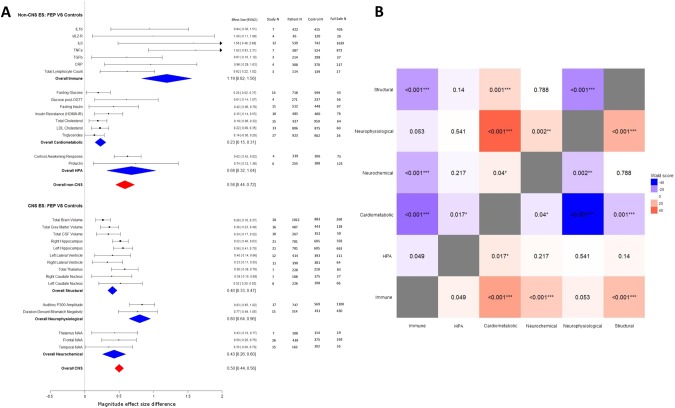
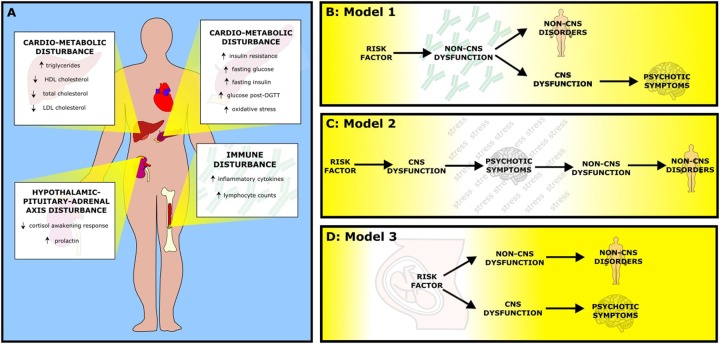
People with psychotic disorders show abnormalities in several organ systems in addition to the central nervous system (CNS); and this contributes to excess mortality. However, it is unclear how strong the evidence is for alterations in non-CNS systems at the onset of psychosis, how the alterations in non-CNS systems compare to those in the CNS, or how they relate to symptoms. Here, we consider these questions, and suggest potential models to account for findings. We conducted a systematic meta-review to summarize effect sizes for both CNS (focusing on brain structural, neurophysiological, and neurochemical parameters) and non-CNS dysfunction (focusing on immune, cardiometabolic, and hypothalamic-pituitary-adrenal (HPA) systems) in first-episode psychosis (FEP). Relevant meta-analyses were identified in a systematic search of Pubmed and the methodological quality of these was assessed using the AMSTAR checklist (A Measurement Tool to Assess Systematic Reviews). Case-control data were extracted from studies included in these meta-analyses. Random effects meta-analyses were re-run and effect size magnitudes for individual parameters were calculated, as were summary effect sizes for each CNS and non-CNS system. We also grouped studies to obtain overall effect sizes for non-CNS and CNS alterations. Robustness of data for non-CNS and CNS parameters was assessed using Rosenthal's fail-safe N. We next statistically compared summary effect size for overall CNSand overall non-CNS alterations, as well as for each organ system separately. We also examined how non-CNS alterations correlate CNS alterations, and with psychopathological symptoms. Case-control data were extracted for 165 studies comprising a total sample size of 13,440. For people with first episode psychosis compared with healthy controls, we observed alterations in immune parameters (summary effect size: g = 1.19), cardiometabolic parameters (g = 0.23); HPA parameters (g = 0.68); brain structure (g = 0.40); neurophysiology (g = 0.80); and neurochemistry (g = 0.43). Grouping non-CNS organ systems together provided an effect size for overall non-CNS alterations in patients compared with controls (g = 0.58), which was not significantly different from the overall CNS alterations effect size (g = 0.50). However, the summary effect size for immune alterations was significantly greater than that for brain structural (P < 0.001) and neurochemical alterations (P < 0.001), while the summary effect size for cardiometabolic alterations was significantly lower than neurochemical (P = 0.04), neurophysiological (P < 0.001), and brain structural alterations (P = 0.001). The summary effect size for HPA alterations was not significantly different from brain structural (P = 0.14), neurophysiological (P = 0.54), or neurochemical alterations (P = 0.22). These outcomes remained similar in antipsychotic naive sensitivity analyses. We found some, but limited and inconsistent, evidence that non-CNS alterations were associated with CNS changes and symptoms in first episode psychosis. Our findings indicate that there are robust alterations in non-CNS systems in psychosis, and that these are broadly similar in magnitude to a range of CNS alterations. We consider models that could account for these findings and discuss implications for future research and treatment.
Overview
The claims and statistics of this paper haven’t been checked yet.
Free: it reads the open-access text and checks the first 5 claims that cite a source we can check. Create a free account to check every claim.
Integrity signals
Registry
Cites
Statistics
Figures
Verification
Claims the paper makes
The claims and statistics of this paper haven’t been checked yet.
Free: it reads the open-access text and checks the first 5 claims that cite a source we can check. Create a free account to check every claim.
Claims other papers make about this one
Each is checked against this paper’s own text: does it say what the citing paper says it does?
The source backs part of the claim, not all of it — or backs it for a different population, condition or comparison.
In the citing paper
“Converging lines of genetic, post-mortem, and pre-clinical evidence suggest immune dysregulation may play a role in the pathogenesis of both schizophrenia 63–67 and depression, 68, 69 and it is hypothesised that immune alterations are seen only in a proportion of these patients (immune/inflammatory subgroups) and are linked to poor treatment response. 67, 70–72”
From Treatment resistance in psychiatry: state of the art and new directions (2022) · cites this paper as [66]
Experimental — accuracy not yet measured
Self-check
Percentages, sums and reported differences re-computed from the paper’s own numbers.
The self-check needs the paper’s full text.
Citations
Cites
Preferred Reporting Items for Systematic Reviews and Meta-Analyses: the PRISMA statement
Moher, D., Liberati, A., Tetzlaff, J., Altman, D. G., & for the PRISMA Group (2009) · BMJ · doi:10.1136/bmj.b2535 · Cited by 83,823
Statistical power analysis for the behavioral sciences
(1990) · Computers, Environment and Urban Systems · doi:10.1016/0198-9715(90)90050-4 · Cited by 65,269
Preferred reporting items for systematic reviews and meta-analyses: the PRISMA Statement.
(2009) · PubMed Central · Cited by 44,859
Toprak, O., Kurt, H., Sarı, Y., Şarkış, C., Us, H., & Kırık, A. (2017) · Kidney and Blood Pressure Research · doi:10.1159/000468530 · Cited by 29,627
Grundy, S. M., Bilheimer, D. W., Chait, A., Clark, L. T., Denke, M. A., Havel, R. J., Hazzard, W. R., Hulley, S. B., Hunninghake, D. B., Kreisberg, R. A., et al. (1993) · JAMA · doi:10.1001/jama.269.23.3015 · Cited by 27,947
Expert Panel on Detection, E. (2001) · JAMA: The Journal of the American Medical Association · doi:10.1001/jama.285.19.2486 · Cited by 26,011
Conducting Meta-Analyses in R with the metafor Package
Viechtbauer, W. (2010) · Journal of Statistical Software · doi:10.18637/jss.v036.i03 · Cited by 20,464 · cited 1×
“ducted using the metafor package [39] in the R statistical programming language.”
Preferred Reporting Items for Systematic Reviews and Meta-Analyses: The PRISMA Statement
Moher, D., Liberati, A., Tetzlaff, J., & Altman, D. G. (2009) · Journal of Clinical Epidemiology · doi:10.1016/j.jclinepi.2009.06.005 · Cited by 19,575
Grundy, S. M., Cleeman, J. I., Daniels, S. R., Donato, K. A., Eckel, R. H., Franklin, B. A., Gordon, D. J., Krauss, R. M., Savage, P. J., Smith, S. C., et al. (2005) · Circulation · doi:10.1161/circulationaha.105.169404 · Cited by 11,961
The metabolic syndrome—a new worldwide definition
Alberti, K. G. M., Zimmet, P., & Shaw, J. (2005) · The Lancet · doi:10.1016/s0140-6736(05)67402-8 · Cited by 9,352
Research works printed but not linked: 1
- Fernandes B Steiner J Bernstein H C-reactive protein is increased in schizophrenia but is not altered by antipsychotics: meta-analysis and implications Mol Psychiatry. 2016 21 554 64 26169974 · DOI · Paper page
Cited by
Pillinger, T., McCutcheon, R. A., Vano, L., Mizuno, Y., Arumuham, A., Hindley, G., Beck, K., Natesan, S., Efthimiou, O., Cipriani, A., et al. (2020) · The Lancet Psychiatry · doi:10.1016/s2215-0366(19)30416-x · Cited by 1,090
Self-citationCorrell, C. U., Solmi, M., Croatto, G., Schneider, L. K., Rohani‐Montez, S. C., Fairley, L., Smith, N., Bitter, I., Gorwood, P., Taipale, H., et al. (2022) · World Psychiatry · doi:10.1002/wps.20994 · Cited by 686
Treatment resistance in psychiatry: state of the art and new directions
Howes, O. D., Thase, M. E., & Pillinger, T. (2022) · Molecular Psychiatry · doi:10.1038/s41380-021-01200-3 · Cited by 413
Self-citationCytokine Alterations in Schizophrenia: An Updated Review
Momtazmanesh, S., Zare-Shahabadi, A., & Rezaei, N. (2019) · Frontiers in Psychiatry · doi:10.3389/fpsyt.2019.00892 · Cited by 276
Pillinger, T., Osimo, E. F., Brugger, S., Mondelli, V., McCutcheon, R. A., & Howes, O. D. (2019) · Schizophrenia Bulletin · doi:10.1093/schbul/sby160 · Cited by 190
“…However, it is important to recognize that there are other potential models explaining the association between immune alterations and psychosis,98 and recent studies examining therapeutic potential of anti-IL6 immunotherapy in schizophrenia have been disappointing (although this potentially…”
Self-citationÇakici, N., Sutterland, A. L., Penninx, B. W. J. H., Dalm, V. A., de Haan, L., & van Beveren, N. J. M. (2020) · Brain, Behavior, and Immunity · doi:10.1016/j.bbi.2020.04.039 · Cited by 160
“Additionally, we compared the effect sizes statistically of each compound between schizophrenia and MDD using a Wald-type test (Pillinger et al., 2019).”
Methodde Bartolomeis, A., Barone, A., Vellucci, L., Mazza, B., Austin, M. C., Iasevoli, F., & Ciccarelli, M. (2022) · Molecular Neurobiology · doi:10.1007/s12035-022-02976-3 · Cited by 113
Immune-inflammatory markers and psychosis risk: A systematic review and meta-analysis
Misiak, B., Bartoli, F., Carrà, G., Stańczykiewicz, B., Gładka, A., Frydecka, D., Samochowiec, J., Jarosz, K., Hadryś, T., & Miller, B. J. (2021) · Psychoneuroendocrinology · doi:10.1016/j.psyneuen.2021.105200 · Cited by 105
“Psychotic disorders are associated with multisystemic biological dysregulations that can be observed in the peripheral blood (Pillinger et al., 2018).”
The Traumatizing Impact of Racism in Canadians of Colour
Williams, M. T., Roy, A. K., MacIntyre, M. M., & Faber, S. C. (2022) · Current Trauma Reports · doi:10.1007/s40719-022-00225-5 · Cited by 171
Biological hypotheses, risk factors, and biomarkers of schizophrenia
Fišar, Z. (2022) · Progress in Neuro-Psychopharmacology and Biological Psychiatry · doi:10.1016/j.pnpbp.2022.110626 · Cited by 112
Halstead, S., Cao, C., Mohr, G. H., Ebdrup, B. H., Pillinger, T., McCutcheon, R. A., Firth, J., Siskind, D. J., & Warren, N. (2024) · The Lancet Psychiatry · doi:10.1016/s2215-0366(24)00091-9 · Cited by 118
Self-citationLobo, M. C., Whitehurst, T., Kaar, S. J., & Howes, O. D. (2021) · Neuroscience & Biobehavioral Reviews · doi:10.1016/j.neubiorev.2021.11.032 · Cited by 102
Self-citationIs It Possible to Predict the Future in First-Episode Psychosis?
Suvisaari, J., Mantere, O., Keinänen, J., Mäntylä, T., Rikandi, E., Lindgren, M., Kieseppä, T., & Raij, T. T. (2018) · Frontiers in Psychiatry · doi:10.3389/fpsyt.2018.00580 · Cited by 87
“In drug-naïve FEP patients, there is evidence for an increased level of morning cortisol, cortisol awakening response, and increased prolactin levels, all of which may refer to a dysregulated hypothalamic-pituitary-adrenal (HPA) axis (130).”
BackgroundBora, E., McIntyre, R. S., & Özerdem, A. (2018) · Psychological Medicine · doi:10.1017/s0033291718003008 · Cited by 92
Choroid Plexus Enlargement and Allostatic Load in Schizophrenia
Zhou, Y., Huang, J., Zhang, P., Fan, F., Chen, S., Fan, H., Cui, Y., Luο, X., Tan, S., Wang, Z., et al. (2019) · Schizophrenia Bulletin · doi:10.1093/schbul/sbz100 · Cited by 88
“Imaging data were collected within 2 weeks of treatment initiation, when four patients were medication-free, 16 patients were on a first-generation of antipsychotics (haloperidol) combined with second-generation antipsychotics (either risperidone or olanzapine), and the remaining patients were on the following second-…”
BackgroundVeeneman, R. R., Vermeulen, J. M., Abdellaoui, A., Sanderson, E. C. M., Wootton, R. E., Tadros, R., Bezzina, C. R., Denys, D. A. J. P., Munafo, M. R., Verweij, K. J. H., et al. (2021) · Schizophrenia Bulletin · doi:10.1093/schbul/sbab132 · Cited by 89
Nguyen, R. L., Medvedeva, Y. V., Ayyagari, T., Schmunk, G., & Gargus, J. J. (2018) · Biochimica et Biophysica Acta (BBA) - Molecular Cell Research · doi:10.1016/j.bbamcr.2018.08.003 · Cited by 77
White-matter free-water diffusion MRI in schizophrenia: A systematic review and meta-analysis
Carreira Figueiredo, I., Borgan, F., Pasternak, O., Turkheimer, F. E., & Howes, O. D. (2022) · Neuropsychopharmacology · doi:10.1038/s41386-022-01272-x · Cited by 65
“In particular, a blood-brain barrier disruption has been hypothesised to be consistent with the neuroimaging findings seen in the disorder [22, 44], and in line with ideas that schizophrenia is a multi-system disorder [45].”
Self-citationJørgensen, A., Baago, I. B., Rygner, Z., Jørgensen, M. B., Andersen, P. K., Kessing, L. V., & Poulsen, H. E. (2022) · JAMA Psychiatry · doi:10.1001/jamapsychiatry.2022.2066 · Cited by 70
Torres, N. G., Rocha-González, I., Alameda, L., Gangoso, A. R., Vilches, A., Canal‐Rivero, M., Crespo‐Facorro, B., & Ruíz-Veguilla, M. (2021) · Psychological Medicine · doi:10.1017/s0033291721002853 · Cited by 72
Melamed, O. C., Hahn, M., Agarwal, S. M., Taylor, V. H., Mulsant, B. H., & Selby, P. L. (2020) · General Hospital Psychiatry · doi:10.1016/j.genhosppsych.2020.06.013 · Cited by 66
Misiak, B., Pawlak, E., Rembacz, K. P., Kotas, M., Żebrowska-Różańska, P., Kujawa, D., Łaczmański, Ł., Piotrowski, P., Bielawski, T., Samochowiec, J., et al. (2024) · Journal of Psychiatric Research · doi:10.1016/j.jpsychires.2024.01.036 · Cited by 62
Prestwood, T. R., Asgariroozbehani, R., Wu, S., Agarwal, S. M., Logan, R. W., Ballon, J. S., Hahn, M., & Freyberg, Z. (2021) · Behavioural Brain Research · doi:10.1016/j.bbr.2020.113101 · Cited by 76
“With regard to cognitive deficits that characterize schizophrenia, a recent systematic review determined that elevated CRP levels correlated strongly with worsened cognitive functioning.”
BackgroundResultInfluentialPillinger, T., Osimo, E. F., de Marvao, A., Shah, M., Francis, C., Huang, J. V., D’Ambrosio, E., Firth, J., Nour, M. M., McCutcheon, R. A., et al. (2023) · The Lancet Psychiatry · doi:10.1016/s2215-0366(22)00403-5 · Cited by 64
Self-citationLeucht, S., Siafis, S., McGrath, J. J., McGorry, P. D., Howes, O. D., Tamminga, C. A., Carr, R., Bighelli, I., Schneider‐Thoma, J., Priller, J., et al. (2025) · Nature Reviews Disease Primers · doi:10.1038/s41572-025-00667-6 · Cited by 82
“…(see ‘Epidemiology’) but its involvement at the mechanistic level remains unclear; however, stress may contribute to increased synaptic elimination 8 and affect the immune system via the hypothalamus–pituitary–adrenal axis 103 , whose dysregulation has also been observed in psychosis 159 .”
Self-citationDe Simone, G., Mazza, B., Vellucci, L., Barone, A., Ciccarelli, M., & de Bartolomeis, A. (2023) · Antioxidants · doi:10.3390/antiox12040975 · Cited by 49
Pillinger, T., Osimo, E. F., de Marvao, A., Berry, A., Whitehurst, T., Statton, B. K., Quinlan, M., Brugger, S. P., Vazir, A., Cook, S. A., et al. (2019) · Translational Psychiatry · doi:10.1038/s41398-019-0502-x · Cited by 55
Self-citationWarren, N., O’Gorman, C., Horgan, I., Weeratunga, M., Halstead, S., Moussiopoulou, J., Campana, M., Yakimov, V., Wagner, E. M., & Siskind, D. J. (2024) · Schizophrenia Research · doi:10.1016/j.schres.2024.02.001 · Cited by 47
Schizophrenia, a disease of impaired dynamic metabolic flexibility: A new mechanistic framework
Sarnyai, Z., & Ben‐Shachar, D. (2024) · Psychiatry Research · doi:10.1016/j.psychres.2024.116220 · Cited by 43
“…the possibility that schizophrenia is a systemic disorder and involves abnormal glucose and energy metabolism both in the periphery and in brain (Pillinger et al. 2018; Herberth et al. 2011; Tomasik et al. 2019; Sullivan et al. 2018b; Nascimento and Martins-de-Souza 2015; Zuccoli et al. 2017;…”
BackgroundNEW INSIGHTS INTO SCHIZOPHRENIA: A LOOK AT THE EYE AND RELATED STRUCTURES
Petra, Jurišić, D., Ćavar, I., Sesar, I., Sesar, I., Vukojević, J., & Ćurković, M. (2020) · Psychiatria Danubina · doi:10.24869/psyd.2020.60 · Cited by 61
Effects of Antipsychotic Drugs: Cross Talk Between the Nervous and Innate Immune System
Dinesh, A. A., Islam, J., Khan, J., Turkheimer, F., & Vernon, A. C. (2020) · CNS Drugs · doi:10.1007/s40263-020-00765-x · Cited by 41
COVID-19 in People With Schizophrenia: Potential Mechanisms Linking Schizophrenia to Poor Prognosis
Mohan, M., Perry, B. I., Saravanan, P., & Singh, S. P. (2021) · Frontiers in Psychiatry · doi:10.3389/fpsyt.2021.666067 · Cited by 48
Estimating Aggregate Environmental Risk Score in Psychiatry: The Exposome Score for Schizophrenia
Pries, L.-K., Erzın, G., Rutten, B. P. F., van Os, J., & Gülöksüz, S. (2021) · Frontiers in Psychiatry · doi:10.3389/fpsyt.2021.671334 · Cited by 49
“, inflammatory) markers (41), malnutrition (especially prenatal), vitamin D levels (40), and metabolic changes (42) would provide a more complete ES-SCZ and might benefit the predictive power of the ES-SCZ.”
BackgroundÇakici, N., Sutterland, A. L., Penninx, B. W. J. H., de Haan, L., & van Beveren, N. J. M. (2021) · Psychological Medicine · doi:10.1017/s0033291721000155 · Cited by 41
Allostatic load and systemic comorbidities in psychiatric disorders
Finlay, S., Rudd, D., McDermott, B., & Sarnyai, Z. (2022) · Psychoneuroendocrinology · doi:10.1016/j.psyneuen.2022.105726 · Cited by 38
Crosstalk between Schizophrenia and Metabolic Syndrome: The Role of Oxytocinergic Dysfunction
Goh, K. K., Chen, C. Y.-A., Wu, T., Chen, C.-H., & Lu, M. (2022) · International Journal of Molecular Sciences · doi:10.3390/ijms23137092 · Cited by 49
“psychosis experienced significant alterations in their immune parameters, cardiometabolic parameters, hypothalamic–pituitary–adrenal axis parameters, brain structure, neurophysiology, and neurochemistry [329].”
BackgroundMongan, D., Susai, S. R., Föcking, M., Byrne, J. F., Zammit, S., Cannon, M. D., & Cotter, D. (2023) · Brain Behavior and Immunity · doi:10.1016/j.bbi.2023.03.025 · Cited by 38
Islam, M. R., Sohan, M., Daria, S., Masud, A. A., Ahmed, M. U., Roy, A., & Shahriar, M. (2023) · International Journal of Immunopathology and Pharmacology · doi:10.1177/03946320231198828 · Cited by 43
Longhitano, C., Finlay, S., Peachey, I., Swift, J.-L., Fayet‐Moore, F., Bartle, T., Vos, G., Rudd, D., Shareef, O., Gordon, S., et al. (2024) · Frontiers in Nutrition · doi:10.3389/fnut.2024.1444483 · Cited by 42
Neuroinflammation and schizophrenia – is there a link?
Chaves, C., Dursun, S. M., Tusconi, M., & Hallak, J. E. C. (2024) · Frontiers in Psychiatry · doi:10.3389/fpsyt.2024.1356975 · Cited by 59
Variability of glucose, insulin, and lipid disturbances in first-episode psychosis: a meta-analysis
Pillinger, T., McCutcheon, R. A., & Howes, O. D. (2022) · Psychological Medicine · doi:10.1017/s0033291721005213 · Cited by 39
Self-citationImmunophenotypes in psychosis: is it a premature inflamm-aging disorder?
Chen, S., Tan, Y., & Tian, L. (2024) · Molecular Psychiatry · doi:10.1038/s41380-024-02539-z · Cited by 40
“…reported increases in total and/ or differential WBC counts including neutrophils and monocytes, as well as alterations in cytokine production in patients with psychosis, including fi rst-episode psychosis (FEP) or fi rst-episode schizophrenia (FES), compared to healthy controls (HCs) [13 – 17] (Fig.”
BackgroundShort-chain fatty acids in patients with schizophrenia and ultra-high risk population
Peng, H., Ouyang, L., Li, D., Li, Z., Liu, Y., Fan, L., Liao, A., Li, J., Wei, Y., Yang, Z., et al. (2022) · Frontiers in Psychiatry · doi:10.3389/fpsyt.2022.977538 · Cited by 36
“Significant increase in concentrations of IL-1, IL-6, IL-8, and other cytokines have not only been consistently detected in the serum (82, 83), but also in the cerebrospinal fluid (CSF) (84, 85).”
BackgroundDiabetes mellitus type 2 as an underlying, comorbid or consequent state of mental disorders
Borovčanin, M., Vesić, K., Petrović, I., Jovanović, I., & Mijailović, N. R. (2023) · World Journal of Diabetes · doi:10.4239/wjd.v14.i5.481 · Cited by 38
Psychosis as a disorder of muscarinic signalling: psychopathology and pharmacology
McCutcheon, R. A., Weber, L. A. E., Nour, M. M., Cragg, S. J., & McGuire, P. K. (2024) · The Lancet Psychiatry · doi:10.1016/s2215-0366(24)00100-7 · Cited by 32
Self-citationIncreased levels of serum leptin in the early stages of psychosis
Martorell, L., Muntané, G., Porta-López, S., Moreno, I., Ortega, L., Montalvo, I., Sánchez‐Gistau, V., Monseny, R., Labad, J., & Vilella, E. (2019) · Journal of Psychiatric Research · doi:10.1016/j.jpsychires.2019.01.006 · Cited by 30
Clinical Correlates of the NR3C1 Gene Methylation at Various Stages of Psychosis
Misiak, B., Samochowiec, J., Konopka, A., Gawronska-Szklarz, B., Beszłej, J. A., Szmida, E., & Karpiński, P. (2020) · The International Journal of Neuropsychopharmacology · doi:10.1093/ijnp/pyaa094 · Cited by 29
Brain and body energy metabolism and potential for treatment of psychiatric disorders
Andreazza, A. C., Barros, L. F., Behnke, A., Ben‐Shachar, D., Berretta, S., Chouinard, V., Kim, Q., Thanarajah, S. E., Ehrenreich, H., Falkai, P., et al. (2025) · Nature Mental Health · doi:10.1038/s44220-025-00422-6 · Cited by 35
“The resounding answer to the first question is yes; a large literature demonstrates a range of peripheral metabolic abnormalities in psychiatric disorders, including some that suggest metabolic disturbance predates psychiatric diagnosis and may be a risk indicator for it 4,65,88 .”
Self-citationFrajerman, A., Scoriels, L., Kébir, O., & Chaumette, B. (2021) · International Journal of Molecular Sciences · doi:10.3390/ijms22136881 · Cited by 33
“The aetiology of schizophrenia is not restricted to brain dysfunctions, and the disorder is currently conceptualized as a systemic disease that includes immune, cardiometabolic, and endocrine abnormalities [3].”
BackgroundRosa, M., Scassellati, C., & Cattaneo, A. (2023) · Frontiers in Psychology · doi:10.3389/fpsyg.2023.1156415 · Cited by 36
Schizophrenia in Translation: Why the Eye?
Silverstein, S. M., Choi, J. J., Green, K. M., Bowles-Johnson, K., & Ramchandran, R. S. (2022) · Schizophrenia Bulletin · doi:10.1093/schbul/sbac050 · Cited by 30
Karpiński, P., Żebrowska-Różańska, P., Kujawa, D., Łaczmański, Ł., Samochowiec, J., Jabłoński, M., Plichta, P., Piotrowski, P., Bielawski, T., & Misiak, B. (2023) · Psychoneuroendocrinology · doi:10.1016/j.psyneuen.2023.106335 · Cited by 32
Bloomfield, P. S., Bonsall, D. R., Wells, L. A., Dormann, D., Howes, O. D., & Paola, V. D. (2018) · Journal of Psychopharmacology · doi:10.1177/0269881118788830 · Cited by 28
Self-citationSmith, J., Griffiths, L., Band, M., Hird-Smith, R., Williams, B., Bold, J., Bradley, E., Dilworth, R., & Horne, D. (2020) · Frontiers in Endocrinology · doi:10.3389/fendo.2020.577691 · Cited by 30
“Multiple etiological factors increase the risk of premature mortality in SMI including metabolic disturbance from second-generation antipsychotic medications (2, 3), adverse health behaviors (4, 5), and alterations in cardiometabolic, immune, and hepatic-pituitaryadrenal systems (6).”
BackgroundKopál, J., Kumar, K., Saltoun, K., Modenato, C., Moreau, C. A., Martin‐Brevet, S., Huguet, G., Jean‐Louis, M., Martin, C.-O., Saci, Z., et al. (2023) · Nature Human Behaviour · doi:10.1038/s41562-023-01541-9 · Cited by 30
“Robust alterations in immune and cardiometabolic systems of a comparable magnitude to alterations in the central nervous system have been reported 40 .”
BackgroundDedic, N., Wang, L., Hajós‐Korcsok, É., Hecksher‐Sørensen, J., Roostalu, U., Vickers, S. P., Wu, S. S., Anacker, C., Synan, C., JONES, P. G., et al. (2024) · Molecular Metabolism · doi:10.1016/j.molmet.2024.101883 · Cited by 26
Correll, C. U., Stein, E. A., Graham, C. E., DiPetrillo, L., Akerman, S. C., Stanford, A. D., Jiang, Y., Yagoda, S., McDonnell, D., & Hopkinson, C. (2022) · Schizophrenia Bulletin · doi:10.1093/schbul/sbac144 · Cited by 28
Melamed, O. C., Wong, E. N., LaChance, L., Kanji, S., & Taylor, V. H. (2019) · Psychiatric Services · doi:10.1176/appi.ps.201900108 · Cited by 30
Dawidowski, B., Grelecki, G., Biłgorajski, A., Podwalski, P., Misiak, B., & Samochowiec, J. (2021) · Journal of Clinical Medicine · doi:10.3390/jcm11010232 · Cited by 22
“Several different hypotheses have been proposed to explain the causes of these disorders, however, growing evidence suggests that immune dysfunction, neuroinflammation, and the associated oxidative stress, additionally modulated by dysregulation of the hypothalamic-pituitary-adrenal axis (HPA axis), may play a key rol…”
BackgroundPrenatal and Childhood Immuno-Metabolic Risk Factors for Adult Depression and Psychosis
Kappelmann, N., Perry, B. I., & Khandaker, G. M. (2022) · Harvard Review of Psychiatry · doi:10.1097/hrp.0000000000000322 · Cited by 23
Karbalaee, M., Jameie, M., Amanollahi, M., Taghavizanjani, F., Parsaei, M., Basti, F. A., Mokhtari, S., Moradi, K., Ardakani, M. R. K., & Akhondzadeh, S. (2023) · Schizophrenia Research · doi:10.1016/j.schres.2023.02.020 · Cited by 25
Modzelewski, S., Naumowicz, M., Suprunowicz, M., Oracz, A. J., & Waszkiewicz, N. (2025) · Journal of Clinical Medicine · doi:10.3390/jcm14041119 · Cited by 25
“…TNF-α among the main substances that can provoke and in fl uence the course of depression [20]. as well as an increase in total lymphocyte count [17,28 In addition, these data were in partial agreement with those from cerebrospinal fl uid (CSF) [21], and higher cytokine values were found in…”
Buzea, A., Manu, P., Dima, L., & Correll, C. U. (2022) · Expert Opinion on Drug Metabolism & Toxicology · doi:10.1080/17425255.2022.2147425 · Cited by 20
“For example, data are accumulating regarding the neurobiological heterogeneity of schizophrenia [120], but also regarding the fact that schizophrenia is a multisystem and multiorgan disease that has definite somatic components [36].”
BackgroundEnrico, P., Delvecchio, G., Turtulici, N., Pigoni, A., Villa, F. M., Perlini, C., Rossetti, M. G., Bellani, M., Lasalvia, A., Bonetto, C., et al. (2021) · Schizophrenia Bulletin · doi:10.1093/schbul/sbaa190 · Cited by 21
Chen, H., Cao, T., Zhang, B., & Cai, H. (2023) · Frontiers in Pharmacology · doi:10.3389/fphar.2023.1097284 · Cited by 18
Francis, M., Hummer, T. A., Liffick, E., Vohs, J. L., Mehdiyoun, N. F., Visco, A. C., Yang, Z., Kovacs, R. J., Zhang, Y., & Breier, A. F. (2020) · Brain Imaging and Behavior · doi:10.1007/s11682-020-00375-7 · Cited by 20
Misiak, B., Piotrowski, P., Cyran, A., Kowalski, K., Samochowiec, J., Jabłoński, M., Plichta, P., Łaczmański, Ł., Żebrowska-Różańska, P., Kujawa, D., et al. (2022) · Acta Neuropsychiatrica · doi:10.1017/neu.2022.38 · Cited by 19
Fond, G. B., Falissard, B., Nuss, P., Collin, C., Duret, S., Rabbani, M., Chefdebien, I. D., Tonelli, I., Llorca, P., & Boyer, L. (2023) · Molecular Psychiatry · doi:10.1038/s41380-023-02154-4 · Cited by 20
Cheng, N., Ma, H., Zhang, K., Zhang, C., & Geng, D. (2023) · Medicina · doi:10.3390/medicina59030503 · Cited by 17
Petruzzelli, M. G., Marzulli, L., Giannico, O. V., Furente, F., Margari, M., Matera, E., & Margari, F. (2020) · Frontiers in Psychiatry · doi:10.3389/fpsyt.2020.00775 · Cited by 23
“The authors suggested that hypertriglyceridemia may be added to the evidence for glucose dysregulation in this cohort, considering it as a feature of T2DM (8).”
BackgroundMarkers of Schizophrenia—A Critical Narrative Update
Galińska-Skok, B., & Waszkiewicz, N. (2022) · Journal of Clinical Medicine · doi:10.3390/jcm11143964 · Cited by 22
“The studies of first-episode psychosis (FEP) allow the exclusion of the long-term impact of treatment and consequences of the chronic illness process.”
BackgroundInfluentialEnrico, P., Delvecchio, G., Turtulici, N., Aronica, R., Pigoni, A., Squarcina, L., Villa, F. M., Perlini, C., Rossetti, M. G., Bellani, M., et al. (2023) · Molecular Psychiatry · doi:10.1038/s41380-022-01911-1 · Cited by 18
“To minimize the noise due to factors significantly influencing the immune status, socio-demographic and clinical features (including age, gender, Body Mass Index [BMI], smoking, pharmacological treatment) of the recruited subjects have been collected and addressed as potential confounders in the analysis model [38, 39…”
BackgroundCavaleri, D., Capogrosso, C. A., Guzzi, P., Bernasconi, G., Re, M., Misiak, B., Crocamo, C., Bartoli, F., & Carrà, G. (2023) · Psychoneuroendocrinology · doi:10.1016/j.psyneuen.2023.106392 · Cited by 22
“For these reasons, studies investigating people with first-episode psychosis (FEP) who have never received psychopharmacological treatment (drug-naïve) may provide unique insights (Pillinger et al., 2019).”
Kynurenine metabolism and metabolic syndrome in patients with schizophrenia
Zhang, P., Huang, J., Gou, M., Zhou, Y., Tong, J., Fan, F., Cui, Y., Luο, X., Tan, S., Wang, Z., et al. (2021) · Journal of Psychiatric Research · doi:10.1016/j.jpsychires.2021.05.004 · Cited by 20
Horská, K., Kotolová, H., Karpíšek, M., Babinská, Z., Hammer, T., Procházka, J. H., Štark, T., Micale, V., & Kučerová, J. (2020) · Toxicology and Applied Pharmacology · doi:10.1016/j.taap.2020.115214 · Cited by 18
Kowalski, K., Żebrowska-Różańska, P., Karpiński, P., Kujawa, D., Łaczmański, Ł., Samochowiec, J., Chęć, M., Piotrowski, P., & Misiak, B. (2023) · Progress in Neuro-Psychopharmacology and Biological Psychiatry · doi:10.1016/j.pnpbp.2023.110834 · Cited by 19
Chen, F., Dong, X., Yu, Z., Zhang, Y., & Shi, Y. (2024) · Journal of Affective Disorders · doi:10.1016/j.jad.2024.03.098 · Cited by 22
Cuesta, M. J., Sánchez-Torres, A. M., Moreno-Izco, L., de Jalón, E. G., Gil‐Berrozpe, G. J., Zarzuela, A., Peralta, V., Ballesteros, A., Fañanás, L., Hernández, R., et al. (2022) · Psychiatry Research · doi:10.1016/j.psychres.2022.114933 · Cited by 20
Aymerich, C., Pedruzo, B., Pacho, M., Laborda, M., Herrero, J., Pillinger, T., McCutcheon, R. A., Alconada, D. A., Bordenave, M., Martínez-Querol, M., et al. (2023) · Psychoneuroendocrinology · doi:10.1016/j.psyneuen.2023.106049 · Cited by 20
Self-citationCavaleri, D., De Pietra, A., Gazzola, M., Crocamo, C., Bartoli, F., & Carrà, G. (2024) · Psychoneuroendocrinology · doi:10.1016/j.psyneuen.2024.107134 · Cited by 15
“…assessing inflammatory indexes may be useful to evaluate chronic inflammation associated with accelerated atherosclerotic plaque formation, insulin resistance, and ultimately the well-known increased cardiovascular risk of this population (Pillinger et al., 2019; Clerici et al., 2014).”
BackgroundTorres, N. G., Ruíz-Veguilla, M., Alameda, L., Canal‐Rivero, M., Ruiz, M. J., Gómez‐Revuelta, M., Ayesa‐Arriola, R., Rubio-García, A., Crespo‐Facorro, B., & Vázquez-Bourgón, J. (2022) · Schizophrenia Research · doi:10.1016/j.schres.2022.07.007 · Cited by 20
Tunset, M. E., Haslene‐Hox, H., Bossche, T. V. D., Vaaler, A. E., Sulheim, E., & Kondziella, D. (2020) · PeerJ · doi:10.7717/peerj.9714 · Cited by 17
Veeneman, R. R., Vermeulen, J. M., Bialas, M., Bhamidipati, A. K., Abdellaoui, A., Munafo, M. R., Denys, D. A. J. P., Bezzina, C. R., Verweij, K. J. H., Tadros, R., et al. (2023) · Psychological Medicine · doi:10.1017/s0033291723002635 · Cited by 15
Epiphenomena in psychosis: how perinatal stressful events shape long-term outcomes
García‐Rizo, C., & Bitanihirwe, B. K. Y. (2025) · Molecular Psychiatry · doi:10.1038/s41380-025-03096-9 · Cited by 15
“…not be multiplied beyond necessity ” (attributed to William of Ockham, 14th century ) [87] Our approach, while supporting the concept of psychosis as a systemic disorder established by Kirkpatrick [29, 88] and promulgated by Pillinger [89], solely focuses on subjects affected by perinatal events.”
Interpersonal distance in schizophrenia: A systematic review
Kraus, J., Čavojská, N., Harvanová, S., & Hajdúk, M. (2024) · Schizophrenia Research · doi:10.1016/j.schres.2024.02.006 · Cited by 16
The antipsychotic paradox: Lessons regarding determinants of premature mortality
Solmi, M., & Correll, C. U. (2022) · European Neuropsychopharmacology · doi:10.1016/j.euroneuro.2022.05.014 · Cited by 15
Adipose tissue dysregulation at the onset of psychosis: Adipokines and social determinants of health
Veru, F., Guay, S., Shah, J. L., Schmitz, N., Giguère, C., Joober, R., Iyer, S. N., & MALLA, A. K. (2020) · Psychoneuroendocrinology · doi:10.1016/j.psyneuen.2020.104915 · Cited by 12
“, that psychosis is a multi-systemic disorder in which the immune system has a central role (Pillinger et al., 2018).”
BackgroundZhou, Y., Wang, L., Yang, K., Huang, J., Li, Y., Li, W., Zhang, P., Fan, F., Yin, Y., Yu, T. Y., et al. (2024) · Journal of Psychiatric Research · doi:10.1016/j.jpsychires.2024.02.025 · Cited by 14
Correll, C. U. (2025) · CNS Spectrums · doi:10.1017/s1092852925100503 · Cited by 15
de Pablo, G. S., Moreno, D. M., González-Pinto, A. M., Payá, B., Castro-Fonieles, J., Baeza, I., Graell, M., Arango, C., Rapado‐Castro, M., & Moreno, C. (2021) · European Child & Adolescent Psychiatry · doi:10.1007/s00787-021-01815-5 · Cited by 12
“Psychotic disorders are heterogeneous and complex disorders, especially in their early presentation [3, 4].”
BackgroundSkeletal muscle DNA methylation modifications and psychopharmacologic treatment in bipolar disorder
Burghardt, K. J., Howlett, B. H., Sanders, E., Dass, S. E., Msallaty, Z., Mallisho, A., Seyoum, B., & Yi, Z. (2019) · European Neuropsychopharmacology · doi:10.1016/j.euroneuro.2019.10.001 · Cited by 10
Lis, M., Stańczykiewicz, B., Pawlik-Sobecka, L., Samochowiec, A., Reginia, A., & Misiak, B. (2020) · Frontiers in Psychiatry · doi:10.3389/fpsyt.2020.00480 · Cited by 10
“The exclusion criteria were as follows: (1) comorbid neurological disorders; (2) intellectual disability; (3) physical health impairment that might affect biochemical markers measured in the study (diabetes, hypertension, coronary artery disease, autoimmune disorders, inflammatory diseases, endocrine disorders); (4) d…”
BackgroundTunset, M. E., Haslene‐Hox, H., Bossche, T. V. D., Maleki, S., Vaaler, A., & Kondziella, D. (2023) · Nordic Journal of Psychiatry · doi:10.1080/08039488.2023.2223572 · Cited by 10
“mortality and their biological origin remains partly unknown; there are thus several reasons why bactEV are promising research targets in psychotic disorders [16,17].”
BackgroundMolecular mapping of a core transcriptional signature of microglia-specific genes in schizophrenia
Fiorito, A. M., Fakra, É., Sescousse, G., Ibrahim, E. C., & Rey, R. (2023) · Translational Psychiatry · doi:10.1038/s41398-023-02677-y · Cited by 11
“Nonetheless it is essential to conduct further investigations using high-throughput sequencing techniques such as single-cell RNA-seq technology [99], which can provide insights into the heterogeneity and diversity of microglia populations.”
Longitudinal study on hippocampal subfields and glucose metabolism in early psychosis
Armio, R.-L., Laurikainen, H., Ilonen, T., Walta, M., Sormunen, E., Tolvanen, A., Salokangas, R. K. R., Koutsouleris, N., Tuominen, L. J., & Hietala, J. A. (2024) · Schizophrenia · doi:10.1038/s41537-024-00475-z · Cited by 11
“There is also abundant evidence of altered glucose homeostasis in psychoses 35 – 38 which cannot be attributed solely to the effects of antipsychotic medications 11,39 – 41 .”
BackgroundAssociation of relapse with all-cause mortality in adult patients with stable schizophrenia
Correll, C. U., Bookhart, B., Benson, C. J., Liu, Z., Zhao, Z., & Tang, W. (2025) · The International Journal of Neuropsychopharmacology · doi:10.1093/ijnp/pyaf018 · Cited by 10
“12 For causes other than self-harm, relapse and mortality may be connected through dysregulation affecting both the central nervous system (CNS) and non-CNS processes (cardiometabolic, inflammatory, endocrine), 28 or through the acceleration of epigenetic clocks.”
Fusar‐Poli, P., Pillinger, T., McCutcheon, R. A., Rangaswamy, T., Asmal, L., Singh, S. P., Oliver, D., Stefanelli, R., Crossley, N. A., Gadelha, A., et al. (2026) · World Psychiatry · doi:10.1002/wps.70066 · Cited by 20
“Although hyperprolactinaemia may be observed in antipsychotic naïve people with first-episode psychosis 350 , it is most com-Table monly seen in association with antipsychotic treatment.”
Self-citationWagner, E. M., Luykx, J. J., Strube, W., & Hasan, A. (2023) · Expert Review of Clinical Pharmacology · doi:10.1080/17512433.2023.2293996 · Cited by 10
“Concerning the previous paragraph, we note that people with schizophrenia show an altered glucose homeostasis from illness onset in schizophrenia before antipsychotic treatment [56] emphasizing the concept that schizophrenia is a multi-system disorder involving cardio-metabolic disturbances [57].”
BackgroundGolovina, E., Vickers, M. H., Erb, C. D., & O'Sullivan, J. M. (2020) · Frontiers in Psychiatry · doi:10.3389/fpsyt.2020.560751 · Cited by 11
Catalán, A., Aymerich, C., Rodríguez-Sánchez, J. M., Pedruzo, B., de Pablo, G. S., Gil, P., Aguayo, F., Acasuso, G., Collado-Pérez, Á., Goena, J., et al. (2025) · European Psychiatry · doi:10.1192/j.eurpsy.2025.10063 · Cited by 12
“Psychotic disorders, including schizophrenia and related conditions, are marked by persistent cognitive impairments [1], neurobiological dysregulation [2, 3], and systemic alterations [4, 5], along with a profound disruption of personal wellbeing [6, 7].”
Metadata
- Authors
- Pillinger, T., D’Ambrosio, E., McCutcheon, R., & Howes, O. D.
- Affiliations
- King's College London (GB)
- Corresponding author
- Howes, Oliver D.
- Venue
- Molecular Psychiatry
- Published
- 2018-05-09
- Volume
- 24
- Issue
- 6
- Pages
- 776-794
- ISSN
- 1359-4184 (ISSN-L)
- 1476-5578
- PMC
- PMC6124651
- OpenAlex
- W2799919475
- Cited by
- 230
- References
- 124
- Citations by year
- 2026: 38 · 2025: 32 · 2024: 35 · 2023: 33 · 2022: 29 · 2021: 22 · 2020: 24 · 2019: 9 · 2018: 7
- FWCI
- 2.36
- Type
- journal article
- Language
- en
- Update notices
- correction (2018-10-18)
- Open access
- hybrid
- doi.org
- Licence
- cc-by
- creativecommons.org/licenses/by/4.0 (tdm)
- Locations
- Molecular Psychiatry (publishedVersion, cc-by)
- Europe PMC (PubMed Central) (publishedVersion, other-oa)
- PubMed Central (publishedVersion, cc-by)
- PubMed (publishedVersion)
- Research Portal (King's College London) (submittedVersion, other-oa)
- CINECA IRIS Institutional Research Information System (University of Bari Aldo Moro) (submittedVersion)
- Funders
- Wellcome Trust (200102/Z/15/Z, 094849)
- National Institute for Health and Care Research (ACF-2014-17-008)
- Medical Research Council (MR/L022176/1, MR/N026063/1, MR/N027078/1)
- Topics
- Health Sciences › Medicine › Psychiatry and Mental health › Schizophrenia research and treatment
- Life Sciences › Neuroscience › Biological Psychiatry › Tryptophan and brain disorders
- Social Sciences › Arts and Humanities › Philosophy › Mental Health and Psychiatry
- Keywords
- first-episode psychosis, multisystem disease, immune dysfunction, cardiometabolic dysfunction, hypothalamic-pituitary-adrenal axis, brain structure, neurophysiology, neurochemistry, psychiatric symptoms, bipolar disorder, psychosis spectrum disorders, neuroinflammation, neuroendocrine dysfunction, neurodevelopmental impairment, neurodegeneration, neuroplasticity
- MeSH terms
- Animals, Brain, Cardiovascular Diseases, Central Nervous System, Endocrine System, Humans, Hypothalamo-Hypophyseal System, Pituitary-Adrenal System, Psychotic Disorders
About these checks
Registry, retraction, Cites and statistics results are computed, not judged, with one exception: a printed reference that no index lists is read once by a model before it counts as a citation error. Claims are extracted by a model and kept only when their quote appears verbatim in the text; each cited source is then checked, with a model’s help, for whether it says what the claim relies on. Those verdicts can be wrong — read the claim’s quote and the cited source before relying on one.
Statistics and arithmetic are recomputed, not judged.
Confidence bands are shown only for fields calibrated on our annotated test set. None is calibrated yet, so no band is shown.
What counts as a claim ›How we measure confidence ›How we check this ›
Are you an author, or do you see a problem with this page? Request a review
Data sources
Bibliographic data: Semantic Scholar, OpenAlex, Crossref.
Contains information from the Semantic Scholar Academic Graph Datasets, made available under the ODC Attribution License (ODC-BY 1.0).
Semantic Scholar’s data is described in: Kinney, R., et al. (2023). The Semantic Scholar Open Data Platform. arXiv:2301.10140.
