

The DOI matches its Crossref record; 62 of the 63 references it cites were found in a registry or an index.
CircDYM ameliorates depressive-like behavior by targeting miR-9 to regulate microglial activation via HSP90 ubiquitination
Open accessAbstract
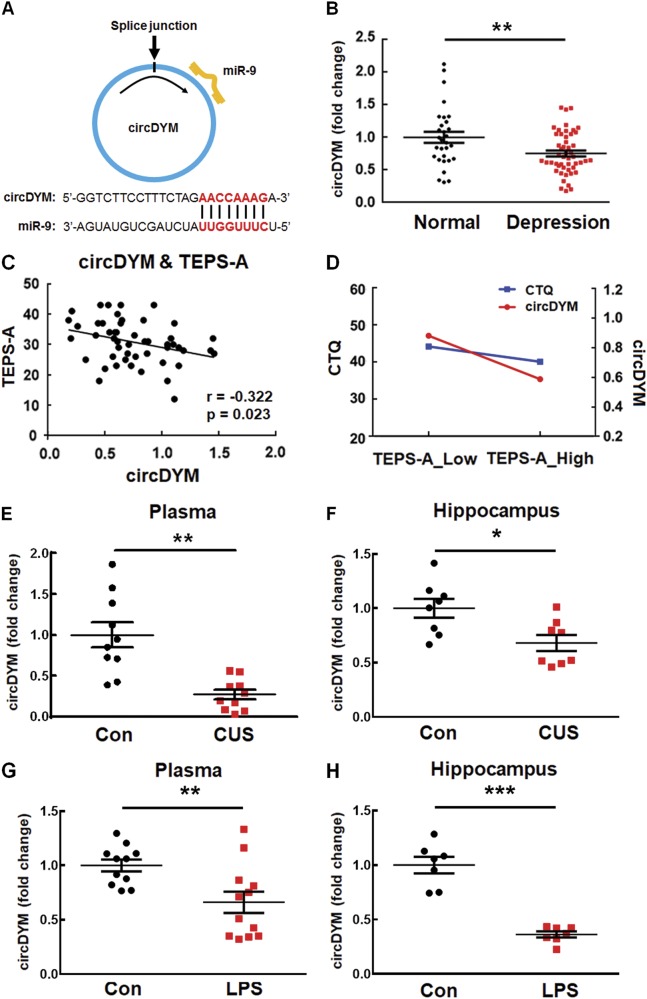
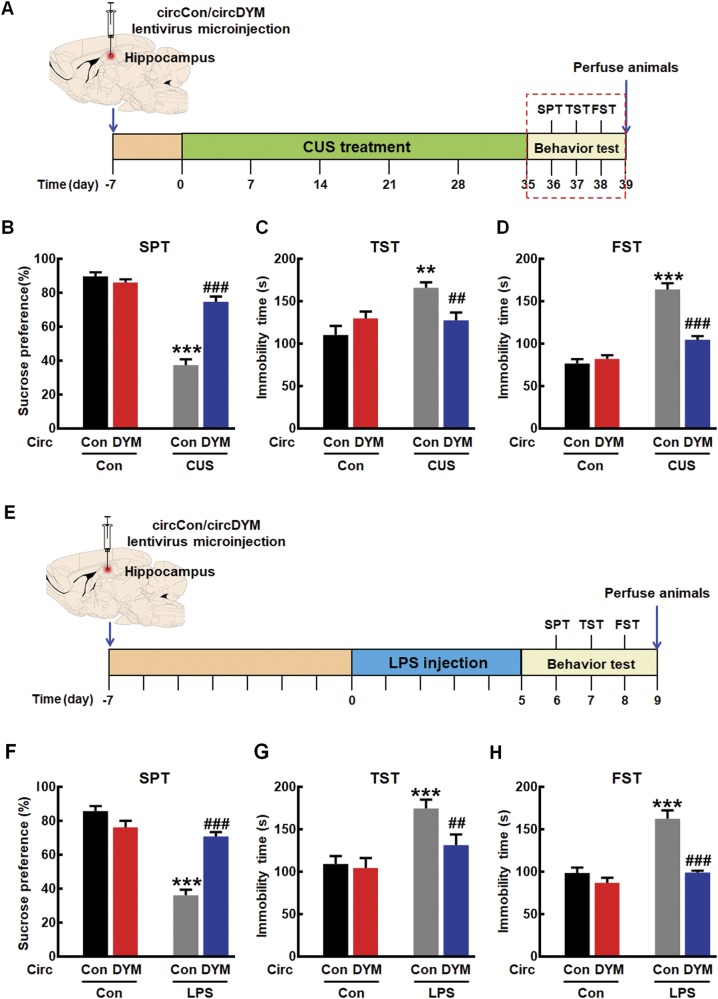
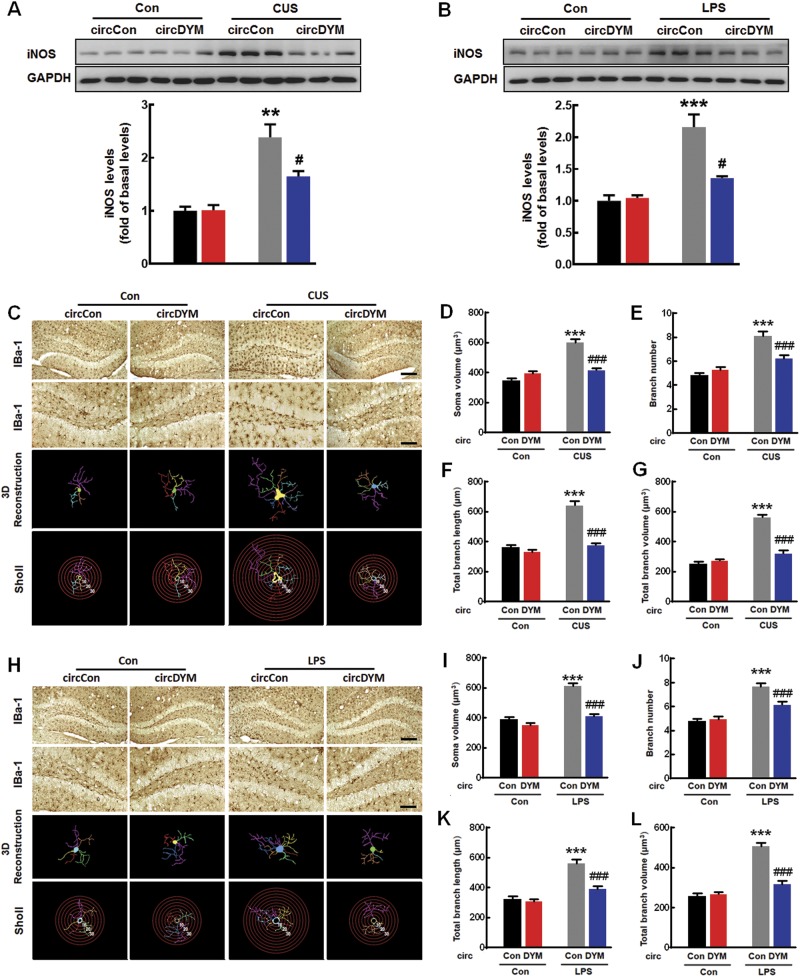
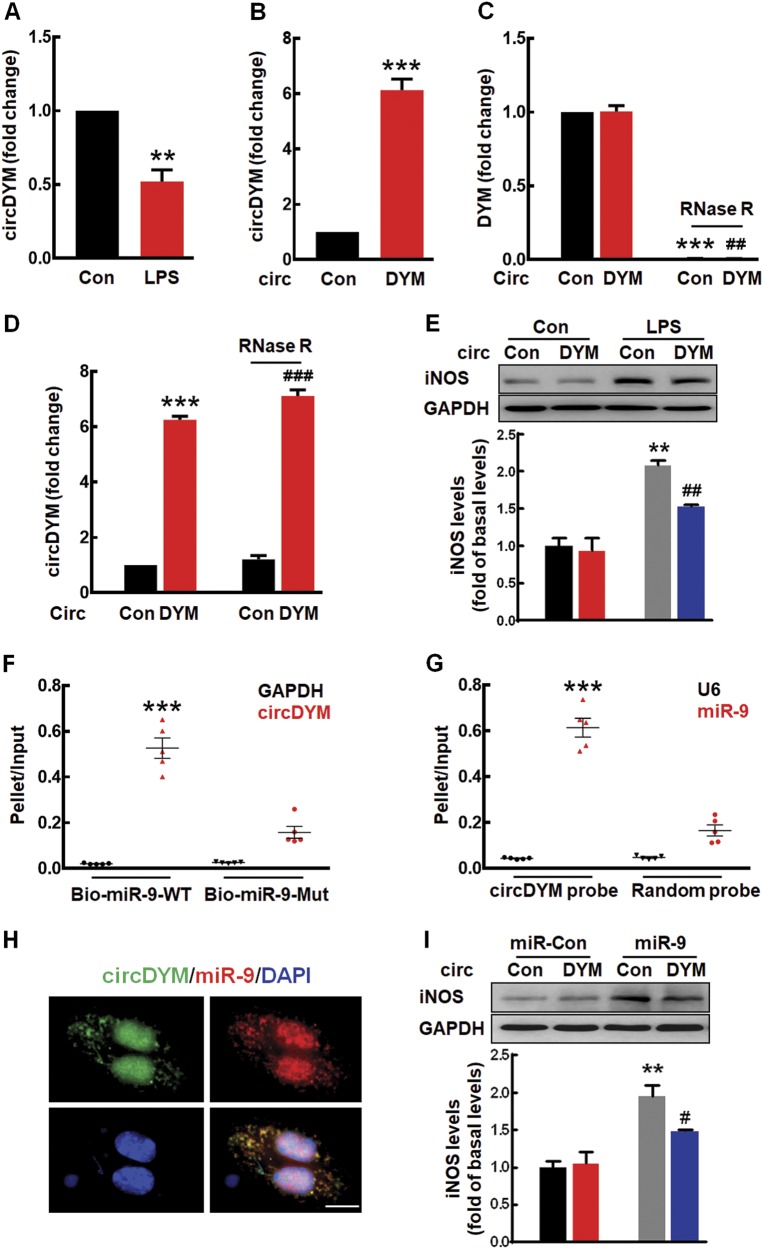
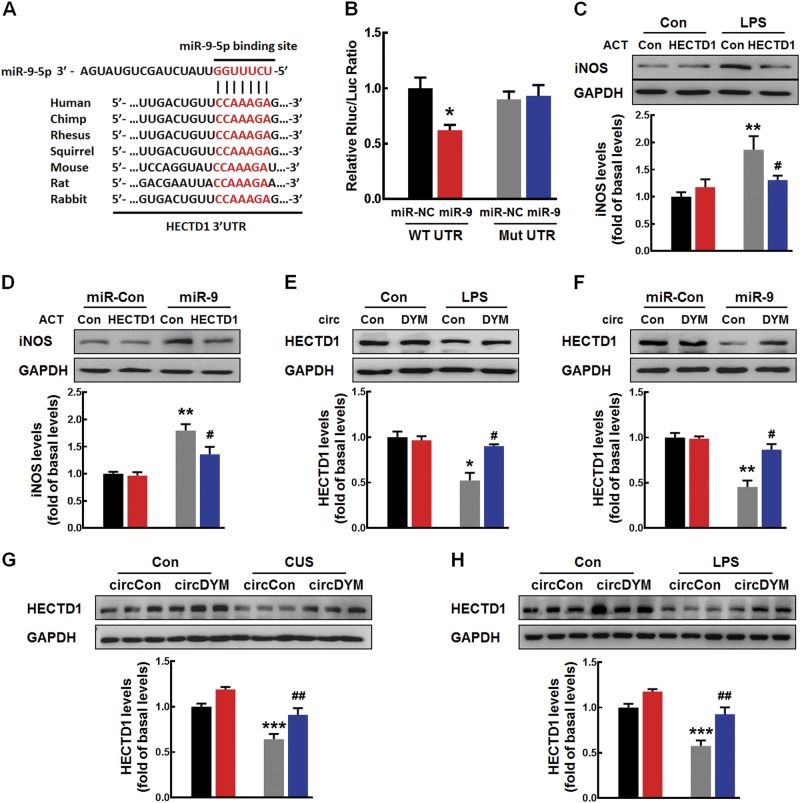
Circular RNAs (circRNAs), highly expressed in the central nervous system, are involved in various regulatory processes and implicated in some pathophysiology. However, the potential role of circRNAs in psychiatric diseases, particularly major depressive disorder (MDD), remains largely unknown. Here, we demonstrated that circular RNA DYM (circDYM) levels were significantly decreased both in the peripheral blood of patients with MDD and in the two depressive-like mouse models: the chronic unpredictable stress (CUS) and lipopolysaccharide (LPS) models. Restoration of circDYM expression significantly attenuated depressive-like behavior and inhibited microglial activation induced by CUS or LPS treatment. Further examination indicated that circDYM functions as an endogenous microRNA-9 (miR-9) sponge to inhibit miR-9 activity, which results in a downstream increase of target-HECT domain E3 ubiquitin protein ligase 1 (HECTD1) expression, an increase of HSP90 ubiquitination, and a consequent decrease of microglial activation. Taken together, the results of our study demonstrate the involvement of circDYM and its coupling mechanism in depression, providing translational evidence that circDYM may be a novel therapeutic target for depression.
Overview
The claims and statistics of this paper haven’t been checked yet.
Run the check — free, no account needed. It reads the open-access text and checks the sources it cites.
Integrity signals
Registry
Cites
Statistics
Figures
Verification
Claims the paper makes
The claims and statistics of this paper haven’t been checked yet.
Run the check — free, no account needed. It reads the open-access text and checks the sources it cites.
Claims other papers make about this one
Each is checked against this paper’s own text: does it say what the citing paper says it does?
The source backs part of the claim, not all of it — or backs it for a different population, condition or comparison.
In the citing paper
“| 23 | CircDYM | DYM | Human & | | √ | Plasma, Hippocampus | [21] |”
From Circular RNAs in depression: Biogenesis, function, expression, and therapeutic potential (2021) · cites this paper as [21]
Experimental — accuracy not yet measuredThe source backs part of the claim, not all of it — or backs it for a different population, condition or comparison.
In the citing paper
“circRNAs are abundantly expressed in the brain. And also, circRNAs are involved in the pathogenesis of neuropsychiatric disorders, impacting neuron development, cognitive function, and synaptic plasticity290–292.”
From Epigenetic regulation in major depression and other stress-related disorders: molecular mechanisms, clinical relevance and therapeutic potential (2023) · cites this paper as [290]
Experimental — accuracy not yet measuredThe cited source says what the claim attributes to it.
In the citing paper
“a recent study using two different MDD mouse models demonstrated the presence of a close relationship between depression and decreased circDYM and revealed that increased circDYM expression could significantly attenuate depressive-like behavior and inhibit microglial activity.290”
From Epigenetic regulation in major depression and other stress-related disorders: molecular mechanisms, clinical relevance and therapeutic potential (2023) · cites this paper as [290]
The cited source says what the claim attributes to it.
In the citing paper
“Circular RNA DYM (circDYM) levels were significantly decreased both in the peripheral blood of MDD patients and in the CUMS mouse models.”
From Neuron secrete exosomes containing miR-9-5p to promote polarization of M1 microglia in depression (2022) · cites this paper as [49]
The cited source says what the claim attributes to it.
In the citing paper
“The function of CircDYM was acting as an endogenous miR-9 sponge to restrain its activity [49].”
From Neuron secrete exosomes containing miR-9-5p to promote polarization of M1 microglia in depression (2022) · cites this paper as [49]
In the citing paper
“Likewise, the role of circRNAs as novel therapeutic targets to ameliorate depression-like symptoms has been demonstrated in various animal models [21][22][23][24].”
From Circular RNAs in depression: Biogenesis, function, expression, and therapeutic potential (2021) · cites this paper as [21]
In the citing paper
“Researchers have reported that the level of circular DYM (circDYM) was significantly lower in the peripheral blood of patients with depression and in two depressive-like mouse models induced by CUS and LPS.”
From Circular RNAs in depression: Biogenesis, function, expression, and therapeutic potential (2021) · cites this paper as [21]
In the citing paper
“Restoration of circDYM expression significantly attenuated depressive-like behaviors, which may have been mediated by circDYM acting as an endogenous miR-9 sponge to inhibit miR-9 activity, resulting in a decrease of microglial activation via heat shock protein 90 (HSP90) ubiquitination [21] (Fig. 3B).”
From Circular RNAs in depression: Biogenesis, function, expression, and therapeutic potential (2021) · cites this paper as [21]
In the citing paper
“(B) CircDYM targets miR-9 to regulate microglial activation through HSP90 ubiquitination in the CUS/LPS model mouse.”
From Circular RNAs in depression: Biogenesis, function, expression, and therapeutic potential (2021) · cites this paper as [21]
Self-check
Percentages, sums and reported differences re-computed from the paper’s own numbers.
The self-check needs the paper’s full text.
Citations
Cites
Vos, T., Abajobir, A. A., Abate, K. H., Abbafati, C., Abbas, K. M., Abd-Allah, F., Abdulkader, R. S., Abdulle, A. M., Abebo, T. A., Abera, S. F., et al. (2017) · The Lancet · doi:10.1016/s0140-6736(17)32154-2 · Cited by 13,220
Self-citationCircular RNAs are a large class of animal RNAs with regulatory potency
Memczak, S., Jens, M., Elefsinioti, A., Torti, F., Krueger, J., Rybak, A., Maier, L., Mackowiak, S. D., Gregersen, L. H., Munschauer, M., et al. (2013) · Nature · doi:10.1038/nature11928 · Cited by 7,990
Natural RNA circles function as efficient microRNA sponges
Hansen, T. B., Jensen, T. I., Clausen, B. H., Bramsen, J. B., Finsen, B., Damgaard, C. K., & Kjems, J. (2013) · Nature · doi:10.1038/nature11993 · Cited by 7,985
Vos, T., Barber, R. M., Bell, B., Bertozzi-Villa, A., Biryukov, S., Bolliger, I., Charlson, F., Davis, A., Degenhardt, L., Dicker, D., et al. (2015) · The Lancet · doi:10.1016/s0140-6736(15)60692-4 · Cited by 6,414
Whiteford, H. A., Degenhardt, L., Rehm, J., Baxter, A. J., Ferrari, A. J., Erskine, H. E., Charlson, F. J., Norman, R. E., Flaxman, A. D., Johns, N., et al. (2013) · The Lancet · doi:10.1016/s0140-6736(13)61611-6 · Cited by 6,006
Resting microglial cells are highly dynamic surveillants of brain parenchyma in vivo
Nimmerjahn, A., Kirchhoff, F., & Helmchen, F. (2005) · Science · doi:10.1126/science.1110647 · Cited by 5,827
Circular RNAs are abundant, conserved, and associated with ALU repeats
Jeck, W. R., Sorrentino, J. A., Wang, K., Slevin, M. K., Burd, C. E., Liu, J., Marzluff, W. F., & Sharpless, N. E. (2013) · RNA · doi:10.1261/rna.035667.112 · Cited by 4,388
ATP mediates rapid microglial response to local brain injury in vivo
Davalos, D., Grutzendler, J., Yang, G., Kim, J. V., Zuo, Y., Jung, S., Littman, D. R., Dustin, M. L., & Gan, W.-B. (2005) · Nature Neuroscience · doi:10.1038/nn1472 · Cited by 3,913
Hammen, C. (2005) · Annual Review of Clinical Psychology · doi:10.1146/annurev.clinpsy.1.102803.143938 · Cited by 2,979
Detecting and characterizing circular RNAs
Jeck, W. R., & Sharpless, N. E. (2014) · Nature Biotechnology · doi:10.1038/nbt.2890 · Cited by 2,710
Cited by
Sorted by citations
Items 101–185 of 185
Deng, Q., Parker, E., Wu, C., Zhu, L., Liu, T. C., Duan, R., & Yang, L. (2024) · Aging and Disease · doi:10.14336/ad.2024.0239 · Cited by 10
Upregulation of circ0000381 attenuates microglial/macrophage pyroptosis after spinal cord injury
Zhang, Y., Zhang, W., Liu, T., Ma, Z., Zhang, W., Guan, Y., & Chen, X. (2023) · Neural Regeneration Research · doi:10.4103/1673-5374.386399 · Cited by 10
Self-citationSNORA69 is up-regulated in the lateral habenula of individuals with major depressive disorder
Lin, R., Mitsuhashi, H., Fiori, L. M., Denniston, R., Ibrahim, E. C., Belzung, C., Mechawar, N., & Turecki, G. (2024) · Scientific Reports · doi:10.1038/s41598-024-58278-2 · Cited by 11
Gao, F., Zhang, Z., Ju, M., Bian, L., Wang, H., Zhao, S., Cai, N., Wang, Y., Jia, Y., Shen, L., et al. (2025) · Advanced Science · doi:10.1002/advs.202414559 · Cited by 9
Self-citationIvanov, A., Mattei, D., Radscheit, K., Compagnion, A., Pett, J. P., Herzel, H., Paolicelli, R. C., Piwecka, M., Meyer, U., & Beule, D. (2022) · International Journal of Molecular Sciences · doi:10.3390/ijms232012347 · Cited by 12
The Roles of Long Noncoding RNA in Depression
Wang, S., Tang, L., Huang, N., & Wang, H. (2023) · Frontiers in Bioscience-Landmark · doi:10.31083/j.fbl2811321 · Cited by 8
YTHDF2 alleviates microglia activation via promoting circHIPK2 degradation
Huang, R., Sun, M. H., Wang, W., Yu, X., & Liu, F. (2023) · Journal of Neuroimmunology · doi:10.1016/j.jneuroim.2023.578265 · Cited by 8
Self-citationHuang, X., & Guo, L. (2023) · Molecular Reproduction and Development · doi:10.1002/mrd.23667 · Cited by 8
Gao, S., Ding, Y., Tian, H., Li, G., Xu, G., Zhang, J., Xie, S., & Cheng, J. R. (2025) · Psychiatry and Clinical Neurosciences · doi:10.1111/pcn.13916 · Cited by 8
He, Y., Jiang, L., Liu, H., Bu, Q., Kuang, W., Zhao, Y., Chen, Y., Zhang, N., Xiao, Y., Li, S., et al. (2023) · Biological Psychiatry · doi:10.1016/j.biopsych.2023.10.017 · Cited by 7
Self-citationZhang, Y., & Tang, C. (2024) · Aging and Disease · doi:10.14336/ad.2024.0326 · Cited by 7
Self-citationCircKat6b Mediates the Antidepressant Effect of Esketamine by Regulating Astrocyte Function
Hu, N., Zheng, Y., Liu, X., Jia, J., Feng, J., Zhang, C., Liu, L., & Wang, X. (2024) · Molecular Neurobiology · doi:10.1007/s12035-024-04420-0 · Cited by 7
Nie, K., Liu, L., Peng, L., Zhang, M., Zhang, C., Xiao, B., Xia, Z., & Huang, W. J. (2022) · Journal of Molecular Neuroscience · doi:10.1007/s12031-022-01971-6 · Cited by 7
Gong, Z., Rong, X., Li, X., Wang, H., Liu, D., He, L., Pan, J., Shen, Q., & Peng, Y. (2022) · The American Journal of Drug and Alcohol Abuse · doi:10.1080/00952990.2022.2073449 · Cited by 7
A Narrative Review of Circular RNAs in Brain Development and Diseases of Preterm Infants
Gu, Q., Liu, H., Ma, J., Yuan, J., Li, X., & Qiao, L. (2021) · Frontiers in Pediatrics · doi:10.3389/fped.2021.706012 · Cited by 7
Zeng, X., Dong, X., Xiao, Q., & Yao, J. (2022) · ACS Chemical Neuroscience · doi:10.1021/acschemneuro.1c00845 · Cited by 7
He, Y., Houtenbos, S. P., & Wippert, P. (2025) · BMC Psychiatry · doi:10.1186/s12888-025-07054-1 · Cited by 8
Progress on RNA-based therapeutics for genetic diseases
Ting, L. U. O., Huo, C., Zhou, T., & Xie, S. (2023) · Journal of Zhejiang University (Medical Sciences) · doi:10.3724/zdxbyxb-2023-0190 · Cited by 6
The role and advance of ubiquitination and deubiquitination in depression pathogenesis and treatment
Yan, X., Ma, Y., Yang, J., Chang, X., Shi, S., & Song, G. (2024) · Drug Development Research · doi:10.1002/ddr.70005 · Cited by 6
Zhang, Y., Wang, Y., Wang, H., Bian, L., Gao, F., Yao, H., & Xie, J. (2025) · ACS Applied Materials & Interfaces · doi:10.1021/acsami.4c19377 · Cited by 6
Self-citationShi, Y., Hu, Y., Gan, Y., Mi, Z., Luo, S., Lei, J., Fang, Q., & Li, H. (2025) · Neuropharmacology · doi:10.1016/j.neuropharm.2025.110432 · Cited by 6
Roles of miR-432 and circ_0000418 in mediating the anti-depressant action of ADAR1
Zhang, X., Yan, W., Xue, Y., Xu, H., Li, J., Zhao, Z., Sun, Y., Wang, Y., He, J., Huang, Y., et al. (2021) · Neurobiology of Stress · doi:10.1016/j.ynstr.2021.100396 · Cited by 6
Self-citationCircPTK2 may be associated with depressive-like behaviors by influencing miR-182-5p
Wang, K., Yang, Y., Wang, Y., Jiang, Z., & Fang, S. (2024) · Behavioural Brain Research · doi:10.1016/j.bbr.2024.114870 · Cited by 7
NeuroCirc: an integrative resource of circular RNA expression in the human brain
Walsh, K., Gokoolparsadh, A., Alinejad-Rokny, H., & Voineagu, I. (2021) · Bioinformatics · doi:10.1093/bioinformatics/btab230 · Cited by 6
CircRNA-Based Therapeutics: a New Frontier in Neuroinflammation Treatment
Muhammed, T. M., Jasim, S. A., Uthirapathy, S., Mandaliya, V. B., Ballal, S., Kalia, R., Arya, R., Nakash, P., Mustafa, Y. F., & Ahmed, J. K. (2025) · Molecular Neurobiology · doi:10.1007/s12035-025-05258-w · Cited by 5
Tan, L., Zhao, W., Wang, H. Y., Huang, X., Lin, Y., Yin, L., Liu, X., Wang, J., Wu, N., & Wang, H. (2025) · Molecular Psychiatry · doi:10.1038/s41380-025-03167-x · Cited by 8
Lv, Z., Xie, Q., Li, K., Fan, Z., Cui, Y., & Dong, Y. (2026) · Molecular Psychiatry · doi:10.1038/s41380-026-03569-5 · Cited by 5
Sequence variants in HECTD1 result in a variable neurodevelopmental disorder
Zerafati‐Jahromi, G., Oxman, E., Hoang, H. D., Charng, W., Kotla, T., Yuan, W., Ishibashi, K., Sebaoui, S., Luedtke, K., Winrow, B., et al. (2025) · The American Journal of Human Genetics · doi:10.1016/j.ajhg.2025.01.001 · Cited by 5
Han, X., Wang, D., Chen, L., Song, H., Zheng, X., Zhang, X., Zhao, S., Liang, J., Xu, T., Hu, Z., et al. (2025) · JCI Insight · doi:10.1172/jci.insight.181885 · Cited by 5
Depression: epigenetics and epitranscriptomic modifications
Banerjee, S., Shrilaxmi, M. S., Banerjee, S., Prajwal, B. G., Smith, C., D’Mello, S. R., & Dastidar, S. G. (2025) · The World Journal of Biological Psychiatry · doi:10.1080/15622975.2025.2602171 · Cited by 4
He, J., Xie, P., An, X., Guo, D., Bi, B., Wu, G., Yu, W., Ren, Z., & Zuo, L. (2024) · Current Medical Science · doi:10.1007/s11596-024-2917-8 · Cited by 4
Unlocking the potential of engineered circular RNA therapeutics
Zhen, X., Mahmoudi, M., Lan, X., Huang, G., & Tao, W. (2026) · Med-X · doi:10.1007/s44258-026-00079-5 · Cited by 4
Zhang, H., Chen, X., & Qian, J. (2024) · Journal of Neuroimmunology · doi:10.1016/j.jneuroim.2024.578486 · Cited by 3
Self-citationSilva, J. P., Corrales, W. A., Catalán, J., Olave, F. A., González, P. I., Alarcón, M., Guarnieri, T., Aliaga, E., Maracaja‐Coutinho, V., & Fiedler, J. L. (2025) · ACS Chemical Neuroscience · doi:10.1021/acschemneuro.4c00681 · Cited by 3
Biomarkers For the Diagnosis of Depression: Recent Updates
Kore, M. S., & Prabhavalkar, K. S. (2022) · Current Psychiatry Research and Reviews · doi:10.2174/2666082219666221114114738 · Cited by 4
Gillespie, A., & Daws, S. E. (2025) · International Journal of Molecular Sciences · doi:10.3390/ijms26115010 · Cited by 2
Pharmacological mechanism and structure of ubiquitin proteases associated with depression: A review.
Jiang, Y., Ye, L., Han, K.-X., Bao, L., Zhao, F., Wang, D., Li, X., Sun, Z.-M., & Chen, J. (2025) · International Journal of Biological Macromolecules · doi:10.1016/j.ijbiomac.2025.145220 · Cited by 2
Yan, M., Chen, M., Jiang, Q. L., Huang, H., & Wu, Y. (2025) · Frontiers in Psychiatry · doi:10.3389/fpsyt.2025.1556983 · Cited by 3
Lu, Y., Zheng, Y., Sun, X., Song, Y., Zhou, Y., Shen, F., Huang, R., & Xu, Z. (2025) · Neuropsychopharmacology · doi:10.1038/s41386-025-02207-y · Cited by 2
Self-citationThe emerging role of circular RNAs in neuropsychiatric disorders
Huang, S., Song, Z., Pan, J., Luo, Y., & Chen, Y. (2025) · Translational Psychiatry · doi:10.1038/s41398-025-03787-5 · Cited by 3
Circular RNAs in human biology: from splicing noise to master regulators
Kargar, R., & Babakhanzadeh, E. (2026) · Molecular Biology Reports · doi:10.1007/s11033-026-11443-4 · Cited by 2
Addictive drug abuse and depression-a focus on epigenetics
Zhang, W., Xu, M., Wang, C., Liang, H., Zhu, X., Pan, Y., & Guo, F. (2026) · Communications Biology · doi:10.1038/s42003-026-09705-9 · Cited by 2
Circular RNAs: Diagnostic and Therapeutic Perspectives in CNS Diseases
Bai, Y., & Yao, H. (2023) · Current Medical Science · doi:10.1007/s11596-023-2784-8 · Cited by 2
Self-citationIdentification and functional analysis of rare HECTD1 missense variants in human neural tube defects
Oxman, E., Li, H., Wang, H.-Y., & Zohn, I. E. (2024) · Human Genetics · doi:10.1007/s00439-024-02647-4 · Cited by 2
Zhang, C., Hu, L., Wang, S., Chen, G., Brito, L. F., Li, B., Xu, Q., & Wang, Y. (2024) · Journal of Agricultural and Food Chemistry · doi:10.1021/acs.jafc.4c07967 · Cited by 2
Novel and emerging physical treatments for major depressive disorder
Cai, Y., Wang, D., Yang, W., Jiang, S., Qiang, Z., Gao, J., Shen, L., & Yao, H. (2025) · Fundamental Research · doi:10.1016/j.fmre.2025.09.003 · Cited by 3
Self-citationResearch progress in role of exosomes exosomes in mental disorders.
Wu, J., Li, S., & Zhang, Y. (2023) · PubMed Central · doi:10.11817/j.issn.1672-7347.2023.220379 · Cited by 2
Self-citationAdvances in depression research: special issue, 2020, with three research articles by Paul Greengard
Licinio, J., & Wong, M. (2020) · Molecular Psychiatry · doi:10.1038/s41380-020-0781-x · Cited by 2
Potential risk factors of susceptibility to recurrent depression
Wang, S., Guo, L., & Wang, C. (2025) · Brain Research Bulletin · doi:10.1016/j.brainresbull.2025.111374 · Cited by 1
Wylie, W., Mellios, N., & Bourgeois, J. A. (2025) · Journal of Neuropsychiatry · doi:10.1176/appi.neuropsych.20240086 · Cited by 1
Zheng, S., Zhan, Y., Ren, Q., Chen, Y., Zheng, M., Wang, T., Ql, L., Zu, M., & Wang, A. (2026) · Brain Research Bulletin · doi:10.1016/j.brainresbull.2026.111792 · Cited by 1
Wang, H., Wu, J., Ma, K., Su, T., Lin, Q., Zhang, H., Ma, T., Wang, P., & LIU, D. (2026) · Psychopharmacology · doi:10.1007/s00213-026-07042-7 · Cited by 1
Self-citationRole of Circular RNAs in Traumatic Brain Injury and Spinal Cord Injury
Arruri, V. K., Mehta, S. L., & Vemuganti, R. (2026) · Journal of Neurotrauma · doi:10.1177/08977151261449704 · Cited by 1
Shabanov, P. D., Иванович, В. В., Savelieva, L. P., & Romashova, Y. E. (2023) · Reviews on Clinical Pharmacology and Drug Therapy · doi:10.17816/rcf334925 · Cited by 1
The role of ncRNAs in depression
Luan, X., Xing, H., Guo, F., Liu, W., Jiao, Y., Liu, Z., Wang, X., & Gao, S. (2024) · Heliyon · doi:10.1016/j.heliyon.2024.e27307 · Cited by 1
Liu, X., He, C., Bai, Y., Fan, D., Zang, F., Zhang, H., Zhang, H., Yao, H., Zhang, Z., & Xie, C. (2024) · Chinese Medical Journal · doi:10.1097/cm9.0000000000003188 · Cited by 1
Self-citationIvanov, A., Mattei, D., Radscheit, K., Compagnion, A., Pett, J. P., Herzel, H., Paolicelli, R. C., Piwecka, M., Meyer, U., & Beule, D. (2022) · bioRxiv (Cold Spring Harbor Laboratory) · doi:10.1101/2022.05.18.492346 · Cited by 1
Licinio, J., & Wong, M. (2020) · Molecular Psychiatry · doi:10.1038/s41380-020-0845-y
“Circ-it” for Stress: Role of a Novel Circular RNA in Hippocampal Astrocyte Function and Behavior
Bali, V., & Mazei‐Robison, M. S. (2020) · Biological Psychiatry · doi:10.1016/j.biopsych.2020.05.017
The synergistic effect of circRNA methylation promotes pulmonary fibrosisPreprint
Wang, S., Luo, W., Huang, J., Chen, M., Ding, J., Cheng, Y., Zhang, W., Fang, S., Wang, J., & Chao, J. (2021) · bioRxiv (Cold Spring Harbor Laboratory) · doi:10.1101/2021.08.05.455186
Self-citationLu, Q.-B., Wu, F., Jiao, J., Xue, L., Song, R., Shi, Y., Kong, Y., Sun, J., Gu, N., Han, M., et al. (2021) · SSRN Electronic Journal · doi:10.2139/ssrn.3974117
Self-citationNovel Mechanism of Lowering Blood Pressure by Electroacupuncture:MicroRNA9/P2RX7Preprint
Yue, B., Sun, J., Zhou, Z., Li, X., Liu, X., & Liu, Q. (2022) · Research Square · doi:10.21203/rs.3.rs-1266362/v1
Zeng, N.-X., Li, H., Wang, H., Liu, K., Gong, X., Luo, W.-L., Yan, C., & Wu, L.-L. (2020) · Research Square · doi:10.21203/rs.3.rs-80131/v1
The CircRNAs for Diagnostic, Prognostic, and Therapy in Alzheimer’s Disease
Cabrera-Reyes, E. A., Jiménez-Acosta, M. A., Padilla-Cristerna, M. L., & Meraz‐Ríos, M. A. (2022) · Advances in Bioscience and Biotechnology · doi:10.4236/abb.2022.1312035
Mechanism of circDYM/CEBPB/ZC3H4 axis in LPS-induced Microglial ApoptosisPreprint
Zhou, Z., Ye, Q., Ren, H., Yang, L., Zhang, Y., Han, B., Yao, H., & Bai, Y. (2023) · Research Square · doi:10.21203/rs.3.rs-3094444/v1
Self-citationChen, G., Qian, H.-M., Chen, J., Wang, J., Guan, J.-T., & Chi, Z. (2021) · Figshare · doi:10.6084/m9.figshare.16909534
Culprit inhibiting GR nucleus translocation
Chen, W., Xu, X., & Zhu, D. (2024) · Chinese Science Bulletin (Chinese Version) · doi:10.1360/tb-2024-0707
Zhang, X., Shi, X., & Liu, Z. (2025) · Cell Biochemistry and Biophysics · doi:10.1007/s12013-025-01705-6
Xu, D., Huang, Z., Zhang, G., Jiao, J., Cao, Y., Liu, M., Kong, Y., & Zhang, Z. (2025) · Genes & Diseases · doi:10.1016/j.gendis.2025.101718
Self-citationShareef, A., Sameer, H. N., Yaseen, A., Athab, Z. H., Adil, M., & Allela, O. Q. B. (2025) · Molecular Neurobiology · doi:10.1007/s12035-025-05459-3
Roles of circular RNAs targeted to synapses: Narrative review of potential mechanisms and biomarkers
Li, X., Li, Z., Ping, P., Zhang, J., Wang, H., Ding, Z., & Wang, J. (2025) · NeuroMarkers. · doi:10.1016/j.neumar.2025.100145
Chen, X., Cui, Q.-Q., Hu, X.-H., Ye, J., Liu, Z.-C., Mei, Y.-X., Wang, F., Hu, Z.-L., & Chen, J.-G. (2023) · Figshare · doi:10.6084/m9.figshare.23612412
Tang, Y., Zhou, M., Huang, R., Shen, L., Yang, L., Zhou, Z., Ren, H., & Bai, Y. (2021) · Figshare · doi:10.6084/m9.figshare.14337471
Self-citationChen, G., Qian, H.-M., Chen, J., Wang, J., Guan, J.-T., & Chi, Z. (2021) · Figshare · doi:10.6084/m9.figshare.16909531
Zuo, L., Xie, J., Liu, Y., Leng, S., Zhang, Z., & Yan, F. (2021) · Figshare · doi:10.6084/m9.figshare.17141065
Self-citationPlasma Circular RNAs as Potential Biomarkers to Assist in the Diagnosis of Postpartum Depression
Zhang, F., Zhang, Y., Qiao, D., Yu, H., Yu, H., & Yu, H. (2026) · Clinical and Experimental Obstetrics & Gynecology · doi:10.31083/ceog47150
Self-citationLin, L., Li, L., Ren, S., 刘丽平, Liu, Y., Zhang, W., Gao, Z., Ni, X., Li, H., Duan, X., et al. (2026) · Neurotherapeutics · doi:10.1016/j.neurot.2026.e00909
Yang, X., Gao, F., Yang, Z., Yu, D., Chen, J., 姚震, Liao, Q., Yang, J., Liu, J., Gu, B., et al. (2026) · Acta Pharmaceutica Sinica B · doi:10.1016/j.apsb.2026.06.004
Self-citationDu, L., Ding, Z., Sun, L., Qin, Y., Sun, H., Pan, Y., & Wang, S. (2026) · Molecular Medicine · doi:10.1186/s10020-026-01524-2
Self-citationHu, T., Yan, L., Huang, C., Zhang, H., Guo, Y., Zhang, W. X., & Jiang, C. (2026) · Journal of Translational Internal Medicine · doi:10.1515/jtim-2026-0033
Self-citationYu, X., Lü, Y., Tan, Z., Gao, S., Ye, L., Luo, X. H., Xie, J., Miao, Y., Wang, B., Liang, C., et al. (2026) · Journal of Nanobiotechnology · doi:10.1186/s12951-026-04734-2
Cross-link Between CircRNAs and Neuroinflammation in Parkinson’s Disease
El‐Ashmawy, N. E., Khedr, E. G., Darwish, R. T., & Ibrahim, A. O. (2026) · Molecular Neurobiology · doi:10.1007/s12035-026-06085-3
Li, J., Guan, X., Zhang, R., & Zhang, H. (2026) · Journal of Translational Medicine · doi:10.1186/s12967-026-08772-0
Self-citationLiu, T., Chen, X., Sun, T., Wu, J., Yan, H., Liu, X., Lin, H., Wang, X., Xiao, Z., Xu, Y., et al. (2026) · Advanced Science · doi:10.1002/advs.78208
Metadata
- Authors
- Zhang, Y., Du, L., Bai, Y., Han, B., He, C., Gong, L., Huang, R., Shen, L., Chao, J., Liu, P., Zhang, H., Zhang, H., Gu, L., Li, J., Hu, G., Xie, C., Zhang, Z., & Yao, H.
- Affiliations
- Southeast University (CN)
- Zhongda Hospital Southeast University (CN)
- Henan Medical University (CN)
- Nanjing University of Chinese Medicine (CN)
- Nanjing Medical University (CN)
- Henan Psychiatric Hospital (CN)
- Corresponding author
- Xie, Chunming
- Zhang, Zhijun
- Yao, Honghong
- ORCID
- Venue
- Molecular Psychiatry
- Published
- 2018-11-09
- Volume
- 25
- Issue
- 6
- Pages
- 1175-1190
- ISSN
- 1359-4184 (ISSN-L)
- 1476-5578
- PMC
- PMC7244405
- OpenAlex
- W2899654445
- Cited by
- 184
- References
- 63
- Citations by year
- 2026: 16 · 2025: 27 · 2024: 27 · 2023: 29 · 2022: 27 · 2021: 34 · 2020: 19 · 2019: 5
- FWCI
- 5.24
- Type
- journal article
- Language
- en
- Open access
- hybrid
- doi.org
- Locations
- Molecular Psychiatry (publishedVersion, cc-by)
- PubMed Central (publishedVersion, cc-by)
- PubMed (publishedVersion)
- Funders
- National Natural Science Foundation of China (2017YFA0104303, 2016YFC1306700, 81473190, 81603090, 81761138048, 81673410, 81322048)
- National Key Research and Development Program of China (2016YFC1306700, 2016YFC1305802, 2016YFC1305800, 2017YFA0104303)
- Fundamental Research Funds for the Central Universities (2017YFA0104303)
- Topics
- Life Sciences › Biochemistry, Genetics and Molecular Biology › Molecular Biology › Circular RNAs in diseases
- Health Sciences › Medicine › Pharmacology (medical) › Treatment of Major Depression
- Life Sciences › Neuroscience › Biological Psychiatry › Tryptophan and brain disorders
- Keywords
- circular RNA, major depressive disorder, depression-like behavior, miR-9, HECTD1, microglial activation, chronic unpredictable mild stress, lipopolysaccharide, peripheral blood biomarkers, therapeutic target
- MeSH terms
- RNA, Circular, Animals, Major Depressive Disorder, Disease Models, Animal, Humans, Male, Mice, Inbred C57BL, Microglia, HSP90 Heat-Shock Proteins, MicroRNAs, Mice, Ubiquitination
About these checks
Registry, retraction, Cites and statistics results are computed, not judged, with one exception: a printed reference that no index lists is read once by a model before it counts as a citation error. Claims are extracted by a model and kept only when their quote appears verbatim in the text; each cited source is then checked, with a model’s help, for whether it says what the claim relies on. Those verdicts can be wrong — read the claim’s quote and the cited source before relying on one.
Statistics and arithmetic are recomputed, not judged.
Confidence bands are shown only for fields calibrated on our annotated test set. None is calibrated yet, so no band is shown.
What counts as a claim ›How we measure confidence ›How we check this ›
Are you an author, or do you see a problem with this page? Request a review
