

The DOI matches its Crossref record; 62 of the 63 references it cites were found in a registry or an index.
CircDYM ameliorates depressive-like behavior by targeting miR-9 to regulate microglial activation via HSP90 ubiquitination
Open accessAbstract
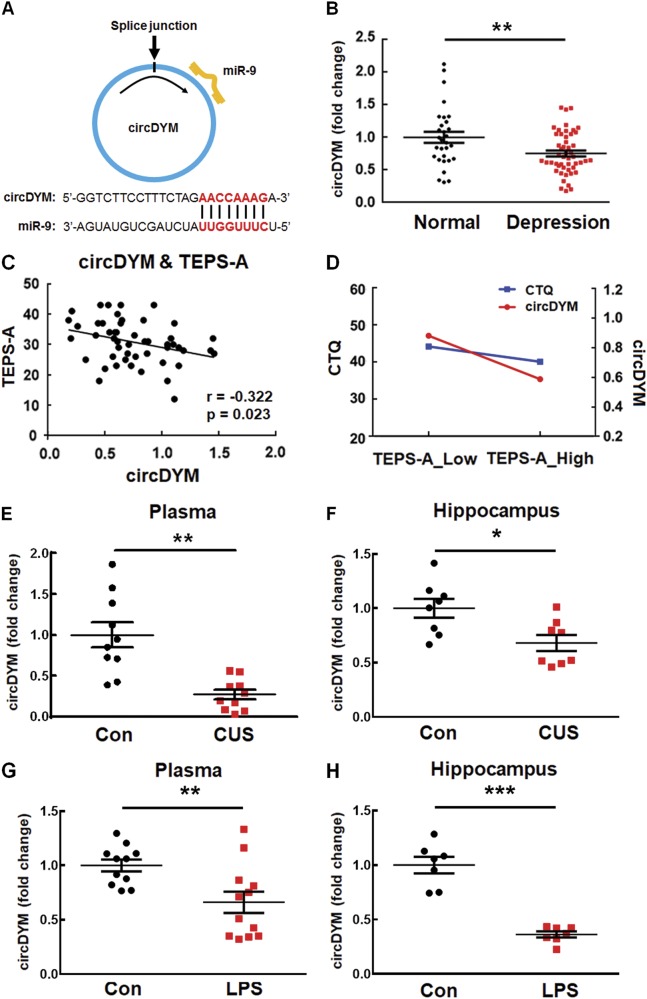
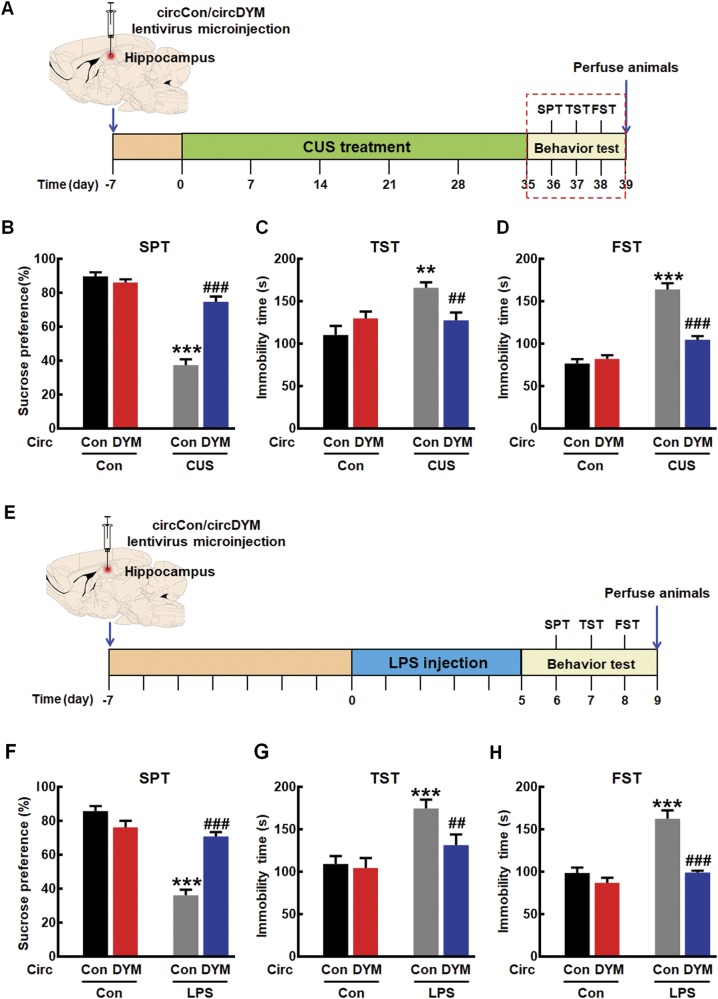
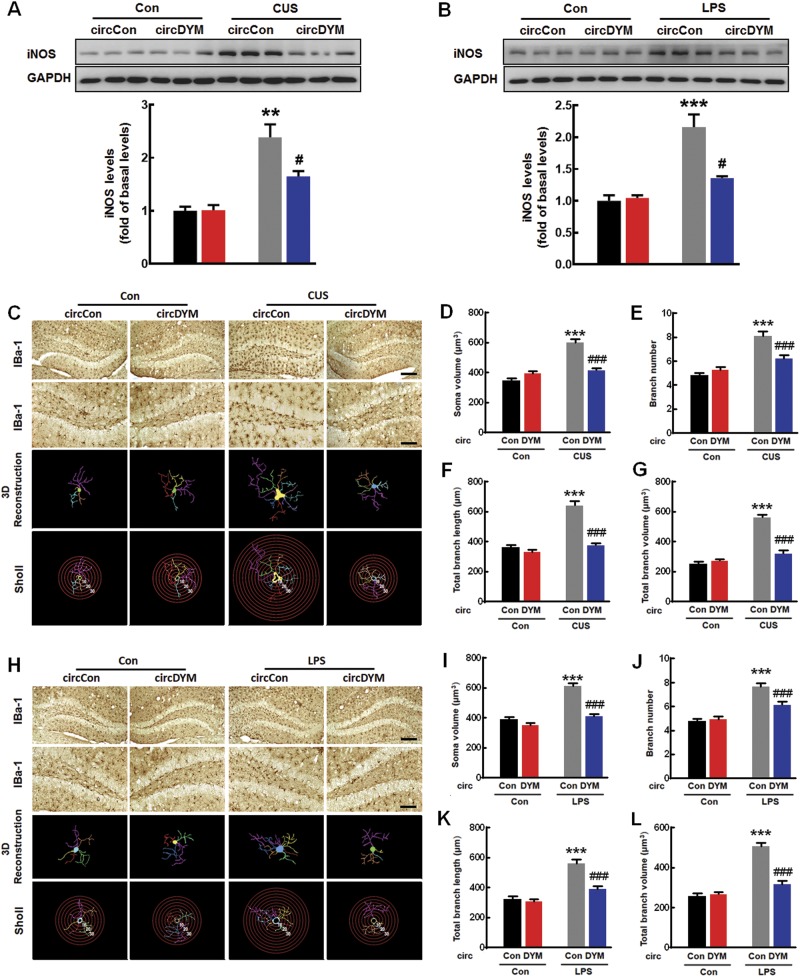
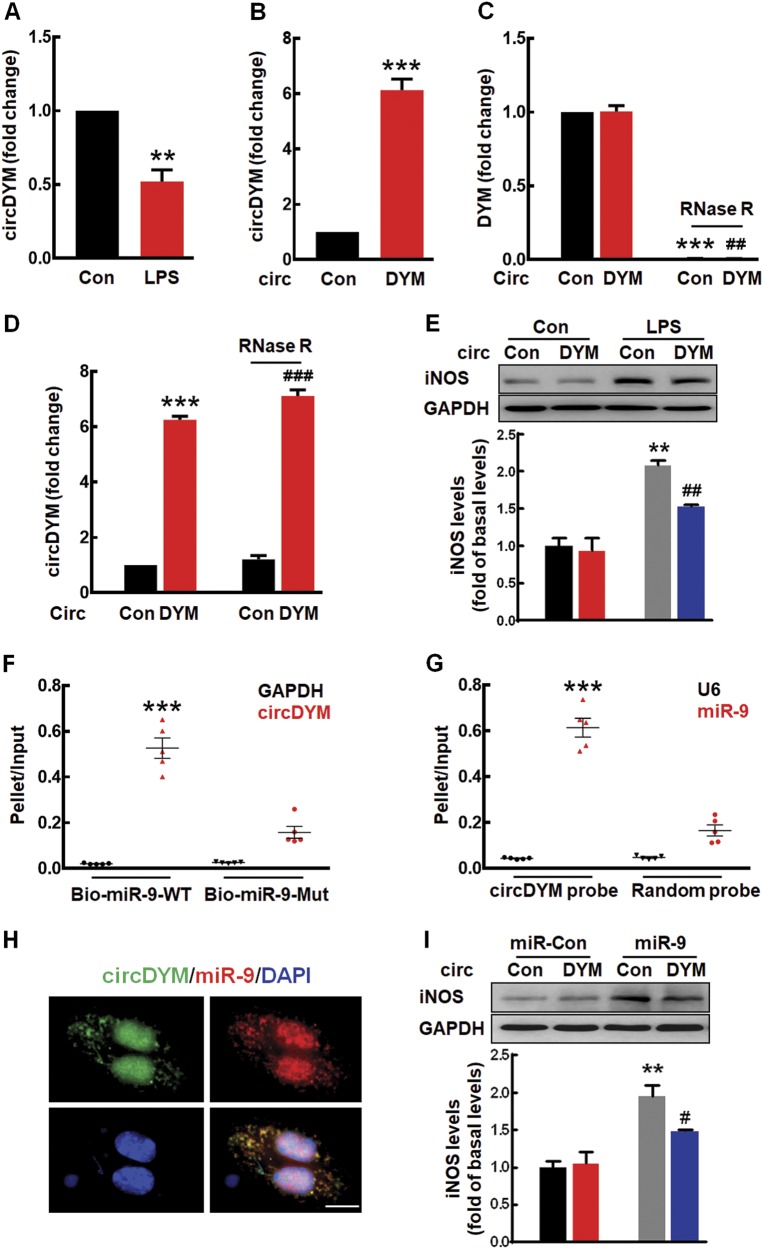
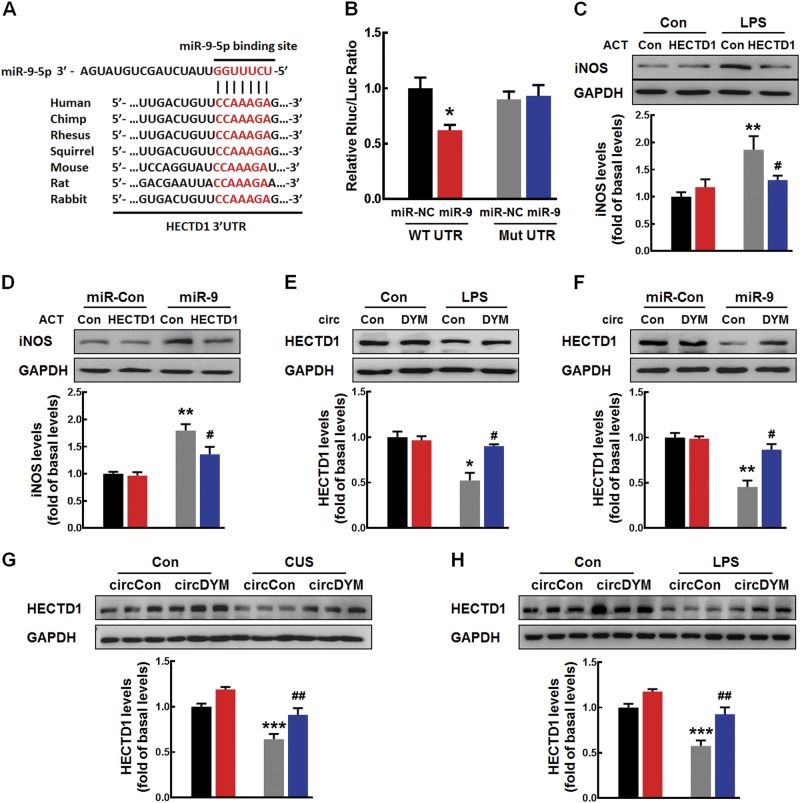
Circular RNAs (circRNAs), highly expressed in the central nervous system, are involved in various regulatory processes and implicated in some pathophysiology. However, the potential role of circRNAs in psychiatric diseases, particularly major depressive disorder (MDD), remains largely unknown. Here, we demonstrated that circular RNA DYM (circDYM) levels were significantly decreased both in the peripheral blood of patients with MDD and in the two depressive-like mouse models: the chronic unpredictable stress (CUS) and lipopolysaccharide (LPS) models. Restoration of circDYM expression significantly attenuated depressive-like behavior and inhibited microglial activation induced by CUS or LPS treatment. Further examination indicated that circDYM functions as an endogenous microRNA-9 (miR-9) sponge to inhibit miR-9 activity, which results in a downstream increase of target-HECT domain E3 ubiquitin protein ligase 1 (HECTD1) expression, an increase of HSP90 ubiquitination, and a consequent decrease of microglial activation. Taken together, the results of our study demonstrate the involvement of circDYM and its coupling mechanism in depression, providing translational evidence that circDYM may be a novel therapeutic target for depression.
Overview
The claims and statistics of this paper haven’t been checked yet.
Run the check — free, no account needed. It reads the open-access text and checks the sources it cites.
Integrity signals
Registry
Cites
Statistics
Figures
Verification
Claims the paper makes
The claims and statistics of this paper haven’t been checked yet.
Run the check — free, no account needed. It reads the open-access text and checks the sources it cites.
Claims other papers make about this one
Each is checked against this paper’s own text: does it say what the citing paper says it does?
The source backs part of the claim, not all of it — or backs it for a different population, condition or comparison.
In the citing paper
“| 23 | CircDYM | DYM | Human & | | √ | Plasma, Hippocampus | [21] |”
From Circular RNAs in depression: Biogenesis, function, expression, and therapeutic potential (2021) · cites this paper as [21]
Experimental — accuracy not yet measuredThe source backs part of the claim, not all of it — or backs it for a different population, condition or comparison.
In the citing paper
“circRNAs are abundantly expressed in the brain. And also, circRNAs are involved in the pathogenesis of neuropsychiatric disorders, impacting neuron development, cognitive function, and synaptic plasticity290–292.”
From Epigenetic regulation in major depression and other stress-related disorders: molecular mechanisms, clinical relevance and therapeutic potential (2023) · cites this paper as [290]
Experimental — accuracy not yet measuredThe cited source says what the claim attributes to it.
In the citing paper
“a recent study using two different MDD mouse models demonstrated the presence of a close relationship between depression and decreased circDYM and revealed that increased circDYM expression could significantly attenuate depressive-like behavior and inhibit microglial activity.290”
From Epigenetic regulation in major depression and other stress-related disorders: molecular mechanisms, clinical relevance and therapeutic potential (2023) · cites this paper as [290]
The cited source says what the claim attributes to it.
In the citing paper
“Circular RNA DYM (circDYM) levels were significantly decreased both in the peripheral blood of MDD patients and in the CUMS mouse models.”
From Neuron secrete exosomes containing miR-9-5p to promote polarization of M1 microglia in depression (2022) · cites this paper as [49]
The cited source says what the claim attributes to it.
In the citing paper
“The function of CircDYM was acting as an endogenous miR-9 sponge to restrain its activity [49].”
From Neuron secrete exosomes containing miR-9-5p to promote polarization of M1 microglia in depression (2022) · cites this paper as [49]
In the citing paper
“Likewise, the role of circRNAs as novel therapeutic targets to ameliorate depression-like symptoms has been demonstrated in various animal models [21][22][23][24].”
From Circular RNAs in depression: Biogenesis, function, expression, and therapeutic potential (2021) · cites this paper as [21]
In the citing paper
“Researchers have reported that the level of circular DYM (circDYM) was significantly lower in the peripheral blood of patients with depression and in two depressive-like mouse models induced by CUS and LPS.”
From Circular RNAs in depression: Biogenesis, function, expression, and therapeutic potential (2021) · cites this paper as [21]
In the citing paper
“Restoration of circDYM expression significantly attenuated depressive-like behaviors, which may have been mediated by circDYM acting as an endogenous miR-9 sponge to inhibit miR-9 activity, resulting in a decrease of microglial activation via heat shock protein 90 (HSP90) ubiquitination [21] (Fig. 3B).”
From Circular RNAs in depression: Biogenesis, function, expression, and therapeutic potential (2021) · cites this paper as [21]
In the citing paper
“(B) CircDYM targets miR-9 to regulate microglial activation through HSP90 ubiquitination in the CUS/LPS model mouse.”
From Circular RNAs in depression: Biogenesis, function, expression, and therapeutic potential (2021) · cites this paper as [21]
Self-check
Percentages, sums and reported differences re-computed from the paper’s own numbers.
The self-check needs the paper’s full text.
Citations
Cites
Vos, T., Abajobir, A. A., Abate, K. H., Abbafati, C., Abbas, K. M., Abd-Allah, F., Abdulkader, R. S., Abdulle, A. M., Abebo, T. A., Abera, S. F., et al. (2017) · The Lancet · doi:10.1016/s0140-6736(17)32154-2 · Cited by 13,220
Self-citationCircular RNAs are a large class of animal RNAs with regulatory potency
Memczak, S., Jens, M., Elefsinioti, A., Torti, F., Krueger, J., Rybak, A., Maier, L., Mackowiak, S. D., Gregersen, L. H., Munschauer, M., et al. (2013) · Nature · doi:10.1038/nature11928 · Cited by 7,990
Natural RNA circles function as efficient microRNA sponges
Hansen, T. B., Jensen, T. I., Clausen, B. H., Bramsen, J. B., Finsen, B., Damgaard, C. K., & Kjems, J. (2013) · Nature · doi:10.1038/nature11993 · Cited by 7,985
Vos, T., Barber, R. M., Bell, B., Bertozzi-Villa, A., Biryukov, S., Bolliger, I., Charlson, F., Davis, A., Degenhardt, L., Dicker, D., et al. (2015) · The Lancet · doi:10.1016/s0140-6736(15)60692-4 · Cited by 6,414
Whiteford, H. A., Degenhardt, L., Rehm, J., Baxter, A. J., Ferrari, A. J., Erskine, H. E., Charlson, F. J., Norman, R. E., Flaxman, A. D., Johns, N., et al. (2013) · The Lancet · doi:10.1016/s0140-6736(13)61611-6 · Cited by 6,006
Resting microglial cells are highly dynamic surveillants of brain parenchyma in vivo
Nimmerjahn, A., Kirchhoff, F., & Helmchen, F. (2005) · Science · doi:10.1126/science.1110647 · Cited by 5,827
Circular RNAs are abundant, conserved, and associated with ALU repeats
Jeck, W. R., Sorrentino, J. A., Wang, K., Slevin, M. K., Burd, C. E., Liu, J., Marzluff, W. F., & Sharpless, N. E. (2013) · RNA · doi:10.1261/rna.035667.112 · Cited by 4,388
ATP mediates rapid microglial response to local brain injury in vivo
Davalos, D., Grutzendler, J., Yang, G., Kim, J. V., Zuo, Y., Jung, S., Littman, D. R., Dustin, M. L., & Gan, W.-B. (2005) · Nature Neuroscience · doi:10.1038/nn1472 · Cited by 3,913
Hammen, C. (2005) · Annual Review of Clinical Psychology · doi:10.1146/annurev.clinpsy.1.102803.143938 · Cited by 2,979
Detecting and characterizing circular RNAs
Jeck, W. R., & Sharpless, N. E. (2014) · Nature Biotechnology · doi:10.1038/nbt.2890 · Cited by 2,710
Otte, C., Gold, S. M., Penninx, B. W., Pariante, C. M., Etkin, A., Fava, M., Mohr, D. C., & Schatzberg, A. F. (2016) · Nature Reviews Disease Primers · doi:10.1038/nrdp.2016.65 · Cited by 2,269
Cross-national epidemiology of DSM-IV major depressive episode
Bromet, E., Andrade, L. H., Hwang, I., Sampson, N. A., Alonso, J., de Girolamo, G., de Graaf, R., Demyttenaere, K., Hu, C., Iwata, N., et al. (2011) · BMC Medicine · doi:10.1186/1741-7015-9-90 · Cited by 2,221
Circ-ZNF609 is a circular RNA that can be translated and functions in myogenesis
Legnini, I., Di Timoteo, G., Rossi, F., Morlando, M., Briganti, F., Sthandier, O., Fatica, A., Santini, T., Andronache, A., Wade, M., et al. (2017) · Molecular Cell · doi:10.1016/j.molcel.2017.02.017 · Cited by 2,173
Grand challenges in global mental health
Collins, P. Y., Patel, V., Joestl, S. S., March, D., Insel, T. R., Daar, A. S., Bordin, I. A., Costello, E. J., Durkin, M., Fairburn, C., et al. (2011) · Nature · doi:10.1038/475027a · Cited by 2,043
Willner, P. (1997) · Psychopharmacology · doi:10.1007/s002130050456 · Cited by 1,832
Chronic mild stress-induced anhedonia: A realistic animal model of depression
Willner, P., Muscat, R., & Papp, M. (1992) · Neuroscience & Biobehavioral Reviews · doi:10.1016/s0149-7634(05)80194-0 · Cited by 1,160
Neural circular RNAs are derived from synaptic genes and regulated by development and plasticity
You, X., Vlatkovic, I., Babic, A., Will, T., Epstein, I., Tushev, G., Akbalik, G., Wang, M., Glock, C., Quedenau, C., et al. (2015) · Nature Neuroscience · doi:10.1038/nn.3975 · Cited by 1,149
Depression as a Microglial Disease
Yirmiya, R., Rimmerman, N., & Reshef, R. (2015) · Trends in Neurosciences · doi:10.1016/j.tins.2015.08.001 · Cited by 944
Wang, K., Long, B., Liu, F., Wang, J., Liu, C.-Y., Zhao, B., Zhou, L., Sun, T., Wang, M., Yu, T., et al. (2016) · European Heart Journal · doi:10.1093/eurheartj/ehv713 · Cited by 869
Ponomarev, E. D., Veremeyko, T., Barteneva, N., Krichevsky, A. M., & Weiner, H. L. (2011) · Nature Medicine · doi:10.1038/nm.2266 · Cited by 787
Du, W. W., Yang, W., Chen, Y., Wu, Z., Foster, F. S., Yang, Z., Li, X., & Yang, B. B. (2016) · European Heart Journal · doi:10.1093/eurheartj/ehw001 · Cited by 736
Kreisel, T., Frank, M. G., Licht, T., Reshef, R., Ben-Menachem-Zidon, O., Baratta, M. V., Maier, S. F., & Yirmiya, R. (2014) · Molecular Psychiatry · doi:10.1038/mp.2013.155 · Cited by 663
The organization of the stress system and its dysregulation in depressive illness
Gold, P. W. (2015) · Molecular Psychiatry · doi:10.1038/mp.2014.163 · Cited by 654
A Review of the Clinical, Economic, and Societal Burden of Treatment-Resistant Depression: 1996–2013
Mrazek, D. A., Hornberger, J. C., Altar, C. A., & Degtiar, I. (2014) · Psychiatric Services · doi:10.1176/appi.ps.201300059 · Cited by 580
Frank, M. G., Baratta, M. V., Sprunger, D. B., Watkins, L. R., & Maier, S. F. (2007) · Brain Behavior and Immunity · doi:10.1016/j.bbi.2006.03.005 · Cited by 578
Targeting glutamate signalling in depression: progress and prospects
Murrough, J. W., Abdallah, C. G., & Mathew, S. J. (2017) · Nature Reviews Drug Discovery · doi:10.1038/nrd.2017.16 · Cited by 482
Hinwood, M., Morandini, J., Day, T. A., & Walker, F. R. (2012) · Cerebral Cortex · doi:10.1093/cercor/bhr229 · Cited by 420
Interleukin-1 (IL-1): A central regulator of stress responses
Goshen, I., & Yirmiya, R. (2009) · Frontiers in Neuroendocrinology · doi:10.1016/j.yfrne.2008.10.001 · Cited by 399
Bai, Y., Zhang, Y., Han, B., Yang, L., Chen, X., Huang, R., Wu, F., Chao, J., Liu, P., Hu, G., et al. (2017) · Journal of Neuroscience · doi:10.1523/jneurosci.1348-17.2017 · Cited by 379
Self-citationCircRNA accumulation in the aging mouse brain
Gruner, H. N., Cortés-López, M., Cooper, D. A., Bauer, M. J., & Miura, P. (2016) · Scientific Reports · doi:10.1038/srep38907 · Cited by 366
Hinwood, M., Tynan, R. J., Charnley, J. L., Beynon, S. B., Day, T. A., & Walker, F. R. (2012) · Cerebral Cortex · doi:10.1093/cercor/bhs151 · Cited by 336
Zhao, Y., Alexandrov, P. N., Jaber, V. R., & Lukiw, W. J. (2016) · Genes · doi:10.3390/genes7120116 · Cited by 323
Glucocorticoids mediate stress-induced priming of microglial pro-inflammatory responses
Frank, M. G., Thompson, B. M., Watkins, L. R., & Maier, S. F. (2012) · Brain, Behavior, and Immunity · doi:10.1016/j.bbi.2011.10.005 · Cited by 310 · cited 1×
“Acute stressors induce microglial activation in many brain regions [34, 54], and the effects of chronic stress on microglial activation are heterogeneous due to multiple variables, including the stress paradigm (timing and types of stressors) [30, 55–58] and the age of animals [59].”
BackgroundmicroRNA-155 Regulates Alpha-Synuclein-Induced Inflammatory Responses in Models of Parkinson Disease
Thome, A. D., Harms, A. S., Volpicelli‐Daley, L. A., & Standaert, D. G. (2016) · Journal of Neuroscience · doi:10.1523/jneurosci.3900-15.2016 · Cited by 252
Regulatory Role of Circular RNAs and Neurological Disorders
Floris, G., Zhang, L., Follesa, P., & Sun, T. (2016) · Molecular Neurobiology · doi:10.1007/s12035-016-0055-4 · Cited by 208
Franklin, T., Wohleb, E. S., Zhang, Y., Fogaça, M. V., Hare, B. D., & Duman, R. S. (2017) · Biological Psychiatry · doi:10.1016/j.biopsych.2017.06.034 · Cited by 174
Self-citationEpigenetic Signaling in Psychiatric Disorders
Peña, C. J., Bagot, R. C., Labonté, B., & Nestler, E. J. (2014) · Journal of Molecular Biology · doi:10.1016/j.jmb.2014.03.016 · Cited by 163
MiR-9 promotes microglial activation by targeting MCPIP1
Yao, H., Ma, R., Yang, L., Hu, G., Chen, X., Duan, M., Kook, Y., Niu, F., Liao, K., Fu, M., et al. (2014) · Nature Communications · doi:10.1038/ncomms5386 · Cited by 158
Self-citationCircular RNAs in Eukaryotic Cells
Chen, L., Huang, C., Wang, X., & Shan, G. (2015) · Current Genomics · doi:10.2174/1389202916666150707161554 · Cited by 150
Cui, X., Niu, W., Kong, L., He, M., Jiang, K., Chen, S., Zhong, A., Li, W., Lu, J., & Zhang, L. (2016) · Biomarkers in Medicine · doi:10.2217/bmm-2016-0130 · Cited by 150
MicroRNAs as biomarkers for major depression: a role for let-7b and let-7c
Gururajan, A., Naughton, M., Scott, K. A., O’Connor, R. M., Moloney, G. M., Clarke, G. A., Dowling, J. L., Walsh, A. E. L., Ismail, M. F., Shorten, G., et al. (2016) · Translational Psychiatry · doi:10.1038/tp.2016.131 · Cited by 150
MicroRNA-125b regulates microglia activation and motor neuron death in ALS
Parisi, C., Napoli, G., Amadio, S., Spalloni, A., Apolloni, S., Longone, P., & Volonté, C. (2016) · Cell Death & Differentiation · doi:10.1038/cdd.2015.153 · Cited by 139
Stein, D. J., Vasconcelos, M., Albrechet‐Souza, L., Ceresér, K. M., & de Almeida, R. M. M. (2017) · Frontiers in Behavioral Neuroscience · doi:10.3389/fnbeh.2017.00207 · Cited by 137
Dysregulation of miRNA-9 in a Subset of Schizophrenia Patient-Derived Neural Progenitor Cells
Topol, A., Zhu, S., Hartley, B. J., English, J., Hauberg, M. E., Tran, N., Rittenhouse, C. A., Simone, A., Ruderfer, D. M., Johnson, J., et al. (2016) · Cell Reports · doi:10.1016/j.celrep.2016.03.090 · Cited by 122
Lopez, J. P., Kos, A., & Turecki, G. (2018) · Current Opinion in Psychiatry · doi:10.1097/yco.0000000000000379 · Cited by 108
Zhang, Y., Wang, Y., Wang, L., Bai, M., Zhang, X., & Zhu, X. (2015) · International Journal of Neuropsychopharmacology · doi:10.1093/ijnp/pyv025 · Cited by 104
Self-citationYang, L., Han, B., Zhang, Y., Bai, Y., Chao, J., Hu, G., & Yao, H. (2017) · Autophagy · doi:10.1080/15548627.2017.1414755 · Cited by 103
Self-citationWu, H., Zhang, C.-Y., Zhang, S., Chang, M., & Wang, H. (2016) · Cellular Physiology and Biochemistry · doi:10.1159/000445617 · Cited by 90
Sarkar, A. A., & Zohn, I. E. (2012) · The Journal of Cell Biology · doi:10.1083/jcb.201105101 · Cited by 85
Du, X., Jörntén‐Karlsson, M., Xu, Y., Guo, J., Li, J., Mei, X., Han, L., Wang, J., Li, J., Shen, Z., et al. (2017) · European Heart Journal · doi:10.1093/eurheartj/ehx501.p440 · Cited by 78
Self-citationRelationships of circular RNA with diabetes and depression
Jiang, G., Ma, Y., An, T., Pan, Y., Mo, F., Zhao, D., Liu, Y., Miao, J.-N., Gu, Y.-J., Wang, Y., et al. (2017) · Scientific Reports · doi:10.1038/s41598-017-07931-0 · Cited by 75
Xie, X., Li, P., Zhu, J., Zhou, Y., Li, L., Chen, Y., Yu, S., & Zhao, Y. (2017) · Frontiers in Molecular Neuroscience · doi:10.3389/fnmol.2017.00383 · Cited by 66
Lv, J., Zeng, Y., Yu, Q., Dong, J., Zhang, Z., & Zhang, J. (2018) · Brain Research · doi:10.1016/j.brainres.2018.01.032 · Cited by 64
Self-citationZhang, Y., Shen, K., Bai, Y., Lv, X., Huang, R., Zhang, W., Chao, J., Nguyen, L. K., Hua, J., Gan, G., et al. (2016) · Autophagy · doi:10.1080/15548627.2016.1191723 · Cited by 51
Self-citationInvestigation of Dysregulation of Several MicroRNAs in Peripheral Blood of Schizophrenia Patients
Camkurt, M. A., Karababa, F., Erdal, M. E., Bayazıt, H., Kandemir, S. B., Ay, M. E., Kandemır, H., Ay, Ö. İ., Çíçek, E., Selek, S., et al. (2016) · Clinical Psychopharmacology and Neuroscience · doi:10.9758/cpn.2016.14.3.256 · Cited by 48
Jeon, G. S., Park, S. W., Kim, D. W., Seo, J. H., Cho, J., Lim, S. Y., Kim, S. D., & Cho, S. S. (2004) · Glia · doi:10.1002/glia.20075 · Cited by 36
Kavuran, İ. B., Etem, E. Ö., Tektemur, A., & Elyas, H. (2017) · Neuroscience Letters · doi:10.1016/j.neulet.2017.07.017 · Cited by 35
Kongsui, R., Beynon, S. B., Johnson, S. J., Mayhew, J., Kuter, P., Nilsson, M., & Walker, F. R. (2014) · Brain Behavior and Immunity · doi:10.1016/j.bbi.2014.05.017 · Cited by 29
Kacimi, R., & Yenari, M. (2015) · Glia · doi:10.1002/glia.22811 · Cited by 28
HECTD1 controls the protein level of IQGAP1 to regulate the dynamics of adhesive structures
Shen, X., Jia, Z., D’Alonzo, D., Wang, X., Bruder, E., Emch, F. H., Geyter, C. D., & Zhang, H. (2017) · Cell Communication and Signaling · doi:10.1186/s12964-016-0156-8 · Cited by 28
Self-citationPark, J. H., Yoo, K., Lee, C. H., Kim, I. H., Shin, B. N., Choi, J. H., Park, J. H., Hwang, I. K., & Won, M. (2011) · Neurochemical Research · doi:10.1007/s11064-011-0444-z · Cited by 21
Sai, J., Xiong, L., Zheng, J., Liu, C.-G., Lu, Y., Wang, G., Wang, Y., Wang, T., Guan, X., Chen, F., et al. (2016) · Evidence-based Complementary and Alternative Medicine · doi:10.1155/2016/2758140 · Cited by 13
Cited by
Sorted by citations
Han, X., Xu, T., Fang, Q., Zhang, H., Yue, L., Hu, G., & Sun, L. (2021) · Redox Biology · doi:10.1016/j.redox.2021.102010 · Cited by 570
Self-citationDeng, Y., Zhou, M., Wang, J., Yao, J., Yu, J., Liu, W., Wu, L., Wang, J., & Gao, R. (2021) · Gut Microbes · doi:10.1080/19490976.2020.1869501 · Cited by 362
Role of circular RNAs in brain development and CNS diseases
Mehta, S. L., Dempsey, R. J., & Vemuganti, R. (2020) · Progress in Neurobiology · doi:10.1016/j.pneurobio.2020.101746 · Cited by 281
Yuan, M., Yang, B., Rothschild, G., Mann, J. J., Sanford, L. D., Tang, X., Huang, C., Wang, C., & Zhang, W. (2023) · Signal Transduction and Targeted Therapy · doi:10.1038/s41392-023-01519-z · Cited by 246
“290 Regulation of neurotransmitters and synaptic plasticity by circRNAs . circRNAs were also observed to be linked to neurotransmitter function and synaptic plasticity and have a higher expression in the neuropil area compared to their mRNA isoforms.”
BackgroundNeuron secrete exosomes containing miR-9-5p to promote polarization of M1 microglia in depression
Xian, X., Cai, L.-L., Li, Y., Wang, R.-C., Xu, Y.-H., Chen, Y.-J., Xie, Y.-H., Zhu, X.-L., & Li, Y.-F. (2022) · Journal of Nanobiotechnology · doi:10.1186/s12951-022-01332-w · Cited by 169
Metadata
- Authors
- Zhang, Y., Du, L., Bai, Y., Han, B., He, C., Gong, L., Huang, R., Shen, L., Chao, J., Liu, P., Zhang, H., Zhang, H., Gu, L., Li, J., Hu, G., Xie, C., Zhang, Z., & Yao, H.
- Affiliations
- Southeast University (CN)
- Zhongda Hospital Southeast University (CN)
- Henan Medical University (CN)
- Nanjing University of Chinese Medicine (CN)
- Nanjing Medical University (CN)
- Henan Psychiatric Hospital (CN)
- Corresponding author
- Xie, Chunming
- Zhang, Zhijun
- Yao, Honghong
- ORCID
- Venue
- Molecular Psychiatry
- Published
- 2018-11-09
- Volume
- 25
- Issue
- 6
- Pages
- 1175-1190
- ISSN
- 1359-4184 (ISSN-L)
- 1476-5578
- PMC
- PMC7244405
- OpenAlex
- W2899654445
- Cited by
- 184
- References
- 63
- Citations by year
- 2026: 16 · 2025: 27 · 2024: 27 · 2023: 29 · 2022: 27 · 2021: 34 · 2020: 19 · 2019: 5
- FWCI
- 5.24
- Type
- journal article
- Language
- en
- Open access
- hybrid
- doi.org
- Locations
- Molecular Psychiatry (publishedVersion, cc-by)
- PubMed Central (publishedVersion, cc-by)
- PubMed (publishedVersion)
- Funders
- National Natural Science Foundation of China (2017YFA0104303, 2016YFC1306700, 81473190, 81603090, 81761138048, 81673410, 81322048)
- National Key Research and Development Program of China (2016YFC1306700, 2016YFC1305802, 2016YFC1305800, 2017YFA0104303)
- Fundamental Research Funds for the Central Universities (2017YFA0104303)
- Topics
- Life Sciences › Biochemistry, Genetics and Molecular Biology › Molecular Biology › Circular RNAs in diseases
- Health Sciences › Medicine › Pharmacology (medical) › Treatment of Major Depression
- Life Sciences › Neuroscience › Biological Psychiatry › Tryptophan and brain disorders
- Keywords
- circular RNA, major depressive disorder, depression-like behavior, miR-9, HECTD1, microglial activation, chronic unpredictable mild stress, lipopolysaccharide, peripheral blood biomarkers, therapeutic target
- MeSH terms
- RNA, Circular, Animals, Major Depressive Disorder, Disease Models, Animal, Humans, Male, Mice, Inbred C57BL, Microglia, HSP90 Heat-Shock Proteins, MicroRNAs, Mice, Ubiquitination
About these checks
Registry, retraction, Cites and statistics results are computed, not judged, with one exception: a printed reference that no index lists is read once by a model before it counts as a citation error. Claims are extracted by a model and kept only when their quote appears verbatim in the text; each cited source is then checked, with a model’s help, for whether it says what the claim relies on. Those verdicts can be wrong — read the claim’s quote and the cited source before relying on one.
Statistics and arithmetic are recomputed, not judged.
Confidence bands are shown only for fields calibrated on our annotated test set. None is calibrated yet, so no band is shown.
What counts as a claim ›How we measure confidence ›How we check this ›
Are you an author, or do you see a problem with this page? Request a review
