

Foetal oestrogens and autism
Open accessThe DOI matches its Crossref record; 77 of the 77 references it cites were found in a registry or an index.
Abstract
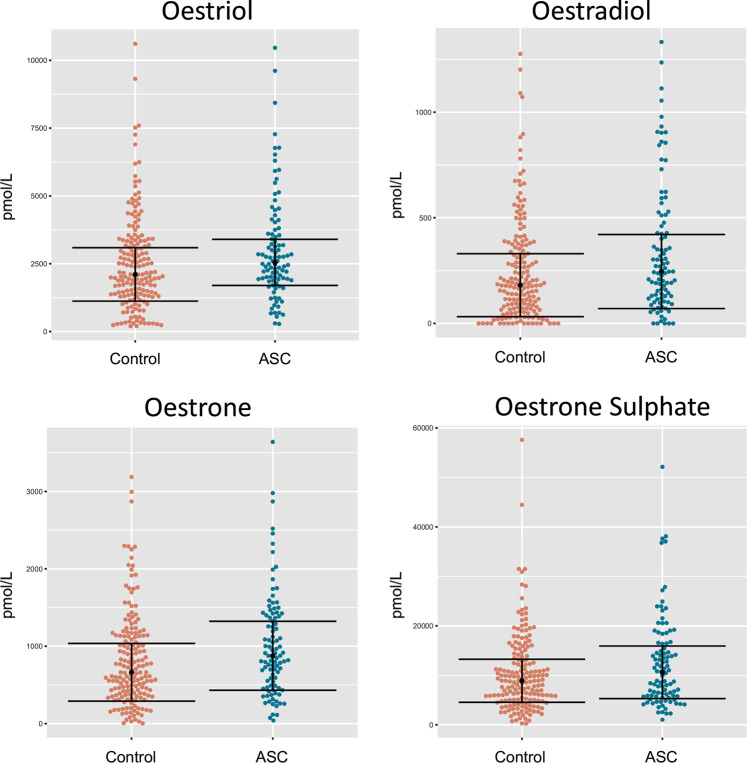
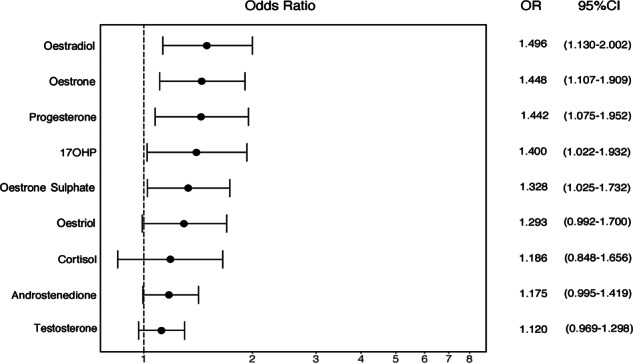
Elevated latent prenatal steroidogenic activity has been found in the amniotic fluid of autistic boys, based on measuring prenatal androgens and other steroid hormones. To date, it is unclear if other prenatal steroids also contribute to autism likelihood. Prenatal oestrogens need to be investigated, as they play a key role in synaptogenesis and corticogenesis during prenatal development, in both males and females. Here we test whether levels of prenatal oestriol, oestradiol, oestrone and oestrone sulphate in amniotic fluid are associated with autism, in the same Danish Historic Birth Cohort, in which prenatal androgens were measured, using univariate logistic regression (n = 98 cases, n = 177 controls). We also make a like-to-like comparison between the prenatal oestrogens and androgens. Oestradiol, oestrone, oestriol and progesterone each related to autism in univariate analyses after correction with false discovery rate. A comparison of standardised odds ratios showed that oestradiol, oestrone and progesterone had the largest effects on autism likelihood. These results for the first time show that prenatal oestrogens contribute to autism likelihood, extending the finding of elevated prenatal steroidogenic activity in autism. This likely affects sexual differentiation, brain development and function.
Overview
The claims and statistics of this paper haven’t been checked yet.
Free: it reads the open-access text and checks the first 5 claims that cite a source we can check. Create a free account to check every claim.
Integrity signals
Registry
Cites
Statistics
Figures
Verification
Claims the paper makes
The claims and statistics of this paper haven’t been checked yet.
Free: it reads the open-access text and checks the first 5 claims that cite a source we can check. Create a free account to check every claim.
Claims other papers make about this one
Each is checked against this paper’s own text: does it say what the citing paper says it does?
The cited source says what the claim attributes to it.
In the citing paper
“A small number of studies have found associations between higher concentrations of androgens263 and oestrogens (particularly oestradiol) in amniotic fluid264 and an increased likelihood of an autism diagnosis in male children.”
From Sex and gender in neurodevelopmental conditions (2023) · cites this paper as [264]
Self-check
Percentages, sums and reported differences re-computed from the paper’s own numbers.
The self-check needs the paper’s full text.
Citations
Cites
Statistical power analyses using G∗Power 3.1: tests for correlation and regression analyses
Faul, F., Erdfelder, E., Buchner, A., & Lang, A.-G. (2009) · Behavior Research Methods · doi:10.3758/brm.41.4.1149 · Cited by 37,615
Shrestha, S., & Offer, S. M. (2016) · Medical Epigenetics · doi:10.1159/000444713 · Cited by 8,914
What Is the Male-to-Female Ratio in Autism Spectrum Disorder? A Systematic Review and Meta-Analysis
Loomes, R., Hull, L., & Mandy, W. P. L. (2017) · Journal of the American Academy of Child & Adolescent Psychiatry · doi:10.1016/j.jaac.2017.03.013 · Cited by 2,804 · cited 1×
“The sex ratio in autism diagnoses persists even after taking into account under- and/ or mis-diagnosis, as well as camouflaging in females, with males being three times more likely to have the condition [6].”
BackgroundModel of autism: increased ratio of excitation/inhibition in key neural systems
Rubenstein, J. L. R., & Merzenich, M. M. (2003) · Genes, Brain and Behavior · doi:10.1034/j.1601-183x.2003.00037.x · Cited by 2,768 · cited 1×
“the likelihood for autism, as suggested by the excitatory/ inhibitory (E–I) theory of autism [60].”
BackgroundCritical period plasticity in local cortical circuits
Hensch, T. K. (2005) · Nature Reviews Neuroscience · doi:10.1038/nrn1787 · Cited by 2,323
Epidemiology of Pervasive Developmental Disorders
Fombonne, E. (2009) · Pediatric Research · doi:10.1203/pdr.0b013e31819e7203 · Cited by 1,971 · cited 1×
“The male-biased prevalence of autism [1, 2], together with the finding that autistic girls have a higher mutational load than autistic boys [3–5], suggests that males have a higher likelihood of developing autism.”
BackgroundSexual Differentiation of the Central Nervous System
MacLusky, N. J., & Naftolin, F. (1981) · Science · doi:10.1126/science.6163211 · Cited by 1,469
Estradiol and the Developing Brain
McCARTHY, M. M. (2008) · Physiological Reviews · doi:10.1152/physrev.00010.2007 · Cited by 885 · cited 2×
“main prenatal masculinising agent in most mammals [24],”
BackgroundWhy are autism spectrum conditions more prevalent in males?
Baron-Cohen, S., Lombardo, M. V., Auyeung, B., Ashwin, E., Chakrabarti, B., & Knickmeyer, R. (2011) · PLoS Biology · doi:10.1371/journal.pbio.1001081 · Cited by 754 · cited 2×
“Although autism is strongly heritable and sex-associated genetic mechanisms could contribute to this implication of sexual differentiation in autism [2, 5], prenatal hormone exposure and a brief surge in foetal testosterone are critical for sexual differentiation and masculinisation in humans These authors contributed…”
BackgroundSelf-citationGanguly, K., Schinder, A. F., Wong, S. T., & Poo, M.-M. (2001) · Cell · doi:10.1016/s0092-8674(01)00341-5 · Cited by 717
Amniotic Fluid: Not Just Fetal Urine Anymore
Underwood, M. A., Gilbert, W. M., & Sherman, M. P. (2005) · Journal of Perinatology · doi:10.1038/sj.jp.7211290 · Cited by 687
Jacquemont, S., Coe, B. P., Hersch, M., Duyzend, M. H., Krumm, N., Bergmann, S., Beckmann, J. S., Rosenfeld, J. A., & Eichler, E. E. (2014) · The American Journal of Human Genetics · doi:10.1016/j.ajhg.2014.02.001 · Cited by 605
Examining and interpreting the female protective effect against autistic behavior
Robinson, E. B., Lichtenstein, P., Anckarsäter, H., Happé, F., & Ronald, A. (2013) · Proceedings of the National Academy of Sciences · doi:10.1073/pnas.1211070110 · Cited by 531
Elevated fetal steroidogenic activity in autism
Baron-Cohen, S., Auyeung, B., Nørgaard-Pedersen, B., Hougaard, D. M., Abdallah, M. W., Melgaard, L., Cohen, A. S., Chakrabarti, B., Ruta, L., & Lombardo, M. V. (2015) · Molecular Psychiatry · doi:10.1038/mp.2014.48 · Cited by 471 · cited 6×
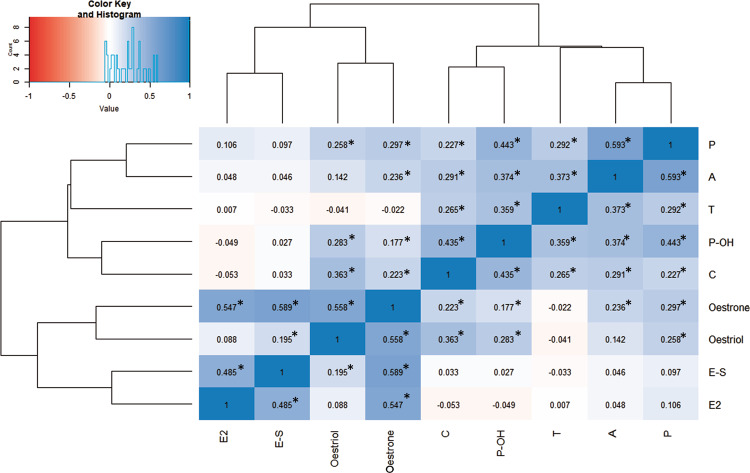
“We revisited the previously assayed concentrations of androgens and cortisol [15] in the same subset of samples in which we assayed oestrogens, to understand whether the relationship between oestrogens and autism likelihood was similar to the relationship between androgens and autism likelihood (Table 2, Beeswarm plot…”
BackgroundMethodResultInfluentialSelf-citationGreenberg, D. M., Warrier, V., Allison, C., & Baron-Cohen, S. (2018) · Proceedings of the National Academy of Sciences · doi:10.1073/pnas.1811032115 · Cited by 416
Self-citationThe 2nd to 4th digit ratio and autism
Manning, J. T., Baron-Cohen, S., Wheelwright, S., & Sanders, G. (2001) · Developmental Medicine and Child Neurology · doi:10.1017/s0012162201000317 · Cited by 383
Self-citationComparative binding affinity of estrogens and its relation to estrogenic potency
Korenman, S. G. (1969) · Steroids · doi:10.1016/0039-128x(69)90004-x · Cited by 330
Durand, C. M., Perroy, J., Loll, F., Perrais, D., Fagni, L., Bourgeron, T., Montcouquiol, M., & Sans, N. (2012) · Molecular Psychiatry · doi:10.1038/mp.2011.57 · Cited by 316 · cited 1×
“In autism, synapse formation [29], neuronal differentiation [30] as well as the GABAergic system [31] are all atypical.”
BackgroundKonkle, A. T. M., & McCarthy, M. M. (2011) · Endocrinology · doi:10.1210/en.2010-0607 · Cited by 299
Biological sex affects the neurobiology of autism
Lai, M.-C., Lombardo, M. V., Suckling, J., Ruigrok, A. N. V., Chakrabarti, B., Ecker, C., Deoni, S. C. L., Craig, M. C., Murphy, D. G. M., Bullmore, E. T., et al. (2013) · Brain · doi:10.1093/brain/awt216 · Cited by 298
Self-citationChakrabarti, B., Dudbridge, F., Kent, L., Wheelwright, S., Hill‐Cawthorne, G., Allison, C., Banerjee‐Basu, S., & Baron‐Cohen, S. (2009) · Autism Research · doi:10.1002/aur.80 · Cited by 295 · cited 1×
“due to mutations in aromatase [52] or aromatase activators [53]), pregnancy complications (e.”
BackgroundSelf-citationPreeclampsia, Placental Insufficiency, and Autism Spectrum Disorder or Developmental Delay
Walker, C. K., Krakowiak, P., Baker, A., Hansen, R. L., Ozonoff, S., & Hertz-Picciotto, I. (2015) · JAMA Pediatrics · doi:10.1001/jamapediatrics.2014.2645 · Cited by 292
Naviaux, J. C., Wang, L., Li, K., Bright, A., Alaynick, W. A., Williams, K. R., Powell, S. B., & Naviaux, R. K. (2015) · Molecular Autism · doi:10.1186/2040-2392-6-1 · Cited by 285
From estrogen to androgen receptor: A new pathway for sex hormones in prostate
Yeh, S., Miyamoto, H., Shima, H., & Chang, C. (1998) · Proceedings of the National Academy of Sciences · doi:10.1073/pnas.95.10.5527 · Cited by 267
Reduced GABA and altered somatosensory function in children with autism spectrum disorder
Puts, N. A. J., Wodka, E. L., Harris, A. D., Crocetti, D., Tommerdahl, M., Mostofsky, S. H., & Edden, R. A. E. (2017) · Autism Research · doi:10.1002/aur.1691 · Cited by 265
Early androgen exposure and human gender development
Hines, M., Constantinescu, M., & Spencer, D. (2015) · Biology of Sex Differences · doi:10.1186/s13293-015-0022-1 · Cited by 263
Elevated rates of testosterone-related disorders in women with autism spectrum conditions
Ingudomnukul, E., Baron-Cohen, S., Wheelwright, S., & Knickmeyer, R. (2007) · Hormones and Behavior · doi:10.1016/j.yhbeh.2007.02.001 · Cited by 259
Self-citationLauritsen, M. B., Jørgensen, M., Madsen, K. M., Lemcke, S., Toft, S., Grove, J., Schendel, D. E., & Thorsen, P. (2010) · Journal of Autism and Developmental Disorders · doi:10.1007/s10803-009-0818-0 · Cited by 239
Foetal testosterone and autistic traits in 18 to 24-month-old children
Auyeung, B., Taylor, K., Hackett, G., & Baron-Cohen, S. (2010) · Molecular Autism · doi:10.1186/2040-2392-1-11 · Cited by 208 · cited 1×
“[18, 69] and shown in associations of foetal testosterone to autistic traits in a separate cohort [70].”
BackgroundSelf-citationvan de Beek, C., Thijssen, J. H. H., Cohen-Kettenis, P. T., van Goozen, S. H. M., & Buitelaar, J. K. (2004) · Hormones and Behavior · doi:10.1016/j.yhbeh.2004.06.010 · Cited by 203
Effect of Zinc on Efficacy of Iron Supplementation in Improving Iron and Zinc Status in Women
Nguyen, P., Grajeda, R., Melgar, P., Marcinkevage, J., Flores, R., Ramakrishnan, U., & Martorell, R. (2012) · Journal of Nutrition and Metabolism · doi:10.1155/2012/216179 · Cited by 203
Attenuation of Typical Sex Differences in 800 Adults with Autism vs. 3,900 Controls
Baron-Cohen, S., Cassidy, S., Auyeung, B., Allison, C., Achoukhi, M., Robertson, S., Pohl, A., & Lai, M.-C. (2014) · PLoS ONE · doi:10.1371/journal.pone.0102251 · Cited by 177 · cited 1×
“In autism, cognitive styles and sexually dimorphic neuroanatomy show some masculinised phenotypes [7, 9, 10], but functional connectivity and physical growth show a mixed pattern of masculine and feminine shifts [8, 66].”
BackgroundSelf-citationSex-specific serum biomarker patterns in adults with Asperger's syndrome
Schwarz, E., Guest, P. C., Rahmoune, H., Wang, L., Levin, Y., Ingudomnukul, E., Ruta, L., Kent, L., Spain, M., Baron-Cohen, S., et al. (2011) · Molecular Psychiatry · doi:10.1038/mp.2010.102 · Cited by 171
Self-citationHow to use and interpret hormone ratios
Sollberger, S., & Ehlert, U. (2015) · Psychoneuroendocrinology · doi:10.1016/j.psyneuen.2015.09.031 · Cited by 170
González, M., Cabrera‐Socorro, A., Pérez‐García, C. G., Fraser, J. D., López, F. J., Alonso, R., & Meyer, G. (2007) · Journal of Comparative Neurology · doi:10.1002/cne.21419 · Cited by 167
The extreme male brain revisited: gender coherence in adults with autism spectrum disorder
Bejerot, S., Eriksson, J. M., Bonde, S., Carlström, K., Humble, M. B., & Eriksson, E. (2012) · British Journal of Psychiatry · doi:10.1192/bjp.bp.111.097899 · Cited by 161
Tissue-specific promoters regulate aromatase cytochrome P450 expression
Simpson, E. R., Mahendroo, M., Means, G., Kilgore, M. W., Corbin, C. J., & Mendelson, C. R. (1993) · The Journal of Steroid Biochemistry and Molecular Biology · doi:10.1016/0960-0760(93)90235-o · Cited by 146
Pitteloud, N., Dwyer, A. A., DeCruz, S., Lee, H., Boepple, P. A., Crowley, W. F., & Hayes, F. J. (2008) · The Journal of Clinical Endocrinology & Metabolism · doi:10.1210/jc.2007-2156 · Cited by 145
Kosidou, K., Dalman, C., Widman, L., Arver, S., Lee, B. K., Magnusson, C., & Gardner, R. M. (2016) · Molecular Psychiatry · doi:10.1038/mp.2015.183 · Cited by 145
Slower Rate of Binocular Rivalry in Autism
Robertson, C. E., Kravitz, D. J., Freyberg, J., Baron-Cohen, S., & Baker, C. I. (2013) · The Journal of Neuroscience · doi:10.1523/jneurosci.0448-13.2013 · Cited by 144
Self-citationSarachana, T., & Hu, V. W. (2013) · Molecular Autism · doi:10.1186/2040-2392-4-14 · Cited by 135
Aromatase deficiency in men: a clinical perspective
Rochira, V., & Carani, C. (2009) · Nature Reviews Endocrinology · doi:10.1038/nrendo.2009.176 · Cited by 134
Integrated systems analysis reveals a molecular network underlying autism spectrum disorders
Li, J., Shi, M., Ma, Z., Zhao, S., Euskirchen, G., Ziskin, J., Urban, A., Hallmayer, J., & Snyder, M. (2014) · Molecular Systems Biology · doi:10.15252/msb.20145487 · Cited by 132 · cited 1×
“In autism, synapse formation [29], neuronal differentiation [30] as well as the GABAergic system [31] are all atypical.”
BackgroundAutism risk in small- and large-for-gestational-age infants
Moore, G. S., Kneitel, A. W., Walker, C. K., Gilbert, W. M., & Xing, G. (2012) · American Journal of Obstetrics and Gynecology · doi:10.1016/j.ajog.2012.01.044 · Cited by 130
Polycystic ovary syndrome and autism: A test of the prenatal sex steroid theory
Cherskov, A., Pohl, A., Allison, C., Zhang, H., Payne, R. A., & Baron-Cohen, S. (2018) · Translational Psychiatry · doi:10.1038/s41398-018-0186-7 · Cited by 114
Self-citationPre-eclampsia and the risk of autism-spectrum disorder in offspring: meta-analysis
Dachew, B. A., Mamun, A., Maravilla, J. C., & Alati, R. (2018) · The British Journal of Psychiatry · doi:10.1192/bjp.2017.27 · Cited by 112 · cited 1×
“Third, complications related to the placenta (pre-eclampsia [47], Fig.”
BackgroundLyall, K., Pauls, D. L., Spiegelman, D., Ascherio, A., & Santangelo, S. L. (2012) · Autism Research · doi:10.1002/aur.228 · Cited by 111
Polycystic Ovary Syndrome Is Associated With Adverse Mental Health and Neurodevelopmental Outcomes
Berni, T. R., Morgan, C. L., Berni, E. R., & Rees, D. A. (2018) · The Journal of Clinical Endocrinology & Metabolism · doi:10.1210/jc.2017-02667 · Cited by 111
The Interplay between Estrogen and Fetal Adrenal Cortex
Kaludjerovic, J., & Ward, W. E. (2012) · Journal of Nutrition and Metabolism · doi:10.1155/2012/837901 · Cited by 108
Werling, D. M., & Geschwind, D. H. (2015) · Molecular Autism · doi:10.1186/s13229-015-0004-5 · Cited by 107
Tunnel Vision: Sharper Gradient of Spatial Attention in Autism
Robertson, C. E., Kravitz, D. J., Freyberg, J., Baron-Cohen, S., & Baker, C. I. (2013) · The Journal of Neuroscience · doi:10.1523/jneurosci.5120-12.2013 · Cited by 105
Self-citationThe Masculinization Programming Window
Welsh, M., Suzuki, H., & Yamada, G. (2014) · Endocrine Development · doi:10.1159/000363609 · Cited by 105
The association between placental histopathology and autism spectrum disorder
Straughen, J. K., Misra, D. P., Divine, G., Shah, R., Perez, G., VanHorn, S., Onbreyt, V., Dygulska, B., Schmitt, R., Lederman, S., et al. (2017) · Placenta · doi:10.1016/j.placenta.2017.07.006 · Cited by 105
Estrogen Receptor β Activity Modulates Synaptic Signaling and Structure
Srivastava, D. P., Woolfrey, K. M., Liu, F., Brandon, N. J., & Penzes, P. (2010) · The Journal of Neuroscience · doi:10.1523/jneurosci.3264-10.2010 · Cited by 100
Rapid modulation of synaptogenesis and spinogenesis by 17β-estradiol in primary cortical neurons
Sellers, K. J., Erli, F., Raval, P., Watson, I. A., Ding, C., & Srivastava, D. P. (2015) · Frontiers in Cellular Neuroscience · doi:10.3389/fncel.2015.00137 · Cited by 98
Uncovering steroidopathy in women with autism: a latent class analysis
Pohl, A., Cassidy, S., Auyeung, B., & Baron-Cohen, S. (2014) · Molecular Autism · doi:10.1186/2040-2392-5-27 · Cited by 97 · cited 1×
“[18, 69] and shown in associations of foetal testosterone to autistic traits in a separate cohort [70].”
BackgroundSelf-citationKung, K. T. F., Spencer, D., Pasterski, V., Neufeld, S., Glover, V., O'Connor, T. G., Hindmarsh, P. C., Hughes, I. A., Acerini, C. L., & Hines, M. (2016) · Journal of Child Psychology and Psychiatry · doi:10.1111/jcpp.12602 · Cited by 97
Placental Trophoblast Inclusions in Autism Spectrum Disorder
Anderson, G. M., Jacobs-Stannard, A., Chawarska, K., Volkmar, F. R., & Kliman, H. J. (2006) · Biological Psychiatry · doi:10.1016/j.biopsych.2006.03.068 · Cited by 95
Mukherjee, J. T., Cardarelli, R. A., Cantaut-Belarif, Y., Deeb, T. Z., Srivastava, D. P., Tyagarajan, S. K., Pangalos, M. N., Triller, A., Maguire, J. L., Brandon, N. J., et al. (2017) · Proceedings of the National Academy of Sciences · doi:10.1073/pnas.1705075114 · Cited by 86
The Human Placenta Expresses CYP17 and Generates Androgens De Novo
Escobar, J. C., Patel, S. S., Beshay, V. E., Suzuki, T., & Carr, B. R. (2011) · The Journal of Clinical Endocrinology & Metabolism · doi:10.1210/jc.2010-2504 · Cited by 80 · cited 1×
“from foetal and maternal androgens [43, 50].”
Whitehouse, A. J., Mattes, E., Maybery, M. T., Dissanayake, C., Sawyer, M., Jones, R. M., Pennell, C. E., Keelan, J. A., & Hickey, M. (2012) · Journal of Neurodevelopmental Disorders · doi:10.1186/1866-1955-4-25 · Cited by 78
Estrogen Receptor Activation and the Dissociation Kinetics of Estradiol, Estriol, and Estrone*
Weichman, B. M., & Notides, A. C. (1980) · Endocrinology · doi:10.1210/endo-106-2-434 · Cited by 77
Network-specific sex differentiation of intrinsic brain function in males with autism
Floris, D. L., Lai, M.-C., Nath, T., Milham, M. P., & Di Martino, A. (2018) · Molecular Autism · doi:10.1186/s13229-018-0192-x · Cited by 66
Dehydroepiandrosterone upregulates neural androgen receptor level and transcriptional activity
Lu, S., Mo, Q., Hu, S., Garippa, C., & Simon, N. G. (2003) · Journal of Neurobiology · doi:10.1002/neu.10260 · Cited by 64
Hoffman, J. F., Wright, C. L., & McCarthy, M. M. (2016) · The Journal of Neuroscience · doi:10.1523/jneurosci.1262-16.2016 · Cited by 57
Curran, E. A., O’Keeffe, G. W., Looney, A.-M., Moloney, G. M., Hegarty, S. V., Murray, D. M., Khashan, A. S., & Kenny, L. C. (2017) · Molecular Neurobiology · doi:10.1007/s12035-017-0794-x · Cited by 57
Chen, Z., Wang, O., Nie, M., Elison, K., Zhou, D., Li, M., Jiang, Y., Xia, W., Meng, X., Chen, S., et al. (2015) · Molecular and Cellular Endocrinology · doi:10.1016/j.mce.2014.09.016 · Cited by 54
Tan, D. W., Gilani, S. Z., Maybery, M. T., Mian, A. S., Hunt, A. M., Walters, M., & Whitehouse, A. (2017) · Scientific Reports · doi:10.1038/s41598-017-09939-y · Cited by 51
Tissue-specific promoters regulate aromatase cytochrome P450 expression
Simpson, E. R., Mahendroo, M., Means, G., Kilgore, M. W., Corbin, C. J., & Mendelson, C. R. (1993) · Clinical Chemistry · doi:10.1093/clinchem/39.2.317 · Cited by 47
Male sex bias in placental dysfunction
Murji, A., Proctor, L., Paterson, A. D., Chitayat, D. A., Weksberg, R., & Kingdom, J. C. (2012) · American Journal of Medical Genetics Part A · doi:10.1002/ajmg.a.35250 · Cited by 42
Kung, K. T. F., Constantinescu, M., Browne, W. V., Noorderhaven, R. M., & Hines, M. (2016) · Molecular Autism · doi:10.1186/s13229-016-0078-8 · Cited by 40
Windham, G. C., Lyall, K., Anderson, M., & Kharrazi, M. (2016) · Journal of Autism and Developmental Disorders · doi:10.1007/s10803-015-2587-2 · Cited by 36 · cited 3×
“[32] that showed that lower levels of oestriol in second trimester were modestly associated with a later diagnosis of autism in the offspring.”
BackgroundMethodPlacental gross shape differences in a high autism risk cohort and the general population
Park, B. Y., Misra, D. P., Moye, J., Miller, R. K., Croen, L., Fallin, M. D., Walker, C., Newschaffer, C. J., Salafia, C. M., & on behalf of the National Children’s Study Consortium (2018) · PLOS ONE · doi:10.1371/journal.pone.0191276 · Cited by 36
Population-based biomarker screening and the development of severe preeclampsia in California
Taché, V., Baer, R. J., Currier, R. J., Li, C.-S., Towner, D., Waetjen, L. E., & Jelliffe-Pawlowski, L. L. (2014) · American Journal of Obstetrics and Gynecology · doi:10.1016/j.ajog.2014.03.026 · Cited by 32
Nuñez, J. L., Aberdeen, G. W., Albrecht, E. D., & McCarthy, M. M. (2008) · Endocrinology · doi:10.1210/en.2007-1720 · Cited by 15
Talge, N. M., Holzman, C., Senagore, P. K., Klebanoff, M. A., & Fisher, R. A. (2011) · Journal of Developmental Origins of Health and Disease · doi:10.1017/s2040174411000298 · Cited by 11
Mukherjee, J. T., Cardarelli, R. A., Cantaut-Belarif, Y., Deeb, T. Z., Srivastava, D. P., Tyagarajan, S. K., Pangalos, M. N., Triller, A., Maguire, J., Brandon, N. J., et al. (2017) · Zurich Open Repository and Archive (University of Zurich) · doi:10.5167/uzh-144720 · Cited by 7
Cited by
Warrier, V., Greenberg, D. M., Weir, E., Buckingham, C., Smith, P., Lai, M.-C., Allison, C., & Baron-Cohen, S. (2020) · Nature Communications · doi:10.1038/s41467-020-17794-1 · Cited by 595
Self-citationHappé, F., & Frith, U. (2020) · Journal of Child Psychology and Psychiatry · doi:10.1111/jcpp.13176 · Cited by 438
Phase Separation as a Missing Mechanism for Interpretation of Disease Mutations
Tsang, B., Pritišanac, I., Scherer, S. W., Moses, A. M., & Forman-Kay, J. D. (2020) · Cell · doi:10.1016/j.cell.2020.11.050 · Cited by 281
Masini, E., Loi, E., Vega-Benedetti, A. F., Carta, M., Doneddu, G., Fadda, R., & Zavattari, P. (2020) · International Journal of Molecular Sciences · doi:10.3390/ijms21218290 · Cited by 280
Sex and gender in neurodevelopmental conditions
Bölte, S., Neufeld, J., Marschik, P. B., Williams, Z. J., Gallagher, L., & Lai, M.-C. (2023) · Nature Reviews Neurology · doi:10.1038/s41582-023-00774-6 · Cited by 249
Metadata
- Authors
- Baron-Cohen, S., Tsompanidis, A., Auyeung, B., Nørgaard-Pedersen, B., Hougaard, D. M., Abdallah, M., Cohen, A., & Pohl, A.
- Affiliations
- Statens Serum Institut (DK)
- Region of Southern Denmark (DK)
- University of Cambridge (GB)
- Venue
- Molecular Psychiatry
- Published
- 2019-07-29
- Volume
- 25
- Issue
- 11
- Pages
- 2970-2978
- ISSN
- 1359-4184 (ISSN-L)
- 1476-5578
- PMC
- PMC7577840
- OpenAlex
- W2965322977
- Cited by
- 200
- References
- 77
- Citations by year
- 2026: 18 · 2025: 23 · 2024: 18 · 2023: 34 · 2022: 38 · 2021: 36 · 2020: 31 · 2019: 2
- FWCI
- 15.54
- Type
- journal article
- Language
- en
- Open access
- hybrid
- doi.org
- Licence
- cc-by
- creativecommons.org/licenses/by/4.0 (tdm)
- creativecommons.org/licenses/by/4.0 (vor)
- Locations
- Molecular Psychiatry (publishedVersion, cc-by)
- PubMed Central (publishedVersion, cc-by)
- PubMed (publishedVersion)
- Edinburgh Research Explorer (University of Edinburgh) (publishedVersion, cc-by)
- University of Southern Denmark Research Portal (University of Southern Denmark) (submittedVersion, cc-by)
- Apollo (University of Cambridge) (submittedVersion)
- Apollo (University of Cambridge) (submittedVersion, cc-by)
- Apollo
- Apollo (cc-by)
- Funders
- Wellcome Trust
- National Institute for Health and Care Research (NF-SI-0515-10097)
- Novo Nordisk
- Novo Nordisk Fonden
- Medical Research Council
- NIHR Cambridge Biomedical Research Centre
- Topics
- Life Sciences › Neuroscience › Cognitive Neuroscience › Autism Spectrum Disorder Research
- Health Sciences › Medicine › Endocrinology, Diabetes and Metabolism › Sexual Differentiation and Disorders
- Life Sciences › Neuroscience › Endocrine and Autonomic Systems › Neuroendocrine regulation and behavior
- Keywords
- autism spectrum disorder, amniotic fluid, estradiol, estrone, estriol, progesterone, prenatal androgens, steroidogenic activity, sex differences, brain development, sexual differentiation
- MeSH terms
- Adult, Autistic Disorder, Estradiol, Estriol, Estrogens, Female, Fetus, Humans, Male, Maternal Age, Paternal Age, Pregnancy, Prenatal Exposure Delayed Effects, Progesterone
About these checks
Registry, retraction, Cites and statistics results are computed, not judged, with one exception: a printed reference that no index lists is read once by a model before it counts as a citation error. Claims are extracted by a model and kept only when their quote appears verbatim in the text; each cited source is then checked, with a model’s help, for whether it says what the claim relies on. Those verdicts can be wrong — read the claim’s quote and the cited source before relying on one.
Statistics and arithmetic are recomputed, not judged.
Confidence bands are shown only for fields calibrated on our annotated test set. None is calibrated yet, so no band is shown.
What counts as a claim ›How we measure confidence ›How we check this ›
Are you an author, or do you see a problem with this page? Request a review
Data sources
Bibliographic data: Semantic Scholar, OpenAlex, Crossref.
Contains information from the Semantic Scholar Academic Graph Datasets, made available under the ODC Attribution License (ODC-BY 1.0).
Semantic Scholar’s data is described in: Kinney, R., et al. (2023). The Semantic Scholar Open Data Platform. arXiv:2301.10140.
