

Molecular mechanisms underlying the antidepressant actions of arketamine: beyond the NMDA receptor
Open accessThe DOI matches its Crossref record; 189 of the 191 references it cites were found in a registry or an index.
Abstract
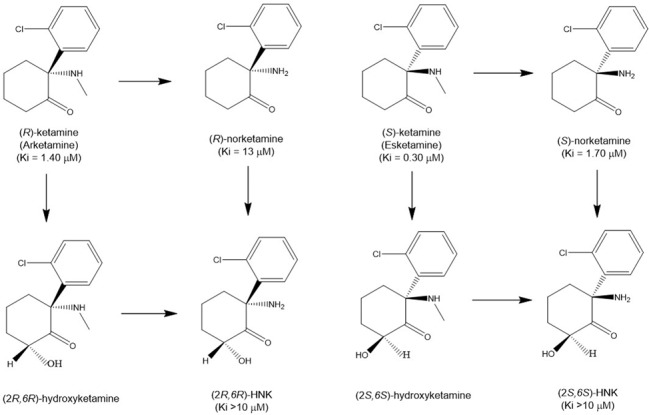
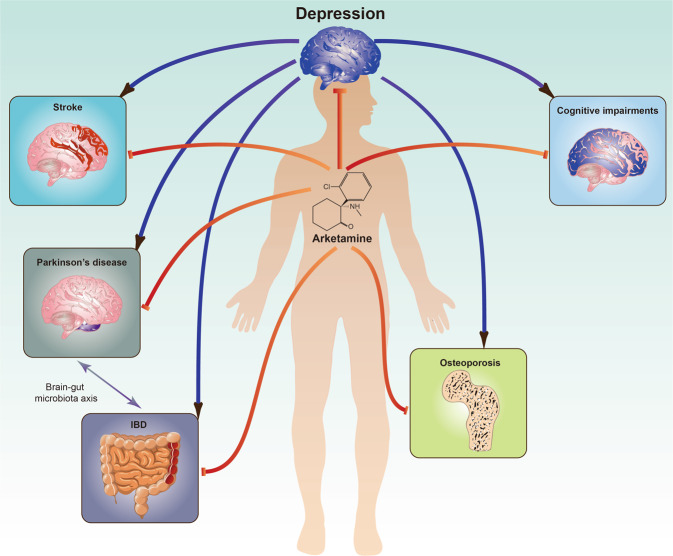
The discovery of robust antidepressant actions exerted by the N -methyl-D-aspartate receptor (NMDAR) antagonist ( R,S )-ketamine has been a crucial breakthrough in mood disorder research. ( R,S )-ketamine is a racemic mixture of equal amounts of ( R )-ketamine (arketamine) and ( S )-ketamine (esketamine). In 2019, an esketamine nasal spray from Johnson & Johnson was approved in the United States of America and Europe for treatment-resistant depression. However, an increasing number of preclinical studies show that arketamine has greater potency and longer-lasting antidepressant-like effects than esketamine in rodents, despite the lower binding affinity of arketamine for the NMDAR. In clinical trials, non-ketamine NMDAR-related compounds did not exhibit ketamine-like robust antidepressant actions in patients with depression, despite these compounds showing antidepressant-like effects in rodents. Thus, the rodent data do not necessarily translate to humans due to the complexity of human psychiatric disorders. Collectively, the available studies indicate that it is unlikely that NMDAR plays a major role in the antidepressant action of ( R,S )-ketamine and its enantiomers, although the precise molecular mechanisms underlying antidepressant actions of ( R,S )-ketamine and its enantiomers remain unclear. In this paper, we review recent findings on the molecular mechanisms underlying the antidepressant actions of ( R,S )-ketamine and its potent enantiomer arketamine. Furthermore, we discuss the possible role of the brain–gut–microbiota axis and brain–spleen axis in stress-related psychiatric disorders and in the antidepressant-like action of arketamine. Finally, we discuss the potential of arketamine as a treatment for cognitive impairment in psychiatric disorders, Parkinson’s disease, osteoporosis, inflammatory bowel diseases, and stroke.
Overview
The claims and statistics of this paper haven’t been checked yet.
Free: it reads the open-access text and checks the first 5 claims that cite a source we can check. Create a free account to check every claim.
Integrity signals
Registry
Cites
Statistics
Figures
Verification
Claims the paper makes
The claims and statistics of this paper haven’t been checked yet.
Free: it reads the open-access text and checks the first 5 claims that cite a source we can check. Create a free account to check every claim.
Claims other papers make about this one
Each is checked against this paper’s own text: does it say what the citing paper says it does?
In the citing paper
“For now, the therapeutic primacy of NMDAR inhibition and resultant AMPAR potentiation appears a temporary frontrunner in the dynamic glutamatergic antidepressant landscape [75,76].”
From Pharmacotherapies Targeting GABA-Glutamate Neurotransmission for Treatment-Resistant Depression (2023) · cites this paper as [75]
Self-check
Percentages, sums and reported differences re-computed from the paper’s own numbers.
The self-check needs the paper’s full text.
Citations
Cites
Vos, T., Lim, S. S., Abbafati, C., Abbas, K. M., Abbasi, M., Abbasifard, M., Abbasi-Kangevari, M., Abbastabar, H., Abd-Allah, F., Abdelalim, A., et al. (2020) · The Lancet · doi:10.1016/s0140-6736(20)30925-9 · Cited by 19,358
Molecular Mechanisms of Depression: Perspectives on New Treatment Strategies
Lang, U. E., & Borgwardt, S. (2013) · Cellular Physiology and Biochemistry · doi:10.1159/000350094 · Cited by 8,475
Cryan, J. F., O'Riordan, K. J., Cowan, C. S. M., Sandhu, K. V., Bastiaanssen, T. F. S., Boehme, M., Codagnone, M. G., Cussotto, S., Fulling, C., Golubeva, A. V., et al. (2019) · Physiological Reviews · doi:10.1152/physrev.00018.2018 · Cited by 5,286
Antidepressant effects of ketamine in depressed patients
Berman, R. M., Cappiello, A., Anand, A., Oren, D. A., Heninger, G. R., Charney, D. S., & Krystal, J. H. (2000) · Biological Psychiatry · doi:10.1016/s0006-3223(99)00230-9 · Cited by 3,856 · cited 1×
“[19] demonstrated that a single intravenous infusion of (R,S)-ketamine (0.”
BackgroundA randomized trial of an N-methyl-D-aspartate antagonist in treatment-resistant major depression.
Zarate, C. A., Singh, J. B., Carlson, P. J., Brutsche, N. E., Ameli, R., Luckenbaugh, D. A., Charney, D. S., & Manji, H. K. (2006) · Archives of General Psychiatry · doi:10.1001/archpsyc.63.8.856 · Cited by 3,766
The role of short-chain fatty acids in microbiota–gut–brain communication
Dalile, B., Van Oudenhove, L., Vervliet, B., & Verbeke, K. (2019) · Nature Reviews Gastroenterology & Hepatology · doi:10.1038/s41575-019-0157-3 · Cited by 3,357
Krystal, J. H. (1994) · Archives of General Psychiatry · doi:10.1001/archpsyc.1994.03950030035004 · Cited by 3,330
Nestler, E. J., Barrot, M., DiLeone, R. J., Eisch, A. J., Gold, S. J., & Monteggia, L. M. (2002) · Neuron · doi:10.1016/s0896-6273(02)00653-0 · Cited by 3,217
Recent advances in the phencyclidine model of schizophrenia
(1991) · American Journal of Psychiatry · doi:10.1176/ajp.148.10.1301 · Cited by 2,904 · cited 1×
“It is well accepted that NMDAR antagonists such as ketamine and PCP cause detrimental side effects, including psychosis and dissociation in humans in proportion to their potency at the NMDAR [97], and the difference in NMDAR potency between the two ketamine enantiomers may explain the divergence in their dissociative…”
BackgroundmTOR-Dependent Synapse Formation Underlies the Rapid Antidepressant Effects of NMDA Antagonists
Li, N., Lee, B., Liu, R.-J., Banasr, M., Dwyer, J. M., Iwata, M., Li, X.-Y., Aghajanian, G., & Duman, R. S. (2010) · Science · doi:10.1126/science.1190287 · Cited by 2,881
Research works printed but not linked: 1
- Press release: Perception Neuroscience’s PCN-101 (R-ketamine) demonstrates tolerability in phase 1 single ascending dose study. https://www.perceptionns.com/news.
Cited by
Items 101–200 of 251
He, L., Mo, X., He, L., Ma, Q., Cai, L., Zheng, Y., Huang, L., Lin, X., Wu, M.-S., Ding, W., et al. (2023) · Phytomedicine · doi:10.1016/j.phymed.2023.155332 · Cited by 21
Self-citationGuo, F., Zhang, B., Shen, F., Li, Q., Song, Y., Li, T., Zhang, Y.-M., Du, W., Li, Y., Liu, W., et al. (2024) · British Journal of Pharmacology · doi:10.1111/bph.16420 · Cited by 17
Zhao, M., Zhu, T., Xu, D., Wan, X., Liu, G., Murayama, R., Cai, Y., Yue, Y., Wang, X.-M., Yang, J., et al. (2024) · European Journal of Pharmacology · doi:10.1016/j.ejphar.2024.177096 · Cited by 17
Self-citationPomrenze, M. B., Vaillancourt, S., Llorach, P., Rijsketic, D. R., Casey, A. B., Gregory, N. S., Zhao, W., Girard, T. E., Mattox, K. T., Salgado, J. S., et al. (2024) · Biological Psychiatry · doi:10.1016/j.biopsych.2025.04.020 · Cited by 17
Dong, C., Tian, Z. R., Fujita, Y., Fujita, A., Hino, N., Iijima, M., & Hashimoto, K. (2021) · Pharmacology Biochemistry and Behavior · doi:10.1016/j.pbb.2021.173316 · Cited by 18
Self-citationDriver, C., Jackson, T., Lagopoulos, J., & Hermens, D. F. (2022) · Progress in Neuro-Psychopharmacology and Biological Psychiatry · doi:10.1016/j.pnpbp.2022.110609 · Cited by 18
Nayyer, M. A., Khan, S. M., Umer, M., Imran, H., Khalid, S., Murtaza, H., Sarfraz, A., Atiq, N., Rasool, H., & Fatima, M. (2024) · Asian Journal of Psychiatry · doi:10.1016/j.ajp.2024.104090 · Cited by 17
Chen, M., Lin, W.-C., Li, C., Tsai, S., Wu, H.-J., Bai, Y., Hong, C., Tu, P., & Su, T. (2021) · Pharmacopsychiatry · doi:10.1055/a-1589-6301 · Cited by 16
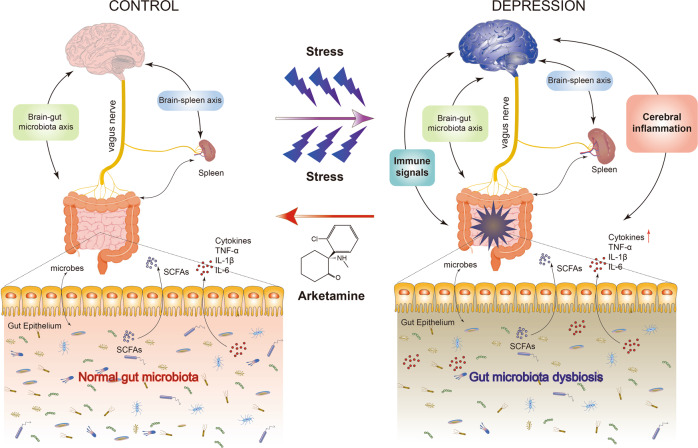
“, who stated in their systemic review that (R, S)-ketamine or arketamine may be a new therapeutic drug for cognitive impairments in psychiatric disorders, especially TRD, via the possible mechanisms of the brain-gut-microbiota axis in stress-related psychiatric disorders [23, 24].”
BackgroundExploring the multifaceted potential of (R)-ketamine beyond antidepressant applications
Zhang, S., Pu, Y., Liu, J., Li, L., An, C., Wu, Y., Zhang, W., Zhang, W., Qu, S., & Yan, W. (2024) · Frontiers in Pharmacology · doi:10.3389/fphar.2024.1337749 · Cited by 18
“…indicate that compared to ( R , S )- and ( S )-ketamine, ( R )- ketamine exhibits milder effects in terms of psychosis-like symptoms, dissociative side effects, and abuse potential, with a higher safety pro fi le (Geisslinger et al., 1993; Hashimoto, 2020; Wei et al., 2021b; Olofsen et al., 2022).”
BackgroundYuan, X., Chai, J., Xu, W., & Zhao, Y. (2024) · Probiotics and Antimicrobial Proteins · doi:10.1007/s12602-024-10326-z · Cited by 15
“Complementary therapies, including interpersonal psychotherapy and non-pharmacological approaches like electroconvulsive therapy, often fall short of addressing these needs [14].”
Lapa, C. D. O., Viola, T. W., Delfino, R. S., Dutra, L., Rubira, G., Rodrigues, R. J. K., Castro, S. C. C., Ramos‐Quiroga, J. A., & Spanemberg, L. (2026) · Journal of Affective Disorders · doi:10.1016/j.jad.2026.121257 · Cited by 15
Key Characteristics and Development of Psychoceuticals: A Review
Cano, G. E. H., Dean, J., Abreu, S. P., Rodríguez, A. H., Abbasi, C., Hinson, M., & Lucke-Wold, B. P. (2022) · International Journal of Molecular Sciences · doi:10.3390/ijms232415777 · Cited by 15
Tsai, S., Kao, C.-F., Su, T., Li, C., Lin, W., Hong, C., Bai, Y., Tu, P., & Chen, M. (2023) · CNS Drugs · doi:10.1007/s40263-023-00989-7 · Cited by 16
“of our current and previous studies may suggest that the antidepressant effect of ketamine was driven by the synergic modulation of multiple systems, including the inflammatory system, neurotrophic factor system, glutamate system, and VEGF system, but not from the modulation of a single system [10, 19, 25, 30].”
ResultFast Maturation of Splenic Dendritic Cells Upon TBI Is Associated With FLT3/FLT3L Signaling
Zhang, J., Li, Z., Chandrasekar, A., Li, S., Ludolph, A. C., Boeckers, T. M., Huber-Lang, M. S., Roselli, F., & Heuvel, F. O. (2022) · Frontiers in Immunology · doi:10.3389/fimmu.2022.824459 · Cited by 15
Echegaray, M. V. F., Mello, R. P., Magnavita, G. M., Leal, G. C.-G., Correia‐Melo, F. S., Jesus‐Nunes, A. P., Vieira, F., Bandeira, I. D., Caliman‐Fontes, A. T., Telles, M., et al. (2025) · Trends in Psychiatry and Psychotherapy · doi:10.47626/2237-6089-2022-0593 · Cited by 14
“Animal studies 49,50 and only one study in humans 51 suggested that use of arketamine would produce an antidepressant effect without occurrence of psychotomimetic effects.”
Ketamine and its enantiomers for depression: a bibliometric analysis from 2000 to 2023
Zhao, L.-Y., Zhang, G.-F., Lou, X.-J., Hashimoto, K., & Yang, J. (2024) · European Archives of Psychiatry and Clinical Neuroscience · doi:10.1007/s00406-024-01809-9 · Cited by 13
Self-citationYang, Y. H., Eguchi, A., Mori, C., & Hashimoto, K. (2024) · Journal of Affective Disorders · doi:10.1016/j.jad.2024.06.091 · Cited by 14
Self-citationLiu, J., Zhao, X., Wei, X., Yan, D., Ou, W., Liao, M., Ji, S., Peng, Y., Wu, S., Wang, M., et al. (2023) · Psychiatry Research · doi:10.1016/j.psychres.2023.115326 · Cited by 13
Antidepressant pharmacological mechanisms: focusing on the regulation of autophagy
Lv, S., Zhang, G., Huang, Y., Li, J., Yang, N., Lu, Y., Ma, H., Ma, Y., & Jing, T. (2023) · Frontiers in Pharmacology · doi:10.3389/fphar.2023.1287234 · Cited by 15
“Most treatments have delayed effects and high rates of no response (Wang et al., 2019a; Qu et al., 2021; Wei et al., 2022).”
BackgroundBiomarkers of cognitive and memory decline in psychotropic drug users
Grigore, M. M., Ruscu, M. A., Hermann, D. M., Colita, I.-C., Doeppner, T. R., Glăvan, D., & Popa‐Wagner, A. (2024) · Journal of Neural Transmission · doi:10.1007/s00702-024-02837-4 · Cited by 12
Mechanism of Microbiota-Gut-Brain in Perimenopausal Depression: An Inflammatory Perspective
Yu, X., Zuo, Y., Yang, Y., Cheng, W., Shi, M., Cheng, L., Shao, Q., Xu, Y., & Chen, L. (2025) · Expert Reviews in Molecular Medicine · doi:10.1017/erm.2025.10011 · Cited by 13
“82).”
Lv, S., Dai, W., Zheng, Y., Dong, P., Yu, Y., Zhao, Y., Sun, S., Bi, D., Liu, C., Han, F., et al. (2022) · Frontiers in Pharmacology · doi:10.3389/fphar.2022.966218 · Cited by 12
Scotton, E., Casa, P. L., de Abreu, F. P., Silva, S. D. Á. E., Wilges, R. L. B., Rossetto, M. V., Géa, L. P., Rosa, A. R., & Colombo, R. (2023) · Pharmacology Biochemistry and Behavior · doi:10.1016/j.pbb.2023.173523 · Cited by 12
Rethinking ketamine as a panacea: adverse effects on oxygenation and postoperative outcomes
Rolfzen, M. L., Palanca, B. J. A., & Bartels, K. (2024) · British Journal of Anaesthesia · doi:10.1016/j.bja.2023.12.030 · Cited by 12
Ma, L., Eguchi, A., Liu, G., Qu, Y., Wan, X., Murayama, R., Mori, C., & Hashimoto, K. (2024) · Pharmacology Biochemistry and Behavior · doi:10.1016/j.pbb.2024.173736 · Cited by 12
Self-citationFloriano, I., Silvinato, A., & Bernardo, W. M. (2023) · Revista da Associação Médica Brasileira · doi:10.1590/1806-9282.2023d694 · Cited by 12
Extending ketamine’s antidepressant effects
Hashimoto, K. (2025) · Science · doi:10.1126/science.adx4559 · Cited by 12
Self-citationYang, Y., Chen, Y.-K., & Xie, M. (2024) · World Journal of Psychiatry · doi:10.5498/wjp.v14.i5.607 · Cited by 12
Towards an expanded neurocognitive account of ketamine’s rapid antidepressant effects
Dai, Y., Harrison, B. J., Davey, C. G., & Steward, T. (2025) · The International Journal of Neuropsychopharmacology · doi:10.1093/ijnp/pyaf010 · Cited by 11
“14 One brain region that has been implicated in driving ketamine’s antidepressant effects is the lateral habenula (LHb), which is made up of predominantly glutamate neurons, interspersed with gamma-aminobutyric acid (GABA) neurons.”
Geng, X., Pu, Y., Hu, Z., Zhang, H., Wang, M., Fang, C., Lv, G., Li, W., Zhang, X., Fan, X., et al. (2025) · Drug Design Development and Therapy · doi:10.2147/dddt.s510222 · Cited by 12
“6,7 For patients with refractory depression, esketamine offers new therapeutic potential.”
Singh, B., Pazdernik, V., Kung, S., & Voort, J. L. V. (2025) · The Journal of Clinical Psychiatry · doi:10.4088/jcp.25m15831 · Cited by 11
Synaptic priming: A framework for pharmacotherapy in depression
Brown, K. A., Ajibola, M. I., Medeiros, G. C., & Gould, T. D. (2025) · Neuron · doi:10.1016/j.neuron.2025.09.010 · Cited by 13
Zhu, T.-T., Liu, P., Hashimoto, K., & Yang, J. (2026) · Molecular Psychiatry · doi:10.1038/s41380-026-03603-6 · Cited by 14
“Ketamine and its enantiomers (esketamine, arketamine) remain important for neuropathic pain and depression [107 – 113].”
Self-citationWu, X., Wang, F., Chen, M., Wang, J., & Zhang, Y. (2023) · Foods · doi:10.3390/foods12071367 · Cited by 11
“Additionally, FSCFAs have exhibited positive effects in supplying energy sources [11,12], anti-oxidation [13], enhancing brain development [14], reducing hypertension and hyperlipidemia [15,16].”
BackgroundDeng, Q., Parker, E., Wu, C., Zhu, L., Liu, T. C., Duan, R., & Yang, L. (2024) · Aging and Disease · doi:10.14336/ad.2024.0239 · Cited by 12
“PSD is the most common neuropsychiatric comorbidity of stroke [86].”
InfluentialGao, S., Chen, J.-Q., Zhou, H.-Y., Luo, L., Zhang, B.-Y., Li, M., He, H., Chen, C., & Guo, Y. (2023) · iScience · doi:10.1016/j.isci.2023.106488 · Cited by 11
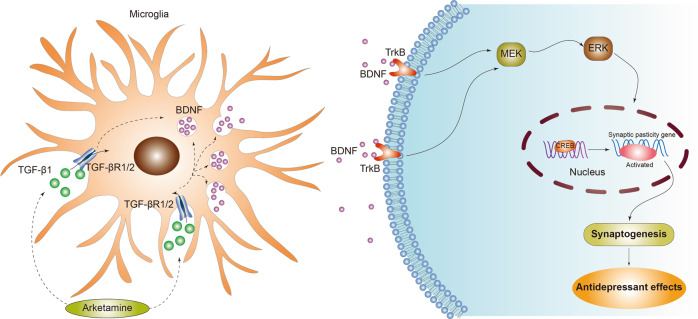
“33 Of interest, TGF-b 1 dysfunction has been reported in major depressive disorder (MDD) patients 34–38 and in the PFC and hippocampus of chronic social defeat stress (CSDS)-susceptible mice.”
Matsuzaka, Y., & Yashiro, R. (2025) · Biologics · doi:10.3390/biologics5010007 · Cited by 11
“BDNFs can stimulate VEGF expression and release via the mTORC1 pathway [113,171].”
InfluentialŚwieczkowski, D., Kwaśny, A., Sadko, K. G., Pruc, M., Gaca, Z., Szarpak, Ł., & Cubała, W. J. (2025) · Psychiatry Research · doi:10.1016/j.psychres.2025.116559 · Cited by 10
Han, M., Xie, B., Yuan, Y., Xu, D., Shi, Y., Xu, M., Wu, Y., Zhang, Y., Wen, X., Wang, X., et al. (2025) · Journal of Neuroinflammation · doi:10.1186/s12974-025-03656-4 · Cited by 10
“Of its two enantiomers, intranasal S-ketamine (esketamine) is approved for treatment-resistant depression, whereas R-ketamine (arketamine) may provide longer-lasting efficacy with fewer adverse effects [19–24].”
Self-citationThe effect of ketamine on synaptic mistuning induced by impaired glutamate reuptake
Vázquez‐Juárez, E., Srivastava, I., & Lindskog, M. (2023) · Neuropsychopharmacology · doi:10.1038/s41386-023-01617-0 · Cited by 9
Floriano, I., Silvinato, A., & Bernardo, W. M. (2023) · Revista da Associação Médica Brasileira · doi:10.1590/1806-9282.2023d696 · Cited by 9
Pharmacological mechanism of natural antidepressants: The role of mitochondrial quality control
Lv, S., Zhang, G., Lu, Y., Zhong, X., Huang, Y., Ma, Y., Yan, W., Teng, J., & Wei, S. (2024) · Phytomedicine · doi:10.1016/j.phymed.2024.155669 · Cited by 10
Lv, S., Yang, N., Lu, Y., Zhang, G., Zhong, X., Cui, Y., Huang, Y., Jing, T., & Sai, Y. (2024) · Frontiers in Pharmacology · doi:10.3389/fphar.2024.1426769 · Cited by 11
Acero-Castillo, M. C., Correia, M. B. M., Caixeta, F. V., Motta, V., Barros, M., & Maior, R. S. (2024) · Neuropharmacology · doi:10.1016/j.neuropharm.2024.110088 · Cited by 8
Huang, T., He, Y., Cheng, R., Zhang, Q., Zhong, X., Hashimoto, K., Liu, Y., & Pu, Y. (2024) · Translational Psychiatry · doi:10.1038/s41398-024-03176-4 · Cited by 9
Self-citationArketamine: a scoping review of its use in humans
Leal, G. C.-G., Lima-Araújo, I., Roiter, D. G., Caliman‐Fontes, A. T., Mello, R. P., Kapczinski, F. P., Lacerda, A. L. T., & Quarantini, L. C. (2024) · European Archives of Psychiatry and Clinical Neuroscience · doi:10.1007/s00406-024-01945-2 · Cited by 8
Luan, W.-W., Gu, H., Qiu, D., Ding, X., Liu, P., Hashimoto, K., Yang, J., & Wang, X. (2025) · Neurochemistry International · doi:10.1016/j.neuint.2025.105961 · Cited by 8
Self-citationSpecial issue on “Brain–body communication in health and diseases”
Hashimoto, K., & Yang, C. (2022) · Brain Research Bulletin · doi:10.1016/j.brainresbull.2022.05.014 · Cited by 8
Self-citationZhu, T., Zhao, M., Xu, D., Cai, Y., Liu, G., Murayama, R., Yue, Y., Yang, J., & Hashimoto, K. (2024) · Progress in Neuro-Psychopharmacology and Biological Psychiatry · doi:10.1016/j.pnpbp.2024.111228 · Cited by 7
Self-citationAstrocytes: Unveiling their role in the molecular mechanism of natural antidepressants
Lv, S., Shang, R., Zhong, X., Lu, Y., Gao, H., Zhang, G., Kong, L., Yi, Y., Huang, Y., Ma, Y., et al. (2025) · Journal of Pharmaceutical Analysis · doi:10.1016/j.jpha.2025.101370 · Cited by 9
Devdikar, S., Shetkar, B., Badagu, R., Satpute, K., & Syed, S. M. (2025) · Journal of Pharmaceutical Innovation · doi:10.1007/s12247-025-10229-8 · Cited by 7
“To optimize the best nasal spray formulation drug content & drug release were evaluated [18, 29 –32].”
Lv, S., Zhang, G., Huang, Y., Zhong, X., Yi, Y., Lu, Y., Li, J., Ma, Y., & Jing, T. (2023) · Frontiers in Pharmacology · doi:10.3389/fphar.2023.1307746 · Cited by 7
“Additionally, most treatments encounter issues such as delayed effects and high non-response rates (Wang et al., 2019; Qu et al., 2021; Wei et al., 2022).”
BackgroundMyelin Repair as a Novel Mechanism for Ketamine’s Sustained Antidepressant Effects
Wang, S., Huang, C., Wang, M., Di, L., Liu, C., Hashimoto, K., & Yang, C. (2025) · Current Neuropharmacology · doi:10.2174/011570159x349856241213144902 · Cited by 7
“Recent studies have also identified the involvement of the brain-gut-microbiota axis in depression, with ( R, S )- ketamine and ( R ) - ketamine ameliorating depression phenotypes resulting from gut microbiota composition abnormalities [15, 104-107].”
Self-citationAmmendolia, I., Mannucci, C., Esposito, E., Calapai, G., Currò, M., Midiri, P., Mondello, C., Cardia, L., & Calapai, F. (2025) · Pharmaceuticals · doi:10.3390/ph18050702 · Cited by 8
“For this reason, the precise mechanism of action for its antidepressant properties remains debated, as does its potential for misuse [52].”
Role of Neuroglia in the Habenular Connection Hub of the Dorsal Diencephalic Conduction System
LOONEN, A. J. M. (2023) · Neuroglia · doi:10.3390/neuroglia4010004 · Cited by 7
“This and other findings make it increasingly unlikely that the antidepressant effect of ketamine is due in any essential way to blocking NMDA receptors [97].”
BackgroundDepression, an unmet health need in Africa: Understanding the promise of ketamine
Millen, A. M. E., Daniels, W. M. U., & Baijnath, S. (2024) · Heliyon · doi:10.1016/j.heliyon.2024.e28610 · Cited by 8
“The commonly used form of ketamine ( RS -ketamine) is a racemic mixture of isomers (S) -ketamine (esketamine) and (R)- ketamine (arketamine) and is an affordable and widely used but also abused drug [48].”
BackgroundJuneja, K., Afroze, S., Goti, Z., Sahu, S., Asawa, S., Bhuchakra, H. P., Natarajan, B., & Pandey, S. (2024) · Discover Mental Health · doi:10.1007/s44192-024-00077-2 · Cited by 7
“Repeated exposure to subanes-thetic doses of ketamine can result in extensive neuronal degeneration in the developing nervous system of neonates [32].”
BackgroundTargeting NMDA receptor signaling for therapeutic intervention in brain disorders
Chen, H., Dong, Y., Wu, Y. J., & Yi, F. (2023) · Reviews in the Neurosciences · doi:10.1515/revneuro-2022-0096 · Cited by 7
Chang, L., & Hashimoto, K. (2022) · Molecular Psychiatry · doi:10.1038/s41380-022-01766-6 · Cited by 7
“In contrast, we reported that the (2R,6R)-HNK preparation from (R)-ketamine is not necessary for antidepressant-like effects of (R)-ketamine in rodents [2, 3].”
BackgroundMethodSelf-citationLi, M., Duan, W., Hao, X., Li, S., Wang, C., Liang, Y., Hu, Z., Ma, D., Guo, M., Zuo, C., et al. (2025) · Molecular Psychiatry · doi:10.1038/s41380-025-03198-4 · Cited by 6
Self-citationMa, L., Zeng, W., Song, K., Xie, T., Han, S., Li, Y., Wang, H., Huang, Z., Zheng, X., He, W., et al. (2025) · Biochemical Pharmacology · doi:10.1016/j.bcp.2025.117094 · Cited by 6
Self-citationLv, S., Kong, L., Zhong, X., Shang, R., Lu, Y., Zhang, G., Gao, H., Hou, X., Li, G., & Yu, X. (2025) · Frontiers in Immunology · doi:10.3389/fimmu.2025.1642001 · Cited by 6
“In addition, they often have a delayed onset of action, and the non-response rate remains relatively high (2, 3).”
SorCS2 is involved in promoting periodontitis‐induced depression‐like behaviour in mice
Li, Y., Yang, Y., Guan, X., Liu, Z., Pan, L., Wang, Y., Jia, X., Yang, J., & Hou, T. (2024) · Oral Diseases · doi:10.1111/odi.14944 · Cited by 6
Tan, Y., & Hashimoto, K. (2024) · Asian Journal of Psychiatry · doi:10.1016/j.ajp.2024.104246 · Cited by 6
Self-citationMurayama, R., Liu, G., Zhao, M., Xu, D., Zhu, T., Cai, Y., Yue, Y., Nakamura, H., & Hashimoto, K. (2024) · Pharmacology Biochemistry and Behavior · doi:10.1016/j.pbb.2024.173946 · Cited by 6
Self-citationIntravenous esketamine in pediatric Rett syndrome: An open-label, early phase 1 pilot study
Li, H., Liu, S., Lin, C., Wu, Y., Wu, X., Huang, Y., Wu, Y., Tong, X., & Xu, X. (2025) · Molecular Therapy — Methods & Clinical Development · doi:10.1016/j.omtm.2025.101413 · Cited by 7
“20 We did not fi nd remarkable changes in the respiratory rhythm; this was noted by Kron et al., 13 who found that esketamine regulated the brain circuits for autonomic homeostasis and improved cardiorespiratory dysfunction in patients with RTT.”
Targeting Affective Mood Disorders With Ketamine to Prevent Chronic Postsurgical Pain
Willis, D. E., & Goldstein, P. A. (2022) · Frontiers in Pain Research · doi:10.3389/fpain.2022.872696 · Cited by 7
de Oliveira, E. G., de Lima, D. A., Júnior, J. C. D. S., Barbosa, M. V. D. S., Silva, S. C. D. A., de Santana, J. H., dos Santos, O. H., Lira, E. C., Lagranha, C. J., Duarte, F. S., et al. (2023) · European Archives of Psychiatry and Clinical Neuroscience · doi:10.1007/s00406-023-01629-3 · Cited by 6
“Given the known effect of (R)-ketamine to treat depression [53], the present study tested the hypothesis that (R)-ketamine administration in adolescent offspring would attenuate the behavioral and molecular neurodevelopmental disease-like changes of MIA.”
BackgroundWei, S., Tang, Y., Wang, F., Wang, Y., & Geng, X. (2023) · Frontiers in Psychiatry · doi:10.3389/fpsyt.2023.1216689 · Cited by 6
Kupferberg, A., & Hasler, G. (2024) · Frontiers in Psychiatry · doi:10.3389/fpsyt.2024.1372650 · Cited by 7
Han, S., Chen, X., Ma, L., Zeng, X., Wang, Y., Xie, T., Wu, F., Song, K., Hashimoto, K., Wang, H., et al. (2025) · Neuroscience Bulletin · doi:10.1007/s12264-025-01454-9 · Cited by 6
Self-citationBrain-organ axis: How does stress regulate peripheral immunity through neural signaling?
Yu, X., Zhu, H., Su, Y., Zhou, L., Chen, Z., Li, P., & Wang, Y. (2026) · Physics of Life Reviews · doi:10.1016/j.plrev.2026.04.001 · Cited by 5
Identification of New Ketamine Metabolites and Their Detailed Distribution in the Mammalian Brain
Vallianatou, T., Anselmo, C. D. S., Tsiara, I., Bèchet, N. B., Lundgaard, I., & Globisch, D. (2024) · ACS Chemical Neuroscience · doi:10.1021/acschemneuro.4c00051 · Cited by 7
Gupta, J. K., Singh, K., Bhatt, A., Porwal, P., Rani, R., Dubey, A., Jain, D., & Nand, S. (2024) · 3 Biotech · doi:10.1007/s13205-024-04104-5 · Cited by 5
“Collectively, arketamine would serve as an innovative, fast-acting antidepressant devoid of the adverse effects associated with esketamine and (R,S)-ketamine (Wei et al. 2022).”
Li, X.-Y., Qiu, D., Du, N., Hashimoto, K., Wang, X., & Yang, J. (2025) · Translational Psychiatry · doi:10.1038/s41398-025-03705-9 · Cited by 5
Self-citationTang, X., Luo, G., He, Q., Liu, X., & Fu, Q. (2026) · BMC Anesthesiology · doi:10.1186/s12871-026-03785-0 · Cited by 4
“Moreover, the emergence of esket-amine as a potential alternative to ketamine necessitates evaluation of its efficacy in POD prevention [21, 22].”
Pleiotropic modulation of the gut-brain-lung axis by ketamine and its enantiomers
Zhao, X., Zhang, X., Yuan, S., Hashimoto, K., & Zhang, J. (2026) · Molecular Psychiatry · doi:10.1038/s41380-026-03590-8 · Cited by 6
Self-citationGałuszko‐Węgielnik, M., Włodarczyk, A., Cubała, W. J., Wilkowska, A., Górska, N., & Słupski, J. (2021) · Frontiers in Psychiatry · doi:10.3389/fpsyt.2021.705190 · Cited by 7
Liu, G., Ma, L., Sakamoto, A., Fujimura, L., Xu, D., Zhao, M., Wan, X., Murayama, R., Anzai, N., & Hashimoto, K. (2024) · Pharmacology Biochemistry and Behavior · doi:10.1016/j.pbb.2024.173906 · Cited by 4
Self-citationBeneficial effects of Esketamine on Morphine preference reacquisition in male rats
Fontoura, M. B., da Rosa, J. L. O., Rossato, D. R., de Souza, L. E. M., Frozi, E., Ribeiro, M. E. M., de Souza, A. R., & Bürger, M. E. (2025) · Neuroscience · doi:10.1016/j.neuroscience.2025.03.011 · Cited by 4
Yang, Y. M. (2023) · Institutional Repositories DataBase (IRDB) · doi:10.20776/900122211 · Cited by 4
Influence of the Microbiota Through the Gut-Brain Axis in Neurological Diseases
Guarnotta, V., Mandarino, F. V., Fasulo, E., Maida, M. F., Laterza, L., Sferrazza, S., Raimondo, D., & Sinagra, E. (2024) · Integrated science · doi:10.1007/978-3-031-73061-0_20 · Cited by 3
Managing Chronic Pain: The Ketamine Option
Pickering, G. P., Morel, V., & Voute, M. (2025) · CNS Drugs · doi:10.1007/s40263-025-01234-z · Cited by 3
Wang, S., Song, W., Gao, Y., Tan, W., Ji, L., & Wang, C. (2025) · Brain Research Bulletin · doi:10.1016/j.brainresbull.2025.111595 · Cited by 3
Zhou, Y., Li, W., Lan, X., Wang, C., Chen, X., Luo, Z., Zhang, F., Liu, G., Wu, Z., Shen, J., et al. (2025) · Journal of the American Academy of Child & Adolescent Psychiatry · doi:10.1016/j.jaac.2025.12.011 · Cited by 3
Self-citationGao, S., Qi, L., Li, N., Li, X., Zhang, J., Zhang, Z., & Liu, W. (2025) · Progress in Neuro-Psychopharmacology and Biological Psychiatry · doi:10.1016/j.pnpbp.2025.111388 · Cited by 3
Unfavorable effects of memantine on the skeletal system in female rats
Londzin, P., Cegieła, U., Trawczyński, M., Czuba, Z. P., & Folwarczna, J. (2023) · Biomedicine & Pharmacotherapy · doi:10.1016/j.biopha.2023.114921 · Cited by 3
de Miranda, A. S., Toscano, E. C. D. B., Venna, V. R., Graeff, F. G., & Teixeira, A. L. (2025) · Expert Opinion on Drug Discovery · doi:10.1080/17460441.2025.2460674 · Cited by 4
“Previous assumptions on the potential effects of (R,S)-ketamine metabolites must be taken cautiously, as they were associated with no or weak antidepressant responses in clinical trials in humans [71,72].”
Ketamine/esketamine for treatment-resistant depression
Nikayin, S., & Sanacora, G. (2022) · Elsevier eBooks · doi:10.1016/b978-0-12-824067-0.00013-x · Cited by 6
Xie, J., Shen, F., Wang, X., Yao, J., Zhou, L., Huang, L., & Sun, J. (2025) · Therapeutics and Clinical Risk Management · doi:10.2147/tcrm.s527262 · Cited by 2
Dong, S., Hao, F., Xue, B., Wu, S., Zhong, R., Liao, Z., Han, H., & Fang, X. (2025) · Food Science and Human Wellness · doi:10.26599/fshw.2024.9250201 · Cited by 2
The Immunologic Underpinnings of Post-Stroke Depression
Sørensen, N. V., Hougaard, A., Kruuse, C. R., & Benros, M. E. (2025) · Biological Psychiatry Global Open Science · doi:10.1016/j.bpsgos.2025.100575 · Cited by 3
The epigenetic mechanisms of ketamine in the treatment of depression: a systematic review
Leccisotti, I., Moretti, M. C., Altamura, M., Bellomo, A., Laurello, R., Carapellese, M., Sborgia, G., Dibello, V., Robert, G. H., Panza, F., et al. (2025) · Epigenomics · doi:10.1080/17501911.2025.2583892 · Cited by 2
Bakary, N. M. E., Thabet, N. M., Rashed, L., Azab, K. S., Helal, H., Maarouf, R. E., & Abdel-Rafei, M. K. (2025) · Immunopharmacology and Immunotoxicology · doi:10.1080/08923973.2025.2591423 · Cited by 2
“…axis is considered an important interaction pathway, impacting multiple aspects of individual well-being from immune function to diseases [25,26]. local changes in the spleen during stress are mainly reflected in three ways: splenic morphology, different types of immune cells, and soluble…”
Cai, Y., Zhu, T., Zhao, M., Xu, D., Murayama, R., Liu, G., Yue, Y., Yang, J.-J., Nakamura, H., & Hashimoto, K. (2026) · European Journal of Pharmacology · doi:10.1016/j.ejphar.2026.178915 · Cited by 2
Self-citationIntranasal esketamine for depression: Not so special K
Rosenman, S. J. (2022) · Australasian Psychiatry · doi:10.1177/10398562221093870 · Cited by 2
Lv, S., Huang, Y., Ma, Y., & Teng, J. (2024) · Medicine · doi:10.1097/md.0000000000036266 · Cited by 2
“[2,3] Furthermore, they often lead to serious adverse reactions including nausea, headache, chronic sexual dysfunction, and weight gain.”
BackgroundBanzato, M., Furlan, A., Locatelli, P., Sgrignani, J., Ongaro, A., Dolmella, A., Martin, S. D., Comai, S., Cavalli, A., Inturrisi, C. E., et al. (2025) · Journal of Medicinal Chemistry · doi:10.1021/acs.jmedchem.4c02605 · Cited by 2
Daghmouri, M. A., Chaouch, M. A., Ayoun, L. B., Gouader, A., Chatzistergiou, K., Mion, G., Cheurfa, C., & Camby, M. (2025) · International Journal of Gynecology & Obstetrics · doi:10.1002/ijgo.70190 · Cited by 2
“7 A recent meta-analysis found that single intravenous administration of a subanesthetic ketamine dose could be efficient and safe in the prophylactic treatment of PPD in women undergoing cesarean section.”
Zhang, L., Chen, D., Xu, K., Shang, R., Liu, X., Li, Z., Wang, K., & Zhang, M. (2025) · ALPHA PSYCHIATRY · doi:10.31083/ap45685 · Cited by 2
“Moreover, most therapies have high non-response rates and delayed effects [4–6].”
Metadata
- Authors
- Wei, Y., Chang, L., & Hashimoto, K.
- Affiliations
- Chiba University (JP)
- Corresponding author
- Hashimoto, Kenji
- Venue
- Molecular Psychiatry
- Published
- 2021-05-07
- Volume
- 27
- Issue
- 1
- Pages
- 559-573
- ISSN
- 1359-4184 (ISSN-L)
- 1476-5578
- PMC
- PMC8960399
- OpenAlex
- W3158143766
- Cited by
- 248
- References
- 191
- Citations by year
- 2026: 23 · 2025: 51 · 2024: 58 · 2023: 43 · 2022: 55 · 2021: 18
- FWCI
- 5.51
- Type
- journal article
- Language
- en
- Open access
- hybrid
- doi.org
- Licence
- cc-by
- creativecommons.org/licenses/by/4.0 (tdm)
- creativecommons.org/licenses/by/4.0 (vor)
- Locations
- Molecular Psychiatry (publishedVersion, cc-by)
- PubMed Central (publishedVersion, cc-by)
- PubMed (publishedVersion)
- Funders
- Japan Agency for Medical Research and Development (JP20dm0107119)
- National Natural Science Foundation of China (31701009)
- Topics
- Health Sciences › Medicine › Pharmacology (medical) › Treatment of Major Depression
- Life Sciences › Neuroscience › Cellular and Molecular Neuroscience › Neuroscience and Neuropharmacology Research
- Life Sciences › Neuroscience › Biological Psychiatry › Tryptophan and brain disorders
- Keywords
- esketamine, antidepressant mechanism, NMDA receptor, treatment-resistant depression, brain-gut-microbiota axis, stress-related psychiatric disorders, cognitive impairment, Parkinson's disease, osteoporosis, inflammatory bowel disease, stroke
- MeSH terms
- Antidepressive Agents, Depression, Humans, Ketamine, Receptors, N-Methyl-D-Aspartate, Depressive Disorder, Treatment-Resistant
About these checks
Registry, retraction, Cites and statistics results are computed, not judged, with one exception: a printed reference that no index lists is read once by a model before it counts as a citation error. Claims are extracted by a model and kept only when their quote appears verbatim in the text; each cited source is then checked, with a model’s help, for whether it says what the claim relies on. Those verdicts can be wrong — read the claim’s quote and the cited source before relying on one.
Statistics and arithmetic are recomputed, not judged.
Confidence bands are shown only for fields calibrated on our annotated test set. None is calibrated yet, so no band is shown.
What counts as a claim ›How we measure confidence ›How we check this ›
Are you an author, or do you see a problem with this page? Request a review
Data sources
Bibliographic data: Semantic Scholar, OpenAlex, Crossref.
Contains information from the Semantic Scholar Academic Graph Datasets, made available under the ODC Attribution License (ODC-BY 1.0).
Semantic Scholar’s data is described in: Kinney, R., et al. (2023). The Semantic Scholar Open Data Platform. arXiv:2301.10140.
