

Does modulation of tau hyperphosphorylation represent a reasonable therapeutic strategy for Alzheimer’s disease? From preclinical studies to the clinical trials
Open accessThe DOI matches its Crossref record; 220 of the 222 references it cites were found in a registry or an index.
Abstract
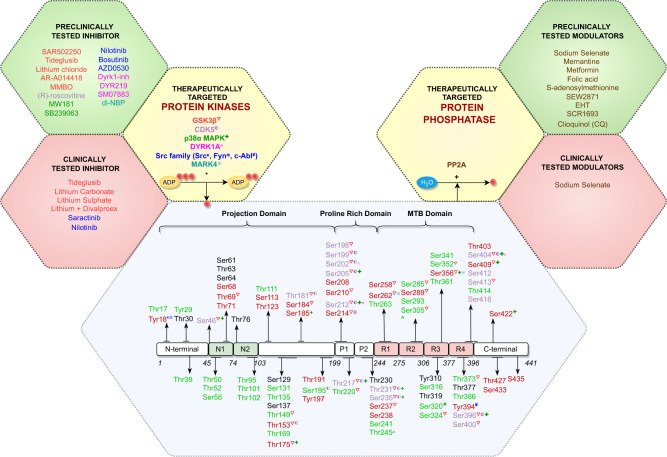
Protein kinases (PKs) have emerged as one of the most intensively investigated drug targets in current pharmacological research, with indications ranging from oncology to neurodegeneration. Tau protein hyperphosphorylation was the first pathological post-translational modification of tau protein described in Alzheimer’s disease (AD), highlighting the role of PKs in neurodegeneration. The therapeutic potential of protein kinase inhibitors (PKIs)) and protein phosphatase 2 A (PP2A) activators in AD has recently been explored in several preclinical and clinical studies with variable outcomes. Where a number of preclinical studies demonstrate a visible reduction in the levels of phospho-tau in transgenic tauopathy models, no reduction in neurofibrillary lesions is observed. Amongst the few PKIs and PP2A activators that progressed to clinical trials, most failed on the efficacy front, with only a few still unconfirmed and potential positive trends. This suggests that robust preclinical and clinical data is needed to unequivocally evaluate their efficacy. To this end, we take a systematic look at the results of preclinical and clinical studies of PKIs and PP2A activators, and the evidence they provide regarding the utility of this approach to evaluate the potential of targeting tau hyperphosphorylation as a disease modifying therapy.
Overview
The claims and statistics of this paper haven’t been checked yet.
Free: it reads the open-access text and checks the first 5 claims that cite a source we can check. Create a free account to check every claim.
Integrity signals
Registry
Cites
Statistics
Figures
Verification
Claims the paper makes
The claims and statistics of this paper haven’t been checked yet.
Free: it reads the open-access text and checks the first 5 claims that cite a source we can check. Create a free account to check every claim.
Claims other papers make about this one
Each is checked against this paper’s own text: does it say what the citing paper says it does?
The cited source says what the claim attributes to it.
In the citing paper
“Tideglusib (20), a non-ATP-competitive GSK-3β inhibitor, exhibits neuroprotective and anti-inflammatory properties.463”
From Recent advances in Alzheimer's disease: Mechanisms, clinical trials and new drug development strategies. (2024) · cites this paper as [463]
The check wasn’t confident either way, so it gives no verdict — never disputed.
In the citing paper
“Bepranemab is a humanised IgG4 monoclonal antibody that binds to the central region of the tau protein”
From Role of Tau Protein in Neurodegenerative Diseases and Development of Its Targeted Drugs: A Literature Review (2024) · cites this paper as [202]
Experimental — accuracy not yet measuredIn the citing paper
“semorinemab is an IgG4 antibody that targets extracellular tau to limit inflammatory microglial activation.”
From Role of Tau Protein in Neurodegenerative Diseases and Development of Its Targeted Drugs: A Literature Review (2024) · cites this paper as [202]
In the citing paper
“Various kinases that phosphorylate Tau protein have been documented, including GSK-3β, CDK5, MAPK (p38, ERK1/2 and JNK), casein kinase (CK), DYRK1A, MARK, PKA, PKB, PKC, CaMKII, and tyrosine kinases such as Src, Fyn, and c-Abl [153,154].”
In the citing paper
“However, no inhibitors have been established to effectively improve AD [154].”
Self-check
Percentages, sums and reported differences re-computed from the paper’s own numbers.
The self-check needs the paper’s full text.
Citations
Cites
1 retracted
Zaki, M. O., El-Desouky, S., Elsherbiny, D. A., Salama, M., & Azab, S. S. (2022) · Inflammopharmacology · doi:10.1007/s10787-022-01023-w · Cited by 12
RetractedNeuropathological stageing of Alzheimer-related changes.
Braak, H., & Braak, E. (1991) · Acta Neuropathologica · doi:10.1007/bf00308809 · Cited by 16,123
NIA‐AA Research Framework: Toward a biological definition of Alzheimer's disease
Jack, C. R., Bennett, D. A., Blennow, K., Carrillo, M. C., Dunn, B., Haeberlein, S. B., Holtzman, D. M., Jagust, W., Jessen, F., Karlawish, J., et al. (2018) · Alzheimer's & Dementia · doi:10.1016/j.jalz.2018.02.018 · Cited by 10,537
Amyloid oligomers exacerbate tau pathology in a mouse model of tauopathy
Selenica, M.-L. B., Brownlow, M., Jimenez, J. P., Lee, D. C., Pena, G., Dickey, C. A., Gordon, M. N., & Morgan, D. (2013) · Neurodegenerative Diseases · doi:10.1159/000337230 · Cited by 10,359
Triple-Transgenic Model of Alzheimer’s Disease with Plaques and Tangles
Oddo, S., Caccamo, A., Shepherd, J. D., Murphy, M. P., Golde, T. E., Kayed, R., Metherate, R., Mattson, M. P., Akbari, Y., & LaFerla, F. M. (2003) · Neuron · doi:10.1016/s0896-6273(03)00434-3 · Cited by 4,126 · cited 1×
“The commonly used triple mutant 3xTg-AD mouse model contains two mutations associated with familial AD, APP (KM670/671NL; Swedish), and PSEN1 (M146V), and one with fronto-temporal dementia (FTD), MAPT (P301L) [183].”
BackgroundGrundke-Iqbal, I., Iqbal, K., Tung, Y. C., Quinlan, M., Wisniewski, H. M., & Binder, L. I. (1986) · Proceedings of the National Academy of Sciences · doi:10.1073/pnas.83.13.4913 · Cited by 3,676
Self-citationNeurofibrillary tangles but not senile plaques parallel duration and severity of Alzheimer's disease
Arriagada, P. V., Growdon, J. H., Hedley-Whyte, E. T., & Hyman, B. T. (1992) · Neurology · doi:10.1212/wnl.42.3.631 · Cited by 2,668
Protein Misfolding, Amyloid Formation, and Human Disease: A Summary of Progress Over the Last Decade
Chiti, F., & Dobson, C. M. (2017) · Annual Review of Biochemistry · doi:10.1146/annurev-biochem-061516-045115 · Cited by 2,629 · cited 1×
“This creates conditions favourable for its unfolding, refolding, and misfolding into a tremendously large conformational ensemble that could potentially be capable of template-directed misfolding and aggregation [33, 34].”
BackgroundGoedert, M., Spillantini, M. G., Jakes, R., Rutherford, D., & Crowther, R. A. (1989) · Neuron · doi:10.1016/0896-6273(89)90210-9 · Cited by 2,492
Synapse Loss and Microglial Activation Precede Tangles in a P301S Tauopathy Mouse Model
Yoshiyama, Y., Higuchi, M., Zhang, B., Huang, S.-M., Iwata, N., Saido, T. C., Maeda, J., Suhara, T., Trojanowski, J. Q., & Lee, V. M.-Y. (2007) · Neuron · doi:10.1016/j.neuron.2007.01.010 · Cited by 2,208 · cited 2×
“It develops tangles in the neocortex, amygdala, hippocampus, brain stem and spinal cord at 6 months, with progressive accumulation thereafter [186].”
BackgroundInfluential
Research works printed but not linked: 1
- Serenó L Coma M Rodriguez M Sanchez-Ferrer P Sánchez MB Gich I A novel GSK-3β inhibitor reduces Alzheimer’s pathology and rescues neuronal loss in vivo Neurobiol Dis 2009 35 359 67 10.1016/j.nbd.2009.05.025 19523516 · DOI · Paper page
Cited by
Zhang, J., Zhang, Y., Wang, J., Xia, Y., Zhang, J., & Chen, L. (2024) · Signal Transduction and Targeted Therapy · doi:10.1038/s41392-024-01911-3 · Cited by 1,138
Inflammatory aspects of Alzheimer’s disease
Lucena, P. B., & Heneka, M. T. (2024) · Acta Neuropathologica · doi:10.1007/s00401-024-02790-2 · Cited by 169
“Glycogen synthase kinase (GSK-3β) and cyclin-dependent kinase ( CDK5) are the two most studied kinases involved in tau hyperphosphorylation, while PP2A is the main phosphatase related with tau dephosphorylation [12].”
Alzheimer’s disease as type 3 diabetes: understanding the link and implications
Kciuk, M., Kruczkowska, W., Gałęziewska, J., Wanke, K., Kałuzińska-Kołat, Ż., Aleksandrowicz, M., & Kontek, R. (2024) · International Journal of Molecular Sciences · doi:10.3390/ijms252211955 · Cited by 98
“This pronounced aggregation of tau underscores its central role in AD pathogenesis and progression [38].”
The role of PI3K signaling pathway in Alzheimer’s disease
Pan, J., Yao, Q., Wang, Y., Chang, S., Li, C., Wu, Y., Shen, J., & Yang, R. (2024) · Frontiers in Aging Neuroscience · doi:10.3389/fnagi.2024.1459025 · Cited by 89
Neuroinflammatory Biomarkers in Alzheimer’s Disease: From Pathophysiology to Clinical Implications
Roveta, F., Bonino, L., Piella, E. M., Rainero, I., & Rubino, E. (2024) · International Journal of Molecular Sciences · doi:10.3390/ijms252211941 · Cited by 89
Yang, J., Zhi, W., & Wang, L. (2024) · Molecules · doi:10.3390/molecules29122812 · Cited by 63
“Both are in phase 2 clinical trials [202].”
BackgroundMechanistic insights and emerging therapeutic stratagems for Alzheimer’s disease
Rajendran, K., & Krishnan, U. M. (2024) · Ageing Research Reviews · doi:10.1016/j.arr.2024.102309 · Cited by 63
Alzheimer's disease: The role of proteins in formation, mechanisms, and new therapeutic approaches
Gholami, A. (2023) · Neuroscience Letters · doi:10.1016/j.neulet.2023.137532 · Cited by 62
Prabha, S., Sajad, M., Hasan, G. M., Islam, A., Hassan, M. I., & Thakur, S. C. (2024) · Ageing Research Reviews · doi:10.1016/j.arr.2024.102476 · Cited by 46
Hein, Z. M., Karikalan, B., Gopalakrishna, P. K., Dhevi, K., Alkatiri, A., Hussan, F., Mohd Moklas, M. A., Jagadeesan, S., Che Ramli, M. D., Che Mohd Nassir, C. M. N., et al. (2026) · Molecular Neurobiology · doi:10.1007/s12035-025-05602-0 · Cited by 43
“Among these, GSK-3 has attracted particular attention, whereby it not only phosphorylates tau but also contributes to Aβ production and Aβ-mediated neurotoxicity [49] (Fig.”
Gu, Z., Zhao, H., Song, Y., Kou, Y., Yang, W., Li, Y., Li, X., Ding, L., Sun, Z., Lin, J. Y., et al. (2024) · Journal of Controlled Release · doi:10.1016/j.jconrel.2024.01.019 · Cited by 51
Abbas, K., Mustafa, M., Alam, M., Habib, S., Ahmad, W., Adnan, M., Hassan, M. I., & Usmani, N. (2025) · Neurogenetics · doi:10.1007/s10048-025-00821-y · Cited by 51
Crosstalk between bone and brain in Alzheimer's disease: Mechanisms, applications, and perspectives
Liu, Z., Liu, M., Xiong, Y., Wang, Y., & Bu, X. (2024) · Alzheimer's & Dementia · doi:10.1002/alz.13864 · Cited by 39
Ahn, E. H., & Park, J.-B. (2025) · Cells · doi:10.3390/cells14020089 · Cited by 38
Singh, N., Nandy, S. K., Jyoti, A., Saxena, J., Sharma, A., Siddiqui, A. J., & Sharma, L. K. (2024) · Brain Sciences · doi:10.3390/brainsci14060554 · Cited by 39
“Recent preclinical studies have shown that PKC activation can reduce tau phosphorylation by inhibiting the activity of kinases involved in tau hyperphosphorylation, such as glycogen synthase kinase-3 β (GSK-3 β ) and cyclin-dependent kinase 5 (CDK5) [91].”
BackgroundMild cognitive impairment in Parkinson's disease: current view
Jellinger, K. A. (2024) · Frontiers in Cognition · doi:10.3389/fcogn.2024.1369538 · Cited by 46
Recent Insights into the Neurobiology of Alzheimer’s Disease and Advanced Treatment Strategies
Anitha, K., Singh, M. K., Kohat, K., Varshini, T. S., Chenchula, S., Padmavathi, R., Amerneni, L. S., Vishnu Vardhan, K., Mythili Bai, K., Chavan, M. R., et al. (2024) · Molecular Neurobiology · doi:10.1007/s12035-024-04384-1 · Cited by 42
“These antibodies are designed to bind to tau aggregates, designating them for removal by the immune system [96, 97].”
Meijer, L., Chrétien, E., & Ravel, D. (2024) · Journal of Alzheimer s Disease · doi:10.3233/jad-240078 · Cited by 33
“There is a very abundant literature linking Tau hyperphosphorylation and AD (reviews in [101–104]).”
Ellis, M. J., Lekka, C., Holden, K. L., Tulmin, H., Seedat, F., O'Brien, D. P., Dhayal, S., Zeissler, M., Knudsen, J. G., Kessler, B. M., et al. (2024) · Acta Neuropathologica · doi:10.1007/s00401-024-02729-7 · Cited by 34
Prabha, S., Choudhury, A., Islam, A., Thakur, S. C., & Hassan, M. I. (2025) · Ageing Research Reviews · doi:10.1016/j.arr.2025.102680 · Cited by 27
Post-translational modifications in the Protein Data Bank
Schofield, L. C., Dialpuri, J. S., Murshudov, G. N., & Agirre, J. (2024) · Acta Crystallographica Section D Structural Biology · doi:10.1107/s2059798324007794 · Cited by 32
Aran, K. R., Porel, P., Hunjan, G., Singh, S., Gupta, G. D., & Rohit (2025) · Ageing Research Reviews · doi:10.1016/j.arr.2025.102685 · Cited by 32
Sharma, B., Dhiman, C., Hasan, G. M., Shamsi, A., & Hassan, M. I. (2024) · Nutrients · doi:10.3390/nu16173033 · Cited by 29
“AD pathogenesis is characterized by oxidative stress and subsequent neuronal damage.”
BackgroundXiao, Y., Wei, L., Su, J., Lei, H., Sun, F., Li, M., Li, S., Wang, X., Zheng, J., & Wang, J. (2024) · Cell chemical biology · doi:10.1016/j.chembiol.2024.09.003 · Cited by 24
Investigating MARK4 inhibitory potential of Bacopaside II: Targeting Alzheimer's disease
Anwar, S., Mohammad, T., Azhar, M. K., Fatima, H., Alam, A., Hasan, G. M., Islam, A., Kaur, P., & Hassan, M. I. (2023) · International Journal of Biological Macromolecules · doi:10.1016/j.ijbiomac.2023.125364 · Cited by 22
Bhatia, V., Sharma, V. V., Chandel, A., & Rattan, A. (2025) · Inflammopharmacology · doi:10.1007/s10787-025-01715-z · Cited by 28
“Neverthe-less, in Alzheimer’s disease, PTEN might be downregulated in some circumstances, especially in reaction to neurodegenerative stress, which throws off the normal signaling balance (Basheer et al. 2023).”
Protein modification in neurodegenerative diseases
Ramazi, S., Dadzadi, M., Darvazi, M., Seddigh, N., & Allahverdi, A. (2024) · MedComm · doi:10.1002/mco2.674 · Cited by 29
CD2AP deficiency aggravates Alzheimer’s disease phenotypes and pathology through p38 MAPK activation
Xue, Y., Zhang, Z.-S., Lin, R.-R., Huang, H.-F., Zhu, K., Chen, D.-F., Wu, Z., & Tao, Q. (2024) · Translational Neurodegeneration · doi:10.1186/s40035-024-00454-5 · Cited by 22
“Because hyperphosphorylated tau was observed in 4.5-month-old CKO mice, several major kinases involved in tau phosphorylation were analyzed, including p38 MAPK, CDK5 and glycogen synthase-3β (GSK-3β)[25, 26].”
InfluentialAzam, U., Naseer, M. M., & Rochais, C. (2025) · European Journal of Medicinal Chemistry · doi:10.1016/j.ejmech.2025.117277 · Cited by 24
Tyrakis, P. A., Agridi, C., & Kourti, M. (2024) · International Journal of Molecular Sciences · doi:10.3390/ijms25168630 · Cited by 22
“Although the decreased expression of the abovementioned phosphatases has been recently viewed with criticism [19,20], the rest of the factors continue to play a significant role.”
BackgroundMolecular Signaling Pathways of Quercetin in Alzheimer’s Disease: A Promising Arena
Alsaleem, M. A., Al-Kuraishy, H. M., Al-Gareeb, A. I., Albuhadily, A. K., Alrouji, M., Yassen, A. S. A., Alexiou, A. T., Papadakis, M., & Batiha, G. E. (2024) · Cellular and Molecular Neurobiology · doi:10.1007/s10571-024-01526-w · Cited by 20
“Buildup of hyperphosphorylated tau protein which form neurofibrillary tangle (NFT) is related with progressive neuronal injury and the development of AD (Basheer et al. 2023; Muralidar et al. 2020).”
The Role of Kinases in Neurodegenerative Diseases: From Pathogenesis to Treatment
Naim, A., Farooqui, A. M., Badruddeen, B., Khan, M. I., Akhtar, J., Ahmad, A., & Islam, A. (2025) · European Journal of Neuroscience · doi:10.1111/ejn.70156 · Cited by 18
Khowdiary, M. M., Al-Kuraishy, H. M., Al-Gareeb, A. I., Albuhadily, A. K., Elhenawy, A. A., Rashwan, E. K., Alexiou, A. T., Papadakis, M., Fetoh, M. E. A., & Batiha, G. E. (2025) · NeuroMolecular Medicine · doi:10.1007/s12017-025-08836-2 · Cited by 15
“Nonetheless, genetic mutation of the tau protein gene or activation of the inflammatory signaling pathway induces hyperphosphorylation of the tau protein (Basheer et al., 2023).”
Li, L.-J., Sun, X., Huang, Y., Lü, S., Xu, Y., Yang, J., Xie, X.-X., Zhu, J., Niu, X., Wang, D., et al. (2024) · Translational Neurodegeneration · doi:10.1186/s40035-024-00427-8 · Cited by 17
“The regulation of these enzymes by different processes results in tau phosphorylation at different sites [41, 42].”
BackgroundHirota, Y., Sakakibara, Y., Morishima, M., Sano, T., Hara, M., Arakawa, A., Takao, M., Murayama, S., Saito, Y., Sekiya, M., et al. (2025) · Cell Reports · doi:10.1016/j.celrep.2025.116203 · Cited by 17
Targeting Tau Protein with Proximity Inducing Modulators: A New Frontier to Combat Tauopathies
Uliassi, E., Bolognesi, M. L., & Milelli, A. (2025) · ACS Pharmacology & Translational Science · doi:10.1021/acsptsci.4c00733 · Cited by 16
Beyond microtubule regulation: the multifaceted roles of tau in neuronal function and dysfunction
Bakota, L., Tulva, K., Trushina, N. I., & Brandt, R. (2026) · Translational Psychiatry · doi:10.1038/s41398-026-03947-1 · Cited by 15
Molecular Insights into Tau Pathology and its Therapeutic Strategies in Alzheimer's Disease
Zhou, F., Zhao, Y., Sun, Y., & Chen, W. (2024) · Journal of Integrative Neuroscience · doi:10.31083/j.jin2311197 · Cited by 15
“At least 85 putative phosphorylation sites (Ser, Thr, Tyr) have been identified, of which > 50 can be modified in tau [ 42].”
Gautam, A. S., Panda, E. S., Balki, S., Pandey, S. K., Tiwari, A., & Singh, R. K. (2025) · Food & Function · doi:10.1039/d4fo05278a · Cited by 13
Wong, J. H., Lai, K. O., & Barron, A. M. (2025) · Current Opinion in Physiology · doi:10.1016/j.cophys.2025.100874 · Cited by 14
Saleem, K., Xiao, Z., Zhu, B., Ren, Y., Yan, Z., & Feng, J. (2026) · Molecular Psychiatry · doi:10.1038/s41380-025-03225-4 · Cited by 13
“Tau is phosphorylated by many kinases on up to 85 potential sites [7].”
Chen, J. J., Tu, H., Lin, T. E., Peng, Z., Wu, Y., Yen, S., Sung, T.-Y., Hsieh, J., Lee, H., Pan, S., et al. (2024) · Biomedicine & Pharmacotherapy · doi:10.1016/j.biopha.2024.117688 · Cited by 11
Mazahir, F., Rahi, V., Kaundal, R. K., Alam, M. I., & Yadav, A. K. (2024) · Chemical Engineering Journal · doi:10.1016/j.cej.2024.158197 · Cited by 10
Alzheimer's disease: from molecular pathways to therapies
Feng, J.-Q., Yang, L.-L., Ya-xi, L., & Yao, X. (2026) · Molecular Biomedicine · doi:10.1186/s43556-026-00443-2 · Cited by 11
“However, a phase II trial in patients with mild-to-moderate AD (NCT01350362) failed to meet its primary endpoints [304].”
Treating Alzheimer’s Disease: Focusing on Neurodegenerative Consequences
Sun, M., & Alkon, D. L. (2024) · Journal of Alzheimer s Disease · doi:10.3233/jad-240479 · Cited by 9
Angela Asir, R., V, Buzaeva, P., & Michaelevski, I. (2025) · Exploration of Drug Science · doi:10.37349/eds.2025.100892 · Cited by 11
Lei, H., Lv, J., Zhang, F., Wei, L., Shi, K., Liu, J., He, T., Xiong, R., Sun, F., Zhong, T., et al. (2025) · Translational Neurodegeneration · doi:10.1186/s40035-025-00473-w · Cited by 9
“Protein kinases have received significant attention as therapeutic targets in AD treatment research; however, most protein kinase inhibitors and PP2A activators have shown limited efficacy in numerous clinical trials [94].”
Shared Mechanisms in Dementia and Depression: The Modulatory Role of Physical Exercise
de Souza, P. B., Rodrigues, A. L. S., & Felice, F. G. D. (2025) · Journal of Neurochemistry · doi:10.1111/jnc.70185 · Cited by 15
Giofrè, F., Zaffina, I., Pelle, M. C., & Arturi, F. (2025) · Frontiers in Endocrinology · doi:10.3389/fendo.2025.1696419 · Cited by 12
Yang, X., Fontana, A. E., Clouston, S., & Luft, B. J. (2026) · EBioMedicine · doi:10.1016/j.ebiom.2025.106106 · Cited by 8
“45 We found that individuals who developed N-PASC had higher A β 40/42 ratios (AUC = 0.63, P = 0.007), NfL (AUC = 0.59, P = 0.002), and IAB values (AUC = 0.74, P 0.001) before developing COVID-19.”
InfluentialFacal, C. L., Bessone, I. F., Muñiz, J. A., Pereyra, A. E., Pedroncini, O., Páez-Paz, I., Clerici-Delville, R., Arnaiz, C., Urrutia, L., Falasco, G., et al. (2024) · Molecular Therapy · doi:10.1016/j.ymthe.2024.01.033 · Cited by 10
“Targeting abnormal tau protein accumulation is undoubtedly the most promising therapeutic strategy underway for tauopa-thies, 24,27,60,61 including AD.”
Paclibar, C. G., Schafer, D. M., Biju, A. P., Karim, F., Sison, S. A., Liang, C., Ahmed, S. T., & Mukherjee, J. (2025) · Molecules · doi:10.3390/molecules30050990 · Cited by 6
“Hyperphosphorylation of Tau at the various serine (Ser), threonine (Thr), and tyrosine (Tyr) residues is carried out by several protein kinases [1].”
InfluentialRole of saturated fatty acid metabolism in posttranslational modifications of the Tau protein
García-Cruz, V. M., Coria, R., & Arias, C. (2025) · Molecular and Cellular Biochemistry · doi:10.1007/s11010-025-05275-2 · Cited by 7
Lu, S., Qiu, S., Yu, G., Zhang, A., & Zhao, Q. (2026) · Ageing Research Reviews · doi:10.1016/j.arr.2026.103097 · Cited by 8
Alzheimer’s disease and clinical trials
Paul, D., Agrawal, R., & Singh, S. (2024) · Journal of Basic and Clinical Physiology and Pharmacology · doi:10.1515/jbcpp-2023-0264 · Cited by 9
Intraneuronal Aβ accumulation causes tau hyperphosphorylation via endolysosomal leakage
Gao, Y., Wang, L., Doeswijk, T., Winblad, B. G., Schedin‐Weiss, S., & Tjernberg, L. O. (2025) · Alzheimer s & Dementia · doi:10.1002/alz.70091 · Cited by 10
“54 These attempts have not been fruitful, and more specific targeting of hyperphosphorylated tau is necessary.”
Sahoo, T. A., Chand, J., Kandy, A. T., Shanish Antony, A., & Subramanian, G. (2025) · Neurochemical Research · doi:10.1007/s11064-025-04399-7 · Cited by 10
“…also to interact with α-Syn to exacerbate cytoskeletal disorganization, the impediment of axonal transport and results in neuronal death in PD. τ protein hyperphosphorylation is a major pathophysiological event associated with τ aggregation and dysfunction in PD and other tauopathies [53, 54].”
Mild cognitive impairment in dementia with Lewy bodies: an update and outlook
Jellinger, K. A. (2023) · Journal of Neural Transmission · doi:10.1007/s00702-023-02670-1 · Cited by 9
“A potential mechanism for these synergistic effects is probably phosphorylation, since αSyn can induce phosphorylation as a pathological post-translational modification of tau protein and vice versa (Basheer et al. 2023; Giasson et al. 2003; Walker et al. 2015).”
BackgroundWang, Z., Liu, J., Chen, F., Wang, W. K., Xu, Y., Lu, F., Li, Y., & Gao, J. (2025) · Biomedical Signal Processing and Control · doi:10.1016/j.bspc.2025.107926 · Cited by 7
Joshi, N., & Alavala, R. R. (2025) · Computational Biology and Chemistry · doi:10.1016/j.compbiolchem.2025.108478 · Cited by 9
Rho kinase isoforms in neurodegeneration: from cellular functions to therapeutic targets
Shandilya, C., & Mani, S. (2025) · Molecular Biology Reports · doi:10.1007/s11033-025-10947-9 · Cited by 7
Tauopathy in AD: Therapeutic Potential of MARK-4
Mumtaz, Ahmed, F., Rabbani, S. A., El‐Tanani, M., Najmi, A. K., Ali, J., & Khan, M. A. (2024) · Current Alzheimer Research · doi:10.2174/0115672050358397250126151707 · Cited by 6
Palomares, D., Vanparys, A., Jorgji, J., Paître, E., Kienlen‐Campard, P., & Suelves, N. (2025) · Acta Neuropathologica Communications · doi:10.1186/s40478-025-02118-5 · Cited by 9
“However, it has been reported that commonly used phospho-tau antibodies, when evaluated by WB in mouse brain samples, display non-specific bands at ∼ 50 kDa, the molecular size of murine tau.”
Zhang, Q., Long, S., Zhang, N., Sun, G., Zhao, L., & Zhong, R. (2025) · Toxicology and Applied Pharmacology · doi:10.1016/j.taap.2025.117637 · Cited by 6
Manni, E., Al‐kuraishy, H. M., Eisawy, R., Abdelaziz, A. M., & Batiha, G. E. (2026) · Journal of Molecular Neuroscience · doi:10.1007/s12031-026-02518-9 · Cited by 6
“The discontinuation of Tideglusib in late-stage trials, despite promising preclinical and early clinical data, under - scores a recurrent theme in AD therapeutic development: promising target, flawed translation (Lovestone et al. 2015 ; Basheer et al. 2023).”
Liu, J., Yang, J.-B., Wang, Y., Hu, X.-R., Wang, Y.-D., Nie, L., Wei, F., Yu, J., Yao, L., Xu, B., et al. (2024) · Pharmaceutical Biology · doi:10.1080/13880209.2024.2415660 · Cited by 5
“Tau protein hyperphosphorylation is an initial pathological post-translational modification identified in AD (Basheer et al. 2023).”
BackgroundAdvancing Alzheimer’s therapeutics via in silico strategies: Tideglusib based multi-target analogues
Gambhir, S., & Singh, M. (2025) · Computational Biology and Chemistry · doi:10.1016/j.compbiolchem.2025.108685 · Cited by 4
Piekarczyk, N., Berezka, P., Majkutewicz, I., Myślińska, D., & Kaczor, J. J. (2025) · Free Radical Biology and Medicine · doi:10.1016/j.freeradbiomed.2025.10.259 · Cited by 8
Advances and emerging challenges in detecting Tau proteoforms for Alzheimer's disease diagnosis
Cai, Q., Miao, M., & Li, Z. (2026) · TrAC Trends in Analytical Chemistry · doi:10.1016/j.trac.2026.118897 · Cited by 3
Prabha, S., Choudhury, A., Saraswat, J., Patel, R., Hassan, M. I., & Thakur, S. C. (2025) · Journal of Biomolecular Structure and Dynamics · doi:10.1080/07391102.2025.2468296 · Cited by 7
“…beta (A b ) plaques, the generation of reactive oxygen species, hyperphosphorylation of tau proteins, and impairment of mitochondrial function (Basheer et al., 2023; Jalili et al., 2023); in its pathophysiology, however, altered neurotransmitter levels, endoplasmic reticulum stress,…”
O’Day, D. H. (2025) · Biomolecules · doi:10.3390/biom15081133 · Cited by 8
“Hyperphosphorylation of Tau is sufficient to drive the formation of Tau filaments [79].”
InfluentialNeuroprotective mechanism of hydrogen sulfide in okadaic acid-induced alzheimer-like pathology
Kamat, P. K., Kalani, A., Debnath, N., Mushtaq, Z., Tyagi, S. C., & Tyagi, N. (2025) · GeroScience · doi:10.1007/s11357-025-01662-1 · Cited by 5
Kumar, P., & Prashanth, K. V. H. (2024) · Carbohydrate Polymer Technologies and Applications · doi:10.1016/j.carpta.2024.100555 · Cited by 5
Hernández‐Hernández, E., Petyuk, V., Valor-Blanquer, J., Yáñez-Gómez, F., Barr, A. M., Jager, P. L. D., Chen, E., Leurgans, S. E., Schneider, J. A., Bennett, D. A., et al. (2025) · Neurobiology of Disease · doi:10.1016/j.nbd.2025.106924 · Cited by 6
“To date, no randomized-controlled trial testing tauK inhibitors in AD patients has proved efficacy on any relevant clinical outcome (Basheer et al., 2023).”
Cadaxo, A. S., Cotrin, J. C., Valente, A. P., Lopes, F. G., Veras, R. P., Torres, D. S., da Costa, R. Q. M., dos Santos, G. C., & Santos-Rebouças, C. B. (2026) · Brain Research · doi:10.1016/j.brainres.2026.150167 · Cited by 5
Metallospecies and their biological functions in Alzheimer’s disease
Pereira, M. V. S., & de Jesus, J. R. (2026) · International review of neurobiology · doi:10.1016/bs.irn.2026.02.005 · Cited by 3
Glucose hypometabolism and hyperphosphorylated Tau synergistically drive neuronal necroptosis
Chen, X., Li, S., Neubauer, A., Li, X., Mao, W., Brendel, M., Liu, J., Zhang, M., Yang, C., 许瑞胜, et al. (2026) · Neuron · doi:10.1016/j.neuron.2026.03.035 · Cited by 5
From Molecular Networks to Medicines: Targeting Complexity in Alzheimer’s Disease (AD) Therapy
Kumar, R. P., Patel, S., Mishra, P. S., Srivastava, S., Sridhar, S. B., Shareef, J., Sahu, R., Tariq, M., Uddin, J., & Muhsinah, A. B. (2026) · Molecular Neurobiology · doi:10.1007/s12035-026-05909-6 · Cited by 4
“Trans-synaptic spread is an essential feature of tau pathology, and it will be propagated in a prion-like manner and will spread through circuits in the anatomy, and be closely linked to impairment of cognitive functions [32].”
Sura, S., Jagadeesan, S., Okwuofu, E. O., Dandala, K. C. R., Ramakrishnappa, S., Masrudin, S. S., Moklas, M. A. M., Judson, J. P., Fu, G. Q., & Nor, N. H. M. (2026) · Metabolic Brain Disease · doi:10.1007/s11011-026-01894-w · Cited by 4
Recent Advances in Mapping Protein Self-Assembly and Aggregation for Common Proteinopathies
Bhattacharya, S., & Thompson, D. (2024) · Acta Physica Polonica A · doi:10.12693/aphyspola.145.s37 · Cited by 4
Mucci, S., Clas, G. S., Allio, C. P., Rodríguez-Varela, M. S., Isaja, L., Marazita, M. C., Sevlever, G. E., Scassa, M. É., & Romorini, L. (2024) · Molecular Neurobiology · doi:10.1007/s12035-024-04325-y · Cited by 3
“As TAU phosphorylation on this residue is also regulated by other kinases, such as GSK3 and P38 MAPK [23], the phosphorylation status of threonine 205 could remain unaffected in CDK5 +/− KO hiPSC-derived neurons or decrease due to the lower amount of CDK5 available.”
InfluentialThe interplay between Wnt signaling pathways and microtubule dynamics
Kikuchi, K., & Arata, M. (2024) · In Vitro Cellular & Developmental Biology - Animal · doi:10.1007/s11626-024-00860-z · Cited by 3
“This process is central to the pathogenesis of neurodegenerative diseases, particularly Alzheimer’s disease, and contributes to the loss of neuronal function and the development of cognitive deficits observed in affected individuals (Basheer et al 2023).”
Rao, N. S., Putra, M. R. E., Meyer, C., Parameswaran, S., & Thippeswamy, T. (2025) · Cells · doi:10.3390/cells14100743 · Cited by 5
“Hyperphosphorylated tau promotes neurodegeneration [16,30,31].”
Hydrogen sulfide in the brain as a silent neuroprotector in Alzheimer’s disease
Layal, H., Rajbongshi, J., Kumar, R., Pandey, S., Mishra, R., & Yadav, P. K. (2025) · Neuroscience · doi:10.1016/j.neuroscience.2025.08.057 · Cited by 6
Li, R., Wu, X., Yao, J., Chen, J., Shui, X., Zheng, X., Tian, W., Wang, L., Zhou, Y., Zhang, T., et al. (2025) · Journal of Advanced Research · doi:10.1016/j.jare.2025.12.037 · Cited by 3
“In particular, phosphorylation at Ser262 within the microtubule-binding repeat domain critically diminishes tau–microtubule binding affinity [61], whereas Thr231 priming is essential for downstream GSK3 b -mediated phosphoryla tion and contributes to microtubule destabilization [62].”
Demuro, S., Russo, D., Penna, I., Grabska, S., Grabski, H., Vedove, A. D., Valeri, A., Sauvey, C., Ottonello, G., Summa, M., et al. (2026) · Journal of Medicinal Chemistry · doi:10.1021/acs.jmedchem.5c01810 · Cited by 3
Alzheimer’s Disease: An Attempt of Total Recall
Bolshakov, A. P., Gerasimov, K., & Dobryakova, Y. V. (2024) · Journal of Alzheimer s Disease · doi:10.3233/jad-240620 · Cited by 3
Taufeeq, M., Choudhury, A., Hussain, A., Alajmi, M. F., Mohammad, T., Shamsi, A., & Hassan, M. I. (2025) · Journal of Alzheimer s Disease · doi:10.1177/13872877241309592 · Cited by 3
“6,7 In normal neurophysiological conditions, the microtubule maintains the cytoskeleton of neurons in the brain, and the tau protein regulates the function of the microtubule.”
Khan, K. A., Esa, M., Kamal, Z., Ullah, B., Perry, G. L., Kamal, S., Ahmad, S., Hussain, H., Ullah, A., & Shafique, M. S. (2025) · Current Neuropharmacology · doi:10.2174/011570159x361867250313073624 · Cited by 2
“Targeting neuroinflammation may have beneficial effects in reducing disease progression and severity.”
Hussain, A., Sulaimani, M. N., Khan, S., Anwar, S., Hawwal, M. F., Alajmi, M. F., Yadav, D. K., & Hassan, M. I. (2025) · Journal of Computer-Aided Molecular Design · doi:10.1007/s10822-025-00606-3 · Cited by 2
Bolin, M., Nag, S., Arakawa, R., Varrone, A., Farde, L., Martarello, L., Kaliszczak, M. A., Halldin, C., & Morén, A. F. (2025) · Journal of Cerebral Blood Flow & Metabolism · doi:10.1177/0271678x251332487 · Cited by 2
Agostini, M., Traldi, P., & Hamdan, M. H. (2025) · NeuroSci · doi:10.3390/neurosci6020050 · Cited by 1
“Protein phosphorylation is one of the PTMs that is drawing intense pharmacological attention in the search for drug targets, with interest ranging from oncology to neurodegeneration [31].”
Zhu, X., Diep, Y. N., Tran, V. T. A., Kang, Y. J., Lee, L. P., & Cho, H. (2025) · BioChip Journal · doi:10.1007/s13206-025-00228-9 · Cited by 2
“Tau hyperphosphorylation in AD brains resulted from the imbalance of tau hyperphosphorylating kinases such as CDK5 and tau-dephosphorylating phosphatases such as PP2A [7–9 , 50 ].”
Huang, Y., Han, M. H., Fu, Y., Wang, G., Kong, L., Mo, J., Cao, D., Chu, Z., & Li, W. (2025) · European Journal of Pharmacology · doi:10.1016/j.ejphar.2025.178349 · Cited by 3
Dolanbay, S. N. (2025) · Toxicology Research · doi:10.1093/toxres/tfaf155 · Cited by 1
Lithium mitigates hippocampal tau pathology in a rodent model of traumatic brain injury
Donison, N. S., Palik, J., Hintermayer, M. A., Volkening, K., & Strong, M. J. (2025) · Acta Neuropathologica Communications · doi:10.1186/s40478-025-02170-1 · Cited by 1
“One common approach has been to inhibit kinase activity, thereby decreasing tau phosphorylation and attenuating NFT formation [13, 119].”
Chinnathambi, S., Rangappa, N., Velmurugan, G., & Chandrashekar, M. (2025) · Advances in protein chemistry and structural biology · doi:10.1016/bs.apcsb.2025.10.018 · Cited by 1
Hu, Q., Xu, K., Ran, Q., Zhang, W., Gan, C., Fang, Q., & Hui, A. (2025) · Chemico-Biological Interactions · doi:10.1016/j.cbi.2025.111848 · Cited by 2
Interacting partners of Tau protein in Alzheimer’s disease
Chinnathambi, S., Velmurugan, G., Kumarappan, M., & Chandrashekar, M. (2025) · Advances in clinical chemistry · doi:10.1016/bs.acc.2025.10.005 · Cited by 1
Mechanisms to medicines: navigating drug repurposing strategies in Alzheimer’s disease
Khan, S. A., Raza, K., Tiwari, P., El‐Tanani, M., Rabbani, S. A., & Parvez, S. (2026) · Frontiers in Aging Neuroscience · doi:10.3389/fnagi.2025.1676065 · Cited by 4
Metadata
- Authors
- Basheer, N., Smolek, T., Hassan, I., Liu, F., Iqbal, K., Zilka, N., & Novak, P.
- Affiliations
- Slovak Academy of Sciences (SK)
- Venue
- Molecular Psychiatry
- Published
- 2023-06
- Volume
- 28
- Issue
- 6
- Pages
- 2197-2214
- ISSN
- 1359-4184 (ISSN-L)
- 1476-5578
- PMC
- PMC10611587
- OpenAlex
- W4379093931
- Semantic Scholar
- 2523bf568d348c2febee9b9c90bdb39431bf1ae8
- Cited by
- 159
- References
- 222
- Citations by year
- 2026: 57 · 2025: 56 · 2024: 43 · 2023: 3
- FWCI
- 5.65
- Type
- journal article
- Language
- en
- Open access
- hybrid
- doi.org
- Licence
- cc-by
- creativecommons.org/licenses/by/4.0 (tdm)
- creativecommons.org/licenses/by/4.0 (vor, 1 d)
- Locations
- Molecular Psychiatry (publishedVersion, cc-by)
- PubMed Central (publishedVersion, cc-by)
- PubMed (publishedVersion)
- Funders
- Ministerstvo školstva, vedy, výskumu a športu Slovenskej republiky
- Agentúra na Podporu Výskumu a Vývoja (APVV-20-0447, APVV-20-)
- Topics
- Life Sciences › Neuroscience › Cellular and Molecular Neuroscience › Alzheimer's disease research and treatments
- Health Sciences › Medicine › Psychiatry and Mental health › Dementia and Cognitive Impairment Research
- Health Sciences › Medicine › Pharmacology (medical) › Cholinesterase and Neurodegenerative Diseases
- Keywords
- tau hyperphosphorylation, Alzheimer's disease, protein kinase inhibitors, PP2A activators, protein kinases, disease-modifying therapy, neurofibrillary tangles, clinical trial results, preclinical drug testing
- MeSH terms
- Alzheimer Disease, Humans, Phosphorylation, Protein Kinases, tau Proteins, Tauopathies, Protein Phosphatase 2
About these checks
Registry, retraction, Cites and statistics results are computed, not judged, with one exception: a printed reference that no index lists is read once by a model before it counts as a citation error. Claims are extracted by a model and kept only when their quote appears verbatim in the text; each cited source is then checked, with a model’s help, for whether it says what the claim relies on. Those verdicts can be wrong — read the claim’s quote and the cited source before relying on one.
Statistics and arithmetic are recomputed, not judged.
Confidence bands are shown only for fields calibrated on our annotated test set. None is calibrated yet, so no band is shown.
What counts as a claim ›How we measure confidence ›How we check this ›
Are you an author, or do you see a problem with this page? Request a review
Data sources
Bibliographic data: Semantic Scholar, OpenAlex, Crossref.
Contains information from the Semantic Scholar Academic Graph Datasets, made available under the ODC Attribution License (ODC-BY 1.0).
Semantic Scholar’s data is described in: Kinney, R., et al. (2023). The Semantic Scholar Open Data Platform. arXiv:2301.10140.
