

Modulation of the antidepressant effects of ketamine by the mTORC1 inhibitor rapamycin
Open accessThe DOI matches its Crossref record; 47 of the 47 references it cites were found in a registry or an index.
Abstract
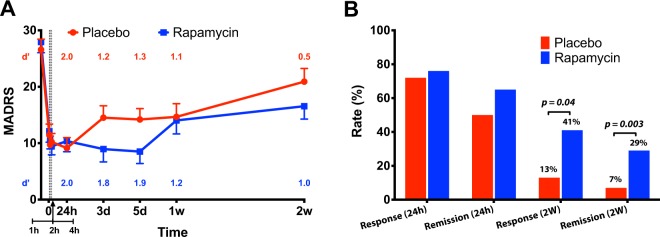
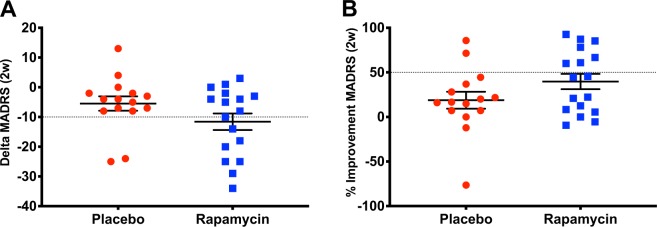
Twenty-four hours after administration, ketamine exerts rapid and robust antidepressant effects that are thought to be mediated by activation of the mechanistic target of rapamycin complex 1 (mTORC1). To test this hypothesis, depressed patients were pretreated with rapamycin, an mTORC1 inhibitor, prior to receiving ketamine. Twenty patients suffering a major depressive episode were randomized to pretreatment with oral rapamycin (6 mg) or placebo 2 h prior to the intravenous administration of ketamine 0.5 mg/kg in a double-blind cross-over design with treatment days separated by at least 2 weeks. Depression severity was assessed using Montgomery–Åsberg Depression Rating Scale (MADRS). Rapamycin pretreatment did not alter the antidepressant effects of ketamine at the 24-h timepoint. Over the subsequent 2-weeks, we found a significant treatment by time interaction ( F (8,245) = 2.02, p = 0.04), suggesting a prolongation of the antidepressant effects of ketamine by rapamycin. Two weeks following ketamine administration, we found higher response (41%) and remission rates (29%) following rapamycin + ketamine compared to placebo + ketamine (13%, p = 0.04, and 7%, p = 0.003, respectively). In summary, single dose rapamycin pretreatment failed to block the antidepressant effects of ketamine, but it prolonged ketamine’s antidepressant effects. This observation raises questions about the role of systemic vs. local blockade of mTORC1 in the antidepressant effects of ketamine, provides preliminary evidence that rapamycin may extend the benefits of ketamine, and thereby potentially sheds light on mechanisms that contribute to depression relapse after ketamine administration.
Overview
The claims and statistics of this paper haven’t been checked yet.
Free: it reads the open-access text and checks the first 5 claims that cite a source we can check. Create a free account to check every claim.
Integrity signals
Registry
Cites
Statistics
Figures
Verification
Claims the paper makes
The claims and statistics of this paper haven’t been checked yet.
Free: it reads the open-access text and checks the first 5 claims that cite a source we can check. Create a free account to check every claim.
Claims other papers make about this one
Each is checked against this paper’s own text: does it say what the citing paper says it does?
The source backs part of the claim, not all of it — or backs it for a different population, condition or comparison.
In the citing paper
“an effect that differed from its effect on depressive symptoms (n = 20) [93]”
From Ketamine in neuropsychiatric disorders: an update (2024) · cites this paper as [93]
Experimental — accuracy not yet measuredThe source backs part of the claim, not all of it — or backs it for a different population, condition or comparison.
In the citing paper
“calibrated AMPAR facilitation may help sustain prefrontal drive, preserve signal-to-noise, and extend remission without excessive excitatory load [380,381,382].”
From Synaptic Plasticity—Intrinsic Excitability and Antidepressant Discovery (2026) · cites this paper as [380]
Experimental — accuracy not yet measuredThe source backs part of the claim, not all of it — or backs it for a different population, condition or comparison.
In the citing paper
“This phosphorylation event activates multiple intracellular signaling cascades, including the mammalian target of rapamycin complex 1 (mTORC1), phosphoinositide 3-kinase (PI3K), phospholipase C gamma (PLCγ), and mitogen-activated protein kinase (MAPK) pathways [86,87].”
From Variations in BDNF and Their Role in the Neurotrophic Antidepressant Mechanisms of Ketamine and Esketamine: A Review (2024) · cites this paper as [86]
Experimental — accuracy not yet measuredThe cited source says what the claim attributes to it.
In the citing paper
“one result of BDNF-TrkB activation by ketamine is stimulation of mTORC signaling pathway [86,87]: this is critical for synaptic protein synthesis and new dendritic spine formation, processes that are fundamental to the sustained antidepressant effects of ketamine [58,60].”
From Variations in BDNF and Their Role in the Neurotrophic Antidepressant Mechanisms of Ketamine and Esketamine: A Review (2024) · cites this paper as [86]
In the citing paper
“First, contrary to preclinical observations, a recent randomized controlled trial (RCT) in humans demonstrated prolonged antidepressant responses to ketamine with coadministration of rapamycin (mTOR inhibitor) [79].”
From Pharmacotherapies Targeting GABA-Glutamate Neurotransmission for Treatment-Resistant Depression (2023) · cites this paper as [79]
Self-check
Percentages, sums and reported differences re-computed from the paper’s own numbers.
The self-check needs the paper’s full text.
Citations
Cites
Molecular Mechanisms of Depression: Perspectives on New Treatment Strategies
Lang, U. E., & Borgwardt, S. (2013) · Cellular Physiology and Biochemistry · doi:10.1159/000350094 · Cited by 8,475
Antidepressant effects of ketamine in depressed patients
Berman, R. M., Cappiello, A., Anand, A., Oren, D. A., Heninger, G. R., Charney, D. S., & Krystal, J. H. (2000) · Biological Psychiatry · doi:10.1016/s0006-3223(99)00230-9 · Cited by 3,856 · cited 3×
“Ketamine administration and monitoring was comparable to previous studies [1, 2, 30].”
BackgroundResultSelf-citationA randomized trial of an N-methyl-D-aspartate antagonist in treatment-resistant major depression.
Zarate, C. A., Singh, J. B., Carlson, P. J., Brutsche, N. E., Ameli, R., Luckenbaugh, D. A., Charney, D. S., & Manji, H. K. (2006) · Archives of General Psychiatry · doi:10.1001/archpsyc.63.8.856 · Cited by 3,766 · cited 4×
“Ketamine administration and monitoring was comparable to previous studies [1, 2, 30].”
BackgroundResultInfluentialmTOR-Dependent Synapse Formation Underlies the Rapid Antidepressant Effects of NMDA Antagonists
Li, N., Lee, B., Liu, R.-J., Banasr, M., Dwyer, J. M., Iwata, M., Li, X.-Y., Aghajanian, G., & Duman, R. S. (2010) · Science · doi:10.1126/science.1190287 · Cited by 2,881 · cited 3×
“First, this study failed to validate the prediction from preclinical studies [10, 16], in that rapamycin pretreatment did not reduce the acute antidepressant effects of ketamine at 24 h following treatment.”
BackgroundMethodResultSelf-citationNMDA receptor blockade at rest triggers rapid behavioural antidepressant responses
Autry, A. E., Adachi, M., Nosyreva, E., Na, E. S., Los, M. F., Cheng, P.-F., Kavalali, E. T., & Monteggia, L. M. (2011) · Nature · doi:10.1038/nature10130 · Cited by 1,926 · cited 3×
“(3) Acute single dose of rapamycin administered peripherally was shown to inhibit mTORC1 in the brain within 2 h of administration in rodents [15].”
BackgroundRaison, C. L., Rutherford, R. E., Woolwine, B. J., Shuo, C., Schettler, P., Drake, D. F., Haroon, E., & Miller, A. H. (2013) · JAMA Psychiatry · doi:10.1001/2013.jamapsychiatry.4 · Cited by 1,617 · cited 1×
“, no CRP or ESR effects), which was suggested to be necessary for successful monotherapy/add-on approaches [46].”
BackgroundMurrough, J. W., Iosifescu, D. V., Chang, L. C., Al Jurdi, R. K., Green, C. E., Perez, A. M., Iqbal, S., Pillemer, S., Foulkes, A., Shah, A., et al. (2013) · American Journal of Psychiatry · doi:10.1176/appi.ajp.2013.13030392 · Cited by 1,205 · cited 3×
“In contrast to parallel groups design [1, 43, 44], cross-over ketamine studies required smaller samples because of the robust effects of ketamine and the rapid relapse, leading to increased statistical power to detect significant within subject differences.”
BackgroundResultLi, N., Liu, R.-J., Dwyer, J. M., Banasr, M., Lee, B., Son, H., Li, X.-Y., Aghajanian, G., & Duman, R. S. (2011) · Biological Psychiatry · doi:10.1016/j.biopsych.2010.12.015 · Cited by 1,082 · cited 3×
“First, this study failed to validate the prediction from preclinical studies [10, 16], in that rapamycin pretreatment did not reduce the acute antidepressant effects of ketamine at 24 h following treatment.”
BackgroundMethodResultSelf-citationDiazgranados, N., Ibrahim, L., Brutsche, N. E., Newberg, A., Kronstein, P., Khalife, S., Kammerer, W. A., Quezado, Z., Luckenbaugh, D. A., Salvadore, G., et al. (2010) · Archives of General Psychiatry · doi:10.1001/archgenpsychiatry.2010.90 · Cited by 963 · cited 2×
“In fact, for the first 12 years following the discovery of the antidepressant effects of ketamine all controlled studies were mainly cross-over and smaller in size compared to the current study [2, 30, 41, 42].”
BackgroundResultKöhler, O., Benros, M. E., Nordentoft, M., Farkouh, M. E., Iyengar, R. L., Mors, O., & Krogh, J. (2014) · JAMA Psychiatry · doi:10.1001/jamapsychiatry.2014.1611 · Cited by 941 · cited 1×
“Therefore, an essential strength of the study is the use of combined therapy, instead of monotherapy or add-on approaches that were used in the past [19].”
Background
Cited by
Items 101–188 of 188
Hovda, N., Gerrish, W. G., Frizzell, W., & Shackelford, R. (2023) · Journal of Affective Disorders · doi:10.1016/j.jad.2023.10.120 · Cited by 15
The therapeutic potential of psilocybin beyond psychedelia through shared mechanisms with ketamine
Park, D., Lee, G., Lee, W.-G., Kim, B. S., Lee, Y., & Kim, J. (2025) · Molecular Psychiatry · doi:10.1038/s41380-025-03100-2 · Cited by 14
“…an mTOR inhibitor, infusion into the mPFC blocks ketamine ’ s effects in rodents, clinical trials suggest that systemic administration of rapamycin does not prevent — and may even potentiate — ketamine ’ s ef fi cacy in humans [15, 94 – 97], indicating a context-dependent role for mTOR signaling.”
Zhuang, Z., Wu, H.-Y., Song, Y.-Y., Li, L., Cui, X., Yang, J., Xu, X.-Q., & Cui, W. (2022) · Frontiers in Cellular Neuroscience · doi:10.3389/fncel.2022.981190 · Cited by 12
Role of group II metabotropic glutamate receptors in ketamine's antidepressant actions
Onisiforou, A., Georgiou, P., & Zanos, P. (2023) · Pharmacology Biochemistry and Behavior · doi:10.1016/j.pbb.2023.173531 · Cited by 12
The possible place for psychedelics in pharmacotherapy of mental disorders
Wojtas, A. (2023) · Pharmacological Reports · doi:10.1007/s43440-023-00550-9 · Cited by 14
“While ground-breaking, the authors state that this effect has to be carefully replicated in further studies [59].”
BackgroundNguyen, T. M. L., Jollant, F., Tritschler, L., Colle, R., Corruble, E., & Gardier, A. M. (2023) · Pharmaceuticals · doi:10.3390/ph16040634 · Cited by 11
“However, a single dose of rapamycin failed to achieve this in depressed patients [143].”
Role of FMRP in rapid antidepressant effects and synapse regulation
Heaney, C. F., Namjoshi, S. V., Uneri, A., Bach, E. C., Weiner, J. L., & Raab‐Graham, K. F. (2021) · Molecular Psychiatry · doi:10.1038/s41380-020-00977-z · Cited by 12
“depressant effects of ketamine in a treatment-resistant population [60].”
BackgroundNeurobiology of Mood Disorders
Manchia, M., & Schatzberg, A. F. (2024) · Springer eBooks · doi:10.1007/978-3-030-51366-5_83 · Cited by 11
Pałucha-Poniewiera, A. (2022) · Pharmacology Biochemistry and Behavior · doi:10.1016/j.pbb.2022.173454 · Cited by 10
Glycolytic metabolism: Food for immune cells, fuel for depression?
Bekhbat, M. (2024) · Brain Behavior & Immunity - Health · doi:10.1016/j.bbih.2024.100843 · Cited by 13
“Rapamycin, an inhibitor of mTORC1 signaling and glycolysis (Lee et al., 2019), has been shown to enhance the antidepressant effect of ketamine, the response to which has been predicted by increased inflammatory markers (Abdallah et al., 2020; Yang et al., 2015).”
BackgroundGuanosine as a promising target for fast-acting antidepressant responses
Camargo, A., & Rodrigues, A. L. S. (2022) · Pharmacology Biochemistry and Behavior · doi:10.1016/j.pbb.2022.173422 · Cited by 10
Deyama, S., Sugie, R., Tabata, M., & Kaneda, K. (2023) · Nutritional Neuroscience · doi:10.1080/1028415x.2023.2254542 · Cited by 9
Critical Period Plasticity as a Framework for Psychedelic-Assisted Psychotherapy
Lepow, L., Morishita, H., & Yehuda, R. (2023) · FOCUS The Journal of Lifelong Learning in Psychiatry · doi:10.1176/appi.focus.23021012 · Cited by 11
Wang, C., Lan, X., Liu, W., Zhan, Y., Zheng, W., Chen, X., Liu, G., Mai, S., Lu, H., McIntyre, R. S., et al. (2024) · Translational Psychiatry · doi:10.1038/s41398-024-03027-2 · Cited by 10
“To prolong the ef fi cacy of ketamine, various strategies (e.g., use of riluzole, lithium, or rapamycin) have been attempted, but none have been proven effective in randomized controlled studies [4 – 6].”
Inflammation and Depression: Is Immunometabolism the Missing Link?
Dantzer, R., Casaril, A. M., & Vichaya, E. G. (2021) · Springer eBooks · doi:10.1007/978-3-030-71229-7_16 · Cited by 13
Narboux‐Nême, N., Aouci, R., Fontaine, A., Vion, A., Levi, G., & Belz, L. (2024) · Cells · doi:10.3390/cells13151262 · Cited by 10
“Another intracellular effector of TrkB, the mTOR pathway (mechanistic target of rapamycin), has also been suggested as a possible mediator of rapid antidepressive effects of ketamine and of long-term Flx treatment, with contrasting results [29,30].”
ResultCold receptor TRPM8 as a target for migraine-associated pain and affective comorbidities
Cabañero, D., Carter, E. P., González‐Cano, R., Cobos, E. J., Fernández-Carvajal, A. M., & Ferrer-Montiel, A. V. (2025) · The Journal of Headache and Pain · doi:10.1186/s10194-025-02082-4 · Cited by 8
“Nevertheless, rapamycin antidepressant effects were described in basic studies [15] and clinically in combination with ketamine [27] While the rapamycin dosing schedule may be further optimized in this model, the present study focused on elucidating potential effects of rapamycin elicited through…”
Irwin, M. N., & VandenBerg, A. (2021) · Mental Health Clinician · doi:10.9740/mhc.2021.05.200 · Cited by 7
“downstream signaling like rapamycin suggest potential benefit when coadministered with ketamine.(76) It is unclear”
BackgroundShinohara, R., & Furuyashiki, T. (2022) · Neuroscience Research · doi:10.1016/j.neures.2022.12.015 · Cited by 7
Cheng, Z., Fan, J., Zhao, F., Su, J.-Y., Sun, Q., Cui, R.-J., & Li, B.-J. (2023) · Neural Regeneration Research · doi:10.4103/1673-5374.367928 · Cited by 7
“Studies have found that rapamycin has potent anti-inflammatory effects, which may be directly connected to the antidepressant-like effects (Abdallah et al., 2020; Aghaie et al., 2021).”
BackgroundFelger, J. C. (2023) · Advances in neurobiology · doi:10.1007/978-3-031-21054-9_16 · Cited by 6
Intermittent repeated stress but not ketamine changes mice response to antidepressants
Borsoï, M., Nunes, L. E. D., Barbosa, A. R., Lima, M. S., Medeiros, I., Pranke, M. A., Antonio, C. B., Rates, S. M. K., & Neves, G. A. (2020) · Neuroscience Letters · doi:10.1016/j.neulet.2020.135452 · Cited by 6
Sharma, A., & Singh, T. G. (2026) · Molecular and Cellular Neuroscience · doi:10.1016/j.mcn.2026.104097 · Cited by 7
La kétamine : un neuropsychotrope au mécanisme d’action innovant
Guilloux, J., Nguyen, T. M. L., & Gardier, A. M. (2023) · Biologie Aujourd hui · doi:10.1051/jbio/2023026 · Cited by 5
Ketamine's rapid antisuicidal effects are not attenuated by Buprenorphine
Hosanagar, A., Schmale, A., & LeBlanc, A. (2020) · Journal of Affective Disorders · doi:10.1016/j.jad.2020.12.120 · Cited by 5
Bevilacqua, L. M., Charney, A., Pierce, C. R., Richards, S. M., Jha, M. K., Glasgow, A. M., Brallier, J. W., Kirkwood, K. A., Bagiella, E., Charney, D. S., et al. (2021) · Journal of Psychopharmacology · doi:10.1177/0269881120985147 · Cited by 5
Courtes, A. C., Jones, G. H., Henter, I. D., Shahani, L., Fries, G. R., Juruena, M. F., Soares, J. C., Zarate, C. A., & Machado‐Vieira, R. (2025) · Journal of Affective Disorders · doi:10.1016/j.jad.2025.120016 · Cited by 5
Baldelli, G. F., & Buonsenso, D. (2025) · Children · doi:10.3390/children12121603 · Cited by 4
“In depression, rapamycin pretreatment before ketamine failed to blunt the acute antidepressant response and may have prolonged benefit, indicating pathway modulation without establishing mTOR hyperactivity as a primary causal driver [72].”
Radulović, J., & Gabbay, V. (2021) · Cell Reports Medicine · doi:10.1016/j.xcrm.2021.100282 · Cited by 4
Huc, M., Siddiqi, S., Myers, M., Colman, I., Salmaso, N., Jaworska, N., & Aguilar‐Valles, A. (2026) · Molecular Psychiatry · doi:10.1038/s41380-026-03493-8 · Cited by 5
“Recently, ketamine has emerged as a treatment option for patients with TRD. Ketamine (as a racemic mixture) and its two enantiomers, esketamine (S+) and arketamine (R), are N-methyl-D-aspartate receptor (NMDAR) antagonists [8].”
Pochwat, B. (2022) · Psychiatria Polska · doi:10.12740/pp/onlinefirst/134330 · Cited by 4
“In 2019, American psychiatrists [40] administered rapamycin orally to people suffering from drug-resistant depression to determine if it would weaken the antidepressant efficacy of a single dose of ketamine.”
The contribution of mTOR to the immunopathology of bipolar disorder
Bertollo, A. G., Jordan, V. A., Capitanio, M. Z., & Ignácio, Z. M. (2025) · Journal of Neuroimmunology · doi:10.1016/j.jneuroim.2025.578744 · Cited by 3
An Update on Somatic Treatments for Suicide Risk
Rizk, M., & Mann, J. J. (2026) · American Journal of Psychiatry · doi:10.1176/appi.ajp.20260287 · Cited by 4
Kwaśny, A., Szram-Kwaśny, W., Kwaśna, J., & Cubała, W. J. (2023) · Medical Hypotheses · doi:10.1016/j.mehy.2023.111192 · Cited by 3
The role of immunometabolism in HIV-associated depression and cognitive impairment
Andalibi, M. S. S., & Ellis, R. J. (2024) · Elsevier eBooks · doi:10.1016/b978-0-323-99744-7.00028-6 · Cited by 4
Bao, K. H. (2021) · Research Square · doi:10.21203/rs.3.rs-374465/v1 · Cited by 4
“Inhibiting mTOR with rapamycin completely blocked ketamine-induced synaptogenesis in rats [17], yet in depressed patients rapamycin actually prolonged ketamine’s antidepressant effects [19].”
BackgroundNeuroactive steroid effects on autophagy in a human embryonic kidney 293 (HEK) cell model
Salvatore, S. V., Ilagan, M. X. G., Shu, H., Lambert, P. M., Benz, A. M., Qian, M., Covey, D. F., Zorumski, C. F., & Mennerick, S. J. (2024) · Scientific Reports · doi:10.1038/s41598-024-51582-x · Cited by 2
“Finally, a human clinical study found that rapamycin (an autophagy inducer) prolonged the antidepressant effects of ketamine, suggesting an important role for autophagy in therapeutic outcomes 12 .”
BackgroundLess is more: calorie restriction as a therapeutic for mental health disorders
Nguyen, J. C. D., Govic, A., Levay, E. A., Zelko, M. D., Arumugam, T. V., Penman, J., Johns, T. G., & Boskovic, Z. (2025) · Frontiers in Psychiatry · doi:10.3389/fpsyt.2025.1584890 · Cited by 3
Ketamine as an NMDA-modulating therapy in bipolar disorder: rationale and evidence
Queissner, R., Fellendorf, F. T., & Reininghaus, E. (2026) · Frontiers in Psychiatry · doi:10.3389/fpsyt.2026.1777402 · Cited by 2
“Neuroimaging studies demonstrate that ketamine restores connectivity between the prefrontal cortex and limbic structures, facilitating improved emotional regulation and cognitive control (12).”
NADPH oxidase-1 suppression prolongs the antidepressant-like effect of ketamine
Nakajima, W., Arisawa, T., Jitsuki, S., Yamanoue, T., Fujikawa, K., Hara, M., Sano, A., Takada, Y., Iai, R., Kimura, K., et al. (2026) · Molecular Psychiatry · doi:10.1038/s41380-026-03527-1 · Cited by 2
Coutellier, L. D., Musazzi, L., & Pavlovic, Z. M. (2022) · Springer eBooks · doi:10.1007/978-3-030-87480-3_4 · Cited by 2
Deyama, S. (2023) · YAKUGAKU ZASSHI · doi:10.1248/yakushi.23-00111 · Cited by 2
Berner, K., Oz, N., Kaya, A., Acharjee, A., & Berner, J. E. (2024) · Aging · doi:10.18632/aging.206033 · Cited by 2
“AGING The inexpensive generic drugs ketamine and rapamycin, that are efficacious in both chronic pain and depression [5, 6], modulate different nutrient sensing pathways.”
Autophagy Modulation by Antidepressants: Mechanisms and Implications
Zheng, Y., Ma, Y., Pan, Y., Ali, T., Zheng, C., Miu, K. K., Wang, Z., Zhang, L., Li, S., & Tan, Z. (2025) · Neurochemical Research · doi:10.1007/s11064-025-04534-4 · Cited by 3
“Interestingly, the inhibition of mTOR, through agents such as rapamycin or the rapid-acting anti - depressant ketamine, has been associated with swift anti - depressant effects in both preclinical and clinical studies [ 89 , 90 ].”
Bringing in the ACE(i): Angiotensin-Converting Enzyme Inhibitors as Antidepressants
Hare, B. D., & Dileone, R. (2020) · Biological Psychiatry · doi:10.1016/j.biopsych.2020.05.025 · Cited by 2
Rapamycin Augmentation of Chronic Ketamine as a Novel Treatment for Complex Regional Pain Syndrome
Sharma, A., Tajerian, M., & Berner, J. E. (2023) · Cureus · doi:10.7759/cureus.43715 · Cited by 2
“Recent research in a common syndromic disorder, major depression, sharing close genetic overlaps with neurogenic pain [2], suggests profound synergistic effects when ketamine is co-administered with rapamycin [7].”
BackgroundKétamine et suicidalité : modèles animaux pour comprendre son mécanisme d’action
Nguyen, T. M. L., Jollant, F., Tritschler, L., Colle, R., Corruble, E., & Gardier, A. M. (2023) · Annales Pharmaceutiques Françaises · doi:10.1016/j.pharma.2023.10.008 · Cited by 2
You, S., Hao, X., Cao, F., Lou, J., Cao, J., Liu, Y., Guo, Y., Li, H., Li, A., Xu, J., et al. (2024) · Journal of Psychiatric Research · doi:10.1016/j.jpsychires.2024.11.034 · Cited by 1
Mechanism of antidepressant action of ketamine and differences between its two enantiomers
Zhan, J., Zhang, Y., Tian, H., Zhu, X., Guo, M., Qiu, Z., & Xia, Z. (2025) · Journal of Anesthesia and Translational Medicine · doi:10.1016/j.jatmed.2025.06.001 · Cited by 1
“89 Accordingly, the role of mTOR in the antidepressant effects of ketamine may be maintained rather than rapidly induced.”
Brown, K. A., Morris, P. J., Thomas, C. J., & Gould, T. D. (2026) · Journal of Neuroscience · doi:10.1523/jneurosci.0958-25.2026 · Cited by 1
Mechanism of action of REDD1 in depression and its targeted intervention
Guan, W., Meng, Y.-T., & Miao, Y. (2026) · Biochemical Pharmacology · doi:10.1016/j.bcp.2026.117878 · Cited by 1
Kowalski, L., Delanogare, E., & de Oliveira, T. B. (2021) · VITTALLE - Revista de Ciências da Saúde · doi:10.14295/vittalle.v33i3.13224 · Cited by 7
Klettke, E. E., Holmes, M. D., Meyer, T. D., & Jones, G. H. (2023) · Personalized Medicine in Psychiatry · doi:10.1016/j.pmip.2023.100112 · Cited by 1
Nasser, A. F., Owen, J. R., Goméni, R., Kosheleff, A. R., Portelli, J., Adeojo, L., & Hughes, T. E. (2024) · Clinical Therapeutics · doi:10.1016/j.clinthera.2023.12.015 · Cited by 2
Inflammation and treatment resistance: Mechanisms and treatment implications
Miller, A. H., Lucido, M. J., Bekhbat, M., Mehta, N. D., Chen, X., Treadway, M. T., Felger, J. C., & Haroon, E. (2022) · Elsevier eBooks · doi:10.1016/b978-0-12-824067-0.00015-3 · Cited by 1
Nursing in psychedelic-assisted psychotherapy: new opportunities and future prospects
Milner, L., & Mithoefer, A. (2024) · British Journal of Mental Health Nursing · doi:10.12968/bjmh.2023.0028 · Cited by 1
Synaptic Plasticity—Intrinsic Excitability and Antidepressant Discovery
Tanaka, M. (2026) · Biomedicines · doi:10.3390/biomedicines14061265
Paris, Église Saint Roch (Ier arrt), Tombeau de Madame de La Live de Jully par Falconet (1753)
Atget, E. (1927) · Appartient à un fonds de photographies vendu à l'Ecole des beaux-arts par Atget, seul photographe inscrit sous son nom dans les registres d'entrée des collections ; Numéro d'inventaire ENSBA : 38688
Tracy, D. K., Joyce, D. W., Albertson, D. N., & Shergill, S. S. (2020) · The British Journal of Psychiatry · doi:10.1192/bjp.2020.57
Fasting in mood disorders and its potential therapeutic aspects -narrative review
Halczuk, I., Nowak, K., Chiriboga, S., & Róg, J. (2022) · Current Problems of Psychiatry · doi:10.2478/cpp-2022-0006
Effect of rapamycin and lithium carbonate on depression-like behavior and anxiety in skin melanoma
Obanina, N. A., Bgatova, N. P., Taskaeva, I. S., & Makarova, V. (2022) · International Multi-Conference on Engineering, Computer and Information Sciences (SIBIRCON) · doi:10.1109/sibircon56155.2022.10017116
Neurobiological Foundations of Mood Disorders
Manchia, M., & Schatzberg, A. F. (2023) · Springer eBooks · doi:10.1007/978-3-030-42825-9_83-1
Krishnan, J. (2024) · BENTHAM SCIENCE PUBLISHERS eBooks · doi:10.2174/9789815223828124010008
Pham, G. S., & Mathew, S. J. (2024) · Elsevier eBooks · doi:10.1016/b978-0-443-18496-3.00014-8
Neurotrophic Mechanisms of Depression and Antidepressant Action in Animal and Human Studies
Monteggia, L. M. (2025) · Oxford University Press eBooks · doi:10.1093/med/9780197640654.003.0031
Ketamine’s Multifaceted Neuropharmacological and Neurobiological Actions
Kohtala, S., & Annala, I. (2025) · Neuromethods · doi:10.1007/978-1-0716-4603-8_2
Casanova-Maldonado, I., Arancibia, D., Lois, P., Peña‐Villalobos, I., & Palma, V. (2024) · Figshare · doi:10.6084/m9.figshare.26603869
Casanova-Maldonado, I., Arancibia, D., Lois, P., Peña‐Villalobos, I., & Palma, V. (2024) · Figshare · doi:10.6084/m9.figshare.26603866
Neuropsychological mechanisms of ketamine antidepressant effect
Costi, S. (2025) · Oxford University Research Archive (ORA) (University of Oxford) · doi:10.5287/ora-wvydgvb7o
La kétamine, un antidépresseur d'action rapide et antagoniste du récepteur NMDA du glutamate
Nguyen, T. M. L. (2023) · theses.fr (ABES) · doi:10.70675/0ba94412ze24bz4514z9262z9ace4cb240c9
Wei, X., Xu, S., & Zhu, Z. (2026) · Current Neuropharmacology · doi:10.2174/011570159x458197260226055817
“%) rates compared to placebo, further substantiating the critical role of mTOR signaling in ketamine’s antidepressant efficacy [36].”
Wasolua, T. T., Bommersbach, T. J., McIntyre, R. S., & Rhee, T. G. (2026) · Research Square · doi:10.21203/rs.3.rs-9827580/v1
“94 Furthermore, recent evidence suggests that dendritic spine formation may contribute to sustained, rather than rapid, antidepressant effects, as behavioral improvements precede structural spine changes.”
(2024) · American Psychiatric Association Publishing eBooks · doi:10.1176/appi.books.9798894551944.bm01
L-tetrahydropalmatine attenuates ketamine reward effect via modulating the miR-27a-3p/MAP2K4 axis
Du, Y., Gao, X., Ma, Q., Li, B., Chen, Y., Su, H.-L., Du, L., & Liang, T.-G. (2026) · Frontiers in Genetics · doi:10.3389/fgene.2026.1701742
Nicholls, S. B. (2026) · Carleton University's Institutional Repository (MacOdrum Library, Carleton University) · doi:10.22215/etd/2026-17222
Johnston, J. N., Jones, G. H., Peng, S., Yuan, P., Yavi, M., Kadriu, B., Henter, I. D., Quintanilla, B., Elkahloun, A. G., Moaddel, R., et al. (2026) · Molecular Psychiatry · doi:10.1038/s41380-026-03768-0
Jones, G. H., Gilbert, J. R., Johnston, J. N., Akula, N., Schulmann, A., Arakelian, M. H., Peng, S., Yuan, P., Winful, E. A., Yavi, M., et al. (2026) · Molecular Psychiatry · doi:10.1038/s41380-026-03777-z
Molecules, meaning, and physiology: disentangling the active ingredients of psychedelic therapeutics
Kuypers, K. P. C. (2026) · Frontiers in Neuroscience · doi:10.3389/fnins.2026.1892474
Chauhan, V., & Khan, F. (2026) · Brain Sciences · doi:10.3390/brainsci16080845
“In a randomized crossover trial in depressed patients, systemic rapamycin pretreatment did not block ketamine’s antidepressant effect at 24 h and appeared to prolong it, which leaves the clinical role of the pathway uncertain [86].”
Ketamine for Treatment-Resistant Depression in Adolescents: Hope or Risk?
Kamosińska, A., Pająk, J., Sławatyniec, O., Sobieraj, W., Łuniewska, W., Modrzyk, M., & Majda, A. (2026) · Journal of Education Health and Sport · doi:10.12775/jehs.2026.95.73956
Malewska-Kasprzak, M., Rybakowski, F., & Dmitrzak‐Węglarz, M. (2026) · CNS Spectrums · doi:10.1017/s1092852926101187
Ketamine for Treatment-Resistant Depression in Adolescents: Hope or Risk?
Pająk, J., Kamosińska, A., Sławatyniec, O., Sobieraj, W., Łuniewska, W., Modrzyk, M., & Majda, A. (2026) · Journal of Education Health and Sport · doi:10.12775/jehs.2026.95.74058
Melin, J. M., Young, N. A., & Camardo, J. S. (2026) · Journal of Alzheimer s Disease · doi:10.1177/13872877261495936
Wang, H., Li, X., Chen, Z., Ji, L., Li, S., Qian, H., & Zhang, D. (2026) · Frontiers in Medicine · doi:10.3389/fmed.2026.1942569
Sulej, Z., & Zielińska, M. (2026) · Frontiers in Molecular Neuroscience · doi:10.3389/fnmol.2026.1950244
Su, T., Huang, M., Chang, W.-C., Chang, W., Tu, P., Huang, W., Mao, W., & Chen, M. (2026) · Psychiatry and Clinical Neurosciences · doi:10.1111/pcn.70165
Cunha, M. P., Akhtar, A. S., & Ramos-Hryb, A. B. (2026) · Current Issues in Molecular Biology · doi:10.3390/cimb48111174
Metadata
- Authors
- Abdallah, C. G., Averill, L. A., Gueorguieva, R., Goktas, S., Purohit, P., Ranganathan, M., Sherif, M., Ahn, K.-H., D’Souza, D. C., Formica, R., Southwick, S. M., Duman, R. S., Sanacora, G., & Krystal, J. H.
- Affiliations
- United States Department of Veterans Affairs (US)
- Yale University (US)
- Corresponding author
- Abdallah, Chadi G.
- ORCID
- Venue
- Neuropsychopharmacology
- Published
- 2020-02-24
- Volume
- 45
- Issue
- 6
- Pages
- 990-997
- ISSN
- 0893-133X (ISSN-L)
- 1740-634X
- PMC
- PMC7162891
- OpenAlex
- W3007521094
- Cited by
- 184
- References
- 47
- Citations by year
- 2026: 19 · 2025: 16 · 2024: 26 · 2023: 35 · 2022: 33 · 2021: 32 · 2020: 22
- FWCI
- 18.28
- Type
- journal article
- Language
- en
- Open access
- hybrid
- doi.org
- Licence
- cc-by
- creativecommons.org/licenses/by/4.0 (tdm)
- creativecommons.org/licenses/by/4.0 (vor)
- Locations
- Neuropsychopharmacology (publishedVersion, cc-by)
- PubMed Central (publishedVersion, cc-by)
- PubMed (publishedVersion)
- Funders
- U.S. Department of Health & Human Services | NIH | National Institute of Mental Health (MH101498)
- U.S. Department of Veterans Affairs (NA)
- Topics
- Health Sciences › Medicine › Pharmacology (medical) › Treatment of Major Depression
- Health Sciences › Medicine › Psychiatry and Mental health › Electroconvulsive Therapy Studies
- Life Sciences › Neuroscience › Biological Psychiatry › Tryptophan and brain disorders
- Keywords
- ketamine, rapamycin, mTORC1, antidepressant effects, major depressive disorder, depression remission, depression relapse, mTORC1 inhibition, rapid-acting antidepressants
- MeSH terms
- Mechanistic Target of Rapamycin Complex 1, Antidepressive Agents, Depressive Disorder, Major, Major Depressive Disorder, Humans, Ketamine, Treatment Outcome, Sirolimus
About these checks
Registry, retraction, Cites and statistics results are computed, not judged, with one exception: a printed reference that no index lists is read once by a model before it counts as a citation error. Claims are extracted by a model and kept only when their quote appears verbatim in the text; each cited source is then checked, with a model’s help, for whether it says what the claim relies on. Those verdicts can be wrong — read the claim’s quote and the cited source before relying on one.
Statistics and arithmetic are recomputed, not judged.
Confidence bands are shown only for fields calibrated on our annotated test set. None is calibrated yet, so no band is shown.
What counts as a claim ›How we measure confidence ›How we check this ›
Are you an author, or do you see a problem with this page? Request a review
Data sources
Bibliographic data: Semantic Scholar, OpenAlex, Crossref.
Contains information from the Semantic Scholar Academic Graph Datasets, made available under the ODC Attribution License (ODC-BY 1.0).
Semantic Scholar’s data is described in: Kinney, R., et al. (2023). The Semantic Scholar Open Data Platform. arXiv:2301.10140.
