

Modulation of the antidepressant effects of ketamine by the mTORC1 inhibitor rapamycin
Open accessThe DOI matches its Crossref record; 47 of the 47 references it cites were found in a registry or an index.
Abstract
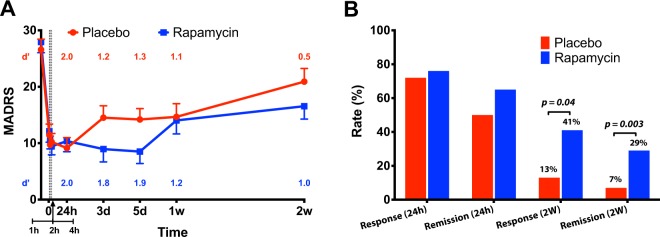
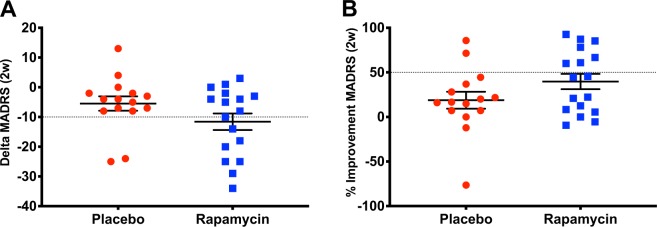
Twenty-four hours after administration, ketamine exerts rapid and robust antidepressant effects that are thought to be mediated by activation of the mechanistic target of rapamycin complex 1 (mTORC1). To test this hypothesis, depressed patients were pretreated with rapamycin, an mTORC1 inhibitor, prior to receiving ketamine. Twenty patients suffering a major depressive episode were randomized to pretreatment with oral rapamycin (6 mg) or placebo 2 h prior to the intravenous administration of ketamine 0.5 mg/kg in a double-blind cross-over design with treatment days separated by at least 2 weeks. Depression severity was assessed using Montgomery–Åsberg Depression Rating Scale (MADRS). Rapamycin pretreatment did not alter the antidepressant effects of ketamine at the 24-h timepoint. Over the subsequent 2-weeks, we found a significant treatment by time interaction ( F (8,245) = 2.02, p = 0.04), suggesting a prolongation of the antidepressant effects of ketamine by rapamycin. Two weeks following ketamine administration, we found higher response (41%) and remission rates (29%) following rapamycin + ketamine compared to placebo + ketamine (13%, p = 0.04, and 7%, p = 0.003, respectively). In summary, single dose rapamycin pretreatment failed to block the antidepressant effects of ketamine, but it prolonged ketamine’s antidepressant effects. This observation raises questions about the role of systemic vs. local blockade of mTORC1 in the antidepressant effects of ketamine, provides preliminary evidence that rapamycin may extend the benefits of ketamine, and thereby potentially sheds light on mechanisms that contribute to depression relapse after ketamine administration.
Overview
The claims and statistics of this paper haven’t been checked yet.
Free: it reads the open-access text and checks the first 5 claims that cite a source we can check. Create a free account to check every claim.
Integrity signals
Registry
Cites
Statistics
Figures
Verification
Claims the paper makes
The claims and statistics of this paper haven’t been checked yet.
Free: it reads the open-access text and checks the first 5 claims that cite a source we can check. Create a free account to check every claim.
Claims other papers make about this one
Each is checked against this paper’s own text: does it say what the citing paper says it does?
The source backs part of the claim, not all of it — or backs it for a different population, condition or comparison.
In the citing paper
“an effect that differed from its effect on depressive symptoms (n = 20) [93]”
From Ketamine in neuropsychiatric disorders: an update (2024) · cites this paper as [93]
Experimental — accuracy not yet measuredThe source backs part of the claim, not all of it — or backs it for a different population, condition or comparison.
In the citing paper
“calibrated AMPAR facilitation may help sustain prefrontal drive, preserve signal-to-noise, and extend remission without excessive excitatory load [380,381,382].”
From Synaptic Plasticity—Intrinsic Excitability and Antidepressant Discovery (2026) · cites this paper as [380]
Experimental — accuracy not yet measuredThe source backs part of the claim, not all of it — or backs it for a different population, condition or comparison.
In the citing paper
“This phosphorylation event activates multiple intracellular signaling cascades, including the mammalian target of rapamycin complex 1 (mTORC1), phosphoinositide 3-kinase (PI3K), phospholipase C gamma (PLCγ), and mitogen-activated protein kinase (MAPK) pathways [86,87].”
From Variations in BDNF and Their Role in the Neurotrophic Antidepressant Mechanisms of Ketamine and Esketamine: A Review (2024) · cites this paper as [86]
Experimental — accuracy not yet measuredThe cited source says what the claim attributes to it.
In the citing paper
“one result of BDNF-TrkB activation by ketamine is stimulation of mTORC signaling pathway [86,87]: this is critical for synaptic protein synthesis and new dendritic spine formation, processes that are fundamental to the sustained antidepressant effects of ketamine [58,60].”
From Variations in BDNF and Their Role in the Neurotrophic Antidepressant Mechanisms of Ketamine and Esketamine: A Review (2024) · cites this paper as [86]
In the citing paper
“First, contrary to preclinical observations, a recent randomized controlled trial (RCT) in humans demonstrated prolonged antidepressant responses to ketamine with coadministration of rapamycin (mTOR inhibitor) [79].”
From Pharmacotherapies Targeting GABA-Glutamate Neurotransmission for Treatment-Resistant Depression (2023) · cites this paper as [79]
Self-check
Percentages, sums and reported differences re-computed from the paper’s own numbers.
The self-check needs the paper’s full text.
Citations
Cites
Molecular Mechanisms of Depression: Perspectives on New Treatment Strategies
Lang, U. E., & Borgwardt, S. (2013) · Cellular Physiology and Biochemistry · doi:10.1159/000350094 · Cited by 8,475
Antidepressant effects of ketamine in depressed patients
Berman, R. M., Cappiello, A., Anand, A., Oren, D. A., Heninger, G. R., Charney, D. S., & Krystal, J. H. (2000) · Biological Psychiatry · doi:10.1016/s0006-3223(99)00230-9 · Cited by 3,856 · cited 3×
“Ketamine administration and monitoring was comparable to previous studies [1, 2, 30].”
BackgroundResultSelf-citationA randomized trial of an N-methyl-D-aspartate antagonist in treatment-resistant major depression.
Zarate, C. A., Singh, J. B., Carlson, P. J., Brutsche, N. E., Ameli, R., Luckenbaugh, D. A., Charney, D. S., & Manji, H. K. (2006) · Archives of General Psychiatry · doi:10.1001/archpsyc.63.8.856 · Cited by 3,766 · cited 4×
“Ketamine administration and monitoring was comparable to previous studies [1, 2, 30].”
BackgroundResultInfluentialmTOR-Dependent Synapse Formation Underlies the Rapid Antidepressant Effects of NMDA Antagonists
Li, N., Lee, B., Liu, R.-J., Banasr, M., Dwyer, J. M., Iwata, M., Li, X.-Y., Aghajanian, G., & Duman, R. S. (2010) · Science · doi:10.1126/science.1190287 · Cited by 2,881 · cited 3×
“First, this study failed to validate the prediction from preclinical studies [10, 16], in that rapamycin pretreatment did not reduce the acute antidepressant effects of ketamine at 24 h following treatment.”
BackgroundMethodResultSelf-citationNMDA receptor blockade at rest triggers rapid behavioural antidepressant responses
Autry, A. E., Adachi, M., Nosyreva, E., Na, E. S., Los, M. F., Cheng, P.-F., Kavalali, E. T., & Monteggia, L. M. (2011) · Nature · doi:10.1038/nature10130 · Cited by 1,926 · cited 3×
“(3) Acute single dose of rapamycin administered peripherally was shown to inhibit mTORC1 in the brain within 2 h of administration in rodents [15].”
BackgroundRaison, C. L., Rutherford, R. E., Woolwine, B. J., Shuo, C., Schettler, P., Drake, D. F., Haroon, E., & Miller, A. H. (2013) · JAMA Psychiatry · doi:10.1001/2013.jamapsychiatry.4 · Cited by 1,617 · cited 1×
“, no CRP or ESR effects), which was suggested to be necessary for successful monotherapy/add-on approaches [46].”
BackgroundMurrough, J. W., Iosifescu, D. V., Chang, L. C., Al Jurdi, R. K., Green, C. E., Perez, A. M., Iqbal, S., Pillemer, S., Foulkes, A., Shah, A., et al. (2013) · American Journal of Psychiatry · doi:10.1176/appi.ajp.2013.13030392 · Cited by 1,205 · cited 3×
“In contrast to parallel groups design [1, 43, 44], cross-over ketamine studies required smaller samples because of the robust effects of ketamine and the rapid relapse, leading to increased statistical power to detect significant within subject differences.”
BackgroundResultLi, N., Liu, R.-J., Dwyer, J. M., Banasr, M., Lee, B., Son, H., Li, X.-Y., Aghajanian, G., & Duman, R. S. (2011) · Biological Psychiatry · doi:10.1016/j.biopsych.2010.12.015 · Cited by 1,082 · cited 3×
“First, this study failed to validate the prediction from preclinical studies [10, 16], in that rapamycin pretreatment did not reduce the acute antidepressant effects of ketamine at 24 h following treatment.”
BackgroundMethodResultSelf-citationDiazgranados, N., Ibrahim, L., Brutsche, N. E., Newberg, A., Kronstein, P., Khalife, S., Kammerer, W. A., Quezado, Z., Luckenbaugh, D. A., Salvadore, G., et al. (2010) · Archives of General Psychiatry · doi:10.1001/archgenpsychiatry.2010.90 · Cited by 963 · cited 2×
“In fact, for the first 12 years following the discovery of the antidepressant effects of ketamine all controlled studies were mainly cross-over and smaller in size compared to the current study [2, 30, 41, 42].”
BackgroundResultKöhler, O., Benros, M. E., Nordentoft, M., Farkouh, M. E., Iyengar, R. L., Mors, O., & Krogh, J. (2014) · JAMA Psychiatry · doi:10.1001/jamapsychiatry.2014.1611 · Cited by 941 · cited 1×
“Therefore, an essential strength of the study is the use of combined therapy, instead of monotherapy or add-on approaches that were used in the past [19].”
Background
Cited by
McIntyre, R. S., Rosenblat, J. D., Nemeroff, C. B., Sanacora, G., Murrough, J. W., Berk, M., Brietzke, E., Dodd, S., Gorwood, P., Ho, R., et al. (2021) · American Journal of Psychiatry · doi:10.1176/appi.ajp.2020.20081251 · Cited by 731
Self-citationBrain-Derived Neurotrophic Factor Signaling in Depression and Antidepressant Action
Castrén, E., & Monteggia, L. M. (2021) · Biological Psychiatry · doi:10.1016/j.biopsych.2021.05.008 · Cited by 540
“More recently, a small clinical study administered rapamycin intravenously to patients and found that it did not block ketamine’s rapid antidepressant action but rather may augment the long-term effects (130).”
Neuroplasticity as a convergent mechanism of ketamine and classical psychedelics
Aleksandrova, L. R., & Phillips, A. G. (2021) · Trends in Pharmacological Sciences · doi:10.1016/j.tips.2021.08.003 · Cited by 276
Ketamine and rapid antidepressant action: New treatments and novel synaptic signaling mechanisms
Krystal, J. H., Kavalali, E. T., & Monteggia, L. M. (2024) · Neuropsychopharmacology · doi:10.1038/s41386-023-01629-w · Cited by 262
“This might help to explain why pretreatment with a low dose of rapamycin (6 mg, po) two hours prior to ketamine administration extended the duration of the antidepressant effects of ketamine rather than blocked them [125].”
BackgroundSelf-citationDe Gregorio, D., Aguilar-Valles, A., Preller, K. H., Heifets, B. D., Hibicke, M., Mitchell, J., & Gobbi, G. (2021) · The Journal of Neuroscience · doi:10.1523/jneurosci.1659-20.2020 · Cited by 259
“Concerning the mTORC1 pathway, for example, a recent clinical study demonstrated that peripheral coadministration of rapamycin to treatment-resistant MDD patients enhanced, rather than blocked, the antidepressant effect of ketamine (Abdallah et al., 2020), suggesting a more complex interaction between these drugs in h…”
Molecular mechanisms underlying the antidepressant actions of arketamine: beyond the NMDA receptor
Wei, Y., Chang, L., & Hashimoto, K. (2022) · Molecular Psychiatry · doi:10.1038/s41380-021-01121-1 · Cited by 248
“5mg/kg) in patients with treatment-resistant MDD [134].”
Ketamine: A tale of two enantiomers
Jelen, L. A., Young, A. H., & Stone, J. M. (2021) · Journal of Psychopharmacology · doi:10.1177/0269881120959644 · Cited by 246
“Abdallah et al. (2020) also hypothesised that rapamycin may extend the antidepressant effects of ketamine via an mTORC1-dependent antiinflammatory mechanism (Thomson et al., 2009), protecting newly made synapses from inflammatory processes that cause synaptic elimination and undermine the…”
BackgroundInfluentialMolecular mechanisms of the rapid-acting and long-lasting antidepressant actions of (R)-ketamine
Hashimoto, K. (2020) · Biochemical Pharmacology · doi:10.1016/j.bcp.2020.113935 · Cited by 236
The stressed synapse 2.0: pathophysiological mechanisms in stress-related neuropsychiatric disorders
Sanacora, G., Yan, Z., & Popoli, M. (2022) · Nature Reviews Neuroscience · doi:10.1038/s41583-021-00540-x · Cited by 197
Self-citationKohtala, S. (2021) · Pharmacological Reports · doi:10.1007/s43440-021-00232-4 · Cited by 142
Inflammatory signaling mechanisms in bipolar disorder
Jones, G. H., Vecera, C. M., Pinjari, O. F., & Machado‐Vieira, R. (2021) · Journal of Biomedical Science · doi:10.1186/s12929-021-00742-6 · Cited by 161
Ketamine: Mechanisms and Relevance to Treatment of Depression
Kim, J., Suzuki, K., Kavalali, E. T., & Monteggia, L. M. (2023) · Annual Review of Medicine · doi:10.1146/annurev-med-051322-120608 · Cited by 148
Aiding and Abetting Anhedonia: Impact of Inflammation on the Brain and Pharmacological Implications
Lucido, M. J., Bekhbat, M., Goldsmith, D. R., Treadway, M. T., Haroon, E., Felger, J. C., & Miller, A. H. (2021) · Pharmacological Reviews · doi:10.1124/pharmrev.120.000043 · Cited by 138
“Of note, the mTORC1 inhibitor rapamycin has recently shown the capacity to prolong the effects of ketamine, which as noted previously, targets glutamate pathways, and its efficacy is greater in individuals with increased inflammation as well as its downstream effects on KP metabolites (Moaddel et al., 2018; Abdallah e…”
BackgroundJha, M. K., & Mathew, S. J. (2023) · American Journal of Psychiatry · doi:10.1176/appi.ajp.20230025 · Cited by 114
Ketamine in neuropsychiatric disorders: an update
Johnston, J. N., Kadriu, B., Kraus, C., Henter, I. D., & Zarate, C. A. (2024) · Neuropsychopharmacology · doi:10.1038/s41386-023-01632-1 · Cited by 108
“In a post-hoc analysis, one study ( n = 14) found that rapamycin did not improve suicidal ideation measures after ketamine treatment [92], an effect that differed from its effect on depressive symptoms ( n = 20) [93].”
BackgroundSynaptic Mechanisms Regulating Mood State Transitions in Depression
Parekh, P. K., Johnson, S. B., & Liston, C. (2022) · Annual Review of Neuroscience · doi:10.1146/annurev-neuro-110920-040422 · Cited by 101
Ketamine: Neuroprotective or Neurotoxic?
Choudhury, D., Autry, A. E., Tolias, K. F., & Krishnan, V. (2021) · Frontiers in Neuroscience · doi:10.3389/fnins.2021.672526 · Cited by 82
Ketamine and the Future of Rapid-Acting Antidepressants
Riggs, L. M., & Gould, T. D. (2021) · Annual Review of Clinical Psychology · doi:10.1146/annurev-clinpsy-072120-014126 · Cited by 87
Krystal, J. H., Kaye, A. P., Jefferson, S., Girgenti, M. J., Wilkinson, S. T., Sanacora, G., & Esterlis, I. (2023) · Proceedings of the National Academy of Sciences · doi:10.1073/pnas.2305772120 · Cited by 91
“In a within - subject study of 20 depressed patients, pretreatment with the mTOR inhibitor, rapamycin, increased ketamine response rates at 2 wk from 13 to 41% (119).”
BackgroundSelf-citationPrice, R. B., Spotts, C., Panny, B., Griffo, A., Degutis, M., Cruz, N., Bell, E., Do-Nguyen, K., Wallace, M. L., Mathew, S. J., et al. (2022) · American Journal of Psychiatry · doi:10.1176/appi.ajp.20220216 · Cited by 85
“While substantial advancements have recently been made in understanding ketamine ’ s molecular mechanisms of action (12, 13) and developing strategies to extend these effects pharmacologically (14, 15), translation to safe, effective, novel pharmacology can be slow and uncertain.”
Novel antidepressant drugs: Beyond monoamine targets
Gonda, X., Döme, P., Neill, J. C., & Tarazi, F. I. (2021) · CNS Spectrums · doi:10.1017/s1092852921000791 · Cited by 91
“Several additional studies have suggested that Brain-Derived Neurotrophic Factor (BDNF) and its receptor, tropomyocin receptor kinase B (TrkB), the mTORC1 (mammalian target of rapamycine complex 1), and the mitogen activated protein kinase (MAPK) signaling pathway are crucial mediators of the antidepressant effects of…”
BackgroundNeuroinflammatory basis of depression: learning from experimental models
Afridi, R., & Suk, K. (2021) · Frontiers in Cellular Neuroscience · doi:10.3389/fncel.2021.691067 · Cited by 82
Critical Period Plasticity as a Framework for Psychedelic-Assisted Psychotherapy
Lepow, L., Morishita, H., & Yehuda, R. (2021) · Frontiers in Neuroscience · doi:10.3389/fnins.2021.710004 · Cited by 86
Stress dynamically modulates neuronal autophagy to gate depression onset
Yang, L., Chen, G., Zheng, Z., Dong, Y., Xie, Q., Lv, Z., Li, M., Lu, Y., Guo, X., Deng, R., et al. (2025) · Nature · doi:10.1038/s41586-025-08807-4 · Cited by 85
“It also provides a mechanistic explanation of why rapamycin largely strengthens the antidepressant efficacy of ketamine in patients with depression 44 .”
Nikkheslat, N. (2021) · Brain, Behavior, & Immunity - Health · doi:10.1016/j.bbih.2021.100383 · Cited by 71
A unified model of ketamine’s dissociative and psychedelic properties
Marguilho, M., Figueiredo, I., & Castro-Rodrigues, P. (2022) · Journal of Psychopharmacology · doi:10.1177/02698811221140011 · Cited by 78
“Contrary to what was expected, in a recent report, blocking mTOR signalling did not preclude ketamine’s antidepressant effects in humans but extended its antidepressant effects (Abdallah et al., 2020).”
BackgroundResultJohnston, J. N., Kadriu, B., Allen, J., Gilbert, J. R., Henter, I. D., & Zarate, C. A. (2023) · Neuropharmacology · doi:10.1016/j.neuropharm.2023.109422 · Cited by 76
Esketamine: new hope for the treatment of treatment-resistant depression? A narrative review
Salahudeen, M. S., Wright, C. M., & Peterson, G. M. (2020) · Therapeutic Advances in Drug Safety · doi:10.1177/2042098620937899 · Cited by 72
Colwell, M., Tagomori, H., Chapman, S., Gillespie, A. L., Cowen, P. J., Harmer, C. J., & Murphy, S. E. (2022) · Translational Psychiatry · doi:10.1038/s41398-022-02249-6 · Cited by 74
“While promising, the exact mechanisms for cognitive change remain unclear; it has been posited these findings are a result of upregulated stromal cell-derived factor 1 and BDNF [126, 196], however, down-regulation of plasma BDNF following 8 weeks of erythropoietin administration in TRD has been reported independently…”
BackgroundInfluentialInflammation as a Pathophysiologic Pathway to Anhedonia: Mechanisms and Therapeutic Implications
Bekhbat, M., Treadway, M. T., & Felger, J. C. (2022) · Current topics in behavioral neurosciences · doi:10.1007/7854_2021_294 · Cited by 75
Inflammation, stress and depression: An exploration of ketamine’s therapeutic profile
Johnston, J. N., Greenwald, M. S., Henter, I. D., Kraus, C., Mkrtchian, A., Clark, N. G., Park, L. T., Gold, P. W., Zarate, C. A., & Kadriu, B. (2023) · Drug Discovery Today · doi:10.1016/j.drudis.2023.103518 · Cited by 80
PI3K-AKT/mTOR Signaling in Psychiatric Disorders: A Valuable Target to Stimulate or Suppress?
Chen, Y., Guan, W., Wang, M., & Lin, X. (2024) · The International Journal of Neuropsychopharmacology · doi:10.1093/ijnp/pyae010 · Cited by 76
“The mTOR signaling cascade plays important roles in depression and antidepressant drug activity, and activating or enhancing mTOR signaling has been demonstrated to have antidepressant effects in preclinical studies (Abdallah et al., 2020).”
BackgroundInfluentialKetamine and its metabolites: Potential as novel treatments for depression
Zhang, K., Yao, Y., & Hashimoto, K. (2022) · Neuropharmacology · doi:10.1016/j.neuropharm.2022.109305 · Cited by 72
Drugs of abuse hijack a mesolimbic pathway that processes homeostatic need
Tan, B., Browne, C. J., Nöbauer, T., Vaziri, A., Friedman, J. M., & Nestler, E. J. (2024) · Science · doi:10.1126/science.adk6742 · Cited by 65
Lv, S., Yao, K., Zhang, Y., & Zhu, S. (2022) · Neuropharmacology · doi:10.1016/j.neuropharm.2022.109378 · Cited by 61
Bridging Rapid and Sustained Antidepressant Effects of Ketamine
Kim, J.-W., Suzuki, K., Kavalali, E. T., & Monteggia, L. M. (2023) · Trends in Molecular Medicine · doi:10.1016/j.molmed.2023.02.003 · Cited by 59
Enhanced ERK activity extends ketamine’s antidepressant effects by augmenting synaptic plasticity
Ma, Z. Z., Guzikowski, N. J., Kim, J.-W., Kavalali, E. T., & Monteggia, L. M. (2025) · Science · doi:10.1126/science.abb6748 · Cited by 50
Neurobiology of the rapid-acting antidepressant effects of ketamine: impact and opportunities
Shinohara, R., Aghajanian, G. K., & Abdallah, C. G. (2021) · Biological Psychiatry · doi:10.1016/j.biopsych.2020.12.006 · Cited by 54
Self-citationStrategies to Prolong Ketamine’s Efficacy in Adults with Treatment-Resistant Depression
McMullen, E. P., Lee, Y. L., Lipsitz, O., Lui, L. M. W., Vinberg, M., Ho, R., Rodrigues, N. B., Rosenblat, J. D., Cao, B., Gill, H., et al. (2021) · Advances in Therapy · doi:10.1007/s12325-021-01732-8 · Cited by 60
Uncovering the Underlying Mechanisms of Ketamine as a Novel Antidepressant
Xu, S., Yao, X., Li, B., Cui, R., Zhu, C., Wang, Y., & Yang, W. (2022) · Frontiers in Pharmacology · doi:10.3389/fphar.2021.740996 · Cited by 56
Pardossi, S., Fagiolini, A., & Cuomo, A. (2024) · International Journal of Molecular Sciences · doi:10.3390/ijms252313098 · Cited by 51
“…cascades, including the mammalian target of rapamycin complex 1 (mTORC1), phosphoinositide 3-kinase (PI3K), phospholipase C gamma (PLC γ ), and mitogen-activated protein kinase (MAPK) pathways [86,87]. regulating neuroplasticity by promoting cellular and strengthening synaptic connections.”
Inflamed brain: Targeting immune changes and inflammation for treatment of depression
Sakamoto, S., Zhu, X., Hasegawa, Y., Karma, S., Obayashi, M., Alway, E., & Kamiya, A. (2021) · Psychiatry and Clinical Neurosciences · doi:10.1111/pcn.13286 · Cited by 51
“mTOR signaling is a unique molecular target that can be used to explore drugs with antidepressant action such as ketamine.(74,75) Pentoxifylline, a vasodilator and phosphodiesterase inhibitor, ameliorates inflammation and down-regulates serum levels of TNF-α and CRP.”
BackgroundPharmacotherapies Targeting GABA-Glutamate Neurotransmission for Treatment-Resistant Depression
Vecera, C. M., C. Courtes, A., Jones, G., Soares, J. C., & Machado-Vieira, R. (2023) · Pharmaceuticals · doi:10.3390/ph16111572 · Cited by 48
“First, contrary to preclinical observations, a recent randomized controlled trial (RCT) in humans demonstrated prolonged antidepressant responses to ketamine with coadministration of rapamycin (mTOR inhibitor) [79].”
ResultKohtala, S., Alitalo, O., Rosenholm, M., Rozov, S. V., & Rantamäki, T. (2020) · Pharmacology & Therapeutics · doi:10.1016/j.pharmthera.2020.107741 · Cited by 50
Deyama, S., & Kaneda, K. (2022) · Neuropharmacology · doi:10.1016/j.neuropharm.2022.109335 · Cited by 49
Antidepressant mechanisms of ketamine: Focus on GABAergic inhibition
Lüscher, B., Feng, M., & Jefferson, S. J. (2020) · Advances in pharmacology · doi:10.1016/bs.apha.2020.03.002 · Cited by 45
A review of effects of calorie restriction and fasting with potential relevance to depression
Igwe, O., Sone, M., Matveychuk, D., Baker, G. B., & Dursun, S. M. (2020) · Progress in Neuro-Psychopharmacology and Biological Psychiatry · doi:10.1016/j.pnpbp.2020.110206 · Cited by 47
Lithium and the Interplay Between Telomeres and Mitochondria in Bipolar Disorder
Lundberg, M., Millischer, V., Backlund, L., Martinsson, L., Stenvinkel, P., Sellgren, C. M., Lavebratt, C., & Schalling, M. (2020) · Frontiers in Psychiatry · doi:10.3389/fpsyt.2020.586083 · Cited by 42
mTORC1 Signaling Pathway Mediates Chronic Stress-Induced Synapse Loss in the Hippocampus
Luo, Y., Ye, X., Fang, Y.-Z., Li, M., Xia, Z., Liu, J., Lin, X., Huang, Z., Zhu, X.-Q., Huang, J.-J., et al. (2021) · Frontiers in Pharmacology · doi:10.3389/fphar.2021.801234 · Cited by 40
“For example, rapamycin pretreatment can prolong the antidepressant effects of ketamine (Abdallah et al., 2020), and also has been shown to exert direct antidepressant-like effects in preclinical studies following repeated treatment (Cleary et al.”
BackgroundLi, Q., Wang, S., & Mei, X. (2022) · Psychiatry Research · doi:10.1016/j.psychres.2022.114396 · Cited by 38
Deficient Autophagy in Microglia Aggravates Repeated Social Defeat Stress-Induced Social Avoidance
Sakai, M., Yu, Z., Hirayama, R., Nakasato, M., Kikuchi, Y., Ono, C., Komatsu, H., Nakanishi, M., Yoshii, H., Stellwagen, D., et al. (2022) · Neural Plasticity · doi:10.1155/2022/7503553 · Cited by 38
“differentiation of mouse embryonic stem cells via mTOR activation [50, 51].”
BackgroundIzumi, Y., Hsu, F., Conway, C. R., Nägele, P., Mennerick, S. J., & Zorumski, C. F. (2022) · Biological Psychiatry · doi:10.1016/j.biopsych.2022.06.016 · Cited by 40
Drug repositioning for treatment-resistant depression: Hypotheses from a pharmacogenomic study
Fabbri, C., Kasper, S., Zohar, J., Souery, D., Montgomery, S., Albani, D., Forloni, G., Ferentinos, P. P., Rujescu, D., Mendlewicz, J., et al. (2020) · Progress in Neuro-Psychopharmacology and Biological Psychiatry · doi:10.1016/j.pnpbp.2020.110050 · Cited by 39
Scotton, E., Antqueviezc, B., Vasconcelos, M., Dalpiaz, G., Géa, L. P., Goularte, J. F., Colombo, R., & Rosa, A. R. (2022) · Biochemical Pharmacology · doi:10.1016/j.bcp.2022.114963 · Cited by 40
Role of the mesolimbic dopamine pathway in the antidepressant effects of ketamine
Cardona-Acosta, A. M., & Bolaños‐Guzmán, C. A. (2022) · Neuropharmacology · doi:10.1016/j.neuropharm.2022.109374 · Cited by 39
The role of serotonin neurotransmission in rapid antidepressant actions
Pehrson, A. L., Roberts, D., Khawaja, A., & McNair, R. (2022) · Psychopharmacology · doi:10.1007/s00213-022-06098-5 · Cited by 37
“It should be noted that a small clinical trial recently suggested that mTOR inhibition may actually potentiate ketamine’s antidepressant effects in humans (Abdallah et al. 2020).”
BackgroundKetamine Normalizes the Structural Alterations of Inferior Frontal Gyrus in Depression
Dai, D., Lacadie, C. M., Holmes, S. E., Cool, R., Anticevic, A., Averill, C., Abdallah, C., & Esterlis, I. (2020) · Chronic Stress · doi:10.1177/2470547020980681 · Cited by 34
Self-citationAverill, L. A., Averill, C. L., Gueorguieva, R., Fouda, S., Sherif, M., Ahn, K.-H., Ranganathan, M., D'Souza, D. C., Southwick, S. M., Sanacora, G., et al. (2022) · Journal of Affective Disorders · doi:10.1016/j.jad.2022.01.104 · Cited by 33
Self-citationAdvances in novel molecular targets for antidepressants
Wang, Q., & Dwivedi, Y. (2020) · Progress in Neuro-Psychopharmacology and Biological Psychiatry · doi:10.1016/j.pnpbp.2020.110041 · Cited by 34
“…with a single dose of ketamine (0.5 mg/kg) failed to block the antidepressant effects of ketamine, however, it prolonged ketamine’s antidepressant effects and raises questions for the role of systemic vs. local blockade of mTORC1 in the antidepressant effects of ketamine (Abdallah et al., 2020).”
BackgroundInfluentialAbdallah, C. G., Ahn, K.-H., Averill, L. A., Nemati, S., Averill, C. L., Fouda, S., Ranganathan, M., Morgan, P. T., D’Souza, D. C., Mathalon, D. H., et al. (2021) · Neuropsychopharmacology · doi:10.1038/s41386-020-00864-9 · Cited by 32
Self-citationSalcedo‐Arellano, M. J., Cabal-Herrera, A. M., Punatar, R., Clark, C. J., Romney, C. A., & Hagerman, R. J. (2020) · Neurotherapeutics · doi:10.1007/s13311-020-00968-6 · Cited by 35
An integrative view on the cell-type-specific mechanisms of ketamine's antidepressant actions
Lewis, V., Rurak, G. M., Salmaso, N., & Aguilar‐Valles, A. (2024) · Trends in Neurosciences · doi:10.1016/j.tins.2023.12.004 · Cited by 33
Parise, E. M., Parise, L. F., Sial, O. K., Cardona-Acosta, A. M., Gyles, T. M., Juarez, B., Chaudhury, D., Han, M., Nestler, E. J., & Bolaños‐Guzmán, C. A. (2021) · Biological Psychiatry · doi:10.1016/j.biopsych.2021.05.002 · Cited by 34
mTOR Knockdown in the Infralimbic Cortex Evokes A Depressive-like State in Mouse
Garro-Martínez, E., Fullana, M. N., Florensa-Zanuy, E., Senserrich, J., Paz, V., Ruiz‐Bronchal, E., Adell, A., Castro, E., Díaz, Á., Pazos, Á., et al. (2021) · International Journal of Molecular Sciences · doi:10.3390/ijms22168671 · Cited by 32
“Moreover, a recent clinical study describes that the administration of rapamycin prolongs the antidepressant effect of ketamine [63], indicating that there is still a lot of work to be done to clarify the role of this signaling pathway in the mechanism of action of fast-acting antidepressant drugs.”
BackgroundChaki, S., & Watanabe, M. (2022) · Neuropharmacology · doi:10.1016/j.neuropharm.2022.109348 · Cited by 30
Halaris, A. E., & Cook, J. T. (2023) · Advances in experimental medicine and biology · doi:10.1007/978-981-19-7376-5_21 · Cited by 34
Johnston, J. N., Thacker, J. S., Desjardins, C., Kulyk, B. D., Romay-Tallón, R., Kalynchuk, L. E., & Caruncho, H. J. (2020) · Frontiers in Pharmacology · doi:10.3389/fphar.2020.559627 · Cited by 27
“, 2018), a recent report has surprisingly shown that rapamycin (a mTOR inhibitor) prolonged the antidepressant effects of ketamine (Abdallah et al., 2020).”
BackgroundSu, W., Hu, T., & Jiang, C. (2023) · Current Neuropharmacology · doi:10.2174/1570159x21666230809112028 · Cited by 29
Lee, C., Chu, M.-C., Wu, H.-F., Chung, Y.-J., Hsieh, T.-H., Chang, C.-Y., Lin, Y.-C., Lu, T.-Y., Chang, C.-H., Chi, H., et al. (2023) · Experimental Neurology · doi:10.1016/j.expneurol.2023.114338 · Cited by 26
Electroconvulsive seizure inhibits the mTOR signaling pathway via AMPK in the rat frontal cortex
Kim, S. H., Yu, H. S., Huh, S., Kang, U. G., & Kim, Y. S. (2021) · Psychopharmacology · doi:10.1007/s00213-021-06015-2 · Cited by 27
KATO, T. (2022) · Neuropharmacology · doi:10.1016/j.neuropharm.2022.109325 · Cited by 27
Chaki, S., & Watanabe, M. (2023) · European Archives of Psychiatry and Clinical Neuroscience · doi:10.1007/s00406-023-01561-6 · Cited by 28
“In contrast, an increase in mTOR activity in the PFC of postmortem MDD patients was recently reported [62], and rapamycin, an inhibitor of mTORC1 signaling, prolonged, rather than blocked, the antidepressant effects of ketamine in MDD patients [63].”
BackgroundAghaie, F., Moradifar, F., & Hosseini, A. (2021) · Fundamental and Clinical Pharmacology · doi:10.1111/fcp.12689 · Cited by 26
“[16] Abdallah CG, Averill LA, Gueorguieva R, et al.”
BackgroundStachowicz, K. (2023) · Neuroscience & Biobehavioral Reviews · doi:10.1016/j.neubiorev.2023.105439 · Cited by 24
Ren, L. (2024) · Progress in Neuro-Psychopharmacology and Biological Psychiatry · doi:10.1016/j.pnpbp.2023.110910 · Cited by 23
“This contradictory result also suggests that rapamycin may also play a role in prolonging ketamine (Abdallah et al., 2020).”
ResultKetamine and rapid acting antidepressants: Are we ready to cure, rather than treat depression?
Abdallah, C. G., & Krystal, J. H. (2020) · Behavioural Brain Research · doi:10.1016/j.bbr.2020.112628 · Cited by 23
Self-citationERK/mTOR signaling may underlying the antidepressant actions of rapastinel in mice
Shen, M., Lv, D., Liu, X., & Wang, C. (2022) · Translational Psychiatry · doi:10.1038/s41398-022-02290-5 · Cited by 22
“Unexpectedly, over the subsequent 2-weeks, there was a rapamycin-induced prolonged durability of ketamine’s clinical benefit [68].”
BackgroundBekhbat, M., Ulukaya, G. B., Bhasin, M., Felger, J. C., & Miller, A. H. (2022) · Neurobiology of Stress · doi:10.1016/j.ynstr.2022.100462 · Cited by 22
“…evolving, and many are available including for example rapamycin, which blocks mammalian target of rapamycin (mTOR) pathways and has been shown to augment the antidepressant response to ketamine (Abdallah et al., 2020), as well as dimethyl fumarate, which blocks glycolysis (Kornberg et al., 2018).”
BackgroundQuintanilla, B., Zarate, C. A., & Pillai, A. (2024) · Molecular Psychiatry · doi:10.1038/s41380-024-02507-7 · Cited by 23
“In contrast to animal models, rapamycin-induced mTOR antagonism in humans has been shown to prolong ketamine ’ s antidepressant effects rather than block them [113].”
Esketamine in depression: putative biomarkers from clinical research
Johnston, J. N., Zarate, C. A., & Kvarta, M. D. (2024) · European Archives of Psychiatry and Clinical Neuroscience · doi:10.1007/s00406-024-01865-1 · Cited by 24
“For example, one clinical study found that the mTORC1 inhibitor rapamycin extended, rather than blocked, ketamine’s antidepressant effects [36].”
Advances in the regulatory mechanisms of mTOR in necroptosis
Xie, Y., Zhao, G., Lei, X., Cui, N., & Wang, H. (2023) · Frontiers in Immunology · doi:10.3389/fimmu.2023.1297408 · Cited by 21
Lewis, V., Rodrigue, B., Arsenault, E., Zhang, M., Taghavi‐Abkuh, F., Silva, W. C. C., Myers, M., Matta‐Camacho, E., & Aguilar‐Valles, A. (2022) · Journal of Neurochemistry · doi:10.1111/jnc.15652 · Cited by 21
“Furthermore, in MDD patients, one dose of rapamycin amplified the long- lasting effect of ketamine (Abdallah et al., 2020), indicating an intricate relationship between these two drugs.”
BackgroundGao, Y., Li, L., Zhao, F., Cheng, Y., Jin, M., & Xue, F. (2025) · Drug Design Development and Therapy · doi:10.2147/dddt.s504179 · Cited by 20
“57 Similarly, our results experiment also showed that the pretreatment with systemic rapamycin significantly improved the protection of esketamine against cerebral I/R injury.”
Neuronal mTOR Outposts: Implications for Translation, Signaling, and Plasticity
Altas, B., Romanowski, A. J., Crutcher, G. W., & Poulopoulos, A. (2022) · Frontiers in Cellular Neuroscience · doi:10.3389/fncel.2022.853634 · Cited by 21
Ketamine-Associated Change in Anhedonia and mTOR Expression in Treatment-Resistant Depression
Singh, B., Voort, J. L. V., Riva‐Posse, P., Pazdernik, V., Frye, M. A., & Tye, S. J. (2023) · Biological Psychiatry · doi:10.1016/j.biopsych.2022.10.007 · Cited by 21
Resolvins as potential candidates for the treatment of major depressive disorder
Deyama, S., Minami, M., & Kaneda, K. (2021) · Journal of Pharmacological Sciences · doi:10.1016/j.jphs.2021.05.002 · Cited by 19
Chen, B. K., & Denny, C. A. (2022) · Neuropharmacology · doi:10.1016/j.neuropharm.2022.109345 · Cited by 19
Deyama, S., Aoki, S., Sugie, R., Fukuda, H., Shuto, S., Minami, M., & Kaneda, K. (2023) · Neurotherapeutics · doi:10.1007/s13311-022-01337-1 · Cited by 19
“[64] reported that a single oral pretreatment with rapamycin unexpectedly prolonged, rather than blocked, the antidepressant effects of ketamine in patients with depression.”
BackgroundCamargo, A., Dalmagro, A. P., Wolin, I. A. V., Siteneski, A., Zeni, A. L. B., & Rodrigues, A. L. S. (2021) · Progress in Neuro-Psychopharmacology and Biological Psychiatry · doi:10.1016/j.pnpbp.2021.110371 · Cited by 18
Ketamine as a pharmacological tool for the preclinical study of memory deficit in schizophrenia
Suárez-Santiago, J. E., Roldán, G., & Picazo, O. (2022) · Behavioural Pharmacology · doi:10.1097/fbp.0000000000000689 · Cited by 21
“The inhibition of mTORC1 can slow down the behavioral and molecular events that attribute to KET and its antidepressant effect (Abdallah et al., 2020).”
BackgroundPennybaker, S. J., Roach, B. J., Fryer, S. L., Badathala, A., Wallace, A., Mathalon, D. H., & Marton, T. F. (2021) · Psychopharmacology · doi:10.1007/s00213-021-05939-z · Cited by 21
Stress, mental disorder and ketamine as a novel, rapid acting treatment
Dutton, M., Can, A., Lagopoulos, J., & Hermens, D. F. (2022) · European Neuropsychopharmacology · doi:10.1016/j.euroneuro.2022.09.006 · Cited by 18
The role of NMDARs in the anesthetic and antidepressant effects of ketamine
Zhou, L., & Duan, J. (2023) · CNS Neuroscience & Therapeutics · doi:10.1111/cns.14464 · Cited by 17
“…small-scale human clinical trials showed that the mTOR inhibitor rapamycin did not block but rather enhanced the antidepressant effects of ketamine, 132 which suggested that the molecular mechanistic explanation for the antidepressant effects of ketamine in humans and animals should be further…”
BackgroundPomrenze, M. B., Vaillancourt, S., Llorach, P., Rijsketic, D. R., Casey, A. B., Gregory, N. S., Zhao, W., Girard, T. E., Mattox, K. T., Salgado, J. S., et al. (2024) · Biological Psychiatry · doi:10.1016/j.biopsych.2025.04.020 · Cited by 17
Abdallah, C. G. (2020) · Neuropsychopharmacology · doi:10.1038/s41386-020-0668-1 · Cited by 17
“The depression literature is full of examples in which the translation from rodents to humans has proven challenging [6].”
BackgroundSelf-citationCampbell, I. H., Frye, M. A., & Campbell, H. J. (2025) · Molecular Psychiatry · doi:10.1038/s41380-025-03123-9 · Cited by 16
“…target associated with the effects of multiple pharmacological agents utilised in psychiatry including olanze-pine, ketamine and lithium [89, 97, 98]. mTOR is a metabolic target of increasing interest in psychiatric research due to its implication in multiple psychiatric conditions and the…”
Involvement of muscarinic receptor mechanisms in antidepressant drug action
Witkin, J. M., Smith, J. L., Golani, L. K., Brooks, E. A., & Martin, A. E. (2020) · Advances in pharmacology · doi:10.1016/bs.apha.2020.03.003 · Cited by 18
The Use of Ketamine for the Treatment of Anhedonia in Depression
Patarroyo-Rodríguez, L., Cavalcanti, S., Voort, J. L. V., & Singh, B. (2024) · CNS Drugs · doi:10.1007/s40263-024-01099-8 · Cited by 16
“A post hoc analysis conducted in a heterogeneous group of patients with TRD showed an in vivo increase in peripheral mTOR expression that correlated with antianhe-donic effects [94].”
The Structures, Functions, and Roles of Class III HDACs (Sirtuins) in Neuropsychiatric Diseases
Bonomi, R. E., Riordan, W., & Gelovani, J. G. (2024) · Cells · doi:10.3390/cells13191644 · Cited by 17
“Studies demonstrate ketamine’s anti-depressant effects may be improved and lengthened through the use of a potent mTOR inhibitor, rapamycin [81,82].”
BackgroundCasanova-Maldonado, I., Arancibia, D., Lois, P., Peña‐Villalobos, I., & Palma, V. (2023) · Biological Research · doi:10.1186/s40659-023-00444-3 · Cited by 188
Metadata
- Authors
- Abdallah, C. G., Averill, L. A., Gueorguieva, R., Goktas, S., Purohit, P., Ranganathan, M., Sherif, M., Ahn, K.-H., D’Souza, D. C., Formica, R., Southwick, S. M., Duman, R. S., Sanacora, G., & Krystal, J. H.
- Affiliations
- United States Department of Veterans Affairs (US)
- Yale University (US)
- Corresponding author
- Abdallah, Chadi G.
- ORCID
- Venue
- Neuropsychopharmacology
- Published
- 2020-02-24
- Volume
- 45
- Issue
- 6
- Pages
- 990-997
- ISSN
- 0893-133X (ISSN-L)
- 1740-634X
- PMC
- PMC7162891
- OpenAlex
- W3007521094
- Cited by
- 184
- References
- 47
- Citations by year
- 2026: 19 · 2025: 16 · 2024: 26 · 2023: 35 · 2022: 33 · 2021: 32 · 2020: 22
- FWCI
- 18.28
- Type
- journal article
- Language
- en
- Open access
- hybrid
- doi.org
- Licence
- cc-by
- creativecommons.org/licenses/by/4.0 (tdm)
- creativecommons.org/licenses/by/4.0 (vor)
- Locations
- Neuropsychopharmacology (publishedVersion, cc-by)
- PubMed Central (publishedVersion, cc-by)
- PubMed (publishedVersion)
- Funders
- U.S. Department of Health & Human Services | NIH | National Institute of Mental Health (MH101498)
- U.S. Department of Veterans Affairs (NA)
- Topics
- Health Sciences › Medicine › Pharmacology (medical) › Treatment of Major Depression
- Health Sciences › Medicine › Psychiatry and Mental health › Electroconvulsive Therapy Studies
- Life Sciences › Neuroscience › Biological Psychiatry › Tryptophan and brain disorders
- Keywords
- ketamine, rapamycin, mTORC1, antidepressant effects, major depressive disorder, depression remission, depression relapse, mTORC1 inhibition, rapid-acting antidepressants
- MeSH terms
- Mechanistic Target of Rapamycin Complex 1, Antidepressive Agents, Depressive Disorder, Major, Major Depressive Disorder, Humans, Ketamine, Treatment Outcome, Sirolimus
About these checks
Registry, retraction, Cites and statistics results are computed, not judged, with one exception: a printed reference that no index lists is read once by a model before it counts as a citation error. Claims are extracted by a model and kept only when their quote appears verbatim in the text; each cited source is then checked, with a model’s help, for whether it says what the claim relies on. Those verdicts can be wrong — read the claim’s quote and the cited source before relying on one.
Statistics and arithmetic are recomputed, not judged.
Confidence bands are shown only for fields calibrated on our annotated test set. None is calibrated yet, so no band is shown.
What counts as a claim ›How we measure confidence ›How we check this ›
Are you an author, or do you see a problem with this page? Request a review
Data sources
Bibliographic data: Semantic Scholar, OpenAlex, Crossref.
Contains information from the Semantic Scholar Academic Graph Datasets, made available under the ODC Attribution License (ODC-BY 1.0).
Semantic Scholar’s data is described in: Kinney, R., et al. (2023). The Semantic Scholar Open Data Platform. arXiv:2301.10140.
