

Adolescents are more sensitive than adults to acute behavioral and cognitive effects of THC
Open accessThe DOI matches its Crossref record; 69 of the 71 references it cites were found in a registry or an index.
Abstract
Increased cannabis availability has contributed to increased use with concomitant incidence of adverse effects. One risk factor for adverse drug reactions may be age. There is preclinical evidence that acute effects of delta-9-tetrahydrocannabinol (THC), the primary active constituent of cannabis, are greater during adolescence, but this has not been fully studied in humans. The present study sought to determine whether adolescent men and women are more sensitive than adults to acute THC. Adolescents aged 18-20 (N = 12) and adults aged 30-40 (N = 12), with less than 20 total lifetime uses of THC-containing products, received capsules of THC (7.5, 15 mg) and placebo across three study sessions in randomized order under double blind conditions. During each session, subjective, cardiovascular, behavioral, and EEG measures were obtained. Behavioral measures included Simple Reaction Time, Stop Task, Time Production and N-back and EEG measures included P300 amplitudes during an auditory oddball task and eyes-closed resting state. THC affected subjective state and heart rate similarly in both age groups. However, adolescents were more sensitive to performance impairing effects, exhibiting dose-dependent impairments on reaction time, response accuracy, and time perception. On EEG measures, THC dose-dependently decreased P300 amplitude in adolescents but not adults. Adolescents were more sensitive to behavioral and cognitive effects of THC, but not to cardiovascular effects or subjective measures. Thus, at doses that produce comparable ratings of intoxication, adolescents may exhibit greater cognitive impairment and alterations in brain function.
Overview
The claims and statistics of this paper haven’t been checked yet.
Free: it reads the open-access text and checks the first 5 claims that cite a source we can check. Create a free account to check every claim.
Integrity signals
Registry
Cites
Statistics
Figures
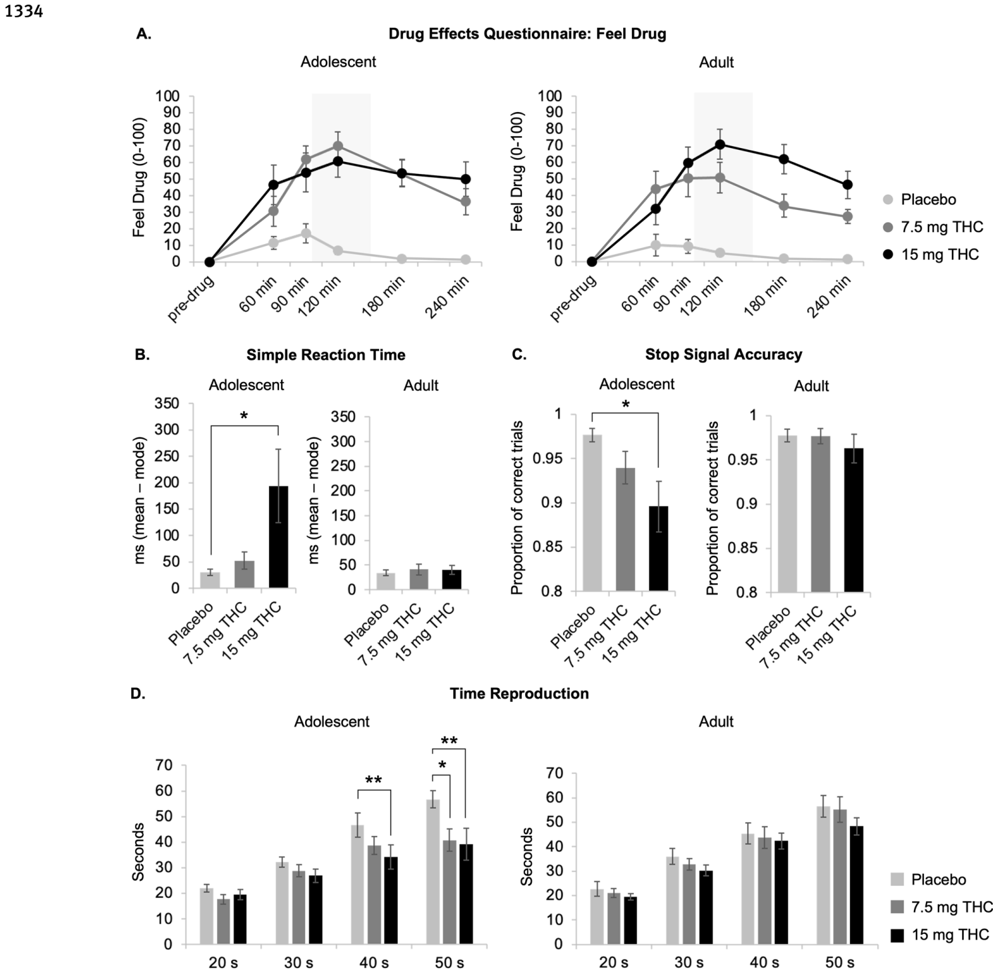
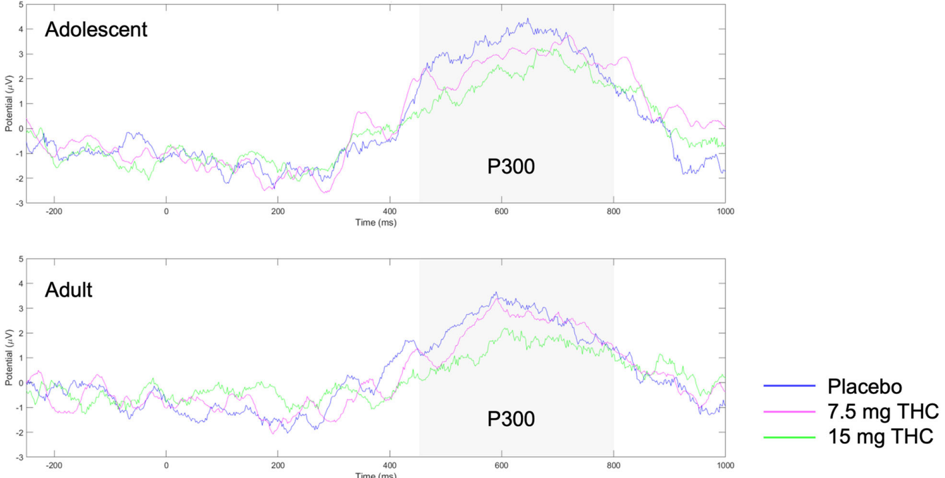
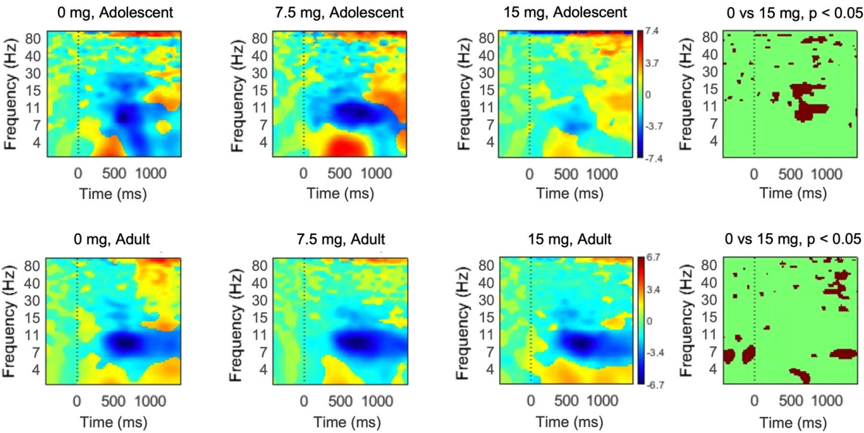
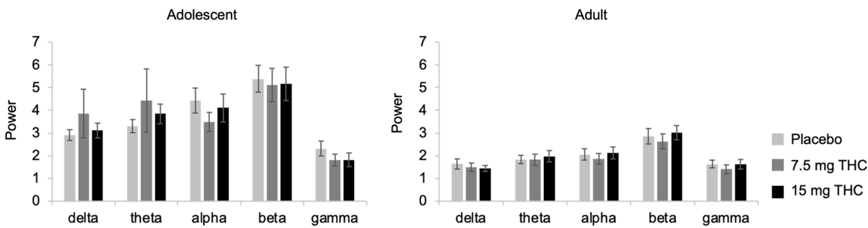
Verification
Claims the paper makes
The claims and statistics of this paper haven’t been checked yet.
Free: it reads the open-access text and checks the first 5 claims that cite a source we can check. Create a free account to check every claim.
Claims other papers make about this one
Each is checked against this paper’s own text: does it say what the citing paper says it does?
The source backs part of the claim, not all of it — or backs it for a different population, condition or comparison.
In the citing paper
“Furthermore, cannabis use has been shown to have stronger acute behavioral and cognitive effects in late adolescent humans (18–20) than in adults (30–40) [111].”
From Consequences of adolescent drug use (2023) · cites this paper as [111]
Experimental — accuracy not yet measured
Self-check
Percentages, sums and reported differences re-computed from the paper’s own numbers.
The self-check needs the paper’s full text.
Citations
Cites
Impulsivity as a determinant and consequence of drug use: a review of underlying processes
de Wit, H. (2009) · Addiction Biology · doi:10.1111/j.1369-1600.2008.00129.x · Cited by 1,415
Impulsivity and Inhibitory Control
Logan, G. D., Schachar, R. J., & Tannock, R. (1997) · Psychological Science · doi:10.1111/j.1467-9280.1997.tb00545.x · Cited by 1,394 · cited 7×
“All data were normally distributed except for response accuracy in the Stop Task, in which responses across all drug conditions and age groups were skewed negatively due to frequent cases of 100% response accuracy.”
MethodInfluentialCarhart-Harris, R. L., Leech, R., Hellyer, P. J., Shanahan, M., Feilding, A., Tagliazucchi, E., Chialvo, D. R., & Nutt, D. (2014) · Frontiers in Human Neuroscience · doi:10.3389/fnhum.2014.00020 · Cited by 1,252
Pfurtscheller, G., Stancák, A., & Neuper, C. (1996) · International Journal of Psychophysiology · doi:10.1016/s0167-8760(96)00066-9 · Cited by 1,205 · cited 1×
“Increased alpha power is observed during the absence of cortical activity, including over occipital cortex during eyes-closed resting state [62, 63].”
BackgroundREBUS and the anarchic brain: Toward a unified model of the brain action of psychedelics
Carhart-Harris, R. L., & Friston, K. J. (2019) · Pharmacological Reviews · doi:10.1124/pr.118.017160 · Cited by 1,180
Martin, W. R., Sloan, J. W., Sapira, J. D., & Jasinski, D. R. (1971) · Clinical Pharmacology & Therapeutics · doi:10.1002/cpt1971122part1245 · Cited by 943 · cited 5×
“On the ARCI, THC increased measures of marijuana-like effects (ARCI-M), LSD-like effects (ARCI-LSD), and amphetamine-like effects (ARCI-A).”
MethodInfluentialGobbi, G., Atkin, T., Zytynski, T., Wang, S., Askari, S., Boruff, J., Ware, M., Marmorstein, N., Cipriani, A., Dendukuri, N., et al. (2019) · JAMA Psychiatry · doi:10.1001/jamapsychiatry.2018.4500 · Cited by 914
Neural correlates of the LSD experience revealed by multimodal neuroimaging
Carhart-Harris, R. L., Muthukumaraswamy, S., Roseman, L., Kaelen, M., Droog, W., Murphy, K., Tagliazucchi, E., Schenberg, E. E., Nest, T., Orban, C., et al. (2016) · Proceedings of the National Academy of Sciences · doi:10.1073/pnas.1518377113 · Cited by 859
Acute and Chronic Effects of Cannabinoids on Human Cognition—A Systematic Review
Broyd, S. J., van Hell, H. H., Beale, C., Yücel, M., & Solowij, N. (2016) · Biological Psychiatry · doi:10.1016/j.biopsych.2015.12.002 · Cited by 674
Cannabis Effects on Driving Skills
Hartman, R. L., & Huestis, M. A. (2013) · Clinical Chemistry · doi:10.1373/clinchem.2012.194381 · Cited by 617
Research works printed but not linked: 1
- 37. WHO recommendations on adolescent health: guidelines approved by the WHOGuidelines Review Committee. Geneva: World Health Organization. 2017. (WHO/MCA/17.08). License: CCBY-NC-SA 3.0 IGO.
Cited by
Consequences of adolescent drug use
Steinfeld, M. R., & Torregrossa, M. M. (2023) · Translational Psychiatry · doi:10.1038/s41398-023-02590-4 · Cited by 237
“Furthermore, cannabis use has been shown to have stronger acute behavioral and cognitive effects in late adolescent humans (18 – 20) than in adults (30 – 40) [111].”
BackgroundLawn, W., Mokrysz, C., Lees, R., Trinci, K., Petrilli, K., Skumlien, M., Borissova, A., Ofori, S., Bird, C., Jones, G., et al. (2022) · Journal of Psychopharmacology · doi:10.1177/02698811221108956 · Cited by 60
“, 2001); potentially subtle differences in acute effects of cannabis (Mokrysz et al., 2016; Murray et al., 2022); a greater desire to binge on cannabis (Borissova et al.”
BackgroundLawn, W., Trinci, K., Mokrysz, C., Borissova, A., Ofori, S., Petrilli, K., Bloomfield, M., Haniff, Z. R., Hall, D., Fernandez‐Vinson, N., et al. (2023) · Addiction · doi:10.1111/add.16154 · Cited by 43
Murray, C. H., Frohlich, J., Haggarty, C. J., Tare, I., Lee, R., & de Wit, H. (2024) · Neuropsychopharmacology · doi:10.1038/s41386-024-01809-2 · Cited by 40
Self-citationErtl, N., Freeman, T. P., Mokrysz, C., Ofori, S., Borissova, A., Petrilli, K., Curran, H. V., Lawn, W., & Wall, M. B. (2024) · Neuropsychopharmacology · doi:10.1038/s41386-024-01891-6 · Cited by 27
The altered state of consciousness induced by Δ9-THC
Murray, C. H., & Desikan, B. S. (2022) · Consciousness and Cognition · doi:10.1016/j.concog.2022.103357 · Cited by 24
“Our prior report did identify age-related differences in cognitive and behavioral effects (Murray et al., 2022), however these age-related differences did not extend to the measures reported here.”
InfluentialSelf-citationCannabinoid CB1 receptor-sensitive neurodevelopmental processes and trajectories
Tseng, K. Y., & Molla, H. M. (2025) · Molecular Psychiatry · doi:10.1038/s41380-025-03057-2 · Cited by 22
“…that adolescents/young adults (18 – 20 years old) exhibited greater sensitivity to acute Δ 9 -THC, showing impairments in response inhibition, time perception, and altered neural activity measured by EEG during an attention task, which were not observed in adults (30 – 40 years old) [132].”
Cannabis Use and Cognitive Functioning Across the Lifespan
Meier, M. H., Olive, M. F., Jenks, O. A., & Wernik, S. R. (2024) · Current Addiction Reports · doi:10.1007/s40429-024-00571-1 · Cited by 20
Δ9-THC reduces reward-related brain activity in healthy adults
Murray, C. H., Glazer, J. E., Lee, R., Nusslock, R., & de Wit, H. (2022) · Psychopharmacology · doi:10.1007/s00213-022-06164-y · Cited by 18
Self-citationMarijuana use in children: An update focusing on pediatric tetrahydrocannabinol and cannabidiol use
Stoner, M. J., Dietrich, A. M., Lam, S. H. F., Wall, J. J., Sulton, C., & Rose, E. (2022) · Journal of the American College of Emergency Physicians Open · doi:10.1002/emp2.12770 · Cited by 16
Skumlien, M., Freeman, T. P., Hall, D., Mokrysz, C., Wall, M. B., Ofori, S., Petrilli, K., Trinci, K., Borissova, A., Fernandez‐Vinson, N., et al. (2022) · Biological Psychiatry Cognitive Neuroscience and Neuroimaging · doi:10.1016/j.bpsc.2022.10.004 · Cited by 15
Role of Cannabinoid Signaling in Cardiovascular Function and Ischemic Injury
Rorabaugh, B. R., Guindon, J., & Morgan, D. J. (2023) · Journal of Pharmacology and Experimental Therapeutics · doi:10.1124/jpet.123.001665 · Cited by 18
Ferger, M. D., Sigrist, C., Brodesser, S., Kaess, M., & Koenig, J. (2024) · Translational Psychiatry · doi:10.1038/s41398-024-03205-2 · Cited by 14
Borissova, A., Soni, S., Aston, E. R., Lees, R., Petrilli, K., Wall, M. B., Bloomfield, M., Mertzani, E., Paksina, A., Freeman, T. P., et al. (2022) · Drug and Alcohol Dependence · doi:10.1016/j.drugalcdep.2022.109531 · Cited by 12
The Development of Cannabinoids as Therapeutic Agents in the United States
Murray, C. H., Gannon, B. M., Winsauer, P. J., Cooper, Z. D., & Delatte, M. S. (2024) · Pharmacological Reviews · doi:10.1124/pharmrev.123.001121 · Cited by 11
Self-citationBorgonetti, V., Biagi, M., Galeotti, N., Manetti, F., & Governa, P. (2022) · Fitoterapia · doi:10.1016/j.fitote.2022.105315 · Cited by 9
Adolescent THC impacts on mPFC dopamine-mediated cognitive processes in male and female rats
Martinez, M. X., Vera, V. A., Ruiz, C. M., Floresco, S., & Mahler, S. V. (2024) · Psychopharmacology · doi:10.1007/s00213-024-06676-9 · Cited by 7
“…- dent (Amal et al. 2010 ; Freeman-Striegel et al. 2023; Irimia et al. 2015 ), and dependent upon the specific developmental stage at which it is experienced (Cha et al. 2006; Gorey et al. 2019; Mokrysz et al. 2016; Murray et al. 2022; Schramm-Sapyta et al. 2007; Torrens et al. 2020, 2022).”
Cannabis for medicine and food: A benefit vs risk critical appraisal
Nethengwe, M., Maphosa, Y., Ahiante, B., & Oyenihi, A. B. (2024) · South African Journal of Botany · doi:10.1016/j.sajb.2024.09.069 · Cited by 9
Developmental exposure to cannabis compromises dopamine system function and behavior
Solinas, M., & Melis, M. (2024) · Current Opinion in Behavioral Sciences · doi:10.1016/j.cobeha.2024.101442 · Cited by 8
“For example, a study comparing adolescents (18–20 years old) and adults (30–40 years old), who were not frequent cannabis users, found that behavioral and cognitive effects of oral cannabis, but not the intoxicating effects, were more pronounced in adolescents compared to adults [49].”
BackgroundHall, D., Lawn, W., Ofori, S., Trinci, K., Borissova, A., Mokrysz, C., Petrilli, K., Bloomfield, M., Wall, M. B., Freeman, T. P., et al. (2024) · Psychopharmacology · doi:10.1007/s00213-024-06543-7 · Cited by 6
“Murray et al. (2022) reported a greater impact of acute cannabis on a response inhibition task in adolescence along with EEG changes.”
BackgroundAcute and chronic impact of cannabis on human cognition
Matheson, J., & Foll, B. L. (2023) · Elsevier eBooks · doi:10.1016/b978-0-323-89862-1.00004-0 · Cited by 11
Mobile EEG examination of putative biomarkers of mental health in individuals that use cannabis
Murray, C. H., Danesh, K., & Cooper, Z. D. (2025) · NPP—Digital Psychiatry and Neuroscience · doi:10.1038/s44277-025-00039-8 · Cited by 3
Self-citationWestbrook, S. R., Jensen, A. L., Copeland-Solorzano, V., Buursma, J., Freeby, G., von Melville, T., Edwards, T., Cuttler, C., Hayashi, K., McLaughlin, R. J., et al. (2025) · Cannabis and Cannabinoid Research · doi:10.1177/25785125251372062 · Cited by 5
“27 Recent pre-clinical studies have reported higher plasma THC metabolites (11-OH-THC and the inactive metabolite, 11-nor-9-carboxy-THC [THC-COOH]) following intraperitoneal injection of THC in adolescent relative to adult mice of both sexes.”
Age-Related Effects of Cannabis and Cannabinoids on Brain and Behavior
Murray, C. H., Cassarino, J., & Cooper, Z. D. (2025) · Cannabis and Cannabinoid Research · doi:10.1177/25785125251372061 · Cited by 3
Self-citationTudorancea, I. M., Filipiuc, L.-E., Vieru, D. S., Dobre, C.-E., & Tamba, B.-I. (2026) · Frontiers in Pharmacology · doi:10.3389/fphar.2026.1794928 · Cited by 3
“…with acute toxicity, long-lasting cognitive and psychiatric disturbances, and disruption of the neurodevelopmental processes, such as synaptic pruning and neurotransmitter signaling, though some changes could be reversible with cessation (Blohm et al., 2019; Hurd, 2025; Murray et al., 2022).”
Gkintoni, E., Vantarakis, A., & Gourzis, P. (2026) · Revista de Neurología · doi:10.31083/rn49664 · Cited by 3
“[ 52,53,55,56,60, 63,66,67,69,70,73,79,84,86,91,93,98,100]) presents a forest plot displaying the standardized mean difference (SMD) with 95% confidence intervals for individual studies and the pooled effect estimate.”
Chhabra, M., Lewis, E. C., Balshaw, R. F., Stewart, B., Zaslawski, Z., Lowthian, T., Alidina, Z., Chesick‐Gordis, M., Xie, W., Drögemöller, B. I., et al. (2024) · PLoS ONE · doi:10.1371/journal.pone.0290185 · Cited by 5
Person, E., & Plamondon, H. (2025) · Behavioural Brain Research · doi:10.1016/j.bbr.2025.115704 · Cited by 1
Walsh, C. A., Jafarzadeh, N. S., Whaley, R. C., Han, D., Leventhal, A. M., Pedersen, E. R., Barrington‐Trimis, J. L., & Harlow, A. F. (2025) · Cannabis · doi:10.26828/cannabis/2025/000323 · Cited by 1
“…may be more sensitive to the effects of cannabis compared to adults, with smaller quantities leading to more pronounced acute cognitive effects (Murray et al., 2022) and a higher likelihood of developing cannabis dependence compared to adults (Chen et al., 1997), establishing dose-dependent…”
Cannabis-derived food products: a global review of THC exposure, safety and forensic frameworks
Jurowski, K., Noga, M., Kobylarz, D., Niżnik, Ł., Machlańska, A., Nepovimová, E., & Kuča, K. (2026) · Food and Chemical Toxicology · doi:10.1016/j.fct.2026.116285 · Cited by 1
Vahed, N., Zafarghandi, M. B. S., Bashirpour, H., Ahmadkhaniha, H., & Arezoomandan, R. (2024) · Journal of Clinical Neuroscience · doi:10.1016/j.jocn.2024.110982 · Cited by 1
Qian, L., & Zhou, Z. (2025) · Pharmaceutics · doi:10.3390/pharmaceutics17020237 · Cited by 2
Razavi, Y., Kohut, S. J., Bergman, J., & Kangas, B. D. (2025) · British Journal of Pharmacology · doi:10.1111/bph.70179 · Cited by 1
“…this developmental stage as particularly vulnerable to the adverse effects of Cannabis exposure, especially its primary psychoactive component Δ 9 - tetrahydrocannabinol ( Δ 9 -THC), with heightened sensitivity to cognitive impairments and alterations in brain function (Murray et al., 2022).”
Toward a Scientific Understanding of Cannabis Exposure During Adolescence
Murray, C. H. (2023) · Biological Psychiatry Cognitive Neuroscience and Neuroimaging · doi:10.1016/j.bpsc.2022.12.010
Self-citationParenting and Providing Care to Adolescents and Young Adults Who Use Cannabis
Athey, N. C. (2024) · Advances in early childhood and K-12 education · doi:10.4018/979-8-3693-1451-7.ch017
Boos, F. Z., Antonio, B. D. B., Sorigotto, B. D., & Alves, M. V. (2025) · Springer eBooks · doi:10.1007/978-3-031-82614-6_11
Cognitive Effects of Adolescent and Young Adult Regular Cannabis Use
Lisdahl, K. M. (2025) · Springer eBooks · doi:10.1007/978-3-031-87990-6_12
Lavoie, S., & Sirois, S. (2025) · Drugs Education Prevention and Policy · doi:10.1080/09687637.2025.2595253
Macedo, I., Pasion, R., Magalhães, A., & Barbosa, F. (2026) · Journal of Cognitive Neuroscience · doi:10.1162/jocn.a.2489
Costa, C. C., Weiss, A. S., Limbaker, C., Kirkland, A. E., Squeglia, L. M., Reichel, C. M., Penrod, R. D., & Carter, J. S. (2026) · Neuroscience · doi:10.1016/j.neuroscience.2026.03.031 · Cited by 1
Nichols, S., Yang, K., Staley, D. A., O'Keeffe, J., Tu, X., Happer, J. P., Hall, K., Deng, M., Hasheem, S., Wang, R., et al. (2026) · Frontiers in Adolescent Medicine · doi:10.3389/fradm.2026.1716084
Crisafulli, M. J., Flori, J. N., & Dunn, M. E. (2026) · Cannabis · doi:10.26828/cannabis/2026/000382
Evidence for pro-cognitive benefits of cannabinoids in people with bipolar disorder
Miranda, A. H., Holloway, B. M., Peek, E., Rosberg, H., Halberstadt, A. L., Grelotti, D. J., Perry, W., Young, J. W., & Minassian, A. (2026) · Neuropsychopharmacology · doi:10.1038/s41386-026-02489-w
“…the effects of acute THC administration on temporal perception in healthy non-CU adults and CU has been mixed with reports of no effect of THC, while other studies reported cannabinoid administration, including THC, impaired participants ’ temporal perception as seen in mice [28, 48 – 53].”
Bagde, A., Burton, H., Mctier, S., Chouhan, S., Rathore, R. S., Johnson, T. M., & Sachdeva, M. S. (2026) · International Journal of Environmental Research and Public Health · doi:10.3390/ijerph23091151
Regulation of neural connectivity and oscillations by cannabinoids: A review
Lavanco, G., Castelli, V., Brancato, A., Plescia, F., Marsicano, G., Cannizzaro, C., & Bellocchio, L. (2026) · Neuroscience & Biobehavioral Reviews · doi:10.1016/j.neubiorev.2026.106959
Martinez, M. X., Ruiz, C. M., Perrone, C. R., Inshishian, V. C., Castillo, E., & Mahler, S. V. (2026) · Addiction Neuroscience · doi:10.1016/j.addicn.2026.100282
Metadata
- Authors
- Murray, C. H., Huang, Z., Lee, R., & de Wit, H.
- Affiliations
- University of Chicago (US)
- Venue
- Neuropsychopharmacology
- Published
- 2022-02-02
- Volume
- 47
- Issue
- 7
- Pages
- 1331-1338
- ISSN
- 0893-133X (ISSN-L)
- 1740-634X
- PMC
- PMC9117219
- OpenAlex
- W4210431318
- Cited by
- 46
- References
- 71
- Citations by year
- 2026: 11 · 2025: 11 · 2024: 12 · 2023: 5 · 2022: 7
- FWCI
- 5.24
- Type
- journal article
- Language
- en
- Open access
- hybrid
- doi.org
- Licence
- cc-by-nc-sa
- www.springer.com/tdm (tdm)
- www.springer.com/tdm (vor)
- Locations
- Neuropsychopharmacology (publishedVersion, cc-by-nc-sa)
- PubMed Central (publishedVersion)
- PubMed (publishedVersion)
- Funders
- U.S. Department of Health & Human Services | National Institutes of Health (T32DA043469, DA02812)
- Topics
- Health Sciences › Medicine › Pharmacology (medical) › Cannabis and Cannabinoid Research
- Life Sciences › Pharmacology, Toxicology and Pharmaceutics › Toxicology › Forensic Toxicology and Drug Analysis
- Social Sciences › Psychology › Clinical Psychology › Psychedelics and Drug Studies
- Keywords
- delta-9-tetrahydrocannabinol, cannabis, age differences, reaction time, stop-signal task, time perception, P300 amplitude, auditory oddball paradigm, EEG, cardiovascular effects, subjective intoxication, dose-response relationship
- MeSH terms
- Adolescent, Adult, Cannabis, Cognition, Double-Blind Method, Female, Hallucinogens, Humans, Male, Psychomotor Performance, Reaction Time, Dronabinol, Cannabinoid Receptor Agonists
About these checks
Registry, retraction, Cites and statistics results are computed, not judged, with one exception: a printed reference that no index lists is read once by a model before it counts as a citation error. Claims are extracted by a model and kept only when their quote appears verbatim in the text; each cited source is then checked, with a model’s help, for whether it says what the claim relies on. Those verdicts can be wrong — read the claim’s quote and the cited source before relying on one.
Statistics and arithmetic are recomputed, not judged.
Confidence bands are shown only for fields calibrated on our annotated test set. None is calibrated yet, so no band is shown.
What counts as a claim ›How we measure confidence ›How we check this ›
Are you an author, or do you see a problem with this page? Request a review
Data sources
Bibliographic data: Semantic Scholar, OpenAlex, Crossref.
Contains information from the Semantic Scholar Academic Graph Datasets, made available under the ODC Attribution License (ODC-BY 1.0).
Semantic Scholar’s data is described in: Kinney, R., et al. (2023). The Semantic Scholar Open Data Platform. arXiv:2301.10140.
