

Ketamine and rapid antidepressant action: new treatments and novel synaptic signaling mechanisms
Open accessThe DOI matches its Crossref record; 136 of the 136 references it cites were found in a registry or an index.
Abstract
Ketamine is an open channel blocker of ionotropic glutamatergic N -Methyl- D -Aspartate (NMDA) receptors. The discovery of its rapid antidepressant effects in patients with depression and treatment-resistant depression fostered novel effective treatments for mood disorders. This discovery not only provided new insight into the neurobiology of mood disorders but also uncovered fundamental synaptic plasticity mechanisms that underlie its treatment. In this review, we discuss key clinical aspects of ketamine’s effect as a rapidly acting antidepressant, synaptic and circuit mechanisms underlying its action, as well as how these novel perspectives in clinical practice and synapse biology form a road map for future studies aimed at more effective treatments for neuropsychiatric disorders.
Overview
The claims and statistics of this paper haven’t been checked yet.
Free: it reads the open-access text and checks the first 5 claims that cite a source we can check. Create a free account to check every claim.
Integrity signals
Registry
Cites
Statistics
Figures
Verification
Claims the paper makes
The claims and statistics of this paper haven’t been checked yet.
Free: it reads the open-access text and checks the first 5 claims that cite a source we can check. Create a free account to check every claim.
Claims other papers make about this one
Each is checked against this paper’s own text: does it say what the citing paper says it does?
The cited source doesn’t support the claim as written.
In the citing paper
“Importantly, this mechanism reframes NMDAR antagonism as permissive rather than suppressive, with intact upstream NMDA signaling required to enable AMPA driven plasticity [20,44,45,51].”
From Synaptic Plasticity—Intrinsic Excitability and Antidepressant Discovery (2026) · cites this paper as [20]
Checked by a reasoning model — may be wrong.
Experimental — accuracy not yet measuredThe source backs part of the claim, not all of it — or backs it for a different population, condition or comparison.
In the citing paper
“Elevated postsynaptic activity triggers BDNF release and TrkB receptor activation, which in turn engages mechanistic target of rapamycin complex 1 (mTORC1) dependent translational programs supporting dendritic spine growth and synaptic strengthening [20,42,48,49,50].”
From Synaptic Plasticity—Intrinsic Excitability and Antidepressant Discovery (2026) · cites this paper as [20]
Experimental — accuracy not yet measuredThe source backs part of the claim, not all of it — or backs it for a different population, condition or comparison.
In the citing paper
“These cascades converge to produce long-term potentiation (LTP) like synaptic potentiation across corticolimbic circuits within hours, mirroring the temporal profile of ketamine’s antidepressant effects [20,33,48].”
From Synaptic Plasticity—Intrinsic Excitability and Antidepressant Discovery (2026) · cites this paper as [20]
Experimental — accuracy not yet measuredThe source backs part of the claim, not all of it — or backs it for a different population, condition or comparison.
In the citing paper
“The result is a brief but robust glutamate surge that drives enhanced α-amino-3-hydroxy-5-methyl-4-isoxazolepropionic acid receptor (AMPAR) throughput and calcium influx, including through calcium permeable AMPA channels [20,42,47].”
From Synaptic Plasticity—Intrinsic Excitability and Antidepressant Discovery (2026) · cites this paper as [20]
Experimental — accuracy not yet measuredThe source backs part of the claim, not all of it — or backs it for a different population, condition or comparison.
In the citing paper
“Sustained antidepressant benefit requires presynaptic mechanisms that preserve release fidelity after postsynaptic remodeling.”
From Synaptic Plasticity—Intrinsic Excitability and Antidepressant Discovery (2026) · cites this paper as [20]
Experimental — accuracy not yet measured
6 more claims about this paper
Create a free account to see every claim other papers make about this one.
Self-check
Percentages, sums and reported differences re-computed from the paper’s own numbers.
The self-check needs the paper’s full text.
Citations
Cites
Molecular Mechanisms of Depression: Perspectives on New Treatment Strategies
Lang, U. E., & Borgwardt, S. (2013) · Cellular Physiology and Biochemistry · doi:10.1159/000350094 · Cited by 8,475
(2022) · The Lancet Psychiatry · doi:10.1016/s2215-0366(21)00395-3 · Cited by 6,481 · cited 1×
“Despite over 60 years of antidepressant development, mood disorders remain among the most disabling medical conditions in the world and they are associated with shortening of life expectancy by up to 10 years [5, 6].”
BackgroundRush, A. J., Trivedi, M. H., Wisniewski, S. R., Nierenberg, A. A., Stewart, J. W., Warden, D., Niederehe, G., Thase, M. E., Lavori, P. W., Lebowitz, B. D., et al. (2006) · American Journal of Psychiatry · doi:10.1176/ajp.2006.163.11.1905 · Cited by 5,643 · cited 1×
“…initial antidepressant, modest incremental bene fi ts were seen with subsequent treatments, approximately one-third of patients remained unremitted after four treatments, and the one-year relapse rate among patients with treatment-resistant symptoms (Steps 3 and 4) was approximately 75% [7, 8].”
BackgroundAntidepressant effects of ketamine in depressed patients
Berman, R. M., Cappiello, A., Anand, A., Oren, D. A., Heninger, G. R., Charney, D. S., & Krystal, J. H. (2000) · Biological Psychiatry · doi:10.1016/s0006-3223(99)00230-9 · Cited by 3,856 · cited 1×
“The initial pilot study used the previously ketamine infusion strategy to conduct the fi rst randomized, placebo-controlled test of ketamine response in depression [26].”
MethodSelf-citationA randomized trial of an N-methyl-D-aspartate antagonist in treatment-resistant major depression.
Zarate, C. A., Singh, J. B., Carlson, P. J., Brutsche, N. E., Ameli, R., Luckenbaugh, D. A., Charney, D. S., & Manji, H. K. (2006) · Archives of General Psychiatry · doi:10.1001/archpsyc.63.8.856 · Cited by 3,766 · cited 2×
“However, none of these studies predicted the distinctively rapid and robust antidepressant effects of a single ketamine dose in depressed patients observed in the initial pilot study, nor the ef fi cacy in treatment-resistant symptoms of depression, bipolar disorder [30] or suicide ideation [31].”
BackgroundResultA Neurotrophic Model for Stress-Related Mood Disorders
Duman, R. S., & Monteggia, L. M. (2006) · Biological Psychiatry · doi:10.1016/j.biopsych.2006.02.013 · Cited by 3,375 · cited 1×
“Earlier studies on the mechanisms of action of classical antidepressant in preclinical models established a strong causal link of BDNF and subsequent signaling via TrkB receptors as a key mediator of antidepressant action [99, 100].”
BackgroundSelf-citationKrystal, J. H. (1994) · Archives of General Psychiatry · doi:10.1001/archpsyc.1994.03950030035004 · Cited by 3,330
Self-citationmTOR-Dependent Synapse Formation Underlies the Rapid Antidepressant Effects of NMDA Antagonists
Li, N., Lee, B., Liu, R.-J., Banasr, M., Dwyer, J. M., Iwata, M., Li, X.-Y., Aghajanian, G., & Duman, R. S. (2010) · Science · doi:10.1126/science.1190287 · Cited by 2,881 · cited 3×
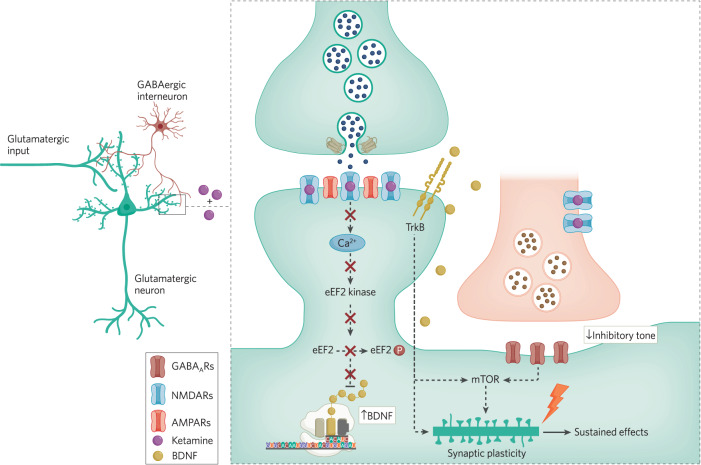
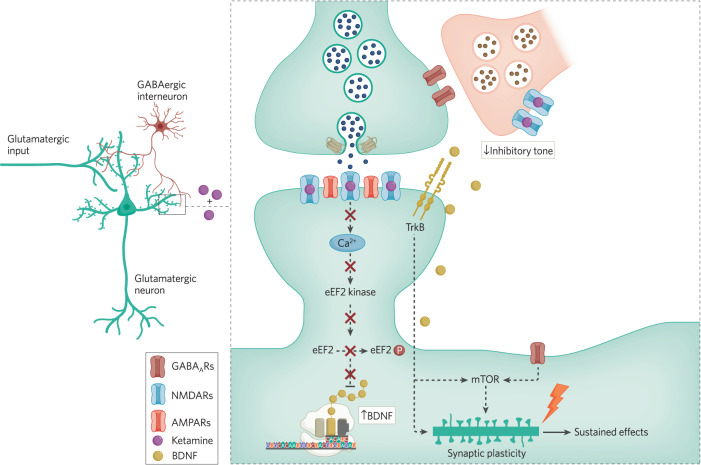
“The resulting increase in glutamatergic activity produces downstream activation of mammalian target of rapamycin (mTOR) function to increase dendritic spine formation and produce the rapid and sustained antidepressant effects [87, 90] (see Fig.”
BackgroundNMDA receptor blockade at rest triggers rapid behavioural antidepressant responses
Autry, A. E., Adachi, M., Nosyreva, E., Na, E. S., Los, M. F., Cheng, P.-F., Kavalali, E. T., & Monteggia, L. M. (2011) · Nature · doi:10.1038/nature10130 · Cited by 1,926 · cited 10×
“Moreover, extensive studies have also demonstrated that homeostatic synaptic plasticity elicited by NMDA receptor block by ketamine occurs rapidly within hours consistent with the time course of ketamine action [60, 95, 97].”
BackgroundInfluentialSelf-citationNMDAR inhibition-independent antidepressant actions of ketamine metabolites
Zanos, P., Moaddel, R., Morris, P. J., Georgiou, P., Fischell, J., Elmer, G. I., Alkondon, M., Yuan, P., Pribut, H. J., Singh, N. S., et al. (2016) · Nature · doi:10.1038/nature17998 · Cited by 1,609
Research works printed but not linked: 2
- Kuhn R Ban TA Ray OS The discovery of the tricyclic antidepressants and the history of their use in the early years A History of the CINP 1996 Brentwood Brentwood press 425 35
- Berman RM Krystal JH Charney DS Watson SJ Mechanism of action of antidepressants: monoamine hypotheses and beyond Biology of Schizophrenia and Affective Disorders 1996 Washington, D.C. American psychiatric press, Inc 295 368
Cited by
Nicosia, N., Giovenzana, M., Misztak, P., Mingardi, J., & Musazzi, L. (2024) · International Journal of Molecular Sciences · doi:10.3390/ijms25126521 · Cited by 135
“Preclinical studies have revealed that the rapid antidepressant effect of ketamine is associated with the restoration of dysfunctional glutamatergic transmission and promotion of neuroplasticity in corticolimbic areas [150,173–175].”
BackgroundThe neuroplastic brain: current breakthroughs and emerging frontiers
Gazerani, P. (2025) · Brain Research · doi:10.1016/j.brainres.2025.149643 · Cited by 178
Treatment-resistant depression: molecular mechanisms and management
Kajumba, M. M., Kakooza‐Mwesige, A., Nakasujja, N., Attix, D. K., & Canli, T. (2024) · Molecular Biomedicine · doi:10.1186/s43556-024-00205-y · Cited by 106
“It is among the leading causes of morbidity and mortality [3], and the past 60 years have been devoted to extensive research, investigating its etiological mechanisms and evidence-based treatment strategies [4, 5].”
BackgroundTherapeutic mechanisms of psychedelics and entactogens
Heifets, B. D., & Olson, D. E. (2023) · Neuropsychopharmacology · doi:10.1038/s41386-023-01666-5 · Cited by 80
“Mechanisms of ketamine for psychiatric indications are extensively reviewed elsewhere in this issue [35], but we will compare the effects of psychedelics and entactogens to ketamine throughout this review when appropriate.”
BackgroundKawczak, P., Feszak, I. J., & Bączek, T. (2024) · Biomedicines · doi:10.3390/biomedicines12102283 · Cited by 73
“Identifying compounds that specifically target homeostatic plasticity could represent a promising new therapeutic strategy [53].”
BackgroundPardossi, S., Fagiolini, A., & Cuomo, A. (2024) · International Journal of Molecular Sciences · doi:10.3390/ijms252313098 · Cited by 51
“(eEF2K), also known as CaMKIII, plays a role in the antidepressant e ff ects of ketamine [62].”
InfluentialLei, L., Wang, Y., Chen, C.-Y., Wang, Y., & Zhang, Y. (2024) · Life Sciences · doi:10.1016/j.lfs.2024.122988 · Cited by 40
Goes, F. S., Collado‐Torres, L., Zandi, P. P., Huuki-Myers, L. A., Tao, R., Jaffe, A. E., Pertea, G. M., Shin, J. H., Weinberger, D. R., Kleinman, J. E., et al. (2025) · Nature Communications · doi:10.1038/s41467-025-59115-4 · Cited by 48
Ugarte, G., Piña, R., Contreras, D., Godoy, F., Rubio, D., Rozas, C., Zeise, M. L., Vidal, R., Escobar, J., & Morales, B. (2023) · Biology · doi:10.3390/biology12091241 · Cited by 42
“Additional mechanisms for the antidepressant effect of ketamine such as the NMDAR blockade-dependent increase in BDNF translation induced by the eukaryotic elongation factor 2 (eEF2) and the direct binding of ketamine to TrkB receptor have been recently reported [73].”
Rethinking the role of TRKB in the action of antidepressants and psychedelics
Brunello, C. A., Cannarozzo, C., & Castrén, E. (2024) · Trends in Neurosciences · doi:10.1016/j.tins.2024.08.011 · Cited by 31
Zhou, J., Wu, Z., & Zhao, P. (2024) · Journal of Pharmaceutical Analysis · doi:10.1016/j.jpha.2024.101097 · Cited by 34
“Some antidepressant drugs, such as ketamine, alleviate depression through the rapid induction of syn-aptogenesis and the reversal of atrophy [53].”
Rosas-Sánchez, G. U., Germán-Ponciano, L. J., Guillén-Ruiz, G., Cueto‐Escobedo, J., Limón-Vázquez, A. K., Rodríguez‐Landa, J. F., & Soria-Fregozo, C. (2024) · Biomedicines · doi:10.3390/biomedicines12122744 · Cited by 43
Depression and the Glutamate/GABA-Glutamine Cycle
Mamelak, M. (2024) · Current Neuropharmacology · doi:10.2174/1570159x22666240815120244 · Cited by 32
Zolghadriha, A., Anjomshoaa, A., Jamshidi, M. R., & Taherkhani, F. (2024) · BMC Psychiatry · doi:10.1186/s12888-024-05716-0 · Cited by 35
“This modulation of glutamate levels may contribute to the restoration of neurotransmitter balance in the brain, potentially leading to an improvement in mood [9, 10].”
BackgroundRetractedRosas-Sánchez, G. U., German-Ponciano, L. J., Guillén-Ruiz, G., Cueto-Escobedo, J., Limón-Vázquez, A. K., Rodríguez-Landa, J. F., & Soria-Fregozo, C. (2024) · doi:10.20944/preprints202410.2591.v1 · Cited by 28
Epigenetic Mechanisms of Rapid-Acting Antidepressants
Inserra, A., Campanale, A., Rezai, T., Romualdi, P., & Rubino, T. (2024) · Translational Psychiatry · doi:10.1038/s41398-024-03055-y · Cited by 27
“…acid diethylamide (LSD), N, N-Dimethyltryptamine (DMT) and 2,5-Dimethoxy-4-iodoampheta-mine (DOI) [14]; N-Methyl-D-Aspartate (NMDA) antagonists such as ketamine [17]; and empathogens such as 3,4-methylenedioxy-methamphetamine (MDMA), which act mainly through neurotransmitter transporters [18].”
BackgroundNew directions in neurosteroid therapeutics in neuropsychiatry
Zorumski, C. F., Covey, D. F., Izumi, Y., Evers, A. S., Maguire, J. L., & Mennerick, S. J. (2025) · Neuroscience & Biobehavioral Reviews · doi:10.1016/j.neubiorev.2025.106119 · Cited by 30
“OH or B260 in other publications) (Todorovic et al., 2004; Tat et al., 2020) inhibit burst firing in pyramidal neurons in the sub-iculum (Joksimovic et al., 2019).”
Szpręgiel, I., & Bysiek, A. (2024) · Pharmacological Reports · doi:10.1007/s43440-024-00660-y · Cited by 32
“The effect of psilocybin in this case can be compared to the effect of ketamine an NMDA receptor antagonist, which is currently considered a fast-acting antidepressant, which is related to its ability to modulate glutamatergic system dysfunction [50, 51 ].”
Pharmacological and behavioural effects of tryptamines present in psilocybin‐containing mushrooms
Rakoczy, R. J., Runge, G. N., Sen, A. K., Sandoval, O., Wells, H. G., Nguyen, Q., Roberts, B., Sciortino, J. H., Gibbons, W. J., Friedberg, L. M., et al. (2024) · British Journal of Pharmacology · doi:10.1111/bph.16466 · Cited by 28
“Furthermore, the effects of several antidepressant compounds are also not mediated by 5-HT 2A activation; the antidepressant actions of ketamine , for example, are mediated through NMDA-receptor antag-onism (Krystal et al., 2024).”
Novel rapid treatment options for adolescent depression
Ledesma‐Corvi, S., Jornet-Plaza, J., Gálvez‐Melero, L., & García-Fuster, M. J. (2024) · Pharmacological Research · doi:10.1016/j.phrs.2024.107085 · Cited by 25
“Overall, although exclusively based on preliminary data in adulthood [128,131], psychedelic therapies seemed like a good option to be explored as antidepressants for adolescence, but not before further preclinical and clinical research is done.”
InfluentialMicroglia-mediated neuroimmune suppression in PTSD is associated with anhedonia
Bonomi, R. E., Hillmer, A. T., Woodcock, E. A., Bhatt, S., Rusowicz, A., Angarita, G. A., Carson, R. E., Davis, M. T., Esterlis, I., Nabulsi, N., et al. (2024) · Proceedings of the National Academy of Sciences · doi:10.1073/pnas.2406005121 · Cited by 23
“For example, in rodents, inhibition of microglia blocks the antidepressant effects of ketamine ( 68 , 69 ).”
Self-citationStructural basis for channel gating and blockade in tri-heteromeric GluN1-2B-2D NMDA receptor
Kang, H., Epstein, M., Banke, T. G., Perszyk, R. E., Simorowski, N., Paladugu, S., Liotta, D. C., Traynelis, S. F., & Furukawa, H. (2025) · Neuron · doi:10.1016/j.neuron.2025.01.013 · Cited by 22
Hasegawa, M., Kunisawa, K., Wulaer, B., Kubota, H., Kurahashi, H., Sakata, T., Ando, H., Fujigaki, S., Fujigaki, H., Yamamoto, Y., et al. (2024) · British Journal of Pharmacology · doi:10.1111/bph.17407 · Cited by 20
“Based on finding that ketamine rapidly exerts antidepressant effects, NMDA antagonism on GABAergic interneurons disinhibits glutamatergic neurons and increases extracellular neurotransmitter levels (Krystal et al., 2024).”
Gongwer, M. W., Qi, A., Enos, A. S., Mora, S. A. R., Solakoğlu, S. T., Ahmed, R. N., Klune, C. B., Shari, M., Kashay, A. Q., Williams, O. H., et al. (2026) · Cell · doi:10.1016/j.cell.2025.12.040 · Cited by 26
Park, I., Choi, M., Kim, J., Jang, S., Kim, D., Kim, J., Choe, Y., Geum, D., Yu, S.-W., Choi, J., et al. (2024) · Communications Biology · doi:10.1038/s42003-024-06647-y · Cited by 22
“Ketamine is a fast-acting and effective antidepressant for patients with MDD, including those with treatment-resistant depression (resistant to regular antidepressants) 29,30 .”
BackgroundRole of ketamine in the treatment of substance use disorders: A systematic review
Janssen‐Aguilar, R., Meshkat, S., Demchenko, I., Zhang, Y., Greenshaw, A. J., Dunn, W., Tanguay, R. L., Mayo, L. M., Swainson, J., Jetly, R., et al. (2025) · Journal of Substance Use and Addiction Treatment · doi:10.1016/j.josat.2025.209705 · Cited by 25
Fava, M., Stahl, S. M., Pani, L., Martin, S. D., Cutler, A. J., Maletic, V., Gorodetzky, C. W., Vocci, F. J., Sapienza, F. L., Kosten, T. R., et al. (2024) · The Journal of Clinical Psychiatry · doi:10.4088/jcp.24m15265 · Cited by 21
“19.”
BackgroundInfluentialThe emergence of antidepressant drugs targeting GABAA receptors: A concise review
Gonda, X., Tarazi, F. I., & Döme, P. (2024) · Biochemical Pharmacology · doi:10.1016/j.bcp.2024.116481 · Cited by 20
Salvetti, G., Saccenti, D., Moro, A. S., Lamanna, J., & Ferro, M. (2024) · Brain Sciences · doi:10.3390/brainsci14080829 · Cited by 18
“In contrast to conventional antidepressant drugs, psilocybin, like other psychoactive substances (e.g., ketamine; [28,29]), showed a rapid onset of action, with significant improvements in depressive symptoms severity observed as early as the first few days after treatment [30].”
ResultKetamine and Hydroxynorketamine as Novel Pharmacotherapies for the Treatment of Opioid Use Disorders
Onisiforou, A., Michael, A., Apostolakis, M., Mammadov, E., Mitka, A., Kalatta, M. A., Koumas, M., Georgiou, A. N., Chatzittofis, A., Panayiotou, G., et al. (2024) · Biological Psychiatry · doi:10.1016/j.biopsych.2024.09.008 · Cited by 16
Flynn, L. T., & Gao, W. (2023) · Molecular Psychiatry · doi:10.1038/s41380-023-02235-4 · Cited by 19
“Furthermore, as noted above, the antidepressant effects of ketamine outlast the acute NMDAR blockade of the drug [14].”
Enhancing the electrochemical performance of graphite sheet electrodes for ketamine detection
Marra, M. C., Oliveira, T. C. D., da Rocha, R. G., Siqueira, G. P., Chaves, S. C., Richter, E. M., Gelamo, R. V., & Muñoz, R. A. A. (2024) · Electrochimica Acta · doi:10.1016/j.electacta.2024.145219 · Cited by 16
Chen, M., Jin, J., Bi, H., Zhang, Y., Sun, M., Li, X., & Wang, Y. (2025) · Asian Journal of Psychiatry · doi:10.1016/j.ajp.2025.104502 · Cited by 14
Effects of ketamine on postoperative cognition: a scoping review
Brenna, C. T. A., He, X., Liu, D., Kaustov, L., Choi, S., & Orser, B. A. (2025) · British Journal of Anaesthesia · doi:10.1016/j.bja.2025.05.035 · Cited by 17
Current and Future Approaches to Pediatric Anxiety Disorder Treatment
Zugman, A., Winkler, A. M., Qamar, P., & Pine, D. S. (2024) · American Journal of Psychiatry · doi:10.1176/appi.ajp.20231037 · Cited by 16
Pomrenze, M. B., Vaillancourt, S., Llorach, P., Rijsketic, D. R., Casey, A. B., Gregory, N. S., Zhao, W., Girard, T. E., Mattox, K. T., Salgado, J. S., et al. (2024) · Biological Psychiatry · doi:10.1016/j.biopsych.2025.04.020 · Cited by 17
Miquel-Rio, L., Sarriés-Serrano, U., Sancho‐Alonso, M., Florensa-Zanuy, E., Paz, V., Ruiz‐Bronchal, E., Manashirov, S., Campa, L., Pilar-Cuéllar, F., & Bortolozzi, A. A. (2024) · iScience · doi:10.1016/j.isci.2024.109787 · Cited by 15
“67,92 The most widely accepted view is that ketamine-mediated NMDAR blockade, in turn, stops eEF2 kinase activity, leadingtoagraduallossofeEF2phosphorylationandde-suppressionofBDNFtranslation,ultimatelytriggeringTrkBreceptorsignaling.”
Wang, Z., Lu, H., Li, Y., Huang, S., Zhang, M., Wen, Y., & Shang, D. (2024) · Journal of Affective Disorders · doi:10.1016/j.jad.2024.08.161 · Cited by 15
The Structures, Functions, and Roles of Class III HDACs (Sirtuins) in Neuropsychiatric Diseases
Bonomi, R. E., Riordan, W., & Gelovani, J. G. (2024) · Cells · doi:10.3390/cells13191644 · Cited by 17
“Studies demonstrate ketamine’s anti-depressant effects may be improved and lengthened through the use of a potent mTOR inhibitor, rapamycin [81,82].”
BackgroundImperio, C. G., LEVIN, F. R., & Martínez, D. (2024) · American Journal of Psychiatry · doi:10.1176/appi.ajp.20231023 · Cited by 18
Additively manufactured ready-to-use platform using conductive recycled PLA for ketamine sensing
Souza, M. M. C., da Rocha, R. G., Siqueira, G. P., Crapnell, R. D., Richter, E. M., Banks, C. E., & Muñoz, R. A. A. (2025) · Microchimica Acta · doi:10.1007/s00604-024-06902-3 · Cited by 13
Benefits and risks of esketamine nasal spray continuation in treatment-resistant depression
Price, M. Z., & Price, R. L. (2024) · Biomarkers in Neuropsychiatry · doi:10.1016/j.bionps.2024.100104 · Cited by 16
Epigenetic aging in major depressive disorder: Clocks, mechanisms and therapeutic perspectives
Shaikh, M., & Doshi, G. (2024) · European Journal of Pharmacology · doi:10.1016/j.ejphar.2024.176757 · Cited by 13
Advancing past ketamine: emerging glutamatergic compounds for the treatment of depression
Freudenberg, F., Reif-Leonhard, C., & Reif, A. (2024) · European Archives of Psychiatry and Clinical Neuroscience · doi:10.1007/s00406-024-01875-z · Cited by 18
“As the potential of (es)ketamine to act as a RAAD has been repeatedly documented and review (reviewed e.g. in [12, 27, 28]) and given that esketamine is an already approved antidepressant, we will focus here on glutamatergic drugs beyond ketamine.”
Comai, S., Martin, S. D., Mattarei, A., Guidetti, C., Pappagallo, M., Folli, F. B., Alimonti, A., & Manfredi, P. L. (2024) · Pharmaceuticals · doi:10.3390/ph17121618 · Cited by 14
“Indeed, preclinical models have demonstrated that the antidepressant-like activity of NMDAR uncompetitive antagonists is dependent on the reversal of impaired spinogenesis [11,23,28,41,42].”
InfluentialŞahin, F., Günel, A., Atasoy, B. T., Güler, Ü., Salih, B., Kuzu, I., Taşpınar, M., Çınar, Ö., & Kahveci, S. (2025) · Scientific Reports · doi:10.1038/s41598-024-84479-w · Cited by 12
“While neurodegenerative diseases are characterized by a multitude of intricate etiologies, deficiencies within the proteasome systems emerge as a prominent contributing factor to their onset 10–12 Notably, proteasome functionality has been observed to decline with advancing age.”
Yang, C., Ali, T., Li, A., Gao, R., Yu, X., Li, S., & Li, T. (2024) · Neuropharmacology · doi:10.1016/j.neuropharm.2024.110156 · Cited by 11
Sarriés-Serrano, U., Miquel-Rio, L., Santana, N., Paz, V., Sancho‐Alonso, M., Callado, L. F., Meana, J. J., & Bortolozzi, A. A. (2025) · Progress in Neuro-Psychopharmacology and Biological Psychiatry · doi:10.1016/j.pnpbp.2025.111299 · Cited by 11
Ketamine in Clinical Practice: Transitioning from Anesthetic Agent to Psychiatric Therapeutic
Quintero, J.-M., Bustos, R., Lechtig, S., Beltran, S., & Zarate, C. A. (2025) · Cambridge University Press eBooks · doi:10.1017/9781009585330.007 · Cited by 13
Tian, J., Xie, Y., Ye, S., Hu, Y., Feng, J., Li, Y., Lou, Z., Ruan, L., & Wang, Z. (2025) · Biochemical and Biophysical Research Communications · doi:10.1016/j.bbrc.2025.151965 · Cited by 10
The ketamine chameleon: history, pharmacology, and the contested value of experience
Diep, D., de la Salle, S., Lévesque, J. T., Lifshitz, M., Garel, N., & Greenway, K. T. (2025) · Expert Review of Clinical Pharmacology · doi:10.1080/17512433.2025.2459377 · Cited by 12
“One important explanation for these findings may be found in ketamine’s particular actions on the NMDA receptor, where it is known to act as a noncompetitive antagonist of glutamatergic NMDA receptors [155].”
Sakopoulos, S., & Todman, M. (2025) · International Journal of Molecular Sciences · doi:10.3390/ijms26146673 · Cited by 12
“This fast-acting nature is particularly beneficial for patients with TRD, who are resistant to treatment options and may suffer from severe symptoms, including suicidal ideation, requiring immediate relief and higher need for care [75,76].”
Research progress and future perspective in anaesthesiology
Long, J., Zhu, J., & Ma, D. (2025) · Anesthesiology and Perioperative Science · doi:10.1007/s44254-025-00159-6 · Cited by 11
“…consistently showed its rapid anti-depressant effects, extending the mechanistic understanding from simple NMDA receptor antagonism (synapse transmission) to the restoration of synaptic plasticity through mechanistic target of rapamycin and brain-derived neurotrophic factor signalling [92, 93].”
Yamamoto, M., Hirakata, H., & Toda, K. (2026) · Frontiers in Cell and Developmental Biology · doi:10.3389/fcell.2026.1777975 · Cited by 12
Deng, Q., Parker, E., Wu, C., Zhu, L., Liu, T. C., Duan, R., & Yang, L. (2024) · Aging and Disease · doi:10.14336/ad.2024.0239 · Cited by 12
“…hyperactivate impaired the local excitatory and inhibitory balance within the prefrontal cortical microcircuitry [249] HPA axis dysregulation Increased GR sensitivity and negative feedback inhibition of the HPA axis [252] Glutamatergic systems Glutamatergic synaptic strength disruption [255]”
Flowers, J. C., Vetter, P. E., Wiles, M. J., Roh, S. H., Black, E. R., Bouckova, E., Wustrau, M. H., Lee, R., Lee, S.-H., & Kim, S. (2025) · The FASEB Journal · doi:10.1096/fj.202501763r · Cited by 11
Guo, L., Lin, X., Wang, Q., Liu, Z., Liu, S., Lv, N., Liu, Z., Wang, Y., Sun, C., & Wang, Y. (2025) · Molecular Psychiatry · doi:10.1038/s41380-025-03248-x · Cited by 12
“Traditionally known for its role as an anesthetic by blocking glutamate N-methyl-D-aspartate (NMDA) receptor, ketamine has garnered attention as one of the most signi fi cant advancements in the treatment of depression in recent decades [1].”
Aref, S., Habib, M. Z., Eid, D., Eltantawy, E. H. B., Taeimah, M., Hassan, F. E., El‐Gabry, D. A., ElShahawi, H. H., Mohamad, M. I., Abdel-Tawab, A. M., et al. (2025) · Progress in Neuro-Psychopharmacology and Biological Psychiatry · doi:10.1016/j.pnpbp.2025.111503 · Cited by 10
Modulation of the endocannabinoid system by (S)-ketamine in an animal model of depression
da Silva, N. R., Arjmand, S., Domingos, L. B., Filho, A. J. M. C., Mottin, M., Real, C. C., Waszkiewicz, A., Gobira, P. H., Ferraro, A. N., Landau, A. M., et al. (2024) · Pharmacological Research · doi:10.1016/j.phrs.2024.107545 · Cited by 9
Motamedi-Manesh, A., Asanjan, M. F., Fallah, H., Gharibian, S., Taghavi, A., Poode, Z. H., Akhondzadeh, S., & Vaseghi, S. (2025) · Naunyn-Schmiedeberg s Archives of Pharmacology · doi:10.1007/s00210-025-03912-7 · Cited by 8
“…and long-term antidepressant effects of ketamine may be related to initial protein translation-dependent effects, changes in transcriptional regulation initiated by early synaptic plasticity, and the pivotal role of methyl CpG binding protein 2 (MeCP2) (Krystal et al. 2024; Kim et al. 2021).”
Jenkins, A. R., Radl, D. B., Kornecook, T. J., Pizzagalli, D. A., Bergman, J., Buhl, D. L., O’Donnell, P., & Kangas, B. D. (2025) · Journal of Pharmacology and Experimental Therapeutics · doi:10.1016/j.jpet.2025.103572 · Cited by 8
Sharma, V., Sharma, P. M., Mannan, A., Dhiman, S., Mohan, M., Singh, S., & Singh, T. G. (2025) · Behavioural Brain Research · doi:10.1016/j.bbr.2025.115720 · Cited by 8
Synaptic basis of rapid antidepressant action
Kavalali, E. T., & Monteggia, L. M. (2024) · European Archives of Psychiatry and Clinical Neuroscience · doi:10.1007/s00406-024-01898-6 · Cited by 7
Self-citationCamargo, A., Nilsson, A., Shariatgorji, M., Appleton, E., Branzell, N., Doyon, D., Giovenzana, M., Zhang, X., Dautan, D., Andrén, P. E., et al. (2024) · Molecular Psychiatry · doi:10.1038/s41380-024-02853-6 · Cited by 11
“Although the rapid and sustainable actions of ketamine to treat MDD are remarkable [17, 18], innovative studies have also reported that ( R,S )-ketamine may be a novel pharmacologic approach to enhance resilience and protect against stress-induced MDD in humans [19 – 22] and depressive-like state…”
Piao, J., Chen, H., Piao, X., Cheng, Z., Zhao, F., Cui, R., & Li, B. (2025) · Neurobiology of Disease · doi:10.1016/j.nbd.2025.106931 · Cited by 8
Алексеевич, П. М., Zyryanov, S. K., Rodionova, G. M., Dyakonova, A., Шегай, П. В., Каприн, А. Д., & Demyashkin, G. A. (2025) · Journal of Personalized Medicine · doi:10.3390/jpm15120616 · Cited by 10
“…antidepressants like ketamine, which primarily target N-methyl-D-aspartate receptors (NMDARs), has revealed that the ultimate therapeutic effect is mediated by the rapid induction of synaptic plasticity, specifically the formation of new dendritic spines via the mTOR signaling pathway [44].”
Babii, Y., Pałucha-Poniewiera, A., Rafało-Ulińska, A., Brański, P., & Pilc, A. (2024) · Pharmacological Reports · doi:10.1007/s43440-024-00630-4 · Cited by 8
“…by its dedicated kinase, eukaryotic elongation factor 2 kinase (eEF2K), may play a pivotal role in the rapid antidepressant action of ketamine [48]. eEF2 is involved in translation elongation, and its dephosphorylation leads to the de-sup-pression of protein synthesis, particularly BDNF, and…”
BackgroundNeuroadaptation in neurodegenerative diseases: compensatory mechanisms and therapeutic approaches
Kopalli, S. R., Behl, T., Baldaniya, L. H., Ballal, S., Joshi, K. K., Arya, R., Chaturvedi, B., Chauhan, A. S., Verma, R. K., Patel, M., et al. (2025) · Progress in Neuro-Psychopharmacology and Biological Psychiatry · doi:10.1016/j.pnpbp.2025.111375 · Cited by 8
Symptom networks in major depressive disorder and treatment response: special focus on TRD
Kautzky, A., Bartova, L., Dold, M., Souery, D., Montgomery, S., Zohar, J., Mendlewicz, J., Fabbri, C., Serretti, A., Tretiakov, E. O., et al. (2025) · European Psychiatry · doi:10.1192/j.eurpsy.2025.2454 · Cited by 8
“Effective treatment options include antidepressants (AD) targeting monoamine reuptake and receptor binding [6], as well as glutamatergic signaling and neuroplasticity [7].”
Rapid antidepressant potential of nitrous oxide: current state and major questions
Zorumski, C. F., Cichon, J., Izumi, Y., Zeffiro, T. A., Mennerick, S. J., Nägele, P., & Conway, C. R. (2025) · Molecular Psychiatry · doi:10.1038/s41380-025-03439-6 · Cited by 7
“The time course of these latter effects may differ from those of ketamine because ketamine stimulates early translation of the bdnf gene followed by subsequent transcriptional changes [87].”
Le, G. H., Wong, S., Johnson, D. E., Lu, A., Orsini, D. K., Chisamore, N., Luch, S. D. D., Rosenblat, J. D., & McIntyre, R. S. (2025) · Journal of Affective Disorders · doi:10.1016/j.jad.2025.121081 · Cited by 7
Human pluripotent stem cells as a translational toolkit in psychedelic research in vitro
Salerno, J. A., & Rehen, S. K. (2024) · iScience · doi:10.1016/j.isci.2024.109631 · Cited by 7
“64 Both psychedelics and ketamine promote mTOR activation, BDNF synthesis, and dendritic spine growth, with psyche-delicsprimarilyactingas5-HT2ARagonistsandketamineviaNMDARantagonism.”
BackgroundLoïodice, S., D’Acquisto, F., Drinkenburg, P., Suojanen, C., Llorca, P., & Manji, H. K. (2024) · Drug Discovery Today · doi:10.1016/j.drudis.2024.104255 · Cited by 8
Ma, Z., Wu, F., & Zheng, W. (2025) · Psychiatric Quarterly · doi:10.1007/s11126-025-10121-1 · Cited by 8
“At sub-anesthetic doses, intravenous ketamine can alleviate depressive symptoms within hours, significantly reducing acute symptoms such as suicidal ideation in MDD patients [ 12 ] .”
Xiong, H., Li, L., Li, Y., Chen, Y., Leng, J., & Chen, T. (2026) · Brain and Behavior · doi:10.1002/brb3.71408 · Cited by 6
5-HT1B receptor activation produces rapid antidepressant-like effects in rodents
Clark, E. A., Wang, L., Hanania, T., Kretschmannova, K., Bianchi, M., Jagger, E., Hu, T., Li, F., Gallero-Salas, Y., Koblan, K. S., et al. (2024) · Pharmacology Biochemistry and Behavior · doi:10.1016/j.pbb.2024.173917 · Cited by 5
Hossein, S., Rengasamy, M. L., Uzamere, A., Spotts, C., Howland, R. H., Wallace, M. L., Mathew, S. J., & Price, R. B. (2025) · The British Journal of Psychiatry · doi:10.1192/bjp.2024.276 · Cited by 9
“…may be related to rapid-acting biological mechanisms proposed by prior researchers, such as effects on synaptic growth (e.g. in the hippocampus via factors such as brain-derived neurotrophic factor 25 ), neuroplasticity, changes in neuro-transmitter activity or alterations in neural networks.”
Unveiling the enigma of anxiety disorders and depression: from pathogenesis to treatment
Pan, H., Xia, T., Zhang, Y., Zhang, H., Xu, M., Guo, J., Liu, Y., Bai, X.-Y., Liu, Q., Liu, W.-Z., et al. (2025) · Science China Life Sciences · doi:10.1007/s11427-025-3024-y · Cited by 8
“However, their long-term safety profiles and optimal dosing regimens require further investigation (Kim et al., 2019; Krystal et al., 2024).”
Spontaneous glutamate release activates mGluR signaling to drive rapid antidepressant responses
McCarthy, C. I., Ma, Z., Monteggia, L. M., & Kavalali, E. T. (2025) · Proceedings of the National Academy of Sciences · doi:10.1073/pnas.2510642122 · Cited by 13
“In the last decade, research from our group revealed that spontaneous neurotransmitter release and homeostatic plasticity are critical for the therapeutic actions of ketamine as a rapidly acting antidepressant ( 5 ).”
Self-citationFarinha‐Ferreira, M., Magalhães, D. M., Neuparth‐Sottomayor, M., Rafael, H., Miranda‐Lourenço, C., & Sebastião, A. M. (2024) · Journal of Neurochemistry · doi:10.1111/jnc.16083 · Cited by 6
“…et al., 2006; Trivedi et al., 2006), the emergence of rapid-acting antidepressants with non-monoaminergic mechanisms (e.g., ketamine, brexanolone (Krystal et al., 2023; Lüscher & Möhler, 2019)), and the accumulation of findings contradicting the core proposals underlying this hypothesis…”
García-Fuster, M. J., Colom-Rocha, C., & Bis‐Humbert, C. (2024) · Frontiers in Pharmacology · doi:10.3389/fphar.2024.1448170 · Cited by 6
“…Tringali et al., 2023; Gasparyan et al., 2023) or ketamine [reviews by Worrell and Gould (2021); Gold fi ne et al. (2023); Kelson et al. (2023); Krystal et al. (2024)], although most of these studies were tested in either pups from pregnant rodents exposed to drugs during gestation, and/or in…”
BackgroundResultPappagallo, M., Kosten, T. R., Gorodetzky, C. W., Vocci, F. J., Sapienza, F. L., Martin, S. D., Comai, S., Mattarei, A., Inturrisi, C. E., & Manfredi, P. L. (2024) · Molecular Psychiatry · doi:10.1038/s41380-024-02621-6 · Cited by 5
Cortes-Briones, J., Urrutia-Gandolfo, J., Estévez, P. A., Sengupta, A., Basilico, M., Skosnik, P. D., Limoncelli, D., D’Souza, D. C., Petrakis, I. L., & Krystal, J. H. (2025) · Research Square · doi:10.1101/2025.05.12.653580 · Cited by 9
Self-citationManagement of depression utilizing Traditional Chinese Medicine
Ma, R., Ma, J., & Zhang, H. (2026) · Frontiers in Pharmacology · doi:10.3389/fphar.2026.1763214 · Cited by 7
“Conventional antidepressants—while effective for many—act primarily through well-characterized mechanisms involving monoaminergic transmission and HPA axis regulation (Chen et al., 2016; Krystal et al., 2023).”
Proteomic patterns associated with ketamine response in major depressive disorders
Zhou, N., Shi, X., Wang, R., Wang, C., Lan, X., Liu, G., Li, W., Zhou, Y., & Ning, Y. (2025) · Cell Biology and Toxicology · doi:10.1007/s10565-024-09981-3 · Cited by 4
Rengasamy, M. L., Panny, B., Hutchinson, Z., Marsland, A. L., Kovats, T., Griffo, A., Spotts, C., Howland, R. H., Wallace, M. L., Mathew, S. J., et al. (2025) · Brain Behavior and Immunity · doi:10.1016/j.bbi.2025.04.006 · Cited by 6
“…such markers have been identified within causal pathways exploring ketamine ’ s mechanism of action on depressive symptoms (Quintanilla et al., 2024; Krystal et al., 2024) and can also be relatively easily measured in the peripheral blood (Nikkheslat, 2021; Bj ¨ orkholm and Monteggia, 2016).”
Kharasch, E. D. (2025) · Clinical Pharmacology & Therapeutics · doi:10.1002/cpt.3634 · Cited by 4
“23,24 It also spawned the emergence of numerous “ket-amine clinics”.”
Dong, Y., Goodwin‐Groen, S., Ma, J., Kim, E., Giudice, S. D., Santos, M., & Aoki, C. J. (2025) · Physiology & Behavior · doi:10.1016/j.physbeh.2025.114956 · Cited by 6
Courtes, A. C., Jones, G. H., Henter, I. D., Shahani, L., Fries, G. R., Juruena, M. F., Soares, J. C., Zarate, C. A., & Machado‐Vieira, R. (2025) · Journal of Affective Disorders · doi:10.1016/j.jad.2025.120016 · Cited by 5
Zhang, X., Huang, M., Wangyang, X., Leiming, D., Yu, Y., & Zeng, J. (2025) · Journal of Affective Disorders · doi:10.1016/j.jad.2025.120133 · Cited by 4
Effects of Intravenous Ketamine on Posttraumatic Stress Disorder ( PTSD ): A Systematic Review
Yin, L., Lu, A., Le, G. H., Dri, C. E., Wong, S., Teopiz, K. M., Xu, H., Ho, R., Rhee, T. G., Lo, H. K. Y., et al. (2025) · Acta Psychiatrica Scandinavica · doi:10.1111/acps.70053 · Cited by 4
“Moreover, in addition to alleviating overall distress, ketamine has also been shown to be successful in treating symptoms of irritability, agitation, dysphoria and an-hedonia, all of which are highly prevalent in persons with PTSD [33–36].”
The Habenula’s role in major depressive disorder: recent insights from preclinical and human studies
Lin, F., Casmey, K., Codeluppi-Arrowsmith, S. A., & Turecki, G. (2026) · Translational Psychiatry · doi:10.1038/s41398-026-03867-0 · Cited by 5
Bhatti, D. L., Jin, J., Cheng, J., McCabe, K. A., Lee, K.-W., Berdasco, C., Jeong, Y. Y., Sinha, S. C., & Kim, Y. D. (2024) · Frontiers in Molecular Neuroscience · doi:10.3389/fnmol.2024.1350716 · Cited by 4
Castro‐Zaballa, S., González, J., Cavelli, M., Mateos, D. M., Pascovich, C., Tort, A. B. L., Hunt, M. J., & Torterolo, P. (2024) · Behavioural Brain Research · doi:10.1016/j.bbr.2024.115231 · Cited by 5
Petrican, R., Chopra, S., Murgatroyd, C., & Fornito, A. (2024) · Biological Psychiatry · doi:10.1016/j.biopsych.2024.10.008 · Cited by 5
“Such research is worth pursuing because different treatments impact distinct physiological systems (127 – 132) and patterns of neuroplasticity (133,134), which, in turn, are likely to show distinguishable associations with cellular-and organism-level markers of senescence.”
Ketamine: An emerging agent in the management of neuropsychiatric disorders
Menke, N. B., Hoffman, E., Gaylor, K., & Shobassy, A. (2024) · Asian Journal of Psychiatry · doi:10.1016/j.ajp.2024.104351 · Cited by 4
Mares-Barbosa, T. B., Cuellar-Santoyo, A. O., Ruiz-Rodríguez, V. M., Hernández-Balderas, K., González-Hernández, O., Portales‐Pérez, D. P., & Estrada‐Sánchez, A. M. (2025) · Behavioural Brain Research · doi:10.1016/j.bbr.2025.115441 · Cited by 4
Riggs, L. M., Aronson, S., Mou, T.-C. M., Pereira, E. F. R., Thompson, S. M., & Gould, T. D. (2025) · Cell Reports · doi:10.1016/j.celrep.2025.115743 · Cited by 4
Dahlgren, C. L., Tverrli, E., & Stewart, L. H. (2025) · Journal of Eating Disorders · doi:10.1186/s40337-025-01313-y · Cited by 4
“While ketamine’s rapid antidepressant effects may be due to its ability to promote homeostatic plasticity in depression [60], it does not necessarily target the underlying causes of either depression or EDs.”
Metabotropic glutamate receptor 5 in depression: Mechanisms and therapeutic potential
He, C., Zhang, J., Wang, J., Zhu, G., & Yang, S. (2025) · European Journal of Medicinal Chemistry · doi:10.1016/j.ejmech.2025.117976 · Cited by 3
Metadata
- Authors
- Krystal, J. H., Kavalali, E. T., & Monteggia, L. M.
- Affiliations
- Yale University (US)
- Vanderbilt University (US)
- Corresponding author
- Monteggia, Lisa M.
- Venue
- Neuropsychopharmacology
- Published
- 2023-07-24
- Volume
- 49
- Issue
- 1
- Pages
- 41-50
- ISSN
- 0893-133X (ISSN-L)
- 1740-634X
- PMC
- PMC10700627
- OpenAlex
- W4385196900
- Cited by
- 262
- References
- 132
- Citations by year
- 2026: 99 · 2025: 98 · 2024: 60 · 2023: 5
- FWCI
- 9.52
- Type
- journal article
- Language
- en
- Open access
- hybrid
- doi.org
- Licence
- cc-by
- creativecommons.org/licenses/by/4.0 (tdm)
- creativecommons.org/licenses/by/4.0 (vor)
- Locations
- Neuropsychopharmacology (publishedVersion, cc-by)
- PubMed Central (publishedVersion, cc-by)
- PubMed (publishedVersion)
- Funders
- U.S. Department of Health & Human Services | NIH | National Institute of Mental Health (MH070727, MH081060, MH066198)
- Department of Veterans Affairs | Office of Academic Affiliations, Department of Veterans Affairs (National Center for PTSD)
- Yale | YSM | Yale Center for Clinical Investigation, Yale School of Medicine (2UL1TR001863)
- U.S. Department of Health & Human Services | NIH | National Institute on Alcohol Abuse and Alcoholism (2P50AA012870)
- Topics
- Health Sciences › Medicine › Pharmacology (medical) › Treatment of Major Depression
- Life Sciences › Neuroscience › Cellular and Molecular Neuroscience › Neuroscience and Neuropharmacology Research
- Health Sciences › Medicine › Psychiatry and Mental health › Electroconvulsive Therapy Studies
- Keywords
- ketamine, treatment-resistant depression, NMDA receptor antagonism, synaptic plasticity, synaptic signaling, mood disorders, neuropsychiatric disorders, antidepressant mechanism
- MeSH terms
- Antidepressive Agents, Depression, Humans, Ketamine, Synapses, Receptors, N-Methyl-D-Aspartate, Depressive Disorder, Treatment-Resistant
About these checks
Registry, retraction, Cites and statistics results are computed, not judged, with one exception: a printed reference that no index lists is read once by a model before it counts as a citation error. Claims are extracted by a model and kept only when their quote appears verbatim in the text; each cited source is then checked, with a model’s help, for whether it says what the claim relies on. Those verdicts can be wrong — read the claim’s quote and the cited source before relying on one.
Statistics and arithmetic are recomputed, not judged.
Confidence bands are shown only for fields calibrated on our annotated test set. None is calibrated yet, so no band is shown.
What counts as a claim ›How we measure confidence ›How we check this ›
Are you an author, or do you see a problem with this page? Request a review
Data sources
Bibliographic data: Semantic Scholar, OpenAlex, Crossref.
Contains information from the Semantic Scholar Academic Graph Datasets, made available under the ODC Attribution License (ODC-BY 1.0).
Semantic Scholar’s data is described in: Kinney, R., et al. (2023). The Semantic Scholar Open Data Platform. arXiv:2301.10140.
