

Ketamine and rapid antidepressant action: new treatments and novel synaptic signaling mechanisms
Open accessThe DOI matches its Crossref record; 136 of the 136 references it cites were found in a registry or an index.
Abstract
Ketamine is an open channel blocker of ionotropic glutamatergic N -Methyl- D -Aspartate (NMDA) receptors. The discovery of its rapid antidepressant effects in patients with depression and treatment-resistant depression fostered novel effective treatments for mood disorders. This discovery not only provided new insight into the neurobiology of mood disorders but also uncovered fundamental synaptic plasticity mechanisms that underlie its treatment. In this review, we discuss key clinical aspects of ketamine’s effect as a rapidly acting antidepressant, synaptic and circuit mechanisms underlying its action, as well as how these novel perspectives in clinical practice and synapse biology form a road map for future studies aimed at more effective treatments for neuropsychiatric disorders.
Overview
The claims and statistics of this paper haven’t been checked yet.
Free: it reads the open-access text and checks the first 5 claims that cite a source we can check. Create a free account to check every claim.
Integrity signals
Registry
Cites
Statistics
Figures
Verification
Claims the paper makes
The claims and statistics of this paper haven’t been checked yet.
Free: it reads the open-access text and checks the first 5 claims that cite a source we can check. Create a free account to check every claim.
Claims other papers make about this one
Each is checked against this paper’s own text: does it say what the citing paper says it does?
The cited source doesn’t support the claim as written.
In the citing paper
“Importantly, this mechanism reframes NMDAR antagonism as permissive rather than suppressive, with intact upstream NMDA signaling required to enable AMPA driven plasticity [20,44,45,51].”
From Synaptic Plasticity—Intrinsic Excitability and Antidepressant Discovery (2026) · cites this paper as [20]
Checked by a reasoning model — may be wrong.
Experimental — accuracy not yet measuredThe source backs part of the claim, not all of it — or backs it for a different population, condition or comparison.
In the citing paper
“Elevated postsynaptic activity triggers BDNF release and TrkB receptor activation, which in turn engages mechanistic target of rapamycin complex 1 (mTORC1) dependent translational programs supporting dendritic spine growth and synaptic strengthening [20,42,48,49,50].”
From Synaptic Plasticity—Intrinsic Excitability and Antidepressant Discovery (2026) · cites this paper as [20]
Experimental — accuracy not yet measuredThe source backs part of the claim, not all of it — or backs it for a different population, condition or comparison.
In the citing paper
“These cascades converge to produce long-term potentiation (LTP) like synaptic potentiation across corticolimbic circuits within hours, mirroring the temporal profile of ketamine’s antidepressant effects [20,33,48].”
From Synaptic Plasticity—Intrinsic Excitability and Antidepressant Discovery (2026) · cites this paper as [20]
Experimental — accuracy not yet measuredThe source backs part of the claim, not all of it — or backs it for a different population, condition or comparison.
In the citing paper
“The result is a brief but robust glutamate surge that drives enhanced α-amino-3-hydroxy-5-methyl-4-isoxazolepropionic acid receptor (AMPAR) throughput and calcium influx, including through calcium permeable AMPA channels [20,42,47].”
From Synaptic Plasticity—Intrinsic Excitability and Antidepressant Discovery (2026) · cites this paper as [20]
Experimental — accuracy not yet measuredThe source backs part of the claim, not all of it — or backs it for a different population, condition or comparison.
In the citing paper
“Sustained antidepressant benefit requires presynaptic mechanisms that preserve release fidelity after postsynaptic remodeling.”
From Synaptic Plasticity—Intrinsic Excitability and Antidepressant Discovery (2026) · cites this paper as [20]
Experimental — accuracy not yet measured
6 more claims about this paper
Create a free account to see every claim other papers make about this one.
Self-check
Percentages, sums and reported differences re-computed from the paper’s own numbers.
The self-check needs the paper’s full text.
Citations
Cites
Molecular Mechanisms of Depression: Perspectives on New Treatment Strategies
Lang, U. E., & Borgwardt, S. (2013) · Cellular Physiology and Biochemistry · doi:10.1159/000350094 · Cited by 8,475
(2022) · The Lancet Psychiatry · doi:10.1016/s2215-0366(21)00395-3 · Cited by 6,481 · cited 1×
“Despite over 60 years of antidepressant development, mood disorders remain among the most disabling medical conditions in the world and they are associated with shortening of life expectancy by up to 10 years [5, 6].”
BackgroundRush, A. J., Trivedi, M. H., Wisniewski, S. R., Nierenberg, A. A., Stewart, J. W., Warden, D., Niederehe, G., Thase, M. E., Lavori, P. W., Lebowitz, B. D., et al. (2006) · American Journal of Psychiatry · doi:10.1176/ajp.2006.163.11.1905 · Cited by 5,643 · cited 1×
“…initial antidepressant, modest incremental bene fi ts were seen with subsequent treatments, approximately one-third of patients remained unremitted after four treatments, and the one-year relapse rate among patients with treatment-resistant symptoms (Steps 3 and 4) was approximately 75% [7, 8].”
BackgroundAntidepressant effects of ketamine in depressed patients
Berman, R. M., Cappiello, A., Anand, A., Oren, D. A., Heninger, G. R., Charney, D. S., & Krystal, J. H. (2000) · Biological Psychiatry · doi:10.1016/s0006-3223(99)00230-9 · Cited by 3,856 · cited 1×
“The initial pilot study used the previously ketamine infusion strategy to conduct the fi rst randomized, placebo-controlled test of ketamine response in depression [26].”
MethodSelf-citationA randomized trial of an N-methyl-D-aspartate antagonist in treatment-resistant major depression.
Zarate, C. A., Singh, J. B., Carlson, P. J., Brutsche, N. E., Ameli, R., Luckenbaugh, D. A., Charney, D. S., & Manji, H. K. (2006) · Archives of General Psychiatry · doi:10.1001/archpsyc.63.8.856 · Cited by 3,766 · cited 2×
“However, none of these studies predicted the distinctively rapid and robust antidepressant effects of a single ketamine dose in depressed patients observed in the initial pilot study, nor the ef fi cacy in treatment-resistant symptoms of depression, bipolar disorder [30] or suicide ideation [31].”
BackgroundResultA Neurotrophic Model for Stress-Related Mood Disorders
Duman, R. S., & Monteggia, L. M. (2006) · Biological Psychiatry · doi:10.1016/j.biopsych.2006.02.013 · Cited by 3,375 · cited 1×
“Earlier studies on the mechanisms of action of classical antidepressant in preclinical models established a strong causal link of BDNF and subsequent signaling via TrkB receptors as a key mediator of antidepressant action [99, 100].”
BackgroundSelf-citationKrystal, J. H. (1994) · Archives of General Psychiatry · doi:10.1001/archpsyc.1994.03950030035004 · Cited by 3,330
Self-citationmTOR-Dependent Synapse Formation Underlies the Rapid Antidepressant Effects of NMDA Antagonists
Li, N., Lee, B., Liu, R.-J., Banasr, M., Dwyer, J. M., Iwata, M., Li, X.-Y., Aghajanian, G., & Duman, R. S. (2010) · Science · doi:10.1126/science.1190287 · Cited by 2,881 · cited 3×
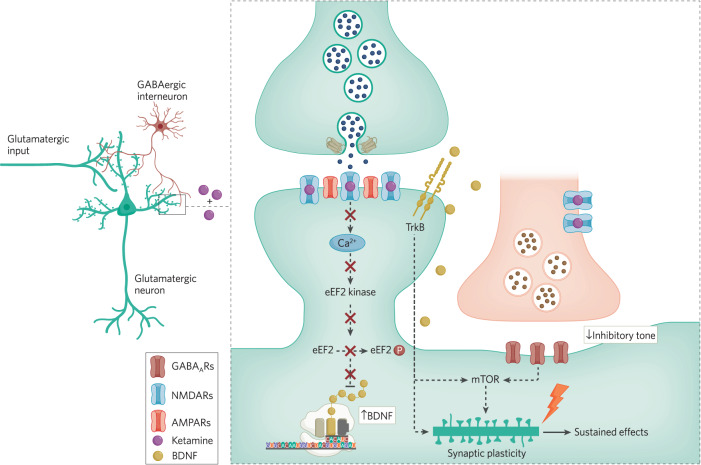
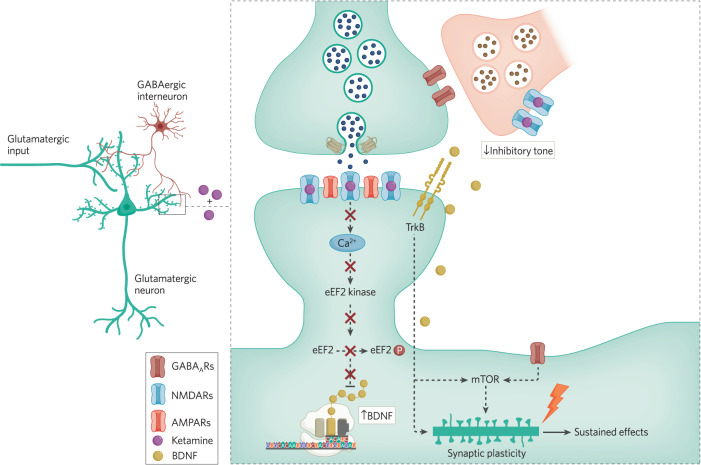
“The resulting increase in glutamatergic activity produces downstream activation of mammalian target of rapamycin (mTOR) function to increase dendritic spine formation and produce the rapid and sustained antidepressant effects [87, 90] (see Fig.”
BackgroundNMDA receptor blockade at rest triggers rapid behavioural antidepressant responses
Autry, A. E., Adachi, M., Nosyreva, E., Na, E. S., Los, M. F., Cheng, P.-F., Kavalali, E. T., & Monteggia, L. M. (2011) · Nature · doi:10.1038/nature10130 · Cited by 1,926 · cited 10×
“Moreover, extensive studies have also demonstrated that homeostatic synaptic plasticity elicited by NMDA receptor block by ketamine occurs rapidly within hours consistent with the time course of ketamine action [60, 95, 97].”
BackgroundInfluentialSelf-citationNMDAR inhibition-independent antidepressant actions of ketamine metabolites
Zanos, P., Moaddel, R., Morris, P. J., Georgiou, P., Fischell, J., Elmer, G. I., Alkondon, M., Yuan, P., Pribut, H. J., Singh, N. S., et al. (2016) · Nature · doi:10.1038/nature17998 · Cited by 1,609
Research works printed but not linked: 2
- Kuhn R Ban TA Ray OS The discovery of the tricyclic antidepressants and the history of their use in the early years A History of the CINP 1996 Brentwood Brentwood press 425 35
- Berman RM Krystal JH Charney DS Watson SJ Mechanism of action of antidepressants: monoamine hypotheses and beyond Biology of Schizophrenia and Affective Disorders 1996 Washington, D.C. American psychiatric press, Inc 295 368
Cited by
Items 201–277 of 277
Engines of Progress: A Quantitative Characterization of Research Track Residencies in Psychiatry
Havlik, J., Tran, N., Chen, A. P. F., Hidalgo, K., & Wang, C. S. (2026) · Academic Psychiatry · doi:10.1007/s40596-026-02305-z
Efficacy and safety of Cortexin as additional therapy in patients with depressive disorder
Schastnyy, E. D. (2026) · S S Korsakov Journal of Neurology and Psychiatry · doi:10.17116/jnevro202612602192
Wang, P., Yu, J., Iqbal, Z., Zhong, Y., Le, K., Lin, J., Chen, Y., Zhang, H., Chen, G., & Yau, S.-Y. (2026) · European Journal of Pharmacology · doi:10.1016/j.ejphar.2026.178713 · Cited by 1
Otto, M. E., Jacobs, G. E., van Mechelen, J., Borghans, L. G. J. M., van Hasselt, J. G. C., & Aulin, L. B. S. (2026) · British Journal of Clinical Pharmacology · doi:10.1002/bcp.70503 · Cited by 1
“1,8,9 As such, (S)-ketamine represents a novel antidepressant drug in terms of both mechanism of action and onset and duration of therapeutic effects, as conventional drugs that predominantly act on monoaminergic neurotransmitter pathways typically require daily administration for several weeks to…”
Dothard, M. I., Caboni, M., Norment, D., Sigmund, N., Allard, S. M., Gilbert, J. A., Gavrish, E., Al‐Ghalith, G. A., Der‐Avakian, A., & Strandwitz, P. (2026) · BMC Medicine · doi:10.1186/s12916-026-04787-y
“Ketamine was chosen as drug control to assess predictive validity of the SD model [47, 112, 113].”
Levi, G., Sintov, A. C., Zohar, J., Todder, D., & Cohen, H. (2026) · Translational Psychiatry · doi:10.1038/s41398-026-03979-7 · Cited by 2
Begni, V., Cillis, F. D., Pfeiffer, N., Talbot, S. R., Gass, P., Cattaneo, A., Riva, M. A., & Mallien, A. S. (2026) · Biomolecules · doi:10.3390/biom16040484
“This is coherent with the clinical profile of ketamine, where rapid antidepressant effects emerge within hours, likely due to its capacity to acutely unlock plasticity mechanisms [31].”
Acylcarnitines, neurocognitive disorders, and type 2 diabetes mellitus
Serhiyenko, A. A., Hotsko, M. E., Krasnyi, M. R., & Сергієнко, В. О. (2026) · INTERNATIONAL JOURNAL OF ENDOCRINOLOGY (Ukraine) · doi:10.22141/2224-0721.22.2.2026.1698
Holding space between notes: Music, silence, and cultural attunement in psychedelic-assisted therapy
Balsamo, D. N., Garodia, P., Fayazmanesh, N., & Nguy, A. K. (2026) · Psychedelics · doi:10.1016/j.psyche.2026.100015
Esketamine ameliorates depression-like behavior in mice via modulation of the NRG1–ErbB4 pathway
Yu, H., Zhu, Y., Wang, J., He, Y., Li, H., Li, S., Wang, N., Chen, N., Chen, J., Song, H., et al. (2026) · Frontiers in Psychiatry · doi:10.3389/fpsyt.2026.1722336
“Other signaling pathways, gene expression, or neuronal remodeling may play important roles in the subsequent time window (3).”
Samante, F. I., Galangue, C. G., Avelino, D. C., Beltran, A. J., Rapada, M., Pabia, E. G., Bustamante, N. A., Botanas, C. J., Samante, F. L., Bormate, K. J., et al. (2026) · Pharmacological Reports · doi:10.1007/s43440-026-00851-9
Xu, B., Carrasco, C., Chen, Y., & Aoki, C. J. (2026) · Synapse · doi:10.1002/syn.70046
“I’ve Done My Research”: Psychedelics, PTSD, and the Therapeutic Alliance
Stubbe, D. E. (2026) · FOCUS The Journal of Lifelong Learning in Psychiatry · doi:10.1176/appi.focus.20260003
How ketamine works: An actionable hypothesis
Malinow, R. (2026) · Proceedings of the National Academy of Sciences · doi:10.1073/pnas.2533728123
Cantenys, W., Yoldas, Z., Masset, L., Romier, A., Samion, L., Imbault, M., Tran, T.-M. T., Garcia, F. M., Soltani, S., Marradi, M., et al. (2026) · medRxiv · doi:10.64898/2026.04.23.26351276
Pires, C. S., da Rocha, M. J., Zuge, N. P., Besckow, E. M., Gonçalves, A. S., Birmann, P. T., Pinton, S., Sousa, F. S. S., Collares, T. V., Seixas, F. K., et al. (2026) · European Journal of Pharmacology · doi:10.1016/j.ejphar.2026.178945
Stewart, L. H., Berthold‐Losleben, M., Kvam, T.-M., Lien, L., Andreassen, O. A., & Clausen, I. (2026) · Drug Science Policy and Law · doi:10.1177/20503245261452347
Unterspann, M., Charalambous, C., Votava, M., HESS, L., Slíva, J., & Lapka, M. (2026) · Pharmacology Biochemistry and Behavior · doi:10.1016/j.pbb.2026.174216
Precision suicide prevention requires mechanism-based therapeutics
Goodman, M. S., Murrough, J., Voloudakis, G., & Roussos, P. (2026) · Personalized Medicine in Psychiatry · doi:10.1016/j.pmip.2026.100188
Lin, H., Westover, A. N., Lutz, A. S. F., & Jha, M. K. (2026) · Autism Research · doi:10.1002/aur.70287
Palladino, G., Patarra, R., Li, Z., Rossner, M. J., & Wehr, M. C. (2026) · Frontiers in Molecular Neuroscience · doi:10.3389/fnmol.2026.1789400
“The result is a rapid antidepressant effect that emerges within hours (Krystal et al., 2024).”
Chen, J. F., Hsu, C., Fang, Y.-Y., Tseng, P., Yu-Chen, K., Hsu, T.-W., & Liang, C.-S. (2026) · Progress in Neuro-Psychopharmacology and Biological Psychiatry · doi:10.1016/j.pnpbp.2026.111764
Yang, S., Wang, L. J., Sun, Y., Ma, X. Y., Rong, Y., Fong, T. H., Li, T., Deng, D., Li, X.-X., Zhang, Z., et al. (2026) · bioRxiv (Cold Spring Harbor Laboratory) · doi:10.64898/2026.05.31.727553
Curran, C., Hernandez, E. J., Hudnall, J., Sra, J., & Davis, M. E. (2026) · Pain Management · doi:10.1080/17581869.2026.2682470
Prescribing bias and adverse outcomes of esketamine in major depression comorbid substance
Li, D., Hsu, T.-W., Changchien, T.-C., Fang, Y.-Y., Yang, F.-C., Lin, H., & Liang, C.-S. (2026) · Journal of Affective Disorders · doi:10.1016/j.jad.2026.122106
Wei, X., Hou, L., Ban, Z., Zang, S., Zhang, Y., Wang, M., An, F., Liu, Y., Li, D., Wang, Y., et al. (2026) · Journal of Pharmacy and Pharmacology · doi:10.1093/jpp/rgag058
Ketamine and Evolving Neuroplasticity
Prabakar, A. (2026) · Clinical Drug Investigation · doi:10.1007/s40261-026-01565-9
“This dual mechanism initiates a series of neurobiological events, including the release of brain-derived neurotrophic factor (BDNF), a protein critical for the health and growth of neurons [5].”
THE PSYCHEDELIC AND KETAMINE RENAISSANCE IN THE FACE OF THE CRISIS IN MODERN PSYCHIATRY
Osipowska, J., Kwolek, M., Judzińska, A., Piech, B., Sobczyńska, K., Ignarska, J., Terbosh, M., `Mzabi, S. K., Trojanowska, E., & Dubaj, M. (2026) · International Journal of Innovative Technologies in Social Science · doi:10.31435/ijitss.2(50).2026.5605
Fletcher, K., Ezard, N., Siefried, K. J., van der Helder, S., Freestone, J., Brett, J., May, R., Acheson, L. S., & Clifford, B. (2026) · Frontiers in Psychiatry · doi:10.3389/fpsyt.2026.1873497
“Preclinical and clinical studies suggest that subanaesthetic doses of ketamine enhance synaptic plasticity and temporarily increase sensitivity to environmental input and learning processes (7).”
Somatostatin regulation of the stress response
Guo, H., Ali, T., & Li, S. (2026) · Brain medicine : · doi:10.61373/bm026i.0042
Treating addiction with an addictive drug: the ketamine paradox revisited
Hakami, A. Y. (2026) · Frontiers in Psychiatry · doi:10.3389/fpsyt.2026.1866092
“Ketamine-induced synaptogenesis in these circuits may reverse pathological engrams and restore pre-frontal inhibitory control over drug-seeking behavior (52, 53).”
Emerging Molecular Targets and Recent Advancements for the Management of Depression
Rana, S., Kumar, A. C. S., Kumar, B., Ser, H., & Jaitak, V. (2026) · Molecular Neurobiology · doi:10.1007/s12035-026-06046-w
“Activation of mTOR promotes the expression of postsynaptic density-95 (PSD-95) and AMPA receptor subunit GluA1 that increased synaptogenesis and restores normal neuronal signaling [64].”
Wang, X. L., Zhang, B., Xia, R., & Liu, X. (2026) · Discover Neuroscience · doi:10.1186/s13064-026-00300-6
“Nota-bly, this pathway also serves as a critical mediator for the rapid antidepressant effects of certain drugs (e.g., ketamine) [74], suggesting its dual role not only as a bridge in pathology but also as a participant in therapeutic response modulation.”
Schwenk, E. S., Graff, V., Malone, B., & Bloom, R. (2026) · Advances in Anesthesia · doi:10.1016/j.aan.2026.06.007
Rech, T. D. S. T., Castro, E. T., Paim, M. P., Strelow, D. N., Neto, J. S. S., Blödorn, G. B., Alves, D. A. C., Rosa, S. G., Brüning, C. A., & Bortolatto, C. F. (2026) · Molecular Neurobiology · doi:10.1007/s12035-026-06058-6
“NMDA receptor antagonist, produces a rapid antidepressant response following a single low dose, even in treatment-resistant depression patients [50–52].”
Ajith, A., Shalu, D., Sharma, R., Mohapatra, G., & Bera, A. K. (2026) · bioRxiv (Cold Spring Harbor Laboratory) · doi:10.64898/2026.07.22.740018
“Notably, ketamine, a rapid-acting antidepressant, exerts its effects by blocking NMDA-type glutamate receptors (Krystal et al., 2024, 2023).”
Turtulli, S., & Papadaki, E. (2026) · Journal of Clinical Medicine · doi:10.3390/jcm15155922
“This distinguishes ketamine from conventional antidepressants, which act through monoaminergic modulation (serotonin, norepinephrine, and dopamine) [42].”
PAPEL DO FARMACÊUTICO NO CONTROLE DA HIPERTENSÃO ARTERIAL SISTÊMICA
Ribeiro, J. M. R., Sammour, I. M., da Silva, H. C. A., Martins, M. D. N., Souza, N. T., da Silva, T. F., & Silva, Y. D. S. D. (2026) · Editora Inovar eBooks · doi:10.36926/editorainovar-978-65-5388-394-9_031
ATUAÇÃO DO FISIOTERAPEUTA EM UNIDADE DE TERAPIA INTENSIVA NEONATAL
Carvalho, A. B. D. S., da Silva, J. V., Mendes, C. V. D. A., Sousa, M. D. N., da Silva, R. D. C., & de Oliveira, G. A. L. (2026) · Editora Inovar eBooks · doi:10.36926/editorainovar-978-65-5388-394-9_013
de Araujo, F. Y. F., de Oliveira, M. E. S., dos Santos, M. E. M. P., Pereira, M. A. M., Matias, A. D. S., Santos, I. F., dos Santos, M. E. M. P., Barbosa, É. P., Melo, A. R. D. S., de Oliveira, G. A. L., et al. (2026) · Editora Inovar eBooks · doi:10.36926/editorainovar-978-65-5388-394-9_008
Araújo, M. S., Rodrigues, L. C., da Silva, C. O. B., Oliveira, A. D. A., Lima, A. M. G., Silva, L. D. S., Carvalho, R. K. D. S., de Oliveira, S. S., Melo, A. R. D. S., de Oliveira, G. A. L., et al. (2026) · Editora Inovar eBooks · doi:10.36926/editorainovar-978-65-5388-394-9_024
Efficacy and Safety of Cortexin as Additional Therapy in Patients with Depressive Disorder
Schastnyy, E. D. (2026) · Neuroscience and Behavioral Physiology · doi:10.1007/s11055-026-02043-7
Filho, F. A. D. R., Borges, M. D. C., Silva, A. C. P., Filho, I. N. D. O. A., Silva, J. M. S. E., de Moraes, J. W. F., Júnior, F. A. P., Fontenele, V. M. F., Fontenele, M. S. D. S. S., & de Oliveira, G. A. L. (2026) · Editora Inovar eBooks · doi:10.36926/editorainovar-978-65-5388-394-9_035
Ultrasonic potentiation of ketamine neuromodulationPreprint
Roy, K. S., Martinez, P. J., Ewbank, S. N., Shinozuka, K., Purohit, M. P., Xiang, Y., & Airan, R. D. (2026) · bioRxiv (Cold Spring Harbor Laboratory) · doi:10.64898/2026.07.29.741494
“For instance, ketamine, a dissociative anesthetic and recreational drug, is also an approved rapid-acting antidepressant [11–14].”
Zhang, C., Fang, D., & Zhang, L. (2026) · Drug Design Development and Therapy · doi:10.2147/dddt.s628676
“66,67 68 Hare and Duman noted that different neuronal populations and their projection pathways jointly regulate depression-related behaviors, with pathological problems not limited to single cell-type quantities, but rather residing in the reorganization of local circuits.”
Neuroscientific Basis of Ketamine and Its Role in the Management of Depression
Blackstock, T., Wentling, J. G., Duplechin, M. O., Shekoohi, S., & Kaye, A. D. (2026) · Springer eBooks · doi:10.1007/978-3-032-25214-2_3
Neuroscientific Basis of Ketamine in Cognitive Function Improvement
Blackstock, T., Seastrunk, S., Potharaju, P., Clark, A. B., Shekoohi, S., & Kaye, A. D. (2026) · Springer eBooks · doi:10.1007/978-3-032-25214-2_5
Louka, P., Pitsillides, A. A., Koumas, M., Papacharalambous, C., Sophocleous, A., & Zanos, P. (2026) · The International Journal of Neuropsychopharmacology · doi:10.1093/ijnp/pyag044
“62 – 65 Ketamine also influences growth-factor and intracellular signaling pathways, including vascular endothelial growth factor, insulin-like growth factor-1, BDNF, and mammalian target of rapamycin (mTOR), thereby contributing to synaptic strengthening.”
Mechlińska, A., Wiglusz, M. S., Słupski, J., Pastuszak, K., & Cubała, W. J. (2026) · Frontiers in Nutrition · doi:10.3389/fnut.2026.1858899
“Its antidepressant effects are thought to involve glutamatergic neurotransmission and neuroplasticity-related processes, including NMDA receptor blockade, enhanced AMPA signaling, activation of the mTOR pathway, and increased BDNF-TrkB activity (14).”
Salvinorin A in humans: A systematic review of pharmacokinetics, pharmacodynamics, and safety
Zürrer, W. E., Liesner, J., Brüschweiler, D., Aicher, H., Scheidegger, M., & Ineichen, B. V. (2026) · Journal of Psychopharmacology · doi:10.1177/02698811261473385
Psychopharmacological Mechanisms of Antidepressant Withdrawal: Insights From Venlafaxine
McClure, E. W. (2026) · Human Psychopharmacology Clinical and Experimental · doi:10.1002/hup.70061
Non-linear models: A Case for Synaptic Plasticity
Castillo-Aguilar, M. (2024) · doi:10.59350/nc50q-5wh42
Li, H., Liu, X., Lei, C., Xiao, X., Hu, X., Chen, X., Zhong, D., Xue, P., Fan, J., Li, Y., et al. (2026) · Molecular Neurobiology · doi:10.1007/s12035-026-06152-9
Alkhatip, A. A. A. M. M., Raza, U., Farag, E., Hamza, M., Hosny, H., Sallam, A., Farag, A., Wagih, M. E., Naguib, A. A., Abdulmegid, A. M., et al. (2026) · Frontiers in Chemistry · doi:10.3389/fchem.2026.1922077
“…anesthetic and analgesic whose pharmacological profile is driven principally by non-competitive antagonism of the N-methyl-D-aspartate (NMDA) receptor, while also involving broader central nervous system target engagement (Krystal et al., 2024; Abbott et al., 2025; Villega et al., 2024).”
Cui, X., Chen, W., Wang, J., Xiang, X., Zhu, M., Chai, Z., Xiao, S., Cai, S., Xu, P., & Zhang, W. (2026) · Drug Design Development and Therapy · doi:10.2147/dddt.s632479
Cohen, E. A., Sanacora, G., Watanabe, K., Feldbarg, A., Goeldner, R.-G., Scholz, A., Starling, B., Süßmuth, S. D., Reuteman-Fowler, J. C., & Crescenzo, F. D. (2026) · Neuropsychopharmacology · doi:10.1038/s41386-026-02538-4
The effect of ketamine on mitochondrial bioenergetics, viability, and function: A systematic review
Wong, S., Le, G. H., Selby, S., Bargiota, S. I., Orsini, D. K., Luch, S. D. D., Vasudeva, S., Lovell, G. F. M., Rosenblat, J. D., & McIntyre, R. S. (2026) · Journal of Psychopharmacology · doi:10.1177/02698811261481085 · Cited by 1
New treatments for treatment-resistant depression: esketamine controversies – a narrative review
Vinberg, M. (2026) · Danish Medical Journal · doi:10.61409/a02260078
Cepeda, C. (2026) · Cells · doi:10.3390/cells15181627
“Non-competitive antagonists such as ketamine and esketamine have demonstrated efficacy and rapid relief of depressive symptoms by blockade of NMDA receptors, primarily in cortical interneurons, and activation of the mTOR pathway [206–209].”
Biney, R. P., Mensah, I. B., Wortsi, A., Acheampong, S. O., Asante-Kwatia, E., Edu-Buandoh, E. E. A., Ameyow, S., Asamoah-Agyarko, M., & Boateng, E. A. (2026) · Scientific African · doi:10.1016/j.sciaf.2026.e03639
Risk of ketamine exposure in individuals at clinical high-risk for psychosis
Myers, A. W., Bertrand, C. E., & Mittal, V. A. (2026) · Schizophrenia Research · doi:10.1016/j.schres.2026.09.019
Lipke, K., & Piwowar, A. (2026) · Cells · doi:10.3390/cells15181689
“…receptor (NMDAR) antagonists, such as ketamine and its derivatives, has revolutionized the conceptual framework of antidepressant therapy by demonstrating rapid and sustained antidepressant effects through modulation of glutamatergic neurotransmission and synaptic plasticity [10,11].”
Treatment-Resistant Depression: A Literature Review of Innovative and Emerging Treatment Strategies
Kisielewski, M., Fidut, N., Skrzypek, J., Szyprowski, K., Wrzosek, W., Zarzycka, W., Zugaj, M., Zioło, K., Okliński, B., & Wawerska, J. (2026) · Quality in Sport · doi:10.12775/qs.2026.73.74683
Liyanage, W., Vyas, P., Kale, N. R., Labastida, J. A., Keuthan, C. J., Mehta, K., Berlinicke, C. A., Pokala, S., Kathuria, A., Zack, D. J., et al. (2026) · Nano Today · doi:10.1016/j.nantod.2026.103193
Zhang, B., & Li, C. (2026) · Depression and Anxiety · doi:10.1155/da/1891046
“Furthermore, ketamine exerted sustained antidepressant action by blocking extrasynaptic NMDA receptors and NMDA receptors expressed on GABAergic inhibitory interneurons or via NMDA trapping within the LHb [127, 128].”
Metelska, A., Ziemichód, W., & Karakuła‐Juchnowicz, H. (2026) · Journal of Personalized Medicine · doi:10.3390/jpm16100488
“Nevertheless, reliable predictors of response to ketamine and esketamine have not yet been established, highlighting the need to identify biomarkers that could facilitate treatment selection and personalization [18].”
Cubitt, M., Ellenbroek, B. A., & Haase, A. M. (2026) · Biomolecules · doi:10.3390/biom16101397
Petrican, R., & Fornito, A. (2026) · bioRxiv (Cold Spring Harbor Laboratory) · doi:10.64898/2026.09.27.754773
Blasi, C. (2026) · Journal of Clinical Medicine · doi:10.3390/jcm15207914
“Thus, inhibition of the receptor and the restoration of normal neurotransmission would explain the therapeutic effect [51].”
Improved Effect of Music on Antidepressant Efficacy of Ketamine
邓, 林. (2026) · Advances in Clinical Medicine · doi:10.12677/acm.2026.16103415
Sulej, Z., & Zielińska, M. (2026) · Frontiers in Molecular Neuroscience · doi:10.3389/fnmol.2026.1950244
Jornet-Plaza, J., Colom-Rocha, C., & García-Fuster, M. J. (2026) · Psychopharmacology · doi:10.1007/s00213-026-07195-5
Liou, Y., Cheng, L., Lin, W.-C., Su, T.-P., Chen, L.-F., Tu, P., Li, C.-T., Bai, Y.-M., Tsai, S., & Chen, M.-H. (2026) · Journal of Affective Disorders · doi:10.1016/j.jad.2026.122673
Vasudeva, S., Orsini, D. K., Lovell, G. F. M., Luch, S. D. D., Le, G. H., Wong, S., McIntyre, R. S., & Rosenblat, J. D. (2026) · Psychiatry Research · doi:10.1016/j.psychres.2026.117556
Chen, Z.-X., Sa, R., Wen, Z., Ma, R., & Tong, L.-J. (2026) · World Journal of Psychiatry · doi:10.5498/wjp.125825
Fijtman, A., Lally, N., Evans, J. W., Jones, G. H., Roiser, J. P., & Zarate, C. A. (2026) · Psychiatry Research Neuroimaging · doi:10.1016/j.pscychresns.2026.112367
Metadata
- Authors
- Krystal, J. H., Kavalali, E. T., & Monteggia, L. M.
- Affiliations
- Yale University (US)
- Vanderbilt University (US)
- Corresponding author
- Monteggia, Lisa M.
- Venue
- Neuropsychopharmacology
- Published
- 2023-07-24
- Volume
- 49
- Issue
- 1
- Pages
- 41-50
- ISSN
- 0893-133X (ISSN-L)
- 1740-634X
- PMC
- PMC10700627
- OpenAlex
- W4385196900
- Semantic Scholar
- 451e34eeaf1e8c153ca1120d10bf9080c07ceceb
- Cited by
- 262
- References
- 132
- Citations by year
- 2026: 99 · 2025: 98 · 2024: 60 · 2023: 5
- FWCI
- 9.52
- Type
- journal article
- Language
- en
- Open access
- hybrid
- doi.org
- Licence
- cc-by
- creativecommons.org/licenses/by/4.0 (tdm)
- creativecommons.org/licenses/by/4.0 (vor)
- Locations
- Neuropsychopharmacology (publishedVersion, cc-by)
- PubMed Central (publishedVersion, cc-by)
- PubMed (publishedVersion)
- Funders
- U.S. Department of Health & Human Services | NIH | National Institute of Mental Health (MH070727, MH081060, MH066198)
- Department of Veterans Affairs | Office of Academic Affiliations, Department of Veterans Affairs (National Center for PTSD)
- Yale | YSM | Yale Center for Clinical Investigation, Yale School of Medicine (2UL1TR001863)
- U.S. Department of Health & Human Services | NIH | National Institute on Alcohol Abuse and Alcoholism (2P50AA012870)
- Topics
- Health Sciences › Medicine › Pharmacology (medical) › Treatment of Major Depression
- Life Sciences › Neuroscience › Cellular and Molecular Neuroscience › Neuroscience and Neuropharmacology Research
- Health Sciences › Medicine › Psychiatry and Mental health › Electroconvulsive Therapy Studies
- Keywords
- ketamine, treatment-resistant depression, NMDA receptor antagonism, synaptic plasticity, synaptic signaling, mood disorders, neuropsychiatric disorders, antidepressant mechanism
- MeSH terms
- Antidepressive Agents, Depression, Humans, Ketamine, Synapses, Receptors, N-Methyl-D-Aspartate, Depressive Disorder, Treatment-Resistant
About these checks
Registry, retraction, Cites and statistics results are computed, not judged, with one exception: a printed reference that no index lists is read once by a model before it counts as a citation error. Claims are extracted by a model and kept only when their quote appears verbatim in the text; each cited source is then checked, with a model’s help, for whether it says what the claim relies on. Those verdicts can be wrong — read the claim’s quote and the cited source before relying on one.
Statistics and arithmetic are recomputed, not judged.
Confidence bands are shown only for fields calibrated on our annotated test set. None is calibrated yet, so no band is shown.
What counts as a claim ›How we measure confidence ›How we check this ›
Are you an author, or do you see a problem with this page? Request a review
Data sources
Bibliographic data: Semantic Scholar, OpenAlex, Crossref.
Contains information from the Semantic Scholar Academic Graph Datasets, made available under the ODC Attribution License (ODC-BY 1.0).
Semantic Scholar’s data is described in: Kinney, R., et al. (2023). The Semantic Scholar Open Data Platform. arXiv:2301.10140.
