

Ketamine and rapid antidepressant action: new treatments and novel synaptic signaling mechanisms
Open accessThe DOI matches its Crossref record; 136 of the 136 references it cites were found in a registry or an index.
Abstract
Ketamine is an open channel blocker of ionotropic glutamatergic N -Methyl- D -Aspartate (NMDA) receptors. The discovery of its rapid antidepressant effects in patients with depression and treatment-resistant depression fostered novel effective treatments for mood disorders. This discovery not only provided new insight into the neurobiology of mood disorders but also uncovered fundamental synaptic plasticity mechanisms that underlie its treatment. In this review, we discuss key clinical aspects of ketamine’s effect as a rapidly acting antidepressant, synaptic and circuit mechanisms underlying its action, as well as how these novel perspectives in clinical practice and synapse biology form a road map for future studies aimed at more effective treatments for neuropsychiatric disorders.
Overview
The claims and statistics of this paper haven’t been checked yet.
Free: it reads the open-access text and checks the first 5 claims that cite a source we can check. Create a free account to check every claim.
Integrity signals
Registry
Cites
Statistics
Figures
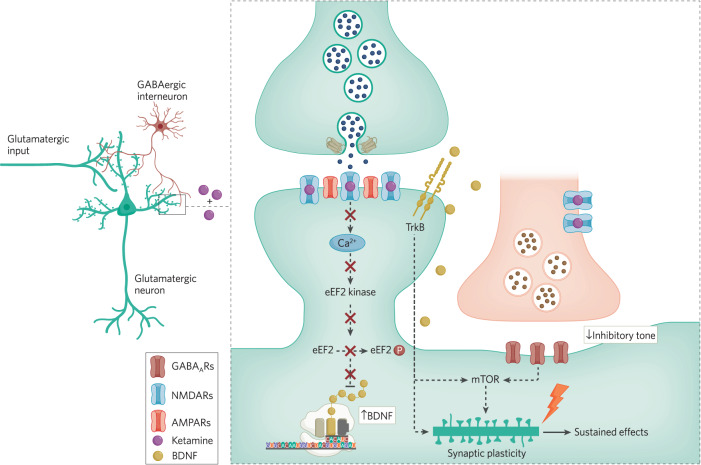
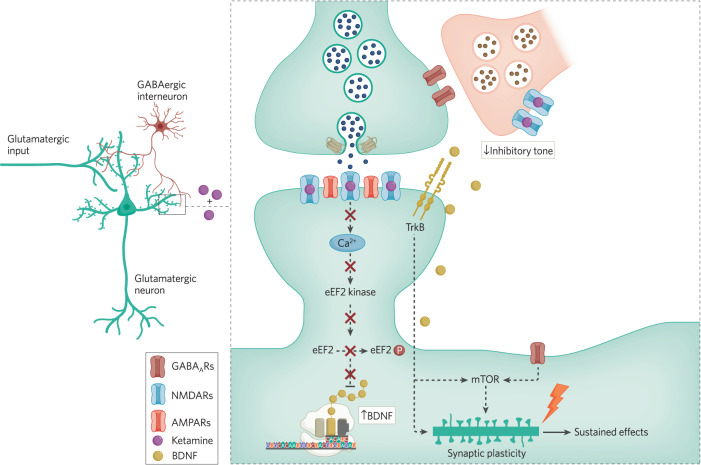
Verification
Claims the paper makes
The claims and statistics of this paper haven’t been checked yet.
Free: it reads the open-access text and checks the first 5 claims that cite a source we can check. Create a free account to check every claim.
Claims other papers make about this one
Each is checked against this paper’s own text: does it say what the citing paper says it does?
The cited source doesn’t support the claim as written.
In the citing paper
“Importantly, this mechanism reframes NMDAR antagonism as permissive rather than suppressive, with intact upstream NMDA signaling required to enable AMPA driven plasticity [20,44,45,51].”
From Synaptic Plasticity—Intrinsic Excitability and Antidepressant Discovery (2026) · cites this paper as [20]
Checked by a reasoning model — may be wrong.
Experimental — accuracy not yet measuredThe source backs part of the claim, not all of it — or backs it for a different population, condition or comparison.
In the citing paper
“Elevated postsynaptic activity triggers BDNF release and TrkB receptor activation, which in turn engages mechanistic target of rapamycin complex 1 (mTORC1) dependent translational programs supporting dendritic spine growth and synaptic strengthening [20,42,48,49,50].”
From Synaptic Plasticity—Intrinsic Excitability and Antidepressant Discovery (2026) · cites this paper as [20]
Experimental — accuracy not yet measuredThe source backs part of the claim, not all of it — or backs it for a different population, condition or comparison.
In the citing paper
“These cascades converge to produce long-term potentiation (LTP) like synaptic potentiation across corticolimbic circuits within hours, mirroring the temporal profile of ketamine’s antidepressant effects [20,33,48].”
From Synaptic Plasticity—Intrinsic Excitability and Antidepressant Discovery (2026) · cites this paper as [20]
Experimental — accuracy not yet measuredThe source backs part of the claim, not all of it — or backs it for a different population, condition or comparison.
In the citing paper
“The result is a brief but robust glutamate surge that drives enhanced α-amino-3-hydroxy-5-methyl-4-isoxazolepropionic acid receptor (AMPAR) throughput and calcium influx, including through calcium permeable AMPA channels [20,42,47].”
From Synaptic Plasticity—Intrinsic Excitability and Antidepressant Discovery (2026) · cites this paper as [20]
Experimental — accuracy not yet measuredThe source backs part of the claim, not all of it — or backs it for a different population, condition or comparison.
In the citing paper
“Sustained antidepressant benefit requires presynaptic mechanisms that preserve release fidelity after postsynaptic remodeling.”
From Synaptic Plasticity—Intrinsic Excitability and Antidepressant Discovery (2026) · cites this paper as [20]
Experimental — accuracy not yet measured
6 more claims about this paper
Create a free account to see every claim other papers make about this one.
Self-check
Percentages, sums and reported differences re-computed from the paper’s own numbers.
The self-check needs the paper’s full text.
Citations
Cites
Molecular Mechanisms of Depression: Perspectives on New Treatment Strategies
Lang, U. E., & Borgwardt, S. (2013) · Cellular Physiology and Biochemistry · doi:10.1159/000350094 · Cited by 8,475
(2022) · The Lancet Psychiatry · doi:10.1016/s2215-0366(21)00395-3 · Cited by 6,481 · cited 1×
“Despite over 60 years of antidepressant development, mood disorders remain among the most disabling medical conditions in the world and they are associated with shortening of life expectancy by up to 10 years [5, 6].”
BackgroundRush, A. J., Trivedi, M. H., Wisniewski, S. R., Nierenberg, A. A., Stewart, J. W., Warden, D., Niederehe, G., Thase, M. E., Lavori, P. W., Lebowitz, B. D., et al. (2006) · American Journal of Psychiatry · doi:10.1176/ajp.2006.163.11.1905 · Cited by 5,643 · cited 1×
“…initial antidepressant, modest incremental bene fi ts were seen with subsequent treatments, approximately one-third of patients remained unremitted after four treatments, and the one-year relapse rate among patients with treatment-resistant symptoms (Steps 3 and 4) was approximately 75% [7, 8].”
BackgroundAntidepressant effects of ketamine in depressed patients
Berman, R. M., Cappiello, A., Anand, A., Oren, D. A., Heninger, G. R., Charney, D. S., & Krystal, J. H. (2000) · Biological Psychiatry · doi:10.1016/s0006-3223(99)00230-9 · Cited by 3,856 · cited 1×
“The initial pilot study used the previously ketamine infusion strategy to conduct the fi rst randomized, placebo-controlled test of ketamine response in depression [26].”
MethodSelf-citationA randomized trial of an N-methyl-D-aspartate antagonist in treatment-resistant major depression.
Zarate, C. A., Singh, J. B., Carlson, P. J., Brutsche, N. E., Ameli, R., Luckenbaugh, D. A., Charney, D. S., & Manji, H. K. (2006) · Archives of General Psychiatry · doi:10.1001/archpsyc.63.8.856 · Cited by 3,766 · cited 2×
“However, none of these studies predicted the distinctively rapid and robust antidepressant effects of a single ketamine dose in depressed patients observed in the initial pilot study, nor the ef fi cacy in treatment-resistant symptoms of depression, bipolar disorder [30] or suicide ideation [31].”
BackgroundResultA Neurotrophic Model for Stress-Related Mood Disorders
Duman, R. S., & Monteggia, L. M. (2006) · Biological Psychiatry · doi:10.1016/j.biopsych.2006.02.013 · Cited by 3,375 · cited 1×
“Earlier studies on the mechanisms of action of classical antidepressant in preclinical models established a strong causal link of BDNF and subsequent signaling via TrkB receptors as a key mediator of antidepressant action [99, 100].”
BackgroundSelf-citationKrystal, J. H. (1994) · Archives of General Psychiatry · doi:10.1001/archpsyc.1994.03950030035004 · Cited by 3,330
Self-citationmTOR-Dependent Synapse Formation Underlies the Rapid Antidepressant Effects of NMDA Antagonists
Li, N., Lee, B., Liu, R.-J., Banasr, M., Dwyer, J. M., Iwata, M., Li, X.-Y., Aghajanian, G., & Duman, R. S. (2010) · Science · doi:10.1126/science.1190287 · Cited by 2,881 · cited 3×
“The resulting increase in glutamatergic activity produces downstream activation of mammalian target of rapamycin (mTOR) function to increase dendritic spine formation and produce the rapid and sustained antidepressant effects [87, 90] (see Fig.”
BackgroundNMDA receptor blockade at rest triggers rapid behavioural antidepressant responses
Autry, A. E., Adachi, M., Nosyreva, E., Na, E. S., Los, M. F., Cheng, P.-F., Kavalali, E. T., & Monteggia, L. M. (2011) · Nature · doi:10.1038/nature10130 · Cited by 1,926 · cited 10×
“Moreover, extensive studies have also demonstrated that homeostatic synaptic plasticity elicited by NMDA receptor block by ketamine occurs rapidly within hours consistent with the time course of ketamine action [60, 95, 97].”
BackgroundInfluentialSelf-citationNMDAR inhibition-independent antidepressant actions of ketamine metabolites
Zanos, P., Moaddel, R., Morris, P. J., Georgiou, P., Fischell, J., Elmer, G. I., Alkondon, M., Yuan, P., Pribut, H. J., Singh, N. S., et al. (2016) · Nature · doi:10.1038/nature17998 · Cited by 1,609
Research works printed but not linked: 2
- Kuhn R Ban TA Ray OS The discovery of the tricyclic antidepressants and the history of their use in the early years A History of the CINP 1996 Brentwood Brentwood press 425 35
- Berman RM Krystal JH Charney DS Watson SJ Mechanism of action of antidepressants: monoamine hypotheses and beyond Biology of Schizophrenia and Affective Disorders 1996 Washington, D.C. American psychiatric press, Inc 295 368
Cited by
Items 101–200 of 277
Optimizing ketamine dosing strategies across diverse clinical applications: a comprehensive review
Kedwany, A. M., Sayad, R., Jibril, N. S., Hawash, E. A., Anis, A. M., Danial, N. J. W., Elsaeidy, A. S., & Kohaf, N. A. (2025) · Annals of Medicine and Surgery · doi:10.1097/ms9.0000000000003580 · Cited by 3
“The ideal dosage for optimizing therapeutic efficacy while reducing side effects varies greatly depending on patient characteristics and clinical setting [ 7 , 8 ] .”
Ketamine Integration Chaplaincy: A Novel Spiritual Care Approach to Psychedelic Integration
Breau, J. A., Gillis‐Smith, P., & Deonauth, T. (2025) · Anthropology of Consciousness · doi:10.1111/anoc.70012 · Cited by 3
Dong, Y., Wang, J., Ge, O., Lin, Y., & Aoki, C. J. (2025) · Hippocampus · doi:10.1002/hipo.70039 · Cited by 3
Arena, Á. R., Rubinstein, M. R., Genaro, A. M., Tifner, V., Risnik, D., López-Carvajal, J. E., Daray, F. M., Silva, E. A. C., & Errasti, A. E. (2025) · Molecular Psychiatry · doi:10.1038/s41380-025-03338-w · Cited by 6
Dodds, C., Dawson, R. L., Lim, A., Tye, S. J., & Nasrallah, F. A. (2025) · Therapeutic Advances in Psychopharmacology · doi:10.1177/20451253251396255 · Cited by 4
Bulek, D., & BaDour, S. (2026) · Journal of Neurophysiology · doi:10.1152/jn.00516.2025 · Cited by 3
Nikolin, S., Massaneda‐Tuneu, C., Brettell, L., & Loo, C. K. A. (2026) · Translational Psychiatry · doi:10.1038/s41398-026-03806-z · Cited by 4
“This does not contradict clinical observations and meta-analytic evidence suggesting that ketamine produces a “ remarkable rapid-onset antidepressant effect ” [47], within hours of the fi rst administration [4, 48].”
Le, G. H., & McIntyre, R. S. (2026) · Expert Opinion on Therapeutic Targets · doi:10.1080/14728222.2026.2619757 · Cited by 4
Ketamine pharmacotherapy for major depressive disorder: A narrative review
Miller, C. H., Hickman, A., Baten, C., Ali, Z., Kahlon, S. K., Klassen, A. M., Zamora, G., Shepherd, J. H., Venegas, G., Miller, J. A., et al. (2026) · Progress in Neuro-Psychopharmacology and Biological Psychiatry · doi:10.1016/j.pnpbp.2026.111651 · Cited by 3
The prospect of suicide biomarkers: from neurobiology to precision prevention
Ren, N., Zheng, S., Zhou, Y., Zhang, X., Wang, M. H., & Bian, Y. (2026) · Frontiers in Psychology · doi:10.3389/fpsyg.2026.1757838 · Cited by 7
“These rapid effects are thought to occur through restoration of prefrontal synaptic plasticity, increased BDNF levels, and normalization of reward network connectivity (Krystal et al., 2024).”
Garland, E. L., Lewis, B., Thielking, P. D., Odette, M. M., Pfeffer, H., & Shen, J. (2026) · Nature Mental Health · doi:10.1038/s44220-026-00625-5 · Cited by 5
Adenosine surges: A step forward in understanding antidepressant actions of ketamine
Dautan, D., Camargo, A., & Svenningsson, P. (2026) · Molecular Psychiatry · doi:10.1038/s41380-026-03594-4 · Cited by 3
“Although adenosine acutely suppresses synaptic transmission via A 1 R activity, this reduction in activity may serve as the trigger for a homeostatic synaptic plasticity response, a mechanism now central to models of ketamine ’ s rapid antidepressant effects [2].”
InfluentialNew pharmacotherapies to tackle the unmet needs in bipolar disorder: a focus on acute suicidality
Kotzalidis, G. D., Fiaschè, F., Alcibiade, A., Monti, L., Segni, F. D., Mazza, M., & Sani, G. (2024) · Expert Opinion on Pharmacotherapy · doi:10.1080/14656566.2024.2334425 · Cited by 4
“…BDNF-tropomyosin receptor kinase B (TrkB)-mammalian target of rapamycin (mTOR)-extracellular signal-regulated kinase 1/2 (ERK1/2) signal transduction [110,113,114] (TrkB is a common mediator for all known antidepressants [115,116]), κ and μ opioid receptors [117] (which are altered in BD [118]).”
BackgroundAscic, E., Marigo, M., David, L., Herrik, K. F., Grupe, M., Hougaard, C. Ø., Mørk, A., Jones, C. R., Badolo, L., Frederiksen, K., et al. (2024) · Journal of Medicinal Chemistry · doi:10.1021/acs.jmedchem.4c01477 · Cited by 4
Vigne, M. M., Kweon, J., Fukuda, A. M., Brown, J. C., & Carpenter, L. L. (2025) · Journal of Ect · doi:10.1097/yct.0000000000001123 · Cited by 3
Joyce, M. K. P., Datta, D., Arellano, J. I., Duque, A., Morozov, Y. M., Morrison, J. H., & Arnsten, A. F. T. (2025) · Frontiers in Neuroanatomy · doi:10.3389/fnana.2025.1553056 · Cited by 3
Promising experimental drugs for obsessive-compulsive personality disorder
Marazziti, D., Gurrieri, R., Gambini, M., Russomanno, G., & Albert, U. (2025) · Expert Opinion on Investigational Drugs · doi:10.1080/13543784.2025.2536846 · Cited by 3
Ultrasonic vocalisations in the Flinders Sensitive Line rat, a genetic animal model of depression
Kai, L. M., Iglesias, L. P., Kõiv, K., Harro, J., & Wegener, G. (2025) · Acta Neuropsychiatrica · doi:10.1017/neu.2024.61 · Cited by 4
Masaud, S. M., Nadeem, H., Murtaza, B., & Shamim, A. (2025) · ACS Chemical Neuroscience · doi:10.1021/acschemneuro.4c00887 · Cited by 3
Cao, Q., Xu, X., Wang, X., He, F., Lin, Y., Guo, D., Bai, W., Guo, B., Zheng, X., & Liu, T. (2025) · Translational Psychiatry · doi:10.1038/s41398-025-03375-7 · Cited by 6
“Our prior fi nding examines differences in PFC oscillation underlying the social behavioral state that accompany the emergence of stress-induced behavioral dysfunction [46].”
Wang, S., Chen, C., Jiang, W., Wang, R., Mao, F., & Zhang, B. (2025) · American Journal of Medical Genetics Part B Neuropsychiatric Genetics · doi:10.1002/ajmg.b.33041 · Cited by 3
From psychache to neuroplasticity: A unified rescue-repair model of Ketamine’s anti-suicidal action
Domany, Y., & Solomon-Shashua, A. (2026) · Neuroscience & Biobehavioral Reviews · doi:10.1016/j.neubiorev.2026.106804 · Cited by 2
Martin, J., Nezhad, F. G., Rueda, A., Lee, G. H., Charlton, C. E., Soltanzadeh, M., Ladha, K. S., Krishnan, S., Diaconescu, A. O., & Bhat, V. (2024) · PLoS ONE · doi:10.1371/journal.pone.0308413 · Cited by 2
“[6].”
BackgroundInfluentialLiang, F., Wang, H., & Naumann, R. K. (2025) · Frontiers in Neural Circuits · doi:10.3389/fncir.2025.1619534 · Cited by 2
Zhu, L., Ji, C. F., Liu, Y., Chen, W., Liu, X., & Yang, F. (2025) · ACS Chemical Neuroscience · doi:10.1021/acschemneuro.5c00535 · Cited by 2
Badrfam, R., & Zandifar, A. (2025) · General Hospital Psychiatry · doi:10.1016/j.genhosppsych.2025.08.013 · Cited by 2
Song, G., & Ugwah-Oguejiofor, C. J. (2025) · International Journal of Psychiatry in Clinical Practice · doi:10.1080/13651501.2025.2576205 · Cited by 2
“The rapid antidepressant properties of ketamine have brought a breakthrough in treating the symptoms of patients who have a long history of resistance to conventional treatments (Krystal et al., 2024).”
Fountoulakis, K. Ν., Tatsiopoulou, P., Saitis, A., Fountoulakis, N. K., & Schatzberg, A. F. (2025) · European Child & Adolescent Psychiatry · doi:10.1007/s00787-025-02897-1 · Cited by 4
“…blockers of ionotropic NMDA receptors with additional effect on key mecha - nisms that induce homeostatic plasticity and an effect on opioid, monoamine, adenosine, and purinergic receptors as well as on AMPA receptors, metabotropic glutamate (mGlu) receptors, and L-type calcium channels [ 42, 77].”
Echoes of stress: From molecular whispers to social thunderstorms
López, J. P. (2025) · Neurobiology of Stress · doi:10.1016/j.ynstr.2025.100766 · Cited by 2
The epigenetic mechanisms of ketamine in the treatment of depression: a systematic review
Leccisotti, I., Moretti, M. C., Altamura, M., Bellomo, A., Laurello, R., Carapellese, M., Sborgia, G., Dibello, V., Robert, G. H., Panza, F., et al. (2025) · Epigenomics · doi:10.1080/17501911.2025.2583892 · Cited by 2
Lemeshova, A., Patel, K. A., Bloom, A. J., Golan, L., Haidari, H., Limbada, A., Zhao, C., & Honeycutt, J. A. (2025) · Pharmacology Biochemistry and Behavior · doi:10.1016/j.pbb.2025.174144 · Cited by 3
How three different theories of depression converge at inflammation
Baumberger, B., Batey, L., & Hashemi, P. (2025) · Discover Mental Health · doi:10.1007/s44192-025-00312-4 · Cited by 3
“The mechanisms for this rapid onset of action are still being studied [60, 61], but it has been found that a single ketamine dose rapidly increases the number and function of synapses.”
Lu, C. T., Tian, L., Wei, Z., Jiang, Y., Shao, M., Zhu, Y., & Wu, L. (2026) · Journal of Ethnopharmacology · doi:10.1016/j.jep.2026.121330 · Cited by 2
Luo, J., Huang, H., Shao, W., Wu, Y., Xu, G., Qi, Y., Zheng, Y., & He, F. (2026) · Journal of Affective Disorders · doi:10.1016/j.jad.2026.121436 · Cited by 2
Ziemichód, W., Kajka, N., Rząd, Z., Metelska, A., Janas-Kozik, M. H., Biała, G., Wilczyński, K. M., Grabowska, K., & Karakuła‐Juchnowicz, H. (2026) · Neuroscience & Biobehavioral Reviews · doi:10.1016/j.neubiorev.2026.106615 · Cited by 2
Shokr, M. M., Fawzy, M. N., & Abdelaziz, A. M. (2026) · Molecular and Cellular Neuroscience · doi:10.1016/j.mcn.2026.104076 · Cited by 3
Progress, potential and pitfalls of ketamine as a treatment for depression
Orsini, D. K., Luch, S. D. D., Lovell, G. F. M., & Rosenblat, J. D. (2026) · Expert Opinion on Pharmacotherapy · doi:10.1080/14656566.2026.2637587 · Cited by 2
“…monoaminergic antidepressants, ketamine exerts its effects through glutamatergic modulation, enhancing synaptic plasticity via α-amino-3-hydroxy-5-methyl-4-isoxazolepropionic acid (AMPA) receptor activation and downstream signaling pathways, such as brain derived neu-rotropic factor (BDNF) [4].”
NADPH oxidase-1 suppression prolongs the antidepressant-like effect of ketamine
Nakajima, W., Arisawa, T., Jitsuki, S., Yamanoue, T., Fujikawa, K., Hara, M., Sano, A., Takada, Y., Iai, R., Kimura, K., et al. (2026) · Molecular Psychiatry · doi:10.1038/s41380-026-03527-1 · Cited by 2
Trajectories of late-life depression: insights from molecular imaging
Holmes, S. E., & Smith, G. S. (2026) · Neuropsychopharmacology · doi:10.1038/s41386-026-02340-2 · Cited by 2
Roles and therapeutic prospects of the laminin family in disorders of the nervous system
Zhang, X., Li, X., Gao, L., Qiao, Y., Lv, B., Zhang, Q. D., Zhang, M., Yu, J., Li, H., Bi, H., et al. (2026) · Journal of Translational Medicine · doi:10.1186/s12967-026-08410-9 · Cited by 2
“…targeting the NMDA pathway offers rapid-onset options (with noninferiority signals versus ECT, though long-term outcomes remain to be established) [363]; the neurosteroid-targeting oral agent zuranolone has been approved for postpartum depression [364]; psychedel-ics (e.g., psilocybin) show…”
Evaluating the abuse liability of ketamine in the treatment of mood disorders: A systematic review
Vasudeva, S., Lovell, G. F. M., Wong, S., Le, G. H., Orsini, D. K., Luch, S. D. D., McIntyre, R. S., & Rosenblat, J. D. (2026) · Journal of Psychopharmacology · doi:10.1177/02698811261453814 · Cited by 2
Rubenstein, E. P. (2026) · Journal of Advances in Developmental Research · doi:10.71097/ijaidr.v17.i1.1997 · Cited by 2
“Medically supervised ketamine has established clinical relevance in anesthesia and treatment-resistant depression, while unsupervised repeated use raises different questions about dissociation, cognition, blood pressure, bladder effects, misuse potential, and co-use [9].”
de Miranda, A. S., Toscano, E. C. D. B., Venna, V. R., Graeff, F. G., & Teixeira, A. L. (2025) · Expert Opinion on Drug Discovery · doi:10.1080/17460441.2025.2460674 · Cited by 4
“Although glutamatergic mechanisms have been proposed as the main antidepressant mechanisms of ketamine, their precise nature remains to be determined and may involve different pathways [39].”
Zheng, X., Zheng, Y., Zhai, Z., Chen, Y., Zhu, Y., Qiu, G., Wang, B., Wang, S., Chen, Y., & Yan, J. (2025) · Neuroscience · doi:10.1016/j.neuroscience.2025.02.049 · Cited by 2
Alorfi, N. M. (2025) · International Journal of General Medicine · doi:10.2147/ijgm.s530721 · Cited by 3
“77,78 79–81 These agents are directly linked to mechanisms described in recent translational research that focuses on reversing synaptic alterations and the excitotoxicity driven by alcohol dependence.”
Topel, M., & Ciccone, D. (2025) · European Journal of Psychotraumatology · doi:10.1080/20008066.2025.2572861 · Cited by 2
“Ketamine functions as an NMDA glutamate receptor antagonist, thereby increasing the availability of glutamate – the primary excitatory neuro-transmitter in the brain (Krystal et al., 2024).”
Ishii, K., & Okita, K. (2024) · Asian Journal of Psychiatry · doi:10.1016/j.ajp.2024.104164 · Cited by 2
Banzato, M., Furlan, A., Locatelli, P., Sgrignani, J., Ongaro, A., Dolmella, A., Martin, S. D., Comai, S., Cavalli, A., Inturrisi, C. E., et al. (2025) · Journal of Medicinal Chemistry · doi:10.1021/acs.jmedchem.4c02605 · Cited by 2
Cao, Q., Zhang, N., Leng, C., Wang, S., & Ma, J. (2025) · Reviews in Medical Virology · doi:10.1002/rmv.70036 · Cited by 2
“…response [96] BDNF upregulation Promotes synaptic growth and neurogenesis Helps in recovery from viral infection‐associated neurodegeneration [88] Rapid onset antidepressant effect Improves mood within hours Critical for virus‐infected patients at risk of severe depression and suicidality…”
InfluentialEhinger, Y., Laguesse, S., Phamluong, K., Salvi, A., Sei, Y. J., Hoisington, Z. W., Soneja, D., Gunasekaran, S., Nakamura, K., & Ron, D. (2025) · Nature Communications · doi:10.1038/s41467-025-60337-9 · Cited by 3
“Furthermore, the NMDAR inhibitor and antidepressant drug, ketamine, activates mTORC1 56 .”
Psychoactive substances: novel molecular insights and therapeutic potential for Alzheimer's disease
Fu, C.-L., Li, X., Liu, X., Zheng, Y., Ma, X., Zhang, B., Chen, S. X., Hu, L., Su, S., Wang, X., et al. (2025) · Translational Neurodegeneration · doi:10.1186/s40035-025-00498-1 · Cited by 5
Brain-targeted epigenetic effects of two emerging psychoplastogens: ketamine & MDMA
Semple, M. G., Mennenga, S. E., Smith, R. C., Dwaraka, V. B., Cahn, B. R., Tafur, J., Rabin, D. M., Yazar‐Klosinski, B., & Lewis, C. R. (2026) · Translational Psychiatry · doi:10.1038/s41398-026-04191-3 · Cited by 3
“Ketamine has been shown to rapidly reduce symptoms of major depressive disorder (MDD) [10, 11], and meta-analysis supports its potential as a treatment for post-traumatic stress disorder (PTSD) [6].”
Corvo, C., Goutal, S., Mendez-David, I., Leterrier, S., Caille, F., Saba, W., Colle, R., Corruble, E., Lebon, V., Bottlaender, M., et al. (2026) · Molecular Psychiatry · doi:10.1038/s41380-025-03369-3 · Cited by 1
Le, G. H., Wong, S., Luch, S. D. D., Orsini, D. K., Vasudeva, S., Agarwal, S. M., Llach, C.-D., Rosenblat, J. D., & McIntyre, R. S. (2026) · Psychiatry and Clinical Neurosciences · doi:10.1111/pcn.70143 · Cited by 1
Illuminating the impact of stress: In vivo approaches to track stress-related neural adaptations
Parekh, P. K. (2025) · Neurobiology of Stress · doi:10.1016/j.ynstr.2025.100712 · Cited by 2
A systematic scoping review of Indian literature on ketamine use for treating psychiatric disorders
Singh, S., Rathore, B. S., Verma, P., & Kumar, S. (2025) · Industrial Psychiatry Journal · doi:10.4103/ipj.ipj_376_24 · Cited by 2
“( 2 0 2 1 ) [ 2 0 ] ; S h y a m ( 2 0 22 ) [ 2 3 ] ; D .”
Chen, B. K., Hunsberger, H. C., Whye, A., Matthews, L. C., Yook, A., Willner, M. J., Logan, R. W., Johns, S., Weisblum, E., & Denny, C. A. (2025) · Alzheimer s Research & Therapy · doi:10.1186/s13195-025-01804-9 · Cited by 3
“In particular, K promotes synaptogenesis and dendritic formation [9, 10, 12, 70], while P, by enhancing cholinergic and glutamatergic neurotransmission [31, 41, 71–73], may support long-term potentiation (LTP), neurogenesis, and reduction in inflammatory mediators [74, 75].”
Insights Into the Effects of Ketamine on the Opioid System
Zorumski, C. F., & Mennerick, S. J. (2025) · Biological Psychiatry · doi:10.1016/j.biopsych.2025.07.005 · Cited by 1
da Rocha, M. J., Presa, M. H., Zuge, N. P., Ledebuhr, K. N. B., de Oliveira, C. A., Lenardao, E. J., Penteado, F., Bortolatto, C. F., & Brüning, C. A. (2025) · Psychopharmacology · doi:10.1007/s00213-025-06906-8 · Cited by 1
Tran, K. N., Munni, Y. A., Nguyen, L. T. H., Oh, T. W., Choi, H. J., Moon, I. S., & Yang, I. (2025) · Chinese Medicine · doi:10.1186/s13020-025-01219-6 · Cited by 2
“To select more specific biomarkers associated with these mechanisms, a comprehensive literature review was performed, with a particular focus on the reported mechanisms of the rapid-acting antidepressant ketamine [4, 5, 15, 16].”
Tapia‐González, S., Yagüe, J. G., & Barreto, G. E. (2026) · Computational and Structural Biotechnology Journal · doi:10.1016/j.csbj.2025.12.023 · Cited by 2
“This modulation of glutamate signalling appears to trigger a cascade that promotes synaptic plasticity and rapid synaptogenesis [26 – 28].”
Inflammatory models of depression in rodents and humans
Markov, D., Zozulya, S. A., & Dolotov, O. V. (2026) · Frontiers in Psychiatry · doi:10.3389/fpsyt.2026.1687579 · Cited by 5
“The glutamate N-methyl-D-aspartate (NMDA) receptor antagonist ketamine exerts rapid antidepressant effects at low doses in both major depression and treatment-resistant depression, offering a distinct alternative to conventional antidepressants (324).”
Ketamine as a Mental Health Treatment
Braun, L., & Colbert, A. M. (2026) · AJN American Journal of Nursing · doi:10.1097/ajn.0000000000000250 · Cited by 1
Guidetti, C., Papakostas, G. I., Stahl, S., Pani, L., Martin, S. D., Mattarei, A., Comai, S., Kröger, C., Champasa, P., Gorodetzky, C. W., et al. (2026) · International Clinical Psychopharmacology · doi:10.1097/yic.0000000000000618 · Cited by 3
Abu-Moch, M., Azab, A. N., Yousef, M., & Agam, G. (2026) · Biomedicine & Pharmacotherapy · doi:10.1016/j.biopha.2026.119356 · Cited by 1
Intranasal Ketamine for Existential Distress in Advanced Cancer
Aguiar, S., Makarious, M., Lipsitz, O., deVries, F. E., Doyle, Z., McIntyre, R. S., Rodin, G., Zimmermann, C., Mak, E., Hannon, B. L., et al. (2026) · Journal of Pain and Symptom Management · doi:10.1016/j.jpainsymman.2026.04.611 · Cited by 1
Chawla, G., Pradhan, T., Alam, N., Kunzang, S., & Gupta, O. (2026) · Archiv der Pharmazie · doi:10.1002/ardp.70251 · Cited by 2
Gould, T. D., Mathew, S. J., Fava, M., & Shekhar, A. (2026) · Journal of Psychopharmacology · doi:10.1177/02698811261456206 · Cited by 1
“Depression in particular is associated with reduced synaptic density and impaired cortical functional connectivity (Abdallah and Krystal, 2020; Krystal et al., 2023).”
Oláh, V. J., Witteveen, I. F., Banke, T. G., Leahy, A. M., Keable, R., Perszyk, R. E., Khayat, C. T., Nguyen, T. T., Bixler, B. J., Ghinger, F. G., et al. (2026) · Cell Reports · doi:10.1016/j.celrep.2026.117707 · Cited by 2
Varela, Y. M., Cavalcanti-Ribeiro, P., de Sousa, G. M., Falchi-Carvalho, M., Barbalho, J. D. S. F., Gomes, R. B. D. O., Gurgel, M. M. M., Pereira, B. C., Souza, P. M. D. L., Gonçalves, K. T. D. C., et al. (2026) · Journal of Affective Disorders · doi:10.1016/j.jad.2026.122369 · Cited by 1
Nassan, M. M. (2024) · Harvard Review of Psychiatry · doi:10.1097/hrp.0000000000000399 · Cited by 1
Innovative Ketamine Formulations: Enhancing Therapeutic Efficacy and Safety
Kargbo, R. B. (2024) · ACS Medicinal Chemistry Letters · doi:10.1021/acsmedchemlett.4c00330 · Cited by 1
Wellington, N. J., Bouças, A. P., Schwenn, P., Lagopoulos, J., Quigley, B. L., & Kuballa, A. (2025) · medRxiv · doi:10.1101/2025.05.25.25327632 · Cited by 2
Daher, F., Fukushima, C. T., Ingebretsen, E. A., Bidlack, J. M., Atack, J. R., Popa, M. O., & Fogaça, M. V. (2026) · bioRxiv (Cold Spring Harbor Laboratory) · doi:10.64898/2026.01.15.699507 · Cited by 2
From Stress Biology to Drug Target: What FKBP5 Adds to Psychiatric Drug Development
Nagy, C., & Mitsuhashi, H. (2026) · American Journal of Psychiatry · doi:10.1176/appi.ajp.20260933 · Cited by 1
Synaptic Plasticity—Intrinsic Excitability and Antidepressant Discovery
Tanaka, M. (2026) · Biomedicines · doi:10.3390/biomedicines14061265
Janski, A. M., Hristidis, V. C., Zorumski, C. F., & Conway, C. R. (2023) · Elsevier eBooks · doi:10.1016/b978-0-323-95702-1.00064-6
Non-linear models: A Case for Synaptic Plasticity
Castillo-Aguilar, M. (2024) · doi:10.59350/mgpv2-d5e33
Effects of Ketamine and Esketamine on Cognitive Functions in Treatment-Resistant Depression
Mutlu, M., Öven, Ç., Kurt, B. S., & SUNAY, E. (2025) · Psikiyatride Guncel Yaklasimlar - Current Approaches in Psychiatry · doi:10.18863/pgy.1524106
Can Ketamine Treat Schizophrenia?
Şahin, F. (2025) · Journal of Biomedical Research & Environmental Sciences · doi:10.37871/jbres2078
Future Directions of Esketamine Nasal Spray Continuation in Treatment-Resistant Depression
Price, M. Z., & Price, R. L. (2025) · Neuromethods · doi:10.1007/978-1-0716-4599-4_18
Yamamoto, Y., Nakashima, M., & Suzuki, K. (2025) · Heliyon · doi:10.1016/j.heliyon.2025.e43701
Szawarnoga, D., & Sołtys, W. (2025) · Polish Annals of Medicine · doi:10.29089/paom/203684
“Di Vincenzo et al. 32 and Krystal et al. 33 noted that esket-amine, the S-enantiomer of ketamine, has a clear effect, primarily targeting the glutamatergic system.”
The pharmacology of psychoactive drug abuse and overdose
Thain, A., & Webster, C. A. (2025) · Journal of Paramedic Practice · doi:10.12968/jpar.2025.0071
Lullau, A. P. M., & Haga, E. M. W. (2025) · Neuromethods · doi:10.1007/978-1-0716-4603-8_3
Altê, G. A., & Rodrigues, A. L. S. (2025) · Neuromethods · doi:10.1007/978-1-0716-4603-8_9
Ketamine’s Multifaceted Neuropharmacological and Neurobiological Actions
Kohtala, S., & Annala, I. (2025) · Neuromethods · doi:10.1007/978-1-0716-4603-8_2
Schipper, M., Shadrin, A. A., Romero, C., Friligkou, E., Polimanti, R., Posthuma, D., Someren, E. J. W. V., & Tissink, E. (2025) · medRxiv · doi:10.1101/2025.10.18.25338281
Ivory, R. A., Pate, K. M., Jones, B. M., Lindberg, S. C., Graber, J. S., & Frueh, B. C. (2025) · Nursing · doi:10.1097/nsg.0000000000000306 · Cited by 1
Wang, R., Jin, Y., Zou, B., & Ding, L. (2025) · Frontiers in Pharmacology · doi:10.3389/fphar.2025.1699304 · Cited by 1
“Among these, repeated ketamine dosing has proven to be the most effective method, suggesting that maintenance therapy with ketamine may be necessary (Krystal et al., 2023).”
Subtype-selective targeting of NMDA receptors—A potent new compound emerges
Furukawa, H. (2025) · The Journal of General Physiology · doi:10.1085/jgp.202513920
Ketamine and its Regulatory Implications: A Review
Soin, A., Reddy, Y., Ferguson, K., Flores, R. A., Tsirulnikov, Y., Davis, C., Lewis, M. C., Root, J. R., & Mandava, A. (2025) · Journal of Medical Regulation · doi:10.30770/2572-1852-111.3.41
Hummel, K., Shautidze, G., Thorland, E., Amontree, M., Wonnenberg, P. M., Blanco, I., & Conant, K. E. (2025) · bioRxiv (Cold Spring Harbor Laboratory) · doi:10.64898/2025.12.12.693967
Evans, J. W., & Zarate, C. A. (2025) · Biological Psychiatry · doi:10.1016/j.biopsych.2025.11.003
A single S-ketamine injection enhances mTOR signaling in rat skeletal muscle
Skriver, S. A., Arjmand, S., Andersen, A. B., Wegener, G., & Hansen, M. (2026) · Journal of Muscle Research and Cell Motility · doi:10.1007/s10974-025-09720-z
Inserra, A., Murray, C. J., Campanale, A., VanderZwaag, J., & Tremblay, M. (2026) · Frontiers in Neuroscience · doi:10.3389/fnins.2025.1690318 · Cited by 1
“…diethylamide (LSD), and N, N-Dimethyltryptamine (DMT) (Inserra et al., 2021a), and the N-Methyl-D-Aspartate (NMDA) receptor antagonist ketamine (Krystal et al., 2023) have shown the ability to affect axonal myelination, OL function, the expression of myelin-related proteins and the gut-brain…”
Alhassan, M. A. (2026) · Annals of General Psychiatry · doi:10.1186/s12991-025-00626-1
“These effects are related to a transitory increase in glutamate, which helps counteract the damage caused to neurons by long-term stress, promoting neuro-plasticity and increasing connectivity in mood-regulatory circuits [18, 19].”
Nano-organization of the Synapse: A Requisite Framework for Synaptic Signaling
Kavalali, E. T. (2026) · Advances in neurobiology · doi:10.1007/978-3-032-12594-1_1
Self-citationCD4+ T cell dysregulation in major depressive disorder is associated with sleep disturbance
Gao, Y., Lei, Z., Ren, Y., Zhan, X., Chen, Z., Guo, Z., Zhou, Z., Ma, X., & Li, P. (2026) · Frontiers in Psychiatry · doi:10.3389/fpsyt.2026.1763750
“Their rapid antidepressant effects are hypothesized to involve downstream effects on neuroplasticity and in fl ammation (7, 8).”
Ketamine for depression – a critical perspective
Debernard, K. A. B., Westergren, T., Økland, H. G., & Eek, A. K. (2026) · Tidsskrift for Den norske legeforening · doi:10.4045/tidsskr.25.0739
Metadata
- Authors
- Krystal, J. H., Kavalali, E. T., & Monteggia, L. M.
- Affiliations
- Yale University (US)
- Vanderbilt University (US)
- Corresponding author
- Monteggia, Lisa M.
- Venue
- Neuropsychopharmacology
- Published
- 2023-07-24
- Volume
- 49
- Issue
- 1
- Pages
- 41-50
- ISSN
- 0893-133X (ISSN-L)
- 1740-634X
- PMC
- PMC10700627
- OpenAlex
- W4385196900
- Cited by
- 262
- References
- 132
- Citations by year
- 2026: 99 · 2025: 98 · 2024: 60 · 2023: 5
- FWCI
- 9.52
- Type
- journal article
- Language
- en
- Open access
- hybrid
- doi.org
- Licence
- cc-by
- creativecommons.org/licenses/by/4.0 (tdm)
- creativecommons.org/licenses/by/4.0 (vor)
- Locations
- Neuropsychopharmacology (publishedVersion, cc-by)
- PubMed Central (publishedVersion, cc-by)
- PubMed (publishedVersion)
- Funders
- U.S. Department of Health & Human Services | NIH | National Institute of Mental Health (MH070727, MH081060, MH066198)
- Department of Veterans Affairs | Office of Academic Affiliations, Department of Veterans Affairs (National Center for PTSD)
- Yale | YSM | Yale Center for Clinical Investigation, Yale School of Medicine (2UL1TR001863)
- U.S. Department of Health & Human Services | NIH | National Institute on Alcohol Abuse and Alcoholism (2P50AA012870)
- Topics
- Health Sciences › Medicine › Pharmacology (medical) › Treatment of Major Depression
- Life Sciences › Neuroscience › Cellular and Molecular Neuroscience › Neuroscience and Neuropharmacology Research
- Health Sciences › Medicine › Psychiatry and Mental health › Electroconvulsive Therapy Studies
- Keywords
- ketamine, treatment-resistant depression, NMDA receptor antagonism, synaptic plasticity, synaptic signaling, mood disorders, neuropsychiatric disorders, antidepressant mechanism
- MeSH terms
- Antidepressive Agents, Depression, Humans, Ketamine, Synapses, Receptors, N-Methyl-D-Aspartate, Depressive Disorder, Treatment-Resistant
About these checks
Registry, retraction, Cites and statistics results are computed, not judged, with one exception: a printed reference that no index lists is read once by a model before it counts as a citation error. Claims are extracted by a model and kept only when their quote appears verbatim in the text; each cited source is then checked, with a model’s help, for whether it says what the claim relies on. Those verdicts can be wrong — read the claim’s quote and the cited source before relying on one.
Statistics and arithmetic are recomputed, not judged.
Confidence bands are shown only for fields calibrated on our annotated test set. None is calibrated yet, so no band is shown.
What counts as a claim ›How we measure confidence ›How we check this ›
Are you an author, or do you see a problem with this page? Request a review
Data sources
Bibliographic data: Semantic Scholar, OpenAlex, Crossref.
Contains information from the Semantic Scholar Academic Graph Datasets, made available under the ODC Attribution License (ODC-BY 1.0).
Semantic Scholar’s data is described in: Kinney, R., et al. (2023). The Semantic Scholar Open Data Platform. arXiv:2301.10140.
