

Ketamine and rapid antidepressant action: new treatments and novel synaptic signaling mechanisms
Open accessThe DOI matches its Crossref record; 136 of the 136 references it cites were found in a registry or an index.
Abstract
Ketamine is an open channel blocker of ionotropic glutamatergic N -Methyl- D -Aspartate (NMDA) receptors. The discovery of its rapid antidepressant effects in patients with depression and treatment-resistant depression fostered novel effective treatments for mood disorders. This discovery not only provided new insight into the neurobiology of mood disorders but also uncovered fundamental synaptic plasticity mechanisms that underlie its treatment. In this review, we discuss key clinical aspects of ketamine’s effect as a rapidly acting antidepressant, synaptic and circuit mechanisms underlying its action, as well as how these novel perspectives in clinical practice and synapse biology form a road map for future studies aimed at more effective treatments for neuropsychiatric disorders.
Overview
The claims and statistics of this paper haven’t been checked yet.
Free: it reads the open-access text and checks the first 5 claims that cite a source we can check. Create a free account to check every claim.
Integrity signals
Registry
Cites
Statistics
Figures
Verification
Claims the paper makes
The claims and statistics of this paper haven’t been checked yet.
Free: it reads the open-access text and checks the first 5 claims that cite a source we can check. Create a free account to check every claim.
Claims other papers make about this one
Each is checked against this paper’s own text: does it say what the citing paper says it does?
The cited source doesn’t support the claim as written.
In the citing paper
“Importantly, this mechanism reframes NMDAR antagonism as permissive rather than suppressive, with intact upstream NMDA signaling required to enable AMPA driven plasticity [20,44,45,51].”
From Synaptic Plasticity—Intrinsic Excitability and Antidepressant Discovery (2026) · cites this paper as [20]
Checked by a reasoning model — may be wrong.
Experimental — accuracy not yet measuredThe source backs part of the claim, not all of it — or backs it for a different population, condition or comparison.
In the citing paper
“Elevated postsynaptic activity triggers BDNF release and TrkB receptor activation, which in turn engages mechanistic target of rapamycin complex 1 (mTORC1) dependent translational programs supporting dendritic spine growth and synaptic strengthening [20,42,48,49,50].”
From Synaptic Plasticity—Intrinsic Excitability and Antidepressant Discovery (2026) · cites this paper as [20]
Experimental — accuracy not yet measuredThe source backs part of the claim, not all of it — or backs it for a different population, condition or comparison.
In the citing paper
“These cascades converge to produce long-term potentiation (LTP) like synaptic potentiation across corticolimbic circuits within hours, mirroring the temporal profile of ketamine’s antidepressant effects [20,33,48].”
From Synaptic Plasticity—Intrinsic Excitability and Antidepressant Discovery (2026) · cites this paper as [20]
Experimental — accuracy not yet measuredThe source backs part of the claim, not all of it — or backs it for a different population, condition or comparison.
In the citing paper
“The result is a brief but robust glutamate surge that drives enhanced α-amino-3-hydroxy-5-methyl-4-isoxazolepropionic acid receptor (AMPAR) throughput and calcium influx, including through calcium permeable AMPA channels [20,42,47].”
From Synaptic Plasticity—Intrinsic Excitability and Antidepressant Discovery (2026) · cites this paper as [20]
Experimental — accuracy not yet measuredThe source backs part of the claim, not all of it — or backs it for a different population, condition or comparison.
In the citing paper
“Sustained antidepressant benefit requires presynaptic mechanisms that preserve release fidelity after postsynaptic remodeling.”
From Synaptic Plasticity—Intrinsic Excitability and Antidepressant Discovery (2026) · cites this paper as [20]
Experimental — accuracy not yet measured
6 more claims about this paper
Create a free account to see every claim other papers make about this one.
Self-check
Percentages, sums and reported differences re-computed from the paper’s own numbers.
The self-check needs the paper’s full text.
Citations
Cites
Molecular Mechanisms of Depression: Perspectives on New Treatment Strategies
Lang, U. E., & Borgwardt, S. (2013) · Cellular Physiology and Biochemistry · doi:10.1159/000350094 · Cited by 8,475
(2022) · The Lancet Psychiatry · doi:10.1016/s2215-0366(21)00395-3 · Cited by 6,481 · cited 1×
“Despite over 60 years of antidepressant development, mood disorders remain among the most disabling medical conditions in the world and they are associated with shortening of life expectancy by up to 10 years [5, 6].”
BackgroundRush, A. J., Trivedi, M. H., Wisniewski, S. R., Nierenberg, A. A., Stewart, J. W., Warden, D., Niederehe, G., Thase, M. E., Lavori, P. W., Lebowitz, B. D., et al. (2006) · American Journal of Psychiatry · doi:10.1176/ajp.2006.163.11.1905 · Cited by 5,643 · cited 1×
“…initial antidepressant, modest incremental bene fi ts were seen with subsequent treatments, approximately one-third of patients remained unremitted after four treatments, and the one-year relapse rate among patients with treatment-resistant symptoms (Steps 3 and 4) was approximately 75% [7, 8].”
BackgroundAntidepressant effects of ketamine in depressed patients
Berman, R. M., Cappiello, A., Anand, A., Oren, D. A., Heninger, G. R., Charney, D. S., & Krystal, J. H. (2000) · Biological Psychiatry · doi:10.1016/s0006-3223(99)00230-9 · Cited by 3,856 · cited 1×
“The initial pilot study used the previously ketamine infusion strategy to conduct the fi rst randomized, placebo-controlled test of ketamine response in depression [26].”
MethodSelf-citationA randomized trial of an N-methyl-D-aspartate antagonist in treatment-resistant major depression.
Zarate, C. A., Singh, J. B., Carlson, P. J., Brutsche, N. E., Ameli, R., Luckenbaugh, D. A., Charney, D. S., & Manji, H. K. (2006) · Archives of General Psychiatry · doi:10.1001/archpsyc.63.8.856 · Cited by 3,766 · cited 2×
“However, none of these studies predicted the distinctively rapid and robust antidepressant effects of a single ketamine dose in depressed patients observed in the initial pilot study, nor the ef fi cacy in treatment-resistant symptoms of depression, bipolar disorder [30] or suicide ideation [31].”
BackgroundResultA Neurotrophic Model for Stress-Related Mood Disorders
Duman, R. S., & Monteggia, L. M. (2006) · Biological Psychiatry · doi:10.1016/j.biopsych.2006.02.013 · Cited by 3,375 · cited 1×
“Earlier studies on the mechanisms of action of classical antidepressant in preclinical models established a strong causal link of BDNF and subsequent signaling via TrkB receptors as a key mediator of antidepressant action [99, 100].”
BackgroundSelf-citationKrystal, J. H. (1994) · Archives of General Psychiatry · doi:10.1001/archpsyc.1994.03950030035004 · Cited by 3,330
Self-citationmTOR-Dependent Synapse Formation Underlies the Rapid Antidepressant Effects of NMDA Antagonists
Li, N., Lee, B., Liu, R.-J., Banasr, M., Dwyer, J. M., Iwata, M., Li, X.-Y., Aghajanian, G., & Duman, R. S. (2010) · Science · doi:10.1126/science.1190287 · Cited by 2,881 · cited 3×
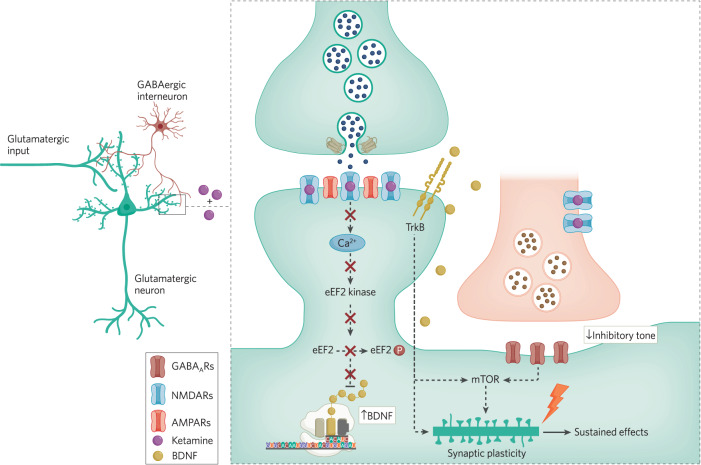
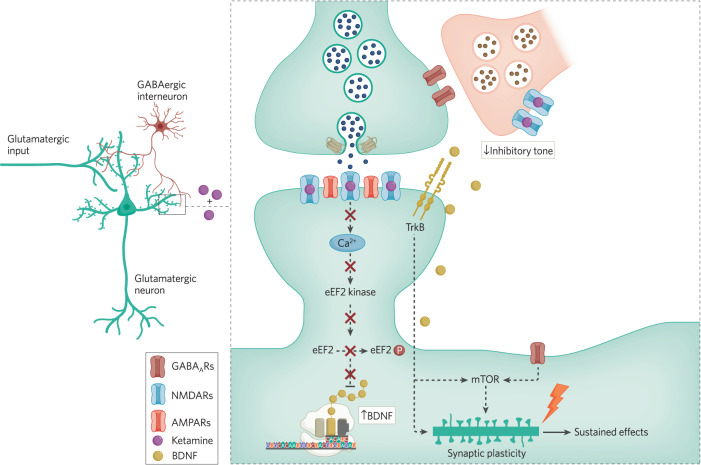
“The resulting increase in glutamatergic activity produces downstream activation of mammalian target of rapamycin (mTOR) function to increase dendritic spine formation and produce the rapid and sustained antidepressant effects [87, 90] (see Fig.”
BackgroundNMDA receptor blockade at rest triggers rapid behavioural antidepressant responses
Autry, A. E., Adachi, M., Nosyreva, E., Na, E. S., Los, M. F., Cheng, P.-F., Kavalali, E. T., & Monteggia, L. M. (2011) · Nature · doi:10.1038/nature10130 · Cited by 1,926 · cited 10×
“Moreover, extensive studies have also demonstrated that homeostatic synaptic plasticity elicited by NMDA receptor block by ketamine occurs rapidly within hours consistent with the time course of ketamine action [60, 95, 97].”
BackgroundInfluentialSelf-citationNMDAR inhibition-independent antidepressant actions of ketamine metabolites
Zanos, P., Moaddel, R., Morris, P. J., Georgiou, P., Fischell, J., Elmer, G. I., Alkondon, M., Yuan, P., Pribut, H. J., Singh, N. S., et al. (2016) · Nature · doi:10.1038/nature17998 · Cited by 1,609
for the ENIGMA-Major Depressive Disorder Working Group, Schmaal, L., Hibar, D. P., Sämann, P. G., Hall, G. B., Baune, B. T., Jahanshad, N., Cheung, J. W., van Erp, T. G. M., Bos, D., et al. (2017) · Molecular Psychiatry · doi:10.1038/mp.2016.60 · Cited by 1,330
Maeng, S., Zarate, C. A., Du, J., Schloesser, R. J., McCammon, J., Chen, G., & Manji, H. K. (2008) · Biological Psychiatry · doi:10.1016/j.biopsych.2007.05.028 · Cited by 1,103
Liston, C., Miller, M. M., Goldwater, D. S., Radley, J. J., Rocher, A. B., Hof, P. R., Morrison, J. H., & McEwen, B. S. (2006) · The Journal of Neuroscience · doi:10.1523/jneurosci.1184-06.2006 · Cited by 968
Diazgranados, N., Ibrahim, L., Brutsche, N. E., Newberg, A., Kronstein, P., Khalife, S., Kammerer, W. A., Quezado, Z., Luckenbaugh, D. A., Salvadore, G., et al. (2010) · Archives of General Psychiatry · doi:10.1001/archgenpsychiatry.2010.90 · Cited by 963 · cited 1×
“R,S-ketamine has shown ef fi cacy for depression in the context of treatment-resistant depression [30], bipolar disorder [33], OCD [34], and PTSD [35].”
BackgroundDelgado, P. L. (1990) · Archives of General Psychiatry · doi:10.1001/archpsyc.1990.01810170011002 · Cited by 924
Popova, V., Daly, E. J., Trivedi, M., Cooper, K., Lane, R., Lim, P., Mazzucco, C., Hough, D., Thase, M. E., Shelton, R. C., et al. (2019) · American Journal of Psychiatry · doi:10.1176/appi.ajp.2019.19020172 · Cited by 904
Stoichiometric coupling of brain glucose metabolism and glutamatergic neuronal activity.
Sibson, N. R., Dhankhar, A., Mason, G. F., Rothman, D. L., Behar, K. L., & Shulman, R. G. (1998) · Proceedings of the National Academy of Sciences · doi:10.1073/pnas.95.1.316 · Cited by 897
Zhou, Z., Hong, E. J., Cohen, S., Zhao, W.-N., Ho, H.-Y. H., Schmidt, L., Chen, W. G., Lin, Y., Savner, E., Griffith, E. C., et al. (2006) · Neuron · doi:10.1016/j.neuron.2006.09.037 · Cited by 877
The Neurobiology of Slow Synaptic Transmission
Greengard, P. (2001) · Science · doi:10.1126/science.294.5544.1024 · Cited by 867
Magariños, A. M., McEwen, B. S., Flügge, G., & Fuchs, E. (1996) · The Journal of Neuroscience · doi:10.1523/jneurosci.16-10-03534.1996 · Cited by 864 · cited 1×
“In animals, chronic stress exposure produces clear evidence of synaptic pruning [75 – 77].”
BackgroundRepeated Stress Induces Dendritic Spine Loss in the Rat Medial Prefrontal Cortex
Radley, J. J., Rocher, A. B., Miller, M., Janssen, W. G. M., Liston, C., Hof, P. R., McEwen, B. S., & Morrison, J. H. (2006) · Cerebral Cortex · doi:10.1093/cercor/bhi104 · Cited by 820 · cited 1×
“In animals, chronic stress exposure produces clear evidence of synaptic pruning [75 – 77].”
BackgroundDaly, E. J., Trivedi, M. H., Janik, A., Li, H., Zhang, Y., Li, X., Lane, R., Lim, P., Duca, A. R., Hough, D., et al. (2019) · JAMA Psychiatry · doi:10.1001/jamapsychiatry.2019.1189 · Cited by 795
Functional antagonists at the NMDA receptor complex exhibit antidepressant actions
Trullas, R., & Skolnick, P. (1990) · European Journal of Pharmacology · doi:10.1016/0014-2999(90)90204-j · Cited by 785 · cited 1×
“The investigative team also was aware of earlier studies in animals that described antidepressant effects of NMDAR partial agonists and antagonists [28, 29].”
BackgroundDaly, E. J., Singh, J. B., Fedgchin, M., Cooper, K., Lim, P., Shelton, R. C., Thase, M. E., Winokur, A., Van Nueten, L., Manji, H., et al. (2018) · JAMA Psychiatry · doi:10.1001/jamapsychiatry.2017.3739 · Cited by 718
Neuronal MeCP2 Is Expressed at Near Histone-Octamer Levels and Globally Alters the Chromatin State
Skene, P. J., Illingworth, R. S., Webb, S., Kerr, A. R. W., James, K. D., Turner, D. J., Andrews, R., & Bird, A. P. (2010) · Molecular Cell · doi:10.1016/j.molcel.2010.01.030 · Cited by 688 · cited 1×
“MeCP2 is a transcriptional regulator that controls gene expression both at the level of individual genes and via modulation of larger chromatin structure [105, 106].”
BackgroundEssential role of brain-derived neurotrophic factor in adult hippocampal function
Monteggia, L. M., Barrot, M., Powell, C. M., Berton, O., Galanis, V., Gemelli, T., Meuth, S., Nagy, A., Greene, R. W., & Nestler, E. J. (2004) · Proceedings of the National Academy of Sciences · doi:10.1073/pnas.0402141101 · Cited by 685 · cited 1×
“Earlier studies on the mechanisms of action of classical antidepressant in preclinical models established a strong causal link of BDNF and subsequent signaling via TrkB receptors as a key mediator of antidepressant action [99, 100].”
BackgroundSelf-citationAntidepressant drugs act by directly binding to TRKB neurotrophin receptors
Casarotto, P. C., Girych, M., Fred, S. M., Kovaleva, V., Moliner, R., Enkavi, G., Biojone, C., Cannarozzo, C., Sahu, M. P., Kaurinkoski, K., et al. (2021) · Cell · doi:10.1016/j.cell.2021.01.034 · Cited by 663
Gaynes, B. N., Warden, D., Trivedi, M. H., Wisniewski, S. R., Fava, M., & Rush, A. J. (2009) · Psychiatric Services · doi:10.1176/ps.2009.60.11.1439 · Cited by 661 · cited 1×
“…initial antidepressant, modest incremental bene fi ts were seen with subsequent treatments, approximately one-third of patients remained unremitted after four treatments, and the one-year relapse rate among patients with treatment-resistant symptoms (Steps 3 and 4) was approximately 75% [7, 8].”
BackgroundSustained rescue of prefrontal circuit dysfunction by antidepressant-induced spine formation
Moda-Sava, R. N., Murdock, M. H., Parekh, P. K., Fetcho, R. N., Huang, B. S., Huynh, T. N., Witztum, J., Shaver, D. C., Rosenthal, D. L., Alway, E. J., et al. (2019) · Science · doi:10.1126/science.aat8078 · Cited by 643 · cited 1×
“The resulting increase in glutamatergic activity produces downstream activation of mammalian target of rapamycin (mTOR) function to increase dendritic spine formation and produce the rapid and sustained antidepressant effects [87, 90] (see Fig.”
BackgroundDiazGranados, N., Ibrahim, L. A., Brutsche, N. E., Ameli, R., Henter, I. D., Luckenbaugh, D. A., Machado-Vieira, R., & Zarate, C. A. (2010) · The Journal of Clinical Psychiatry · doi:10.4088/jcp.09m05327blu · Cited by 564 · cited 1×
“However, none of these studies predicted the distinctively rapid and robust antidepressant effects of a single ketamine dose in depressed patients observed in the initial pilot study, nor the ef fi cacy in treatment-resistant symptoms of depression, bipolar disorder [30] or suicide ideation [31].”
ResultGlutamate and GABA systems as targets for novel antidepressant and mood-stabilizing treatments
Krystal, J. H., Sanacora, G., Blumberg, H., Anand, A., Charney, D. S., Marek, G., Epperson, C. N., Goddard, A., & Mason, G. F. (2002) · Molecular Psychiatry · doi:10.1038/sj.mp.4001021 · Cited by 553 · cited 1×
“Glutamate synaptic dysfunction has long been thought to be a contributor to the neurobiology of depression [62].”
BackgroundSelf-citationKrystal, J. H., D'Souza, D. C., Mathalon, D., Perry, E., Belger, A., & Hoffman, R. (2003) · Psychopharmacology · doi:10.1007/s00213-003-1582-z · Cited by 530 · cited 1×
“This work was motivated by parallel broadening of perspective from the “ dopamine model ” of schizophrenia to one involving the intrinsic signaling mechanisms of the cortex, i.e., glutamate and GABA [24].”
BackgroundSelf-citationLower synaptic density is associated with depression severity and network alterations
Holmes, S. E., Scheinost, D., Finnema, S. J., Naganawa, M., Davis, M. T., DellaGioia, N., Nabulsi, N., Matuskey, D., Angarita, G. A., Pietrzak, R. H., et al. (2019) · Nature Communications · doi:10.1038/s41467-019-09562-7 · Cited by 484 · cited 1×
“The advent of a radioligand for the synaptic vesicle protein-2A (SV2A) enabled the fi rst in vivo descriptions of reductions in synaptic density in MDD patients with and without PTSD comorbidity who expressed moderate-to-severe symptoms [83].”
BackgroundSelf-citationOchs-Ross, R., Daly, E. J., Zhang, Y., Lane, R., Lim, P., Morrison, R. L., Hough, D., Manji, H., Drevets, W. C., Sanacora, G., et al. (2020) · The American Journal of Geriatric Psychiatry · doi:10.1016/j.jagp.2019.10.008 · Cited by 481
Singh, J. B., Fedgchin, M., Daly, E., Xi, L., Melman, C., De Bruecker, G., Tadic, A., Sienaert, P., Wiegand, F., Manji, H., et al. (2016) · Biological Psychiatry · doi:10.1016/j.biopsych.2015.10.018 · Cited by 466 · cited 1×
“Esketamine studies have documented the long-term safety and ef fi cacy of Esketamine using randomized placebo-controlled [40 – 42] and drug-discontinuation [43] designs.”
BackgroundKetamine: A Paradigm Shift for Depression Research and Treatment
Krystal, J. H., Abdallah, C. G., Sanacora, G., Charney, D. S., & Duman, R. S. (2019) · Neuron · doi:10.1016/j.neuron.2019.02.005 · Cited by 455 · cited 1×
“While opportunistic observations contributed to the discoveries of the antidepressants in both the late 1950 ’ s and the modern era, the scienti fi c context of the discovery of the antidepressant ef fi cacy of ketamine was fundamentally different from the earlier discoveries [9].”
ResultSelf-citationFava, M., Freeman, M. P., Flynn, M., Judge, H., Hoeppner, B. B., Cusin, C., Ionescu, D. F., Mathew, S. J., Chang, L. C., Iosifescu, D. V., et al. (2020) · Molecular Psychiatry · doi:10.1038/s41380-018-0256-5 · Cited by 433
Van Den Berg, C. J., & Garfinkel, D. (1971) · Biochemical Journal · doi:10.1042/bj1230211 · Cited by 414
Vollenweider, F. X., Leenders, K. L., Øye, I., Hell, D., & Angst, J. (1997) · European Neuropsychopharmacology · doi:10.1016/s0924-977x(96)00042-9 · Cited by 413
Bahji, A., Vazquez, G. H., & Zarate, C. A. (2021) · Journal of Affective Disorders · doi:10.1016/j.jad.2020.09.071 · Cited by 408
Rapid-acting glutamatergic antidepressants: the path to ketamine and beyond
Krystal, J. H., Sanacora, G., & Duman, R. S. (2013) · Biological Psychiatry · doi:10.1016/j.biopsych.2013.03.026 · Cited by 406 · cited 1×
“This study built on inconclusive fi ndings with lower potency NMDAR antagonists including amantadine and memantine [27].”
ResultSelf-citationLiu, R.-J., Lee, F. S., Li, X.-Y., Bambico, F., Duman, R. S., & Aghajanian, G. K. (2012) · Biological Psychiatry · doi:10.1016/j.biopsych.2011.09.030 · Cited by 403 · cited 1×
“Mice with the BDNF Val66Met polymorphism, which impairs traf fi cking of BDNF mRNA to dendrites, also show attenuated responses to ketamine [101], although ketamine appears to retain ef fi cacy in humans who are homozygous for the Met allele of BDNF [49].”
Background(1997) · American Journal of Psychiatry · doi:10.1176/ajp.154.6.805 · Cited by 392 · cited 1×
“Ketamine increases nearly every index of cortical activity in healthy humans including glucose metabolism measured with 18 F-deoxyglucose-PET [115, 116] and MR-based measures of oxygen metabolic rate and cerebral blood fl ow [117].”
MethodA Double-Blind, Placebo-Controlled Study of Memantine in the Treatment of Major Depression
Zarate, C. A., Singh, J. B., Quiroz, J. A., De Jesus, G., Denicoff, K. K., Luckenbaugh, D. A., Manji, H. K., & Charney, D. S. (2006) · American Journal of Psychiatry · doi:10.1176/appi.ajp.163.1.153 · Cited by 387 · cited 1×
“However, it is important to note that disinhibitory effects similar to ketamine action can also be elicited by the closely related NMDA receptor blocker memantine [91], although clinically memantine administration does not induce rapid antidepressant responses [92].”
BackgroundGlutamate-based antidepressants: 20 years on
Skolnick, P., Popik, P., & Trullas, R. (2009) · Trends in Pharmacological Sciences · doi:10.1016/j.tips.2009.09.002 · Cited by 380
Lebon, V., Petersen, K. F., Cline, G. W., Shen, J., Mason, G. F., Dufour, S., Behar, K. L., Shulman, G. I., & Rothman, D. L. (2002) · The Journal of Neuroscience · doi:10.1523/jneurosci.22-05-01523.2002 · Cited by 371
Moriguchi, S., Takamiya, A., Noda, Y., Horita, N., Wada, M., Tsugawa, S., Plitman, E., Sano, Y., Tarumi, R., ElSalhy, M., et al. (2019) · Molecular Psychiatry · doi:10.1038/s41380-018-0252-9 · Cited by 357
GABA interneurons are the cellular trigger for ketamine's rapid antidepressant actions
Gerhard, D. M., Pothula, S., Liu, R.-J., Wu, M., Li, X.-Y., Girgenti, M. J., Taylor, S. R., Duman, C. H., Delpire, E., Picciotto, M., et al. (2020) · Journal of Clinical Investigation · doi:10.1172/jci130808 · Cited by 345 · cited 1×
“Research in the Duman laboratory proposed that ketamine action involves the blockade of NMDARs on inhibitory inter-neurons [88, 89].”
BackgroundDelgado, P. L., Miller, H. L., Salomon, R. M., Licinio, J., Krystal, J. H., Moreno, F. A., Heninger, G. R., & Charney, D. S. (1999) · Biological Psychiatry · doi:10.1016/s0006-3223(99)00014-1 · Cited by 307 · cited 1×
“In depressed patients who had responded to antidepressant treatment, depletion of either serotonin or norepinephrine prevented or transiently reversed the antidepressant effects of serotonin transporter antagonists or norepinephrine transporter antagonists, respectively [14 – 16].”
BackgroundSelf-citationDuric, V., Banasr, M., Stockmeier, C. A., Simen, A. A., Newton, S. S., Overholser, J. C., Jurjus, G. J., Dieter, L., & Duman, R. S. (2013) · International Journal of Neuropsychopharmacology · doi:10.1017/s1461145712000016 · Cited by 304 · cited 1×
“Post-mortem studies of human post-mortem cortical and limbic tissue also describe altered expression levels for genes coding for pre-and postsynaptic proteins [81, 82].”
BackgroundRowland, L. M., Bustillo, J. R., Mullins, P. G., Jung, R. E., Lenroot, R., Landgraf, E., Barrow, R., Yeo, R., Lauriello, J., & Brooks, W. M. (2005) · American Journal of Psychiatry · doi:10.1176/appi.ajp.162.2.394 · Cited by 304 · cited 1×
“H-MRS studies in healthy subjects described ketamine-related increases in voxel glutamate or glutamine levels in frontal cortex that were associated with the transient emergence of psychotic symptoms or cognitive impairment [118, 119].”
BackgroundKetamine Treatment and Global Brain Connectivity in Major Depression
Abdallah, C. G., Averill, L. A., Collins, K. A., Geha, P., Schwartz, J., Averill, C., DeWilde, K. E., Wong, E., Anticevic, A., Tang, C. Y., et al. (2017) · Neuropsychopharmacology · doi:10.1038/npp.2016.186 · Cited by 300 · cited 1×
“Ketamine also has been shown to restore de fi cits in cortical resting-state functional connectivity, as assessed with fMRI [130, 131].”
MethodCohen, S., Gabel, H. W., Hemberg, M., Hutchinson, A. N., Sadacca, L. A., Ebert, D. H., Harmin, D. A., Greenberg, R. S., Verdine, V. K., Zhou, Z., et al. (2011) · Neuron · doi:10.1016/j.neuron.2011.08.022 · Cited by 298 · cited 4×
“The involvement of MeCP2 is also particularly intriguing as it plays a critical role in spine maturation [106, 111 – 113].”
InfluentialStone, J. M., Dietrich, C., Edden, R., Mehta, M. A., De Simoni, S., Reed, L. J., Krystal, J. H., Nutt, D., & Barker, G. J. (2012) · Molecular Psychiatry · doi:10.1038/mp.2011.171 · Cited by 295 · cited 1×
“H-MRS studies in healthy subjects described ketamine-related increases in voxel glutamate or glutamine levels in frontal cortex that were associated with the transient emergence of psychotic symptoms or cognitive impairment [118, 119].”
BackgroundSelf-citationKlempan, T. A., Sequeira, A., Canetti, L., Lalovic, A., Ernst, C., ffrench-Mullen, J., & Turecki, G. (2009) · Molecular Psychiatry · doi:10.1038/sj.mp.4002110 · Cited by 294 · cited 1×
“Post-mortem studies of human post-mortem cortical and limbic tissue also describe altered expression levels for genes coding for pre-and postsynaptic proteins [81, 82].”
BackgroundOpel, N., Goltermann, J., Hermesdorf, M., Berger, K., Baune, B. T., & Dannlowski, U. (2020) · Biological Psychiatry · doi:10.1016/j.biopsych.2020.04.027 · Cited by 293
13 C MRS studies of neuroenergetics and neurotransmitter cycling in humans
Rothman, D. L., De Feyter, H. M., de Graaf, R. A., Mason, G. F., & Behar, K. L. (2011) · NMR in Biomedicine · doi:10.1002/nbm.1772 · Cited by 290 · cited 1×
“…and the characterization of the rates cellular processes, such as anaerobic metabolism, aerobic metabolism (tricarboxylic acid cycle activity, V TCA ), and the rate of conversion of glutamate to glutamine, which is stoichiometrically related to the rate of glutamate release (V Cycle ) [67 – 69].”
BackgroundAcute suppression of spontaneous neurotransmission drives synaptic potentiation
Nosyreva, E., Szabla, K., Autry, A. E., Ryazanov, A. G., Monteggia, L. M., & Kavalali, E. T. (2013) · The Journal of Neuroscience · doi:10.1523/jneurosci.4998-12.2013 · Cited by 283 · cited 6×
“Moreover, extensive studies have also demonstrated that homeostatic synaptic plasticity elicited by NMDA receptor block by ketamine occurs rapidly within hours consistent with the time course of ketamine action [60, 95, 97].”
BackgroundInfluentialSelf-citationDeschwanden, A., Karolewicz, B., Feyissa, A. M., Treyer, V., Ametamey, S. M., Johayem, A., Burger, C., Auberson, Y. P., Sovago, J., Stockmeier, C. A., et al. (2011) · American Journal of Psychiatry · doi:10.1176/appi.ajp.2011.09111607 · Cited by 278
Neumeister, A., Nugent, A. C., Waldeck, T., Geraci, M., Schwarz, M., Bonne, O., Bain, E. E., Luckenbaugh, D. A., Herscovitch, P., Charney, D. S., et al. (2004) · Archives of General Psychiatry · doi:10.1001/archpsyc.61.8.765 · Cited by 273
Depression and mortality in a longitudinal study: 1952–2011
Gilman, S. E., Sucha, E., Kingsbury, M., Horton, N. J., Murphy, J. M., & Colman, I. (2017) · Canadian Medical Association Journal · doi:10.1503/cmaj.170125 · Cited by 267 · cited 1×
“Despite over 60 years of antidepressant development, mood disorders remain among the most disabling medical conditions in the world and they are associated with shortening of life expectancy by up to 10 years [5, 6].”
Background[Treatment of depressive states with an iminodibenzyl derivative (G 22355)].
KUHN, R. (1957) · PubMed · Cited by 242
The effects of ketamine on prefrontal glutamate neurotransmission in healthy and depressed subjects
Abdallah, C. G., De Feyter, H. M., Averill, L. A., Jiang, L., Averill, C. L., Chowdhury, G. M. I., Purohit, P., de Graaf, R. A., Esterlis, I., Juchem, C., et al. (2018) · Neuropsychopharmacology · doi:10.1038/s41386-018-0136-3 · Cited by 229 · cited 3×
“…a 13 C-MRS involving the infusion of 13 C-glucose as a metabolic tracer, in a mixed group of healthy subjects ( n = 14) and MDD patients ( n = 7), described a 13% increase in 13 C-glutamine enrichment, i.e., an increase in V Cycle , that correlated with the emergence of dissociation symptoms [70].”
BackgroundMethodInfluentialSelf-citationXu, Y., Hackett, M., Carter, G., Loo, C., Gálvez, V., Glozier, N., Glue, P., Lapidus, K., McGirr, A., Somogyi, A. A., et al. (2016) · International Journal of Neuropsychopharmacology · doi:10.1093/ijnp/pyv124 · Cited by 226 · cited 1×
“Three randomized placebo-controlled studies in treatment-resistant depression and PTSD [35, 47 – 49] suggest that lowering the dose by approximately half or more ( ≤ 0.2 mg/kg) is associated with loss of antidepressant ef fi cacy, while doubling the ketamine dose (1.0 mg/kg) increases the intensity…”
BackgroundInfluentialMicroglial ERK-NRBP1-CREB-BDNF Signaling in Sustained Antidepressant Actions of (R)-Ketamine
Yao, W., Cao, Q., Luo, S., He, L., Yang, C., Chen, J., Qi, Q., Hashimoto, K., & Zhang, J.-C. (2022) · Molecular Psychiatry · doi:10.1038/s41380-021-01377-7 · Cited by 216 · cited 1×
“Other proposed mechanisms for ketamine ’ s antidepressant action include ketamine enantiomers [10] and metabolites [11], the potential role of in fl ammatory processes [12], and non-neuronal contributions including those from microglia [13], among others.”
BackgroundHasler, G., Fromm, S., Carlson, P. J., Luckenbaugh, D. A., Waldeck, T., Geraci, M., Roiser, J. P., Neumeister, A., Meyers, N., Charney, D. S., et al. (2008) · Archives of General Psychiatry · doi:10.1001/archpsyc.65.5.521 · Cited by 209
Su, T.-P., Chen, M.-H., Li, C.-T., Lin, W.-C., Hong, C.-J., Gueorguieva, R., Tu, P.-C., Bai, Y.-M., Cheng, C.-M., & Krystal, J. H. (2017) · Neuropsychopharmacology · doi:10.1038/npp.2017.94 · Cited by 209 · cited 2×
“Mice with the BDNF Val66Met polymorphism, which impairs traf fi cking of BDNF mRNA to dendrites, also show attenuated responses to ketamine [101], although ketamine appears to retain ef fi cacy in humans who are homozygous for the Met allele of BDNF [49].”
BackgroundInfluentialSelf-citationMeCP2 in the nucleus accumbens contributes to neural and behavioral responses to psychostimulants
Deng, J. V., Rodriguiz, R. M., Hutchinson, A. N., Kim, I.-H., Wetsel, W. C., & West, A. E. (2010) · Nature Neuroscience · doi:10.1038/nn.2614 · Cited by 206
A clinical and pharmacodynamic evaluation of iproniazid as a psychic energizer.
Loomer, H. P., SAUNDERS, J. C., & Kline, N. S. (1957) · PubMed · Cited by 205
Miller, H. L. (1996) · Archives of General Psychiatry · doi:10.1001/archpsyc.1996.01830020031005 · Cited by 192
Modulation of the antidepressant effects of ketamine by the mTORC1 inhibitor rapamycin
Abdallah, C. G., Averill, L. A., Gueorguieva, R., Goktas, S., Purohit, P., Ranganathan, M., Sherif, M., Ahn, K.-H., D’Souza, D. C., Formica, R., et al. (2020) · Neuropsychopharmacology · doi:10.1038/s41386-020-0644-9 · Cited by 184 · cited 1×
“This might help to explain why pretreatment with a low dose of rapamycin (6 mg, po) two hours prior to ketamine administration extended the duration of the antidepressant effects of ketamine rather than blocked them [125].”
BackgroundSelf-citationTargeting Homeostatic Synaptic Plasticity for Treatment of Mood Disorders
Kavalali, E. T., & Monteggia, L. M. (2020) · Neuron · doi:10.1016/j.neuron.2020.05.015 · Cited by 179
Self-citationAndrade, C. (2017) · The Journal of Clinical Psychiatry · doi:10.4088/jcp.17f11738 · Cited by 178 · cited 1×
“Although clinical practices may vary [32], it is generally started with twice weekly dosing for the fi rst month, weekly for the following month, and then with reduced frequency thereafter among patients engaged in maintenance treatment.”
BackgroundKrystal, J. H., Petrakis, I. L., Webb, E., Cooney, N. L., Karper, L. P., Namanworth, S., Stetson, P., Trevisan, L. A., & Charney, D. S. (1998) · Archives of General Psychiatry · doi:10.1001/archpsyc.55.4.354 · Cited by 164
Self-citationEffects of Ketamine in Treatment-Refractory Obsessive-Compulsive Disorder
Bloch, M. H., Wasylink, S., Landeros-Weisenberger, A., Panza, K. E., Billingslea, E., Leckman, J. F., Krystal, J. H., Bhagwagar, Z., Sanacora, G., & Pittenger, C. (2012) · Biological Psychiatry · doi:10.1016/j.biopsych.2012.05.028 · Cited by 162 · cited 1×
“R,S-ketamine has shown ef fi cacy for depression in the context of treatment-resistant depression [30], bipolar disorder [33], OCD [34], and PTSD [35].”
BackgroundSelf-citationNeumeister, A., Hu, X.-Z., Luckenbaugh, D. A., Schwarz, M., Nugent, A. C., Bonne, O., Herscovitch, P., Goldman, D., Drevets, W. C., & Charney, D. S. (2006) · Archives of General Psychiatry · doi:10.1001/archpsyc.63.9.978 · Cited by 161
Reduced global functional connectivity of the medial prefrontal cortex in major depressive disorder
Murrough, J. W., Abdallah, C. G., Anticevic, A., Collins, K. A., Geha, P., Averill, L. A., Schwartz, J., DeWilde, K. E., Averill, C., Jia‐Wei Yang, G., et al. (2016) · Human Brain Mapping · doi:10.1002/hbm.23235 · Cited by 153 · cited 1×
“Similarly, functional magnetic resonance imaging describe reductions in cortical functional connectivity associated with these disorders [74].”
BackgroundSelf-citationLoss of activity-induced phosphorylation of MeCP2 enhances synaptogenesis, LTP and spatial memory
Li, H., Zhong, X., Chau, K. F., Williams, E. C., & Chang, Q. (2011) · Nature Neuroscience · doi:10.1038/nn.2866 · Cited by 152 · cited 2×
“The involvement of MeCP2 is also particularly intriguing as it plays a critical role in spine maturation [106, 111 – 113].”
BackgroundEsterlis, I., DellaGioia, N., Pietrzak, R. H., Matuskey, D., Nabulsi, N., Abdallah, C. G., Yang, J., Pittenger, C., Sanacora, G., Krystal, J. H., et al. (2018) · Molecular Psychiatry · doi:10.1038/mp.2017.58 · Cited by 148
Self-citationRapamycin regulates Akt and ERK phosphorylation through mTORC1 and mTORC2 signaling pathways
Chen, X., Liu, F., Song, X., Wang, Z., Dong, Z., Hu, Z., Lan, R., Guan, W., Zhou, T., Xu, X., et al. (2010) · Molecular Carcinogenesis · doi:10.1002/mc.20628 · Cited by 142 · cited 1×
“Rapamycin may produce complex time-dependent effects on mTOR, including activation [124].”
BackgroundKetamine can reduce harmful drinking by pharmacologically rewriting drinking memories
Das, R. K., Gale, G., Walsh, K., Hennessy, V. E., Iskandar, G., Mordecai, L. A., Brandner, B., Kindt, M., Curran, H. V., & Kamboj, S. K. (2019) · Nature Communications · doi:10.1038/s41467-019-13162-w · Cited by 122 · cited 1×
“This has led to studies suggesting a capacity of ketamine to disrupt the reconsolidation of maladaptive memories contributing to PTSD [55] and addiction [56].”
BackgroundLong-term safety of ketamine and esketamine in treatment of depression
Nikayin, S., Murphy, E., Krystal, J. H., & Wilkinson, S. T. (2022) · Expert Opinion on Drug Safety · doi:10.1080/14740338.2022.2066651 · Cited by 120 · cited 1×
“R,S-ketamine appears to have long-term safety and ef fi cacy [36, 37].”
BackgroundSelf-citationEffect of Memantine on Cue-Induced Alcohol Craving in Recovering Alcohol-Dependent Patients
Krupitsky, E. M., Neznanova, O., Masalov, D., Burakov, A. M., Didenko, T., Romanova, T., Tsoy, M., Bespalov, A., Slavina, T. Y., Grinenko, A. A., et al. (2007) · American Journal of Psychiatry · doi:10.1176/ajp.2007.164.3.519 · Cited by 116 · cited 1×
“It should be noted, however, that a 40 mg dose of memantine [93], twice the dose of memantine used in the depression trial, still produces subjective effects (euphoria, stimulation, sedation, etc.) that are similar but quite less intense than a standard antidepressant dose of ketamine [94].”
BackgroundSelf-citationSustained Effects of Rapidly Acting Antidepressants Require BDNF-Dependent MeCP2 Phosphorylation
Kim, J.-W., Autry, A. E., Na, E. S., Adachi, M., Björkholm, C., Kavalali, E. T., & Monteggia, L. M. (2021) · Nature Neuroscience · doi:10.1038/s41593-021-00868-8 · Cited by 113 · cited 2×
“These effects were speci fi c to MeCP2 and were not paralleled by changes in other transcriptional factors [104].”
BackgroundSelf-citationLin, P.-Y., Kavalali, E. T., & Monteggia, L. M. (2018) · Cell Reports · doi:10.1016/j.celrep.2018.07.020 · Cited by 112
Self-citationAbdallah, C. G., Averill, C. L., Salas, R., Averill, L. A., Baldwin, P. R., Krystal, J. H., Mathew, S. J., & Mathalon, D. H. (2017) · Biological Psychiatry: Cognitive Neuroscience and Neuroimaging · doi:10.1016/j.bpsc.2017.04.006 · Cited by 111 · cited 1×
“Ketamine also has been shown to restore de fi cits in cortical resting-state functional connectivity, as assessed with fMRI [130, 131].”
MethodSelf-citationAbdallah, C. G., Roache, J. D., Gueorguieva, R., Averill, L. A., Young-McCaughan, S., Shiroma, P. R., Purohit, P., Brundige, A., Murff, W., Ahn, K.-H., et al. (2022) · Neuropsychopharmacology · doi:10.1038/s41386-022-01266-9 · Cited by 111 · cited 2×
“Three randomized placebo-controlled studies in treatment-resistant depression and PTSD [35, 47 – 49] suggest that lowering the dose by approximately half or more ( ≤ 0.2 mg/kg) is associated with loss of antidepressant ef fi cacy, while doubling the ketamine dose (1.0 mg/kg) increases the intensity…”
BackgroundInfluentialSelf-citationWilkinson, S. T., Rhee, T. G., Joormann, J., Webler, R., Ortiz Lopez, M., Kitay, B., Fasula, M., Elder, C., Fenton, L., & Sanacora, G. (2021) · Psychotherapy and Psychosomatics · doi:10.1159/000517074 · Cited by 108 · cited 1×
“Pilot studies have described bene fi cial effects where ketamine has been combined with CBT [61] and a digital intervention.”
BackgroundThe antidepressant actions of ketamine and its enantiomers
Johnston, J. N., Henter, I. D., & Zarate, C. A. (2023) · Pharmacology & Therapeutics · doi:10.1016/j.pharmthera.2023.108431 · Cited by 108 · cited 1×
“Other proposed mechanisms for ketamine ’ s antidepressant action include ketamine enantiomers [10] and metabolites [11], the potential role of in fl ammatory processes [12], and non-neuronal contributions including those from microglia [13], among others.”
BackgroundStone, J. M., Erlandsson, K., Arstad, E., Squassante, L., Teneggi, V., Bressan, R. A., Krystal, J. H., Ell, P. J., & Pilowsky, L. S. (2008) · Psychopharmacology · doi:10.1007/s00213-007-1047-x · Cited by 103
Self-citationElimination of long-term potentiation in the hippocampus by phencyclidine and ketamine
Stringer, J. L., & Guyenet, P. G. (1983) · Brain Research · doi:10.1016/0006-8993(83)91244-1 · Cited by 102 · cited 1×
“Ketamine, due to its primary action as a NMDAR blocker, is known to interfere with NMDAR-dependent forms of Hebbian neuroplasticity [53, 54].”
BackgroundBellini, E., Pavesi, G., Barbiero, I., Bergo, A., Chandola, C., Nawaz, M. S., Rusconi, L., Stefanelli, G., Strollo, M., Valente, M. M., et al. (2014) · Frontiers in Cellular Neuroscience · doi:10.3389/fncel.2014.00236 · Cited by 99
A Synaptic Locus for TrkB Signaling Underlying Ketamine Rapid Antidepressant Action
Lin, P.-Y., Ma, Z. Z., Mahgoub, M., Kavalali, E. T., & Monteggia, L. M. (2021) · Cell Reports · doi:10.1016/j.celrep.2021.109513 · Cited by 99 · cited 5×
“The form of synaptic scaling elicited after ketamine administration discussed above has also been shown to be strictly dependent on BDNF-TrkB signaling [60, 95, 98].”
BackgroundInfluentialSelf-citationIproniazid (marsilid) phosphate, a therapeutic agent for mental disorders and debilitating diseases.
Crane, G. E. (1957) · PubMed · Cited by 94
Sibson, N. R., Shen, J., Mason, G. F., Rothman, D. L., Behar, K. L., & Shulman, R. G. (1998) · Developmental Neuroscience · doi:10.1159/000017327 · Cited by 92
Wilkinson, S. T., Katz, R. B., Toprak, M., Webler, R., Ostroff, R. B., & Sanacora, G. (2018) · The Journal of Clinical Psychiatry · doi:10.4088/jcp.17m11731 · Cited by 91 · cited 1×
“R,S-ketamine appears to have long-term safety and ef fi cacy [36, 37].”
BackgroundWang, X., Xie, H., Chen, T., Cotton, A. S., Salminen, L. E., Logue, M. W., Clarke-Rubright, E. K., Wall, J., Dennis, E. L., O’Leary, B. M., et al. (2021) · Molecular Psychiatry · doi:10.1038/s41380-020-00967-1 · Cited by 89 · cited 1×
“Structural MRI studies of MDD had long described volumetric loss from which many inferred the existence of synaptic de fi cits [78 – 80].”
BackgroundSelf-citationSestrin modulator NV-5138 produces rapid antidepressant effects via direct mTORC1 activation
Kato, T., Pothula, S., Liu, R.-J., Duman, C. H., Terwilliger, R., Vlasuk, G. P., Saiah, E., Hahm, S., & Duman, R. S. (2019) · Journal of Clinical Investigation · doi:10.1172/jci126859 · Cited by 88 · cited 1×
“The role of mTOR in antidepressant action is also supported by evidence of antidepressant activity of a direct mTOR activator [126, 127].”
BackgroundAbdallah, C. G., Hannestad, J., Mason, G. F., Holmes, S. E., DellaGioia, N., Sanacora, G., Jiang, L., Matuskey, D., Satodiya, R., Gasparini, F., et al. (2017) · Biological Psychiatry: Cognitive Neuroscience and Neuroimaging · doi:10.1016/j.bpsc.2017.03.019 · Cited by 84 · cited 1×
“Metabotropic glutamate receptor 5 (mGluR5) is a post-synaptic protein and there are variable fi ndings across studies [84, 85].”
BackgroundCell-type specific modulation of NMDA receptors triggers antidepressant actions
Pothula, S., Kato, T., Liu, R.-J., Wu, M., Gerhard, D., Shinohara, R., Sliby, A.-N., Chowdhury, G. M. I., Behar, K. L., Sanacora, G., et al. (2021) · Molecular Psychiatry · doi:10.1038/s41380-020-0796-3 · Cited by 81
Reese, A. L., & Kavalali, E. T. (2015) · eLife · doi:10.7554/elife.09262 · Cited by 79 · cited 1×
“Due to the high af fi nity nature of this interaction, even resting levels of calcium signaling triggered by spontaneous glutamate release mediated NMDA receptor activation is suf fi cient to maintain its activity [102].”
BackgroundSelf-citationImaging the effect of ketamine on synaptic density (SV2A) in the living brain
Holmes, S. E., Finnema, S. J., Naganawa, M., DellaGioia, N., Holden, D., Fowles, K., Davis, M., Ropchan, J., Emory, P., Ye, Y., et al. (2022) · Molecular Psychiatry · doi:10.1038/s41380-022-01465-2 · Cited by 78 · cited 1×
“To date there has been a single pilot study directly addressing whether the antidepressant response to ketamine is associated with restoration of synapse density [132].”
BackgroundSelf-citationLack of behavioral effects of monoamine depletion in healthy subjects
Salomon, R. M., Miller, H. L., Krystal, J. H., Heninger, G. R., & Charney, D. S. (1997) · Biological Psychiatry · doi:10.1016/0006-3223(95)00670-2 · Cited by 74 · cited 1×
“However, subsequent Yale and NIMH studies attempting to produce depression in healthy people by depleting serotonin, norepinephrine, or both were not successful [17 – 21].”
BackgroundSelf-citationNugent, A. C., Wills, K. E., Gilbert, J. R., & Zarate, C. A. (2019) · Psychiatry Research: Neuroimaging · doi:10.1016/j.pscychresns.2018.09.001 · Cited by 69 · cited 1×
“However, depressed patients who responded to ketamine showed an increase in the amplitude of their sensory evoked response [128, 129].”
BackgroundGueorguieva, R., Chekroud, A. M., & Krystal, J. H. (2017) · The Lancet Psychiatry · doi:10.1016/s2215-0366(17)30038-x · Cited by 67
Self-citationZhai, H., Wu, P., Chen, S., Li, F., Liu, Y., & Lu, L. (2008) · Behavioural Pharmacology · doi:10.1097/fbp.0b013e3282fe88a0 · Cited by 66 · cited 1×
“These studies build on preclinical research suggesting that if ketamine is administered in association with the reexposure to prior threat [57, 58] or rewarding drugs [59], the reconsolidation of fear or drug-related memories was attenuated.”
BackgroundSingh, B., Kung, S., Pazdernik, V., Schak, K. M., Geske, J., Schulte, P. J., Frye, M. A., & Voort, J. L. V. (2023) · The Journal of Clinical Psychiatry · doi:10.4088/jcp.22m14548 · Cited by 66 · cited 1×
“An observational study did not fi nd differences in ef fi cacy between intravenous R,S-ketamine and intransal Esketamine, but did suggest that R,S-ketamine acted more rapidly [46].”
BackgroundMetaplastic Effects of Subanesthetic Ketamine on CA1 Hippocampal Function
Izumi, Y., & Zorumski, C. F. (2014) · Neuropharmacology · doi:10.1016/j.neuropharm.2014.08.002 · Cited by 63 · cited 2×
“Ketamine, due to its primary action as a NMDAR blocker, is known to interfere with NMDAR-dependent forms of Hebbian neuroplasticity [53, 54].”
BackgroundAntidepressant drugs act by directly binding to TRKB neurotrophin receptors
Casarotto, P. C., Girych, M., Fred, S. M., Kovaleva, V. D., Moliner, R., Enkavi, G., Biojone, C., Cannarozzo, C., Sahu, M. P., Kaurinkoski, K., et al. (2021) · NORA - Norwegian Open Research Archives · Cited by 61
7T 1H-MRS in major depressive disorder: a Ketamine Treatment Study
Evans, J. W., Lally, N., An, L., Li, N., Nugent, A. C., Banerjee, D., Snider, S. L., Shen, J., Roiser, J. P., & Zarate, C. A. (2018) · Neuropsychopharmacology · doi:10.1038/s41386-018-0057-1 · Cited by 58
Effects of memantine on the excitation-inhibition balance in prefrontal cortex
Povysheva, N. V., & Johnson, J. W. (2016) · Neurobiology of Disease · doi:10.1016/j.nbd.2016.08.006 · Cited by 56 · cited 1×
“However, it is important to note that disinhibitory effects similar to ketamine action can also be elicited by the closely related NMDA receptor blocker memantine [91], although clinically memantine administration does not induce rapid antidepressant responses [92].”
BackgroundWhittaker, E., Dadabayev, A. R., Joshi, S. A., & Glue, P. (2021) · Therapeutic Advances in Psychopharmacology · doi:10.1177/20451253211056743 · Cited by 56 · cited 1×
“Beyond depression, R,S-ketamine produces clinical response in patients with anxiety disorders [38] and improvement in social and vocational function in patients diagnosed with borderline personality disorders [39].”
BackgroundRapid homeostatic plasticity and neuropsychiatric therapeutics
Kavalali, E. T., & Monteggia, L. M. (2023) · Neuropsychopharmacology · doi:10.1038/s41386-022-01411-4 · Cited by 55
Self-citationPhosphorylation of MeCP2 at Ser421 Contributes to Chronic Antidepressant Action
Hutchinson, A. N., Deng, J. V., Cohen, S., & West, A. E. (2012) · The Journal of Neuroscience · doi:10.1523/jneurosci.2156-12.2012 · Cited by 53 · cited 1×
“The observation that MeCP2 Ser421 phosphorylation is required for prolonged but not rapid antidepressant action has a precedent in earlier work on classical antidepressants [114].”
BackgroundDuclot, F., Perez-Taboada, I., Wright, K. N., & Kabbaj, M. (2016) · Neuropharmacology · doi:10.1016/j.neuropharm.2016.06.022 · Cited by 52 · cited 1×
“These studies build on preclinical research suggesting that if ketamine is administered in association with the reexposure to prior threat [57, 58] or rewarding drugs [59], the reconsolidation of fear or drug-related memories was attenuated.”
BackgroundDextromethorphan/Bupropion: First Approval
Keam, S. J. (2022) · CNS Drugs · doi:10.1007/s40263-022-00968-4 · Cited by 52
Suzuki, K., Kim, J.-W., Nosyreva, E., Kavalali, E. T., & Monteggia, L. M. (2021) · Cell Reports · doi:10.1016/j.celrep.2021.109918 · Cited by 49 · cited 1×
“Retinoic acid receptor activaction produces rapid upscaling of homeostatic plasticity similar to ketamine but does not involve the NMDA receptor or its intracellular signaling pathway [133].”
BackgroundSelf-citationA pilot randomized controlled trial of ketamine in Borderline Personality Disorder
Fineberg, S. K., Choi, E. Y., Shapiro-Thompson, R., Dhaliwal, K., Neustadter, E. S., Sakheim, M., Null, K. E., Diaz, D. T., Rondeau, J. A., Pittaro, G. F., et al. (2023) · Neuropsychopharmacology · doi:10.1038/s41386-023-01540-4 · Cited by 45 · cited 1×
“Beyond depression, R,S-ketamine produces clinical response in patients with anxiety disorders [38] and improvement in social and vocational function in patients diagnosed with borderline personality disorders [39].”
BackgroundSelf-citationTryptophan Depletion and Emotional Processing in Healthy Volunteers at High Risk for Depression
Feder, A., Skipper, J., Blair, J. R., Buchholz, K., Mathew, S. J., Schwarz, M., Doucette, J. T., Alonso, A., Collins, K. A., Neumeister, A., et al. (2011) · Biological Psychiatry · doi:10.1016/j.biopsych.2010.12.033 · Cited by 44 · cited 1×
“However, subsequent Yale and NIMH studies attempting to produce depression in healthy people by depleting serotonin, norepinephrine, or both were not successful [17 – 21].”
BackgroundNugent, A. C., Robinson, S. E., Coppola, R., & Zarate, C. A. (2016) · Psychiatry Research: Neuroimaging · doi:10.1016/j.pscychresns.2016.06.006 · Cited by 42 · cited 1×
“However, depressed patients who responded to ketamine showed an increase in the amplitude of their sensory evoked response [128, 129].”
BackgroundRight hemisphere pitch-mismatch negativity reduction in patients with major depression: An MEG study
Hirakawa, N., Hirano, Y., Nakamura, I., Hirano, S., Sato, J., Oribe, N., Ueno, T., Kanba, S., & Onitsuka, T. (2017) · Journal of Affective Disorders · doi:10.1016/j.jad.2017.03.046 · Cited by 42 · cited 1×
“Functional studies using event-related potentials assessed with electroencephalography (EEG) and magneto-encephalography (MEG) are consistent with the presence of synaptic downregulation in depression and PTSD [72, 73].”
BackgroundMeCP2 and histone deacetylases 1 and 2 in dorsal striatum collectively suppress repetitive behaviors
Mahgoub, M., Adachi, M., Suzuki, K., Liu, X., Kavalali, E. T., Chahrour, M. H., & Monteggia, L. M. (2016) · Nature Neuroscience · doi:10.1038/nn.4395 · Cited by 40
Self-citationKangas, E. S., Vuoriainen, E., Lindeman, S. M., & Astikainen, P. (2022) · International Journal of Psychophysiology · doi:10.1016/j.ijpsycho.2022.07.003 · Cited by 36 · cited 1×
“Functional studies using event-related potentials assessed with electroencephalography (EEG) and magneto-encephalography (MEG) are consistent with the presence of synaptic downregulation in depression and PTSD [72, 73].”
BackgroundAinsworth, N. J., Sepehry, A. A., & Vila‐Rodriguez, F. (2019) · Journal of Ect · doi:10.1097/yct.0000000000000632 · Cited by 33
Keizer, B. M., Roache, J. D., Jones, J. R., Kalpinski, R. J., Porcerelli, J. H., & Krystal, J. H. (2020) · Psychotherapy and Psychosomatics · doi:10.1159/000507095 · Cited by 33 · cited 1×
“This has led to studies suggesting a capacity of ketamine to disrupt the reconsolidation of maladaptive memories contributing to PTSD [55] and addiction [56].”
BackgroundSelf-citationAverill, L. A., Jiang, L., Purohit, P., Coppoli, A., Averill, C. L., Roscoe, J., Kelmendi, B., Feyter, H. M. D., de Graaf, R. A., Gueorguieva, R. V., et al. (2022) · Chronic Stress · doi:10.1177/24705470221092734 · Cited by 27 · cited 1×
“A second study applying this approach to PTSD patients with and without depression reported similar fi ndings, but analyzed the data in a novel fashion that indicated per molecular of glutamate released, the associated metabolic activity was reduced ( “ energy per cycle ” ; [71]).”
ResultSelf-citationHolmes, S. E., Asch, R. H., Davis, M. T., DellaGioia, N., Pashankar, N., Gallezot, J.-D., Nabulsi, N., Matuskey, D., Sanacora, G., Carson, R. E., et al. (2023) · Biological Psychiatry · doi:10.1016/j.biopsych.2022.10.018 · Cited by 27
Measuring the effects of ketamine on mGluR5 using [ 18 F]FPEB and PET
Holmes, S. E., Gallezot, J.-D., Davis, M. T., DellaGioia, N., Matuskey, D., Nabulsi, N., Krystal, J. H., Javitch, J. A., DeLorenzo, C., Carson, R. E., et al. (2020) · Journal of Cerebral Blood Flow & Metabolism · doi:10.1177/0271678x19886316 · Cited by 24 · cited 1×
“The paradigm builds on evidence that glutamate released by ketamine can reduce ligand ( 11 C-ABP688, 18 F-FPEB) binding to mGluR5 in two ways, through direct competition of glutamate and the PET ligand and by stimulating mGluR5 internalization [121].”
BackgroundSelf-citationNa, E. S., Morris, M. J., Nelson, E. D., & Monteggia, L. M. (2014) · Neuropsychopharmacology · doi:10.1038/npp.2014.43 · Cited by 22 · cited 1×
“MeCP2 dependent transcriptional processes also play critical roles in synaptic plasticity and neurotransmission [107 – 109].”
BackgroundSelf-citationNV-5138 as a fast-acting antidepressant via direct activation of mTORC1 signaling
Hasegawa, Y., Zhu, X., & Kamiya, A. (2019) · Journal of Clinical Investigation · doi:10.1172/jci129702 · Cited by 20 · cited 1×
“The role of mTOR in antidepressant action is also supported by evidence of antidepressant activity of a direct mTOR activator [126, 127].”
BackgroundKetamine treatment upon memory retrieval reduces fear memory in marmoset monkeys
Philippens, I. H. C. H. M., Draaisma, L. R., Baarends, G., Krugers, H. J., & Vermetten, E. H. G. J. M. (2021) · European Neuropsychopharmacology · doi:10.1016/j.euroneuro.2021.04.004 · Cited by 18 · cited 1×
“These studies build on preclinical research suggesting that if ketamine is administered in association with the reexposure to prior threat [57, 58] or rewarding drugs [59], the reconsolidation of fear or drug-related memories was attenuated.”
BackgroundD-cycloserine improves synaptic transmission in an animal mode of Rett syndrome
Na, E. S., Jesús‐Cortés, H. D., Martínez-Rivera, A., Kabir, Z. D., Wang, J., Ramesh, V., Onder, Y., Rajadhyaksha, A. M., Monteggia, L. M., & Pieper, A. A. (2017) · PLoS ONE · doi:10.1371/journal.pone.0183026 · Cited by 17
Self-citationScotton, E., Casa, P. L., de Abreu, F. P., Silva, S. D. Á. E., Wilges, R. L. B., Rossetto, M. V., Géa, L. P., Rosa, A. R., & Colombo, R. (2023) · Pharmacology Biochemistry and Behavior · doi:10.1016/j.pbb.2023.173523 · Cited by 12 · cited 1×
“Other proposed mechanisms for ketamine ’ s antidepressant action include ketamine enantiomers [10] and metabolites [11], the potential role of in fl ammatory processes [12], and non-neuronal contributions including those from microglia [13], among others.”
BackgroundAbdallah, C. G., Roache, J. D., Gueorguieva, R. V., et al. (2021) · medRxiv · doi:10.1101/2021.04.30.21256273 · Cited by 9
Ketamine Effects on Energy Metabolism, Functional Connectivity and Working Memory in Healthy HumansPreprint
Driesen, N. R., Hermán, P., Rowland, M. A., Thompson, G. J., Qiu, M., He, G. S., Fineberg, S. K., Barron, D. S., Helgeson, L. E., Lacadie, C., et al. (2023) · bioRxiv (Cold Spring Harbor Laboratory) · doi:10.1101/2023.02.21.529425 · Cited by 5 · cited 1×
“Ketamine increases nearly every index of cortical activity in healthy humans including glucose metabolism measured with 18 F-deoxyglucose-PET [115, 116] and MR-based measures of oxygen metabolic rate and cerebral blood fl ow [117].”
MethodSelf-citationAverill, L., Jiang, L.-H., Purohit, P., Coppoli, A., Averill, C. L., Roscoe, J., Kelmendi, B., de Feyter, H., de Graaf, R. D., Gueorguieva, R., et al. (2021) · medRxiv · doi:10.1101/2021.04.09.21255211 · Cited by 1
Self-citation
Research works printed but not linked: 2
- Kuhn R Ban TA Ray OS The discovery of the tricyclic antidepressants and the history of their use in the early years A History of the CINP 1996 Brentwood Brentwood press 425 35
- Berman RM Krystal JH Charney DS Watson SJ Mechanism of action of antidepressants: monoamine hypotheses and beyond Biology of Schizophrenia and Affective Disorders 1996 Washington, D.C. American psychiatric press, Inc 295 368
Cited by
Nicosia, N., Giovenzana, M., Misztak, P., Mingardi, J., & Musazzi, L. (2024) · International Journal of Molecular Sciences · doi:10.3390/ijms25126521 · Cited by 135
“Preclinical studies have revealed that the rapid antidepressant effect of ketamine is associated with the restoration of dysfunctional glutamatergic transmission and promotion of neuroplasticity in corticolimbic areas [150,173–175].”
BackgroundThe neuroplastic brain: current breakthroughs and emerging frontiers
Gazerani, P. (2025) · Brain Research · doi:10.1016/j.brainres.2025.149643 · Cited by 178
Treatment-resistant depression: molecular mechanisms and management
Kajumba, M. M., Kakooza‐Mwesige, A., Nakasujja, N., Attix, D. K., & Canli, T. (2024) · Molecular Biomedicine · doi:10.1186/s43556-024-00205-y · Cited by 106
“It is among the leading causes of morbidity and mortality [3], and the past 60 years have been devoted to extensive research, investigating its etiological mechanisms and evidence-based treatment strategies [4, 5].”
BackgroundTherapeutic mechanisms of psychedelics and entactogens
Heifets, B. D., & Olson, D. E. (2023) · Neuropsychopharmacology · doi:10.1038/s41386-023-01666-5 · Cited by 80
“Mechanisms of ketamine for psychiatric indications are extensively reviewed elsewhere in this issue [35], but we will compare the effects of psychedelics and entactogens to ketamine throughout this review when appropriate.”
BackgroundKawczak, P., Feszak, I. J., & Bączek, T. (2024) · Biomedicines · doi:10.3390/biomedicines12102283 · Cited by 73
“Identifying compounds that specifically target homeostatic plasticity could represent a promising new therapeutic strategy [53].”
Background
Metadata
- Authors
- Krystal, J. H., Kavalali, E. T., & Monteggia, L. M.
- Affiliations
- Yale University (US)
- Vanderbilt University (US)
- Corresponding author
- Monteggia, Lisa M.
- Venue
- Neuropsychopharmacology
- Published
- 2023-07-24
- Volume
- 49
- Issue
- 1
- Pages
- 41-50
- ISSN
- 0893-133X (ISSN-L)
- 1740-634X
- PMC
- PMC10700627
- OpenAlex
- W4385196900
- Cited by
- 262
- References
- 132
- Citations by year
- 2026: 99 · 2025: 98 · 2024: 60 · 2023: 5
- FWCI
- 9.52
- Type
- journal article
- Language
- en
- Open access
- hybrid
- doi.org
- Licence
- cc-by
- creativecommons.org/licenses/by/4.0 (tdm)
- creativecommons.org/licenses/by/4.0 (vor)
- Locations
- Neuropsychopharmacology (publishedVersion, cc-by)
- PubMed Central (publishedVersion, cc-by)
- PubMed (publishedVersion)
- Funders
- U.S. Department of Health & Human Services | NIH | National Institute of Mental Health (MH070727, MH081060, MH066198)
- Department of Veterans Affairs | Office of Academic Affiliations, Department of Veterans Affairs (National Center for PTSD)
- Yale | YSM | Yale Center for Clinical Investigation, Yale School of Medicine (2UL1TR001863)
- U.S. Department of Health & Human Services | NIH | National Institute on Alcohol Abuse and Alcoholism (2P50AA012870)
- Topics
- Health Sciences › Medicine › Pharmacology (medical) › Treatment of Major Depression
- Life Sciences › Neuroscience › Cellular and Molecular Neuroscience › Neuroscience and Neuropharmacology Research
- Health Sciences › Medicine › Psychiatry and Mental health › Electroconvulsive Therapy Studies
- Keywords
- ketamine, treatment-resistant depression, NMDA receptor antagonism, synaptic plasticity, synaptic signaling, mood disorders, neuropsychiatric disorders, antidepressant mechanism
- MeSH terms
- Antidepressive Agents, Depression, Humans, Ketamine, Synapses, Receptors, N-Methyl-D-Aspartate, Depressive Disorder, Treatment-Resistant
About these checks
Registry, retraction, Cites and statistics results are computed, not judged, with one exception: a printed reference that no index lists is read once by a model before it counts as a citation error. Claims are extracted by a model and kept only when their quote appears verbatim in the text; each cited source is then checked, with a model’s help, for whether it says what the claim relies on. Those verdicts can be wrong — read the claim’s quote and the cited source before relying on one.
Statistics and arithmetic are recomputed, not judged.
Confidence bands are shown only for fields calibrated on our annotated test set. None is calibrated yet, so no band is shown.
What counts as a claim ›How we measure confidence ›How we check this ›
Are you an author, or do you see a problem with this page? Request a review
Data sources
Bibliographic data: Semantic Scholar, OpenAlex, Crossref.
Contains information from the Semantic Scholar Academic Graph Datasets, made available under the ODC Attribution License (ODC-BY 1.0).
Semantic Scholar’s data is described in: Kinney, R., et al. (2023). The Semantic Scholar Open Data Platform. arXiv:2301.10140.
