

Lysosomal trapping of palbociclib and its functional implications
Open accessThe DOI matches its Crossref record; 50 of the 50 references it cites were found in a registry or an index.
Abstract
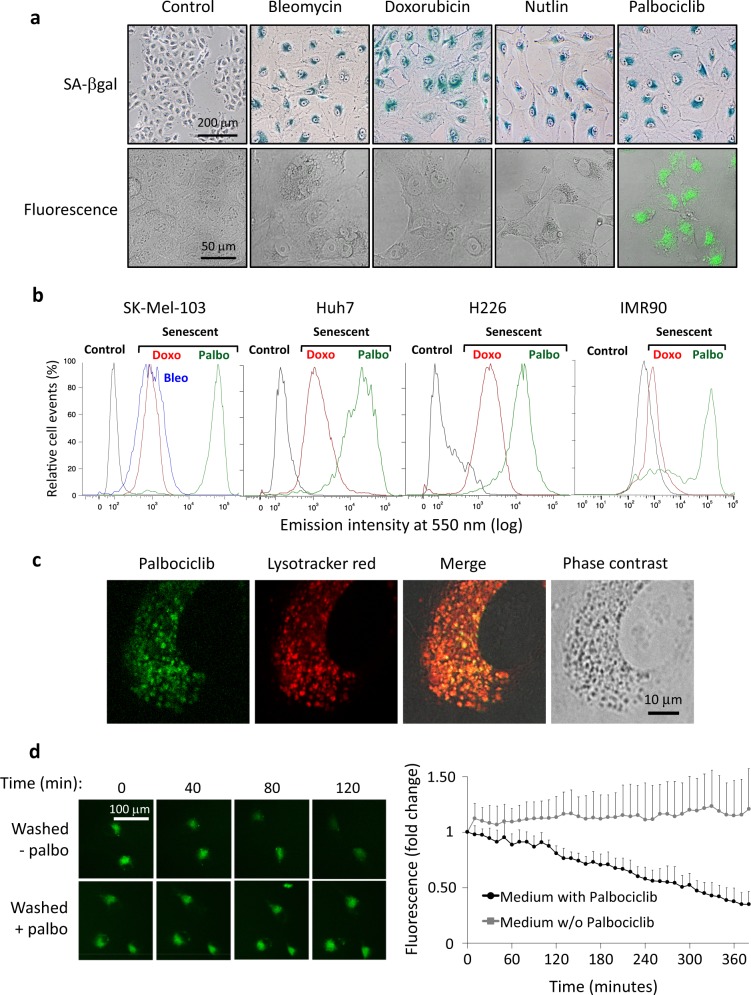
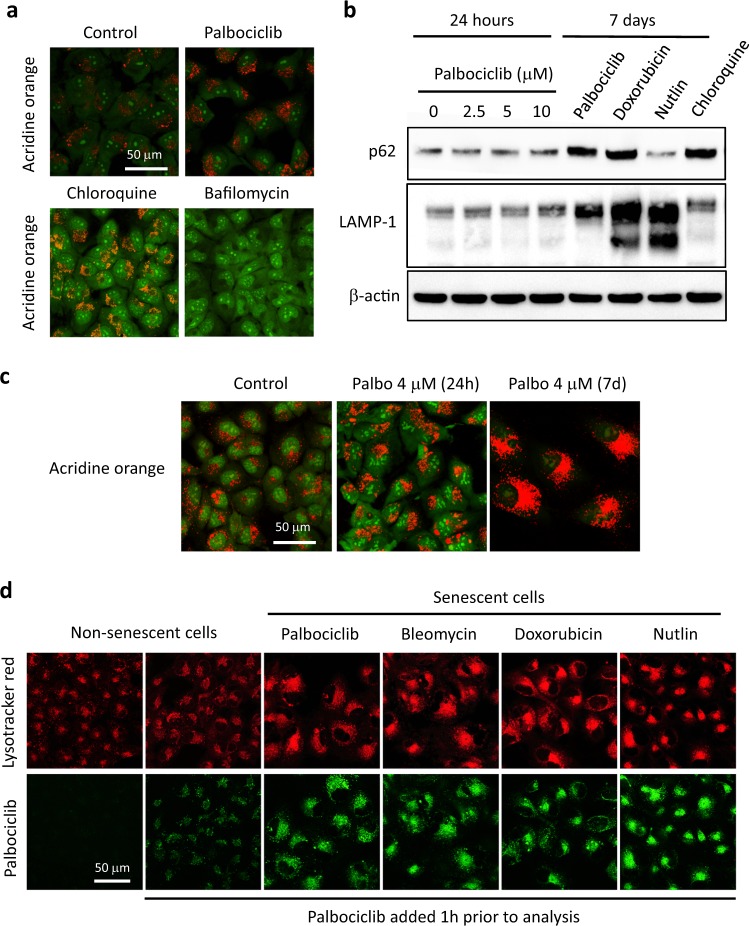
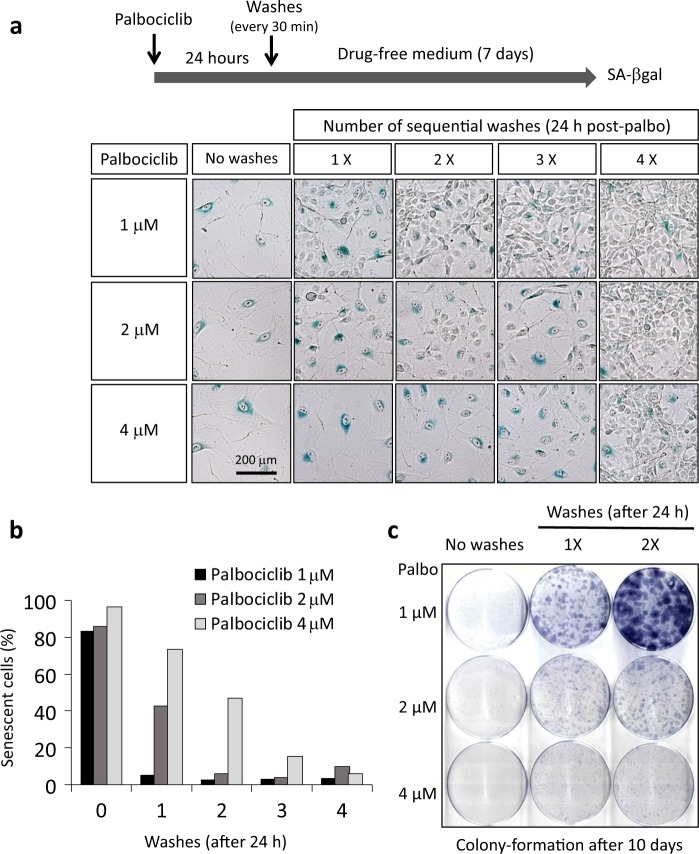
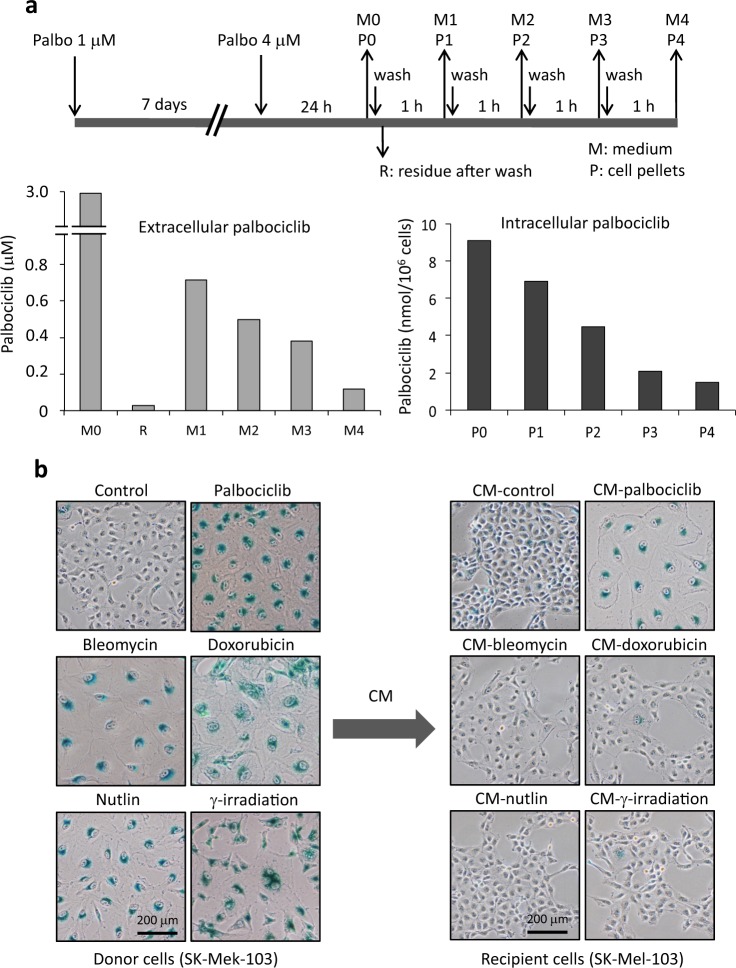
Palbociclib is a selective inhibitor of cyclin-dependent kinases 4 and 6 (CDK4/6) approved for the treatment of some cancers. The main mechanism of action of palbociclib is to induce cell cycle arrest and senescence on responsive cells. Here, we report that palbociclib concentrates in intracellular acidic vesicles, where it can be readily observed due to its intrinsic fluorescence, and it is released from these vesicles upon dilution or washing out of the extracellular medium. This reversible storage of drugs into acidic vesicles is generally known as lysosomal trapping and, based on this, we uncover novel properties of palbociclib. In particular, a short exposure of cells to palbociclib is sufficient to produce a stable cell-cycle arrest and long-term senescence. Moreover, after washing out the drug, palbociclib-treated cells release the drug to the medium and this conditioned medium is active on susceptible cells. Interestingly, cancer cells resistant to palbociclib also accumulate and release the drug producing paracrine senescence on susceptible cells. Finally, other lysosomotropic drugs, such as chloroquine, interfere with the accumulation of palbociclib into lysosomes, thereby reducing the minimal dose of palbociclib required for cell-cycle arrest and senescence. In summary, lysosomal trapping explains the prolonged temporal activity of palbociclib, the paracrine activity of exposed cells, and the cooperation with lysosomotropic drugs. These are important features that may help to improve the therapeutic dosing and efficacy of palbociclib. Finally, two other clinically approved CDK4/6 inhibitors, ribociclib and abemaciclib, present a similar behavior as palbociclib, suggesting that lysosomal trapping is a property common to all three clinically-approved CDK4/6 inhibitors.
Overview
The claims and statistics of this paper haven’t been checked yet.
Free: it reads the open-access text and checks the first 5 claims that cite a source we can check. Create a free account to check every claim.
Integrity signals
Registry
Cites
Statistics
Figures
Verification
Claims the paper makes
The claims and statistics of this paper haven’t been checked yet.
Free: it reads the open-access text and checks the first 5 claims that cite a source we can check. Create a free account to check every claim.
Claims other papers make about this one
Each is checked against this paper’s own text: does it say what the citing paper says it does?
The source backs part of the claim, not all of it — or backs it for a different population, condition or comparison.
In the citing paper
“This capacity reduces their effective concentration in the cytosol and nucleus but is counteracted by the slow release of the drugs from the lysosomes, thereby increasing drug exposure time (Llanos et al., 2019).”
From Cellular Senescence: Defining a Path Forward (2019) · cites this paper as Llanos et al., 2019
Experimental — accuracy not yet measuredThe cited source says what the claim attributes to it.
In the citing paper
“From a therapeutic viewpoint, the enlarged lysosomal compartment offers an increased capacity to trap drugs that can be protonated, such as the selective CDK4/6 inhibitors palbociclib, ribociclib, and abemaciclib.”
From Cellular Senescence: Defining a Path Forward (2019) · cites this paper as Llanos et al., 2019
Self-check
Percentages, sums and reported differences re-computed from the paper’s own numbers.
The self-check needs the paper’s full text.
Citations
Cites
A biomarker that identifies senescent human cells in culture and in aging skin in vivo.
Dimri, G. P., Lee, X., Basile, G., Acosta, M., Scott, G., Roskelley, C., Medrano, E. E., Linskens, M., Rubelj, I., & Pereira-Smith, O. (1995) · Proceedings of the National Academy of Sciences · doi:10.1073/pnas.92.20.9363 · Cited by 7,477 · cited 1×
“The latter can be visualized by staining cells for lysosomal β-galactosidase activity, which constitutes the basis for the senescence-associated β-galactosidase (SAβgal) activity [16].”
Cellular senescence: from physiology to pathology
Muñoz-Espín, D., & Serrano, M. (2014) · Nature Reviews Molecular Cell Biology · doi:10.1038/nrm3823 · Cited by 2,818 · cited 1×
“Cellular senescence is a stable cell cycle arrest induced in response to multiple cellular stresses and chemotherapeutic drugs [12], including CDK4/6 inhibitors [3].”
Self-citationHallmarks of Cellular Senescence
Hernandez-Segura, A., Nehme, J., & Demaria, M. (2018) · Trends in Cell Biology · doi:10.1016/j.tcb.2018.02.001 · Cited by 2,605 · cited 1×
“The inhibition of CDK4/6 results in the accumulation of the unphosphorylated form of the RB1 tumor suppressor, and this is the main mechanism responsible for cell proliferation arrest and for the global epigenetic reconfiguration of chromatin characteristic of senescent cells [7, 8].”
Rb-mediated heterochromatin formation and silencing of E2F target genes during cellular senescence
Narita, M., Nuñez, S., Heard, E., Narita, M., Lin, A. W., Hearn, S. A., Spector, D. L., Hannon, G. J., & Lowe, S. W. (2003) · Cell · doi:10.1016/s0092-8674(03)00401-x · Cited by 2,278 · cited 1×
“The inhibition of CDK4/6 results in the accumulation of the unphosphorylated form of the RB1 tumor suppressor, and this is the main mechanism responsible for cell proliferation arrest and for the global epigenetic reconfiguration of chromatin characteristic of senescent cells [7, 8].”
CDK4/6 inhibition triggers anti-tumour immunity
Goel, S., DeCristo, M. J., Watt, A. C., BrinJones, H., Sceneay, J., Li, B. B., Khan, N., Ubellacker, J. M., Xie, S., Metzger-Filho, O., et al. (2017) · Nature · doi:10.1038/nature23465 · Cited by 1,513 · cited 1×
“tumor antigen presentation [10], and hyperactivates proteasomal function [11].”
Finn, R. S., Dering, J., Conklin, D., Kalous, O., Cohen, D. J., Desai, A. J., Ginther, C., Atefi, M., Chen, I., Fowst, C., et al. (2009) · Breast Cancer Research · doi:10.1186/bcr2419 · Cited by 1,398 · cited 5×
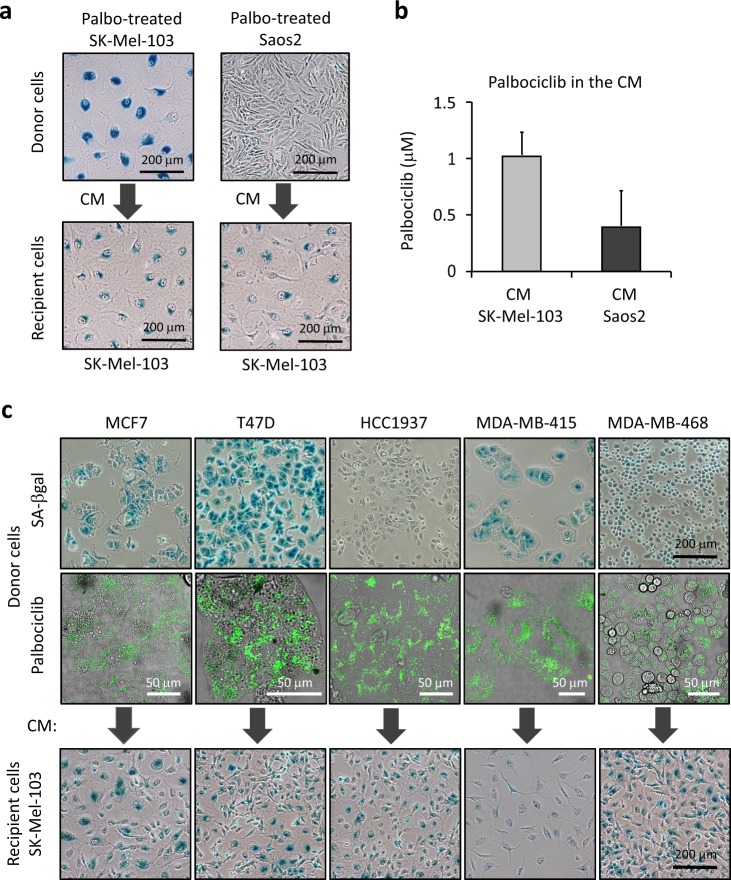
“The graph represents the average values and SD of three independent experiments. c Donor palbociclib responsive (MCF7, T47D, and MDA-MB415) and non-responsive (HCC1937 and MDA-MB-415) human breast cancer cell lines were treated with palbociclib 1 μM for 7 days.”
InfluentialInflammatory networks during cellular senescence: causes and consequences.
Freund, A., Orjalo, A. V., Desprez, P.-Y., & Campisi, J. (2010) · Trends in Molecular Medicine · doi:10.1016/j.molmed.2010.03.003 · Cited by 1,354 · cited 2×
“This is illustrated by the fact that inhibition of mTORC1 in senescent cells simultaneously reduces their SASP and their SA-βgal activity without affecting proliferation arrest [19–21].”
Laberge, R.-M., Sun, Y., Orjalo, A. V., Patil, C. K., Freund, A., Zhou, L., Curran, S. C., Davalos, A. R., Wilson-Edell, K. A., Liu, S., et al. (2015) · Nature Cell Biology · doi:10.1038/ncb3195 · Cited by 1,160
Chapter 12 Monitoring Autophagic Degradation of p62/SQSTM1
Bjørkøy, G., Lamark, T., Pankiv, S., Øvervatn, A., Brech, A., & Johansen, T. (2009) · Methods in Enzymology · doi:10.1016/s0076-6879(08)03612-4 · Cited by 1,069 · cited 1×
“LAMP-1 is a glycoprotein associated to the lysosomal membrane, generally used as an indicator of lysosomal content; p62 is an autophagosome cargo protein that is degraded upon fusion of autophagosomes with lysosomes and, therefore, p62 levels are inversely correlated with the autophagic flux [28].”
Kurz, D. J., Decary, S., Hong, Y., & Erusalimsky, J. D. (2000) · Journal of Cell Science · doi:10.1242/jcs.113.20.3613 · Cited by 899
Cited by
Cellular Senescence: Defining a Path Forward
Gorgoulis, V., Adams, P. D., Alimonti, A., Bennett, D. C., Bischof, O., Bishop, C., Campisi, J., Collado, M., Evangelou, K., Ferbeyre, G., et al. (2019) · Cell · doi:10.1016/j.cell.2019.10.005 · Cited by 3,225
“This capacity reduces their effective concentration in the cytosol and nucleus but is counteracted by the slow release of the drugs from the lysosomes, thereby increasing drug exposure time (Llanos et al., 2019).”
Self-citationSenescence and cancer — role and therapeutic opportunities
Schmitt, C. A., Wang, B., & Demaria, M. (2022) · Nature Reviews Clinical Oncology · doi:10.1038/s41571-022-00668-4 · Cited by 794
Targeting cell-cycle machinery in cancer
Suski, J. M., Braun, M., Strmiska, V., & Sicinski, P. (2021) · Cancer Cell · doi:10.1016/j.ccell.2021.03.010 · Cited by 564
Targeting CDK4 and CDK6 in cancer
Goel, S., Bergholz, J. S., & Zhao, J. J. (2022) · Nature Reviews Cancer · doi:10.1038/s41568-022-00456-3 · Cited by 531
Senescent Cells in Cancer Therapy: Friends or Foes?
Wang, B., Kohli, J., & Demaria, M. (2020) · Trends in Cancer · doi:10.1016/j.trecan.2020.05.004 · Cited by 508
“This has been demonstrated for CDK4/6 inhibitors in SK-Mel-103 melanoma cells and normal cells, where palbociclib and abemaciclib are trapped in the lysosomes andmight induce lysosomal stress unrelated to growth arrest [64].”
BackgroundImmunomodulation by anticancer cell cycle inhibitors
Petroni, G., Formenti, S. C., Chen-Kiang, S., & Galluzzi, L. (2020) · Nature Reviews Immunology · doi:10.1038/s41577-020-0300-y · Cited by 163
When dormancy fuels tumour relapse
Santos-de-Frutos, K., & Djouder, N. (2021) · Communications Biology · doi:10.1038/s42003-021-02257-0 · Cited by 165
The efficacy of chemotherapy is limited by intratumoral senescent cells expressing PD-L2
Chaib, S., López-Domínguez, J. A., Lalinde-Gutiérrez, M., Prats, N., Marin, I., Boix, O., García-Garijo, A., Meyer, K., Muñoz, M. I., Aguilera, M., et al. (2024) · Nature Cancer · doi:10.1038/s43018-023-00712-x · Cited by 114
Self-citationCellular senescence: a double-edged sword in cancer therapy
Xiao, S., Qin, D., Hou, X., Tian, L., Yu, Y., Zhang, R., Lyu, H., Guo, D. S., Chen, X., Zhou, C., et al. (2023) · Frontiers in Oncology · doi:10.3389/fonc.2023.1189015 · Cited by 144
“The duration of treatment with palbociclib is another important factor in the induction of cellular senescence, in that long-term treatment with palbociclib promotes cell cycle arrest in both normal and cancer cells (72, 73).”
BackgroundMultiple effects of CDK4/6 inhibition in cancer: From cell cycle arrest to immunomodulation
Bonelli, M. A., Monica, S. L., Fumarola, C., & Alfieri, R. R. (2019) · Biochemical Pharmacology · doi:10.1016/j.bcp.2019.113676 · Cited by 112
Fassl, A., Brain, C. T., Abu-Remaileh, M., Stukan, I., Butter, D., Stępień, P., Feit, A. S., Bergholz, J. S., Michowski, W., Otto, T., et al. (2020) · Science Advances · doi:10.1126/sciadv.abb2210 · Cited by 102
“This study also reported that palbociclib sensitivity is increased upon lysosomal basification with chloroquine or ammonium chloride (30).”
BackgroundThe role of endolysosomal trafficking in anticancer drug resistance
Hussein, N. A., Malla, S., Pasternak, M. A., Terrero, D., Brown, N. G., Ashby, C. R., Assaraf, Y. G., Chen, Z., & Tiwari, A. K. (2021) · Drug Resistance Updates · doi:10.1016/j.drup.2021.100769 · Cited by 60
Johnson, B., Creason, A., Stommel, J. M., Keck, J. M., Parmar, S. S., Betts, C. B., Blucher, A., Boniface, C. T., Bucher, E., Burlingame, E. A., et al. (2022) · Cell Reports Medicine · doi:10.1016/j.xcrm.2022.100525 · Cited by 68
IFN-γ and TNF Induce Senescence and a Distinct Senescence-Associated Secretory Phenotype in Melanoma
Homann, L., Rentschler, M., Brenner, E., Böhm, K., Röcken, M., & Wieder, T. (2022) · Cells · doi:10.3390/cells11091514 · Cited by 66
“Palbociclib may be trapped in vesicles and released later by melanoma cells into the cell culture medium [62], substituting for the function of p21.”
BackgroundInfluentialCancer cell cycle dystopia: heterogeneity, plasticity, and therapy
Witkiewicz, A. K., Kumarasamy, V. M., Sanidas, I., & Knudsen, E. S. (2022) · Trends in cancer · doi:10.1016/j.trecan.2022.04.006 · Cited by 57
Targeting CDK4 and 6 in Cancer Therapy: Emerging Preclinical Insights Related to Abemaciclib
Wander, S. A., O’Brien, N. A., Litchfield, L. M., O’Dea, D., Guimaraes, C. M., Slamon, D. J., & Goel, S. (2022) · The Oncologist · doi:10.1093/oncolo/oyac138 · Cited by 54
Vinik, Y., Maimon, A., Dubey, V., Raj, H., Abramovich, I., Malitsky, S., Itkin, M., Ma’ayan, A., Westermann, F., Gottlieb, E., et al. (2024) · Advanced Science · doi:10.1002/advs.202307263 · Cited by 59
Cell size homeostasis is maintained by CDK4-dependent activation of p38 MAPK
Tan, C., Ginzberg, M. B., Webster, R., Iyengar, S., Liu, S., Papadopoli, D. J., Concannon, J. B., Wang, Y., Auld, D. S., Jenkins, J. L., et al. (2021) · Developmental Cell · doi:10.1016/j.devcel.2021.04.030 · Cited by 56
CDK4 Regulates Lysosomal Function and mTORC1 Activation to Promote Cancer Cell Survival
Martínez-Carreres, L., Puyal, J., Leal-Esteban, L. C., Orpinell, M., Castillo-Armengol, J., Giralt, A., Dergai, O., Moret, C., Barquissau, V., Nasrallah, A., et al. (2019) · Cancer Research · doi:10.1158/0008-5472.can-19-0708 · Cited by 43
“CDK4/6 inhibitors have been shown to accumulate into lysosomes, a phenomenon called lysosomal trapping (47).”
BackgroundMultifunctional Polymeric Nanoparticles for Chemo/Phototheranostics of Retinoblastoma
Mudigunda, S. V., Pemmaraju, D. B., Paradkar, S., Puppala, E. R., Gawali, B., Upadhyayula, S. M., Naidu, V. G. M., & Rengan, A. K. (2021) · ACS Biomaterials Science & Engineering · doi:10.1021/acsbiomaterials.1c01234 · Cited by 44
Fan, L., Du, P., Li, Y., Chen, X., Liu, F., Liu, Y., Petrov, A. M., Li, X., Wang, Z., & Zhao, Y. (2024) · ACS Nano · doi:10.1021/acsnano.3c10142 · Cited by 47
Palbociclib releases the latent differentiation capacity of neuroblastoma cells
Ferguson, K. M., Gillen, S. L., Chaytor, L., Poon, E., Marcos, D., Gomez, R. L., Woods, L. M., Mykhaylechko, L., Elfari, L. M., Costa, B. M. D., et al. (2023) · Developmental Cell · doi:10.1016/j.devcel.2023.08.028 · Cited by 35
“36,39 Cells were treated with 1 μM PB, a standard dosage used in cellular studies 40,41 that is similar to the IC50s of all three lines (Figure S1A).”
Ramponi, V., Richart, L., Kovatcheva, M., Attolini, C. S., Capellades, J., Lord, A. E., Yanes, Ó., Ficz, G., & Serrano, M. (2024) · Cancer Research · doi:10.1158/0008-5472.can-24-0529 · Cited by 31
“10, 11, 31, 40, 41).”
Self-citationAdvancements in antibody-drug conjugates as cancer therapeutics
Fong, J. Y., Phuna, Z. X., Chong, D., Heryanto, C. M., Low, Y. S., Oh, K. C., Lee, Y., Ng, A. W. R., In, L. L. A., & Teo, M. Y. M. (2025) · Journal of the National Cancer Center · doi:10.1016/j.jncc.2025.01.007 · Cited by 48
Neutrophil-activating secretome characterizes palbociclib-induced senescence of breast cancer cells
Favaretto, G., Rossi, M. N., Cuollo, L., Laffranchi, M., Cervelli, M., Soriani, A., Sozzani, S., Santoni, A., & Antonangeli, F. (2024) · Cancer Immunology Immunotherapy · doi:10.1007/s00262-024-03695-5 · Cited by 26
“Palbociclib (Ibrance, Pfizer Inc.), the first licensed, has shown non-canonical functions among which the induction of a senescence-like phenotype in tumor cells has attracted great attention for its implications in cancer pathology [34–37].”
BackgroundAn update in toxicology of ageing
Račková, L., Mach, M., & Brnoliaková, Z. (2021) · Environmental Toxicology and Pharmacology · doi:10.1016/j.etap.2021.103611 · Cited by 24
The Evolving Pathways of the Efficacy of and Resistance to CDK4/6 Inhibitors in Breast Cancer
Gomes, I., Abreu, C., Costa, L., & Casimiro, S. (2023) · Cancers · doi:10.3390/cancers15194835 · Cited by 27
“stabilization ,71], also condensation hypothesis that CDK4 state senescent-like of the to protein M1 (FOXM1) [93,94] and manner, for example, by inducing alpha-thalassemia mental retardation X-linked protein (ATRX) expression and proteolytic degradation of mouse double minute 2 homolog (MDM2),…”
Wang, X., Shi, W., Wang, X., Lu, J., He, P., Zhang, H., & Chen, X. (2023) · Cell Death Discovery · doi:10.1038/s41420-023-01658-w · Cited by 25
“STAT3 inhibition can uncouple SASP production from senescence-associated cell cycle exit [19].”
BackgroundToo big not to fail: emerging evidence for size‐induced senescence
Manohar, S., & Neurohr, G. E. (2023) · FEBS Journal · doi:10.1111/febs.16983 · Cited by 22
Proteomic characterisation of triple negative breast cancer cells following CDK4/6 inhibition
Beykou, M., Arias-García, M., Roumeliotis, T. I., Choudhary, J. S., Moser, N., Georgiou, P., & Bakal, C. (2022) · Scientific Data · doi:10.1038/s41597-022-01512-1 · Cited by 19
Schmitt, M. V., Reichel, A., Liu, X., Fricker, G., & Lienau, P. (2021) · Drug Metabolism and Disposition · doi:10.1124/dmd.120.000161 · Cited by 19
Pharmacological CDK4/6 inhibition promotes vulnerability to lysosomotropic agents in breast cancer
Nehme, J., Maassen, S., Bravaccini, S., Zanoni, M., Gianni, C., Giorgi, U. D., Soto-Gamez, A., Altulea, A., Gheorghe, T., Wang, B., et al. (2025) · The EMBO Journal · doi:10.1038/s44318-025-00371-x · Cited by 23
“…highlighted the signi fi cance of lysosomal biogenesis in the development of the senescence phenotype as well as its role in conferring resistance to different treatments (Curnock et al, 2023; Fassl et al, 2020; Li et al, 2023; Llanos et al, 2019; Martinez-Carreres et al, 2019; Rovira et al, 2022).”
Mitochondrial priming and response to BH3 mimetics in “one-two punch” senogenic-senolytic strategies
López, J., Llop‐Hernández, À., Verdura, S., Serrano‐Hervás, E., Martinez‐Balibrea, E., Bosch‐Barrera, J., Teixidor, E., López‐Bonet, E., Martín-Castillo, B., Sardanyés, J., et al. (2025) · Cell Death Discovery · doi:10.1038/s41420-025-02379-y · Cited by 22
“…a high-throughput compound screen [19, 30, 52]; (3) doxorubicin, a topoisomerase II inhibitor and DNA intercalator [35, 53, 54]; and (4) palbociclib, a selective inhibitor of cyclin-dependent kinases 4 and 6 (CDK4/6), which induces senescence via replication stress and lysosomal trapping [55 – 57].”
He, F., Zhang, Q., Chen, Y., Ge, S., Xie, Y., Sun, R., Wu, Y., & Xu, J. (2025) · International Journal of Molecular Medicine · doi:10.3892/ijmm.2025.5564 · Cited by 24
“It has been demonstrated that brief exposure of cells to palbociclib is sufficient to produce stable cell cycle arrest and long‑term senescence (39).”
Suzuki, S., Ogawa, M., Miyazaki, M., Ota, K., Kazama, H., Hirota, A., Takano, N., Hiramoto, M., & Miyazawa, K. (2021) · Oncology Reports · doi:10.3892/or.2021.8251 · Cited by 18
“Abemaciclib has been reported to behave similarly to palbociclib, which can be trapped in the lysosomes of SK‐Mel‐103 human melanoma cells (67).”
BackgroundBosch‐Barrera, J., Verdura, S., Ruffinelli, J. C., Carcereny, E., Sais, È., Cuyàs, E., Palmero, R., López‐Bonet, E., Hernández, A., Oliveras, G., et al. (2021) · Cancers · doi:10.3390/cancers13164168 · Cited by 14
Leung, E. Y., Tomek, P., Tercel, M., Reynisson, J., Park, T., Cooper, E., Denny, W. A., Choi, P., & Jose, J. (2022) · Molecules · doi:10.3390/molecules27030880 · Cited by 14
“Previous studies have demonstrated the preferential retention of heptamethine cyanine dyes (HMCDs) in the mitochondria of cancer cell lines [13], while palbociclib was retained in the lysosomal compartment, presumably because of protonation of the piperazine side chain in this acidic organelle [30].”
BackgroundNutritional Niches of Cancer Therapy-Induced Senescent Cells
Llop‐Hernández, À., Verdura, S., Cuyàs, E., & Menéndez, J. A. (2022) · Nutrients · doi:10.3390/nu14173636 · Cited by 13
Ribociclib-associated vortex keratopathy
Saeed, D., & Hussain, A. (2020) · Canadian Journal of Ophthalmology · doi:10.1016/j.jcjo.2019.11.003 · Cited by 12
Automated discovery of nanomaterials via drug aggregation induced emission
Harris, Y., Sason, H., Niezni, D., & Shamay, Y. (2022) · Biomaterials · doi:10.1016/j.biomaterials.2022.121800 · Cited by 12
Liu, Y., Deng, Y., Yang, C., & Naranmandura, H. (2024) · Bioengineering · doi:10.3390/bioengineering11111084 · Cited by 18
Toward in vivo relevant drug design
Pearlstein, R. A., Wan, H., & Aravamuthan, V. (2020) · Drug Discovery Today · doi:10.1016/j.drudis.2020.10.012 · Cited by 11
Fleisher, B., Lezeau, J., Werkman, C., Jacobs, B., & Ait‐Oudhia, S. (2021) · Breast Cancer Targets and Therapy · doi:10.2147/bctt.s292161 · Cited by 11
“However, reports have shown that the cytotoxicity of CDK4/6 inhibitors in Rb-negative TNBC may occur through off-target mechanisms such as permeabilization of the lysosomes, thereby causing the release of the hydrolytic contents into the cytoplasm and stimulation of apoptosis.(46,50,51) The exposure-response profiles…”
BackgroundResultYousef, M., Le, T. S., Zuo, J., Park, C., Chacra, N. B., Davies, N. M., & Löbenberg, R. (2023) · Research in Pharmaceutical Sciences · doi:10.4103/1735-5362.363591 · Cited by 10
“Moreover, the displacement of palbociclib by other lysosomotropic drugs into the cytosol potentiates its action on cytosolic and nuclear targets (26).”
BackgroundItzhaki, E., Hadad, E., Moskovits, N. B.-C., Stemmer, S. M., & Margel, S. (2021) · Pharmaceuticals · doi:10.3390/ph14070648 · Cited by 11
“The efficacy of the drug-loaded NCs was compared to the mixed free drugs by a 3D model of tumor spheroids derived from a PDX model that mimics closely the native tissue microenvironment and the solid tumor better than cells grown in 2D monolayers [45,61].”
BackgroundMethodInfluentialVortex keratopathy associated with ribociclib
Türkel, A., Özdoğan, S., Yekedüz, E., Şeyran, E., Karaçin, C., & Ateş, Ö. (2022) · Journal of Oncology Pharmacy Practice · doi:10.1177/10781552221101799 · Cited by 11
“showed that palbociclib is trapped in lysosomes.(18) Lysosomal entrapment and sequestration may occur in ribociclib as well as in palbociclib and may be a possible mechanism for the development of vortex keratopathy.”
BackgroundMurányi, J., Varga, A., Gyulavári, P., Pénzes, K., Németh, C. E., Csala, M., Pethő, L., Csámpai, A., Halmos, G., Peták, I., et al. (2019) · International Journal of Molecular Sciences · doi:10.3390/ijms20225590 · Cited by 10
“Lysosomal trapping mechanisms of small-molecule kinase inhibitors [16] and nanoparticle-based protein delivery systems [17] have come into the spotlight recently.”
BackgroundConsideration of the Unbound Drug Concentration in Enzyme Kinetics
Waters, N. J., Obach, R. S., & Di, L. (2014) · Methods in molecular biology · doi:10.1007/978-1-62703-758-7_7 · Cited by 10
Mayayo‐Peralta, I., Faggion, B., Hoekman, L., Morris, B., Lieftink, C., Goldsbrough, I., Buluwela, L., Siefert, J. C., Post, H., Altelaar, M. A. F., et al. (2021) · Cancers · doi:10.3390/cancers13246314 · Cited by 11
“It was reported that CDK4/6 inhibitors can be trapped in the lysosomes, subsequently influencing key regulatory cellular processes, such as protein turnover [66].”
BackgroundScordamaglia, D., Talia, M., Zicarelli, A., Mondino, A. A., Rosis, S. D., Dio, M. D., Silvestri, F., Meliti, C., Cirillo, F., Francesco, E. M. D., et al. (2025) · Cancer and Metastasis Reviews · doi:10.1007/s10555-025-10307-w · Cited by 9
“…a ti on o f p21 C I P 1 / p15 I NK 4 B i n e ndo t h e li a l ce ll s [ 21 ] L o ss o f pho s pho - RB 1 a nd F OX M 1 i n m e l a no m a ce l l s [ 28 ] M Y C d e g r a d a ti on i n b r ea s t ca n ce r ce ll s [ 31 ] D o w n -r e gu l a ti on o f CC N E 2 , CC NA 2 , CC N B 1 , CC N B 2 , a nd…”
InfluentialChaib, S., Lopez-Dominguez, J. A., Lalinde-Gutiérrez, M., Prats, N., Marín, I., Meyer, K. R., Muñoz, M. I., Aguilera, M., Mateo, L., Attolini, C. S., et al. (2022) · bioRxiv (Cold Spring Harbor Laboratory) · doi:10.1101/2022.11.04.501681 · Cited by 7
Self-citationCDK4/6 inhibitor-associated vortex keratopathy: a case report
Shu, L., Cui, X., Wang, Y., & Sun, X. (2025) · BMC Ophthalmology · doi:10.1186/s12886-025-04043-6 · Cited by 6
“Previous studies have shown that CDK4/6 inhibitors share a common characteristic of lysosomal trapping [14].”
Senotoxins target senescence via lipid binding specificity, ion imbalance and lipidome remodeling
Moral‐Sanz, J., Fernández‐Carrasco, I., Ramponi, V., Garrido, A., Karbat, I., Cabezas‐Sainz, P., Rivera‐de‐Torre, E., Elsallabi, O., Martín-Hernández, R., López-Aceituno, J. L., et al. (2026) · Nature Aging · doi:10.1038/s43587-025-01030-w · Cited by 8
Self-citationEscriche‐Navarro, B., Garrido, E., Escudero, A. C., Montoya-Méndez, I., Sancenón, F., García‐Fernández, A., & Martínez‐Máñez, R. (2025) · Biomaterials · doi:10.1016/j.biomaterials.2025.123461 · Cited by 7
Malikova, A. Z., Shcherbakova, A. S., Konduktorov, K. A., Zemskaya, A. S., Dalina, A. A., Попенко, В. И., Leonova, O. G., Morozov, A. V., Kurochkin, N. N., Smirnova, O. A., et al. (2021) · International Journal of Molecular Sciences · doi:10.3390/ijms22094559 · Cited by 6
“After entering the cell, palbociclib concentrates in acidic vesicles [41], where weakly basic residues of the drug, piperazine (pKa of 7.”
BackgroundBerges, N., Klug, J. H., Eicher, A., Loehr, J., Schwarz, D. F., Bomke, J., Leuthner, B., Perrin, D., & Schadt, O. (2022) · Molecular Pharmacology · doi:10.1124/molpharm.122.000590 · Cited by 7
“To our knowledge, there is only one washout study published, that shows that the CDK4/ 6 inhibitor palbociclib is reversibly stored in lysosomes, linking the lysosomal compound reservoir to long-term activity of the inhibitor (Llanos et al., 2019).”
BackgroundSu, D., Xiong, Y., Wei, H., Wang, S., Ke, J., Liang, P., Zhang, H., Yu, Y. T., Zuo, Y., & Yang, L. (2023) · Heliyon · doi:10.1016/j.heliyon.2023.e16147 · Cited by 6
Development of CDK4/6 Inhibitors in Gastrointestinal Cancers: Biomarkers to Move Forward
Voutsadakis, I. A. (2025) · Current Issues in Molecular Biology · doi:10.3390/cimb47060454 · Cited by 6
“Lysosomal trapping of palbociclib becoming more pronounced with increased lysosome biomass was a resistance mechanism, reversed by chloroquine [62].”
Grandhi, T. S. P., To, J., Romero, A., Luna, F., Barnes, W., Walker, J., Moran, R., Newlin, R., Miraglia, L. J., Orth, A. P., et al. (2021) · Biotechnology and Bioengineering · doi:10.1002/bit.27844 · Cited by 6
Consideration of the Unbound Drug Concentration in Enzyme Kinetics
Waters, N. J., Obach, R. S., & Di, L. (2021) · Methods in molecular biology · doi:10.1007/978-1-0716-1554-6_5 · Cited by 5
Johnson, B., Creason, A., Stommel, J. M., Keck, J. M., Parmar, S., Betts, C. B., Blucher, A., Boniface, C., Bucher, E., Burlingame, E. A., et al. (2020) · bioRxiv (Cold Spring Harbor Laboratory) · doi:10.1101/2020.12.03.408500 · Cited by 7
“Drug sequestration via lysosomotropism has been implicated as a mechanism of resistance to palbociclib and other CDK4/6 inhibitors, indicating a possible role for these abundant vesicles in reducing therapeutic efficacy in this patient (Fassl et al., 2020; Llanos et al., 2019).”
BackgroundFeng, Y. R., Zhi, X., Xiao, T., & Feng, L. (2026) · Mechanisms of Ageing and Development · doi:10.1016/j.mad.2026.112158 · Cited by 6
Palbociclib regulates intracellular lipids in mammary tumor cells by secreting lipoprotein lipase
Fujii, T., Kamishikiryo, J., & Morita, T. (2022) · Pharmacological Reports · doi:10.1007/s43440-022-00365-0 · Cited by 4
“There are several reports that CDK4/6 inhibitors induce changes in the intracellular environment, including cellular senescence and lysosomal dysfunction [36, 37].”
BackgroundRajesh, A., Havas, A. P., Arnold, R., Lande, K., Evensen, K. G., Li, K. Y., Mamde, S., Yang, Q., Gandhi, A., Miller, K. N., et al. (2025) · bioRxiv (Cold Spring Harbor Laboratory) · doi:10.1101/2025.08.01.668243 · Cited by 4
“Palbociclib (2 μM) was administered on days 4, 6, 8, and 10 post IR, following dosing regimens reported previously 46,47 , and recapitulated the transcriptional effects of CCND1 and CDK6 knockdown.”
Safaroghli‐Azar, A., Mekonnen, L. B., Lenjisa, J. L., Milne, R. W., & Wang, S. (2026) · Journal of Hematology & Oncology · doi:10.1186/s13045-026-01794-7 · Cited by 5
“These include lysosomal sequestration of CDK4/6 inhibitors, which reduces effective intracellular drug concentration [328, 329], epigenetic remodelling affecting E2F1 target gene expression [330], and microenvironmental adaptations that promote proliferative escape [331].”
Rajesh, A., Havas, A. P., Arnold, R., Lande, K., Lei, X., Li, K. Y., Gandhi, A., Franco, A. C., Woo, S., Lagnado, A. B., et al. (2026) · Nature Aging · doi:10.1038/s43587-026-01196-x · Cited by 10
Spiewok, S., Schaefer, M., Lamla, M., Jaritz, Y., & Kuehne, A. J. C. (2025) · Chemistry - A European Journal · doi:10.1002/chem.202404618 · Cited by 4
A versatile method for the identification of senolytic compounds
Annunziata, C., Castoldi, F., Schlegel, J. A., Ang, H. X., Ristovska, M., Melini, S., Welch, R., Riedel, C. G., & Pietrocola, F. (2023) · Cell Stress · doi:10.15698/cst2023.12.292 · Cited by 4
“…that the inherent fluorescence of drugs, along with their accumulation in the lysosomes of senescent cells (as previously described for palbociclib [16]), might further intensify fluorescence levels in senescent cells, potentially amplifying or masking signals derived from probes (e.g.,…”
BackgroundSelf-citationWang, Y., Wang, H., & Wang, X. (2022) · Annals of Translational Medicine · doi:10.21037/atm-22-2830 · Cited by 3
“As a selective inhibitor of cyclin-dependent kinases 4 and 6 (CDK4/6), palbociclib (PAL) has been used to treat various malignancies, including breast cancer, ovarian cancer, hepatocellular carcinoma, colorectal cancers, and so on (3).”
Liu, Y., Wang, Y., Zhang, N., Xiong, H., Zhao, L., Qi, Y., Xie, J., Duan, X., Yue, D., & Qie, S. (2025) · Science China Life Sciences · doi:10.1007/s11427-024-3015-1 · Cited by 3
“Previous literature reported that CDK4/6 inhibitors emitted green fluorescence that could be detected by a fluorescence microscope (Fassl et al., 2020; Hino et al., 2020; Llanos et al., 2019).”
Zhang, M., Pu, D., Yu, M., Shi, G., & Li, J. (2025) · Frontiers in Pharmacology · doi:10.3389/fphar.2025.1668446 · Cited by 2
“According to research by Llanos et al. (Llanos et al., 2019), ribociclib can be sequestered by lysosomes in corneal epithelial cells, leading to lysosomal dysfunction, which impairs collagen synthesis in the corneal stroma and subsequently alters axial length, thereby inducing myopia.”
Llop‐Hernández, À., Verdura, S., López, J., Martín-Castillo, B., Menéndez, J. A., & Cuyàs, E. (2026) · Cell Death Discovery · doi:10.1038/s41420-026-02967-6 · Cited by 4
Mosca, E., Federa, A., Pirker, C., Schosserer, M., Liendl, L., Eckhard, M., Sombke, A., Dömötör, O., Kirchhofer, D., Timelthaler, G., et al. (2024) · Chemico-Biological Interactions · doi:10.1016/j.cbi.2024.111243 · Cited by 3
Taşkıran, A. E. G., Hüsnügil, H. H., Soltani, Z., Oral, G., Menemenli, N. Ş., Hampel, C., Huebner, K., Erlenbach‐Wuensch, K., Sheraj, I., Schneider‐Stock, R., et al. (2024) · Traffic · doi:10.1111/tra.12956 · Cited by 6
Myrtleciclib, a CDK4/6/9 Inhibitor for the Treatment of Aggressive Cancers
Forni, D. D., Poddesu, B., Cugia, G., Bonelli, M. A., Galetti, M., Petronini, P. G., Lagacé, L., Chafouleas, J. G., & Lori, F. (2024) · Current Medicinal Chemistry · doi:10.2174/0109298673298434240821101457 · Cited by 2
Inducing Cellular Senescence in Mouse Embryonic Fibroblasts (MEFs)
Lorandi, I., & Li, H. (2024) · Methods in molecular biology · doi:10.1007/978-1-0716-4128-6_17 · Cited by 1
Bulut, H., Higashi‐Kuwata, N., Ogata-Aoki, H., Hayashi, H., Takamune, N., Kishimoto, N., Das, D., Li, M., Wlodawer, A., Misumi, S., et al. (2026) · ACS Omega · doi:10.1021/acsomega.5c10895 · Cited by 1
Ramírez-Moncayo, C., Restuadi, R., Zhang, G., Marks, D., Ortega-Prieto, P., Doherty, E., Lambie, N., Whilding, C., Andrew, I., Montoya, A., et al. (2026) · Nature Communications · doi:10.1038/s41467-026-70558-1 · Cited by 2
“Given the lysosomal signatures observed in both patient samples and Ruc High cells-and considering that several drugs are known to localise to the lysosome 24 – 26 - we hypothesised that rucaparib may accumulate there.”
Özbay, E. K., Öztürk, B., Ozbay, M. F., Doğan, B., Küçük, M. F., Ovali, F. S., & Karaca, M. (2026) · American Journal of Ophthalmology · doi:10.1016/j.ajo.2026.06.020 · Cited by 1
Pearlstein, R. A., Wan, H., & Williams, S. (2022) · bioRxiv (Cold Spring Harbor Laboratory) · doi:10.1101/2022.10.31.514572 · Cited by 1
“Basic amines can further result in high levels of lysosomal trapping (Llanos et al., 2019) and ion channel blockade.”
BackgroundRewiring of Endolysosomal Signaling with Nutrient Depletion in Cancer CellsPreprint
Taşkıran, A. E. G., Hüsnügil, H. H., Oral, G., Menemenli, N. Ş., Hampel, C., Huebner, K., Erlenbach‐Wuensch, K., Sheraj, I., Schneider‐Stock, R., Akyol, A., et al. (2023) · Research Square · doi:10.21203/rs.3.rs-3331567/v1 · Cited by 2
Birth and death of cellular senescence
Wang, B. (2020) · University of Groningen research database (University of Groningen / Centre for Information Technology) · doi:10.33612/diss.131223530
Leung, E. Y., Tomek, P., Tercel, M., Reynisson, J., Park, T., Cooper, E. A., Denny, W. A., Choi, P. J., & Jose, J. (2021) · bioRxiv (Cold Spring Harbor Laboratory) · doi:10.1101/2021.11.02.466693
Cellular senescence in the ageing brain: to eliminate or not to eliminate?
Talma, N. (2022) · University of Groningen research database (University of Groningen / Centre for Information Technology) · doi:10.33612/diss.206630102
Evaluating Fate of Emerging Resistance Hitting the Brakes on Conventional Treatment Approach
Anto, N. P., & Mittal, R. (2023) · BENTHAM SCIENCE PUBLISHERS eBooks · doi:10.2174/9789815079784123010008
Perspectives in ROS/Redox Regulation Cancer Therapy
Bansal, M. P. (2023) · Springer eBooks · doi:10.1007/978-981-99-7342-2_10
Yang, H., Zhang, X., Xu, L., Zhou, Y., Ma, R., Chen, H., Zhao, S., Munkhtsetseg, B., Chen, L., Deng, X., et al. (2024) · Future Medicinal Chemistry · doi:10.1080/17568919.2024.2347072
Chronic lysosome damage boosts interferon responses to Palbociclib dependent upon the mitochondrionPreprint
Božić, M., Lim, T. E., Salomo-Coll, C., Karageorgiou, A., Kemp, A. J., Winnington-Ingram, K., Murphy, L. C., Dhir, A., Wheeler, A. P., Jiménez-Moreno, N., et al. (2025) · bioRxiv (Cold Spring Harbor Laboratory) · doi:10.1101/2025.03.13.642980
“Palbociclib (Pb) is an important anti-cancer drug that is sequestered from its enzymatic target, the cell-cycle progression kinase CDK4/6 (cyclin-dependent kinase 4/6), due to lysosomal trapping 33 .”
InfluentialSheernaly, N., Steinbrueck, A., Krahn, N., Rumancev, C., Peeters, F. M. L., Jusufagic, L., Ochs, J., Garrevoet, J., Falkenberg, G., Rosenhahn, A., et al. (2025) · Chemistry - A European Journal · doi:10.1002/chem.202502613
Mohamed, M. B. M., Hameed, G. S., Sahib, M. N., Kadoori, Z. S., Mahmood, H. S., & Khudhair, A. A. (2026) · Gels · doi:10.3390/gels12010058
“Considering these properties, CIN can passively permeate cell and lysosome membranes but subsequently becomes trapped within lysosomes due to protonation of CIN and the low lysosome pH of 4 [45,46].”
Souza, A. S. O., Conceição, J. S. M., Ferraz, L. S., Delou, J. M. D. A., Miranda, B. R. C., Verissimo, C., Carneiro, M., Rehen, S. K., Bonamino, M., & Borges, H. L. (2026) · bioRxiv (Cold Spring Harbor Laboratory) · doi:10.64898/2026.04.15.718743
Zhang, Z., Yang, Y., Li, X., Cui, C., Fang, Y., Zhang, C., Xiao, Y., Liu, S., Song, L., Fang, C., et al. (2026) · Naunyn-Schmiedeberg s Archives of Pharmacology · doi:10.1007/s00210-026-05366-x · Cited by 1
“Furthermore, recent studies by Llanos and colleagues have shown that palbociclib undergoes lysosomal trapping which may pro-long its intracellular retention and exacerbate these off-target inflammatory effects (Llanos et al. 2019).”
Benbayer, W., Zaoui, C., Boughrara, W., Bengueddach, A., Bereksi-Reguig, F., & Sahraoui, T. (2026) · Medical Hypotheses · doi:10.1016/j.mehy.2026.112150
Matsubara, R., Yasujima, T., Yamashiro, T., & Yuasa, H. (2026) · Journal of Pharmaceutical Sciences · doi:10.1016/j.xphs.2026.104510
DeCicco, D., Nethagani, S., Lai, L., & Safi, D. (2026) · Frontiers in Oncology · doi:10.3389/fonc.2026.1932226 · Cited by 1
Beyond BBB permeability: spatial and dynamic post-BBB barriers governing CNS drug action
Nakata, N. A., Kurita, M., Ohashi, A., Matsumoto, K., Miyabe, C., Murata, H., & Miyabe, Y. (2026) · Frontiers in Drug Discovery · doi:10.3389/fddsv.2026.1957594
Metadata
- Authors
- Llanos, S., Megias, D., Blanco-Aparicio, C., Hernández-Encinas, E., Rovira, M., Pietrocola, F., & Serrano, M.
- Affiliations
- Spanish National Cancer Research Centre (ES)
- Institute for Research in Biomedicine (ES)
- Institució Catalana de Recerca i Estudis Avançats (ES)
- Corresponding author
- Llanos, Susana
- Serrano, Manuel
- Venue
- Oncogene
- Published
- 2019-01-28
- Volume
- 38
- Issue
- 20
- Pages
- 3886-3902
- ISSN
- 0950-9232 (ISSN-L)
- 1476-5594
- PMC
- PMC6756094
- OpenAlex
- W2914014134
- Cited by
- 96
- References
- 50
- Citations by year
- 2026: 15 · 2025: 14 · 2024: 11 · 2023: 10 · 2022: 18 · 2021: 15 · 2020: 8 · 2019: 4
- FWCI
- 8.27
- Type
- journal article
- Language
- en
- Open access
- hybrid
- doi.org
- Licence
- cc-by
- creativecommons.org/licenses/by/4.0 (tdm)
- Locations
- Oncogene (publishedVersion, cc-by)
- PubMed Central (publishedVersion, cc-by)
- PubMed (publishedVersion)
- Funders
- Institute for Research in Biomedicine
- Banco Santander
- Fundación Bancaria Caixa d'Estalvis i Pensions de Barcelona
- Santander Universities
- Topics
- Health Sciences › Medicine › Oncology › Advanced Breast Cancer Therapies
- Physical Sciences › Materials Science › Biomaterials › Nanoparticle-Based Drug Delivery
- Life Sciences › Biochemistry, Genetics and Molecular Biology › Cell Biology › Autophagy in Disease and Therapy
- Keywords
- palbociclib, lysosomal trapping, CDK4/6 inhibitors, lysosomotropic agents, cell cycle arrest, senescence, paracrine senescence, drug release, chloroquine, ribociclib, abemaciclib, drug resistance, cancer therapy
- MeSH terms
- Acridine Orange, Aminopyridines, Antineoplastic Agents, Benzimidazoles, Chloroquine, Fluorescent Dyes, Humans, Lysosomes, Piperazines, Purines, Pyridines, Cytokines, Cellular Senescence, Cell Line, Tumor, Protein Kinase Inhibitors, Cyclin-Dependent Kinase 4, Lysosomal Membrane Proteins, Lysosomal-Associated Membrane Protein 1
About these checks
Registry, retraction, Cites and statistics results are computed, not judged, with one exception: a printed reference that no index lists is read once by a model before it counts as a citation error. Claims are extracted by a model and kept only when their quote appears verbatim in the text; each cited source is then checked, with a model’s help, for whether it says what the claim relies on. Those verdicts can be wrong — read the claim’s quote and the cited source before relying on one.
Statistics and arithmetic are recomputed, not judged.
Confidence bands are shown only for fields calibrated on our annotated test set. None is calibrated yet, so no band is shown.
What counts as a claim ›How we measure confidence ›How we check this ›
Are you an author, or do you see a problem with this page? Request a review
Data sources
Bibliographic data: Semantic Scholar, OpenAlex, Crossref.
Contains information from the Semantic Scholar Academic Graph Datasets, made available under the ODC Attribution License (ODC-BY 1.0).
Semantic Scholar’s data is described in: Kinney, R., et al. (2023). The Semantic Scholar Open Data Platform. arXiv:2301.10140.
