

Genome-wide CRISPR-cas9 knockout screening identifies GRB7 as a driver for MEK inhibitor resistance in KRAS mutant colon cancer
Open accessThe DOI matches its Crossref record; 46 of the 46 references it cites were found in a registry or an index; 15 of the 42 sources its claims cite were checked for support.
Abstract
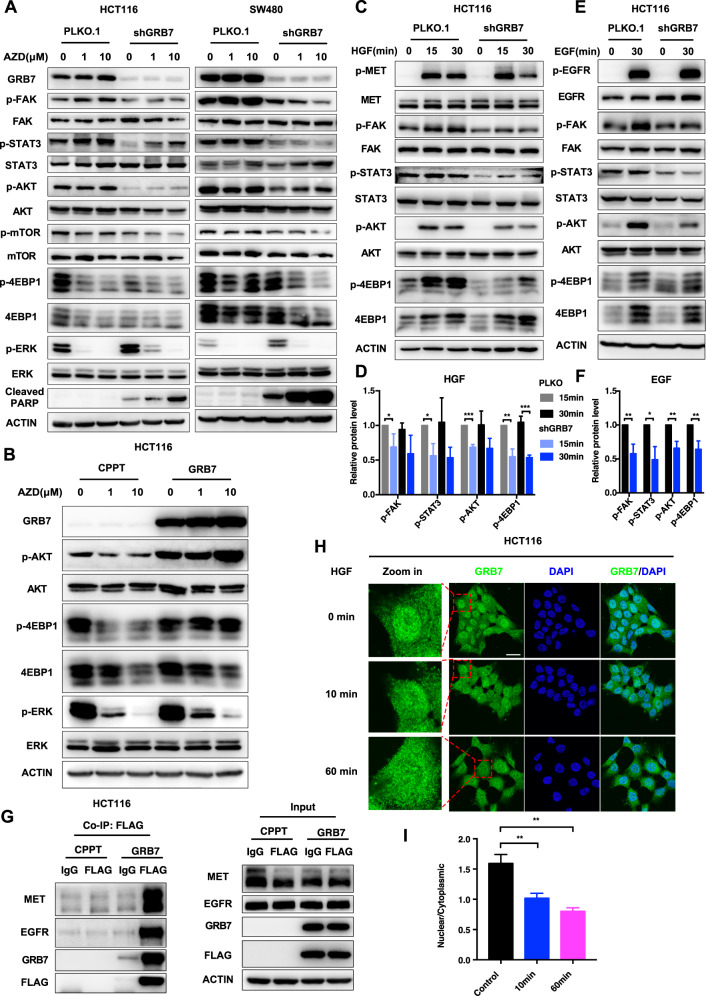
Targeting the KRAS pathway is a promising but challenging approach for colorectal cancer therapy. Despite showing potent efficacy in BRAF-mutated melanoma, MEK inhibitors appeared to be tolerated by colorectal cancer cells due to their intrinsic compensatory signaling. Here, we performed genome-wide CRISPR/Cas9 screening in the presence of MEK inhibitor to identify genes that are synthetically lethal with MEK inhibition in CRC models harboring KRAS mutations. Several genes were identified as potential functional drivers, which were significantly enriched in the GRB7-mediated RTK pathway. Loss-of-function and gain-of-function assays validated that GRB7 potently rendered CRC cells primary resistance to MEK inhibitors through the RTK pathway. Mass spectrum analysis of GRB7 immunoprecipitates revealed that PLK1 was the predominant interacting kinase of GRB7. Inhibition of PLK1 suppressed downstream signaling of RTK, including FAK, STAT3, AKT, and 4EBP1. The combination of PLK1 and MEK inhibitors synergistically inhibited CRC cell proliferation and induced apoptosis in vitro and in vivo. In conclusion, we identified GRB7-PLK1 as a pivotal axis mediating RTKs, resulting in MEK inhibitor tolerance. PLK1 is therefore a promising target for synergizing MEK inhibitors in the clinical treatment of CRC patients harboring KRAS mutations.
Overview
CoChat Summary
TL;DR
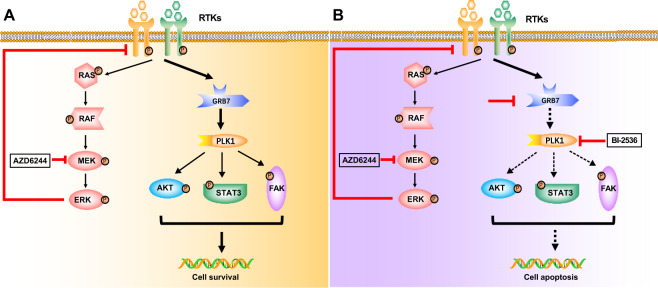
Genome-wide CRISPR/Cas9 knockout screening in KRAS-mutant colorectal cancer cells identified GRB7 as a key RTK-pathway driver of MEK inhibitor resistance. GRB7 acts through PLK1 recruitment to sustain downstream RTK signaling, and combined PLK1/MEK inhibition synergistically suppressed CRC growth in vitro and in an HCT116 xenograft model.
Key findings
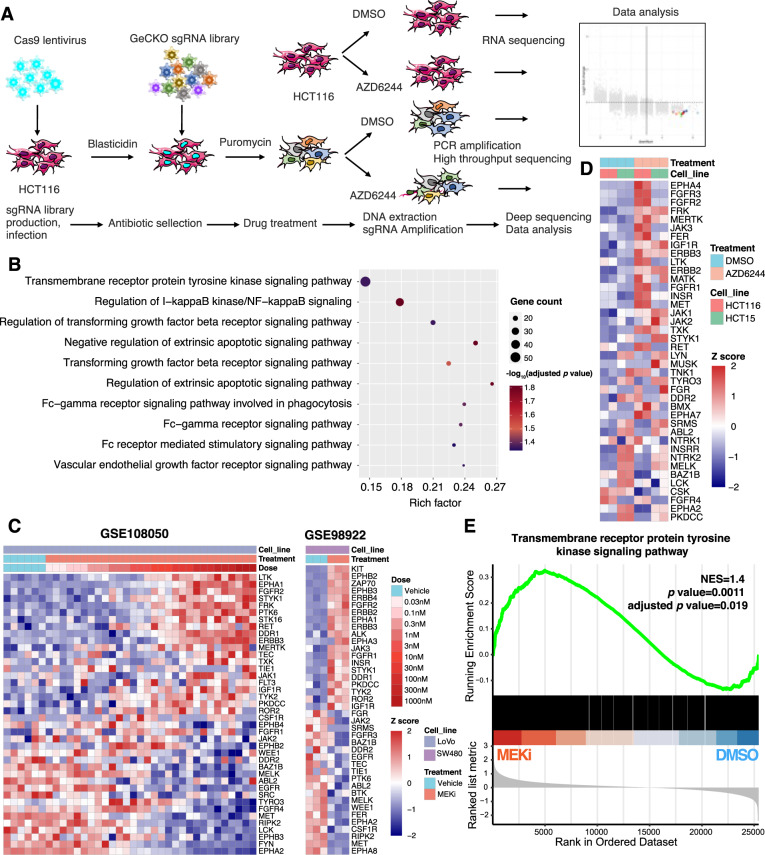
- In HCT116 cells, genome-wide CRISPR/Cas9 screening with AZD6244 identified sgRNAs targeting 1846 genes significantly depleted under MEK inhibition; enriched pathways included transmembrane receptor protein tyrosine kinase signaling, NF-κB, TGF-β, and extrinsic apoptotic regulation.
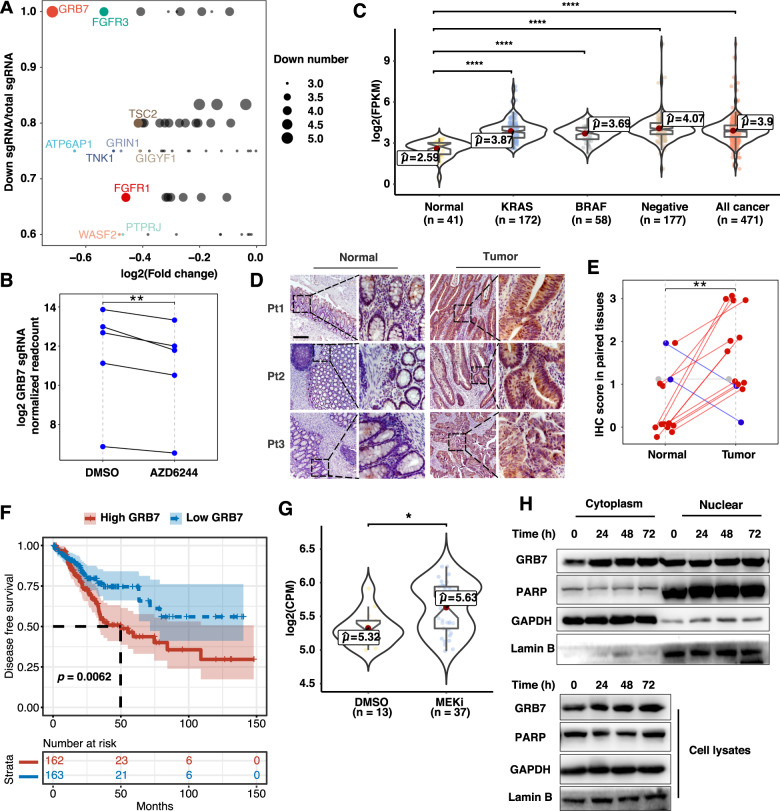
- GRB7 was the most negatively selected RTK-pathway gene: 5 of 6 GRB7-targeting sgRNAs were consistently decreased in AZD6244-treated cells. GRB7 was upregulated in 11 of 14 patient-matched CRC biopsies, and high GRB7 was associated with poor disease-free survival in TCGA colon cancer data.
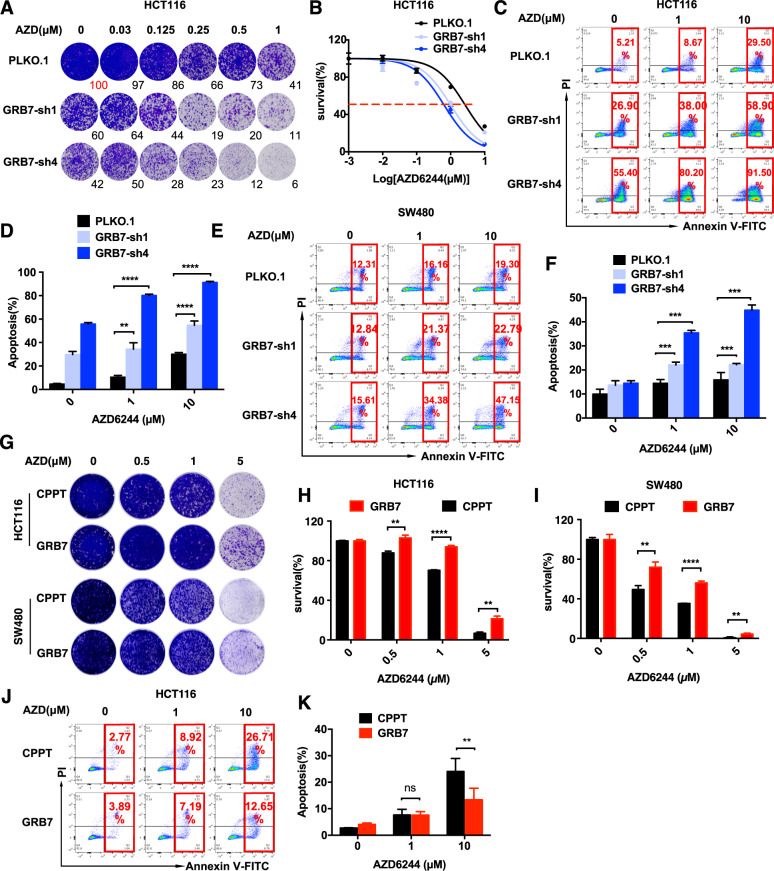
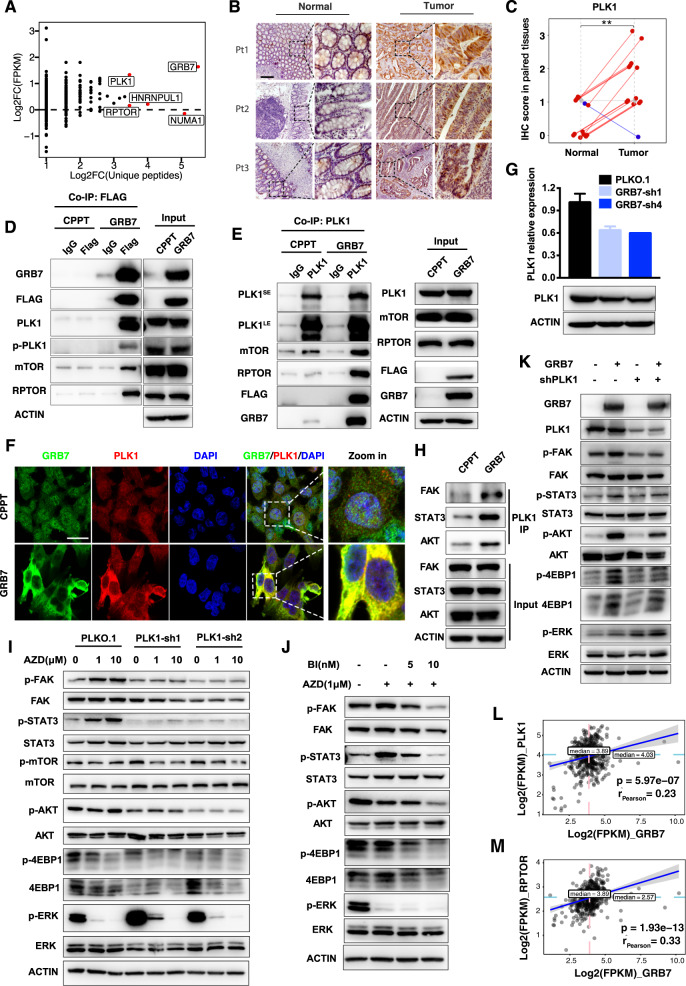
- GRB7 knockdown sensitized HCT116, SW480, and LS174T cells to AZD6244, while GRB7 overexpression conferred resistance; GRB7 knockdown reduced PLK1 by ~40% at both protein and mRNA levels. IP-MS found 57 GRB7-interacting proteins enriched at least threefold, with PLK1 top-ranked.
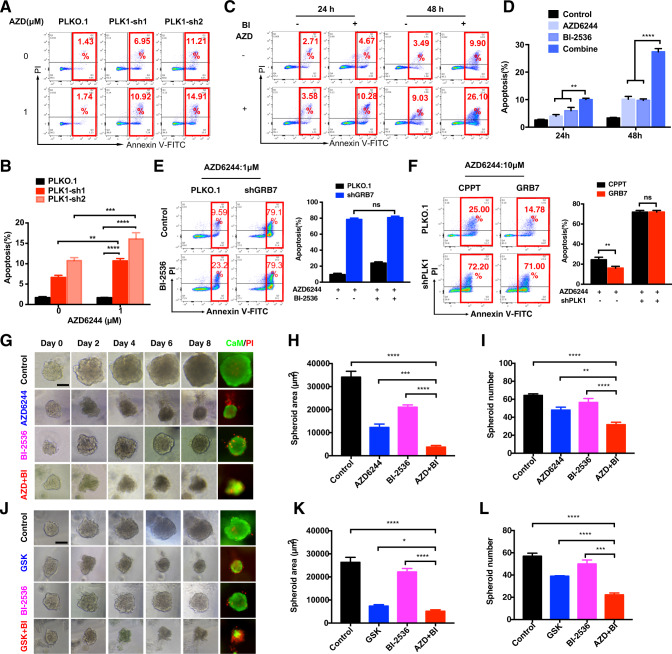
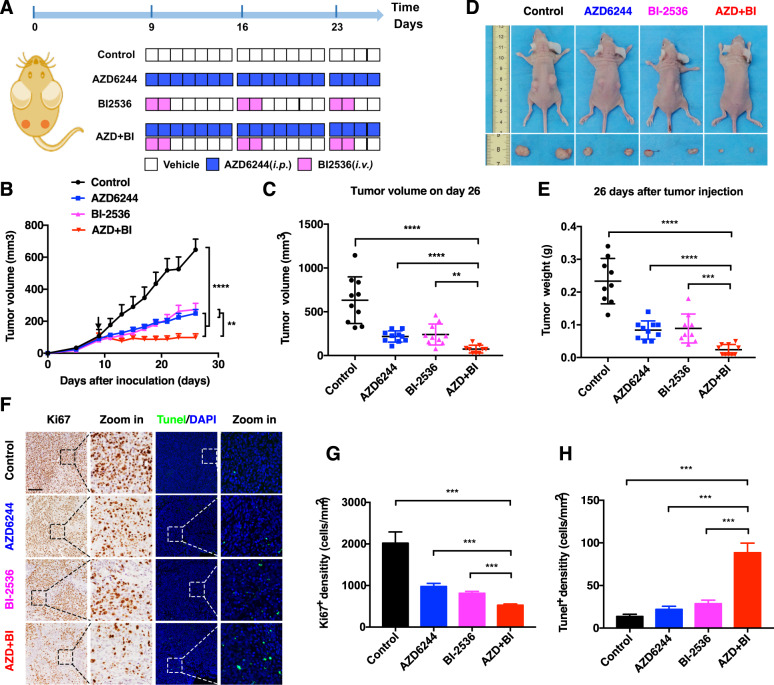
- Combining PLK1 inhibition (BI-2536 or shPLK1) with MEK inhibition synergistically induced apoptosis and suppressed 2D/3D CRC models; in HCT116 xenografts, AZD6244 plus BI-2536 was more potent than either alone, with reduced Ki67 and increased Tunel staining.
Methods
- Genome-wide CRISPR/Cas9 knockout screen using the human GeCKO two-vector lentivirus system in Cas9-expressing HCT116 cells at MOI ~0.3 and ~500× sgRNA coverage; cells were treated with DMSO or AZD6244 for 7 days, followed by sgRNA sequencing.
- Parallel transcriptomic profiling of HCT116 cells ± AZD6244, GO enrichment, GSEA, TCGA analyses, IHC of patient biopsies, and correlation analyses.
- Functional validation used shRNA knockdown, GRB7 overexpression, clonogenic and MTT assays, Annexin V/PI apoptosis assays, western blot, co-immunoprecipitation, immunofluorescence, IP-MS, 3D spheroid culture, and HCT116 xenograft experiments; statistical tests included Student’s t test, Wilcoxon test, log-rank test, Pearson correlation, and Benjamini & Hochberg correction.
Limitations
- Stated in the paper: effective GRB7 inhibitors are unavailable in the clinic, and the detailed regulatory mechanism of GRB7 needs to be illustrated; further research is needed to demonstrate GRB7’s role in regulating DUSPs, and the detailed function of the PLK1 family in MEK inhibitor resistance requires further investigation.
- Evident from the text: the primary CRISPR screen was performed in a single KRAS-mutant CRC cell line (HCT116), with validation in a limited set of CRC lines and one xenograft model; GRB7 was targeted genetically rather than pharmacologically, and the combination strategy relied on the PLK1 inhibitor BI-2536 rather than a direct GRB7 inhibitor.
Model-written summary. Check it against the paper before relying on it.
Integrity signals
Registry
Cites
Statistics
Figures
Verification
Claims the paper makes
11 Valid · 1 Not valid · 14 Not checked · 101 Own results and interpretations
The cited sources support only part of this claim — read each source’s verdict below.
In the paper
“However, the results of clinical trials with MEK inhibitor (MEKi) were disappointing in CRC patients [13, 14].”
§ Genome-wide CRISPR-cas9 knockout screening identifies GRB7 as a driver for MEK inhibitor resistance in KRAS mutant colon cancer > Introduction
What the sources say
- Partly supportedcites [13] Corcoran RB Atreya CE Falchook GS Kwak EL Ryan DP Bendell JC Combined BRAF and MEK inhibition with dabrafenib and trametinib in BRAF V600-mutant colorectal cancer J Clin Oncol 2015 33 4023 31 26392102 PMC4669588 sourceExperimental — accuracy not yet measured
The INTRODUCTION of our copy does state that BRAF V600–mutant mCRC 'has shown a marked lack of sensitivity to BRAF or MEK inhibitor monotherapy in early clinical trials,' and that the phase I/II trametinib-monotherapy trial 'showed no responses in a small number of patients with BRAF-mutant mCRC' — so the direction of the claim (disappointing MEK-inhibitor trials) is present. However, the source bounds this to BRAF V600–mutant metastatic CRC, whereas the citing sentence generalizes to 'CRC patients,' and the trametinib monotherapy result is reported secondhand (cited as reference 23, Corcoran et al., Sci Signal 2010) rather than being this paper's own trial; this paper's own 43-patient cohort is a dabrafenib PLUS trametinib combination that produced 12% response and is presented as a step forward. The unsupported parts are the unselected-CRC population and the attribution of trial results to this source as the reporting study. (LLM, conf=0.72)
- Not checked yetcites [14] Infante JR Fecher LA Falchook GS Nallapareddy S Gordon MS Becerra C Safety, pharmacokinetic, pharmacodynamic, and efficacy data for the oral MEK inhibitor trametinib: a phase 1 dose-escalation trial Lancet Oncol 2012 13 773 81 22805291 source
plain- Asserted: passes — The authors put it forward as true.
- Checkable: passes — It can be checked against evidence.
- Load-bearing: passes — The paper’s conclusions depend on it.
- Based: passes — The paper gives a reason why it holds.
- Partly supported
The sources with a verdict support this claim; the rest weren’t checked yet, have no full text we could read, or their verdicts aren’t rated yet.
In the paper
“In addition, the KRAS G12C mutation accounts for only one to three percent of all CRC patients, which largely limits the potential populations who could benefit [2, 11].”
§ Genome-wide CRISPR-cas9 knockout screening identifies GRB7 as a driver for MEK inhibitor resistance in KRAS mutant colon cancer > Introduction
What the sources say
- Not checked yetcites [2] Neumann J Zeindl-Eberhart E Kirchner T Jung A Frequency and type of KRAS mutations in routine diagnostic analysis of metastatic colorectal cancer Pathol Res Pract 2009 205 858 62 19679400 source
- Supportedcites [11] Hong DS Fakih MG Strickler JH Desai J Durm GA Shapiro GI KRAS(G12C) inhibition with sotorasib in advanced solid tumors N Engl J Med 2020 383 1207 17 32955176 PMC7571518 source
The Background states that the KRAS p.G12C mutation occurs in 1 to 3% of colorectal cancers, directly supporting the attributed prevalence. The discussion of sotorasib as a treatment for tumors harboring that mutation is consistent with the citing sentence’s point about the limited eligible population. (LLM, conf=0.94)
plain- Asserted: passes — The authors put it forward as true.
- Checkable: passes — It can be checked against evidence.
- Load-bearing: passes — The paper’s conclusions depend on it.
- Based: passes — The paper gives a reason why it holds.
Every source the paper cites for this claim was checked and supports it.
In the paper
“an additional MEKi significantly improved the efficiency of the PLK1 inhibitor by diminishing the dose from 50 [42] to 10 mg/kg”
§ Genome-wide CRISPR-cas9 knockout screening identifies GRB7 as a driver for MEK inhibitor resistance in KRAS mutant colon cancer > Discussion
What the sources say
- Supportedcites [42] Luo J Emanuele MJ Li D Creighton CJ Schlabach MR Westbrook TF A genome-wide RNAi screen identifies multiple synthetic lethal interactions with the Ras oncogene Cell. 2009 137 835 48 19490893 PMC2768667 source
The citation [42] is anchored mid-sentence to the number '50', i.e. to the 50 mg/kg PLK1-inhibitor dose, and our copy states exactly that: Experimental Procedures > Mouse xenograft tumor models reports 'The dose of BI-2536 used for DLD-1 xenografts was 50 mg/kg for the first 2 weeks and then increased to 75 mg/kg... The dose of BI-2536 used for HCT116 xenografts was 50 mg/kg,' with RESULTS > Mitotic inhibitors attenuate tumor xenograft growth in vivo confirming significant tumor attenuation at that dose. The MEKi dose-sparing to 10 mg/kg is not what this citation is attached to, and our copy contains no MEK-inhibitor/BI-2536 combination experiment (the only MEK-inhibitor mention is the Introduction crediting Engelman et al., 2008 for MEK plus PI3K/mTOR inhibition in Ras-driven lung cancer). (LLM, conf=0.80)
plainstates a cause- Asserted: passes — The authors put it forward as true.
- Checkable: passes — It can be checked against evidence.
- Load-bearing: unclear — It is unclear whether the paper’s conclusions depend on it.
- Based: passes — The paper gives a reason why it holds.
- Supported
Every source the paper cites for this claim was checked and supports it.
In the paper
“Combination treatment with EGFRi and MEKi produced limited antitumor efficacy in CRC patients [34].”
§ Genome-wide CRISPR-cas9 knockout screening identifies GRB7 as a driver for MEK inhibitor resistance in KRAS mutant colon cancer > Discussion
What the sources say
- Supportedcites [34] Corcoran RB André T Atreya CE Schellens JHM Yoshino T Bendell JC Combined BRAF, EGFR, and MEK inhibition in patients with BRAF(V600E)-mutant colorectal cancer Cancer Discov 2018 8 428 43 29431699 PMC5882509 source
The paper’s Abstract reports a 0% confirmed response rate for trametinib plus panitumumab (MEK and EGFR inhibition), supporting the description of limited antitumor efficacy. The studied patients had BRAF V600E-mutant colorectal cancer. (LLM, conf=0.91)
plain- Asserted: passes — The authors put it forward as true.
- Checkable: passes — It can be checked against evidence.
- Load-bearing: passes — The paper’s conclusions depend on it.
- Based: passes — The paper gives a reason why it holds.
- Supported
A result the paper reports from its own data — it cites no other source for it, so there is none to check. The quote shows it is in the paper.
In the paper
“Consistent with the mRNA expression results, upregulation of GRB7 at the protein level was observed in 11 out of 14 patient-matched CRC biopsies (Fig. 2D, E).”
§ Genome-wide CRISPR-cas9 knockout screening identifies GRB7 as a driver for MEK inhibitor resistance in KRAS mutant colon cancer > Results > GRB7 is the pivotal member of the RTK pathway-mediated MEKi resistance
plainn = 14- Asserted: passes — The authors put it forward as true.
- Checkable: passes — It can be checked against evidence.
- Load-bearing: passes — The paper’s conclusions depend on it.
- Based: passes — The paper gives a reason why it holds.
89 more claims
Create a free account to see all 127 claims and to verify the 27 references still open.
- It may state two separate claims as one. 21
- Probably not a substantial claim. 15
Claims other papers make about this one
Each is checked against this paper’s own text: does it say what the citing paper says it does?
The source backs part of the claim, not all of it — or backs it for a different population, condition or comparison.
In the citing paper
“However, while MEK inhibitors have shown clinical efficacy in several types of KRAS-mutated cancers, preclinical studies in CRC revealed that treatment with MEK inhibitor alone was not very effective in KRAS-mutated CRC cells due to different mechanisms of acquired resistance [123,124,125].”
From Mechanisms and Strategies to Overcome Drug Resistance in Colorectal Cancer (2025) · cites this paper as [125]
Experimental — accuracy not yet measured
Citations
Cites
Colorectal cancer statistics, 2020
Siegel, R. L., Miller, K. D., Goding Sauer, A., Fedewa, S. A., Butterly, L. F., Anderson, J. C., Cercek, A., Smith, R. A., & Jemal, A. (2020) · CA: A Cancer Journal for Clinicians · doi:10.3322/caac.21601 · Cited by 4,880 · cited 2×
“Colorectal cancer (CRC) is one of the most common malignancies, with the third highest incidence and death rate in both women and men in the United States [1].”
BackgroundMAP kinase signalling pathways in cancer
Dhillon, A. S., Hagan, S., Rath, O., & Kolch, W. (2007) · Oncogene · doi:10.1038/sj.onc.1210421 · Cited by 2,995 · cited 1×
“Inspired by these results, we sought to investigate whether GRB7 overexpression could also confer MEKi resistance in CRC cells with the BRAF mutation, another genetic lesion leading to sustained activation of the MAPK pathway [29].”
BackgroundThe Clinical KRAS(G12C) Inhibitor AMG 510 Drives Anti-Tumour Immunity
Canon, J., Rex, K., Saiki, A. Y., Mohr, C., Cooke, K., Bagal, D., Gaida, K., Holt, T., Knutson, C. G., Koppada, N., et al. (2019) · Nature · doi:10.1038/s41586-019-1694-1 · Cited by 2,277
KRAS G12C Inhibition with Sotorasib in Advanced Solid Tumors
Hong, D. S., Fakih, M. G., Strickler, J. H., Desai, J., Durm, G. A., Shapiro, G. I., Falchook, G. S., Price, T. J., Sacher, A., Denlinger, C. S., et al. (2020) · New England Journal of Medicine · doi:10.1056/nejmoa1917239 · Cited by 1,733
High-Resolution CRISPR Screens Reveal Fitness Genes and Genotype-Specific Cancer Liabilities.
Hart, T., Chandrashekhar, M., Aregger, M., Steinhart, Z., Brown, K. R., MacLeod, G., Mis, M., Zimmermann, M., Fradet-Turcotte, A., Sun, S., et al. (2015) · Cell · doi:10.1016/j.cell.2015.11.015 · Cited by 1,571
Hallin, J., Engstrom, L. D., Hargis, L., Calinisan, A., Aranda, R., Briere, D. M., Sudhakar, N., Bowcut, V., Baer, B. R., Ballard, J. A., et al. (2020) · Cancer Discovery · doi:10.1158/2159-8290.cd-19-1167 · Cited by 1,304
Genome-scale CRISPR-Cas9 Knockout and Transcriptional Activation Screening
Joung, J., Konermann, S., Gootenberg, J. S., Abudayyeh, O. O., Platt, R. J., Brigham, M. D., Sanjana, N. E., & Zhang, F. (2017) · Nature Protocols · doi:10.1038/nprot.2017.016 · Cited by 1,243
Targeting KRAS mutant cancers with a covalent G12C-specific inhibitor
Janes, M. R., Zhang, J., Li, L.-S., Hansen, R., Peters, U., Guo, X., Chen, Y., Babbar, A., Firdaus, S. J., Darjania, L., et al. (2018) · Cell · doi:10.1016/j.cell.2018.01.006 · Cited by 1,172
RAS-targeted therapies: is the undruggable drugged?
Moore, A. R., Rosenberg, S. C., McCormick, F., & Malek, S. (2020) · Nature Reviews Drug Discovery · doi:10.1038/s41573-020-0068-6 · Cited by 1,103 · cited 1×
“Given the fact that KRAS mutations are often associated with poor prognosis in CRC patients [4], therapeutic regimens targeting KRAS or its signaling are regarded as one of the most desired strategies in clinics [5].”
BackgroundCorcoran, R. B., Ebi, H., Turke, A. B., Coffee, E. M., Nishino, M., Cogdill, A. P., Brown, R. D., Della Pelle, P., Dias-Santagata, D., Hung, K. E., et al. (2012) · Cancer Discovery · doi:10.1158/2159-8290.cd-11-0341 · Cited by 1,022
Cited by
Signaling pathways involved in colorectal cancer: pathogenesis and targeted therapy
Li, Q., Geng, S., Luo, H., Wang, W., Mo, Y.-Q., Luo, Q., Wang, L., Song, G.-B., Sheng, J.-P., & Xu, B. (2024) · Signal Transduction and Targeted Therapy · doi:10.1038/s41392-024-01953-7 · Cited by 546
Rational combinations of targeted cancer therapies: background, advances and challenges
Jin, H., Wang, L., & Bernards, R. (2023) · Nature Reviews Drug Discovery · doi:10.1038/s41573-022-00615-z · Cited by 503
Rasul, M. F., Hussen, B. M., Salihi, A., Ismael, B. S., Jalal, P. J., Zanichelli, A., Jamali, E., Baniahmad, A., Ghafouri-Fard, S., Basiri, A., et al. (2022) · Molecular Cancer · doi:10.1186/s12943-021-01487-4 · Cited by 171
Present and Future Perspective on PLK1 Inhibition in Cancer Treatment
Chiappa, M., Petrella, S., Damia, G., Broggini, M., Guffanti, F., & Ricci, F. (2022) · Frontiers in Oncology · doi:10.3389/fonc.2022.903016 · Cited by 120
Roles and inhibitors of FAK in cancer: current advances and future directions
Hu, H.-H., Wang, S., Shang, H.-L., Lv, H., Chen, B., Gao, S., & Chen, X. (2024) · Frontiers in Pharmacology · doi:10.3389/fphar.2024.1274209 · Cited by 123
Zheng, X., Song, J., Yu, C., Zhou, Z., Liu, X., Yu, J., Xu, G., Yang, J., He, X., Bai, X., et al. (2022) · Signal Transduction and Targeted Therapy · doi:10.1038/s41392-022-00881-8 · Cited by 127
“Co-immunoprecipitation CoIP was performed as previously reported.(52) In brief, cell lysates were incubated with FLAG antibody at 4 °C for 4 h, then protein G-agarose beads were added into cell lysates at 4 °C overnight.”
MethodPolo-like Kinase 1 Inhibitors in Human Cancer Therapy: Development and Therapeutic Potential
Zhang, J., Zhang, L., Wang, J., Ouyang, L., & Wang, Y. (2022) · Journal of Medicinal Chemistry · doi:10.1021/acs.jmedchem.2c00614 · Cited by 100
Mechanisms and Strategies to Overcome Drug Resistance in Colorectal Cancer
Haynes, J., & Manogaran, P. (2025) · International Journal of Molecular Sciences · doi:10.3390/ijms26051988 · Cited by 82
“However, while MEK inhibitors have shown clinical efficacy in several types of KRAS -mutated cancers, preclinical studies in CRC revealed that treatment with MEK inhibitor alone was not very effective in KRAS -mutated CRC cells due to different mechanisms of acquired resistance [123–125].”
Targeting small GTPases: emerging grasps on previously untamable targets, pioneered by KRAS
Yin, G., Huang, J., Petela, J., Jiang, H., Zhang, Y., Gong, S., Wu, J., Liu, B., Shi, J., & Gao, Y. (2023) · Signal Transduction and Targeted Therapy · doi:10.1038/s41392-023-01441-4 · Cited by 82
Ran GTPase and Its Importance in Cellular Signaling and Malignant Phenotype
El‐Tanani, M., Nsairat, H., Mishra, V. K., Mishra, Y., Aljabali, A. A. A., Serrano‐Aroca, Á., & Tambuwala, M. M. (2023) · International Journal of Molecular Sciences · doi:10.3390/ijms24043065 · Cited by 68
The Therapeutic Landscape for KRAS-Mutated Colorectal Cancers
Tria, S. M., Burge, M. E., & Whitehall, V. L. J. (2023) · Cancers · doi:10.3390/cancers15082375 · Cited by 38
Li, H., Qu, L., Yang, Y., Zhang, H., Li, X., & Zhang, X. (2022) · Cellular and Molecular Gastroenterology and Hepatology · doi:10.1016/j.jcmgh.2022.02.014 · Cited by 36
“Subcluster M1 expressed a high level of epithelialmesenchymal transition marker mediator subunit 1 (MED1) and growth factor receptor bound protein 7 GRB7.”
BackgroundYang, W., Zhang, M., Zhang, T.-X., Liu, J.-H., Hao, M.-W., Yan, X., Gao, H., Lei, Q.-Y., Cui, J., & Zhou, X. (2024) · JCI Insight · doi:10.1172/jci.insight.178535 · Cited by 31
Targeting KRAS in Colorectal Cancer: A Bench to Bedside Review
Bteich, F., Mohammadi, M., Li, T., Bhat, M. A., Sofianidi, A. A., Wei, N., & Kuang, C. (2023) · International Journal of Molecular Sciences · doi:10.3390/ijms241512030 · Cited by 36
“The investigators demonstrated that combination treatment with AZD6244 as well as the GRB7 axis was able to synergistically suppress KRAS-mutated CRC tumor growth in the HCT116 xenograft model [77].”
BackgroundCRISPR/Cas9: a powerful tool in colorectal cancer research
Hu, Y., Liu, L., Jiang, Q., Fang, W., Chen, Y., Hong, Y., & Zhai, X. (2023) · Journal of Experimental & Clinical Cancer Research · doi:10.1186/s13046-023-02901-z · Cited by 42
“In subsequent research, GRB7 through the RTK pathway caused KRAS mutant colon cancer resistant to MEK inhibitors [71].”
BackgroundPerturbomics: CRISPR–Cas screening-based functional genomics approach for drug target discovery
Park, B.-S., Lee, M., Kim, J. Y., & Kim, T. (2025) · Experimental & Molecular Medicine · doi:10.1038/s12276-025-01487-0 · Cited by 49
“Resistance to MEK inhibitors has also been attributed to proteins such as SHOC2 31 and GRB7 32 in cancers with mutant RAS.”
Accelerating discovery of bioactive ligands with pharmacophore-informed generative models
Xie, W., Zhang, J., Xie, Q., Gong, C., Ren, Y., Xie, J. H., Sun, Q., Xu, Y., Lai, L., & Pei, J. (2025) · Nature Communications · doi:10.1038/s41467-025-56349-0 · Cited by 54
Albadari, N. G., Xie, Y., & Li, W. (2024) · Frontiers in Pharmacology · doi:10.3389/fphar.2023.1340401 · Cited by 38
Functional CRISPR screens in T cells reveal new opportunities for cancer immunotherapies
Xiang, M., Li, H., Zhan, Y., Ma, D., Gao, Q., & Fang, Y. (2024) · Molecular Cancer · doi:10.1186/s12943-024-01987-z · Cited by 30
“While functional CRISPR screens are widely used in tumour cells[244–246], and DCs[15, 105] to uncover their molecular phenotypes associated with cancer immunotherapies, unbiased integrations of gene functions related to immunotherapies using CRISPR screens are still sparse in most cell types.”
BackgroundMeng, H., Nan, M., Li, Y., Ding, Y., Yin, Y., & Zhang, M. (2023) · Frontiers in Endocrinology · doi:10.3389/fendo.2023.1148412 · Cited by 42
“Therefore, the combination of PLK1 inhibitor and MEK inhibitor is promising to remove the resistance of MEK inhibitor, which will provide a new therapeutic target for KRAS-mutated colon cancer (103).”
BackgroundZhang, R., Wang, Y., Liu, D., Luo, Q., Du, P., Zhang, H., & Wu, W. (2022) · Frontiers in Pharmacology · doi:10.3389/fphar.2022.870848 · Cited by 30
Zhou, S., Xiong, X., Hou, J., Duan, Q., Zheng, Y., Jiang, T., Huang, J., He, H., Xu, J., Chen, K., et al. (2025) · Advanced Science · doi:10.1002/advs.202408503 · Cited by 29
Genome-wide CRISPR/Cas9 screening for drug resistance in tumors
Zhang, Z., Wang, H., Yan, Q., Cui, J., Chen, Y., Ruan, S., Yang, J., Wu, Z., Han, M., Huang, S., et al. (2023) · Frontiers in Pharmacology · doi:10.3389/fphar.2023.1284610 · Cited by 28
“Yu et al. (2022) found that GRB7 (growth factor receptor bound protein 7) effectively increased major resistance to MEK inhibitors via the RTK pathway in KRAS-mutated colon cancer.”
BackgroundTong, H., Wei, H., Smith, A. O., & Huang, J. (2022) · Frontiers in Immunology · doi:10.3389/fimmu.2021.802049 · Cited by 21
Jiang, Z., Zhou, Y., & Huang, J. (2021) · Frontiers in Immunology · doi:10.3389/fimmu.2021.813331 · Cited by 25
Targeting RAF dimers in RAS mutant tumors: From biology to clinic
Yin, H., Tang, Q., Xia, H., & Bi, F. (2024) · Acta Pharmaceutica Sinica B · doi:10.1016/j.apsb.2024.02.018 · Cited by 21
“Notably, PLK1i exhibit heightened efficacy in treating KRAS mutant CRC 217,218 , and ongoing clinical studies are investigating the potential therapeutic benefits (NCT03829410).”
BackgroundSynthetic Vulnerabilities in the KRAS Pathway
Román, M., Hwang, E. E., & Sweet-Cordero, A. (2022) · Cancers · doi:10.3390/cancers14122837 · Cited by 16
“2022 [132] Genome-Wide CRISPR/Cas9library (human GeCKO) Pooled CRISPR knockout sensitizer screen HCT116 cells (KRASG13D).”
BackgroundDziubańska-Kusibab, P. J., Nevedomskaya, E., & Haendler, B. (2024) · International Journal of Molecular Sciences · doi:10.3390/ijms25020705 · Cited by 16
“Resistance gain of KRAS-mutated HCT116 colon cancer cells to the MEK inhibitor selumetinib involves the GRB7 gene, which encodes a protein interacting with receptor TKs [150].”
BackgroundSpisák, S., Chen, D. J., Likasitwatanakul, P., Doan, K. T., Li, Z., Bala, P., Vízkeleti, L., Tisza, V., Silva, P. D., Giannakis, M., et al. (2024) · Nature Communications · doi:10.1038/s41467-024-46285-w · Cited by 19
CRISPR/Cas9 genetic screens in hepatocellular carcinoma gene discovery
Chiu, C. H. (2023) · Current Research in Biotechnology · doi:10.1016/j.crbiot.2023.100127 · Cited by 10
“For instance, TGF-β signalling activation in hepatic stellate cells (HSC) by TGFBR1 and SMAD4 results in HSC activation and fibrogenesis in the liver, which promotes HCC development (Yu, 2022).”
InfluentialApplications of CRISPR-Cas9 in mitigating cellular senescence and age-related disease progression
Azani, A., Sharafi, M., Doachi, R., Akbarzadeh, S., Lorestani, P., Olia, A. H. K., Zahed, Z., Gharedaghi, H., Ghasrsaz, H., Foroozand, H., et al. (2025) · Clinical and Experimental Medicine · doi:10.1007/s10238-025-01771-3 · Cited by 13
“The CRISPR/ Cas9 method has been applied to in vitro CRC by inhibiting some molecular pathway [100, 101, 128].”
GRB7 plays a promoting role in the progression of gastric cancer
GuoMin, Z., Cai, H., Xiao, Q., Zeng, S., Jiang, X., & Liu, D. (2023) · BMC Cancer · doi:10.1186/s12885-023-11694-5 · Cited by 11
“Furthermore, GRB7 was identified as a driver for MEK inhibitor resistance in KRAS mutant colon cancer [13].”
BackgroundRecent advances in CRISPR-Cas systems for colorectal cancer research and therapeutics
Sokhangouy, S. K., Alizadeh, F. L., Lotfi, M., Sharif, S., Ashouri, A., Yoosefi, Y., Qomi, S. B., & Abbaszadegan, M. R. (2024) · Expert Review of Molecular Diagnostics · doi:10.1080/14737159.2024.2388777 · Cited by 13
“In conclusion, this study has shown that GRB7-PLK1 is an essential axis mediating RTK, which leads to MEK inhibitor tolerance [55].”
Liu, S., Zhang, Z., Wang, Z., Li, J., Shen, L., & Wang, X. (2024) · IUBMB Life · doi:10.1002/iub.2855 · Cited by 8
“21 CRISPR-Cas9 screening has been used to discover novel oncogenes and tumor suppressor genes that contribute to the development of CRC.”
GRB7 Plays a Vital Role in Promoting the Progression and Mediating Immune Evasion of Ovarian Cancer
Wen, L., Hu, W., Hou, S., Luo, C., Jin, Y., Zeng, Z., Zhang, Z., & Meng, Y. (2024) · Pharmaceuticals · doi:10.3390/ph17081043 · Cited by 8
“Due to its overexpression and possible role in the initiation and spread of several malignancies, including breast and colon cancer, GRB7 has become a noteworthy molecule [7,8].”
BackgroundAlam, M. M., Chowdhury, S., Chowdhury, J. T., Hasan, M. M., Ullah, M. A., & Ahmed, S. F. (2023) · Alexandria Engineering Journal · doi:10.1016/j.aej.2023.03.010 · Cited by 7
CRISPRing KRAS: A Winding Road with a Bright Future in Basic and Translational Cancer Research
Gong, X., Du, J., Peng, R., Chen, C., & Zhang, Y. (2024) · Cancers · doi:10.3390/cancers16020460 · Cited by 6
Xie, C., Li, K., Li, Y., Peng, X., Teng, B., He, K., Jin, A., Wang, W., & Wei, Z. (2022) · Frontiers in Oncology · doi:10.3389/fonc.2022.881487 · Cited by 10
Zhang, L., Chen, H., Yang, Y., Zhao, L., Xie, H., Li, P., Lv, X., He, L., Liu, N., & Liu, B. (2025) · Cellular & Molecular Biology Letters · doi:10.1186/s11658-025-00770-2 · Cited by 10
“GRB7 acts as a signal transduction adaptor for some signaling pathways such as the RTK pathway [31] and EGFR/ErbB pathway [32].”
CRISPR/Cas9 system: a novel approach to overcome chemotherapy and radiotherapy resistance in cancer
Noruzi, S., Mohammadi, R., & Jamialahmadi, K. (2024) · Naunyn-Schmiedeberg s Archives of Pharmacology · doi:10.1007/s00210-024-03480-2 · Cited by 6
“These findings provide novel insights into potential therapeutic strategies for CRC patients who exhibit resistant to interventional radiology (IR) treatment (Yu et al. 2021).”
Li, J., Song, N., Ma, R., & Qu, X. (2025) · International Journal of Biological Sciences · doi:10.7150/ijbs.118831 · Cited by 5
“PLK1 functions as a major interacting kinase with GRB7; thus, inhibition of PLK1 can suppress the downstream signaling associated with RTKs, thereby reversing drug resistance [115].”
KRAS mutations in colorectal cancer: impacts on tumor microenvironment and therapeutic implications
Emami, A., Sharif, P. M., & Rezaei, N. (2025) · Expert Opinion on Therapeutic Targets · doi:10.1080/14728222.2025.2500426 · Cited by 4
Kong, L., Liang, C., Li, P., Zhang, Y., Feng, S., Zhang, D., Yao, R., Yang, L., Hao, Z., Zhang, H., et al. (2022) · Journal of the American Heart Association · doi:10.1161/jaha.122.026174 · Cited by 6
He, Y., Li, H., Ju, X., & Gong, B. (2024) · Biochimica et Biophysica Acta (BBA) - Reviews on Cancer · doi:10.1016/j.bbcan.2024.189212 · Cited by 6
Liu, X., Liu, W., Wu, Y., Wang, Y., Jiang, Q., Li, Y. Y., Li, H., & Hao, L. (2025) · Scientific Reports · doi:10.1038/s41598-025-03713-1 · Cited by 3
“GRB7 is closely related to the resistance to MEK inhibitors in KRAS-mutant colon cancer and shows potential as a biomarker for predicting outcomes in various cancers 20,21 .”
Pan, Y., Xue, Y., Fei, X., Zhao, L., Han, L., Su, H., Lin, Y., Zhou, Y. N., Zhang, Y., Xie, G., et al. (2025) · Journal of Inflammation Research · doi:10.2147/jir.s501645 · Cited by 5
“36,37 However, the specific influence of PLK1 on STAT3 that affects IL-17A and IL-21 expression in T2-high asthma with neutrophilic inflammation model remains speculative.”
Li, C., Shi, S., Li, L., Wang, Y., Yao, M., Yu, C., Yu, C., & Xie, C. (2026) · Cell Death and Disease · doi:10.1038/s41419-025-08220-9 · Cited by 6
“In addition, accumulating evidence has substantiated PLK1 ’ s involvement in diverse cellular processes, including DNA damage response, autophagy regulation, and apoptosis modulation [18 – 20].”
Zhang, P., Zhang, W., Hong, Z.-N., Jiang, J., Wu, N., Lin, J., & Kang, M. (2024) · Scientific Reports · doi:10.1038/s41598-024-77420-8 · Cited by 3
“When genes conferring CDDP resistance were disrupted, cells exhibited increased vulnerability to CDDP-induced cytotoxicity, leading to a diminution of sgRNAs targeting these genes in the surviving cell population 26 .”
Accelerating Discovery of Novel and Bioactive Ligands With Pharmacophore-Informed Generative Models
(2024) · doi:10.48550/arxiv.2401.01059 · Cited by 2
“PLK1 plays a key role in mitosis progression and has been implicated in various cellar pathways[53, 54, 55, 56, 57].”
BackgroundDeng, Z., Xu, Y., Cai, Y., Lin, W., Zhang, L., Jiang, A., Zhou, Y., Zhao, R., Zhao, H., Liu, Z., et al. (2023) · International Journal of Molecular Sciences · doi:10.3390/ijms24043528 · Cited by 3
“Notably, accumulating evidence has shown that targeted therapy has become an important means for CC treatment [4]; however, drug resistance is the main factor limiting the clinical application of targeted therapy [5], thereby increasing the need for identifying novel biomarkers.”
BackgroundMoorwood, K., Smith, F. M., Garfield, A. S., Cowley, M., Holt, L. J., Daly, R. J., & Ward, A. (2024) · BMC Biology · doi:10.1186/s12915-024-02018-5 · Cited by 5
“The strong Grb7 expression we observed in the developing gut epithelium is interesting in view of evidence that GRB7 has an oncogenic role in cancers of the intestinal tract, including those of the oesophagus [71], stomach [72] and colon [73].”
Background(2024) · doi:10.2147/bctt.s495517 · Cited by 2
“…that GRB7 mediated circCDYL2 induced trastuzumab resistance in HER2 positive breast cancer; 37 Chune Yu found that GRB7 was a driver for MEK inhibitor resistance in KRAS mutant colon cancer; 38 Pei YY reported that up-regulated GRB7 correlated with increased stem cell properties in gastric cancer.”
(2024) · doi:10.1038/s41598-024-73361-4 · Cited by 1
“In summary, there is an interaction and regulatory relationship between the HNF3B signaling pathway and PDIA2, playing a significant role in embryonic progress and organ formation 34 .”
BackgroundIdentification of NRAS Downstream Genes with CRISPR Activation Screening
Tatsumi, A., Hirakochi, H., Inoue, S., Tanaka, Y., Furuno, H., Ikeda, M., Ishibashi, S., Taguchi, T., Yamamoto, K., Onishi, I., et al. (2022) · Biology · doi:10.3390/biology11111551 · Cited by 1
“applied CRISPR knockout screening to colon cancer cell lines under MEK-I treatment [17]; they focused on the increased expression of resistance-promoting genes in MEK-I-treated cells by transcriptome analysis and identified GRB7, a gene that confers resistance to MEK-I.”
BackgroundDeveloping New Immunotherapy Approaches for Colorectal Cancer
Kelly, G., Nowlan, B., Tria, S. M., Nikkhoo, A., Bond, C., & Whitehall, V. (2025) · Cancers · doi:10.3390/cancers17243929 · Cited by 3
Liu, X., Wei, N., & Chen, H. (2024) · Frontiers in Bioscience-Landmark · doi:10.31083/j.fbl2907245 · Cited by 3
“The novel PLK1 inhibitor BI-2536 synergistically inhibits the proliferative ability of CRC cells and induces apoptosis in vitro and in vivo when combined with MEK inhibitors [52].”
BackgroundMitochondrial signatures shape phenotype switching and apoptosis in response to PLK1 inhibitors
Lavallée, E., Roulet-Matton, M., Giang, V., Hurtado, R. C., Chaput, D., & Gravel, S. (2024) · Life Science Alliance · doi:10.26508/lsa.202402912 · Cited by 2
CRISPR-Cas9 gene editing approaches in colorectal cancer: Current progress and future prospects
Hassannia, M., & Amirifar, P. (2026) · Cancer Treatment and Research Communications · doi:10.1016/j.ctarc.2026.101341
Huang, N., Wang, L., Deng, H., Nan, C., Ye, Z., Zhou, C., Zhang, J., Zhang, R., Xu, K., Wu, J., et al. (2026) · Cell Death and Disease · doi:10.1038/s41419-026-09042-z
“Targeting mutant KRAS or the downstream signaling pathways can induce resistance through multiple mechanisms, including reactivation of the signal cascade [19, 20, 48] and activation of parallel signaling pathways [49, 50].”
The application of CRISPR screening to human somatic stem cell and organoid models
Zhang, C. (2026) · Journal of Radiation Research and Applied Sciences · doi:10.1016/j.jrras.2026.102374
A Narrative Review of the Research Advances in CRISPR/Cas9 for the Treatment of Solid Tumors
Liao, Q. (2026) · Journal of medicine and health science. · doi:10.62517/jmhs.202605105
Spisák, S., Chen, D. J., Likasitwatanakul, P., Doan, K. T., Li, Z., Bala, P., Vízkeleti, L., Tisza, V., Silva, P. D., Giannakis, M., et al. (2023) · bioRxiv (Cold Spring Harbor Laboratory) · doi:10.1101/2023.06.21.545895
“For example, a genome-wide genetic screen detected GRB7 as a driver of resistance to MEK inhibitor in KRAS-mutant colon cancer 13 .”
BackgroundConstruction of a Prognostic Model based on CSC-related Genes in Patients with Colorectal Cancer
Li, Z.-Y., Li, M., He, Y., Zheng, G., Chen, J., Guo, Y., Lian, Q., & Yue, C. (2025) · Journal of Cancer · doi:10.7150/jca.108188
“GRB7 , growth factor receptor-bound protein 7, played an important role in MEKi resistance in CRC cells with KRAS mutations[30].”
Pooled single-cell screen in colorectal cancer defines transcriptional modules linked to oncogenes
Hollek, V., Böhning, F., Vargas, C. F., Sieber, A., Morkel, M., & Blüthgen, N. (2026) · Molecular Systems Biology · doi:10.1038/s44320-025-00186-2
(2022) · doi:10.1101/2022.03.11.483924
“, 2021), and to unveil novel therapeutic targets (Yu et al., 2022; Zeng et al., 2022).”
BackgroundAn overview of KRAS-targeting therapies for colorectal cancer in phase I and II development
Chamseddine, S., Azmi, A. S., & Saif, M. W. (2025) · Expert Opinion on Investigational Drugs · doi:10.1080/13543784.2025.2611395 · Cited by 2
“Resistance mechanisms to MEK inhibition have been elucidated in preclinical CRC models, including compensatory activation of c-MET – STAT3 signaling [70], GRB7-mediated resistance [71], and stem cell plasticity via Wnt signaling [72].”
Metadata
- Authors
- Yu, C., Luo, D., Yu, J., Zhang, M., Zheng, X., Xu, G., Wang, J., Wang, H., Xu, Y., Jiang, K., Xu, J., Ma, X., Jing, J., & Shi, H.
- Affiliations
- Sichuan University (CN)
- Chengdu Medical College (CN)
- Zunyi Medical University (CN)
- Sun Yat-sen University Cancer Center (CN)
- Shanghai Jiao Tong University (CN)
- Corresponding author
- Jing, Jing
- Shi, Hubing
- ORCID
- Venue
- Oncogene
- Published
- 2021-10-30
- Volume
- 41
- Issue
- 2
- Pages
- 191-203
- ISSN
- 0950-9232 (ISSN-L)
- 1476-5594
- PMC
- PMC8732282
- OpenAlex
- W3207988094
- Cited by
- 70
- References
- 45
- Citations by year
- 2026: 6 · 2025: 10 · 2024: 25 · 2023: 16 · 2022: 12 · 2021: 1
- FWCI
- 5.01
- Type
- journal article
- Language
- en
- Open access
- hybrid
- doi.org
- Licence
- cc-by
- creativecommons.org/licenses/by/4.0 (tdm)
- creativecommons.org/licenses/by/4.0 (vor)
- Locations
- Oncogene (publishedVersion, cc-by)
- PubMed Central (publishedVersion, cc-by)
- PubMed (publishedVersion)
- Funders
- National Natural Science Foundation of China (81773752)
- National Science Foundation of China | Key Programme (2016YFC0906000 [2016YFC0906003)
- National Science Foundation of China | Young Scientists Fund (31801143, 81902793, 81803574)
- China Postdoctoral Science Foundation (2019M653430)
- Topics
- Health Sciences › Medicine › Oncology › Colorectal Cancer Treatments and Studies
- Life Sciences › Biochemistry, Genetics and Molecular Biology › Molecular Biology › Melanoma and MAPK Pathways
- Life Sciences › Biochemistry, Genetics and Molecular Biology › Molecular Biology › Protein Kinase Regulation and GTPase Signaling
- Keywords
- Grb7, MEK inhibitor resistance, KRAS mutation, colorectal cancer, PLK1, receptor tyrosine kinase signaling, synthetic lethality, CRISPR-Cas9 screen, drug resistance, combination therapy, STAT3, Akt, focal adhesion kinase, 4E-BP1, apoptosis
- MeSH terms
- Animals, Colonic Neoplasms, Humans, Signal Transduction, Cell Line, Tumor, Cell Proliferation, Mice, Early Detection of Cancer, Genome-Wide Association Study, CRISPR-Cas Systems
About these checks
Registry, retraction, Cites and statistics results are computed, not judged, with one exception: a printed reference that no index lists is read once by a model before it counts as a citation error. Claims are extracted by a model and kept only when their quote appears verbatim in the text; each cited source is then checked, with a model’s help, for whether it says what the claim relies on. Those verdicts can be wrong — read the claim’s quote and the cited source before relying on one.
The claim verdicts this report counts are experimental: their accuracy is not yet measured.
A language model drew the claims from the paper on 2026-10-06, under version 3 of the claim definition (model deepseek-v4.1-flash, prompt extract-v3).
A second model labelled each claim on 2026-10-06 (model jev-1.13-20260917, definition revision gold-guideline-v0.2).
Cited sources are checked with a language model’s help (qwen3.8-omni-flash and gpt-6-sol).
Statistics and arithmetic are recomputed, not judged.
Confidence bands are shown only for fields calibrated on our annotated test set. None is calibrated yet, so no band is shown.
What counts as a claim ›How we measure confidence ›How we check this ›
Are you an author, or do you see a problem with this page? Request a review
Data sources
Bibliographic data: Semantic Scholar, OpenAlex, Crossref.
Contains information from the Semantic Scholar Academic Graph Datasets, made available under the ODC Attribution License (ODC-BY 1.0).
Semantic Scholar’s data is described in: Kinney, R., et al. (2023). The Semantic Scholar Open Data Platform. arXiv:2301.10140.
